marketing interactive

McDonald’s SG takes over mornings with music-fuelled McGriddles fest

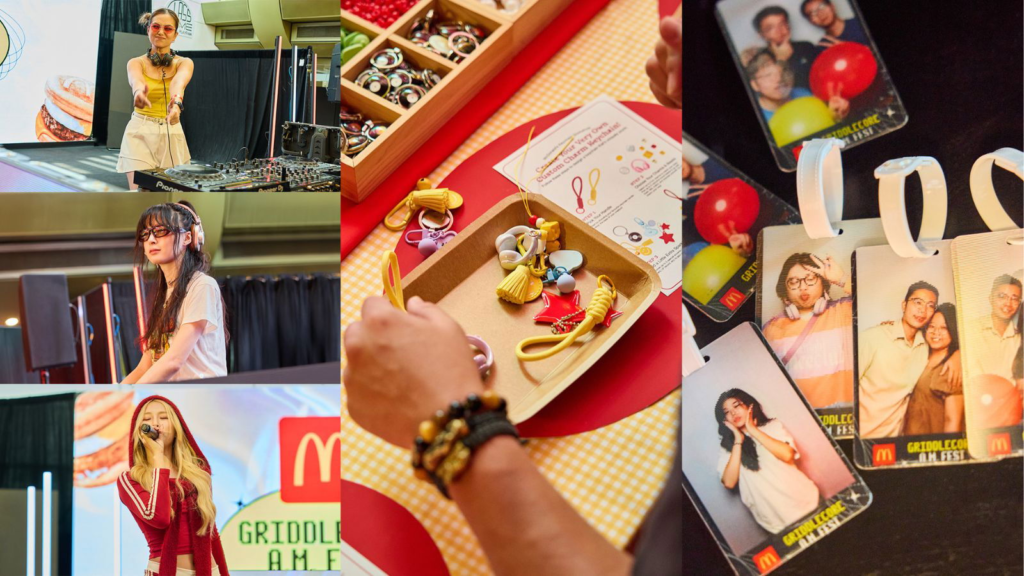
Singapore’s favourite breakfast comeback got the full festival treatment this past weekend as McDonald’s hosted its first-ever Griddlecore A.M. Fest, an exclusive celebration dedicated to fans of the McGriddles. Held on Saturday, 20 September at Cineleisure, the invite-only morning fest brought together a full house of McGriddles devotees for a lineup where beats met breakfast. Guests were treated to live sets from local acts Estelle Fly, DJ Taz Angullia, and DJ Nicolette Yip, who kept the energy high with a mix of dance, pop, and club-ready beats from morning to midday. Don’t miss: McDonald’s SG defends crown at the Marketing Excellence Awards 2025  Beyond the music, fans dived into a range of quirky, McGriddles-themed activities. Highlights included crafting personalised charms, snapping up collectible holographic “emotional baggage” tags, and capturing plenty of memories at the fest’s interactive photobooths. Access to the festival was as exclusive as the event itself. Fans secured entry either by purchasing the limited-edition Griddlecore Bundle — which sold out within hours when it dropped in August — or by climbing the McGriddles Leaderboard via the McDonald’s app, where the top 150 buyers clinched their golden ticket. The event marked the official return of the McGriddles in Singapore, reminding fans why the sweet-and-savoury breakfast sandwich has earned cult status over the years. The Singapore activation comes just weeks after McDonald’s Malaysia wrapped up its own food-meets-music campaign, “Duo Terhangat” (‘The hottest duo’), with a high-energy concert at its Putrajaya Persint 2 drive-thru on 25 July. Headlined by local hip-hop stars TUJU and MK K-Clique, the event celebrated the brand’s fan-favourite Spicy Chicken McDeluxe and its limited-time Spicy Lemon Chicken McDeluxe variant. Related articles:   McDonald’s SG steps up the crunch with McCrispy MRT takeover  McDonald’s SG serves up breakfast bars with new rap McDonald’s Malaysia turns up the heat in Putrajaya with spicy burger concert  source

McDonald’s SG takes over mornings with music-fuelled McGriddles fest Read More »

Contrite or calculated: Agoda's PR ticks boxes but does it fly?

Agoda has issued a public statement acknowledging concerns raised over its recent global restructuring, which affected customer support teams in Singapore. In a statement, the company said it has met with the Ministry of Manpower (MOM), Tripartite Alliance for Fair and Progressive Employment Practices (TAFEP), the National Trades Union Congress (NTUC), and the Singapore Industrial and Services Employees’ Union (SISEU) to address issues around its severance agreements. Agoda clarified that its agreements were intended to conclude all matters relating to the employment relationship. It acknowledged that including clauses discouraging employees from approaching authorities was inappropriate, and apologised for any language that implied workers could not seek support from government agencies, statutory bodies, or trade unions. The company reaffirmed that employees retain this statutory right. “We empathise deeply with employees who have been impacted by this restructuring and want to reaffirm our commitment to maintaining open communication, upholding fair employment standards, and supporting Singapore’s world-class workforce,” Agoda said. Speaking to MARKETING-INTERACTIVE, a MOM spokesperson confirmed that the ministry, together with TAFEP, NTUC, and Agoda, had reviewed the retrenchment terms and support measures for affected workers. “This is an encouraging development and an endorsement of Singapore’s strong tripartite approach, where employers, unions and the government work closely to safeguard the interests of our workers in the spirit of fair and responsible employment practices,” the spokesperson said. MOM added that retrenchments can be “difficult and distressing” and highlighted that NTUC, its Employment and Employability Institute (e2i), and Workforce Singapore (WSG) stand ready to support workers through job matching and career coaching. “While employers can enter into severance agreements with retrenched employees, they should not prevent the latter from reaching out to authorities and unions with genuine concerns,” the spokesperson said. “Employers must uphold the spirit of fair and progressive employment practices, particularly during significant workforce changes such as retrenchments.” Agoda said it is contacting affected employees to clarify terms and connect them with NTUC’s e2i support schemes, including job matching, training, and upskilling opportunities. It also reiterated its ongoing investment in Singapore, particularly in AI, product, and technology roles. The apology follows reports that 50 employees in Singapore were laid off as part of the restructuring exercise. NTUC and SISEU previously expressed alarm at allegations that severance agreements discouraged workers from reporting cases to unions, government agencies, or pursuing legal action. Workers who breached these terms reportedly risked losing their severance pay or being asked to return payouts already received. Agoda previously told MARKETING-INTERACTIVE that the layoffs were part of a continuous effort to enhance operational efficiency. Roles were phased out in Singapore, Budapest, and Shanghai while new positions were created in other locations. The company said it provided support throughout the transition and maintained that affected employees were free to pursue legal options if they wished. Did Agoda get it right? The company’s statement has drawn mixed reactions from industry players. While some see it as a step forward in transparency, others question its sincerity. Jamie Tan, principal consultant at Archetype Singapore, said the statement’s language and tone are “a step in the right direction”, reflecting transparency and empathy that should have been present from the start. At the same time, she noted the response “could have carried more substance”, such as clarifying corrective policy changes, showing visible leadership, and creating two-way channels for employees to raise concerns. “Ultimately, a single statement cannot by itself repair public perception – what remains to be seen is how those commitments translate into visible, sustained action by Agoda,” she added. Not all industry players were convinced. Meilin Wong, CEO and partner at Milk & Honey PR, described the statement as “cold, impersonal, and frankly disingenuous”, noting that it stops short of a simple, plain-spoken apology. “Words matter, and in this case, the absence of the right ones speaks volumes,” she said. Charu Srivastava, co-founder and CSO at TriOn & Co, echoed concerns about the timing and authenticity of Agoda’s response. She said the delayed admission and initial insistence of no wrongdoing made the apology feel reactive rather than genuine. She added:  While the latest statement checks all the boxes of a theoretically good response, Agoda missed the mark in the way this response came about. Apologising without losing trust Agoda’s situation highlights a broader challenge for companies navigating sensitive workforce changes: difficult decisions are inevitable, but how they are communicated can make all the difference. Tan said the foundation lies in the “3Cs” — control, clarity, and compassion — with transparency and compliance built in from the start rather than applied reactively. Scenario planning, consistent messaging, and clear action plans, she added, are essential to show both competence and care. Wong stressed that it’s not enough to get the mechanics right; companies must also communicate with humanity. “Stop writing for optics and start writing for people,” she said, pointing out that openly acknowledging mistakes and supporting employees tangibly is crucial. Words alone, she warned, cannot mask the absence of empathy, no matter how well-structured the statement. Emily Poon, a seasoned veteran in the communications industry, reinforced the point, noting that a company’s true values are revealed not in statements, but in actions — especially in challenging times. Leadership, she said, requires integrity and clarity, and how employees are treated during departures often leaves a more lasting impression than the warm welcome they received when joining. Srivastava tied the insights together with a focus on preparation and execution. She emphasised that communications teams should be involved from the outset to reduce reputational and operational risk. Even after an apology is issued, honesty, transparency, and genuine engagement remain critical, she said. “In today’s digital age, it truly is about when and not if a lie or manipulation will be found out,” she added, underscoring that actions must consistently align with words. Ultimately, the experts agree: words alone are not enough. The real test lies in translating statements into concrete actions that demonstrate lessons learned, so employees, current and future, can trust the organisation through both good

Contrite or calculated: Agoda's PR ticks boxes but does it fly? Read More »

Blé de Fonty taps Innovative Hub and takes home silver in social commerce category at MARKies Awards 2025

This post is sponsored by Innovative Hub. Premium skincare brand Blé de Fonty won silver for “Most Effective Use – Social Commerce” at the MARKies Awards 2025, with Innovative Hub powering a TikTok campaign that turned a beauty discovery into an interactive shopping experience. Unlike many FMCG brands that still lean heavily on traditional advertising, Blé de Fonty charted a different path. By focusing on TikTok live-streaming and video-first content, the brand transformed social engagement into shoppable moments, setting a new benchmark for social commerce in Singapore. “In beauty, consumers expect more than glossy campaigns,” said Zoe Zuo, founder and CEO of Innovative Hub. “They want to see products in action, used by real people they trust. TikTok allowed us to deliver that instantly, interactively, and at scale.” The campaign placed influencers at the heart of the storytelling, showcasing Blé de Fonty in real routines rather than scripted ads. Innovative Hub worked with a diverse mix of beauty creators and lifestyle voices to host live-streams and create short-form videos. Viewers could watch products being applied in real time, ask questions, and shop directly – turning discovery into action within minutes. “By working with creators who could authentically share their skincare experiences, we ensured Blé de Fonty connected as both aspirational and relatable,” the agency shared. The campaign leaned on TikTok’s strength as a discovery-and-purchase platform. Live-stream shopping events created excitement and urgency, while video campaigns built visibility through product tutorials, reviews, and trending formats. Posts under #BleDeFontySG gained traction among social-savvy consumers, especially young adults seeking premium skincare. The result was not just buzz, but a community of engaged followers eager to integrate Blé de Fonty into their daily routines. The MARKies jury credited the campaign for going beyond traditional digital ads by using TikTok as a full-funnel ecosystem. While many FMCG brands invest in static campaigns, Blé de Fonty demonstrated how social commerce could drive both awareness and conversion simultaneously. As a top TikTok partner and Xiaohongshu marketing agency in Singapore, Innovative Hub also ensured the campaign was executed with compliance and professionalism – keeping influencer content aligned with platform rules while maximising impact. “Creative ideas need disciplined execution,” Zuo added. “That’s how social commerce becomes sustainable, not just viral.” For Blé de Fonty, the award is both recognition and momentum. The brand plans to continue building through seasonal product spotlights, influencer partnerships, and experiential TikTok campaigns. “Social commerce lets us connect with consumers in ways that feel personal and immediate,” said a Blé de Fonty spokesperson. “This win inspires us to keep innovating and growing with our community.” For Innovative Hub, the recognition underscores its role as a professional partner helping FMCG and beauty brands succeed in Southeast Asia’s fast-evolving digital landscape. Blé de Fonty’s win reflects a broader industry shift: consumers are increasingly discovering and shopping through live-streams and short-form videos, not just static ads. In Singapore’s competitive skincare market, the campaign showed that brands willing to embrace social commerce can outpace those sticking to traditional playbooks. source

Blé de Fonty taps Innovative Hub and takes home silver in social commerce category at MARKies Awards 2025 Read More »

ByteDance, Soonshot debut AI-powered short-form K-dramas across SEA

BytePlus, the enterprise arm of ByteDance, has partnered with Soonshot, a pioneer in short-form international K-dramas, to launch a mobile platform delivering bite-sized Korean storytelling enhanced by AI across Southeast Asia and beyond. The app delivers 1-2 minute “snackable” episodes. Soonshot leverages BytePlus’s technology for real-time personalisation, global CDN streaming, and advanced analytics to help creators refine their productions. The platform is spearheaded by South Korean comedy icon Lee Kyung-kyu, co-founder of ADG Company, who draws on his 45-year career and extensive industry network of more than 3,000 production professionals, as well as partnerships with major broadcasters including SBS, KT, and Kakao. Soonshot also holds access to over 20,000 webtoon IPs and rising talent for fresh adaptations. Don’t miss: ByteDance doubles down on AI with updated version of Doubao “Soonshot brings the emotional depth of K-dramas at short-form speed,” said Erica Park, CEO of ADG Company. “Inspired by China’s short-form boom, we’re elevating content with authentic K-flavour, powered by BytePlus tech to deliver what fans crave while building a sustainable, direct-to-fan model for IP value.” In under three months, Soonshot has attracted 110,000 users across seven countries, with average session times of 22 minutes. Singapore’s role as the launchpad reflects its strong digital penetration, advanced payments infrastructure, and media influence, setting the stage for expansion to Indonesia, Thailand, the Philippines, the US, and Japan. Localisation plays a key role in this rollout, with multilingual subtitles and regional viewing habits considered. Indonesians, for instance, spend six hours a day on mobile devices with K-content accounting for nearly a third of streams, while one in three young Thais watch K-dramas daily. In the Philippines, K-related hashtags generate more than 100 million monthly views, while Singapore leads in per-capita spend on premium content. Beyond streaming, Soonshot is investing in fandom-driven communities, offering fans spaces for discussion and interaction. The platform aims to evolve into a full K-culture lifestyle hub, including exclusive content, memberships, and merchandise. “We prioritise long-term growth through fandoms and IP creation over quick profits,” Park added. As mobile viewing and the global K-wave surge, Soonshot positions itself as both an entertainment product and a marketing experiment in fandom, technology, and cultural export – turning every screen into an AI-powered K-drama channel. The firm has set a target of releasing 100 original titles by 2026. Related articles: China’s micro-drama industry booms: How brands can script their own successByteDance sues former intern for US$1.1m over code attack on model trainingVML and Publicis veteran Shailesh Iyer lands strategic role at ByteDance Indonesia source

ByteDance, Soonshot debut AI-powered short-form K-dramas across SEA Read More »

McDonald’s SG serves BTS magic with TinyTAN Happy Meals

McDonald’s Singapore has teamed up with TinyTAN, the group of animated characters inspired by BTS members RM, Jin, SUGA, j-hope, Jimin, V and Jung Kook, to launch a new line of Happy Meal toys. The collaboration features a total of 14 collectibles, available in blind boxes, with each toy dressed in one of two special edition styles. The ‘Throwback edition’ will be available from 25 September to 15 October, featuring seven designs with the characters in their classic stage outfits. From 16 October to 12 November, the ‘Encore edition’ will be released, spotlighting seven new designs where TinyTAN appears in McDonald’s-inspired looks. Don’t miss: McDonald’s SG steps up the crunch with McCrispy MRT takeover Each Happy Meal also comes with a limited-edition box and a QR code that unlocks the “TinyTAN digital play” experience. The Singapore launch comes as McDonald’s rolls out the campaign across multiple Southeast Asian markets. In Malaysia, the TinyTAN Happy Meal debuted on 18 September, with the Throwback edition available first and the Encore edition to follow. Chin Mei Lee, CMO of McDonald’s Malaysia, told A+M that the move was driven by strong fan demand. “There’s been a lot of comments on our social media posts asking for the TinyTAN. Of course, we had to bring the global excitement to Malaysians too, especially for the ARMYs,” she said. Meanwhile, in Indonesia, McDonald’s introduced its TinyTAN Happy Meal on 19 September under Rekso Nasional Food. The launch includes figurines of all seven BTS members alongside collector cards and a mobile game called “The power up”. Speaking on the launch, Caroline Kurniadjaja, associate director of marketing at McDonald’s Indonesia, said, “BTS is a global cultural phenomenon that inspires millions through their work and positive messages. We hope this spirit can be felt by McDonald’s Indonesia customers, whether with family, friends, or fan communities.” The campaign is being released in two waves in Indonesia, with the ‘Throwback edition’ featuring outfits from the Permission to dance video and the ‘Encore edition’ showcasing McDonald’s-themed costumes. Fans can unlock “The power up” rhythm game by scanning QR codes on the packaging. The TinyTAN Happy Meal is part of a global collaboration that was first announced on 19 August. It launched in the US on 3 September and will roll out across more than 60 territories, including Singapore, Malaysia, Thailand, and the Philippines, with launch dates varying by market. This is not the first time McDonald’s has tapped into the power of BTS fandom. In 2021, the chain partnered directly with the K-pop superstars for the BTS meal, a campaign that saw global sellouts and a surge of fan-driven marketing online. The latest drop marks a return to the fandom space, this time through TinyTAN, which has become a merchandising powerhouse in its own right. The fast-food giant has also been leaning into the K-pop wave in other markets. In April, McDonald’s Hong Kong partnered exclusively with rising girl group BABYMONSTER to launch limited-edition collectibles tied to the reintroduction of the McCrispy. At the time, a McDonald’s spokesperson told MARKETING-INTERACTIVE that BABYMONSTER, one of the most talked-about next-generation K-pop groups, embodies the cultural crossover the brand was aiming for. Accelerate your brand’s growth with AI-first strategies, emerging tech and data-driven experiences. Join the industry’s leading marketers at Digital Marketing Asia 2025 Malaysia on 30 October to uncover transformative trends, real-world wins and powerful ideas for 2025 and beyond. Related articles:   McDonald’s SG takes over mornings with music-fuelled McGriddles fest  McDonald’s SG defends crown at the Marketing Excellence Awards 2025 McDonald’s HK recreates its historic first day in cinematic anniversary tribute  source

McDonald’s SG serves BTS magic with TinyTAN Happy Meals Read More »

Redhill opens new office in Mongolia, marking 34th global location

Singapore-headquartered communications agency Redhill has expanded its global footprint with the opening of a new office in Mongolia, its 34th office worldwide. The move further strengthens the agency’s presence across Asia and reflects its commitment to supporting fast-evolving markets. The expansion into Mongolia positions Redhill to serve a market experiencing robust economic growth, rising foreign investments, and a strategic location between two of the world’s largest economies.Don’t miss: Redhill’s new AI agent turns hours of PR work into minutes Through its local presence, Redhill aims to provide organisations in Mongolia with access to integrated communications services, global expertise, and support for telling impactful stories on both a domestic and international stage. “Opening our office in Mongolia is an important milestone as we continue our mission of building a truly global yet locally rooted communications consultancy. Mongolia is a country with immense potential and a dynamic market that is increasingly engaging with the global economy,” Jacob Puthenparambil, CEO of Redhill, said. “What excites us most is the presence of extremely talented youth who are driving fresh perspectives, creativity, and innovation. We are excited to partner with local enterprises, multinational corporations, and government stakeholders to help them tell their stories in authentic and impactful ways, both within Mongolia and to the wider world,” added Jacob. The Mongolia office will be led by Saruul Khatanbaatar, who will oversee operations, client partnerships, and growth in the market. She was previously the executive director of the National Committee on Global Communications of Mongolia, and also held roles at Equity Lab, the World Bank, and Pluris.  The new team will deliver integrated communications strategies, including public relations, digital, design, crisis communications, and sustainability storytelling. The launch of the Mongolia office comes amid Redhill’s broader global expansion, which has included strengthening its leadership team, enhancing digital and design capabilities, and deepening impact in regions such as India, the Middle East, and Africa over the past year. This comes just after Redhill unveiled PressOffice.ai, an AI agent designed to overhaul how brands and agencies handle press releases. By combining the speed of artificial intelligence with Redhill’s international media network, the tool allows users to draft, refine, and distribute press releases in minutes, a task that traditionally takes hours or even days. Leveraging a curated database of over 5,200 journalists across more than 20 countries, PressOffice.ai offers precise targeting and reach for organisations of all sizes. Users can select specific sectors and markets to target, with global distribution tracked in real time through a live campaign dashboard.Related articles: Redhill appoints new regional senior director for SEA and India#IWD2025: Redhill’s Windy Anindya Putri on leading with trust and confidence PR agency Redhill turns its focus on Malaysia market with new senior hire source

Redhill opens new office in Mongolia, marking 34th global location Read More »

HSBC introduces 'HSBC Red' and hand-drawn logo to celebrate 160 years

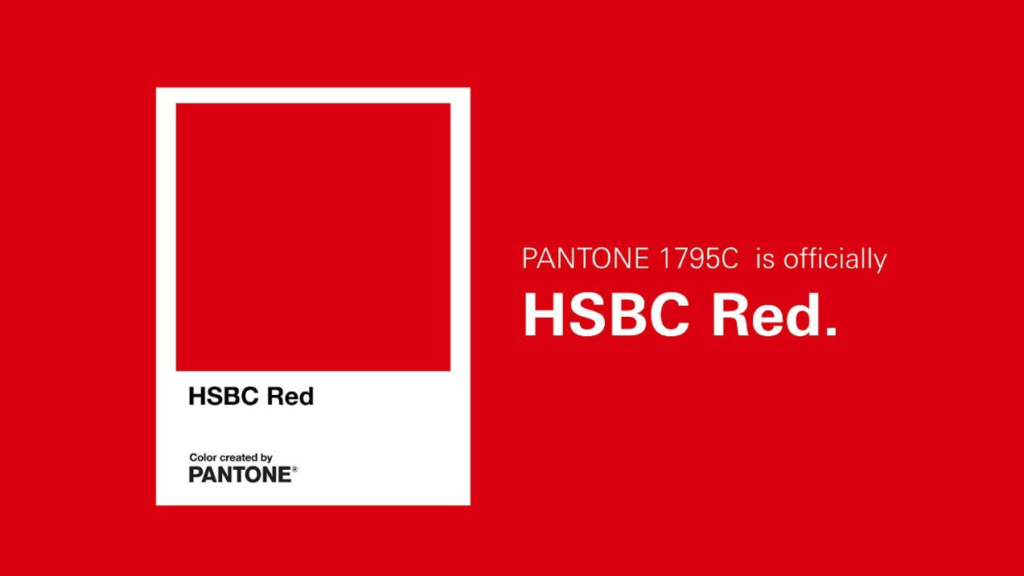
In celebration of its 160th anniversary, HSBC has partnered with Pantone to introduce the signature “HSBC Red”, making HSBC the first Hong Kong financial institution to have its own brand colour.   This elegant, steady, and passionate hue carries strong emotional resonance, while reflecting Hong Kong’s prosperity and auspiciousness. “HSBC Red” is deeply embedded in HSBC’s identity, bearing witness to its journey from a local bank to a global financial institution. To celebrate this milestone, HSBC is launching a series of limited-edition “HSBC Red” themed gifts, including keychains, laptop sleeves, tote bags, and coffee cup sets.  As part of the bank’s anniversary campaign, it has also reimagined its iconic hexagonic red-and-white logo in a hand-drawn commemorative edition by graphic designer Henry Steiner. The globally recognised logo is known for its minimalist yet distinct design that embodies HSBC’s legacy of heritage and innovation.  To mark HSBC’s 160th anniversary, Steiner, who designed the current hexagon logo 40 years ago, has revisited his original sketches to create a special hand-drawn commemorative edition of the logo with a global debut. Additionally, HSBC becomes the first Hong Kong financial institution to collaborate with Pantone, the global colour authority, to officially name its signature brand colour “HSBC Red” and launch a series of exclusive co-branded gifts. These initiatives add a vibrant chapter to HSBC’s story of aesthetics and design. Steiner’s distinctive hand-drawn edition features bold, rough strokes, with triangular segments not neatly filled, and a scribbled “HSBC” font. This approach reflects the importance Steiner places on sketching ideas out by hand. Through Steiner’s inspiration, this hand-drawn edition highlights HSBC’s spirit of entrepreneurship. After being commissioned in 1978, Steiner spent five years designing the iconic logo, which was adopted in 1983. The logo evolved from HSBC’s traditional red-and-white flag, Steiner added two triangles on the left and right sides, symbolising the intersection of Eastern and Western cultures, the inflow of business and customers from all directions. This design encapsulates HSBC’s values of heritage and innovation. Its universal recognisability reflects Steiner’s pride in creating a design that stands out worldwide, with the vibrant red enhancing the brand’s visibility. The public can participate in a lucky draw by correctly identifying the Pantone colour code for “HSBC Red” on HSBC’s social media platforms, with 50 winners receiving a set of all four items.  MARKETING-INTERACTIVE has reached out to HSBC for more information.  Back in March, HSBC unveiled a series of events and experiences that pay tribute to its history and the deep connection it shares with Hong Kong. Under the theme “HSBC 160 Years of Great Stories”, the experiences began at the ground-floor plaza of the iconic HSBC Main Building in Central. This marked the anniversary of HSBC opening its doors on 3 March 1865, at its current location at One Queen’s Road Central. The HSBC headquarters in Central, now in its fourth generation, was designed by British architect Norman Foster. Completed in 1985, it was the world’s most expensive building at the time, according to the release. Flanking its main entrance, the iconic bronze lion sculptures have become enduring landmarks in the heart of Central. Take your brand to new heights with cutting-edge AI strategies, innovative technology, and data-powered experiences. Don’t miss Digital Marketing Asia 2025 in Hong Kong on 20-21 October, where 200+ marketing leaders will explore game-changing trends, proven successes, and bold ideas shaping the future. Related articles: HSBC aims to foster an inclusive HK with community festivalHSBC HK’s Brian Hui steps up as chief customer officer of wealth and personal banking source

HSBC introduces 'HSBC Red' and hand-drawn logo to celebrate 160 years Read More »

The pitch imperfect: Why client feedback is the missing note

Agency partners, we’ve all been part of a pitch — some we’ve won, others we’ve lost. But what often gets overlooked is the valuable insight from the client’s side. Rarely do agency partners hear directly from clients about what went wrong, what stood out, or how agency partners can improve.  Yet, understanding the client’s point of view could be the key to pitching smarter, strengthening relationships, and ultimately, winning more business.  The cost of silence  Industry experts interviewed by MARKETING-INTERACTIVE agree that when brands hold back feedback, they unintentionally hinder agency growth. Shufen Goh, APAC president of mediasense, said that agencies miss out on critical learning opportunities when they don’t hear where they fell short. At the same time, brands lose the chance to shape better future work.  “Over time, this could create a cycle of repeated mistakes, and clients receive proposals that don’t evolve. Giving transparent feedback isn’t a mere formality – it fuels learning, sharpens creativity, and ensures both brands and agencies grow together.”  Furthermore, Leela Nair, managing director, APAC, MEA, Ebiquity added that a lack of feedback not only diminishes pitch quality but also leads to wasted resources and talent drain.  In APAC markets, where relationship-building is culturally significant, this feedback gap can be particularly damaging.  “This could understandably impact the potential agency participation rate in future reviews. We are seeing more agencies become more selective about the reviews that they participate in, so we ensure the agencies are given a full debrief giving due respect to the agencies for their time and interest in our client’s business.”  Kenny Toy, managing director, Accenture Song Hong Kong lead, said the lack of transparent feedback could cause problems by not allowing brands and agency to learn and grow from each other’s experiences or expectations. “For example, brands being open to accept ideas/input/insights outside the brief allows brands to grow their knowledge. On the other hand, to have the agency understand the mismatch of expectations further helps agency’s understanding and knowledge of one brand and the market,” he added. Munas Van Boonstra, managing director SEA at Monks, echoed these concerns, noting that the absence of transparent post-pitch feedback creates systemic inefficiencies.  “For agencies, it means repeating mistakes or misaligned approaches, wasting resources, and lowering morale. For clients, it reduces the likelihood of agencies coming back stronger and more relevant in future opportunities.”  At an industry level, this lack of shared learning stifles innovation – pitches remain transactional rather than developmental, and the overall quality of work delivered across the ecosystem declines over time, she added. “In markets such as Asia, where relationships and trust are especially critical, silence after a pitch damages long-term partnership potential.”  A healthy client-agency relationship  According to Goh, the absence of feedback isn’t usually an oversight — it reflects a deeper issue in how client-agency relationships are managed. “A pitch shouldn’t be viewed as just a transaction; it is an exchange that sets the tone for the quality of collaboration a brand and agency may have in future partnerships.”  When feedback is structured and constructive, even a loss becomes valuable, giving agencies insight into where they fell short and the chance to sharpen their performance, she added. “This not only builds trust and leaves a positive impression that can foster more effective collaboration in future engagements, but also drives stronger outcomes for both sides.”  Agreeing with her was Monks’ Boonstra, who said a standardised, constructive, and legally-safe feedback process would enable clients to share reflections without fear of liability. “Such a process could be codified into a simple framework: outlining what worked well, what fell short, and where improvements could be made.”   Keeping feedback objective, focused on the work rather than individuals, and embedded as a time-bound step in the pitch cycle ensures it becomes routine rather than exceptional, she said.   “For agencies, the key is to signal that feedback is welcomed as a mechanism for mutual growth rather than criticism. When applied consistently, this approach shifts pitches from one-off transactions into meaningful milestones within a longer-term partnership.”  What does effective, standardised feedback look like?  While feedback is critical, Goh cautioned that too much detail can sometimes be counterproductive. Agencies may overcorrect or lose confidence in their unique approach.  Constructive feedback strikes a balance by providing clear insights aligned with agreed metrics, highlighting gaps without being personal or punitive, she said. The best agencies absorb this feedback, adapt, and move forward without losing their edge. Sometimes, internal politics get in the way of ensuring the whole pitch team receives the feedback.  The most effective feedback process begins at the start of a pitch, during the briefing and planning stages, said Goh. “Establishing a clear framework early allows brands to identify and communicate key areas for improvement.”  “We recommend clear and concise documented feedback, which should be used for client-side alignment as well as for sharing with agencies. From our experience, the degree of transparency that clients are willing to share varies widely.”  As part of the clear framework, clients should limit feedback to three to four key areas such as strategic alignment, creativity, financials and chemistry; as well as avoiding subjective or personal remarks, such as focusing on “fit” rather than “failure.”  “Clients should also highlight what could be improved for future engagements such as ‘We were looking for more regional case studies’ vs. ‘We didn’t like your idea’ or ‘There insight was provocative, but it didn’t quite anchor itself in the business challenge.’ vs ‘We didn’t understand the insight.”  Some industry bodies such as the 4As already encourage structured debriefs as a best practice, but in APAC it’s far from standardised, she said. “It would be great to see brands adopting even a simple checklist process, it would elevate professionalism across the board.”    Ebiquity’s Nair said it is important that the agencies receive structured and comprehensive feedback in a timely manner addressing strategic understanding and insight quality; creative approach and execution; capability demonstration; cultural and team fit as well as commercial proposition.  “Sometimes we find that

The pitch imperfect: Why client feedback is the missing note Read More »

Edelman and Omnicom top Clean Creatives’ 2025 F-List for fossil fuel ties

The advertising industry’s ties to fossil fuel clients are often kept in the shadows, but campaign group Clean Creatives is determined to drag them into the light. Its latest F-List report for 2025 details 1,217 active or recent contracts between polluters and communication agencies, making it the most comprehensive database of its kind. The contracts span 709 agencies across the globe, covering every major holding company as well as independents. Asia Pacific accounts for 275 of those contracts – a 26% jump on last year with Australia alone responsible for 156. New signings include GRA Partners (GRACosway) with Alinta Energy, CMAX Advisory with BP, Font Public Relations with Tasmanian Gas Pipeline, Topham Guerin with Australians for Natural Gas and the Minerals Council of Australia, and SBS CulturalConnect with AGL Energy. Elsewhere, Ogilvy India has signed Jio-BP, Havas Play has taken on Nayara Energy, and Adfactors PR works with Bharat Petroleum. Globally, Omnicom tops the league table with 120 contracts, followed by WPP with 82 and Publicis with 34. But Edelman stands out for another reason: its dependence on fossil fuel accounts. For the first time, the F-List introduces a Fossil Fuel Income Risk Exposure (FFIRE) index, which overlays agency revenue with Big Oil contracts. The index ranks Edelman at the top, with 5.64% of its global income estimated to come from fossil fuel work — more than 20 times higher than Publicis and nearly 40 times higher than Dentsu. That reliance creates what Clean Creatives calls an “existential conflict of interest,” given Edelman’s role as an agency of record for Shell and its newly announced work with the COP30 climate talks in Brazil. “Globally, fossil fuel advertising and PR makes up less than 1% of marketing spend, while Edelman relies on polluters for more than 5% of their revenue. There is literally no agency worse suited for a role at COP30,” said Duncan Meisel, executive director of Clean Creatives. Nayantara Dutta, head of research at Clean Creatives, added that the report shows agencies’ claims of driving a transition to renewables don’t match reality. “In our fifth year of publication, we have found more contracts than ever before. The creative industry urgently requires an integrity check and large-scale systemic change,” she said. The findings also reveal the techniques agencies use in Asia-Pacific, where Clean Creatives noted a recurring emphasis on “human connection” in fossil fuel campaigns – framing oil and gas companies as brands that care, even as their core business remains carbon-intensive. Clean Creatives is now backed by over 1,400 agencies and 3,700 individual creatives who have pledged not to work with fossil fuel clients, a counterweight to the contracts uncovered in the F-List. The divide highlights an industry increasingly split between those betting on polluters and those positioning themselves as part of the clean-energy future. source

Edelman and Omnicom top Clean Creatives’ 2025 F-List for fossil fuel ties Read More »

Consumers demand values and personalisation, but brands are falling short

Shoppers aren’t just buying products anymore, they’re buying into values. According to VML’s ninth annual “Future Shopper” report, 59% of global consumers say they are more likely to purchase from companies that speak and act positively about diversity and social issues. The study, which surveyed more than 25,000 shoppers across 16 countries, found that despite years of digital acceleration, many brands are still falling short on the fundamentals of customer experience, exposing a gap between consumer expectations and delivery on value, speed, and trust. Almost half of shoppers (47%) have already shifted their shopping habits to favor companies that align with their political views, while 49% say they are more likely to buy from brands that take clear social and political stances. Don’t miss: Report: 63% of Singaporean grocery shoppers welcome new brands despite unfamiliarity Younger consumers are the most driven by these values. Among those aged 25 to 34, 66% say they are more likely to buy from companies that support diversity and social issues, followed by 64% of 16 to 24-year-olds, 61% of 35 to 44-year-olds and 54% of 45 to 54-year-olds. Those aged 55 and above are the least likely to do so, at 45%. Health and wellness is another area shaping purchase decisions. Globally, 61% of shoppers say their focus on health impacts what they buy and who they buy from. While this might be expected among the youngest demographics, the highest percentage was actually among 25 to 34-year-olds at 66%, followed by 35 to 44-year-olds at 63%. Both the 16 to 24-year-olds and the 45 to 54-year-olds came in at 59%. That said, the overall global figure is down from 66% in last year’s survey, suggesting the health-driven mindset may be softening. At the same time, consumers are showing signs of digital fatigue. More than half (53%) say they sometimes feel overwhelmed by technology and like the idea of being liberated from it. Again, the 25 to 34-year-old age group reported feeling this most strongly, with 59% in agreement. Beyond values and wellness, the report highlights personalisation and loyalty as key battlegrounds for brands, with consumers quick to voice frustration when experiences miss the mark. According to the study, 45% of shoppers believe most brands and retailers do a poor job of personalisation, while only 18% disagree. In fact, 40% say they are disappointed with the level of tailored experiences offered today. Nearly half (49%) feel that personalised recommendations are random and irrelevant, while 64% say branded emails often come across as generic and automated. The perception of “fake personalisation” is another sore point. Half of global shoppers (50%) say personalisation often feels like upselling in disguise, while 45% find it frustrating when gift shopping skews their future recommendations. Yet, when done right, personalisation pays off. Nearly two-thirds (64%) say it makes online shopping more efficient, while 60% are more likely to buy from brands that remember their preferences. Another 67% say they prefer retailers who make it easy to pick up where they left off. Product discovery is also enhanced, with 63% agreeing that personalised recommendations have introduced them to items they would not have found otherwise. Personalised offers remain among the most powerful drivers. 61% percent of shoppers find location-based deals useful, 59% say they have purchased something after receiving a birthday treat, and 71% value personalised loyalty rewards. Reminders to repurchase items are also appreciated by 57% of consumers. The message is clear: shoppers respond best to personalisation that delivers tangible benefits. Leading the list are personalised offers and deals (30%), tailored discounts (27%) and loyalty rewards (26%). Convenience also matters, with remembered payment details (21%) and saved preferences (18%) cited as valuable time-savers. Despite lingering disappointment, consumers appear willing to share their data if the trade-off is worthwhile. While 25% remain reluctant, 47% say they are prepared to hand over significant amounts of personal information for a hyper-personalised experience. However, concerns remain, with 59% uneasy about their data being shared with foreign organisations. When it comes to loyalty, product quality and convenience continue to outrank price. High-quality products, reliable availability, free and fast delivery, and excellent customer service are the biggest drivers of repeat purchase. Interestingly, price only ranks seventh, tied with loyalty programmes. These programmes, however, bring added benefits, from improving the overall shopping experience to entertaining consumers. In fact, 59% of shoppers say they want to be better entertained when shopping, and gamified loyalty mechanics such as “spin to win” or “collect all tokens” are proving effective in turning satisfaction into loyalty. “’Future shopper 2025′ is a reminder for brands and retailers everywhere. The data is clear: consumers are continuing to raise the bar on what they expect – faster delivery and seamless experiences, whilst at the same time re-evaluating what they purchase and when,” said Jeff Gehab, global CEO, VML Enterprise Solutions.  He added, “Yet, many businesses are missing the mark on the fundamentals of customer experience. Retailers and brands must find a way of offering the best experience right now, while building the experience of the future in parallel.”  Accelerate your brand’s growth with AI-first strategies, emerging tech and data-driven experiences. Join the industry’s leading marketers at Digital Marketing Asia 2025 Malaysia on 30 October to uncover transformative trends, real-world wins and powerful ideas for 2025 and beyond. Related articles: Study: Two in three APAC online shoppers say next-day delivery is important   Survey: 70% of APAC online shoppers prioritise sustainability in their purchases What are women in Singapore spending on? source

Consumers demand values and personalisation, but brands are falling short Read More »