marketing interactive

Can football and finance collide? Arsenal thinks so

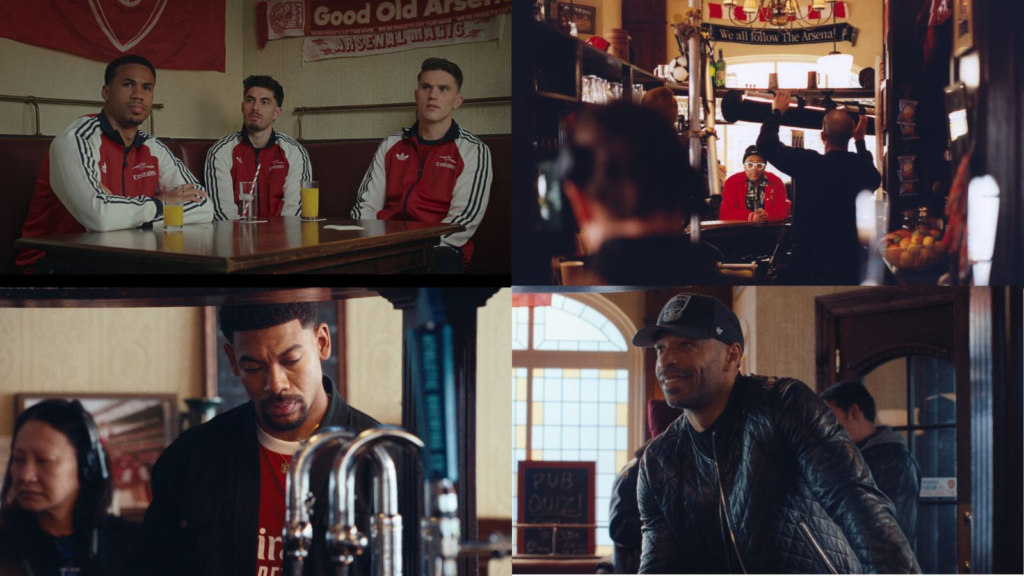
Airwallex has partnered with Arsenal FC and Academy Award-winning director Spike Lee for a film that blends football culture, celebrity storytelling and global finance. The campaign, titled “Who are ya?”, is a two-minute film created by UK creative agency Uncommon that positions complex business-to-business finance through the lens of football fandom and community conversation. Directed by and starring Spike Lee, a lifelong Arsenal supporter, the film is set in a North London pub on matchday and features a mix of former and current Arsenal players including Thierry Henry, Martin Keown, Rachel Yankey, Viktor Gyökeres and Kai Havertz. They are joined by Arsenal fans from film and television, including Aaron Pierre, Jasmine Jobson and Nick Moran. Don’t miss: ‘Signing is the easy part’: How Airwallex turned sport into a global growth engine At its core, the film plays on the idea that football supporters are already deeply engaged in global systems of movement, transfers and “financial logic”, drawing a parallel with the challenges faced by businesses managing cross-border payments. Airwallex, which provides global payments and financial infrastructure for businesses, is positioned in the campaign as a solution to those complexities. The company is Arsenal’s official software partner, supporting the club’s international financial operations and growth. Matt Jennings, global creative director at Airwallex, said the campaign is designed to feel authentic to football culture rather than traditional corporate advertising. “Arsenal supporters are among the most passionate and financially engaged supporters in football,” he said. “This film is a genuine conversation with football supporters about money and lets us tell that story in a way that feels authentic to this community.” Spike Lee, who directs and appears in the film, said the campaign reflects the evolving nature of football fandom. “Fans today don’t just follow the game, they understand everything around it too,” he said. “Bringing Airwallex into that conversation felt natural, because the film plays on how fans now talk about the business side of football just as much as what happens on the pitch.” The campaign will run across Sky channels and digital platforms, launching ahead of Arsenal’s match against Newcastle on 25 April, with further rollouts planned around the end of the season, the 2026 World Cup and the start of the 2026/27 Premier League season. The launch builds on Airwallex’s wider global sports strategy, which includes partnerships with McLaren Racing and the San Francisco Giants, as it continues to position itself as a global financial infrastructure brand targeting fast-growing, internationally scaled businesses. Related articles:  Essendon lands Airwallex as co-major partner in multi-year deal  Airwallex signs multi-year Arsenal deal to fuel brand push  Interview: Why Airwallex took over Ten Square with a huge Lando Norris OOH ad  source

Can football and finance collide? Arsenal thinks so Read More »
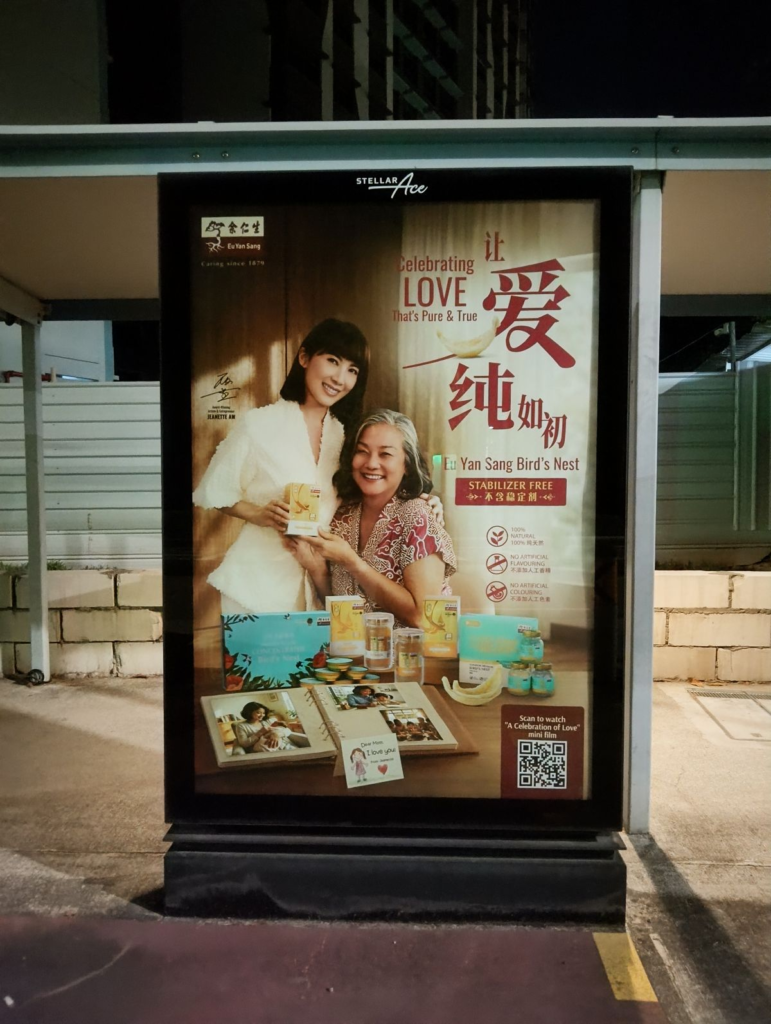
How Eu Yan Sang made Mother’s Day cinematic without losing its roots

As heritage brands navigate a faster-moving, more ROI-conscious marketing landscape, the challenge is no longer simply preserving tradition but keeping it relevant. For Eu Yan Sang Singapore, Mother’s Day 2026 became an opportunity to do both. The wellness brand has launched a seasonal campaign featuring brand ambassador Jeanette Aw, built around cinematic storytelling that celebrates a mother’s unconditional love while reinforcing the purity credentials of its premium bottled Bird’s Nest. The campaign film features Aw putting together of bird’s nest for her mother, before gifting her a bottle of Eu Yan Sang Singapore’s ready-to-drink bird’s nest. Aw’s narration likens the brand’s ingredients and products to a mother’s love: made from the purest ingredients, infused with heart and prepared with love.  Don’t miss: Eu Yan Sang picks brand partner to give 150 years a modern twist  Beyond the emotional film, the campaign reflects a broader shift in how a 146-year-old heritage brand is rethinking seasonal storytelling for modern consumers, while also stretching production efficiency across channels. For this year’s campaign, Eu Yan Sang moved away from overtly promotional gifting cues and familiar festive tropes. Instead, it centered on a universal emotional truth: a mother’s love is steadfast, selfless and quietly enduring. “Consumers today still value traditions, but they experience them differently. They want stories that feel authentic and relevant to modern life. Our role is to honour heritage while expressing it in ways that feel fresh and contemporary,” said Sharon Tan, head of marketing, Eu Yan Sang Singapore when MARKETING-INTERACTIVE reached out.  The campaign was also designed with production efficiency in mind. Rather than treating each asset as a separate shoot, Eu Yan Sang consolidated filming for multiple campaign chapters alongside key visual photography into a single production day. This approach enabled the brand to generate a suite of assets for use across social and digital platforms, CRM and EDM channels, in-store retail touchpoints, eCommerce platforms and future campaign rollouts. Tan said the approach reflects how marketers are increasingly expected to balance creativity with commercial discipline. “Today, marketers are expected to do more with every dollar. For us, efficiency isn’t about cutting budgets or compromising the quality of our executions — it’s about planning smarter, maximising every production moment, and ensuring each content asset works harder across channels,” she said. For heritage brands such as Eu Yan Sang, seasonal campaigns remain important commercial moments, but are increasingly also used to build relevance with younger, digitally native audiences. Rather than relying on nostalgia alone, brands are now expected to combine trust, product truth and emotionally resonant storytelling, delivered consistently across channels. “For heritage brands, relevance is never about abandoning tradition. It is about translating timeless values into stories that resonate with each new generation,” Tan added. This approach builds on Eu Yan Sang’s broader seasonal storytelling strategy, including its Chinese New Year 2026 campaign themed “心意相承” (“Heart to heart”), which similarly reframed festive gifting as a continuation of intention across generations rather than a transactional exchange. Fronted by Aw, the campaign positioned gifting as a cultural language of gratitude and care, supported by cinematic storytelling and a modern visual direction designed to resonate with younger consumers while preserving heritage values. Related articles:   Eu Yan Sang introduces menstrual monsters. Can you tame them?  Eu Yan Sang captures the highs and lows of adulthood in festive microdrama  Eu Yan Sang elevates Lunar New Year gifting with Jimmy Choo collaboration  source

How Eu Yan Sang made Mother’s Day cinematic without losing its roots Read More »

Sentosa names PR agency

Sentosa Development Corporation (SDC) has reappointed We Communications as its public relations agency to support its strategic communications and media engagement efforts. The contract spans an initial period of two years, with the option to extend for a further three years on a yearly renewal basis, bringing the total potential duration to five years. Under the agreement, the agency will be tasked to deliver an integrated suite of communications services. This includes the development and execution of content and communications plans aimed at driving impactful media engagement, alongside advisory and executional support across key public relations functions. Don’t miss: Sentosa evolves brand to inspire wellness and balance with new campaign  The scope of work also covers issues and crisis management, earned media and influencer engagement, stakeholder communications, and the development of thought leadership and corporate profiling initiatives. The agency is also responsible for ongoing account management, including coordination with internal teams and the delivery of consistent reporting and strategic counsel. In addition to retainer-based services, the contract provides for project-based work across campaigns of varying scale. The agency is expected to support both large- and medium-sized campaigns, encompassing end-to-end communications planning, media strategy, and execution. The appointment also includes the provision of annual media training, with full-day sessions designed for Sentosa spokespersons. In a statement to MARKETING-INTERACTIVE, Chris Pok, divisional director, marketing and guest experience, SDC said “we’re glad to continue working with We. Communications following a competitive open tender process. They presented a clear and well-integrated strategy that supports our ambition to establish Sentosa as the world’s best-loved island playground and sanctuary within a global city.” The agency was also able to take a holistic view of how SDC drives visitation through its attractions and leisure offerings, said Pok. “We’re excited to build on our strong partnership in the upcoming years,” he added.  The appointment comes amid a broader wave of public sector and tourism-related communications pitches in Singapore, as destination and government bodies ramp up efforts to sharpen their global positioning and storytelling. Earlier this year, the Singapore Tourism Board appointed Edelman as its public relations agency following a competitive pitch, tasking the firm with supporting communications and marketing efforts across both always-on activity and high-profile campaigns. Related articles:  Have you seen these giant lobsters on Tanjong Beach?   Mickey and Minnie Mouse join King Mu’s eight steeds in Sentosa’s CNY spectacle  RWS and Sentosa go ‘Wicked’ with islandwide cinematic takeover  source

Sentosa names PR agency Read More »

Instagram tests 'Instants' for disappearing photo sharing

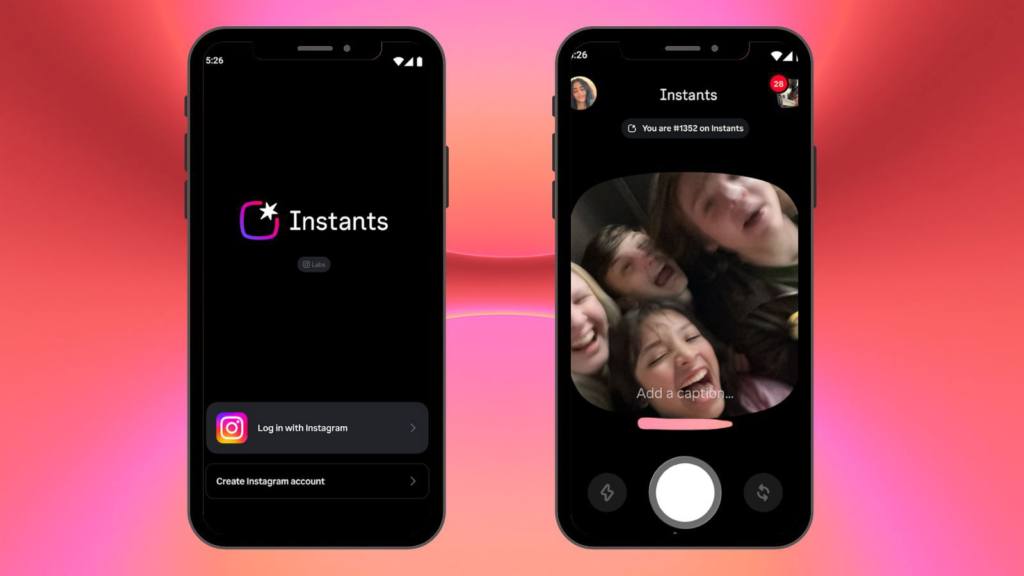
Instagram is reportedly testing a new standalone app called “Instants”, marking its latest move into ephemeral, low-pressure social sharing— drawing parallels with Snapchat, BeReal and Locket. The app, currently available in Italy and Spain on iOS and Android, is designed around sharing unfiltered photos and videos that disappear after being viewed once within a 24-hour window. According to its Google Play description, Instants encourages users to “share the realest moments” from their day, positioned as “real life, real quick”. Users capture content directly through an in-app camera, with no option to upload from the camera roll. Editing tools are intentionally limited, with only basic text overlays allowed, reinforcing the app’s focus on authenticity over curation, according to media reports.  Don’t miss: How Instagram’s skinny cinematic reels are stealing the scroll Content can reportedly be shared with mutual Instagram followers or Close Friends lists, which remain consistent across both Instagram and Instants. Posts can be viewed within the 24-hour period but disappear after being opened once, aligning closely with existing ephemeral formats in the social media space. Meta has reportedly not confirmed plans for a wider rollout or desktop version. However, a spokesperson told Business Insider the company is exploring multiple versions of Instants to see what people like, adding that it aims to give people low-pressure ways to connect with friends. While Instants is tied to Instagram accounts, users can reportedly access it either as a standalone app or through Instagram itself, reflecting Meta’s approach of testing features across formats before scaling. The concept echoes features seen on Snapchat, BeReal and Locket— all of which have built engagement around real-time, unedited sharing. Reports noted that the app also mirrors Instagram’s earlier “Shots” feature, later rebranded to Instants within messaging, underscoring Meta’s continued interest in short-form, casual visual communication. MARKETING-INTERACTIVE has reached out for more information. Against the backdrop of its ongoing product experiments, Meta has also been testing monetisation angles within Instagram. Earlier this month, Meta had begun trialling a premium subscription plan called Instagram Plus in select markets. The paid tier includes features such as letting users view Stories anonymously, alongside insights into how many people have rewatched their Stories. Subscribers are also able to build multiple audience lists for Stories, going beyond the standard Close Friends setup to better segment who sees what. Other features include extending Stories for an additional 24 hours and spotlighting a Story once a week to boost visibility at the top of followers’ feeds. Related articles: Meta Malaysia to roll out expanded teen safety features for Instagram   Instagram keeps it Reel for first-ever Thai campaign   Instagram is now searchable: What it means for brands and content creators source

Instagram tests 'Instants' for disappearing photo sharing Read More »

The Standard, Singapore flips the script with city-wide graffiti hunt

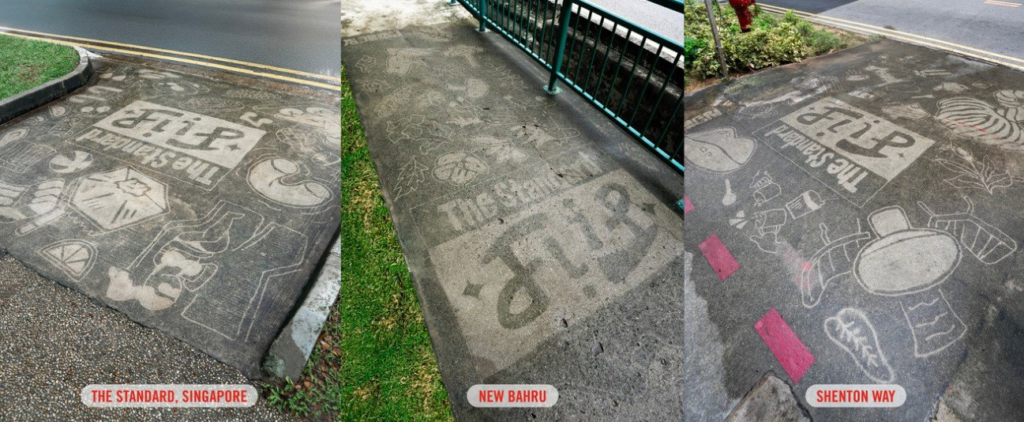
The Standard, Singapore is taking its brand ethos of “no subtlety” into the streets with a new city-wide campaign, “Flip The Standard”, transforming everyday urban spaces into a playful art hunt across Singapore. The activation hides three reverse graffiti artworks across different neighbourhoods, created in collaboration with local artist Marcus (@gazing.pw). Using only water and high-pressure cleaning techniques, the installations are “drawn” onto pavements without paint or chemicals, designed to gradually fade back into the city over time. Each artwork is designed as an ambigram, reading “Flip The Standard” one way and “The Standard Flip” the other, reflecting the campaign’s theme of perspective shifts and reinvention. The pieces are located across New Bahru, Shenton Way, and The Standard, Singapore itself.  New Bahru represents creativity and the new wave of local culture while Shenton Way captures the contrast between corporate polish and after-hours energy. The Standard itself anchors the campaign at the brand’s home, where that sense of the unexpected is always present. Don’t miss: Why Fairmont Singapore is splashing into Baby Shark territory  The city-wide hunt format was a deliberate choice to bring the hotel’s bold energy off the property and in to the pulse of Singapore, turning the city itself into a canvas. Meanwhile, the  “Reverse graffiti felt like the perfect medium because it embodies the campaign’s core idea: instead of imposing something new, it reveals what’s already there. It’s about contrast, perspective and seeing the familiar differently,” explained the spokesperson.  “The Standard, Singapore has always been about bold self-expression, creativity, and the unexpected. ‘Flip The Standard’ brings that to life by challenging expectations, reflecting the brand’s irreverent spirit and its role as a cultural player that engages with Singapore in creative, unconventional ways,” added the spokesperson.  Meanwhile, Marcus was a “natural fit” because his practice is rooted in rethinking how everyday spaces can be experienced. “Like the campaign itself, his work doesn’t add noise — it reframes what’s already there, flipping the conventional gaze and inviting people to see the familiar in an entirely new light,” said a The Standard, Singapore spokesperson.  The campaign invites the public to participate in a “find, snap and win” challenge by tracking down all three installations, sharing their discoveries, and showing how they “flip their standard” through personal style, mood or perspective. Participants who complete the hunt stand a chance to win a two-day, one-night stay at the hotel. The contest runs until 2 May 2026. “Most hotels invite people in. ‘Flip The Standard’ doesn’t just invite people in, it meets them where they are, turning everyday environments into moments of interaction. This outward, playful approach reinforces the brand’s bold personality and positions it as a cultural provocateur rather than just a place to stay,” noted the spokesperson.  Measurement for the campaign includes tracking participation and reach, including the number of completed hunts, user-generated content, and social reach. Beyond metrics, the deeper measure of success is cultural resonance. By blending street art, interactivity and location-based discovery, “Flip The Standard” extends the hotel’s irreverent positioning beyond its walls, turning Singapore itself into part of the brand experience. The campaign reflects a broader shift in hospitality marketing across Asia Pacific, where brands are increasingly building experiences around travel, culture and lifestyle moments rather than just accommodation. Most recently, Hyatt Hotels Corporation has been leaning into this through its focus on wellness- and event-led travel, including partnerships such as HYROX, which position hotel stays as part of a wider “racecation” ecosystem that blends sport, recovery and destination experiences. Meanwhile, Far East Hospitality has experimented with more visually driven storytelling formats, including fake out-of-home campaigns that reimagine its properties as larger-than-life digital installations across Singapore, underscoring how hotels are increasingly using both real-world and digital experiences to extend brand engagement beyond traditional stays. Related articles:    How Raffles Hotel is banking on the buttler to modernise luxury Marriott Bonvoy makes loyalty as easy as checking in   Shangri-La Singapore turns music into a full-body wellness experience  source

The Standard, Singapore flips the script with city-wide graffiti hunt Read More »

In Conversation: Are we forgetting what makes marketing work?

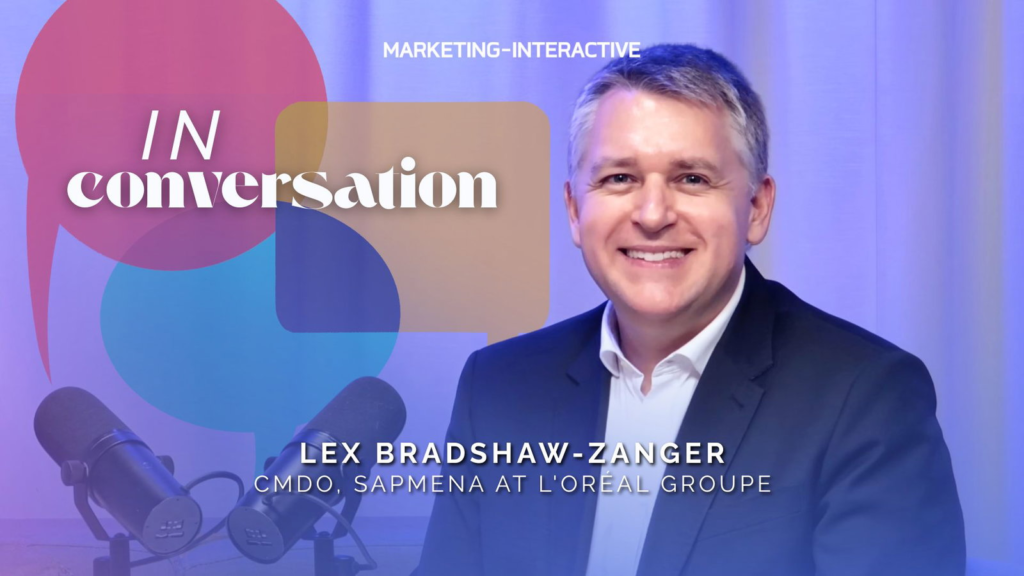
After a career spanning agencies, tech platforms, and global brands, Lex Bradshaw-Zanger has seen marketing from nearly every angle. From his early days at WPP and Leo Burnett, to stints at Facebook and McDonald’s, and now as chief marketing and digital officer for SAPMENA at L’Oréal Groupe, he sits down with Marketing Connected’s “In Conversation” to discuss his journey. Now based in Singapore, Bradshaw-Zanger oversees the vast South Asia Pacific, Middle East, and North Africa region spanning 13 time zones. It is also, in his view, where “the future is happening”, particularly across content, commerce and media. Don’t miss: Agency agenda: VaynerMedia’s Marcus Krzastek on AI, media, and creative convergence Yet despite the rapid pace of change, he is clear on one thing: the distinction between digital and traditional marketing no longer holds. “When you say digital, it implies that there’s a non-digital as well, which there isn’t anymore,” he said.  Catch the full interview here on YouTube: Instead, digital should be seen as the infrastructure, not a discipline. It is “an ecosystem, a set of tools, and a way of thinking about platforms, data and technology that empowers marketing,” he added. Bradshaw-Zanger believes the fundamentals of marketing remain unchanged. “Marketing hasn’t changed, but marketers must,” he said, adding that while tools and platforms have evolved, human behaviour has not. We’re still emotional, irrational people. We buy brands sometimes for reasons that we don’t understand. This, he argues, makes foundational principles, such as brand building, consumer insight, and reach and frequency, more important than ever. For a company such as L’Oréal, operating across dozens of markets, this plays out in the balance between global consistency and local nuance. Bradshaw-Zanger emphasised the importance of defining what remains fixed within a brand, regardless of geography. “I need to understand what is fixed. What is my brand about— that, is not movable,” he said. There are things about brands that have to be fixed, and then there are elements that make them locally relevant. At the same time, local teams are empowered to adapt how those brand codes come to life. In an era where consumers are increasingly globalised, the challenge is no longer top-down execution, but collaboration across markets. Also tune in to the full conversation on Spotify: Tune into the rest of this conversation on your favourite podcast platforms, by searching up Marketing Connected. For all the visual people out there, we’ve got your back as well, with our vodcasts on YouTube. Related articles: Women who lead: Love, Bonito’s Dione Song on redefining Asian fashion leadershipIn conversation: Reinventing influence in the age of content In conversation: How tech is powering a global tea brand  source

In Conversation: Are we forgetting what makes marketing work? Read More »

Vaseline wants to protect your nipples

Vaseline took its “safe from the chafe” positioning quite literally at the 2026 TCS London marathon, held on 26 April, stepping in as the “Official nipple protector” for one of running’s most awkward pain points. The campaign, created by Ogilvy Singapore, sits under the brand’s global initiative “The nipple sponsorship” and supported more than 100,000 nipples across race weekend, as tens of thousands of runners took to the streets of London. As part of the activation, Vaseline distributed its petroleum jelly products at the TCS London marathon running show from 22 to 25 April, alongside designated “Nip stops” along the 26.2-mile course on race day to help runners manage friction mid-run. The idea was simple: reduce chafing, reduce bleeding, and keep runners focused on the finish line rather than uncomfortable wardrobe friction. Don’t miss: Why Vaseline is teaming up with a real Nigerian prince  Nipple chafing, often referred to in running circles as “runner’s nipple”, remains a widely experienced but rarely discussed issue. Research cited by the brand shows that around 92% of marathon participants experience chafing during a race, with 67% reporting bleeding. Around one in three runners experience irritation specifically in the nipple area. With marathon participation continuing to rise globally, Vaseline is positioning the issue as a preventable but overlooked part of race preparation, often secondary to training, hydration and nutrition. The campaign forms part of a wider global rollout of “The nipple sponsorship”, which has been activated across running communities and events in cities including Singapore, Barcelona, Madrid, Rotterdam, Sydney and Hong Kong, with further expansion planned through the 2026 running season. Beyond on-ground activations, Vaseline also extended the campaign into creator partnerships, “sponsoring” running influencers to share nipple care and skin protection tips alongside marathon training content. Participants include content creators Johnny Morillo, Andrew Wheatcroft, Gregor Macdonald, Lee Roberts, James Thomas, Calum Harris, Adam Moriarty and Jordan Izzett. Ogilvy Singapore drew insights from the brand’s “Vaseline verified” platform, where community-submitted skincare hacks were tested and validated. Among them, nipple protection for runners emerged as a consistently effective but under-discussed use case for Vaseline Jelly. The platform previously highlighted how real-world skincare hacks could be validated at scale, with this campaign extending that idea into one of the world’s most visible endurance events. “‘The nipple sponsorship’ recognises a hack trusted for decades. This isn’t about one race or one city. It’s about Vaseline showing up for every runner, on every course, at every distance, and making sure no one suffers a pain that was always preventable. We’re here to protect nipples, globally, and we’re not shy about saying it,” said Nathalia Amadeu, global brand director, Vaseline, Unilever.  In tandem, Nicolas Courant, chief creative officer, Ogilvy Singapore said, “The moment you say ‘Vaseline is sponsoring nipples,’ you’ve already won the room, but the idea runs deeper than the laugh. This is a brand claiming ownership of a real, universal runner’s truth that nobody else had the courage to name out loud. Runners across the world already rely on Vaseline for this, and now we’re making it official, everywhere, not just at a finish line.” Aanchal Sethi, Asia managing Unilever at Ogilvy Singapore, noted the idea stemmed from insights surfaced through Vaseline’s “Verified” platform, which highlighted how closely communities share and validate everyday skincare hacks. Among the most consistent themes was runners discussing nipple protection as a practical but overlooked use case. She added that the campaign builds on this behaviour-led insight, turning an existing community-driven solution into a broader brand platform by amplifying a truth already being used at scale. The campaign builds on earlier efforts from the brand to turn community behaviour into structured innovation. Earlier this month, Vaseline rolled out “Vaseline originals (OGs)”, a global campaign developed with Ogilvy Singapore that transforms viral skincare hacks into actual product formats. The initiative expands on the “Vaseline verified” platform, however, instead of stopping at verification, the brand is now moving into co-creation, translating user-invented shortcuts into shelf-ready products while crediting the original creators behind them. The launch draws inspiration from early digital beauty creators, including Jen Chae (@frmheadtotoe), who popularised a Vaseline brow-taming hack in 2008, and YouTube creator Lauren Luke (@laurenluke_panacea81), known for a Vaseline-based primer hack that made pro makeup techniques more accessible. Related articles: Vaseline leans into generational love and childhood rituals in new film  Vaseline merges sun-soaked drama with skincare in ‘The White Lotus’ campaign  Players delete in-game skins with Vaseline to highlight skin donor shortages  source

Vaseline wants to protect your nipples Read More »

How Sentosa and SingPost are mailing nostalgia from the edge of Asia

Sentosa Development Corporation (SDC) and Singapore Post (SingPost) have unveiled what they are calling Singapore’s “most scenic posting box” at Palawan Beach, in a move that blends tourism with nostalgia-driven communication. The initiative invites visitors to slow down and reconnect with the art of letter writing, offering curated postcard kits that allow both local and international guests to send personalised messages from one of Sentosa’s most recognisable coastal viewpoints. Positioned at a rest stop overlooking the Southernmost Point of Continental Asia, the installation builds on the site’s status as a popular photo stop for visitors. The area has long drawn crowds for its panoramic views and symbolic positioning at the edge of continental Asia. Don’t miss: Sentosa names PR agency With the new postal experience, SDC is positioning the activity as a new island ritual, encouraging visitors to pause, take in the scenery, and create tangible keepsakes of their visit. Guests can purchase limited-edition postcard kits from a vending machine located before the suspension bridge leading to the Southernmost Point. The kits are also available via Sentosa’s website and guest service counters across the island. At the site, visitors can also stamp their postcards with an exclusive embossed impression available only at the location. They can then write their messages on-site, with views of the South China Sea as a backdrop, before posting them at Singapore’s most scenic posting box. SDC said the experience is designed to transform a simple act into a lasting memory that travels beyond the island, reinforcing Sentosa’s positioning as a destination for experiential moments. The installation is now operational at Palawan Beach. Visitors are encouraged to share their experience on social media using the hashtag #SentosaPostcard, with the suspension bridge and posting box set-up designed as key photo moments. “This new initiative represents more than just a posting box. It is about creating meaningful connections that extend far beyond our shores. There is something magical about handwriting a message with this scenic backdrop,” said Michael Ma, assistant chief executive (business and digital technology group), Sentosa Development Corporation. He added, “When guests send these postcards from Sentosa, they are not just sharing a moment, they are taking the time to reflect on their Sentosa experience and share that joy with families and friends across the globe. This transforms a tourist moment into a personal connection.” In tandem, Goh Chee Hiong, vice president of operations, Singapore Post Limited said, “At SingPost, every delivery carries more than its contents — it carries a connection between people. We are proud to bring our postal network to one of Singapore’s most beloved destinations, and to play a part in how visitors choose to remember their time here. We hope every postcard posted at Palawan Beach on Sentosa finds its way to someone who treasures it.” The postcard initiative follows a broader push by Sentosa to deepen immersive visitor experiences on the island. Earlier this year, the island destination rolled out its Chinese New Year campaign “Gallop into spring”. The multi-sensory celebration featured Disney characters Mickey and Minnie Mouse at Sentosa Sensoryscape for the first time, alongside large-scale installations inspired by the ancient tale of the Eight Steeds of King Mu. The space was transformed into interactive zones engaging sight, sound, touch, scent, and imagination, anchored by an 8-metre celestial guardian figure flanked by Mickey and Minnie installations, alongside thematic displays symbolising virtues such as vitality, harmony, renewal, and prosperity. Related articles: Sentosa evolves brand to inspire wellness and balance with new campaign   RWS and Sentosa go ‘Wicked’ with islandwide cinematic takeover   Cable cars get a nyonya twist as Sentosa turns cultural for SG60   source

How Sentosa and SingPost are mailing nostalgia from the edge of Asia Read More »

AI use rises, but so do trust demands from Singaporeans

Clear disclosure of AI use is emerging as a critical factor in maintaining consumer trust, with 84% of Singaporeans saying it is important for AI-generated content to be clearly labelled, according to a new global study by YouGov and Meltwater. The “Trust in the age of generative AI” report also found that nearly half (49%) of respondents said their trust in a brand would decrease if AI use was not disclosed, underscoring the reputational risks tied to a lack of transparency. Drawing on insights from nearly 10,000 consumers across Singapore, Australia, Canada, France, Germany, the UK and the US, the report examines expectations around transparency, authenticity and credibility as AI adoption accelerates. Don’t miss: AI momentum builds across Southeast Asia, but gaps persist Despite growing acceptance, concern remains high. While 55% of Singaporeans said they are excited about the future with AI, a significantly higher 83% expressed concern about its growing role in daily life. Additionally, the report highlighted that misinformation emerged as the top worry, with 74% of respondents saying AI-generated content could be used for fake news or scams. Another 68% flagged incorrect or misleading information, while 64% pointed to difficulty identifying AI-generated content. Misuse of personal or sensitive data (58%) also ranked among key concerns. Even so, respondents acknowledged the benefits of generative AI. Around 58% pointed to faster content creation, while 56% highlighted idea generation and 54% cited improved accessibility for those without technical or creative skills. Awareness of AI-generated content is also rising, particularly among younger consumers. More than six in ten Singaporeans (64%) believe they can identify such content, with confidence highest among those aged 18 to 24 (89%). Men also reported slightly higher confidence than women (67% versus 61%). Sentiment towards brands using AI remains mixed. While 23% of respondents said they are less likely to trust brands that use AI-generated content, 18% reported increased trust, suggesting an opportunity for companies that adopt transparent and responsible practices. Consumer comfort with AI-generated content also varies by context. Acceptance is highest in entertainment (72%), followed by product advertising (64%) and education (60%). It drops in more sensitive areas, with only 35% comfortable with AI use in news and 28% in political content. Overall, 45% of Singaporeans said they are comfortable with AI-assisted content, compared to 32% who prefer fully human-created material. The report noted that attitudes are also shifting. One-third (33%) of Singaporeans said their perception of generative AI has become more positive over the past year, while 20% reported a more negative view. “It’s evident from the data that Singaporeans aren’t rejecting AI, just scrutinising it as they should. High concern and genuine excitement exist side-by-side, and that indicates that trust has to be earned, not assumed,” said Mimrah Mahmood, APAC Enterprise vice president at Meltwater. He added, “This shows that when brands are clear about how and why they use AI, they can build stronger connections with their audience. Looking ahead, transparency will be key to shifting AI adoption into audience trust.” In tandem, Andrew Farmer, global head of PR and editorial at YouGov said, “Generative AI has quickly moved from novelty to normality, blurring the line between human and machine-made content. YouGov’s data suggests that ultimately, the brands that succeed in the generative era may not simply be those that adopt AI fastest, but those that earn and maintain the trust of the audiences they serve.” The findings come as AI adoption in marketing continues to accelerate globally, even as questions around disclosure persist. Research by the World Federation of Advertisers found that 78% of multinationals are already using AI-generated or AI-enhanced content in consumer-facing marketing. However, uncertainty remains, with eight in 10 brands calling for clearer global guidance on AI disclosure, despite 67% having developed internal policies. AI is already being widely applied across marketing workflows, including product images (87%), marketing copy (80%) and background visuals (77%). Still, brands continue to grapple with how transparent they need to be and what consumers expect. Related articles: AI shifts CMOs from marketing performance to growth accountability: Forrester   More companies miss revenue targets as AI and volatility reshape B2B growth   Are AI chatbots building the next walled garden? source

AI use rises, but so do trust demands from Singaporeans Read More »

Nike cuts 1,400 roles as it prioritises speed and simplicity in global reset

Nike is cutting around 1,400 roles as part of a broader overhaul of its global operations, as the sportswear giant looks to simplify its business and move faster in an increasingly competitive market. The changes, outlined in an internal memo to staff, form part of Nike’s ongoing “Win Now” plan and are designed to reduce complexity, accelerate decision-making and better align the company’s supply chain, technology and product teams. At the centre of the reset is a push for speed. Nike said it will consolidate parts of its global technology organisation, streamline team structures and double down on key hubs in the US and India, while increasing automation and reducing duplication across the business. SEE MORE: Nike reboots ACG to reclaim outdoor performance ground The majority of the job cuts are expected to fall within the technology function. At the same time, the company is reshaping its manufacturing and supply chain operations, bringing teams closer to production and partners to enable faster, more responsive decision-making. That includes integrating materials, footwear and apparel supply chains more tightly, as well as repositioning Converse resources closer to factory partners to improve real-time collaboration. The moves reflect a broader shift across global brands, where operational efficiency and speed are becoming as important as brand building in driving growth. For Nike, that means building a leaner, more connected organisation that can respond more quickly to changes in demand, product cycles and consumer behaviour. In the memo, chief operating officer Venkatesh Alagirisamy said the changes were aimed at making the company “more focused, more integrated with the business, and better built for the pace of sport.” The overhaul also points to a deeper recalibration underway at Nike, as the company looks to balance long-term brand strength with the need for sharper execution across product, supply chain and digital. source

Nike cuts 1,400 roles as it prioritises speed and simplicity in global reset Read More »