marketing interactive

MINISO ramps up LAND and FRIENDS expansion across Asia

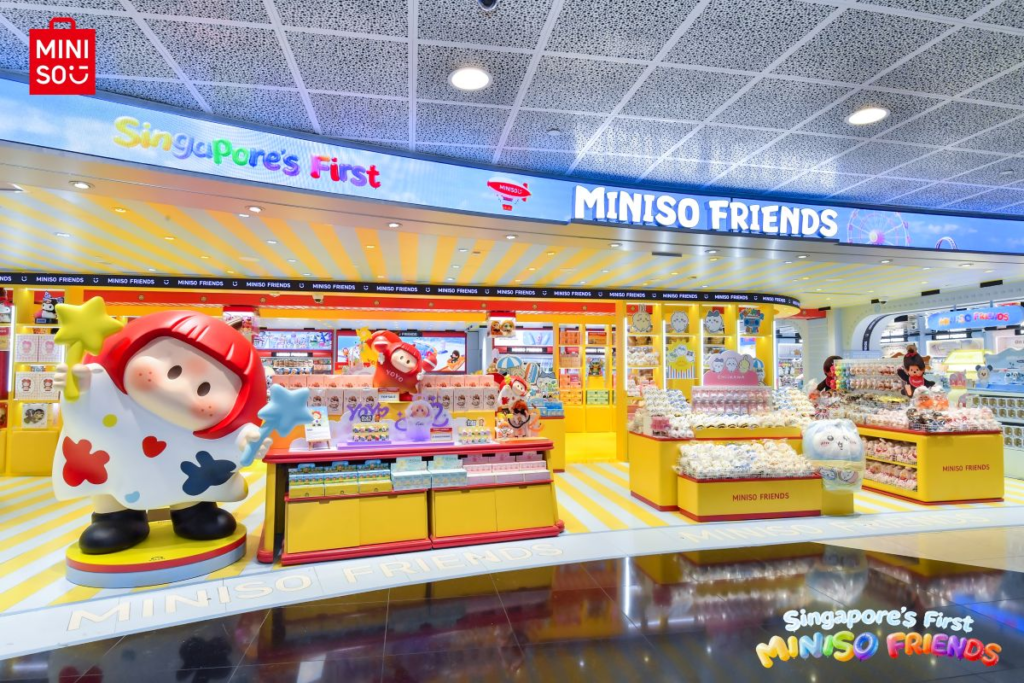
Global lifestyle brand MINISO is accelerating its expansion across Asia with the rollout of its immersive MINISO LAND and MINISO FRIENDS store formats across key markets in early 2026. The formats, which integrate IP-themed experiences within retail environments, have launched in Singapore, Malaysia, Indonesia, Vietnam and mainland China, as MINISO continues to scale its experiential retail strategy across East and Southeast Asia. MINISO LAND and MINISO FRIENDS have been developed as part of the brand’s evolving store format portfolio since 2024. Positioned as larger-scale flagship concepts in high-profile commercial locations, the stores are designed to function as city-level brand landmarks, offering expanded space for immersive IP-driven experiences across categories. Don’t miss: MINISO expands global footprint to elevate Chinese IPs worldwide  In Singapore, MINISO opened its first MINISO FRIENDS store at VivoCity, offering more than 3,200 SKUs across collectibles, home, lifestyle, beauty and gifting categories. The store features an expanded IP portfolio, including Singapore-exclusive Disney Mickey products with Merlion designs, alongside Chiikawa Sakura series and a new Star Wars collaboration collection. MINISO’s proprietary IP character YOYO also made its overseas experiential debut through “YOYO’s Singapore travel diary”, a mall-wide activation at VivoCity running from 18 April to 13 May. The installation features 13 large-scale experiential displays incorporating local Singapore landmarks and travel-themed storytelling. In Malaysia, MINISO continued its regional rollout with the opening of its first MINISO LAND store at Sunway Pyramid in Selangor in February, followed by the launch of MINISO FRIENDS at LaLaport Bukit Bintang City Centre in March. Indonesia has also seen the introduction of its latest MINISO LAND store, further strengthening the format’s regional footprint. In China, MINISO LAND has expanded rapidly, with 26 stores operating across major cities including Beijing, Shanghai, Guangzhou and Shenzhen, as well as emerging urban centres such as Hohhot, Haikou and Guiyang as of end-2025. In Guangzhou, the opening of MINISO LAND at Grandview Mall in January attracted nearly 10,000 visitors on its first day, generating RMB 450,000 in opening-day sales. Elsewhere, new stores in Urumqi and Nanning have also driven strong early performance. The Nanning store recorded more than 80% year-on-year growth in mall footfall during its trial phase, while the Urumqi outlet has emerged as a regional destination for trend-driven consumption. In Vietnam, MINISO marked its 10-year presence in the market with the opening of the country’s first MINISO FRIENDS store in Ho Chi Minh City on April 25. The store is the brand’s most advanced format in the market to date, designed to encourage exploration, interaction and social engagement through IP-led visual storytelling. Visitors on opening day were the first in the country to experience a retail space featuring more than 70% IP products, including debut collections such as YOYO Fly with the Wind Series, Sanrio SEA-exclusive Leopard collections, Chiikawa Sakura Season items, as well as Star Wars and Luo Xiaohei collaborations making their Vietnam debut. Looking ahead, MINISO said it will continue expanding its LAND and FRIENDS formats across global markets, leveraging IP-led retail design to strengthen its positioning as an IP operation platform across Asia and beyond. This follows its recent roll out of MINISO LAND in Thailand where it opened a three-storey flagship store in Bangkok’s Siam Square. The store features more than 8,300 products and over 80 IPs, including Disney, Sanrio and Chiikawa, across 40-plus themed zones designed to drive engagement through interactive, experiential retail. The Thailand launch also marked the local debut of MINISO’s Zootopia collection at the time, alongside market-specific merchandise such as Muay Thai DUNDUN Chicken and Thai elephant plushies, reflecting how the brand adapts its IP strategy to local cultural touchpoints. Related articles:  MINISO and BLACKPINK Jennie unveil pop-up in China  MINISO brings ‘Zootopia 2’ to life with global pop-up tour  MINISO unveils Stitch-themed flagship store to engage wider audience  source

MINISO ramps up LAND and FRIENDS expansion across Asia Read More »

PR has mastered getting seen, but is it any closer to being understood?

Measurement in the PR industry has always been a hotly debated, discussed and deliberated topic. This has only further intensified with media fragmentation and the use of AI.  For years, Advertising Value Equivalency (AVE) has been widely used to benchmark success. The metric offers a simple way to quantify earned media. However, as digital platforms reshape how content is consumed, many continue to question its relevancy. In our many conversations leading up to PR Asia, some practitioners brought to light conversations around attention-based frameworks such as Attention Cost Estimates (ACE) while aim to measure not just whether coverage exists, but whether it captures meaningful audience attention. Yet, others have bashed it wholeheartedly saying it still doesn’t get to the crux of the many issues facing measurement around communications – and can sometimes be rather shallow.  Opinions remain debated and divided on how far attention cost estimates go in reflecting real business impact. Don’t miss: When zero-click becomes the norm, are PR teams still in control of the narrative? Jeremy Seow, APAC chief operating officer and head of client experience at Allison, who has also held roles at Zeno Group, WE Communications and Ogilvy & Mather, said the industry has historically measured what was easiest to count – rather than what actually mattered. AVE, he explained, emerged from a need to quantify PR in familiar business terms, but ultimately only proved that coverage existed, not whether it resonated. In today’s landscape, that distinction is critical. “There is no shortage of information competing for people’s time. What’s scarce is attention,” Seow said, adding that the more relevant question is rather, what happens after a story appears, and whether audiences pause, engage, and absorb the message. From this lens, measurement frameworks should ideally close the gap between visibility and impact. Rather than asking if something was published, communicators now must ask if it actually landed. Delicia Tan, CEO of Edelman Hong Kong, Taiwan and Singapore, echoed this shift. She said attention sits at the top of Edelman’s A3 framework, “Attention”, “Attitude” and “Action”, serving as the first signal of whether communications are breaking through. However, reach no longer guarantees impact. Tan noted that algorithms, creators and fragmented consumption habits have fundamentally changed how content is experienced. In this context, attention-based metrics might simply be gaining traction because they address a more pressing client question: did anyone actually pay attention, and was that attention worth the investment? What is clear is that attention alone, on its own, should not be a metric PR and communications professionals should chase.  Jacob Puthenparambil, CEO at Redhill, offered a more critical take. He views attention-based frameworks as one which incentivises “wrong behaviour”. “When you optimise for attention capture at the lowest cost, you inevitably skew towards media stunts, viral gimmicks, and sensationalism — tactics with extraordinarily short shelf lives that rarely compound into lasting reputational equity or commercial value,” he said. Living in an influencer-driven, algorithmically mediated media environment where attention spans are compressed and social platforms already offer highly efficient paid solutions for grabbing fleeting notice, PR should not be competing in that arena, he added.  The question we should be asking is not how cheaply we captured a moment of someone’s gaze, but whether we shifted perception, influenced a decision, or advanced a strategic business objective. “The discipline of public relations earns its seat at the leadership table when it demonstrates impact on outcomes that matter to the C-suite, not when it produces a favourable cost-per-attention metric,” he said. Measuring minds instead of eyeballs – and the challenges that presents Shouvik Prasanna Mukherjee, EVP global creative innovation and chief creative officer APAC at Golin, said the shift from “counting eyeballs to measuring minds” should fundamentally reshape how communications is valued. For Mukherjee, the issue with traditional metrics is not just their limitations, but their implications. By relying on volume-based indicators, the industry has often presented “vanity metrics dressed as business outcomes,” undermining its own strategic relevance. He added:  The cumulative shift is significant: PR evaluation moves from ‘how much did we publish’ to ‘how much did we move’. He added that attention metrics require genuine integration across earned media monitoring platforms, web analytics, social listening tools, and client-side CRM data. In APAC, that complexity is amplified – what works in Singapore doesn’t map to WeChat ecosystems in China, Line in Thailand, or the distinct platform behaviours across Southeast Asia. “Attention based framework models must be regionally calibrated from the ground up, not imported from Western markets and retrofitted. Our Creative Intelligence Unit has been building these integrations deliberately, but it requires sustained investment and technical architecture that many teams aren’t yet resourced for,” he said. Speaking about the barriers, Mukherjee client education and buy-in is equally significant – and it’s as much a change management challenge as a technical one given many finance and marketing directors have spent years receiving large AVE numbers. Moreover, industry standardisation remains the unresolved systemic challenge. “Paid media attention measurement has MRC accreditation and platform-level reporting standards. Earned media has no equivalent yet, which creates real risk: Agencies defining ACE on their own terms, making cross-agency and cross-campaign comparability impossible,” he said. Edelman’s Tan similarly noted that attention-based metrics can change the client conversation by translating earned media into a language senior decision-makers understand, cost efficiency, without equating it directly to paid media.  Like Mukherjee, Tan also highlighted adoption challenges given the familiarity of AVE “As Richard Edelman has consistently argued, trust and relevance are harder to earn in today’s media environment. Measurement frameworks must reflect that reality. […]The real power is unlocked when attention-based frameworks sit within a broader framework, one that shows how earned attention shapes perception and drives action,” she said, adding:  That’s when PR stops being measured by what it generated and starts being judged by what it changed. Despite its promise, adoption and integration of attention-based measurement is far from clear cut answer. Seow too pointed to habit as a key barrier, with organisations and executives accustomed to

PR has mastered getting seen, but is it any closer to being understood? Read More »

Meta APAC head of comms for product and partnerships steps down

Bridgit O’Donovan has exited her role as Meta’s APAC head of communications, product and corporate. While serving in the role for over four years, O’Donovan has been with the tech company for a total of nine years, first joining as communications manager for Facebook in APAC in 2017. During her time at Meta, O’Donovan led a regional communications team across the company’s family of apps, including Facebook, Instagram, WhatsApp, Threads, Edits and its AI efforts, she said in a LinkedIn post. She played a key role in shifting the organisation’s approach from traditional press pitching to social‑first storytelling and creator-led concepts, as well as redefining how communications impact is measured. O’Donovan’s remit also saw her navigate some of the most high‑stakes issues in the tech sector, from integrity and privacy to regulation, while also working on emerging areas such as AR/VR and wearables. Don’t miss: Meta appoints new PR agency In her post, O’Donovan said the decision to leave comes as she approaches her 50th birthday and looks to shape a “next era” of work with more time for family, community-building, curiosity and “the wholly underrated experience of having fun at work”. She added that she leaves Meta “with a lot of gratitude”, noting that the “hardest days were lighter” because of the team around her, and colleagues across product, policy, partnerships, marketing and legal, from whom she said she has learned a great deal. Looking ahead, O’Donovan said she will be focusing on two passion projects. The first is The Lazy Dumpling, a series of walking tours centred on women’s stories, history and the heritage of Singapore, following her completion of the Singapore Tourism Board’s tourist guide certification last year. The second is building a community to help women at work grow practical AI skills and confidence in AI adoption. O’Donovan said she is feeling “grateful, proud, and genuinely excited” about what comes next and invited those interested in her new projects to connect with her. MARKETING-INTERACTIVE has reached out to Meta and O’Donovan for a statement.  O’Donovan’s departure comes as Meta further strengthens its communications and leadership bench across Southeast Asia. In Singapore, it recently named Darryn Lim as its communications lead, overseeing integrated strategies to support its product, business, policy and consumer initiatives, as well as content-first and social approaches across its owned channels. Beyond Singapore, Meta bolstered its regional leadership with the appointment of Lau Sook Ping as country director for Malaysia. Lau, who previously spent over a decade at L’Oréal in senior digital and marketing roles, is tasked with deepening Meta’s engagement with local businesses, creators and partners in one of its key growth markets in Southeast Asia. Be part of #Content360 Malaysia, 13 May 2026, where creativity and community collide. Explore how AI-powered imagination, culturally resonant storytelling, and platform-savvy strategies are shaping the future of content. Gain practical insights, discover new tactics, and learn how the region’s top creators and brands are crafting campaigns that truly resonate. Related articles:   Meta gives parents visibility into teens’ AI use as scrutiny grows Meta Malaysia to roll out expanded teen safety features for Instagram  Meta set to overtake Google in global digital ad revenue source

Meta APAC head of comms for product and partnerships steps down Read More »

Why Fairmont Singapore is splashing into Baby Shark territory

Fairmont Singapore has partnered with the Singapore Tourism Board (STB) and The Pinkfong Company to launch an immersive Baby Shark-themed family stay experience, running from 18 May to 17 November 2026. Billed as a Singapore-first, the collaboration transforms the hotel into a story-led escape featuring Baby Shark alongside Merli, STB’s Merlion-inspired mascot, and Pakcik, Fairmont Singapore’s lion mascot. From check-in, families are greeted with bright visuals and themed touches across the lobby, rooms and poolside. Each stay includes exclusive keepsakes such as a ‘Little Explorer’ tote bag, friendship key ring and a collectible plush buddy featuring Baby Shark, Pakcik or Merli. In-room, guests can expect themed amenities, a tailored dining menu and a dedicated TV channel streaming Baby Shark content. Don’t miss: Beyond Baby Shark: Pinkfong founder’s gameplan for business longevity post virality In conversation with MARKETING-INTERACTIVE, Robert Strasser, hotel manager at Fairmont Singapore and Swissôtel The Stamford, said Baby Shark was “an obvious answer” when the team looked at how to deepen its appeal to families. “Fairmont Singapore has long been a hotel families choose when they come to Singapore, whether it’s for the school holidays, a multi-generational trip, or a local staycation. So, when we looked at where to take that next, the question wasn’t whether to invest more deeply in the family segment, but how to do it in a way that lives up to our ‘Make special happen’ brand promise,” he said. “Baby Shark is one of those rare IPs that crosses generations and geographies, and there’s barely a family in Asia that hasn’t sung along to it. The partnership integrates Merli alongside our own mascot Pakcik – and it is this combination that makes it distinctly Singaporean, not just another licensed activation,” he added. Strasser noted that the timing reflects where family travel is heading, with parents seeking experiences that are immersive and worth documenting, not just a room with a kids’ amenity kit. He added that the activation is a natural evolution of the hotel’s creative collaborations, from its ARTiSTORY high tea series inspired by Van Gogh and Monet, to partnerships with National Gallery Singapore and themed high tea experiences such as Yip Yew Chong for SG60 and Paddington. At the heart of the Baby Shark experience is The Eight, Fairmont’s poolside restaurant, which has been reimagined with a Baby Shark-themed menu and pool toys. Dishes include ‘Chomp & chips’ with tempura dory and fries, ‘Ooey gooey mac & cheese’, ‘Lion city crunch satay’, as well as desserts such as ‘Chendol chiffon cake’, ‘Coco crunch’ and ‘Mango splash’. The venue is open to both hotel guests and walk-ins. Fairmont Singapore is also rolling out interactive activities, including the ‘Little fins cupcake decorating workshop’, where children decorate Baby Shark-themed cupcakes under the guidance of hotel chefs. Meet-and-greet sessions with Baby Shark and Merli will take place at The Eight and the hotel lobby on selected dates from 18 May to 29 June, on a first-come, first-served basis. Strasser said the activation is designed to appeal to both inbound and local markets. “The primary audience is regional families across Southeast Asia, Greater China, India and Australia, markets where Baby Shark has enormous recognition and where Singapore already sits high on the short list for a family trip,” he said. “But we’re equally focused on local Singaporean families looking for a staycation or on-property experience with real substance, particularly during the June and year-end school holidays.” He added that including Merli is strategic, signaling to inbound visitors that the experience is unique to Singapore, while giving locals a fresh reason to rediscover the hotel. Opening The Eight and the cupcake workshop to non-staying guests also helps capture day visitors. The collaboration is supported by a fully integrated campaign running through to November. Beyond the hotel, a branded content series featuring Baby Shark, Merli and Pakcik exploring Fairmont Singapore and key attractions around the city will be rolled out on major social media platforms, effectively telling a destination story through characters families already love, said Strasser. An original music release tied to the experience will also go live on digital platforms. “On the promotional side, we’re activating across owned channels, social, STB’s regional marketing networks, and Pinkfong’s global fan base, which truly makes this a global activation,” he said, adding that meet-and-greets and workshops are designed to generate organic social content and are often the most persuasive media for this audience. Success will be measured across guest experience, brand impact and commercial metrics. “Guest satisfaction is our most important measure, from feedback and repeat visit intent to the kind of memories families take away. It ties directly back to Fairmont’s brand promise of ‘Make special happen’,” he said. “On brand, we’re looking at share of voice, earned media, organic social and user-generated content. Commercially, we’re tracking occupancy on the themed package, covers at The Eight, workshop bookings and merchandise sales – but just as important as the volume is the mix,” he explained, noting the aim is a healthy split across inbound regional families, local staycationers and local day-trippers. “Ultimately, while the numbers matter, it’s the guest experience and our ability to truly make special happen that determines whether a partnership is worth building on,” Strasser said. The Fairmont Singapore collaboration also marks a strategic step in The Pinkfong Company’s wider push into location-based entertainment (LBE) across Southeast Asia, as it brings Baby Shark off-screen and into real-world, experiental formats. The company has been steadily expanding its offline footprint in the region through large-scale mall tours, live musicals such as Baby Shark live: The hidden treasure in Thailand, and upcoming attractions including a water park activation and the first Baby Shark Kids Café in Singapore. By integrating Baby Shark into a themed hotel stay with STB and Fairmont Singapore, Pinkfong is adding hospitality to its mix of live shows, pop-ups and family venues, underlining a strategy to deepen fan engagement beyond digital content. It also reflects the brand’s move towards long-term, locally tailored partnerships that embed its

Why Fairmont Singapore is splashing into Baby Shark territory Read More »

Gen Z leads Google Search, and they’re changing how it works

Gen Z is now the most active generation on Search, issuing more daily queries than any other age group worldwide, according to a recent finding by Google. This trend is especially visible in Southeast Asia, where AI is transforming how people search, learn and make decisions. As AI capabilities advance, search is evolving from a static results page into an intelligent, conversational partner. Powered by multimodal reasoning models, it can interpret complex and nuanced questions, understand intent and respond in more natural, interactive ways. Instead of relying on short, optimised keywords, users can now ask follow-up questions, clarify their needs and use a mix of text, voice and images to express what they are looking for. Gen Z, often described as AI natives, are at the forefront of this behavioural shift. They are using search not just to look things up, but to research, plan and evaluate. Travel planning, purchase decisions, personal projects and creative brainstorming increasingly run through search as a first step and often as a continuous companion throughout the decision process. Don’t miss: Beyond the click: How marketers can score in the zero-click search era  In Southeast Asia, this behaviour shift is particularly pronounced. The region has one of the youngest populations globally, and its users are among the most engaged and experimental with digital tools. In Singapore, research by IPSOS in December 2025 found that 78% of social media users use Google Search to inform and evaluate discoveries they have made on social platforms. This reflects a clear pattern: social media is often where trends, products and ideas are first encountered, while search is where they are interrogated and validated. For Gen Z, search functions as a layer of verification between the social feed and real-world action. When they come across a new product, location or trend, they frequently turn to search to read reviews, examine a brand’s history, compare prices and understand whether the attention around something is justified. This positions search as a decision engine that helps them move beyond surface-level hype. Trust plays a central role in this relationship. As AI-generated content becomes more common and information online grows more complex, the ability to cross-check responses and trace information back to identifiable sources is increasingly important. Search experiences that combine AI-generated summaries with accessible references allow users to validate what they are seeing. This mix of synthesis and transparency supports higher-stakes decisions, such as planning international travel or choosing between major purchases, where speed needs to be balanced with reassurance. Beyond decision-making, search is also intertwined with Gen Z culture and fandoms. It is not only a functional layer of the internet; it is part of how young people participate in cultural moments. Hidden Easter eggs and interactive experiences embedded within search have turned routine queries into opportunities for discovery and play, particularly around music and entertainment fandoms. In recent years, interactive trivia quests and themed experiences tied to global and regional artists, from Taylor Swift and BTS to Southeast Asian acts, have transformed search into a space of deeper fan engagement. Search data also provides a window into Gen Z culture by reflecting what people collectively look for in real time. When interest in a particular topic spikes, it signals how conversations are building and shifting. In Singapore’s K-pop community, for instance, there have been breakout increases in searches for terms such as “BTS Comeback Live” and “BTS Hooligan Dance” over short periods. Around releases such as the Arirang album in March 2026, interactive elements such as scavenger hunt quizzes and digital memorabilia have encouraged fans to engage more frequently with search, using it as both an information source and a touchpoint for community activity. Taken together, these developments point to a broader generational story. Search is moving from being a background utility to a constant presence in Gen Z’s online lives. It is where they verify what they see on social media, weigh options before making commitments and follow the cultural moments that matter to them. The integration of AI-driven conversation, multimodal inputs and transparent sourcing is making search feel more responsive and more aligned with how this generation naturally interacts with technology. Google’s findings are reflective of shifts already observed by industry professionals tracking changes in search behaviour. In conversation with MARKETING-INTERACTIVE in late 2025, NP Digital managing director Gary Cheung said the focus has moved away from simply driving traffic, noting that the priority is now “creating content that gives users the answers they need right away.” The observation reflects a broader shift towards intent-led discovery, where information is increasingly surfaced directly within search results rather than through traditional click-through journeys. Echoing this, Brew Interactive managing director Marcus Ho said the emphasis has shifted towards visibility within search environments themselves, adding that “instead of fighting that, we tell clients to optimise for visibility, not just clicks.” He noted that this includes structuring content to appear in featured snippets and AI overviews, where users are increasingly getting their answers.  Related articles:   When zero-click becomes the norm, are PR teams still in control of the narrative? SG60, crises and eats: What were Singaporeans searching on Google this year? What Malaysians really cared about in 2025, according to Google search data  source

Gen Z leads Google Search, and they’re changing how it works Read More »

Gen Z Perspectives: Sameer Gupta exits DBS, Claude Design & Content360 SG

Happy Friday, MARKETING-INTERACTIVE readers and welcome back to Gen Z Perspectives, your go-to feature where we unpack the week’s top stories and trending topics through the eyes of Gen Z. From the biggest industry moves to viral moments and marketing controversies worth dissecting, we’re bringing the heat with authenticity, awareness and probably a few unfiltered takes. This week: Sameer Gupta exited DBS Bank after 12 years, Anthropic dropped Claude Design, and we got into the thick of Content360 Singapore Day one. Missed the conference? Then you definitely don’t want to miss this. Don’t miss: Gen Z perspectives: Nespresso SG marketing head departs, Philips’ rice cooker typo & a Nigerian prince 1. DBS group chief analytics officer steps down after 12 years Sameer Gupta is stepping down from his role as group chief analytics officer at DBS Bank, bringing to a close a 12-year tenure that saw him help shape the bank’s data and AI transformation at scale.  Following his exit, Gupta will join Lloyds Banking Group as its chief data and AI officer, starting in June this year. In his new role, he will report to Ron van Kemenade, group chief operating officer. A key part of his remit will be ensuring AI is used responsibly, transparently and securely, with governance and oversight to meet regulatory and ethical standards.  Read more here.  2. When Claude makes anyone a ‘designer’, what happens to creative craft? Anthropic has launched Claude Design, a new AI-powered tool that turns visual creation into a conversational workflow, allowing users to generate and refine designs simply by describing what they need. Built on its latest vision model Claude Opus 4.7, the tool produces prototypes, presentations, marketing assets and landing pages, with outputs that can be edited through prompts, inline adjustments and controls within a single interface. The effect is to compress what was once a multi-step design process into a single, iterative system where ideation and execution happen almost simultaneously. The launch undoubtedly reflects a broader shift in how creative work is being structured, as AI tools move from assisting production to actively shaping it from the start. Read more here.  3. Content360: How CHAGEE replaces traditional media with content ecosystems At this year’s Content360 Singapore 2026, a clear provocation cut through the noise of performance metrics and platform tactics: what if the next global beverage giant isn’t built on traditional media muscle – but on cultural infrastructure? That question anchored a session by Eugene Lee, APAC CMO at CHAGEE, who outlined how the eight-year-old brand is attempting something far more ambitious than expansion – rewiring how tea is perceived, consumed, and lived. Read more here.  Related articles:   Agency agenda: VaynerMedia’s Marcus Krzastek on AI, media, and creative convergence   Omnicom Advertising Asia unveils regional leadership team   OpenAI eyes deeper APAC growth with new marketing head source

Gen Z Perspectives: Sameer Gupta exits DBS, Claude Design & Content360 SG Read More »

World Cup sponsors see lift in brand perception, says YouGov

More than four in 10 adults globally are expected to follow the FIFA World Cup 2026, but the real story for marketers is what happens next. Some 80% of those fans say they view tournament sponsors more positively, according to new research from YouGov, underlining the commercial power of sport’s biggest stage. The findings are based on a survey conducted between 13 March and 11 April across 19 markets including Australia, the US, the UK and key Asian markets, and form part of YouGov’s latest World Cup handbook tracking fan behaviour and brand impact. Globally, one in four individuals consider themselves active football followers. Indonesia leads this measure at 41%, followed by Thailand, Singapore and Hong Kong. When it comes to intent to follow the 2026 edition specifically, 47% of Hongkongers plan to tune in. Australia tracks the global average at 41%, while Indonesia comes in at 37%. Singapore trails at 33%. SEE MORE: Coca-Cola lifts the lid on emotions for World Cup film Brand associations with the FIFA World Cup have a clear upside for marketers, boosting purchase intent, trust and perceived relevance. In some markets, more than 80% of likely FIFA World Cup 2026 followers say they view tournament sponsors more favourably. In the US, fans not only see sponsors as more trustworthy and socially relevant, they also expect them to offer special discounts. India tops the list of likely FIFA World Cup 2026 followers at 54%, above the global index of 42%, followed by Hong Kong (47%), Australia (41%), Indonesia (37%) and Singapore (33%). Interest in the tournament skews younger in several major markets; those under 35 are more likely than older generations to follow the World Cup in the US, Canada, Germany, Denmark, France, the UK, Australia and Singapore. The pattern reverses in Mexico, Italy, Poland, Hong Kong, India, Indonesia, the UAE and Saudi Arabia, where respondents aged 35 and above show higher intent to follow. More than half of likely followers say they notice FIFA World Cup sponsors, with India leading at 78%, followed by Indonesia (71%), Australia (65%), Hong Kong (64%) and Singapore (56%). Younger fans are particularly attentive to sponsorships. Followers under 35 are more likely than those 35+ to recognise tournament sponsors. Coca‑Cola leads global sponsor recognition at 46% among likely followers, ahead of adidas (42%) and Qatar Airways (31%). Recognition of adidas and Qatar Airways skews younger. Coca‑Cola tops aided sponsor recall in both Australia and Hong Kong, while adidas peaks in Indonesia. Across APAC, the impact is strongest in emerging markets, with fans in Indonesia and India showing the biggest lift in brand perception from World Cup sponsorships, followed by more moderate gains in markets such as Hong Kong, Australia and Singapore. The data also points to a generational split. In most markets, younger audiences are more responsive to sponsors, particularly across digital channels, while older fans are more likely to engage through traditional TV. TV and social media remain the primary channels for sponsor visibility, with social skewing younger and TV continuing to dominate among older audiences. Mark your calendars for 24 June! #Content360 Hong Kong returns with a dynamic, one-day event dedicated to pivotal trends—from the silver economies to breakthrough IP collaborations, sports, and beyond. Let’s dive into the art of curating content with creativity, critical thinking and confidence! Related articles: Coca‑Cola gets fans jumping with FIFA anthemShin Tae-yong looks good for FIFA World Cup source

World Cup sponsors see lift in brand perception, says YouGov Read More »

Publicis Groupe builds AI muscle in Singapore with new APAC hub

Publicis Groupe is doubling down on AI in Asia Pacific, with a new Singapore-based hub aimed at building next-generation marketing capabilities for the region and beyond. Publicis Groupe APAC has launched an AI Development Hub in Singapore, designed to develop and scale proprietary marketing technologies across data, identity, media and content. The initiative is backed by the Singapore Economic Development Board (EDB) and aligns with Singapore’s push to position AI as a strategic growth driver. The hub will serve as a collaborative environment bringing together engineers, strategists, creatives and product teams to develop AI-powered solutions for both regional and global markets. It will also house a dedicated research and development centre, focused on areas such as creative optimisation, content development, influencer marketing and media planning. Don’t miss: Agency agenda: Amrita Randhawa talks acquisitions and Publicis’ AI play  Singapore’s role as an AI launchpad is central to the strategy. According to a joint 2026 study by the EDB and McKinsey & Company, 73% of companies in Southeast Asia are already piloting or scaling AI, outpacing the global average of 57%. According to Publicis, the hub’s AI-enabled workflows are expected to reduce manual campaign execution time by 20–30%, improving speed and delivery across teams. Beyond capability building, the initiative also signals a shift in how the Groupe is approaching talent. Rather than replacing roles, the hub is positioned as a way to create new, future-ready skill sets across engineering, data science, product design and marketing. It will also partner with local institutes of higher learning to develop a pipeline of AI talent through internships and applied research programmes. Sapna Nemani, chief solutions officer at Publicis Groupe APAC, said AI transformation hinges on the integration of technology, data and talent. “AI is reshaping the marketing industry, but real transformation only happens when technology, data and talent evolve together. The future of marketing will be built on intelligent identity, understanding audiences in deeper, privacy-safe ways and activating those insights across the entire ecosystem,” she said. Amrita Randhawa, CEO of Publicis Groupe Singapore and Southeast Asia, added that the hub reflects both opportunity and responsibility. “We are not just adopting AI, we are shaping how it is used in a way that is trusted, responsible and grounded in strong fundamentals. Just as importantly, we are creating opportunities for talent here to step into new roles and build skills that will define the future of our industry,” she said. Junie Fo, vice president and head of professional services at EDB, said the initiative strengthens Singapore’s position as a global base for AI innovation. “This will allow Publicis Groupe to develop advanced AI capabilities across data analytics, identity management, media optimisation and content creation to serve both Singapore-based and global enterprises,” she said. The move builds on Publicis Groupe’s ongoing investment in AI and data infrastructure, including its 2025 acquisition of Lotame, which expanded its identity intelligence capabilities alongside Epsilon’s data footprint. Together, the Groupe now claims access to insights on nearly four billion individuals globally, enabling more precise and privacy-compliant audience targeting. Related articles: Publicis denies Trade Desk rivalry, touts Microsoft pact as tech proof Publicis Groupe to acquire sports agency 160over90  Publicis Groupe APAC creates new chief communications officer role  source

Publicis Groupe builds AI muscle in Singapore with new APAC hub Read More »

Agency agenda: VaynerMedia's Marcus Krzastek on AI, media, and creative convergence

The future of advertising is no longer defined by silos between creative and media, but by how seamlessly both functions operate as a single system. That was the central theme from Marcus Krzastek, international president of VaynerMedia, who shared with Marketing Connected’s Agency Agenda, how the agency is building its global model infrastructure, while leaning into Southeast Asia’s rising influence in shaping modern marketing. Krzastek, who works closely with founder and CEO Gary Vaynerchuk, described his role as building a support system that allows creative and media teams to function as one integrated “machine” across regions. This shift reflects a broader industry reality, where fragmentation in consumer attention and platform behaviour is forcing agencies to rethink how ideas are created, distributed, and measured. Don’t miss: Agency agenda: Tony Harradine outlines Omnicom Media APAC’s post-deal plan  Catch the full interview here on YouTube: Creativity and media are much closer linked now than ever before. He noted that reduced complexity in media buying has enabled creative teams to take on more hybrid roles. With AI tools and platform-native systems such as TikTok and Meta accelerating execution, he added that the barrier is no longer technical capability, but the ability to produce strong, relevant ideas at scale. This convergence is shaping how VaynerMedia operates internationally. Krzastek explained that the agency’s focus outside the US is to create a consistent infrastructure that allows clients to scale creative and media capabilities across multiple markets. The goal is not just efficiency, but the creation of a repeatable content ecosystem that drives measurable performance. Southeast Asia, in particular, is playing a defining role in this transformation. Krzastek pointed to the region’s speed of adoption in areas sch as social commerce, live streaming, and QR-led ecosystems as evidence that innovation here often precedes global markets. “There is a degree of sophistication in this region that is accelerating past the rest of the world,” he said, highlighting how cultural exchange across countries has fuelled faster creative evolution. He also noted that the collapse of the monoculture has shifted brand strategy towards hyper-personalised, short-form-first content systems, where relevance is determined algorithmically rather than through traditional media planning. For VaynerMedia, the agency agenda this year centres on scaling integrated creative-media infrastructure globally, deepening platform-native capabilities, and investing in talent that can operate across both strategic and executional disciplines. As Krzastek put it, the opportunity lies in building systems where creative output is no longer episodic, but continuous. “Once you have that foundation of creative and media up and running, all of a sudden, there’s a multiplying factor when you add in social and life commerce.” He added, “Those additions become another content funnel that flows into your organic capability and in turn drive equity.” This is the adventure we’re on to as effectively as we can, set up as many people to operate that flywheel as possible. Also tune in to the full conversation on Spotify: Tune into the rest of this conversation on your favourite podcast platforms, by searching up Marketing Connected. For all the visual people out there, we’ve got your back as well, with our vodcasts on YouTube. Related articles: Agency agenda: Amrita Randhawa talks acquisitions and Publicis’ AI play VaynerMedia names first-ever international president VaynerMedia APAC launches AI platform for culturally tailored campaigns at scale  source

Agency agenda: VaynerMedia's Marcus Krzastek on AI, media, and creative convergence Read More »

Audi, Volkswagen, Agoda, Uni of Reading, and GoRental pick PR agency in Malaysia

Audi Malaysia, Volkswagen Passenger Cars Malaysia, Agoda, University of Reading Malaysia and GoRental Global has appointed Alpha Story as their PR agency.  Alpha Story, which is based in both Malaysia and Singapore, is doubling down on AI-driven communications, accelerating its regional growth with these five strategic client wins in the first quarter of 2026.  According to the agency, the wins reflect a broader shift in the communications landscape, where brands are increasingly seeking more intelligent, data-led approaches to storytelling and engagement. Audi Malaysia, Volkswagen Passenger Cars Malaysia, Agoda and University of Reading Malaysia were won through competitive pitches.  Alpha Story shared with A+M for Audi Malaysia and Volkswagen Passenger Cars Malaysia, it was appointed for a two-year term to support traditional PR, key opinion leader (KOL) management, as well as brand partnerships and collaborations. Don’t miss: WPP reportedly explores sale of PR arm Burson  Meanwhile, Agoda has tasked the agency with supporting traditional PR and content creation on a 1+1 contract, and University of Reading Malaysia appointed Alpha Story on a six-month term to support traditional PR. The GoRental Global appointment was for a renewed engagement with the scope evolving from an initial four-month project into a two-year retainer. The agency is supporting traditional PR and KOL work across GoRental’s Singapore and Malaysia markets, as well as partnership sourcing for CSR activations and LinkedIn content for the founder. At the centre of Alpha Story’s proposition is an AI-powered operating model that blends traditional communications strategy with real-time data and proprietary tools. Rather than relying on conventional PR cycles, the agency monitors narrative shifts as they happen, identifying whitespace opportunities, and prioritising high-impact moments across platforms and stakeholders. Jeremy Foo, founder and CEO of Alpha Story, said the agency’s approach is designed to help brands respond faster while sharpening the quality of their messaging. “As communications shifts from volume-driven output to precision-driven strategy, our approach enables organisations to respond faster, communicate with greater clarity, and focus efforts where it drives the most impact,” he said. He added that the latest client wins reflect growing confidence in a hybrid model that combines human judgement with AI capabilities. “These wins reflect the trust that leading organisations are placing in a new way of working, one that blends human judgement with AI to deliver sharper thinking, faster response and more meaningful storytelling,” Foo said. Each appointment also strengthens Alpha Story’s foothold across key sectors. Agoda expands its presence in travel and digital consumer brands, while University of Reading Malaysia adds to its education portfolio. The addition of Audi Malaysia and Volkswagen Passenger Cars Malaysia signals deeper traction in the automotive space, particularly among global brands. Meanwhile, the renewed two-year retainer with GoRental Global across Malaysia and Singapore underscores the agency’s growing role in the climate-tech sector, as well as its ability to support clients on a regional scale. Looking ahead, Alpha Story is setting its sights on further expansion, with plans to establish a presence in Indonesia in the second quarter of 2026. The move is aimed at scaling its AI-led model across Southeast Asia, while supporting clients with regional footprints and tapping into new growth opportunities. As agencies increasingly look to differentiate in a crowded market, Alpha Story’s latest momentum points to a rising demand for communications models that prioritise speed, intelligence and adaptability in an increasingly complex landscape. The PR scene in Malaysia has been buzzing with a number of Q1 wins for several agencies. Earlier this month, Coway Malaysia, Hyundai Motor Malaysia, Pavilion Group and Trip.com have appointed VoxEureka as their public relations agency, as the firm reports a strong run of new business wins in the first quarter of 2026. The wins follow a competitive pitching period, with VoxEureka positioning itself around strategic storytelling and multi-market capabilities. Meanwhile, Funding Societies Malaysia and LAC Malaysia, have both appointed W Communications Malaysia as their new PR agency, to provide integrated communications support ranging from strategic counsel and creative launch work to thought leadership, influencer and KOL (key opinion leader) engagement across both B2B and B2C briefs. W Communications Malaysia is building early momentum with a string of new client wins across finance, health and wellness, and hospitality, following its entry into the market earlier this year. Be part of PR Asia Malaysia, 12 August 2026, for candid conversations and practical insights. Explore how opportunities can be found amidst uncertainties, as discovery becomes AI-shaped, regulations tighten, and scrutiny intensifies, communications now doubles down as a strategic infrastructure. Related articles: Coway, Hyundai, Pavilion and Trip.com appoint new PR agency in Malaysia Funding Societies and LAC Malaysia pick new PR agency Devialet picks PR agency for SG source

Audi, Volkswagen, Agoda, Uni of Reading, and GoRental pick PR agency in Malaysia Read More »