marketing interactive

When reviews can make or break a business, can influencers be honest without causing harm?

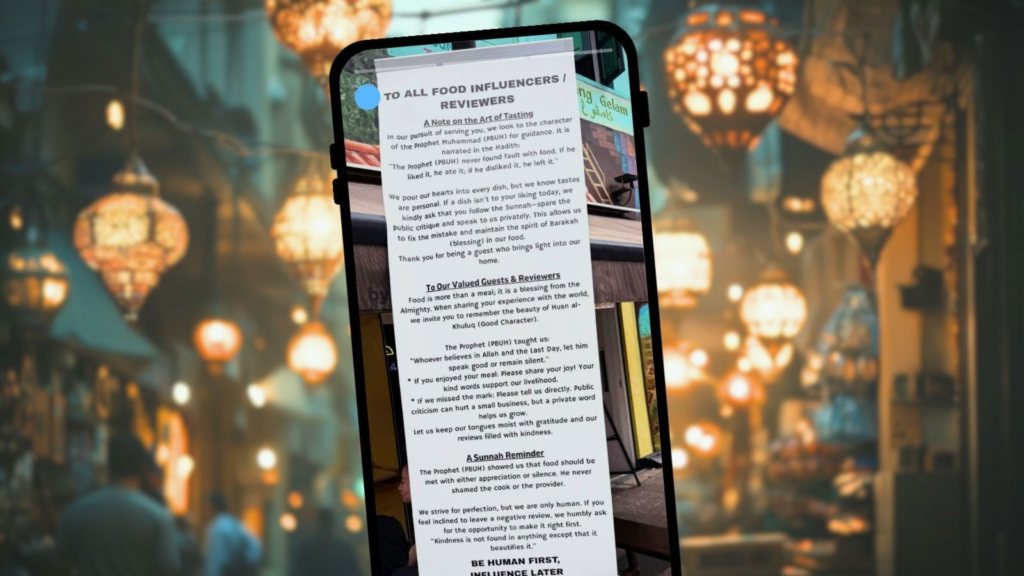
Ramadan is a month of reflection and community for Muslims, but in Singapore, it’s also a feast for the senses and social media feeds. This year, 103 booths offer food, live performances, traditional Malay dance and silat, and appearances by local and regional celebrities. Amidst the colourful stalls and festivities hosted across Bugis and Geylang Serai, one banner in the Gemilang Kampong Gelam Ramadan Bazaar at Bugis, has garnered some attention. The banner urges influencers and reviewers to “be human first, influence later.” Drawing on the Hadith (Islamic religious guidance) and teachings of Prophet Muhammad, the banner asks visitors to give negative feedback privately rather than in public, reminding them that public criticism can harm small businesses, while a private word can help businesses grow. Don’t miss: Credibility trumps clout in Singapore’s influencer landscape “Keep our tongue moist with gratitude and our reviews filled with kindness,” the banner reads. “Food should be met with either appreciation or silence. The Prophet never shamed the cook or the provider. If you feel inclined to leave a negative review, we humbly ask for the opportunity to make it right first.” The message has sparked debate among Singapore’s food influencers. When a single post can reach thousands, should honesty outweigh the potential harm? And is there a way to do both responsibly? Balancing honesty and empathy In conversation with MARKETING-INTERACTIVE, food influencers across the board said that reviews should be honest, but have to be delivered constructively. This includes avoiding unnecessarily harsh language. “I include both the positives and the negatives. Viewers are spending their hard-earned money and deserve fair quality food,” said Rishitha Anantha (@devilwearsbata). Anantha notes that negative reviews can be an “easy way to get views” but emphasises that the businesses are run by real people whose livelihoods could be affected by her words. Similarly, Brandon Chai (@brandononc / @diediemustchai) said reviewers need to distinguish between critique and cruelty. While he claims that balancing honesty and empathy can become tricky, Chai believes in providing actionable feedback that food vendors can use to improve. “My goal is to be constructively honest rather than destructive. Instead of dismissing a dish as bad, I will note that it could go heavier with the seasoning,” he explained, adding that taste is often subjective to the person eating. Chai also navigates his reviews based on whether it is an organic find or a collaboration with a business. More often than not, organic finds that he doesn’t like will not be reviewed whereas businesses collaborators can expect feedback. “If it was an invited tasting and I was disappointed, I would reach out directly to the business to give my feedback first. I’d then ask them if they would still like me to post about the food given that I would be honest in the post. If they do not want me to, then I will not post about it at all,” he explained. For Sofia Arissa (@sofiaarissa.a), what she shares depends on whether it benefits both her audience and the business. “I ask myself: ‘Is this useful for my audience?’ and ‘Does this feedback help the business improve?’ If an experience is purely subjective or likely to be hurtful without adding value, I’ll often keep it private or share it directly with the business first,” she said, noting the difference between giving honest feedback and publicly calling out a business over something minor. The banner also ignited talk of an incident that happened in 2024 where food influencer and reviewer by the username @Gunbuttock was issued a cease-and-desist letter for a “brutally honest” review of Ramadan bazaar stall Frank on Wheels. In the video, the TikToker said that the stall’s cheezy crab fries with turkey bacon “a waste of money” and “basic”. He later rated the dish a one out of 10. Following the letter, ‘Gunbuttock’ posted a video on TikTok saying that his goal was to create a platform that empowers individuals and families, particularly those on a budget, to make informed dining decisions. “In an environment where business owners leverage paid influencer marketing, I strive to provide honest, unfiltered reviews that reflect my genuine perspective,” he said. He added that he feels that charging restaurant prices for food that falls “even below fast-food quality” presents an “ethical concern”. “Ultimately, my content aims to empower consumers by allowing them to weigh the value proposition before making a decision,” he said. Does ethical responsibility apply? Where the influencers largely opined differently is whether or not reviewers and creators have an ethical responsibility to local business. Chai, for example, said that an influencer’s primary duty is to their audience. This is especially since their recommendations impact where followers invest their time and hard-earned money. The goal, he stated, is to be fair, nuanced, honest and then move on:  Influencers don’t owe a business a good review, and businesses aren’t entitled to a positive narrative. He added that there is no ethical obligation to support a business through false praise and that influencers should avoid direct bashing or disrupting a business’ reputation “for the sake of views.” Sofia takes a different perspective, explaining that supporting local businesses doesn’t mean only posting perfect reviews. “It can mean celebrating what tehy do well, sharing their stories and offering honest feedback in a fair way,” she said.  On the other hand, TikToker @Pristyq who deems herself to be a “smaller influencer” and wants to be known as ‘Priscilla’, suggests that ethical responsibilities may only apply to influencers with bigger reach. “Micro-influencers don’t necessarily have an ethical responsibility to local businesses. In fact, we might focus more on our audience in order to grow it,” she explained. “But as influencers become bigger, this responsibility to support local businesses may grow,” added Priscilla. The influencers also offered guidance for small businesses seeking to work with reviewers, emphasising the importance of being receptive to feedback, viewing critiques as opportunities to improve rather than personal attacks, and maintaining confidence in their products. According to Priscilla:  Small businesses

When reviews can make or break a business, can influencers be honest without causing harm? Read More »

Explora Journeys turns the ocean into a five-star hotel

Luxury ocean travel brand Explora Journeys has unveiled a new global campaign positioning itself as a “hotel without an address”, as it looks to challenge traditional perceptions of cruise travel.  As Explora Journey seeks to carve out a distinct space within the high-end hospitality sector, the campaign departs from conventional cruise imagery and opts for a stylised, contemporary aesthetic inspired by offbeat cinema. It is developed by McCann Paris and directed by award-winning filmmaker and photographer Jonas Lindstroem.  Built around a series of evocative “Maybes”, the campaign reframes the brand not as a cruise line, but as a five-star floating hotel, positioning the ship itself as the ultimate destination and spotlighting the advantages of a boutique luxury resort that moves. Don’t miss: Millennials and Gen Z are spending smart, not less, on travel in 2026 The short film brings this idea to life through a sequence of on-board moments, each framed as a “maybe” that playfully reimagines familiar hotel rituals such as wake-up calls, fine dining and check-ins. The creative platform is anchored on the idea of delivering “the finest of everything, everywhere, all at once”, underscoring the brand’s ambition to transcend land-based luxury and redefine ocean travel. According to Explora Journeys, the campaign aims to appeal both to loyal guests and a new generation of affluent travellers, as it continues to differentiate itself from legacy players in the luxury cruise market. The campaign will roll out globally across digital, social, print and selected out-of-home channels. “We are suggesting that the most compelling hotel experiences – now and in the future – may not be found on land at all. By embracing a more playful, cinematic narrative, we are inviting the most discerning guests to see ocean travel from a new perspective, one where the ocean is not simply a passage between destinations, but a place for perspective, restoration and personal discovery,” said Anna Nash, president of Explora Journeys.  She added, “We are proud to hold one of the highest Net Promoter Scores (NPS) in the industry – a clear indicator of guest satisfaction and loyalty – and already more than a third of our guests are new to ocean travel. As we look ahead to having six ships on the water by 2028, we are excited to share this bold new campaign that really captures the essence of our ‘ocean state of mind’.” In tandem, Julien Calot, chief creative officer at McCann Paris, said, “The campaign offers a radically new perspective on life at sea, driven by emotion, sensation and a subtle sense of wit. Fresh, punchy and unlike anything currently seen in the industry, it focuses on the feelings that stay with you long after a Journey ends: calm, space, pleasure, movement and quiet moments of joy.”  Liam Fearn, executive creative director at McCann Paris, said the hero film and accompanying visuals are anchored in a simple but powerful idea: that an Explora Journeys ship is more than a vessel, but a space that moves with guests, adapts to them and offers new perspectives each day. The move comes as cruise brands step up experiential marketing efforts across the region. Earlier this week, UOB, Marina Bay Sands and the Singapore Tourism Board, in collaboration with Disney Cruise Line, unveiled a two-month activation at Marina Bay. Titled “Adventure begins: A magical bay celebration with Disney Cruise Line”, the campaign runs from 26 February to 30 April 2026 and features retail, dining and entertainment experiences. The centrepiece is a 10-minute fireworks sky show staged over three nights from 13 to 15 March, choreographed to Disney classics including When You Wish Upon a Star, Let It Go, Under the Sea and You’ve Got a Friend in Me. Showcase your most innovative content and gain recognition from a panel of industry leaders by entering the inaugural Content360 Awards. Submit your work today and be part of the celebration that honours the campaigns defining the future of content marketing. Related articles: Cathay launches short film celebrating the parallel journeys of art and travel   Grab driver partners take centre stage in ASEAN travel series with KS Lagi   Travel creators cash in as Agoda launches new ambassador programme source

Explora Journeys turns the ocean into a five-star hotel Read More »

'Adequate' public media funding urged as AI disinformation rises

During the Budget 2026 debate yesterday (24 February), member of parliament for Kebun Baru Henry Kwek urged the Singapore government to “adequately and sustainably” fund public media. This comes amid the rise of AI generated misinformation. In his speech, Kwek claimed that public service media is not just Singapore’s truth infrastructure, but also the nation’s trust infrastructure. He later mentioned media publications such as The Straits Times, Zaobao, CNA and Business Times as examples. “In the age of AI generated disinformation, [public service media] stand between our people and manipulated information space,” said Kwek. “I urge the government to make sure they are adequately and sustainably funded.” Don’t miss: 5 key takeaways for SG marketers from Budget 2026 With funding, media professionals may also feel that they have a compelling future in the industry, Kwek stated. He added that media is a source of trust and is a key voice in Singapore’s soft power. Furthermore, the Kwek highlighted how technology is reshaping lives and suggested a few areas in which Singapore can “move even faster” in an AI-charged world. This includes co-developing Singapore’s own AI-centric development stack with major tech firms such as Google and Microsoft as well as mandating IT contracts to require AI-centric development methods to speed up AI adoption among Singaporeans. Kwek then likened the mandating of AI-centric development in IT contracts to the Building Information Modelling (BIM) adoption in the construction industry. “When the Singapore government becomes the driver of demand, industry follows,” he said. Additionally, Kwek urged the government to offer innovation grants to tech-capable small and medium sized enterprises (SMEs), in addition to larger companies. SMEs that require support in adopting AI should also be actively assisted by the government in onboarding, he suggested. “In the AI-centric world, where AI agents transact and AI systems make decisions, trust becomes the precious commodity in digital economy,” he said. Kwek’s warning comes as recent reporting underscores how AI tools are already being used to spread misinformation at scale. In fact, hundreds of AI-generated, Chinese-language YouTube videos targeting Singapore and prime minister Lawrence Wong have surfaced as part of an ongoing disinformation campaign, according to CNA. The investigation found that nearly seven in 10 videos attacked Wong directly, spreading fabricated claims about his leadership being under threat and alleged political infighting within Singapore. The videos also promoted multiple false narratives, including conspiracy theories claiming senior minister Lee Hsien Loong was plotting to replace Wong, as well as claims that Singapore faced imminent economic collapse. These assertions reportedly contradict official data showing the country’s port handled a record 44.66 million containers in 2025 and remains the world’s second-busiest container port. The investigation reportedly found signs of coordinated activity across at least 10 channels, including accounts created minutes apart and videos uploaded simultaneously using identical scripts and visuals. Some videos also featured an AI-generated likeness of late investor Charlie Munger. Photo courtesy of Henry Kwek, Facebook. Showcase your most innovative content and gain recognition from a panel of industry leaders by entering the inaugural Content360 Awards. Submit your work today and be part of the celebration that honours the campaigns defining the future of content marketing. Related articles:   Singaporeans demand trust online as misinformation shapes digital behaviour  Lisa’s ‘Amazing Thailand’ campaign gets scrutinised as perfect images breed AI suspicion  Laws alone not enough to combat deepfakes and misinformation, says minister source

'Adequate' public media funding urged as AI disinformation rises Read More »

UNCANNY enters Malaysia with Astro Media Solutions creative appointment

Astro Media Solutions, the advertising and media sales arm of Astro Malaysia, has appointed Singapore-based AI-powered creative studio UNCANNY as its creative agency partner. The move marks UNCANNY’s official entry into the Malaysian market. The partnership comes as Astro Media Solutions continues its evolution from a traditional media owner into what it calls “The attention company”, with a focus on delivering attentive reach that drives business outcomes. UNCANNY will lead a comprehensive scope spanning the marketing and communications of Astro’s media ecosystem to advertisers and agency partners, across its TV and OTT services, more than 40 digital content brands and 13 radio stations. Don’t miss: Astro names creative and media AORs after competitive review  The appointment follows a competitive RFP (request for proposal) process aimed at finding a partner capable of handling high-volume, multi-channel assets while maintaining technical and creative excellence. UNCANNY will support Astro Media Solutions across four key pillars: thought leadership, tactical sales campaigns, always-on marketing, and event and PR initiatives. Goh Soo Mei, VP, client solutions at Astro Media Solutions, said attention is the most valuable currency in today’s marketing landscape. She explained that the company must be as intentional about earning attention for itself as it is for its clients. “UNCANNY has been brought on-board to help us sharpen that story – so advertisers can clearly see how Astro’s platforms and IPs work together to drive real brand and business growth,” she said.  Central to the collaboration is UNCANNY’s proprietary AI-powered production suite, UNCANNY Valley. The studio plans to combine strategic thinking with high-velocity AI tools to position Astro’s intellectual properties as strategic brand-building assets, rather than mere channels for reach. Chin Han Yu, co-founder at UNCANNY, said Astro Media Solutions’ communications must reflect future-forward behaviour as it serves as the face of Astro to advertisers. “By building our creative production workflow with AI at its core, we are delivering assets systematically with higher levels of consistency and craft; we are shaping the new economics of attention. Our goal is to prove the impact of AMS’s first-party data and premium content through efficient storytelling that is bold, human, and culture-driven,” he added.  UNCANNY has been building its AI-powered production hub in Malaysia over the past 12 months, and this appointment signals the agency’s deeper commitment to the market and to expanding its AI-driven creative offering across the region. Separately in October last year, Astro Malaysia had completed its agency review to appoint new creative and media partners in a move to strengthen its marketing ecosystem and sharpen strategic execution across its platforms. Following an extensive pitch process involving leading agencies, Naga DDB Tribal has been reappointed as Astro’s creative agency-on-record (AOR), while Publicis Malaysia joins as its new media AOR. Both partnerships will officially commence in early 2026. Previously, WPP Media (Mindshare) was the streaming and entertainment company’s media AOR since 2022, for a two-year appointment. Naga DDB Tribal’s Talon Creative had been on the creative account for a cumulative 17 years. Related articles: 101 on Moltbook: The AI social network that could change marketing Malaysia’s digital adex rebounds in 1H 2025, fueled by social and travel sectorsAstro’s Q1 profit falls 21% on lower adex revenue source

UNCANNY enters Malaysia with Astro Media Solutions creative appointment Read More »

What made IKEA and Punch the monkey the perfect viral moment?

A baby macaque in Japan clinging to an IKEA plush was never meant to be a marketing moment. Yet within days of the clips going viral, the retailer saw a spike in sales of its Djungelskog orangutan across multiple markets, with some locations selling out. There was no campaign behind it. No influencer contract. No paid push. Just a story that struck an emotional chord. Punch’s rise offers more than a feel-good internet moment. It raises a bigger question for brands: What happens when culture assigns meaning to your product, and can that kind of emotional equity be built, or does it simply choose you? Don’t miss: No thumbs, no problem: How pets are stealing the brand spotlight If Punch’s story proves anything, it’s that not every viral moment needs a marketing plan. Industry players that MARKETING-INTERACTIVE spoke to agree the smartest move when a product goes viral organically is restraint. As Andy Reynolds, founder and creative director of branding agency Imagination Riot, puts it, leaning too hard into Punch’s story could make IKEA look as though it is “milking money from emotion”. The true power lies in the fact that it was never engineered. And the emotional weight of the moment is what gives it value. Framing the moment as “orchestrated serendipity”, Ambrish Chaudhry, head of strategy, Asia, MSQ & Elmwood, said, “Most cultural moments are orchestrated, but every once in a while, something is truly serendipitous, Punch has been that for IKEA.”  Chaudhry added that IKEA’s amplification has been measured, focusing on belonging with the line “family being who we meet along the way”, alignes with the brand’s proposition as a furniture store for people starting out in life. That does not mean brands should stay silent. Several argue that amplification is appropriate, but calibrated. When sentiment is overwhelmingly positive and aligned with brand values, a light touch can strengthen salience. The role of the brand, as Tengku Wazir Aziz, CEO of experiential marketing agency Novarch, said, is to accelerate momentum, not eclipse it. He points to Stanley’s widely shared 2023 moment, when a woman’s car caught fire and her Stanley tumbler was found intact in the wreckage. Rather than turning the incident into a hard sell, the brand responded with empathy, gifting her a new car and fresh products. “They leaned in without exploiting the incident. The goodwill generated far outweighed any paid campaign,” he added.  Yen Sim, chief brand director of branding agency The Conscious Clan adds that this aligns with a broader shift in consumer expectations. The comfort economy is real, she says, but it now sits alongside a rising expectation of conscience. Audiences want emotional reassurance, but they also want to feel confident that what they buy supports something meaningful. The consensus: Make the product available, acknowledge the moment with humility, but resist the urge to force a campaign where culture has already done the work. From plush to signal  Beyond the tactical question of response lies a more fundamental one: Why did the product sell? Comfort, belonging and reassurance may not appear on quarterly dashboards, but they have always driven behaviour. Reynolds notes that people rarely buy products in isolation; they buy identity, nostalgia and emotional safety. What Punch triggered was not demand for stuffing and fabric, but rather symbolism. In uncertain and digitally saturated times, consumers gravitate toward familiarity and softness. Lara Hussein, CEO of M+C Saatchi Malaysia, said that in aworld that feels increasingly complex and noisy, people are yearning for simplicity, sincerity and something they can emotionally relate to. This story proves, once again, that emotion is one of the most powerful forces in branding. She added that from a marketing perspective, this is PR instinct at its best. “IKEA did exactly what great brands do they responded quickly, simply and with sincerity. They didn’t over-brand it and over think or over strategise anything They acted in such a humanly caring way,” she said. Robin Nayak, head of strategy at McCann Singapore, agrees that emotional drivers often outperform rational triggers, but with a caveat. Not all emotions are equal. The emotion being leveraged must reinforce the belief system the brand is building. “Right now, the world seems to be in a dark period, of wars, vitriol and economic pain. So, a moment of hope, levity or positivity can cut through and strike a meaningful chord with shoppers,” he added.  Behavioural science also offers a complementary lens. Chan Leong Teng, CEO of digital marketing agency Skribble, said that during periods of fatigue or instability, consumers naturally seek small, affordable comforts. “When culture adopts a product, it stops being a SKU and becomes a signal. When Punch is forced to find a friend because his family and others don’t accept him, his plush is there to make him feel safe. You’re going to ‘melt’ just thinking about it,” he added.  Designed for adoption, not virality If virality cannot be scripted, can it be prepared for? Some cultural moments simply happen, they cannot be planned, but they can be planned for, Nayak said. That means maintaining an always-on view of culture, filtering emerging conversations through the lens of a brand’s core beliefs. When alignment appears, brands must move intentionally and at pace. React too slowly and the opportunity evaporates. React without alignment and the risk of backlash grows. Others say that readiness comes from brand consistency and emotional equity compounds over time. “IKEA already stands for warmth, home and democratic comfort – so when Punch adopted the plush, it was basically a metaphor for any one of us falling in love with an IKEA product,” Reynolds said.  Teng describes this as engineering conditions, not outcomes. Simple, recognisable and emotionally neutral products are easier for audiences to project meaning onto. Wazir calls it emotional design, building products and brand worlds that invite storytelling, even if the specific story is unpredictable. “When a message truly aligns with that sentiment, it compounds. It circulates, gains affirmation, and accelerates. That snowball effect is what turns resonance into virality,” he noted.  The

What made IKEA and Punch the monkey the perfect viral moment? Read More »

How can advertisers capture attention when work and life blur together?

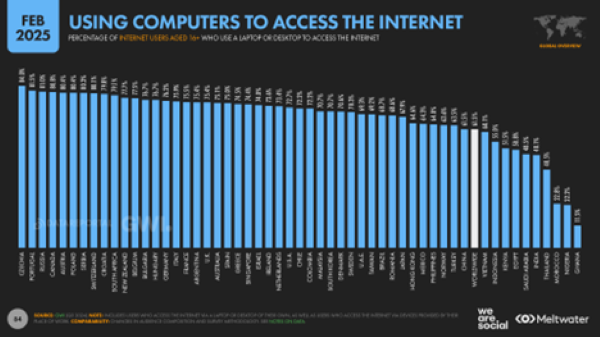
The workday no longer starts at 9am and ends at 5pm. Instead, it stretches, it fragments and it loops back on itself from the early-morning inbox checks, to the late-night meetings and the weekend catch-ups as people today constantly context-switch between work and their personal tasks. According to Microsoft’s 2025 Work Trend Index, workers today face an average of 275 interruptions a day, while meetings scheduled after 8pm are up 16% year-on-year. By 10pm, 29% of active workers are back in their inboxes, and nearly 20% of employees check their emails before noon on weekends. The shift is especially pronounced in Southeast Asia where 84% of APAC workers say they lack enough time to do their work – 4% above the global average. Markets such as Indonesia and Thailand report the highest strain, with 88% of workers in both countries saying they struggle to keep up. At the same time, 61% of APAC leaders say productivity must increase, 8% higher than the global average while underscoring the pressure placed on already stretched workdays. These behaviours show that blended work isn’t a temporary phase – it’s how people operate now. “Consumers don’t experience their day in neat blocks anymore, and this is true across Asia more than anywhere else,” said Ryan Miles, international marketing director, Microsoft Advertising, in a conversation with MARKETING-INTERACTIVE. Blended lives are driving PC-first behaviour As work spills into more hours and moments, laptops and PCs have become the backbone of daily routines. Windows continues to dominate as the primary operating system across Southeast Asia, with desktop OS market share reaching 84% in Indonesia, 77% in Thailand, 74% in Malaysia, and 71% in the Philippines. In Singapore, Windows accounts for 53% of desktop usage. This dominance is matched by time spent online. Consumers in Southeast Asia spend between 3.30 and 4.28 hours per day online, with the Philippines and Malaysia leading the region. Microsoft audiences across these markets are also 12% to 18% more likely to spend six to 10 hours online daily compared to the average internet user. Nick Seckold, regional vice president at Microsoft Advertising APAC, said these behaviours were first amplified during COVID-19, and is now part of daily life. “When everyone was locked down and working from home five days a week, primarily on their laptops, we saw huge spikes in search volume as people were online more often,” Seckold told MARKETING-INTERACTIVE. “That behaviour is continuing to happen, even as people return to the office more often,” he added, saying that often people are on a Teams call with the video off, while shopping on other tabs at the same time. Micro-moments are redefining consumer intent What has changed most is not just where people are working, but how intent shows up. Work and personal life now unfold through dozens of short overlapping moments – from quick searches, to planning tasks, responding to messages or browsing between meetings. “Work and life now play out in a series of short overlapping moments of work-life flow – moving between meetings, messages, planning, shopping and personal tasks, often outside traditional hours,” Miles said. “That’s changed what people expect from brands.” Rather than demanding attention, consumers expect relevance, noting that audiences want brands to understand when they’re showing up and why. Microsoft’s global data on Copilot conversations reflects this shift. Microsoft users are typically employed and affluent, making them attractive for advertisers in higher-consideration categories. While shopping and entertainment activity usually peaks on weekends, usage is spread across the workweek, signalling that discovery, planning and decision-making now happen continuously, not just during traditional leisure windows. Signals from search, shopping and conversational behaviour provide clearer intent than demographics alone. “Signals surfaced across search, shopping, and conversational behaviour – including how people use tools such as Copilot to plan, explore, and decide – give a clearer view of what someone is trying to do in that moment,” Miles said. What this means for advertisers For advertisers, the infinite workday creates new opportunities, but only if brands rethink how and when they show up. As work and personal life blur, the day is increasingly shaped by short, task-driven micro-moments rather than long stretches of focus. These moments range from quick searches and calendar checks to after-hours planning and light browsing between meetings, shifting when and how people are open to brand messages. This fragmentation changes what effective advertising looks like. Attention-heavy formats are usually out of step, while snackable, utility-led creative content, fits more naturally into these moments. Context also matters more than scale. Productivity platforms and PC environments allow brands to appear within task flows through native placements or relevant content integrations, reducing disruption and increasing usefulness. Generative AI further enables brands to adapt and scale creative efficiently across these micro-moments without losing relevance. What is important for advertisers to note is that hybrid work has also made daily routines far less predictable – so the tried and tested methods of segmentation and audience understanding has to evolve. Nonetheless, office attendance does often peak earlier in the week, while flexible and remote work patterns are more common later on and after hours. To keep pace, advertisers need omnichannel strategies that synchronise messaging across PC, mobile and connected TV, supported by dayparting and AI-led optimisation. Rather than chasing fixed behaviours, the focus shifts to identifying intent as it emerges throughout the day and showing up when it matters most. Seckold points to Microsoft’s owned surfaces as an example of how brands can strike that balance. “If you’re on Windows Edge with Bing as your default, whenever you type anything into the browser, Bing serves those results to you. If you use Discover, which is your news and content portal, you can curate all of that,” he said. “When you open a browser, you get the MSN feed with articles you may have clicked on

How can advertisers capture attention when work and life blur together? Read More »

TBWASingapore bets big on AI with APAC-first Innovation Lab

TBWASingapore has launched its Innovation Lab, the first Centre of Excellence within TBWA’s Asia Pacific network, with support from the Singapore Economic Development Board (EDB). The lab positions Singapore as what the agency describes as a regional proving ground for AI-led brand innovation. It is aimed at helping companies translate ambition into scalable experiences, intelligent systems and new growth models powered by emerging technologies. According to TBWASingapore, the initiative was established in response to a shift in how brands operate. As customer expectations evolve faster than traditional marketing and innovation cycles, brands face mounting pressure to build, test and learn at speed, while ensuring ideas remain commercially viable. Don’t miss: TBWAGroup Singapore elevates Mandy Wong to CEO Unlike traditional innovation labs that often focus on large-scale, long-horizon initiatives, TBWASingapore said its model centres on rapid prototyping, early proof of concept and disciplined scaling. The lab will support brands in identifying new growth spaces, testing ideas quickly and scaling only those that demonstrate clear value. Artificial intelligence sits at the core of the lab’s model, compressing timelines across insight generation, ideation, experience design and production. This enables teams to prototype immersive brand experiences within weeks rather than months, while pressure-testing concepts early to compound learning across projects. Beyond AI, the lab will explore applications of robotics and intelligent systems across education, training, service design and social impact. Virtual and augmented reality capabilities will also be deployed to create interactive brand environments designed for deeper and repeat engagement. The launch formalises capabilities the agency said it has already delivered in market, including immersive experience platforms developed for Singapore’s arts and culture sector to deepen audience engagement through interactive digital environments. The lab will also extend existing work in designing bespoke AI agents and AI-enabled operating systems integrated into creative, production and strategic workflows. With EDB’s support, the Innovation Lab will develop, test and refine ideas locally before scaling them across clients, categories and global markets. The agency added that partnerships with educational institutions and industry players will form part of efforts to strengthen Singapore’s technology and innovation ecosystem. Beyond client work, the lab will also play a role in shaping the agency’s talent strategy. Under the leadership of Mandy Goh, head of talent and human resources at TBWASingapore, it will operate as a training and incubation platform for hybrid skillsets spanning creativity, technology, systems thinking and cultural intelligence. This includes upskilling existing employees, developing new career pathways and incubating roles that do not yet formally exist, with a focus on preparing both the agency and its clients for rapid technological change. “Technology has finally caught up with creative ambition. AI and immersive platforms allow us to build, test, and learn at a pace the industry simply couldn’t achieve before. This Lab exists to ensure that speed is used responsibly, creating brand experiences that are richer, more engaging, and grounded in real value, not hype,” said Mandy Wong, CEO, TBWAGroup Singapore. In tandem, Junie Fo, vice president and head of professional services at EDB said, “TBWASingapore’s Innovation Lab will harness AI in marketing and advertising to support businesses, while partnering our Institutes of Higher Learning to develop the next generation of AI-savvy talent.” “Firms such as TBWASingapore play an important role in Singapore’s marketing ecosystem, strengthening our position as a trusted hub for professional services. We look forward to working with TBWASingapore to advance AI transformation in the marketing sector,” she added.  Goh said the future of the industry will hinge on new hybrid skillsets, adding that the Innovation Lab provides a live environment for teams to train, experiment and incubate talent for emerging roles the agency and its clients will require, rather than only those that currently exist. The move comes amid a broader push by companies in Singapore to formalise AI capabilities through dedicated centres. In May last year, Grab launched its first Artificial Intelligence Centre of Excellence in Singapore, backed by Digital Industry Singapore (DISG), as part of efforts to scale AI-driven solutions across Southeast Asia. Located at its GrabHQ@one-north campus, the centre was set up to address regional challenges through AI applications in accessibility, productivity and smart city infrastructure. It is expected to create at least 50 high-value roles by 2025 across product, engineering, data science and analytics functions. Showcase your most innovative content and gain recognition from a panel of industry leaders by entering the inaugural Content360 Awards. Submit your work today and be part of the celebration that honours the campaigns defining the future of content marketing. Related articles: National Arts Council spotlights creativity as a catalyst for confidence and curiosity    FairPrice celebrates small everyday moments that make CNY shine   StarHub introduces Hublings in playful ‘We got you’ brand push source

TBWASingapore bets big on AI with APAC-first Innovation Lab Read More »

Kellogg's Frosted Flakes' '90s jingle gets hip-hop remix

After cheering teens on for generations with breakfast pep talks, Tony the Tiger has found a new hype partner: hip hop artist J.I.D. In Kellogg’s Frosted Flakes’ latest collab, the duo has teamed up to reimagine the brand’s iconic ’90s jungle into a full-on cultural anthem titled HEY TONY!. The collab aims to inspire today’s teens to “flex their inner tiger”.  The new full-length track brings a fresh, modern sound to the beloved jingle, blending J.I.D’s signature rhythmic flow with original verses that reflect the familiar, motivating energy of Tony the Tiger and uplifting mood boost of Kellogg’s Frosted Flakes cereal. In addition, J.I.D’s style of affirmational hip hop mirrors the brand’s core beliefs of confidence, optimism and reaching one’s potential. Don’t miss: Do brand mascots still matter in 2026?  The collab goes beyond music and features a limited-edition Kellogg’s Frosted Flakes, Tony the Tiger and J.I.D “Day ones” merch. The merch line includes a jersey, a t-shirt and a collectible cereal box. The cereal box puts J.I.D front and centre, complete with a custom illustration, a Spotify QR code for the track and a crossword puzzle.  The new track debuted at the Kellogg’s Frosted Flakes “Day Ones” bowl game on 22 February. The showcase featured a marching band and an exclusive half-time performance. Participating teams received a donation from Kellogg’s Frosted Flakes for new equipment and improving facilities. Athletes also received the limited-edition merchandise.  “Kellogg’s Frosted Flakes and Tony the Tiger have always stood for encouragement and belief,” said Laura Newman, vice president of brand marketing at WK Kellogg Co. “Hip Hop is a culture built on that same energy, so teaming up with J.I.D. was a natural connection for us to bring back ‘Hey Tony’ in a way that honors helping to bring out your greatness for a new generation.”  The latest collaboration builds on Kellogg’s broader efforts to refresh Frosted Flakes for younger audiences in recent years. In 2023, the brand partnered creative agency Leo Burnett to rework its long-running “They’re Grrreat!” slogan through the tongue-in-cheek “They’re That Gr-r-reat!” campaign. The initiative leaned into internet culture, featuring memes, gifs and social-first videos that placed Tony the Tiger in relatable online scenarios, including a parody of the viral “This is fine” meme. At the time, the campaign aimed to re-engage a new generation of consumers by redefining what it means to be “great” in a modern context. Showcase your most innovative content and gain recognition from a panel of industry leaders by entering the inaugural Content360 Awards. Submit your work today and be part of the celebration that honours the campaigns defining the future of content marketing. Related articles:  Maybelline reimagines iconic jingle with Miley Cyrus as global face  Classic The Beatles hit ‘Help!’ reimagined into youth mental health anthem  SGAG, Hossan Leong revive viral anthem ‘We live in Singapura’ with hilarious modern twist  source

Kellogg's Frosted Flakes' '90s jingle gets hip-hop remix Read More »

All aboard Marina Bay’s Disney adventure as precinct bet on experiences

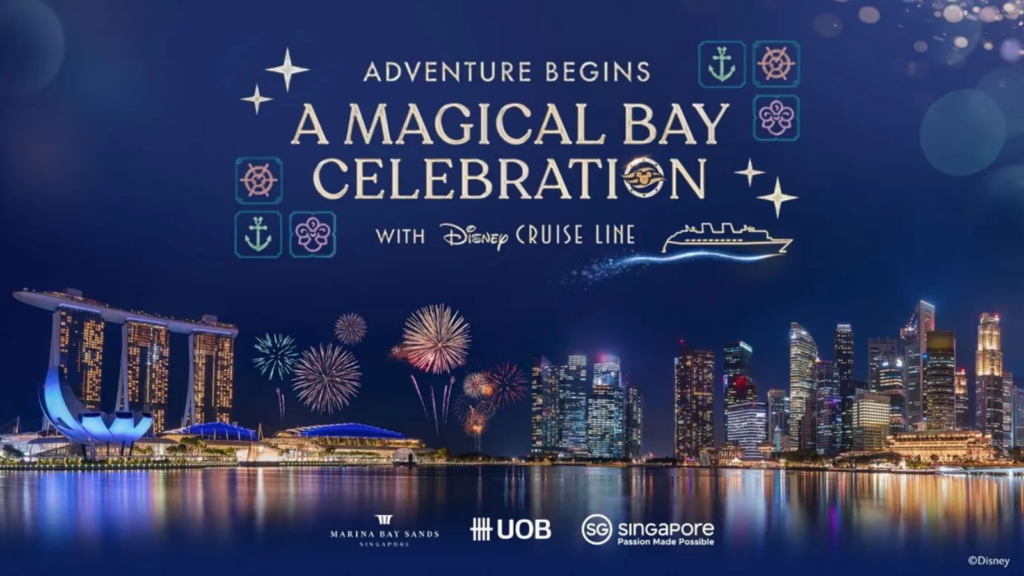
UOB, Marina Bay Sands, and Singapore Tourism Board (STB), in collaboration with Disney Cruise Line, are turning Marina Bay into a two-month experiential playground for visitors, anchored by Asia’s first Disney Cruise Line-inspired sky show. The activation, titled “Adventure begins: A magical bay celebration with Disney Cruise Line”, runs from 26 February to 30 April 2026, combining retail, dining and entertainment experiences to engage locals and tourists alike. The highlight of the campaign is a 10-minute fireworks sky show over three nights from 13 to 15 March, choreographed to Disney classics including When you wish upon a star, Let it go, Under the sea, and You’ve got a friend in me. Visitors can enjoy the display from vantage points across Marina Bay. Don’t miss: STB cranks Singapore adrenaline and thrills up to full tilt  Seven Disney Cruise Line-themed areas including Disney Imagination Garden, Toy Story Place, San Fransokyo Street, Town Square, Wayfinder Bay, Disney Discovery Reef, and Marvel Landing, will also offer photo opportunities, interactive quests, and limited-edition medallions. As a special nod to the Disney Adventure homeporting in Singapore and the island city’s rich multicultural heritage, the sky show will also feature designs with a local twist, bringing together Disney Cruise Line and nautical-themed elements, Peranakan-inspired motifs, and icons referencing Singapore’s national flower, the Vanda Miss Joaquim. In addition, UOB cardholders who spend a minimum of SG$100 at select precinct locations can enter lucky draws for a three-night Disney Adventure cruise, while seven-week in-app games on UOB TMRW allow participants across ASEAN to earn points for transactions, with winners from Singapore, Thailand, Malaysia, Indonesia, and Vietnam also standing to win cruise trips or exclusive Disney-themed merchandise. This marks the third edition of the Marina Bay Precinct Partnership, which brings together UOB, Marina Bay Sands, and STB, with support from over 70 restaurants, hotels, retailers, and attractions offering UOB cardholder promotions of up to 50%, Previous precinct collaborations have shown tangible commercial results. During January to March 2024, the “Masterpieces. Made in Singapore” tripartite campaign, which included “The Legend of the Dragon Gate” drone show, saw overseas-issued UOB card billings surge 65% year-on-year, with Indonesian cardholders’ spend growing 160%, and Malaysian, Thai, and Vietnamese card spend rising up to 65%.  “Together with UOB and Marina Bay Sands, we are elevating the third edition of the Marina Bay Precinct Partnership to new heights by teaming up with Disney Cruise Line. Such strategic partnerships are important as it allows us to come together to create exciting and innovative experiences for visitors and locals alike,” said Kenneth Lim, assistant chief executive (Marketing group). “This spectacular sky show truly encapsulates the spirit of the Disney Adventure—through fantasy, imagination, discovery, and adventure—and is a testament to the start of more meaningful collaborations throughout Singapore,” added Sarah Fox, vice president and regional general manager, Southeast Asia, Disney Cruise Line.  With Disney Adventure’s maiden voyage arriving in Singapore on 10 March, Marina Bay’s precinct partners are demonstrating how strategic collaborations between banks, tourism bodies, and entertainment brands can create immersive, measurable experiences for consumers, blending entertainment, retail, and dining into one cohesive activation. Precincts across the city are increasingly positioning themselves as multi-experience destinations, with Singapore Sports Hub recently rebranding as The Kallang to signal its evolution into a hub for sport, lifestyle, and entertainment. According to The Kallang Group, the precinct will now offer upgrades including alfresco dining, a sheltered padel ecosystem, refreshed family zones, and enhanced climbing facilities, aiming to become Singapore’s “excitement epicentre” where global acts, local athletes, and residents come together for shared experiences. Showcase your most innovative content and gain recognition from a panel of industry leaders by entering the inaugural Content360 Awards. Submit your work today and be part of the celebration that honours the campaigns defining the future of content marketing. Related articles: Stitch invades SEA in Disney’s latest activation blitz Disney takes the wheel with F1 partnership in 2026  OCBC unveils Disney-themed cards as part of 5-year strategic collab  source

All aboard Marina Bay’s Disney adventure as precinct bet on experiences Read More »

FairPrice Group names new head of retail media network

FairPrice Group has appointed Rajiv Singh as head of FPG ADvantage, the omnichannel retail media network’s newly created business unit. The move signals the supermarket giant’s intent to scale its retail media capabilities, leveraging its extensive physical and digital footprint to deliver both enhanced shopper experiences and measurable brand outcomes. In the newly created role of head of FPG ADvantage, Singh will lead both the strategy and day-to-day operations of the retail media network. He will also oversee the expansion of FPG ADvantage as a platform connecting brands with shoppers across FairPrice Group’s omnichannel ecosystem. In conversation with MARKETING-INTERACTIVE, FairPrice Group said the appointment reflects its ambition to responsibly leverage first-party data and omnichannel reach to create a sustainable value exchange for both shoppers and brand partners. For consumers, this translates to more relevant and useful experiences supporting everyday decisions. For brands, it offers a trusted platform to engage high-intent audiences across online and in-store touchpoints. Don’t miss: FairPrice gets futuristic with smart carts, palm pay and AI-powered store ops  Furthermore, Singh’s leadership at FPG ADvantage positions the group to scale retail media in a way that complements the customer experience while delivering measurable outcomes for brands, reflecting a growing trend among retailers in Singapore to integrate data-driven media networks with omnichannel retail strategies. Singh joins FairPrice Group with over 25 years of leadership experience across global brands including Sony, Walt Disney, and Flipkart. Most recently, he was country head of Grab Ads in Indonesia, where he grew the advertising business across more than 300 cities, working with global brands and local merchants in a fast-growing and competitive environment.  Commenting on his move to Singapore, Singh said he is excited by the maturity of the retail ecosystem and for the opportunity to build an integrated retail media network. “I see strong potential to leverage FPG’s scale, trust, and deep shopper insights to deliver measurable business outcomes for brand partners, while enhancing everyday shopping experiences for consumers.”  He added, “I am focused on driving the platform’s next phase of growth — scaling the retail media advertising business, shaping go-to-market strategies, and working closely with commercial, product, and technology teams to deliver performance-led solutions with clear, measurable outcomes for brand partners.” FairPrice Group first debuted FPG ADvantage in October last year. The platform leverages the group’s 570+ touchpoints — including FairPrice supermarkets, Cheers, Unity pharmacies, and Kopitiam food courts — to connect brands with 1.7 million app users and over two million Link Rewards members. Combining physical and digital assets such as digital screens, in-store radio, AI-enabled smart carts, tabletop decals, and in-app placements, FPG ADvantage drives more than one million daily interactions while providing advertisers with measurable insights into campaign effectiveness through partnerships with Meta and The Trade Desk. Pilot campaigns have demonstrated the network’s reach and performance.  Singtel’s collaboration at FairPrice Finest’s ‘Store of Tomorrow’ attracted over 45,000 visitors in a month, while Nestlé Singapore’s Milo activation reached 680,000 shoppers in a week, generating a 42x omnichannel return on ad spend and a 30% sales uplift.   Showcase your most innovative content and gain recognition from a panel of industry leaders by entering the inaugural Content360 Awards. Submit your work today and be part of the celebration that honours the campaigns defining the future of content marketing. Related articles:  FairPrice celebrates small everyday moments that make CNY shine  NTUC Fairprice Group calls for pitch  FairPrice adds heart to the hustle of daily errands  source

FairPrice Group names new head of retail media network Read More »