marketing interactive

Science Centre Singapore picks agency to strengthen social media engagement

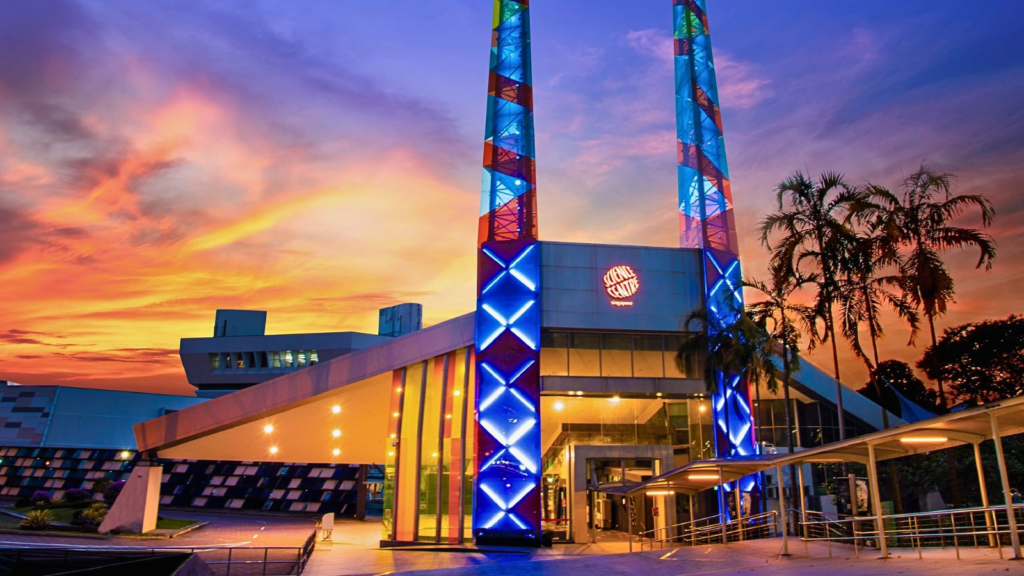
Science Centre Singapore has appointed dentsu solutions to lead its social media strategy for the Science Centre Board, under an engagement running from 1 April 2026 to 31 March 2027, with an option to extend for one additional year. The appointment supports Science Centre Singapore’s broader ambition to position itself as one of Singapore’s leading edutainment destinations, while deepening its role as a trusted institution that connects the community with science, technology, engineering and mathematics through accessible, inspiring and hands-on experiences. Under the mandate, dentsu will be tasked with developing a social media strategy that grows the centre’s digital footprint, raises visibility for its permanent exhibitions, special exhibitions, core offerings and public programmes, and drives sustained engagement with local and international audiences, according to tender documents seen by MARKETING-INTERACTIVE.  Don’t miss: Ministry of Transport concludes social media pitch A secondary objective will be to support patronage and visitation to the Centre and its attractions. Science Centre Singapore is targeting 700,000 walk-in public guests in 2026.   The strategy will also cover the centre’s group of attractions, including the Omni-Theatre, Snow City and KidsSTOP.  In addition, the wider Science Centre ecosystem includes Singapore Science Centre Global, a wholly owned subsidiary of the Science Centre Board, which focuses on STEM and Singapore science-related educational products for overseas educators, students, international school principals and science centre curators. MARKETING-INTERACTIVE has reached out for a statement. The social media appointment follows Science Centre Board’s recent appointment of Alsoknownas (AKA) as its new public relations agency earlier this month. Similarly, AKA’s appointment also runs from 1 April 2026 to 31 March 2027, with an option to extend for an additional year. The PR remit is structured as a retainer, with AKA leading communications across the centre’s full portfolio of attractions. The agency is tasked with developing an integrated, data-driven communications strategy to strengthen brand equity, increase awareness and drive both first-time and repeat visits, as Science Centre Board sharpens its positioning in a competitive attractions landscape and builds momentum towards the new Science Centre in 2027. Both dentsu and AKA join Science Centre Board’s agency roster, which also includes brand practice Anak as its branding and design agency. Related articles:  GovTech picks agency to manage digital and social media channels  Maybank Singapore calls for social media pitch  URA names new social media agency source

Science Centre Singapore picks agency to strengthen social media engagement Read More »

Charles & Keith taps former Meta executive as global marketing director

Singapore-based fashion group Charles & Keith has unveiled a series of leadership appointments as it looks to accelerate growth, strengthen its digital capabilities and sharpen its brand positioning following its 30th anniversary. Leading the appointments is Aniko Andras (pictured), who joins the company as global marketing director. In the role, she will oversee the group’s global marketing strategy, working across teams to deepen brand affinity and enhance the customer experience as Charles & Keith expands its presence across international markets. Andras brings more than 20 years of international marketing experience to the role. She joins from Meta, where she led strategic partnerships with luxury and technology brands across the Asia Pacific region. Prior to that, she held marketing leadership roles at Apple, L’Oréal and Reckitt, building expertise in brand development, digital marketing and customer engagement. Don’t miss: How Coach is winning over Gen Z one experience at a time The company has also appointed Claudia Brechenmacher as head of transformation. She will lead the group’s transformation and strategy efforts, focusing on organisational agility, operational excellence and long-term business growth. Brechenmacher brings 15 years of global strategy consulting experience, including a decade at Bain & Company, where she led strategy development and large-scale transformation projects across Europe and Asia. Meanwhile, Cayetano Morales Rosell has been named global director of eCommerce. He joins the company with more than 15 years of experience at Inditex and Massimo Dutti, having held senior positions spanning merchandising and global eCommerce. In his new role, Morales Rosell will be responsible for driving Charles & Keith’s global eCommerce strategy, with a focus on accelerating growth, advancing the group’s digital ambitions and strengthening its technology, logistics and team capabilities. Charles & Keith said the leadership changes are aimed at driving its “transformative growth”, redefining its digital and creative identities, and scaling operational efficiencies as the company enters its next phase of growth. The appointments come as fashion brands continue to invest in marketing and digital transformation to drive growth in an increasingly competitive retail landscape. Earlier this year, luxury fashion house Tapestry, parent company of Coach and Kate Spade New York, appointed Dentsu as its global agency of record outside the US. Under the expanded partnership, Dentsu will oversee media planning and buying for the group’s flagship brands across APAC, Europe, the Middle East, Africa and India, building on an existing collaboration in China. Related articles: Is community the new currency for Love, Bonito?   Christy Ng brings Mamee Monster to life in playful bag collaboration      Coach just turned storytelling into a fashion statement source

Charles & Keith taps former Meta executive as global marketing director Read More »

PLUG lands in Singapore with new MD leading expansion

Independent public relations and marketing agency PLUG has officially launched its Singapore office, marking its latest expansion in Asia as brands increasingly seek integrated campaigns that span multiple markets. The move follows a soft launch in 2025 and is being led by communications veteran Jolin Ng (pictured), who joins as managing director of PLUG Singapore. According to the agency, the Singapore office will offer integrated services across public relations, influencer strategy, social media and content, with a focus on delivering culture-led brand storytelling tied to business outcomes. Don’t miss: Mediaplus expands into Asia with Singapore joint venture Ng brings more than 15 years of communications experience across Asia. Prior to joining PLUG Singapore, she held senior roles at Hill+Knowlton Strategies and AKA Asia, before serving as general manager at W Communications Singapore. Over the course of her career, she has led campaigns for brands including Hilton APAC, Hong Kong Disneyland, New World Development, SK-II Global and Tinder APAC. Ng is also no stranger to PLUG, having first joined the agency’s Hong Kong office in 2018. The Singapore launch builds on an existing cross-market collaboration model between the agency’s teams. The Singapore expansion forms part of PLUG’s broader growth strategy in Asia, pairing Singapore’s role as a gateway to Southeast Asia with Hong Kong’s position as a bridge to North Asia and Mainland China. Founded in Hong Kong in 2007 by Lara Jefferies and co-led by executive director Alex Zenovic, PLUG has grown into an independent agency with more than 30 specialists across Hong Kong and Singapore. Its capabilities span public relations, strategy, creative, content, digital, social media and partnerships. Since its soft launch, PLUG Singapore has built a portfolio across consumer, culture and social impact sectors. Clients and projects include integrated campaign work for Stroke Support Station (S3), Play Nation and Thekchen Choling Singapore, as well as public relations, influencer engagement and activation work for brands such as Airbnb, Driscoll’s and Pizza Hut. The agency’s wider client roster includes the Singapore Tourism Board, Aesop, Diptyque, IWC Schaffhausen, ALICE + OLIVIA and The North Face. “Expanding from Hong Kong to Singapore with Ng, whom we’ve worked with for years, is a natural evolution. She brings deep experience in both cities, an analytical mind, fantastic connections and an innate understanding of the PLUG culture and passion for our work,” said Jefferies. She added, “With our expertise across both markets, we’re able to connect communities, unlock new collaborations and help brands operate more fluidly across Asia.” In tandem, Ng said, “The industry tends to organise itself around channels, but people don’t engage that way. At PLUG, we build ideas that move fluidly across culture, media and everyday moments. In Singapore, we’re applying that thinking to help brands build genuine connections with their community, not just collect them.” PLUG’s expansion comes amid continued agency investment in Singapore as firms look to strengthen their regional capabilities. In October last year, communications group COMCO Mundo League of Enterprises launched its Singapore office under the banner of COMCO Southeast Asia – Singapore, positioning itself closer to regional business hubs and high-growth sectors such as technology, finance, healthcare and consumer markets. Prior to that, PR and communications agency LaunchLink Communications also established a Singapore office as part of its APAC expansion plans. The office serves as a regional hub for local and international clients, offering services ranging from strategic communications and executive positioning to market entry support, product launches and cross-border campaigns. Related articles: Experiential agency Verve expands into Asia with Singapore office  Design consultancy Elephant stomps into Singapore with new APAC hub     Brand and growth consultancy MOMENTRA opens shop in Singapore source

PLUG lands in Singapore with new MD leading expansion Read More »

Tech giants and law enforcement disrupt SEA scam networks in joint crackdown

Meta, Microsoft and Coinbase have led a sweeping digital takedown of scam infrastructure across Southeast Asia, with platforms disabling millions of accounts and disrupting fraud operations across the attack chain. Meta said it disabled more than 1.4 million accounts, pages and groups across Facebook and Instagram linked to scam networks. It also worked alongside other industry players in the coordinated operation. Microsoft suspended around 20,000 fraudulent accounts tied to scam operations, while Coinbase froze more than US$3 million in cryptocurrency assets linked to criminal networks. Don’t miss: Google clamps down on financial scam ads with new Malaysia verification requirement Connectivity provider Starlink also terminated access for thousands of kits identified as being used for unlawful activity, cutting off another layer of operational infrastructure for scam compounds. On the enforcement side, law enforcement agencies arrested 63 suspected individuals connected to scam centres, according to participating partners. The operation was led by the US Department of Justice’s scam center strike force, bringing together technology companies and law enforcement agencies across multiple jurisdictions, including the US, UK, Australia, Canada, New Zealand and Thailand. The effort also involved the US Attorney for the District of Columbia, Jeanine Pirro, alongside the FBI and US Secret Service, with coordination supported through intelligence sharing between public and private sector partners. Partners said the collaboration allowed them to connect activity across platforms and financial systems, helping identify scam networks and potential scam compound locations for referral to authorities. Beyond account takedowns and asset freezes, the operation also generated intelligence gains, with partners identifying new suspected scam centre locations and networks. These were passed to law enforcement agencies for further action, extending disruption from online platforms into real-world enforcement. Industry partners said the coordinated model enabled action across multiple stages of the fraud ecosystem, from online recruitment and communication channels to financial transfer and infrastructure access. Scam networks across the region have increasingly relied on multi-platform tactics to evade detection, prompting companies to adopt more coordinated approaches across sectors. The participating companies said they plan to continue cross-industry collaboration to disrupt evolving scam operations and strengthen safeguards for users online. “Protecting people around the world from scams is one our highest priorities. The joint operation demonstrates the power of partnerships to combat scammers. We’re proud to partner with industry and DOJ, FBI, Royal Thai Police, and other law enforcement agencies in taking this global fight directly to these Asia-based scam centers at their source,” said Chris Sonderby, VP and deputy general counsel, Meta. In tandem, Steven Masada, global head of Microsoft’s digital crimes unit said, “Operations like this show what’s possible when technology companies and law enforcement work side by side. Scam networks operate across platforms and borders, and Microsoft remains committed to working with partners to combine visibility into scam infrastructure with real-world action, disrupting criminal networks at scale and holding those behind them accountable.” The recent enforcement push builds on earlier platform-level measures aimed at tightening scam detection and brand protection across Meta’s ecosystem. Meta had previously updated its anti-scam advertising tool, “Brand rights protection”, adding new features requested by businesses using the system. The updates were designed to give brands greater control over how they are represented online and to reduce exposure to misleading or harmful content. The tool serves as a unified reporting system across Facebook and Instagram, allowing businesses to monitor and flag misuse of their brand in both ads and organic content, including impersonation and intellectual property infringement. Related articles: Singapore orders Meta to curb Facebook scams or face S$1m fines   Meta joins SPF and NCPC to beat scammers at their own game  Facebook advertisers must verify identities amidst surge in scam ads   source

Tech giants and law enforcement disrupt SEA scam networks in joint crackdown Read More »

Pink Dot is ditching its usual concert format for something more personal

Pink Dot is marking its 18th year with a new campaign, “Come get personal” as it shifts this year’s event into a more interactive, community-led experience centred on storytelling, connection and lived experiences within Singapore’s LGBTQ+ community. Taking place on 27 June 2026 at Hong Lim Park, Pink Dot 18 will move away from its usual single-stage concert format. Instead, the park will be transformed into a series of themed “villages” that attendees can explore, each spotlighting different aspects of queer life in Singapore, from relationships and identity to school, work, community and everyday social navigation. The refreshed format comes after the repeal of Section 377A, as conversations around LGBTQ+ issues in Singapore evolve beyond one galvanising issue into a wider range of community experiences. According to Pink Dot, the campaign is also a response to an increasingly overwhelming and polarised world, encouraging people to begin with personal stories and connections. Don’t miss: GOODSTUPH turns schoolyard slurs into pride keychains for Pink Dot 2025  “This year, Pink Dot is about remembering something simple: our stories are personal. They’re about real people: our families, friendships and communities,” said Andee Tay, spokesperson for Pink Dot. “There’s so much happening in the world right now, it can feel hard to know what to care about or how to even begin making a difference. At such moments the instinct can be to turn away or retreat into ourselves. But we’re inviting people to do the opposite: to start with what is personal, with the people in front of us. To hear someone else’s story, meet someone new, and connect to experiences beyond your own,” Tay added. As part of the redesigned park experience, more than 20 community groups will host experiential booths and activities across Hong Lim Park. These will include gallery walks, immersive installations, games and facilitated conversations. Among the community-led experiences is “This classroom is not empty” by Queer Friendly Chers, an unmanned interactive booth spotlighting queer and ally educators who create safe spaces for queer and trans students, even when they cannot safely be visible in their workplaces. Meanwhile, The T Project will present “Body pARTS,” an interactive reflection wall exploring how scars can tell stories of healing and self-acceptance rather than shame. South Asian Pride Singapore will share stories of identity and belonging while inviting visitors to contribute to a community tapestry, while WLWheels, a group of lesbian riders, will showcase their motorbikes and share how they found one another. According to Tay, community groups have always played a key role in Pink Dot, but this year, they will take the lead in telling the community’s stories. These groups, Tay said, are the “beating heart” of queer life in Singapore, creating spaces for support and belonging beyond Pink Dot day itself. The new format is designed to create more entry points for attendees, whether they are visiting Pink Dot for the first time, returning as long-time supporters, exploring their place in the community, or showing up as allies. Pink Dot said the refreshed experience aims to make the event more accessible for those attending alone or for the first time, while also giving long-time attendees new ways to connect with the community. While the usual concert will be replaced by experiential community activations and pop-up performances, Pink Dot’s picnic lawn, soapbox speeches and light-up will remain. From 4pm to 7pm, visitors will be able to explore the activations across the four themed villages, picnic on the lawn and catch pop-up performances. This will be followed by the event’s soapbox speeches and light-up. The campaign ultimately invites attendees to take the freedom to love personally, whether through listening to experiences different from their own, supporting loved ones or contributing to the community in everyday ways. “Sometimes all it takes is one conversation or connection to see something differently,” said Tay. “When we connect with one another, love stops being an abstract idea and becomes something we do for one another. Because when something becomes personal, things change.” The campaign builds on Pink Dot’s recent efforts to place personal storytelling at the centre of its advocacy. Last year, the movement launched a multi-year campaign celebrating diverse expressions of queer love between partners, friends and chosen families. Anchored by a community time capsule initiative, the campaign invited LGBTQ+ Singaporeans and allies to contribute letters, photographs and personal objects that reflected their experiences of love, with selected submissions showcased at Pink Dot 17 before being sealed until 2050. The initiative, created in partnership with creative agency Friend and production house AMOK, was brought to life through a short video series spotlighting stories of queer connection through meaningful objects. These included items linked to Singapore’s first LGBTQ+ counselling hotline, Taiwan Pride, The T Project, Oogachaga, queer couples, artists and activists. With “Come get personal,” Pink Dot 18 appears to continue that storytelling-led direction, shifting the focus from preserving memories for the future to creating more immediate, in-person moments of connection across the community. Related articles:   Optus unveils Mardi Gras 2026 platform ‘Pride blooms from Yes’ Babaylanes, DDB MNL turn watch time into support for trans creators this Pride  Sephora and Haus Labs go Gaga for self-expression this Pride source

Pink Dot is ditching its usual concert format for something more personal Read More »

Indeed says it's time to stop searching and start matching

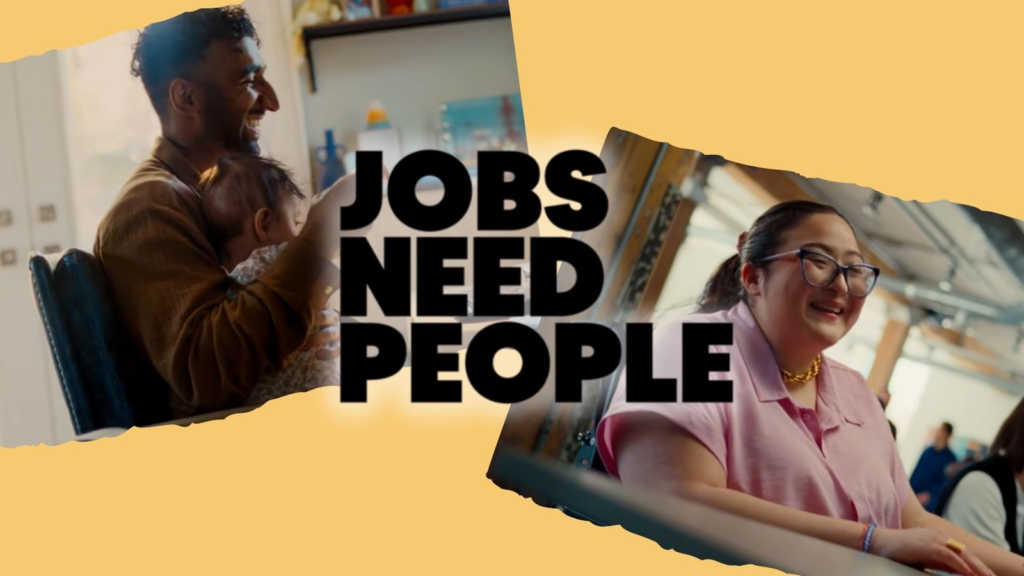
Indeed is repositioning itself as an AI-powered hiring platform with the launch of a new global brand campaign titled “Jobs need people.” Created in partnership with 72andSunny, the campaign seeks to reinforce the idea that while AI can make hiring more efficient, recruitment remains a fundamentally human process. The campaign will roll out across television, streaming platforms, YouTube and social media through a series of six-, 15- and 30-second films. The creative flips the traditional job-search narrative by reminding audiences that employers are not simply looking for resumes, but for the skills, perspectives and potential behind them. Don’t miss: Jobstreet turns to mermaids and Monkey King to fix job matching According to Indeed, the campaign is supported by a full-funnel media strategy that will also include sports partnerships and experiential activations. One of the first examples of the platform’s new brand direction was its collaboration with FOX Sports and FOX One on the search for a “Chief World Cup watcher“, which was promoted through activations including Times Square billboards and on-site branding. The campaign comes as Indeed continues its evolution from a traditional job board into what it describes as an AI-powered matching platform. According to James Whitemore, chief marketing officer at Indeed, the company is shifting the conversation away from job searching and towards job matching. “For more than two decades, Indeed has helped millions of people get jobs. But as hiring becomes more complex, noisy and impersonal, something needs to change: finding the right opportunity shouldn’t depend on endless searching,” said Whitemore in a blog post. Indeed said it now facilitates 31 hires every minute through its platform and increasingly relies on AI and data-driven matching to connect employers with candidates. The company said its matching engine draws from more than 665 million job seeker profiles and insights such as salary expectations, certifications and preferred work patterns to surface potential matches. According to Indeed, approximately 70% of sponsored applications on its platform now come through tools such as Smart Sourcing and Smart Screening, while traditional keyword-based search accounts for less than 30%. The shift comes amid ongoing frustrations among both job seekers and employers. Citing an April 2026 Harris Poll survey commissioned by Indeed, the company said 81% of job seekers have applied for roles without receiving a response, while 45% are unsure whether they are qualified for the jobs they apply for. The survey also found that job seekers spend an average of six hours researching and applying for positions, despite more than half expecting they will not hear back from employers. Against this backdrop, Indeed said its latest campaign is intended to highlight a future where hiring is driven less by application volume and more by meaningful connections between employers and candidates. “Hiring shouldn’t feel like a search. It should be a discovery,” Whitemore said. Indeed’s latest campaign comes as professional platforms increasingly look to address the realities of today’s evolving workplace through brand storytelling. Earlier this year, LinkedIn launched a global campaign titled “The network that works for you”, created in partnership with McCann New York. The campaign used humour to spotlight relatable workplace scenarios, from awkward meeting moments to career uncertainties, while positioning LinkedIn as a platform that supports professionals and businesses through the complexities of modern work. Rather than promising to eliminate workplace challenges, LinkedIn’s campaign focused on helping users navigate them. Similarly, Indeed’s “Jobs need people” campaign seeks to address common frustrations in the hiring process, highlighting the role technology can play in connecting employers and candidates while keeping human relationships at the centre of recruitment. Related articles: Jobstreet by SEEK warns of growing impersonation scams in MY   Love, Bonito and LinkedIn tackle career questions women hesitate to ask   Philippines ranks second in APAC workplace happiness, Jobstreet by SEEK finds   source

Indeed says it's time to stop searching and start matching Read More »

Google’s thrown the old SEO playbook out. Here’s how you can catch up in 30 days

If the writing had been on the wall for SEO for some time, Google Marketing Live 2026 provided the official confirmation. Traditional search is done. There’s now only one kind of search on Google, and it’s AI-based. As an agency with its foundations built upon the original SEO playbook, we’re the first to concede that the old ways of doing things will no longer work in 2026. We have the numbers to back this up. In March this year, we conducted an experiment to see how the top-ranked businesses on Google fared when measured by an AI-engine. We searched for 100 commercial keywords across five industries on Google and identified which brands ranked in the top five. Then we took longer-tail, variation-based questions that people would use on the LLMs (4308 prompts suggested by Ubersuggest and Answer the Public) related to those 500 commercial key terms to see whether those brands were mentioned. What we found was that the brands holding Google’s top spot were only showing up in AI responses 31% of the time. In other words, brands that “won” SEO, who fought for and held the top rank, are invisible to AI more than two-thirds of the time. The reason why this change is happening comes down to the shortened consumer purchase journey. According to Bain & Company’s “Goodbye clicks, hello AI” report, zero-click activity already accounts for 65% of consumer searches, with the majority of decisions shaped before a brand’s website ever enters the picture. We’re seeing this in our own client base, with the consumer journey collapsing from 20-plus touchpoints over a few weeks to a single AI conversation in five minutes. This is the modern reality, where consumers get everything they need without clicking a single link. So, it’s clear the old measurement framework, using rankings, traffic and CTR, is assessing the wrong thing entirely. Moving forward, companies really need to be shifting to an outcomes-first measurement approach, which means moving away from surface-level vanity metrics. SEO won the batter, AI changed the game While this switch in strategy matters everywhere, Southeast Asia is on the global front line. Our region has leapfrogged the West with AI-led discovery, just like we did with chat-native commerce. Platforms such as Lazada, Shopee, and Grab already trained consumers to expect instant, personalised answers. That conditioning is now accelerating AI search adoption faster here than in most other markets. This means that brands still thinking in keyword-ranking terms are already falling behind. Combine this with the broader environment, where the global economy and geopolitics are squeezing marketing budgets and business margins, and there is zero room for brands to be optimising the wrong thing. The good news is that 30 days is enough for a brand to improve its positioning. The first step is an honest audit of your AI visibility. Instead of Googling yourself, your best bet is to now search your brand and category on ChatGPT, Perplexity, Gemini and the other major AI platforms. Are you showing up? Are your competitors? Think of this as your new share-of-voice audit. Next, your measurement strategy should evolve. It’s best to stop reporting rankings and traffic as primary KPIs and instead focus on tracking brand mentions in AI outputs, citation frequency, and share of AI recommendations by category. For example, reviews are now much stronger than keyword density. AI agents surface brands based on review volume and quality, as well as third-party citations, not on-page copy optimisation. On the content side, when reviewing your website, it should be more encyclopaedic than promotional. AI overviews pull disproportionately from content with facts, comparisons, and statistics, so brands whose content resembles a sales pitch get overlooked more often by LLMs. Finally, it pays to ensure your messaging is consistent across every channel. AI agents cross-reference signals from Google, YouTube, Reddit, review platforms and social media. Inconsistent messaging on these touchpoints creates conflicting signals, and a confused AI won’t recommend you. Unfortunately, no digital environment punishes misallocated attention more brutally than the current one. So, if you’re still using the old ways of working, you’re potentially already behind the eight ball. The good news, however, is you can catch up fast, you just need to start taking the key steps today. This article was written by Dan Kalinski, APAC managing director, NP Digital. source

Google’s thrown the old SEO playbook out. Here’s how you can catch up in 30 days Read More »

Showing up in AI answers isn't enough if audiences don't believe them

Brands may be winning the battle for visibility in AI-generated answers, but that visibility means little if audiences do not trust what they are reading. That’s according to a new report from Burson, which argues that the next phase of generative engine optimisation (GEO) will be defined not by whether brands appear in AI-generated responses, but by whether those responses are believable to the audiences that matter most. The report, titled “The credibility paradox”, analysed more than 55,000 AI-generated responses across seven major AI answer platforms, examining how 85 companies were represented across eight reputation dimensions: innovation, creativity, workplace, products, financial performance, governance, citizenship and leadership. The findings suggest that while many organisations have focused on securing visibility in AI-generated answers, communicators now face a new challenge: ensuring that the narratives AI systems construct are credible. Conducted in partnership with AI marketing platform Profound, the study evaluated AI-generated responses using Burson’s proprietary Decipher tool, developed with cognitive AI company Limbik. The tool assessed the believability of responses among three audience groups: the general population, opinion elites and business decision-makers. One of the report’s strongest findings was that AI rewards proof over positioning. Don’t miss: Does reputation have a price tag? Burson puts it at US$7.07 trillion globally AI rewards proof, not positioning According to the report, reputation attributes supported by observable and independently verifiable evidence consistently outperformed those built around more subjective or institutional claims. Innovation ranked as the most believable reputation lever overall, followed by creativity, workplace and products. Meanwhile, governance, citizenship and leadership occupied the bottom half of the rankings. In tandem, it found that AI-generated responses grounded in product launches, customer experiences, awards, workplace reviews and third-party coverage were generally more believable than narratives centered on corporate intent, executive judgement or organisational values. In fact, the data showed a strong directional separation between performance and foundational levers, arguing that in AI environments, proof is no longer simply support for a message but the infrastructure that makes the message credible. Interestingly, leadership emerged as the weakest reputation dimension across almost every industry and audience group studied. Executive visibility and CEO commentary rarely translated into believable AI-generated narratives unless they were reinforced by governance practices, business performance, employee experiences and third-party validation. In fact, leadership ranked among the bottom two reputation dimensions across every sector examined, making it one of the clearest vulnerabilities in AI-mediated reputation management. The findings may challenge traditional approaches to executive thought leadership, with Burson arguing that communicators should focus less on executive visibility itself and more on building what it described as “credible, extractable and externally validated leadership proof”. Meanwhile, workplace reputation emerged as an unexpectedly powerful credibility driver. Workplace ranked first among the general population and remained in the top half across all audience groups. According to the report, workplace narratives perform strongly because they are supported by highly visible and independently verifiable signals, including employee reviews, labour reporting, talent rankings, workplace policies, hiring activity and earned media coverage. Different audiences trust different signals  The study also found that credibility varied significantly depending on who was consuming the AI-generated response. Business decision-makers rated AI-generated answers 10% more believable on average than members of the general population. While business decision-makers and opinion elites ranked innovation as the most believable reputation attribute, the general population placed workplace and products at the top of the list. This means organisations need a more audience-specific approach to GEO. For example, an innovation-led narrative may resonate with business audiences who understand technical capabilities and industry context, but prove too abstract for broader audiences unless it is translated into tangible customer outcomes or visible product benefits. Beyond audience differences, the report also highlighted significant variations between industries. Technology emerged as the most credible sector in AI-generated answers, maintaining a top-two position across all reputation dimensions. Aerospace also performed strongly, ranking within the top three across every category measured, including governance, leadership and financial performance. At the other end of the spectrum, energy recorded the lowest credibility scores across every reputation dimension studied. Burson attributed these differences to what it calls “credibility burdens” and “translation burdens”. A credibility burden occurs when audiences understand a company’s claims but require stronger proof before accepting them, particularly around areas such as governance, sustainability, transparency and social impact. A translation burden, meanwhile, affects sectors such as industrials, infrastructure and complex B2B businesses, where the challenge lies not in trust but in helping audiences understand the value being created. In these cases, companies need clearer explanations, stronger category education and more visible proof points rather than simply producing more content. The report also warned against applying a uniform GEO strategy across global markets. While AI systems generally favour verifiable and performance-based proof, the information ecosystems they rely on differ significantly across regions. In markets such as China, Japan and South Korea, AI systems often draw more heavily from local platforms and closed digital ecosystems, reducing the influence of sources that may carry weight in Western markets. As a result, companies should spend less time optimising individual pieces of content for AI platforms and more time building locally relevant proof systems that AI can access and validate. The report arrives as marketers, communications professionals and reputation specialists increasingly explore GEO strategies to improve visibility across AI platforms such as ChatGPT, Gemini and Claude. However, Burson argues that success in AI-mediated environments will depend less on securing “share of answer” and more on building what it calls “evidence ecosystems” – a consistent mix of earned, owned and social content reinforced by independent validation. “As AI becomes an increasingly influential layer between companies and their stakeholders, it is shaping not only how brands are discovered, but also how they are understood and evaluated,” said Red Surtida, APAC head of intelligence and transformation at Burson. “The real opportunity for organisations is not simply to secure share of answer, but to ensure those answers are grounded in evidence, backed by credible sources, and believable to the audiences that

Showing up in AI answers isn't enough if audiences don't believe them Read More »

The FIFA World Cup is coming to McDonald's, and Grimace made the squad

McDonald’s is bringing the FIFA World Cup 26 fever to fans worldwide with a slate of limited-time meals, collectible merchandise and fan experiences designed to celebrate the world’s biggest football tournament. As part of the global campaign, the fast-food giant is rolling out FIFA World Cup 26 meals and Happy Meals featuring exclusive collectibles inspired by football icons including David Beckham, Ronaldinho Gaúcho, Thierry Henry, Son Heung-min and Lamine Yamal, alongside fan-favourite character Grimace. The campaign also includes FIFA World Cup-themed Squishmallows plush toys, digital experiences and community activations across participating markets. Don’t miss: Are McSpicy lovers really the most loyal? In Singapore, McDonald’s is kicking off the celebrations from 11 June with a local line-up of menu offerings, collectibles and fan experiences inspired by the tournament. Leading the launch is the return of the honey soy chicken McCrispy, alongside the debut of spicy jalapeño chicken McNuggets and the first-ever standalone Big Mac sauce dip. Fans who purchase a FIFA World Cup 26 meal will also receive one of six limited-edition collectible cups featuring football legends David Beckham, Ronaldinho Gaúcho, Thierry Henry, Heung-Min Son and Lamine Yamal, as well as Grimace. The local campaign also introduces new pistachio-flavoured desserts, including the pistachio soft serve, pistachio sundae and pistachio OREO McFlurry. Meanwhile, from 4 June, every Happy Meal will come with one of 12 limited-edition FIFA World Cup 26 Squishmallows plush toys, with new characters released weekly throughout the campaign period. McDonald’s is also extending the campaign beyond its food offerings with exclusive merchandise and fan experiences. From 29 June, members can redeem a McDonald’s football kit comprising a statement T-shirt and collectible pin set through the McDonald’s app. The merchandise will be available for redemption at selected stores, while stocks last. The brand is also bringing fans together for a FIFA World Cup 26 finals watch party at McDonald’s Marine Cove on 20 July. Running from 2am to 6am, the event will allow football fans to watch the tournament finale alongside fellow supporters. Tickets can be redeemed via the McDonald’s app from 30 June, with each redemption valid for up to five people. Attendees will also have access to an unlimited chicken McNuggets and french fries buffet throughout the event. For fans following the tournament’s early kick-offs and late-night matches, McDonald’s is also bringing back the breakfast burger chicken ham, along with the new breakfast burger sausage. “At McDonald’s, magic happens when families, friends, and fans come together and celebrate with the people they love. Partnering with the FIFA World Cup 26 allows us to take that shared joy and bring it to life at a global scale through our food, our experiences, and the ways fans connect with the game,” said Drina Chee, senior director, marketing and digital customer experience at McDonald’s Singapore. She added, “As football icons take the field to unite fans across continents, McDonald’s will be there from the first whistle to the final minute, bringing your McDonald’s favourites to the heart of every game, alongside limited-time meals and keepsakes so fans of all ages can be part of the excitement all tournament long and beyond.” MARKETING-INTERACTIVE has reached out for more information.  As brands ramp up their FIFA World Cup 2026 marketing efforts, many are also tapping football’s biggest stars to drive fan engagement. Earlier this year, the LEGO Group enlisted Cristiano Ronaldo, Lionel Messi, Kylian Mbappé and Vini Jr. for a global campaign promoting its new LEGO Editions platform. The initiative featured football-themed building sets and fan activations, with the four players fronting content centred around the LEGO Editions FIFA World Cup official trophy set. Similarly, adidas tapped a mix of sporting and entertainment stars for its FIFA World Cup 2026 campaign, “Backyard legends”. Fronted by Timothée Chalamet, the film featured football icons including Lionel Messi, David Beckham, Zinedine Zidane, Alessandro Del Piero, Lamine Yamal, Jude Bellingham and Trinity Rodman, celebrating the grassroots origins of football greatness. Related articles: Hyundai’s World Cup play stars Son Heung-min and an unexpected teammate   Lenovo taps David Beckham to power its AI play ahead of World Cup   adidas kicks off FIFA World Cup 2026 festivities with star-studded short film source

The FIFA World Cup is coming to McDonald's, and Grimace made the squad Read More »

Jason Momoa takes on his toughest role yet

The LEGO Group has named actor Jason Momoa as its latest LEGO “Playmaker”, as part of a global push to tackle what it calls a “play deficit” affecting families worldwide. The initiative sits under the brand’s “Never stop playing” campaign, which aims to encourage families to rediscover the benefits of shared play amid increasingly time-poor, screen-heavy lifestyles. Momoa fronts the campaign through a public service announcement-style film, in which he introduces his “masterplan” to restore family playtime. At the centre is a “brick click” moment, the simple act of clicking two LEGO bricks together, positioned as a gateway into creativity and imagination. Don’t miss: Nike and LEGO team up for wild, creative youth football collection The near three-minute film opens with a group of LEGO characters discussing the upcoming World Play Day, noting that the “numbers are not good” following earlier suggestions. Momoa then appears, introducing himself as the new Playmaker and revealing that the global “play deficit” has been keeping him up at night. He shares that he has a plan to get the world playing again before launching into an instructional-style video showcasing the many ways people can engage with LEGO. Momoa then snaps back to reality, where the group agrees on the rallying line “Never stop playing”. The film closes with Momoa himself building with LEGO sets, before the characters call on him for further help. According to the LEGO Group’s latest research, nearly nine in 10 parents (89%) wish they could play more with their children, while one in 10 (9%) say they do not play together at all. This equates to over 60 million families globally. However, the findings suggest even small interventions could make a difference. Just five hours of family play a week was found to significantly improve happiness and wellbeing, less than the time many families already spend watching TV or scrolling on devices. Yet almost half (44%) of families are still not reaching this threshold. The study surveyed 30,000 parents and 15,000 children aged five to 12 globally. The research also highlights mounting pressures on families. Work demands, screen time and household chores were cited as the biggest barriers to play, alongside cost (17%) and lack of safe spaces (23%)One in five families said they do not have enough time to play, while 61% of parents said their children play less than they did at the same age. More than 70% expressed concern that reduced play could negatively impact their child’s future success and wellbeing. Children are also feeling the gap, with 28% saying they are unhappy with how much they play, while 21% say they do not play at all. Despite this, the benefits of play remain clear. More than 90% of parents said family play strengthens bonds (93%), helps children make sense of the world (92%) and builds key skills such as resilience, creativity and confidence (93%). The LEGO Group has long positioned itself as a champion of play, supporting the UN’s International Day of Play in 2024 and marking World Play Day annually on 11 June. For the eleventh consecutive year, more than 33,000 LEGO employees will also pause work on World Play Day to participate in play activities, alongside volunteering efforts aimed at bringing play to more than 17,000 children globally.  “We believe that play is one of the most powerful forces there is, it connects generations, fuels imaginations and reminds us what really matters,” said Julia Goldin, chief product and marketing officer at the LEGO Group. She added, “Our ‘Never stop playing’ campaign is an invitation for families to rediscover the magic of playing together, and a reminder that with LEGO play, endless worlds creative possibilities are only ever a few brick clicks away.” The campaign follows last year’s “Never stop playing” short film featuring Spider-Man actor Tom Holland as the latest LEGO “Playmaker”. Backed by AC/DC’s High voltage, the film blends humour, imagination and high-energy storytelling as Holland takes on a series of playful personas, from a footballer and entrepreneur to an undercover LEGO minifigure and even a stern boss rediscovering joy. The film opens with Holland commanding a troop of soldiers to “stop playing,” before breaking character to reveal a production set. He then clicks two LEGO bricks together, triggering a transformation into a footballer at a press conference. Each time Holland stacks more bricks, he shifts personas – an entrepreneur championing play, a gardener wielding LEGO-built tools, an older businessman reminded he “used to be fun”, and an artist sculpting a dragon-like creature from LEGO bricks. The video ends with Holland back in uniform, rallying his soldiers to “never stop playing”. Related articles: LEGO turns Jewel Changi Airport into SEA’s largest Botanicals mall activation   How LEGO Malaysia is turning fandom into footfall this May the Fourth   LEGO builds its own World Cup lineup of football heavyweights source

Jason Momoa takes on his toughest role yet Read More »