marketing interactive

Would you wear PERi-PERi as a fragrance?

Nando’s Singapore is encouraging consumers to make healthier dining choices through an unconventional new reward: a limited-edition fragrance. The restaurant chain has partnered with Maison 21G Paris to launch “Eau de PERi”, a collectible scent inspired by its signature PERi-PERi flavour profile. The initiative is supported by the Health Promotion Board (HPB). Fronted by the campaign line “Smells like you did good”, the activation aims to reframe healthier dining as a lifestyle choice rather than a restriction. It builds on Nando’s earlier “Healthier choice” campaign and its “Good temptations” creative platform, which positioned healthier menu options as bold, flavourful and culturally relevant. Don’t miss: Nando’s Singapore rewards PSLE students with free bowls, no matter the results  According to Nando’s, the latest campaign extends that narrative by rewarding customers who choose qualifying’ Healthier choice’ meals with the opportunity to redeem the limited-edition fragrance. Beginning 2 June, customers will receive one stamp with every qualifying ‘Healthier choice’ meal purchased. Those who collect five stamps can redeem a bottle of “Eau de PERi”, while stocks last. Only 600 bottles will be available islandwide. The qualifying menu items include the newly launched PERi-chicken edamame bowl, as well as options such as the classic chicken wrap paired with a caesar side salad, the PERi-nut salad bowl, and grilled chicken tenders served with healthier side dishes. Customers can also customise their meals with lower-sodium basting sauces including plain, lemon and herb, mild and hot. Crafted exclusively by Maison 21G, the fragrance features notes of bergamot, ginger, smoky Havana-inspired accords and vetiver. According to the brand, the scent was designed to capture the fiery yet fresh spirit of PERi-PERi beyond the dining experience. The campaign was developed by Singapore-based creative agency framethefolks, which led the overall marketing strategy, social-first campaign rollout and creative development of the “Eau de PERi” visual identity. The agency also oversaw the design of the perfume bottle, campaign visuals, redemption stamp cards and in-store collateral. “At Nando’s, we believe better-for-you choices should still feel exciting and full of flavour,” said a spokesperson from Nando’s Singapore. “Through Eau de PERi, we wanted to create something unexpected that celebrates healthier choices in a way that feels playful, rewarding, and true to the Nando’s personality.” The latest activation comes shortly after Nando’s launched a regional campaign built around one of Malaysia and Singapore’s most familiar dining dilemmas: deciding where to eat. Part of its ongoing “That’s a Nando’s thing” platform, the campaign turned common responses such as “don’t know lah“, “up to you” and “anything also can” into the creative hook for the launch of its new Sharing Platters and Quick Lunch Meals across both markets. At the time, Nando’s said the campaign celebrated relatable everyday dining behaviours while reinforcing the brand’s focus on bringing people together over food and its signature PERi-PERi flavours. Related articles: BOSS Fragrances turns perfume into happy hour with scent-inspired cocktails   Want to smell like Bedok and Yishun? Check out PropertyGuru’s new fragrances   Following last year’s Huat perfume, DBS Bank makes a move into home fragrance this CNY source

Would you wear PERi-PERi as a fragrance? Read More »

From local roots to regional reach: RSVP Communications is redefining integrated marketing in Hong Kong, and beyond

This post is sponsored by RSVP Communications. To understand the lives of people in a place, one can start by looking at their choices and consumption patterns in daily goods. As an agency in the public relations and event industry, RSVP Communications values every personal connection, and puts people at the centre. The company serves as a communication bridge between brands and the public, and believes that building relationships requires a multifaceted approach to create a more dimensional image for products. Under this belief, RSVP Communications has stood firm in the HK market for 17 years, becoming a well-known PR and event agency in the FMCG sector. Now, we are thrilled to announce that we are taking our proven expertise to the next level by expanding our footprint and stepping into exciting new horizons. Seventeen years in Hong Kong, over 100 brands empowered, and expanding With strong market services, we’ve been supporting over 100 different brands in the Greater Bay Area. We focus on boosting well-known international brands, especially in the FMCG sector, and crafting promotional strategies that meet local market needs. The team really gets what the public wants, and we come up with creative ways to host all kinds of PR events, KOL, and MI WOM programmes, and promote them across major social platforms, including Threads. Looking back at the first half of 2026, our team has successfully brought a series of high-impact integrated campaigns to life, seamlessly demonstrating our evolution from deep local roots to a powerful regional reach. Campaign highlights: What we’ve been up to Connecting experts and retailers for big results – Colgate TOTAL Periodontal Health Lab We brought together a massive all-around campaign for Colgate, bridging professional endorsement with mainstream retail execution. Partnering with the Hong Kong Dental Association and key retainers, we managed the entire pipeline from creative conceptualisation to event production and media pitching. The campaign achieved phenomenal market saturation, securing over 200-plus total coverage placements across first-tier local news, lifestyle media and social platforms, drastically lifting brand share-of-voice. OldTown White Coffee “OH椰” Coconut Milk White Coffee Launch To introduce its new low-sugar coconut milk white coffee, OldTown White Coffee brought a taste of Malaysia to the streets of Hong Kong. We set up free tasting stations across eight prime locations – inviting passersby to experience the premium coffee. The response was overwhelming: long queues formed at every stop. To diversify the new launch, we lined up OldTown with KAKAchevée and shuu café for special recipe creations, which brought double excitement to the market. Celebrating brand milestones with energy and nostalgia – The Body Shop 50th Anniversary For The Body Shop’s monumental 50th anniversary, we brought a double-themed celebration to life by shifting away from traditional aesthetics towards a high-energy, modern lifestyle direction. We seamlessly integrated the launch of the brand’s bold new “Rebellious by Nature” birthday party campaign alongside a nostalgic and experiential Dewberry Y2K Launching Party. RSVP Communications managed the entire project by combining a fun PR strategy and retro event set-up with a curated guest list and a massive push with micro-influencers. This generated a huge wave of trendy and organic posts across social media. Looking ahead: A glimpse towards Singapore While Hong Kong remains the agency’s home base and primary market, RSVP is beginning to look beyond the city. In the spirit of long-term thinking, the team has started very early-stage conversations around the possibility of serving clients in Singapore – one of Asia’s most established hubs for marketing and brand innovation. The agency is also observing market trends, learning about local media landscapes, and exploring how its integrated PR, event, and creative model might one day fit into Singapore’s sophisticated ecosystem. “We believe in being honest about our journey,” said Celine Cheung, director of RSVP Communications. “Right now, Singapore is simply on our radar. We’re excited by the possibilities. For the time being, our feet are firmly planted in our co-working space in Hong Kong, delivering exceptional work for our clients here.” source

From local roots to regional reach: RSVP Communications is redefining integrated marketing in Hong Kong, and beyond Read More »

Why the World Cup’s biggest screen may no longer be the only one that matters

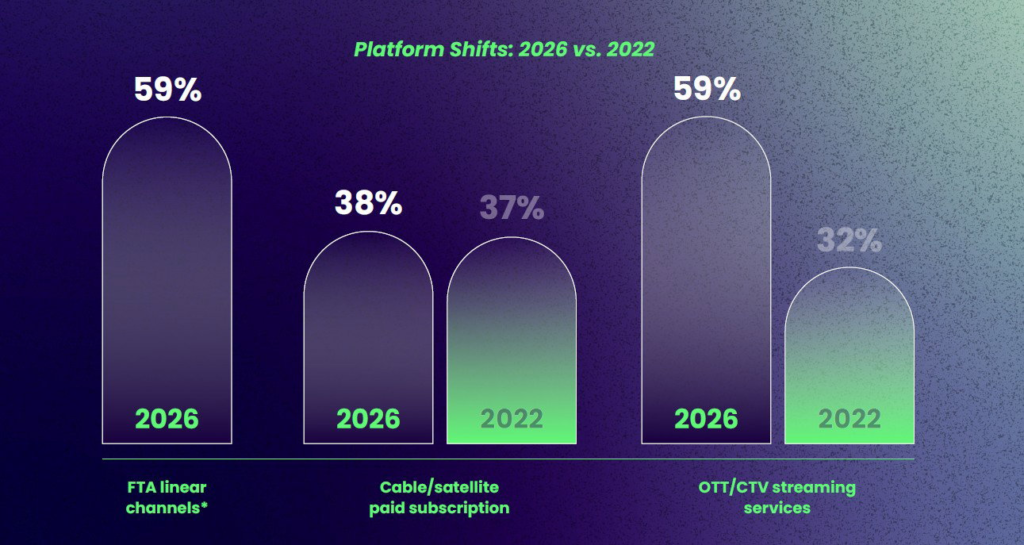
The World Cup has long been one of the few certainties in media planning: a rare moment when audiences gather in their millions, tune in live, and stay put. However, in Singapore, that traditional equation is starting to evolve. Ahead of the 2026 FIFA World Cup, new forecasting data from Nexxen suggests that while football fandom remains deeply entrenched, the way fans watch is becoming far more fluid. OTT and connected TV (CTV) viewership has climbed 27% since 2022, and now matches traditional TV reach at 59%, signalling a clear shift in how live sport is being consumed across screens. Yet fragmentation does not mean dilution. TV still anchors the experience, with 80% of viewers expected to watch matches on the big screen, rising to 84% in evenings and 85% over weekends. The difference in 2026 is not where people stop watching, but where and how they enter, and re-enter, the tournament. Don’t miss: Why the Premier League’s new streaming app is a game-changer That behaviour is even more pronounced during the working week. More than half of viewers (53%) say they will turn to mobile or laptop during office hours, while 70% are not expected to follow the tournament end-to-end. Instead, engagement will spike around key moments, high-stakes fixtures, and highlight-driven consumption. Taken together, the findings point to a familiar but increasingly complex reality for marketers: reach still exists, but it is no longer linear. As audiences scatter across platforms, devices and dayparts, the World Cup is becoming less of a single viewing event and more of a distributed media moment, one that challenges how brands define attention, frequency and impact in live sports. From scheduled screens to constant connection For marketers, the shift is not necessarily that audiences are watching less sport. Rather, they are watching differently. According to Jon Stona, vice president, global marketing at Airwallex, live sports is no longer a “single-screen, appointment-viewing experience”, with audiences increasingly moving fluidly between television, social platforms and mobile devices while simultaneously following highlights, reactions and commentary. “The ‘second screen’ has effectively become the primary engagement layer for many fans, especially younger audiences,” he said. That evolution reflects broader changes in media consumption habits, where audiences now expect content to be immediate, personalised and accessible across multiple touchpoints. While live sports still command rare real-time attention at scale, the challenge for brands lies in understanding how audiences move between platforms before, during and after key matches. Similarly, Lee Hung Sheng, head, audience and partnerships at Mediacorp noted that audiences, particularly younger viewers, are increasingly satisfied consuming highlights and short-form moments instead of committing to full live matches. At Mediacorp, that behaviour was already visible during the 2022 FIFA World Cup, when digital clips on streaming platform mewatch grew almost 200% after the company introduced AI-powered Stories and Moments. “This reflects a broader shift towards more personalised, flexible and snackable forms of sports consumption, where audiences engage with content in ways that best fit their lifestyles and viewing preferences,” said Lee. For some, the fragmentation of viewing habits is also closely tied to the cultural nature of sports fandom today. Daisy Huang, head of strategy at Omnicom Media Singapore, explained:  Sports consumption today, especially around major moments such as the FIFA World Cup, is no longer just about watching the match itself, it is about participating in wider cultural conversations. That participation can take many forms, from catching highlights and memes to following live commentary or simply staying informed enough to join conversations online and offline. In a highly connected market such as Singapore, Huang added that seamless access across platforms means audiences are increasingly engaging with the tournament on their own terms, shaped by work schedules, lifestyle habits and time zone differences. Reach is no longer a single screen metric As audiences spread themselves across platforms and viewing moments, agencies are also rethinking how campaigns are planned and measured during major sporting events. Stona explained that media planning is becoming increasingly “audience-led rather than channel-led”, with agencies now focusing on following consumer attention across ecosystems instead of concentrating investments around a single broadcast platform. That has pushed brands towards more interconnected campaigns spanning TV, streaming, creators, short-form content and social engagement, while placing greater emphasis on contextual relevance and real-time responsiveness. He added:  The role of media agencies is evolving from simply buying reach to orchestrating connected audience experiences across fragmented environments. Huang echoed that sentiment, noting that fragmented viewing behaviours require brands to think beyond a one-size-fits-all approach.  “A live viewer wants excitement and emotional momentum sustained in real time. A social scroller wants quick, entertaining recaps of key moments. Someone checking scores on Google simply wants concise, useful information,” she said, adding that effective communications need to adapt to these differing needs and moments. At the same time, premium live sports inventory still holds significant value. However, Mediacorp’s Lee said brands are increasingly extending campaigns beyond the live broadcast itself through creator-led content, second-screen experiences, fan engagement initiatives and social activations designed to sustain engagement throughout the tournament. Increasingly, the opportunity lies not just in capturing audiences during the match, but in remaining present across the wider fan journey, from anticipation and live viewing to post-match highlights and social conversations. Sports as culture, not just competition For younger audiences in particular, the World Cup is becoming as much a cultural and social experience as it is a sporting one. According to Huang, Gen Z audiences increasingly experience sport through memes, creators, online communities and short-form content, with social platforms playing just as important a role as live broadcasts in shaping fandom. That shift is creating opportunities for brands to move beyond passive sponsorship visibility and participate more directly in fan culture and conversations. Similarly, Stona noted that younger audiences tend to respond more strongly to authenticity, humour and creator-led storytelling than highly polished corporate campaigns. “Fans today don’t just watch football, they engage with the broader narratives, personalities and community around it,” he said, pointing to Airwallex’s recent Arsenal campaign

Why the World Cup’s biggest screen may no longer be the only one that matters Read More »

Simmons is done counting sheep, now it’s all about better mornings

Simmons has launched a new regional campaign for its Beautyrest line, titled “Bring on the day”. Developed by The Secret Little Agency (TSLA), Simmons seeks to reposition sleep as an enabler of daily performance rather than an end goal in itself. The campaign arrives amid growing “sleepmaxxing” and wellness optimisation trends, where consumers increasingly track and optimise sleep quality through wearables and digital tools. Simmons said the initiative aims to challenge what it described as the category’s long-standing fixation on sleep itself. Instead of leaning on typical blue-toned, night-time visuals commonly seen in mattress advertising, the campaign adopts a warmer visual language. It uses sunlight, movement-led scenes and everyday human moments to emphasise life after waking, reframing sleep as the start of a productive day. Don’t miss: Simmons picks creative agency for regional push The integrated campaign comprises three brand films and three key visuals, each illustrating how quality sleep translates into energy and confidence upon waking. The first film, “Playtime”, opens on a shot of the Beautyrest mattress before panning to a family starting their morning together inside the home. The second film, “Workout”, similarly opens on the mattress, before showing a woman resting on it, then getting up to stretch as she prepares for her workout. The third film, “Getaway”, also begins on the mattress, before revealing a couple waking up on a getaway, ready to start their day. “Bring on the day” places Simmons Beautyrest mattresses at the centre of everyday outcomes enabled by rest, including moments of adventure, self-care and play. It will run across out-of-home, digital, social, TV and print channels across Singapore, Malaysia, Thailand, the Philippines, Indonesia, Brunei, Myanmar and Cambodia. “At Simmons, we recognise that the conversation around sleep has evolved significantly over the years, and with ‘Bring on the day’, we wanted to move beyond simply talking about better sleep. People don’t aspire to become better sleepers, they aspire to live better lives,” said Samantha Vong, managing director, Simmons SEA. She added, “Whether it’s showing up for family, pursuing ambitions, prioritising wellness, or simply feeling more like themselves again, Simmons exists to help people wake up ready for whatever the day brings.”  In tandem, Nicholas Ye and Mavis Neo, co-chief creative officers at The Secret Little Agency said, “Most mattress advertising today feels trapped in the same mold and we wanted to challenge that entirely. ‘Bring on the day’ shifts the conversation away from sleeping as the end goal, and toward the kind of life where great sleep enables people to live better. Creatively, that gave us permission to bring warmth, momentum and humanity back into a category that has long felt repetitive and function-led.”  Following its broader push to reposition sleep as a lifestyle enabler, Simmons also marked this year’s World Sleep Day with a social-first campaign aimed at sparking conversation around the importance of quality rest. Developed by TSLA, the initiative featured a series of digital greeting cards designed to give the awareness day a more celebratory tone. The cards combined warmth and humour with shareable messages, encouraging audiences to rethink their sleep habits. According to the agency at the time, the idea stemmed from the insight that many consumers are unfamiliar with World Sleep Day, creating an opportunity for Simmons to step in as a long-standing advocate for better rest. Related articles: Pikachu and Snorlax clock in as Japan’s official sleep ambassadors  IKEA Malaysia pays cheeky tribute to dad naps this Father’s Day  IKEA sends late-night naughty ‘U up?’ DM to insomniacs  source

Simmons is done counting sheep, now it’s all about better mornings Read More »

Are McSpicy lovers really the most loyal?

McDonald’s is turning one of Singapore’s fiercest food debates into a full-blown public vote, asking fans to crown their favourite McSpicy variant as the nation’s ultimate “national treasure”. The campaign kicked off alongside the launch of the new Sweet BBQ McSpicy, with the fast-food giant leaning into the deep emotional connection Singaporeans have with the iconic burger. Across social media, McDonald’s spotlighted self-proclaimed McSpicy superfans sharing their go-to orders and personal stories, from remembering their first McSpicy bite to eating one before a major job interview. The campaign also tapped influencers and KOLs to fuel the conversation online through comedy skits, podcast-style debates and street interviews centered on the age-old question: which McSpicy reigns supreme? Don’t miss:  McDonald’s SG takes over mornings with music-fuelled McGriddles fest  Beyond social, the campaign brought Singaporeans’ long-running McSpicy obsession into the real world through a large-scale experiential voting activation designed to celebrate the burger’s cult status in the market. Consumers were invited to cast live votes for their favourite McSpicy variant, whether the classic McSpicy, Double McSpicy or McSpicy with Cheese. Voting took place across the McDonald’s app, a larger-than-life Bishan wallscape and a pop-up activation along Orchard Road, transforming everyday burger preferences into a visible public showdown. The campaign was rooted in the insight that McSpicy has evolved beyond being just another menu item, becoming a default comfort order many Singaporeans instinctively return to and feel strongly about. In a market where food debates regularly dominate online conversations and social culture, the campaign sought to make that affection visible and participatory. Rather than simply advertising the burger, the campaign aimed to elevate McSpicy from a fan favourite into a culturally recognised icon by turning consumer loyalty into a shared public moment. The idea also stemmed from a simple but relatable truth: almost everyone seems to have “their McSpicy”, with strong opinions and fierce loyalty tied to their preferred order. By turning those personal preferences into a real-time national vote, the campaign reframed an everyday burger debate into a collective cultural experience. The campaign was developed in partnership with OMD Singapore and Leo Singapore, and rolled out across out-of-home, print, digital and social channels. When MARKETING-INTERACTIVE reached out, a McDonald’s spokesperson said “Few things bring Singaporeans together like our shared love for food – and the McSpicy has long been a fan favourite. Over the years, it’s sparked plenty of friendly debates over the ‘best’ way to enjoy it.”  “So, we turned that into something everyone can take part in. Through our interactive vote on the McDonald’s app, Bishan wallscape and a pop-up on Orchard Road, fans can have their say and celebrate their favourite McSpicy moments,” added the spokesperson.  In tandem, Ryan Mutuc, regional business director, OMD Singapore, said, “We recognised that McSpicy is Singapore’s iconic burger; taste it anywhere else and you’ll know why it’s uniquely ours. Instead of telling Singaporeans why McSpicy matters, we let them show the world.” “Working alongside Leo Burnett, we proved that great media strategy is not just about reaching audiences but understanding what people genuinely love and giving them a platform to celebrate it,” added Mutuc.  The campaign also builds on McDonald’s Singapore’s growing push towards culturally-led, highly participatory marketing experiences. Earlier this year, the brand generated buzz online through the return of Grimace and the launch of the viral Grimace Shake campaign, which blurred the lines between social storytelling, experiential marketing and gamified outdoor activations. Created in collaboration with Leo Burnett Singapore and OMD Singapore, the campaign saw Grimace “take over” McDonald’s social media channels through chaotic selfies and intentionally awkward captions, before extending into real-world activations including Grimace statue installations at Bugis Junction, AR-enabled out-of-home experiences and Grimace-themed buses across Singapore. Consumers could also scan QR codes at bus stops to play an AR game for McDonald’s rewards, turning everyday commutes into interactive brand moments. Much like the Grimace campaign, the McSpicy activation reflects how McDonald’s is increasingly leaning into fandom, nostalgia and participatory experiences to deepen cultural relevance among younger consumers. Rather than relying solely on product advertising, the brand is building campaigns designed to spark conversation, social sharing and public interaction both online and offline. Related articles: McDonald’s NZ turns leftover pickle juice into football recovery hack McDonald’s PH celebrates collective motherhood with heartfelt new film  Trendjack or cultural instinct? McDonald’s Malaysia turns two fries into MJ tribute  source

Are McSpicy lovers really the most loyal? Read More »

Domino’s Singapore has a new identity, and your cravings are the main character

Domino’s Pizza Singapore has unveiled a refreshed brand identity centred on a new platform, “Unbox your cravings”, as it looks to sharpen its positioning around spontaneous, everyday indulgence. The refreshed identity is built on the idea that cravings should not be delayed or rationalised, but acted on in the moment, whether during late-night study sessions, gaming marathons or binge-watching. In conversation with MARKETING-INTERACTIVE, Nicholas Pang, country manager of Domino’s Pizza Singapore said “Unbox your cravings” is built on a simple truth that cravings don’t wait. “They show up unexpectedly and demand your attention. We encourage people to embrace these cravings and indulge without hesitation. When a craving calls, it deserves to be answered immediately,” he added.  Don’t miss: 45 years on, Pizza Hut SG refreshes brand for a slice of everyday life  As part of the repositioning, the brand is also rolling out a bolder packaging redesign, extending the “Unbox your cravings” idea across its physical ordering experience.  “Domino’s has always been known as a digital-first delivery platform providing great value, and that remains core to who we are,” said Pang. “‘Unbox your cravings’ adds another dimension, it’s about being present meaningfully in everyday moments when cravings strike. The new visual identity brings that to life across every touchpoint, from packaging to app to delivery.” Alongside the brand refresh, Domino’s Pizza Singapore is introducing “Thick crunch pizza”, its first-ever rectangular pizza inspired by Detroit-style formats. The format was chosen for its growing popularity among consumers seeking more indulgent, texturally complex pizzas. The new product is also its first pizza designed to fully fill the box, removing empty space as part of a more immersive “unboxing” experience. While a small detail, the rectangular shape makes a big difference when consumers open the box.  The range launches in three variants. The Thick crunch mac & cheese pizza combines cheddar cheese sauce, mozzarella and creamy mac & cheese on a thick base. Meanwhile, the Thick crunch aloha salsa chicken pizza pairs pineapple chunks, shredded chicken and salsa drizzle over Domino’s signature sauce. Finally, the Thick crunch cheesy beef pepperoni pizza features cheddar cheese sauce, mozzarella and beef pepperoni for a more savoury profile. Thick crunch pizza will be available from 2 June 2026 for a limited time, priced from SG$19.95, across dine-in, delivery and self-pickup channels via the Domino’s app, website and stores. To support the launch, the brand is also rolling out a range of promotions, including combo meals. On marketing strategy, Pang said social media will play a central role in driving awareness and demand by tapping into moments of distraction and entertainment that often trigger cravings. The brand’s strategy is also to meet audiences in moments where they are gaming, working or scrolling late at night too.  Success for the campaign will go beyond visibility, focusing instead on deeper engagement and long-term brand relevance. “You don’t need a reason to enjoy what you crave. ‘Unbox your cravings’ reflects those everyday moments when cravings come naturally, encouraging people to act on them and break away from the idea that indulgence needs an occasion. With the Thick Crunch pizzas, we’re staying true to who we are while continuing to innovate in line with evolving consumer preferences,” said Pang.  The move builds on Domino’s broader global brand evolution. Last year, Domino’s Pizza unveiled its first brand refresh in 13 years, aimed at making every touchpoint, from packaging to music, more craveable and reinforcing relevance in an increasingly experience-led food market. The update introduced a more playful visual identity, including a new “Domino’s Sans” typeface, bolder packaging and the name-bending “Dommmino’s” audio jingle voiced by five-time Grammy-nominated artist Shaboozey. Related articles: Exit interview: Linda Hassan reflects on 15 years at Domino’s, and her next steps    Domino’s MY drops cryptic ‘keju’ teasers ahead of Mac & Cheesy pizza launch   Domino’s rolls out heartfelt ‘Super ONz’ campaign with grocery giveaways source

Domino’s Singapore has a new identity, and your cravings are the main character Read More »

Singapore to create registry for AI agents

Singapore is developing a registry of artificial intelligence (AI) agents to support the growing use of advanced AI tools across the public sector, according to a report by The Straits Times. The registry is being designed for the government’s 150,000 public officers and will serve as a safeguard to track the owners and activities of AI agents, which are capable of making decisions and carrying out tasks with minimal human intervention. According to The Straits Times, the registry forms part of a broader suite of tools known as ‘AI assistant desk’, which is being developed by the Government Technology Agency (GovTech) to help public officers use AI securely for tasks such as coding, report generation and meeting scheduling. Don’t miss: Singapore refreshes retail digital plan to boost AI adoption among SMEs  Unlike traditional AI chatbots, AI agents are able to proactively perform actions across digital systems, including completing workflows, using software tools and carrying out multi-step tasks. The technology is increasingly viewed as the next phase of AI adoption as organisations move beyond content generation towards automation. The report said ‘AI assistant desk’ is currently being tested by selected public officers ahead of a wider rollout later in 2026. The platform will include a layer of governance and oversight designed to ensure AI agents operate within approved boundaries, even when third-party AI tools are used. Safeguards under development include restrictions on certain actions such as deleting files or emailing external recipients, alongside automated checks to identify inappropriate prompts and outputs. The initiative is part of Singapore’s broader push to integrate AI into day-to-day public sector operations. According to the report, more than half of the country’s 150,000 public officers already use ‘Pair’, the government’s AI chatbot, to support writing, research and productivity-related tasks. GovTech is also expanding AI use cases across government agencies. Among the projects highlighted are Mark.ly, an AI-powered marking assistant currently being trialled in 18 schools to help teachers assess handwritten assignments, and LangBuddy, a voice-enabled chatbot designed to support students learning Mandarin, Malay and Tamil. Beyond productivity and education, AI is also playing a growing role in cybersecurity. GovTech is developing AI-powered tools to automate penetration testing across government systems containing citizen data, allowing vulnerabilities to be identified more continuously rather than through periodic manual assessments. The move reflects a broader national ambition to strengthen AI capabilities across the workforce. Singapore has set a target of developing 100,000 AI-fluent individuals by 2029, with public sector agencies expected to play a key role in accelerating adoption while maintaining governance and security standards. As AI agents become increasingly capable of acting autonomously, the planned registry signals Singapore’s efforts to build the oversight infrastructure needed to support large-scale deployment across government systems. A recent Ministry of Manpower report highlights why the move comes at a timely moment, as AI adoption across Singapore’s private sector remains uneven. The study found that 71.5% of firms have yet to adopt AI, with only 28.5% currently using it in some form. Even among adopters, just 3.8% have fully embedded AI into core business processes, while most remain in planning or pilot stages. The findings point to a broader gap between national AI ambitions and real-world implementation, as organisations continue to grapple with costs, capability gaps and integration challenges.  Related articles:   Singapore looks to strengthen position as trusted AI financial hub  Grab and IMDA join forces to scale AI adoption among Singapore SMEs  OpenAI deepens Singapore bet with SG$300m investment source

Singapore to create registry for AI agents Read More »

Nike and LEGO team up for wild, creative youth football collection

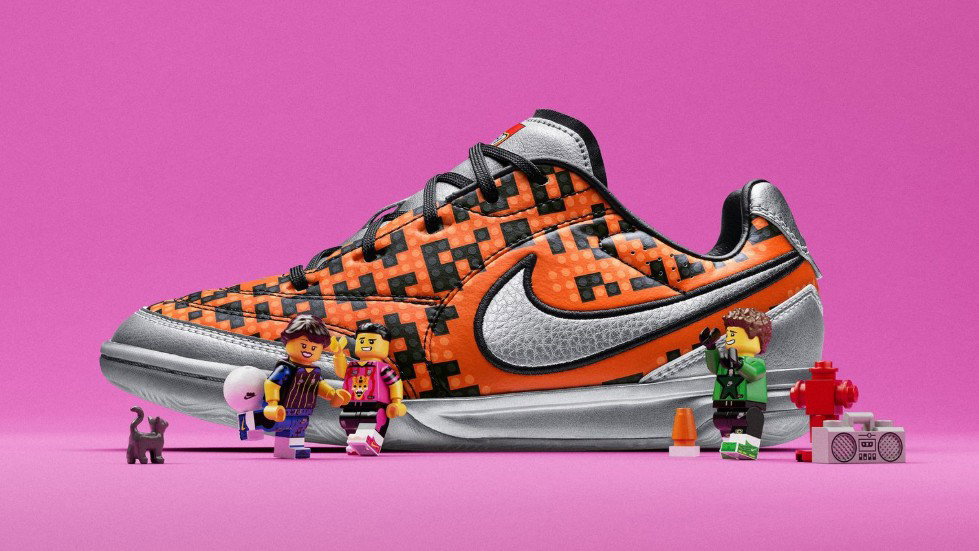
As football takes centre stage this summer, Nike and the LEGO Group are inviting a new generation to play on instinct, merging bold colours and fearless graphics into a collection that feels as wild as the game itself. This collaborative effort celebrates Nike’s football heritage by transforming apparel and footwear into a canvas for boundless imagination, moving beyond mere competition to embrace the pure joy of the sport. Built on the shared conviction that play fuels creativity, the collection fuses Nike’s elite performance innovation with the iconic design language of LEGO, encouraging young athletes to show up loud, proud, and fully themselves. At the heart of the launch, classic football silhouettes are reimagined through a playful lens. The Jr. Mercurial Vapor Pro and Academy boots pair speed-driven performance with panther-inspired LEGO brick graphics, while the Jr. Tiempo Streetgato brings that same energy to small-sided play with vibrant prints and metallic details. This expressive aesthetic extends to Aero-FIT jerseys and shorts, where jaguar and poison dart frog motifs are translated into all-over brick-built graphics. These designs are enriched by discoverable details—iridescent badges, LEGO minifigure-inspired elements, and an exclusive Hollywood Keepers jersey that empowers young goalkeepers to be a literal “brick wall” in the box. The collection is rounded out by two youth-focused expressions of the Air Max 95, which bridge the gap between the stadium and the street with animal-inspired prints and colorful outsole fades. Every element serves as a testament to the modern child’s desire for intentional self-expression, marking a key milestone in the multiyear partnership between the two brands. Available globally starting 4 June via Nike and LEGO’s digital and retail channels, the collection serves as a unified story of endless play where performance and creativity collide. This imaginative release follows Nike’s recent venture into music culture through a partnership with global icons BTS. To coincide with the group’s “ARIRANG” world tour, Nike debuted a first-of-its-kind “Nike by you” customisation experience, allowing fans to personalise apparel and tote bags using exclusive graphics inspired by the band’s creative journey. MARKETING-INTERACTIVE has reached out to Nike for more information. Mark your calendars for 24 June! #Content360 Hong Kong returns with a dynamic, one-day event dedicated to pivotal trends—from the silver economies to breakthrough IP collaborations, sports, and beyond. Let’s dive into the art of curating content with creativity, critical thinking and confidence! Related articles: Nike and BTS team up for global merchandise blitzLEGO builds ‘mini airport within an airport’ to welcome travellers to Malaysia source

Nike and LEGO team up for wild, creative youth football collection Read More »

Dyson Singapore picks new social AOR

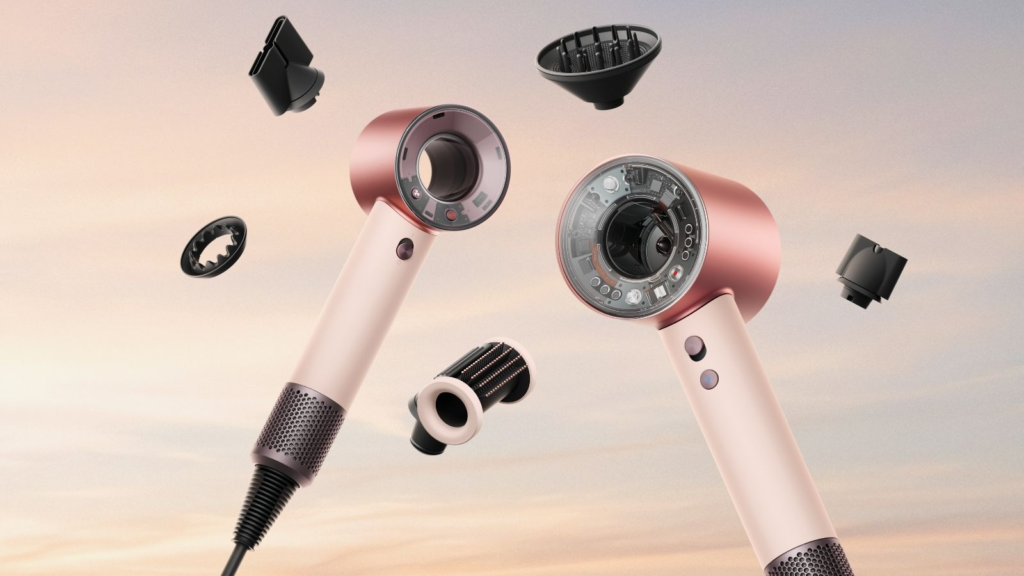
Dyson Singapore has appointed creative agency ballsy as its social agency-of-record (AOR) following a pitch. MARKETING-INTERACTIVE understands the appointment is on a one-year retainer and began with KOL work, and will roll out monthly social assets from end-May. Don’t miss: Ministry of Transport concludes social media pitch As part of the new scope, Dyson has rolled out a social-first campaign featuring local influencer Munah Bagharib. The short video opens with her struggling with visibly frizzy hair before snapping into a “Singapore-proofed” transformation, achieved using Dyson’s hair care tools. The film showcases the Dyson Airstrait and Dyson Omega hydrating hair oil, positioning the duo as a humidity-ready routine. It closes with the line “now you’re ready for Singapore”, leaning into the city’s trademark frizz-inducing weather conditions. MARKETING-INTERACTIVE has reached out to Dyson for more information. The appointment comes amid wider changes to Dyson’s global media operations. Earlier this year, Dyson appointed Omnicom Media Group to handle its global media planning and buying duties following a competitive pitch last year. The account is being managed through a cross-agency model, drawing on capabilities across multiple Omnicom media brands with a focus on data, identity solutions and advanced analytics. The collaboration aims to support Dyson’s broader global media transformation strategy by strengthening technology integration, improving audience targeting, and speeding up time-to-market. Related articles: GovTech picks agency to manage digital and social media channels   Maybank Singapore calls for social media pitch   URA names new social media agency source

Dyson Singapore picks new social AOR Read More »

FairPrice Group CMO Alvin Neo to depart after nearly 7 years

After a significant period of transformation and capability-building at FairPrice Group, Alvin Neo is transitioning from his role as chief customer and marketing officer to an advisor, leaving behind an organisation he believes is “strongly positioned for its next chapter”. For Neo, the move marks the natural close of a leadership season rather than a hard stop. During his time at FairPrice Group, the organisation modernised its customer ecosystem, strengthened customer experience and loyalty capabilities, elevated the brand, deepened its focus on the “lived experience” of customers, evolved its social impact efforts, and moved early on AI augmentation as a real operating capability. “I’ve always believed transformation leadership has seasons. The responsibility is to leave the institution stronger than you found it and position it for what comes next,” Neo told MARKETING-INTERACTIVE. Neo has been with NTUC Enterprise since 2019, serving as chief customer and marketing officer for both NTUC Enterprise and FairPrice Group, while also leading NTUC Link as managing director. Prior to that, he held senior marketing and commercial leadership roles at Parkway Pantai, where he served as group chief marketing officer, and Johnson & Johnson Medical, where he led regional and global marketing portfolios across Asia Pacific and emerging markets. Don’t miss: Howie Lau bids farewell to NCS Group after five years  Building a customer and transformation engine  Looking back, one of Neo’s proudest achievements was reshaping marketing from a campaign and communications function into a growth, customer and transformation engine. When he joined FairPrice Group, the brand already enjoyed strong goodwill in Singapore. The challenge, as such, was to modernise its relevance. This was especially so among younger families and digitally native consumers, while staying true to the organisation’s unique position as part retailer, part co-operative and part social enterprise. A key part of that work was shaping “Every day, made a little better” into more than a tagline. Today, “Every day, made a little better” became an organising philosophy across brand, customer experience, loyalty and culture, pushing the organisation to look more closely at the real pressures families face around time, nutrition and affordability. Behind the scenes, marketing was repositioned to operate akin to the organisation’s “customer control tower”, strengthening data and insights, modernising loyalty, and upgrading CX operations. FairPrice Group also grew its digitally connected customers to more than two-thirds of its shopper base, creating a stronger foundation for omnichannel engagement and data-enabled personalisation. At the same time, the organisation moved early on AI augmentation, not as a buzzword exercise, but as an operating capability built around people, platforms and processes. The results, according to Neo, have been tangible. FairPrice moved from #4 to #2 in Singapore’s Brand Finance brand strength rankings in 2026, topped the Corporate Equity Index, and steadily improved NPS as it worked towards becoming world-class in the “lived experience” delivered across stores, digital and service touchpoints. “Most importantly, we are proving that purpose and performance are not opposing forces. Trust is economic,” said Neo. That belief has shaped how he views marketing within FairPrice Group where in an organisation that sits at the intersection of retail, co-operative values and social enterprise, marketing cannot simply be about transactions or campaigns. “At FairPrice Group, marketing is not just about transactions. It shapes affordability perception, food accessibility and everyday quality of life,” he explained.  That makes marketing closer to stewardship. Decisions around pricing, promotions and loyalty influence how people feel about value, trust and the cost of living. The FairPrice Foundation reinforces that broader purpose, with programmes such as “Start strong, stay strong” addressing practical issues such as nutrition access and healthier living. It also changes how growth is understood. Discount-led engagement, Neo cautioned, is not the same as loyalty: If customers only engage when discounts appear, you have not built loyalty. You have trained dependency. The same principle applies to AI and personalisation. Used well, they can make customer experiences more relevant and useful. Used poorly, they risk adding more noise. “AI and personalisation are powerful when used responsibly. The goal is not to flood customers with content, but to reduce friction and make experiences genuinely useful,” said Neo.  Transformation, trust and the next wave of retail Neo’s approach to leadership has also been shaped by the harder lessons of transformation. One of the most important was learning that speed alone does not create progress. Earlier in his career, Neo believed the right strategy would naturally drive movement. Over time, that view changed. Transformation, he learnt, is rarely constrained by intelligence alone. More often, it is constrained by alignment, trust and energy. That lesson has influenced how he thinks about customer-centricity. For it to become real, frontline operations, customer service, digital and marketing teams need to move beyond silos and solve problems together. “I learned that customer-centricity only becomes real when frontline operations, customer service, digital and marketing teams stop defending turf and start solving problems together,” said Neo. Leadership today, in his view, is less about having every answer and more about integrating people and perspectives across the organisation. That same belief shapes his view of the next wave of transformation in retail, loyalty and customer engagement in Singapore. Neo sees three defining forces ahead: intelligence, trust and integration. AI will make retail more predictive and adaptive across pricing, loyalty and customer service. However, as hyper-personalisation scales, consumers will become more sensitive to manipulation, AI-generated noise and brands that are efficient but emotionally forgettable. Furthermore, integration will be just as critical. Physical retail, digital commerce, payments, loyalty and media are increasingly converging into one connected customer ecosystem. Yet many large organisations remain structured around internal silos, where marketing owns campaigns, digital owns apps, and service owns complaints. “One capability most organisations still underinvest in is enterprise-wide customer orchestration. Many companies still operate in silos. Marketing owns campaigns, digital owns apps, service owns complaints, but customers experience one continuous relationship,” said Neo.  As such, the advantage will go to organisations that can understand and engage customers holistically, in near real time, across

FairPrice Group CMO Alvin Neo to depart after nearly 7 years Read More »