marketing interactive

Australian artist Cj Hendry turns IMBA Theatre into a double debut

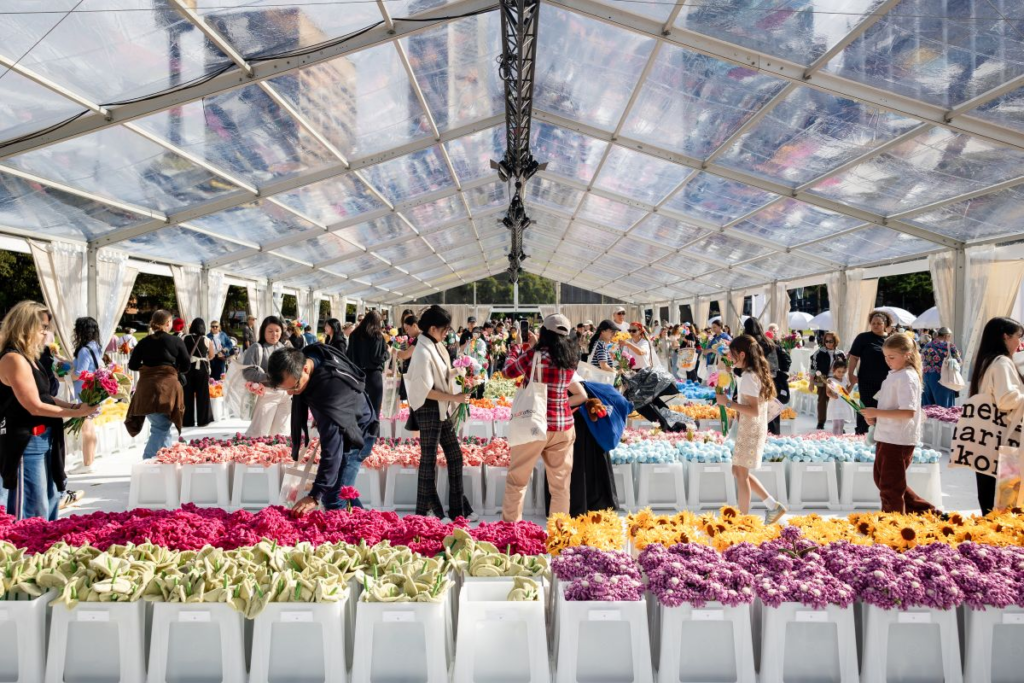
IMBA Theatre at Gardens by the Bay is bringing internationally acclaimed Australian artist Cj Hendry to Southeast Asia for the first time this June, with two large-scale immersive installations that blur the lines between art, experience design and cultural marketing. The double activation will see Hendry’s “Flower market” and the world premiere of “JuJu World” take over IMBA Theatre’s gallery space in a limited-run format, positioning Gardens by the Bay as a temporary home for experiential, participation-led art. “Flower market” will run from 10 to 14 June 2026 as a free-entry experience, while “JuJu World” will follow from 20 June to 18 July 2026 as a ticketed installation. Both experiences are designed around interaction rather than observation, reflecting a growing shift in how audiences engage with culture, not just as spectators, but as active participants. Don’t miss: LEGO turns Jewel Changi Airport into SEA’s largest Botanicals mall activation  Known for transforming hyperrealistic drawings into large-scale, immersive environments, Hendry has built a global reputation for creating art that behaves akin to a brand experience: highly visual, shareable and designed for physical engagement. In “Flower market”, IMBA Theatre will be transformed into a surreal floral retail environment featuring tens of thousands of plush blooms. Visitors are invited to browse, pick and assemble their own bouquets in a format that mirrors retail and experiential activation mechanics, rather than traditional gallery viewing. The Singapore edition will introduce more than 30 flower varieties, including locally inspired designs such as the Papilionanthe Miss Joaquim, Raffles’ Pitcher Plant and Singapore Ginger Flower. Each visitor will also receive a complimentary flower upon entry, reinforcing the participatory nature of the experience. Meanwhile, “JuJu World” marks the first inflatable experience built around Hendry’s JuJu collectible series, introducing a bold yellow colourway created exclusively for Singapore. The installation extends her collectible universe into a physical, immersive format, with limited large-scale JuJu pieces available only during the run. The experience continues a broader trend in experiential marketing where art, retail and entertainment increasingly overlap, with installations designed to be photographed, shared and socially amplified as much as they are experienced in person. Michael Lee, chief executive of IMBA, said the collaboration reflects a focus on building participatory cultural formats that move beyond passive viewing. “Henry’s installations cross every boundary of language, age and background, and we see real potential to build programming and community experiences around them. We can’t wait to welcome Singapore to these two experiences,” said Lee.  In tandem, Teyi Guo, director, leisure events at the Singapore Tourism Board, said the activations add to Singapore’s pipeline of world-class experiential offerings and reinforce its positioning as a destination for cultural tourism and immersive experiences. Artist Hendry on the other hand said the Southeast Asia debut is rooted in shared emotional cues such as curiosity, nostalgia and play, with the aim of making art more accessible and engaging across audiences. “Presenting my works in Southeast Asia with IMBA feels incredibly exciting because these activations represent our shared emotion and universal experiences, from curiosity to adolescence and nostalgia. This double bill at IMBA Theatre will spark joy among new audiences in the region, demonstrating that art is meant for everyone. This is something I value enormously in my practice and I hope audiences will treasure during the two limited runs at IMBA Theatre at Gardens by the Bay,” said Henry.  Together, “Flower market” and “JuJu World” signal one of the most ambitious experiential art takeovers in the region to date, reflecting how cultural spaces are increasingly adopting the language of branded experiences, interaction and immersion.  The IMBA Theatre takeover comes as Singapore continues to lean into experiential and destination-led cultural programming that merges art, leisure and brand storytelling. Recent examples include Tanjong Beach’s transformation into “Lobster beach”, a large-scale public art activation by British pop artist Philip Colbert, where an 8-metre ice-cream sculpture and inflatable installations turned the shoreline into an immersive, shareable playground. Presented by Mastercard and supported by Sentosa Development Corporation, the activation highlighted how public spaces are increasingly being used as canvases for experiential marketing, blending gallery-led art with open-air, audience-first engagement designed to drive footfall, dwell time and social content creation. Related articles:   MINISO debuts its first global art gallery in Shanghai  Bibit, Stockbit turn to art to frame resilience and reinvention in investing  How Kotex is putting period blood back into the art world  source

Australian artist Cj Hendry turns IMBA Theatre into a double debut Read More »

Meta launches paid subscriptions across Facebook, Instagram and WhatsApp

Meta is rolling out paid subscription offerings across its platforms, including Facebook, Instagram and WhatsApp, as the tech giant looks to deepen monetisation efforts beyond advertising. The announcement was made by Naomi Gleit, head of product at Meta, in a video posted on Instagram. Dubbed Facebook+, Instagram+ and WhatsApp+, the subscriptions will introduce enhanced features aimed at helping users “express and connect” across Meta’s apps, according to Gleit. “We’re starting to roll out Facebook+, Instagram+, WhatsApp+, with enhanced features that our community already loves,” she said in the video. Don’t miss: Meta cuts jobs across APAC as AI restructuring deepens Gleit added that Meta is also testing additional subscription tiers designed for creators, businesses and users of Meta AI and its AI glasses ecosystem. According to her, the upcoming plans for Meta AI users will offer “more capacity, bigger, more complex requests, and more room to create”. Meanwhile, creators and businesses will gain access to premium tools intended to “enhance presence, supercharge content, automate tasks, and protect your brand”. Meta is also exploring a unified subscription umbrella called “Meta One”, which could eventually bring together the company’s various paid offerings across its ecosystem. “You may see us testing subscriptions under the name Meta One,” Gleit said, adding that the company is still “testing and learning”. The move marks Meta’s latest push to diversify revenue streams as competition intensifies across social, creator and AI platforms. It also signals the company’s growing focus on premium experiences tied to AI capabilities and creator tools. In the caption accompanying the video, Meta said Instagram Plus, WhatsApp Plus and Facebook Plus are “rolling out globally”, with more plans expected for creators, businesses and “Meta AI power users”. According to media reports, Meta’s subscription push also includes paid AI tiers under the broader “Meta One” programme. The company is expected to begin testing Meta AI subscriptions in Singapore, Guatemala and Bolivia from June. Reports added that Meta One Plus will cost US$7.99 per month, while a higher-tier Meta One Premium plan will be priced at US$19.99 per month. The subscriptions are aimed at frequent users of Meta AI’s image, video and reasoning tools. MARKETING-INTERACTIVE has reached out for more information.  The latest rollout builds on Meta’s earlier experiments with premium social features. In April, the company began trialling Instagram+ in select markets. The subscription tier reportedly included features such as anonymous Story viewing, Story rewatch analytics, unlimited custom audience lists and the ability to extend Stories for an additional 24 hours. Subscribers could also spotlight one Story per week to boost visibility by pushing it to the front of followers’ Stories trays. Related articles:   Meta’s AI ad machine powers 33% revenue surge as new campaign connectors roll out Meta APAC head of comms for product and partnerships steps down  Meta set to overtake Google in global digital ad revenue source

Meta launches paid subscriptions across Facebook, Instagram and WhatsApp Read More »

Nike and BTS team up for global merchandise blitz

Nike is partnering with global pop music icons BTS to debut a first-of-its-kind “Nike by you” customisation experience alongside an exclusive merchandise collection for the group’s upcoming BTS WORLD TOUR “ARIRANG.” The initiative blends experiential retail with tour merchandise to create a cohesive collection celebrating BTS’ creative journey. The partnership aims to provide global fans with unique, interactive touchpoints for self-expression and fandom. At the core of the collaboration is the “Nike by you” experiential retail activation, which features 10 custom graphics designed specifically for the band. The initiative allows consumers to co-create and personalise select Nike apparel and tote bags. According to the brand, each graphic incorporates expressive shapes and fluid movement meant to mirror the evolution of BTS’ musical artistry. The accompanying tour merchandise includes exclusive T-shirts, hoodies, and a South Korea-exclusive cap. The collection’s visual identity relies heavily on typography, featuring custom wordmarks and bold, energetic forms unique to the band. Furthermore, select customisation designs place emphasis on the number seven—symbolising the seven members of the group—while other graphics reference musical bars and measures to underscore the band’s cross-generational appeal. The customisation experience will launch 1 June at select Nike stores globally, and will be available at select retail locations in Hong Kong on 27 February 2027. Nike x BTS tour merch will be available in select cities on the BTS WORLD TOUR “ARIRANG”, arriving in Hong Kong at select retail locations on 10 July and 26 February 2027. The creative direction of the collection focuses on balancing the band’s shared cultural heritage with a future-forward mindset, tapping into the lucrative market of concert-going fashion and fan merchandise. MARKETING-INTERACTIVE has reached out to Nike for more information. Beyond sports brands, snacking giant OREO is also capitalising on K-pop fandom culture with its own major global collaboration with BTS, unveiling a limited-edition cookie inspired by Korean street food and fan engagement traditions. The campaign, which will roll out across more than 80 markets, introduces the “Limited edition OREO & BTS cookies”, a brown sugar pancake-flavoured OREO inspired by hotteok, a popular Korean street snack. Mark your calendars for 24 June! #Content360 Hong Kong returns with a dynamic, one-day event dedicated to pivotal trends—from the silver economies to breakthrough IP collaborations, sports, and beyond. Let’s dive into the art of curating content with creativity, critical thinking and confidence! Related articles: STB bets big on K-pop with SG showcase in BTS Jin’s next music videoNike unveils horror-themed brand identity to reshape football’s future source

Nike and BTS team up for global merchandise blitz Read More »

Who is behind the cute birthday dance party on Orchard Road?

A birthday dance party broke out along Orchard Road last week as TikTok Shop took its “6.6 birthday mega sale” campaign from users’ feeds to the streets of Singapore. Ahead of the sale period running from 30 May to 6 June, the platform rolled out a series of offline activations designed to drive curiosity, user participation and social sharing beyond the TikTok app itself. On 23 May, local creator Orchard Road Fashion (@orchardroadfashion) led a surprise street performance along Orchard Road centred around an original TikTok Shop birthday jingle and choreography. Sunny D, one half of dance duo @seriouslycannot, also appeared during the activation. Don’t miss: Retail is out, experiences are in: Orchard Road’s next phase targets brand engagement  Midway through the performance, Sunny D unveiled a pink box carrying the voucher code “TTSBDAYSURPRISE”, which users could redeem via the TikTok Shop tab for rewards including 30% off for all users and SG$12 off with no minimum spend for new buyers. The activation formed part of TikTok Shop’s wider push to blend online shopping mechanics with real-world experiences, while encouraging user-generated content tied to the campaign. Meanwhile, on 30 May, TikTok Shop’s “free treat boys” will take over Orchard Road with a physical version of its in-app Cake smash game. Consumers will be able to participate in real life for a chance to win cash prizes and giveaways, turning one of the platform’s gamified shopping features into an on-ground activation on the first day of the sale. Both activations feed into a broader social campaign encouraging users to post videos using the birthday jingle, tag @tiktokshop_sg and use the hashtag “#TTSBDAYSURPRISE” for a chance to win an iPhone 17. The 6.6 birthday mega sale will also feature free shipping platform-wide, excluding same-day delivery and seller-own delivery services. In addition, TikTok Shop is rolling out LIVE “Party crazy prices” sessions featuring creators including Fredy Jay (@fredyjays), Jianhao Tan (@thejianhaotan), Debbie Soon (@realdebbwie), Sasa (@shopwithsasax) and Emily (@emobsessed). Users can also unlock daily vouchers and giveaways through the Cake smash game housed within the TikTok Shop tab. MARKETING-INTERACTIVE has reached out for more information.  Orchard Road has increasingly evolved into a go-to canvas for brands looking to blur the lines between retail, entertainment and cultural spectacle, with marketers leveraging its high footfall and iconic status to create shareable, real-world moments. From StarHub’s ice-cream giveaway outside Paragon to Warner Bros. Discovery’s immersive takeover for the premiere of IT: Welcome to Derry, the stretch has become a prime location for experiential activations that transform everyday commutes into branded storytelling moments, particularly during key retail and cultural moments such as seasonal peaks and product launches. Related articles:  TikTok unveils new family guide to support safer digital habits  TikTok SG head of brand partnerships departs  X, TikTok under watch as SG joins global push to protect young social media users  source

Who is behind the cute birthday dance party on Orchard Road? Read More »

TikTok unveils new family guide to support safer digital habits

TikTok has partnered TOUCH Cyber Wellness to launch a family digital check-in guide, a practical toolkit aimed at helping parents and teens build safer and more open digital habits at home. The initiative supports Singapore’s “Digital for life” movement and builds on the 2025 “Our digital journey” programme. It was officially unveiled by guest of honour Madam Rahayu Mahzam, Minister of State for Digital Development and Information. Designed as a practical resource for families, the guide encourages parents and teens to reflect on their digital behaviours together, rather than relying on one-way conversations around online safety. Don’t miss: Meta and YouTube lose key battle in social media addiction trial The family digital check-in guide includes a printable toolkit that helps families assess their digital habits, understand different online behaviour styles through self-discovery profiles, and use conversation prompts to agree on shared boundaries for safer online experiences. It also provides an overview of TikTok’s in-app safety features. “For many families today, digital life is no longer separate from everyday life — it’s where young people learn, socialise, create, and discover who they are,” said KahnJi Siriprapa Weerachaising, outreach and partnerships manager at TikTok Trust & Safety. “That’s why building healthier digital habits requires more than rules alone. It requires open conversations, mutual understanding, and practical tools that families can explore together,” she added, noting that the initiative was developed in collaboration with TOUCH Cyber Wellness and in support of IMDA’s Digital for Life movement. Alongside the guide, TikTok has also introduced an interactive digital hub, which offers a mobile-friendly version of the toolkit and serves as an entry point to its safety resources. The hub also features a video by creator Denise Teo (@supercatkei), which offers a personal look at how Singaporean families navigate digital safety in everyday life. The video will be made available following the launch event. The launch also featured a panel discussion titled “Navigating our digital world together”, moderated by Weerachaising. The session brought together Shem Yao, head of TOUCH Cyber Wellness, content creator Denise Teo, and Dr Natalie Pang, head of the department of communications and new media at the National University of Singapore. Panellists highlighted the need for a shared approach to digital wellbeing across families, educators, industry and government, with three key themes emerging: resilience over restrictions, curiosity over judgement, and ongoing dialogue rather than one-off conversations. Dr Pang said young people should be equipped with digital resilience to help them navigate online spaces independently, while Teo emphasised the importance of curiosity-led conversations between parents and teens to better understand online trends. Shem added that digital wellness should be treated as a continuous journey rather than a single conversation. Following the launch, a series of “Our digital journey: The community edition” workshops will be rolled out from July in Bukit Batok East, training more than 100 parents and teens. The initiative reflects TikTok’s ongoing efforts to work with government agencies and community partners to support safer digital experiences in Singapore. Taking things further, TikTok also highlighted that teen accounts on its platform include more than 50 preset safety features and privacy controls, including private accounts, content restrictions and default daily screen time limits of 60 minutes. The family digital check-in guide complements existing resources such as TikTok’s Safety Center, the guardian’s guide and teen safety center, and is available via the TikTok Singapore Digital Hub as well as in-app when users search for digital safety-related terms. The launch comes months after TikTok and X were placed under enhanced supervision by the Infocomm Media Development Authority (IMDA) in April 2026, following what the regulator described as “serious weaknesses” in their systems for detecting and removing harmful content, including child sexual exploitation material (CSEM) and terrorism-related content. According to IMDA’s findings, there was a 120% increase in CSEM cases on X targeting Singapore users, rising from 33 in 2024 to 73 in 2025. On TikTok, 17 cases of terrorism-related content were detected from Singapore-based accounts for the first time in 2025. The regulator noted that both platforms only removed flagged content after intervention, highlighting gaps in proactive detection systems. Photo courtesy of 123RF.  Related articles:   IMDA in talks with X as Grok misuse sparks safety concernsInstagram’s ‘teen accounts’: How can brands adapt to engage teens amid parental concerns? IMDA: Social media platforms should do more to protect children from harmful content  source

TikTok unveils new family guide to support safer digital habits Read More »

FairPrice Group CMO Alvin Neo departs after nearly 7 years

After a significant period of transformation and capability-building at FairPrice Group, Alvin Neo is transitioning from his role as chief customer and marketing officer, leaving behind an organisation he believes is “strongly positioned for its next chapter”. For Neo, the move marks the natural close of a leadership season rather than a hard stop. During his time at FairPrice Group, the organisation modernised its customer ecosystem, strengthened customer experience and loyalty capabilities, elevated the brand, deepened its focus on the “lived experience” of customers, evolved its social impact efforts, and moved early on AI augmentation as a real operating capability. “I’ve always believed transformation leadership has seasons. The responsibility is to leave the institution stronger than you found it and position it for what comes next,” Neo told MARKETING-INTERACTIVE. Neo has been with NTUC Enterprise since 2019, serving as chief customer and marketing officer for both NTUC Enterprise and FairPrice Group, while also leading NTUC Link as managing director. Prior to that, he held senior marketing and commercial leadership roles at Parkway Pantai, where he served as group chief marketing officer, and Johnson & Johnson Medical, where he led regional and global marketing portfolios across Asia Pacific and emerging markets. Don’t miss: Howie Lau bids farewell to NCS Group after five years  Building a customer and transformation engine  Looking back, one of Neo’s proudest achievements was reshaping marketing from a campaign and communications function into a growth, customer and transformation engine. When he joined FairPrice Group, the brand already enjoyed strong goodwill in Singapore. The challenge, as such, was to modernise its relevance. This was especially so among younger families and digitally native consumers, while staying true to the organisation’s unique position as part retailer, part co-operative and part social enterprise. A key part of that work was shaping “Every day, made a little better” into more than a tagline. Today, “Every day, made a little better” became an organising philosophy across brand, customer experience, loyalty and culture, pushing the organisation to look more closely at the real pressures families face around time, nutrition and affordability. Behind the scenes, marketing was repositioned to operate akin to the organisation’s “customer control tower”, strengthening data and insights, modernising loyalty, and upgrading CX operations. FairPrice Group also grew its digitally connected customers to more than two-thirds of its shopper base, creating a stronger foundation for omnichannel engagement and data-enabled personalisation. At the same time, the organisation moved early on AI augmentation, not as a buzzword exercise, but as an operating capability built around people, platforms and processes. The results, according to Neo, have been tangible. FairPrice moved from #4 to #2 in Singapore’s Brand Finance brand strength rankings in 2026, topped the Corporate Equity Index, and steadily improved NPS as it worked towards becoming world-class in the “lived experience” delivered across stores, digital and service touchpoints. “Most importantly, we are proving that purpose and performance are not opposing forces. Trust is economic,” said Neo. That belief has shaped how he views marketing within FairPrice Group where in an organisation that sits at the intersection of retail, co-operative values and social enterprise, marketing cannot simply be about transactions or campaigns. “At FairPrice Group, marketing is not just about transactions. It shapes affordability perception, food accessibility and everyday quality of life,” he explained.  That makes marketing closer to stewardship. Decisions around pricing, promotions and loyalty influence how people feel about value, trust and the cost of living. The FairPrice Foundation reinforces that broader purpose, with programmes such as “Start strong, stay strong” addressing practical issues such as nutrition access and healthier living. It also changes how growth is understood. Discount-led engagement, Neo cautioned, is not the same as loyalty: If customers only engage when discounts appear, you have not built loyalty. You have trained dependency. The same principle applies to AI and personalisation. Used well, they can make customer experiences more relevant and useful. Used poorly, they risk adding more noise. “AI and personalisation are powerful when used responsibly. The goal is not to flood customers with content, but to reduce friction and make experiences genuinely useful,” said Neo.  Transformation, trust and the next wave of retail Neo’s approach to leadership has also been shaped by the harder lessons of transformation. One of the most important was learning that speed alone does not create progress. Earlier in his career, Neo believed the right strategy would naturally drive movement. Over time, that view changed. Transformation, he learnt, is rarely constrained by intelligence alone. More often, it is constrained by alignment, trust and energy. That lesson has influenced how he thinks about customer-centricity. For it to become real, frontline operations, customer service, digital and marketing teams need to move beyond silos and solve problems together. “I learned that customer-centricity only becomes real when frontline operations, customer service, digital and marketing teams stop defending turf and start solving problems together,” said Neo. Leadership today, in his view, is less about having every answer and more about integrating people and perspectives across the organisation. That same belief shapes his view of the next wave of transformation in retail, loyalty and customer engagement in Singapore. Neo sees three defining forces ahead: intelligence, trust and integration. AI will make retail more predictive and adaptive across pricing, loyalty and customer service. However, as hyper-personalisation scales, consumers will become more sensitive to manipulation, AI-generated noise and brands that are efficient but emotionally forgettable. Furthermore, integration will be just as critical. Physical retail, digital commerce, payments, loyalty and media are increasingly converging into one connected customer ecosystem. Yet many large organisations remain structured around internal silos, where marketing owns campaigns, digital owns apps, and service owns complaints. “One capability most organisations still underinvest in is enterprise-wide customer orchestration. Many companies still operate in silos. Marketing owns campaigns, digital owns apps, service owns complaints, but customers experience one continuous relationship,” said Neo.  As such, the advantage will go to organisations that can understand and engage customers holistically, in near real time, across the full journey.

FairPrice Group CMO Alvin Neo departs after nearly 7 years Read More »

Luckin Coffee brews up blush-worthy romance with OSAMU GOODS

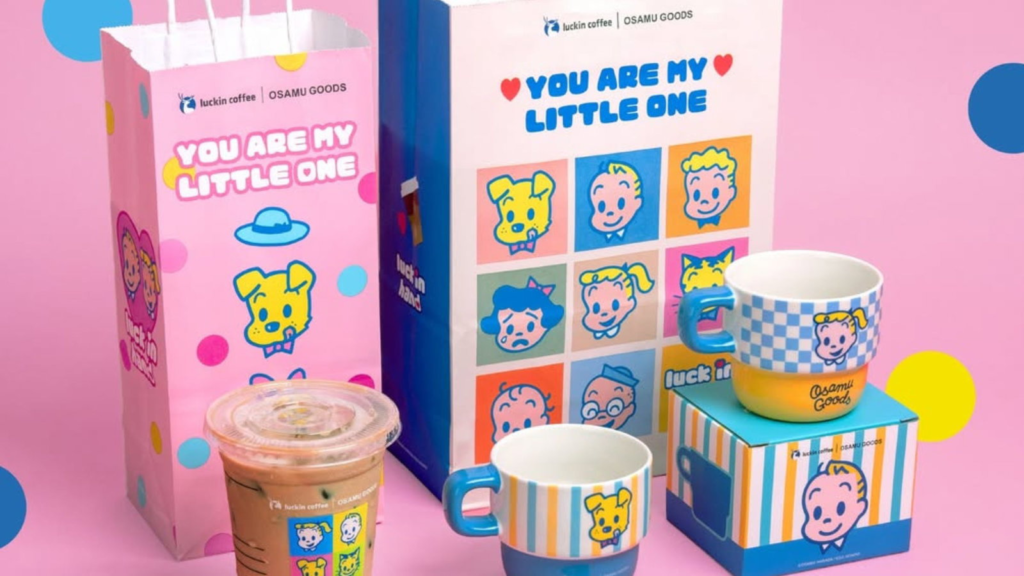
Luckin Coffee is tapping into themes of love and nostalgia with a limited-time collaboration with Japanese lifestyle brand OSAMU GOODS, alongside the return of its ‘Pink blossom’ latte. The campaign, running from 20 May to 10 June 2026, is inspired by “520”, a Chinese internet slang term that phonetically resembles “I love you”, often used to express affection. The seasonal rollout combines beverage innovation with collectible merchandise, positioning everyday coffee runs as small, feel-good moments. Central to the campaign is the return of the pink blossom latte, a blend of cherry blossom floral notes and smooth coffee, infused with cherry blossom juice for a light, subtly sweet profile. Alongside the drink, the collaboration draws on the minimalist, retro-inspired world of OSAMU GOODS, best known for its characters Jack and Jill. Don’t miss: Luckin Coffee refreshes menu, eliminates Nutri-Grade D items in Singapore From 20 May 2026, customers who purchase any two drinks will be able to redeem a ‘Morning buddy’ mug, available in two designs featuring Jack and Jill, while stocks last. A second wave of collectibles will follow from 1 to 10 June 2026, where customers can receive a sticker sheet with the purchase of any two drinks. The stickers feature OSAMU GOODS’ signature characters. Together, the beverage and merchandise line-up position the campaign as a limited-edition lifestyle play, leaning into gifting culture, scarcity, and seasonal emotional cues commonly used in Asia’s café marketing pushes. MARKETING-INTERACTIVE has reached out for more information.  The latest collaboration also builds on Luckin Coffee’s broader push into nostalgia-led storytelling. Earlier this year, the brand leaned into similar emotional cues through a partnership with Moomin, rolling out a campaign themed “Over the Moonmin” on 5 March. The activation spanned limited-edition beverages, collectibles, and in-store as well as digital experiences, positioning the daily coffee run as a moment to slow down and reconnect. In conversation with MARKETING-INTERACTIVE at the time, Luckin Coffee said the partnership aimed to tap into nostalgic comfort, reframing the routine caffeine fix into a more emotionally resonant experience for busy consumers. Related articles:   Luckin Coffee brings Tom & Jerry chaos to cups in latest collabLuckin Coffee and IMH turn art into action for mental health awareness   Luckin Coffee and Duolingo serve up pandan power in SG collab     source

Luckin Coffee brews up blush-worthy romance with OSAMU GOODS Read More »

Tea raves and new rules: How Fuze Tea is reaching Gen Z

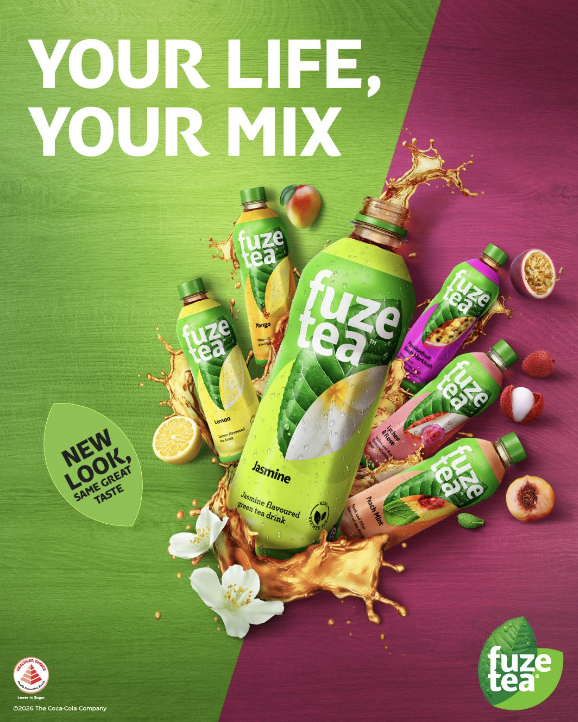
Fuze Tea is repositioning itself beyond the ready-to-drink tea category with the launch of “Don’t compromise” in Singapore, a new brand platform aimed at Gen Z consumers navigating increasingly fluid identities, lifestyles and consumption moments. The move comes as competition in the ready-to-drink tea category intensifies, with functional refreshment and flavour innovation becoming increasingly insufficient as standalone differentiators. Instead, brands are now expected to deliver cultural relevance, identity alignment and experience-led engagement to remain meaningful, particularly among younger consumers. At the centre of Fuze Tea’s repositioning is a behavioural shift among Gen Z consumers, who are increasingly rejecting “either-or” decision-making in how they live, consume and socialise, instead combining multiple priorities within the same day and often within the same experience. This shift creates space for Fuze Tea to evolve its positioning beyond product-led refreshment.  “At its core, Fuze Tea has always been about bringing high quality ingredients to create refreshing combinations. ‘Don’t compromise’ builds on that foundation and extends that idea into a wider brand philosophy. It reflects a belief that people shouldn’t have to choose between different versions of themselves or the moments they value,” said Chrystian A. Lim, director for Singapore, Malaysia and Myanmar at The Coca-Cola Company.  He added that the brand ambition is to move Fuze Tea beyond a functional beverage into something that fits naturally into different moments, moods and lifestyles. Don’t miss: How CHAGEE is making tea worth reading The repositioning also reflects a broader shift in how the category is evolving. Rather than relying on refreshment-led messaging alone, Fuze Tea is leaning into “fusion” as a lifestyle mindset that reflects how younger consumers are combining identities, interests and experiences rather than separating them. “Fusion sits at the heart of the platform because it reflects how today’s Gen Z consumers are navigating life on their own terms,” Lim said. Designing for visibility, not just packaging As part of the rollout, Fuze Tea has introduced a refreshed brand identity in Singapore, with updated packaging and visual systems designed to modernise shelf presence and improve flavour navigation. The update introduces clearer colour cues across variants, stronger visibility of tea ingredients and flavour profiles, and a more vibrant design language intended to reinforce freshness, natural goodness and ease of choice across the range. Beyond the visual refresh, the “Don’t compromise” platform will be activated across a full-funnel ecosystem spanning social media, creator-led storytelling, out-of-home placements, retail activations and experiential formats. The campaign begins with social content positioning “Don’t compromise” as a behavioural mindset, with creators highlighting how Gen Z consumers navigate competing priorities across work, social life and personal identity. This is followed by out-of-home placements across MRT stations, commuter routes and bus shelters, extending visibility in high-frequency environments, while retail activations bring the refreshed identity closer to purchase moments. Where tea meets the dancefloor A key expression of the platform is “Fusion Pulse”, a one-day experiential activation held on 23 May at Behind the Green Door in partnership with The Smart Local Media Group and SoulSet, powered by Culture. Positioned as an alcohol-free “tea rave”, Fusion Pulse is designed around a growing behavioural shift among younger consumers, who are increasingly moving fluidly between nightlife, wellness, creative and culture-led experiences depending on context and mood. Rather than replicating a conventional nightlife format, the activation was built to reflect that fluidity. “The tea rave format allowed us to respond in a way that felt natural to the brand. Instead of relying on a conventional nightlife setting, we wanted to create space for music, flavour, and self-expression to coexist,” said Lim. That idea translates into a space where guests can move between R&B DJ sets and a series of interactive touchpoints anchored on the concept of “Your life, your mix”. These include personalised fragrance blending, customisable charm-making stations, immersive photo moments and a Fusion mocktail and tasting bar featuring Fuze Tea-inspired blends. The experience is designed as a participatory environment rather than a traditional branded event, reflecting how younger audiences are already engaging socially. Authenticity was central to shaping the activation, with Fuze Tea working with The Smart Local Media Group and SoulSet to ground the experience in youth culture and music-led communities. Lim said younger consumers are increasingly selective about brand experiences, favouring culturally native and community-driven formats over traditional activations. The collaboration helped shape Fusion Pulse into a socially driven experience rather than a conventional marketing activation. Building cultural participation Beyond launch, Fuze Tea is positioning “Don’t compromise” as an evolving platform built on creator collaborations, experiential extensions and product innovation. Lim said success is no longer defined by awareness alone, but by cultural participation and relevance in everyday consumer behaviour. “Ultimately, we want Fuze Tea to show up not just as a product, but as a brand that naturally fits into how younger consumers live, connect and express themselves today,” he said. “Fusion Pulse is only the start. Moving forward, the platform will continue evolving through creator collaborations, immersive experiences, social storytelling and product innovation designed around changing lifestyles and behaviours,” he added.  Early signals of future extensions have already been teased through “Fuze Island”, previewed by creators including Rayyan and Dewy Choo. The brand will also roll out consumer promotions offering winners a travel experience to Jeju Island, South Korea. Beyond experiences, Fuze Tea will continue expanding its product portfolio with new flavours designed for shifting consumer preferences and everyday occasions. The move reflects a broader shift across the beverage landscape in Southeast Asia, where brands are increasingly turning to culture-led experiences to stay relevant with younger consumers. Sprite, for instance, has been leaning into this approach through its “It’s that fresh” platform, rolling out regional activations across ASEAN and the South Pacific anchored in everyday youth culture touchpoints such as spicy food, basketball and music. The shift marks a move away from a purely unified global identity towards more localised executions, with experiences designed around how Gen Z consumers actually gather, eat and express themselves in-market. A similar playbook is emerging in coffee, where

Tea raves and new rules: How Fuze Tea is reaching Gen Z Read More »

What will it take for Standard Chartered to fix its 'lower-value human' crisis?

As a former Standard Chartered Malaysia employee, reading former Singapore President Halimah Yacob’s condemnation of CEO Bill Winters’ “lower-value human capital” remark hit hard. Her words—calling the phrase disturbing and demeaning—were not just criticism from outside. They were a mirror held up to a crisis that Standard Chartered itself created. I understand the communications playbook. I’ve lived it. And right now, Standard Chartered is making nearly every mistake in the book.The core problem: Language that betrays decades of values Let me be clear: this is not about the 7,000 job cuts. Restructuring happens in every major bank. The problem is the dehumanising language that turned a business decision into a moral reckoning. When CEO Bill Winters wrote in an internal memo that the bank would replace “lower-value human capital” with AI, he did not just describe a transformation strategy. He told the world that Standard Chartered sees its people as spreadsheet line items. This directly contradicts the bank’s global brand promise: “Now’s your time for wealth,” which leans on human stories, family legacies, and personal milestones. The phrase “lower-value human capital” says the opposite: that people are disposable assets. Meanwhile, here’s why Halimah Yacob’s critique matters. Halimah Yacob is not just any critic. She is a former Singapore President, a former NTUC Deputy Secretary General, and a lifelong advocate for workers’ dignity. When she says the remarks are not helpful for retrenched workers finding new jobs, and that remaining staff now question whether their employer really cares about how they feel, she is articulating what thousands of employees across Asia are feeling. Her voice carries particular weight because she speaks from the perspective of someone who has championed labour rights for decades. She is not defending jobs. She is defending human dignity. A softened tone, but trust remains broken Standard Chartered’s latest internal memo from Bill Winters softens the tone but does not fix the trust. Winters acknowledged that media coverage around automation, AI, and workforce changes may have unsettled employees, and that the remarks were “reduced to simple headlines or a quote out of context”. He explained that the bank’s future depends on “talent, judgement, relationships and commitment,” and reiterated continued investment in technology and automation. This is necessary damage control, but it is not trust repair. The memo addresses perception, but not accountability or clarity around transition. Employees are looking for specifics rather than reassurance. They want to know about training, timelines, and support. Most importantly, employees should not have to understand their future through headlines. Communications professionals across Malaysia are saying the same thing. Once language starts assigning different levels of human value, even unintentionally, people stop hearing the broader point the CEO may be trying to make. The fact that “lower-value human capital” became the headline tells you everything you need to know about how it landed emotionally with people. Recovery requires visible action, not just softened messaging. Any recovery must extend beyond communication into tangible support such as retraining and transition planning.Urgent steps the bank must take Standard Chartered would have had just a narrow window—48 to 72 hours—to contain this crisis. Here is what authentic, reputation-saving action looks like. First, the CEO must acknowledge the mistake without qualifiers. Bill Winters must issue a personal, unscripted video message, not a polished press release. He must directly acknowledge the phrasing was wrong and hurtful. He must apologise sincerely without using language like “if anyone was offended.” He must state clearly that no human being is lower-value, that certain tasks can be automated but people are irreplaceable. He must connect to the bank’s core values and recount personal stories of employees who have served the bank. Going beyond “out of context” explanations is essential. Second, the bank must reframe the narrative with precise language. Immediately replace the toxic framing with this message architecture across all communications. Stop saying “replacing lower-value human capital” and start saying “automating repetitive tasks so people can do higher-value, more meaningful work.” Stop saying “7,000 job cuts by 2030” and start saying “15 percent of corporate roles will transform; we are investing in retraining and redeployment.” Stop saying “not cost-cutting” and start saying “structural rebalancing for long-term sustainability while protecting our people.” Third, the bank must announce verifiable action, not just words. The antidote to a bad phrase is funded, measurable action. Standard Chartered must launch a retraining and redeployment programme with concrete funding. It must commit to redeploying at least 40 to 50 percent of affected staff into higher-value roles. It must publish quarterly transparency reports on the number of people retrained, the number redeployed, and the new roles created via AI transformation. It must partner with skills development agencies in Singapore, Hong Kong, India, and Malaysia to show public commitment. Fourth, internal communications must come before external communications. Hold town halls in all key markets—Singapore, Hong Kong, London, Malaysia, India—with leadership Q&A. Create anonymous feedback channels for staff concerns. Train managers to have empathetic one-on-one conversations about the transition. Over-communicate what will not change: job security for remaining staff, career development priorities, and cultural values. Employees should not have to understand their future through headlines. Fifth, external stakeholder engagement must happen immediately. Brief regulators, investors, and key clients directly on the remediation plan. Engage employee advocacy groups and labour unions in dialogue. Place op-eds by senior leaders, not just the CEO, on AI with humanity in Asian business media. Monitor sentiment daily and respond authentically to public criticism, not defensively.The differing cultural stakes in Asia In Asia, face and respect are not abstract concepts. They are the currency of trust. Standard Chartered earns a large share of its profits in Singapore, Hong Kong, India, and Malaysia. These are markets where calling workers “lower-value” is not just insensitive. It is culturally catastrophic. When a bank is seen as elite, cold, and detached from reality, it confirms the worst stereotype about global finance. That is what is happening now. The phrase has become the story instead of the transformation strategy. What happens

What will it take for Standard Chartered to fix its 'lower-value human' crisis? Read More »