marketing interactive

Pokémon Center Singapore powers up with a local twist

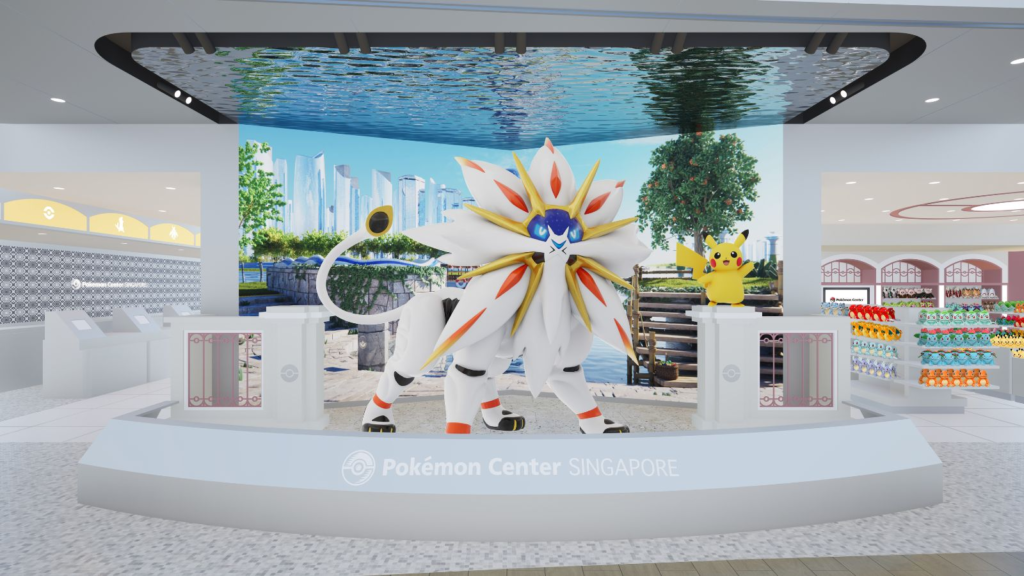
Pokémon Singapore is revamping its retail experience with the reopening of Pokémon Center SINGAPORE at Jewel Changi Airport on 1 July, marking the first full-scale renovation of a Pokémon Center store outside Japan. The refreshed store will feature a redesigned interior inspired by Singapore’s cultural heritage, alongside new locally themed merchandise and a dedicated event space aimed at growing the local Pokémon community. Leading the revamp is legendary Pokémon Solgaleo, which will become the new symbol of Pokémon Center SINGAPORE. Solgaleo will appear on the store’s updated logo and façade, greeting visitors alongside Pikachu in a display inspired by Singapore’s skyline. Don’t miss: Why UNIQLO’s Pokémon tees are more than just cute collectibles According to Pokémon Singapore, the redesigned interior incorporates local cultural elements to create a more familiar and immersive experience for Singapore-based fans, while also offering overseas visitors a uniquely localised Pokémon destination. The updated store will also include a dedicated event space located at the rear of the outlet. Equipped with a large-format monitor, the area is designed to host activities centred on Pokémon video games, trading card games and app-based gaming. Located within Jewel Changi Airport, the company said the space is intended to serve both local fans and international visitors, offering opportunities for fans to battle, trade and connect. To mark the reopening, Pokémon Center SINGAPORE will launch a line of commemorative merchandise featuring artwork inspired by Singapore’s cityscape and culture. The collection includes plush toys of Solgaleo and Pikachu, alongside merchandise inspired by the traditional kopi (coffee) cup. In total, 20 exclusive products have been created for the store, with the first 12 items launching during the reopening. A second wave of merchandise, including a Pikachu and kopi cup bag charm, will be released in August. “We are truly humbled by the continued enthusiasm from our fans in Singapore and beyond. In order to live up to those expectations, we hope to inspire even greater love for Pokémon, and encourage fans to visit Pokémon Center SINGAPORE to fully immerse themselves in the experience with this renewed store,” Shunsuke Sasaki, managing director of Pokémon Singapore. Sasaki noted that Solgaleo was selected as the store’s new symbol due to its sun-like mane and its alignment with the company’s vision of creating a Pokémon Center more deeply rooted in Singapore. He added, “This marks a new chapter for us in Singapore. This is not just a grand reopening, but a commitment to elevate the store experience by transforming Pokémon Center SINGAPORE into a place where people from all walks of life can come to love Pokémon, and where fans can connect globally.” The reopening follows Pokémon Singapore’s temporary closure of the Jewel Changi Airport outlet in April this year for a comprehensive renewal project. At the time, the company described the revamp as the first major Pokémon Center renovation outside Japan and an “important milestone” globally. Pokémon Singapore had also said the refreshed concept would feature localised design elements inspired by Singapore’s heritage and everyday culture, alongside expanded merchandise offerings and new experiential features. During the closure, the brand operated pop-up stores at Jewel Changi Airport and Plaza Singapura. Related articles:   Cable cars get day-to-night makeover in Mount Faber Leisure Group’s latest Pokémon adventureYou can now hunt for Pokémon on Google’s mobile browser LEGO and Pokémon finally build the dream collab fans have been waiting for       source

Pokémon Center Singapore powers up with a local twist Read More »
ZUS Coffee serves up a reality check for tired working adults

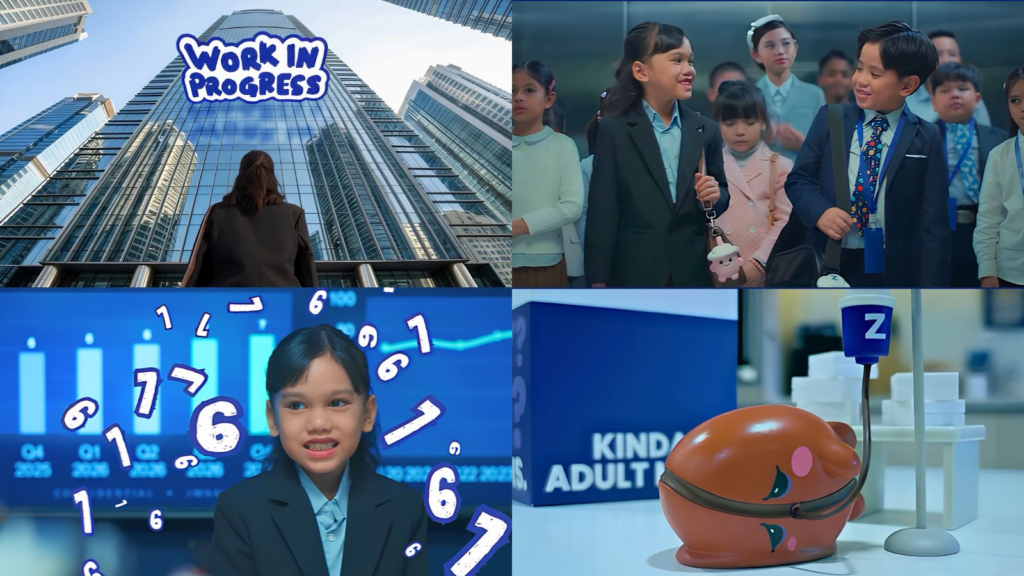
Southeast Asian coffee chain ZUS Coffee is leaning into the emotional weight of adulthood in its latest regional campaign, reminding consumers that progress is still progress, even if life does not always feel that way. Central to the campaign is a short film titled “Work in progress”, which follows two children, Adam and Amelia, navigating the realities of corporate life. Set in an office environment, the pair are thrown into familiar adult situations that reflect burnout, pressure and quiet frustration. Amelia is seen presenting a report at a board meeting to colleagues who dismiss her findings, before later staying back past 6pm to meet a midnight deadline set by her boss. Meanwhile, Adam works under the watchful eye of an overbearing colleague determined to ensure he stays productive. While co-workers discuss KPIs in the pantry, Adam quietly sips a ZUS Coffee while counting down the minutes until he can leave the office. Don’t miss: Why ZUS Coffee is opening its universe to Butterbear, after a year of ZUS Buddy  The film ends with both Amelia and Adam returning home after a long day at work. When their boss calls again, the pair choose to ignore it. The final scenes then reveal the characters in their adult forms, enjoying a cup of ZUS Coffee while pursuing passions outside of work. Throughout the film, the brand’s mascots, known as “ZUS Buddies”, appear as visual representations of the characters’ emotions. In one scene, Porta Pal is seen looking burnt out on Amelia’s desk as she attends back-to-back meetings. Elsewhere, when Adam becomes distracted at work and starts tossing paper balls into a waste basket, Frappe Fren appears visibly bored and melting. The campaign also introduces the brand’s new “Kinda Adult Meal” box. Ahead of the launch, ZUS Coffee teased the campaign on social media through a series of short clips featuring the ZUS Buddies in workplace scenarios. One video showed Blue Buddy tripping and spilling coffee while Frappe Fren frowned at a laptop and Pinky Boo dozed off at work. Another teaser saw Blue Buddy falling asleep in the pantry before being transformed into a “Kinda Adult Meal” box. The campaign is set to run across Malaysia, Singapore, Brunei, Thailand and the Philippines. A+M has reached out for more information. The campaign follows ZUS Coffee’s continued regional expansion, with the brand recently entering Indonesia through a partnership with Kapal Api Group. The Malaysia-founded chain opened its first Indonesian outlet at Puri Indah Mall in May, as competition heats up across Southeast Asia’s growing coffee market. Founded in 2019, ZUS Coffee has rapidly expanded across markets including Malaysia, Singapore, the Philippines, Brunei and Thailand, surpassing 1,000 stores globally in 2025. As part of its localisation strategy, the company has rolled out market-specific beverages such as the Gula Melaka Latte in Malaysia, Ube Latte in the Philippines, Kopitiam Double Espresso in Singapore and Thai milk tea-inspired drinks in Thailand. Related articles:   Are you Jason? ZUS pulls off bold April Fool’s “internal email” prank  ZUS Coffee turns up the beats with its first-ever Singapore coffee rave  How ZUS Coffee leaned into music and physical experiences with ‘Drip & Drop’  source

ZUS Coffee serves up a reality check for tired working adults Read More »

Mamee Double-Decker’s CMO on why the brand did everything a snack brand shouldn’t do

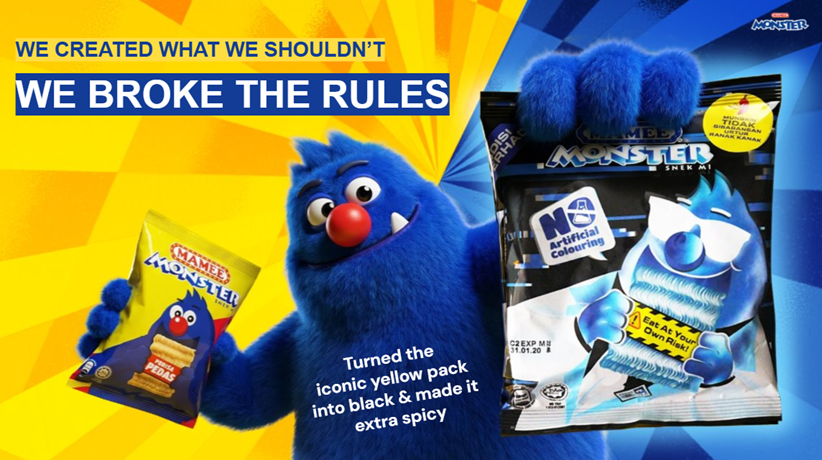
For a while, Mamee Double-Decker felt like it was doing everything right. The company was launching campaigns, rolling out SKUs and pushing limited-edition products. Yet despite staying visible, something was missing. “Our problem was not really the attention or media – but meaning,” said How Yuan Yi during a recent case study presentation at the Content360 Malaysia conference. Reflecting on the brand’s evolution, How said the turning point came when she revisited her own childhood memories of rushing out after school to buy a packet of Mamee Monster. The challenge, however, was that younger consumers today never had those same formative experiences with the brand. Don’t miss: Content360: Tealive’s Bryan Loo on why instinct still beats data in marketing  “The question then became: How do we make people feel something they have never experienced before?” she said. According to How, the answer was not to recreate the past, but to make nostalgia feel culturally relevant in the present. “The reason why the younger generation are still engaging with Mamee, is because they are not searching for the past, but for something that feels real in today’s fast-moving environment,” she explained. Breaking the playbookThat shift in thinking led the brand to abandon conventional marketing approaches. “We stopped following the playbook,” said How, adding that the team intentionally moved away from asking what new products to launch, and instead focused on how the brand can become something that “belonged” to the people. The strategy initially felt risky. The company launched products that intentionally broke category conventions, including turning the iconic yellow Mamee packaging black. In October 2025, in a colorful collision of fashion and nostalgia, Mamee Monster teamed up with Christy Ng for a new line of bags celebrating childhood memories and local culture. The collection spotlighted the beloved “Monster” mascot and transforms it into trendy, functional accessories that are as playful as they are wearable. “We did almost everything a snack brand shouldn’t do at that point in time,” she said. “However, those moments were exactly when people started talking about us, and we realised that when we broke the rules, our brand came alive.” Monster, the influencer Central to that transformation was repositioning the beloved Monster character, from a static mascot, into what How described as a personality that reacts to culture. “We turned Monster into an influencer, not a mascot, but someone that has a personality, and someone that reacts to trends, and someone that joins conversation,” she said. The character began responding to real-world moments and internet culture, from Covid-era jokes about overgrown hair to playful commentary on trends and pop culture moments. More recently, in April, the iconic blue furry Monster appeared as a music video star alongside Iman Alyssa (@imantroye) in the brand’s latest “Crunchy” track, created to promote Mamee Monster’s new limited-edition onion flavour. For How, the goal was never perfection. “Belonging is not true perfection, because we realised that people do not talk about something that is better, but people talk about something that is different enough to be questioned,” she explained. Beyond products, the brand also expanded into collaborations, customised merchandise and creator-led content. The broader aim, said How, was to stop treating the brand as something owned solely by marketers. “Participation is when people stop looking at you as just a brand, and start owning the brand to make it their own,” she said. Ultimately, How believes nostalgia marketing today is less about reliving history and more about emotional connection. “Nostalgia today is not about memory, it is really about belonging,” she added. Related articles:  Christy Ng brings Mamee Monster to life in playful bag collaborationSneaker-LAH and ASICS partner up for MAMEE Monster-inspired shoes Festive fatigue? Mamee bets on micro-dramas to win Malaysia’s mixed season source

Mamee Double-Decker’s CMO on why the brand did everything a snack brand shouldn’t do Read More »

The activation imperative: Turning fragmented data into measurable ROI

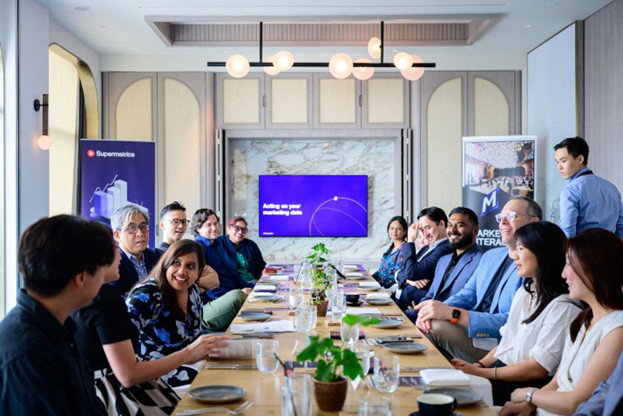
In Singapore’s highly mature digital economy, brands are rarely short on customer data. The true challenge lies in tech stack bloat, where a complex web of legacy systems, customer relationship management apps, and new software-as-a-service tools trap valuable insights in disconnected silos. At a recent MARKETING-INTERACTIVE roundtable in Singapore, held in partnership with Supermetrics, senior marketing leaders across retail, hospitality, finance, and technology gathered to discuss how organisations can navigate these hurdles to build an agile and connected data ecosystem. The foundational data challenge Before brands can orchestrate real-time, omnichannel journeys, they must ensure their data foundation is reliable. FairPrice Group has operated for more than 50 years, accumulating vast amounts of data from point-of-sale systems, loyalty programmes, and net promoter scores. Alvin Neo, FairPrice’s chief customer and marketing officer, noted the organisation has intentionally prioritised investing the time and effort to get its data foundation sorted out first to enable hyper-personalisation to work safely and well at scale. “As they say, if you automate a mess, you just get a faster mess,” he said. Similarly, many organisations in highly regulated industries face stringent requirements regarding data reliability and privacy. A senior digital transformation leader at one such organisation emphasised that maintaining the sanity of a single customer view is critical, as sending the wrong highly sensitive document to a client would create severe trust issues. To navigate this, it breaks its digital transformations down into bite-sized projects, focusing on proving value and securing small wins before scaling up and embarking on complex integrations. Moving from push to pull marketing The discussion highlighted a necessary mindset shift from sales-driven push marketing to a more authentic and human-led pull approach. Singtel has traditionally possessed a wealth of customer data and connectivity signals. Lynette Poh, head of brand, engagement and loyalty at Singtel, pointed out the industry often fails to look at the human insights behind the data. “The real understanding of your customer, what they want, what they need, predicting that and making them a personalised journey, because it feels so seamless… I think that is the biggest challenge to solve,” Poh said. Neo added that brands should anchor engagement around customers’ real-life aspirations – whether that is eating healthier, saving more or living better. “The future of marketing is not about targeting people more aggressively. It’s about helping people achieve goals they care about,” he said. “When customers give you permission to help them improve their lives, marketing stops feeling intrusive and starts becoming genuinely valuable.” However, Jan Willem van Walsum, data activation lead APJ at Supermetrics, observed that executing a pull mechanism is difficult in reality due to fractured internal ownership and dependencies across different teams. “By the time you’ve figured out how to respond to the pull, the pull has disappeared,” van Walsum said, noting the customer has often already moved on to something else. The need for centralised decisioning To overcome these execution barriers, organisations need to move away from siloed decision-making. Even with a beautiful single customer view, having external media agencies, social agencies and email teams all making different decisions on that data at the same time creates conflicting customer journeys. Van Walsum advocated for implementing a decisioning layer that acts like an air traffic controller across different platforms. This enables centralised decisions that tell various channels what to do and when to do it, without necessarily having to replace existing systems. This prevents frustrating consumer experiences such as retargeting a user with ads for a hotel booking they have already completed. In the financial sector, where customer journeys are highly unique and sensitive, understanding intent is paramount. Endowus is focused on unifying its client view to activate data quickly across various scenarios, such as when clients deepen their engagement on specific topics through owned channels. Jason Huan, chief marketing officer at Endowus, said the firm takes defensive and offensive stances based on market volatility, leveraging data to know when to elevate performance marketing and when to pull back and focus on allaying investing fears. Orchestrating complex omnichannel experiences The complexity of the customer journey is especially pronounced for brands managing multiple touchpoints and partners. The Kallang Group manages one of Singapore’s most dynamic precincts, serving vastly different customer profiles – from active community members to concert-goers. Michelle Yip, group head of brand marketing and communications at The Kallang Group, highlighted the need to consolidate user profiles and leverage first-party data to deliver a seamless, connected experience, that caters to diverse audiences across sports, entertainment, lifestyle, and community offerings. Starting small to prove return on investment With so many competing priorities, proving the value of personalisation to stakeholders remains a universal hurdle. Byron Munson, vice president, APJ at Supermetrics, advised marketers not to try and solve everything at once. Instead, brands should start with a single use case that has a strong return on investment metric attached to it. By enriching customer relationship management data with real-time behavioural signals – such as preferred media channels or time of day – brands can begin driving genuine bottom-line revenue. “The challenge is, it’s the action, what do I do, and then how I stitch the KPIs to validate the investment I’m making to get it going,” Munson said. By securing a hard return on investment early on, marketing teams can influence internal stakeholders, secure further investments, and gradually expand their hyper-personalisation efforts. Acknowledgements This roundtable and article were made possible by our partner, Supermetrics. Supermetrics is a marketing intelligence platform that helps organisations move from understanding past performance to driving future action. Trusted by more than 200,000 companies in 120 countries, Supermetrics unifies the marketing intelligence workflow from data connectivity to insight to activation, enabling confident, revenue-focused decisions. Processing 15% of global advertising spend, Supermetrics helps brands and agencies navigate marketing with confidence in today’s evolving data landscape. To learn more about Supermetrics Data Activation please visit:

The activation imperative: Turning fragmented data into measurable ROI Read More »

In conversation: Managing crises beyond the courtroom

In a crisis, most organisations still follow a predictable sequence: call the lawyers, manage the fallout, then bring in communications. That order, according to APRW managing director Cho Pei Lin, is exactly where things go wrong. Speaking on Marketing Connected’s “In Conversation” podcast, Cho, who helped pioneer litigation and disputes PR in Singapore, said crises are often mishandled because communications is treated as an afterthought. “Organisations will often say, find a lawyer first to give us legal advice, and then the matter gets thrown into the public space,” she said. “When it reaches the public space, they try to control the narrative and only then bring in PR. By then, the news is already everywhere.”Don’t miss: In Conversation: IKEA Singapore on why awareness must be earned, consistently  Catch the full interview here:  She argued that litigation PR, or more broadly crisis communications, should be embedded from the start alongside legal and operational response. “What is most important is to bring in the firefighters, the legal team, and the comms team at the beginning, or as early as possible,” she said. “It needs to be a holistic approach, not sequential.” However, she noted that most organisations default to sequence under pressure. “It’s human nature. There’s a fire, so you put out the fire first. Then you deal with the rest later,” she said. Cho also emphasised that litigation PR is often misunderstood as something that only applies when disputes escalate. In reality, she said, it is part of broader crisis management. “Not everything ends up in litigation,” she said. “It’s really about crisis communications as an umbrella. The earlier you think about how legal, operational and communications work together, the better your outcomes will be.” For Cho, the real value of litigation PR lies in alignment, not reaction. When legal, business and communications teams work in parallel, organisations are better positioned to protect both outcomes and reputation before a crisis spirals out of control. Also tune in to the full conversation on Spotify: Tune into the rest of this conversation on your favourite podcast platforms, by searching up Marketing Connected. For all the visual people out there, we’ve got your back as well, with our vodcasts on YouTube. Related articles: In conversation: Singapore’s arts scene wants your attention In conversation: How Airwallex channels sports energy into B2B impact In Conversation: Are we forgetting what makes marketing work? source

In conversation: Managing crises beyond the courtroom Read More »

Nexxen brings Smart TV home screen advertising to APAC

Nexxen is rolling out Nexxen TV Home Screen across Asia Pacific, enabling advertisers to programmatically activate native Smart TV home screen inventory through its demand-side platform, Nexxen DSP. The capability is now live in initial APAC markets including Australia, Singapore, Malaysia and the Philippines. According to Nexxen, the offering gives advertisers access to Smart TV home screen units on VIDAA-powered Smart TVs across APAC and selected global markets. VIDAA OS, developed by V, currently powers more than 50 million Smart TVs from leading brands in over 180 markets globally. Don’t miss: YouTube overtakes traditional TV in Filipino homes, says Google  The launch is aimed at helping advertisers reach audiences at the point of discovery, before content playback begins. By combining premium Smart TV home screen placements with Nexxen’s data and advanced TV capabilities, the company said advertisers will be able to plan, activate and measure campaigns within a single platform. “The TV experience doesn’t start with playback — it starts on the home screen. In today’s world, that is TV. It’s where discovery happens, where decisions are made, and where attention is at its highest,” said Guy Edri, chief executive officer, V. “For partners and advertisers, it’s not just an entry point — it’s the most valuable moment to connect with audiences at scale,” he added. Meanwhile, Josif Zanich, managing director, JAPAC, Nexxen, said the Smart TV home screen presents a strong opportunity for brands to engage viewers in a premium environment. “The Smart TV home screen creates a prime opportunity for brands to get in front of leaned-in audiences,” said Zanich. “By pairing this premium inventory from V, one of the leading and most widely adopted platforms in the Australian market, with Nexxen’s unique data and advanced TV capabilities, advertisers can plan, activate and measure campaigns within a single platform, unlocking smarter audience engagement and ultimately driving full-funnel performance.” Nexxen added that the OEM inventory available through Nexxen TV Home Screen is expected to expand in the coming months. The launch comes as Connected TV adoption continues to accelerate across Asia Pacific, reshaping how consumers watch content and how advertisers plan campaigns. According to Omnicom Media Group Asia Pacific’s “Connecting connected TV” study, which surveyed 11,200 streaming users across 14 APAC markets, viewing behaviour in the region varies between solo weekday streaming and more communal weekend viewing. While smartphones dominate solo streaming, the living room regains importance on weekends, with 55% of viewers preferring CTVs when watching with others. For advertisers, this points to a growing need to consider not just screen time, but viewing context. The study found that viewers in family settings are more likely to remember and respond to advertising, with 65% of large-family viewers expressing receptiveness to ads, compared with 53% of solo streamers. Ad-driven purchase intent was also higher among family groups, while co-viewing reduced multitasking, suggesting that CTV environments can offer more attentive and contextual engagement opportunities Related articles:   StarHub launches Singapore’s first real-time ad replacement for live TV  Study: 75% of Filipinos eye new streaming subscriptions as ad-supported viewing rises  Samsung expands TV Plus team as FAST viewership surges across APAC  source

Nexxen brings Smart TV home screen advertising to APAC Read More »

Singapore bets SG$40m on design as creative economy race heats up

Singapore is investing more than SG$40 million into its design sector over the next three years as it looks to sharpen its position as a global creative and cultural hub amid rising competition across the region. Launched by the DesignSingapore Council, the “Design 2035” masterplan lays out a 10-year roadmap focused on strengthening Singapore’s design economy, growing international recognition for local creatives, and embedding design more deeply across business, technology and public life. A key highlight of the roadmap is the launch of Singapore’s inaugural Design Biennale in May 2027, which will replace the annual Singapore Design Week. Running over six weeks, the biennale aims to scale up Singapore’s international cultural footprint through larger commissions, expanded district activations, and cross-border collaborations. Don’t miss: How safe are creative ideas in Singapore’s pitch culture?  The move comes as countries across Asia increasingly use design, culture and creativity as economic drivers and soft power tools to attract tourism, talent and investment. According to the council, Singapore’s design sector contributed SG$2.7 billion in real value added to GDP in 2024, while a separate economic footprint study estimated the sector generated SG$13.8 billion across the wider economy. The roadmap was developed following consultations with more than 6,000 members of the design community and public over the past year. Under the plan, Singapore will focus on five key areas over the next decade: purposeful innovation, responsible resource use, caring communities, a culturally distinct city, and a vibrant design industry. Artificial intelligence, climate change and Singapore’s rapidly ageing population were also identified as major areas where design can play a more strategic role. “With national plans such as Singapore’s National AI Strategy and Smart Nation Singapore in place, local designers could be increasingly central in ensuring Singapore remains a trustworthy technology hub,” the council said in a release. Among the new initiatives announced is the ‘Good design research and development’ programme, which aims to strengthen collaboration between businesses and designers through co-funded innovation projects. Another initiative, the ‘Good design placement’ programme, will support mid-career designers entering strategic design roles within organisations in key growth sectors. The council is also doubling down on internationalisation efforts through a new International Design Awards scheme aimed at helping Singapore designers gain global recognition and commercial opportunities. Dawn Lim, executive director of DesignSingapore Council, said the roadmap was intended to strengthen Singapore design’s “relevance and global impact”. “The future of Singapore design will ultimately be shaped by the choices we make as a community,” said Lim. Separately, the council said it will launch a public activation titled “New everyday life by design” across 17 MRT stations from HarbourFront to Punggol Coast later this year to showcase the role of design in everyday life. The roadmap builds on DesignSingapore Council’s broader push to position design as a national growth driver. Last year, the council launched “Nation by design”, a campaign developed with Kinetic Singapore that framed design not simply as aesthetics, but as a mindset shaping Singapore’s infrastructure, systems and future-readiness as the nation marked SG60. The campaign also served as a lead-up to the “Design 2035” masterplan, while introducing initiatives such as “60 on 60”, featuring perspectives from Singaporeans across industries including Tan Su Shan, Professor Chua Beng Huat and Rebecca Ting. Separately, DesignSingapore Council also inked a three-year partnership with SBS Transit to explore more human-centric commuting experiences through multi-station activations and service design projects across Singapore’s rail network. Related articles:    When Claude makes anyone a ‘designer’, what happens to creative craft? SG clamps down on foreign freelancers, but industry voices say nuance is needed SG companies barred from engaging foreign freelancers for creative services   source

Singapore bets SG$40m on design as creative economy race heats up Read More »

CNN reportedly sues Perplexity over alleged AI copyright infringement

CNN has reportedly filed a lawsuit against AI search engine company Perplexity, accusing the firm of unlawfully copying and distributing its copyrighted content. Filed on Thursday in the United States District Court for the Southern District of New York, the lawsuit reportedly marks CNN’s first copyright action against an AI company and is believed to be the first such case brought by a television network. According to Reuters, CNN alleged that Perplexity copied “thousands” of its stories, videos and images to power its AI products, while distributing “identical or substantially similar” competing content. Don’t miss: News Corp launches corporate copyright licence as AI raises compliance risk A CNN spokesperson reportedly said the lawsuit reflects its position that Perplexity, despite its multibillion-dollar valuation, should compensate publishers whose original journalism it allegedly uses to power its AI products. CNN also reportedly argued in its complaint that Perplexity’s alleged actions undermine the economics of original journalism by exploiting reporting that is expensive and resource-intensive to produce. Perplexity has reportedly denied the allegations. “You can’t copyright facts,” spokesperson Jesse Dwyer said in a statement quoted by media reports. According to CNN, the media company had previously attempted to negotiate a licensing agreement with Perplexity last year, but both parties failed to reach terms. The network said it remains open to “sensible licensing arrangements” and noted that it has existing AI-related commercial partnerships and ongoing discussions with other technology players. One such deal, with Meta, was publicly reported in December last year, CNN added. CNN is reportedly seeking unspecified monetary damages and a court order to prevent Perplexity from further violating its intellectual property rights. The case is the latest legal challenge facing Perplexity. The AI startup has also reportedly been sued by publishers including The New York Times, Dow Jones and Reddit over allegations tied to copyright infringement and data scraping. At the same time, several publishers have pursued licensing partnerships with AI companies instead of litigation. Media reports stated that firms such as Gannett, TIME, Le Monde and Der Spiegel have signed agreements with Perplexity in recent years. The dispute comes amid mounting legal scrutiny surrounding how AI companies use and retain user and publisher data. Last year, OpenAI pushed back against a US court order requiring it to hand over 20 million anonymised ChatGPT conversations to The New York Times and other publishers as part of an ongoing copyright infringement lawsuit. At the time, OpenAI argued that the vast majority of the transcripts were unrelated to the claims in the case and warned that complying with the order could expose confidential user conversations from the past three years. Related articles: Getty Images suffers partial defeat in UK copyright lawsuit against Stability AI   WFA finds copyright and IP issues are stalling GenAI in marketing   Johnny Cash estate sues Coca-Cola, claiming ad “stole” singer’s voice  source

CNN reportedly sues Perplexity over alleged AI copyright infringement Read More »

OREO and BTS serve a cookie made for fans, not shelves

OREO is tapping into K-pop fandom culture with a new global collaboration with BTS, unveiling a limited-edition cookie inspired by Korean street food and fan engagement traditions. The campaign, which will roll out across more than 80 markets, introduces the “Limited edition OREO & BTS cookies”, a brown sugar pancake-flavoured OREO inspired by hotteok, a popular Korean street snack. According to the brand, the flavour was co-created with BTS members RM, Jin, SUGA, j-hope, Jimin, V and Jung Kook, drawing from the group’s childhood memories of eating both hotteok and OREO cookies. Don’t miss: From BLACKPINK to Pokémon: How OREO leverages partnerships in SEA for sweet success  The limited-edition cookies also feature 13 unique embossments designed by BTS to commemorate the band’s 13th anniversary. These include member names, a BTS light stick, and three OREO cookies that together reveal a hidden message for fans. In tandem, the packaging takes inspiration from South Korea’s street market culture, featuring visuals designed to reflect the sights, sounds and energy associated with Korean food markets. Beyond the product launch, OREO is also leaning into fan participation through a digital activation inspired by BTS fandom traditions. Starting 8 June this year, consumers can scan a QR code on the pack or visit the campaign microsite to submit digital letters to BTS as part of an initiative the brand described as an attempt to create the “world’s largest love letter” to the group. Fans who participate will also stand a chance to win exclusive OREO and BTS prizes. The collaboration is part of OREO’s broader strategy to drive cultural relevance through partnerships designed to generate conversation and fan engagement in an increasingly competitive snack market. The “Limited edition OREO & BTS cookies” will be available for presale from 1 June 2026 via OREO’s website, before rolling out at retailers from 8 June for a limited time. “At its core, this partnership is about shared passion. We’re uniting BTS’ incredibly dedicated fanbase with our own loyal OREO fans to create something genuinely new and exciting,” said Matt Foley, VP of marketing, OREO. He added, “It’s this commitment to uniting our fanbases that keeps us at the forefront of pop culture and demonstrates how a brand with a rich history can continue to lead the conversation.”   BTS said the collaboration held personal significance for the group, as OREO was a snack they grew up eating and still enjoy during studio sessions. The band added that the partnership also gave them an opportunity to share a taste of Korean culture with fans around the world through the hotteok-inspired flavour. The BTS collaboration also builds on OREO’s growing push into K-pop partnerships across Asia. Last year, the brand teamed up with BABYMONSTER for a limited-edition campaign that reimagined its signature “Twist, lick, dunk” ritual through a custom dance challenge and co-created cookie experience. At the time, OREO said the launch marked its first Southeast Asian cookie co-creation with a global artist. Related articles: LANEIGE gives Neo Cushion a glow-up with BTS’ Jin   Visa backs BTS comeback as worldwide sponsor of ‘ARIRANG’ tour    Samsung strikes BTS tour deal to put Galaxy at centre of fan experience source

OREO and BTS serve a cookie made for fans, not shelves Read More »

DBS CEO Tan Su Shan replies to LinkedIn complaint mid-flight, wins industry praise

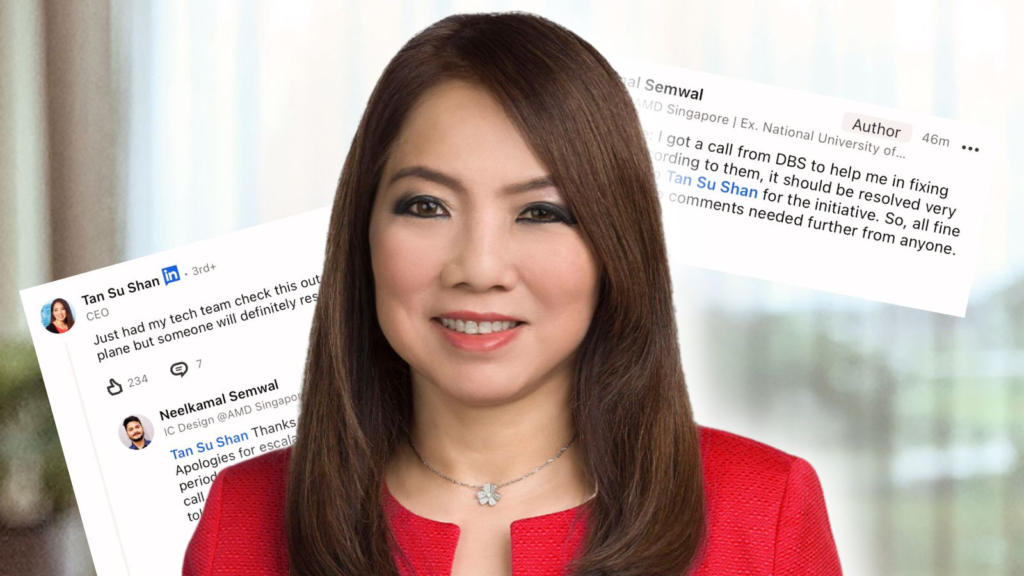
A DBS customer who took to LinkedIn to complain about a broken banking feature received an unexpected reply this week: a personal response from CEO Tan Su Shan while she was onboard a flight. Singapore-based customer Neelkamal Semwal aired his frustration over a DBS feature that had allegedly been non-functional for more than two weeks. In a now-deleted LinkedIn post published on 27 May, Semwal claimed a service allowing users to register their NRIC with their bank account had remained broken for over 15 days despite repeated attempts to resolve the matter through customer service. In screenshots seen by MARKETING-INTERACTIVE, Semwal wrote that “Even after complaining about it with customer care more than a week ago, they still haven’t either figured out how to fix this or just don’t care,” he wrote, while tagging both Tan and DBS chief information officer Eugene Huang directly. Don’t miss: Why StanChart’s ‘lower-value human’ layoffs became a PR problem, not just a job cuts announcement About an hour later, Tan replied publicly. “Just had my tech team check this out for you. Am on a plane but someone will definitely respond,” she commented. Semwal later updated the post to say the matter had since been addressed and thanked Tan for stepping in. “I got a call from DBS to help me in fixing this issue. According to them, it should be resolved very soon. Thanks to Tan Su Shan for the initiative. So, all fine here,” he wrote. The exchange quickly drew attention online, not just because the issue was resolved, but because of the image it painted: one of Asia’s most prominent banking CEOs personally responding to a LinkedIn complaint while in the air, earning praises from the industry for her quick response and for “leading from the front”, according to screenshots seen by MARKETING-INTERACTIVE.  The incident reflects a broader shift in how CEOs are increasingly expected to show up publicly and visibly online. Earlier in March, a study by media intelligence firm CARMA found that Tan emerged as Singapore’s most visible CEO across mainstream media coverage between October 2025 and January 2026, topping metrics for visibility, favourability and headline mentions while receiving zero negative coverage. According to CARMA, media coverage surrounding Tan largely framed her as a thought leader in digitalisation and AI, while spotlighting DBS’ work in generative AI and her growing profile as a corporate leader. The report also noted that coverage had moved beyond her succession from former DBS CEO Piyush Gupta, signalling that Tan had quickly established a distinct personal brand within months of assuming the role. The LinkedIn exchange further highlights how platforms such as LinkedIn are increasingly becoming public escalation channels for frustrated customers, particularly in Singapore’s corporate circles. Once largely reserved for networking and career updates, the platform is now also home to public complaints, corporate call-outs and customer service escalations directed at senior executives. And while CEOs personally stepping into customer complaints is still relatively uncommon, moments such as these increasingly shape how leadership is perceived online, especially at a time when visibility, responsiveness and accessibility are becoming closely tied to brand trust. A day later, Fortune named Tan the sixth most powerful woman in business globally and the highest-ranked executive in Asia on its 2026 list. The ranking recognised women leading some of the world’s largest companies across sectors including finance, technology and healthcare. Related articles:    DBS Foundation’s Karen Ngui says ageing isn’t the problem, outdated perceptions are Are podcasts the new boardroom? DBS thinks so Was the McDonald’s CEO’s Big Arch burger bite just a big act?   source

DBS CEO Tan Su Shan replies to LinkedIn complaint mid-flight, wins industry praise Read More »