marketing interactive

Samsung Ads plugs Eyeota data into CTV push for sharper household targeting

Samsung Ads Southeast Asia has partnered with global data technology firm Eyeota, a Dun & Bradstreet company, to overlay viewership insights from millions of Samsung Smart TVs with Eyeota’s consumer data for the first time. The move aims to help advertisers better reach relevant household audiences across Singapore, Thailand and the Philippines through connected TV (CTV) campaigns. The collaboration, which comes 18 months after Samsung Ads launched its free streaming service Samsung TV Plus in Southeast Asia, marks its first data partnership in the region. It combines Samsung TV’s scale and regional reach with Eyeota’s data network, strengthening Samsung Ads’ targeting capabilities. Don’t miss: How advertisers can deliver premium CTV ad experiences without overspending With the integration, advertisers can target audiences based on demographics, interests and behavioural signals, enabling more precise delivery of native and video ad formats on the largest screen in the home, as CTV adoption accelerates across Southeast Asia. “Our new partnership with Eyeota empowers advertisers to unlock the full potential of CTV. The combination of scale and unique audience segmentation gives brands greater confidence that their campaigns are reaching the right consumers to ultimately deliver better outcomes,” said Alex Spurzem, managing director Samsung Ads Southeast Asia and Oceania (SEAO). In tandem, Marc Fanelli, General Manager, Dun & Bradstreet sales and marketing services, commented, “Whether the goal is driving broad discovery or accurately converting intent into purchase, understanding CTV audiences and meeting them where they are watching is key to delivering campaign impact.” “Our work with Samsung Ads significantly increases accessibility for brands and advertisers, ensuring campaign budgets are spent reaching the audiences that matter most,” he added.  Samsung Ads has also been scaling its CTV ecosystem through existing infrastructure partnerships. Last year, it extended its multi-year global partnership with Publica by IAS, reinforcing an exclusive collaboration aimed at enhancing CTV ad experiences worldwide. The deal saw Samsung Ads continue leveraging Publica’s CTV ad server and unified auction technology to improve yield, optimise ad revenue and deliver a more seamless, TV-like viewing experience. Through Publica, Samsung Ads gives advertisers access to premium CTV inventory on Samsung TV Plus, the company’s free ad-supported TV (FAST) service streaming more than 700 channels in the US and 3,500 globally. Related articles: Marketers to slash display spend by 30% as AI and CTV redefine engagement: Forrester   Half of CTV viewers use the home screen as their guide – and brands are taking notice   LinkedIn ramps up video ad tools, launches First Impression ads and CTV upgrades for B2B source

Samsung Ads plugs Eyeota data into CTV push for sharper household targeting Read More »

LEGO turns Jewel Changi Airport into SEA's largest Botanicals mall activation

Jewel Changi Airport has transformed into a floral-themed playground with the launch of “Celebrate Jewel blooms with LEGO Botanicals”, a large-scale experiential activation featuring around 800,000 LEGO bricks, making it Southeast Asia’s largest LEGO Botanicals showcase in a mall. Running from 26 May 2026, the limited-time takeover spans Jewel’s Forest Valley and Canopy Park, reimagining the airport-linked lifestyle destination as a walk-through floral journey built through LEGO Botanicals and LEGO Icons collections. The activation is designed to blend retail, experiential storytelling and interactive engagement, encouraging visitors to explore Jewel’s indoor landscape in a more immersive, play-led way while extending dwell time across the attraction. Don’t miss: LEGO Group India and emerging Asia marketing lead exits At Forest Valley, visitors are greeted by large-scale installations set against the Rain Vortex, including a pair of 2-metre LEGO Rose centrepieces. Smaller whimsical builds such as ‘LEGO Botanicals happy plants’ and ‘Rocking plants’ are woven into the greenery, creating moments of discovery across the space. The experience continues at Canopy Park, which has been reimagined as a global horticultural trail inspired by the LEGO Icons “Gardens of the world” series. Each zone draws from different landscape inspirations, reinterpreting them through LEGO builds. Highlights include a Japanese-inspired garden at the Source Pool featuring koi, water lilies and a LEGO-built house, alongside Mediterranean and English countryside-inspired scenes at Foggy Bowls and Petal Garden. These installations reference LEGO Icons sets such as ‘Tranquil garden’, ‘Fountain garden’ and ‘Autumn cottage garden’, translated into life-sized, walk-through environments. Beyond the installations, visitors can participate in a seven-stop stamp rally across Jewel, including Canopy Park, with completed cards redeemable for exclusive LEGO merchandise at a pop-up store located at Basement 1. The store also features large-scale LEGO builds and curated displays designed for photo opportunities. Shoppers are further incentivised through a series of promotions, including LEGO premiums with minimum spend, UOB cardholder rewards, Canopy Park ticket discounts, and food and beverage tie-ins such as discounted ice cream at Monarchs & Milkweed. A fashion showcase, created in collaboration with the Singapore Fashion Council, extends the activation into wearable design. A group of designers including Joanna Lim, Sabrina Goh, Kha Ngo, Bhajinder Kaur, Clara Simanjuntak, Horas Napitupulu and Sylvia Lim have reinterpreted LEGO Botanicals through sculptural, floral-inspired pieces that remain on display at Jewel following their runway debut. The showcase positions LEGO Botanicals beyond product play, reframing it as a creative medium spanning fashion, architecture and storytelling, while adding another experiential layer to the broader Jewel activation. The “Celebrate Jewel blooms with LEGO Botanicals” experience runs until late August 2026, with selected elements available for limited periods across Jewel Changi Airport. “This collaboration reflects Jewel’s ongoing efforts to create distinctive experiences to delight visitors. By reinterpreting Jewel’s iconic indoor environment through the creative lens of LEGO, we are offering visitors a fresh and inspiring way to experience familiar spaces, complemented by exclusive retail offerings and experiential showcases,” said Lee Ching Wern, chief executive officer, Jewel Changi Airport. “Canopy Park, in particular, has been transformed into a playful and vibrant wonderland with LEGO signature bricks and we are excited for our visitors to fully experience the immersive set-up,” added Lee. In tandem, Nina Patricia Da Costa, general manager, Singapore, Malaysia, travel retail APAC, LEGO Group said the brand wanted to create an experience that encourages people to slow down and explore together in a playful and meaningful way. “At the LEGO Group, we believe play has the power to spark creativity, foster connection and inspire imagination across generations. By blending Jewel’s deep connection to nature with the tactile and mindful experience of LEGO building, the activation invites visitors to experience LEGO Botanicals in an immersive and unexpected way,” said Da Costa. “We are also excited to collaborate with Singaporean designers through the LEGO Botanicals fashion showcase, highlighting the versatility of LEGO Botanicals as a creative medium while bringing fresh local perspectives to the experience. We hope visitors of all ages will discover memorable moments together across Jewel – one brick at a time,” she added. MARKETING-INTERACTIVE has reached out for more information.  The activation marks LEGO Botanicals’ most extensive experiential showcase in Singapore to date, extending the brand’s push into large-scale, immersive retail storytelling beyond earlier activations such as its Valentine’s Day “Bloom bar” pop-up at Raffles City earlier this year, which invited visitors to build their own bouquet through curated in-store experiences and city-wide touchpoints. That earlier campaign included a limited-time installation, interactive photo opportunities and Valentine’s-themed retail tie-ins across Singapore, positioning LEGO Botanicals as a gifting alternative that blended play with seasonal floral traditions. Photo credits to Jewel Changi Airport and The LEGO Group.  Related articles: LEGO brings Singapore’s shophouses to life brick by brick Can you build your dream ride? LEGO dares kids to take the wheel The LEGO Group builds big with expanded Singapore hub source

LEGO turns Jewel Changi Airport into SEA's largest Botanicals mall activation Read More »

Publicis Groupe Indonesia acquires Inter Pariwara Global and iLab Indonesia

Publicis Groupe Indonesia has acquired Inter Pariwara Global and iLab Indonesia in a move that strengthens its media capabilities and deepens its footprint in one of Southeast Asia’s fastest-growing markets. The agencies will be integrated under Spark Foundry Indonesia, adding around 150 media professionals to the network and expanding its offering across both global and local client portfolios. The acquisition is positioned as part of Publicis Groupe’s broader push to combine local market expertise with its global data, technology and innovation capabilities, with the aim of delivering more integrated and future-ready solutions for clients in Indonesia. Don’t miss: Publicis Groupe to acquire sports agency 160over90  Amrita Randhawa, CEO of Publicis Groupe Singapore and Southeast Asia, said the move reflects the group’s continued confidence in the market at a time when parts of the industry are pulling back. “Indonesia is one of the most important and high-potential markets in Southeast Asia, and this acquisition reflects our continued commitment and optimism for its future at a time when much of the industry seems focused on divestment,” said Randhawa. “This allows us to combine deep local expertise with the full power of our global capabilities in data, technology and innovation. Together, we are building a stronger, more future-ready offering for our clients,” she added.  The transaction is subject to customary closing conditions. The expansion builds on Publicis Groupe’s wider investments across the region, including Lotame in the data and identity space, HEPMIL in influencer marketing, and its artificial intelligence initiatives such as the APAC AI Hub in partnership with the Singapore Economic Development Board. Together, these capabilities are designed to strengthen the group’s connected ecosystem and future-proof its operations across Southeast Asia. Beyond the region, Publicis has also continued to position itself as a leader in the shift toward AI-driven marketing transformation. Most recently, it acquired LiveRamp in a US$2.2 billion all-cash deal.  The deal builds on its 2019 acquisition of Epsilon, which gave the group a major identity and first-party data platform. LiveRamp adds clean rooms, data connectivity, marketplace capabilities and a wider partner network, creating what Publicis argues will be a stronger foundation for enterprise AI and agentic business transformation. The group has been one of the most aggressive in reshaping its model around data and AI infrastructure, with LiveRamp expected to add another layer to its ecosystem by enabling clients to build proprietary data assets through secure collaboration across merchants, publishers, payment networks and supply chains. Related articles:  Publicis Groupe ramps up China luxury play with expanded Publicis Luxe unit  Microsoft reportedly shifts global media mandate to new agency  Can Publicis’ HEPMIL acquisition unlock new opportunities for boutique influencer agencies?  source

Publicis Groupe Indonesia acquires Inter Pariwara Global and iLab Indonesia Read More »

DDB Singapore ECD and head of art exits after 16 years

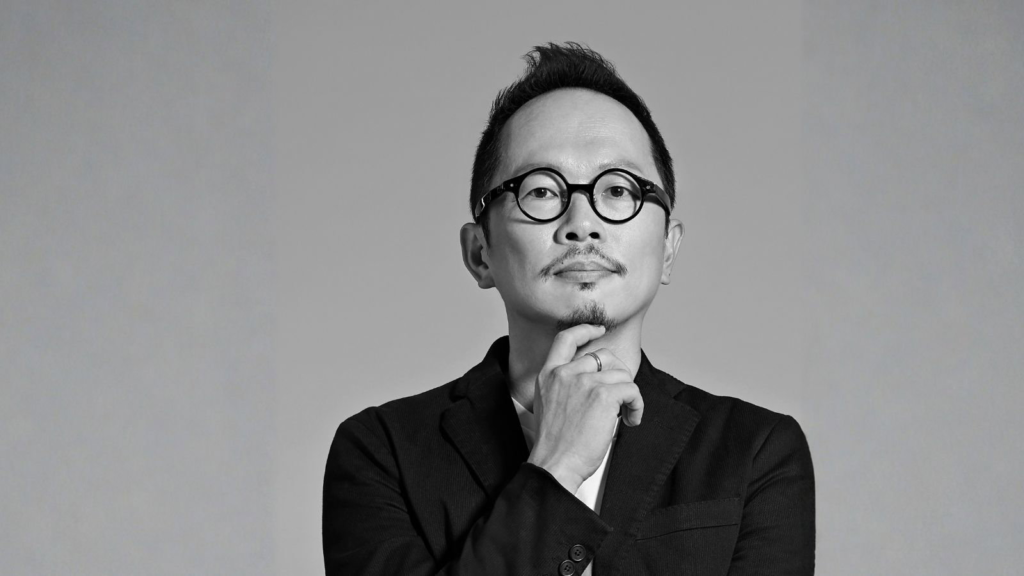
Creative veteran Thomas Yang (pictured) has exited DDB Group Singapore after more than 16 years with the agency network. He is set to join Leo Singapore as senior creative director and head of art, reporting to Asheen Naidu, group executive director.  Yang unveiled his departure in a LinkedIn post, marking the end of a long-running stint at DDB where he most recently served as executive creative director and head of art and design from 2020 to 2026. Prior to that, he held the role of deputy executive creative director and head of art and design at DDB Group Singapore from 2010 to 2020. He first joined the agency in 2009 as associate creative director. Don’t miss: Agency agenda: Tony Harradine outlines Omnicom Media APAC’s post-deal plan Before DDB, Yang spent time at JWT Singapore, where he served as associate creative director from 2007 to 2009 and head of art from 2005 to 2007. Over the course of his career, Yang has also held roles at M&C Saatchi Singapore, 10AM Communications, BBDO Singapore and Ogilvy Singapore. Reflecting on today’s creative landscape, Yang believes that strategic thinking precedes craft, and that the mark of any great art director is flexibility, as well as having a design sense unrestricted by a particular style. “I’ve spent my career believing that good ideas should feel simple, human and relatable. Leo Singapore’s recent work reflects that spirit, and I’m excited to join the team to create work that puts Singapore creativity firmly on the global stage again,” he added. In tandem, Naidu said “We couldn’t be happier to have Yang join us at such an exciting time. He’s a bit of an industry legend, which was made very clear by the thrill of the creatives when they found out he was coming over.” “He’s already had a big impact and we’re looking forward to even more,” added Naidu.  Yang’s departure also comes amid wider restructuring across the network. Following the Omnicom–IPG merger, DDB was among several legacy agency brands earmarked to be phased out globally and consolidated into other Omnicom networks In December last year, Jeff Cheong stepped down as CEO of DDB Singapore, ending a more than 17-year run at the agency. At the time, Sean Donovan, who leads Omnicom Advertising, thanked Cheong for his contributions to DDB and Tribal Worldwide over the years, while Cheong told MARKETING-INTERACTIVE he was “energised by the support of partners and clients” as he entered the “second half” of his career.” Related articles: Omnicom Advertising Asia unveils regional leadership team  Omnicom’s first results post-IPG show merger costs bite, underlying performance holds  Omnicom PR reportedly restructures agency portfolio source

DDB Singapore ECD and head of art exits after 16 years Read More »

Singapore refreshes retail digital plan to boost AI adoption among SMEs

Singapore’s retail sector is getting a sharper push into AI adoption, as Enterprise Singapore and Infocomm Media Development Authority (IMDA) roll out a refreshed Retail Industry Digital Plan (IDP) aimed at guiding more than 2,000 SME retailers beyond basic digital tools and into more advanced, AI-enabled solutions. Unveiled at the ‘Retail reimagined – From now to next’ event, the updated plan was unveiled by senior minister of state Low Yen Ling, who said the sector needs to move past foundational adoption and focus on technology that directly improves competitiveness amid rising costs, manpower pressures, and intensifying eCommerce competition. First launched in 2017 and refreshed in 2023, the IDP has helped drive strong baseline adoption across the sector, with more than 75% of SME retailers now using entry-level digital solutions and 45% adopting intermediate tools, according to IMDA’s 2025 retail survey. However, adoption of more advanced technologies remains limited, even as AI tools become more widely available and retail use cases mature. Don’t miss: Singapore looks to strengthen position as trusted AI financial hub The refreshed framework shifts away from organising solutions by stages of digital readiness, and instead maps them across end-to-end business touchpoints, including front-of-house, back-of-house, and corporate operations. The aim is to make it easier for retailers to identify operational pain points and match them with relevant digital solutions. A stronger emphasis has also been placed on AI-enabled tools. For customer-facing operations, the IDP highlights AI concierge systems and generative AI chatbots designed to enhance in-store and online engagement through personalised recommendations and support. On the operations side, demand forecasting tools are being positioned to help retailers manage inventory more efficiently using predictive analytics. At the corporate level, generative AI solutions for marketing, sales content creation, and digital training are also being promoted as productivity levers. The approach has already shown results among some early adopters. Florist Far East Flora, for instance, reportedly cut content production time by around 50% after adopting GenAI tools for marketing and sales content generation. The plan also introduces a “Cybersecurity and data protection roadmap” to help SMEs strengthen digital resilience. This includes practical toolkits and solutions such as anti-malware systems, firewalls, and backup protection. Beyond technology adoption, the government is also encouraging retailers to rethink job roles and invest in reskilling, with businesses urged to work with Workforce Singapore to develop integrated enterprise and workforce transformation plans. Industry input was gathered in developing the refreshed IDP, with organisations including the Singapore Retailers Association, Singapore Fashion Council, and Singapore Furniture Industries Council involved in consultations. Additionally, a “Retail Accelerator at L^IFE by Innovate360” was also launched to support early-stage brands. Backed by EnterpriseSG, the two-year programme will house 16 local brands at *SCAPE, offering subsidised retail space, mentorship, and structured support in areas such as marketing, PR, merchandising, and livestreaming. Digital tools from the IDP will also be embedded into the accelerator programme, alongside opportunities for brands to explore partnerships and internationalisation support as they scale. In her speech, Low said the refreshed plan reflects a broader commitment to ensuring retailers are not left navigating transformation alone, but are supported at every stage of their journey. “Whether you are taking your first steps in digitalisation, testing a new retail concept, or scaling your operations to the next level, you do not have to do it alone. I am confident that together, we can build a retail sector that is resilient, competitive, and future-ready,” she added.  The refreshed IDP comes as Singapore continues pushing for broader AI adoption across industries, despite many businesses still being in the early stages of implementation. According to a recent report by Singapore’s Ministry of Manpower, 71.5% of firms have yet to adopt AI, while only 28.5% have started integrating the technology into their operations. Of those, just 3.8% said AI had been fully embedded into core business processes, with most companies still in planning or pilot phases. The study, conducted between January and March 2026, surveyed 2,560 private sector establishments employing about 486,600 workers. Related articles:  AI momentum builds across Southeast Asia, but gaps persist  AI use rises, but so do trust demands from Singaporeans  More companies miss revenue targets as AI and volatility reshape B2B growth    source

Singapore refreshes retail digital plan to boost AI adoption among SMEs Read More »

Beyond impressions: Why effectiveness goes well beyond attention

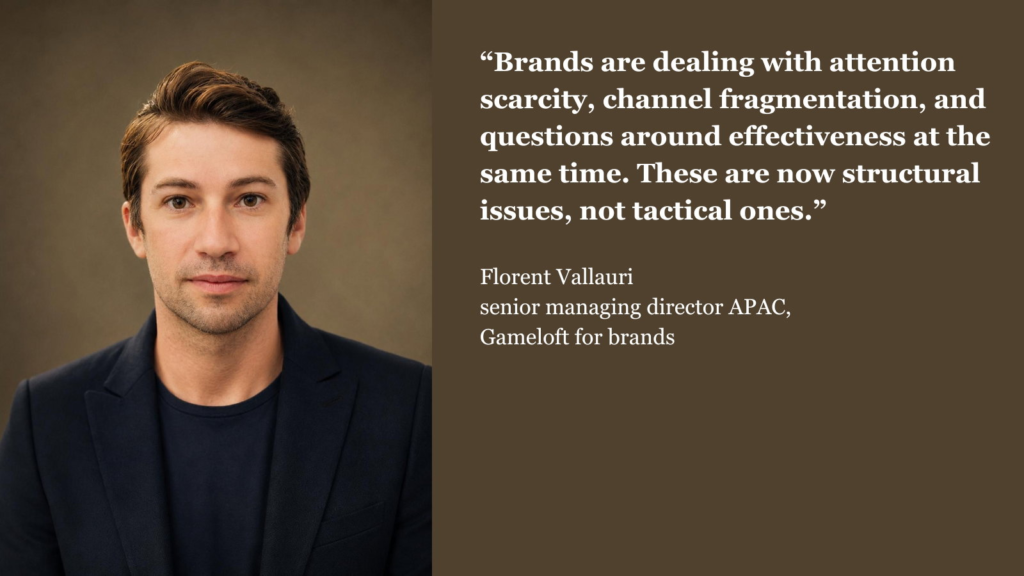
Most ads today are seen, but very few are remembered. For years, attention has been treated as the gold standard in digital advertising. If an ad appeared on screen and held someone’s gaze for a few seconds, it was considered a job well done, but marketers know that is only part of the story. In a landscape shaped by endless scrolls and fragmented screens, attention without emotion rarely translates into memory. That gap between being seen and being remembered is increasingly pushing the industry to ask a tougher question: what actually makes advertising effective? It is this question that Gameloft for brands explores in its “Attention and emotion in play” white paper, developed with Mediamento and ActFuture. The research argues that attention is only the starting point. To create a lasting impact, brands need to pair attention with emotional engagement which can then drive significantly stronger outcomes such as a whopping 35% brand affinity, and almost 25% more ad recall. Purchase intent can also increase by 12.8% versus pre-roll video formats should the right factors come into play. To explore this relationship, the study combines eye-tracking and biometric analysis to measure not only what users see, but also what they feel and ultimately remember. The battle for attention In Southeast Asia and ANZ, audiences move fluidly across multiple platforms. They bounce from TikTok to YouTube, reply to WhatsApp messages, scroll Instagram and jump into a game, all within a short span of time. In this environment, the challenge is no longer simply capturing attention. It is creating moments that leave a lasting imprint. According to Statista and Dentsu data, the APAC advertising market is expected to reach US$424.7 billion in 2026, with digital channels continuing to dominate overall media spend. Within this landscape, in-game advertising is projected to generate US$62.9 billion in revenue, positioning gaming as one of the region’s largest and fastest-growing digital media environments. While TV and video will remain the biggest advertising segment overall, gaming is rapidly strengthening its strategic role thanks to the convergence of entertainment, mobile consumption, and highly engaging interactive experiences, particularly across key markets such as China, Japan, and India. Why attention alone is no longer enough We all know of those ads that look great, but leave limited impact on the consumer. While some might be inclined to simply say marketers are playing it safe, the issue goes much deeper. For starters, media consumption which is becoming increasingly fragmented and non-linear, is causing ads to be rendered ineffective. But all is not lost. Areas such as gaming tackle this head on. Unlike passive media environments, gaming creates sustained and intentional attention driven by active participation rather than passive viewing. “Players are actively involved, not simply exposed, resulting in up to 30% higher attentive exposure compared to traditional digital media,” said Florent Vallauri, senior managing director APAC at Gameloft for brands. Beyond attention, emotion also plays a big role in gaming. Behavioural science and neuroscience research consistently show that emotions play a critical role in memory formation and decision-making – influencing not only what people notice, but what they ultimately remember. As such, the true challenge for brands is not in capturing attention, but in creating experiences that audiences genuinely retain. (Source: Data taken from “Attention and emotion in play” white paper) Why gaming changes the equation Gaming works differently from most digital media environments. Players are not sitting back and consuming content. They are actively participating by competing, solving problems, making decisions and progressing through structured experiences. This creates a deeper form of attention that is sustained and intentional. In Southeast Asia, gaming has become a daily habit for millions of people. The region had an estimated 277 to 290 million gamers in 2025, making it one of the largest gaming audiences globally. “In SEAP, mobile gaming is one of the few digital activities used every day, often multiple times,” Vallauri said. “In ANZ, gaming cuts across evenings, shared household time, and solo downtime.” This shifts gaming away from passive, scroll-based or skippable media environments where attention is briefly captured and quickly lost, and instead positions it as a habitual behaviour, closer to messaging or social platforms than traditional advertising environments. This gives brands an opportunity to do more than interrupt attention; they become part of the experience itself and spark credibility with the player. This can take shape through playable challenges similar to those seen in titles such as Asphalt Legends, alongside reward-based systems that offer in-game currency, upgrades or progression incentives in exchange for continued play or interaction. It can also extend to sponsored, time-limited in-game events or immersive, branded placements with custom, high-impact, and strong PR-able value to support the campaign or product launch. One such example was Hyundai Motor Company’s “Electric Race” in partnership with Asphalt Legends. The time-limited in-game activation and new-car integration were designed to position the automaker as an innovator in electrification and provide an innovative branded gaming experience for its players. The experience invited players to compete in electric-themed races within the game, with top performers rewarded with real-world incentives, including a trip to South Korea and the opportunity to experience Hyundai vehicles on a real-track, effectively linking in-game performances with tangible brand engagement. Where emotion comes in Gaming is emotional by design. Every session is filled with moments of anticipation, frustration, competition and reward. Furthermore, the emotions are not layered on top of the experience, but rather are built into it. “Video games are the only digital medium where emotion is not simply observed – it is lived with deepened cultural integration. Players experience challenge, reward and achievement in real time,” Vallauri said. This is redefining how effectiveness is measured, not as attention alone, but as the interaction between attention and emotion. As Vallauri notes, gaming is no longer experimental: “With scale, structure, and proven effectiveness, gaming has evolved beyond experimentation. It is now a channel that can be confidently integrated alongside video, social, and display in modern media strategies.” (Source: Data

Beyond impressions: Why effectiveness goes well beyond attention Read More »

WWF-Singapore names new CEO

WWF-Singapore has appointed Chew Sutat as its new chief executive officer, effective 1 June 2026. In his new role, Chew will focus on strengthening WWF-Singapore’s conservation efforts and deepening partnerships across Singapore and the wider region, according to a statement by the organisation. Chew brings more than 25 years of experience across the corporate and financial sectors, including DBS Bank, OCBC and Standard Chartered. He has served as a non-executive director and advisor to companies, start-ups, investment committees, foundations and non-profit organisations. The appointment comes as WWF-Singapore looks to expand its efforts across biodiversity conservation, climate action and community engagement. Don’t miss: JA Worldwide appoints former WWF-Singapore chief to lead APAC operations Among its ongoing initiatives is Canopy, a nature finance facility aimed at supporting up to 12,000 hectares of ecosystem restoration across Southeast Asia. The organisation is also a founding member of the Action for a Resilient Climate (ARC) Coalition, which brings together corporates, financial institutions, philanthropic organisations and government partners to support integrity and transparency in global carbon markets. According to WWF-Singapore, the initiatives are designed to mobilise climate and nature financing at scale while delivering measurable outcomes for both communities and ecosystems. At the same time, the organisation is stepping up public engagement efforts through science, education and digital innovation. WWF-Singapore said it is developing new initiatives to make conservation more accessible through hands-on experiences and collaborations with educators, researchers, conservationists and government partners across Asia. “Chew brings a strong sense of purpose, strategic focus and a deep appreciation of WWF-Singapore’s role in advancing climate and nature outcomes. The board is confident in his ability to build on the organisation’s progress and strengthen its impact across Singapore and the region,” said Hsieh Fu Hua, chairman of WWF-Singapore.  Speaking on his new role, Chew said, “It is a privilege to take on this role at WWF-Singapore at such a significant milestone, as WWF-Singapore marks its 20th anniversary alongside 65 years of WWF globally.” “As we honour two decades of conservation impact from Singapore, I look forward to working with the team, the Board and our partners to carry that purpose forward and deliver greater impact for climate, nature, community and our shared future together,” he added.  The appointment follows the departure of former CEO Vivek Kumar earlier this year, after more than four years with the organisation. In conversation with MARKETING-INTERACTIVE at the time, Kumar said he was stepping down to pursue a new role focused on youth empowerment across Asia Pacific. During his tenure, he led initiatives aimed at strengthening WWF Singapore’s position as a regional conservation hub, while expanding partnerships and sharpening its strategic priorities. Related articles: Reliance-Meta AI venture REIL names Parminder Singh as founding CEO  Tim Cook to step aside as Apple CEO, handing reins to John Ternus   Capital A taps former CIMB heavyweight as deputy CEO source

WWF-Singapore names new CEO Read More »

Samsonite names new VP for marketing, APAC and Middle East

Samsonite has appointed Richard Que as vice president for marketing, APAC and Middle East, as the company looks to deepen regional growth and strengthen its digital and brand capabilities across key markets. In the role, Que will lead Samsonite’s regional marketing efforts across Asia Pacific and the Middle East, overseeing brand and product marketing, digital and performance strategies, CRM, and media across all APAC markets. He will report directly to Subrata Dutta, president, APAC and Middle East, with a dotted line to the company’s global marketing and eCommerce leadership. Speaking with MARKETING-INTERACTIVE, Que said his primary objective is to lead Samsonite’s regional marketing efforts as a strategic growth engine for the company’s portfolio, while delivering commercial performance and building long-term brand equity across the region. Don’t miss: UOB Bank taps former Lazada CMO Marcus Chew to lead retail marketing  Among his priorities in the new role are driving commercial performance through data-driven insights and performance marketing, strengthening the positioning of Samsonite’s brand portfolio, and delivering “a seamless, world-class customer experience across all digital touchpoints”. Que also said he aims to enhance go-to-market operating models to encourage stronger collaboration between global strategy and local market execution, while championing innovative marketing and product storytelling that resonates with the cultural nuances of the APAC and Middle East markets. Que joins Samsonite after more than four years at Meta, where he served as head of marketing for SMB and partners in APAC, driving growth through AI-powered product roadmaps and scaled performance marketing initiatives. Before Meta, he held senior leadership roles at Lazada, Hilton, L’Oréal and Procter & Gamble, leading global and regional brand portfolios across APAC, the US and international markets.  Commenting on his appointment, Dutta said: “As we set out to fill up this important position, we were looking for a person who has worked in both the conventional marketing environment as also in the new age of digital communication.” “Que, with his rich experience and credentials, suited the role the best. We are delighted to have him join the senior leadership team,” Dutta added.  According to Que, the move to Samsonite represented an opportunity to return to the world of consumer goods and travel lifestyle. “While my time at Meta was transformative in terms of leading at the intersection of technology and marketing, I was drawn to the challenge of applying those digital-first, data-driven strategies to a tangible, global leader such as Samsonite,” he said. The appointment is part of what Samsonite described as a strategic evolution in its regional leadership structure, aimed at further integrating global brand strategy with regional commercial execution as it expands its digital and eCommerce capabilities. Que added that he will serve as “the key conduit between Samsonite’s global brand strategy and regional execution”, ensuring campaigns maintain global consistency while achieving maximum local market relevance. He added that Samsonite’s strategic focus on the APAC region and commitment to digital modernisation made the role the perfect next step in his career journey. “These are incredibly dynamic markets with immense cultural and commercial diversity. My focus will be on navigating this complexity to strengthen Samsonite’s leadership and capture growth opportunities across these territories,” he said. “I look forward to working with Dutta and the entire regional team to build on Samsonite’s legacy and drive our next chapter of growth,” added Que. The appointment comes amid a wave of senior marketing leadership moves across the region. Earlier this month, Tim Hortons named Minjoo Lee-Zeitler as its new director of marketing for APAC, as the Canadian coffee chain looks to deepen its presence and grow brand relevance across the region. In the role, Lee-Zeitler will lead brand strategy, consumer marketing and product innovation across APAC markets including China, South Korea, Singapore, Malaysia, Thailand and Pakistan, while overseeing overall marketing performance and advising franchise partners on growth opportunities. At the same time, KFC appointed Tuck Wai Yue as head of eCommerce, loyalty and digital for South Asia. In the newly created role, Tuck will support KFC’s Southeast Asian markets with a focus on digital, CRM and loyalty initiatives, which he described as key business accelerators for the brand.  Related articles:  Can your luggage defy gravity? Samsonite tries to   Samsonite, dentsu turn discarded luggage into noise-reducing panels for schools This pet fish just hitched a ride on a Samsonite suitcase for a campaign  source

Samsonite names new VP for marketing, APAC and Middle East Read More »

Why is Valentino Beauty throwing a house party?

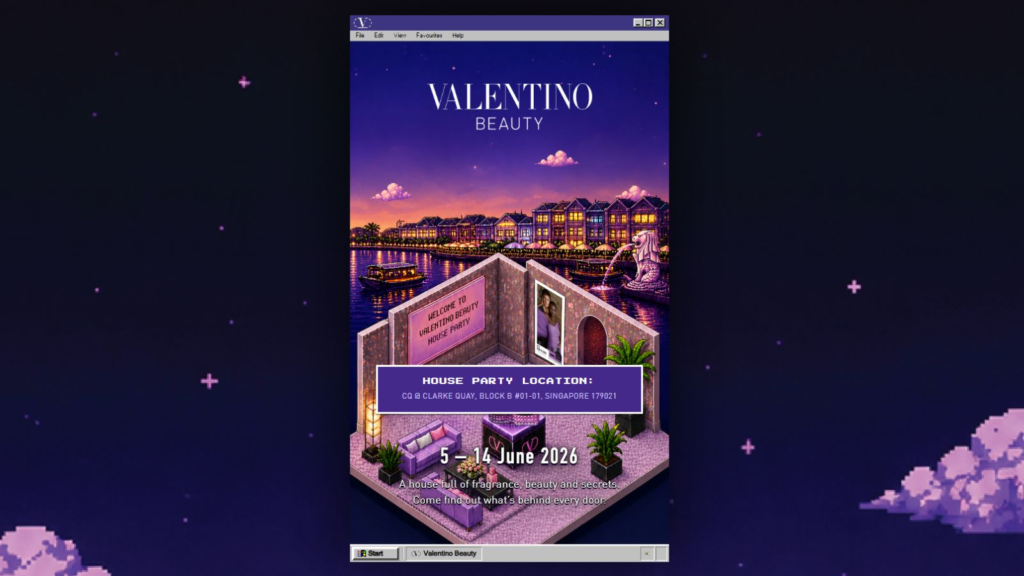
Valentino Beauty is bringing its “Born in Roma” universe to Singapore this June with a “House party” pop-up at CQ @ Clarke Quay, reimagining nostalgia, fragrance and nightlife culture as an immersive brand experience. Running from 5 to 14 June 2026 at CQ @ Clarke Quay, the activation marks the Southeast Asian debut of ‘Born in Roma purple melancholia’. The pop-up follows its global introduction in London and translates the concept through Singapore’s own cultural lens, where memory, music and modern city life collide. At the centre of the experience is a multi-room “House” that reinterprets familiar domestic spaces through a nostalgic 90s and early-2000s lens. Visitors move through the living room, kitchen, teen’s room and master bedroom, each layered with retro broadcast textures, scent moments and beauty touchpoints. The concept positions nostalgia not as sentimentality, but as a creative trigger for self-expression and reinvention. Don’t miss: How luxury pop-ups are redefining exclusivity  “House party” activation during London Fashion Week 2026 The launch introduces the new fragrance duo to the region. ‘Born in Roma purple melancholia Donna’ is built on plum and Madagascar vanilla, while ‘Uomo’ blends cardamom and coconut over an ambery woody base. Together, the scents reframe melancholia as a space for imagination and creative depth rather than absence. Beauty sits within the environment rather than beside it. Valentino Beauty’s makeup icons, including the ‘Spike lip’ (disco balm, matte and dew shine), ‘Colour crush blush’, ‘Go-cushion glow’ and ‘V-filter powder’, are integrated into the rooms, encouraging visitors to experiment and build looks as they move through the space. The activation also leans into music-led culture moments. Two DJ sessions will take place on 6 and 13 June, transforming the space into a day-to-night social experience with regional guest DJs. Entry is complimentary via registration on Eventbrite, with time-slot ticketing due to capacity limits. Beyond fragrance and beauty, the brand is extending the experience through local collaborations. Birds of Paradise is translating the scent profiles into artisanal ice cream, Equate Coffee is introducing a bespoke drinks menu, and Concocted Affairs is serving cocktails and mocktails inspired by the collection’s mood. The pop-up runs daily from 11am to 8pm on weekdays and Sundays, and 11am to 11pm on Saturdays. Valentino Beauty said the “House party” is designed to explore “legendary nights and the emotional power of gathering”, positioning the home as a space where beauty, culture and emotion intersect. Luxury beauty brands have increasingly turned to immersive pop-ups to deepen storytelling and drive discovery beyond traditional retail environments, particularly within fragrance where emotion, memory and sensory interaction play a central role. From themed cafés to gamified installations and social-first spaces, brands are leaning into experiential formats that blur beauty, culture and entertainment to create longer-lasting consumer engagement. One recent example came from Marc Jacobs Fragrances, which launched an experiential pop-up in Singapore in April for its Daisy Marc Jacobs x Takashi Murakami collaboration. Held at 265 Beach Road, the activation transformed the fragrance collection into a multi-zone sensory playground featuring colour-coded scent rooms, bottle-painting stations, themed treats, claw machines and blind-box discovery experiences. The campaign extended the collaboration’s pop-art visual identity into a physical retail space designed around play, immersion and social sharing. Related articles:   How Coach is winning over Gen Z one experience at a time Luxury goes pop: How music videos are the new catwalks for high fashion brands   Louis Vuitton unveils exclusive Murakami pop-up in Singapore  source

Why is Valentino Beauty throwing a house party? Read More »

Marriott Bonvoy checks Singaporeans into an endless staycation loop

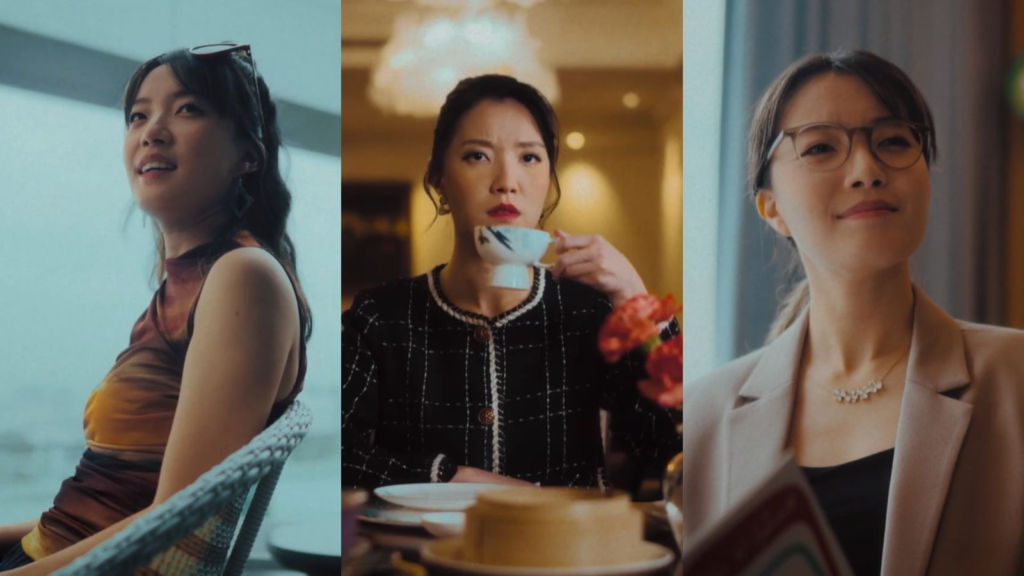
Marriott Bonvoy has launched a three-episode comedy series, in collaboration with creative agency :Teeth, as the hospitality group looks to reposition staycations as an everyday lifestyle choice rather than a once-in-a-while indulgence. Titled “The never-ending staycation”, the campaign was built around the insight that while staycations are already embedded in Singapore culture, they are often reserved for birthdays, anniversaries or special milestones. Through the series, Marriott Bonvoy aims to show there is always another reason to check in, with 19 participating hotels across Singapore. The campaign stars singer-songwriter Annette Lee, who takes on three recurring roles throughout the series: Tiffany, a part-time influencer; Mei Lin, a busy mother; and Sharon, a retired aunty. Don’t miss: Marriott Bonvoy hits the fast lane with F1’s Mercedes team in star-studded travel series Across the episodes, the characters repeatedly cross paths at different hotels while awkwardly attempting to explain why they are back for yet another staycation. Each character was designed to reflect different motivations behind local staycations. Tiffany uses them for self-care, friendships and relationship time, while Mei Lin turns to them to reconnect with family and escape daily routines. Meanwhile, Sharon embraces staycations as a way to celebrate herself, enjoy good food and spend time people-watching without needing a major occasion. Filming took place across Courtyard by Marriott Singapore Novena, JW Marriott Hotel Singapore South Beach and The Singapore EDITION, with each property representing different styles of escape ranging from family-friendly to urban luxury. Rather than centring the series on individual hotel brands, the campaign positions the wider Marriott Bonvoy portfolio as offering different experiences for different moods and occasions. The hero content is being distributed through Lee’s personal social channels, supported by trailers, key visuals and short-form cutdowns across Marriott Bonvoy’s own platforms. The campaign has also expanded into a consumer activation at Frasers House, a Luxury Collection Hotel, Singapore through “The never-ending staycation giveaway”. Consumers can enter through Instagram by following the property, tagging two friends and sharing their reasons for wanting a staycation. Fifteen winners will receive a two-night stay, while another 15 will receive dining vouchers for Man Fu Yuan, Luce and The Lobby Lounge Afternoon Tea. “We didn’t want to simply tell people there are 19 hotels to choose from,” said Mikey Batt, creative director at :Teeth. “We wanted to give them characters, stories and reasons to keep watching. The idea behind the campaign is that one great stay is never the full story. So instead of making one ad, we made a series.” The latest push comes as Marriott Bonvoy continues to sharpen its positioning around everyday travel experiences. Earlier this year, Marriott International teamed up with BBH Singapore to launch an Asia Pacific campaign titled “Loyalty’s just that easy“. The campaign aimed to reposition Marriott Bonvoy’s loyalty programme as simple and accessible for all travellers, rather than being reserved for frequent flyers or business travellers. It also highlighted how consumers could earn points through everyday experiences such as hotel stays, dining and spa visits. At the centre of the campaign was a hero film following an everyday traveller discovering Marriott Bonvoy for the first time and realising that even small moments of relaxation could earn loyalty points. Related articles: Marriott Bonvoy celebrates the art of wine and food pairing across HK   Marriott Bonvoy, Bank Mandiri launch Indonesia’s first co-branded travel credit card   Marriott Bonvoy pours local pride into travelling coffee rave source

Marriott Bonvoy checks Singaporeans into an endless staycation loop Read More »