marketing interactive

Xiaohongshu Business outlines three major outbound travel trends at the Singapore Outbound Tourism Forum

The 2026 Xiaohongshu Business x Singapore Outbound Tourism Forum was convened in Singapore, bringing together representatives of the Singapore Tourism Board, senior executives from the global cultural tourism sector, and Xiaohongshu’s marketing leadership to examine sustainable growth opportunities within China’s outbound travel market. The forum addressed the structural transformation of consumer demand and travel behaviour, positioning data-driven collaboration as a pathway for industry growth across the Asia Pacific region. From landmark tourism to interest-driven travel: A structural shift in consumer behaviour In the post-pandemic period, Chinese outbound travel has undergone a fundamental shift in consumer behaviour, with traveller preferences evolving beyond traditional destination-based planning. Platform data indicates that more than 130 million users engage monthly to discuss and plan international travel, with over 90% conducting targeted searches for specific information, including accommodation options, family travel guidance, and itinerary planning upon arrival (data source: Xiaohongshu Data Center, January–December 2025). Interest has also emerged as the primary determinant of travel decisions, reflecting a broader transition in user behaviour from destination-centric planning to interest-led exploration. Tim Zhang, general manager of Xiaohongshu’s commercial cross-border and internet industry group, characterised the approach of younger travellers as an experiential discovery – approaching each destination as a unique experience to be explored rather than a predetermined itinerary. A growing proportion of travellers return to the same destination repeatedly, motivated by emotional attachments and personal connections. Concurrently, another segment seeks immersive experiences beyond conventional sightseeing, favouring extended stays that facilitate deeper engagement with local communities. Singapore: A converging destination for diverse travel motivations Singapore has emerged as a destination that satisfies all three of these distinct traveller motivations. Dodo Kwong, regional head of Xiaohongshu’s commercial cross-border, Asia and the Middle East, presented data indicating that one in three Chinese visitors to Singapore first discovered the destination through content on Xiaohongshu. The decision-making cycle from the initial discovery to a confirmed booking continues to accelerate (data source: Xiaohongshu Data Center, January–December 2025). Analysis indicates that consumer decision timelines have shortened significantly, with users transitioning from content consumption to trip confirmation at an accelerating rate. Platform search behaviour for Singapore has shifted substantially from conventional travel guide content towards demand for authentic and locally rooted experiences. This evolution presents a substantive opportunity for the development of new travel product categories, including curated local experiences, extended residential-format stays, and wellness-oriented slow travel, all of which offer potential for co-development with industry partners. The “Colour walk” trend, which encourages urban exploration through colour-themed itineraries, has gained significant traction on the platform. Singapore’s multicultural neighbourhoods and tropical environment provide a particularly suitable setting for this form of engagement. Complemented by a robust calendar of international events and cultural performances, Singapore is transitioning from a single-visit destination to a market that consistently attracts repeat visitors from China. At the forum, Sisi Lai, strategy head of Xiaohongshu’s commercial cross-border, introduced the “2026 Singapore outbound travel marketing three-step strategy”, which establishes a structured marketing framework for Singapore and the wider Asia Pacific market. Step one: Pre-decision engagement – establish brand presence among high-intent traveller segments through targeted and multi-channel communications prior to the final travel decision-making. Step two: Destination positioning – develop signature campaigns to clearly associate Singapore as a defined lifestyle proposition that delivers experiential outcomes. Step three: Performance-driven growth – implement measurement and optimisation frameworks for content-led demand generation. Continuous data feedback enables the progressive refinement of a campaign’s performance. The forum reinforced the strategic partnership between Xiaohongshu Business and the Singapore Tourism Board and established a framework for sustained growth across the Asia Pacific outbound travel sector. As traveller expectations continue to exceed current market supply, future growth will depend upon rigorous demand analysis and the strategic development of emerging travel categories. This article is done in collaboration with Xiaohongshu. source

Xiaohongshu Business outlines three major outbound travel trends at the Singapore Outbound Tourism Forum Read More »

APAC brands lead on AI ambition, but execution can’t keep up with hype

Asia Pacific consumers are warming to agentic AI faster than brands may be ready for, but a widening trust and execution gap is threatening to slow down adoption at scale. New Adobe research shows that while 42% of consumers in Asia Pacific are willing to interact with a brand’s AI agent, and more than half are already using AI for personalised recommendations and customer support, expectations around transparency and human fallback remain firmly in place. The findings, drawn from the “Adobe 2026 AI and digital trends report”, suggest the region is approaching a tipping point in AI-driven customer experience, where enthusiasm for automation is rising but comfort is conditional. More than half of consumers (53%) are already using AI tools to search for personalised product recommendations, while 48% rely on AI for instant customer service or support. A further 42% say they are open to shopping via a virtual AI concierge, underscoring how AI is increasingly embedded in everyday purchasing journeys. Don’t miss: The AI performance boom is real, but it’s trapped in search and social  However, trust remains a critical constraint. While 47% of consumers say they do not care whether a brand uses AI as long as their needs are met, 38% say they would stop engaging if they discovered they were speaking to AI when expecting a human. In addition, 70% say AI-driven interactions should still feel human rather than robotic, and the ability to switch to a human at any time is the most important reassurance for 26% of respondents. The report also points to a growing disconnect between consumers and organisations on how AI success is defined. While consumers prioritise trust, transparency and usefulness, many brands continue to measure success through efficiency gains and cost savings, signalling a potential misalignment in expectations as AI becomes more embedded in customer experience strategies. On the enterprise side, adoption of agentic AI remains in its early stages. Just 14% of brands in Asia Pacific have embedded agentic AI across customer support functions, while 12% have done so in brand discovery and search. Despite this, ambition remains high. More than a third of organisations are prioritising emerging technologies such as agentic AI over more established AI deployments, with 75% saying generative AI has already improved content speed and production, particularly in enabling non-creative teams to produce content. Yet scaling remains a challenge, with 74% of organisations citing data integration and quality as a key barrier to adoption. Only 46% say their data quality and accessibility is adequate for AI use, while less than half report having a shared customer data platform capable of supporting agentic AI. Attention constraints are also reshaping urgency around adoption, with the report finding that consumers give brands just two to five seconds to capture their attention, while 17% make engagement decisions in under two seconds. Regionally, adoption patterns vary. India shows the strongest consumer appetite for agentic AI, with 58% comfortable with agent-to-agent interactions, significantly outpacing both regional and organisational expectations. Singapore, meanwhile, is taking a more cautious, governance-led approach, with only 33% of consumers comfortable with agent-to-agent interactions but stronger internal alignment than regional peers.  Australia and New Zealand lead in identifying practical AI use cases, but continue to face execution challenges linked to data and alignment gaps. Adobe said the findings highlight a pivotal moment for brands as they move from experimentation to scale, but warned that success will depend on trust, transparency and stronger data foundations rather than AI capability alone. As Duncan Egan, vice president of enterprise marketing, Asia Pacific and Japan at Adobe puts it, while AI is already improving experience delivery and content production, most organisations still need to build the governance and orchestration capabilities required to scale agentic AI responsibly across markets. “Consumer behaviours are shifting across Asia Pacific, with AI already rising in brand discovery and now set to play a greater role in purchasing journeys. Many consumers are comfortable with agentic AI, but say adoption relies on defined, transparent contexts with options for human support,” said Egan.  Against this backdrop, wider consumer research from Accenture suggests the stakes for brands are rising further as AI reshapes not just how experiences are delivered, but how relationships with brands are formed. The report found that consumers are increasingly turning to generative AI for recommendations and advice, with some describing it as a “good friend”, while active users now rely on AI as a primary purchase recommendation source ahead of social media and online marketplaces. It also found that a growing share of consumers would switch preferred brands if another makes them feel more valued, underscoring how emotional resonance, trust and relevance are becoming central to loyalty in an AI-mediated discovery landscape. Related articles:  AI adoption still stuck at the starting line for most firms in Singapore  AI use rises, but so do trust demands from Singaporeans AI momentum builds across Southeast Asia, but gaps persist  source

APAC brands lead on AI ambition, but execution can’t keep up with hype Read More »

Maker Lab elevates Intan Mokhnar to CEO

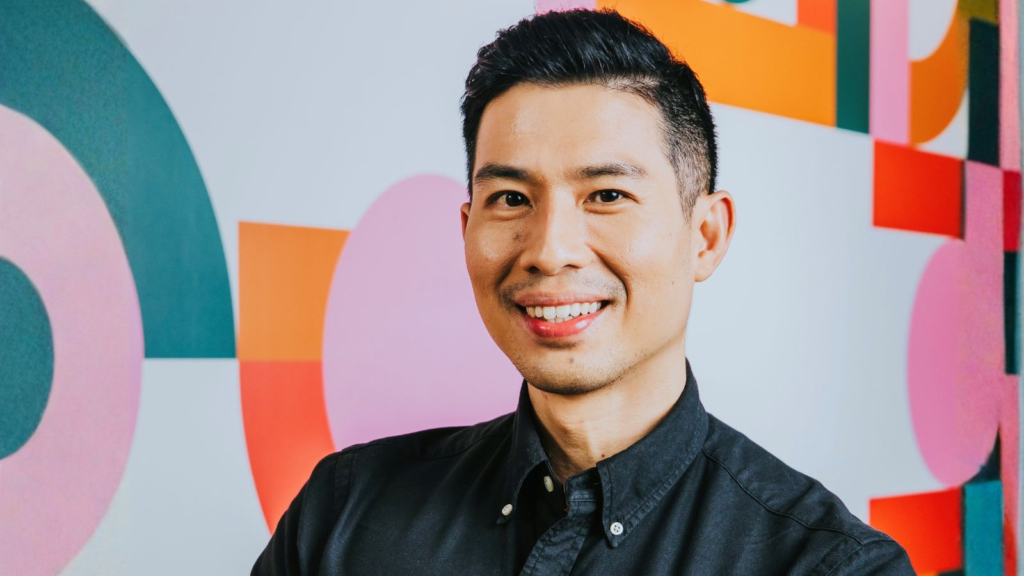
Maker Lab, the in-housing partner and lead AI agency for Miroma Group, has elevated Intan Mokhnar (pictured) to chief executive officer. As CEO, Intan will continue to oversee overall business operations and drive growth across Maker Lab’s client portfolio. Intan steps into the CEO role after a three-year tenure as managing director, during which the agency expanded its client portfolio and deepened its embedded model with global brands. Under her leadership, Maker Lab secured new business wins including KFC Singapore, Grab, P&G, Samsung and Nike, while extending existing partnerships with clients such as Google and YouTube. Prior to joining Maker Lab, Intan was senior consultant at Ebiquity, managing director at Jones Knowles Ritchie and managing director at BBDO Indonesia. Don’t miss: Koto launches SG hub in SEA push, names APAC growth director In tandem, founder and former CEO Matt Shoult has been elevated to executive chairman, where he will focus on long-term strategic direction as the agency scales its embedded operating model amid rising demand for in-housing and AI-enabled workflows. “Since Intan joined Maker Lab, we’ve seen a material step change in the business, in how we operate, the strength of our client relationships, and the pace at which we’re growing,” said Shoult. “What stands out is a rare combination of authenticity and commercial judgement. There is a deep understanding of both the work and the business behind it, and a clear ability to build the conditions for teams to perform at their best.” Shoult added that Maker Lab has always been about embedded teams delivering real outcomes, and that Intan has pushed that model further than he thought possible. “I’m stepping into this role with a leadership team I trust deeply, and with Shoult’s continued partnership. That’s what gives me confidence in what we’ll build next. Our focus is simple: stay close to our clients, stay sharp in how we operate, and keep finding new ways to create value,” said Intan. She added that the agency’s strength lies in its proximity to clients. “The Maker Lab difference is in our proximity to the work. We’re not advising from the outside. We’re sat with the clients, accountable, and much closer to the decisions and outcomes that matter.” The leadership transition comes as Maker Lab enters its next phase of growth, with rising demand for embedded teams, AI-enabled workflows and more accountable marketing delivery models. Looking ahead, the agency will continue scaling its in-housing model while developing AI-powered systems to help brands move faster and operate closer to culture. Earlier in January, the Singapore Tourism Board also renewed its two-year contract with the agency. Under the renewed contract, Maker Lab will continue to deliver end-to-end social media services for Visit Singapore, spanning content creation, community management and social performance analysis. The work will be handled by an embedded social team supported by Maker Lab’s proprietary AI tools and workflows, aimed at accelerating delivery and improving creative output. The renewal follows a period of strong performance across Visit Singapore’s digital channels, including TikTok, Instagram and YouTube. Since the partnership began in 2024, Maker Lab’s remit has expanded from creative production to full-scale social content operations, anchored by an in-house team of creators. Related articles: McCann Singapore names new CEO as Paul Soon exits Monks’ Munas van Boonstra moves on from SEA MD role Havas Play Singapore names new general manager, CEO Kenny Yap exits source

Maker Lab elevates Intan Mokhnar to CEO Read More »

TEAM LEWIS opens new Singapore creative studio, expands sector focus

Global marketing agency TEAM LEWIS has opened a new Singapore office at Orchard Gateway @ Emerald, alongside the expansion of new practice areas including defence, energy and healthcare. Located on level seven of the building, the approximately 6,000 sq ft office houses a new creative studio featuring a 5.4m by 2.8m LED wall. The move marks the agency’s second studio investment in the region following its Kuala Lumpur office. The Singapore office is also home to the Pacific Creative Hub (PCH), TEAM LEWIS’ regional production team specialising in creative design, UI/UX, website development and video production. The hub supports the agency’s global client base. Don’t miss: TEAM LEWIS launches Sino Global Practice to steer Chinese brands overseas According to the agency, the investment is part of its broader push to strengthen its creative and AI-driven campaign capabilities. TEAM LEWIS added that its network of studios across global markets enables a “follow-the-sun” model, allowing teams to collaborate across different time zones. The new office also includes multiple meeting rooms and floor-to-ceiling windows, with additional space to support future team expansion. For over a decade, TEAM LEWIS has operated in Singapore, offering services spanning research and analytics, public relations, creative, social media, digital marketing, brand reputation, corporate communications and crisis management. The agency’s Singapore client roster includes Audi Singapore, CapitaLand, Pizza Hut and Sport Singapore. “This new Singapore office is a major step forward for our team and clients. With a purpose-built creative studio, we can collaborate faster, produce at a higher level, and bring integrated ideas to life under one roof,” said Pamela Tor Das, VP of TEAM LEWIS Singapore and emerging markets. She added, “Just as importantly, it strengthens how we operate across the region and we continue to deepen our capabilities and investment in Indonesia, where we see strong momentum and growing demand. This move reflects our ambition to expand our talent, broaden our specialist vertical expertise, and deliver more impact for brands that want to lead in a fast-changing landscape.” In tandem, Keso Kendall, SVP of TEAM LEWIS APAC, said, “As we open the doors to our new Singapore office, we’re making a clear statement about the future we’re building in APAC. This space is designed for the way modern communications works fast, visual, content-led and always-on.” “With a state-of-the-art studio at its core, it’s a tangible investment in creativity and craft, so we can create, produce and amplify standout work for our clients, in real time. Just as importantly, the additional capacity gives us room to scale our global practice areas from Singapore as a regional hub,” she added.  The Singapore office opening also comes amid TEAM LEWIS’ broader regional expansion efforts. Earlier this year, the agency opened a representative office in Jakarta, marking its sixth market in Asia-Pacific and strengthening its presence across the region. The Indonesia office complements TEAM LEWIS’ existing operations in Kuala Lumpur, Hong Kong, Beijing and Sydney, alongside its regional headquarters in Singapore. The move followed the agency’s Shenzhen expansion and will see the Jakarta team focus on sectors including sustainability and energy, enterprise technology, consumer technology and food security. Related articles: TEAM LEWIS taps Havas exec to lead new media buying division, expands creative firepower TEAM LEWIS Singapore names new directorTEAM LEWIS scores a hat-trick of global technology wins source

TEAM LEWIS opens new Singapore creative studio, expands sector focus Read More »

How CHAGEE is making tea worth reading

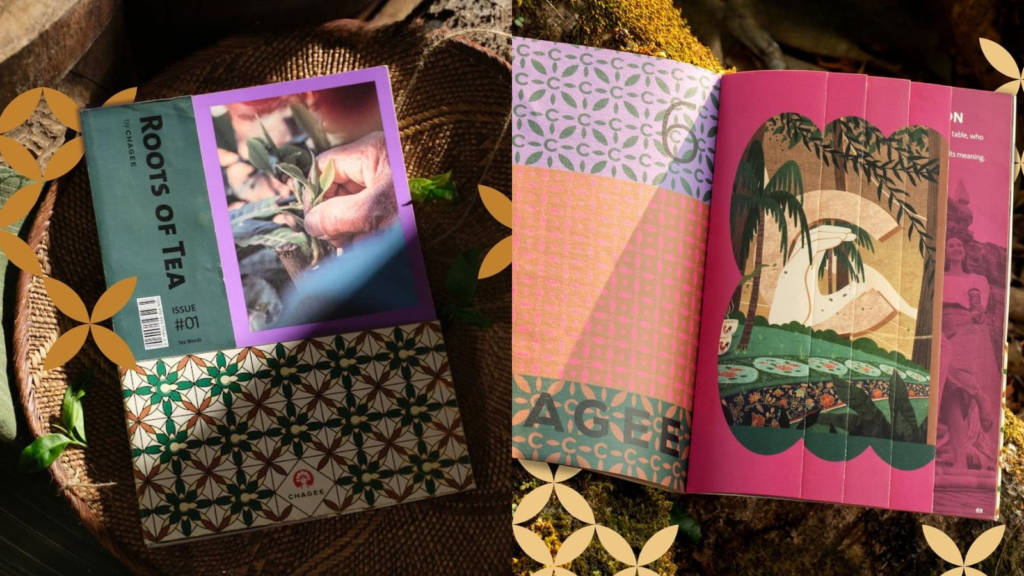
CHAGEE is stepping beyond beverages into cultural publishing with the launch of a limited-edition magazine, Roots of Tea, unveiled in conjunction with International Tea Day. Positioned as more than a brand brochure, the publication frames tea as a cultural artefact shaped by centuries of trade, tradition and shifting lifestyles. Released on 21 May, it traces tea’s journey from the Ancient Tea Horse Road to modern-day rituals across Asia and beyond, blending heritage storytelling with contemporary consumption. Simeng Li, director of branding and marketing at CHAGEE APAC, said the magazine was designed to bring people closer to tea in a more meaningful way. “More than a brand publication, it is an invitation to see tea not just as a drink, but as something woven into land, culture, livelihood, and everyday life across different parts of the world,” she said. She added that the intent was to deepen appreciation for the origins and people behind every cup. “Every cup of tea carries thousands of years of heritage and the journeys of countless people across mountains, trade routes, and generations. We wanted readers to walk away with a deeper appreciation of where tea comes from, and what it means to the people who grow, craft, and share it.” Don’t miss: Content360: How CHAGEE replaces traditional media with content ecosystems  For CHAGEE, the idea emerged organically from its broader brand philosophy. As the brand expands beyond China, Li said there is a growing responsibility to carry tea culture with it. “Tea has travelled across mountains and borders for thousands of years, connecting people and cultures along the way, and we see ourselves as part of that continuing story,” she said. “We wanted to tell it properly, to trace how tea travels from ancient forests and trade routes all the way into the cup you hold in your hand. International Tea Day felt like the right moment to do that.” Rather than adopting a product-led approach, Roots of Tea is structured as a curated editorial experience, moving through tea-growing regions across Asia, from the ancient forests of Jingmai and the Tea Horse Road to landscapes in Vietnam, Thailand, Malaysia, Indonesia, South Korea and China. It also breaks down the six major tea types and explores how tea culture manifests differently across markets, from Malaysia’s teh tarik to British afternoon tea and China’s Pu’er traditions. A more reflective section, titled ‘Harmony’, features conversations with artists and creatives on how tea informs their practice and daily lives, while another highlights the story behind CHAGEE’s BO-YA Jasmine Green Milk Tea and its traditional scenting process. The magazine was released on 21 May via the CHAGEE app, redeemable using 1,000 Tea Leaves points, with a digital version also available through the platform. Physical copies are being distributed across selected experiential touchpoints including CHAGEE Orchardgateway, VivoCity, Pagoda House, and the Asian Civilisations Museum, where it anchors part of the brand’s wider International Tea Day activation. Beyond Singapore, copies are also available at partner bookstores across Malaysia, Thailand, South Korea and China, while select editions were showcased at the LA Art Book Fair, signalling the brand’s ambition to position tea within global cultural and creative spaces. The launch is supported by a multi-layered campaign that extends the magazine into a wider ecosystem of engagement, including merchandise bundles, digital quizzes and experiential workshops. CHAGEE also introduced limited-edition bundles such as the Tea Icons Keychain Bundle and Tea Roots Mini Tumbler Bundle, pairing beverages with collectible items as part of its push into lifestyle-led consumption. A daily quiz running from 15 to 21 May on the CHAGEE app allowed users to unlock vouchers by answering tea-related cultural questions, adding a gamified layer to the campaign. At the experiential level, CHA masters hosted immersive workshops at the Asian Civilisations Museum pop-up store, where participants took part in guided tastings and blending sessions, creating personalised tea sachets to take home alongside exclusive merchandise. Entry was redeemable via 5,000 Tea Leaves points, with limited slots across multiple sessions from 21 to 23 May. CHAGEE’s magazine launch and experiential activations form part of a broader shift towards participatory brand building, where consumers are invited to move between content, culture and creation. From editorial storytelling through Roots of tea to hands-on workshops and product co-creation, the brand is increasingly treating tea culture as something to be read, experienced and shaped with its community rather than simply consumed. This approach is also reflected in its “First harvest matcha series” rollout in Malaysia, where consumers were invited to influence product development through social media feedback and in-store QR code voting, ultimately shaping the relaunch of “Matcha 2.0” with a more intense flavour profile tailored to local preferences. Related articles:  Digital-native CHAGEE bets on localisation to crack the Philippines’ experience economy   Ex-foodpanda MY marketing director joins CHAGEE to lead user ops CHAGEE’s Indonesia playbook: scaling tea culture across Jakarta and Bali   source

How CHAGEE is making tea worth reading Read More »

Samsonite taps ex-Meta marketer as VP for marketing, APAC and Middle East

Samsonite has appointed Richard Que as vice president for marketing, APAC and Middle East, as the company looks to deepen regional growth and strengthen its digital and brand capabilities across key markets. In the role, Que will lead Samsonite’s regional marketing efforts across Asia Pacific and the Middle East, overseeing brand and product marketing, digital and performance strategies, CRM, and media across all APAC markets. He will report directly to Subrata Dutta, president, APAC and Middle East, with a dotted line to the company’s global marketing and eCommerce leadership. Speaking with MARKETING-INTERACTIVE, Que said his primary objective is to lead Samsonite’s regional marketing efforts as a strategic growth engine for the company’s portfolio, while delivering commercial performance and building long-term brand equity across the region. Don’t miss: UOB Bank taps former Lazada CMO Marcus Chew to lead retail marketing  Among his priorities in the new role are driving commercial performance through data-driven insights and performance marketing, strengthening the positioning of Samsonite’s brand portfolio, and delivering “a seamless, world-class customer experience across all digital touchpoints”. Que also said he aims to enhance go-to-market operating models to encourage stronger collaboration between global strategy and local market execution, while championing innovative marketing and product storytelling that resonates with the cultural nuances of the APAC and Middle East markets. Que joins Samsonite after more than four years at Meta, where he served as head of marketing for SMB and partners in APAC, driving growth through AI-powered product roadmaps and scaled performance marketing initiatives. Before Meta, he held senior leadership roles at Lazada, Hilton, L’Oréal and Procter & Gamble, leading global and regional brand portfolios across APAC, the US and international markets.  Commenting on his appointment, Dutta said: “As we set out to fill up this important position, we were looking for a person who has worked in both the conventional marketing environment as also in the new age of digital communication.” “Que, with his rich experience and credentials, suited the role the best. We are delighted to have him join the senior leadership team,” Dutta added.  According to Que, the move to Samsonite represented an opportunity to return to the world of consumer goods and travel lifestyle. “While my time at Meta was transformative in terms of leading at the intersection of technology and marketing, I was drawn to the challenge of applying those digital-first, data-driven strategies to a tangible, global leader such as Samsonite,” he said. The appointment is part of what Samsonite described as a strategic evolution in its regional leadership structure, aimed at further integrating global brand strategy with regional commercial execution as it expands its digital and eCommerce capabilities. Que added that he will serve as “the key conduit between Samsonite’s global brand strategy and regional execution”, ensuring campaigns maintain global consistency while achieving maximum local market relevance. He added that Samsonite’s strategic focus on the APAC region and commitment to digital modernisation made the role the perfect next step in his career journey. “These are incredibly dynamic markets with immense cultural and commercial diversity. My focus will be on navigating this complexity to strengthen Samsonite’s leadership and capture growth opportunities across these territories,” he said. “I look forward to working with Dutta and the entire regional team to build on Samsonite’s legacy and drive our next chapter of growth,” added Que. The appointment comes amid a wave of senior marketing leadership moves across the region. Earlier this month, Tim Hortons named Minjoo Lee-Zeitler as its new director of marketing for APAC, as the Canadian coffee chain looks to deepen its presence and grow brand relevance across the region. In the role, Lee-Zeitler will lead brand strategy, consumer marketing and product innovation across APAC markets including China, South Korea, Singapore, Malaysia, Thailand and Pakistan, while overseeing overall marketing performance and advising franchise partners on growth opportunities. At the same time, KFC appointed Tuck Wai Yue as head of eCommerce, loyalty and digital for South Asia. In the newly created role, Tuck will support KFC’s Southeast Asian markets with a focus on digital, CRM and loyalty initiatives, which he described as key business accelerators for the brand.  Related articles:  Can your luggage defy gravity? Samsonite tries to   Samsonite, dentsu turn discarded luggage into noise-reducing panels for schools This pet fish just hitched a ride on a Samsonite suitcase for a campaign  source

Samsonite taps ex-Meta marketer as VP for marketing, APAC and Middle East Read More »

Partipost faces creator backlash over alleged payment delays across SEA

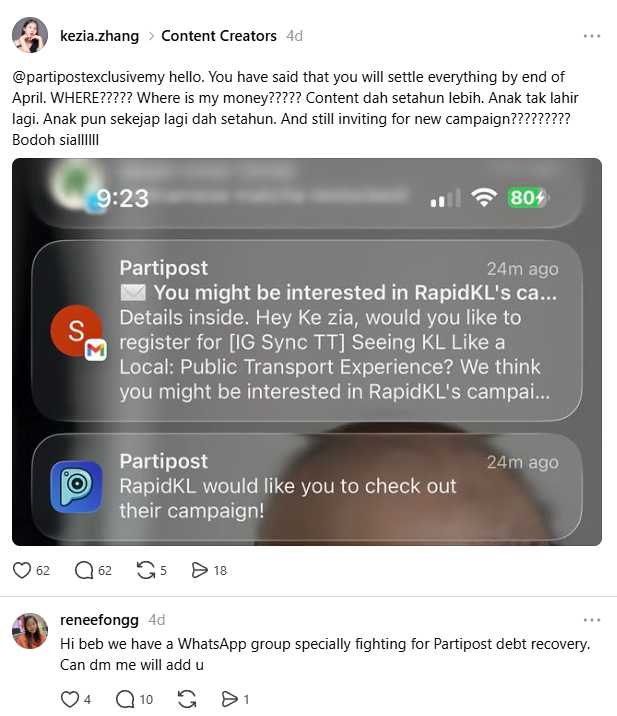
Singapore-based influencer marketing platform Partipost has come under fire after content creators across Southeast Asia accused the company of delaying payments, with some outstanding dues allegedly dating back to 2024. MARKETING-INTERACTIVE first became aware of the situation last week when Malaysian content creator Kezia Zhang made a public post on Threads seeking payment she claimed was due in April. According to Zhang, the campaign she participated in had taken place a year earlier. Despite the alleged non-payment, she said she was later invited to participate in another campaign by the platform. Responses to Zhang’s post revealed similar complaints from other Malaysian influencers, with a WhatsApp group reportedly formed to discuss recovery of unpaid fees from Partipost. Don’t miss: BrandTok founder issues statement, SMEs want ‘taking of accountability’ not just ‘talking’ In Singapore, content creator Deborah Kwek also shared her experience via Instagram Stories. Screenshots of the posts were later circulated online and within group chats involving micro-influencers and UGC creators in Singapore. In screenshots seen by MARKETING-INTERACTIVE, Kwek alleged that the influencer marketing platform had “refused to pay” her full invoice despite work being completed in September 2025. She further claimed the company only began making payment after legal action was threatened. “I contemplated sharing this, but I really feel like creators need to be protected. We’re in this weird industry where we do months of work without real guarantee we will get paid and it’s all based on promises with clients or agencies we thought we could trust,” wrote Kwek. MARKETING-INTERACTIVE has reached out to Kwek for a statement.  Meanwhile, a creator in the Philippines who goes by the handle @Mimirykat also publicly appealed to Partipost to release payment for a campaign completed in 2025. “This matter is extremely urgent for me, especially since my children are currently sick and I am relying on the earnings from the completed campaigns,” the creator said. “The prolonged non-payment is not only unfair but has also caused significant distress, not just for me but for many other content creators who are experiencing the same issue. We have honoured our commitments and deadlines, and we expect the same level of professionalism and accountability from your company. If this issue is not resolved immediately, we will be left with no choice but to pursue appropriate legal action to claim what is rightfully due to us,” the post added. Separately, checks by MARKETING-INTERACTIVE found that Partipost’s Instagram account appears to have been deleted or removed. When contacted by MARKETING-INTERACTIVE, Jonathan Eg, founder and CEO of Partipost, acknowledged that some creators had experienced payout delays, but maintained that the company does not intentionally withhold payments for completed and approved work. “Partipost acknowledges that there have been cases where creator payouts were delayed beyond our usual timelines, and we understand the frustration this has caused affected creators. Our standard payment process requires deliverables to be completed and approved, alongside internal verification and finance processing procedures. Payment timelines are communicated upfront within the platform before creators accept campaign,” said Eg.  Eg said that at times, there is a high volume of enquiries from creators, particularly as the company works with “thousands of micro and nano influencers across the region”. “While response times may occasionally take longer than expected, we do work to address each case individually. Our commitment remains the same: creators who successfully fulfil campaign requirements are entitled to payment for approved work. While there have been delays in certain cases, the reasons vary from case to case, including operational, administrative, and client-side processing factors. However, we have not withheld payment for legitimate completed work,” he added.  Additionally, the CEO also said creators may continue receiving new campaign invitations even if previous payment issues remain unresolved, as campaign management and payout processing are handled through separate operational workflows. “We have formal support and escalation channels in place for payout-related matters, including in-app support and local market teams. Campaign invitations and payout processing are managed through separate operational workflows, which is why creators may continue receiving campaign opportunities while earlier payment matters are still being resolved,” explained Eg.  “To address late payment concerns, we have strengthened internal finance processes, improved coordination across teams, and prioritised the resolution of outstanding cases. These operational improvements are ongoing as we continue working to improve payout reliability and creator experience,” Eg added. The scrutiny comes amid wider conversations in the creator economy around payment reliability and operational accountability within influencer-led and boutique digital agencies. In a separate but comparable case earlier this year, clients of marketing agency BrandTok Media also took to social media to allege undelivered content, refund disputes and unpaid commitments.  In response, BrandTok founder Noor Hidayat Samion, also known as Sam Heedy, apologised to affected clients, freelancers and partners, stating that the company had “failed operationally” due to rapid scaling, weak systems and internal disruption. He denied allegations of intentional misconduct, stressing that the issues were not an attempt to withhold client funds. He added that while the company accepted responsibility for operational shortcomings, it was not “hiding behind excuses”, and said efforts were being made to stabilise operations and rebuild trust through more careful project commitments moving forward. Related articles:    Creative agency founder calls out Pizza Hut Singapore over ‘OG’ campaign concept  Bobby’s Burgers’ KL opening: Why influencer F&B’s are fast becoming a trend  Is bigger no longer better in the APAC influencer scene?  source

Partipost faces creator backlash over alleged payment delays across SEA Read More »

Koto launches SG hub in SEA push, names APAC growth director

Global creative studio Koto has opened a Singapore studio, appointing Mark Teal (pictured) as growth director, APAC, as it steps up its Southeast Asia expansion. The Singapore office marks Koto’s seventh globally and its second in Asia Pacific, following its Sydney launch in 2023. It will act as the studio’s Southeast Asia hub as the company looks to deepen its presence in one of the region’s fastest-growing digital markets. Since entering APAC, Koto has already worked with Singapore-based brands including fintech company Coda and Riot Games’ League of Legends, which the studio pointed to as early proof of the region’s appetite for ambitious brand building. Don’t miss: TEAM LEWIS opens new Singapore creative studio, expands sector focus  Teal joins to lead Koto’s growth strategy across APAC, bringing more than two decades of experience across brand strategy, marketing technology and customer experience. He has held senior roles across Singtel, Standard Chartered and Prudential, and most recently served as CMO at VCCP Singapore as well as in client growth leadership roles at Wunderman Thompson. His earlier career includes stints at Ogilvy & Mather, DigitasLBi, Mezzo Labs and Geometry Global. “With over 4,000 regional headquarters and over 30 unicorns, a digital economy worth SG$128 billion, Singapore isn’t just a market; it’s where the most ambitious companies make their brand decisions for Southeast Asia,” said Teal. “These companies need a partner that can handle the full picture – brand, digital experience and campaigns – not just one piece of it. That’s exactly where we sit, and it’s a space very few studios here can confidently claim,” he added.  Damian Borchok, managing director, APAC at Koto, said Singapore was a natural next step for the studio’s regional strategy. “Singapore was always part of the plan as it’s one of the most connected cities in ASEAN and the base from which regional ambitions are built. The brands here are increasingly thinking globally, and they need partners who can match that ambition,” he said. In tandem, James Greenfield, CEO of Koto, said Singapore had long been part of the studio’s global growth ambitions. “Koto has always wanted to work with the world’s best brands in the world’s best cities. Singapore has long been one of those cities for us, so opening here is a big moment. Working with brands such as Coda and Riot Games showed us there’s a real energy and ambition here that feels very aligned with Koto. Bringing Mark on board is an important step in building Koto’s long-term presence in the region,” added Greenfield.  Founded in 2015 by Caroline Matthews, James Greenfield and Jowey Roden, Koto has grown from a three-person London studio into a global team of more than 160 people, with offices in Berlin, London, Los Angeles, New York and Sydney. Its client roster includes Amazon, Google, JP Morgan, Lyft, Meta, Mars, Microsoft, Netflix, Tripadvisor and WhatsApp. Related articles:      McCann Singapore names new CEO as Paul Soon exits MAG International opens Singapore hub to deepen APAC push Monks’ Munas van Boonstra moves on from SEA MD role   source

Koto launches SG hub in SEA push, names APAC growth director Read More »

GYG exits US market to refocus on Australia, Singapore and Japan

Guzman y Gomez will exit the US market and close its Chicago restaurants with immediate effect, after deciding the business was unlikely to deliver the performance needed to justify further investment. The ASX-listed Mexican fast-food chain said its US operations had made progress on brand building, guest experience and operational standards, but financial performance had not met its targets. Founder and co-CEO Steven Marks said the decision followed three months spent in the US assessing the business. “I have always been confident in the differentiation of our food and guest experience, however this was not translating to an improvement in sales momentum. Having spent the last 3 months in the US, I realised this was going to take significantly more time and capital than we had expected,” Marks said. SEE MORE: Claire West steps up as GYG global CMO “In assessing the trajectory of the current network, the Board and I have concluded that the business is unlikely to deliver the performance that would justify continued investment of shareholder capital.” The move shifts attention back to Australia, where GYG said its business remains in a strong position with solid growth, strong unit economics and a significant pipeline of future restaurant sites. The company remains on track to open 32 restaurants in Australia this financial year and expects to deliver Australia Segment underlying EBITDA of about $85 million in FY26, representing 29% growth on the prior year. Marks said concentrating capital and infrastructure behind the Australian opportunity was the clearest path to long-term value creation. “We have a long runway ahead of us in Australia as we progress towards our long-term target of 1,000 restaurants and segment underlying EBITDA as a percentage of network sales of 10%,” Marks said. “Concentrating our capital, focus and infrastructure behind this opportunity is the most effective way to compound shareholder value over the long-term.” GYG said the US exit does not change its belief in the global appeal of the brand, but signals a more disciplined approach to international expansion. The company pointed to Singapore and Japan as stronger examples of its international model, where master franchise partners continue to deliver sales growth and healthy unit economics. Both markets are planning new restaurant openings in the next 12 months, with Singapore opening its 24th restaurant earlier this week. “We are very proud of our international partners in Singapore and Japan and see substantial growth ahead in each market. Beyond Singapore and Japan, we continue to believe there will be the right opportunities, in the right markets, with the right models,” Marks said. “When those opportunities arrive, we will be ready. Today’s decision is about the US specifically, it is not a statement about GYG’s global potential.” The US exit is expected to result in a one-off profit and loss impact of between US$30 million and US$40 million in GYG’s 2026 full year results, subject to audit review. The cash component of the exit costs is not expected to exceed US$15 million and includes lease liabilities, employee costs, contractual commitments and other exit costs. GYG said the one-off items are not expected to affect its final dividend for FY26. The company’s buyback program will remain active, with its blackout period now starting from the close of ASX trading on 30 June 2026. source

GYG exits US market to refocus on Australia, Singapore and Japan Read More »

Comfort or ambition? UOB explores life’s tough choices

UOB has launched its new brand campaign, “Make tomorrow yours”, anchored by a film titled Homecoming that explores the emotional tension between returning to familiarity and choosing long-term ambition. Created with BBH Singapore, the film follows Eli, a young man returning home after completing his overseas studies. His homecoming is filled with warmth and familiarity as his family welcomes him back with a shared meal, laughter, and a sense of togetherness. But beneath the comfort of being home, Eli grapples with a difficult decision about his next step. While his family celebrates his return, it becomes clear that Eli is preparing to leave again. Only this time it’s for a job opportunity in London. The emotional centre of the film comes when his mother, sensing his hesitation, gently acknowledges the choice he is about to make. Although she wishes he could stay closer to home, she encourages him to pursue his ambitions and do what is right for his future. Don’t miss: UOB Bank taps former Lazada CMO Marcus Chew to lead retail marketing The film positions the idea that meaningful progress often requires stepping away from comfort, even when it is emotionally difficult. “Sometimes the most powerful stories come from the simplest and most familiar moments. On the surface, this is a homecoming story. But at its heart, it’s about growth – and what that asks of us,” said Janson Choo, executive creative director at BBH Singapore. Sivea Pascale, outgoing managing director of group retail marketing at UOB, said the campaign reflects a core belief within the bank. “The right way forward isn’t always the easiest. But meaningful progress often comes from being able to look beyond the present to do the right thing. It’s a mindset we deeply believe in at UOB,” she said. The campaign marks a repositioning of UOB’s personal financial services and will serve as the unifying theme across future strategic campaigns designed to support customers’ life aspirations. Beginning in Singapore and Malaysia, “Make tomorrow yours” will roll out progressively across Indonesia, Thailand and Vietnam as part of UOB’s wider regional marketing push.’ The new brand campaign builds on the spirit of UOB’s earlier “Make TMRW yours” platform for its UOB TMRW app, which positioned the bank as a partner in helping customers turn aspirations into reality by treating each day as an opportunity to build a better tomorrow. The 2024 short film, titled “Take charge of today”, follows a woman named Jessica through a full day shaped by ambition and intention. She begins her morning at her bakery, before heading to a gym session. Her day continues with a teppanyaki dinner and concludes with her taking the stage at a live gig. Through Jessica’s journey, the campaign reinforced UOB TMRW’s positioning as a digital companion designed to support customers in actively shaping both their present decisions and future goals. Related articles:  UOB flexes its ‘financial fitness’ push in cinematic short  UOB head of strategic comms steps down, moves into social services  UOB lights up city skyline with world-record projection show for SG60 and 90th year  source

Comfort or ambition? UOB explores life’s tough choices Read More »