The Next Web TNW

The EU’s €2T budget overlooks a key tech pillar: Open source

On July 16, the European Commission proposed a €2tn seven-year budget – the largest in the EU’s history – to boost autonomy, competitiveness, and resilience. The spending plan addresses cybersecurity, innovation, and other key digital pillars, but omits a crucial component: open source. Open source software – built and maintained by communities rather than private companies alone, and free to edit and modify – is the foundation of today’s digital infrastructure. Since the 1990s, it has been ever-present in the digital infrastructure that European industry and public sector institutions depend on, creating huge dependencies on open source applications and libraries. From commercial devices and services to government systems and research projects, open source powers the internet and countless platforms we rely on daily. Open source offers transparency, security, and flexibility that proprietary software cannot match. By investing in open source, Europe can support small businesses, universities, and public institutions, giving them tools to compete with global tech giants. Despite this importance, the budget proposal does not include specific funding for open source. This is glaring given the prominence open source has been given in recent legislation,  such as the Cyber Resilience Act, the AI Act, and the proposed Cloud and AI Development Act. The omission is alarming as Europe pushes to increase digital sovereignty, strengthen cybersecurity, and boost competitiveness. If Europe wants to remain competitive and self-sufficient in the digital world, it must support open source strategically and efficiently. Public-led investment must marshal resources that the private sector, philanthropy, volunteers, and the market alone cannot provide. TNW City Coworking space – Where your best work happens A workspace designed for growth, collaboration, and endless networking opportunities in the heart of tech. The case for an EU Sovereign Tech Fund Innovation funding at the grassroots level has been the foundation of the EU’s modest levels of open source investment. As a result, the focus has shifted to scaling up these technologies into core digital infrastructure. Maintenance funding offers something different, and it’s already been trialled. In a recent landmark report, the open technologies think tank OpenForum Europe called for a dedicated “EU Sovereign Tech Fund” to support European technology projects essential for digital sovereignty — with open source at its heart. This builds on the German Sovereign Tech Fund, which has supported global open source collaboration. A fund like this would be welcome. Without investment in open source, Europe risks dependence on foreign technologies, vulnerability to external threats, and minimal competitiveness in global markets. Open source enables Europe to develop its own tech infrastructure, providing greater control, transparency, and security. This is not an isolationist version of digital sovereignty; it is an investment in the autonomy and resilience of digital infrastructure globally. It has long-term benefits for Europe, but it also supports other challengers to dominant technology visions offered by the United States — centred on platform monopolies and market-driven control of core digital infrastructure — and by China – where state-directed, centralised models prioritise surveillance and tight government oversight. By contrast, Europe’s open source approach offers a pluralistic and collaborative alternative that emphasises transparency, interoperability, and public value, and investing in the global open source ecosystem it depends on is in line with these values. A missed opportunity in the European Competitiveness Fund The proposed European Competitiveness Fund – one of the EU’s main financial tools under its new budget – does not prioritise open source as a strategic investment area, either at the high level or in detailed actions like digitalisation. This is a serious omission. As the fund is designed to support innovation and digitalisation across Europe, leaving out open source is a glaring but reversible oversight. Any absence of open source funding will come to be seen as short-sighted, undermining Europe’s digital transformation in an increasingly multipolar and crowded geopolitical landscape. EU leaders should prioritise open source in their new seven-year budget by explicitly making it a component of the European Competitiveness Fund‘s digitalisation focus. Creating an EU Sovereign Tech Fund, alongside other earmarked investments in open source, will be critical in delivering on their goals. This is an opinion piece by Daniel Stenberg, the co-founder and lead developer of cURL, a command-line tool for getting or sending data, including files, using URL syntax. Daniel is also president of the European Open Source Academy. source

The EU’s €2T budget overlooks a key tech pillar: Open source Read More »

How European battery startups can thrive alongside Asian giants

The global battery market is experiencing unprecedented growth, with projections showing the sector will reach $400bn by 2030. Yet European entrepreneurs often feel locked out, watching Chinese giants like CATL dominate headlines with record-breaking IPOs while homegrown champions like Northvolt file for bankruptcy, exposing the harsh realities of competing against established Asian supply chains. Still,  Europe will never be entirely independent in green energy and will want to cooperate with Asia. Yet the continent has strong demand for on-shoring supply, including green power and critical manufacturing.  There are also genuine competitive advantages available to European green battery startups: proximity to end users, a deep understanding of regulatory requirements, and the ability to move quickly on specialised applications. The question isn’t whether you can build batteries cheaper than China — it’s whether you can build better solutions for specific European needs. My company, alterity, found a profitable niche in batteries to power forklifts, lifting platforms, and mobile robots that operate in industrial facilities. Other startups can find their niche, too. These are our tips for developing a scalable green battery business. 1. Target specialised niches rather than competing on scale Identify high-value applications where innovation and environmental compliance matter more than unit cost. You could find them in the aerospace, defence, marine, offshore wind, and medical device industries. They all have a high demand for batteries, alongside stringent manufacturing and regulatory requirements that favour European manufacturers.  TNW City Coworking space – Where your best work happens A workspace designed for growth, collaboration, and endless networking opportunities in the heart of tech. Data centres represent another market where European companies may have an advantage. As hyperscale operators face increasing pressure to meet carbon neutrality commitments, they’re seeking suppliers who can demonstrate 15-20% CO2 reduction potential in manufacturing and other sustainability benefits. 2. Use EU regulatory requirements as differentiation tools Turn compliance into a competitive moat by aligning with the Critical Raw Materials Act, EU Battery Regulation 2023/1542, and sustainability reporting rules that Asian mass producers may struggle to meet. Building these capabilities into your core operations from day one creates sustainable differentiation that becomes increasingly valuable as regulations tighten. Develop expertise in lifecycle carbon footprint calculations, sustainable material sourcing documentation, and end-of-life recycling processes. What starts as compliance becomes a competitive advantage when multinational corporations need suppliers who can navigate European regulatory complexity while demonstrating quantifiable environmental impact. 3. Leverage EU circular economy principles as a competitive advantage European customers increasingly evaluate suppliers based on total environmental impact, not upfront costs. This shift creates opportunities for manufacturers who can measure material recovery rates and lithium waste reduction through advanced recycling technologies and closed-loop systems. Companies that can achieve superior material recovery rates while quantifying environmental benefits will find themselves with sustainable competitive advantages as raw material costs continue rising globally. 4. Pursue industrial partnerships and European innovation ecosystems Europe offers world-class industrial clusters that Asian competitors can’t easily access. Engage with collaborative projects, partner with local research institutions, participate in EU Horizon Europe programs, and tap into regional development funds explicitly designed to support strategic technology development. Consider the advantages of locating within established industrial ecosystems where you can access specialised talent, testing facilities, and potential customers within the same region. For my company, support from the Government of Biscay in northern Spain was key to building momentum in our early development and connecting with the region’s broader green tech cluster. Also, our involvement in PERTE (Strategic Project for Economic Recovery and Transformation) and other collaborative projects helped us to push technological boundaries while staying aligned with environmental policy. 5. Focus on total lifecycle value rather than upfront costs While Asian manufacturers optimise for unit production costs, European companies can compete on durability, recyclability, and regulatory compliance. Develop proprietary battery management systems with advanced thermal management and optimisation technologies that deliver superior performance across multiple use cycles. Many companies that need batteries care more about avoiding downtime than minimising initial purchase costs. A battery that costs 30% more upfront but delivers 50% longer service life with predictable maintenance schedules becomes an easy purchasing decision for industrial buyers. The path forward Success requires discipline. Avoid the temptation to chase large commodity markets, where you’ll inevitably lose on price. Instead, focus relentlessly on applications where your European location, regulatory expertise, and ability to provide specialised solutions create genuine value that customers will pay for. The goal isn’t to replace Asian suppliers entirely, but to build resilient companies that can work alongside Asian giants, rather than compete directly on their terms. European production is very likely to cover at least 50–60% of the domestic demand by 2030. Market projections suggest European companies could capture 25-30% of the specialised industrial battery market by 2030 through technological differentiation and regulatory advantages. By focusing on our strengths, we will create resilient companies that can work alongside Asian providers. Together, we can produce the best green energy storage structure for Europe. source

How European battery startups can thrive alongside Asian giants Read More »

Why resilience is the most underrated metric in startup success

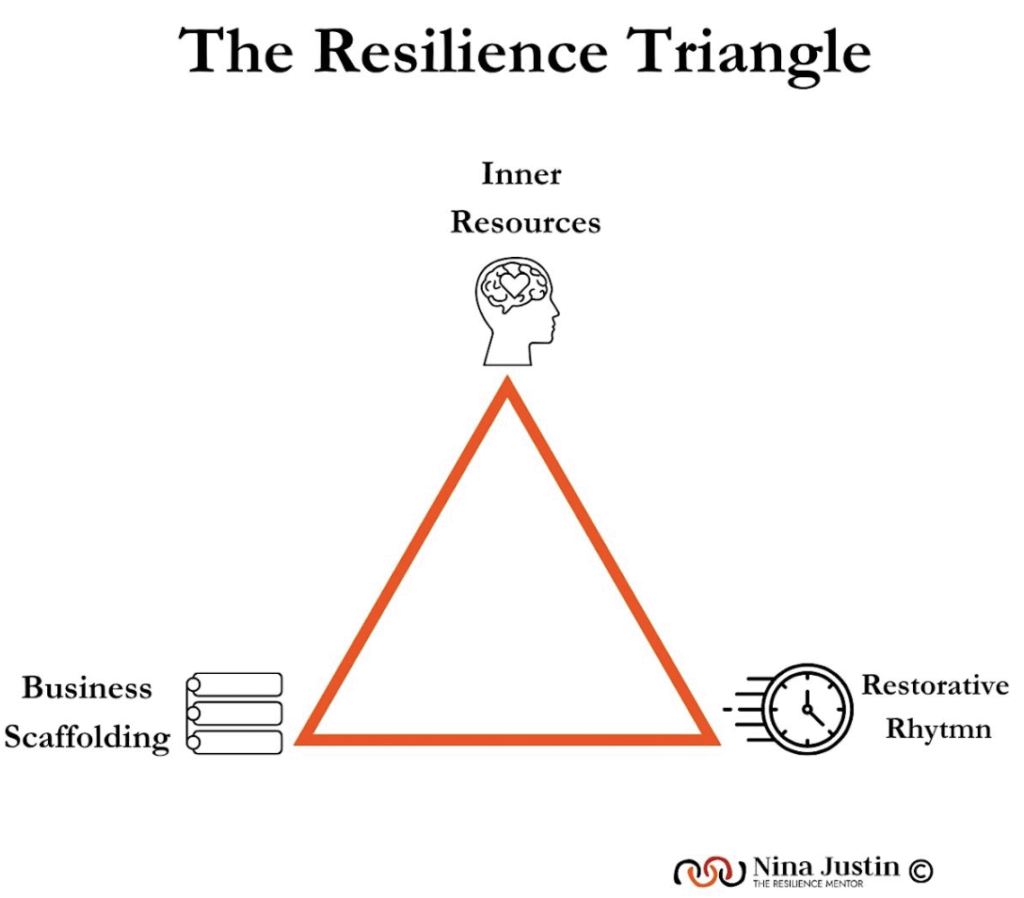
Startup wisdom is a new TNW series offering practical lessons from experts who’ve helped build great companies. This week, global traction strategist Nina Aziz Justin — founder of The Resilience Mentor — shares her approach to building resilience. In the startup world, we’re taught to obsess over metrics. Burn rate, CAC, MRR — they dominate the dashboards and drive the decisions. And yes, data matters. But there’s something quietly more essential that rarely gets the same spotlight: resilience. This piece offers a balanced perspective — one that holds space for both sides. While execution metrics are essential for traction and scale, resilience isn’t just a soft skill. It’s a core operating system — the invisible force that allows a founder to keep showing up, building wisely, and navigating uncertainty with strength and clarity. The case for metrics: why data absolutely matters Let’s be clear: in today’s fast-moving, high-stakes environment, numbers count. Metrics help us validate our ideas, measure momentum, and make informed decisions. They’re how investors assess risk, and how we as founders understand whether our vision is actually landing in the real world. You need to know your CAC. You need to track churn. You need a pulse on retention and cash flow. These aren’t vanity stats — they’re the lifeblood of your business’s sustainability. TNW City Coworking space – Where your best work happens A workspace designed for growth, collaboration, and endless networking opportunities in the heart of tech. But here’s the rub: strong metrics alone don’t guarantee staying power. Time and again, I’ve seen startups with impressive early numbers unravel because of what was happening inside — misaligned founders, decision fatigue, burnout, or simply the loss of joy and vision. That’s why real traction must include more than what’s on the spreadsheet. The power of resilience: it’s more than just grit Resilience is often mistaken for blind persistence — powering through, grinding harder, staying “strong.” But in truth, resilience is more elegant and multidimensional than that. In my work, I use a proprietary concept I developed call the “Resilience Triangle” — a way to build resilience from the inside out. It weaves together three vital threads: Inner resources — emotional regulation, clarity of identity, and the ability to stay grounded through highs and lows. Business scaffolding — systems that support you: smart offers, sustainable pricing, clear time boundaries, and a support circle that has your back. Restorative rhythm — recovery, reflection, and recalibration. Because nonstop hustle without pause leads to erosion, not excellence. This isn’t just philosophical. A 2023 Harvard Business Review study found that startups led by resilience-conscious founders were 38% more likely to survive beyond five years. A McKinsey global survey linked resilience-building to a 21% increase in innovation outcomes. Most compelling of all is the 2024 Founder Resilience Research Report. Produced by Foundology in collaboration with UCL School of Management and supported by Enterprise Educators UK, the report offers powerful confirmation of what many of us have experienced in the field.  The study — the largest of its kind, involving nearly 400 entrepreneurs — revealed that a striking 92% of founders rank resilience as the most essential entrepreneurial trait, even ahead of communication and problem-solving. It reminds us that resilience isn’t just a feel-good factor — it’s a proven, practical lever for startup success. Resilience and execution: not opposites — but intertwined Here’s where we bridge the gap. Resilience isn’t the opposite of execution — it’s what fuels effective execution over time. Founders who cultivate resilience make decisions more clearly, recover from setbacks faster, and hold focus amidst pressure. That 92% figure from the Foundology study speaks volumes — resilience is no longer optional, it’s foundational. The two aren’t in conflict — they’re co-dependent. Metrics tell the story. Resilience allows you to keep writing the next chapter. Let’s talk about the common critiques “Resilience without execution = stagnation”True. But that’s not the kind of resilience I’m talking about. Real resilience moves — it experiments, learns, and adapts. Especially in scrappy, underfunded startups, it’s often the only reason a founder finds creative workarounds instead of quitting. “Not every founder needs to be emotionally balanced”Fair — not everyone leads from a place of calm. But those who lack resilience are four times more likely to feel overwhelmed, and twice as likely to exit their startup early. Emotional chaos may be survivable in the short term — but it rarely scales. “Resilience is a byproduct, not a leading indicator”Actually, it’s both. Yes, resilience is forged in the fire — but it can also be proactively cultivated. Teams that intentionally build resilience are more responsive, more resourceful, and less likely to fall apart under pressure. “Market conditions, not mindset, determine success”External factors matter, absolutely. But it’s the resilient founders who adapt fastest, pivot wisely, and find ways to survive when others stall. In today’s polycrisis world, mindset is strategy. A more balanced lens: metrics + resilience = real traction We’re seeing a shift — a new generation of investors and advisors are beginning to assess both execution metrics and human metrics. Not to be fluffy, but to avoid betting on businesses with glossy numbers and crumbling foundations. Resilience, adaptability, and founder alignment are now seen as risk-reducing assets — and rightly so. They don’t replace the numbers. But they give the numbers meaning that lasts. Want to start strengthening resilience in your business? Here are some simple, high-impact places to begin: Schedule time to rest and recalibrate. Think of it as business hygiene. Align your offers and pricing with your energy, not just the market. Build a tribe. Not just advisors, but humans who lift you and challenge you. Revisit your model. Is your business still a match for the life you want to live? These are not soft things. They are strategic. The business that can hold you can hold more This isn’t a call to abandon metrics. It’s an invitation to expand what we count. The startups that thrive don’t just execute well — they

Why resilience is the most underrated metric in startup success Read More »

How robotics could turn e-waste into a tech goldmine

E-waste has become a global problem. Unfortunately, the majority of discarded used technology, known as e-waste, is dumped or processed in unsafe conditions. Around 78% of electronic products aren’t properly recycled — and the garbage pile keeps growing. In 2024, the world churned out 1.22 billion smartphones. Add this to the billions of TVs, laptops, and computers, and what we have is a saturated market that fuels a throwaway cycle.  A United Nations report forecasts that e-waste will grow to 80 million tonnes by 2030. “That’s enough to fill 1.5 million 40-ton trucks, which could circle the planet,” says Eric Ingebretsen, Chief Commercial Officer at SK Tes, which runs 40 global IT Asset Disposition (ITAD) sites and processes hundreds of millions of pounds of electronics annually.  Clearly, the world urgently needs e-waste projects that can reverse the global situation — while driving business.   A Danish robotic solution At the Danish Technological Institute, researchers are building an AI-driven robotic system that could help tackle e-waste while scaling, modernising, and empowering the tech refurbishment industry.   TNW City Coworking space – Where your best work happens A workspace designed for growth, collaboration, and endless networking opportunities in the heart of tech. TNW received a demo of the project from Mikkel Labori Olsen, a consultant in robotics technology at the institute and researcher on the RoboSAPIENS project, which aims to make robot-human interaction safer. His team is developing a robot that automates laptop refurbishment, creating a revenue stream while reducing e-waste.  The system is equipped with a robotic arm, a dedicated toolbox, and a camera. It’s trained to replace laptop screens — a manual and time-consuming task that local businesses struggle to find workers for due to the tedious processes involved, Olsen said.  Olsen and his team have already trained the robot to replace screens of two laptop models and their submodels. They’re now hard at work to expand the robot’s screen disassembly capabilities to more laptop models and brands.  The robot combines AI and visual recognition to adapt to different laptop types, remove the plastic protectors, unscrew the screens, and carefully remove them. A recent video showcases it in action.   “We can drastically reduce waste if instead of throwing a perfectly useful laptop out, we just change the screen and then sell it again,” says Olsen. The business value of e-waste Depending on the region, laptop model, and other circumstances, a refurbished laptop can be sold for about €200, while the material value of a recycled laptop — obtained by grinding down the entire device — is only about €10, says Olsen. “The essence is that by changing a few components, and especially a few simple components, you can make a lot of value from it instead of just selling the recycled components,” he adds.  However, training the AI that powers systems such as Olsen’s is challenging. If the robot encounters unexpected events that weren’t in its data set, it may struggle to complete tasks. Even small details like different colours of screws could require new AI training to expand the data set on which the system relies.  These unexpected events are the reason why robotic systems in the technology recycling industry must include humans-in-the-loop, says Olsen. They could address any problems the robot flags.   Why is e-waste an untapped billion-dollar industry? The value of e-waste is incredibly high. A tonne of discarded smartphones yields more gold than a tonne of mined gold ore, according to a report by the Astute Group.  “In addition to gold, components like copper, silver, palladium, and rare earth metals are critical for manufacturing the technology hardware that the world demands,” says Ingebretsen from SK Tes.  However, most of the e-waste is never recovered. But why aren’t the tech industry or other sectors tapping into this market? According to Olsen, the field is yet to be recognised globally as one with significant value. However, companies are slowly waking up to the potential of e-waste robotic recycling.  Another factor holding back the technology is cost. “Robots and automation are expensive and complex”, says Olsen.  An additional challenge is the overwhelming diversity of hardware, components, devices, model variations, and states of e-waste products when they’re found This causes issues when building robotic systems that can adapt to different e-waste devices without hitting snags. AI that can do this is highly advanced and largely still in research and development.  Modern tech problems — and solutions As technology becomes more compact, manufacturers are radically changing how they build devices. They often glue components together instead of using screws, making disassembly and recycling without damaging components very difficult.   Despite these challenges, Olsen is optimistic. He’s impressed by the progress being made by local, European, and international companies, which are levelling up their game to either refurbish tech or recycle components.  In Denmark, companies such as Tier 1A, Refurb, and Greenmind show refurbishment can be a scalable business model- “Some of these companies are aiming to refurbish up to 2,000 units per day,” Olsen says.  Olsen and his team plan to continue expanding the capabilities of their robotic system. The goal is for it to recognise many different laptop models and submodels. Ultimately, they want to build a ready-for-production robotic system that supports local Danish tech refurbishment businesses.   His optimism makes sense: robotics is set to reshape the future of e-waste management and reuse. From Denmark to global recycling operations, AI-powered systems are being developed to identify, sort, and dismantle devices with precision.  These robots will enable the automation of hazardous and labour-intensive tasks and enhance safety and efficiency. They’ll also unlock the hidden treasure trove of e-waste. source

How robotics could turn e-waste into a tech goldmine Read More »

Startup wisdom: 5 prompt engineering tips for vibe coding success

Startup wisdom is a new TNW series offering practical lessons from experts who’ve helped build great companies. This week, Dainius Kavoliūnas, head of no-code platform Hostinger Horizons, shares his tips on vibe coding. Vibe coding has become an indispensable tool, especially for entrepreneurial thinkers building apps and platforms for solving everyday problems, streamlining business processes, or enhancing digital experiences. It represents a paradigm shift in software development. Instead of writing lines of code, you can now describe your requirement and have AI bring it to life. Vibe coding is fast, intuitive and opens up a new realm of possibilities where code isn’t just functional, but expressive — bridging the gap between people’s ideas and machine abilities. But like any new tool, getting good results takes some practice. Based on insights from the Hostinger Horizons team and users, here are five practical ways to prompt AI more effectively.  1. Keep prompts short and specific Though vibe coding might seem improvised and freeform, it is still helpful to follow some basic rules to effectively communicate with AI. My foremost advice for prompt engineering is to be concise. Short, clear, and specific prompts consistently yield better results than vague or broad instructions, and being too general is one of the most common rookie mistakes. The 💜 of EU tech The latest rumblings from the EU tech scene, a story from our wise ol’ founder Boris, and some questionable AI art. It’s free, every week, in your inbox. Sign up now! For example, a general command like “Build a website” may produce generic output, while a detailed prompt such as “Create a one-page website for a freelance designer with sections for portfolio, services, and contact form” delivers a more relevant, tailored result.  The inclusion of layout specifications, feature lists, and stylistic preferences further refines output quality. Precision in prompting also minimises ambiguity and reduces the need for excessive revisions later in the workflow. 2. Break down prompts into smaller steps Being specific doesn’t mean overloading the prompt and packing all the instructions into a single command. Testing the approach shows that it’s more effective to break development tasks into a sequence of smaller, interrelated prompts than issuing a single, complex instruction. This stepwise approach allows the AI to focus on specific components, which leads to cleaner code and fewer logical errors. For instance, one prompt might focus on generating the structure for a landing page, while subsequent prompts add styling or functionality. This modular process improves maintainability and makes it easier to identify and correct issues early.  3. Encourage AI to propose improvements The best prompt engineering practices involve using AI not only as a passive output generator but also as an active participant in the development process. Beyond responding to direct commands, generative AI tools can be used as creative collaborators. Prompting the AI to critique, optimise, or propose alternative solutions can uncover more efficient methods or inspire new design directions. For instance, you can ask the AI to suggest features, content, or sections.  4. Test frequently One thing common between traditional and vibe coding is that timely detection and early fixes of errors can save a lot of time later and help build functional applications more quickly. Therefore, I advise testing AI-created projects early and often, using realistic data or practical scenarios. That allows for rapid feedback and continuous refinement. When you ask AI to add a feature — like sending an email notification to someone who fills out a contact form on your website — you should always test that it works as expected. In most cases, the functionality will be implemented correctly, but you may still need to refine the user interface. Occasionally, the feature may not work at all, and you’ll need to give the AI clearer instructions or additional context to get it right. 5. Maintain human oversight While AI accelerates development, human judgment remains essential, especially for solving complex problems, ensuring long-term maintainability, and verifying the quality of the final product. If an AI-generated result is unsatisfactory, revising the prompt or approaching the problem from a new angle often leads to improvement. It’s also advisable to preserve working versions before making significant changes. This provides a fallback point and lets you experiment without losing previous progress. Sometimes, some technical expertise can also be needed — consultation with an experienced developer can help resolve deeper architectural or logic-related challenges.  No team, no skills — no problem Based on feedback from Hostinger Horizons users, these strategies — clear prompting, modular thinking, collaborative refinement, consistent testing, and human oversight — form the backbone of effective AI-assisted coding. As this space evolves, mastering prompt engineering will become a core competency for anyone working with generative development tools.   Take, for example, Prashant Maurya, a 20-year-old student. Without any coding skills and just intuition empowered by AI, he built a set of tools under his own X 247 Project, including an Ads Checker, QR Generator, and Shop Biller. Each took only five to 15 days to build at a fraction of the cost that he would have otherwise incurred if he had gone the traditional way. Over 1,000 users have already tried his tools, built by simply prompting AI.  “As a student with no team, no budget, and just a vision to solve real problems, AI coding tools transformed how I build and launch apps,” Prashant told me. “The availability of free deployment tools and AI-powered assistance made it possible to create multiple powerful platforms quickly and affordably, and now I’m inspired to help others do the same.” The power of AI-powered coding tools doesn’t lie in productivity, but in accessibility. For people like Prashant, vibe coding is breaking down barriers, enabling anyone with a vision to build powerful apps quickly and affordably. But this democratisation hinges on one key skill: writing effective prompts. As building becomes easier, standing out through quality and functionality becomes the new challenge, and it all starts with how you prompt. source

Startup wisdom: 5 prompt engineering tips for vibe coding success Read More »

Europe’s VCs must embrace risk — or resign the AI era to US control

Europe’s AI startups are losing ground to the US — and their own investors are to blame. Only 5% of global venture capital is raised in the EU, according to the European Commission. The US, by contrast, attracts more than half, while China takes 40%. Yet Europe isn’t capital-poor: households save €1.4tn a year, nearly twice as much as in America. Still, very little of that money finds its way into startups, despite a plethora of incentives like the UK’s EIS tax relief for business angels.   Even when funding is available, Europe’s venture capital firms are slow and cautious. Funds spend weeks on diligence and hesitate once valuations rise past $10-15mn. Regulation is often cited as a hindrance, and to some extent, it is. However, American funds backing European startups operate under the same regulatory frameworks, yet their capital keeps flowing freely.  The drag isn’t the law itself. It’s investors who interpret rules conservatively — instead of moving decisively.  Conservatism over conviction European investors have historically avoided risks. Banks, insurers, and pension funds have long dominated the market, driven by capital preservation. In Germany, the Mittelstand mindset — a focus on steady, long-term business — has led family-owned industrial firms to aim for generational stability. While that conservatism has built resilience, it also sets the tone for the capital markets. This cautious approach helps explain why net investment in the country fell by 6.3% between 2019 and 2024. TNW City Coworking space – Where your best work happens A workspace designed for growth, collaboration, and endless networking opportunities in the heart of tech. The venture industry reached Europe later than the US, and when it did, the continent’s funds poured money into e-commerce, fintech, and food delivery. In the case of deeptech, the majority of European VCs simply lacked the expertise — and oftentimes courage — to invest in real breakthroughs. As a result, in the pre-AI era, the most valuable companies here were players like Revolut, Klarna, Delivery Hero, Spotify, Farfetch, Adyen, and N26. All extremely strong businesses, but all relatively straightforward, with product-market fit evident as early as the seed stage.  AI requires heavy upfront costs, particularly in energy, and investors willing to accept uncertainty. Many European funds aren’t prepared for that. They may write a small cheque for an early-stage startup, but often step aside for the following rounds. Lacking the technical conviction to see how early research translates into future markets, they view AI as riskier than it actually is — and pull back. A system built for slowness and caution The other major handicap is speed. European venture deals often crawl at a bureaucrat’s pace. I’ve seen a fund take 40 days to complete diligence on a one-year-old B2B startup that barely had 20 transactions a month. For a founder, that’s frustrating — in Silicon Valley, the same round would have closed in under a week.  The slowness also has cultural roots. Offices often go dark in August — try finding something open in France or Italy — then again over the winter holidays, and on weekends. When you’re fighting to compete in a global market, those gaps matter. The cost of inaction Europe is locking itself out from growth stages and becoming a feeder market, full of promising ideas that turn into American companies.  Numbers back this. In Q2 2025, only $5.7bn went into European growth-stage startups across 75 deals. That’s about 10% of global late-stage venture funding — the smallest share at any stage. Mega-rounds ticked up slightly last year, but they’re still well below the highs of 2021.  Examples abound. Graphcore was once hailed as the UK’s AI-hardware hope and raised over $600 mn, but was acquired in 2024 by SoftBank for roughly the same amount — well below its prior $2bn valuation. In France, Navya, an autonomous shuttle pioneer, filed for receivership in 2023 after struggling to secure follow-on funding. And in Sweden, Uniti, a bold EV bet on urban mobility, went bankrupt when capital dried up. What must change To attain a different outcome, European VCs need to act less like private-equity gatekeepers and more like angel investors. Given the valuations of AI startups, the risk premium associated with these deals may be gone, but taking chances is more productive than sitting on dry powder.  Founders in AI want conviction, flexibility, and cheques that arrive in days instead of months. They want funds that understand that multiple small, bold bets will outperform one slow “perfect” deal that drags on forever. Smaller and mid-sized funds have an advantage here. Free from institutional mandates, they can creatively structure deals — SAFEs, convertibles, secondaries, even hybrids of equity and debt. What matters is the willingness to be agile and seize promising opportunities. Europe’s choice Europe’s AI scene has the talent, the research base, and even the money — even if right now it’s misallocated. What it lacks is urgency. As long as its venture capital ecosystem clings to caution, the best AI startups will keep taking foreign cheques, and with them, the talent and leverage that come with scale. The choice is simple. Either Europe’s investors learn to act at startup speed, or the continent will remain a lab for others to harvest. It can build the next generation of global companies, but only if its capital stack sheds the instinct to hesitate when it matters most. The AI race isn’t waiting, and Europe shouldn’t either. source

Europe’s VCs must embrace risk — or resign the AI era to US control Read More »

VCs are growing wary of ‘AI-washing’ — and backing real innovation

Venture capital investment surged to a 10-quarter high of €108.3bn in Q1 2025, fuelled by artificial intelligence, which accounted for over  €44.6bn raised. In recent years, AI has felt like a money-printing machine. Investors, eager to avoid missing out on the next big thing, were quick to back almost any startup that mentioned AI in their pitch deck. The idea didn’t need to be particularly well-implemented or useful. In some cases, even the illusion of innovation was enough to earn a unicorn valuation. But investors are now wising up to AI-washing. As the CEO of Gradient Labs — an AI customer service platform for highly-regulated industries — I’ve seen investors grow wary of AI-washing: the practice of exaggerating a company’s AI use or capabilities. And understandably so. Because for all its promise, AI comes with plenty of risk. Gartner predicts 40% of agentic AI projects will be cancelled by 2027, while MIT research shows 95% of pilot projects fail. Even Sam Altman, arguably the sector’s biggest beneficiary, has stressed we’re in the middle of an AI bubble. As history shows, these spikes don’t last forever. While AI remains a hot sector, overall VC investment fell by 21% between Q1 and Q2, suggesting the days of easy capital are ending — and startups can no longer rely on buzzwords to stay afloat. Despite the slowdown, I recently led Gradient Labs through a one-week €11.1mn Series A. What did I learn? Rather than worrying about missing out on the gold rush, investors are now focused on whether companies can actually deliver. They don’t want promises, but proof: demos that work, products that sell, and customers who back up lofty claims. Being an “AI-native startup” won’t cut it Sprinkling industry lingo across a pitch deck may have secured a term sheet in the past. But being an “AI-native startup” is no longer a differentiator. That doesn’t mean the opportunity has passed. Most AI companies are pitching in the same space with no standout product or innovative vision — just founders trying to capitalise on the hype. However, investors are becoming increasingly good at spotting AI-washing. The upside is that genuine innovation — products built for a clear, specific use case — shines through. This is especially true when the founder and team genuinely understands the market they’re attempting to serve. For my co-founders and me, it was never about building an AI startup just because it was lucrative. We wanted to solve a problem we had experienced while working at Monzo, a leading UK fintech: highly regulated industries have been locked out of automation by strict compliance requirements. At Gradient Labs, we built a solution to tackle this challenge.  It wasn’t AI for the sake of it; it was AI with a purpose — and that made all the difference in the boardroom. Products should be irreplaceable AI is advancing rapidly, and what feels novel today could be normal tomorrow. You have to consider what makes you stand out, and whether that will still be the case when it comes to pitching your product. How likely is OpenAI to solve the issue with the next release of its GPT model? If the odds are high, you’re going down the wrong path. Our approach was to focus on hiring people with deep expertise, designing something truly different, and proving that it works. We didn’t want to create an agent that gave good information 95% of the time. In highly-regulated industries, even a single mistake can cause reputational damage that is impossible to recover from. We spent 14 months obsessing over the product, not the pitch. Every detail had to be perfect before we went live, and it paid off: the platform consistently outperformed human customer service agents — and customers were genuinely impressed. As a result, we didn’t need to rely on flashy marketing spiel or inflated promises to get the attention of VCs. They could sense the quality, see the metrics, and recognise the category-defining potential. Start building rapport today Product is primary, but who you know makes a difference — especially when distrust is high. We laid the groundwork for months before our funding round, meeting investors and sharing updates. By the time we were ready to pitch, we weren’t just another email landing in an inbox; we were continuing conversations with people who already knew us and our story. For investors, this meant they already had the opportunity to gauge our credentials, verify our claims, and speak to our customers. They knew we were legitimate, and when the time came to invest, they were ready to move.  Not everyone will say yes, but even the noes are valuable. VCs are in the business of networking, and word gets around. The relationships we had built and the trust we had gathered meant many were willing to open doors for us, even if they ultimately passed up the opportunity. That network effect created momentum of its own — lending credibility, sparking urgency, and signalling that what we’re building is worth serious consideration.  The AI boom may be cooling, but founders have nothing to fear. There’s still plenty of capital available — as long as you intend to solve, rather than deceive. source

VCs are growing wary of ‘AI-washing’ — and backing real innovation Read More »

Opinion: Ukraine is becoming a global defence tech powerhouse

The full-scale war has reshaped priorities for Ukraine’s tech sector. Innovative military technologies and advanced defence solutions are not only essential for the country’s security — they’re also among the most promising vectors for business growth. Ukrainian defence tech is tested directly on the battlefield, under the most challenging conditions. These circumstances allow products to prove their effectiveness, attracting interest from international partners, investors, and allied countries looking to strengthen their own defence capabilities. From my position at the heart of Ukraine’s tech ecosystem, I’ve seen how quickly the sector has shifted towards defence — and how global attention is now focusing on our innovations. The need to counter large-scale Russian aggression has sparked a technological boom in the defence tech sphere. Hundreds of young startups have emerged, attracting attention from both Ukrainian and international investors. Over 30 countries have already expressed interest in Ukrainian defence innovations, signalling strong export potential for homegrown technologies. Since the beginning of the full-scale invasion in February 2022, Ukraine’s drone industry has transformed from small volunteer initiatives into a structured and competitive sector. According to a report by DataDriven, drone production surged from 5,000 units in 2022 to 4,000,000 by the end of 2024 — an 800-fold increase. Today, the country has over 500 active drone manufacturers and more than 1,000 drone models, with 80% of the FPV drone segment controlled by four companies. Investments in the drone industry in 2024 exceeded $60mn, with seed rounds typically ranging from $1mn to $3mn. TNW City Coworking space – Where your best work happens A workspace designed for growth, collaboration, and endless networking opportunities in the heart of tech. Since launching in March 2023, the state defence technology cluster Brave1 has registered over 4,600 innovations from more than 2,100 developers. Its members work on strike systems, UAVs, ammunition, and advanced solutions for reconnaissance, cybersecurity, and demining. The cluster has issued more than 600 grants totalling over $52.4mn, effectively acting as the largest “angel investor” for Ukrainian defence innovations. Technologies developed with Brave1 support, such as trench electronic warfare systems, interceptor drones, and logistical unmanned ground vehicles (UGVs), are already changing the course of the war. Brave1 also facilitates NATO-standard codification, battlefield testing, and integration into the Armed Forces. Research by the Kyiv School of Economics and Brave1 shows that investments in Ukraine’s defence tech sector grew from $5mn in 2023 to $50mn in 2024, with the average investment size rising from $500,000 to $1-3mn. The sector’s profit margin is 25%, the highest globally — compared with 17% in NATO countries and 15% in the EU — underscoring the economic attractiveness of Ukrainian defence tech. Ukraine’s rapid rise as a global defence tech powerhouse is not happening in isolation. Key innovations and successful startups need platforms to showcase their solutions, connect with investors, and scale globally. That’s where IT Arena in Lviv — Ukraine’s largest tech event — plays a crucial role. This year, IT Arena will run from September 26 to 28, gathering over 6,000 participants from 30 countries.  At the heart of the event is the Startup Competition, the country’s flagship startup battle and the central stage for cutting-edge innovation — including in defence tech. Many of the defence solutions showcased at the event emerged during the full-scale war, as Ukrainian innovators responded to urgent battlefield needs. Recognising their significance, IT Arena introduced a dedicated defence tech category, giving startups a platform to present their projects, attract funding, and scale globally. Contestants get a unique chance to connect with venture capital firms, business angels, and global investors — and bring Ukraine’s battlefield-tested solutions to international markets. For the third consecutive year, the 2025 Startup Competition participants will compete in two categories: general and defence, the latter focused on defence tech and cybersecurity. Defence tech remains the most competitive category, with 52 applications submitted, reflecting the growing importance of Ukraine’s security-driven innovation. In total, 202 applications were received from both Ukrainian and international teams, including startups from Warsaw, Berlin, Tallinn, Kaunas, Minnesota, Boston, Dundee, and Hong Kong.  With such a diverse pool of participants, the Startup Competition has also become a major draw for investors. This year,  its investment fund has reached a record-breaking $12.5mn, offering significant opportunities for startups to scale.  In 2024, participants raised over $2mn, demonstrating the event’s power as a bridge between Ukrainian innovators and global investors. One standout example is Hard Cat Drones, a startup developing unmanned systems for river and maritime operations. Its kamikaze and reconnaissance drones, tested by the Armed Forces of Ukraine, attracted a strategic investment from Double Tap Investments after being showcased at IT Arena 2024. The competition also draws a diverse roster of investors, from local funds to international VCs, all eager to back Ukraine’s proven defence solutions. The average startup valuation is $5mn, with teams typically seeking $600,000 in investment to fuel growth. Initiatives like IT Arena’s Startup Competition show that Ukrainian tech is not just meeting the urgent demands of war — it can also lead the world in defence innovation. source

Opinion: Ukraine is becoming a global defence tech powerhouse Read More »

Europe’s AI boom is leaving femtech behind

Left unchecked, Europe’s narrow focus on AI investment will come at the health of half its population. As venture capital floods disproportionately into the AI sector, women’s health innovation — the definition of essential infrastructure — is once again left fighting for scraps. In 2021, global femtech investment peaked at €1.89bn before plunging to just €1.1bn the next year, amid a tech funding apocalypse and capital making a headlong dash towards AI. Several factors contributed to this decline — broader market conditions, withering investor risk appetite, and natural sector maturation. But the surge in AI funding coinciding with a plunge in femtech investment highlights serious issues with capital allocation. In 2023, European femtech captured a mere €164mn out of €8.3bn in healthtech funding. Meanwhile, across the pond, US femtech startups have raised €4.5bn since 2019. Unless Europe takes action now, the AI boom could severely compound what is already an acute health crisis — and set us back in a sector we once led globally. Today, 44% of European femtech startups haven’t raised any funding at all, despite projections of a €30bn European femtech market by 2032. The disconnect between opportunity and investment is staggering.  This pattern repeats across the ecosystem. Talented founders with proven solutions for endometriosis, menopause, fertility, and maternal health are being overlooked. These are businesses that have a huge market and offer high returns — yet they struggle to compete for attention with the newest, shiniest general-purpose AI startup that comes across investors’ desks.  The irony is that while AI startups often draw the attention of investors by promising to predict future health problems, femtech founders — who’ve often already diagnosed existing crises and built working solutions — struggle for basic funding. This is far from an anti-AI argument — plenty of us femtech companies are building genuinely useful AI applications for women’s health. Yet investors’ tunnel vision for general-purpose AI platforms leaves specialised healthcare solutions scrambling for leftovers. There’s a human cost here, too. The fact that capital and talent are bypassing femtech isn’t just a missed investment opportunity, but a case of failing women’s health. The average woman with endometriosis waits seven years for a diagnosis. Up to 70% of women with polycystic ovarian syndrome (PCOS) remain undiagnosed worldwide. While these figures reflect a global crisis. European femtech solutions are not only vital for women in Europe — they can scale to address critical issues worldwide. Far from solving these problems, general-purpose AI built without healthcare specialisation often exacerbates them. Research by UNESCO and UN Women, among others, shows that AI and LLMs built on biased data continually perpetuate male-default medical assumptions. This can lead to misdiagnoses, delayed treatment, and years of unnecessary suffering. In 2024, female-only founding teams — who make up a significant proportion of femtech founders — received just 2% of global VC funding, compared to 84% for male-only funding teams. The disparity left critical gaps in women’s healthcare infrastructure. As someone with an all-female senior team who raised one of Europe’s largest-ever early-stage femtech rounds this year, I know firsthand how brutal the current fundraising process is.  Europe’s femtech future Europe has historically been a leader in women’s health innovation, characterised by significant public investment, pioneering startups, and major policy leadership in gender-sensitive healthcare. The region is home to fellow femtech pioneers like Flo Health (UK), Clue (Germany), Natural Cycles (Sweden), and Ava (Switzerland). But this advantage is waning. The AI bubble will continue its unpredictable journey. Femtech, on the other hand — defined as a category of products, services, and software designed to address women’s health and needs — isn’t going anywhere. Europe’s failure to recognise this puts it at risk of falling behind other regions that maintain diversified healthtech investments.  To start fixing the problem, we need a reframing. Recognise that femtech isn’t niche — it serves 50% of the global population. Pitch any other market of 3.9 billion customers and watch VCs stampede. Pitch women’s health to those same investors and watch them check their phones.  More materially, investors need to balance their AI investments with proven healthcare solutions. It’s not just about constructing socially responsible portfolios — there’s a vast, underserved market here just waiting to be unlocked.  That means building funds dedicated to femtech and backing more women-led investment teams, who actually understand the problems at hand. Far from just checking boxes, women-led teams are significantly better at understanding femtech investment opportunities — as noted by UNESCO — offering a familiarity with the sector’s problems and solutions that their male counterparts often lack. The evidence is clear: in Europe, countries with dedicated female angel investor networks see 27% higher early-stage funding rates for women entrepreneurs. Policymakers must also reform R&D funding structures to ensure women’s health receives proportional investment. When public funding flows disproportionately to AI research, it signals that women’s health remains a secondary concern.  Europe can be a leader in both AI and femtech – these are far from mutually exclusive. The goal isn’t to slow AI investment, but to ensure femtech gets its fair share of capital allocation. If femtech isn’t moved from niche to necessity, history shows us it’ll fall by the wayside, as it’s long been critically overlooked, underfunded, and under-researched. Femtech isn’t another bubble waiting to burst — women’s health needs don’t disappear when VCs jump aboard the next hype train. The choice we make now determines whether women will continue to be collateral damage in every new investment frenzy. If Europe continues to ignore femtech, the price won’t just be lost returns. It will be women waiting years for a simple diagnosis, living with untreated conditions, and suffering from problems we already know how to prevent. Although women live longer than men, we spend 25% more of our lives in poor health. That’s a cost investors can’t keep overlooking. source

Europe’s AI boom is leaving femtech behind Read More »

Founders’ takes: Why we need European AI employees

Founders’ takes is a new series featuring expert insights from tech leaders transforming industries with artificial intelligence. In this edition, Lucas Spreiter, founder of German startup Venta AI, shares his vision of AI employees. Artificial intelligence is about to enable the most dramatic shift of the century: the transition from human labour to AI labour. In the coming years, businesses won’t just use AI as a tool — they’ll employ AI as real colleagues, handling critical workflows end-to-end. That shift is inevitable. The real question is: whose employees will we be hiring? If Europe doesn’t catch up with the US and China and build its own AI employees, we could end up outsourcing a major chunk of our economic value creation — or as we Germans call it. Wertschöpfung: the very core of how we produce wealth. State of AI The breakthrough came with OpenAI’s ChatGPT in 2022. It proved that knowledge work could be automated at scale: research, writing, coding, analysis — all suddenly possible by software instead of people. The emergence of AI agents takes these capabilities even further. The 💜 of EU tech The latest rumblings from the EU tech scene, a story from our wise ol’ founder Boris, and some questionable AI art. It’s free, every week, in your inbox. Sign up now! With agents, AI models can not only respond to textual input, but also take over entire tasks. AI today is able to plan, reason, and execute workflows across multiple tools and channels. OpenAI still dominates this field, tightly integrated with Microsoft — but the competition has become fierce. Google has caught up with its Gemini models, Meta with LLaMA and Anthropic with Claude. Still, there is a pattern: the leaders of today’s AI revolution are almost exclusively American tech giants, who not only develop and control the models, but also the infrastructure and workflows that power businesses worldwide. Their biggest challenger comes from the East. China has shown with DeepSeek that it’s possible to catch up — and fast. The system outperformed many Western models on benchmarks while running with radically lower computing costs. Beijing’s heavy state backing ensures that China won’t stay a follower for long. State of Europe Long before ChatGPT became a household name, European researchers laid the groundwork for modern AI. In the late 1980s, Yann LeCun (Université Pierre-et-Marie-Curie, Paris) pioneered Convolutional Neural Networks (CNNs), forming the basis of computer vision and multimodal AI. In 1997, Sepp Hochreiter and Jürgen Schmidhuber (TU Munich) invented Long Short-Term Memory (LSTM) networks, crucial for speech recognition, translation, and NLP. In 2016, London-based DeepMind stunned the world when AlphaGo defeated world champion Lee Sedol, while LMU Munich’s CompVis group, led by Professor Björn Ommer, advanced generative AI, culminating in Stable Diffusion. The paradox is clear: Europe invents, others commercialise. LeCun moved to Meta, DeepMind was acquired by Google, and Stable Diffusion was monetised via Stability AI in London and the US. A new generation of European AI companies is trying to change that. France’s Mistral is staking Europe’s claim to sovereign AI,  building open-source LLMs and enterprise tools like Le Chat that have attracted customers such as AXA and BNP Paribas. Black Forest Labs, spun out of the same LMU team behind Stable Diffusion, builds one of the most powerful image generators — and aims to keep cutting-edge research and commercialisation in Europe. Other startups, like Germany’s Langdock, have taken a different path. Instead of building foundation models themselves, they enable companies to use existing LLMs while keeping the data and workflows in-house. The upcoming rise of AI employees We are only scratching the surface of what AI can do. Today’s models — powerful as they may be — are still early-stage. The real value won’t come from the models themselves, but from how we apply them: automating workflows, streamlining operations, and effectively creating AI employees that can handle complex tasks across businesses. For Europe, this is a golden opportunity. Our industries are highly efficient, with clearly defined, rule-based workflows — exactly the kind of environment where AI thrives. Manufacturing, logistics, finance, insurance, and even customer support have massive potential to be augmented or replaced by AI systems that can follow documented procedures, make decisions, and execute entire processes autonomously. The monetisation upside is enormous. Every workflow that can be automated is a chance to reduce costs, improve speed, and scale operations. And unlike consumer-facing AI hype, this value is tangible: it sits directly in enterprise productivity and efficiency. But the clock is ticking. If Europe doesn’t act now to train, deploy, and integrate AI employees locally, we risk becoming passive consumers. AI labour will be imported from the US, along with the associated value creation. Instead of leading the next industrial revolution, we’ll be paying foreign providers to run our businesses. Europe’s challenge — and its opportunity — is clear: turn its existing industrial advantage into a homegrown AI workforce. The companies that succeed in creating, training, and scaling AI employees here will define the next wave of economic leadership. A first battlefield for AI employees: Sales automation If there’s one field where AI employees are already proving their worth, it’s sales automation. Sales workflows are often highly manual, repetitive, and rule-based — from building lead lists and monitoring markets to drafting outreach emails and even making cold calls. This makes them a natural playground for AI that can follow clear processes and execute tasks at scale. The startup 11x.ai demonstrated the potential — and the risks. Originally from the UK, the team relocated to the US after a $50mn financing round and claimed to have created “digital workers” with “human results” that can automate sales workflows from prospecting to closing deals. They grew rapidly, but their claims drew scrutiny: a TechCrunch investigation highlighted that they struggled with customer retention, leading to the CEO stepping down. Still, their rise illustrates the massive value and speed at which AI can transform sales. But a system like 11x.ai would have a hard time in

Founders’ takes: Why we need European AI employees Read More »