The Next Web TNW

Dalot joins Ronaldo in backing personalised nutrition pioneer Bioniq

Another star footballer has joined a startup’s lineup. Portugal’s Diogo Dalot is the latest recruit, teaming up with compatriot Cristiano Ronaldo to back personalised supplement pioneer Bioniq. Dalot has invested €1mn in the company, which has developed an innovative approach to nutrition. Founded in 2019, Bioniq analyses blood test biomarkers to create customised supplements for athletes. The recipes are created by an algorithm trained on over 6 million biochemical data points. According to Bioniq, the system can generate over 10 million combinations of nutrient granules, each tailored to the specific needs and goals of each customer. Dalot has received his own personalised formula, which he credits for enhancing his performances on the pitch. The 💜 of EU tech The latest rumblings from the EU tech scene, a story from our wise ol’ founder Boris, and some questionable AI art. It’s free, every week, in your inbox. Sign up now! “Since discovering Bioniq in 2022, it’s been a game-changer for me,” he said. “I’ve seen the results for myself.” Dalot’s investment comes just months after a separate cash injection from Ronaldo, which pushed the startup’s valuation to $82mn. Shortly after, Bioniq reported that its total user base had tripled in 2024. A fitness obsessive, Ronaldo raved about Bioniq’s physical benefits. “It’s about aligning with a shared vision for health, performance, and longevity,” he said. “I have been using their products myself for almost three years. With their personalised health approach, I believe Bioniq has the potential to transform how we care for our bodies and help people reach and maintain their peak performance for longer.” Footballers fuel the tech investment boom Dalot and Ronaldo are part of a growing wave of footballers investing in tech. Leading the charge is France forward Kylian Mbappé, whose investment firm, Coalition Capital, recently backed German electronics brand Loewe Technology. Spain’s Gerard Piqué and England’s Rio Ferdinand have also made notable bets. The former Manchester United teammates scored big by investing in NFT trading card game Sorare before it soared to a $4.3bn valuation. Perhaps the busiest investor in the lineup is Mario Götze. The German World Cup winner has backed startups ranging from sports media platform ScorePlay to edtech firm Junto, while also founding the investment vehicle Companion-M. Since scoring the winning goal in the 2014 FIFA World Cup final, Götze’s playing career hasn’t reached the heights once expected — but his business ventures have thrived. For startups, the involvement of footballers offers more than just financial backing. With their fame, fanbases, and industry connections, they can provide powerful platforms for growth. Europe’s investment landscape is a key part of the agenda for TNW Conference, which takes place on June 19-20 in Amsterdam. Tickets for the event are now on sale. To get 30% off, use the code TNWXMEDIA2025 at the check-out. source

Dalot joins Ronaldo in backing personalised nutrition pioneer Bioniq Read More »

Italy freezes Starlink talks as Elon Musk's controversies snowball

Last week, Elon Musk’s Starlink internet service was installed at the White House. A week before that, Donald Trump promoted Tesla on the White House front lawn, after rallying people to buy the company’s cars and stock.  The Trump administration’s endorsements of Musk’s companies are attracting growing scrutiny. Critics argue that they’re breaking laws and threatening democracy. For the world’s richest man, the relationship is also causing business problems. One involves Italy’s plans for Starlink. The country has halted talks for a proposed €1.5bn contract with the service, defence minister Guido Crosetto said in an interview Saturday.   “Everything has come to a standstill, partly because the topic has shifted from Starlink to statements by and about the person [Musk],” said the minister.   The 💜 of EU tech The latest rumblings from the EU tech scene, a story from our wise ol’ founder Boris, and some questionable AI art. It’s free, every week, in your inbox. Sign up now! It’s the latest development in a hot debate among Italian politicians over encrypted satellite communication services for officials in high-risk areas. Lawmakers are divided between choosing Starlink or a rival provider, such as French firm Eutelsat.  Prime Minister Giorgia Meloni’s government has considered using Starlink for a while now. However, opposition parties have warned against relying on Musk’s firm  — a concern heightened by reports last month that the US may cut Ukraine off from Starlink if a minerals deal is not reached.  Musk refuted those claims. Nonetheless, his control over Ukraine’s connectivity has caused growing alarm. It forms part of a broader discussion in Italy and Europe about reducing reliance on non-European tech for critical infrastructure.  Politics meets business for Musk Question marks over Starlink mark one of a succession of setbacks for Musk, whose role in the Trump administration and open support of far-right politicians has sparked a global backlash, with Tesla bearing the brunt.   European sales of Teslas plummeted 58% in the first two months of this year. Analysts have attributed the nosedive in part to Musk’s association with the White House and his embrace of MAGA politics.  “There is no doubt that ‘the Musk factor’ has influenced Tesla’s sales in the same way as his reputation impacted Twitter when he bought it and rebranded it as X,” Andrew Fellows, an automotive industry expert at Star, a global tech consultancy, previously told TNW. Tesla stock has fallen 40% since January. But people aren’t just voting with their wallets — there have also been widespread protests against the EV brand.  Tesla’s dealerships have been vandalised. Cars have been burnt and charging stations petrol-bombed. In one of the more dramatic expressions of outrage, political campaigners beamed an image of Musk making a Nazi-like salute alongside the word “Heil” onto Tesla’s gigafactory in Berlin. source

Italy freezes Starlink talks as Elon Musk's controversies snowball Read More »

After Northvolt, Europe's battery path leads to China — or new tech frontiers

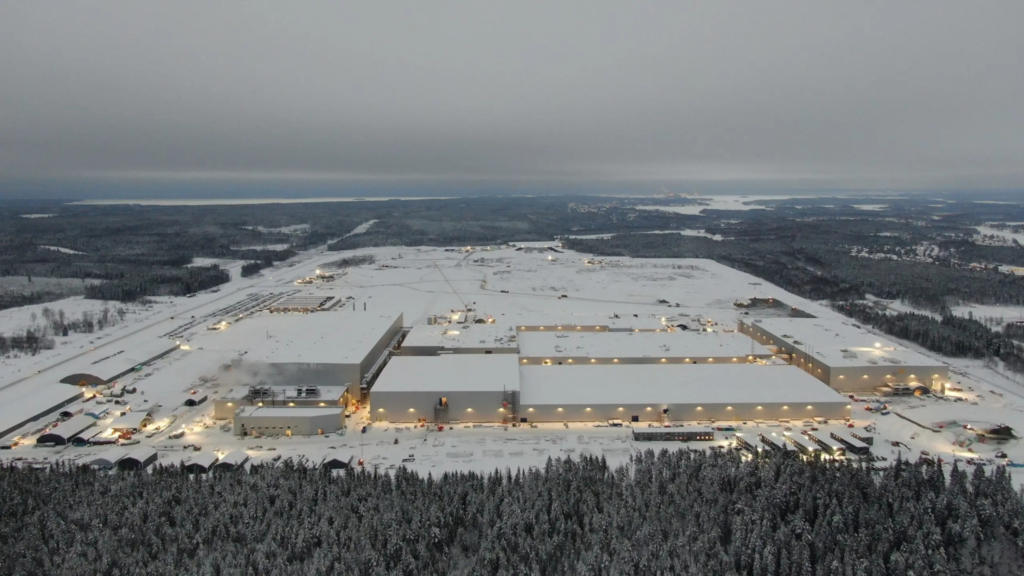
Fuelled by $15bn in financing, Northvolt was supposed to be Europe’s great battery success story — a homegrown champion capable of competing with Asian and American giants.   So when Northvolt filed for bankruptcy last week, after months of job cuts, restructuring, and multiple failed attempts to raise more money, it dealt a massive blow to Europe’s ambitions to ramp up domestic production of lithium-ion batteries, which power everything from EVs to smartphones.  In the wake of Northvolt’s precipitous fall from grace, everyone from politicians and investors to the company’s own employees has voiced their opinions on what went wrong. Among their explanations are stiff competition, overspending, allegations of mismanagement, and a lack of state support.   Northvolt may be bankrupt, but the fight for a strong European battery ecosystem is far from over. That’s the consensus from several tech investors and startups we’ve spoken to in recent weeks. TNW Conference – The 2025 Agenda has just touched down Discover the insightful and dare we say controversial sessions that will take place June 19-20. Creating a sustainable and competitive battery value chain in Europe, though, will be littered with challenges. One of them — competition from the East — may be insurmountable. The continent faces two clear options: collaborate with Asia’s industry giants or build a stronghold in the next frontier of battery tech. China looms large Northvolt set its sights on capturing 25% of Europe’s battery market by 2030, hoping to wrestle supply away from Chinese and South Korean companies. Together, these two nations supplied Europe with 90% of its batteries last year. While Northvolt faltered — failing to meet its targets and losing key clients — Chinese battery firms forged one deal after another with European automakers. Notable among them were Gotion’s partnership with Volkswagen and CATL’s joint venture with Stellantis to build a €4.1bn lithium battery factory in Spain. Asian battery manufacturers have been steadily expanding their reach into European startups, too. Gotion acquired a 25% stake in Slovakia’s InoBat in 2023. Founded in 2019, the battery startup has raised $400mn to date, with Gotion a major backer.  “While Gotion and InoBat pursue very different strategies and are fully independent, InoBat has benefited from Gotion’s long track record, experience and know-how, helping to avoid fatal mistakes,” InoBat’s CEO and co-founder Marian Bocek tells TNW.  Gotion and InoBat have formed a joint venture to build a €1.2bn lithium-ion battery plant in Slovakia, slated for completion in 2027. The batteries will be destined for EVs and electric aircraft.  InoBat is building a smaller gigafactory in Slovakia to produce batteries for high-performance EVs, with testing already underway for European automakers, including Ferrari. British solid-state battery firm Ilika is another European hopeful taking advantage of China’s battery superiority. Graeme Purdy, the company’s CEO, cited a lack of “Asian partnerships” as one potential reason for Northvolt’s downfall. “Global cooperation offers the strongest path to commercial success,” he tells TNW.   Ilika is shipping its first samples to 17 automakers this year, the company said. Instead of building a gigafactory, the UK-based outfit plans to license its technology to other companies. Ilika has a long-standing research partnership with Japanese automotive giant Toyota. For European startups, the appeal of partnering with East Asian battery makers is obvious. They have the tech, scale, and supply chain efficiency that Europe lacks.  However, that reliance comes with risks. Opportunities and threats The dependence on Chinese companies has sparked several concerns. Trade disputes, geopolitical tensions, or sudden export restrictions could send battery supply chains into chaos or even sever existing agreements, leaving European firms scrambling for alternatives.  Tom Johnstone, interim chair of Northvolt, has called on European politicians to invest heavily in local battery startups instead. “There’s a cost to pay for it, but there can be a bigger cost to pay for not doing it,” he told the Financial Times. He hopes Europe will “use the foundation” that Northvolt had provided to establish its own competitive battery industry. A Northvolt gigafactory in Sweden’s icy north made Europe’s first domestically produced lithium-ion battery in 2021. Credit: Northvolt Northvolt’s operations in Sweden are now up for sale. Volkswagen, Scania, and Volvo are all potential buyers, while some experts believe a Chinese company will acquire the business.   Either way, Danijel Višević, partner and co-founder at Europe’s largest climate tech VC, World Fund, thinks European startups should focus their attention on cornering the market for next-generation battery chemistries, not lithium-ion cells. “When it comes to lithium iron phosphate (LFP) batteries, China has won,” he says. “Northvolt should have realised that earlier — they moved to new innovative materials too late.”  Recharging Europe’s battery sector Louis Fearn, principal at InMotion Ventures, the investment arm of Jaguar Land Rover, argues that Europe ought to shift its strategy. “The way forward for Europe will be to focus not on challenging China, but on securing domestic supplies of raw materials and exploring frontier technologies.” Europe’s emerging battery players could do well to bet on the next frontier of battery tech where the playing field is still open. Kevin Brundish, CEO of Dutch battery maker LionVolt, agrees. He’s adamant that Europe’s expertise in next-generation battery tech is keeping “the dream of battery sovereignty within grasp”.  “Our robust ecosystem of startups and scale-ups is already pioneering breakthrough technologies in silicon and lithium-metal anodes — innovations essential for next-generation high-performance batteries,” Brundish tells TNW. LionVolt spun out from TNO’s Holst Centre in Eindhoven, the Netherlands, in 2020. The startup is working on a 3D lithium-metal anode that improves energy transfer in lithium-ion, sodium-ion and, in the future, solid-state batteries.   LionVolt is one of an emerging cohort of startups looking to disrupt the status quo of battery manufacturing. LeydenJar, also from Eindhoven, makes silicon anodes that can store up to 10 times more energy than traditional graphite anodes used in lithium-ion batteries.  Cambridge University spinoff Molyon has developed a lithium-sulfur battery that it claims delivers twice the energy density of lithium-ion. Sweden’s Enerpoly is building a factory that makes zinc-ion batteries for energy storage,

After Northvolt, Europe's battery path leads to China — or new tech frontiers Read More »

DOJ move against Chrome renews calls for Google to sell Android

Renewed calls for Google to sell Chrome have reignited demands for the company to also divest Android. An executive at Murena, a French smartphone startup, said today that breaking up the businesses is the only way to end Google’s “cycle of domination”. The appeal follows a Friday court filing from the US Department of Justice (DOJ). The filing reaffirmed a proposal for Google to divest its Chrome browser and sell it to a competitor, in a bid to break up the tech giant’s alleged search engine monopoly.  “Through its sheer size and unrestricted power, Google has robbed consumers and businesses of a fundamental promise owed to the public — their right to choose among competing services,” the DOJ said in the filing.  The accusation echoes common complaints about Chrome’s dominance. In February, Chrome made up two thirds of the global browser market. Next up was Safari with 17.99%, Edge (5.33%), Firefox (2.62%), and Samsung Internet (2.3%).  Opera, Europe’s largest homegrown browser, made up just 2.09%.  3 free tickets to TNW Conference? Get them now! For a limited time, groups can get up to three extra free tickets! Book now and increase your visibility and connections at TNW Conference The DOJ’s plan aims to level the playing field. But Rik Viergever, COO at Murena, a French company building privacy-first smartphones, believes the new proposals alone aren’t enough.  “As a data privacy advocate, I welcome the DOJ’s decision forcing Google to sell Chrome, however this should only be the start,” he said. “I want to see Google sell the Android operating system.” The government has left this possibility open, but is first calling for Google to change the business practices of Android. If these measures fail to curb Google’s market dominance, the DOJ may push for divestment from the operating system. Viergever wants the courts to do more to ease Google’s “stranglehold” on consumers and competitors. “Google is only able to offer Android free of charge to users because it profits off them in so many other ways and markets,” he said. “This makes it almost impossible for other providers in the operating system market to compete and so the cycle of domination continues.” Viergever’s stance aligns with Murena’s mission. The company’s main products are “deGoogled” smartphones billed as privacy-centric disruptors to the Apple-Google mobile duopoly. The devices use /e/OS, a privacy-oriented, open-source alternative to Android. Murena built the software to escape the shackles of Google’s operating system. Viergever argues that selling Chrome would lead to better products. “It’s time to open the market up to innovation and competition so users can benefit from a competitive industry in which businesses compete with products that benefit consumers, rather than a big company like Google holding all the power,” he said. source

DOJ move against Chrome renews calls for Google to sell Android Read More »

Dutch startup Skylark takes off to give non-technical founders wings

A new startup called Skylark has taken flight today — with TNW lending an extra set of wings. The company launches with a central mission: empowering non-technical founders to quickly create high-quality Minimum Viable Products (MVPs). To bring their plans to life, Skylark has created an AI-enhanced framework that promises rapid, efficient iteration cycles. Freelance developers apply the framework to build the MVP. While they code, Skylark’s internal team handles the client acquisition. Every solution is customised for the founder’s objectives. By drawing from a pool of freelancers, Skylark can then find developers that fit each project’s specific needs.  The MVPs are designed to scale in the real world. Throughout the build, Skylark provides founders with strategic insights and expert support. The 💜 of EU tech The latest rumblings from the EU tech scene, a story from our wise ol’ founder Boris, and some questionable AI art. It’s free, every week, in your inbox. Sign up now! “We help them launch faster, cheaper, and better than traditional agencies,” Steven Kleinveld, the startup’s CEO and co-founder, told TNW. “And we do that mainly due to our framework.” Kleinveld has strong links to TNW. He recently completed an internship as a startup scout at TNW Programs, which he credits with kickstarting his plans for Skylark. He has also chosen TNW City for Skylark’s headquarters.  From the Amsterdam office, he’s developed a roadmap to quickly deliver MVPs. The process begins with an assessment of the client’s needs and goals. After setting out the deliverables and timelines, Skylark analyses the market and competition to refine the project plan. Developers then build a flexible, code-based prototype.  Finally, the prototype is refined into a polished MVP. Clients also receive the full codebase — and advice on how to use it. Additionally, Skylark offers further guidance on features, design, SEO, and strategy. The plans aim to solve common problems for non-technical founders. Kleinveld (right) and Skylark co-founder Arshad Khan at TNW City. Credit: Skylark Technical issues for founders Many of the world’s most successful startups had non-technical founders, from Pinterest’s Ben Silbermann and Airbnb’s Brian Chesky to Tinder’s Whitney Wolfe Herd and Snap’s Evan Spiegel. But there could have been many more. Countless big ideas never become big businesses, because the minds behind them are short on coding skills. Kleinveld has first-hand experience of the issues. While studying business at the University of Amsterdam, he attempted to code his own projects. “I’m not overly technical, and it took me months to build not even MVPs, but just apps. And it frustrated me, because I had so many ideas,” he said. He discovered that many other entrepreneurs experienced similar problems. One common issue was that lengthy development cycles led them to miss the ideal time for market entry. Another was lacking the technical expertise to evaluate and collaborate with developers. Skylark aims to resolve these problems.  Key to the plans is an array of AI enhancements to the development process. Among them are the app builder Lovable — one of Europe’s fastest-growing startups — the code builder Cursor, and the versatile ChatGPT Pro. By blending AI with a product delivery framework and a pool of developers, Skylark hopes to give flight to a new flock of founders. As Kleinveld puts it: “If the idea is stuck on the ground, we launch it into the sky.” Whether you’re a non-technical founder or a coding genius, this summer’s TNW Conference will offer numerous insights on building successful startups. The event takes place on June 19-20 in Amsterdam. To get 30% off your ticket, use the code TNWXMEDIA2025 at the check-out. source

Dutch startup Skylark takes off to give non-technical founders wings Read More »

Exclusive: AI that accelerates 3D architectural renders by 90% bags funding

Oslo-based startup Visoid has raised €700,000 in seed funding for its AI software, which helps architects turn their 3D models into striking renders within seconds.  For architects and designers, a good render can mean the difference between winning or losing a client. However, rendering typically requires a lot of time, effort, expertise — and money. Tools like Visoid look to disrupt the status quo. “What started as a simple tool for architects to generate beautiful visualisations has led us on a journey to simplify and democratise the visualisation process itself,” said co-founder Joachim Holwech. Here’s how the software works:  The 💜 of EU tech The latest rumblings from the EU tech scene, a story from our wise ol’ founder Boris, and some questionable AI art. It’s free, every week, in your inbox. Sign up now! You take a screenshot of your 3D design and import it into Visoid’s web-based app. Then write out a general overview of your creative vision using a text prompt — “Scandinavian house in the woods with big windows,” for example. You can also set more detailed requirements like the desired lighting or background elements. Once you’re ready, click “Render.” Then the AI, trained on images of real buildings and homes, will generate your visualisation. If you’re happy with the result, you then download it in up to 4K resolution.  All of this speeds up the 3D rendering time by up to 90%, Visoid claims. The startup also promises to slash costs. A typical architectural 3D render costs anywhere from €90 to €9,000 — per image. In contrast, Visoid’s Premium software package is available for just €55 a month.  The founders of US-based construction outfit PANL, one of Visoid’s clients, described the impact as “game-changing.” “It allows us to create lots of beautiful content for a fraction of the price,” they said. AI accelerates into architecture PANL is far from alone in applying artificial intelligence to architecture. Over 40% of architects are now using AI tools, according to a report last month by the Royal Institute of British Architects (RIBA).  Some of these AI tools include OpenAI’s ChatGPT for writing briefs, and text-to-image generators like Stable Diffusion, Midjourney, or Dall-E for creating early concept designs. However, Visoid is confident that its tool offers something unique.  “Unlike other AI tools that generate images from prompts and light references, Visoid uses architects’ actual 3D models to create precise, true-to-design renderings,” CEO and co-founder Mark Szoke told TNW.  “While other AI tools operate with more freedom based on less information and are more relevant in generating concept ideas and variations, Visoid ensures precise control and photo-realistic visualisation — key reasons behind our rapid usage growth in just a year.” Since launching in 2023, Visoid has attracted customers in over 80 countries and generated more than 2.7 million images, with over 500,000 uploaded to its platform, the company said.  The startup’s progress caught the attention of VC firm Antler, which participated in the new seed funding round.  “The fact that they have reached a high ARR [annual recurring revenue] and attracted users from around the world while having spent very little money on marketing shows they have built something that creates real value for their customers,” said Anna Munthe-Kaas, associate partner at Antler. Antler contributed to Visoid’s new funding alongside lead investor StartupLab, a Norwegian startup incubator and investor and construction giant OBOS.  Visoid will use the fresh capital to expand its team and reach new clients. Among the recent additions to the customer base is the Nordic Office of Architecture. One of Scandinavia’s leading architecture practices, the company has led mega projects including the new Oslo Airport and Norway’s Government Quarter.  source

Exclusive: AI that accelerates 3D architectural renders by 90% bags funding Read More »

To close Europe's defence tech gap, government must support startups

The United States has long understood a simple truth: war is won not by size alone, but by speed and creativity. Indeed, innovation has always been crucial in conflict. Armour made knights safe until the crossbow came along. High walls protected cities until cannons emerged. Trenches were made obsolete by fast-moving mechanised forces. The lesson: a military that cannot innovate is one that falls behind. Yet Europe remains stuck with an outdated model of defence procurement – one that favours a handful of bloated contractors doing the same old thing over the fresh ideas of startups and entrepreneurs. Against a backdrop of serious geopolitical unrest and diplomatic realignment, this must change. The gap between the US and Europe in defence innovation is striking. At least 25% of US defence contracts go to small firms – startups and specialist companies that are building the future technology of conflict. This is not an accident. The US government has deliberately nurtured an environment where defence innovation thrives. The key to its success is the Defense Advanced Research Projects Agency (DARPA), an institution that backs risky but potentially transformative projects, and the Defense Innovation Unit (DIU), which helps the military adopt emerging innovations. Their projects have also had enormous impacts on civilian technologies. It was DARPA funding, for instance, that led to the first self-driving cars. Many engineers participated in a DARPA challenge offering prize money to teams that could develop autonomous vehicles capable of navigating difficult terrains without human intervention. This led to the launch of Waymo, an autonomous vehicle company now worth £35bn. Europe, in contrast, remains wedded to an antiquated system. In the UK, a handful of defence contractors dominate government procurement, leaving little space for disruptive newcomers in critical fields like advanced materials. Across the continent, defence startups are treated as speculative ventures rather than essential contributors to national security. The result is an industry that moves too slowly, costs too much, and lacks the dynamism required for modern warfare. Add to this a regional cultural reluctance among private investors to put money into defence, and you have a problem. It’s ironic that this culture, deliberately fostered after two World Wars to avoid inter-European conflict, is now becoming a barrier to protecting Europe from harm. In other words, the world’s greatest peace project is now threatened by its failure to take the steps needed to become conflict-ready. Europe needs a new ecosystem for defence tech Nowhere is the cost of our complacency clearer than in Ukraine. There, war has been reshaped by innovation. Small, nimble startups have built the inexpensive drones that are taking out enemy tanks worth millions. Engineers fresh out of university are programming weapons that would have been unthinkable a decade ago. This is the nature of modern warfare: high-tech, decentralised, and led by those who can iterate and adapt the fastest. I have personally stressed to policymakers in my native Germany that failing to support new technology risks not just stagnation but also a very dangerous dependency on a few suppliers. Those suppliers could dictate terms or withhold critical resources in times of crisis. Europe needs to rethink its defence industrial strategy from the ground up – and then get moving. The first step is joint procurement. A fragmented defence market, in which every country insists on having its own suppliers and favours its own national champions only weakens Europe as a whole. We have a multitude of incompatible weapon systems because of this. By putting in place a baseline standard for joint procurement, Europe could create a defence ecosystem that is more competitive, more cost-effective, and more resilient. Secondly, supply chains must be diversified and scrutinised. The war in Ukraine has exposed just how vulnerable Europe’s supply networks are to disruption; a continent that cannot reliably produce and distribute the materials it needs in wartime is a continent that has already lost the fight. Ensuring a steady and secure flow of critical resources should be a priority, not an afterthought. There are serious gaps in our supply chains. These must be closed — fast. We must back entrepreneurs European governments must also change the way they think about procurement. Startups cannot flourish if they are locked out of big contracts from the outset. Governments must follow the US model: fund bold ideas, take calculated risks, and support innovators before they prove themselves at scale. Defence innovation does not happen in boardrooms of established firms. It happens in the labs and workshops of those willing to challenge the status quo. The financial risk of backing these young, hungry entrepreneurs is dwarfed by the threats to security that can arise from neglecting them. European investments in defence startups are absolutely vital, and I choose that word deliberately. Nowadays, a single drone can cripple a convoy. A well-placed electronic warfare tool can render an air-defence system useless. A targeted electromagnetic pulse (EMP) detonated over the continent could blackout Europe overnight. AI-driven jamming can blind enemy satellites. These technologies are shaping the future of warfare. They exist now, and they are increasingly accessible. In short, the conflicts of the future will not be won by those with the largest armies, but by those with the best technology, the quickest decision-making, and the most adaptable systems. European governments are already behind the competition. If they do not act now, they may find themselves permanently so. It is time for Europe to recognise what the US has understood for decades: innovation wins wars. And innovation starts with those who dare to disrupt. source

To close Europe's defence tech gap, government must support startups Read More »

Dutch unicorn Mews mulls IPO in US amid concerns over startup support

Dutch unicorn Mews will most likely list in the US instead of in Europe if the hospitality management company goes public, its CEO and co-founder Matthijs Welle told TNW.  “An IPO is one of the options that we would consider for the future, and if we were to go down that route, a listing in the US is the most likely option, although it is too early to specify further details regarding a potential listing,” Welle said. “Most other vertical SaaS companies, who are comparable to us, are listed in the US, where there are deeper capital markets and a strong presence of SaaS-focused investors and analysts.” However, Welle stressed that his current priority is growth.  “While we have thought about a potential exit, we are currently very focused on and committed to building one of the most exciting hospitality technology brands in the world,” he said.    TNW Conference – The 2025 Agenda has just touched down Discover the insightful and dare we say controversial sessions that will take place June 19-20. Mews, based at TNW City in Amsterdam, has built a cloud-based system that helps hotels and other hospitality businesses handle tasks like booking rooms, checking guests in and out, processing payments, and managing housekeeping. It also provides tools for reporting and analytics. Earlier this month, Mews raised $75mn, bringing its total funding to date to $411mn, according to PitchBook data. To date, the company has acquired 12 competitors as it looks to increase its market share. The scaleup is riding sustained growth in global travel to fuel its expansion. Mews reported 50% year-on-year growth in 2024, processing more than $10bn in payments volume and surpassing $200mn in revenue. Last year, the scaleup also earned unicorn status after raising $110mn at a valuation of $1.2bn.  While things are going well at Mews, Welle feels that the Dutch government isn’t doing enough to support entrepreneurs. “There’s no plan for tech startups,” Welle said in a recent interview. “That is the biggest problem.” Growing concerns over Dutch plans for startups Welle is not the only Dutch tech leader frustrated with the lack of support for up-and-coming businesses.  Robert Vis, co-founder and CEO of Bird, announced last month that the company plans to move most of its operations out of the Netherlands. He didn’t mince his words, either. “Both The Hague and Brussels enjoy being in meetings and talking more than they get shit done,” Vis told TNW, adding that EU policymakers are “killing innovation.”    Job van der Voort, CEO and founder of Remote, an HR platform valued at over $3bn, believes Europe as a whole is not doing enough to nurture the next big tech success stories.  Van der Voort also warns that burdensome tech regulation is encouraging moves beyond the continent. “It’s becoming unattractive to start and maintain a business here,” he told TNW last month. “That’s why I tell startups to leave Europe if they want to succeed.” Van der Voort has followed his own advice. After he and Marcelo Lebre founded Remote in 2019, the partners decided to base the company in San Francisco. “It was simply easier to start it there,” he said. The future of Dutch tech will be a hot topic at TNW Conference, which takes place on June 19-20 in Amsterdam. Tickets for the event are now on sale. Use the code TNWXMEDIA2025 at the check-out to get 30% off the price tag. source

Dutch unicorn Mews mulls IPO in US amid concerns over startup support Read More »

European Accessibility Act risks becoming a box-ticking exercise

With the compliance deadline for the European Accessibility Act (EAA) fast approaching, companies are urgently trying to ensure their websites meet the requirements of the EU directive.  One appealing solution is accessibility widgets — small add-ons with features like text resizing, contrast adjustments, and text-to-speech functions. However, while these widgets promise fast and inexpensive compliance, they often fail to address the real issues of accessibility. In fact, they can even make websites harder for people with disabilities to navigate.  Here’s why relying on widgets is a short-sighted solution and what web developers should focus on instead to create truly accessible digital spaces. What does the European Accessibility Act mean for developers? 3 free tickets to TNW Conference? Get them now! For a limited time, groups can get up to three extra free tickets! Book now and increase your visibility and connections at TNW Conference The EAA, enacted in 2019, requires major e-commerce sites and private businesses to comply with a range of accessibility standards by June 28, 2025 (the deadline for public sector institutions has already passed). The rules apply to any company that conducts business in the EU, except for microenterprises with fewer than 10 employees or under €2mn in annual turnover. These regulations are designed to make websites more accessible to users with disabilities, covering aspects such as text alternatives for images, keyboard navigation, and screen reader compatibility. While the EAA primarily impacts large enterprises, it has also raised general awareness of accessibility, encouraging smaller businesses to review the accessibility of their sites.  As the deadline nears, the pressure to comply with the EAA has led some companies to pursue quick solutions. Accessibility widgets appear to offer an easy way to check the boxes.  Unfortunately, these tools often lead companies down the wrong path, creating a false sense of security and missing the opportunity to fix the underlying accessibility issues of their sites. Why widgets are seen as a suitable solution This is not to say that accessibility widgets are bad by default. Their appeal is easy to understand. They are low-cost, fast to implement, and, in many cases, do address common accessibility needs, such as the options to adjust font sizes and contrast settings. As a result, these tools can often be enough for websites that feature relatively few elements, don’t handle high traffic volumes, or don’t require visitors to perform important actions — entering your bank account information, for example. For such websites, widgets can provide a layer of accessibility without requiring significant overhauls to existing design and code. For some businesses, especially those with limited resources, the promise of a widget is hard to resist. Adding a widget to your site will be considerably less expensive than ongoing testing, fixing, and maintenance processes. However, the reliance on widgets can not only delay fixing underlying issues with the site but can even lead to additional accessibility issues caused by the widgets themselves. Widgets can cause more issues than they solve A significant issue with widgets is that they tend to operate as overlays – they function as layers on top of the original website content rather than making structural improvements to the code. This layering can interfere with existing site functionality, causing problems with navigation, interactive features, or screen readers, which many users with disabilities rely on.  For example, my team at TestDevLab looked at the major fashion retailer Zara, which uses accessibility widgets on its website. We identified several issues caused by these tools. To name a few: Site visitors who only use their keyboard for navigation cannot move to all elements after tapping the “Login” button because the focus jumps to the accessibility widget shortcut links.  If you select the dark, high-contrast option in the accessibility widget, the hamburger menu button and page logo are no longer visible.  A number of issues were detected with text adjustment and visibility when increasing the font size through the widget.  Because widgets typically only address surface-level issues, they fail to engage with underlying accessibility requirements like keyboard navigation and properly labelled images. Instead of solving these deeper problems, widgets often become long-term crutches that prevent real progress, allowing companies to overlook the foundational changes needed for meaningful accessibility. Whether a widget works is often determined by how the original site has been built and structured. If there are issues in the site’s HTML code, layering a widget on top of that may not make a difference in terms of accessibility or, even worse, break other elements that make the site more challenging to navigate than it is without the widget. Other factors affecting widget performance include each site visitor’s browser and operating system. While the widget may work for some, it may fail for others.  Building accessibility from the ground up True web accessibility requires investing in long-term, site-wide improvements rather than superficial fixes. Developers should consider accessibility a core part of the design and development process, not an afterthought. This means building accessibility into every stage of a website’s lifecycle, from design to testing.  Elements like keyboard navigation, text alternatives, logical heading structures, and responsive design should be considered from the start, making the website accessible at its foundation rather than through add-ons.  Testing is essential in this process. Accessibility is a continuous effort — it requires periodic audits and adjustments to ensure ongoing compliance as technology and accessibility standards evolve. source

European Accessibility Act risks becoming a box-ticking exercise Read More »

Euclid space telescope captures super rare double gravitational lenses

The European Space Agency has released the first major batch of data from its “dark universe” telescope Euclid. What’s inside could change our understanding of dark matter and the expansion of the universe. The data comprises just one week’s worth of deep field images from three points in space. They make up just 0.4% of the vast area Euclid will capture, which scientists say will be the largest 3D map of the sky ever created. With one scan of each region so far, Euclid has already spotted 26 million galaxies, each potentially containing millions of stars and billions of planets. The furthest of these galaxies are 10.5 billion light years away from Earth, meaning the images you see are almost as old as the universe itself. The Euclid map of the stars The Cat’s Eye Nebula, one of the most complex planetary nebulae ever seen in space, as captured by Euclid. Credit: ESA Hiding amongst all those millions of galaxies are rare phenomena called gravitational lenses or “Einstein rings,” named as such because they prove Albert Einstein’s prediction that gravity warps spacetime, causing light to bend as it travels through. Gravitational lensing occurs when a massive object, like a galaxy or black hole, bends the light from a galaxy behind it — forming visible distortions or arcs around the galaxy’s nucleus.   The 💜 of EU tech The latest rumblings from the EU tech scene, a story from our wise ol’ founder Boris, and some questionable AI art. It’s free, every week, in your inbox. Sign up now! In this new batch of data, Euclid has more than doubled the number of gravitational lenses that have been captured from space. ESA estimates that Euclid will capture 100,000 strong gravitational lenses by the end of its six-year mission, around 100 times more than currently known.   Today’s data has also revealed an even rarer phenomenon: double gravitational lensing, also called double source plane lensing. This happens when light from two distant galaxies passes through the same galaxy, causing a double lensing effect. Finding double gravitational lenses A collage of gravitational lenses from Euclid’s first major data drop, released today. Credit: ESA Look at the image above and go to the fourth column, third from the bottom. The image is faint but you can make out two outer arcs and then two inner arcs close to the centre of the galaxy nucleus. That’s a double gravitational lens.  Double gravitational lensing could help scientists better understand dark energy and the expansion of the universe, because, in theory, an expanding universe will determine the angle of the arcs.  “Double-source plane lenses are extremely rare — only a few have ever been found,” said Euclid Consortium scientist Mike Walmsley at a press briefing. “But we think we’ve found four good candidates already from just a week’s worth of data covering a fraction of the night sky. We’re confident that Euclid will quickly capture enough of them to allow scientists to start measuring their effects.” To find such rare phenomena hiding amidst Euclid’s images, the European Space Agency (ESA) enlisted the help of thousands of volunteers — and AI algorithms.   Euclid’s AI-powered galaxy finder Launched in 2023, Euclid has observed about 14% of its total survey area so far. By the time its mission is complete, the telescope is expected to capture images of more than 1.5 billion galaxies, sending back around 100GB of data every day.  These images provide scientists with unprecedented opportunities — and huge problems when it comes to finding, categorising, and analysing all the objects within them.  To speed up the process, the Euclid consortium has developed an AI-powered galaxy spotter — called “Zoobot.” The algorithm was trained on decades’ worth of citizen science work, from volunteers who scan through images and identify each object.  A collage of galaxies identified by AI and citizen scientists. Credit: ESA From today’s data drop, Zoobot put together a detailed catalogue of 360,000 galaxies. Thousands of volunteers from the Space Warps citizen science project then sorted through the most promising candidates. That’s how the gravitational lenses were identified.  “We’re at a pivotal moment in terms of how we tackle large-scale surveys in astronomy. AI is a fundamental and necessary part of our process in order to fully exploit Euclid’s vast dataset,” said Walmsley, who has worked on astronomical deep learning algorithms for the last decade. A collage of Euclid Deep Field South, a portion of the night sky never previously captured in such detail. Credit: ESA The dark universe explorer Euclid launched on a SpaceX Falcon 9 rocket from Cape Canaveral in Florida on 1 July, 2023. It returned its first images in August of that year, and in May last year released its first scientific data.  Euclid’s mission is to shed light on two of the universe’s most perplexing mysteries: dark energy and dark matter —, thought to make up 95% of the cosmos. Scientists theorise that dark energy is responsible for accelerating the universe’s expansion and that dark matter acts as cosmic glue that holds the galaxies together. Yet the nature of these components is still unknown. To build its 3D map of the night sky, the telescope is deploying two high-tech cameras: VIS, which captures the cosmos in visible light, and NISP, which measures the distances to galaxies and the expansion speed of the universe.  Euclid is set to provide us with an unprecedented chronology of the history of the cosmos and help us unravel the mysteries of the universe – and our own existence. The three deep field previews can now be explored in the ESASky app. Euclid Deep Field South here, Euclid Deep Field Fornax here, Euclid Deep Field North here. source

Euclid space telescope captures super rare double gravitational lenses Read More »