The Next Web TNW

Ex-ArianeGroup CEO backs Pangea to build 3D-printed aerospike rocket engines

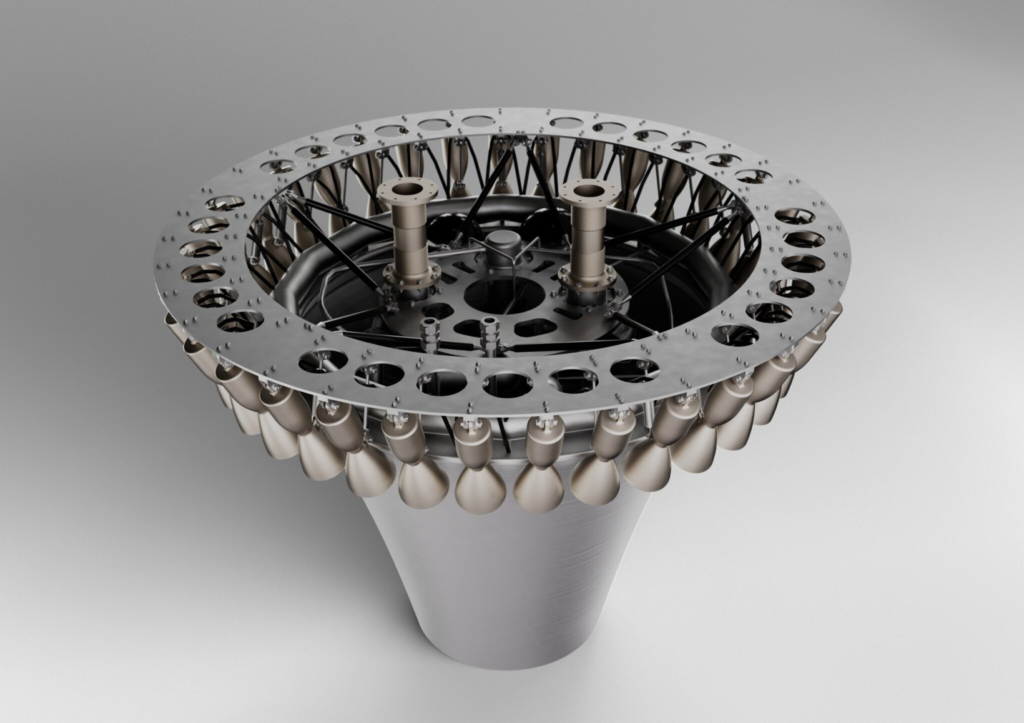
Aerospike rocket engines are the stuff of legend in the space industry. Conceived in the 1960s, their unique spiked-nozzle design promises better efficiency, reusability, and performance at all altitudes. But their complexity — and the shutdown of major space programmes towards the end of the 20th century — meant they never entered the mainstream.  But now, startups are dusting off old designs and using new technologies to revive aerospike engines for modern spaceflight. One of these ventures is Spain’s Pangea Aerospace. Founded in 2018, Pangea has been operating under the radar for most of its seven-year history. But today, the company announced a €23mn Series A funding round as it looks to ramp up development of its 3D-printed aerospike rocket engine. Among the investors was André-Hubert Roussel, former CEO of ArianeGroup, who oversaw the development of Europe’s only heavy-lift rocket in operation, Ariane 6. Roussel joined Pangea’s board last year.  “It’s incredibly valuable to have such a figure investing in and advising us as we embark on our next stage of growth,” Pangea’s CCO and co-founder Xavier Llairó told TNW. 3 free tickets to TNW Conference? Get them now! For a limited time, groups can get up to three extra free tickets! Book now and increase your visibility and connections at TNW Conference Roussel praised the company’s plans on LinkedIn. “Strong team, strong technology, building the future of space propulsion,” he said. An aerospike rocket revolution? In 2021, Pangea successfully conducted a hot-fire test of Demo-P1, the world’s first aerospike methalox engine.   “We’ve been silently making breakthroughs in cooling techniques, additive manufacturing, and materials science that are now paying off,” said Llairó. “We’re sure we can produce aerospike engines at a low cost.”  Pangea, which has headquarters in Barcelona, Spain and Toulouse, France, is now directing most of its focus towards ARCOS, slated to become the world’s first flight-ready aerospike engine. ARCOS is designed to be reused up to 10 times and to power both a rocket’s booster and upper stage. And like the Demo-P1, it will be 3D-printed. A 3D render of the finished ARCOS engine. Credit: Pangea Pangea, in partnership with Aenium Engineering, has developed a proprietary copper-alloy material that can make an engine capable of withstanding the extreme thermal and mechanical loads of rocket launch and flight. The team has also developed a way to quickly deposit it in layers using a 3D printer.  “The result is a very low-cost, very strong combustion chamber that can withstand the high heat and pressure,” said Llairó. “With this technology, we’ve been able to produce things that were simply unproducible before.” Pangea’s aerospike engines are 30% more efficient than traditional bell engines, delivering 15% higher overall efficiency, and enabling up to 30% more payload capacity to orbit, the company said in a statement. The new space boom Pangea aims to build rocket propulsion systems for all rocket sizes, from microlaunchers to heavy-lifters. Last year, the European Space Agency (ESA) contracted the startup to design a very high-thrust rocket engine, which could power future European heavy and super-heavy rockets.  However, Pangea mainly looks to cater to the emerging flock of private space companies. The startup says it wants to be the Rolls-Royce of rockets — the leading engine supplier in the sector. Pangea is currently testing its technology in partnership with three private space companies, Llairó told TNW. “Two European, one American,” he said, refusing to elaborate further.  Europe’s most promising rocket launch startups right now include Germany’s Isar Aerospace and Rocket Factory Augsburg (RFA) and Spain’s PLD Space. All three are set to blast off on their maiden flights this year, although Isar looks to be the first. Then there are the more established European heavyweights, Arianespace, a subsidiary of ArianeGroup, and Avio, the Italian makers of Vega-C.   All these companies are looking to tap a booming global space economy, forecast to be worth $1.8 trillion by 2035. For Pangea, that means more customers.  Llairó also thinks space tech offers an important strategic lever for Europe, which is pushing to ramp up its defence capabilities and tech sovereignty amid cooling relations with the US and threats from Russia.  “Space is crucial for our defence and autonomy in Europe,” he said. “We have an opportunity to build a strong local space economy [here] and to be leaders in certain areas, like propulsion systems. However, it’s an opportunity that will go to waste unless governments invest more [in space startups] and take a risk like they do in the US.”  source

Ex-ArianeGroup CEO backs Pangea to build 3D-printed aerospike rocket engines Read More »

This fusion-powered rocket could halve the time it takes to get to Mars

Interplanetary travel might be about to get a whole lot faster — and hotter.  UK startup Pulsar Fusion today unveiled “Sunbird,” a nuclear fusion-powered rocket concept that could halve the time it takes to travel across our solar system — and, maybe, beyond it.  Machine learning models show the rocket could potentially propel a spacecraft with a mass of about 1,000kg (2,200lb) to Pluto in four years — less than half the time it took NASA’s New Horizons mission, which was powered by regular ion thrusters. Earth to Mars? Four months. Earth to Saturn? Two years.   Rather than launch from Earth each time, several Sunbirds would be “docked” in low-Earth orbit, ready to attach to spacecraft and propel them deeper into the cosmos. TNW Conference – The 2025 Agenda has just touched down Discover the insightful and dare we say controversial sessions that will take place June 19-20. Sunbird would be fitted with a Duel Direct Fusion Drive — a compact nuclear fusion engine which could provide both thrust and electrical power for spacecraft.  Pulsar started building the engine in 2023 at a site in Milton Keynes, England. Static tests are slated to begin in 2025 followed by an “In Orbit Demonstration” (IOD) of the core technology components in 2027, the company said. When fired, the engine could temporarily become the hottest place in the solar system, creating exhaust speeds of more than 500,000mph (804,672km/h).   From the UK to Mars Founded in 2011, Pulsar has spent over a decade on fusion research. More recently, the company started developing two other products in parallel: a Hall-effect electric thruster for spacecraft and a second-stage hybrid rocket engine. “Pulsar has built a reputation in this industry for delivering real technology — not just talking about it,” said founder and CEO Richard Dinan. “We’ve recently commissioned not one, but two of the largest space propulsion testing chambers in the UK, if not all of Europe — and we have ambitious plans to grow from here.” While Pulsar’s goal to build and test a fusion reactor in space in just three years is certainly ambitious, advances in AI could help. The company has teamed up with the US-based Princeton Satellite Systems to predict how plasma behaves under electromagnetic confinement. The machine learning simulations will guide the rocket engine’s design.  In 2022, Pulsar secured funding from the UK Space Agency to develop a nuclear-fission based propulsion system, alongside the Nuclear Advanced Manufacturing Research Centre and Cambridge University.  source

This fusion-powered rocket could halve the time it takes to get to Mars Read More »

€199B: The cost of overlooking European deep tech led by women

It’s no secret that European tech has a gender equity problem. Men dominate the leadership of most companies in the sector. Women founders struggle to raise VC money, and there’s a stark pay gap between male and female workers. This gender imbalance is especially glaring in the STEM-dominated world of deep tech.  Women lead just 22% of European deep tech companies, according to a new report from the EU-funded GENDEX project, released today. Securing funding remains a challenge, with women-led firms taking six months longer to sign their first term sheet. Over the past decade, women-led companies raised 1.8 times less capital than those led by men. Even those that get funded often face less favourable terms.  European deep tech gender inequity limits diversity of thought and stifles innovation. It’s also pouring hundreds of billions of euros in potential revenue down the drain. Data from the GENDEX report shows that women-led deep tech companies have generated over 11% of the total value raised at non-IPO exits in the past decade — a disproportionately low figure. However, these firms account for just 0.6% of such deals, highlighting the outsized value created when women take the lead. 3 free tickets to TNW Conference? Get them now! For a limited time, groups can get up to three extra free tickets! Book now and increase your visibility and connections at TNW Conference Achieving greater representation of women-led companies at the exit stage — both IPO and non-IPO — over the past decade would have unlocked an estimated €198.8bn in additional value, GENDEX found. “This data proves we need structural change,” said Tanya Suarez, the chair at GENDEX, as well as the CEO of consultancy firm BlueSpecs and founder of tech accelerator IoT Tribe. “Not only is it needed to fairly represent women, but evidence shows a gender-balanced ecosystem delivers the best results.”  Restricting European deep tech talent While women make up 42% of STEM graduates in Europe, their representation drops sharply in the workforce. The GENDEX report finds that women account for just 24% of patent applicants, highlighting a talent drain that limits deep tech’s potential. “Tapping into Europe’s diverse talent pool in the tech and investment sectors in the broadest and most effective way possible is vital if we are to capitalise fully on our many strengths in innovation,” said Stéphane Ouaki, head of department at the European Innovation Council, which funded the report. The deep tech gender imbalance reflects broader societal gender issues. There is no quick fix — addressing it requires systemic change across education, investment, and workplace culture.  However, GENDEX makes four key recommendations to remedy the problem. First, investors should demand that companies report on gender diversity before deploying capital. Second, more funding should be allocated to women-led teams, which have been shown to deliver better outcomes. Third, better legal and funding support is needed for women to secure IP rights. Finally, government co-investment should require gender-balanced portfolios to ensure accountability in public funding. This year’s TNW Conference features a Women in Tech ticket. The pass provides 50% off access to the event, which takes place on June 19-20 in Amsterdam. source

€199B: The cost of overlooking European deep tech led by women Read More »

Irish startup unveils world’s first silicon-based quantum computer

Irish startup Equal1 has unveiled the world’s first quantum computer that runs on a hybrid quantum-classical silicon chip.  Dubbed Bell-1 — after quantum physicist John Stewart Bell — the computer weighs around 200kg and plugs into a regular electrical socket. The rack-mountable machine is designed to simply slot into high-performance computing (HPC) data centres alongside standard servers.  Equal1’s CEO Jason Lynch told TNW that combining quantum technology with today’s most advanced classical processors offers the fastest route to a quantum computer capable of potentially world-changing calculations.  The potential applications are endless. Quantum computers have the potential to solve complex problems that classical computers cannot, which could lead to breakthroughs in drug discovery, cryptography, modelling, and AI.  3 free tickets to TNW Conference? Get them now! For a limited time, groups can get up to three extra free tickets! Book now and increase your visibility and connections at TNW Conference “We’re leveraging established semiconductor technologies to scale up faster than the competition,” said Lynch. “This is the best way to scale quantum computing at the pace required.”  The Bell-1 quantum computer inside its shield. Credit: Equal1 Equal1 marries classical transistors (for normal computing tasks) and quantum transistors (for qubits) in a single silicon-based chip. Qubits, akin to bits in a regular PC, are the basic units of information in a quantum computer. The more you have, the faster the machine.  Most quantum computing technologies are based on either trapped-ion or superconducting  qubits. However, Equal1’s design uses silicon-spin qubits.  Bell-1 is noticeably smaller than most quantum computers out there. The company credits this to its closed cycle cryo-cooler that allows the machine to operate at 0.3 Kelvin (-272.85°C) without requiring massive external dilution refrigerators.  Most quantum computers need to be kept super cool because heat causes errors by disrupting the delicate quantum states of qubits (there are exceptions, however).   The machine’s cooling system. Credit: Equal1 For now, Bell-1 is limited to just 6 qubits, which means it’s not yet capable of solving real-world problems. For comparison, Google’s recently unveiled Willow chip has 105 qubits. However, Google’s machine isn’t available to buy — Bell-1 is.  “Tech companies are recruiting more and more quantum experts now as they explore the future possibilities of this technology,” said Lynch. “Bell-1 will help them, and others, run experiments like quantum phase estimation and error correction that will form the foundation for more powerful processors in the future.”  The chip for Bell-1. Credit: Equal1 Equal1’s quantum journey Equal1 was founded in 2018 as a spin-off from University College Dublin. The startup currently employs about 45 people and, while still based in the Irish capital, has an expanding presence in the Netherlands — one of the world leaders in quantum technology.  The Netherlands Organisation for Applied Scientific Research (TNO) recently backed Equal1 with an undisclosed investment. Last year, the Irish company opened a research facility close to TU/Delft, an emerging hub for quantum tech startups such as QuantWare.  By leveraging standard semiconductor manufacturing, Equal1 aims to bring quantum computing closer to real-world applications faster than its competitors. That competition pool is growing, though, and fast. In the past few months alone, Google launched quantum chip Willow, Microsoft unveiled Majorana, and Amazon revealed Ocelot.  Quantum computing is on the new agenda for TNW Conference, which takes place on June 19-20 in Amsterdam. To get 30% off your ticket, use the code TNWXMEDIA2025 at the check-out. source

Irish startup unveils world’s first silicon-based quantum computer Read More »

TNW Conference unveils agenda to shape the future of tech

For nearly two decades, TNW Conference has been a launchpad for the next big things in tech. The likes of Slack, Wise, Bolt, and Trello all made their mark on our stage before becoming global brands. Visionary leaders from Google, Meta, and Reddit have joined them to share the strategies behind their success, while star speakers Edward Snowden, will.i.am, and Lila Ibrahim have explored the frontiers of innovation.  On June 19-20, we will return to the iconic NDSM venue in Amsterdam with a renewed focus on our founding mission: elevating the startups and scaleups that will change the world. Today, we’re unveiling the next stage of that journey — our sparkling new agenda for TNW Conference 2025. Filled with bright minds and bold ideas, the agenda is divided into three key themes: Next in Tech, Growth & Venture, and Enterprise Innovation. We’re also introducing a new edition of the Assembly, an exclusive gathering of policymakers and business leaders, and bringing back TECH5 — the “Champions League of Technology.” The 💜 of EU tech The latest rumblings from the EU tech scene, a story from our wise ol’ founder Boris, and some questionable AI art. It’s free, every week, in your inbox. Sign up now! Every session and talk has been tailored to deliver real-world value to attendees. Startups, scaleups, investors, corporate innovators, and governments will all find a variety of sessions that can boost their businesses. To bring the agenda to life, we’ve assembled a powerhouse collection of speakers. Here’s a small taste of the lineup: Vidya Peters, CEO of DataSnipper, the Netherlands’ fastest-growing tech company Jyoti Hirani-Driver, COO of NATO’s DIANA, a new defense tech accelerator for the military alliance Pernilla Sjöholm, a survivor of the “Tinder Swindler” and now an advocate for fraud awareness Daniel Gebler, co-founder and CTO of Picnic, the leading online supermarket in the Netherlands Jeroen van Glabbeek, CEO of CM.com, a global leader in cloud software Ali Niknam, CEO and founder of Bunq, Europe’s second-largest neobank The dynamic agenda has been crafted by our expert events team, ably supported by the TNW Advisory Board of tech leaders. Leading the charge is Oliviana Bailey, TNW’s Head of Content.  “The global landscape is shifting, and European tech founders are at the forefront — both championing and challenging Europe to seize the moment,” Oliviana says.  “This year at TNW Conference, I’m eager to hear from founders, policymakers, and corporate innovators on how Europe can assert its leadership in deep tech and defense, shaping a more competitive future.” Expect a mix of bright minds, sharp insights, bold ideas, and a healthy dose of controversy. Let’s dig into a few highlights. Next in Tech At Next in Tech, a stellar squad of innovators and industry leaders will dive into the biggest breakthroughs on the horizon. Healthcare expert Lucien Engelen will sound the alarm on employee well-being in Code Red: Why the Future of Work is the Future of Health. On a lighter note, viral comedy sensation Derek Mitchell — creator of @letsdoubledutch — will bring his razor-sharp wit to the stage. Other unmissable sessions include: Quantum Race: Can Europe Secure Leadership in Quantum? The Aftermath: Deepfakes, Disinformation, and Disruption in Democracy Where is Iron Man? Why Tech Needs to be in Defense The AI Revolution in Filmmaking: Are We Ready for What’s Next? Next in Tech is a major draw for Victoria Slivkof, a TNW Advisory Board member. As the Executive Managing Director at program partner Extreme Tech Challenge and the Head of Ecosystem at Walden Catalyst Ventures, Slivkof keeps a close eye on disruptive innovations. Our agenda’s focus on emerging trends in AI immediately caught her attention. “NVIDIA’s Jensen Huang highlighted that AI can now ‘proceed, reason, plan, and act,’ requiring significantly more computing power,” she says. “This shift presents opportunities and challenges for deep tech startups, particularly in semiconductors and AI. These innovators must develop solutions supporting advanced processing capabilities while addressing energy efficiency and technological sovereignty. Growth & Venture The startup world is changing fast. That’s why TNW’s Growth & Venture track will reexamine traditional investment models — and ask if it’s time for a shake-up. Expect hot takes in sessions such as Off with Their Heads: Death to the VC & Building Smarter Investment Models. But don’t worry; we’ve been assured that actual executions are not on the agenda. European competitiveness will be another big topic for discussion. We’ll explore future paths to growth at Death of the Unicorn: Can Europe Learn to Love Rapid Growth? and The State of European Deep Tech. A session that’s caught the eye of Andy Lürling, a founding partner at VC firm Lumo Labs and a TNW Advisory Board member, is Getting Over the AI Buzz: Creating Truly Deep Tech Startups.  “I believe we need to harness smart brains and AI to help solve the world’s societal and environmental challenges, and in my opinion, we need to shift from curing to prevention in the healthcare sector,” he says. “AI plays a crucial role in this.” Here are a few of the other must-see sessions: Been There, Funded That: Founders-Turned-Investors on Picking Winners Mastering the Exit: M&A Strategies for Startup Success Green Growth: Funding and Scaling Businesses for a Sustainable Future Scaling Success: Building a Performance-Driven Culture Enterprise Innovation Our Enterprise Innovation sessions will deliver sharp insights on scaling tech businesses and adapting to disruption. This track is designed to help corporate leaders supercharge their digital strategies and stay ahead of the competition. This year, TNW is also introducing a Corporate Innovator ticket, providing access to an exclusive lounge where business leaders can connect with the tech pioneers reshaping industries. To support them, we’ve compiled a thought-provoking blend of sessions. Highlights include: New Legacies: Successful Corporate-Startup Collaboration Big Business, Big Change: Scaling Innovation for Net Zero Is DEI Dead? Exploring the State of DEI in the EU AI, Fraud, and the Future of Money: A Fintech Deep Dive Ready to dive in? Check out the full agenda here and grab your

TNW Conference unveils agenda to shape the future of tech Read More »

What caused the X outage that Musk is blaming on Ukraine?

Social media platform X was hit by a series of outages yesterday in what its owner Elon Musk has called a “massive cyberattack” stemming from Ukraine. Analysts believe the disruption was caused by botnets — but finding the culprits will be a tall order.   The outages began at around 14:00 CET and lasted for most of the afternoon, trailing off at around 18:00, according to Down Detector. While the outages appeared to have flatlined overnight, there was an uptick in reports of downtime starting from 08:00AM today up until the time of writing. “We’re not sure exactly what happened,” Musk said during a Fox Business interview. “But there was a massive cyberattack to try to bring down the X system, with IP addresses originating in the Ukraine area.”  In a separate post on X, Musk said: “We get attacked every day, but this was done with a lot of resources. Either a large, coordinated group and/or a country is involved.” The multi-billionaire has not provided any evidence to back up his claims.  TNW Conference – The 2025 Agenda has just touched down Discover the insightful and dare we say controversial sessions that will take place June 19-20. Toby Lewis, head of threat analysis at UK-based cybersecurity firm Darktrace, said the X outage appears to be a “fairly standard DDoS attack”, which involves many devices flooding a server or network with traffic to overwhelm and shut it down. “These sorts of attacks are almost always delivered by botnets — globally distributed networks of computers that have been unknowingly recruited to take part in the attack, typically through some form of compromise or the use of malware,” said Lewis. With botnets, hackers can control devices in a country without actually being there. So even if the IP addresses did originate Ukraine, as Musk claimed, that doesn’t necessarily mean the attack has any link to the country or its government.  Jake Moore, global cybersecurity advisor at Slovakian firm ESET, highlighted the method’s ability to conceal the culprits’ identities.  “DDoS attacks are a clever way of targeting a website without having to hack into the mainframe and therefore the perpetrators can remain largely anonymous and difficult to point a finger at,” he said. X adds to mounting problems for Musk Musk bought Twitter in October 2022 in a deal worth $44bn. Within a year, he had changed the platform’s name to X, laid off around 80% of the company’s staff and made sweeping changes to its content moderation policies.  Since Musk took over, there have been a series of glitches on the platform. X’s last major outage was in August last year, when hundreds of thousands of listeners were unable to access his interview with the then former US president Donald Trump. Musk later blamed the incident on a “massive” DDoS attack.    Whether yesterday’s attack had political or ideological motivations will be virtually impossible to ascertain. However, it comes amid a swathe of backlash against Musk, whose role in the US government and open support of far-right politicians is causing controversy and anger.  Tesla stock fell to a five-year low on Monday amid protests and arson attacks against the EV brand, which many see as symbolic of Musk, the company’s CEO and founder. A report last week found that Tesla sales in Germany fell 70% in February, off the back of a 60% sales slump in January.  Analysts have linked Tesla’s fallout to Musk’s increasingly incendiary behaviour. In Europe, Musk has openly endorsed Germany’s far-right AfD, even hosting an interview on X where he heaped praise on the party’s leader Alice Weidel. At the Trump inauguration on January 20, Musk made a controversial hand gesture, which many likened to a Nazi salute.  “There is no doubt that ‘the Musk factor’ has influenced Tesla’s sales in the same way as his reputation impacted Twitter when he bought it and rebranded it as X,” Andrew Fellows, an automotive industry expert at Star, a tech consultancy firm, previously told TNW. Musk’s antics have put Starlink, a subsidiary of his firm SpaceX, in hot water too. Officials in Europe are considering replacing the satellite internet service with a homegrown alternative amid mounting concerns about putting the continent’s security in the hands of a single, private network whose owner has direct ties to the US government. source

What caused the X outage that Musk is blaming on Ukraine? Read More »

Tired of AI slop on Instagram? These apps are for human artists only

Baby Elon Musk. Shrimp Jesus. The Titanic colliding with an iceberg lettuce. Social media is saturated with AI slop — low-quality, often ridiculous and sometimes disturbing images, videos, or words created using generative artificial intelligence.  While some AI slop is glaringly fake, a lot isn’t. I remember the first time AI hoodwinked me. It was a striking video I saw on Instagram of a pair of snowy owls in the Arctic with a brood of six little chicks. Amazed by the scene, I instantly shared it with my wife. Her response was: “Surely that can’t be real?!”  It wasn’t. A quick review of the poster, Yournaturescenary — which has over 230,000 followers on the platform — revealed the video was indeed AI-generated. I felt fooled, conned, and ultimately, suspicious of every other image I saw online from that moment on.   I used to use Instagram to follow creators and share my own photographs of nature and wildlife — you know, images that I captured using an actual camera, with my actual human hands. But recently, scrolling through my feed has become less viewing pleasure and more spot-the-bot. That’s irritating, sure, but when AI images appear real they can also cause serious harm.  All of this has forced me to seek an alternative. It turns out, I’m not alone.  The 💜 of EU tech The latest rumblings from the EU tech scene, a story from our wise ol’ founder Boris, and some questionable AI art. It’s free, every week, in your inbox. Sign up now! “The most frequent feedback we hear is that people are feeling overwhelmed by AI-generated images flooding mainstream platforms,” Jingna Zhang, founder of Cara, a decentralised social media app for artists, tells TNW.  But unfortunately, it’s a problem that’s likely to get a lot worse before it gets better.  Meta opens the AI floodgates Meta, the parent company of Facebook and Instagram, has embraced AI on its platforms, scrapped fact-checking, and even plans to allow bots to open their own accounts. And while Meta did start labelling AI-generated content last year, its algorithms have been shown to mistakenly label real images as bot-created ones and vice versa. The platform has also made it really easy to disable the label.    But the cherry on the shitcake is that Meta openly uses public posts to train its algorithms. Although most European users can opt out, since they’re protected by data protection laws, Meta automatically opts in all user accounts by default. Fuelled by all that free data, AI algorithms are rapidly improving — hurting artists and creators. It’s like learning valuable skills from a friend, using those skills to start a company together, and then cutting them out of the benefits — ring any bells, Zuck?  AI slop, bot accounts, little to no moderation — it’s part of what writer Cory Doctorow coined the “enshittification” of the internet. But while many have just accepted the new reality, some creators are seeking refuge in safer corners of the internet.    Cara has been one of the beneficiaries.  When Meta announced plans to train AI models on user content last year, the app’s user base grew from 40,000 to 650,000 users in a single week. “They [artists] have been looking for a place where they can still experience genuine human-to-human connection in art and online communities, and that’s how they found Cara,” Zhang says.  Putting artists first Zhang argues that new rules to protect creators online are essential. “We believe that the rampant ethical and data privacy issues around these [AI] datasets urgently need to be resolved via regulations, and governments should explicitly clarify their positions or pass bills to protect artists and all individuals from such unauthorised use,” says Zhang.  It’s a problem Zhang, who’s an award-winning Singaporean photographer, knows all too well. She won a landmark appeal in a Luxembourg court last year over a painter who copied one of her photographs. She’s also suing Google for allegedly using her photographs to train its AI model Imogen without consent, and is a plaintiff in a similar case against Midjourney, Stability AI, Runway AI, and DeviantArt.  Zhang launched Cara in 2023 as a sanctuary for artists looking to share and connect. The volunteer-run organisation has both a website and mobile app. Like Instagram, users can host a portfolio of work on their profile, post images, engage with others through likes and comments, and build a following. They also have a feed where they can post updates, similar to on X or BlueSky. The platform currently has 1 million users.  Cara’s big selling point, however, is its policies on AI. All users are automatically opted out from AI bot-scraping by default, the company tells me. Cara also doesn’t host generative AI content on the platform, and uses a combination of automated detection and human moderation to keep the site clean.  For Zhang, curbing bots on the platform isn’t just about user piracy, but also about protecting art itself. “What makes art meaningful is knowing that a real person gave time from their life to hone a craft, practice, build skills, and wanted to express themselves so much that they created something through art,” she says.  So how does it compare with Instagram? Well, my first impressions are good. The app works smoothly, has a similar layout to other social media I’ve used, and features content that’s generally of high quality. Most of all, I can relax and take off my bot-spotting glasses, knowing that all the artworks were created by humans.  However, Cara is clearly a place for artists — sketchers, painters, graphic designers, and the like — not photographers. For that, we tried another app — Pixelfed.  Not perfect, but not Instagram Launched and run by Canadian developer Daniel Supernault, Pixelfed is an open-source, decentralised photo-sharing platform similar to Instagram but without ads or algorithms. As with Cara, AI-generated content is prohibited.  Pixelfed’s server rules upon sign up Much like Instagram, Pixelfed enables users to share and discover photos and videos,

Tired of AI slop on Instagram? These apps are for human artists only Read More »

What is Eutelsat, Europe’s rising rival to Starlink?

French satellite operator Eutelsat was thrust into the spotlight last week as a potential replacement for Elon Musk’s Starlink in Ukraine — and potentially, broader Europe.  Eva Berneke, Eutelsat’s CEO, said the company was in advanced discussions with the EU about expanding its internet service in Ukraine. She also said Eutelsat was in “very positive talks” with Italy to provide an encrypted communications service for government officials. In the same week, investors rallied behind Eutelsat, sending its shares soaring over 500%. But what exactly is Eutelsat? And could it realistically replace Starlink in Ukraine and beyond?  An independence mission In 1977, 17 European countries came together to form the European Telecommunications Satellite Organisation — “Eutelsat” for short. The idea was to develop a satellite-based telecommunications infrastructure independent from the US or the Soviet Union. TNW Conference – The 2025 Agenda has just touched down Discover the insightful and dare we say controversial sessions that will take place June 19-20. In 1983, Eutelsat became the first European provider of satellite TV. In 2001, the company was privatised, and in 2023 it merged with the UK’s OneWeb to become the world’s third largest satellite operator.  With the merger, Eutelsat inherited OneWeb’s constellation of low-Earth orbit satellites for internet communications — a similar setup to its bigger rival Starlink.  How do OneWeb’s satellites work? Eutelsat currently has 653 OneWeb satellites orbiting the Earth, each circling about 1,200km above the surface. This relative proximity results in lower latency and faster internet speeds compared to traditional geostationary satellites, which are around 30 times further out in space.   Ground stations on Earth are connected to the internet and beam data to satellites orbiting above. The satellites then transmit the data to user terminals, small devices with antennas that enable internet access in places where traditional connections aren’t available. These user terminals are especially useful in remote areas, airplanes, ships, vehicles, or — as we’ve seen in Ukraine — conflict zones.   Can Eutelsat replace Starlink in Ukraine?    Eutelsat told TNW that it offers the same coverage and latency capabilities as Starlink. The firm’s low-Earth orbit (LEO) services are already deployed in Ukraine, where they support government and institutional communications. Additionally, Eutelsat said its geostationary orbit (GEO) systems could provide extra capacity over Ukraine, as well as “stronger resilience” for critical infrastructure connectivity. Currently, Eutelsat has around 2,000 user terminals on the ground in Ukraine. That’s dwarfed by Starlink’s 40,000, yet Berneke said her company could reach that number “in a couple of months.” Ramping up capacity that quickly, though, would present some serious logistical challenges, especially as OneWeb terminals are supplied by third-party companies, unlike Starlink, which builds its in-house.  Poland and the US, among others, have helped to fund Ukraine’s use of Starlink. Similar support would likely be needed for a rapid rollout of OneWeb terminals, particularly given Eutelsat’s not-so-healthy financial concerns.   Then there’s the tech itself. OneWeb’s satellites are older and less advanced than Starlink’s. They lack inter-satellite laser link technology, which improves coverage. They also have far fewer satellites in orbit than Starlink, which has around 7,000.  However, if the EU is serious about replacing Starlink in Ukraine, it’ll probably have to settle for second-best. The bloc will also have to make some serious financial commitments. Word from Poland this weekend provided positive news on that front.  In a post on X on Sunday, Poland’s foreign minister said the country would be forced to “look for other suppliers” if SpaceX “proves to be an unreliable provider.” Warsaw currently funds half of the 42,000 Starlink terminals operating in the country at a cost of about $50mn a year. In the longer term, Europe has its bets placed on IRIS², a multi-orbit satellite internet constellation expected to switch on in 2030. There are also reports that a new Airbus-Leonardo-Thales Alenia Space joint venture called “Project Bromo” plans to challenge Starlink’s global dominance. Europe’s technological sovereignty will be a hot topic at TNW Conference, which takes place on June 19-20 in Amsterdam. Tickets for the event are now on sale. Use the code TNWXMEDIA2025 at the check-out to get 30% off the price tag. source

What is Eutelsat, Europe’s rising rival to Starlink? Read More »

Ex-Tesla, Polestar execs unveil 2 new ultralight electric sports cars

With their heavy battery packs, EVs are hardly known for being lightweight. That is, perhaps, until now.  British startup Longbow — founded by former Tesla, Lucid, and Polestar execs — emerged from stealth today with plans for two new ultralight EVs. The company bills the cars as “spiritual successors” to the iconic Lotus Elise and Jaguar E-Type. The first of the pair is Speedster, a nimble, open-top sports car weighing just 895kg that could accelerate from 0 to 100km/h in just 3.5 seconds. Speedster will have an estimated range of 275 miles and a starting price of ₤84,995. The first customer deliveries are slated for 2026. Longbow said it initially wants to build 150 Speedsters. Following that, it plans to put its full attention on the EV’s slightly bulkier and cheaper brother — the Roadster. Costing ₤64,995 and weighing 995kg, the Roadster will be heavier but only marginally slower, accelerating from 0 to 100km/h in 3.6 seconds.   Both the Speedster and the Roadster are featherweights in comparison to today’s EVs, which on average weigh around 2,000kg. In the sports car class, Tesla’s Roadster, which tipped the scales at 1,305kg, was one of the lightest ever to enter serial production, but that was phased out in 2012.   “Our first two cars embody everything a modern driver’s car should be: agile, balanced, electric, and exhilarating,” said Longbow’s co-founder and CEO David Davey, whose previous accomplishments include launching Lucid Motors in Europe and claims to have driven the Tesla Roadster that Elon Musk launched into space. “We are reviving an icon, the lightweight British sports car,” he said.  Together, the Roadster and Speedster represent a whole new class of cars — and a middle finger to the auto establishment.  The Speedster is a throwback to iconic British sports cars. Credit: Longbow Over the years, EVs have been getting bigger and bigger — in market share, sure — but also in physical size. That’s partly because batteries are getting heavier and taking up more space. But it’s also because automakers are catering to demand for electric equivalents of SUVs, pickup trucks, and even hummers.  “Astonishingly, the very segment that sparked the electric revolution — the global 2 seater sports car market worth approximately $16bn, encompassing around 250,000 vehicles per year — remains almost untouched by electrification,” Davey wrote on LinkedIn.  With most established automakers all competing in the same segment, Longbow looks to seize a gap in the market.  Longbow’s EV credentials That all sounds great, but what sets this apart from all the other fancy 3D renders out there? First, Longbow’s CV is drenched in EV acumen. The founders — Davey, Jenny Keisu, and Mark Tapscott — have combined experience launching electric vehicles at Tesla, Uber, Polestar, and Lucid. Keisu was the CEO of X Shore, adding electric boating expertise into the mix. “We bring experience from the heart of EV innovation, understanding intimately how to design and deliver game-changing vehicles at commercial scale,” said Davey.  The Longbow founders (left to right): Daniel Davey, Jenny Keisu, and Mark Tapscott. Credit: Longbow Then there’s Longbow’s rather modest designs and specs. Instead of reinventing the wheel, the company is adopting a basic aluminium chassis, featuring reusable and configurable parts for greater durability. It also plans to source most of the car’s parts from third parties. That includes a rather basic 240kW motor, readily available off-the-shelf.  Yes, this all makes both the Speedster and Roadster slower than an electric hypercar and less fancy than a Porsche Taycan or Maserati Granturismo Folgore. But then again, it’s also a fraction of the price. Longbow’s pair of EVs could be the sweet spot for someone looking for a Sunday drive to replace their old Porsche Boxster or Lotus Elise.  The Roadster is the bigger brother of the Speedster. Credit: Longbow The Speedster and Roadster are already available for pre-order. And Longbow — which has been operating in stealth for the last few years — hopes to unveil its first prototype later this year.  “We’re not naïve about the challenges ahead,” said Davey. “Scaling production, navigating global supply chain complexities, and confronting competition from legacy automakers requires strategic foresight.” For these reasons, the company will start with a limited edition Speedster of 150 units before moving to series production of the Roadster. “The Next in Tech” is one of three key themes at TNW Conference, which takes place on June 19-20 in Amsterdam. Tickets for the event are now on sale. To get 30% off, use the code TNWXMEDIA2025 at the check-out. source

Ex-Tesla, Polestar execs unveil 2 new ultralight electric sports cars Read More »

4 European satellite firms are vying to replace Starlink in Ukraine

EU governments are in talks with four European satellite firms about providing a back-up service for Starlink in Ukraine, as the region pushes to boost tech sovereignty amid mounting transatlantic tensions.  Starlink has provided a vital communications system to Ukraine’s military since Russia’s full-scale invasion began in 2022. It allows the armed forces to coordinate drone strikes, identify targets, and stream battlefield data to troops on the ground in real-time. However, European leaders are increasingly concerned about relying on Starlink — fears stoked by a Reuters report that US officials had threatened to cut off the system in Ukraine if the country didn’t meet their demands on sharing its mineral wealth. Elon Musk, CEO of Starlink’s parent company SpaceX, refuted the claims. Nevertheless, the situation has raised doubts over the security implications of Ukraine — and broader Europe — relying on a single, privately owned network whose boss has direct ties to the Trump administration.  In response, discussions with European alternatives to Starlink are in full swing. Leading the pack is French/British satellite provider Eutelsat. The firm’s CEO, Eva Berneke, confirmed to Bloomberg last week that it was in talks with the EU about extending its internet service to Ukraine. Berneke said Eutelsat was also in “very positive talks” with Italy, whose government is fiercely debating whether to pick Starlink to provide encrypted communications for government officials.   Three other companies — the UK’s Inmarsat, Luxembourg’s SES, and Spain’s Hisdesat — told the Financial Times they were also discussing with governments and EU institutions about how to provide back-up connectivity to Ukraine. Miguel Ángel García Primo, CEO of Hisdesat, which provides secure satellite communications for governments, said his company had been contacted by several European officials. The 💜 of EU tech The latest rumblings from the EU tech scene, a story from our wise ol’ founder Boris, and some questionable AI art. It’s free, every week, in your inbox. Sign up now! But replacing Starlink won’t be easy. Starlink is by far the largest satellite comms provider, with over 7,000 probes in low-Earth orbit and 40,000 terminals on the ground in Ukraine alone.  However, Berneke was bullish on Eutelsat’s capabilities. She said that the firm could match Starlink’s terminal count in Ukraine “probably in a couple of months.” Eutelsat already has 2,000 terminals in the war-torn country. Whether a Starlink back-up service would comprise a mesh of different operators or just one is unclear at this stage. Either way, these four companies likely present Europe’s best option right now to cut ties with Musk’s firm and put the region’s satellite communications in safer hands.  Longer term, Europe has its bets placed on IRIS², a planned multi-orbit satellite internet constellation expected to switch on in 2030. There are also reports of an Airbus-Leonardo-Thales Alenia Space joint venture called “Project Bromo” that could challenge Starlink’s global dominance. source

4 European satellite firms are vying to replace Starlink in Ukraine Read More »