The Next Web TNW

Why civilian-first innovation will drive better dual-use technologies

Imagine drones that map disaster zones today and scout military targets tomorrow. Or seismic activity sensors built for construction that go on to detect submarines underwater. These ideas represent the promise of dual-use technologies that serve both civilian and military purposes. For the first time, the European Commission is explicitly proposing to fund them through programmes such as Horizon Europe. But as we race to embrace dual-use technologies, we face a pivotal choice: continue the old model where military applications drive innovation that civilians later adopt, or turn this paradigm on its head? Technological innovation has long followed a well-trodden path: the military drives development, with civilian applications emerging as an afterthought. Consider GPS, arguably one of the most successful dual-use technologies in history. Originally developed by the US Department of Defence in the 1970s, it was designed for military positioning and navigation. Civilian access was restricted by “Selective Availability” — a feature that intentionally degraded accuracy to preserve the military’s advantage.  The full potential of GPS remained unrealised for decades until the deactivation of Selective Availability in 2000, instantly making it 10 times more accurate for civilian users. It quickly became a technology that most of us rely on every day, sparking innovations that transformed industries from agriculture to transportation. A 2019 study by the National Institute of Standards and Technology (NIST) estimated that GPS had generated $1.4 trillion in economic benefits.  This military-first approach, as we’ve seen with GPS, has dominated innovation funding for decades. Yet there’s compelling evidence that civilian-first approaches to dual-use technologies both better serve society’s immediate needs and ultimately produce more robust solutions for all applications — including military ones. TNW City Coworking space – Where your best work happens A workspace designed for growth, collaboration, and endless networking opportunities in the heart of tech. The traditional model overlooks a critical reality: civilian markets provide both scale and diversity of applications that drive innovation in ways the more specialised military sector cannot match. This pattern repeats across technological domains. Internet protocols developed for military communications found their greatest evolution in civilian applications, before returning to enhance military systems. The commercial drone industry has accelerated aerial innovation far beyond what military procurement alone could achieve. By focusing on civilian-first use cases, innovation can leverage larger markets, more diverse applications, and faster development cycles. When technologies are developed with broad civilian applications in mind, they benefit from economies of scale that military-only development cannot achieve.  This is in part because civilian innovation faces fewer bureaucratic constraints. Military procurement cycles can span years or even decades, while civilian markets reward agility and rapid iteration. Developing for civilian use first allows technologies to evolve and mature faster than would be possible under traditional defence procurement timelines. The most promising dual-use breakthroughs come from tackling fundamental technical challenges rather than specific operational functions. When innovators focus narrowly on military operations, they often miss the broader potential of their technologies. Scientific potential isn’t abstract; it only becomes real through implementation. The challenge of developing robust navigation systems that work without GPS is a perfect example. A solution that enables delivery drones to navigate urban environments reliably could revolutionise logistics while simultaneously providing capabilities critical for defence operations. By emphasising civilian applications while acknowledging potential military uses, we create space for innovations that might otherwise never emerge. Research from the European Commission on introducing a military tech aspect to the successor to Horizon Europe found that academic and research institutions would prefer to stick to the status quo, and keep Europe’s R&D funding solely for civilian technologies. By providing funding pathways that respect these preferences, we expand the talent pool, addressing critical technological challenges. Given the financial strains and political pressures in US higher education, Europe could attract top innovators from across the Atlantic by creating an environment aligned with their core values.  As Europe intensifies its focus on strategic autonomy and technological sovereignty, dual-use technologies will play an increasingly important role. The EU’s recent moves to allow dual-use funding through programs such as Horizon Europe represent an important shift in how we approach innovation. But as these initiatives take shape, they must avoid simply replicating the traditional military-first model. By prioritising civilian use cases while acknowledging military applications, we can leverage market forces, attract diverse talent, and produce more robust technologies for all applications.  Yet for dual-use development to be truly durable, civilian and military technologies must no longer be siloed – we have to bridge the gap between civilian first R&D and military use cases. Given the chasm that exists between the way these two sectors operate, this will need to be an active process. Initiating more open knowledge exchange would better apply insights and learnings from both worlds back and forth. For bodies that focus on military technology, it is time to incubate a civilian equivalent. Conversely, organisations like mine — SPRIND, the German federal agency for disruptive innovation — focused on civilian technology, should also explore military applications. The challenges we face — from climate change and energy security to supply chain resilience — require technological solutions that serve multiple purposes. The old dichotomy between civilian and military innovation is increasingly outdated in a world where the most powerful technologies inevitably serve both domains. The transformative dual-use technologies of tomorrow are closer than we think — if we focus on civilian use cases today. source

Why civilian-first innovation will drive better dual-use technologies Read More »
Why Europe could quietly win the humanoid race

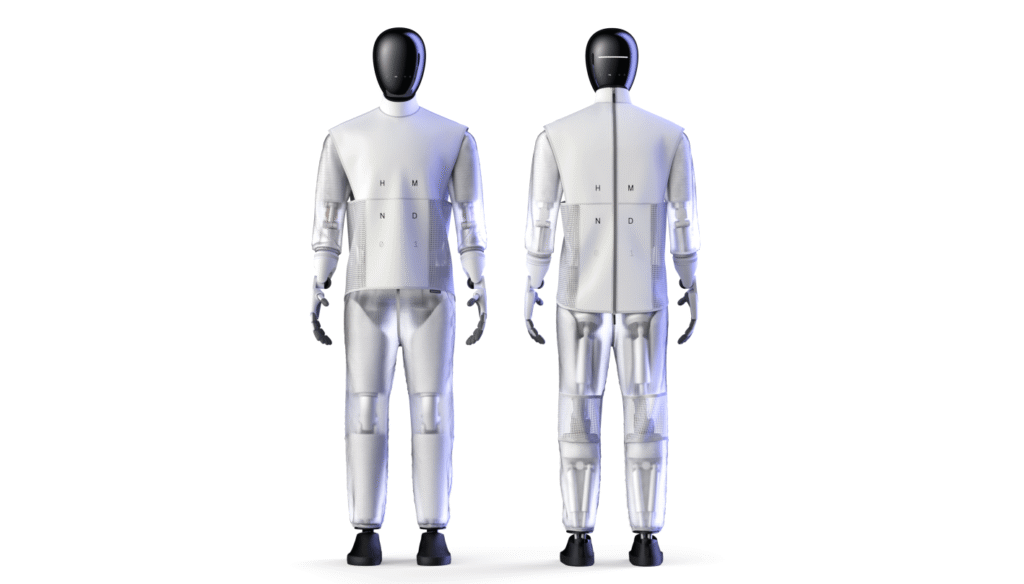
Elon Musk’s Optimus demo at Tesla’s We Robot event made one thing clear: when it comes to humanoids, the spotlight still belongs to the United States. Then there is Asia — with China’s rapid developments and Japan and South Korea’s deep legacy in robotics. Headlines still gravitate toward billion-dollar budgets, rapid hardware iterations, and slick simulation reels.  Behind the noise, though, another development is unfolding in Europe — quieter, but potentially far more consequential. The next chapter of humanoid robotics may be defined not by who moves first or builds the flashiest prototypes, but by who moves with the discipline and consistency required. And Europe has the potential to lead this new era.  Regulation as strategy In most conversations about innovation, regulation is framed as a brake. In Silicon Valley, it’s often seen as a hurdle to scale or a signal of bureaucratic overreach. But Europe — particularly in AI and robotics — is rewriting that narrative. With the AI Act now adopted, the EU is the first region to offer comprehensive legal clarity around the deployment of high-risk AI systems, including humanoid robots.  We must also consider that, eventually, other countries will likely adopt regulatory frameworks that align broadly with the EU’s, even if they’re less stringent. By designing with European standards from the outset, we’ll be well-positioned to adapt quickly as new regulations emerge elsewhere. TNW City Coworking space – Where your best work happens A workspace designed for growth, collaboration, and endless networking opportunities in the heart of tech. This clarity matters. When investors and industrial partners can reliably assess compliance risks, they’re most likely to commit resources. In a field as complex and potentially disruptive as robotics, clear rules don’t slow down progress — they de-risk it. Europe has also introduced or updated several other regulations that directly impact robotics: Together, these frameworks give the EU a coherent and predictable regulatory environment. Yes, it’s tough, but given the implications, this provides exactly what the humanoid sector needs: clarity. Deployment, not demos While the US often relies on innovation funded by Big Tech monopolies and China leans on state-driven manufacturing strategies, Europe’s robotics sector is built on modular collaboration. Startups and research labs spin out into well-funded clusters, often supported by EU-backed initiatives like RI4EU and EIC Accelerator. These programs offer access to testbeds, pilot funding, and collaborative R&D networks.  Furthermore, Europe’s geographic and industrial structure gives it a special advantage: close proximity to real-world use cases. Having neighbouring logistics hubs, manufacturing zones, and retail chains in contiguity helps speed iteration and aligns development with the continent’s actual operational pain points. McKinsey estimates that in some of Europe’s critical sectors — including retail and logistics — payroll alone amounts to $1.7 trillion (€1.55 trillion). This makes automation highly profitable and ripe for disruption.  These factors have played a key role in the strategy of Humanoid, the robotics company I founded in the UK last year. Our goal isn’t just to impress on stage; it’s far more important that we seamlessly integrate innovations into real workflows. For this, we’ve adopted a simple, modular design philosophy: a wheeled base that suits logistics environments, accelerated by simulation plus feedback from real industry trials. We believe that hype must be based on reality — a mindset that’s drawing US investors to European robotics. This shift is already reflected in funding dynamics. Neura Robotics’ €120mn funding round in January 2025 was one of the largest in European robotics to date. And investors are now betting on full-stack teams with credible deployment strategies — instead of merely speculative tech. Humanoid’s latest robot, HMND 01, was introduced in a video earlier this year. Credit: Humanoid A better fit for the future of work Beyond reducing uncertainty, European regulation also helps encode values that shape how humanoid robots are developed and deployed. The AI Act requires high-risk systems — including those used in workplaces, public spaces, and healthcare settings — to meet strict safety, transparency, and human oversight standards. Such a framework fosters trust, which is essential for robots operating in sensitive environments like factories, hospitals, or elderly care facilities. Europe’s emphasis on traceability and ethical co-development goes beyond mitigating risk — it creates the conditions for adoption at scale, where safety and dignity are non-negotiable. Additionally, this approach helps position robots as partners. By designing for augmentation rather than displacement — as often seen in the US — European startups are modelling a more human-centred approach to automation. They’re also offering an alternative to the dominant narrative that robots will replace humans in critical roles.  It’s also worth noting that some jobs aren’t meant for people, as they hinder individuals from reaching their full potential. For instance, a humanoid could take over the task of moving boxes around a warehouse all day. This is not simply a replacement; it is an augmentation of existing automation capabilities, which empowers people to find more purpose-driven work. That distinction comes into sharper focus when we look at the places where humanoids are most needed, such as logistics hubs, clinics, and care homes. These environments have real spatial and regulatory constraints and little room for error. The tasks there are repetitive but require precision, and people are extremely busy. In these settings, robots need to quietly support the flow of work, not interrupt it. That requires thoughtful integration, which means responding at the right pace, handling objects predictably, and, yes, staying out of the way when needed. These are practical challenges shaped by day-to-day routines, not only engineering feats. And, from our vantage point, Europe’s cautious, user-informed development model is well-suited to meet them.  Supply chains and strategic independence There are still concerns in European robotics that need to be addressed. As of 2025, China controls 63% of the humanoid hardware supply chain, from rare-earth magnets to key actuators. However, we’re now seeing global original equipment manufacturers (OEMs) based in Europe partnering with humanoid creators early on to co-develop hardware components together. This strategy can mitigate the risk of

Why Europe could quietly win the humanoid race Read More »

Cleo launches new ‘AI money coach’ to help fix your spending habits

UK-based fintech Cleo, known for its AI-powered budgeting app, has launched its most advanced product to date. Dubbed Cleo 3.0, the new version introduces features such as voice interaction, long-term memory, and improved reasoning capabilities. Barney Hussey-Yeo, Cleo’s founder and chief executive, said Cleo 3.0 is less chatbot and more “conversational AI money coach.” Users can now have real-time voice conversations with Cleo, which the company says makes financial help feel more natural and accessible. “Cleo remembers your goals, learns your habits, and delivers personalised financial guidance previously only available to the wealthy,” said Hussey-Yeo, who founded the fintech in 2016. You connect the app to your bank account, and Cleo uses AI to look at your spending, income, and habits. Then “she” gives you helpful insights, like how much you can afford to spend this week or where you’re overspending.  The 💜 of EU tech The latest rumblings from the EU tech scene, a story from our wise ol’ founder Boris, and some questionable AI art. It’s free, every week, in your inbox. Sign up now! The tool now allows users to speak with the assistant, which responds in natural language and draws on past interactions to deliver tailored advice. For example, you can ask, “Can I afford to go out this weekend?” and it’ll give you an answer based on your current balance and bills. “Cleo 3.0 represents more than just a product update — it signals a shift in what we should expect from financial technology,” said Hussey-Yeo. “The AI revolution won’t be defined by who builds the largest models, but by who applies intelligence to solve the hardest, most human problems.” The app is powered by OpenAI’s o3 model and uses chain-of-thought reasoning to break down complex financial decisions. Cleo claims its user engagement is 20 times higher than that of traditional banking apps. The company expects to exceed 1 million paid subscribers this year, with annual recurring revenue (ARR) reaching $250mn — an 82% increase on 2024. However, Hussey-Yeo said in a LinkedIn post last week that “$500mn ARR is around the corner.” The founder also dangled the possibility of the company going public. “So, London or NYC for the IPO?” he wrote.  source

Cleo launches new ‘AI money coach’ to help fix your spending habits Read More »

Can the EU's Act protect jobs without stifling innovation?

While the US has largely pursued AI development with minimal regulatory oversight, Europe has taken a markedly different approach. The Data Protection Act, the GDPR, and the recent AI Act — aligned more closely with local workers’ laws and unions — have set the continent on a separate path.  A recent joint study from the International Labour Organisation (ILO) and Poland’s National Research Institute (NASK) found that Europe — along with Asia — tops the list of most exposed regions to AI, far surpassing the Americas. With studies finding that one in four jobs are at risk of being transformed by AI globally, the impact in Europe — a region which faces a significant shortage of skilled workers — has become a pressing concern. “In many ways, it’s too early to tell where the AI wave will take us — we’ve only seen a fraction of its capabilities so far, which is equal parts exciting and terrifying,” Adam Maurer, COO at Connecting Software, a tech company operating across Europe, told TNW.   In recent years, Big Tech companies have frequently carried out mass layoffs, driven both by revenue concerns and the belief that AI can take over many of the functions of employees from entry to mid-level, Maurer said.  The 💜 of EU tech The latest rumblings from the EU tech scene, a story from our wise ol’ founder Boris, and some questionable AI art. It’s free, every week, in your inbox. Sign up now! Some of these AI-driven layoffs have effectively targeted low performers, but other initiatives have been problematic. At Klarna, for example, they had concerning impacts on the business. Klarna, a Swedish fintech company that fired 700 workers and replaced them with AI, recently announced it will hire humans back again. The company’s CEO admitted to having made a “mistake” when replacing workers with AI.  “It’s very clear that AI will definitely replace some jobs,” Maurer said. “On the other side of the coin, I think it will make some other jobs far more valuable.” In the EU, labour laws and regulations will shape the impact on jobs. Tech leaders believe they could lead to an AI future that benefits both workers and businesses.  The talk among executives Maurer said there may be some expectation for the EU to step in and regulate job displacement. However, he argued that would stagnate growth and discourage startups from doing business in the union.  But not every business leader agrees. Displacement will happen, but not because of AI, said Volodymyr Kubytskyi, head of AI at MacPaw, a Ukrainian software company developing solutions for Apple devices.   “AI disrupts the traditional logic and processes of work,” Kubytskyi told TNW. “The real question is, ‘Can we redesign work processes before this outdated system collapses?’” To prevent the system from collapsing, leaders must stop thinking of AI as a quick-win or cost-saving tool, he said.  Kubytskyi argued that while the AI Act was necessary to set a baseline for the industry, it doesn’t account for potential job disruption, which is a gap in the regulatory landscape.  “To account for this, the AI Act should be updated, but it’s unlikely that this will happen soon,” he said. Roman Eloshvili, founder of ComplyControl, a UK compliance company, told TNW that the AI Act targets safety, transparency, and ethics, but falls short on socio-economic impact, especially on jobs. “So, amendments are necessary,” he said. “I expect that, over time, some of them, such as mandates for employer-led upskilling or protections for displaced workers, will appear to address workforce implications more effectively.”  Will the AI Act become outdated or even counterproductive, especially if its stringent compliance mechanisms amplify inequalities in access to AI benefits? Or is it too early in the game to amend the law? Kris Jones, who leads the engineering team in Belfast for iVerify, believes it’s too soon to make changes. He said the AI Act’s risk-based framework already strikes a delicate balance between protecting fundamental rights and giving innovators room to breathe.   Amending the regulation is not the only policy idea discussed among executives. Jones told TNW that member states have other levers to pull. “One idea floating around is an ‘AI token’ tax,” he said. A token tax would enable governments to generate revenue from AI usage that is producing income. These funds would then be redistributed through measures such as reskilling programs or support for affected industries.  Dario Amodei, the CEO of Anthropic, recently told Axios that the concept could offset the inevitable wipeout of millions of entry-level white-collar jobs lost to AI. “Measures like that can cushion any job shocks without putting a blanket lid on innovation,” Amodei said.  Are clashes with European labour and trade unions inevitable? European labour and trade union bodies have often been ignored in the debate over AI job displacement. But many of them have already made official statements expressing concerns over AI.  Ahead of the Paris AI Summit in February 2025, the ETUC, representing over 45 million European workers, issued an open letter about AI’s dangers. It warned that any efforts to ensure AI has “a positive impact on workers in the labour markets, quality jobs, and society will be annulled if AI is monopolised by a handful of tech companies”.  The previous August, UK unions, including Accord and Unite, had called for regulations to protect workers from AI. They also proposed reskilling programs for workers, reminded companies of their transparency obligations, and emphasised the need for union consultations. They said that they intended to protect workers’ rights against AI‑driven hiring and firing, as well as defend IP rights for creative professionals. We asked tech firms whether they expect companies to face challenges with labour laws and unions in Europe. “Undoubtedly,” Eloshvili from ComplyControl said. “European robust worker protections and active unions present both a safeguard and challenges for AI integration.” Unions will demand transparency and worker involvement in AI deployment as automation threatens certain jobs, he said. “Firms that try to impose AI solutions without dialogue

Can the EU's Act protect jobs without stifling innovation? Read More »

How venture capital can adapt to boost European deep tech

Europe’s deep tech future hinges on evolving investment strategies. The reason for this is that traditional funding models cannot support the long-term financial commitments that innovation demands. There is a European paradox where, despite substantial scientific research, early commercialisation and a focus on shorter-term goals prevent the region from realising the full potential of deep tech. Although startups provide strong support, the sector still lags behind the US and Asia in bringing breakthroughs from the lab to market.To maintain a competitive industry, Europe needs to advance technologies like AI, robotics, synthetic biology, and quantum computing, which are at the heart of the deep tech sector. These technologies aren’t just profitable. They can transform the world, from cochlear implants restoring hearing to aerospace engineering enabling missions to Mars. But none of these advances happen without patient, long-term investment in science, engineering, and design. Startups focused on rapid-deployment SaaS or consumer apps can commercialise quickly and attract early investment. Deep tech is different: there’s a “valley of death” driven by long R&D cycles, high upfront costs, and greater risk tolerance than in traditional software ventures. It’s worth examining which new funding models are working — and how they are starting to take hold in Europe. Drawing on insights from my investment practice — Zubr Capital’s — this analysis explores the real opportunity for Europe to leverage deep tech and reclaim lost market share, rather than see its startups move to mature financial ecosystems like the US, Asia, or Israel. Why Classic Venture Capital Struggles with Deep Tech TNW City Coworking space – Where your best work happens A workspace designed for growth, collaboration, and endless networking opportunities in the heart of tech. Traditional software startups typically follow a familiar funding cycle blueprint. It raises a 10-year fund, deploys gained capital over three to five years, and aims for lucrative investment exits within five to seven years. The startup defines a successful funding cycle based on rapid growth, scalability, and relatively low capital requirements. Deep tech cannot operate within this traditional financial mould. Startups operating in this category need development cycles that often exceed a decade. Regulations from subcategories like healthcare, energy, and aerospace require numerous certifications and tests to verify advanced capabilities. That is an area where generalist VCs rarely tread due to a need for patient capital. Most deep tech companies have to overcome specific industrial and geographical thresholds. A French aerospace firm, for instance, may not have the infrastructure to take advantage of traditional funding the way a US giant like Delta can. Established investment models present several obstacles to deep tech companies. For example: · Pressure for visible traction pushes startups to pivot from deep tech to commercial projects.· Traditional VCs often lack the expertise to evaluate complex projects properly.· Europe has smaller funds for upfront and long-term costs.· There is a “valley of death” for deep tech to cover R&D from public funds.· EU investors tend to be risk-averse due to the stigma of failure.· Fragmentation within the industry, with multiple markets, regulations, and heavy bureaucracy, slows funding.· Foreign funding steps in for late-stage rounds, frequently taking the tech to other countries. Another pain point in deep tech is the reliance on education. A traditional startup leader only has two to three years of higher education. Deep tech requires about five to seven years due to the complexity of the subject matter. An overwhelming 81% of deep tech founders believe European investors lack the knowledge to really understand the in-depth details of their projects or goals. There also simply isn’t enough money to offer. A European fund managing €150mn can write a few €10 to €15 mn checks, but that isn’t enough to build something as complex as a gigafactory or scale a new fusion plant. The mismatch of traditional VC funding with deep tech in Europe is what drives systemic underfunding, stalled startups, and the loss of world-changing innovations. There is a history of outside and foreign entities like Amazon, Facebook, Microsoft, and others picking up European tech talent to integrate into their R&D sectors. Those losses slow European deep tech advancement.. The Evidence: When Venture Capital Fails Deep Tech The idea of mismatched VCs isn’t theoretical. There are many real-world examples of funding failures leading to Europe losing deep tech opportunities to international competitors. Here are just a few examples. Prophesee in France Prophesee creates neuromorphic vision sensors that enable machines to mimic human sight. The company raised €126mn over several rounds. However, in October of 2024, Prophesee entered judicial recovery after failing to secure additional funding. Even though the startup received massive global recognition for its technical validation (proof of concept), the length and uncertainty of financing led to complications in development. Mycorena in Sweden Mycorena had to file for bankruptcy and is now permanently closed. What began with the promise of mycelium-based protein that could be used in all kinds of industries failed after the startup couldn’t secure Series B funding in the mid-2020s. Mycorena was ultimately acquired for next to nothing, underscoring the hurdles deep tech companies encounter during scale-up. Blickfeld in Germany Blickfeld was an emerging leader in LiDAR, which enables autonomous vehicles to perceive their environment and operate safely. The company raised a total of €68mn — including €15mn from the European Investment Bank (EIB). But in June 2024, Blickfeld had to file for insolvency. Revenue came in too slowly to meet the demands of patient capital. There are many other examples of investment shortcomings undermining promising European tech firms. Take MaaS Global in Finland, best known for the Whim app, which burned through too much capital without a sustainable business model. Or Sweden’s Northvolt, whose battery manufacturing business failed even with a blended funding model. The pattern is strikingly consistent: funding dries up when capital needs spike and investors push for exits while R&D is still trying to work out the final solution. Meanwhile, public funding fails to arrive in time, and technical ambition is quickly sacrificed on the

How venture capital can adapt to boost European deep tech Read More »

Browzwear snaps up Dutch AI fashion model startup Lalaland

Dutch startup Lalaland, a pioneer of AI-generated fashion models, has been snapped up by software firm Browzwear for an undisclosed sum. Based at TNW City in Amsterdam, Lalaland quickly made waves — and sparked debate — after launching its customisable, realistic AI avatars in 2019. They’re pitched as a way for brands to save money while showcasing more diversity in their advertisements.  Browzwear, best known for developing 3D design tools that let fashion brands prototype clothes without making physical samples, was already a Lalaland user before the acquisition. CEO Greg Hanson said the company is now bringing the Lalaland team fully “in-house.” “Our customers want absolute confidence in their digital twins,” he continued. “Lalaland’s hyper-realistic, diverse AI models supercharge that trust and dramatically cut the time between concept and commerce.”  Singapore-based Browzwear will integrate Lalaland’s AI team into its R&D division, where they’ll focus on improving the accuracy of virtual body shapes for better fit prediction. They’ll also use AI to generate diverse, size-inclusive model avatars and automate product imagery, reducing the need for traditional photo shoots.  TNW City Coworking space – Where your best work happens A workspace designed for growth, collaboration, and endless networking opportunities in the heart of tech. These efforts aim to boost Browzwear’s flagship digital twin software, which enables designers to create a virtual version of a garment — complete with fit, fabric, and style — just minutes after sketching the idea.  Michael Musandu, co-founder and CEO of Lalaland, said that when the company first started working with Browzwear, “the synergy was obvious.”  “Joining forces now is a no-brainer,” he added. Musandu, who was born in Zimbabwe, co-founded Lalaland after growing frustrated by the lack of representation in fashion modelling. “One model does not represent everyone that’s actually shopping and buying a product,” he told the Associated Press last year. “As a person of colour, I felt this painfully myself.” Yet the use of AI-generated avatars has also sparked controversy. In March 2023, denim brand Levi’s revealed plans to test Lalaland’s AI-generated avatars to showcase more diverse body types and underrepresented groups on its website. The move led to accusations that Levi’s was looking for a shortcut to the commercial benefits of diversity. A few days after the announcement, the brand put out another statement saying that it remains committed to live photo shoots, real models, and authentic diversity.   Musandu, meanwhile, insists that Lalaland was never designed to replace traditional photo shoots — or human models. “We believe human models will continue to play a vital role in the fashion industry, establishing genuine connections with consumers; our technology aims to support this,” he said shortly after the Levi’s controversy. “And, yes — we need more of them to come from underrepresented groups if fashion companies are serious about inclusion efforts.” source

Browzwear snaps up Dutch AI fashion model startup Lalaland Read More »

Proton VPN rises to top UK app charts as porn age checks kick in

Proton VPN has become the UK’s most downloaded free app, as Britons rush to bypass a new law requiring users to verify their age before accessing websites hosting adult content.  Proton VPN reported a staggering 1,400% surge in UK sign-ups almost immediately after the Online Safety Act came into effect. It is now Britain’s most downloaded free app, overtaking ChatGPT, according to Apple’s App Store rankings. The Switzerland-based virtual private network (VPN) said in a post on X that the surge in interest has been “sustained.” This contrasts with recent short-term spikes, such as when people in France temporarily lost access to adult sites like Pornhub and RedTube last month due to new legislation.  The surge in downloads follows the UK government’s rollout of the Online Safety Act, which came into effect after midnight on Friday, July 25. The law requires websites such as Pornhub, Reddit, and TikTok to implement strict age verification measures, including uploading an official ID or using third-party identity checks.  The act is an attempt to protect minors from accessing harmful or adult content online. However, VPNs provide a relatively easy way to circumvent the new law. By masking a user’s location, they can make it appear as if internet users are accessing the web from outside the UK, where the new law doesn’t apply.  Ofcom, the UK’s communications regulator, has warned against using VPNs to sidestep the new rules. Meanwhile, Katie Freeman-Tayler of children’s safety group Internet Matters has raised concerns about how easily children can access VPNs. “This makes it easy for them to circumvent important protections introduced under the Online Safety Act, such as age checks designed to shield them from adult content,” she told the BBC. Proton isn’t the only company benefiting from the new law. Of the top ten free apps in Apple’s UK ranking, six are currently VPN services. They include Yoti, NordVPN, and Free VPN.  “We would normally associate these large spikes in sign-ups with major civil unrest,” Proton said in a statement. “This clearly shows that adults are concerned about the impact universal age verification laws will have on their privacy.”   Proton and other tech firms have previously criticised aspects of the Online Safety Act, warning the law could erode user privacy by forcing companies to scan private messages or break end-to-end encryption.  Criticism has also come from political quarters. Nigel Farage, leader of right-wing political party Reform UK, pledged this week to repeal the rules, labelling them “authoritarian” and a threat to free speech. A separate petition to overturn the Online Safety Act has racked up over 350,000 signatures, triggering a parliamentary review.  Growing demand for VPNs, meanwhile, has sparked fears that the government could ban the services. Security experts, however, have downplayed the concerns. “The UK won’t ban VPNs,” Jake Moore, global cybersecurity advisor at Slovakian software firm ESET, said on X. “It would be nearly impossible, and it would dramatically disrupt legitimate use.” source

Proton VPN rises to top UK app charts as porn age checks kick in Read More »

A satellite just used AI to make its own decisions in space

For the first time, a satellite has used onboard AI to autonomously decide where and when to capture a scientific image — all in under 90 seconds, with no human input. The technology, called Dynamic Targeting, was tested by NASA’s Jet Propulsion Laboratory (JPL) earlier this month. It was installed aboard a briefcase-sized satellite built and operated by UK-based startup Open Cosmos, and carried a machine learning processor developed by Dublin-based firm Ubotica.   In the test, the satellite tilted forward to scan 500km ahead of its orbit and snapped a preview image. Ubotica’s AI quickly analysed the scene to check for cloud cover. If the skies were clear, the satellite tilted back to take a detailed photo of the surface. If clouds obscured the view, it skipped the shot — saving time, storage, and bandwidth. “If you can be smart about what you’re taking pictures of, then you only image the ground and skip the clouds,”  said Ben Smith of JPL, which funds the Dynamic Targeting work. “This technology will help scientists get a much higher proportion of usable data.” Brian Quinn, chief strategy officer at Ubotica, said that until now, satellites have merely acted as passive data collectors. They image whatever happens to be beneath them and beam all that data — useful or not — back to Earth. Scientists then sort through the backlog. The 💜 of EU tech The latest rumblings from the EU tech scene, a story from our wise ol’ founder Boris, and some questionable AI art. It’s free, every week, in your inbox. Sign up now! “It takes post-processing, which could be days later, to say, ‘Hey, there was a fire. Hey, there was a harmful algal bloom’,” said Quinn in an article published on NASA’s website earlier this year.  NASA, Ubotica, and OpenCosmos say the system could also be expanded to spot wildfires, volcanic eruptions, and severe storms faster than ever before from space.  The recent test builds on previous partnerships involving the three parties. In 2021, Ubotica demonstrated real-time AI cloud detection aboard the International Space Station (ISS) as part of a broader research collaboration with JPL. Then, in 2024, Open Cosmos launched HAMMER, an AI-powered satellite equipped with a hyperspectral camera and Ubotica’s machine learning processor. source

A satellite just used AI to make its own decisions in space Read More »

Why navigating ongoing uncertainty requires living in the now, near, and next

As we move into the second half of 2025, the global tech ecosystem is navigating a heady mix of unpredictability and promise. Funding into newer tech firms remains complex, with Startup Genome reporting that while the Beijing, Los Angeles and Tokyo startup landscapes are seeing YoY growth, Paris is flat and the rest of the European ecosystem is in decline. Meanwhile, the technology landscape continues to evolve at an accelerating pace. As Deloitte’s 2025 Tech Trends report states: “technology optimisation and transformation have never been more important as innovation continues to fuel innovation.” This is creating a landscape where large enterprises are struggling to be on the front foot of technology adoption, while juggling the impacts of economic and geopolitical uncertainty and shifting regulations. Meanwhile, startups are hustling to develop solutions to enterprise problems in an ecosystem with lower than usual venture capital investment. All in all: the zeitgeist is fast-paced, complicated, and confusing… but it’s pretty exciting to be part of what is truly a historic moment for the world’s relationship with technology. As I shared with industry leaders at The Next Web’s ‘Innovating at Scale’ panel, this turbulence has forced a rethink of what it means to operate and innovate at scale. In this environment, resilience isn’t just about weathering storms; it’s about evolving in real time, making decisions with imperfect information and finding opportunity in volatility. The reality of volatility: our experience 2024 was brutal for many in the technology sector. The industry whiplashed from pandemic-fuelled overhiring to a sharp correction, all while economic fragility tested even the strongest partnerships. Delayed payments, vanished purchase orders and a rise in ‘ghosting’ became the norm for suppliers, as organisations were increasingly pressured to deliver more with fewer resources. The 💜 of EU tech The latest rumblings from the EU tech scene, a story from our wise ol’ founder Boris, and some questionable AI art. It’s free, every week, in your inbox. Sign up now! Yet in 2025, amid the unpredictability, there is a palpable sense of renewal. We’re seeing a resurgence in growth-focused investment, which has materialized for us in the form of a spike in marketing and communications briefs, as businesses recalibrate for a world where resilience, agility and purpose are not optional extras but central to survival. This is good news for the technology sector, and great news for Clarity as a technology focussed digital marketing and communications agency. But we’re not out of the woods yet and, as we discussed in my panel at The Next Web Conference, we all need to be playing multiple moves ahead. Lessons from Innovation Under Pressure, the panel I hosted at The Next Web Conference 2025 At The Next Web, I was privileged to host a panel with leaders from organisations at the forefront of global innovation: Monika Tomczak-Górlikowska, Group Head of Privacy, Digital & Regulatory at Prosus Group (an ecosystem for lifestyle e-commerce entrepreneurs); Ernesto Lasalandra, Chief Research & Development Officer at Ferrari; Shez Partovi, Chief Innovation Officer and Chief Business Leader Healthcare Informatics, Philips; and Seth Dobrin, Co-Founding General Partner, 1Infinity Ventures (a global responsible AI fund). Their experiences underscored a universal truth that most in the business world have now accepted: innovation at scale is no longer a luxury, but a necessity. A few key themes emerged: 1. Regulation is now a core business competency: Technology firms’ success demands that legal, privacy and cybersecurity voices are not just consulted, but embedded in the innovation process. Regulatory change and policy discussions must not be ignored, they are signals to prioritise, adapt and build solutions that will endure across borders and business models. 2. Partnership is the engine of progress: Whether it’s Ferrari’s open innovation approach, where thousands of startups are scrutinised for their potential to drive (pardon the pun) next-generation solutions, or Philips’ customer-driven partnerships to solve real-world pain points, the message is clear: innovation thrives in ecosystems not silos. The most transformative ideas solve genuine problems and are developed in collaboration with partners, suppliers and, most importantly, customers. 3. Culture is critical: Across the panel there was consensus that innovation must be woven into the fabric of the business, not siloed in a standalone team. This means cultivating a culture where experimentation is encouraged, failure is reframed as learning and agility is prized over perfection. Members of the panel flagged that an obsession with perfection was potentially a key boulder holding the European tech ecosystem from competing more strongly with the U.S. and key APAC markets. As Shez Partovi of Philips put it, “…if you don’t change your mind a lot, you’re probably wrong a lot.” Now, Near, Next: Building resilience for whatever comes next So, how can businesses not only survive, but thrive in this change-centric environment? At Clarity, we guide our clients to adopt a “Now, Near, Next” mindset, one that aligns immediate action with longer-term vision, all powered by data and relentless agility and adaptation. The ‘Now’ is about managing risk and protecting reputation today. In an era of 24/7 scrutiny, every company is just one misstep away from a crisis. Clear, consistent communications and robust stakeholder engagement are the foundations of trust. ‘Near’ focuses on sustaining innovation and growth. This means investing in partnerships, nurturing talent through powerful employee communications and building the capacity to pivot when disruption strikes. Businesses must constantly be asking: what do we need to change in the next 12 months to stay relevant? Finally, ‘Next’ is about future-proofing: embedding purpose, ethics and sustainability into strategy. As AI, regulation and societal expectations evolve, the winners will be those who anticipate change and act with conviction. Influence the world, impact the future Taking the ‘Now, Near, Next’ approach is not just a communications and marketing strategy, it’s a business imperative. The world isn’t slowing down, and neither can we. By embracing regulatory complexity, forging purposeful partnerships and building a culture of constant learning, businesses can not only navigate uncertainty, but define the future on their own terms. Because in

Why navigating ongoing uncertainty requires living in the now, near, and next Read More »

This cargo ship is turning its CO2 emissions into green cement

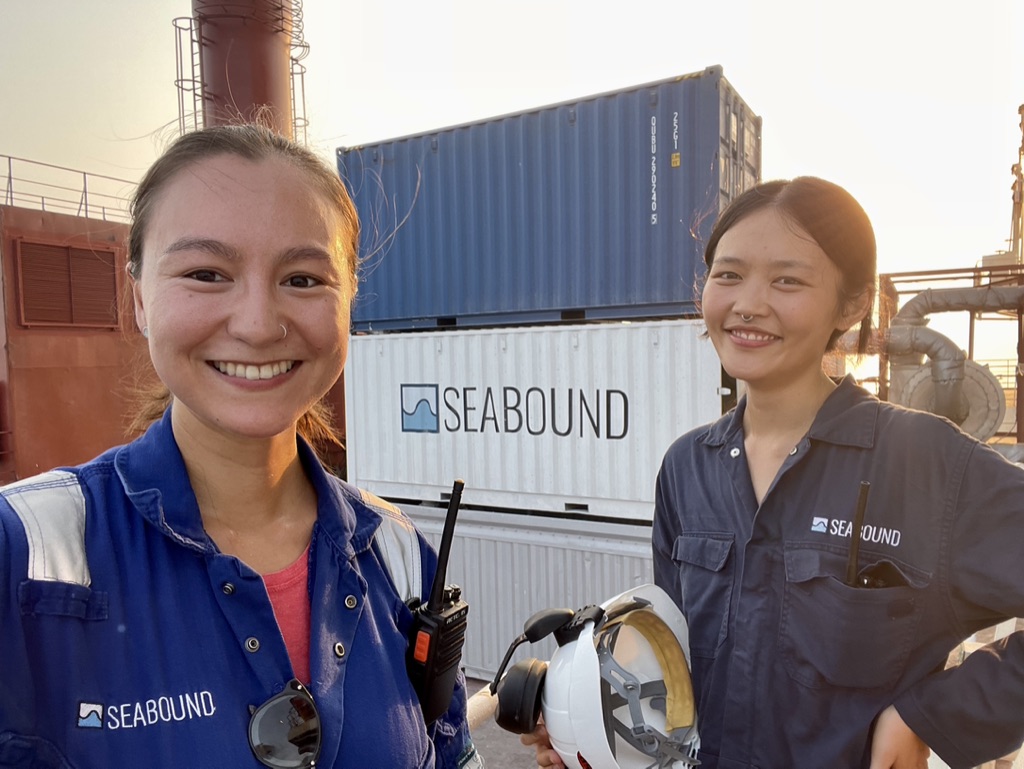
A giant cargo ship is set to trap carbon from its exhaust and turn it into cement for use in onshore construction. The technology, developed by UK startup Seabound, is billed as the world’s first commercial carbon capture system for boats. It will be installed on the UBC Cork, a cement carrier owned by Germany’s Hartmann Group. “These are the systems we intend to scale across hundreds, and eventually thousands, of vessels,” Alisha Frediksson, Seabound’s CEO and co-founder, told TNW. “We’re therefore very excited to get them out into the world — to gather valuable data, optimise future iterations, and most importantly, to show the industry that onboard carbon capture is no longer just a concept.” Seabound co-founder Alsiha Fredriksson (left) with fellow co-founder and CTO Roujia Wen. Credit: Seabound Seabound’s carbon capture equipment traps the exhaust gas produced by the vessel’s huge diesel engines and funnels it into a big, high-pressure chamber filled with calcium hydroxide pebbles.  TNW City Coworking space – Where your best work happens A workspace designed for growth, collaboration, and endless networking opportunities in the heart of tech. The CO2 in the exhaust gas reacts with the pebbles and transforms into calcium carbonate — also known as limestone, the key ingredient in cement. That limestone is stored onboard and will be offloaded in Norway, where it will be delivered to Heidelberg Materials’ cement plant in Brevik. There, it will be used to produce greener concrete on an industrial scale as part of Heidelberg’s existing carbon capture facility.  Seabound claims its system can capture up to 95% of CO₂ and 98% of sulphur emissions from a ship’s exhaust. Its modular design allows it to be bolted onto existing vessels with minimal changes. It offers the shipping industry a way to cut emissions immediately — but it can’t replace the long-term need for cleaner fuels to replace diesel altogether. An example of Seabound’s container-sized carbon capture plant from a previous pilot trial. Credit: Seabound A step toward cleaner voyages Shipping accounts for nearly 3% of global emissions but is notoriously hard to decarbonise. Current battery technology simply cannot provide enormous cargo vessels with enough power to cover long distances. Nuclear propulsion has also been considered, but comes with risks and remains controversial.  Most experts agree that the best bet is alternative, zero-emission fuels, such as hydrogen and ammonia. But these are still in the early stages of development and require the building of entirely new ships. Seabound’s tech, then, could provide an interim solution to curb emissions from shipping, while we wait for other, more permanent fixes to be developed.  “Alternative fuels for ships are at least 10 to 20 years away, but we need to start decarbonising today,” Frediksson previously told TNW.   Seabound has already trialled its technology with shipping firms Hapag-Lloyd and Lomar Shipping. It’s now looking to scale up its systems, targeting 100 million tonnes of CO₂ captured per year by 2040 — 10% of the shipping sector’s total emissions. This latest project, its first commercial endeavour, was co-funded by the EU’s Eurostars startup programme and backed by the Cyprus Marine and Maritime Institute. source

This cargo ship is turning its CO2 emissions into green cement Read More »