Scaling a medical device company: A CIO's digital transformation journey

We workshopped it. We brought together 42 people from across the globe, from different positions, to detail the business capabilities, our pain points and what ERP would mean to Novanta. We highlighted all of those through many sessions, and then we started bringing different vendors in to see which software would work for us, moving forward to the integrator and so on. And as life happened between 2020 and now, here we are in 2024, kicking it off. It’s been a long journey, but what that says is don’t ever give up, because business is based on the economy and is based on business decisions.  That doesn’t mean that ERP or whatever other initiative you’re undertaking is not important. It’s just business. You have to be able to be flexible to move and pivot with the business.  How to improve the relationship between the CIO, the CEO and the board of directors  This might come as a surprise for some readers: Be honest. Tell the whole story. Because if you try to change the storyline, the next time you meet, the reaction might be ‘but that’s not what you told us last time.’ So, always be honest.  source

Scaling a medical device company: A CIO's digital transformation journey Read More »

Warning: The Mobile Endpoint In Your Pocket May Be Just As Vulnerable As Your Desktop

Microsoft Windows is the dominant desktop operating system globally, which is a primary reason why hackers target Windows continually, because even with a very low success rate due to Windows’ extensive protections, hackers know that their chances of conquest are better than on MacOS or other operating systems. This isn’t to knock Windows or praise Mac but to set the stage for a larger issue. Less common is the knowledge that Android is the markedly dominant mobile operating system, and partly because of that “honor,” malicious actors attack Android more frequently, leading to attacks like this, where malware gets loaded into the Google Play store and is installed on over 8 million devices. The problem that Windows and Android share, besides their global pervasiveness, is that both are designed with an ability for extensive customization. While each OS has core common functions, both are installed on a vast array of physical devices that neither Microsoft nor Google build, though both sell their own devices, too. This enormous flexibility can allow minor code changes to come through from the device platforms, such as device-specific drivers, that can then become new avenues for attack. MacOS and Linux have their own extensive list of vulnerabilities as well, but with around a 15% and 4% market share, respectively, hackers still prefer to target the larger-installed-base OSes. Android’s other issue, and one it shares with iOS, is that users work on mobile devices differently than Windows PCs. Smartphones have become very personal to the user, and the way applications are delivered, predominantly through the public app stores, is very different from how apps are delivered to business and even personal desktops. While Microsoft and Apple have app stores for Windows and Mac, usage of these within enterprises remains low. Even for fully managed business mobile devices, applications are usually delivered to Android devices through the Google Play store, just as iOS devices use the Apple App Store. This means you’re relying on the security operations of that third party to ensure that everything delivered to your smartphone (or tablet) meets high security standards. When enterprises introduce bring-your-own-device (BYOD) policies, new cyber risks emerge as users install and remove different apps to find the apps best suited to their personal tastes while the IT or security operations analyst is simultaneously trying to deliver the correct set of productivity apps approved for use by your employees. How do you ensure that those apps are safe and not compromised? And this is not an Android-only issue; iOS has its own headaches in the realm of apps and vulnerabilities. Bear in mind that while this latest issue for Android relates to apps delivered through the Google Play Store, both Android and iOS allow for the sideloading of applications (with iOS sideloading being limited to the EU and with some restrictions), so security and risk professionals need to understand the complete scope of the challenge before allowing BYO devices into the enterprise. What can you do about it? First, you should come see me at the Forrester Security & Risk Summit in Baltimore next week for my session, “Enhance Mobile Security With AI And Zero Trust.” The most important point, however, is to stop treating smartphones like they’re powerful phones and treat them like enterprise endpoints. Even in the world of BYOD, if a mobile device is accessing corporate information, you must apply Zero Trust principles and protect your business resources appropriately. If you wouldn’t let a random Windows laptop access your primary business apps without checking its security posture, then you should do the same with any Android or iOS device. If you can’t join me in Baltimore, please read The Forrester Wave™: Mobile Threat Defense Solutions, Q3 2024, to understand how mobile endpoint security vendors are providing solutions that help protect this valuable enterprise endpoint. source

Warning: The Mobile Endpoint In Your Pocket May Be Just As Vulnerable As Your Desktop Read More »

市場關注: 推動智慧城市基礎設施與智能網聯汽車協同發展

道指跌248.33點,跌幅為0.55%,報44765.71點;納指跌34.86點,跌幅為0.18%,報19700.26點;標普500指數跌11.38點,跌幅為0.19%,報6075.11點。 美國上周首次申請失業救濟人數增幅超出預期。投資者將關注焦點轉向周五的11月非農就業數據。 世界黃金協會:全球黃金ETF上月流出21億美元 為4月份以來首次月度流出。 中辦、國辦:推動智慧城市基礎設施與智能網聯汽車協同發展。 財政部:在政府採購活動中 給予中國產品相對於非本國產品20%的價格評審優惠。 廣州將適時對電動自行車實行總量控制。 廣州今年首次出現民企拿地 綠城、龍湖各得海珠番禺宅地。 華為Mate70系列加單30%至1700萬台。 傳能量飲品製造商東鵬飲料(605499.SH)正考慮在港上市 集資最多78億港元。 陸控(6623)大股東中國平安(2318)增持 最新持股66.85%。 LinkedIn Email Facebook Twitter WhatsApp source

市場關注: 推動智慧城市基礎設施與智能網聯汽車協同發展 Read More »

How to Add an SSH Fingerprint to Your known_hosts File in Linux

Let’s say you’ve written a bash script that scans all of your Linux servers in your data center for uptime. Such a file could contain the following contents: ssh $1 “uptime” When you run your script, it may get foiled by an issue where it is stopped by a server that has yet to have its SSH key fingerprint added to the known_hosts file. When this happens, your script is rendered useless. SEE: How to View Your SSH Keys in Linux, macOS, and Windows (TechRepublic) SSH key fingerprint What is an SSH key fingerprint? Simple: The key’s fingerprint is verified when you try to log in to a remote computer using SSH. When you log into an SSH server for the first time, you’ll see something like that shown below. Logging into an SSH server for the first time. Image: Jack Wallen If you don’t accept the fingerprint, the connection will be immediately broken. So what happens when you’re working with a bash script that cannot accept input in order to okay the addition of the remote SSH fingerprint? Fortunately, the developers of SSH thought of this and added a command that allows you to easily add SSH fingerprints to the known_hosts file. SEE: How to Create and Copy SSH Keys with 2 Simple Commands (TechRepublic) Open source: Must-read coverage Adding the fingerprint I’ll demonstrate adding the fingerprint from a remote server to a local machine. Let’s say the remote server is at 192.168.1.162. To add that fingerprint, the command would be: ssh-keyscan -H 192.168.1.162 >> ~/.ssh/known_hosts The command will run and add the remote SSH fingerprint to the local machine without your input, as shown below. How to run and add the remote SSH fingerprint to the local machine. Image: Jack Wallen So an addition to the bash script could look like: ssh-keyscan $1 >> ~/.ssh/known_hosts The above addition would take the argument from the command (say, for example, ./script 192.168.1.118) and add the fingerprint to ~/.ssh/known_hosts before it then moves to the next line — thereby avoiding the missing SSH fingerprint issue. Of course the above would only work properly if you have ssh key authentication setup. Otherwise, you’d have to enter the remote machine’s password. SEE: How to Mount Remote Directories with SSH (TechRepublic) The simple things Sometimes, it’s the simple things that trip up our bash scripts. If that key fingerprint issue has been causing you headaches with your scripts, you can now avoid the issue. source

How to Add an SSH Fingerprint to Your known_hosts File in Linux Read More »

The Automation Paradox Strikes Again: Lessons From Woolworths “Amazon Era” Productivity Play

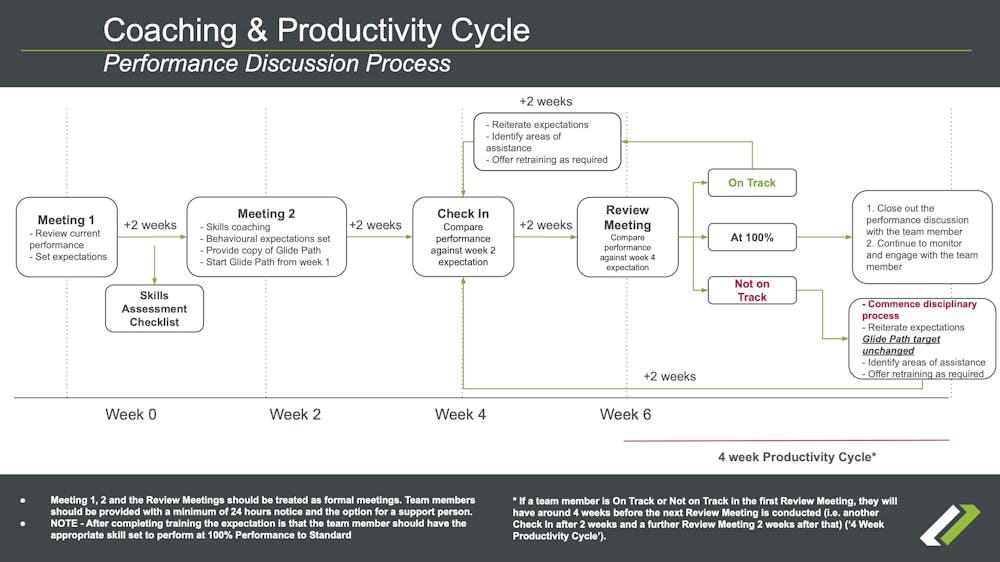
Recent worker strikes at Woolworths’ distribution centers in Australia have reignited concerns over the use of AI-powered productivity systems in the workplace. In early 2024, Woolworths introduced the “Coaching and Productivity Framework,” a new performance management program aimed at monitoring and optimizing workers’ output across warehouses. The program has drawn sharp criticism from warehouse workers for enforcing harsh quotas, increasing stress, and compromising safety. Stalled negotiations between Woolworths and the workers’ union resulted in empty shelves in Woolworths supermarkets across Victoria and New South Wales. This turns of events parallels Amazon’s ongoing challenges where similar technologies have led to burnout and high turnover rates. The Fantasy Of Idyllic Automation Efficiency Clashes With The Reality Of Workers Automation that prioritizes efficiency at all costs often exacerbates the very problems it seeks to solve, leaving both employees and businesses worse off. The Woolworths productivity framework exemplifies the automation paradox: As tasks become more automated, human roles become more critical — but also more taxing. Workers at Woolworths’ warehouses report skipped breaks, unsafe work speeds, and feelings of being treated as cogs in a machine. Amazon’s algorithmic management system has faced similar criticism, with workers describing dehumanizing conditions and dangerous expectations. https://theconversation.com/why-woolworths-workers-cant-sleep-at-night-inside-the-supermarket-giants-controversial-framework-242015 If you are looking to deploy such tools in your organization, carefully consider the impact on the employee experience (EX). If employees perceive AI tools as a source of mental and physical distress rather than enablement, their motivation and engagement will falter. The more anxiety and frustration they experience, the less likely they are to perform at their best. Forrester’s data says about half of the global workforce is somewhere on the burnout spectrum and 19% are in the “red zone,” which is defined by high burnout and low engagement. And one of the big factors contributing to anxiety around job security is AI: some 59% of workers fear they’ll lose their job to AI in the next 10 years and 86% feel someone else will lose their job to AI. The tech is not the problem: It’s the understanding, skills, and ethical awareness (also known as the artificial intelligence quotient, or AIQ) of employees that doesn’t match the moment, with only 14% of global individual contributors scoring high on AIQ. If you invested too little in AIQ readiness training in 2024, you must fix that in 2025. To get employees to a good place, think beyond the tech and mature your HR efforts. Use direct employee feedback to focus on improving issues that impact employees’ immediate well-being, such as salaries, benefits, and work schedules. The Financial Implications Of EX And Customer Experience Blunders Employees shape customer experience (CX), which shapes your brand. This is true not only of businesses with frontline workers but also those where the people are behind the scenes. Woolworths’ empty shelves during strikes illustrate how worker dissatisfaction can directly impact customers. At Amazon, algorithmic management has led to high attrition and operational errors, such as delayed shipments, which erode customer trust. Woolworths and Coles’ use of surveillance technologies — both for employees and shoppers — also contributes to a broader perception of distrust, making customers feel alienated. Trust is not abstract; it’s specific and measurable. An individual’s level of trust in a company drives revenue-generating consumer behaviors, such as likelihood of purchasing from a company again, preferring a company over its competitors, trying unrelated products and services, and sharing personal data. Forrester’s data says that 29% of customers will permanently stop doing business with a company after seeing news about poor employee working conditions, and 27% prefer doing business with a competitor who seems to have more ethical workplace conditions. Both Woolworths and Amazon aimed to increase efficiency and profitability with their respective systems but saw significant fallout. Amazon’s high turnover rates have increased its recruitment and training costs, while Woolworths has already lost $50m in grocery sales since the start of the workers strikes on November 21st, 2024. Recommendations To Mitigate Risks And Ensure Success Poor employee and partner experience have ripple effects across your entire value chain (both upstream and downstream), creating gaps that directly affect CX. Make supply chain risk management a top priority. Architect an ecosystem to connect, extend, and bridge EX and CX. By creating an experience architecture, you’ll enable the right capabilities at the right moments that empower employees to deliver great customer experiences. Lastly, establish KPIs that allow you to track progress toward your EX and CX objectives over time. Use data analytics tools to monitor customer and employee feedback, identify areas for improvement, and optimize your CX strategies accordingly. Avoid these negative financial impacts for your own organization: Rising operational costs: High turnover, workplace accidents, and disrupted supply chains add hidden costs to any efficiency initiative. Are you ready to account for these in your projections? Lost revenue from CX failures: Every disruption in your customer journey — from stock shortages to late deliveries — chips away at revenue and market share. How resilient is your system to these risks? Long-term brand devaluation: A damaged reputation has far-reaching consequences, from decreased investor confidence to dwindling customer loyalty. Can your brand afford to lose the trust it’s worked so hard to build? source

The Automation Paradox Strikes Again: Lessons From Woolworths “Amazon Era” Productivity Play Read More »

Amazon Nova: Inside the Latest AI Models Revolutionizing Business

AWS subscribers now have access to generative AI models that rival GPT-4o. On Dec. 3, during the AWS re:Invent event held in Las Vegas and online, AWS announced six new model sizes for different use cases in the new Amazon Nova family. “Inside Amazon, we have about 1,000 generative AI applications in motion, and we’ve had a bird’s-eye view of what application builders are still grappling with,” Rohit Prasad, SVP of Amazon Artificial General Intelligence, said in the press release. “Our new Amazon Nova models are intended to help with these challenges for internal and external builders and provide compelling intelligence and content generation while also delivering meaningful progress on latency, cost-effectiveness, customization, Retrieval Augmented Generation (RAG), and agentic capabilities.” More about Innovation What is Amazon Nova? Amazon Nova is a line of generative AI foundation models available on AWS’s Amazon Bedrock AI hosting service. Organizations can experiment with three size options today: Amazon Nova Micro is a text-only model with a quick response time of 210 output tokens per second. Amazon claims it outperforms Meta’s Llama 3.1 8B and Google’s Gemini 1.5 Flash-8B. Nova Micro is intended for applications requiring quick responses at a relatively low cost. Amazon Nova Lite is another small model in the Nova family. Unlike Micro, it can analyze either image, video, or text inputs. Comparable to OpenAI’s GPT-4o mini, Nova Lite is intended for quick summarization and interpretation of charts or video presentations. Because it can understand images on computer screens and perform function calling, Amazon Nova Lite is appropriate for some quasi-autonomous chained behaviors used for “AI agent” tasks. Amazon Nova Pro is the mid-range model. Amazon said it performs faster, more accurately, and costs less than OpenAI’s GPT-4o or Google’s Gemini 1.5 Pro. Nova Pro can interpret text or images and supports agentic workflows. Once customers have a Nova model, they can fine-tune it based on their proprietary data. In addition to the size options, organizations can also select from an image generation model (Amazon Nova Canvas) and a video model (Amazon Nova Reels). Both of these are intended to create “studio-quality” content. Nova Canvas creates images based on text or image prompts. Amazon notes it includes safety features such as watermarking and content guardrails. Nova Reels creates six-second videos, with Amazon planning to extend the possible video length to two minutes in “the coming months.” SEE: AI regulation is ongoing in Australia, with a committee calling for large models from OpenAI, Meta, and Google to count as “high-risk.” What’s next? The fourth model in the Nova line, Nova Premier, will not be available until the first quarter of 2025. Amazon expects Nova Premier to bring multimodal (video, image, or text-to-text) interpretation and a hefty data library that organizations can use to train other models. Also, Amazon plans to add a model that can respond naturally to spoken conversation. They are also working on a multimodal-to-multimodal model to interpret and output text, images, video, or audio. While it’s yet too early to see how Nova will compete with rivals like OpenAI, Google, and Meta, Amazon scored one major partner in SAP, which offers the models on its AI Core platform. TechRepublic is covering AWS re:Invent remotely. source

Amazon Nova: Inside the Latest AI Models Revolutionizing Business Read More »

Cohere’s Rerank 3.5 is here, and it’s about to change enterprise search forever

Join our daily and weekly newsletters for the latest updates and exclusive content on industry-leading AI coverage. Learn More Artificial intelligence company Cohere released a powerful new search model today that promises to transform how global businesses find and use their data across languages and complex systems. The new model, Rerank 3.5, arrives as businesses struggle with increasingly complex data environments and multilingual operations. Its most notable advancement is the ability to process queries across more than 100 languages, with particular strength in major business languages including Arabic, Japanese, and Korean. Breaking language barriers in enterprise search What sets Rerank 3.5 apart isn’t just its linguistic prowess – it’s the model’s ability to fundamentally reshape how global enterprises handle information retrieval. In an era where data silos and language barriers still plague multinational corporations, this advancement could level the playing field for non-English speaking markets and dramatically accelerate global business operations. The technology shows particular promise in specialized sectors such as finance, healthcare, and manufacturing, where precision in information retrieval is crucial. Internal testing by Cohere demonstrated that Rerank 3.5 performed 23.4% better than hybrid search systems and 30.8% better than traditional BM25 search algorithms on financial services datasets. These improvements, while impressive on paper, could translate to millions in saved costs and significantly reduced risks in regulated industries where information accuracy is paramount. AI-powered reasoning transforms complex queries Perhaps most significant is the model’s enhanced reasoning capabilities. Using a technique called “cross-encoding,” Rerank 3.5 can better understand queries with multiple constraints — a common stumbling block for traditional search systems. This leap forward in search intelligence represents a crucial shift from simple keyword matching to genuine understanding of context and intent, potentially eliminating the frustrating trial-and-error approach that characterizes most enterprise search experiences. The integration of cross-encoding with retrieval-augmented generation (RAG) systems could prove to be the killer feature that finally makes enterprise search feel as intuitive as consumer search engines. This combination might finally deliver on the long-promised dream of truly intelligent enterprise search, where systems understand not just what users are asking for, but why they’re asking for it. Enterprise race for smarter search solutions intensifies The timing of this release is particularly significant. As enterprise AI moves from experimentation to production, the battle for market dominance in intelligent search is heating up. Cohere’s focus on practical implementation — allowing deployment with minimal code changes and negligible latency impact — suggests a deep understanding of enterprise pain points that competitors have often overlooked. The model’s availability through major cloud platforms (such as Amazon Bedrock) signals Cohere’s ambition to become the de facto standard for enterprise search. However, the mandatory migration deadline of March 31, 2025, for older versions reveals a broader truth about the AI industry: the pace of innovation is relentless, and enterprises must be prepared for continuous adaptation. Looking ahead, Rerank 3.5’s impact could extend far beyond simple search improvement. As organizations grapple with exponentially growing data volumes and increasingly diverse global workforces, the ability to seamlessly bridge language barriers while maintaining search precision could become a critical competitive differentiator. The real question isn’t whether competitors will emerge — they certainly will — but whether they can match Cohere’s balance of sophisticated AI capabilities with practical enterprise needs. What’s at stake isn’t just market share in the enterprise search sector, but the future of how global organizations access and utilize their collective knowledge. If Rerank 3.5 delivers on its promises, it could mark the beginning of a new era where language and data complexity no longer impede global business operations. source

Cohere’s Rerank 3.5 is here, and it’s about to change enterprise search forever Read More »

Announcing The Forrester Wave™: Marketplace Development Platforms, Q4 2024

Orchestrating your partner ecosystem creates new value with e-commerce. Make no mistake, becoming a marketplace is a business transformation, not a feature rollout. The number of ways that you can arrange your marketplace can be hard to imagine. Be ready to roll up your sleeves and formulate a distinct strategy, but don’t expect to pick from a menu of the most common. Doing so works against your potential and distracts you from your goal: to serve customers better by eliminating the constraints of your traditional business model (e.g., limited warehouse space, limited capital for inventory, limited merchandising staff). You must amplify what makes you great in your customer’s eyes. To arrive at that end state, the operational changes you make will be distinct to you and must be planned carefully with executive sponsorship. Three high-level factors make you distinct: What you sell (bits or atoms) To whom you sell it (consumers or businesses) Through whom you sell it (one or many tiers of channel partners or direct) That’s for starters. Being a one-stop shop for your industry sector looks different from the perspective of each participant. Your marketplace must optimize for each participant, and that’s a tall order. The technology comes in after you’ve formulated your strategy. You’ll compose your marketplace to power your distinct business model. This Forrester Wave™ evaluation looks at the nine providers that matter most. Each of them promises to help you unlock the infinite possibilities of the platform economy (within their area of focus). Those focus areas are, in order of increasing complexity: Selling atoms to consumers. Physical goods that are sold to one person. Think: Amazon.com. Selling atoms to businesses. Physical goods that are sold to organizations of requisitioners and approvers that have prenegotiated pricing and the ability to negotiate quotes. Selling bits to businesses. Digital goods such as IaaS, SaaS, and telco are sold through multiple tiers of partners that include distributors, value-added resellers, and managed service providers. This indirect channel is how large vendors like Microsoft sell to SMBs. Now also think: Buy with AWS. Selling bits + atoms to businesses. Multivendor bundles of connected devices and the applications that manage fleets of them toward outcomes is the most complex type of offering to transact self-service. It’s not for the faint of heart, but it is increasingly what buyers want (e.g., pay for outcomes). If you need help understanding how to select the platform upon which you’ll build your marketplace, let’s talk. Schedule an inquiry or guidance session with me to talk about how you can use our latest Forrester Wave evaluation to drive your selection of your marketplace development platform provider. I can ensure that it aligns with your strategic commitment to the pursuit of continuously improving business results through technology. In the meantime, Forrester clients can read The Forrester Wave™: Marketplace Development Platforms, Q4 2024. source

Announcing The Forrester Wave™: Marketplace Development Platforms, Q4 2024 Read More »

South Korea’s political unrest threatens the stability of global tech supply chains

“South Korea is a semiconductor superpower, especially in memory chips and camera sensor chips, accounting recently for some 18% of the world’s total semiconductor production capacity,” said Sujai Shivakumar, an expert at the Center for Strategic and International Studies (CSIS). “It accounts for 60.5% of the global memory semiconductor market, with a DRAM market share of 70.5% and a NAND market share of 52.6%.  The recent turmoil in South Korea only emphasizes the fragility of this network.”  This highlights broader concerns about the vulnerability of global supply chains, exacerbated in recent years by China’s assertive geopolitical actions and the disruptions caused by the COVID-19 pandemic. “CIOs, drawing from recent black swan events, should proactively prepare for such shifts,” said Prabhu Ram, VP of the industry research group at Cybermedia Research. “This would include measures such as fostering greater flexibility in IT infrastructure, equipping teams to respond swiftly to market developments, and leveraging advanced analytics tools for real-time supply chain insights to proactively anticipate and mitigate potential disruptions effectively.” source

South Korea’s political unrest threatens the stability of global tech supply chains Read More »