I tried to break the Luba 3 AWD robomower

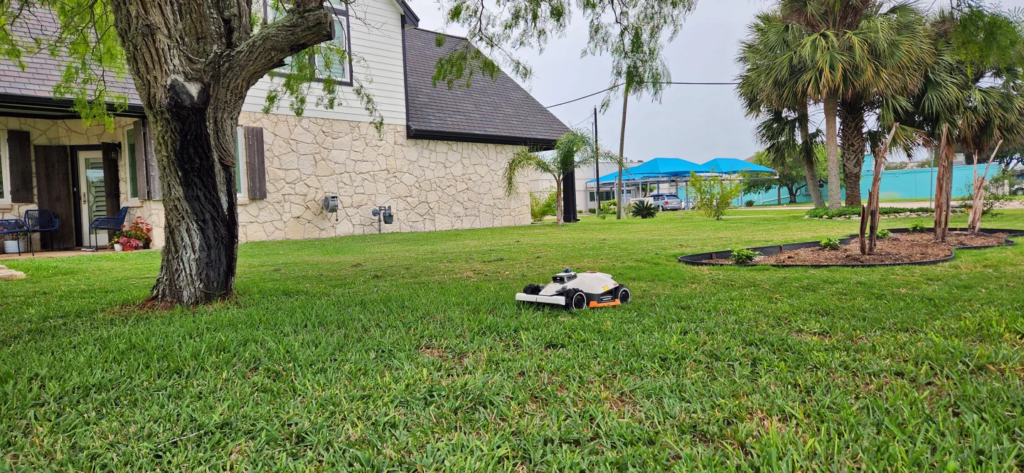
When I reviewed the Luba 2 AWD 3000HX in September, I was seriously impressed. It’s quiet, very capable, kind of fun, and made me feel like a neighborhood hero while sending it from house to house mowing everyone’s yards. Since then, Mammotion sent me the US$2,799 Luba 3 AWD 3000HX for a review. Clearly, Mammotion wasn’t content with simply being “awesome.” Though the Luba 3 very much looks and feels like the Luba 2, it acts significantly smarter. The short version? I don’t see how you could go wrong with the Luba 3. The longer version: First of all, setup was an absolute breeze. Mammotion has done away with the need for an RTK entirely on the Luba 3, as long as there’s cell coverage in your area. While it really wasn’t that big of a deal to set up the RTK with the previous-gen Luba, it’s still a million times better not needing one more lawn ornament that you have to rely on for mower positioning. You simply plug in the base station to power, fire up the mower, and within a few minutes (after the updates, of course), you’re off to the races via NetRTK using Wi-Fi or 4G service. Should you not have cell or Wi-Fi coverage in your area, it can still use an old-fashioned RTK for that same centimeter-level mowing precision. My first real-world test was a fifth of an acre (9,257-sq-ft / 860-sq-m). The robomower knocked out 51% of the lawn in 2 hours and 21 minutes before returning to charge with 8% battery left. After it topped up, it headed back out and finished the entire job in 4 hours and 4 minutes with just that single recharge along the way. The results were literally perfect to the point of being boring. You can see the area the middle-weight Luba has completed in the background. It leaves little tufts of mulched grass in its wake, but it’s so fine that a slight breeze blows them away. JS @ New Atlas Very much like the previous-gen Luba, this thing just gets the job done and with virtually zero protest. In fact, after creating two large zones and marking off three no-go zones to protect the garden, the little robomower performed flawlessly. Not a single issue whatsoever – which honestly makes me feel like reviewing it based on that alone would seem inauthentic – so I asked the neighbor across the street if I could test it in his yard, because he has legit danger zones in his yard with irrigation swales, vertical drops, the whole nine yards. I was determined to put the Luba 3 in a position to fail by not marking out any of the hazardous areas and letting it just figure it out. It did eventually fail, but not in a spectacular fashion like I’d hoped. Instead, it was a very slight mistake that would have led to the mower turtling to its back, had I not caught it. It might look like a cool drop-in drift, but really, it fell into the ditch and slid sideways. To my surprise, it found its own way out with zero intervention!JS @ New Atlas When it would near potential danger – in this case, a vertical drop into a ditch deeper than the mower is tall – it would slow and move more cautiously before doing the best it could to mow along the obstacle that it recognized as a danger-zone. In turning around, a single front wheel slipped off the edge. Rather than simply reversing to save itself, it continued its zero-turn rotation, causing the rear tire to slide off the ledge as well, before I caught it and saved it from doom. A reasonable person would have marked that as a no-go zone. It also ended up in that same drainage ditch (albeit from a less dangerous, less flippy angle) when it did the same drop-a-wheel-during-a-zero-turn. It cruised around in the bottom for exactly 78 seconds, apparently contemplating its life choices, before it found an escape route and kept on truckin’. Impressive. Mammotion Luba 3 3000 AWD in a ditch, raw video It’s really difficult to figure out anything else that I don’t like about it, or that it doesn’t do well … well, except two things: the base station does not come with a roof. Should you want that, you’re going to have to shell out another $200, which is silly at this price point. And when manually mowing tall stuff, the bumper can be too sensitive for my bull-in-a-China-shop tastes. If it gets bumped too hard, it’ll cut power to the mow deck, forcing a ~5-second delay before I can start cutting again. That’s kind of annoying. I’ve also read a few others on Reddit mentioning connectivity issues, but I’ve yet to experience anything like that. The thing just works. Otherwise, having tested out several brands and models of robomowers, I have to say that Mammotion sets the bar very high in all aspects of its products. The app is the best of all brands I’ve tested thus far – it’s very intuitive, friendly, easy to understand, and with a wide range of options to fine-tune every lawn parameter. Or if you’re not into that, it’s also as simple as a “just go mow my yard” option. The app has it all. The app also does a great job of communicating with you; it will let you know when the mower goes to charge, when it resumes the task, when it pauses for whatever reason, the mower’s current location and progress … many things I realize I take for granted when testing other brands that don’t have those same features. This is what the app looks like. It’s quite polished compared to other mower apps that I’ve used. Definitely my favorite of all.JS @ New Atlas For example, when you’re creating a zone, and you make a mistake by driving off course, reversing the robomower will effectively undo

I tried to break the Luba 3 AWD robomower Read More »
Slick pod camper solves micro-camping's biggest problem

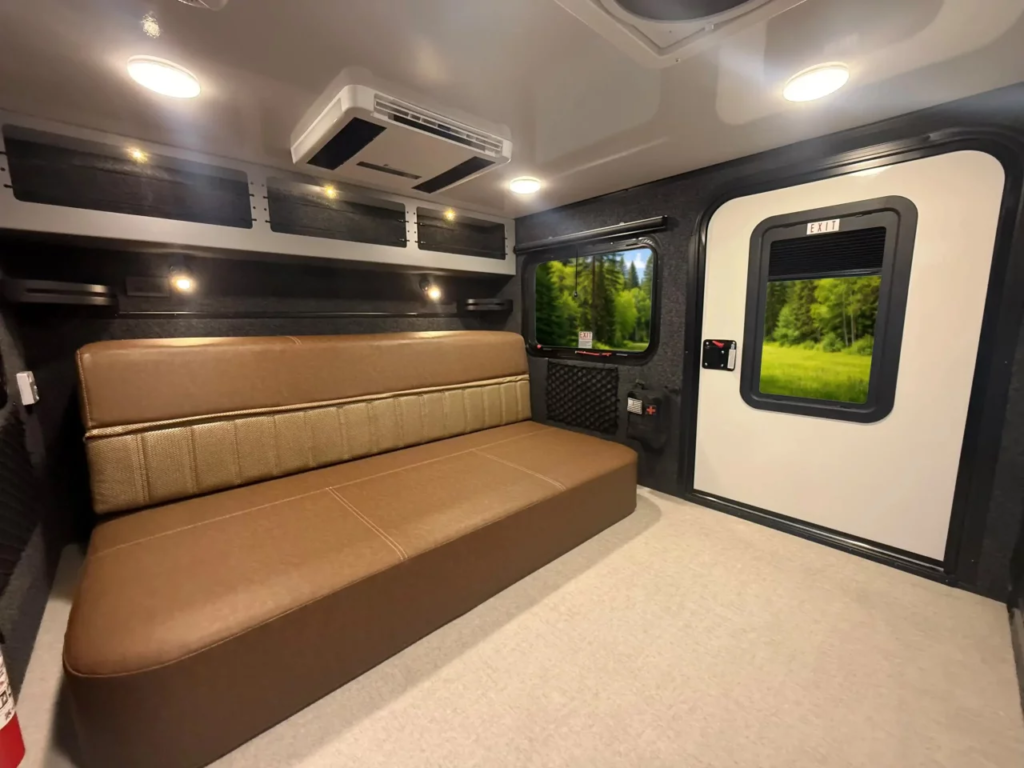
Small camping trailers are great for a lot of reasons. They’re easier to tow and maneuver than large trailers. They’re compatible with a large variety of vehicles, likely including the everyday driver parked in your garage. Less trailer usually means less price tag, and less money spent on gas. The list goes on, but for all those advantages, small trailers usually fall short on one highly critical spec: a bathroom. The latest ROG trailer from Encore RV solves the lack of bathroom issue in a rather bold way, and it’s a much better small camper for it. Encore RV is a member of a new breed of Indiana RV builders working to forge a different path for the industry. It’s located right in the Elkhart area that has long served as the RV capital of the world, the same RV capital of the world that has also gained a notorious reputation for being the world capital of cheaply built stick-and-tin RV lawn ornaments. But some of the latest brands on the Elkhart scene have their eye on a future of better Elkhart products. They’ve been watching carefully the growing popularity of more ruggedly built trailers and RVs from small, independent shops around and beyond the US and have worked to incorporate some of those principles into their own larger scale operations, offering a compelling mix of tough, durable, corrosion-proof construction and mass-produced pricing. Encore was established in 2020 as one of those companies, quickly branching out with a three-brand lineup of adventure-ready trailers built using all aluminum and composites, zero wood. ROG is currently the sub-brand among the three comprising the smallest, most rugged trailers, offering products in both a straightforward “adventure” base trim and a fully doomsday-prepped “survival” trim with multiple mounted axes, a water purification system, a first aid kit, and even a survival guide for cross-referencing your shit-hits-the-fan SOPs. The Encore ROG 12RK floor plan features a futon queen bed insideEncore RV At the moment, the 12RK is the cheapest base model in the ROG family. It features the brand’s completely wood-free construction with single-piece fiberglass roof, aluminum framing and composite panels. The “12” references the camper box length of just under 12 feet (3.7 m), while the entire camper with tow bar measures in at 15 feet (4.6 m) long. It’s a small trailer by any measure, quite comparable in size to the Campinawe Crossover Solo we looked at a few days ago, not to mention dozens of other teardrop/squaredrop-style trailers. Like Campinawe, Encore doesn’t settle for just a bed and some cabinets, turning its small trailer into an all-day living space. The RK floor plan includes a futon-style 60 x 80-in (152 x 203-cm) queen mattress that slides back to work as a sofa for hanging out, listening to the included Bluetooth speaker and/or watching the available 32-in TV mounted to the front interior wall. The ROG 12RK comes prewired for TV, and Encore offers a 32-in LED TV optionally Encore RV The 12RK kitchen rides just inside the dual tailgate doors. The setup includes a dual-burner slide-out stove, countertop with inbuilt sink and 93-L 12V door fridge. A fold-down shelf around the side of the trailer is designed for using the available 25-in dual-burner griddle, perfect for burgers, pancakes, bacon and other common campground fare. The 12RK also comes standard with a large 163-L water tank, on-demand water heater and outdoor sprayer. What it doesn’t come standard with: a bathroom … or a toilet, not even a cheap portable model on the options sheet. Unlike the 12BH, the ROG 12RK has an inset rear galleyEncore RV That’s not necessarily an all-out dealbreaker because most trailers in this size class don’t have a bathroom, but if you’re really looking to leave organized campgrounds behind for off-grid primitive sites, the way a light, rugged off-roader like the 12RK is designed to do, you’ll want some kind of toilet solution … and not necessarily just the shovel that comes as part of the Survival package. Encore debuted the all-new ROG 12RK-FB at Overland Expo West in Arizona a couple weeks ago for just this reason. The new ROG trailer features a very smart, simple solution to the bathroom conundrum confounding so many small trailer builders. Instead of taking up any of the ultra-limited floor space inside the cabin, or expanding that cabin into something larger and heavier that many buyers don’t want to tow, Encore equips the ROG trailer with a deployable part-time bathroom inside a rugged cargo box up on the trailer tongue. Encore has designed the FB box to be more than just a bathroom, installing a top rack that can be used to carry a size-matched OVS cargo box, firewood or even bicycles Encore RV The ripstop bathroom tent is designed to pop out of the cargo box and pitch in minutes, if not seconds. The strut-assisted box lid opens sideways across the trailer’s width to serve as the outer tent wall, while integrated frame members swivel around to hold the roof up in place. Each sidewall also relies on a thinner two-piece pole to push its fabric outward so as not to cling to the person showering. Encore’s design is much more than just an open tent you feed a shower hose through. The base of the cargo box is filled out with a proper tub floor complete with drain, designed to work seamlessly with the integrated hot/cold shower sprayer. There’s also an integrated Thetford cassette toilet completing the rolling outhouse wet bath layout. The zip-down mesh screen windows let each user adjust ventilation and privacy to their preferred comfort level, while the decking-style EVA foam mat delivers anti-slip confidence when standing inside. A magnetic closure makes quick, intuitive work of closing off the fabric entry. Inside, the FB bathroom takes advantage of the width of the trailer with a shower floor and integrated cassette toiletEncore RV “Customers have loved the compact versatility of our ROG 12RK, and the new FB model

Slick pod camper solves micro-camping's biggest problem Read More »

Would you wear PERi-PERi as a fragrance?

Nando’s Singapore is encouraging consumers to make healthier dining choices through an unconventional new reward: a limited-edition fragrance. The restaurant chain has partnered with Maison 21G Paris to launch “Eau de PERi”, a collectible scent inspired by its signature PERi-PERi flavour profile. The initiative is supported by the Health Promotion Board (HPB). Fronted by the campaign line “Smells like you did good”, the activation aims to reframe healthier dining as a lifestyle choice rather than a restriction. It builds on Nando’s earlier “Healthier choice” campaign and its “Good temptations” creative platform, which positioned healthier menu options as bold, flavourful and culturally relevant. Don’t miss: Nando’s Singapore rewards PSLE students with free bowls, no matter the results  According to Nando’s, the latest campaign extends that narrative by rewarding customers who choose qualifying’ Healthier choice’ meals with the opportunity to redeem the limited-edition fragrance. Beginning 2 June, customers will receive one stamp with every qualifying ‘Healthier choice’ meal purchased. Those who collect five stamps can redeem a bottle of “Eau de PERi”, while stocks last. Only 600 bottles will be available islandwide. The qualifying menu items include the newly launched PERi-chicken edamame bowl, as well as options such as the classic chicken wrap paired with a caesar side salad, the PERi-nut salad bowl, and grilled chicken tenders served with healthier side dishes. Customers can also customise their meals with lower-sodium basting sauces including plain, lemon and herb, mild and hot. Crafted exclusively by Maison 21G, the fragrance features notes of bergamot, ginger, smoky Havana-inspired accords and vetiver. According to the brand, the scent was designed to capture the fiery yet fresh spirit of PERi-PERi beyond the dining experience. The campaign was developed by Singapore-based creative agency framethefolks, which led the overall marketing strategy, social-first campaign rollout and creative development of the “Eau de PERi” visual identity. The agency also oversaw the design of the perfume bottle, campaign visuals, redemption stamp cards and in-store collateral. “At Nando’s, we believe better-for-you choices should still feel exciting and full of flavour,” said a spokesperson from Nando’s Singapore. “Through Eau de PERi, we wanted to create something unexpected that celebrates healthier choices in a way that feels playful, rewarding, and true to the Nando’s personality.” The latest activation comes shortly after Nando’s launched a regional campaign built around one of Malaysia and Singapore’s most familiar dining dilemmas: deciding where to eat. Part of its ongoing “That’s a Nando’s thing” platform, the campaign turned common responses such as “don’t know lah“, “up to you” and “anything also can” into the creative hook for the launch of its new Sharing Platters and Quick Lunch Meals across both markets. At the time, Nando’s said the campaign celebrated relatable everyday dining behaviours while reinforcing the brand’s focus on bringing people together over food and its signature PERi-PERi flavours. Related articles: BOSS Fragrances turns perfume into happy hour with scent-inspired cocktails   Want to smell like Bedok and Yishun? Check out PropertyGuru’s new fragrances   Following last year’s Huat perfume, DBS Bank makes a move into home fragrance this CNY source

Would you wear PERi-PERi as a fragrance? Read More »

From local roots to regional reach: RSVP Communications is redefining integrated marketing in Hong Kong, and beyond

This post is sponsored by RSVP Communications. To understand the lives of people in a place, one can start by looking at their choices and consumption patterns in daily goods. As an agency in the public relations and event industry, RSVP Communications values every personal connection, and puts people at the centre. The company serves as a communication bridge between brands and the public, and believes that building relationships requires a multifaceted approach to create a more dimensional image for products. Under this belief, RSVP Communications has stood firm in the HK market for 17 years, becoming a well-known PR and event agency in the FMCG sector. Now, we are thrilled to announce that we are taking our proven expertise to the next level by expanding our footprint and stepping into exciting new horizons. Seventeen years in Hong Kong, over 100 brands empowered, and expanding With strong market services, we’ve been supporting over 100 different brands in the Greater Bay Area. We focus on boosting well-known international brands, especially in the FMCG sector, and crafting promotional strategies that meet local market needs. The team really gets what the public wants, and we come up with creative ways to host all kinds of PR events, KOL, and MI WOM programmes, and promote them across major social platforms, including Threads. Looking back at the first half of 2026, our team has successfully brought a series of high-impact integrated campaigns to life, seamlessly demonstrating our evolution from deep local roots to a powerful regional reach. Campaign highlights: What we’ve been up to Connecting experts and retailers for big results – Colgate TOTAL Periodontal Health Lab We brought together a massive all-around campaign for Colgate, bridging professional endorsement with mainstream retail execution. Partnering with the Hong Kong Dental Association and key retainers, we managed the entire pipeline from creative conceptualisation to event production and media pitching. The campaign achieved phenomenal market saturation, securing over 200-plus total coverage placements across first-tier local news, lifestyle media and social platforms, drastically lifting brand share-of-voice. OldTown White Coffee “OH椰” Coconut Milk White Coffee Launch To introduce its new low-sugar coconut milk white coffee, OldTown White Coffee brought a taste of Malaysia to the streets of Hong Kong. We set up free tasting stations across eight prime locations – inviting passersby to experience the premium coffee. The response was overwhelming: long queues formed at every stop. To diversify the new launch, we lined up OldTown with KAKAchevée and shuu café for special recipe creations, which brought double excitement to the market. Celebrating brand milestones with energy and nostalgia – The Body Shop 50th Anniversary For The Body Shop’s monumental 50th anniversary, we brought a double-themed celebration to life by shifting away from traditional aesthetics towards a high-energy, modern lifestyle direction. We seamlessly integrated the launch of the brand’s bold new “Rebellious by Nature” birthday party campaign alongside a nostalgic and experiential Dewberry Y2K Launching Party. RSVP Communications managed the entire project by combining a fun PR strategy and retro event set-up with a curated guest list and a massive push with micro-influencers. This generated a huge wave of trendy and organic posts across social media. Looking ahead: A glimpse towards Singapore While Hong Kong remains the agency’s home base and primary market, RSVP is beginning to look beyond the city. In the spirit of long-term thinking, the team has started very early-stage conversations around the possibility of serving clients in Singapore – one of Asia’s most established hubs for marketing and brand innovation. The agency is also observing market trends, learning about local media landscapes, and exploring how its integrated PR, event, and creative model might one day fit into Singapore’s sophisticated ecosystem. “We believe in being honest about our journey,” said Celine Cheung, director of RSVP Communications. “Right now, Singapore is simply on our radar. We’re excited by the possibilities. For the time being, our feet are firmly planted in our co-working space in Hong Kong, delivering exceptional work for our clients here.” source

From local roots to regional reach: RSVP Communications is redefining integrated marketing in Hong Kong, and beyond Read More »

Woojer Vest 4: It's like THX for your torso

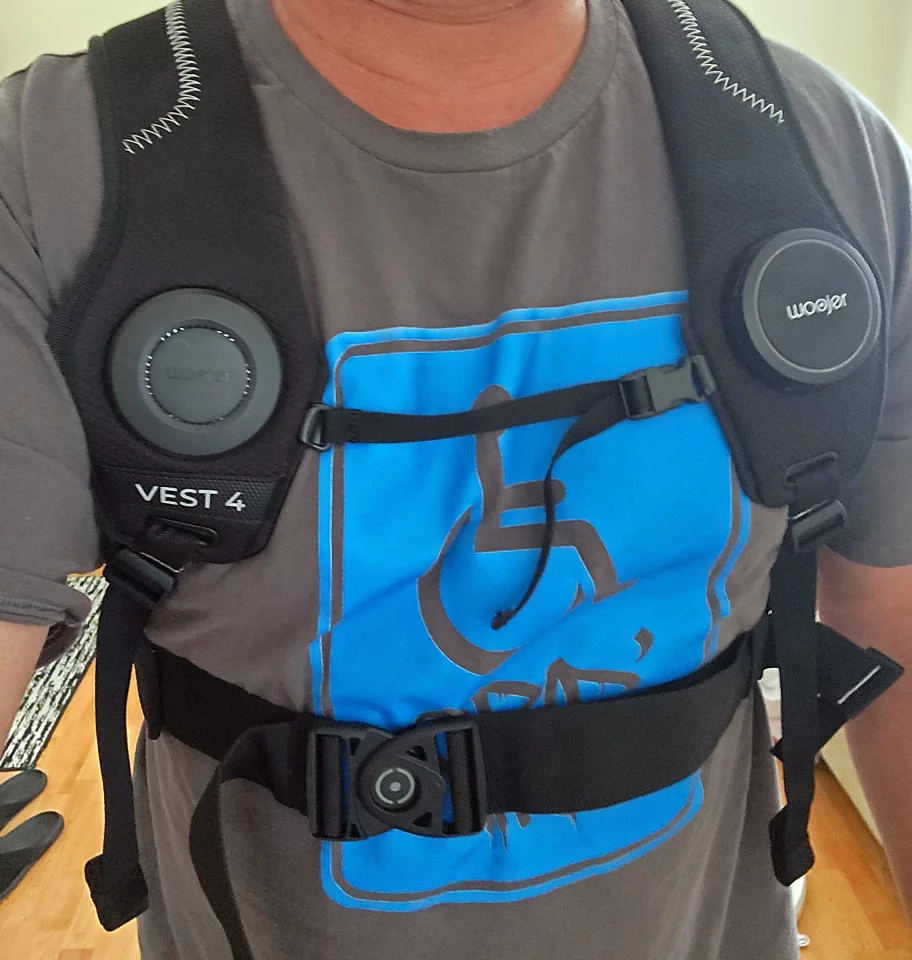
When I first saw the Woojer vest about seven or eight years ago on Kickstarter, I remember thinking that it sounded fun, but maybe a little gimmicky. Either way, I wanted to try it. So when Woojer recently reached out and asked if I wanted to review it, I said, “Heck yeah, send it over!” Now that I have it and have spent many hours using it in various scenarios, I think I’ve concluded whether it’s worth the ~US$350 price of admission for a vest fitted with bass-thumping transducers. First and foremost, it’s just flat-out fun. It’s completely unnecessary, but it really adds a layer of physical in a way that would be otherwise pretty hard to accomplish while gaming, listening to music, or even just watching TV. The best way I can describe it is like watching Top Gun Maverick at home on your 40-inch TV with your cute little sound bar versus watching it at an IMAX theater with 12-channel audio and 40-plus dual 15-inch 1,000+ watt woofers absolutely blasting you with sound that hits so hard you can feel it in your tum-tum every time they “Break right, splash one!“ The transducers on the chest are places in a slightly awkward spot, in my opinion. I’d like them to be slightly closer together, but maybe it wouldn’t be good running a transducer right over your heart? I’m not sure if there are studies on that or not. Either way, it’s not uncomfortable or anything. Just weird.JS @ New Atlas Because that’s exactly what the six Osci TRX2 transducers do: they thump you. A haptic transducer vibrates mass to create vibrations you can feel, similar to how a speaker moves air so you can hear sound. And in Woojer’s case, it’s taking low frequency bass, like bombs, bullets, beats, and brawls to fwump-wump your body. More specifically, between 1 and 250 Hz in the Vest 4. When it comes to gaming, I’m a first-person shooter type of fella. At one point in time, nearly thirty years ago, I was ranked 26th in the entire world playing Capture the Flag in 1999’s GOTY Unreal Tournament. And Destiny? Get outta here! I was a merc’in-machine with a 4.75 KD in the Crucible. Red Dead Redemption 2: it was so good I did it twice. Same with GTA V. So yeah, the Woojer Vest 4 seemed like a pretty cool idea, adding a kinetic layer to games (like a shotgun blast to the chest), movies (like a shotgun blast to the chest), and music (like … uhh … Nirvana’s Greatest Hits?). I was pretty excited to try it out when it arrived. The Good, Bad, and the Ugly (but not in that order): It’s not perfect. There are a few things that are absolutely annoying, even to a pretty forgiving dude like myself. When using a Bluetooth connection, there are a fair few audio dropouts that’ll last ~5 seconds or so before the audio cuts back in. I don’t mean going out of sync, I mean full dead dropouts … while the bass is still thumping from every direction on your torso. So it’s happening from the vest –> headphones, regardless if you’re wired or wireless with your headphones. The left chest has all your controls and inputs. The ring lights up, indicating how much punch you want and also the volume levels. The USB-C charging port is on the backJS @ New Atlas When I’ve run USB-C audio, plugged directly into my laptop, same deal, just less often. I’d blame it on my rig, but it also happens when using my phone while simply listening to tunes on Spotify, so there’s something going on in the vest itself. It happens once or twice an hour, so it’s not super bad, but it 100% takes you from “BAP! BAP! BAP!” of LMG fire to “Where the hell did that shot just come from?!?” in an instant, often at the most inopportune times. Not to mention, the hits aren’t directional on the vest – a hit is simply a hit – so you won’t know if you’ve been shot in the chest or the back without hearing where the shot came from. So if you’re a professional playing in online tournaments, it might be slightly detrimental to your take-home purse when you get 360-no-scoped by some 14-year-old because you couldn’t hear what direction the shots were coming from. And of course, there’s the ubiquitous BT latency delay, so you’re going to be a few milliseconds behind the curve no matter what. Yes, hardwiring will eliminate latency issues, but then comes a series of rather complex problems, depending on your setup. Mine, for example, is that I run OXS Thunder Duo X gaming speakers via USB-C. So, unless I ran some sort of virtual audio router like Voicemeeter, I can’t get sound to both the Woojer Vest and my speakers at the same time. This is what the app looks like. And it has correction adjustments for lag, but it’s still slightly noticeable when running and gunning. JS @ New Atlas The Woojer is very much built to daisy chain BT audio from the source, then to your headphones via BT or hardwired. Which means I could loop hardwired audio back to my speaker setup – like a crazy person! – but suddenly, it’s starting to feel more like a chore, rather than simply chuckin’ on a vest for a few minutes of fun. Perhaps that doesn’t even matter to you, as you prefer to play games with your favorite set of cans on. But me personally, I wear various headphones every single day, for hours per day, and sometimes I just don’t want to wear ’em. Part of why I don’t VR game as much as I want to is the setup. I haven’t beat Half-Life: Alyx yet, though it’s definitely the most epic VR game I’ve ever experienced. I find the 15 mins it takes me to get going somewhat

Woojer Vest 4: It's like THX for your torso Read More »

Why the World Cup’s biggest screen may no longer be the only one that matters

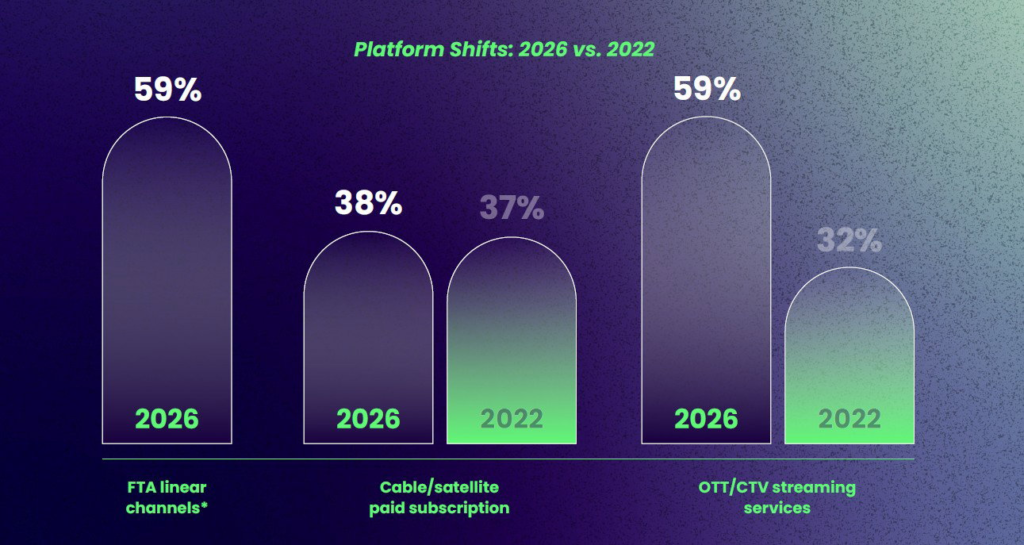
The World Cup has long been one of the few certainties in media planning: a rare moment when audiences gather in their millions, tune in live, and stay put. However, in Singapore, that traditional equation is starting to evolve. Ahead of the 2026 FIFA World Cup, new forecasting data from Nexxen suggests that while football fandom remains deeply entrenched, the way fans watch is becoming far more fluid. OTT and connected TV (CTV) viewership has climbed 27% since 2022, and now matches traditional TV reach at 59%, signalling a clear shift in how live sport is being consumed across screens. Yet fragmentation does not mean dilution. TV still anchors the experience, with 80% of viewers expected to watch matches on the big screen, rising to 84% in evenings and 85% over weekends. The difference in 2026 is not where people stop watching, but where and how they enter, and re-enter, the tournament. Don’t miss: Why the Premier League’s new streaming app is a game-changer That behaviour is even more pronounced during the working week. More than half of viewers (53%) say they will turn to mobile or laptop during office hours, while 70% are not expected to follow the tournament end-to-end. Instead, engagement will spike around key moments, high-stakes fixtures, and highlight-driven consumption. Taken together, the findings point to a familiar but increasingly complex reality for marketers: reach still exists, but it is no longer linear. As audiences scatter across platforms, devices and dayparts, the World Cup is becoming less of a single viewing event and more of a distributed media moment, one that challenges how brands define attention, frequency and impact in live sports. From scheduled screens to constant connection For marketers, the shift is not necessarily that audiences are watching less sport. Rather, they are watching differently. According to Jon Stona, vice president, global marketing at Airwallex, live sports is no longer a “single-screen, appointment-viewing experience”, with audiences increasingly moving fluidly between television, social platforms and mobile devices while simultaneously following highlights, reactions and commentary. “The ‘second screen’ has effectively become the primary engagement layer for many fans, especially younger audiences,” he said. That evolution reflects broader changes in media consumption habits, where audiences now expect content to be immediate, personalised and accessible across multiple touchpoints. While live sports still command rare real-time attention at scale, the challenge for brands lies in understanding how audiences move between platforms before, during and after key matches. Similarly, Lee Hung Sheng, head, audience and partnerships at Mediacorp noted that audiences, particularly younger viewers, are increasingly satisfied consuming highlights and short-form moments instead of committing to full live matches. At Mediacorp, that behaviour was already visible during the 2022 FIFA World Cup, when digital clips on streaming platform mewatch grew almost 200% after the company introduced AI-powered Stories and Moments. “This reflects a broader shift towards more personalised, flexible and snackable forms of sports consumption, where audiences engage with content in ways that best fit their lifestyles and viewing preferences,” said Lee. For some, the fragmentation of viewing habits is also closely tied to the cultural nature of sports fandom today. Daisy Huang, head of strategy at Omnicom Media Singapore, explained:  Sports consumption today, especially around major moments such as the FIFA World Cup, is no longer just about watching the match itself, it is about participating in wider cultural conversations. That participation can take many forms, from catching highlights and memes to following live commentary or simply staying informed enough to join conversations online and offline. In a highly connected market such as Singapore, Huang added that seamless access across platforms means audiences are increasingly engaging with the tournament on their own terms, shaped by work schedules, lifestyle habits and time zone differences. Reach is no longer a single screen metric As audiences spread themselves across platforms and viewing moments, agencies are also rethinking how campaigns are planned and measured during major sporting events. Stona explained that media planning is becoming increasingly “audience-led rather than channel-led”, with agencies now focusing on following consumer attention across ecosystems instead of concentrating investments around a single broadcast platform. That has pushed brands towards more interconnected campaigns spanning TV, streaming, creators, short-form content and social engagement, while placing greater emphasis on contextual relevance and real-time responsiveness. He added:  The role of media agencies is evolving from simply buying reach to orchestrating connected audience experiences across fragmented environments. Huang echoed that sentiment, noting that fragmented viewing behaviours require brands to think beyond a one-size-fits-all approach.  “A live viewer wants excitement and emotional momentum sustained in real time. A social scroller wants quick, entertaining recaps of key moments. Someone checking scores on Google simply wants concise, useful information,” she said, adding that effective communications need to adapt to these differing needs and moments. At the same time, premium live sports inventory still holds significant value. However, Mediacorp’s Lee said brands are increasingly extending campaigns beyond the live broadcast itself through creator-led content, second-screen experiences, fan engagement initiatives and social activations designed to sustain engagement throughout the tournament. Increasingly, the opportunity lies not just in capturing audiences during the match, but in remaining present across the wider fan journey, from anticipation and live viewing to post-match highlights and social conversations. Sports as culture, not just competition For younger audiences in particular, the World Cup is becoming as much a cultural and social experience as it is a sporting one. According to Huang, Gen Z audiences increasingly experience sport through memes, creators, online communities and short-form content, with social platforms playing just as important a role as live broadcasts in shaping fandom. That shift is creating opportunities for brands to move beyond passive sponsorship visibility and participate more directly in fan culture and conversations. Similarly, Stona noted that younger audiences tend to respond more strongly to authenticity, humour and creator-led storytelling than highly polished corporate campaigns. “Fans today don’t just watch football, they engage with the broader narratives, personalities and community around it,” he said, pointing to Airwallex’s recent Arsenal campaign

Why the World Cup’s biggest screen may no longer be the only one that matters Read More »

Storage-packed tiny house minimizes compromises for full-time living

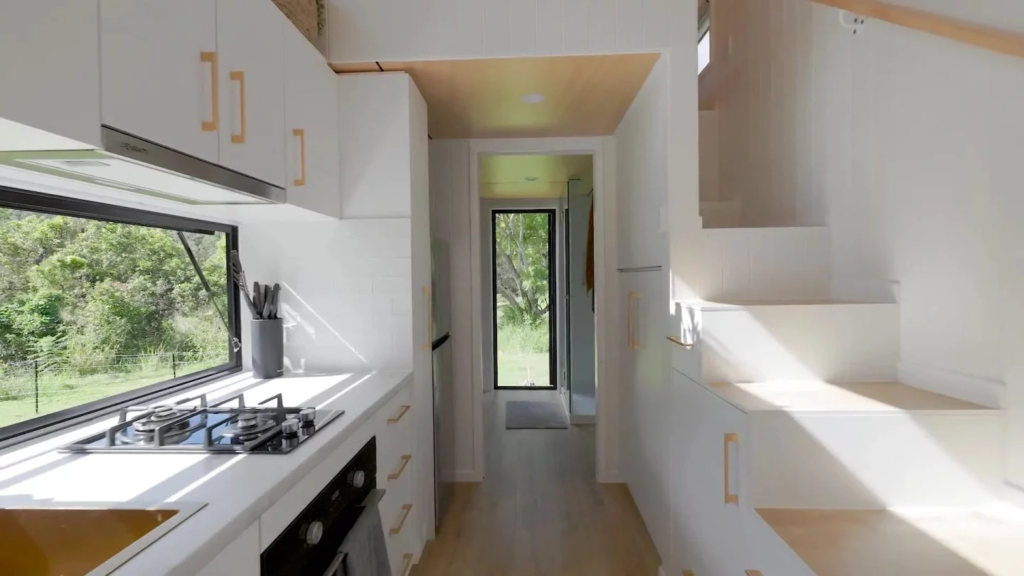
Downsizing to a tiny house always involves compromises, but the Coolangatta 8.4 aims to minimize them with a storage-packed and flexible interior that’s well suited to full-time living, on or off-grid. Designed by Removed Tiny Homes, the Coolangatta 8.4’s name is a nod to its dimensions in meters, which shakes out as 27.5 ft in length. The home is based on a triple-axle trailer and is finished in Colorbond steel, which is a painted steel product popular in Australia due to its durability. The tiny house’s interior is finished in painted tongue-and-groove-style paneling and has an open layout that looks nice and light-filled thanks to all the glazing, including a picture window and double glass doors. An L-shaped sofa is installed in the living room. The Coolangatta 8.4 features a light-filled interior with generous glazing throughoutRemoved Tiny Homes Nearby is the kitchen. This is equipped with an oven and a two-burner propane-powered stove, a sink, a fridge/freezer, and a breakfast bar area that seats two. The space also opens up to the outdoors with a large window that would be handy for serving food outside. At the opposite end of the home to the living room is the bathroom. This is quite generously proportioned for a tiny house and includes a washer/dryer, a glass-enclosed shower, a vanity sink, and a toilet. A secondary door here also opens directly to the outside. The Coolangatta 8.4’s bedroom setup is designed to be flexible. The main bedroom is situated over the kitchen/bathroom and accessed by a storage-integrated staircase. It includes a double bed, additional storage, and a TV. A lowered standing platform makes it easier for the owner to stand upright and get dressed. The secondary bedroom, meanwhile, is situated over the living room. It’s reached by a removable wooden ladder and is currently configured as a gaming/hangout area with twin monitors and seating. There’s even a desk setup with space for the occupant’s legs to hang over the living room below, making it easier on the lower back than sitting cross-legged in a typical loft. However, it can be used as a second bedroom if needed. The Coolangatta 8.4’s living room includes a large L-shaped sofaRemoved Tiny Homes The Coolangatta 8.4 gets power from a standard RV-style hookup or a roof-based solar power array. This model was commissioned as a one-of-a-kind build for a customer and we’ve no word on its price. If this looks like your sort of future home, why not drop the company a line to see if something similar can be built for you? Source: Removed Tiny Homes source

Storage-packed tiny house minimizes compromises for full-time living Read More »

Shocking lab experiment confirms that light can move in ‘negative time’

If you work in a city, there’s a good chance you’ve got your morning commute down to a fine art, getting you to the office with your coffee in hand within minutes of that first meeting. Light, it seems, has you beat. A recently published experiment conducted by researchers from the University of Toronto in Canada and Griffith University in Australia found that photons traveling through traffic consisting of cold rubidium atoms can leave late and still make it in before the boss decides to dock their pay. What’s their secret? A touch of quantum uncertainty, it seems. It’s not the first time light’s time-bending nature has been observed. As far back as the early 1990s, curious leaps in light have been reported in experiments comparing pulses of photons traveling through a medium with those in a vacuum. In the emptiness of space, all information moves at 186,000 miles (about 300,000 km) per second. No more, no less. Think of it as the speed of causality. The Speed of Light is NOT About Light Light is a wave of “causation” between electric and magnetic fields. Without any mass to complicate matters, all photons stick to this universal speed limit. Throwing a scattering of atoms in their way may delay their journey, but it doesn’t slow them down. The speed of “causation” between the forest of electromagnetic fields and the photon’s own electromagnetic wiggle remains the same, even as the path sends them off in wild new directions. It stands to reason, then, that a pulse of photons sent surging through a group of atoms should follow the same pattern, with early birds and stragglers and a bulk in the middle … even if their collective journey is delayed. For some reason, this isn’t always the case, with baffling instances of the peak of a pulse passing through a medium arriving before a peak moving through nothingness. One possibility is that interactions between photons and atoms create a statistical shadow, reshaping the graph of photons exiting the medium so that the bulk now arrives towards the front. As likely as this is, other explanations need to be ruled out. To be clear, nobody is worried about tears in the space-time continuum sending photons flying into the future. Causality is not broken. No wormholes are necessary. Yet that doesn’t rule out time as a malleable factor. Taking a different approach to monitoring the pulse, the researchers behind this more recent investigation ‘watched’ the crowd of atoms, measuring the duration of their excited quantum states to determine the timing of photons in the pulse. This is no simple feat, requiring repeated trials that average out any interference of the environment on the delicate quantum activity. They found that statistically speaking, photons that arrive early to work have indeed spent “negative” time in traffic. How is this even possible? Time, like many measures in quantum physics, can get a little fuzzy up close. Heisenberg’s principle of uncertainty still stands – pinning down some measures with increasing precision makes other measures more ambiguous on a fundamental level. As photons interact with atoms, their shared energy levels resonate with one another like the actions of a parent pushing their child on a swing, matching precisely. Precise energy means the property of time must relax, allowing temporal precision to smear out across the photon’s quantum wave of possibility. Future experiments could reveal that those arriving late are subsequently carrying that surplus time, confirming that quantum uncertainty is to blame; an excuse we all wish we could give our boss when we miss yet another morning meeting. This research was published in Physical Review Letters. Fact-checked by Bronwyn Thompson source

Shocking lab experiment confirms that light can move in ‘negative time’ Read More »

Small, flat, rooftop satellite antennas could replace big, bulky, costly dishes

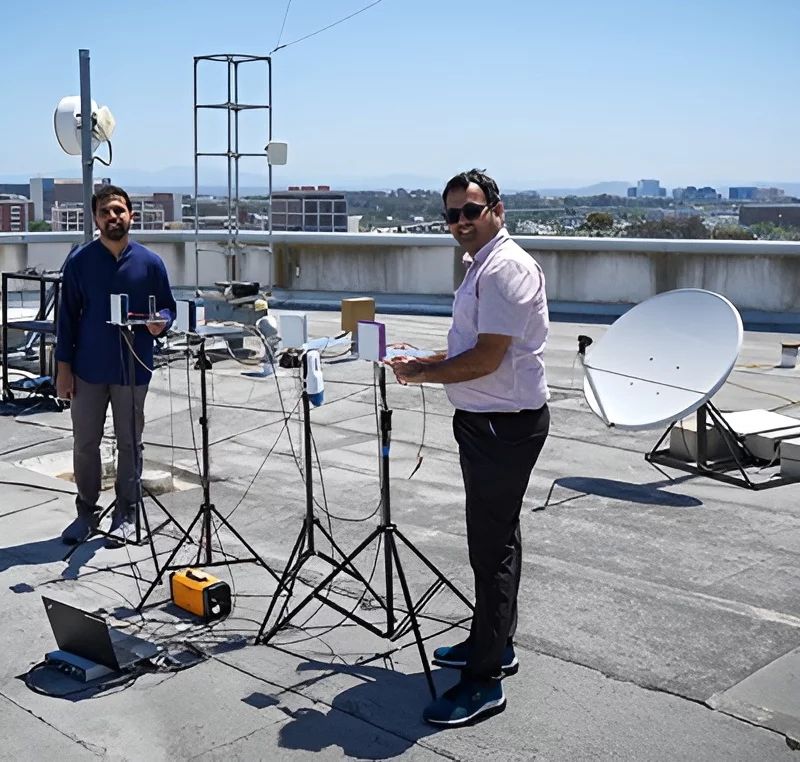
“Ground Control to Major Tom,” the evergreen lyrics to David Bowie’s 70s hit, Space Oddity. What’s odd is that, despite huge advances in satellites themselves, much of the physical infrastructure connecting those spacecraft to Earth still relies on large mechanically steered dishes, a model increasingly strained by the rise of massive low-Earth-orbit constellations. Engineers at the University of California, San Diego may have developed a different way to connect satellites to Earth, replacing large mechanical dishes with networks of smaller, flat antennas distributed across rooftops, telecom towers, and other buildings. Their system, called ArrayLink, could dramatically increase satellite data capacity while making ground stations cheaper, easier to deploy, and far more scalable. Satellite communication has quietly become one of the most critical infrastructures of modern civilization. Far more critical than you probably think. Beyond satellite internet, these systems underpin GPS navigation, financial transactions, weather forecasting, military communications, emergency response, aviation, shipping, remote healthcare, and Earth observation. Over the past decade alone, the number of active satellites in orbit has exploded from a few thousand to many thousands more, with tens of thousands expected in the coming years. Modern satellites are also vastly more capable than their predecessors. While communications satellites from the 1970s often weighed several tons and handled comparatively tiny amounts of data, many modern LEO (Low Earth Orbit) satellites are compact, software-defined systems capable of delivering high-speed broadband, direct-to-phone connectivity, and real-time imaging. Although the satellite industry has already embraced cloud-based ground-station networks, software-defined radios, and electronically steerable systems, high-gain feeder links still heavily depend on large parabolic dishes. Electronically steered phased arrays can, in principle, replace them, but matching dish-class performance remains prohibitively expensive to deploy at scale. This is the specific problem ArrayLink is designed to solve. “The fundamental bottleneck in scaling satellite connectivity today is not in space; it is on the ground,” says Dinesh Bharadia, senior author of a paper on the research, which was presented at IEEE INFOCOM 2026. Every bit of data transmitted by a satellite must eventually pass through a ground station before reaching the wider internet. Today, most of these stations still rely on large parabolic dishes, some over 1.8 m (6 ft) wide. These dishes are powerful but also inflexible. Each dish can track only one satellite at a time and must physically rotate to follow fast-moving LEO satellites streaking across the sky at roughly 17,000 mph (28,000 km/h). This gap creates a serious bottleneck. The researchers note that some existing satellite dishes rotate at just 2 to 5 degrees per second, meaning transitions between satellites can take several seconds or even close to a minute. During those transitions, the ground station is temporarily unavailable. To solve the problem, the team turned to phased arrays, flat electronic antennas that steer radio beams without moving parts. Phased arrays already exist in technologies like Starlink user terminals, military radar systems, and advanced 5G infrastructure. However, building one large enough to match the gain of a massive satellite dish would require tens of thousands of antenna elements, making it prohibitively expensive and complex. Instead of building one giant phased array, the researchers used many smaller, commercially available phased-array panels and coordinated them as a distributed system. Rohith Reddy Vennam (left) and Assoc. Prof. Dinesh Bharadia demonstrate ArrayLink, with old satellite dish technology behind themAreli Alvarez, UC San Diego Qualcomm Institute “This work enables the industry to scale ground stations rapidly and cost-effectively, even through crowdsourced deployment,” says Bharadia. “Any rooftop owner or enterprise can install our solution and carry satellite data back to the internet.” Their ArrayLink architecture combines up to 16 laptop-sized phased-array panels spread across a kilometer-scale area. Each panel individually lacks the power required for robust satellite backhaul links. Together, however, they behave like a giant coordinated antenna capable of approaching dish-class performance. But the breakthrough goes beyond replacing dishes. By spacing the antenna panels far apart, the team discovered they could exploit a phenomenon called near-field line-of-sight MIMO, enabling multiple simultaneous data streams between satellite and ground station. Normally, line-of-sight satellite links are highly limited because every antenna essentially receives the same signal. However, once the panels are spread far enough apart, each one begins to perceive the incoming radio waves slightly differently. These differences allow the system to separate multiple independent data streams from the same satellite simultaneously. The concept is somewhat similar to the MIMO technology used in modern Wi-Fi routers and cellular networks, but applied at a satellite scale. In simulations, ArrayLink supported up to four simultaneous spatial streams at distances of hundreds of kilometers, while maintaining two streams beyond 2,000 km (1,243 miles). According to the researchers, the setup could achieve up to three times the throughput of traditional single-stream dish systems. The system also introduces another unusual capability: focusing energy not just in direction, but also in distance. Conventional antennas typically beam signals in a specific direction. ArrayLink, however, can localize energy both angularly and radially, potentially reducing interference with other satellite systems. Importantly, the system is not just theoretical. The team conducted real-world hardware experiments at 27 GHz using phased arrays and software-defined radios in outdoor line-of-sight testing. Their measurements closely matched theoretical predictions and simulations, validating the core physics behind the approach. The researchers also stress that ArrayLink is designed around practicality. Rather than requiring exotic custom hardware, the architecture uses commercially available phased-array systems similar to those already being mass-produced for satellite internet terminals. Perhaps most interestingly, the team believes the arrays could eventually be deployed directly onto existing 5G cell towers. Since those towers already have power, fiber backhaul, and leased locations, they could effectively double as satellite ground stations. While ArrayLink remains an experimental system and real-world orbital testing still lies ahead, the researchers continue to refine the technology and investigate large-scale deployment challenges. Source: UC San Diego source

Small, flat, rooftop satellite antennas could replace big, bulky, costly dishes Read More »

Dow Jones Futures Slide: Broadcom, Micron, Nvidia, Sandisk, Tesla Are Big Movers; AI Stock Credo Plunges On Earnings

Futures for the Dow Jones Industrial Average and other major stock indexes traded squarely lower ahead of Tuesday’s open. On Monday, stocks rose as President Donald Trump reassured investors of ongoing U.S.-Iran talks. Broadcom (AVGO), Micron Technology (MU), Nvidia (NVDA), Sandisk (SNDK) and Tesla (TSLA) were big movers Monday. Meanwhile, Credo Technology (CRDO) plunged more than 11% in extended trading after… Copyright ©2026 Investor’s Business Daily, LLC. All rights reserved. 87990cbe856818d5eddac44c7b1cdeb8 source

Dow Jones Futures Slide: Broadcom, Micron, Nvidia, Sandisk, Tesla Are Big Movers; AI Stock Credo Plunges On Earnings Read More »