AM Radio Bill Clears Bar For Senate OK, Backers Say

By Courtney Bublé ( April 4, 2025, 6:50 PM EDT) — A bipartisan bill to keep AM radio capabilities in cars has cleared the filibuster hurdle…. Law360 is on it, so you are, too. A Law360 subscription puts you at the center of fast-moving legal issues, trends and developments so you can act with speed and confidence. Over 200 articles are published daily across more than 60 topics, industries, practice areas and jurisdictions. A Law360 subscription includes features such as Daily newsletters Expert analysis Mobile app Advanced search Judge information Real-time alerts 450K+ searchable archived articles And more! Experience Law360 today with a free 7-day trial. source

AM Radio Bill Clears Bar For Senate OK, Backers Say Read More »

IoT, IIoT, IoMT, and OT – Welcome to acronym mania. What does it all mean?

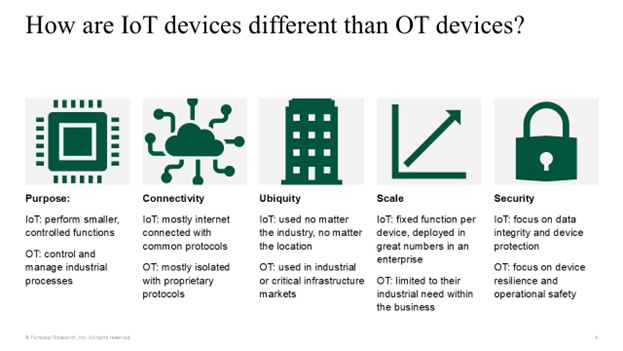
Across IT, acronyms come with the territory. Whether they’re classic ones (ENIAC, Electronic Numerical Integrator and Computer), just a tad more modern (VAX, Virtual Address eXtension), network-based (TCP/IP, Transmission Control Protocol/Internet Protocol; XNS, Xerox Network Systems), or cybersecurity-related (NGAV, next-gen antivirus; DLP, data loss prevention; IDS, intrusion detection system), the acronyms and the process of keeping up with them are endless. It doesn’t help that many IT vendors create new acronyms in an effort to stand out and make themselves feel special. In the world of autonomous endpoints, we are dealing with five primary acronyms. To clarify the meaning of these acronyms, here is some guidance and perspective. IoT: internet of things This is the broadest category, as there are a myriad of devices and technologies within it, both at home or as part of a business. Device types range from smart assistants, doorbell cameras, and fitness trackers to printers, security door locks, and warehouse label scanners. What ties these devices together is that they are designed to communicate and exchange internet data, with ‘I’ being the key letter in the acronym. IoT devices, such as sensors and actuators, are integrated into or attached to machines or assets and connected to the internet via a Wi-Fi connection or through cellular networks. The devices use cloud platforms to send and receive data to make informed decisions about the connected assets. IIoT: industrial internet of things A subset of the IoT category, these devices, as the name implies, are made for heavy work but are often larger than simple sensors or scanners. IIoT devices are usually focused on improving industrial processes, including predictive maintenance, asset tracking, quality monitoring, process optimization, supply chain visibility, and building management. The industrial aspect isn’t restrictive to just monitoring; it can also incorporate devices such as electric vehicle chargers or building management systems. The first ‘I’ is the differentiator in the acronym. OT: operational technology As the name implies, OT encompasses the hardware and software that controls the physical operation of industrial devices. Here is where we will find manufacturing, energy production and transmission, water treatment devices, or factory equipment. Connectivity is regularly restricted to private networks, but in recent years, OT has started to have external/internet connections. The focus is on the ‘O.’ To make matters worse, under OT, you also have industrial control system (ICS), supervisory control and data acquisition (SCADA), distributed control systems (DCS), and programmable logic controllers (PLC). There seems to be no end to OT-based acronyms. IoMT: internet of medical things As the ‘M’ implies, this subset of IoT revolves around devices used within the healthcare industry. These could be devices in a hospital, such as infusion pumps or smart medication dispensers, or outside devices like blood pressure monitors, CPAP machines, and pacemakers. But like IIoT, you also have devices that could be considered operational technology like MRI or X-ray machines, but it is generally accepted that IoMT, the ‘M’ for medical being the distinction, will incorporate both IoT and OT. M2M: machine to machine This entails technology that enables machines to interact via wireless or wired communication channels without human intervention. Devices connect and interact with each other to exchange information and perform actions without requiring an internet connection. M2M technology is often integrated into security, track and trace, automation, manufacturing, and facility management processes. IoT technology differs from M2M communication because IoT extends interactions to include cloud-based networks. Please note: We recognize that there are many other relevant IoT-related acronyms, which we will explore in an upcoming IoT report. A simplified version that takes these distinctions to just IoT and OT would be: IoT devices are those that you run inside your business. If these devices go offline, you may have some challenges, but your business can still function. OT devices are those that run your business. If these devices go offline, you’re not doing business. Like all analogies, there are exceptions that don’t fit. For instance, if your medical business relies on performing MRI scans and the MRI machine is offline, you can’t do business. A hospital can treat patients without IoT infusion pumps or Bluetooth pulse oximeter sensors, but it won’t be easy. And would you really want to run your industrial manufacturing tools without IoT noxious gas sensors? For a little more distinction, we could use this image below:   Device protection is important with IoT and OT, but the purpose is different. For IoT devices, the goal is to protect the data. For OT, the goal is maintaining operational safety. Because of this, the approaches to security for these technologies have historically been different. Until recently, many enterprises completely walled off their OT devices into their own air-gapped network, developing extensive human-action security policies to control the flow of data in and out of the network to ensure that these devices stayed operational and weren’t exposed to internal or external threats. Conversely, IoT devices were often interspersed throughout the enterprise with other endpoints. In more secure environments, network traffic to and from these devices is logically segmented and controlled to protect them against internet-based threats. Security in IoT and OT environments is currently changing. The walls between the OT devices and the rest of the network are becoming porous. Business leaders are still highly concerned about OT security, but the need for connectivity to IT and internet resources is growing. For IoT, simple segmentation is no longer sufficient because of the mounting threats. This is leading business and security leaders to deploy solutions to improve device security. New acronyms will continue to emerge (such as the confusing CPS, cyber physical security) as IoT and OT security solutions expand. I’m still dreading hearing about the first IoTDR solution. Vendors in this space need to stop throwing out word salad in an attempt to make something relevant and stick with established acronyms. If you’d like to get assistance in understanding the complexities of managing and securing IoT and OT devices, please schedule an inquiry or guidance session


IoT, IIoT, IoMT, and OT – Welcome to acronym mania. What does it all mean? Read More »

DDoS Attacks Now Key Weapons in Geopolitical Conflicts, NETSCOUT Warns

Image: EV_Korobov/Adobe Stock Cyberattacks aren’t just about stealing data anymore — they’ve evolved into a key weapon in geopolitical fights, crippling vital infrastructure, and shaking public trust in governments. A new report by NETSCOUT reveals that hackers are increasingly using Distributed Denial of Service (DDoS) attacks to disrupt elections, protests, and policy debates, turning digital sabotage into a tool of modern warfare. The company’s Second Half 2024 DDoS Threat Intelligence Report sheds light on how cybercriminals and hacktivist groups have turned DDoS attacks into a dominant form of cyberwarfare, strategically targeting critical systems during periods of national instability. In addition, NETSCOUT revealed that nearly nine million DDoS attacks were recorded in just the second half of 2024 — a 12.7% increase from the first half. Regions such as Latin America and Asia Pacific were among the largest hit, experiencing approximately 30% and 20% increases, respectively. DDoS attacks surge during political crises According to NETSCOUT, politically motivated DDoS attacks skyrocketed in 2024, with some countries seeing spikes of over 2,800% during major conflicts. Israel faced a 2,844% surge in attacks during hostage rescues and political tensions. Georgia saw a 1,489% jump as lawmakers debated a controversial “Russia Bill.” Mexico experienced a 218% rise in attacks during its national elections. The U.K. had a 152% spike when the Labour Party returned to Parliament. “DDoS has emerged as the go-to tool for cyberwarfare,” said Richard Hummel, NETSCOUT’s threat intelligence director. A pro-Russian hacking group, NoName057(16), was behind many of these strikes, repeatedly hitting government services in the U.K., Belgium, and Spain. AI and botnets make attacks deadlier Hackers are now using artificial intelligence to supercharge their assaults. Most DDoS-for-hire services now use AI to bypass security checks like CAPTCHA, lowering the barrier to entry and increasing attack success rates. Meanwhile, powerful botnets — networks of hijacked devices — are being weaponized to overwhelm servers. Law enforcement agencies, despite coordinated crackdowns like Operation PowerOFF, continue to struggle with long-term takedown effectiveness. Despite global crackdowns, like Operation PowerOFF, new attack platforms quickly replace the ones taken down. “Attackers adapt and reconstitute their networks, with no significant decline in global attack volume,” the report noted. Why DDoS attacks are so dangerous now DDoS attacks don’t just crash websites — they can paralyze essential public services like banks, hospitals, power grids, and emergency response systems. By striking during moments of political turmoil, threat actors amplify national chaos and undermine government credibility. What’s being done to mitigate DDoS attacks? Governments and companies are scrambling to strengthen defenses, but NETSCOUT warned that many organizations are still unprepared. The firm urges businesses running critical services to adopt real-time threat monitoring and better response plans. source

DDoS Attacks Now Key Weapons in Geopolitical Conflicts, NETSCOUT Warns Read More »

Solar panels made from moon dust could power future lunar colonies

Future lunar bases could run on solar panels forged from molten moon dust, turning the Moon’s surface into an energy source, thanks to a new research breakthrough.  Scientists at the University of Potsdam have engineered so-called “moonglass” solar cells made by melting artificial moon dust or “regolith” and then combining it with a layer of perovskite crystal to create a working solar panel.  The device could be lighter, cheaper, and more radiation-resistant than the panels already used in space, said the researchers. Their results were published in the journal Device this week. Today, solar panels power satellites, space stations, and Mars and lunar rovers. All these arrays are currently built on Earth and launched into space. But as humanity pushes for a permanent lunar presence, the need for solar power is set to skyrocket — and so will the cost of getting panels there. 3 free tickets to TNW Conference? Get them now! For a limited time, groups can get up to three extra free tickets! Book now and increase your visibility and connections at TNW Conference Felix Lang, lead author of the paper, said that while the silicon-based solar cells used in space now are “amazing” — reaching efficiencies of 30% to 40% — they are very expensive. They are also heavy because they use glass or a thick foil as a cover. “It’s hard to justify lifting all these cells into space,” he said. Harnessing the Moon’s own regolith could be a game-changer. By creating moonglass directly on the lunar surface and pairing it with a thin layer of perovskite crystals brought from Earth, the researchers found they could slash launch mass by 99%. Building solar panels on the Moon An artist’s impression of future solar cell fabrication on the Moon. Credit: Sercan Özen Once the materials are collected, turning them into solar panels on the Moon would require “minimal equipment,” according to the researchers, because they can be made with raw regolith that doesn’t need to be pre-processed. The team says they have already achieved promising results by using a large curved mirror and sunlight to focus a beam hot enough to melt regolith into moonglass. Since moonglass is made from raw regolith, it’s milky-white instead of transparent, limiting its light-harvesting potential. The best prototypes from the Potsdam team reached about 12% efficiency — roughly half that of conventional perovskite cells. But simulations suggest they could eventually match the efficiency of conventional perovskite cells.  Nicholas Bennett at the University of Technology Sydney told New Scientist that this is the first successful use of moonglass in a functioning solar cell. The real challenge now, he says, is producing large quantities of the stuff outside of the lab. Moonglass panels are the latest in a string of high-tech bids to lay the foundations for a permanent human presence on the Moon. Other planned projects include using moon dust to 3D-print a lunar base, building oxygen extraction systems from regolith, and even building space mirrors that melt the Moon’s ice into drinking water. Space age technologies will be appearing on Earth during TNW Conference, which takes place on June 19-20 in Amsterdam. Tickets for the event are now on sale. Use the code TNWXMEDIA2025 at the check-out to get 30% off the price tag. source

Solar panels made from moon dust could power future lunar colonies Read More »

9 principles to improve IT supplier relationship management

8. Ensure resource continuity One of the most common issues with IT supplier relationships and other partnerships is a lack of resource continuity, particularly when key individuals involved change. After all, with IT’s high turnover rate, personnel changes are inevitable in any supplier partnership. Provisions that ensure resource continuity, particularly regarding key personnel, will keep work flowing smoothly. “People will inevitably change over the course of your relationship with a supplier,” says George Nellist, director and CIO at Ascend Agency. “But if you have the right framework in place, these changes don’t have to disrupt your processes and outcomes, particularly when both sides are involved in coordinating the change. The right onboarding for new personnel and ensuring the partnership continues to get the same level of priority will keep everyone aligned and focused so your output doesn’t take a step back.” 9. Incorporate an onboarding plan As an extension of ensuring resource continuity, businesses must also account for relationships with IT suppliers as part of their onboarding process with new hires. All team members and stakeholders involved with the supplier relationship should be onboarded to the partnership, with materials and guidance adapted to their roles. A consistent yet adaptable approach to onboarding that highlights the vision, guiding principles, required skills, desired outcomes, and mindset associated with the partnership will keep things running smoothly, even as new hires are onboarded. Better relationship management, better IT outcomes CIOs who improve their ability to manage relationships with IT suppliers can drastically improve outcomes for their business. With stronger relationship management, you can ensure full alignment between your organization and its IT suppliers, enhance productivity, and drive meaningful progress toward your IT goals. A framework that strengthens the relationship between both parties will create the necessary win-wins for lasting relationship success. source

9 principles to improve IT supplier relationship management Read More »

C/side protects websites from third-party script attacks, enhances browser security

00:00 Hi everybody, welcome to DEMO, the show where companies come in and showcase their latest products and services. Today, I’m joined by Simon Wijckmans. He is the CEO and founder of c/side. Welcome to the show, Simon. 00:10Thanks for having me. 00:11You’re coming all the way from the U.K., so I appreciate you making the trip. Tell us a little bit about c/side and what you’re going to be showing us today. 00:18So c/side stands for “client side”—we basically do client-side security. It’s a logical step, since we’ve worked to protect our infrastructure, buying firewalls and all that kind of stuff. Now, we also protect open source dependencies on registries like Node Package Manager. There are all kinds of attacks looking for less monitored places to execute—and of course, the browser is one of those. So that’s what we do. 00:40When we ask who this is designed for, I’m pretty sure you just said “attacks” and “security.” So this is aimed at security professionals within companies, correct? 00:49Yeah, mostly. I’d say companies in the e-commerce space or those that generate significant revenue through their websites—whether by accepting credit card information or running ads. In line with that, PCI DSS now requires client-side security, since the majority of credit card theft these days happens via client-side attacks. 01:06What problem are you solving here? Why should companies care about this issue? When we talked before the show, you mentioned things I wasn’t even aware of—especially regarding third-party scripts. 01:17Correct. The thing is, we don’t actually know what’s happening in a user’s browser. When you build a website, you add all kinds of dependencies, many of which make fetch requests when loaded in the browser—and you don’t see any of that happening. So when we talk about client-side attacks, it could be anything: crypto mining, stealing credit card information or login credentials, capturing sensitive information from input forms—you name it. Anything you can do in a browser for legitimate reasons, you can also do for illegitimate reasons. 01:46So what would companies be doing if they didn’t have c/side? Would they only find out about an attack after the fact, once they’re already in trouble? Or is there another way to monitor for this? 02:01There are a couple of open-source options to help limit risk—like using Content Security Policies or being very selective about the client-side fetches you allow. But even then, there’s often a significant gap. What we see is that, when a client-side security incident occurs, it can take days, weeks, even months before it’s discovered. For example, in the case of credit card theft, session tokens might be stolen, bucketed, and resold on the dark web—making it very hard to trace the origin. Many companies don’t even know they’ve suffered a client-side attack. The Polyfill incident last June was a great example—a script on over 500,000 websites was potentially doing things we still don’t fully understand. 02:46Wow. That’s intense. All right, show me the cool demo you’ve got. 02:51Sure. We built a website for a fictitious company called Beverage Ltd. It’s a drinks company, and like most websites, it asks for your email to sign up for a newsletter. You can also buy products on it. If you go to the cart, you can enter your credit card info. We’ve added some analytics tools—if you inspect the site’s <head> tag, you’ll see it’s built on Webflow. We’ve also added PostHog, Google Analytics, ServerCell Analytics, Clicky, PartnerStack, and Intercom—the common support chat widget. Now, even if I don’t submit a form, anything I type is being keylogged. I’ll refresh the page and show you. Here are things I typed yesterday—”help, help, help.” A script on this site is actively stealing that information and sending it elsewhere. In fact, there’s even a crypto miner running on this website—it’s mining crypto in users’ browsers. Definitely a site with major client-side issues.Now I’m going to implement c/side. There are multiple ways to do this depending on the framework. This site is built on Webflow, but if you’re using React, Next.js, or another modern framework, we recommend our NPM package—it provides the highest level of security. I’ll paste the c/side script into the Webflow settings and publish. After a few seconds, the site will update. Now, if we reload the page—you’ll see the scripts are rerouted through c/side. For example, domains now go through proxy.cipher.dev, one of our testing URLs. These scripts now flow through us, so we can inspect and block malicious activity. You’ll notice my laptop fan has stopped spinning—it’s no longer crypto mining, because that’s now blocked. Let’s go into the c/side dashboard. Here, you can see your site, the scripts that were blocked, and those flagged for review. The browser is a bit of a wild west—people do things with JavaScript that aren’t necessarily malicious, but are unconventional. So we have three paths: block the script, flag it for review, or allow it if we know it’s safe.Now let me show you a blocked script—the crypto miner. This one’s heavily obfuscated to avoid detection. It uses eval, spikes CPU usage, and was flagged by our AI classifier. We parse the code and run it through an LLM to determine intent. As you can see, this script was blocked by c/side, triggered by our obfuscation and script rules. Here are other scripts running on the site—like analytics tools—that didn’t raise concerns. But during onboarding, customers are often surprised by how many scripts are running. That’s because a client-side script often loads more scripts, which load even more—creating a noisy and complex environment. As I mentioned, PCI DSS version 4 now requires monitoring of credit card payment pages for client-side scripts. We built a compliance portal to support that. PCI DSS asks you to justify why each script is on the page. Here’s a list of all scripts on the payment page—like Intercom, JSDelivr—and you can provide justifications. For PostHog, for example, I can write one manually or click “Get AI Review Suggestion.”

C/side protects websites from third-party script attacks, enhances browser security Read More »

Translytical Databases Are Fueling Modern AI Apps

The growing demand for real-time data to power AI applications is compelling businesses to reevaluate their traditional data architectures. Legacy systems typically rely on separate platforms for transactional and analytical processing, leading to inefficiencies and delayed insights. Translytical databases are emerging as a critical solution, seamlessly integrating both transactional and analytical workloads into a single, unified platform enabling enterprises to support modern AI-driven applications such as conversational AI, chatbots for customer service, and real-time personalization. The continuous, consistent, real-time data from translytical databases drives the performance and accuracy of AI applications. Translytical Benefits Go Beyond Real-Time Data The rapid adoption of translytical databases is driven mainly by their ability to support broader AI use cases. As organizations increasingly seek to harness the full potential of AI, the need for such platforms will further grow. Several key advantages make translytical databases essential for powering these advanced AI-driven use cases: Real-time data for contextual accuracy. AI agents, large language models (LLMs), and retrieval-augmented generation (RAG) systems thrive on vast amounts of data, and their value is maximized when the data is current. Translytical databases provide access to real-time data, ensuring that AI systems receive the up-to-date context needed to generate accurate responses. This is critical in applications such as customer service chatbots, which require account or order information, and financial analysis tools, which need real-time market data and customer portfolios. Optimized data integration for AI. RAG systems frequently need to pull vast amounts of contextual data from multiple sources to improve content accuracy. Translytical databases streamline this by offering a unified platform that combines both transactional and analytical data. This integrated data view enables generative AI models, AI agents, and LLMs to generate more accurate response. Additionally, many translytical databases now incorporate vector capabilities, enhancing data retrieval for RAG applications by identifying similar data quickly. Centralized data governance to protect sensitive data. With growing concerns over data privacy and security in AI, translytical databases offer robust governance features that control data access and ensure compliance with regulatory standards. By consolidating transactional and analytical data into a single platform, these databases enable organizations to maintain stringent data security measures, protecting sensitive information and fostering trust. Seize The Translytical Advantage Now Translytical databases are transforming the way that businesses process and analyze data. As organizations strive to harness the full potential of AI, these databases have become crucial for success. To guide enterprises through this evolving landscape, Forrester published The Forrester Wave™: Translytical Data Platforms, Q4 2024, which evaluates the top 15 vendors in the translytical database market. This comprehensive analysis highlights the leading providers, offering valuable insights that can help select the most suitable provider. If your organization still uses separate systems for transactional and analytical workloads, now is the time to transition to a translytical database. This shift will help reduce issues with AI applications, such as hallucinations, by ensuring that your data is consistent, reliable, and accessible in real time. For more insights, book time with me via an inquiry or guidance session. source

Translytical Databases Are Fueling Modern AI Apps Read More »

Square Review: Features, Pricing, and Pros & Cons

Square’s fast facts Our rating: 4.5 out of 5 Starting price: $0/month, plus processing fees Key features: Get started for free, and make the most of in-person selling Choose from a wide variety of industry-specific POS tools Advanced support add-ons to help your team scale up Maximize value with Square Banking Figure A: Square Logo (Source: Square) Square is a major player in the payment processing industry. But is it the right payment solution for you? In my years of reviewing point-of-sale systems, I’ve become familiar with what different business types expect of payment software. Square is an interesting product that definitely stands out. This guide provides some insight into Square as a POS and payment provider and what it has to offer. I will be going over what the brand promises, what it delivers, and how it stacks up against some of its competitors. Square’s pricing For me, one of Square’s best features is its small business-friendly pricing: you can sign up for free, claim a card reader for free, and use their payment processing without paying a monthly subscription. All you’ll be on the hook for are the processing fees. If you only sell in person and can be served effectively by a magstripe reader, you could get started for $0 and only need to pay 2.6% + $0.15 per transaction. Here are some specifics: Monthly subscription tiers Free: No monthly subscription fee, just processing fees; covers core POS, online store and checkout, invoice, virtual, gift card, and customer directory functionality Plus: Starting at $29/month plus processing fees Premium: Custom monthly pricing, plus processing fees Processing fees In-person: 2.6% + $0.15 per transaction Online: 2.9% + $0.30 per transaction Manual entry: 3.5% + $0.15 per transaction Invoices: 3.3% + $0.30 to 3.5% + $0.15 per transaction Popular add-ons Advanced invoicing: $30/month Payroll: Starting at $35/month + $6/payee/month Email marketing: Starting at $15/month Text marketing: Starting at $10/month plus messaging rates Loyalty programs: Starting at $45/month Advanced access: Starting at $35/location/month Afterpay: 6% + $0.30 per transaction Payment Hardware Square Magstripe reader: First is free; additional $10 Square Contactless and Chip reader: $49-59 Square Terminal: $299 or $27 per month for 12 months Other Square POS hardware also comes with a built-in card reader as opposed to just connecting it to a separate payment terminal. Square Stand: An iPad or tablet docking station ($149 or $14 per month for 12 months) Square Kiosk: Another iPad or tablet docking station with self-checkout feature ($149 or $14 per month for 12 months) Square Register: An all-in-one POS hardware with chip, contactless, and magstripe readers built into a separate customer-facing screen ($799 or $39 per month for 24 months) SEE: 7 Best Small Business POS Systems Square’s key features Square has several core value propositions that both the brand and its satisfied customers point to as reasons to sign up. Get started for free Figure B: Square Reader in Action (Source: Square) I appreciate that Square lets customers start accepting card payments at zero upfront cost. In-person processing fees are also competitive, so if that’s all you’re looking for, Square is one of the most affordable options on the market. Even its upgraded POS hardware and Square readers are comparatively inexpensive, though many software features required to make the most of those devices need a paid subscription. On the free tier, you can also: Send invoices and receive payment for them Offer digital gift cards to customers Create a business website with a digital storefront to accept payments online Use a virtual terminal to accept card-not-present transactions While the fees for anything but card-present transactions are a bit high, it’s hard not to see the value in having access to the services at no additional cost. Industry-specific POS tools Figure C: Square Self-Serve Kiosk (Source: Square) Finding a platform that covers both broad market needs and specific use case requirements simultaneously can be a chore. Square manages it, though, with at least three key verticals: Restaurants Retail Appointments Each of these verticals has a dedicated version of the POS platform, with features and tools tailored directly to what they need the software to do. And the fact that there are free versions of these POS software makes Square stand out from its competitors. A lot of those enhanced features require upgrading to a paid subscription. That said, for a lot of small businesses, just finding the functionality they need at all is a pretty big deal, so adding $30-ish a month to the asking price isn’t too bad in that context, in my opinion. Add-ons and upgrades Figure D: Square Full Register Setup (Source: Square) From my initial assessment of Square’s offerings, it’s clear that the provider serves two major demographics: businesses looking to quickly and inexpensively get started with payment processing and everyone else. Makes sense, considering how Square got its start as the pioneer in mobile card payments. What that means in practical terms, though, is that a large swathe of what makes Square’s platform so capable is reserved for those who sign up to pay for it. There are a dozen or so paid add-ons, and you can upgrade nearly everything you can get for free for increased functionality. Now, most features are low-cost, at least individually, and their modular nature means that you can pick and choose, so you don’t pay more than is justified by your usage. But unless you’re big enough to justify custom pricing, going for a “kitchen sink” approach may be more expensive than it’s worth. Still, the flexibility to add on things like marketing tools and access management as needed is nothing to shake a stick at. Especially since you can upgrade or downgrade as needed without penalty. Here are a few of the most popular add-ons that Square offers: Payroll Email marketing Loyalty program functionality Afterpay SEE: 5 Best Retail POS Systems Banking and beyond Figure E: Square Account Dashboard Example (Source: Square) It doesn’t get talked about as much as

Square Review: Features, Pricing, and Pros & Cons Read More »

Boost Agile team performance with scalable and flexible workflows with Lucid Software

Imagine one of your Agile teams is six months deep into a strategic digital initiative when they realize the solution isn’t working. Maybe it isn’t meeting customer requirements, or there is insufficient visibility into the project to specify where things are going off track. That’s not an uncommon scenario, according to The Agile Advantage study, in which 42% of Agile practitioners cited “unclear project requirements or scope changes” as top reasons for rework. A lack of visibility and clarity can cause teams to fall back to Waterfall approaches rather than engaging in the Agile methods your organization has in place.  Not only that, but a lack of visibility into successful practices of other teams makes it difficult to replicate those practices across your Agile groups. Lucid Software’s new Agile Accelerator is designed to help organizations scale Agile practices by sharing standardized, yet flexible ways of working. It surfaces qualitative insights about team confidence and health, and helps teams to respond to change with agility by performing data-driven scenario planning. Product, engineering, and portfolio manager leaders can use the Agile Accelerator to speed up and scale Agile practices, product road-mapping, and big-room planning. Why acceleration and agility go hand-in-hand The business depends on innovation for competitive advantage. That puts pressure on development operations (devops) and engineering teams to speed up processes like writing code, development, and deployment. However, accelerating innovation isn’t just about increased productivity and faster processes. For example, if your teams are more aligned and can foresee roadblocks, dependencies, and issues earlier, then they can make strategic decisions and take swift action. Make Agile teams even more agile Lucid Software helps organizations better scale Agile practices to improve team performance, as well as increase visibility for teams and leaders with the Agile Accelerator. Its capabilities include: Scalability for best practices and resources: Many organizations struggle to ensure that all teams have access to a set of the latest and most successful processes and templates, especially as they grow to 50, 100, 200, or more teams. Having that many groups also makes it difficult for Scrum Masters or Agile coaches to gain visibility into progress and help influence collaboration. With the Agile Accelerator, team leaders can automatically create team hubs and blueprints—which are a set of templates—to quickly share proven ways of working. Blueprints speed up work by providing teams with a starting point to conduct their sprint, big-room planning, or new product discovery. They also have the ability to customize templates as they see fit, making it easier to follow processes without feeling restricted to doing things a certain way. Collect and surface qualitative insights: Agile leaders often have quantitative datapoints to meet, such as a percentage rate for project completion. Yet, what is the team’s confidence level that they’ll actually get there—and on time? When team leaders deploy a blueprint with the Agile Accelerator, they can include confidence determinants, sentiment check-ins, as well as potential project risks and blockers. These datapoints are then integrated into an insights dashboard, allowing leaders and their teams to review and drill into the most critical information to answer questions and deepen collaboration. Make better decisions with scenario planning: Agile leaders need to quickly make data-driven decisions on staffing and scope adjustments while ensuring accurate planning and avoiding potential errors. With the Agile Accelerator, team leaders can test data-backed scenarios safely and visualize impact before making permanent changes. For example, by pausing the data sync between Lucid and Jira or ADO, they can work through a scenario without changing data in their system of record. They can also see how changes in scope and assignments affect the scenario by adding a team’s capacity to a dynamic table. Take the next step to true agility By enhancing visibility, surfacing critical insights, and enabling data-driven decision-making, the Agile Accelerator empowers teams to scale Agile practices effectively—ensuring alignment, adaptability, and transparency. Take the fast track to transformation. Learn more about the Lucid Software Agile Accelerator here. source

Boost Agile team performance with scalable and flexible workflows with Lucid Software Read More »

Law Firm Executive Orders Create A Legal Ethics Minefield

By Joshua Robbins and Sherry Haus ( April 1, 2025, 3:55 PM EDT) — Over the past few weeks, the White House has issued a series of unprecedented executive orders and memoranda that target both specific law firms associated with President Donald Trump’s opponents, as well as the legal profession more broadly…. Law360 is on it, so you are, too. A Law360 subscription puts you at the center of fast-moving legal issues, trends and developments so you can act with speed and confidence. Over 200 articles are published daily across more than 60 topics, industries, practice areas and jurisdictions. A Law360 subscription includes features such as Daily newsletters Expert analysis Mobile app Advanced search Judge information Real-time alerts 450K+ searchable archived articles And more! Experience Law360 today with a free 7-day trial. source

Law Firm Executive Orders Create A Legal Ethics Minefield Read More »