Small models as paralegals: LexisNexis distills models to build AI assistant

Join our daily and weekly newsletters for the latest updates and exclusive content on industry-leading AI coverage. Learn More When legal research company LexisNexis created its AI assistant Protégé, it wanted to figure out the best way to leverage its expertise without deploying a large model.  Protégé aims to help lawyers, associates and paralegals write and proof legal documents and ensure that anything they cite in complaints and briefs is accurate. However, LexisNexis didn’t want a general legal AI assistant; they wanted to build one that learns a firm’s workflow and is more customizable.  LexisNexis saw the opportunity to bring the power of large language models (LLMs) from Anthropic and Mistral and find the best models that answer user questions the best, Jeff Reihl, CTO of LexisNexis Legal and Professional, told VentureBeat. “We use the best model for the specific use case as part of our multi-model approach. We use the model that provides the best result with the fastest response time,” Reihl said. “For some use cases, that will be a small language model like Mistral or we perform distillation to improve performance and reduce cost.” While LLMs still provide value in building AI applications, some organizations turn to using small language models (SLMs) or distilling LLMs to become small versions of the same model.  Distillation, where an LLM “teaches” a smaller model, has become a popular method for many organizations.  Small models often work best for apps like chatbots or simple code completion, which is what LexisNexis wanted to use for Protégé.  This is not the first time LexisNexis built AI applications, even before launching its legal research hub LexisNexis + AI in July 2024. “We have used a lot of AI in the past, which was more around natural language processing, some deep learning and machine learning,” Reihl said. “That really changed in November 2022 when ChatGPT was launched, because prior to that, a lot of the AI capabilities were kind of behind the scenes. But once ChatGPT came out, the generative capabilities, the conversational capabilities of it was very, very intriguing to us.” Small, fine-tuned models and model routing  Reihl said LexisNexis uses different models from most of the major model providers when building its AI platforms. LexisNexis + AI used Claude models from Anthropic, OpenAI’s GPT models and a model from Mistral.  This multimodal approach helped break down each task users wanted to perform on the platform. To do this, LexisNexis had to architect its platform to switch between models.  “We would break down whatever task was being performed into individual components, and then we would identify the best large language model to support that component. One example of that is we will use Mistral to assess the query that the user entered in,” Reihl said.  For Protégé, the company wanted faster response times and models more fine-tuned for legal use cases. So it turned to what Reihl calls “fine-tuned” versions of models, essentially smaller weight versions of LLMs or distilled models.  “You don’t need GPT-4o to do the assessment of a query, so we use it for more sophisticated work, and we switch models out,” he said.  When a user asks Protégé a question about a specific case, the first model it pings is a fine-tuned Mistral “for assessing the query, then determining what the purpose and intent of that query is” before switching to the model best suited to complete the task. Reihl said the next model could be an LLM that generates new queries for the search engine or another model that summarizes results.  Right now, LexisNexis mostly relies on a fine-tuned Mistral model though Reihl said it used a fine-tuned version of Claude “when it first came out; we are not using it in the product today but in other ways.” LexisNexis is also interested in using other OpenAI models especially since the company came out with new reinforcement fine-tuning capabilities last year. LexisNexis is in the process of evaluating OpenAI’s reasoning models including o3 for its platforms.  Reihl added that it may also look at using Gemini models from Google.  LexisNexis backs all of its AI platforms with its own knowledge graph to perform retrieval augmented generation (RAG) capabilities, especially as Protégé could help launch agentic processes later.  The AI legal suite Even before the advent of generative AI, LexisNexis tested the possibility of putting chatbots to work in the legal industry. In 2017, the company tested an AI assistant that would compete with IBM’s Watson-powered Ross and Protégé sits in the company’s LexisNexis + AI platform, which brings together the AI services of LexisNexis.  Protégé helps law firms with tasks that paralegals or associates tend to do. It helps write legal briefs and complaints that are grounded in firms’ documents and data, suggest legal workflow next steps, suggest new prompts to refine searches, draft questions for depositions and discovery, link quotes in filings for accuracy, generate timelines and, of course, summarize complex legal documents.  “We see Protégé as the initial step in personalization and agentic capabilities,” Reihl said. “Think about the different types of lawyers: M&A, litigators, real estate. It’s going to continue to get more and more personalized based on the specific task you do. Our vision is that every legal professional will have a personal assistant to help them do their job based on what they do, not what other lawyers do.” Protégé now competes against other legal research and technology platforms. Thomson Reuters customized OpenAI’s o1-mini-model for its CoCounsel legal assistant. Harvey, which raised $300 million from investors including LexisNexis, also has a legal AI assistant.  source

Small models as paralegals: LexisNexis distills models to build AI assistant Read More »

QueerTech empowers queer technologists to thrive in tech

The mentorship relationship really takes off at the end of the 10-week program, when mentors and mentees are expected to meet once a week for at least three months following completion of the program. Brecht initially had mixed feelings about working in the tech industry, nothing that while it can be exciting to be on the forefront of innovation, the rapid evolving pace of technology can sometimes be overwhelming, especially the pressure to constantly develop skills to stay relevant. But having a mentor helped gain a new perspective on a career path and as a guide through interview processes, as well as even job rejections, to help see that career paths aren’t linear. “You have to be more creative than in past years with your trajectory,” says Brecht. And Saldaña says he’s seen first-hand the confidence boost QueerTech members get when they join, whether it’s through conferences, networking events, or professional development courses. At one conference, he says that during the final reflection session, someone stood up and spoke about often feeling uncomfortable at tech conferences. But by the end, they’d met over 100 people and didn’t feel like an introvert for the first time. “It really surprised them how that shift happened so quickly within that space,” he says. “It’s not just about focusing on business creation, but on supporting the tech talent that’s coming through to land those first roles, and then providing support and guidance as they build their career for longevity,” says Saldaña. source

QueerTech empowers queer technologists to thrive in tech Read More »

Beyond Headless and Composability: The Era of Agentic Content Management Arrives

Announcing The   The Upcoming CMS Buyer’s Guide According to Forrester’s data, in 2024, 90% of global –facing digital products and services over the next 12 months. Vendors — whether small or large, new or old — are racing to beef up product features to help businesses elevate customer experiences. The Forrester Wave™: Content Management Systems, Q1 2025, reveals a transformed field of third-generation content management systems (CMSes) that are delivering new business value by using to enhance content teams’ interactions with digital content. The following is a preview of some of our takeaways from the evaluation and our upcoming CMS buyer’s guide: Generative AI (genAI)-powered content generation is impacting customer experiences — as digital properties are consolidating. Reference customers shared that time to market is now the primary growth driver for their businesses and that digital properties consolidation was a big efficiency driver. Additionally, genAI-powered content authoring is beginning to drive quantifiable growth for customer acquisition. Visual editors, personalization, and collaboration features are center stage. Businesses are distributing content to more geographies and channels than before, which is driving demand for even more intuitive management and collaboration tools like seamless integration into Microsoft Teams and Slack. Simultaneously, data generated from content variants are raising the bar even further for personalization features. Several reference customers indicated interest in experimenting with genAI capabilities to beef up experimentation and personalization for their customers. Headless delivery and composable architecture were building blocks for the reimagination of AI-powered digital content management. Reference customers shared equal preference for composable pure headless solutions versus template-based CMSes. AI is taking over core user functions — think assistive authoring experiences with specialized AI agents to manage your content model, as well as content agents that automatically learn by generating variants based on analytics and interaction data. CMS features are being reimagined with AI to redefine how content is managed in enterprises. How To Determine Which Solution Is The Best Fit For Your Business If you are assessing the content management capabilities of your organization, please get in touch with me to schedule an inquiry or guidance session so we can explore the right technology for your business. Forrester clients can interact with the full Wave scorecard and dig into the wealth of evaluative information in the scores and scales via our new digital experience. Some of our recently released reports provide additional detail to help guide your decisions, including revenue/cost drivers, embedded solutions, and the larger CMS landscape of vendors: source

Beyond Headless and Composability: The Era of Agentic Content Management Arrives Read More »

Meta, Google, Amazon, Microsoft Staff Reveal How Tech’s Dream Jobs Turned Cutthroat

Image: SXSW/Screenshot Once upon a time, landing a job at the likes of Amazon, Google, or Microsoft was seen as the golden ticket — offering generous salaries, four-day work weeks, and nap pods. Over the last few years, though, that image has been transformed into one that is far less idyllic, marked with mass layoffs and employees sleeping on the office floor. The change was kicked off by the post-pandemic reset, where companies that had ramped up hiring to meet the surge in demand for digital products and services while the world stayed at home suddenly found themselves overstaffed. Over 100,000 jobs were cut in 2022 at Google, Meta, Amazon, and others. Now, additional forces are reshaping the landscape. What’s hot at TechRepublic AI expectations are reshaping the modern tech workplace Since OpenAI’s ChatGPT entered the public consciousness at the end of 2022, companies have been scrambling to boost efficiency by encouraging their staff to use AI, not wanting to be left behind. As a result, performance benchmarks have intensified, and expectations for individual output have skyrocketed. SEE: Will Musk’s Ties to Trump & DOGE Lead to Long-Term Problems for Tesla? One Microsoft employee told Business Insider that they felt that “culture shifts toward firmer performance expectations” occurring at the likes of Google and Meta are now becoming normalised across other companies —  including their own. Indeed, an Amazon employee told the publication that there is “lots of pressure to perform the jobs of multiple people at the mercy of ruthless middle management.” In January, Mark Zuckerberg said he would be firing 5% of Meta’s “low-performers” and replacing them, in a memo first reported on by Bloomberg. Microsoft made performance-based layoffs that same month, according to Business Insider. Sergey Brin, Google’s co-founder, recently urged employees working on Gemini AI tools to be in the office “at least every weekday” and said they should be clocking 60-hour weeks, according to The New York Times. “There is more pressure for individuals to be better in their roles, and there is much more aggressive performance management happening these days,” a longtime Google manager told Business Insider. Political shifts are also fueling a different work environment Simultaneously, corporate culture is being reshaped by broader political forces. Since September, Amazon has mandated that all employees must work in the office every weekday and has been actively working to increase the ratio of contributors to managers by 15% so the latter can move more quickly. Google also cut manager and vice president roles by 10% for the same reason, according to Business Insider. Arguably even more significant than AI is the change in political climate. Elon Musk, who famously gutted Twitter of over 6,000 staff when he bought the site and rebranded it as X, has become the poster child for ruling with fear over incentives. X is still ticking away, and Musk has been handed a position of huge influence within the Trump administration as a senior adviser assisting in the operations of the Department of Government Efficiency. Insiders at Amazon, Google, and Microsoft reveal that Musk’s success with the cutthroat management style is influencing workplace culture. One anonymous Google employee told Business Insider that it “gives them the green light to do it openly” and that they’re now “being asked to do more for less.” SEE: 60% More Tech Professionals Lost Jobs in 2024 The elimination of DEI initiatives at Google, Salesforce, Amazon, Meta, and more is another example of how the political landscape is impacting life at the tech giants. President Donald Trump has issued directives barring federal contractors — including many tech firms — from implementing DEI initiatives and has also directed federal agencies to investigate private-sector companies for potential violations. source

Meta, Google, Amazon, Microsoft Staff Reveal How Tech’s Dream Jobs Turned Cutthroat Read More »

Italy freezes Starlink talks as Elon Musk's controversies snowball

Last week, Elon Musk’s Starlink internet service was installed at the White House. A week before that, Donald Trump promoted Tesla on the White House front lawn, after rallying people to buy the company’s cars and stock.  The Trump administration’s endorsements of Musk’s companies are attracting growing scrutiny. Critics argue that they’re breaking laws and threatening democracy. For the world’s richest man, the relationship is also causing business problems. One involves Italy’s plans for Starlink. The country has halted talks for a proposed €1.5bn contract with the service, defence minister Guido Crosetto said in an interview Saturday.   “Everything has come to a standstill, partly because the topic has shifted from Starlink to statements by and about the person [Musk],” said the minister.   The 💜 of EU tech The latest rumblings from the EU tech scene, a story from our wise ol’ founder Boris, and some questionable AI art. It’s free, every week, in your inbox. Sign up now! It’s the latest development in a hot debate among Italian politicians over encrypted satellite communication services for officials in high-risk areas. Lawmakers are divided between choosing Starlink or a rival provider, such as French firm Eutelsat.  Prime Minister Giorgia Meloni’s government has considered using Starlink for a while now. However, opposition parties have warned against relying on Musk’s firm  — a concern heightened by reports last month that the US may cut Ukraine off from Starlink if a minerals deal is not reached.  Musk refuted those claims. Nonetheless, his control over Ukraine’s connectivity has caused growing alarm. It forms part of a broader discussion in Italy and Europe about reducing reliance on non-European tech for critical infrastructure.  Politics meets business for Musk Question marks over Starlink mark one of a succession of setbacks for Musk, whose role in the Trump administration and open support of far-right politicians has sparked a global backlash, with Tesla bearing the brunt.   European sales of Teslas plummeted 58% in the first two months of this year. Analysts have attributed the nosedive in part to Musk’s association with the White House and his embrace of MAGA politics.  “There is no doubt that ‘the Musk factor’ has influenced Tesla’s sales in the same way as his reputation impacted Twitter when he bought it and rebranded it as X,” Andrew Fellows, an automotive industry expert at Star, a global tech consultancy, previously told TNW. Tesla stock has fallen 40% since January. But people aren’t just voting with their wallets — there have also been widespread protests against the EV brand.  Tesla’s dealerships have been vandalised. Cars have been burnt and charging stations petrol-bombed. In one of the more dramatic expressions of outrage, political campaigners beamed an image of Musk making a Nazi-like salute alongside the word “Heil” onto Tesla’s gigafactory in Berlin. source

Italy freezes Starlink talks as Elon Musk's controversies snowball Read More »

SEC Guidance Moves Needle In Favor Of Private Fundraising

By Tom Zanki ( March 21, 2025, 7:40 PM EDT) — The U.S. Securities and Exchange Commission’s recent guidance on how accredited investors can self-certify when participating in broadly publicized private placements simplifies legal compliance for issuers, according to attorneys, though the jury is still out on whether market participants will embrace the new framework…. Law360 is on it, so you are, too. A Law360 subscription puts you at the center of fast-moving legal issues, trends and developments so you can act with speed and confidence. Over 200 articles are published daily across more than 60 topics, industries, practice areas and jurisdictions. A Law360 subscription includes features such as Daily newsletters Expert analysis Mobile app Advanced search Judge information Real-time alerts 450K+ searchable archived articles And more! Experience Law360 today with a free 7-day trial. source

SEC Guidance Moves Needle In Favor Of Private Fundraising Read More »

Call For Entries: The 2025 Enterprise Architecture Awards

Celebrating Excellence: The 2025 Enterprise Architecture Awards Forrester is thrilled to announce the opening of nominations for the 2025 global Enterprise Architecture Awards. In partnership with The Open Group, this year’s awards will again celebrate exceptional enterprise architecture (EA) practices that drive business transformation, enhance risk management, and improve customer experiences. As we embark on a new year of technological advancements, the importance of enterprise architecture in shaping organizational success has never been clearer. The awards recognize organizations that demonstrate how their EA frameworks have helped navigate challenges and fueled innovation. The EA Awards are part of Forrester’s global Technology Awards, which spotlight organizations pushing the boundaries of technology to drive business growth and remain one of the key accolades in enterprise architecture. A Prestigious Legacy Of Excellence The Enterprise Architecture Awards have been an integral part of Forrester’s awards program since 2010. Last year’s winners, including Scotiabank in North America, DRÄXLMAIER Group in EMEA, and Contact Energy in APAC, demonstrated the depth of impact that a strong EA practice can have on an organization. These organizations were recognized for their ability to use EA to streamline operations, improve agility, reduce costs, and enhance customer and employee experiences. They exemplify the core pillars of successful enterprise architecture: accountability, collaboration, agility, and innovation. As we move forward into 2025, we continue to see a shift in the role of EA from a disengaged “ivory tower” to a hands-on, outcome-driven practice. In an era of rapid technological evolution, organizations with strong EA capabilities can better align their IT strategies with business objectives, empowering them to stay ahead of the curve. The Award Categories The 2025 Enterprise Architecture Awards will focus on the following criteria: Risk management: how effectively the EA practice manages and mitigates organizational risks, ensuring business continuity and compliance Cost efficiency: the impact of EA in driving operational savings, reducing waste, and maximizing resource allocation Customer experience and employee experience: the role of EA in improving both customer-facing services and internal organizational operations Business transformation: demonstrating how EA has supported the transformation of business models, technologies, and organizational processes to achieve measurable outcomes The awards will also feature special categories for innovations in generative AI and platform engineering, which are becoming increasingly vital in modern enterprise architectures. Last Year’s Winners In 2024, Forrester, in collaboration with The Open Group, recognized outstanding EA practices in three global regions. For example, Scotiabank in North America earned accolades for its use of EA to support its digital transformation, aligning its architecture with business goals to streamline operations and reduce costs. The DRÄXLMAIER Group in EMEA stood out for its commitment to agile, accountable, and influential EA practices, while Contact Energy in APAC demonstrated how EA can be a strategic enabler of both operational efficiency and business growth​. Steve Nunn, president and CEO of The Open Group, shared his thoughts on the importance of EA, saying, “The importance of enterprise architecture is as great as it has ever been, so we are glad to be part of celebrating best practice in the discipline. We look forward to seeing the innovative entries submitted this year and rewarding the outstanding work being done.” Why Enter? Winning the Enterprise Architecture Award not only brings global recognition but also provides valuable exposure to peers, industry experts, and stakeholders. It’s a chance to highlight the hard work, innovation, and transformation driven by EA teams. The 2025 winners will set the standard for excellence in the discipline, showcasing the vital role of EA in modern business operations. For more information and to submit your nomination, visit Forrester’s Technology & Innovation Summit websites for your region. How To Apply Organizations worldwide that have demonstrated success in applying outcome-driven enterprise architecture are encouraged to submit their nominations. The awards are open to companies with 1,000 or more employees, and submissions will be evaluated across the North America; Europe, the Middle East, and Africa (EMEA); and Asia Pacific (APAC) regions. The nomination deadline for each region will be as follows: APAC. Organizations in APAC can visit here to apply for Forrester’s Technology Strategy Impact and Enterprise Architecture Awards, with a submission deadline of May 27, 2025. Award recipients will be announced prior to and honored at Forrester’s Technology & Innovation Summit APAC, being held in Sydney and digitally, August 19, 2025. EMEA. Organizations in EMEA can visit here to apply for Forrester’s Technology Strategy Impact and Enterprise Architecture Awards, with a submission deadline of July 16, 2025. Award recipients will be announced prior to and honored at Forrester’s Technology & Innovation Summit EMEA, being held in London and digitally, October 8–10, 2025. North America. Organizations in North America can visit here to apply for Forrester’s Technology Strategy Impact, Enterprise Architecture, and Data & AI Impact Awards, with a submission deadline of July 16, 2025. Award recipients will be announced prior to and honored at Forrester’s Technology & Innovation Summit North America, being held in Austin, Texas, and digitally, November 2–5, 2025. Winners will be announced at Forrester’s Technology & Innovation Summits in each region later in the year. We invite technology leaders, including chief information officers, enterprise architects, and chief technology officers, to submit their entries and share how their EA practices have contributed to their organizations’ success. Resources Learn more about Forrester’s 2025 Technology Awards program. Register to attend Forrester’s Technology & Innovation Summits this year in North America, EMEA, and APAC. About Forrester Forrester (Nasdaq: FORR) is one of the most influential research and advisory firms in the world. We empower leaders in technology, customer experience, digital, marketing, sales, and product functions to be bold at work and accelerate growth through customer obsession. Our unique research and continuous guidance model helps executives and their teams achieve their initiatives and outcomes faster and with confidence. To learn more, visit Forrester.com. source

Call For Entries: The 2025 Enterprise Architecture Awards Read More »

Anthropic’s stealth enterprise coup: How Claude 3.7 is becoming the coding agent of choice

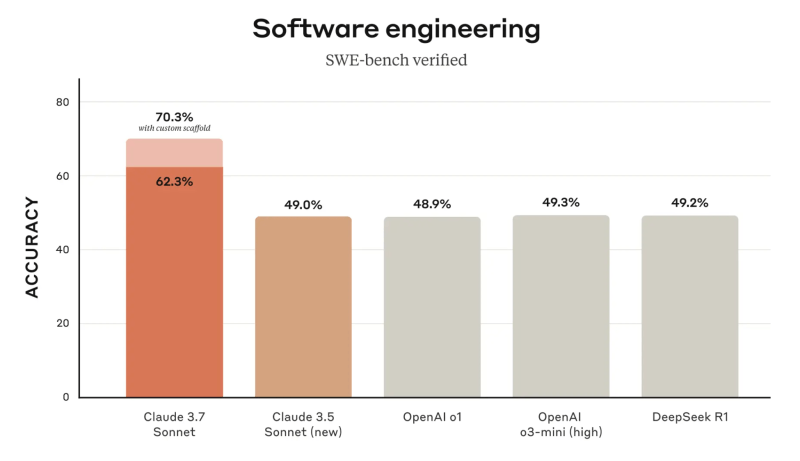
Join our daily and weekly newsletters for the latest updates and exclusive content on industry-leading AI coverage. Learn More While consumer attention has focused on the generative AI battles between OpenAI and Google, Anthropic has executed a disciplined enterprise strategy centered on coding — potentially the most valuable enterprise AI use case. The results are becoming increasingly clear: Claude is positioning itself as the LLM that matters most for businesses. The evidence? Anthropic’s Claude 3.7 Sonnet, released just two weeks ago, set new benchmark records for coding performance. Simultaneously, the company launched Claude Code, a command-line AI agent that helps developers build applications faster. Meanwhile, Cursor — an AI-powered code editor that defaults to Anthropic’s Claude model — has surged to a reported $100 million in annual recurring revenue in just 12 months.  Anthropic’s deliberate focus on coding comes as enterprises increasingly recognize the power of AI coding agents, which enable both seasoned developers and non-coders to build applications with unprecedented speed and efficiency. “Anthropic continues to come out on top,” said Guillermo Rauch, CEO of Vercel, another fast-growing company that lets developers, including non-coders, deploy front-end applications. Last year, Vercel switched its lead coding model from OpenAI’s GPT to Anthropic’s Claude after evaluating the models’ performance on key coding tasks. Claude 3.7: Setting new benchmarks for AI coding Released February 24, Claude 3.7 Sonnet leads on nearly all coding benchmarks. It scored an impressive 70.3% on the respected SWE-bench benchmark, which measures an agent’s software development skills, handily outperforming nearest competitors OpenAI’s o1 (48.9%) and DeepSeek-R1 (49.2%). It also outperforms competitors on agentic tasks. Source: Anthropic. SWE-bench measures a model’s ability to solve real-world software issues. Developer communities have quickly verified these results in real-world testing. Reddit threads comparing Claude 3.7 with Grok 3, the newly released model from Elon Musk’s xAI, consistently favor Anthropic’s model for coding tasks. “Based on what I’ve tested, Claude 3.7 seems to be the best for writing code (at least for me),” said a top commenter. (Update: Even Manus, the new Chinese multi-purpose agent that took the world by storm earlier this week, when it launched saying it was better than Open AI’s Deep Research and other autonomous tasks, was largely built on Claude.) Alongside the 3.7 Sonnet release, Anthropic launched Claude Code, an AI coding agent that works directly through the command line. This complements the company’s October release of Computer Use, which enables Claude to interact with a user’s computer, including using a browser to search the web, opening applications, and inputting text. Source: Anthropic: TAU-bench is a framework that tests AI agents on complex real-world tasks with user and tool interactions. Most notable is what Anthropic hasn’t done. Unlike competitors that rush to match each other feature-for-feature, the company hasn’t even bothered to integrate web search functionality into its app — a basic feature most users expect. This calculated omission signals that Anthropic isn’t competing for general consumers but is laser-focused on the enterprise market, where coding capabilities deliver much higher ROI than search. Hands-on with Claude’s coding capabilities To test the real-world capabilities of these coding agents, I experimented with building a database to store VentureBeat articles using three different approaches: Claude 3.7 Sonnet through Anthropic’s app; Cursor’s coding agent; and Claude Code. Using Claude 3.7 directly through Anthropic’s app, I found the solution provided remarkable guidance for a non-coder like myself. It recommended several options, from very robust solutions using things like PostgreSQL database, to easier, lightweight ones like using Airtable. I chose the lightweight solution, and Claude methodically walked me through how to pull articles from the VentureBeat API into Airtable using Make.com for connections. The process took about two hours, including some authentication challenges, but resulted in a functional system. You could say that instead of doing all of the code for me, it showed me a master plan on how to do it. Cursor, which defaults to Claude’s models, is a full-fledged code editor and was more eager to automate the process. However, it required permission at every step, creating a somewhat tedious workflow. Claude Code offered yet another approach, running directly in the terminal and using SQLite to create a local database that pulled articles from our RSS feed. This solution was simpler and more reliable in terms of getting me to my end goal, but definitely less robust and feature-rich than the Airtable implementation. I’m now understanding the nature of these tradeoffs, and know that the coding agent I pick really depends on the specific project. The key insight: Even as a non-developer, I was able to build functional database applications using all three approaches — something that would have been unthinkable just a year ago. And they all relied on Claude under the hood. For a more detailed review of how to do this so-called “vibe coding,” where you rely on agents to code things while not doing any coding yourself, read this great piece by developer Simon Willison published yesterday. The process can be very buggy, and frustrating at times, but with the right concessions to this, you can go a long way. The strategy: Why coding is Anthropic’s enterprise play Anthropic’s singular focus on coding capabilities isn’t accidental. According to projections reportedly leaked to The Information, Anthropic aims to reach $34.5 billion in revenue by 2027 — an 86-fold increase from current levels. Approximately 67% of this projected revenue would come from API business, with enterprise coding applications as the primary driver. While Anthropic hasn’t released exact numbers for its revenue so far, it said its coding revenue surged 1,000% over the last quarter of 2024. Last week, Anthropic announced it had raised $3.5 billion more in funding at a $61.5 billion valuation. This coding bet is supported by Anthropic’s own Economic Index, which found that 37.2% of queries sent to Claude were in the “computer and mathematical” category, primarily covering software engineering tasks like code modification, debugging and network troubleshooting. Anthropic appears to be marching to its own beat

Anthropic’s stealth enterprise coup: How Claude 3.7 is becoming the coding agent of choice Read More »

The Case of the Vanishing Copilot: Is Microsoft’s Update a Feature or a Bug?

Microsoft’s March security update became the latest and perhaps most shocking mistake in a string of installation bugs plaguing users of the company’s Windows 10 and Windows 11 operating systems. Despite promoting 2025 as “the year of the PC refresh” and heavily marketing its Copilot+ PCs as “the fastest, most intelligent and most secure Windows PCs ever built,” Microsoft’s latest update accidentally removes the Copilot app from some devices. Whoops. “We’re aware of an issue with the Microsoft Copilot app affecting some devices,” Microsoft noted on its support page. “The app is unintentionally uninstalled and unpinned from the taskbar.” The company clarified that this problem doesn’t affect the Microsoft 365 Copilot app. The March update affects Windows 11 users as well as some Windows 10 installations — even those with an earlier Copilot update. According to Windows Latest, the move is something of a headscratcher given the high publicity push to add Copilot to every PC. While Microsoft works on a resolution, it’s suggesting that affected users simply reinstall the app from the Microsoft Store and manually pin it back to the taskbar. More must-read AI coverage A “welcome” bug? In an ironic twist, the bug may actually be a feature for some. “Nobody asked for Copilot on their PCs,” according to Windows Latest, “and a bug now ‘unintentionally’ takes it down.” The mistake comes on the heels of widespread reports of installation problems with other new fixes, including some users experiencing the dreaded blue screen of death after updating. Though the March security update is mandatory, some users have been forced to roll back and temporarily pause the installation to keep their computers running normally until Microsoft resolves these issues. Critical security vs. stable performance: A user’s dilemma The March security update contains quite a few critical fixes following multiple zero-day vulnerability alerts, with hackers already exploiting these holes and putting PCs at risk. It’s a make-or-break year for Windows and Microsoft’s security team, particularly with about 800 million people still using Windows 10 who have yet to switch to the newer operating system. The latest update is causing a dilemma for users being pushed to migrate in the middle of this concerning pattern of unstable Windows 11 updates. Our comprehensive guide offers details about Microsoft Windows 11, including new features, system requirements, and more — get your Windows 11 cheat sheet. source

The Case of the Vanishing Copilot: Is Microsoft’s Update a Feature or a Bug? Read More »

What Is Lead Scoring? A Guide to Score & Grade Leads Easily

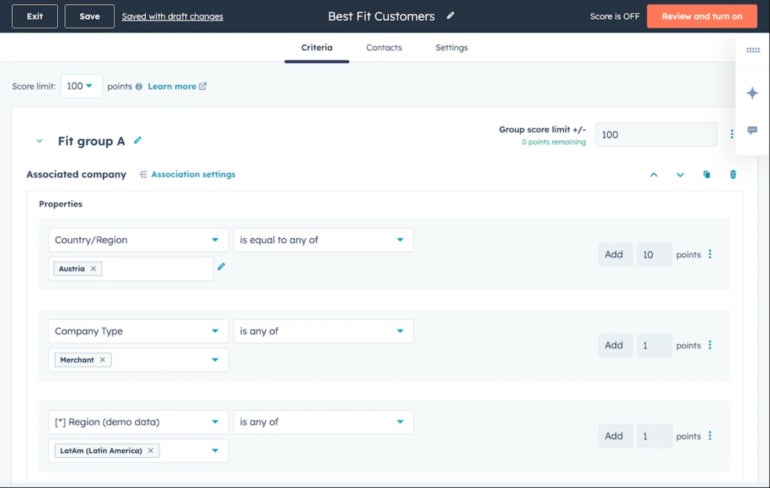
What is lead scoring? Lead scoring is a methodology that assigns numerical scores to individual leads to enable sales and marketing teams to prioritize them based on their likelihood of conversion. Some of its key components include a lead’s demographic data, online behavior, frequency of engagement, and buying stage indicators. The goal is to identify high-value leads and dedicate more effort to conducting personalized follow-ups to drive more conversions. What is a lead score? A lead score is a numerical value representing the likelihood of a potential customer converting into a paying customer. I typically see lead scores ranging from 0 to 100 and classified as cold, warm, or hot. The score is calculated by assigning points to key components, such as demographic data and engagement, and adding the total points. The higher the score, the more likely the lead is to make a purchase. Benefits of lead scoring Lead scoring helps businesses focus their efforts on leads with the highest potential. As a result of doing that, your business can enjoy more efficient sales processes, higher ROI, and other benefits. Efficient sales process By scoring your leads, you can easily identify and hone in on the high-quality ones who are most likely to buy from your business. That means your sales reps won’t have to waste their time and energy on prospects who are not ready to make a purchase. Higher marketing ROI Marketing teams can use lead scores to measure the effectiveness of their campaigns. It can also help them focus on leads requiring nurturing and the most effective outreach channels. Plus, you can figure out where you can invest your future marketing budget and implement improvements based on these scores. Better sales and marketing alignment Lead scoring provides sales and marketing teams with a common framework that they can use to understand their leads and identify prospects that they need to focus on. That said, both teams can work towards the same goal and collaborate on improving their strategies for customer communication. Improved conversion rates Sales and marketing teams can focus on high-priority prospects with the highest lead scores. This prevents them from missing opportunities by encouraging high-value leads to convert. For example, say you have a lead who’s ready to speak to a sales rep to inquire about your products. At the same time, your marketing automation tools can send them relevant content to help convince them to buy the product they’re interested in. Accurate revenue forecasts By tracking lead scores, businesses can easily see how likely a lead is to make a purchase. You can use this information to predict future revenue. Accurate forecasts help businesses plan their sales resources well and be better equipped to meet projected demand. Different lead scoring models Here are some examples of lead scoring models that you can develop and use to rank your potential customers. Demographic or firmographic model You can create a lead scoring model for your ideal customers based on specific demographic or company data, such as age, location, industry, and company size. To do that, ensure your landing page forms include questions that gather demographic and firmographic data to exclude outliers. You can also deduct points from leads that don’t have the characteristics you are looking for. Image: HubSpot Engagement model This model measures your lead’s level of interest in your product or service based on their email or social media engagement with your brand. This requires tracking email open rates, click-through rates, social media interactions, and engagement frequency. You can also track granular details and assign higher scores for those who open a demo or promo email. Image: LeadSquared Online behavior model Another good way to determine purchase readiness is to score leads based on their behavior on your business website. This requires a lead tracking system, like Salesforce, to automatically calculate lead ranks and update the scores based on values assigned to different actions. I suggest including filling in a contact form, visiting your pricing page, watching a demo video, and downloading materials in your list of actions. Image: Salesforce Negative scoring attributes Some leads express little interest in your brand, browse your website simply for academic reasons, or are not interested in purchasing. I suggest excluding these leads or adjusting their rank to move them down your priority list. Leads that you can assign negative scores to include those who unsubscribe from your email list, submit spam, work for a competitor, and type in “student” in the job title field. Source: Zoho CRM What metrics to look at for lead scoring Tracking key performance indicators (KPIs) helps you measure the effectiveness of your lead scoring system. The top metrics may vary from one company to another, but they generally include Lead engagement: Includes email opens, email clicks, and social media interactions. Conversion rate: The percentage of leads that convert into customers. Cost per lead: The cost of acquiring each lead. Customer acquisition cost (CAC): The total cost of identifying and converting leads. ROI per lead: The revenue generated from scored leads. Sales cycle time: How much time it takes to convert a lead. MQL to SQL ratio: Monitors the ratio of marketing-qualified leads (MQL) versus sales-qualified leads (SQL) to gauge alignment between the two teams. How to instill a lead scoring system for your business Follow these steps to build a data-backed lead scoring system for your business. 1. Establish your minimum lead qualifications. Consider the minimum criteria a lead must meet to turn into a customer and the factors that can exclude leads from your scoring system. For example, you will only accept leads above 18 years old who live in a specific region. This way, your sales team won’t waste time pursuing leads that have no chance of converting. 2. Identify the core qualities of your typical customers. List the core attributes that your typical customer base possesses but are not necessarily required to be qualified as customers. These attributes could include company size, industry, and annual revenue. If your leads also possess these core qualities,

What Is Lead Scoring? A Guide to Score & Grade Leads Easily Read More »