NIH Research Cuts Stay On Hold As Judge Mulls Objections

By Brian Dowling ( February 21, 2025, 12:51 PM EST) — A Boston federal judge on Friday extended her hold on a Trump administration proposal to slash reimbursements from the National Institutes of Health for research grant costs, a move colleges, hospitals and other institutions have said would wreak havoc on scientific research…. Law360 is on it, so you are, too. A Law360 subscription puts you at the center of fast-moving legal issues, trends and developments so you can act with speed and confidence. Over 200 articles are published daily across more than 60 topics, industries, practice areas and jurisdictions. A Law360 subscription includes features such as Daily newsletters Expert analysis Mobile app Advanced search Judge information Real-time alerts 450K+ searchable archived articles And more! Experience Law360 today with a free 7-day trial. source

NIH Research Cuts Stay On Hold As Judge Mulls Objections Read More »

Max Planck spinout unveils 'world's most viable' fusion reactor plan

German startup Proxima Fusion — whose team includes engineers from MIT, Google, SpaceX, and McLaren — has unveiled a fusion energy reactor design it believes offers the quickest route to commercially viable fusion power. Dubbed Stellaris, the machine is a quasi-isodynamic (QI) stellarator with high-temperature superconducting (HTS) magnets. This type of reactor uses complex, twisted magnetic fields to confine hot plasma, creating the conditions needed for fusion reactions. “Stellaris is designed to operate in continuous mode and be intrinsically stable,” Francesco Sciortino, Proxima’s co-founder and CEO, told TNW. “No other fusion power plant design has yet been demonstrated to be capable of that.”   Stellaris’ design builds on the Wendelstein 7-X, the world’s largest stellarator, located at the Max Planck Institute for Plasma Physics in Germany. While Wendelstein 7-X was developed for research, Stellaris could one day power the grid.  TNW Conference – Groups get the best fun and the best deals Bring your team and multiply your efficiency to cover more grounds and collect new leads. Proxima aims to bring the design to life with its first demonstrator — Alpha — slated for completion in just six years. Alpha will be the first-ever fusion device demonstrating net energy production in a steady state, said Sciortino. The machine will lay the foundation for Proxima’s first 1GW fusion reactor, which the company hopes will power up sometime in the 2030s.  Stellarators have several advantages over their more popular cousin, the tokamak (the type adopted by ITER mega project under construction in France). They need less power to operate and are more stable. Their biggest drawback is complexity — stellarators are notoriously hard to design and build. This is why they were largely set aside in the 1960s for the tokamak. However, advances in computational power are closing the gap. An AI-enabled fusion reactor design Similar to other industries like automotive or aerospace, Proxima uses AI supercomputers to rapidly iterate the best fusion reactor designs based on key parameters like cost, material availability, and efficiency. So instead of having to build multiple prototypes, Proxima can jump straight into building a functioning demonstrator.  “The understanding of complex geometry and its consequences is everything in stellarators,” said Sciortino. “AI is helping Proxima to uncover patterns that lead to simpler, faster, and cheaper designs.”  Stellaris is designed to generate more power per unit volume than any previous stellarator. HTS magnets create stronger magnetic fields, allowing for smaller, faster-to-build, and more efficient reactors. This approach also reduces costs in both construction and operation. Stellaris uses only existing materials, making it buildable with today’s supply chains, the company said. Full details of the reactor were published today in the journal Fusion Engineering and Design. The renders of Stellaris feature a unique twisting design. Credit: Proxima Fusion Munich-based Proxima made history in 2023 as the first company to spin out from the esteemed Max Planck Institute for Plasma Physics, one of the world’s leading fusion research centres. The institute focuses exclusively on fusion and has more plasma physicists than MIT. Proxima raised €20mn in funding last year as it looks to turn the mind-bending physics of fusion into a viable business.    “When Proxima started its journey, the founders said, ‘This is possible, we’ll prove it to you,’ and they did,” said Ian Hogarth, a partner at Plural, one of Proxima Fusion’s earliest investors. “Stellaris positions QI-HTS stellarators as the leading technology in the global race to commercial fusion.” source

Max Planck spinout unveils 'world's most viable' fusion reactor plan Read More »

Why AI On-Premises Means Big Bottom-line Advantages in the Long-run

Artificial Intelligence (AI) is at a pivotal moment, as more businesses realize that the best place for their AI operations might not be the cloud, but on their own premises. The choice between on-premises AI––popularly known as private AI––and a cloud-based approach is now less about “if” and more about “when,” as companies recognize the benefits of a private AI infrastructure. Unlike a single product or vendor-driven solution, private AI is an architectural strategy—a way of thinking—that brings substantial advantages in cost, control, and flexibility. But let’s understand private AI for what it really is: not a one-size-fits-all product, but an architectural approach that optimizes an AI environment for an organization’s specific needs. Indeed, private AI isn’t a particular model or technology—it’s a strategy. It allows organizations to bring AI models to where their data lives instead of moving their data to the model, creating a powerful blend of efficiency, control, and compliance. Why is this approach valuable? For many companies, their data is core to their business, and they need full control over where it’s stored and how it’s used. Moving it to the cloud may raise privacy, compliance, and even security concerns. By keeping AI on-premises, however, businesses get to keep their data where it’s most protected and under their control. Cost Advantages of AI On-Premises One of the biggest advantages of private AI is its cost efficiency, which has made this approach a real standout. In the cloud, every AI interaction is metered and billed as tokens. This pay-as-you-go model might work for some scenarios, but for AI workloads, it creates an unpredictable cost structure that doesn’t always scale well. That can lead to budget challenges and the need to enforce hard caps on usage, which can then limit the value of an AI service. Imagine having to turn off usage two weeks into a month because of hitting a cost ceiling. When customers deploy private AI, they benefit from sharing GPU, network, and memory resources across applications. This kind of resource-sharing model offers a far more predictable and efficient cost structure, saving businesses from skyrocketing monthly bills. A consistent, predictable infrastructure cost allows organizations to better forecast AI spend and allocate resources where they’re truly needed. Our customers tell us that running their AI services on-premises has turned out to be anywhere from a third to one-fifth of the cost of cloud-based options. With an on-premises strategy, any optimization to the infrastructure directly benefits the company’s bottom line, not a cloud provider’s margins. This level of ownership and control over infrastructure savings is a compelling argument for private AI. Control Over the Full Stack Beyond cost, private AI enables a level of operational control that cloud-based solutions simply can’t match. Cloud providers offer a broad suite of services, but they’re often locked into a specific ecosystem, limiting an organization’s choices for hardware, models, and tools. With private AI, organizations aren’t bound by a single vendor’s roadmap. They can choose the best hardware for each workload, experiment with different models, and evolve their environment to meet their specific demands. Take, for example, AI workloads in industries like finance, government, or healthcare. These sectors are under heavy regulatory scrutiny and require rigorous data governance. Private AI allows these organizations to run AI models where their data is already compliant and secure, avoiding the potential risks and costs associated with moving sensitive data off-premises. When the model is close to the data, there’s no need to restructure or reconfigure that data to fit a third-party platform—a major advantage that allows organizations to deploy faster and more securely. Measurable Business Value with Private AI Private AI can also be a powerful tool for CXOs who are looking to maximize AI investments without getting swept up in the hype. In many organizations, there’s pressure to implement AI quickly, but there’s a real risk of pursuing short-term wins without considering long-term business value. One of the most effective ways to show immediate returns with AI on-premises is through measurable use cases where business impact is clear. In customer service, for instance, a company can measure the volume of cases closed per agent both before and after deploying an AI solution. These efficiency gains, sometimes in the range of 10% or more, are valuable, practical ways to demonstrate ROI. Private AI also helps businesses stay focused on measurable outcomes rather than AI for the sake of AI. It enables CXOs to lead with pragmatism, choosing use cases that bring immediate value. Take information retrieval as another example: A police department using AI to cross-reference cold case files can see weeks or months’ worth of human detective work condensed into hours with the help of an on-premises AI-powered chatbot that ingests, organizes, and provides rapid access to complex case information. Avoiding the Pitfalls of Technical Debt  When rolling out AI, adopting a platform-based approach is crucial. Companies that lock themselves into proprietary cloud ecosystems or vendor-specific solutions often face significant challenges down the line. Proprietary solutions may appear faster or easier initially, but they can create a “technical debt trap.” This happens when businesses can’t pivot to better models or technologies because their AI stack is tied to a specific vendor’s AI silo. By taking a modular, platform-based approach to AI on-premises, organizations are well-positioned to evolve as new models and technologies emerge. This platform flexibility is critical in an industry that’s moving as fast as AI is today. Instead of being saddled with outdated technology, a platform-based approach allows organizations to adopt the latest models, ensuring that their AI remains competitive and responsive to change. Imagine finishing rolling out a new AI service and in a matter of weeks having buyer’s remorse because something faster and more accurate was just released by another vendor or in open source. With a platform approach, you can quickly pivot to the latest and greatest at the speed of software. With private AI, it’s also much easier to manage the full stack, from hardware to applications,

Why AI On-Premises Means Big Bottom-line Advantages in the Long-run Read More »

6 Best Accounting Software for Multiple Businesses

Ultimately, the best accounting software for multiple businesses must have consolidation features so that you can combine financial reports of different business units into a single, unified report. Our favorite pick for multibusiness management is Sage Intacct, with its robust reporting and easy visibility across business profiles. Acumatica Cloud ERP Employees per Company Size Micro (0-49), Small (50-249), Medium (250-999), Large (1,000-4,999), Enterprise (5,000+) Any Company Size Any Company Size Features Accounts Receivable/Payable, API, Departmental Accounting, and more QuickBooks Employees per Company Size Micro (0-49), Small (50-249), Medium (250-999), Large (1,000-4,999), Enterprise (5,000+) Micro (0-49 Employees), Small (50-249 Employees), Medium (250-999 Employees), Large (1,000-4,999 Employees) Micro, Small, Medium, Large Features API, General Ledger, Inventory Management Quicken Business & Personal Employees per Company Size Micro (0-49), Small (50-249), Medium (250-999), Large (1,000-4,999), Enterprise (5,000+) Micro (0-49 Employees) Micro Features Accounts Receivable/Payable, Invoicing / Billing, Mobile Capabilities, and more Top accounting software for multi-business management comparison Pricing and product details are accurate as of 2/12/2025. Sage Intacct: Best overall for multibusiness accounting Image: Sage Sage Intacct, one of our best enterprise accounting software, provides a customizable controller dashboard that lays out your businesses’ financials and essential information through reports, statements, and a wide range of visualizations. Moreover, the reporting dashboard allows real-time data analysis with a detailed general ledger and other custom reports. Sage Intacct also offers essential insights to compare the statistics and figures of numerous entities. Pricing Sage doesn’t provide transparent pricing on its website and encourages shoppers to call for a quote. Features Custom real-time reports. Fixed asset management. Specialized features for different industries. Robust dashboards. Collaboration tools. Financial and resource analytics. Pros and cons Pros Cons Offers both a desktop and cloud-native version of the software Has third-party connection solutions, such as Salesforce, and even more integrations through its web services API Allows automations to optimize cash management processes Doesn’t provide pricing information online Has implementation and utilization that can come with a steep learning curve Has technical support, but it can be expensive Wave Accounting: Best low-cost option Image: Wave Wave Accounting offers a free tier and an inexpensive paid subscription. You can do basic accounting tasks, such as creating invoices, reconciling bank accounts, and managing the chart of accounts. Its Pro plan adds more premium features such as automatic imports of bank transactions and additional user roles. Pricing Starter: Free Pro: $16 per month Features Expense tracking Accounting dashboard Online payments Income tracking Bank and credit card connections Overdue invoices and bills reporting Profit and loss reporting Sales and tax tracking Receipt scanning Pros and cons Pros Cons Has employee self-service capabilities through the mobile money management Android and iOS apps Provides automatic payment deadline reminders for clients Features a user-friendly interface with easy software setup Supports up to 15 business profiles within one account Has no built-in integrations, so connecting data from third-party solutions can be difficult May not be a great fit for businesses needing a more robust solution, as extra features are listed as add-ons Accommodates only one user in the free tier Lacks class and location tracking for income and expenses QuickBooks Online: Best user experience Image: QuickBooks QuickBooks Online offers robust accounting solutions that allows multicompany file access for different sets of books. If ever you need a separate set of books for a business segment or branch, you can get another QuickBooks subscription and use one login for all accounts. This feature enables your accountants to switch easily between two accounts without having to remember different logins. Pricing QuickBooks Simple Start: $35 per month QuickBooks Essentials: $65 per month QuickBooks Plus: $99 per month QuickBooks Advanced: $235 per month Pros and cons Pros Cons Has a bulk importing feature Lets you send unlimited invoices to unlimited clients Is intuitive and user-friendly software Has a nationwide network of QuickBooks ProAdvisors Doesn’t offer the option to add more users Has high price jumps from one plan to the next, especially from Plus to Advanced Cannot record sales orders from customers Allows only one organization per subscription Xero: Best for unlimited users Image: Xero Xero provides core capabilities that facilitate and support fundamental accounting operations across each of its plans. All tiers are good for unlimited users, making it a flexible pick for small to large businesses. You can get all the essential functions, plus advanced features such as project tracking and analytics in the highest plan. Try any plan for 30 days free — or sign up right away and get 90% off for three months. Pricing Early: $20 per month Growing: $47 per month Established: $80 per month Features Time-tracking tool Xero’s mobile app, Xero Expenses Admin task automation Workflow management Document management Financial reporting Fixed asset tracking Inventory and COGS tracking Pros and cons Pros Cons Accommodates unlimited users Has a wide range of third-party integrations Has comprehensive project accounting features Offers sales tax calculation Allows multiple currencies with Established plan Offers payroll, but it’s an add-on through Gusto From $40 a month + $6 per person monthly Allows only one organization per subscription  Lacks discounted annual billing Limits you to 20 invoices and five bills in the lowest tier Zoho Books: Best for enterprises Image: Zoho Books Zoho Books is great for streamlining business processes in one platform. It offers a free plan with limited features so that you can experience its capabilities without breaking the bank. Though limited, upgrading to higher plans pays off since you get more impressive features such as bank feed connections, sales orders, and workflow management. You can sign up for a 14-day free trial of any paid plan to get the look and feel of the version. Pricing Free: $0 (for businesses with a yearly revenue below $50,000) Standard: $20 per organization, per month Professional: $50 per organization, per month Premium: $70 per organization, per month Elite: $150 per organization, per month Ultimate: $275 per organization, per month Features Zoho Books mobile app Scheduled reporting and real-time data analysis Customized invoicing Expense management Customer portal and vendor portal Pros and cons Pros Cons Offers flexible plans Has a

6 Best Accounting Software for Multiple Businesses Read More »

Apple Can Claw Back Mistakenly Produced Docs In Epic Fight

By Bonnie Eslinger ( February 21, 2025, 9:48 PM EST) — A California federal magistrate judge said Friday that Apple can claw back two documents the tech giant said it accidentally produced during discovery for an antitrust suit brought by Epic Games, rejecting the game developer’s assertion that Apple’s bid was “opportunistic.”… Law360 is on it, so you are, too. A Law360 subscription puts you at the center of fast-moving legal issues, trends and developments so you can act with speed and confidence. Over 200 articles are published daily across more than 60 topics, industries, practice areas and jurisdictions. A Law360 subscription includes features such as Daily newsletters Expert analysis Mobile app Advanced search Judge information Real-time alerts 450K+ searchable archived articles And more! Experience Law360 today with a free 7-day trial. source

Apple Can Claw Back Mistakenly Produced Docs In Epic Fight Read More »

Crunchbase’s AI can predict startup success with 95% accuracy—will it change investing?

Join our daily and weekly newsletters for the latest updates and exclusive content on industry-leading AI coverage. Learn More Crunchbase will abandon its roots as a historical data provider to become an AI-powered predictions engine that forecasts startup funding rounds, acquisitions and company growth trajectories. The San Francisco-based company announced today it will relaunch its platform with AI models that can predict future business events with up to 95% accuracy, betting that artificial intelligence will fundamentally reshape how investors and companies make decisions about private markets. “The historical data industry as we know it is dead,” said Jager McConnell, CEO of Crunchbase, in an interview with VentureBeat. “If you are a company, a data company, and all you’re dealing with is historical data…I think you’re going to find that you don’t use it as much anymore in the future.” AI disrupts traditional market data; Crunchbase declares the old model ‘dead’ The move marks a dramatic shift for Crunchbase, which built its reputation as a crowdsourced database of startup information over 15 years. McConnell argues that traditional data providers face an existential threat from AI systems that can easily absorb and analyze historical information. “AI companies are an existential threat for data companies, not just software companies,” McConnell said. “If you deal in historical data, once your data gets into these systems, the facts remain facts. Even data behind paywalls eventually leaks, and once it does, your value disappears because AIs can build better insights by combining it with all the data on the internet.” Instead of focusing solely on past events, Crunchbase now leverages its massive dataset — including usage patterns from 80 million active users — to predict future business outcomes. The company’s AI analyzes thousands of signals to forecast events around fundraising, acquisitions and growth. How Crunchbase’s AI uses 80 million users to predict the next big startup According to Megh Gautam, Crunchbase’s chief product officer, the company’s predictions stem from a unique combination of contributed data, captured data from public sources, and anonymized user engagement patterns. “The real magic behind our ability to predict key milestones in company lifecycles lies in our unparalleled breadth and depth of knowledge,” Gautam told VentureBeat. “We’ve built features that are generalized, not tuned to any single dataset.” The company claims its fundraising predictions achieve up to 95% precision and 99% recall in backtesting — meaning it correctly identifies most companies that go on to raise funding, with few false positives. For 12-month predictions, accuracy remains in the “high 70s percent,” according to McConnell. Beyond fundraising, Crunchbase’s AI can predict acquisitions, IPOs, company growth and even potential layoffs — though McConnell said some negative predictions won’t be displayed publicly to avoid causing harm to companies. The future of investing: Can AI outperform human decision-making? The strategic shift comes as investors increasingly seek predictive signals rather than historical data alone. “The problem they’re trying to tackle is, what do we do next?” Gautam said. “Our users want to be first to market.” Looking ahead, McConnell envisions Crunchbase becoming a platform that powers AI-driven investment decisions, potentially including automated investing systems and indexes tracking private market sectors. “I think in five years, everyone’s dead,” McConnell warned, referring to traditional data companies. “The Salesforces of the world have to figure out what their UI experience is going to be like…this thing is so fluid that in five years, a data company that’s not doing the stuff we’re talking about won’t exist.” The transformation positions Crunchbase to compete more directly with both traditional market intelligence providers and emerging AI-powered investment platforms. The company plans to allow customers to incorporate its predictive signals into their own models while it maintains control of its valuable underlying data. Industry analysts note that Crunchbase’s shift comes amid growing interest in using AI for investment decisions, though many investors remain skeptical of fully automated approaches. The company’s success may depend on whether it can maintain high prediction accuracy as it scales while convincing customers to trust its AI-generated insights. McConnell emphasizes that Crunchbase aims to augment rather than replace human decision-making: “We fundamentally believe in augmentation…investments [are] pretty subjective, and your thesis has to match, and the price has to match.” The rebranded platform launches publicly today at Crunchbase.ai, marking what McConnell calls a “precipice of just everything changing” in how investors evaluate private companies. In his view, the future belongs not to those who collect the most data, but to those who can best predict what happens next. source

Crunchbase’s AI can predict startup success with 95% accuracy—will it change investing? Read More »

The 7 Best Money Saving Apps Reviewed for 2025

The best apps for money saving are designed to automate savings, track spending, and even reward good financial habits. If you’re looking to round up spare change, earn cash back on purchases, or get insights into your budget, there’s an app to fit your needs. With so many options available, choosing the right one can be overwhelming. This guide breaks down the best money saving apps of the year, comparing their features, fees, and benefits to help you find the perfect fit for your financial goals. 1 Quicken Business & Personal Employees per Company Size Micro (0-49), Small (50-249), Medium (250-999), Large (1,000-4,999), Enterprise (5,000+) Micro (0-49 Employees) Micro Features Accounts Receivable/Payable, Invoicing / Billing, Mobile Capabilities, and more Here is a list of our best apps for money saving in 2025: Best overall app for assigning a purpose to every dollar in your budget to help users get control of their finances: YNAB (You Need A Budget) If your bank account is in the United States or Canada, Open Banking will be provided by Plaid or MX. If your bank account is in the UK, Open Banking will be provided by TrueLayer Limited. Best for rounding up purchases to the nearest dollar and investing the spare change: Acorns Acorns is not a bank. Acorns Visa™ debit cards and banking services are issued and provided by Lincoln Savings Bank or nbkc bank, Members FDIC. Best app that turns saving money into a game, allowing users to set rules that trigger money saving as they reach goals: Qapital Qapital is a fintech company, not an FDIC-insured bank. Checking account provided by Lincoln Savings Bank, Member FDIC. Best app for a financial snapshot helping users identify disposable income: PocketGuard PocketGuard is a fintech, not a bank. It allows you to save money by analyzing spending habits to identify ways to save and define disposable income. Best for managing subscriptions, tracking spending, and reducing bills: Rocket Money Banking services provided by NBKC Bank and partners of Synapse, Members FDIC. Best cash back app for making purchases through partner retailers: Rakuten Rakuten is a fintech, not a bank. It allows you to save money by offering cash back rewards, coupon codes, promo codes and discounts at partner retailers. Best comprehensive budgeting app helping users track spending and set a workable budget: Monarch Monarch is a fintech, not a bank. It allows you to save money with budgeting tools that track spending and help you set long term savings goals. Best apps for money saving quick comparison Best Overall: YNAB (You Need A Budget): best app for assigning a purpose to every dollar in your budget to help users get control of their finances Image: YNAB YNAB is a powerful budgeting app. It stands for You Need A Budget. That’s exactly what it does by giving every dollar a job. Unlike traditional budgeting tools that track past spending, YNAB focuses on proactive money management, ensuring that every dollar is allocated toward expenses, savings, or financial goals. It uses a zero-based budgeting approach, meaning users plan for every dollar of income before spending it. YNAB also provides educational resources, goal-setting features, and real-time syncing across devices, making it ideal for individuals who want a structured, hands-on approach to managing their money while also developing smart financial habits. Why I chose it YNAB promotes financial discipline, proactive money management, and long-term financial stability. Here are a few features that really make this app stand out: Encourages responsible spending Reduces financial stress and debt Helps build savings and emergency funds Saves bank fees Supports long-term financial planning Monthly fees $14.99 monthly or $109.00 annually Features App connects and syncs in real-time with your bank App view can be customized App includes date prioritized goal tracking Loan calculator helps to pay debt down faster Robust reporting feature Assign jobs for every dollar Provides educational resources and community support Pros and cons Pros Cons Automatically detects bank transactions Allows creation of multiple budgets Sync across multiple devices Can be customized to fit your needs Requires regular management Bill pay is not included Phone support not available Acorns: Best for rounding up purchases to the nearest dollar and investing the spare change Image: Acorns Acorns specializes in micro-investing, which allows users to automatically round up purchases to the nearest dollar and then invest the spare change into a diversified portfolio. It also has additional savings features such as recurring deposits, retirement accounts, and checking with cash back rewards. This is perfect for those who want to be hands-off investors, growing balances gradually without needing financial insights on market trends. Why I chose it Acorns approaches saving money from a perspective that’s attainable for most people. By using Whole Dollar Round-Ups®, you’re not investing large sums of money at once. Each investment is less than $1, allowing you to grow gradually without compromising your budget. The concept is that tiny acorns grow mighty oaks. It will allow you to link as many debit or credit cards as you would like in the round up program; however, the round-up portion would come from your Acorns checking account. The more cards you link, the more opportunities you create for investing. Monthly fees Acorns Bronze: $3 monthly Acorns Silver: $6 monthly Acorns Gold: $12 monthly Features Investment account with a diversified portfolio Checking account automatically invests for you Debit cards available with accounts No overdraft fees 55,000 free nationwide ATMs 450 in-app partner brands to earn bonus investments Video learning modules for tips on money and investing Pros and cons Pros Cons Save and invest in one place Round up investments with less than $1 or manually invest for as little as $5 Chat, email, and phone support available 5 am-7 pm PST Interest-earning checking options Bitcoin-linked EFT cryptocurrency investment options available No free account options Fees to transfer investments to a broker Users are not able to pick specific stocks or bonds Long-term investments may not build up enough for retirement Qapital: best

The 7 Best Money Saving Apps Reviewed for 2025 Read More »

AI humanoid robots inch their way toward the workforce

Anders Brown, CEO of Tompkins Solutions, a systems integrator that has a partnership with Agility, says Agility, which has the manufacturing capacity to produce up to 10,000 robots a year, has deployed multiple Digit robots at various customer locations for production use as part of proof of concept or robot-as-a-service (RaaS) arrangements. “The key to truly scaling beyond initial deployments is having a collaboratively safe robot, which Agility has made a pledge to release in 2026,” Brown says. Tom Richer, CEO of AI consultancy Intelagen and a former CIO, pointed to Figure.AI robot, which has garnered significant attention and secured funding and a partnership with BMW for manufacturing applications. Along with xAI’s Optimus, Richer also noted AgiBot, a Chinese company that claims to have produced almost 1,000 units, and Boston Dynamics, whose humanoid robot Atlas has demonstrated impressive feats of movement and task execution, “but widespread deployment remains limited.” source

AI humanoid robots inch their way toward the workforce Read More »

GoDaddy, Tech Co. Quietly Agree To Kill Antitrust Suit

By Nadia Dreid ( February 25, 2025, 8:10 PM EST) — The world’s largest domain registrar, GoDaddy, has come to terms with the company behind an antitrust suit claiming that it blackballed the tech company from its platform, according to documents filed recently in Virginia federal court…. Law360 is on it, so you are, too. A Law360 subscription puts you at the center of fast-moving legal issues, trends and developments so you can act with speed and confidence. Over 200 articles are published daily across more than 60 topics, industries, practice areas and jurisdictions. A Law360 subscription includes features such as Daily newsletters Expert analysis Mobile app Advanced search Judge information Real-time alerts 450K+ searchable archived articles And more! Experience Law360 today with a free 7-day trial. source

GoDaddy, Tech Co. Quietly Agree To Kill Antitrust Suit Read More »

Bluehost vs GoDaddy: Web Hosting Comparison 2025

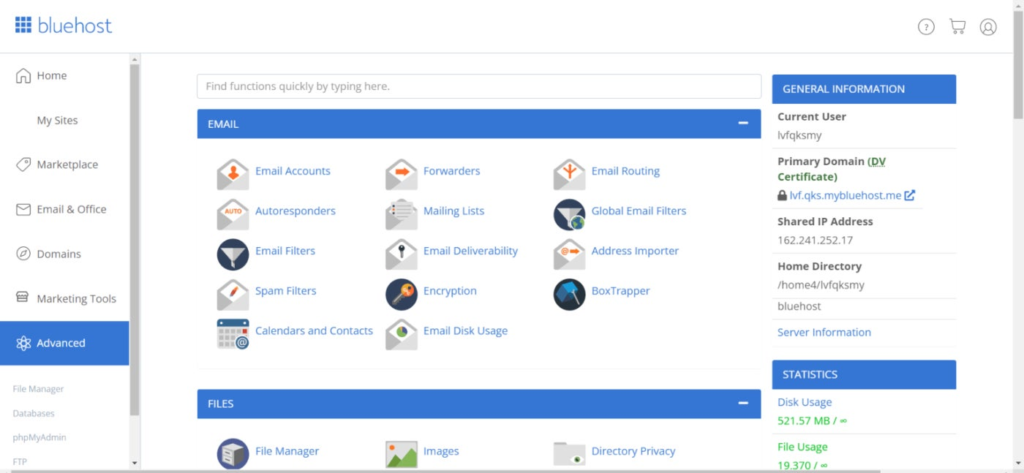
Choosing the right web hosting provider is crucial for anyone looking to build a strong online presence. GoDaddy and Bluehost are two of the most popular options, and they share similarities but possess some key differences. GoDaddy is ideal for beginners and small businesses seeking an all-in-one platform with domain registration and marketing tools, while Bluehost is best suited for WordPress users who prioritize performance and scalability. Both companies offer beginner-friendly plans with competitive pricing, although notable differences should be considered before choosing one web hosting provider over the other. Understanding these differences ensures that individuals and businesses select the right platform for their websites. Bluehost vs. GoDaddy: Comparison table This comparison table highlights the differences between Bluehost and GoDaddy in order to help determine which is the best web hosting platform for your website and which provider aligns more with your business goals. Bluehost GoDaddy Hosting Types Shared, VPS, Dedicated, WordPress Shared, VPS, Dedicated, WordPress, Website Builder Performance Optimized for WordPress, fast loading times Decent performance, not optimized for WordPress Collaboration Tools Google Workspace and Microsoft 365 integration Microsoft 365 email hosting and Teams integration Domain Management Basic domain management Advanced domain tools Starting price $2.95 $5.99 For more information Bluehost vs. GoDaddy: Pricing Bluehost pricing Bluehost features various hosting plans, starting at $2.95 per month for shared hosting. Shared hosting offers users Basic, Choice Plus, and Pro tiers, with features like free SSL, domain registration, and unmetered bandwidth. Higher tiers are also available and offer unlimited websites, storage, and automated backups. For WordPress users, Bluehost provides managed WordPress and WooCommerce hosting. WooCommerce is optimized for performance and security and is an ideal option for online selling with eCommerce tools automatically built-in. The limitations of Bluehost include higher renewal prices and add-on upselling. While Bluehost is a reliable choice for beginners and growing websites, advanced users might find its customization options to be limited. Available Bluehost Tiers: Basic: $2.95/month for the first year, renews at $11.99/month (suitable for a simple website or blog). Choice Plus: $5.45/month for the first year, renews at $21.99/month (ideal for multiple websites requiring storage, security, and backups). WooCommerce: $9.95/month for the first year, renews at $26.99/month (suitable for all online selling with integrated eCommerce tools). Pro: $13.95/month for the first year, renews at $28.99/month (perfect for high-traffic websites with advanced storage, security, and backup capabilities). GoDaddy pricing GoDaddy provides a comprehensive range of hosting solutions, including shared hosting, WordPress managed hosting, a VPS, and dedicated hosting. Shared plans start at $5.99 per month, where Economy, Deluxe, and Ultimate tiers provide complimentary domain names, SSL certificates, unmetered bandwidth, and single-click WordPress installation. Higher tiers offer enhanced storage capacity, accelerated processing speeds, and more advanced security measures. Managed WordPress starts at $7.99 per month, with automatic updates, daily backups, and malware scans. VPS plans start at $8.99 per month, and dedicated hosting starts at $148.99 per month. Potential drawbacks include higher renewal costs and the absence of a free website migration service. GoDaddy’s domain management and marketing tools are robust, but hosting performance may not be comparable to Bluehost for certain WordPress users. GoDaddy proves to be suitable for businesses and users seeking an all-in-one platform that encompasses domain registration, website construction, and marketing solutions. Available GoDaddy Tiers: Economy: $5.99/month with a 3-year term (designed for beginners, this plan includes a free domain, free email, and a free SSL certificate for the first year). Deluxe: $7.99/month with a 3-year term (ideal for growing websites, offers hosting for up to 10 websites, and includes a free domain, free email, and free, unlimited SSL for all websites). Ultimate: $12.99/month with a 3-year term (best suited for high-traffic sites, this plan supports up to 25 websites and offers all features included in the Deluxe plan, plus enhanced processing power). Bluehost vs. GoDaddy: Feature comparison Automatic Backups Bluehost offers automatic backups on higher-tier plans, but basic plans lack free daily backups. The Choice Plus and Pro plans include free automated backups, while lower-tier users must purchase backups separately. For full-site protection, upgrading or using third-party backup solutions is recommended. GoDaddy provides automatic daily backups with all web hosting plans, ensuring website data is securely stored and easily restorable. These backups include one-click restore options, database protection, and malware scanning, offering peace of mind. This feature helps businesses prevent data loss and quickly recover from unexpected website issues. GoDaddy is better than Bluehost for automatic backups because it includes daily backups with all web hosting plans, whereas Bluehost offers free backups only on higher-tier plans. GoDaddy’s backups come with one-click restore and malware protection, which ensures better data security and easier recovery without requiring additional purchases or upgrades. Domain Management Tools Bluehost offers basic domain management tools, including domain registration, DNS management, and domain forwarding. It provides a free domain for the first year, but its domain management features are not as advanced as GoDaddy’s. GoDaddy excels in domain management, offering bulk domain purchases and domain forwarding. It provides domain privacy protection and easy transfers, making it ideal for businesses managing multiple domains. It also features a user-friendly dashboard that simplifies domain control. GoDaddy is better than Bluehost for domain management because it offers bulk domain registration and advanced DNS management. Its user-friendly interface makes domain transfers and renewals seamless. Unlike Bluehost, GoDaddy specializes in domain services, making it the superior choice for businesses managing multiple domains or requiring advanced domain control features. Collaboration Tools Bluehost offers basic collaboration tools through email hosting, shared access, and integration with Google Workspace and Microsoft 365. However, it lacks built-in team collaboration features like project management and real-time document editing. GoDaddy provides strong collaboration tools through its Microsoft 365 email hosting, offering shared calendars, cloud storage, and team communication features. It integrates with Microsoft Teams and OneDrive, making it ideal for businesses needing professional email and productivity tools. When it comes to collaboration tools, GoDaddy has a slight advantage over Bluehost. This is primarily due to its more comprehensive integration with Microsoft 365,

Bluehost vs GoDaddy: Web Hosting Comparison 2025 Read More »