SAP builds new business suite in the cloud

It remains to be seen whether SAP users will follow the path of their software supplier. The German-speaking SAP user group (DSAG) is under no illusions. “SAP has not built any new software,” says Thomas Henzler, DSAG Board Member for Sales, Production & Logistics. “The Business Suite is first and foremost a target image, but not a product.” SAP is building “managed integration” In future, customers will buy a Cloud Enterprise Resource Planning (ERP) system, either Cloud Public or Private Edition, explains the user representative. The new Rise and Grow journeys announced as part of this process are intended to guide customers towards this goal. From SAP’s perspective, the strategic ERP product is the S/4HANA Cloud, Public Edition or now Cloud ERP Public. With regard to integration, the DSAG representative states: “In the past, SAP developed a technical platform with the Cloud Integration Suite and a corresponding mapping. However, customers had to implement, pay for and operate this themselves.” In future, SAP wants to offer more and more “managed integration”, where the software group also takes over the technical operation. Henzler cites the announcement at Sapphire 2024 regarding the customer relationship management (CRM) solution Sales Cloud, which became part of the Grow-with-SAP bundle, as an example of this. Such a “managed integration” already exists here — albeit in the context of S/4HANA Cloud, Public Edition. source

SAP builds new business suite in the cloud Read More »

DOJ Says It Will Drop Immigrant Bias Case Against SpaceX

By Lauren Berg ( February 20, 2025, 11:16 PM EST) — The U.S. Department of Justice told a Texas federal judge Thursday that it plans to drop administrative proceedings alleging Elon Musk’s Space Exploration Technologies Corp. refused to hire refugees and asylees…. Law360 is on it, so you are, too. A Law360 subscription puts you at the center of fast-moving legal issues, trends and developments so you can act with speed and confidence. Over 200 articles are published daily across more than 60 topics, industries, practice areas and jurisdictions. A Law360 subscription includes features such as Daily newsletters Expert analysis Mobile app Advanced search Judge information Real-time alerts 450K+ searchable archived articles And more! Experience Law360 today with a free 7-day trial. source

DOJ Says It Will Drop Immigrant Bias Case Against SpaceX Read More »

Broadband Maps Should ID Subsidized Networks, FCC Told

By Nadia Dreid ( February 19, 2025, 9:41 PM EST) — NTCA — The Rural Broadband Association urged the Federal Communications Commission to update the National Broadband Maps to include whether a location is served by an unsubsidized competitor and therefore not eligible for high-cost support from the agency, saying it would make the situation easier for everyone…. Law360 is on it, so you are, too. A Law360 subscription puts you at the center of fast-moving legal issues, trends and developments so you can act with speed and confidence. Over 200 articles are published daily across more than 60 topics, industries, practice areas and jurisdictions. A Law360 subscription includes features such as Daily newsletters Expert analysis Mobile app Advanced search Judge information Real-time alerts 450K+ searchable archived articles And more! Experience Law360 today with a free 7-day trial. source

Broadband Maps Should ID Subsidized Networks, FCC Told Read More »

Employer Tips For Wise Use Of Workers' Biometrics And Tech

By Douglas Yang ( February 18, 2025, 4:58 PM EST) — This article provides guidance on biometrics and personal devices in the workplace. Prioritizing compliance for employee biometric data and bring-your-own-device, or BYOD, policies is important to safeguard sensitive information and maintain employee trust…. Law360 is on it, so you are, too. A Law360 subscription puts you at the center of fast-moving legal issues, trends and developments so you can act with speed and confidence. Over 200 articles are published daily across more than 60 topics, industries, practice areas and jurisdictions. A Law360 subscription includes features such as Daily newsletters Expert analysis Mobile app Advanced search Judge information Real-time alerts 450K+ searchable archived articles And more! Experience Law360 today with a free 7-day trial. source

Employer Tips For Wise Use Of Workers' Biometrics And Tech Read More »

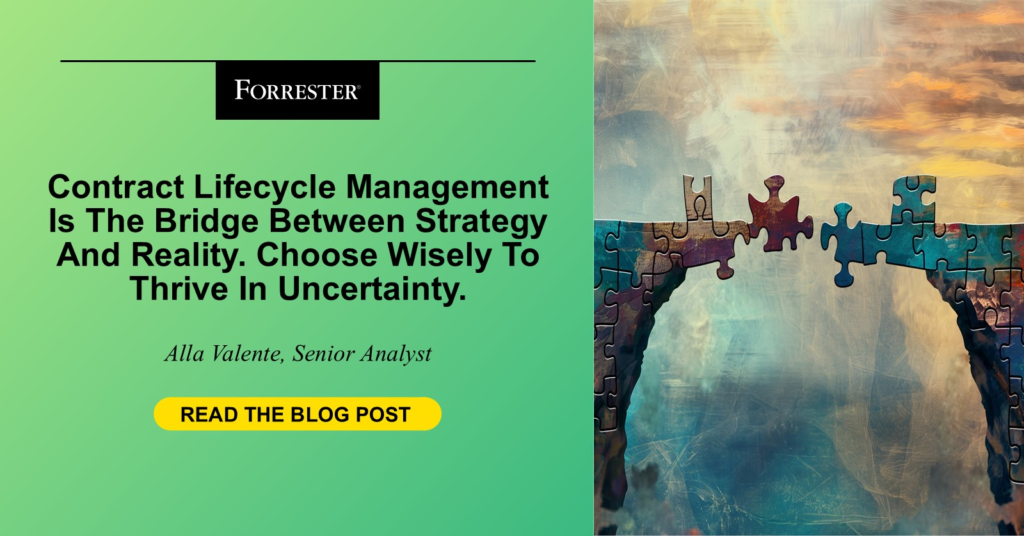
Contract Lifecycle Management Is The Bridge Between Strategy And Reality. Choose Wisely To Thrive In Uncertainty.

In under two months of 2025, organizations face a battery of changing regulations, new tariffs, and economic uncertainty … all while trying to stay competitive, remain resilient, and execute on their AI strategy. Here’s the good news: How well your organization deals with risk, crisis, and operations opportunity will largely depend on … you guessed it … contracts! The reason is simple and also complex. Your business depends on a vast ecosystem of suppliers, providers, and customers, and the only leverage, accountability, and recourse that you have is dictated in the contract. AI creates even more urgency, because an AI strategy relies on the purchase of foundation models, pretrained data, open-source large language models, and new generative AI capabilities of existing third parties. To thrive in this new environment, organizations must adapt contract language and the contracting process, and to help sort out the best of the best, I’ve just completed The Forrester Wave™: Contract Lifecycle Management Platforms, Q1 2025. Three Contract Lifecycle Management Capabilities To Look For Beyond Contract Creation Contract lifecycle management (CLM) has existed for decades as a digital contract repository with basic workflow for contract creation and execution. Today, these capabilities are table stakes. With uncertainty the new status quo, business leaders and especially contract management professionals need to level up with CLM that: Offers robust contract governance features. The post-signature process is as important as the pre-signature process. A key function of a contract is to assign accountability and define recourse. What’s the purpose of going through the lengthy and painstaking negotiation process if you don’t plan to ensure that the terms are being followed? For example, did you receive what you paid for? Provide what you promised? Are there no surprises as to each counterparty’s responsibility when (not if) a disruption or crisis occurs? To be successful at assigning accountability and defining recourse, you’ll need AI obligations extraction, automated scheduling, event-triggered notifications, and features to track milestones and deliverables. Supports emerging or edge use cases. Whether you’re buying, selling, or partnering, changes in risk and/or regulation require adjustments and amendments to your playbook, templates, and workflow. As new operational resilience requirements lean into contractual provisions, CLM becomes a secret weapon to identify risk exposure and enforce ongoing compliance. M&A activity requires contract harmonization across the new entity. The frequency and scale of technology disruption calls for an update to clauses that assign accountability during disruptive events and clearly outline timeframes for vendors to patch and remediate. Keep an eye out for CLM providers that create solutions today to address tomorrow’s challenges. Provides default product security settings and configurations. CLM is a technology containing highly sensitive, confidential, and proprietary information, which makes it a lucrative target for cyberattacks. Although different companies have their own security requirements and will customize product security settings, vendors that support default settings/configurations and provide guidance on security best practices enable customers to mitigate the risk of a cyber incident or breach. Use The Graphic, But Dig Into The Details It’s true that a picture is worth a thousand words, but to sum up nearly five months of research, including product demos, executive briefings, written responses, and customer reference feedback, in a single graphic would be an oversimplification of how far this market has come and where it is today. Every one of the 12 vendors in this evaluation is a leading product in the CLM space and deserves contextual consideration. Read the full report for more details on selecting a CLM vendor. Also, schedule a guidance session with me for deeper insights into this market, to discuss your CLM program, or to get additional details about the process or findings from this research. source

Contract Lifecycle Management Is The Bridge Between Strategy And Reality. Choose Wisely To Thrive In Uncertainty. Read More »

What Tech Workers Should Know About Federal Job Cuts and Legal Pushback

The Trump administration and its Department of Government Efficiency (DOGE) are firing and laying off thousands of government employees across multiple agencies. In 2024, the federal government employed approximately 116,000 IT workers, and that isn’t counting contractors and military and post office employees, Computerworld reports. These legions of federal tech workers are in the same boat as all federal employees, afloat on a sea of chaos and uncertainty. Several lawsuits have been filed in the wake of the job reductions, but litigation is not a fast-moving process. InformationWeek spoke to three attorneys about the job cuts, legal action, and what could lie ahead for federal workers. The Terminations The total number of federal employees impacted thus far is not clear. Approximately 75,000 employees accepted the “deferred resignation” offer, referred to as Fork in the Road, to leave their jobs, according to The Hill. But the program has been paused following a ruling by a federal judge. Probationary employees, people who typically have been in their roles for less than a year, have been a significant target of layoffs. AP News reports that there are 220,000 federal employees who had been working in their roles for less than a year as of March 2024. Related:Tech Company Layoffs: The COVID Tech Bubble Bursts “I don’t think we’re getting any clear or transparent data about the segments of the government that are being most impacted,” Areva Martin, civil rights attorney and managing partner and founder of law firm Martin & Martin, tells InformationWeek. The workforce reductions are wide-ranging and the Consumer Financial Protection Bureau (CFPB) is essentially shuttered. Jobs are being cut at the Department of Agriculture, Department of Education, Department of Energy, Department of Health and Human Services, Department of Homeland Security, Department of the Interior, Department of Veterans Affairs, Environmental Protection Agency, Office of Personnel Management, and the list goes on. The Cybersecurity and Infrastructure Security Agency (CISA), a significant repository of technical talent, is also facing cuts.   “Maybe a few weeks ago, we all thought that there was categories employees that would be protected — like IT workers, like Department of Defense employees, employees that are essential to our national security like the nuclear safety employees — that were terminated,” says Liz Newman, member and litigation director at The Jeffrey Law Group, which focuses on federal sector employment disputes. The Lawsuits A flurry of lawsuits was swift to follow the firings and layoffs ordered by the White House and DOGE. Related:AI Upskilling: How to Train Your Employees to Be Better Prompt Engineers Several employees who received high marks on recent performance reviews were among those to be caught up in the mass firings, Reuters reports. “When you’re letting people go and you’re citing things like their performance and their fit, but at the same time you’re letting large groups go indiscriminately without surely looking at their performance and fit, I think that’s opening up this administration to some legal liability,” says Newman. Indeed the Trump administration faces class actions, representing thousands of people, for the way it is handling the firing of probationary employees. Alden Law Group and legal services nonprofit Democracy Forward are representing civil servants across nine agencies, with plans to cover others, in a complaint filed with the Office of Special Counsel (OSC). The complaint could go before the Merit Systems Protection Board (MSPB), a government agency that aims “to protect Federal merit systems against partisan political and other prohibited personnel practices,” according to the MSPB website. Complicating matters, the Trump administration is attempting to fire Special Counsel Hampton Dellinger, the head of the OSC, Federal News Network reports. Related:Quick Study: The IT Hiring/Talent Challenge While that drama unfolds, other pushback is underway. Several labor groups representing federal employees are suing the Trump administration, arguing that the Office of Personnel Management (OPM) does not have the authority to order the mass firings that occurred, Reuters reports. The National Treasury Employees Union (NTEU) represents more than 1,000 frontline employees, and it is suing the administration to challenge the closure of the CFPB. As DOGE takes an axe to government agency jobs in the name of saving money and improving efficiency, alarm bells around its access to sensitive data have been clanging. Several lawsuits are underway on that front. “They’ve been given unfettered access in some cases to the most private and sensitive information of not only government employees but of US citizens … I’ve been tracking lawsuits filed about violations of the Privacy Act of 1974,” says Martin. How successful could legal pushback be? “I think some of the employees, particularly those employees who again are governed by labor contracts [and] those employees who are civil service employees, they’re going to be met with greater success because their due process rights have been violated, and there are clear contractual terms that define how they can be terminated,” says Martin. The outcome of these lawsuits, and the more likely to come, is far from decided, and it could take years for some cases to reach their conclusion. “Some of these lawsuits may go past Trump’s four years in office. But many of them, I suspect, will be resolved during his term in office,” says Martin. She anticipates that some of these cases may make their way to the Supreme Court.   An Uncertain Future Thousands of federal workers are facing an unclear future: those who accepted the Fork in the Road offer, those who have been terminated, and those who were fired and then asked to come back. The possibility of more job cuts still looms; these frenetic firings took place in the very early days of the Trump administration. “We hear a lot of sadness from them [federal employees], even more so than the fear of not getting paid is the of disappointment in how this has all played out,” says Newman. As we see cases progress through the legal system, there are questions about action the current administration may take to make it easier to

What Tech Workers Should Know About Federal Job Cuts and Legal Pushback Read More »

The State Of Trust In US Health Insurers Is Fragile

For US health insurers, the current state of trust should set off alarm bells. Trust is the cornerstone of a successful relationship. But only 56% of consumers trust their health insurer to act in their best interest. This puts consumer trust in US health insurers at a three-year low during a watershed moment for the industry. Health insurers must create value with customers to earn their trust. They need to curate personalized, positive experiences that sustain engagement, building relationships that foster trust and encourage more engagement. Trust Is The Glue That Binds: Building Success In Health Insurance Building and maintaining trust not only improves customer satisfaction but also ensures the long-term success of the business. Trust shapes customers’ actions and perceptions, including: Data sharing. High-trust customers are 1.7x more likely to share personal data, which is crucial for creating personalized, valuable customer experiences. Thus, trust feeds a virtuous cycle; without trust and the data sharing it makes possible, member experiences fall flat. Customer satisfaction. High-trust customers report significantly higher ratings in three dimensions: ease, effectiveness, and emotion. This group is nearly twice as likely to feel happy about their insurer, a key driver of loyalty. Emotion carries the most weight of the three dimensions for health insurers. By increasing the incidence of positive emotions associated with customers’ experiences, health insurers can remedy a decline in CX. Churn rates. Low-trust customers with the option to switch health insurers are twice as likely to leave their current carrier compared to their high-trust peers. As consumers’ options to switch increase — whether due to aging into the Medicare market or because of employment or coverage changes — the premium that customers place on loyalty will increase. Controlling churn among low-trust customers who experience higher levels of frustration and annoyance will have immediate short- and long-term impacts. Prioritize Trust Now For Future Success Building trust can improve customer experience, foster loyalty, and drive value for both customers and the business. Health insurers must repair the current fractured state of trust by targeting key levers and drivers of trust to optimize efforts and investments. Forrester clients can read our full report to learn more about the current state of trust in US health insurers, understand which levers and drivers influence trust the most, and discover actionable insights that will strengthen the bonds of trust. Schedule time with us now to dig deep into the data and build the business case for improving customer trust. Join us at CX Summit North America from June 23–26 in Nashville to delve into these topics and more. Reserve your spot to join the conversation. source

The State Of Trust In US Health Insurers Is Fragile Read More »

AI Is Improving Medical Monitoring and Follow-Up

Ensuring continuity of care in a clinic or hospital is a nightmare of complexity. Coordinating test results, imaging, medication, and monitoring of vital signs has proven challenging to an industry reliant on ponderous technologies and deficient staffing. When patients are dealing with unfolding health crises and chronic conditions or recovering from procedures at home, managing their care becomes even more complex.   Doctors may miss important findings that can impact patients’ prognosis and treatment — leaving those patients without necessary information on how to make healthcare decisions. Some 97% of available data may go unreviewed per the World Economic Forum. And Electronic Health Records (EHRs) are messy and riddled with errors.  Following up with patients to ensure that they are receiving proper treatment based on the 3% of data that is reviewed constitutes a significant burden on providers.   Even when patients are stable and their cases have received thorough review, they may find that obtaining insights on how to best manage their situations is next to impossible, placing multiple phone calls to overloaded call centers only to spend hours on hold, poring over pages of inscrutable instructions, and attempting to interpret their own results using unreliable home tests and monitors.   Related:Medallion Architecture: A Layered Data Optimization Model Artificial intelligence technologies have shown promise in managing some of the worst inefficiencies in patient follow-up and monitoring. From automated scheduling and chatbots that answer simple questions to review of imaging and test results, a range of AI technologies promise to streamline unwieldy processes for both patients and providers.   These innovations promise to both free up valuable time and increase the likelihood that effective care is delivered. AI chart reviews may detect anomalies that require follow-up and AI review of images may detect early signs of conditions that escape human review.  But, as with other AI technologies, keeping humans in the loop to ensure that algorithmic errors do not result in damage remains challenging. When is a chatbot not enough? And when it isn’t, can a patient actually talk to their provider?  InformationWeek delves into the potential of AI-managed medical monitoring and follow-up, with insights from Angela Adams, CEO of AI imaging follow-up company Inflo Health; and Hamed Akbari, an assistant professor in the Department of Bioengineering at Santa Clara University who works on AI and medical imaging.  Administrative AI  Anyone who has gone through the healthcare system — so, basically everyone — knows how hideous the administrative procedures can be. It’s bad enough trying to schedule a primary care appointment with some clinics. But what about patients who are in recovery from surgery or suffering from debilitating chronic conditions?  Related:Is a Small Language Model Better Than an LLM for You? AI solutions may smooth out these processes for both the patient and the clinic. AI-assisted platforms offer efficient means of scheduling appointments, refilling prescriptions and getting answers to simple questions about treatment. Patients can simply respond to a text message or fill out a form indicating their needs.  Some 60% of respondents to a 2022 survey preferred intuitive, app-like services from their providers.   Patients may be more inclined to respond to texts or emails generated by AI programs because they can do so on their own time rather than taking a call at an inconvenient moment. They are thus able to provide useful feedback unrelated to their immediate needs — on how they rate their experience with a provider for example — when they might otherwise not be willing to do so.   In the case of anomalous responses — a complication or a dosage problem — a staff member can then follow up with a call or message to address the issue personally. Missed appointments can be flagged, indicating the need for follow-up and also coordinating openings that might be used by other patients who might otherwise need to wait.   Related:The Cost of AI: How Can We Adopt and Deliver AI Efficiently? More than 70% of patients prefer self-scheduling according to an Experian report. And up to 40% of calls to clinics relate to scheduling. Reduced call volumes can lead to enormous cost savings and free up time for dealing with more exigent issues that require attention and analysis by live medical professionals.  Medication Follow-Up and Adherence  Adherence to medication regimens is essential for many health conditions, both in the wake of acute health events and over time for chronic conditions.  AI programs can both monitor whether patients are taking their medication as prescribed and urge them to do so with programmed notifications. Feedback gathered by these programs can indicate the reasons for non-adherence and help practitioners to devise means of addressing those problems.   Adherence to diabetes management regimens is complicated by lifestyle, socioeconomic status, severity of disease and unique personality factors, for example. AI programs that take these factors into account may assist practitioners and patients in refining protocols so that they are both realistic and effective.   A study that used a smartphone app to remind stroke victims to take their medication and then followed up with blood tests to ensure that they had done so found significant increases in adherence to the drug protocol, resulting in better health outcomes.  AI programs can also use patient data to devise optimal dosing for drugs. Therapeutic drug monitoring has historically been a challenge given the differing reactions of patients to drugs, both alone and in combination, according to their unique physiology.   They can even correlate dosing to the effects of the drugs — a significant advance for conditions in which treatments themselves can have deleterious effects. Chemotherapy drugs, for example, can thus be optimized to maximize effectiveness and minimize side effects.   Monitoring of Chronic Conditions  Using AI to monitor the vital signs of patients suffering from chronic conditions may help to detect anomalies — and indicate adjustments that will stabilize them. Keeping tabs on key indicators of health such as blood pressure, blood sugar, and respiration in a regular fashion can establish a baseline and flag fluctuations that require follow up treatment using both personal

AI Is Improving Medical Monitoring and Follow-Up Read More »

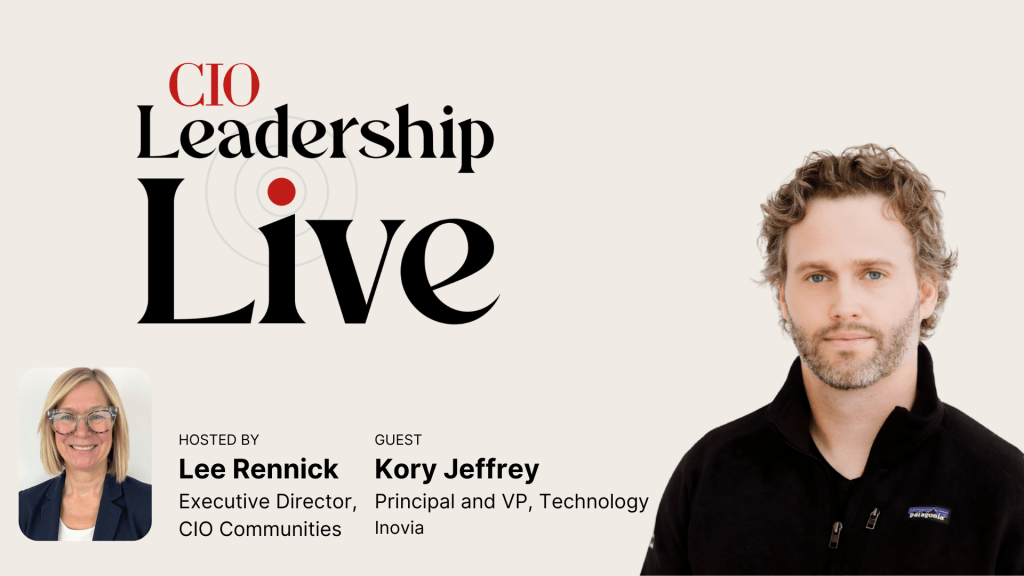
CIO Leadership Live with Kory Jeffrey, Principal and VP, Technology, Inovia

00:00 Welcome to CIO Leadership Live. I’m Lee Rennick, Executive Director of CIO Communities for cio.com and00:00:11:15 – 00:00:16:00UnknownI’m very excited and honored today to welcome and introduce Kory Jeffrey, Principal and VP, Technology, Inovia. Kory please introduce yourself and tell us about your current role.00:00:16:00 – 00:00:48:03UnknownSure. Thanks for having me, Lee. I’m Kory, I, like you said I’m a Principal and VP technology. I know, yeah, Inovia is a, full stack, and venture capital investment firm and headquartered in Canada. Full stack. Just meaning we invest as early as company information all the way through to pre-IPO. So, it’s been around about 20 years.00:00:48:05 – 00:01:12:04UnknownOne of the the largest VC firms in the country. And I know I wear two hats. One hat is the principal hat, and that means I do, early stage tech investing. So for me particularly, that’s sort of the company formation to series B, where I focus, mostly on practical applications of artificial intelligence companies like Cahir Spell, spellbook, Reliant, Venture IQ and others that I’ve been involved with.00:01:12:06 – 00:01:39:07UnknownAnd then I also wear a hat, which is a VP of technology, where I work, in the CTO office, where, that’s across the entire portfolio company. So that’s working, with companies, we’re very small or very, very large, and helping them build world class, tech and product organizations.00:01:39:09 – 00:01:40:04UnknownYeah.00:01:40:04 – 00:01:48:13UnknownSo congrats for that. And just yeah, sharing about your role. I think it’ll be really informative for our listeners who are listening in today.00:01:48:15 – 00:02:05:18UnknownAnd I really appreciate you joining us, Corey. So as I mentioned, we’ve really developed this series to support the technology leader and CIO in their tech and leadership journey. And so the first question that I ask everyone this question on the show, could you please tell me a little bit, perhaps about your own career path and leadership journey to date?00:02:05:20 – 00:02:09:06UnknownAny lessons learned along the way that you could share with our audience?00:02:09:18 – 00:02:49:03UnknownYeah, sure. So I like to describe my career as sort of like sitting in the back of a moving truck, looking backwards and not. It’s not super intentional. I actually started my career academically, in, studying English literature and philosophy, epistemology and metaphysics. I was actually on my way to do my PhD in, in metaphysics, when, guy named Ian Clubman from Communitech pulled me aside and said, hey, why don’t you come and, help run this, startup technology accelerator with me and a couple other people?00:02:49:05 – 00:03:09:19UnknownYou know, I said, I don’t know anything about that. And he said, oh, you’re smart, you’ll figure it out. And so that got me into the startup world where I spent two years investing in companies. And this was at the time when Y Combinator had just started. So it was like this, like accelerator boom. Through that, I learned all about technology, fell in love with products, you know, started becoming technical.00:03:09:19 – 00:03:30:07UnknownI was then, introduced to Steve Woods, who ran engineering in Canada for Google, and was recruited to join Google, where I spent the better part of a decade, did a couple of things. So I ran developer relations in Canada. So that was you know, running developer communities, launching developer products, things like that.00:03:30:07 – 00:03:49:23UnknownI then spent a bunch of time in emerging markets where the next billion users were coming on to the internet Indonesia, India, Brazil, and got to understand what markets that were skipping, who had skipped the desktop revolution and went straight to mobile, how they were coming online and how they were building products. And then I started having kids.00:03:50:03 – 00:04:21:15UnknownThat was around 2016. And so it was time to have more of, a local role than spending. I think in 2016, I spent 100 days on an airplane, out of country, and I almost ran into tax problems, actually. So, then I switched over to be the chief of staff of engineering for Canada, where I helped grow the engineering organization in Canada for Google, for, about 200 when I started to just over 2000 when I left across all sorts of different product areas, research areas, all of the things the the transformer paper was published when I was there.00:04:21:15 – 00:04:44:03UnknownWe got to see that go through first party products, work a little bit with Jeff Hinton’s team. All those sorts of things. I would say a major lesson through all of that is that it’s all about people. You can do some really amazing, hard, inspiring things with great people and have it feel, fun and not easy.00:04:44:03 – 00:05:12:03UnknownBut, you know, it’s, invigorating. And you can do some really easy things, that feel absolutely terrible with crappy people. And so, you know, trust matters, people matters. Investing in people matters. So when past mentors of mine, Steve Woods being one of them, who had mentioned and then another guy named Patrick Bouchard, who is the CFO at Google, when I started there, they came and pitched me, I know, and I followed that and became took that opportunity to work with some great people that I’d worked with in the past.00:05:30:21 – 00:05:57:03UnknownYeah.00:05:57:05 – 00:06:05:19UnknownYep.00:06:05:21 – 00:06:42:01UnknownI mean.00:06:42:03 – 00:07:04:01UnknownYeah. I think that’s a that’s a good question. And it. I spent a lot of time doing due diligence on tech companies at various stages. You know, what they’re missing often is dependent on the stage they’re in and the levels of sophistication and how early versus later you are. But there’s a lot of themes. And so we sort of break it down into four buckets.00:07:04:03 – 00:07:22:07UnknownThe first is always and this is in order of importance in my in my view, the first is always people. And we talked a little bit about that and I’ll dive into it a little more. Then it’s product and product thinking and then it’s your engineering practice and then


CIO Leadership Live with Kory Jeffrey, Principal and VP, Technology, Inovia Read More »

KKR Clinches Fuji Soft Majority Stake Ahead Of Take-Private

By Al Barbarino ( February 20, 2025, 11:42 AM EST) — KKR said Thursday it has secured a majority stake in Fuji Soft by completing the second stage of a tender offer after prevailing over rival bidder Bain Capital, as it readies to privatize and take full control of the Japanese company through a so-called squeeze-out of the remaining shares. … Law360 is on it, so you are, too. A Law360 subscription puts you at the center of fast-moving legal issues, trends and developments so you can act with speed and confidence. Over 200 articles are published daily across more than 60 topics, industries, practice areas and jurisdictions. A Law360 subscription includes features such as Daily newsletters Expert analysis Mobile app Advanced search Judge information Real-time alerts 450K+ searchable archived articles And more! Experience Law360 today with a free 7-day trial. source

KKR Clinches Fuji Soft Majority Stake Ahead Of Take-Private Read More »