Be Swift, Be Accurate, Be Empathetic: Three Pillars For Crisis Communications

The 2024 CrowdStrike software incident reinforced the importance of three key pillars for crisis communications. While CrowdStrike CEO George Kurtz issued a specific, fact-based statement within hours of learning that there was a major outage caused by a bad software update, he faced criticism for not immediately offering an apology. Crises are never convenient and can strike at any moment, leaving businesses scrambling to respond. Having a crisis communication plan in place is essential to safeguarding your company and brand reputation. It empowers a quick and accurate response and should be built to express empathy. Take These Steps In A Crisis Be first with the news. Audiences have high expectations when it comes to crisis communications and expect to be notified right away. Social media enables information to travel incredibly quickly, and in the absence of communications from the company itself, audiences will make assumptions — usually for the worse. It is better for companies to respond with the information they have rather than wait to make a statement until every detail is in place. Inform audiences with precise information and let them know when you will provide updates. Be ready to monitor news and social channels for sentiment analysis, and respond accordingly. Communicate what you know. While being first out with your message is critical, so is accuracy. To help ensure that you can issue messages quickly with the right information, prepare crisis scenario-specific drafts and templates that can be quickly adapted to the actual situation as part of your crisis communication plan. Develop key messages, FAQs, and other content formats that align with identified crisis scenarios and audiences. Have clear roles and responsibilities assigned with the appropriate executives, communication leads, and legal advisors who will take charge during a crisis and verify the facts. Show empathy. When a crisis hits, people and businesses are often negatively affected, and they want recognition for their suffering. An apology can feel like a concession or admission of guilt, something organizations are hesitant to offer when they don’t have all the facts. But an apology doesn’t have to be an admission to guilt. Acknowledging that a crisis has caused inconvenience, suffering, harm, disruptions, etc., shows that a company cares about the people and considers their needs. Ensure that designated spokespeople understand the value of empathy and embed it in your crisis communication response. How a business responds in a crisis speaks volumes about its values. Demonstrating accountability, empathy, transparency, and consistency in your communications can turn a crisis into an opportunity to strengthen your brand. By focusing on the importance of responding quickly and accurately with empathy, and building a resilient communication framework, your company can better navigate crises and maintain trust. Remember, the best time to prepare for a crisis is before it happens. Forrester clients can access the report, Creating A Comprehensive B2B Crisis Communication Plan, and schedule a call with us. source

Be Swift, Be Accurate, Be Empathetic: Three Pillars For Crisis Communications Read More »

Huawei Releases First Tri-Fold Phone to International Markets

Chinese smartphone maker Huawei launched its luxury Huawei Mate XT, a three-panel foldable phone, globally on February 18, the Associated Press reported from the launch event in Malaysia. The phone retails for $3,662. It isn’t available directly from U.S. carriers and won’t work with U.S. network bands, due to a U.S. ban on Huawei products due to cybersecurity concerns; however, it is possible to use workarounds to establish a 4G connection in the U.S. Huawei also announced the MatePad Pro tablet and Free Arc earbuds at the event on Tuesday. The three-screen form factor is remarkable The Huawei Mate XT marks a new era of experimentation with phone form factors; many major phone brands offer clamshell options now, with Apple as a notable exception. Huawei’s Mate XT has three foldable panels, a relatively large 10.2-inch screen, and a width of just 0.14 inches. (Compare to the 10.9” screen of an iPad.) The Mate XT can be folded into single, dual, or triple-screen formats. When all three screens are in play, the Huawei Mate XT folds out into a tablet-like format. Image: Huawei Huawei hasn’t detailed the hardware inside, but some sources say the Mate XT uses Huawei’s own Kirin 9010. It runs on the proprietary HarmonyOS 4.2 operating system. The steel hinges feature a sliding track on the inward hinge and what Huawei calls an “intricate structure” on the outer hinge, while 26 cams guide the motion. The phone is so thin in part because the 5,600mAh battery is only about 1.9 mm thick. SEE: Samsung put generative AI in the spotlight to make the Galaxy S25 stand out. Huawei faces international constraints Huawei’s global launch reflects the company’s continued push to expand beyond China despite international restrictions, particularly from the U.S. The company’s access to chips is limited since global vendors can’t use U.S. technology in designs for Huawei. Also, Google apps won’t officially work on Huawei’s phones in the U.S. The Huawei Mate XT came out in China last year. source

Huawei Releases First Tri-Fold Phone to International Markets Read More »

Global Tech Tales: What Buyers Want | Episode 4: AI Priorities in 2025

00:00 Hi, I’m Matt Egan, as we’ll discover from our conversation today, the world is focused on the possibilities of AI. But what should you focus on your data? Because without it, there is no AI. With HPE, help make your data AI ready and uncover hidden patterns and trends, gain insights for better products and performance. Together, we can see more than possibilities. So you see success. Hewlett Packard, enterprise, unlock ambition. Hi everybody. Welcome to Global Tech Tales. What buyers want. I’m Keith Shaw here to moderate a discussion with other editors from around the world about technology and leadership topics. Joining me on today’s show. Matt Egan, he is the global content and editorial director at Foundry, and he is also representing the UK, and he is myco-host. Ann Lim, editorial director for CIO, CSO and Channel Asia in Singapore, and Marcus Jerräng. He is the editor in chief of Computerworld Sweden, representing Sweden and welcome everyone. Hello. Thank you very much. Hello. All right, so we’re going to talk about AI priorities in this episode. And you know, we’re in 2025 now, and I’m sure that CIOs and other IT leaders have got this huge, huge To Do List, especially when it comes to either artificial intelligence or generative AI. And there was an article recently in cio.com that talked about a lot of the different priorities, and their take was that play time was over, and it’s time to get practical, so that you know their big thing was moving from pilot to production. But we’re also seeing other priorities from from different from different organizations. I’m just going to run down the list really quick, and then I want to ask the panel about some of their impressions and what they’re hearing from their their you know, their colleagues in their parts of the world. So in addition to moving from pilot to production with a lot of the generative AIproducts and projects, we’re also seeing exploring new technologies from AI agents, we’re also hearing about new technologies such as reasoning AI, new models that are out there ramping up and hiring or upskilling existing employees, it can be a priority focusing on the ROI cost of effectiveness of AI deployments. You know, are the are the CFOs starting to get involved with all of this money that’s being spent? And then finally, also cleaning up data, or finishing up previous data projects. There’s a lot of other statistics that we start off with the show here. And for example, there was an IDC report basically saying that 44% of marketing leaders and 42% of contact center leaders say the lack of skilled employees is the greatest barrier to successfully leveraging AI. So it feels like upskilling would be a huge priority. So I want to, I want to ask the panel, Matt, what are you hearing from your colleagues in the UK? Is this list of priorities, what you’re seeing as well, or are there other ones out there that are top of mind? I think it captures it, right? I mean, the reality is that AI has been around for many years, and even the generative AI hype is now half a decade old, right? And this is very much the year where the IT leaders I speak to are feeling the heat on the back of their neck, because organizations need to move from experimentation and projects to demonstrating real world value, the investments gone in, in terms of time, technology, even some hiring, although we should talk about that too. So I’m hearing a lot that the pressure is on for it to show the business leaders efficiencies, new products and services. And of course, what that then means is a whole other raft of things, each of which is worthy of its own discussions. Right? Return on investment, aligning and enabling the broader business strategy. It itself becoming an enabler of business strategy. It’s the point, and I hear this a huge amount, in which it leaders feel that they need to have their organizations prepped for whatever the future is going to be, right? So that means, yes, skills and mindsets within it, but also across the wider business. It means processes, right? How does an idea become a product? How does that develop? What are the metrics, the analytics, the it operating model to support but also enable these things? A big thing, a huge thing, I think, is infrastructure. A lot of it, leaders have been asked to support and lead on AI strategies without business leaders fully understanding the demands and connectivity, on storage, on security, and yeah, you mentioned it right? Data, if you’ve got bad input, you’ll get bad output. But how many organizations have the perfect, centrally accessible database? So I think it all rolls back into this idea that in 2025 play time is over, right? This is getting real, but the reality is, there are a lot of challenges that IT leaders feel, and in the UK, another one of those is the legislation piece. But I’d love to hear from the team, because I imagine we’re hearing similar but also different things in different parts of the world, okay? I want to bring in Ann on the conversation and and you represent Singapore, but you also cover a lot of going at what’s going on in China. So in that part of the world, what are the big priorities for AI? Firstly, Asia, and well, also Southeast Asia is fairly challenging to talk about, if I want to paint an accurate picture of what’s happening here.On the one hand, we’re definitely seeing more organizations across Southeast Asia and Hong Kong, which is also a market that I cover, rolling out AI initiatives this year. And these are go lives right, which means they have already defined the scope, goals and criteria for success. They’ve established a project team and

Global Tech Tales: What Buyers Want | Episode 4: AI Priorities in 2025 Read More »

Inconsistent Injury-In-Fact Rules Hinder Federal Practice

By Eric Dwoskin ( February 14, 2025, 4:43 PM EST) — One party violates another party’s legal rights — say, by breaching an important contract, defrauding them into making a purchase or discriminating against them in violation of federal law. The aggrieved party files a lawsuit in federal court seeking to remedy the violation. Does the federal court have jurisdiction to hear the dispute?… Law360 is on it, so you are, too. A Law360 subscription puts you at the center of fast-moving legal issues, trends and developments so you can act with speed and confidence. Over 200 articles are published daily across more than 60 topics, industries, practice areas and jurisdictions. A Law360 subscription includes features such as Daily newsletters Expert analysis Mobile app Advanced search Judge information Real-time alerts 450K+ searchable archived articles And more! Experience Law360 today with a free 7-day trial. source

Inconsistent Injury-In-Fact Rules Hinder Federal Practice Read More »

Identify key challenges, sandbox, assess vendors — how to accelerate your AI journey

Join our daily and weekly newsletters for the latest updates and exclusive content on industry-leading AI coverage. Learn More With 77% of companies already using or exploring the use of AI, and more than 80% claiming it’s a top priority, leaders are eager to get maximum value from the technology. However, the volume of solutions available and onslaught of marketing messages accompanying them can make finding a clear path difficult. Here are some guidelines to help you evaluate AI tools’ capabilities and determine the best fit for your organization.  When the media lauds a particular platform, or you discover your competitors are using the same one, it’s natural to wonder if you should, too. But before examining a new system, identify the problems your business is facing. What are its key challenges? Its core needs? Once you’ve redirected your focus, reframe the solution you’re considering through this lens.  If AI technology will solve well-defined, measurable issues your company has been encountering (that is, automating routine tasks or increasing team productivity), the tool is worth exploring. If it doesn’t directly connect to solving your problems, move on. AI can be incredibly powerful, but it does have limitations. Your goal should be to only apply it to the areas where it can make the most meaningful impact.  Pilot programs and experimental budgets When you’ve determined that a given system may strategically support your needs, you’ve fulfilled the first necessary criteria — but this doesn’t mean you’re ready to make a purchase. The next step is to take time to test the technology significantly through a small-scale pilot program to determine its efficacy.  The most valuable testing uses a framework connecting to crucial key performance indicators (KPIs). According to Google Cloud: “KPIs are essential in gen AI deployments for a number of reasons: Objectively assessing performance, aligning with business goals, enabling data-driven adjustments, enhancing adaptability, facilitating clear stakeholder communication and demonstrating the AI project’s ROI. They are critical for measuring success and guiding improvements in AI initiatives.”  In other words, your testing framework could be based on accuracy, coverage, risk or whichever KPI is most important to you. You just need to have clear KPIs. Once you do, gather five to 15 people to perform the testing. Two teams of seven people are ideal for this. As those experienced individuals begin testing those tools, you will be able to gather enough input to determine whether this system is worth scaling.  Leaders often ask what they should do if a vendor isn’t willing to do a pilot program with them. This is a valid question, but the answer is simple. If you find yourself in this situation, do not engage further with the company. Any worthy vendor will consider it an honor to create a pilot program for you.  Additionally, plan ahead and set aside funds for an experimental AI budget. This should be where you turn when you want to try various solutions without overcommitting resources. Even if everything seems to be going seamlessly, give your team plenty of time to familiarize themselves with the technology and adapt before making a purchase or scaling up.  Prioritize data security and vendor transparency When you consider a platform, remember you’re not just evaluating the technology but the company behind it. Vendors should be put through just as much scrutiny — if not more — than the technology itself. Make sure you only work with vendors that maintain the highest standards in terms of data security. They should adhere to global standards for data protection and ethical AI principles, and the platforms themselves should be certified as SOC 2 Type 1, SOC 2 Type 2, the general data protection regulation (GDPR) and ISO 27001. Furthermore, verify that your vendors aren’t using your company’s data for AI training purposes without explicit consent. Virtual meeting provider Zoom is an example of a popular company that had planned to harvest customer content for use in its AI and ML models. Even though they ultimately didn’t carry out these plans, the incident should raise concerns for enterprises and consumers alike. If you put a dedicated AI lead in charge of this area, this person can manage all data security needs and ensure organizational compliance. This might feel like unnecessary, additional work, but it’s essential. Remember that all it takes is a single data breach by one of your providers to make you lose customer trust — if not your customers.  Final thoughts Leaders must use a structured approach to assessing AI solutions to get maximum value from them. Focus first on problem-solving, followed closely by testing and pilot programs, data security and identifying tangible value. AI can be immensely powerful, but only when applied to the right problems after careful selection and implementation.  Arjun Pillai is co-founder and CEO of DocketAI. DataDecisionMakers Welcome to the VentureBeat community! DataDecisionMakers is where experts, including the technical people doing data work, can share data-related insights and innovation. If you want to read about cutting-edge ideas and up-to-date information, best practices, and the future of data and data tech, join us at DataDecisionMakers. You might even consider contributing an article of your own! Read More From DataDecisionMakers source

Identify key challenges, sandbox, assess vendors — how to accelerate your AI journey Read More »

Out-analyzing analysts: OpenAI’s Deep Research pairs reasoning LLMs with agentic RAG to automate work

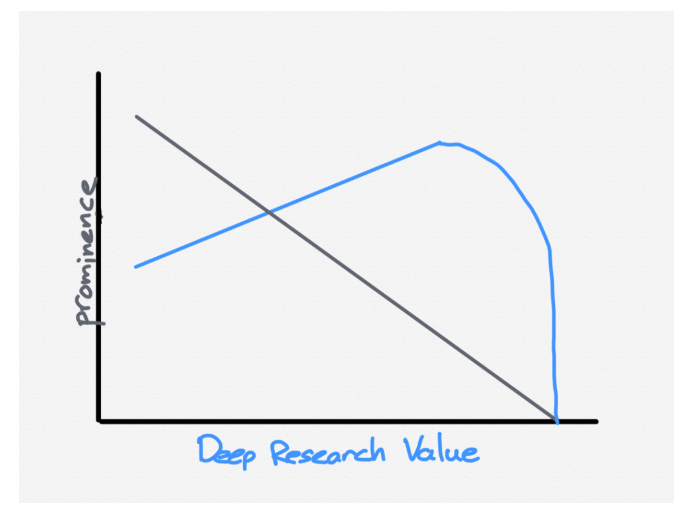
Join our daily and weekly newsletters for the latest updates and exclusive content on industry-leading AI coverage. Learn More Enterprise companies need to take note of OpenAI’s Deep Research. It provides a powerful product based on new capabilities, and is so good that it could put a lot of people out of jobs. Deep Research is on the bleeding edge of a growing trend: integrating large language models (LLMs) with search engines and other tools to greatly expand their capabilities. (Just as this article was being reported, for example, Elon Musk’s xAI unveiled Grok 3, which claims similar capabilities, including a Deep Search product. However, it’s too early to assess Grok 3’s real-world performance, since most subscribers haven’t actually gotten their hands on it yet.) OpenAI’s Deep Research, released on February 3, requires a Pro account with OpenAI, costing $200 per month, and is currently available only to U.S. users. So far, this restriction may have limited early feedback from the global developer community, which is typically quick to dissect new AI advancements. With Deep Research mode, users can ask OpenAI’s leading o3 model any question. The result? A report often superior to what human analysts produce, delivered faster and at a fraction of the cost. How Deep Research works While Deep Research has been widely discussed, its broader implications have yet to fully register. Initial reactions praised its impressive research capabilities, despite its occasional hallucinations in its citations. There was the guy who said he used it to help his wife who had breast cancer. It provided deeper analysis than what her oncologists provided on how radiation therapy was the right course of action, he said. The consensus, summarized by Wharton AI professor Ethan Mollick, is that its advantages far outweigh occasional inaccuracies, as fact-checking takes less time than what the AI saves overall. This is something I agree with, based on my own usage. Financial institutions are already exploring applications. BNY Mellon, for instance, sees potential in using Deep Research for credit risk assessments. Its impact will extend across industries, from healthcare to retail, manufacturing, and supply chain management — virtually any field that relies on knowledge work. A smarter research agent Unlike traditional AI models that attempt one-shot answers, Deep Research first asks clarifying questions. It might ask four or more questions to make sure it understands exactly what you want. It then develops a structured research plan, conducts multiple searches, revises its plan based on new insights, and iterates in a loop until it compiles a comprehensive, well-formatted report. This can take between a few minutes and half an hour. Reports range from 1,500 to 20,000 words, and typically include citations from 15 to 30 sources with exact URLs, at least according to my usage over the past week and a half. The technology behind Deep Research: reasoning LLMs and agentic RAG Deep Research does this by merging two technologies in a way we haven’t seen before in a mass-market product.  Reasoning LLMs: The first is OpenAI’s cutting-edge model, o3, which leads in logical reasoning and extended chain-of-thought processes. When it was announced in December 2024, o3 scored an unprecedented 87.5% on the super-difficult ARC-AGI benchmark designed to test novel problem-solving abilities. What’s interesting is that o3 hasn’t been released as a standalone model for developers to use. Indeed, OpenAI’s CEO Sam Altman announced last week that the model instead would be wrapped into a “unified intelligence” system, which would unite models with agentic tools like search, coding agents and more. Deep Research is an example of such a product. And while competitors like DeepSeek-R1 have approached o3’s capabilities (one of the reasons why there was so much excitement a few weeks ago), OpenAI is still widely considered to be slightly ahead. Agentic RAG: The second, agentic RAG, is a technology that has been around for about a year now. It uses agents ​​to autonomously seek out information and context from other sources, including searching the internet. This can include other tool-calling agents to find non-web information via APIs; coding agents that can complete complex sequences more efficiently; and database searches. Initially, OpenAI’s Deep Research is primarily searching the open web, but company leaders have suggested it would be able to search more sources over time. OpenAI’s competitive edge (and its limits) While these technologies are not entirely new, OpenAI’s refinements — enabled by things like its jump-start on working on these technologies, massive funding, and its closed-source development model — have taken Deep Research to a new level. It can work behind closed doors, and leverage feedback from the more than 300 million active users of OpenAI’s popular ChatGPT product. OpenAI has led in research in these areas, for example in how to do verification step by step to get better results. And it has clearly implemented search in an interesting way, perhaps borrowing from Microsoft’s Bing and other technologies. While it is still hallucinating some results from its searches, it’s doing so less than competitors, perhaps in part because the underlying o3 model itself has set an industry low for these hallucinations at 8%. And there are ways to reduce mistakes still further, by using mechanisms like confidence thresholds, citation requirements and other sophisticated credibility checks.  At the same time, there are limits to OpenAI’s lead and capabilities. Within two days of Deep Research’s launch, HuggingFace introduced an open-source AI research agent called Open Deep Research that got results that weren’t too far off of OpenAI’s — similarly merging leading models and freely available agentic capabilities. There are few moats. Open-source competitors like DeepSeek appear set to stay close in the area of reasoning models, and Microsoft’s Magentic-One offers a framework for most of OpenAI’s agentic capabilities, to name just two more examples.  Furthermore, Deep Research has limitations. The product is really efficient at researching obscure information that can be found on the web. But in areas where there is not much online and where domain expertise is largely private — whether in

Out-analyzing analysts: OpenAI’s Deep Research pairs reasoning LLMs with agentic RAG to automate work Read More »

Meta Will Escalate Any Concerns of Unfair E.U. Regulation to Trump

Meta is prepared to escalate its concerns over what it sees as unfair European Union regulations directly to U.S. President Donald Trump, according to its global affairs chief. Speaking at the Munich Security Conference, Joel Kaplan said that the company “won’t hesitate” to seek intervention if it believes E.U. policies discriminate against U.S. tech firms. Meta challenges E.U. oversight “When companies are treated differently and in a way that is discriminatory against them, then that should be highlighted to that company’s home government,” Kaplan said during a panel discussion, as per Bloomberg. “While we want to work within the confines of the laws that Europe has passed — and we always will — we will point out when we think we’ve been treated unfairly.” In recent years, the EU has intensified efforts to rein in big tech, safeguard digital rights, and enforce stricter data privacy laws. Meta, whose business model hinges on data collection for targeted advertising, has repeatedly clashed with these regulations. Meta — which owns Facebook, WhatsApp, Instagram, and Threads — has been slapped with upwards of €2 billion in fines for breaching the region’s antitrust and data protection rules, which include GDPR, the Digital Markets Act, and the Digital Services Act. This total includes a record €1.2 billion penalty in 2023 for mishandling user data transfers between Europe and the United States. SEE: EU Fines Meta Nearly €800 Million for Facebook Marketplace Practices and Advertising Data Violations Tech giants push back Meta is not alone in its concern. In September 2024, representatives from Meta along with Spotify, SAP, Ericsson, Klarna, and more major firms signed an open letter urging Europe regulators to address “inconsistent regulatory decision-making” and unpredictable compliance demands. President Trump has previously criticised the EU for its regulatory stance against Apple, Google, Meta, and other U.S. tech firms. At the World Economic Forum in January, he said “they’re American companies, and they shouldn’t be doing that,” and that “it’s a form of taxation.” Vice President JD Vance took aim at European governance of social media activity during his speech at the Munich conference, referring to it as “dismissing voters’ concerns, shutting down their media” and “the most surefire way to destroy democracy.” He also disparaged Europe’s use of “excessive regulation” at the Paris AI Summit last week. Meta’s changing approach Kaplan, a Republican strategist who replaced Nick Clegg as Meta’s policy lead after Trump assumed office, framed social media regulation as a direct challenge to free speech. “We don’t want misinformation,” Kaplan said, according to Bloomberg. “People have different perspectives of what is misinformation and what is not.” Last month, Meta revealed that it was discontinuing its third-party fact-checking program in place of a “Community Notes” system, allowing users on its platforms to add context to posts they believe are misleading. It said it would relocate its content moderation teams from California to Texas to “help remove the concern that biased employees are overly censoring content.”       Regulatory standoff on AI Beyond social media and data privacy, Meta has also clashed with the E.U. over AI regulations. In June 2024, it delayed the training of its large language models on public content shared on Facebook and Instagram after regulators suggested it might need explicit consent from content owners. As a result, Meta AI, its flagship AI assistant, has still not been released within the bloc due to its “unpredictable” regulations. Kaplan indicated that Meta would not be signing the E.U. ‘s voluntary General-Purpose AI Code of Practice due to be published at the end of April. EU stands firm Despite Meta’s pushback, E.U. officials remain resolute. Teresa Ribera, the E.U. ‘s Commissioner for Competitiveness, told Reuters that decisions on whether Meta has complied with the bloc’s rules will not be delayed from next month as a result of pushback. She also said that U.S. authorities should “enter the negotiating table” and not resort to “bullying.” source

Meta Will Escalate Any Concerns of Unfair E.U. Regulation to Trump Read More »

Wachtell Reps Seagate On $119M Deal For Intevac

By Jade Martinez-Pogue ( February 14, 2025, 6:06 PM EST) — Mass-capacity data storage innovator Seagate Technology Holdings PLC, advised by Wachtell Lipton Rosen & Katz, has agreed to buy thin-film processing systems supplier Intevac Inc., led by Wilson Sonsini Goodrich & Rosati PC, in an all-cash deal valued at $119 million…. Law360 is on it, so you are, too. A Law360 subscription puts you at the center of fast-moving legal issues, trends and developments so you can act with speed and confidence. Over 200 articles are published daily across more than 60 topics, industries, practice areas and jurisdictions. A Law360 subscription includes features such as Daily newsletters Expert analysis Mobile app Advanced search Judge information Real-time alerts 450K+ searchable archived articles And more! Experience Law360 today with a free 7-day trial. source

Wachtell Reps Seagate On $119M Deal For Intevac Read More »

昇世集團區域首席投資官陳敬維:五成投資買股票、三成買債券、兩成另類資產

(相左起)香港昇世匯盈首席執行官冼健岷、副主席馮嘉諾、主席甄智傑、昇世集團行政主席陳學彬、香港昇世御享首席執行官陳炳鳴及張頔女士、昇世集團區域首席投資官陳敬維。 以新加坡、香港及杜拜聯合家族辦公室為主要業務的昇世集團,在去年積極開拓除了香港及新加坡外的市場,以及創立為大眾富裕人士(Mass affluent)的財富管理品牌,年內管理資產(AUM)錄得兩倍增長。其行政主席陳學彬表示,集團在超高淨值客戶市場(投資額最少300萬美元)外,另開高淨值市場(投資額最少50萬美元)的家族辦公室市場。而由於香港資本市場由去年第四季起好轉,香港業務去年收支平衡,料三地業務今年錄得盈利。 另外,昇世集團宣布,陳敬維由即日起晉升為區域首席投資官。他將負責監管集團大眾富裕WRISE Prestige 昇世匯盈(香港)客戶群的所有投資策略部署及相關活動,同時他將繼續擔任昇世財富管理(新加坡)首席投資策略專家。 陳學彬表示,非常高興任命陳敬維為區域首席投資官,深信他在新崗位上將進一步實踐集團為客戶簡化財富管理的宗旨。這一任命反映了集團重視人才和為客戶提供卓越價值的承諾。 集團表示,於去年1月成立杜拜分支昇世財富管理(中東)(WRISE Middle East),目標服務阿聯酋以至中東地區的超高淨值人士及其家族辦公室。2月成立昇世匯盈資產管理(香港)(WRISE Prestige),服務正在冒起、投資額最少50萬美元的大眾富裕人士(Mass affluent)的理財需要,提供度身訂造的理財方案,包括可以投資私銀產品。 筆者向陳敬維提問如何配置資產,他表示,對於投資資產,可以將一半投放在美股和港股、三成買投資級別債券,餘下兩成投放在另類資產,例如黃金、虛擬資產⋯⋯等。 LinkedIn Email Facebook Twitter WhatsApp The post 昇世集團區域首席投資官陳敬維:五成投資買股票、三成買債券、兩成另類資產 appeared first on VeriMedia. source

昇世集團區域首席投資官陳敬維:五成投資買股票、三成買債券、兩成另類資產 Read More »