Tariffs On Drugs, Chips May Not Bring Makers Stateside

By Kevin Pinner ( February 14, 2025, 5:06 PM EST) — The White House’s planned tariffs on semiconductors, computer chips and pharmaceuticals are likely to raise prices for consumers and businesses, but won’t necessarily lead to the president’s stated goal of growing domestic manufacturing, attorneys and others told Law360…. Law360 is on it, so you are, too. A Law360 subscription puts you at the center of fast-moving legal issues, trends and developments so you can act with speed and confidence. Over 200 articles are published daily across more than 60 topics, industries, practice areas and jurisdictions. A Law360 subscription includes features such as Daily newsletters Expert analysis Mobile app Advanced search Judge information Real-time alerts 450K+ searchable archived articles And more! Experience Law360 today with a free 7-day trial. source

Tariffs On Drugs, Chips May Not Bring Makers Stateside Read More »

Why The “AI Agent As Coworker” Narrative Is The Future

In this two-part blog series, Principal Analysts Anthony McPartlin and Seth Marrs debate the idea of AI agents as coworkers. In this blog, Seth takes the perspective of the believer, while in the second blog, Anthony (ever the pragmatist) explains why this is overblown. There’s no debate that the talk track that some vendors are using around AI agents is hyperbolic. Vendors large and small are making claims that just don’t hold up in the real world. This is especially true for enterprise organizations, where business complexity and compliance create an environment that many AI agents are not built to support … yet. The gap between an amazing demo and the ability to translate those features into your business has never been greater, but that doesn’t mean that this technology doesn’t have value today that will evolve into the way organizations work in the future. AI Agents Are Following A Well-Trodden Path To Success AI agents are gaining the most traction with small- and medium-sized businesses and the middle market. The barriers to adoption, risks, and business complexity are all lower, making this the perfect place for innovative technology companies to start. Over the years, most new sales tech started by delivering value for this customer base. Sales engagement, conversation intelligence, revenue operations and intelligence, and even new entrants to established categories such as sales planning management started here and expanded. AI agents are following the same path as the sales tech vendors before it. Agent Coworkers: Reality Or Fiction? Every year at Dreamforce, Salesforce touts a new technology as the “greatest new technology” with a significant amount of hype that typically fades and generates a limited market response. Last year, the stock price dropped 3% after Dreamforce. But this year, it jumped 4% after the event. The stock price is increasing based on Agentforce and shows that the company is meeting the moment. The bigger challenge for Salesforce is to deliver an innovative, cutting-edge product. The verdict is still out on that, but investment feeds innovation, so AI agents will become a reality, whether it’s Salesforce or someone else leading the way. Why Start Working With AI Coworkers Now? There is an opportunity for short- and long-term value for those who take the right steps. Taking the perspective of a believer, here are three ways to use AI agents to make a difference for your company right now: Build and grow your AI agent capabilities with non-customer-facing use cases. AI agents are doing amazing things, but they are far from perfect. For this reason, going all in on them with customer-facing use cases is risky. Instead, focus on areas where they can add value without being perfect. A great use case is seller roleplay. Right now, AI agents are good enough to help the seller get better but still make errors or say the wrong thing. Even with these issues, it’s still useful to the seller, so they will tolerate a goofy out-of-context response now and then. Use AI agents for challenging customer-facing use cases. Hearing sales tech vendors trying to convince companies to use an AI agent with customers that companies have spent a lot of money trying to acquire is nuts. That is one place where it’s worth investing in a human to engage. Instead, use AI agents in areas, such as non-work-hour responses, where your customers are getting a less-than-ideal experience. Also, this technology has extensive language capabilities, so it can help a company go to market in countries where language barriers prevented it in the past. Be realistic about what you want to accomplish. I like the term coworker because this technology needs to be trained in a way that is a lot closer to a human than to software and will learn and grow as it works with us. That being said, the technology as it is today cannot function like a human, even if the training of it makes you feel like it can. But it can do things like understand your ideal customer profile, help you identify prospects quicker, and make it easier to generate content to engage those prospects. Every coworker has unique skills, and AI agents are no exception. Use them in areas where they are useful enough to add value. source

Why The “AI Agent As Coworker” Narrative Is The Future Read More »

GenAI Implementation: 3 Boxes Retailers Must Check

One in five retailers will deploy customer-facing generative AI applications by 2025, according to Forrester research. Alarmingly, the success rate of these projects is also only 20%. After interviewing AI/ML engineers, the RAND researchers found misaligned data, infrastructure, and objectives to be the main causes of failure.  Rather than taking a tech-first approach, retailers must first consider their business goals, then look at structural areas for improvement, and internal GenAI expertise. There is little room for error when it comes to customer-facing tools — one data breach or poorly handled experience could send customers away for good. In 2023, over half of the customers believed GenAI was a problem for customer service. Difficulty reaching an agent, receiving the wrong answers, and not being treated equally were top concerns.  Retailers and their IT practitioners must think carefully about their customer strategy, looking first at non-human interactions where GenAI can seamlessly integrate into the user experience (UX) and incrementally build their talent expertise for the best results. Security and empathy will be pivotal priorities for retailers to build consumer confidence in 2025.  Here are three things retailers must consider as they implement generative AI:  Related:Possibilities with AI: Lessons From the Paris AI Summit 1. Align data understanding with AI functionality A 2024 PMI Generative AI in Project Management Survey identified that the crucial skills for GenAI usage include the ability to work with data (45%), define task requirements (42%), prompt-writing skills (34%), validate GenAI outputs (30%), programming and logic skills (28%), and understanding LLM and NLP (22%).  Retailers and their employees should familiarize themselves with systematic services like GenAI-powered product recommendations, before trying their hands at more complex tasks. For example, GenAI-powered personalized product recommendations can use a simple, rule-based method such as, “Customers who bought X also bought Y.” The data input is more straightforward, too, using customer purchase history and basic demographics.  However, algorithms for targeted advertising campaigns, generating ad copy tailored to specific customer segments, and identifying optimal ad placement and timing are much more complex. These tools need up-to-date purchase history, browsing behavior, social media engagement, demographics, and location.   AI chat outputs are a complex function — don’t be fooled into thinking you can simply build a wrapper to a widely known large language model (LLM) like OpenAI’s ChatGPT, or Google’s Gemini. If you do not have a team of technical experts, consider working with leading no-code tools or hire a long-term AI partner who can multi-turn conversations across leading AI models.  Related:An AI Prompting Trick That Will Change Everything for You 2. Ensure airtight security  The most urgent security risks for GenAI users are all data related. The widespread adoption of GenAI has led to a 46% increase in data policy violations, primarily due to the sharing of sensitive source code.  Using public AI tools like ChatGPT or GitHub Copilot with sensitive code can inadvertently expose information. Moreover, the more disconnected systems are, the more entry points for security vulnerabilities. Threat actors can use GenAI to analyze existing malware, identify patterns, and then generate new, more sophisticated threats. They could rapidly generate new strains of malware that are harder to detect, or large volumes of targeted phishing emails, widening the attack surface.  Retailers and IT leaders should aim for a solid data foundation, streamlined workflows, and a well-connected network of applications. Developers must also ensure that access controls are carefully configured to reduce these risks. By using private, secure repositories, and conducting regular security audits to identify and address vulnerabilities, IT leaders can ensure a safer GenAI landscape for retailers.   Related:How to Regulate AI Without Stifling Innovation As a consumer of an enterprise application, you rely on the provider to implement effective security controls. To assess their security posture, investigate their control implementations, review design documents, and request independent third-party audit reports.  3. Make room for empathy where it is needed  After surveying 10,000 US customers across 282 brands on the six pillars of experience, empathy fell the most in 2023. Customers felt technology had become a substitute for human connection and care.  Rather than solely relying on technology going into 2025, companies should curate a blend of human and technological interactions. They can start with simple AI functions such as product recommendations and FAQ chatbots, and direct customers to an agent for more complex tasks. By setting aside a team to closely monitor the queries that do reach agents, retailers can begin to create chatbot decision trees to answer these needs automatically.  When a customer does get through to an agent, the representative must be ready. They must stay updated on product features, benefits, and promotions to provide accurate information and assist customers in making informed decisions. They should also engage customers in loyalty programs, track their points, and offer exclusive rewards based on the problem or need at hand. GenAI-powered alerts can help keep agents up to date with the latest company and product changes. These tools can improve and facilitate live agents’ work, increasing productivity in a hybrid approach, and ultimately enhancing the service offered.  GenAI-powered experiences are reaching customers across all industries, and retailers are no different. However, customers still desire that human touch. When retailers can seamlessly integrate automated services into their UX, customers can appreciate faster access to their suited products. But retailers must ensure they don’t bite off more than they can chew and start with limited problem-solving before integrating more advanced technology into their workflows.  source

GenAI Implementation: 3 Boxes Retailers Must Check Read More »

The 5 S's of cyber resilience: How to rethink enterprise data security and management

Cybersecurity consistently ranks as the top concern among CIOs worldwide, but despite the high priority they place on ensuring their environments are safe from cybercriminals and hackers, only about one-third (35%) of IT organizations have implemented a comprehensive cyber recovery plan, according to PwC’s 2025 Global Digital Trust Insights report. This gap between awareness and preparedness leaves organizations vulnerable, especially as cyber threats grow increasingly sophisticated. To bridge this critical gap, IT leaders should focus on the five S’s —speed, security, scale, simplicity, and smarts — to strengthen their cybersecurity and response capabilities. Understanding and implementing these five S’s can mean the difference between a cyberattack causing a minor hiccup in business operations versus a multi-week disruption that costs millions. The cost of delay: Why speed matters The stakes couldn’t be higher when it comes to recovery speed. According to ITIC’s 2024 Hourly Cost of Downtime Survey, 90% of mid-size and large enterprises face costs exceeding $300,000 for each hour of system downtime. Despite these staggering figures, many organizations remain unprepared and struggle to achieve rapid recovery times in the aftermath of an event, in part due to fragmented tools built atop older, traditional file systems. The first order of business is to understand exactly what happened in the wake of a destructive cyber-attack. Without a clear, unified view of the infrastructure, that’s going to take a lot of time. And when the business is down due to an IT failure, there’s no time to lose. The patchwork nature of traditional data management solutions makes testing response and recovery plans cumbersome and complex. As a result, when an actual attack occurs, these complications often prevent proper execution of the response and recovery plan. To address these challenges, organizations need to implement a unified data security and management system that delivers consistent backup and recovery performance. Such systems should include global search capabilities for quick resource identification and automated verification of backup recoverability. After successfully removing the root cause of the attack, the ability to restore hundreds, or even thousands, of virtual machines quickly is essential. Security: Protecting your backups is the last line of defense As ransomware and malware evolve, attackers increasingly target backup systems — traditionally considered the last line of defense. This trend has forced organizations to fundamentally rethink their approach to backup security. According to Foundry’s 2024 Security Priorities study, protecting confidential and sensitive data remains the number one security priority for CIOs. Modern security architectures deliver multiple layers of protection. Regarding encryption, IT should employ TLS for data in transit and AES-256 encryption for data at rest. A zero trust architecture supported by multi-factor authentication (MFA), separation of duties and least privilege access for both machines and roles will help prevent unauthorized users and machines from accessing the environment. Administrators should also harden their platform regularly, by applying patches and upgrades as they are published by their vendors. Concerning data recovery, a fault-tolerant backup infrastructure ensures that backups both occur as expected and are in a recoverable state. After malware has encrypted critical data, no one wants to discover that recoverable backups don’t exist. Additionally, cybercriminals now employ malware that specifically targets backups, so it’s important to ensure that backups live in immutable storage, which prevents malicious encryption. Many organizations use a cyber vault for additional resilience. This vault stores an immutable copy of data that’s isolated from other copies. This further reduces your risk in the event of a destructive cyber-attack. Scaling for tomorrow’s challenges Traditional secondary storage infrastructures usually grow organically, resulting in disparate systems that require individual provisioning, configuration, and management for each silo. This fragmentation not only creates security vulnerabilities but also prevents efficient scaling. The solution lies in implementing a unified platform for multiple data sources that is capable of supporting all of their data sources. Start by backing up virtual machines, physical servers, and enterprise systems of record that store your most sensitive information. You’ll also want to secure and protect data stored in the cloud, and in your SaaS applications. Do a thorough evaluation of supported data sources here – you probably need to secure and protect data from more systems than you think. It’s common for an enterprise to have over 400 different sources. Such systems should provide a single management console across all environments. In brief, enterprises need wide, broad, robust support through a single platform for all their hundreds of data sources.  Complexity remains the common thread underlying most cybersecurity and data management challenges. Overly complex storage, security, and backup systems kill efficiency, create overlooked security vulnerabilities, and make data difficult to locate and identify. Organizations need to move away from the traditional approach of bolting security onto existing systems. Instead, they should seek unified data systems with API-first architectures that facilitate seamless integration and unified management. The AI advantage: Adding smarts to security Attackers are using AI to increase the specificity, sophistication and scale of their attacks, but, thankfully, AI can also provide powerful tools for enterprise security. Modern AI-driven security systems excel at detecting malware, ransomware and anomalies that could be the result of a breach. AI can gather and analyze threat intelligence that enables IT and security teams to take proactive action against future threats. AI can also automatically classify data so that it’s appropriately tiered for the level of protection required, and it can improve capacity planning and optimization to ensure that IT always has the infrastructure it needs to protect and secure sensitive data. Cohesity’s multi-cloud data management platform enables organizations to achieve significant improvements across all five S’s. In terms of speed, organizations have achieved 45% faster backups and 10 times faster data recovery. Security improvements have resulted in $2 million savings on cyber insurance costs, with many customers avoiding ransom payments entirely following attacks. The platform’s scalability has enabled management of billions of objects across multiple nodes, and it makes management so simple, enterprises have been able to manage 63% more VMs per FTE. AI-driven smarts have delivered

The 5 S's of cyber resilience: How to rethink enterprise data security and management Read More »

Profs Back Hotel Guests In 3rd Circ. Algorithmic Pricing Case

By Carla Baranauckas ( February 13, 2025, 6:15 PM EST) — A group of academics has joined antimonopoly groups to support hotel guests accusing several Atlantic City casino hotels of using shared software to fix room rates in their Third Circuit fight to revive their suit…. Law360 is on it, so you are, too. A Law360 subscription puts you at the center of fast-moving legal issues, trends and developments so you can act with speed and confidence. Over 200 articles are published daily across more than 60 topics, industries, practice areas and jurisdictions. A Law360 subscription includes features such as Daily newsletters Expert analysis Mobile app Advanced search Judge information Real-time alerts 450K+ searchable archived articles And more! Experience Law360 today with a free 7-day trial. source

Profs Back Hotel Guests In 3rd Circ. Algorithmic Pricing Case Read More »

Assessment Is Anyone’s Guess: Proving GOAT Status Requires Validation

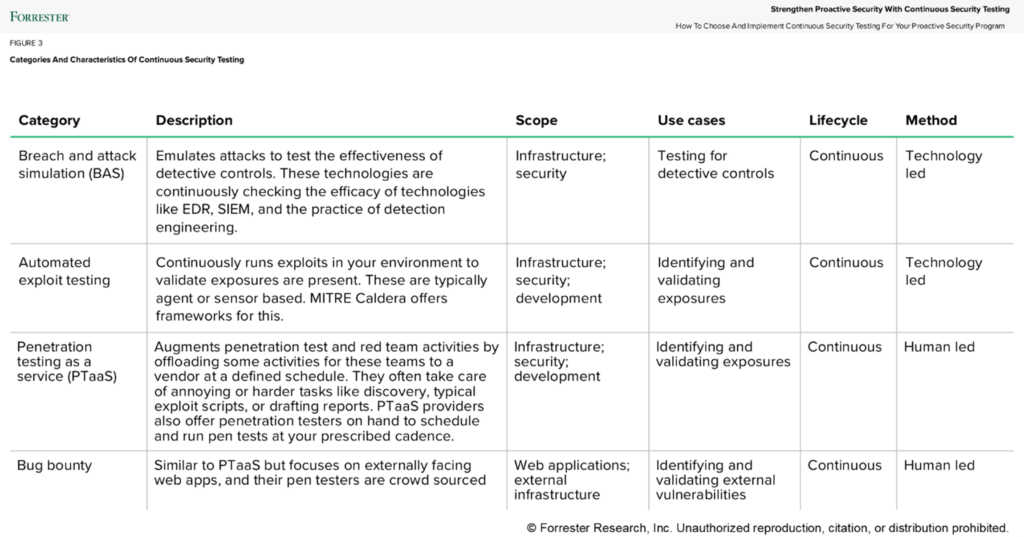
As spectators tuned in to Super Bowl LIX to indulge in American culture rife with consumerism, T. Swift, and rap feuds, the buzz was less around the game and more on determining who is pro football’s GOAT (greatest of all time). Kansas City Chiefs quarterback Patrick Mahomes had an unprecedented opportunity to win a third consecutive Super Bowl, the fourth in his young career, which raised questions from sports analysts of whether Mahomes was surpassing the legacy of another NFL GOAT, New England Patriots QB Tom Brady. It seemed like sports media had already declared Mahomes as the new GOAT, but first, Mahomes would have to win this year’s Super Bowl versus the Philadelphia Eagles to cement this status. That didn’t happen. Instead, a tough Eagles defensive front brought constant pressure that disrupted Mahomes, leading to several costly turnovers. The Chiefs could not overcome the Eagles’ preparation and the effectiveness of their defensive schemes, which validated Philadelphia’s defensive preparations. Validation showed its GOAT-head during the Super Bowl’s commercial breaks, with cybersecurity vendor Pentera’s ad about a half-goat/half-CISO that transformed from being his organization’s scapegoat to the cyber-greatest of all time. Becoming the cyber-GOAT, they say, requires continuous and proactive testing for vulnerabilities. Forrester’s proactive security research outlines visibility, prioritization, and remediation as the core principles of proactive security, with validation being a means to enhance accuracy and focus in prioritization. Vendors such as Pentera, XM Cyber, and Horizon3.ai provide validation that vulnerabilities are exploitable as a means to drive prioritization. Cyber threat exposure management is used by some vendors to describe this prioritization strategy. This is an unnecessary term in an already crowded world of cyber acronyms. Instead, organizations should focus on how to build proactive security programs with prescriptive, use-case centricity — using the three proactive principles to understand how organizations are gaining visibility, prioritizing exposures, and ultimately remediating them. Exposure management is a prioritization strategy and can be one of many prioritization strategies that organizations use. It maps exposures on an attack path and assesses the potential that an opponent could breach them — much like how Chiefs and Eagles head coaches Andy Reid and Nick Sirianni built out their Super Bowl game-day plans and playbooks. But you can only validate the effectiveness of offensive and defensive schemes in the game itself. In cybersecurity, this is how penetration testing and red teams provide singular, point-in-time validations. But now organizations are looking to do these continuously. This is where continuous security testing comes in, which we outlined in our recent report, Strengthen Proactive Security With Continuous Security Testing. Continuous security testing validates and proves that vulnerabilities are exploitable. There are many ways that continuous security testing can factor into remediation prioritization strategies today. Other options include breach and attack simulation, bug bounties, and penetration testing as a service, which all have different use cases and scopes (see image below). And while these are different options that factor into remediation prioritization, it’s likely that your organization will still utilize other prioritization methods such as CISA KEV, CVSS, and EPSS, depending on asset types and circumstances.   Should you do continuous security testing? Before jumping right in, we recommend that security and risk pros first assess how they are gaining visibility into assets and vulnerabilities — our first principle of proactive security. Next, teams should perform assessments of vulnerabilities with vulnerability scanning and combining their increasingly omnipresent sources of vulnerabilities. From there, teams can form their prioritization strategies. Consider exposure management as one of these and improve it with continuous security testing that validates that exposures are exploitable. But don’t forget remediation plans — this use case is often neglected in proactive platform companies (and why we expect to continue to see consolidation in the proactive security market, as companies such as Tenable acquire Vulcan Cyber to enhance remediation processes). Let’s talk! If you want to talk more about proactive security or continuous security, book time with me. source

Assessment Is Anyone’s Guess: Proving GOAT Status Requires Validation Read More »

Apple’s ELEGNT framework could make home robots feel less like machines and more like companions

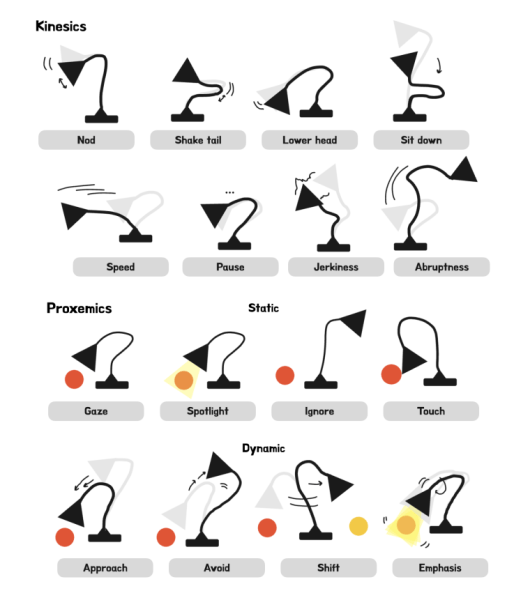
Join our daily and weekly newsletters for the latest updates and exclusive content on industry-leading AI coverage. Learn More Apple researchers have developed a new framework for making non-humanoid robots move more naturally and expressively during interactions with people, potentially paving the way for more engaging robotic assistants in homes and workplaces. The research, published this month on arXiv, introduces Expressive and Functional Movement Design ELEGNT, which allows robots to convey intentions, emotions and attitudes through their movements — rather than just completing functional tasks. “For robots to interact more naturally with humans, robot movement design should integrate expressive qualities — such as intention, attention and emotions — alongside traditional functional considerations like task fulfillment, spatial constraints and time efficiency,” the researchers from Apple’s robotics team write in their research paper. (Credit: Apple) How a desk lamp became the perfect test subject for robot emotions The study focused on a lamp-like robot, reminiscent of Pixar’s animated Luxo Jr. character, equipped with a 6-axis robotic arm and a head containing a light and projector. The researchers programmed the robot with two types of movements: purely functional ones focused on completing tasks, and more expressive movements designed to communicate the robot’s internal state. In user testing with 21 participants, the expressive movements significantly improved people’s engagement with and perception of the robot. This effect was especially pronounced during social tasks like playing music or engaging in conversation, although it was less impactful for purely functional tasks like adjusting lighting. “Without the playfulness, I might find this type of interaction with a robot annoying rather than welcome and engaging,” noted one study participant, highlighting how expressive movements made even potentially intrusive robot behaviors more acceptable. A visual guide showing the expressive movement vocabulary developed for the lamp-like robot, including basic gestures and spatial behaviors. (Credit: Apple) User testing reveals age gap in robot movement preferences The research comes as major tech companies increasingly explore home robotics. While most current home robots like robot vacuums focus purely on function, this work suggests that adding more natural, expressive movements could make future robots more appealing companions. However, the researchers note that balance is crucial. “There needs to be a balance between engagement through motion and speed completion of the task being given, otherwise the human might grow impatient,” one participant observed. The study also found that older participants were significantly less receptive to expressive robot movements, suggesting that robot behavior may need to be customized based on user preferences. The robot’s capabilities span from functional tasks like providing reading light to social interactions such as creative suggestions and playful companionship. (Credit: Apple) The future of social robotics: Finding the sweet spot between function and expression While Apple rarely discusses its robotics research publicly, this work offers intriguing hints about how the tech giant might approach future home robots. The study suggests a fundamental shift in robotics design: Instead of focusing solely on what robots can do, companies must consider how robots make people feel. The challenge ahead lies not just in programming robots to complete tasks, but in making their presence welcome in our most intimate spaces. As robots transition from factory floors to living rooms, their success may depend less on raw efficiency and more on their ability to read the room — both literally and metaphorically. Apple’s paper will be presented at the 2025 Designing Interactive Systems conference in Madeira this July. The results point to a future where robot design requires as much input from animators and behavioral psychologists as it does from engineers. As robots become more common in homes and workplaces, making them move in ways that feel natural rather than mechanical could be the difference between another forgotten gadget and a truly indispensable companion. The real test will be whether companies like Apple can translate these research insights into products that people not only use, but genuinely want to interact with. source

Apple’s ELEGNT framework could make home robots feel less like machines and more like companions Read More »

From 220M data points to revenue: How AI is transforming sports entertainment ROI

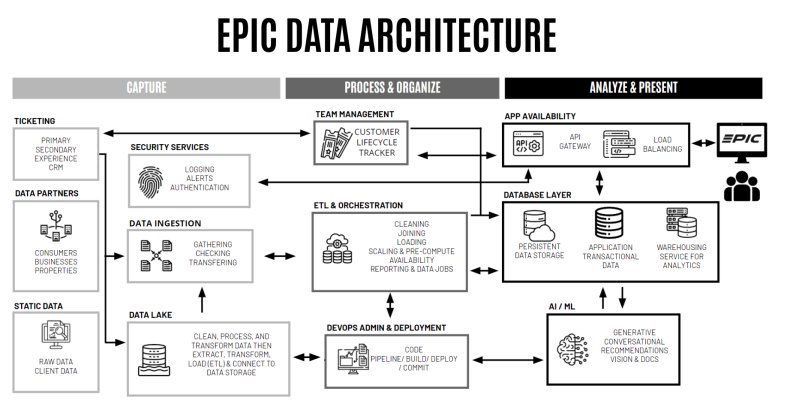
Join our daily and weekly newsletters for the latest updates and exclusive content on industry-leading AI coverage. Learn More The Super Bowl is one of the largest sports entertainment events on the planet, bringing in more than a hundred million viewers and a billion in revenue. But for NFL teams and sports entertainment in general, there is a long road to championship as franchises aim to build brand, grow fandom and maximize revenues. One of the ways to make that happen is AI. The technology is no stranger to the world of sports entertainment. Predating the modern era of generative AI — as far back as 2017 — big vendors like IBM were already discussing how AI would disrupt sport entertainment networks. The NFL itself is using AI to help improve player safety with a Digital Athlete system developed in partnership with AWS. The NFL is also using AWS to build gen AI-powered apps using the Amazon MemoryDB database. For individual teams, both in the NFL and across the sports entertainment landscape, there are other options for implementing gen AI. One such option, launching today, comes from Elevate, a technology vendor led by Al Guido, who is also the president of the San Francisco 49ers NFL football team. The company’s new Elevate performance and insights cloud (EPIC) data and AI platform combines consumer insights, ticketing management and property analytics to help sports and entertainment organizations engage better with fans. The platform helps organizations with targeted engagement efforts to better understand potential customer personas. That information helps determine stadium seating options, ticket pricing and fan retention. The platform has already been used by more than 25 organizations, including the Tennessee Titans. Elevate has been in operation since 2018, but now with the advent of gen AI, the company is able to do much more with data. “Building EPIC has reinforced a fundamental truth that we’ve seen and validated with our clients since we’ve been in operation — data is only as powerful as the decisions it enables,” Guido, Elevat’s chairman and CEO, told VentureBeat. “In sports, the challenge isn’t just capturing that data but harnessing it to drive real, actionable intelligence that improves fan engagement, revenue strategies and operational efficiency.” The data challenges of building an AI-first engagement system Elevate already has data for approximately 220 million people in its system. The company collects first-party data through its client work and relationships. This includes data on fan behavior, ticket sales, sponsorships and other property-related information. Elevate also licenses and purchases third-party data sets to further enrich user profiles. Guido noted that many organizations collect what seems like infinite amounts of data, but they struggle to unify and leverage it. EPIC was designed to bridge that gap.  To fully benefit from modern gen AI, data should be in a vector database format, Elevate contends. CIO Jim Caruso explained to VentureBeat that his company has undergone an intensive process to not only vectorize data, but to make sure it’s the right data to help inform business decisions. There is no shortage of database vendors and technologies that claim to make vectorizing data simple. In reality, Caruso stressed that the vectorization process isn’t as simple as turning on a switch. As part of building EPIC, they reevaluated all data and how it could work together to provide the best insights. The actual vectorization process involved testing different approaches and processing pipelines to find the right balance of accuracy and performance. Currently, Elevate uses Amazon Sagemaker to make its vectorization work. How Anthopic Claude, XGBoost and Amazon Bedrock help to power AI insights for EPIC Caruso explained that the EPIC system provides a wide range of AI-powered applications, from pricing tickets to developing consumer insights personas. Elevate is using a combination of different technologies to build those tools. At the core is the Anthropic Claude Haiku 3.5 large language model (LLM), which has been fine-tuned on Elevate’s data. Claude provides the interface to ask questions and get insights based on different personas.  For example, one persona could be a venue operator that wants to determine the best way to configure premium seating in a venue. That operator will need to understand who would be interested in those seats and how they should be marketed to different groups. Elevate went beyond just identifying broad demographic segments, like suburban millennials. Instead, they created a series of distinct personas with a range of attributes including finances, buying preferences, entertainment choices and social networking engagement. The key goal is to provide very concrete, detailed personas that enable organizations to make specific business decisions. The system also uses the XGBoost (eXtreme Gradient Boosting) open-source machine learning (ML) library via Amazon Sagemaker to specifically help with numerical data for ticket pricing.  XGBoost is a supervised ML algorithm that uses decision trees to make predictions. Caruso explained that his team converted historical data, as well as real-time data, into 55 different features. These include event details, inventory details and recent sales information. All were then then fed into the XGBoost algorithm.  The competitive landscape for AI across sports entertainment Guido said that across the NFL and beyond, the initial response to EPIC has been positive. Many properties face similar challenges: fragmented data sources, evolving fan expectations and the need for smarter, more efficient revenue generation. Guido also clearly recognizes that the competitive landscape for this kind of technology is expanding. There are traditional customer relationship management (CRM) and analytics providers, like Salesforce, but in his view, they often lack the industry-specific intelligence that EPIC brings to sports and live entertainment. “What sets EPIC apart is its deep integration with the realities of sports,” said Guido.  How AI-powered insights are driving real-world impact for the Tennessee Titans Among the early users of EPIC is the NFL’s Tennessee Titans. The team is working with Elevate as it develops a new $2.1 billion stadium set to open in 2027. As part of the engagement, Elevate has helped lead sponsorship sales for the new stadium. The company developed

From 220M data points to revenue: How AI is transforming sports entertainment ROI Read More »

Senate Dems Say FCC Looking To 'Punish' Broadcasters

By Christopher Cole ( February 13, 2025, 8:47 PM EST) — A trio of Senate Democrats wrote to Republican leaders on the Federal Communications Commission questioning recent agency decisions they said “appear politically motivated and designed to punish, censor or intimidate” broadcasters…. Law360 is on it, so you are, too. A Law360 subscription puts you at the center of fast-moving legal issues, trends and developments so you can act with speed and confidence. Over 200 articles are published daily across more than 60 topics, industries, practice areas and jurisdictions. A Law360 subscription includes features such as Daily newsletters Expert analysis Mobile app Advanced search Judge information Real-time alerts 450K+ searchable archived articles And more! Experience Law360 today with a free 7-day trial. source

Senate Dems Say FCC Looking To 'Punish' Broadcasters Read More »

Get Secure Cloud Storage on a 2TB Lifetime Plan With Internxt for $91

Every business has certain files that are too important to lose. To guard against this possibility, security experts usually recommend keeping an online backup. With Internxt Cloud Storage, you can utilize cloud storage without compromising your security. This decentralized platform uses open-source code, zero-knowledge infrastructure and end-to-end encryption to keep your files completely private. What’s more, you can get a 2TB lifetime subscription for just $90.99 with code STORAGE30 via TechRepublic Academy. This deal ends on Feb. 23. Most cloud storage is centralized, meaning that your data is stored on servers owned by the provider. There are several issues with this setup. Firstly, many cloud storage providers regularly scan the files on their servers. That means your data isn’t actually private. Centralized storage is also more vulnerable to cyberattacks. How Internxt works Internxt takes a different approach from centralized cloud storage providers. Because this platform is decentralized, your files are distributed across multiple storage systems. This means it’s almost impossible to take down the whole network. In addition, Internxt is heavily focused on privacy. The platform runs on open-source code that has been verified by one of Europe’s top auditors, and file uploads are protected by end-to-end encryption. Just as importantly, you get all the features you would expect from a major cloud storage provider — including automatic backups, support for multiple platforms and secure file sharing. Order today to get a 2TB lifetime subscription to Internxt Cloud Storage for just $90.99 with code STORAGE30; it’s normally $599. Don’t miss this limited-time offer, which ends on Feb. 23. Prices and availability are subject to change. source

Get Secure Cloud Storage on a 2TB Lifetime Plan With Internxt for $91 Read More »