ConverzAI bags $16M for virtual recruiters that deliver 30% efficiency boost for enterprises

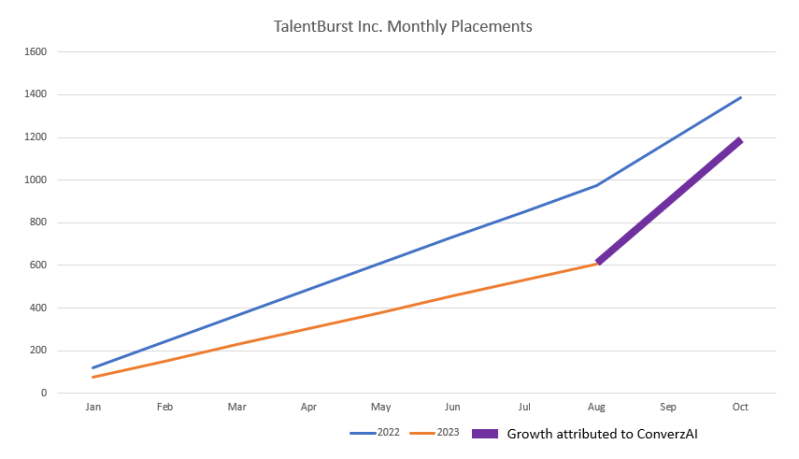
Join our daily and weekly newsletters for the latest updates and exclusive content on industry-leading AI coverage. Learn More Redmond, Washington-based startup ConverzAI, a provider of AI-driven recruitment automation, has raised $16 million in a Series A funding round to help it drive product innovation and expand its market reach. The round was led by Menlo Ventures, with participation from Left Lane Capital, Foundation Capital and Afore Capital. The funding will support ConverzAI’s plans for international expansion, workforce growth and enhancements to its AI-powered virtual recruiters. ConverzAI claims its virtual recruiters significantly boost hiring efficiency and revenue Founded in 2019 by CEO Ashwarya Poddar, ConverzAI has developed AI-driven virtual recruiters that handle key elements of the hiring process — from sourcing and engaging candidates to screening and final placement decisions. The platform engages candidates through voice, text and email, analyzing responses in real-time to streamline recruitment workflows, reduce hiring bias and improve efficiency. ConverzAI claims that its virtual recruiters have processed more than 100,000 jobs and engaged millions of candidates, resulting in tens of thousands of successful placements. The company also says that some customers have seen recruitment efficiency improve by 30% and revenue increase by up to 40% after implementation, attributed mainly to an increased number of successful placements. One of the platform’s key advantages is its ability to significantly accelerate hiring timelines. According to ConverzAI, it can reduce time-to-placement by as much as 90% while maintaining a high-quality candidate experience. The AI recruiter automates routine administrative tasks such as initial outreach, follow-ups and screening conversations, allowing human recruiters to focus on relationship-building and strategic decision-making. Investor support for ConverzAI’s AI recruiting Venky Ganesan, a partner at Menlo Ventures, expressed confidence in ConverzAI’s ability to reshape the recruitment industry. He noted that ConverzAI operates at the intersection of agentic AI, voice AI and recruiting, offering a fully automated recruitment solution that still prioritizes the candidate experience. ConverzAI founder and CEO Ashwarya Poddar emphasized that his company’s vision is to create transformational value for staffing firms. “Conducting entire business conversations through AI technology is game-changing,” he said. He also highlighted the company’s commitment to advancing agentic AI and voice AI, positioning ConverzAI as an essential recruitment partner for staffing firms. Customer impact and adoption Several industry leaders have endorsed ConverzAI’s technology, citing tangible improvements in hiring speed, candidate engagement and overall recruitment outcomes. Rob Lowry, chief talent strategy officer at Apex Systems, noted that ConverzAI’s virtual recruiters have had more than 250,000 candidate conversations and achieved a candidate satisfaction score exceeding 80%. He emphasized that the platform has significantly accelerated recruitment efforts while improving the quality of candidate data. Richard Wahlquist, CEO of the American Staffing Association, echoed this sentiment, saying that ConverzAI’s AI-powered virtual recruiters are setting a new standard in staffing innovation, helping businesses optimize hiring outcomes at scale. Future plans of expansion With this new funding, ConverzAI aims to increase its workforce and expand internationally by the end of the year. The company is also focused on continuous innovation, particularly in enhancing the scalability, personalization and decision-making capabilities of its AI-powered recruiters. The platform’s rapid deployment capabilities — allowing staffing firms to implement the solution in less than five days — continue to be a major selling point, particularly as the industry shifts toward AI-powered efficiency solutions. source


ConverzAI bags $16M for virtual recruiters that deliver 30% efficiency boost for enterprises Read More »

PQA Loses Bid To Fight VLSI's Extortion Claims In Fed. Court

By Dani Kass ( February 13, 2025, 10:01 PM EST) — Patent Quality Assurance LLC must return to state court to face a suit claiming it had extortionary intent when challenging VLSI Technology’s chip patent, a Virginia federal judge held Thursday…. Law360 is on it, so you are, too. A Law360 subscription puts you at the center of fast-moving legal issues, trends and developments so you can act with speed and confidence. Over 200 articles are published daily across more than 60 topics, industries, practice areas and jurisdictions. A Law360 subscription includes features such as Daily newsletters Expert analysis Mobile app Advanced search Judge information Real-time alerts 450K+ searchable archived articles And more! Experience Law360 today with a free 7-day trial. source

PQA Loses Bid To Fight VLSI's Extortion Claims In Fed. Court Read More »

Voices From The Field: Best Practices In Filtering Sales Communications

This week, Forrester published Introducing The B2B Sales Communications Rules Engine. This new model is designed to help revenue enablement teams better filter all the incoming requests, demands, and downright “noise” that well-meaning colleagues aim at sales and other customer-facing personas. Most sales-adjacent functions such as portfolio marketing and revenue operations, as well as supporting departments such as HR or finance, earnestly seek to enable the revenue team for their own, (usually) legitimate reasons. But without coordination, context, or calendar control, their aggregated efforts often result in turmoil and end up ignored by sellers who are appropriately more focused on the only thing that matters to them: their current deals, opportunities, renewals, and accounts. This is where the best enablement teams add value to sales communications and rep advocacy: providing a circuit breaker to better feed the revenue team members only what helps them, with timing and delivery mechanisms geared toward the audience, not the originators of the messaging. The B2B Sales Communications Rules Engine focuses on the who, what, why, when, and how for every sales communication request through a seller’s “What’s in it for me?” lens. It optimizes incoming content for the field and teaches requesters how to better frame and rethink their own needs. In researching and producing this report, we connected with a wide variety of practitioners to understand what works (and doesn’t) in streamlining communications to sales and revenue teams. While the B2B Sales Communications Rules Engine concentrates on how revenue enablement can effectively filter incoming requests, a number of best practices for downstream activity — how to best implement effectively managed communications requests — arose from our interviews. Here are some of the best pieces of advice, including from two of my valued Forrester colleagues: Cameron Tanner, Cisco: Mimic best practices in customer communications. Think about the ideal time of day, relentlessly review content clarity and simplicity before launching, and make your sales messaging as predictable as “I know my newspaper arrives daily at 6 a.m. to my tablet over Wi-Fi. I want to knowt hat it takes 3 minutes to read, the articles have been peer-reviewed, and it has clear recommendations for me.” Mike Kunkle, SPARKiQ: Select a single, primary channel for regular and important updates, from the same acknowledged source of truth, and use other channels and sources only as reinforcement. Store updates in a searchable location so that they can be found and referenced as needed. Kathleen Pierce, Forrester: People need a clear mental map of what goes where and when. We all know where to go for HR policies, but sales information runs through all sorts of channels from all sorts of people. End the chaos by concentrating on the user experience. Jackie Menzel, EliteGTM: Time is revenue for your audience, so use live meetings sparingly when introducing core communications. Trim down your high-level summary or announcement to 1 minute, then hand things over to the enforcing “partner in crime” for the remaining 4 minutes. Practice your presentation, keep it brutally short, and provide entertainment when appropriate. Suzanne White, Smartsheet: Communications is incredibly personal, and choice of venue matters to your audience. You’ll never nail down one channel to rule them all, so be sure to balance corporate channel mandates with meeting your sellers where they prefer to get information. Zachary Lukasiewicz, analytics consultant: If you are trying to communicate critical information, you’d better not have links, banners, or graphics. Luke Martin, ZoomInfo: Leverage your digital adoption platform to deliver situationally relevant roll-over and pop-up content — which can be text but also animation and video — to the right people at the right time. That almost always means within the context of their current deals, opportunities, and projects. Jon Symons, Forrester: Use TLDR creatively to both grab attention but also to give folks a legitimate opportunity to opt out. Even The New York Times leads with short-form content, with a roll-over if you want to see the details. source

Voices From The Field: Best Practices In Filtering Sales Communications Read More »

The EU Ecodesign Legislation: A Strategic Shift for Smartphone Manufacturers

The European Union’s Ecodesign for Sustainable Products Regulation (ESPR) will come into force on June 20, 2025. It will introduce a new framework to make electronic devices more sustainable. This law goes beyond energy efficiency by mandating durability, repairability, recyclability, and extended software support for smartphones and tablets. The ESPR is within the EU’s broader aim to create a circular economy that reduces electronic waste while making sure consumers get access to devices that last longer and can be repaired. This regulation presents both operational challenges and strategic opportunities for smartphone manufacturers. Complying with it will require significant changes in how they design their products, manage the supply chain, and handle after-sales customer service. While initial costs may rise due to higher material standards and new repairability requirements, manufacturers that quickly adapt could boost their market position. The Impact on Smartphone Manufacturers One of the key pillars of the ESPR is durability. Devices will need to meet stricter requirements for resistance to drops, dust, and water ingress. This will likely push manufacturers to redesign their products, particularly when it comes to protecting from water ingression, the second-largest cause of damaged smartphones (Read more about the Impact of Liquid Damages in my article). While this may initially increase production costs, it can also lead to fewer warranty claims, lower returns, and a stronger reputation for reliability. Brands that embrace this shift early may gain a competitive edge by positioning their products as premium, long-lasting investments. Battery performance is another focal point of the regulation. To comply, smartphones must maintain at least 80% of their initial capacity after 800 charge cycles. This pushes manufacturers to invest in higher-quality battery technology, potentially leading to innovations such as more energy-dense cells or modular battery designs. Additionally, the push for removable or easily replaceable batteries could reshape product engineering, affecting device thickness and aesthetics. While these changes may add complexity to design processes, they also provide an opportunity to differentiate in a market where battery life remains a critical consumer concern. Repairability will become a defining feature of future devices. Under the new rules, smartphone manufacturers must ensure that critical spare parts, including batteries, screens, cameras, charging ports, and buttons, remain available for at least seven years after a product is discontinued. Additionally, these parts must be delivered within a maximum of 10 working days, ensuring timely repairs and reducing consumer reliance on device replacements. The legislation also imposes new disassembly requirements, making it easier for professional repairers and, in some cases, consumers to replace damaged parts using basic tools. This prevents manufacturers from using proprietary designs or software locks that restrict third-party repairs—a common industry practice that has previously driven up repair costs and discouraged device longevity. From a business perspective, these regulations introduce new revenue opportunities in the form of refurbished and certified pre-owned devices. As consumers gain access to affordable repairs and extended product lifecycles, demand for manufacturer-backed refurbishment programs and trade-in services is likely to grow. IDC forecasts that trade-in used smartphone sales will grow on average 6.7% between 2023 and 2028 to reach $94 billion by 2028. Although PCs are not yet part of this legislation, last year at the Mobile World Congress, I witnessed brands moving beyond the traditional approach of simply incorporating recycled materials and reducing carbon footprints to a more strategic approach of repairability by design (Read more here). Software upgrades are another crucial area. The ESPR mandates that operating system updates must be available for at least five years after a device is discontinued. This prevents premature obsolescence, addressing one of the most common reasons for smartphone replacements. However, it also presents challenges for manufacturers, particularly those dependent on frequent hardware-software upgrade cycles to drive sales. Companies will need to balance regulatory compliance with revenue strategies. While most brands already provide five-year upgrades on their flagship and premium devices, extending this to mid-range handsets will be particularly challenging for many smaller brands. The six-figure cost reported by some brands will make it impossible to continue offering mid to low-end devices long-term. This will compel them to reduce the number of devices in their portfolios and weaken their position against more prominent brands. Strategic Implications for the Industry The ESPR represents a fundamental shift in how the smartphone industry must approach product lifecycle management. Companies that fail to adapt will risk fines, supply chain disruptions, and reputational damage. However, those who proactively integrate sustainability into their core strategies can benefit in several ways. Early adopters of the regulation can establish themselves as leaders in sustainability, gaining an advantage in a market increasingly influenced by environmental consciousness. With consumers becoming more selective about the sustainability credentials of their purchases, companies that highlight durability, repairability, and eco-friendly design can create strong differentiation. Furthermore, regulatory alignment is crucial for market access. The EU remains one of the world’s largest and most lucrative consumer electronics markets. Brands that do not meet these new requirements could face import restrictions, compliance-related delays, or reputational setbacks, ultimately losing market share to more forward-thinking competitors. Supply chain optimization will also become a priority. The emphasis on repairability and spare parts availability encourages a shift from a linear economy model (produce, sell, discard) to a circular economy model, where devices are repaired, reused, and resold. This could lead to new revenue streams in refurbished devices, leasing models, and extended warranty programs. It also means manufacturers must rethink their supplier relationships, ensuring consistent access to high-quality components over a longer period. The Consumer and Sustainability Perspective For consumers, the ESPR brings several significant benefits. By ensuring smartphones last longer and can be easily repaired, the regulation reduces the financial burden of frequent device replacements. This is particularly relevant in an era of rising electronic prices, where consumers are looking for greater value from their purchases. Beyond cost savings, the regulation addresses the growing e-waste crisis. The smartphone industry generates millions of discarded devices each year, with only a fraction being properly recycled. By mandating longer-lasting products,

The EU Ecodesign Legislation: A Strategic Shift for Smartphone Manufacturers Read More »

AI’s biggest obstacle? Data reliability. Astronomer’s new platform tackles the challenge

Join our daily and weekly newsletters for the latest updates and exclusive content on industry-leading AI coverage. Learn More Astronomer, the company behind Apache Airflow orchestration software, has launched Astro Observe, marking its expansion from a single-product company into the competitive data operations platform market. The move comes as enterprises struggle to operationalize their AI initiatives and maintain reliable data pipelines at scale. The new platform aims to help organizations monitor and troubleshoot their data workflows more effectively by combining orchestration and observability capabilities in a single solution. This consolidation could significantly reduce the complexity that many companies face when managing their data infrastructure. “Previously, our customers would have to come to us for orchestration data pipelines, and they’d have to go figure out a different data observability and Airflow observability vendor,” Julian LaNeve, CTO of Astronomer, said in an interview with VentureBeat. “We’re trying to make that a lot easier for our customers and give them everything in one platform.” AI-powered predictive analytics aims to prevent pipeline failures A key differentiator of Astro Observe is its ability to predict potential pipeline failures before they impact business operations. The platform includes an AI-powered “insights engine” that analyzes patterns across hundreds of customer deployments to provide proactive recommendations for optimization. “We will actually tell people two hours before the SLA is going to happen that they’re likely to miss it because there was some delay far upstream,” LaNeve explained. “That moves people from this very reactive world to a lot more proactive [approach], where you can start to address issues before downstream stakeholders find out.” The timing is particularly significant as organizations grapple with operationalizing AI models. While much attention has focused on model development, the challenge of maintaining reliable data pipelines to feed these models has become increasingly critical. “Ultimately, to take these AI use cases from prototype to production, it becomes a data engineering problem at the end of the day,” LaNeve noted. “How do you effectively feed these LLMs the right data on time every time? That’s what data engineers have been doing for many years now.” Astronomer moves from open source success to enterprise data management The platform builds on Astronomer’s deep expertise with Apache Airflow, an open-source workflow management platform downloaded more than 30 million times monthly. This represents a significant increase from just four years ago when Airflow 2.0 saw less than a million downloads. One notable feature is the “global supply chain graph,” which provides visibility into both data lineage and operational dependencies. This helps teams understand complex relationships between different data assets and workflows — which is crucial for maintaining reliability in large-scale deployments. The platform also introduces a “data product” concept, allowing teams to group related data assets and assign service level agreements (SLAs). This approach helps bridge the gap between technical teams and business stakeholders by providing clear metrics around data reliability and delivery. Early adopter GumGum, a contextual intelligence company, has already seen benefits from the platform. “Adding data observability alongside orchestration allows us to get ahead of issues before they impact users and downstream systems,” said Brendan Frick, GumGum senior engineering manager at GumGum. Astronomer’s expansion comes at a time when enterprises are increasingly looking to consolidate their data tooling. With organizations typically juggling eight or more tools from different vendors, the move toward unified platforms could signal a broader shift in the enterprise data management landscape. The challenge for Astronomer will be competing with established observability players while maintaining its leadership in the orchestration space. However, its deep integration with Airflow and focus on proactive management could give it an edge in the rapidly evolving market for AI infrastructure tools. source

AI’s biggest obstacle? Data reliability. Astronomer’s new platform tackles the challenge Read More »

Watch: Meet the stylish new robot that threatens to out-dress you

UK-based startup Humanoid has just shared a first look at its prototype humanoid robot — the HMND 01. It’s not here to overthrow humanity (yet), but it may walk, work, and possibly even out-dress you. At 5’9” and 154lbs, the “labour automation unit” is the coworker who never calls in sick, never complains about overtime, and somehow always looks sharp. Yes, HMND 01 comes with a range of interchangeable outfits.  The humanoid is no slouch, either. It can walk at a brisk 5.4km/h, carry up to 15kgs, and work for four hours straight before it needs a coffee break. Or should I say, electricity recharge.  Check it out for yourself in the video below: TNW Conference FLASH SALE is LIVE This week only, take advantage of our 2 for 1 offer on General Attendee and Corporate Passes. Ends 21 February. Humanoid claims its bot has human-level (or better) dexterity for complex tasks and can navigate tight spaces like a pro. Whether it’s lifting, packing, or navigating tight spaces in a warehouse, this robot is ready to take on the world. And by “the world,” we mean retail, manufacturing, logistics, and pretty much any industry that involves repetitive tasks humans would rather avoid.   Rather than plotting world domination, Humanoid’s founder Artem Sokolov envisions a future “where humans and machines work side by side, not in competition, but in harmony.” “This societal shift will address social issues such as workforce shortages and ageing population while giving people more freedom to focus on more creative and meaningful work,” says Sokolov, a serial entrepreneur and investor who founded Humanoid last year.  “The strongest argument in favour of humanoids is that the world is already designed for humans.” This means humanoids – unlike robot dogs or wheeled robots — could move about our world with ease.  Humanoid is still in the early stages of developing its robot, and it better hurry up. The space is getting increasingly crowded.   Tesla’s Optimus is set to go on sale as early as this year, while Boston Dynamics’ Atlas continues to backflip its way into our dreams (or nightmares?), and China’s Unitree bots are perfecting their dance routines. These robots are poised to take over the jobs we don’t want to do — and maybe a few we do. So whether you’re excited or nervously side-eyeing your toaster, one thing’s certain: the future is looking decidedly humanoid. Now, if you’ll excuse me, I’m off to buy a new outfit. If the robots are going to out-dress me, I might as well go down in style. source

Watch: Meet the stylish new robot that threatens to out-dress you Read More »

USAID Workers Sue Over Legitimacy Of Musk, DOGE Actions

By Carolina Bolado ( February 13, 2025, 8:33 PM EST) — More than two dozen U.S. Agency for International Development workers sued billionaire and Tesla CEO Elon Musk and his Department of Governmental Efficiency on Thursday, arguing that their actions taking control of various federal agencies are unconstitutional. … Law360 is on it, so you are, too. A Law360 subscription puts you at the center of fast-moving legal issues, trends and developments so you can act with speed and confidence. Over 200 articles are published daily across more than 60 topics, industries, practice areas and jurisdictions. A Law360 subscription includes features such as Daily newsletters Expert analysis Mobile app Advanced search Judge information Real-time alerts 450K+ searchable archived articles And more! Experience Law360 today with a free 7-day trial. source

USAID Workers Sue Over Legitimacy Of Musk, DOGE Actions Read More »

Is VMware really becoming the new mainframe?

“This has been met with anger and annoyance, but we have only seen a handful decide that they will take the short-term pain, sign up for a multi-year renewal, then start to plan their migration away from VMware technology,” Thompson adds. In the end, VMware isn’t a good comparison to mainframes because it’s possible to find other options, even if the migration can be expensive, adds Ferris Ellis, CEO at software solutions provider Urban Dynamics. Large VMware customers seeing huge price increases may be able to justify the time and complexity of a migration, he says. “Mainframes have much stronger lock-in for the software running on them,” he says. “They force a deep-rooted dependency on their proprietary hardware and platform for the workloads they run. The workloads on any VM platform, VMware or otherwise, have little concept of which platform they’re on — that’s part of the value of a VM platform.” source

Is VMware really becoming the new mainframe? Read More »

HPE Says Juniper Deal Is Needed To Compete With Top Players

By Jared Foretek ( February 11, 2025, 5:08 PM EST) — Hewlett Packard said it was blindsided by the U.S. Department of Justice’s move to block its $14 billion purchase of Juniper Networks, saying in a new filing that the Antitrust Division lawsuit brought last month will only benefit the biggest player in the market, Cisco, and Chinese competitor Huawei…. Law360 is on it, so you are, too. A Law360 subscription puts you at the center of fast-moving legal issues, trends and developments so you can act with speed and confidence. Over 200 articles are published daily across more than 60 topics, industries, practice areas and jurisdictions. A Law360 subscription includes features such as Daily newsletters Expert analysis Mobile app Advanced search Judge information Real-time alerts 450K+ searchable archived articles And more! Experience Law360 today with a free 7-day trial. source

HPE Says Juniper Deal Is Needed To Compete With Top Players Read More »

Empowering Future Manufacturing: AI and Operational Technologies for 2025 and Beyond

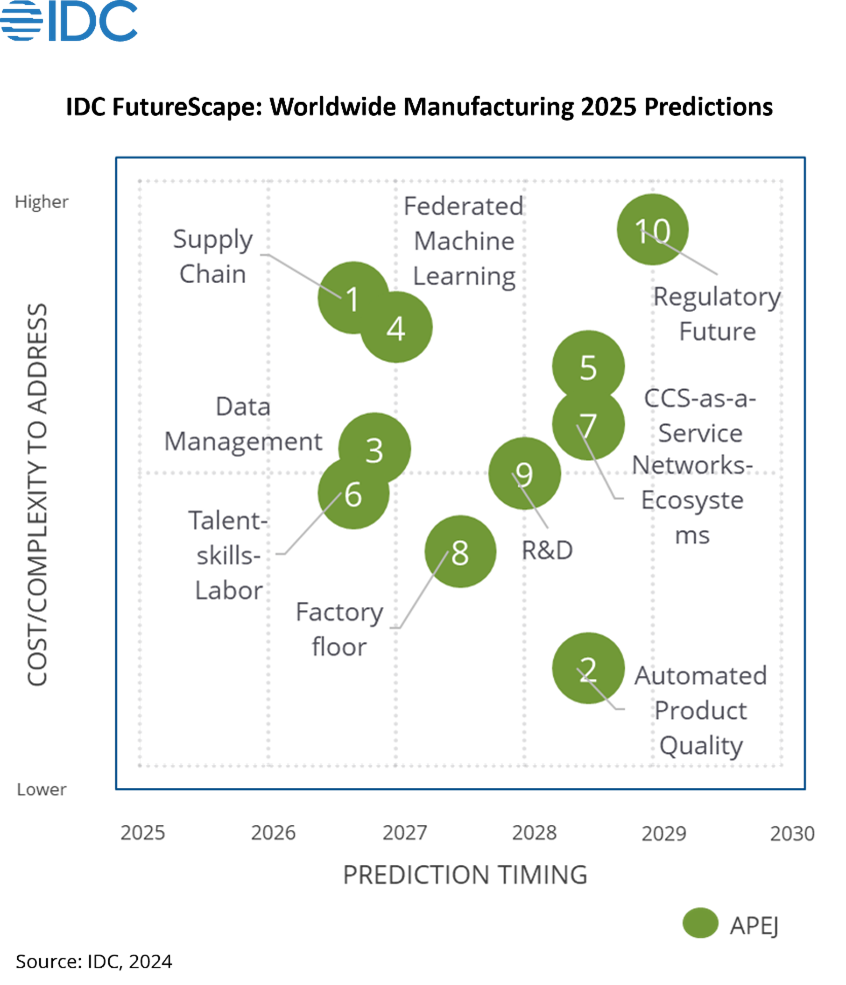
The Asia/Pacific region, which serves as the world’s largest manufacturing and consumer hub, is expected to continue growing despite challenges such as a sluggish global economy, higher interest rates, material cost inflation, and protectionist trade policies. Governments across the region, including those of China, India, South Korea, Taiwan, Singapore, Malaysia, and Thailand, are actively supporting the manufacturing sector. They are rolling out initiatives to accelerate digital transformation, improve connectivity infrastructure, and promote green economy practices, opening new opportunities for both manufacturers and technology vendors. Looking at these market dynamics and technology adoption trends in the region, IDC published its FutureScape Worldwide Manufacturing 2025 Predictions – Asia/Pacific (excluding Japan) Implications report to provide organization decision-makers with an actionable investment plan with respect to technologies as viable enablers. Each prediction is presented based on timeline projection, complexity assessment, and organizational impact. It also includes insights into regional use cases and examples, as well as the regional outlook for manufacturing over the next five years. The following are some of the key predictions for Manufacturing in Asia/Pacific (excluding Japan): AI and Automation: Unleashing Next Level Production Efficiency Supply chain complexity and competition in Asia are intensifying as manufacturers face mounting cost pressures. The cost of raw materials continues to rise, driven by factors such as global supply constraints, fluctuating commodity prices, and regional demand surges. Shifting customer preferences are leading to shorter lead times and fluctuating order volumes, adding further complexity to an already intricate supply chain. To overcome these challenges, manufacturers must prioritize flexibility and productivity efficiency to achieve operational excellence and boost their perfect order (PO) rate, a critical metric for fulfilment success. This sparks a renewed interest in adopting technology solutions to integrate production process with supply chain management. According to IDC’s Manufacturing Industry Core Survey, July 2024; 30% of APAC manufacturers responded that advanced planning and scheduling (APS) solutions significantly contribute to helping their organizations achieve operational KPIs. AI/GenAI, can significantly enhance performance and integration between different systems and processes.   As a result, IDC predicts that by 2027, resiliency pressures and AI opportunities will drive more than 30% of Asia-based Top 2000 (A2000) manufacturers to invest in new advanced planning & scheduling deployments, leading to PO rates of above 95%. The Intersection of Complexity and Quality in Modern Manufacturing Ensuring impeccable product quality is a constant pursuit for manufacturers, demanding constant vigilance and adaptation. The growing complexity of manufacturing processes and materials has resulted in the emergence of a new set of challenges. The rapidly growing variety of potential defects, coupled with limitations of real-world testing data, can impede the effectiveness of conventional inspection systems. These limitations can lead to missed defects, ultimately impacting product quality, consumer trust and may cause the potential risk of regulatory violation. GenAI can improve quality initiatives in multiple ways. GenAI can significantly streamline data management by efficiently collecting, organizing, and summarizing vast amounts of structured and unstructured data from diverse sources, including design, manufacturing, supply chain, distribution, customer feedback, and service support. This centralized data repository enables AI-powered analysis to identify potential risks, inform decision-making, and optimize processes. Additionally, through synthetic data augmentation, GenAI can facilitate comprehensive and accurate simulations, aligning product development with stringent requirements and customer preferences simultaneously saving time and resources. As a result, IDC also predicts that by 2028, 40% of APeJ manufacturers will be leveraging GenAI to automate product quality management and improve development time/cost by 10%. For example, Bosch, a renowned industry leader, has already successfully implemented AI-powered image recognition for quality control. However, given their already high manufacturing standards, acquiring sufficient data on product defects to train their AI system proved challenging. To overcome this limitation, Bosch turned to GenAI, which enabled them to create a vast dataset of synthetic defect images from a relatively small number of real-world examples. This innovative approach accelerated the training of their automated optical inspection systems, allowing for earlier detection of potential issues in the production process. Leveraging Ecosystem Alliances for Sustainable Growth Fluctuating market demands and geopolitical tensions, has led to significant disruptions in raw material supply chains. Rising logistics costs and workforce shortage further cause costs and productivity challenges. Manufacturers across the region are compelled to re-evaluate and adapt their supply chain strategies to ensure business continuity. In this context, supply chain reliability has emerged as a critical competitive differentiator, particularly for industries reliant on timely service parts delivery. Customers today demand high levels of uptime and efficient support, as outlined in their Service Level Agreements (SLAs). Delays in procuring necessary parts can lead to costly operational disruptions. To meet these stringent expectations, manufacturers are expanding their spare parts ecosystems. By ensuring a ready supply of critical components, manufacturers can expedite repairs, minimize downtime, and ultimately enhance customer satisfaction. Customers now seek proactive service, not just reactive repairs. They desire assurance that their equipment will be serviced promptly, enabling continuous operations and reducing risks. As a result, IDC predicts that, because manufacturers are unable to meet global repair SLAs, by 2028, 40% of A2000 manufacturers will expand its spare parts ecosystem partners across the supply chain to confidently deliver resolution and customer outcomes. For example, Samsung Electronics has launched an online Supplier Portal to attract potential new suppliers, aiming to strengthen its supply chain and mitigate associated risks. Samsung’s dedicated internal team, the International Procurement Center, operates as the central procurement hub, tasked with identifying top-tier suppliers in strategically important regions across the globe. Expanding the spare parts ecosystem provides opportunities for revenue growth, as companies can offer premium support packages with prioritized service levels, attracting customers who value reliability. This approach strengthens customer relationships, builds loyalty, and differentiates the manufacturer from competitors by ensuring high standards of service and reduced equipment downtime. Call for Actions: Conduct a thorough assessment of business and operational points and develop a phased automation strategy that aligns GenAI/AI investments with business priorities for maximum impact. Organizations need to evaluate their existing technology infrastructure and identify connectivity gaps to build connected

Empowering Future Manufacturing: AI and Operational Technologies for 2025 and Beyond Read More »