Lightning AI’s AI Hub shows AI app marketplaces are the next enterprise game-changer

Join our daily and weekly newsletters for the latest updates and exclusive content on industry-leading AI coverage. Learn More The last mile problem in generative AI refers to the ability of enterprises to deploy applications to production.  For many companies, the answer lies in marketplaces, which enterprises and developers can browse for applications akin to the Apple app store and download new programs onto their phones. Providers such as AWS Bedrock and Hugging Face have begun building marketplaces, offering ready-built applications from partners that customers can integrate into their stack.  The latest entrant into the AI marketplace space is Lightning AI, the company that runs the open-source Python library PyTorch Lightning. Today it is launching AI Hub, a marketplace for both AI models and applications. What sets it apart from other marketplaces, however, is that Lightning allows allows developers to actually do deployment — and enjoy enterprise security too. Lightning AI CEO William Falcon told VentureBeat in an exclusive interview that AI Hub allows enterprises to find the application they want without having all the other platforms required to run it.  Falcon noted that previously, enterprises had to find hardware providers that could run and host models. The next step was to find a way to deploy that model and make it into something useful.  “But then you need those models to do something, and that’s where the last mile issue is, that’s the end thing enterprises use, and most of that is from standalone companies that offer an app,” he said. “They bought all these tools, did a bunch of experiments, and then couldn’t deploy them or really take them to that last mile.” Falcon added that AI Hub “removes the need for specialized platforms.” Enterprises can find any type of AI application they want in one place. This helps organizations stuck in the prototype phase move faster to deployment.  AI Hub as an app store AI Hub hosts more than 50 APIs at launch, with a mix of foundation models and applications. It hosts many popular models, including DeepSeek-R1.  Enterprises can access AI Hub and find applications built using Lightning’s flagship product, Lightning AI Studio, or by other developers. They can then run these on Lightning’s cloud or private enterprise cloud environments. Organizations can link their AWS or Google Cloud instances and keep data within their company’s virtual private cloud. Falcon said this offers enterprises control over deployment.  Lightning AI’s AI Hub can work with most cloud providers. While it hosts open-source models, Falcon said the apps it hosts are not open-source, meaning users cannot alter their code.  Lightning AI will offer AI Hub free for current customers, with 15 monthly credits to run applications. It will offer different pricing tiers for enterprises that want to connect to their private clouds.   Falcon said AI Hub speeds up the deployment of AI applications within an organization because everything they need is on the platform.  “Ultimately, as a platform, what we offer enterprises is iteration and speed,” he said. “I’ll give you an example: We have a Big Fortune 100 pharma company customer. Within a few days of when DeepSeek came out, they had it in production, already running.” More AI marketplaces  Lightning AI’s AI Hub is not the first AI app marketplace, but its launch indicates how fast the enterprise AI space has moved since the launch of ChatGPT, which powered a generative AI boom in enterprise technology. API marketplaces still offer tons of SaaS applications to enterprises, and more companies are beginning to provide access to AI-powered applications like Apple’s App Store to make them easier to deploy.  AWS, for instance, announced the AWS Bedrock Marketplace for specialized foundation models and Buy with AWS — which features services from AWS partners — during re:Invent in December.  Hugging Face, for its part, has launched Spaces, an AI app directory that allows developers to search and try out new apps, for general availability. Hugging Face CEO Clement Delangue posted on X that Spaces “has quietly become the biggest AI app store, with 400,000 total apps, 2,000 new apps created every day, getting visited 2.5M times every week!” He added that the launch of Spaces shows how “The future of AI will be distributed.” Even OpenAI’s GPT Store on ChatGPT technically functions as a marketplace for people to try out custom GPTs.  https://twitter.com/_akhaliq/status/1886831521216016825 Falcon noted that most technologies are offered in a marketplace, especially to reach many potential customers. In fact, this is not the first time Lightning AI has launched an AI marketplace. Lightning AI Studio, first announced in December 2023, lets enterprises create AI platforms using pre-built templates.  “Every technology ends up here,” said Falcon. “Through the evolution of any technology, you’re going to end up in something like this. The iPhone’s a good example. You went from point solutions to calculators. flashlights and notepads. Something like Slack did the same thing where you had an app to send files or photos before, but now it’s all in one. There hasn’t really been that for AI because it’s still kind of new.” Lightning AI, though, faces tough competition especially against Hugging Face. Hugging Face has long been a repository of models and applications and is widely used by developers. Falcon said what makes AI Hub different is that users not only access to state of the art applications with powerful models, but it allows them to begin their AI deployment in the platform and focus on enterprise security. “I can hit deployment here. As an enterprise they can point to their AWS or Google Cloud and the application runs in their private cloud. No data leaks or security issues it’s all within your firewall,” he said. source

Lightning AI’s AI Hub shows AI app marketplaces are the next enterprise game-changer Read More »

Top 6 Deel Competitors and Alternatives for 2024

Best overall Deel alternative: Gusto Best for managing employee benefits: Justworks Best international PEO: Papaya Global Best for hiring contractors internationally: Oyster Best for hiring and onboarding: Multiplier Best for integrations and IT hardware support: Rippling Best value for the price: Remote Deel streamlines hiring, onboarding, and payroll management for both employees and contractors in over 150 countries worldwide. For thousands of multinational companies, it’s the perfect international payroll solution—but if Deel is not for you, one of its global payroll software competitors could be a better fit. Check out our list of top alternatives: 1 Paycor Employees per Company Size Micro (0-49), Small (50-249), Medium (250-999), Large (1,000-4,999), Enterprise (5,000+) Micro (0-49 Employees), Small (50-249 Employees), Medium (250-999 Employees) Micro, Small, Medium Features API, Check Printing, Document Management / Sharing, and more 2 Deel Employees per Company Size Micro (0-49), Small (50-249), Medium (250-999), Large (1,000-4,999), Enterprise (5,000+) Any Company Size Any Company Size Features 24/7 Customer Support, API, Document Management / Sharing, and more 3 Velocity Global Employees per Company Size Micro (0-49), Small (50-249), Medium (250-999), Large (1,000-4,999), Enterprise (5,000+) Any Company Size Any Company Size Features Employee Database, Multi-Country Payroll, Onboarding, and more Top Deel competitors and alternatives: Comparison table Vendor EOR starting price Global availability Our star rating (out of 5) Learn more Deel $599/employee/mo. 100+ countries 4.46 Try Deel Gusto $699/employee/mo.* 120+ countries 4.71 Try Gusto Justworks $599/employee/mo. 40+ countries 4.64 Visit Justworks Papaya Global $599/employee/mo. 160+ countries 4.54 Try Papaya Oyster $699/employee/mo. 180+ countries 4.16 Try Oyster Multiplier $400/employee/mo. 150+ countries 4.17 Try Multiplier Rippling Custom Unlisted 4.13 Try Rippling Remote $699/employee/mo. 170+ countries 4.01 Try Remote Plans and pricing are up to date as of 1/2/2025 *Gusto’s new pricing for its EOR services took effect on January 1, 2025 The top Deel alternatives for global businesses Gusto: Best overall Deel alternative Our star rating: 4.71 out of 5 image: Gusto Why we chose it: Gusto’s automation, streamlined platform, and overall accessibility make it one of the best payroll companies for small and midsize U.S. businesses, including those that pay international contractors. Employers already using Gusto to pay domestic contractors and employees can add international contractors without additional fees. The only cost you will incur is an exchange-rate fee that varies by country. Gusto’s employer of record (EOR) services (powered by Remote) were introduced in early 2024. These services are currently available only in Australia, Brazil, Canada, Germany, India, Ireland, Mexico, Netherlands, Philippines, Portugal, United Kingdom, and Spain—with new countries added every month. Who it’s best for: Gusto is an exceptional small-business alternative to Deel for businesses expanding to foreign markets for the first time. Its user-friendly platform is deeply intuitive with a low learning curve, making it a great payroll system for first-time employers. With the addition of Gusto Global, the software is now also a strong option for first-time global payroll users. Get more information by reading our comprehensive Gusto review. Pricing Gusto’s contractor-only plan costs $6 per contractor per month for the first six months. After that, you will be charged an additional $35 per month base fee, on top of the fee per contractor. You can also add international contractors for the same $6-a-month price, and the only additional fee is a variable exchange fee (the exact cost depends on the country). You can also pay international contractors through any of Gusto’s three employee-and-contractor payroll plans: Gusto Simple: $40 per month + $6 per employee or contractor per month. Includes unlimited monthly payroll runs and access to optional employee benefits. Gusto Plus: $80 per month + $12 per employee or contractor per month. Includes multi-state payroll, time tracking, and PTO management. Gusto Premium: Custom pricing only. Includes compliance alerts, HR resource center access, and dedicated customer support. Gusto Global: The regular price for this plan is $699 per employee per month. However, Gusto is currently offering a discounted price of $599 per employee until December 31, 2025. You can also get a one-month free discount on your invoice after you subscribe and run your first payroll with Gusto. Other terms and conditions may apply. Top features and integrations Unlimited monthly payroll runs Optional employee benefits, including health insurance plans in 37 states Employee mobile app for self-service onboarding and on-demand pay Local currency payments (availability varies by country) Fully automated full-service payroll tax administration Integrations: As a top payroll service provider in the U.S., Gusto includes built-in integrations with dozens of third-party apps, including accounting software like FreshBooks, QuickBooks, Sage, Xero, and ZipBooks. Gusto also syncs with expense management software like Expensify, performance management tools like Culture Amp, and time-tracking tools like 7shifts. Pros and cons Pros Cons User-friendly platform with simple self-guided setup Mobile app for employees, with optional on-demand pay through Gusto Wallet Thorough built-in integrations Low-cost international contractor payroll Compliance alerts are limited to the most expensive plan only Customers can’t yet access Gusto Global features (though you can create an account) Fewer HR features than top payroll competitors Justworks: Best for managing employee benefits Image: Justworks Our star rating: 4.64 out of 5 Why we chose it: Justworks is a certified professional employer organization (PEO) that takes the complexity out of running your business by handling the heavy lifting of payroll processing, tax management, and benefits administration. What sets it apart is its ability to give small businesses access to premium health insurance plans from major insurers like Aetna and UnitedHealthcare. Justworks’ EOR services give small businesses access to local HR experts who are ready to help you navigate compliance and answer your workplace questions. It also offers time-tracking features and international contractor payments. Who it’s best for: Justworks is an ideal Deel alternative for businesses that want to provide premium health plans and benefit options for their employees. Whether you run a small business or a big enterprise, Justworks can negotiate benefits coverages and rates with major insurance carriers. Thus, you can access the same caliber of health coverage typically reserved for big corporations, but at rates that work with your budget. Pricing Justworks has two pricing plans for its PEO services and standalone

Top 6 Deel Competitors and Alternatives for 2024 Read More »

The low-code lessons CIOs can apply to agentic AI

Managing agents the low code way Agentic AI ranges from simple automations for daily tasks based on ‘fill in the blank’ prompts, to more autonomous workflows that detect inputs like incoming emails that trigger business processes to look up information and send responses, or even place an order or book a meeting. Gen AI makes those automations both less fragile and easier to create. In many ways it’s a natural progression, and low code platforms like Microsoft’s Power Platform, Mendix, Salesforce, and Zoho, which have offered AI features to simplify development for several years, are now adding gen AI tools to assist users to build apps and workflows. In Forrester’s research, Bratincevic says the number-one use case for low code platforms is AI-infused applications. Just as importantly, they apply the same compliance, governance, information security, and auditing tools to agentic AI. Like low code, gen AI agents need access to data sources and connections to line of business applications, and organizations will also want policies that control access and what actions can be taken, as well as how widely users can share apps and workflows. As with any other tools with consumption-based pricing, IT teams will also want to know about usage and adoption, and managers will want to look at what that delivers for the business to understand ROI. source

The low-code lessons CIOs can apply to agentic AI Read More »

DeepSeek Resetting The Bar For AI Infrastructure

DeepSeek: A New Model And New Hopes When DeepSeek released the open-source AI model, DeepSeek R1, with impressive performance and significantly lower training costs, it garnered immediate attention and rapid adoption. It has outperformed many, if not all, of its competitors’ latest models across many commonly used AI tests. Its model efficiency comes from several architectural choices such as the mixture-of-experts system, multi-head latent attention, memory compression, a mixed precision framework, and other optimization techniques. The infrastructure needed for inferencing with DeepSeek is far less than what its competitors use — useful deployments of DeepSeek can be done on consumer desktops and laptops. Microsoft announced DeepSeek R1 models for its Windows 11 Copilot+ PCs, and NVIDIA announced that its GeForce RTX 50 Series GPUs can run the DeepSeek family of models, as well. Key Takeaways: DeepSeek’s Promise Raises AI Aspirations This level of efficiency opens generative AI to a much broader audience. Organizations now have a choice to size up AI infrastructure that they can both acquire and afford for at least one generative AI model family. Tech executives: The bar to participating with generative AI has been set to a new low, and you no longer need to wait or spend enormous sums of money to begin. You no longer need bleeding-edge AI infrastructure (data center GPUs, AI servers, high-speed networks) to participate. Commonly available commodity IT infrastructure can suffice. This is not to say that having the latest GPU or 800-GbE network won’t provide benefits — they definitely will! source

DeepSeek Resetting The Bar For AI Infrastructure Read More »

越捷航空新年後首推一連7日半價優惠,即搶機票飛越南

越捷航空於新年後推出「7日黃金周」機票優惠,由即日至2025年2月16日,所有航班票價最高可享有五折優惠。立即搶購機票,計劃越南之旅。 於七天優惠期間,旅客可使用優惠碼 「BIGSALE50」於越捷官網www.vietjetair.com 或APP享受五折票價購買經濟艙票(**)。此優惠適用於越捷的整個航線網絡,包括來往香港至胡志明市、富國島及峴港,出發日期為2025年3月1日至5月22日(*)。 越捷目前提供 3 條從香港飛往越南的航線,包括胡志明市、峴港和富國島。乘客可以自行安排前往不同城市的度假行程,越捷是香港首間飛往富國島的航空公司,香港市民可享有 30 天免簽證待遇。為促進香港與越南之間的旅遊發展,越捷定期提供航票優惠,香港旅客現在規劃旅程時,可選擇以直航飛到越南,或以越南作為中轉站前往不同的亞洲國家,享受優惠機票飛多個地點。 越捷香港航線︰ 往返香港至富國島   香港→富國島 VJ985 16:40 – 18:25  (2小時45分鐘) 每日一班 富國島→香港 VJ986 11:55 – 15:40  (2小時45分鐘) 往返香港至峴港 香港→峴港 VJ967 21:20 – 22:10  (1小時50分鐘) 每日一班 峴港→香港 VJ966 17:35 – 20:20  (1小時45分鐘) 往返香港至胡志明市 香港→胡志明市 VJ877 19:50 – 21:30 (2小時40分鐘) 逢星期一、三、五、日 胡志明市→香港 VJ876 15:10 – 18:50 (2小時40分鐘) (*) 不包括稅金和手續費 (**) 優惠受條款及細則約束   LinkedIn Email Facebook Twitter WhatsApp The post 越捷航空新年後首推一連7日半價優惠,即搶機票飛越南 appeared first on VeriMedia. source

越捷航空新年後首推一連7日半價優惠,即搶機票飛越南 Read More »

Crytpo Platform EToro Confidentially Files IPO Proposal

By Jade Martinez-Pogue ( February 12, 2025, 1:53 PM EST) — Crypto platform eToro Group on Wednesday announced that it has confidentially submitted plans to U.S. regulators regarding a proposed initial public offering, marking the latest development in the trading and investment platform’s yearslong attempt to go public…. Law360 is on it, so you are, too. A Law360 subscription puts you at the center of fast-moving legal issues, trends and developments so you can act with speed and confidence. Over 200 articles are published daily across more than 60 topics, industries, practice areas and jurisdictions. A Law360 subscription includes features such as Daily newsletters Expert analysis Mobile app Advanced search Judge information Real-time alerts 450K+ searchable archived articles And more! Experience Law360 today with a free 7-day trial. source

Crytpo Platform EToro Confidentially Files IPO Proposal Read More »

Go Beyond The MITRE ATT&CK Evaluation To The True Cost Of Alert Volumes

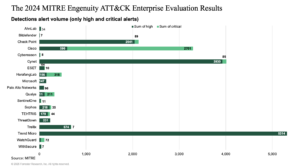
MITRE released its latest Enterprise MITRE ATT&CK Evaluations in December of 2024. At that time, we published a blog with a quick overview of the results. Today, we’re excited to announce that we have released three new pieces of research about this round of evaluations: Analysis Of The 2024 MITRE Engenuity ATT&CK Evaluation — an overview of this round’s evaluations with an explanation of the changes in methodology and an interpretation of the results. 2024 MITRE Engenuity ATT&CK Enterprise Evaluation Results — a report that visualizes some key data from the evaluation. The 2024 MITRE Engenuity ATT&CK Enterprise Evaluation Cost Calculation Tool — a tool to help calculate the costs of using each of the vendor technologies in the evaluation to detect the attacks included in the evaluation. These reports break down the results, give insights into how to interpret them, and provide ways to quantify the impact of using these tools. If you want a tl;dr version, this blog covers a few things we learned from this evaluation data. True correlation remains elusive, if not nonexistent. The alert volume generated by some of the participating vendors is ridiculous. A few of the vendors were able to reduce the number of alerts per attack to single digits while still providing full visibility into the attack. This is ideal but was extremely rare in this evaluation. Most vendors surfaced a detection every single time they identified a step as potentially malicious, including those that were not correlated into an incident. This inflated their alert volume numbers significantly, requiring a lot of manual effort to correlate. High alert volumes will create misery for incident responders. While MITRE is not evaluating user experience — and, to be quite honest, cannot be expected to — we at Forrester do evaluate vendors on their user experience, among other features. Some vendors triggered thousands of alerts during this evaluation, with one vendor triggering over a million alerts. Surfacing so many alerts for just three scenarios is ridiculous. Even if you only consider the high- and critical-severity alerts, the numbers still don’t add up. Individual vendor results vary from one vendor with over 5,000 high- and critical-severity alerts to other vendors that had under 10. The true cost of excess alerting comes down to dollars and cents. Let’s assume that your team is bringing relevant alerts into the security information and event management (SIEM) platform for additional correlation. Every alert generated by these tools is an added cost (as if the user experience costs were not enough). For example, say that the cost to ingest and store in the SIEM per GB is $0.30 and that the average endpoint alert is 1 KB. If 10,000 endpoints are hit with LockBit, the cost to bring those alerts into the SIEM ranges from $0.006 with some vendors to $471.192 with others. That’s the cost for just one attack. Consider this cost when you’re evaluating tools or trying to reduce your SIEM budget. Our research includes a tool for calculating this cost. Dive deeper. Forrester clients who want deeper guidance about the evaluation and the vendors included can book an inquiry or guidance session with me. source

Go Beyond The MITRE ATT&CK Evaluation To The True Cost Of Alert Volumes Read More »

SEC Grants Reprieve On Short-Selling Disclosures

By Tom Zanki & Katryna Perera ( February 10, 2025, 5:20 PM EST) — The U.S. Securities and Exchange Commission is providing a temporary exemption in order to allow investment managers more time to comply with new rules requiring increased disclosure on short selling, and separately said it will no longer require certain personally identifiable information to be reported to the market database known as the Consolidated Audit Trail…. Law360 is on it, so you are, too. A Law360 subscription puts you at the center of fast-moving legal issues, trends and developments so you can act with speed and confidence. Over 200 articles are published daily across more than 60 topics, industries, practice areas and jurisdictions. A Law360 subscription includes features such as Daily newsletters Expert analysis Mobile app Advanced search Judge information Real-time alerts 450K+ searchable archived articles And more! Experience Law360 today with a free 7-day trial. source

SEC Grants Reprieve On Short-Selling Disclosures Read More »

LangChain shows AI agents aren’t human-level yet because they’re overwhelmed by tools

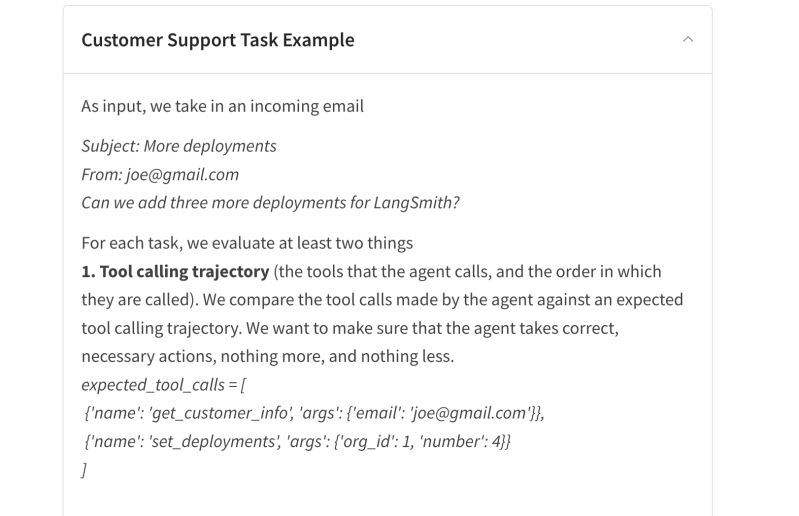
Join our daily and weekly newsletters for the latest updates and exclusive content on industry-leading AI coverage. Learn More With AI agents showing promise, organizations have to grapple with figuring out if a single agent is enough, or if they should invest in building out a wider multi-agent network that touches more points in their organization.  Orchestration framework company LangChain sought to get closer to an answer to this question. It subjected an AI agent to several experiments that found single agents do have a limit of context and tools before their performance begins to degrade. These experiments could lead to a better understanding of the architecture needed to maintain agents and multi-agent systems.  In a blog post, LangChain detailed a set of experiments it performed with a single ReAct agent and benchmarked its performance. The main question LangChain hoped to answer was, “At what point does a single ReAct agent become overloaded with instructions and tools, and subsequently sees performance drop?” LangChain chose to use the ReAct agent framework because it is “one of the most basic agentic architectures.” While benchmarking agentic performance can often lead to misleading results, LangChain chose to limit the test to two easily quantifiable tasks of an agent: answering questions and scheduling meetings.  “There are many existing benchmarks for tool-use and tool-calling, but for the purposes of this experiment, we wanted to evaluate a practical agent that we actually use,” LangChain wrote. “This agent is our internal email assistant, which is responsible for two main domains of work — responding to and scheduling meeting requests and supporting customers with their questions.” Parameters of LangChain’s experiment LangChain mainly used pre-built ReAct agents through its LangGraph platform. These agents featured tool-calling large language models (LLMs) that became part of the benchmark test. These LLMs included Anthropic’s Claude 3.5 Sonnet, Meta’s Llama-3.3-70B and a trio of models from OpenAI, GPT-4o, o1 and o3-mini.  The company broke testing down to better assess the performance of email assistant on the two tasks, creating a list of steps for it to follow. It began with the email assistant’s customer support capabilities, which look at how the agent accepts an email from a client and responds with an answer.  LangChain first evaluated the tool calling trajectory, or the tools an agent taps. If the agent followed the correct order, it passed the test. Next, researchers asked the assistant to respond to an email and used an LLM to judge its performance.  For the second work domain, calendar scheduling, LangChain focused on the agent’s ability to follow instructions.  “In other words, the agent needs to remember specific instructions provided, such as exactly when it should schedule meetings with different parties,” the researchers wrote.  Overloading the agent Once they defined parameters, LangChain set to stress out and overwhelm the email assistant agent.  It set 30 tasks each for calendar scheduling and customer support. These were run three times (for a total of 90 runs). The researchers created a calendar scheduling agent and a customer support agent to better evaluate the tasks.  “The calendar scheduling agent only has access to the calendar scheduling domain, and the customer support agent only has access to the customer support domain,” LangChain explained.  The researchers then added more domain tasks and tools to the agents to increase the number of responsibilities. These could range from human resources, to technical quality assurance, to legal and compliance and a host of other areas.  Single-agent instruction degradation After running the evaluations, LangChain found that single agents would often get too overwhelmed when told to do too many things. They began forgetting to call tools or were unable to respond to tasks when given more instructions and contexts.  LangChain found that calendar scheduling agents using GPT-4o “performed worse than Claude-3.5-sonnet, o1 and o3 across the various context sizes, and performance dropped off more sharply than the other models when larger context was provided.” The performance of GPT-4o calendar schedulers fell to 2% when the domains increased to at least seven.  Other models didn’t fare much better. Llama-3.3-70B forgot to call the send_email tool, “so it failed every test case.” Only Claude-3.5-sonnet, o1 and o3-mini all remembered to call the tool, but Claude-3.5-sonnet performed worse than the two other OpenAI models. However, o3-mini’s performance degrades once irrelevant domains are added to the scheduling instructions. The customer support agent can call on more tools, but for this test, LangChain said Claude-3.5-mini performed just as well as o3-mini and o1. It also presented a shallower performance drop when more domains were added. When the context window extends, however, the Claude model performs worse.  GPT-4o also performed the worst among the models tested.  “We saw that as more context was provided, instruction following became worse. Some of our tasks were designed to follow niche specific instructions (e.g., do not perform a certain action for EU-based customers),” LangChain noted. “We found that these instructions would be successfully followed by agents with fewer domains, but as the number of domains increased, these instructions were more often forgotten, and the tasks subsequently failed.” The company said it is exploring how to evaluate multi-agent architectures using the same domain overloading method.  LangChain is already invested in the performance of agents, as it introduced the concept of “ambient agents,” or agents that run in the background and are triggered by specific events. These experiments could make it easier to figure out how best to ensure agentic performance.  source

LangChain shows AI agents aren’t human-level yet because they’re overwhelmed by tools Read More »

5 Best Free Applicant Tracking Systems (ATS) for 2025

A free applicant tracking system (ATS) is a human resources software application that acts as a database for job applicants, streamlining the hiring process by automating tasks, managing communication, and staying compliant, all at no cost to you. ATS platforms are used by companies of all sizes to organize, search for, and communicate with large groups of applicants. Many of the best applicant tracking systems are geared toward large corporations that juggle hundreds of applicants, however, small businesses on a budget need fully featured, affordable ATS software as well. Below, I reviewed the top free ATS software so you can find the right one for your needs. 2 Workable Recruiting Employees per Company Size Micro (0-49), Small (50-249), Medium (250-999), Large (1,000-4,999), Enterprise (5,000+) Any Company Size Any Company Size Features Interviews and Assessments, Job Postings, Offers and E-Signatures, and more 3 BambooHR Employees per Company Size Micro (0-49), Small (50-249), Medium (250-999), Large (1,000-4,999), Enterprise (5,000+) Micro (0-49 Employees), Small (50-249 Employees), Medium (250-999 Employees) Micro, Small, Medium Features Job Postings, Offers and E-Signatures, Onboarding, and more Top Free ATS comparison Name Our rating (out of 5) Starting price for paid plans Candidate scoring Resume parsing Mobile app monday work management 4.58 $9 per seat per month Yes No Yes Zoho Recruit 4.30 $25 per user per month Yes Yes* Yes Breezy HR 3.80 $157 per month Yes** Yes Yes Jobsoid 3.48 $49 per month Yes Yes* Yes Loxo 3.30 $119 per user per month Yes Yes* Yes *Zoho Recruit: Resume parsing only available in paid tiers; Jobsoid: Resume parsing available with Standard and Pro paid plans only; Loxo: Resume parsing only available with paid plans**Breezy HR: candidate scoring available in paid tiers monday work management: Best overall Image: monday Our rating: 4.58 out of 5 monday work management is a project management tool that helps improve cross-functional collaboration within one workspace. While it is not a traditional ATS, it can be set up to function exactly like an applicant tracking tool, allowing you to create workflows and hiring pipeline tracking. By using the applicant tracking template, you can set up your board to track inbound applications through a form. This allows candidates to provide self-identifying information, upload their resumes, add skills, and choose the role they are applying for. From there, HR can rate each candidate and move them through the interviewing and hiring process. Pricing monday work management offers a forever free plan available for up to two seats, which is perfect for individuals that need to keep track of their work. Although its paid tiers are priced per seat, it has one of the lowest monthly pricing than any other on our list. Free: Free forever. Basic: $9 per seat per month. Standard: $12 per seat per month. Pro: $19 per seat per month. monday work management pros and cons Pros Cons Has a wide range of templates for job applications and interviews. Intuitive mobile app with full tracking capabilities. You can maintain centralized profiles by creating dedicated boards or cards for each candidate. No phone support. Does not offer resume parsing. No traditional reporting capabilities. Only available by customizing columns. Why I chose monday work management monday work management is best overall due to the large array of templates available for managing candidates and moving them through the hiring pipeline. I especially like how easy it is to see where each candidate is in the hiring process and update them accordingly. In addition, monday work management is affordable, even with its paid plans. Plus, as you migrate candidates from interviewing to hired, you can use its boards to tailor onboarding, track time, and manage projects. This makes it ideal for overall work management beyond just hiring. Image: TR/monday work management offers free templates for a variety of projects, such as marketing, content production, and project management. Plus, you can create a template from scratch using its in-software tool. Zoho Recruit: Best for customization Image: Zoho Recruit Our rating: 4.30 out of 5 Zoho Recruit is an online applicant tracking system that helps you manage every aspect of your recruitment process. It allows you to create job requisitions, post jobs on multiple channels, parse resumes, track candidates, schedule interviews, send emails, and generate reports. This platform is also highly customizable, allowing you to categorize and track various aspects of your recruitment process. Zoho Recruit offers more than ten predefined modules that come with a set of default fields and layouts. Plus, you can publish job openings on your career site directly through Zoho Recruit. Pricing Zoho Recruit offers a free forever plan. However, it only comes with one seat and limited candidate management. To get the full applicant tracking experience, you are required to upgrade to one of its paid tiers, which are pricier than most on our list. Zoho Recruit does offer a 14-day free trial to test out its product and a 45-day money-back guarantee. Free: Free forever. Standard: $25 per user per month (annual billing). Professional: $50 per user per month (annual billing). Enterprise: $75 per user per month (annual billing). Zoho Recruit pros and cons Pros Cons Has customizable workflows, forms, fields, and templates. Integrates with various third-party tools. Supports an ecosystem of other products such as Zoho CRM, Zoho People and Zoho Mail for a seamless experience. The free plan has some limitations, such as no career site, assessments, or social recruiting. Paid plans have a steep learning curve. Why I chose Zoho Recruit Zoho Recruit is customizable across its entire platform, allowing users to tailor workflows and create templates. It scored well in my assessment for its ability to sort and filter candidates and candidate scoring within its free plan. Another thing I like best about Zoho Recruit is the availability of a career site within its dashboard. This allows you to post open positions through your company website and populate candidates directly into your Zoho Recruit dashboard. However, this service is not available in the free version, so you will have to upgrade to a paid

5 Best Free Applicant Tracking Systems (ATS) for 2025 Read More »