Del. Ruling Further Narrows Scope Of 'Bump-Up' Exclusion

By Simone Haugen ( February 7, 2025, 4:17 PM EST) — On Jan. 3, the Delaware Superior Court issued a significant ruling, Harman International Industries Inc. v. Illinois National Insurance Co., involving a dispute over directors and officers insurance coverage.[1] Harman International Industries, now a subsidiary of Samsung Electronics, sought indemnification from its insurers for a $28 million settlement in a securities class action…. Law360 is on it, so you are, too. A Law360 subscription puts you at the center of fast-moving legal issues, trends and developments so you can act with speed and confidence. Over 200 articles are published daily across more than 60 topics, industries, practice areas and jurisdictions. A Law360 subscription includes features such as Daily newsletters Expert analysis Mobile app Advanced search Judge information Real-time alerts 450K+ searchable archived articles And more! Experience Law360 today with a free 7-day trial. source

Del. Ruling Further Narrows Scope Of 'Bump-Up' Exclusion Read More »

Tariffs, Your Customer, and Your Brand: A Common-Sense Guide

What’s a tariff? A tariff is simply a tax — when one country imposes a tariff on another (as the US has done with China and is threatening to do with Canada and Mexico), then products imported from those countries are subject to a tax. Like most trade policies, this can get pretty complex, so it’s not a flat tax for everything imported from that country but can vary by category. Tariffs can be imposed for various reasons — to generate revenue for the exchequer, protect domestic production, and politically wrangle with other nations. Among the most famous tariffs were the Corn Laws in England enacted in 1815 to keep out cheaper food grain to benefit the wealthy landowners, most of whom dominated the Parliament (surprise, surprise!). This didn’t work out too well for the regular folks, especially the urban poor in the throes of the Industrial Revolution, who had to deal with astronomical food prices. The Corn Laws were repealed, and it was a watershed moment for the free trade movement. What’s up with tariffs in the United States? The US administration has imposed an additional 10% tariff on all imports from China, effective February 4, 2025. Canada and Mexico are threatened with 25% tariffs on most imports — these tariffs have been temporarily suspended following negotiations. There’s likely more coming. As expected, China has retaliated in this tit-for-tat trade game, and there may be further escalations in the trade war. There has also been talk of tariffs targeting the European Union. How’s this going to work out for your customers? Not too well, I’m afraid. Getting a room full of economists to agree on anything is rare, but we may have found that one common ground. GDP will shrink, jobs will be lost, and prices will increase. Just about everything — from food to smartphones to housing – will cost consumers more, and the annual estimates range from $800 to north of $3,000 more in household spending. To put it more simply, a $20 Barbie will now cost more than $30, and you may have to skip the guacamole at next year’s Super Bowl bash as avocado prices from Mexico take a hit. How’s this going to work out for brands? If a company’s supply chain involves importing from a country with a tariff imposed on it, it will see an increase in costs. The most obvious strategy to avoid this tax is to buy from somewhere else. For example, Apple has been moving production from China to India for some time as part of its de-risking China strategy, and the company can continue to minimize the cost impact by shifting sourcing away from China. But it’s not always easy. Consider alcoholic beverage company Diageo, for whom the United States is a huge market, with its tequila brands a source of strong growth — tequila must originate in Jalisco or one of a few other regions in Mexico, so the company is out of luck in being able to diversify its supply source. What’s a marketer to do? A tariff-driven cost increase is no different from how any cost increase plays out in marketing strategy. The company can absorb some of the cost if the margin allows it and the economics make sense — if consumers have other options and will substitute away from these goods at higher prices. Otherwise, some or all of the cost increases will be passed on (as the economists predict will happen). Here are some ways to work through a tariff-driven price increase: Get smarter about pricing and price up to segments generally more insensitive to increases. But be careful, as tinkering with prices can have the unintended consequence of lousy PR: We’ve seen it with surge pricing, shrinkflation, and, now, “surveillance pricing.” Be transparent about why you need to take a price increase, mainly because there will likely be a parallel narrative about corporate price gouging, especially if popular discontent with increased prices casts a shadow on the current administration. Be creative about alternatives such as bundling up for value or trading down to minimize sticker shock. Big-ticket item manufacturers and retailers can get creative with financing schemes that ease the burden for prospects. Build a better moat because it will insulate against price-switching behavior. In the short term, this could beef up loyalty programs that induce customers to stick around. In the long term, this is yet another clarion call for building brand equity that creates greater stickiness and dampens competitive switching. ————————————————————————————————————— Learn more: Forrester clients can read my research on how brands grow. Follow my work: Go to my Forrester bio and click “Follow.” Chat with me: If you are a Forrester client interested in discussing these topics, please schedule time with me for an inquiry or a guidance session. Plan a session: If you are a Forrester client looking to host a strategy session on a related topic (for example, “the future of digital consumer experience related to AI”), please contact your account team or email me at [email protected]. To learn more about the new administration’s new policies and their global macroeconomic effects, read my colleague Michael O’Grady’s blog post and report, The Potential Impact Of A New US Administration And Policy On Tech Spend. source

Tariffs, Your Customer, and Your Brand: A Common-Sense Guide Read More »

What Is GRC? Understanding Governance, Risk, and Compliance

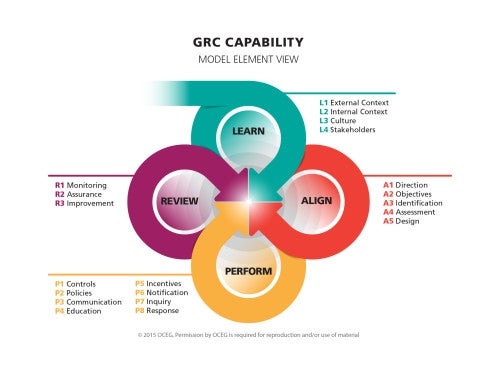
Governance, risk, and compliance, often called GRC, is a blanket term that describes the strategies and technologies used to manage an organization’s compliance with regulatory mandates and corporate governance standards. The concept of GRC can be traced back to 2003, but the topic was first extensively discussed in a peer-reviewed paper by Scott L. Mitchell, published in the International Journal of Disclosure and Governance in 2007. This guide discusses what GRC is and what it can mean for you and your business. StandardFusion Employees per Company Size Micro (0-49), Small (50-249), Medium (250-999), Large (1,000-4,999), Enterprise (5,000+) Small (50-249 Employees), Medium (250-999 Employees), Large (1,000-4,999 Employees), Enterprise (5,000+ Employees) Small, Medium, Large, Enterprise Features Access Controls/Permissions, Activity Dashboard, Activity Monitoring, and more ManageEngine ADAudit Plus Employees per Company Size Micro (0-49), Small (50-249), Medium (250-999), Large (1,000-4,999), Enterprise (5,000+) Any Company Size Any Company Size Features Account Lockout Analysis, Active Directory Change Auditing, Active Directory Monitoring, and more What is GRC? GRC is an organization’s overall strategy in tackling its three interrelated aspects. To better understand GRC, it’s best to look into each individual component. Governance The framework of rules, processes, and practices by which an organization is directed and managed. In essence, this comprises how an organization attempts to meet its goals and business objectives. Risk or risk management The potential for loss or damage to an organization’s reputation, finances, employees, customers, or other stakeholders. In particular, the main focus of risk in GRC is risk management, i.e,., identifying and subsequently minimizing risks encountered by the organization. Compliance The state of conforming to laws, regulations, and standards required by relevant bodies or government agencies. This can vary depending on the industry or sector and ensures that organizations meet a minimum standard of operations. What drives GRC? There is no question that regulation is the current biggest driver of GRC. Industries such as healthcare, financial services, and technology companies have borne the brunt of regulatory measures. Amazon’s massive GDPR fine of $877 million has been fresh on our minds since it was announced in its 2021 Q2 earnings report filed with the SEC. More recently, Meta Platforms Ireland was fined €1.2 billion in 2023 by the Irish Data Protection Authority for violating data privacy laws with its popular social media platform, Facebook. In particular, Meta failed to adhere to the EU’s GDPR for its unauthorized transfer of Facebook user data from the EU to the US servers. But another important driver of GRC is corporate governance. Investors are increasingly interested in how companies are managed and what kind of risks they are exposed to. Moreover, employees, customers, and other stakeholders expect organizations to be transparent about their operations and have robust mechanisms to prevent misconduct. Operational risks associated with the day-to-day operations of an organization also drive GRC. These include risks related to information security, supply chain management, and employee safety. Why is GRC important? GRC is important because it helps organizations protect their reputations, finances, customers, and employees while ensuring compliance with relevant laws and regulations. Moreover, GRC can also help organizations improve their operational efficiency and reduce costs. By implementing a GRC program, organizations can avoid costly fines, penalties, and litigation expenses associated with non-compliance. In addition, a well-run GRC program can help organizations spot potential problems before they occur, saving them time and money in the long run. SEE: Securing Linux Policy (TechRepublic Premium) What are some GRC tools? In recent years, the corporate emphasis on GRC has given rise to a new breed of GRC software that is helping organizations of all sizes automate and streamline their GRC processes. Here are just a few examples: Compliance management systems These systems help organizations keep track of their compliance obligations by providing them with real-time visibility into their compliance posture. In addition, they typically include workflow capabilities that make it easy for organizations to manage their compliance processes from start to finish. Risk management systems These help organizations identify, assess, and manage operational risks. They typically include features such as risk dashboards and heat maps that give organizations a quick way to see where their biggest risks are located. Policy management systems These systems help organizations develop, implement, and enforce corporate policies and procedures. They typically include features such as policy templates and workflows that make it easy for organizations to create and distribute policies throughout their company. There are also unified platforms that offer a complete suite of GRC capabilities in one place. These platforms are often used by enterprises that need to manage complex GRC programs. If you want a more extensive look into GRC software tools and providers, I encourage you to check out our Best GRC Tools guide. In that feature, we dive into which GRC tools are best for scalability, visibility, risk management, and more. We also discuss which types of businesses can gain the most benefit from using GRC tools. More cloud security coverage How to implement GRC in your organization When it comes to implementing a GRC program, there is no one-size-fits-all solution. The best approach will vary depending on the size, complexity, and needs of your organization. A strong approach to GRC implementation is offered through the GRC Capability Model (Red Book) developed by OCEG. The model has four components: LEARN, ALIGN, PERFORM, and REVIEW. Let’s discuss each key component below. LEARN how GRC relates to your specific business needs The first step is to clearly understand the laws, regulations, standards, culture, stakeholders, and the entire context that applies to your organization. You should also assess your organization’s risk tolerance and establish what kind of risks you are willing to take. This will inform your objectives, strategies, and actions. ALIGN your strategy with greater business objectives The next step is to align your GRC strategy with your organizational objectives and actions. This will help your GRC program to align with the overall goals of your organization PERFORM actions and policies toward desirable results The third step is to take


What Is GRC? Understanding Governance, Risk, and Compliance Read More »

The biggest enterprise technology M&A deals of the year (so far)

Perforce absorbs data virtualization and testing firm Delphix  Perforce, a provider of enterprise developer software, has acquired data virtualization and masking technology provider Delphix for an undisclosed sum. Analysts said that the move is part of Perforce’s attempts to create a more integrated, end-to-end developer platform for DevOps teams, thanks to Delphix’s ability to make testing easier through virtualization and masking out personally identifiable information used by applications.  February 2024  KKR nabs ex-VMware divisions from Broadcom in $4 billion deal Private equity firm KKR acquired Broadcom’s End-User Computing Division (which is made up of former VMware business units) for $4 billion in a deal announced at the end of the month. Flagship products that have been acquired by KKR include desktop and application virtualization solution Horizon, as well as unified endpoint management platform Workspace ONE. FTC continues rearguard action against Microsoft’s $68.7 billion bid for Activision Blizzard  The US Federal Trade Commission is still trying to reverse Microsoft’s acquisition of games developer Activision Blizzard, which Microsoft announced it had closed in October. On Dec. 6, the FTC asked an appeals court in California to overturn a lower court decision allowing the deal to go ahead, and on Feb. 7 wrote to the court protesting that Microsoft had started laying off staff at the newly acquired division on Jan. 25, contradicting statements the company had made to the court.   Activision Blizzard’s apps are not typically authorized on enterprise networks, but when the deal was first announced, it seemed there was a chance its technology for creating and animating virtual worlds could make it into the workplace. Back then, Microsoft said the acquisition would give it the building blocks for the metaverse. However, since then Microsoft has laid off 100 staff in its industrial metaverse unit, essentially closing it down.  January 2024  Accenture nabs Navisite in latest 2024 acquisition  Navisite, the Massachusetts-based digital transformation services provider, was snapped up for an undisclosed price by Accenture as part of the professional services company’s move to help its clients get ready to adopt generative AI. A total of 1,500 workers from Navisite will join Accenture’s infrastructure engineering practice, among them 400 cloud engineers with deep experience across cloud providers and enterprise technologies.  InSemi to become part of Infosys in semiconductor deal  IT services consulting firm Infosys announced plans in early January to buy InSemi, a semiconductor and embedded services design company, for an undisclosed amount. Infosys expects InSemi’s expertise will enable it to provide stronger AI and engineering R&D offerings to its customers, given the centrality of silicon to new technologies including AI, 5G, and quantum computing.  IBM to buy more mainframe expertise from Advanced  IBM is buying mainframe application and data modernization assets from Advanced, a UK company that boasts extensive experience in mainframe strategy. IBM will fold the team into its consulting business. Mainframes are still surprisingly widespread, and many companies — including some of the largest banks in the world — are dependent on them for core transaction processing functions. Terms of the deal were not disclosed.   December 2023  Alteryx agrees to be bought by two investment funds  Analytics cloud platform Alteryx is going private. It has agreed to be acquired by Clearlake Capital and Insight Partners in a deal valued at $4.4 billion. Alteryx CEO Mark Anderson said the deal will provide the company with increased working capital and access to industry expertise to grow. Clearlake already owns stakes in a number of enterprise technology firms, including Kofax, Metricstream, Perforce, and Precisely. Insight’s portfolio includes Augury, Camunda, Docker, and Veeam.  Silver Lake sells parts of Software AG to IBM  IBM has agreed to buy the StreamSets and webMethods integration-platform-as-a-service enterprise technology platforms from Software AG for $2.13 billion. It’s an odd move for Software AG — its CEO recently put the “super iPaaS” at the very heart of his strategy — but great news for shareholder Silver Lake, which bought a majority stake in July in a deal valuing the whole company at $2.4 billion. The sale will leave Software AG with four main product lines: Aris for business process mining; Alfabet for managing IT transformation; Cumulocity for IoT, and Adabas & Natural, its legacy mainframe modernization programming languages. For IBM, the idea appears to be to bolster its value proposition for WatsonX AI, enabling the company to deploy it faster in industries dependent on large-scale multi-cloud and hybrid-cloud environments.  Salesforce buys Spiff to spiff up compensation tracking capabilities  Salesforce has agreed to buy Spiff, a developer of software for tracking sales commissions. It plans to integrate it into its Sales cloud platform to enhance its performance management functionality. The majority of Spiff’s customers use Salesforce as their CRM, and its software is sold through Salesforce’s AppExchange.   ServiceNow expands process mining with Ultimate acquisition  ServiceNow has bought another company — and despite its name, it surely won’t be the last — to expand the process mining capabilities of its Now Platform. UltimateSuite’s task mining software analyses keystrokes and mouse clicks to identify automation opportunities and streamline repetitive work.  Adobe abandons Figma deal after running into regulatory trouble  Adobe has given up on its plan to buy Figma, one of the largest rivals to its online design tool Creative Cloud, after running into resistance from competition regulators. On Aug. 7 the European Commission called in Adobe’s September 2022 agreement to buy Figma for $20 billion for a full investigation, but it was Adobe’s refusal to comply with remedies required by the UK Competition and Markets Authority that finally killed the deal. Figma is more often seen in the art department than the IT department, but with Adobe also a big player in customer data platforms, CIOs will be relieved the company won’t be getting an even bigger hold on their cloud software spend.  Cognizant buys Thirdera to boost its ServiceNow capabilities  IT outsourcer Cognizant has snapped up Thirdera, a ServiceNow partner based in Colorado, and added almost 1,000 employees to its workforce of almost 350,000. Of particular interest was Thirdera’s in-house online training platform, Thirdera University, which Cognizant plans to use to

The biggest enterprise technology M&A deals of the year (so far) Read More »

Prison Phone Co. Tells FCC Rate Cap Rules Cost Too Much

By Nadia Dreid ( February 10, 2025, 5:43 PM EST) — Prison phone company NCIC Correctional Services thinks the Federal Communications Commission messed up by preempting state and local laws to ban “site commissions,” service provider-to-prison payments that critics call kickbacks…. Law360 is on it, so you are, too. A Law360 subscription puts you at the center of fast-moving legal issues, trends and developments so you can act with speed and confidence. Over 200 articles are published daily across more than 60 topics, industries, practice areas and jurisdictions. A Law360 subscription includes features such as Daily newsletters Expert analysis Mobile app Advanced search Judge information Real-time alerts 450K+ searchable archived articles And more! Experience Law360 today with a free 7-day trial. source

Prison Phone Co. Tells FCC Rate Cap Rules Cost Too Much Read More »

Buy Now Pay Later (BNPL) Explained: Benefits, Risks, & How It Works

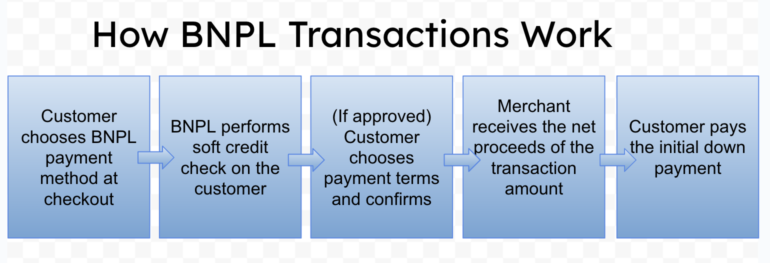
Key takeaways: BNPL is an alternative payment method that offers customers installment options at checkout for their purchases. Many BNPL platforms can integrate with most e-commerce websites. Businesses with a BNPL payment option see an increase in sales but the cost of transaction and returns can significantly cut into your bottom line. Buy now, pay later (BNPL) is one of the most popular payment options in the market. It is easy to set up and seamlessly integrates into any online checkout platform, but is it worth adding to your business? What is BNPL? Buy now, pay later is a type of short-term consumer loan that allows customers to pay for their purchases in installments. It works by integrating a BNPL platform into the merchant’s checkout methods. When customers use this payment option, the business receives the entire purchase price upfront minus a considerably higher transaction fee compared to card payments. Who should use BNPL? While accessible to all business sizes, BNPL is the most useful to businesses looking to encourage higher average order value. This can be in the form of selling: Big ticket items, or A combination of low-value items to form big checkout baskets Not only do large-value sales make more sense to put through installment payments, but they can also effectively cover the cost of transactions, making them more sustainable for the business. BNPL vs traditional loans For customers, BNPL loans are short-term, often zero-interest loans. While traditional loans (or traditional consumer financing) can either be short- or long-term, they always come with an interest rate. Additionally, the loanable amount for BNPL is pre-approved based on a soft credit check that does not affect a customer’s credit score; traditional loans require an application and approval process. BNPL Traditional Loans Short-term installments Either short- or long-term installments Usually zero interest rates Interest rates on all transactions Customer deals with the BNPL provider Customer deals with the bank Customer’s loan is based on a transaction purchase Customer’s loan is based on an approved amount Both BNPL and traditional loans are bank-supported. However, with BNPL, the customer deals with the BNPL provider (which in turn works with the bank) while with traditional consumer loans, the customer deals directly with the bank. Traditional loans can either be in the form of a credit card or a personal loan. Also see: Debits vs credits: What’s the difference? How does BNPL work? BNPL works like any other payment method on an ecommerce website: Image: How BNPL Transaction Work The customer goes to the checkout page and opts for BNPL as a payment option. The BNPL provider conducts a soft credit check (evaluates basic personal information and credit history summary) on the customer. If approved, the customer will be prompted to choose a payment term and click on a “buy now” button to confirm the transaction. The payment processor sends the proceeds of the transaction amount to the merchant minus the transaction fee. The customer pays for the initial downpayment upfront and the BNPL provider collects the installments. How to add BNPL to your payment methods There are two major ways to add BNPL as an alternative payment method: Use a payment processor with a native BNPL feature: Popular payment providers, such as PayPal and Square, provide their own BNPL program. All you need to do is update your payment methods in the payment settings to sign up for BNPL. Integrate a third-party BNPL software: Other payment processors have partnerships with third-party BNPL providers. To add this feature, you will need to choose a BNPL platform from your processor’s list of integrations. Follow the prompts that will let you create a BNPL option and link your merchant account. Don’t forget to start a test transaction to make sure that the setup is successful. You should be able to see the BNPL provider’s brand under the list of payment methods at checkout. Pro tip: Aside from those mentioned above, you can support additional installment payment options by working with certain banks and digital wallets that provide their own BNPL programs. These usually come with a mobile banking app that can be used for both online and in-person transactions. Cost of BNPL transactions For merchants, the average range of processing rates for BNPL transactions is between 3% and 8%. Most BNPL providers do not charge a monthly fee for using the service but those that do may cost up to $75 a month. For customers, short-term BNPL transactions are usually interest-free. However, most providers now offer longer payment terms (from 6 months and up) that carry interest rates ranging between 4% and 36%. Late fees start at $7. Note: Any successful chargeback claim on BNPL transactions is shouldered by the BNPL provider, not the merchant. Also see: 5 Online payment methods for small business BNPL pros and cons for small business BNPL pros BNPL cons Attract more customers Expensive transaction fees Increase average order value Increased purchase returns Full upfront payment Potential for more regulations around BNPL Free from risk of chargebacks and default repayments In general, adding BNPL provides businesses with more benefits than disadvantages. For one, BNPL is a great marketing angle to attract more customers. The installment payment plan also encourages customers to make larger purchases, thereby increasing the average order value. BNPL also helps businesses keep a healthy cash flow because it receives the full amount of the customer’s purchase upfront. It also helps maintain a healthy chargeback ratio since the BNPL provider assumes the risk of chargebacks. The major downside of using BNPL for merchants is exorbitant transaction fees. This is primarily because the provider assumes most of the risk, such as chargebacks and default payments, associated with financing. That said, the installment plan can encourage a “try before you buy” behavior from consumers that can potentially increase product returns. And as the market continually grows, more regulations will likely be enacted in the future to protect customers from widely varied payment terms and expensive interest rates—something that may impact

Buy Now Pay Later (BNPL) Explained: Benefits, Risks, & How It Works Read More »

Ga. Tech Case Shows DOJ Focus On Higher Ed Cybersecurity

By Beth Waller and Justin Lugar ( February 7, 2025, 6:10 PM EST) — When the U.S. Department of Justice intervened in a case involving the Georgia Institute of Technology in August, the agency provided a playbook for whistleblowers and prosecutors to bring cases under Title IV of the Higher Education Act…. Law360 is on it, so you are, too. A Law360 subscription puts you at the center of fast-moving legal issues, trends and developments so you can act with speed and confidence. Over 200 articles are published daily across more than 60 topics, industries, practice areas and jurisdictions. A Law360 subscription includes features such as Daily newsletters Expert analysis Mobile app Advanced search Judge information Real-time alerts 450K+ searchable archived articles And more! Experience Law360 today with a free 7-day trial. source

Ga. Tech Case Shows DOJ Focus On Higher Ed Cybersecurity Read More »

Top 10 Banks That Integrate Seamlessly with QuickBooks in 2025

Finding a bank that seamlessly integrates with QuickBooks is crucial for small business owners, as it streamlines bookkeeping by reducing manual data entry and errors. Many banks and financial technology (fintech) companies offer this integration, so it’s important to explore their additional features. Here, I’ve reviewed the 10 best banks that integrate with QuickBooks. Best overall bank that integrates with QuickBooks: Chase Member FDIC Best for small businesses with low transactions: U.S. Bank Member FDIC Best for earning high interest: Bluevine Bluevine is a financial technology company, not a bank.Bluevine deposits are FDIC-insured through Coastal Community Bank, Member FDIC. Best for large-scale startups needing more FDIC insurance Mercury is a fintech company, not an FDIC-insured bank. Deposits in checking and savings accounts are held by our banking services partners, Choice Financial Group and Evolve Bank & Trust ®; Members FDIC. Deposit insurance covers the failure of an insured bank. Certain conditions must be satisfied for pass-through insurance to apply. : Mercury Mercury is a fintech company, not an FDIC-insured bank. Banking services provided by Choice Financial Group and Evolve Bank & Trust ®️; Members FDIC. Deposit insurance covers the failure of an insured bank. Best for quick payments through Novo Boost: Novo Novo is a fintech company; not a bank. Deposit account services provided by Middlesex Federal Savings, F.A., Member FDIC. Best high-yield bundled business accounts and free payment software: Grasshopper Bank Member FDIC Best for self-employed professionals: Found Found is a financial technology company, not a bank. Banking services are provided by Piermont Bank, Member FDIC. The Found Mastercard debit card is issued by Piermont Bank pursuant to a license from Mastercard Inc. Best for teams needing more accounts and debit cards: Relay Relay is a fintech company; not a bank. Deposit account services provided by Thread Bank, Member FDIC. Best for expanded FDIC coverage and unlimited ATM fee refunds: Axos Bank Member FDIC Best high-APY savings and SBA financing: Live Oak Bank Member FDIC Best banks that integrate with QuickBooks quick comparison Below, I summed up the top features I considered for the 10 financial providers. Here is our list of banks that integrate with QuickBooks Online. Chase: Best overall bank that integrates with QuickBooks Our rating: 4.31 out of 5 Image: Chase Chase is my top pick for the best banks that integrate with QuickBooks. This full-service bank automatically transfers credit card payment data and bank transactions from your business account to your QuickBooks Online accounts daily. This includes card sales, refunds, fees, chargebacks, income, and expenses, making it easy to reconcile your bank accounts. Chase offers three business checking accounts with waivable fees, in-person banking in multiple states, and efficient tools and services. Why I chose it I chose Chase as my overall best bank for QuickBooks integration because it offers a full suite of business banking products and services and has a nationwide branch presence. The lowest-tier Chase Business Complete Checking® account provides 20 paper transactions, unlimited electronic transactions, and a monthly cash deposit allowance of $5,000. You’ll also get a bonus of up to $500 when you open a new Business Complete Checking® account and meet the qualifying activities. The offer is valid until April 17, 2025. Monthly fees Chase Business Complete Banking: $15; waivable by having any of these: $2,000 average daily balance. $2,000 Chase Ink Business Cards spend. $2,000 in deposits from Chase QuickAccept or other eligible Chase Payment Solutions transactions. Linked Chase Private Client CheckingSM, JPMorgan Classic Checking, or Private Client Checking Plus account. Meet Chase Military Banking requirements. Chase Performance Business Checking: $30; waivable by meeting a $35,000 or greater combined average daily balance (ADB) in qualifying business deposit accounts. Chase Platinum Business Checking: $95; waivable by meeting a $100,000 combined ADB across qualifying business deposit and investment accounts. The required ADB is $50,000 for a linked Private Client CheckingSM, JPMorgan Classic Checking, or Private Client Checking Plus account. Features Free associate and employee debit cards upon request. Digital banking and branch locations in 48 states. Chase Bank QuickBooks integration. Built-in card acceptance through its mobile app. Fraud protection services. Payment and invoicing services via Chase Payment Solutions. Online and branch customer support. Welcome bonus for eligible new accounts. Pros and cons Pros Cons $5,000 free cash deposits monthly for entry-level accounts. Unlimited electronic transactions. Up to $500 cashback bonus for new accounts (conditions apply). No required opening deposit and minimum balance. No interest earnings. Only 20 fee-free paper transactions. $3 ATM fee when using nonnetwork (waived for higher-tier accounts). High balances to waive the monthly fees for premium checking accounts. U.S. Bank: Best for small businesses with low transactions Our rating: 4.30 out of 5 Image: U.S. Bank U.S. Bank is a traditional bank that lets you take control of your financial data by allowing you to link your bank account with QuickBooks Online to oversee both your bank and credit card transactions. You can start by setting up your QuickBooks Online account. The bank offers three business checking options, a specialized nonprofit account, and several cash management and payment processing services. Why I chose it I recommend U.S. Bank’s starter account, Silver Business Checking, to small business owners who are just starting out, as it does not charge a monthly fee. Plus, you get 125 free monthly transactions and can deposit up to $2,500 monthly with no charges. Read our U.S. Bank business checking review to learn more about its fees and key features. In addition, you can earn a bonus of up to $900 when you open a new, eligible U.S. Bank business checking account (promo code: Q1AFL25) and complete qualifying activities, subject to certain terms and limitations—offer valid through March 31, 2025. Member FDIC. Monthly fees Silver Business Checking: $0. Gold Business Checking: $20; waivable by having any of these: A U.S. Bank Payment Solutions Merchant account. $10,000 average collected balance. $20,000 combined average collected business deposit balances. $50,000 combined average collected business deposits and outstanding credit balances. Platinum Business Checking: $30; waivable by having

Top 10 Banks That Integrate Seamlessly with QuickBooks in 2025 Read More »

Cognida.ai raises $15M to fix enterprise AI’s biggest bottleneck: deployment

Join our daily and weekly newsletters for the latest updates and exclusive content on industry-leading AI coverage. Learn More Cognida.ai, a Chicago-based AI company, has raised $15 million in Series A funding to help enterprises move beyond AI pilots to production-grade solutions that deliver measurable business impact. The funding round was led by Nexus Venture Partners. The investment comes at a critical time when enterprises are struggling to transform AI experiments into operational solutions. While 87% of enterprises are investing in AI, only 20% successfully deploy solutions into production, according to Cognida. “Enterprise AI adoption has reached its tipping point,” Feroze Mohammed, founder and CEO of Cognida, said in an exclusive interview with VentureBeat. “The biggest challenges enterprises face isn’t just building AI models — it’s getting them to work in production.” How Zunō platform cuts AI implementation time from 8 months to 12 weeks Mohammed, who previously led Hitachi Vantara as COO, identified three major barriers to enterprise AI adoption: data readiness, integration challenges with existing business processes and lack of AI expertise within organizations. To address these challenges, Cognida has developed Zunō, a platform that includes accelerators for predictive modeling, intelligent document processing and advanced graph-based solutions. The company claims its approach reduces typical AI implementation times from 6 to 8 months to 10 to 12 weeks. “Most conventional approaches require long lead times of doing consulting projects, doing a lot of change management with long timelines and long upfront investments,” Anup Gupta, managing director at Nexus Venture Partners, said in an interview with VentureBeat. “Cognida is one of the first times we have come across a business that can talk about demonstrable use cases across various industries.” The company has already deployed solutions at more than 30 enterprises. In one case, Cognida helped a major garage door manufacturer transform its catalog generation process from a six-month cycle to just weeks using generative AI. The solution allows the manufacturer to create virtual door designs and render them in different settings, enabling rapid testing with dealers. Other successful implementations include a 70% improvement in invoice processing speed and a one percent reduction in customer churn for SaaS clients — metrics that translate to significant revenue impact for large enterprises. The future of enterprise software: Every stack is being rewritten with AI The funding will support three primary initiatives: market expansion, intellectual property development and capability building. Mohammed envisions Cognida becoming “the practical AI company for the enterprise” within five years. “Every software stack is being rewritten leveraging AI,” said Gupta. “In the next few years, every workflow in all enterprises will have a lot more AI than is being used today.” This investment reflects a broader trend in enterprise AI, where focus is shifting from experimental projects to practical implementations that deliver clear return on investment. As businesses seek to operationalize AI while maintaining existing systems, Cognida’s approach of building solutions that integrate with current workflows appears particularly timely. The company plans to expand its AI solution library, advance its Zunō platform and grow its implementation teams to meet increasing enterprise demand. With offices in Chicago, Silicon Valley and Hyderabad, India, Cognida serves clients across manufacturing, healthcare, finance and technology sectors. Industry analysts suggest this funding round could signal a new phase in enterprise AI adoption, where practical implementation and measurable outcomes take precedence over experimental pilots. As organizations continue to grapple with AI integration challenges, solutions that can demonstrate concrete business impact while working within existing systems may find increasing traction in the market. source

Cognida.ai raises $15M to fix enterprise AI’s biggest bottleneck: deployment Read More »

Workday aims to manage AI agents like employees

At its Workday Rising event in September, the company rolled out Illuminate, its next-gen agentic AI platform, along with four AI agents: Recruiter, Expenses, Succession, and Optimize. Recruiter is for sourcing candidates, recommending talent, and automating outreach and interview scheduling. Expenses creates, submits, and approves expense reports. Succession automates the succession planning process, prompting managers to create succession plans. It also recommends successors, and generates personalized development plans. Optimize identifies bottlenecks, inefficiencies and deviations from the company’s best practices. Role with it Workday has adopted an agentic AI strategy around what it dubs role-based AI agents. Most AI agents in the market today are task-based and follow specific step-by-step instructions. Workday CEO Carl Eschenbach believes task-based agents must evolve into role-based agents, which contain a configurable set of skills that give them more autonomy and the ability to better support humans in particular roles. “The future of agents is when they become role-based,” he said in the same press conference. “These role-based agents will maybe start out with a skill, but over time they will have many skills. This is how we will truly unlock the power of AI.” source

Workday aims to manage AI agents like employees Read More »