BREAKING: Mass. Judge Temporarily Blocks NIH Funding Cuts

By Carolyn Muyskens ( February 10, 2025, 4:11 PM EST) — A Massachusetts federal judge issued a temporary hold Monday on a Trump administration plan to slash grant funding provided by the National Institutes of Health after 22 states sued to block the cuts…. Law360 is on it, so you are, too. A Law360 subscription puts you at the center of fast-moving legal issues, trends and developments so you can act with speed and confidence. Over 200 articles are published daily across more than 60 topics, industries, practice areas and jurisdictions. A Law360 subscription includes features such as Daily newsletters Expert analysis Mobile app Advanced search Judge information Real-time alerts 450K+ searchable archived articles And more! Experience Law360 today with a free 7-day trial. source

BREAKING: Mass. Judge Temporarily Blocks NIH Funding Cuts Read More »

SEO Must Solve Its Marketing Problem

Marketers spend hundreds of millions of dollars a year on paid search but only hundreds of thousands on SEO. Marketers know SEO isn’t thousands of times less valuable, but it can feel thousands of times harder to realize its value. In the words of one Redditor: “SEO is incredibly time consuming, often involves multiple people, involves difficult and in-depth technical skills, and even when done perfectly, you may not see tangible results for three to six months … Meanwhile you can do [paid search] and wham bam thank you ma’am, you can get many results in a short timeframe, [and it] only needs one person to get up and running. And you can prove 100% attribution to the marketing team.” This sentiment is shared by countless marketers. It reflects SEO’s marketing problem. SEO’s greatest challenges (and opportunities) come from: Necessary cross-functional collaboration. The SEO process depends on in-house and/or agency content marketers, web developers, UX pros, performance marketers, and more working in sync to implement content and technical fixes that lack immediately apparent ROI. Many SEO tasks, including enhancing site speed, implementing data markup, analyzing log files, removing duplicate content, and regularly updating content, are tedious and don’t pay off right away. Therefore, they’re deprioritized. In the process, SEO reveals cultural disconnects between siloes. Search engines’ evolution. Search engines ranging from Google to Bing, Perplexity, and ChatGPT are increasingly conversational, assistive, and agentic. Instead of keywords and ranked links judged by users, search engines exercise agency and infer unasked questions. They anticipate intent, interpret natural language, and guide users on complex, click-free journeys. As a result, metrics like organic traffic, click-through rate, average position, and ranking, on which SEO practitioners are typically goaled, become obsolete. SEO Remains An Influential And Cost-Effective Channel Despite its challenges, SEO is critically important. Practically every buyer’s journey is influenced, blatantly or subtly, by organic search. Making a brand increasingly visible across ChatGPT and Perplexity is still SEO, but it demands new skills and tools. The market for SEO solutions is growing to meet marketers’ evolving needs. SEO solutions resolve marketers’ problems with the channel by reducing SEO’s effort. They accelerate and simplify the SEO process and derisk cross-functional collaboration. They also help practitioners adapt to the rise of generative AI (genAI) and diversification of search beyond Google. Our new Landscape report on SEO solutions clarifies the SEO market’s maturity, dynamics, notable vendors, top use cases, functionalities, and future. It features end-to-end platforms, point solutions, and agency tools. Some specialize in creating and auditing brands’ content while others focus on making brands’ sites increasingly intelligible to search engines. All try to keep pace with genAI and prove SEO’s value. Stay tuned for our Forrester Wave™ on SEO solutions, which will publish in Q3 2025. As always, contact us to learn more. source

SEO Must Solve Its Marketing Problem Read More »

BPTN’s Obsidi connects recruiters with Black IT talent

That’s why it’s so important to be intentional with your hiring practices. Otherwise, when it comes to hiring, mentorship, promotions, and succession planning, people are more likely to “bet on potential” if it’s someone they “have something in common with,” Douglas says.  “Unless you’re going to make a conscious effort to — what I like to say — ‘vibe outside your tribe,’ and go and connect with people that you typically wouldn’t necessarily be associated with, you’re going to keep [hiring and promoting] more and more of the same,” he says. Douglas gives the example of a hiring manager who works down the hall from someone more junior, but their sons play on the same hockey team. In this instance, the two colleagues have something in common, and that hiring manager is going to see themselves in that employee. However, if it was an employee who had a child playing another sport, something from another culture or part of the world, it’s not as effortless to “assimilate and have a conversation outside of work.” source

BPTN’s Obsidi connects recruiters with Black IT talent Read More »

Wash. Health Privacy Law Debuts In Amazon Tracking Suit

By Allison Grande ( February 11, 2025, 11:39 PM EST) — A Washington resident has launched the first claims under the state’s groundbreaking health privacy law, as part of a proposed class action accusing Amazon of unlawfully harvesting location data from tens of millions of mobile phone users through third-party apps that are running the company’s software development kit. … Law360 is on it, so you are, too. A Law360 subscription puts you at the center of fast-moving legal issues, trends and developments so you can act with speed and confidence. Over 200 articles are published daily across more than 60 topics, industries, practice areas and jurisdictions. A Law360 subscription includes features such as Daily newsletters Expert analysis Mobile app Advanced search Judge information Real-time alerts 450K+ searchable archived articles And more! Experience Law360 today with a free 7-day trial. source

Wash. Health Privacy Law Debuts In Amazon Tracking Suit Read More »

A Developer At An I&O Vendor Conference

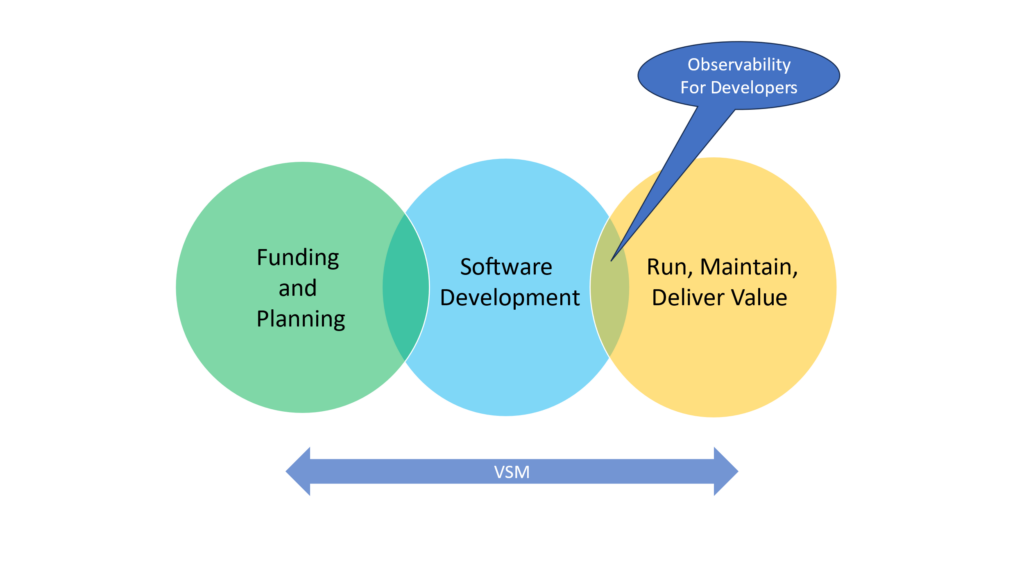
Dynatrace Perform, the annual event to highlight all things Dynatrace, was held at the ARIA in Las Vegas from February 3–5. I was there to get a look at the company’s new offering directed at developers: Observability for Developers. Dynatrace is well known for its artificial intelligence for IT operations (AIOps) products that help infrastructure and operations (I&O) engineers spot, diagnose, and mitigate issues before they turn into outages. Observability for Developers is analogous to this but directed at software engineers. Here’s a few of the interesting capabilities: Davis AI. Davis AI is a generative AI interface to help developers analyze logs, traces, events, and metrics using a conversational interface. It makes it a lot easier for developers to monitor health and analyze end user interactions. Live debugging. Live debugging of cloud-native apps and AI-powered troubleshooting enables developers to get access to runtime data in any environment, including production. Data can be masked and access-managed within Dynatrace to prevent sensitive data from being improperly accessed. Using “snapshots” lets developers see how data is flowing through the code paths to help them debug the “only happens in production” issues. Self-service capabilities. Dynatrace offers a capability to enable a self-service portal to developers for accessing data from production such as log traces, performance benchmarks, access to live debugging, and so forth. This enables the ops side of DevOps to level up their practices and serve developers at scale. What I’d Like To See Dynatrace has a set of capabilities, such as dashboards and customer impact metrics, that are meant for high-level leadership — e.g., CTOs and CIOs. This allows them to monitor progress toward high-level business goals. I’d like to see a version of this scaled to each level of the organization, all the way down to the individual product team members — product managers, dev leads, developers, designers, testers, security champs, etc. — to allow them to monitor their own business performance metrics. If you know my coverage of value stream management, you might have a sense of where this is going: Observability for Developers has the power to not only help developers diagnose apps, but it can help monitor and communicate the unique value that they are creating with their efforts, such as reducing cloud spend by optimizing an algorithm, speeding up transactions with less latency, and reducing the number of random errors in production — in other words, going beyond DORA and talking about the metrics that really matter. Here’s how I see Observability for Developers fitting into the world of value stream management:   What It Means Powerful application runtime diagnostic tools such as distributed tracing, performance analytics, metrics dashboards, data masking, and more have existed for some time, but they were primarily meant for high-end, “born in the cloud” organizations that had the talent, resources, and drive to create those capabilities for themselves. Observability for Developers democratizes access to these powerful capabilities and lets every organization gain access to top-tiered diagnostic features. But it can be more: It can also be a powerful tool to help everyone in the organization see how they fit into the overall value delivery chain, prioritize work that matters, and ultimately be happier knowing how much they contribute to the bottom line. source

A Developer At An I&O Vendor Conference Read More »

Bluevine Business Checking Review: Features, Fees, and Benefits

Bluevine is a digital banking solution designed for small business owners, freelancers, and entrepreneurs seeking straightforward, high-yield checking options with minimal fees. Known for its competitive 1.5% annual percentage yield (APY) on balances up to $250,000, Bluevine provides a cost-effective banking solution that merges business checking with savings-like returns. Let’s break down Bluevine’s core features and pricing and see how it compares to similar business banking options. Keep reading for more on how Bluevine can help you! Bluevine’s fast facts My rating: 4.7 out of 5Starting price: Free business checking with zero monthly fees or minimum balance requiredKey features: High-yield APY on qualifying balances Free incoming domestic wires and ACH transfers Free in-network ATM transactions No monthly fees or overdraft charges Unlimited transactions Free debit card access About Bluevine Image: Bluevine Bluevine has become a popular choice among small businesses looking to open a bank account tailored towards online banking options that provide value without the hassle of traditional bank fees. With a strong emphasis on low costs, convenience, and yield, Bluevine’s business checking account is aimed at companies that don’t need cash deposits or branch access. Below, I explore its standout features, customer feedback, and overall value for business banking. Bluevine reviews: User opinions and ratings 4.67/5 Bluevine users appreciate its no-fee structure, 1.5% APY on balances, and ease of use for managing business expenses. Customers frequently mention the benefits of having a digital-first bank that prioritizes yield, especially when business savings can grow passively without additional transfers to a separate savings account. While many users value the simplicity of an online-only banking solution, a few express concerns about Bluevine’s limited cash deposit options, as Bluevine only supports cash deposits through Green Dot locations. For businesses operating online or with minimal cash transactions, however, Bluevine’s digital banking approach fits well. NerdWallet: 4.7 out of 5 stars Trustpilot: 4.6 out of 5 stars G2: 4.7 out of 5 stars Bluevine has earned high praise for its mobile and desktop platforms, which provide an intuitive experience for users to track transactions and balances. Businesses focused on digital transactions and ACH transfers find Bluevine an especially valuable solution. Bluevine’s pricing structure Bluevine’s business checking account structure emphasizes cost savings, making it a strong choice for small businesses on a budget. No monthly fees: Zero monthly maintenance or minimum balance fees Unlimited transactions: No transaction limits, which is ideal for businesses with high transaction volumes High-yield APY: Qualifying accounts can earn up to 1.5% APY on balances up to $250,000 No overdraft fees: Users can avoid accidental charges with Bluevine’s fee-free overdraft policy Key features of Bluevine Business Checking 4.7/5 Bluevine Business Checking offers multiple benefits that cater to the needs of entrepreneurs and small business owners, including high APY, unlimited transactions, and integration options. All of the previous features are valuable considerations when choosing the right bank for your business. Here’s an overview of Bluevine’s main features: High-yield APY on balancesBluevine offers up to 1.5% APY on qualifying balances up to $250,000, one of the most competitive interest rates available in business checking accounts. To be eligible for the APY, users must either spend $500 per month with the Bluevine Business Debit Mastercard or receive $2,500 in customer payments through ACH, wire transfer, or third-party services. No monthly maintenance feesBluevine has no monthly maintenance or minimum balance requirements, making it easy for small businesses to keep costs low. This fee-free structure helps entrepreneurs focus on growth without worrying about account fees cutting into their budgets. Unlimited transactionsBluevine does not limit the number of monthly transactions, making it especially valuable for businesses with high transaction volumes. Unlike some accounts that charge per transaction, Bluevine allows unlimited transfers, deposits, and withdrawals. Digital-first bankingBluevine’s platform is entirely digital, allowing users to manage their accounts via an intuitive online interface or mobile app. For business owners accustomed to handling their finances digitally, Bluevine’s online experience provides an efficient and user-friendly alternative to traditional banking. Integration capabilitiesBluevine integrates with popular accounting software, including QuickBooks and Xero, enabling seamless bookkeeping and simplifying tax preparation. This integration can save time and reduce the need for manual entry, giving users a clear view of their finances. Would our expert use Bluevine Business Checking? 5.00/5 Bluevine Business Checking is a highly appealing choice for tech-savvy businesses seeking a low-cost, high-yield banking solution. With no fees, a high APY, and excellent integration capabilities, Bluevine is best suited for small businesses, freelancers, and startups that prioritize digital transactions and account flexibility. However, businesses that require frequent cash deposits may find Bluevine’s limitations in this area challenging. Bluevine is an excellent choice for small businesses prioritizing low fees, digital banking, and account yield. However, companies needing traditional banking features like branch access or cash handling may prefer other options. More Banking Coverage Bluevine Business Checking pros No monthly fees or hidden charges High 1.5% APY on balances up to $250,000 Unlimited transactions without fees Digital-first platform with a seamless mobile app experience Integrates with QuickBooks and Xero Bluevine Business Checking cons Limited cash deposit options, available only through Green Dot locations No branch access or physical banking services Does not offer business loans or credit products Bluevine provides flexibility and simplicity, helping entrepreneurs of all kinds access financial management tools without the need for a complex or costly banking setup. Factors to consider when choosing Bluevine Bluevine’s straightforward business checking option fits many entrepreneurs, but businesses should consider these points before opening an account: Cash deposits: Bluevine’s cash deposits are only available through Green Dot locations, with a fee charged per deposit. Interest yield requirements: To access Bluevine’s high APY, users must meet specific transaction or deposit criteria, which may not suit businesses with lower monthly transaction volumes. Digital-only platform: Bluevine’s services are entirely online, so businesses that require in-person assistance may find it lacking. Alternatives to Bluevine Business Checking If Bluevine Business Checking doesn’t meet all of your needs, consider these alternatives: Novo Business Checking Chase Business Checking Mercury Business Checking Starting

Bluevine Business Checking Review: Features, Fees, and Benefits Read More »

Inside Monday’s AI pivot: Building digital workforces through modular AI

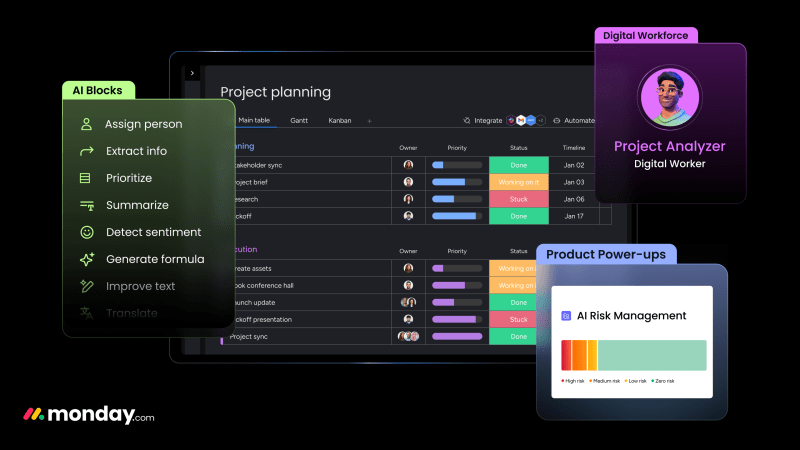
Join our daily and weekly newsletters for the latest updates and exclusive content on industry-leading AI coverage. Learn More The Monday.com work platform has been steadily growing over the past decade, in a quest to achieve its goal of helping empower teams at organizations small and large to be more efficient and productive. According to co-founder Roy Mann, AI has been a part of the company for much of its history. The initial use cases supported its own performance marketing. (Who among us has not seen a Monday advertisement somewhere over the last 10 years?) A large part of that effort has benefited from AI and machine learning (ML). With the advent and popularity of generative AI in the last three years, particularly since the debut of ChatGPT, Monday — much like every other enterprise on the planet — began to consider and integrate the technology. The initial deployment of gen AI at Monday didn’t quite generate the return on investment users wanted, however. That realization led to a bit of a rethink and pivot as the company looked to give its users AI-powered tools that actually help to improve enterprise workflows. That pivot has now manifested itself with the company’s “AI blocks” technology and the preview of its agentic AI technology that it calls “digital workforce.” Monday’s AI journey, for the most part, is all about realizing the company’s founding vision. “We wanted to do two things, one is give people the power we had as developers,” Mann told VentureBeat in an exclusive interview. “So they can build whatever they want, and they feel the power that we feel, and the other end is to build something they really love.” Any type of vendor, particularly an enterprise software vendor, is always trying to improve and help its users. Monday’s AI adoption fits securely into that pattern. The company’s public AI strategy has evolved through several distinct phases: AI assistant: Initial platform-wide integration; AI blocks: Modular AI capabilities for workflow customization; Digital workforce: Agentic AI. Much like many other vendors, the first public foray into gen AI involved an assistant technology. The basic idea with any AI assistant is that it provides a natural language interface for queries. Mann explained that the Monday AI assistant was initially part of the company’s formula builder, giving non-technical users the confidence and ability to build things they couldn’t before. While the service is useful, there is still much more that organizations need and want to do. Or Fridman, AI product group lead at Monday, explained that the main lesson learned from deploying the AI assistant is that customers want AI to be integrated into their workflows. That’s what led the company to develop AI blocks. Building the foundation for enterprise workflows with AI blocks Monday realized the limitations of the AI assistant approach and what users really wanted.  Simply put, AI functionality needs to be in the right context for users — directly in a column, component or service automation.  AI blocks are pre-built AI functions that Monday has made accessible and integrated directly into its workflow and automation tools. For example, in project management, the AI can provide risk mapping and predictability analysis, helping users better manage their projects. This allows them to focus on higher-level tasks and decision-making, while the AI handles the more repetitive or data-intensive work. This approach has particular significance for the platform’s user base, 70% of which consists of non-technical companies. The modular nature allows businesses to implement AI capabilities without requiring deep technical expertise or major workflow disruptions. Monday is taking a model agnostic approach to integrating AI An early approach taken by many vendors on their AI journeys was to use a single vendor large language model (LLM). From there, they could build a wrapper around it or fine tune for a specific use case. Mann explained that Monday is taking a very agnostic approach. In his view, models are increasingly becoming a commodity. The company builds products and solutions on top of available models, rather than creating its own proprietary models. Looking a bit deeper, Assaf Elovic, Monday’s AI director, noted that the company uses a variety of AI models. That includes OpenAI models such as GPT-4o via Azure, and others through Amazon Bedrock, ensuring flexibility and strong performance. Elovic noted that the company’s usage follows the same data residency standards as all Monday features. That includes multi-region support and encryption, to ensure the privacy and security of customer data. Agentic AI and the path to the digital workforce The latest step in Monday’s AI journey is in the same direction as the rest of the industry — the adoption of agentic AI. The promise of agentic AI is more autonomous operations that can enable an entire workflow. Some organizations build agentic AI on top of frameworks such as LangChain or Crew AI. But that’s not the specific direction that Monday is taking with its digital workforce platform. Elovic explained that Monday’s agentic flow is deeply connected to its own AI blocks infrastructure. The same tools that power its agents are built on AI blocks like sentiment analysis, information extraction and summarization.  Mann noted that digital workforce isn’t so much about using a specific agentic AI tool or framework, but about creating better automation and flow across the integrated components on the Monday platform. Digital workforce agents are tightly integrated into the platform and workflows. This allows the agents to have contextual awareness of the user’s data, processes and existing setups within Monday. The first digital workforce agent is set to become available in March. Mann said it will be called the monday “expert” designed to build solutions for specific users. Users describe their problems and needs to the agent, and the AI will provide them relevant workflows, boards and automations to address those challenges. AI specialization and integration provides differentiation in a commoditized market There is no shortage of competition across the markets that Monday serves. As a workflow platform, it crosses

Inside Monday’s AI pivot: Building digital workforces through modular AI Read More »

How to Lock Apps on iPad

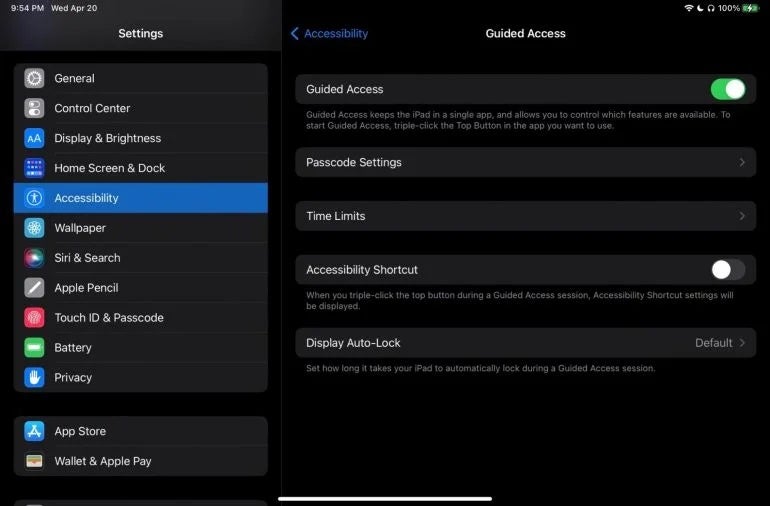
Does your organization utilize iPad apps for kiosk-style purposes, or have you ever needed to hand a device to someone else to use an app or enter information without giving them full access? Apple’s Guided Access accessibility feature is a solution for such scenarios that is built into iOS and iPadOS. Guided Access allows a user to lock a single app on the screen, preventing users from returning to the Home Screen, opening another app, activating Siri, or using the hardware buttons without entering a passcode to exit Guided Access. 2 Wrike Employees per Company Size Micro (0-49), Small (50-249), Medium (250-999), Large (1,000-4,999), Enterprise (5,000+) Medium (250-999 Employees), Large (1,000-4,999 Employees), Enterprise (5,000+ Employees) Medium, Large, Enterprise Features Analytics / Reports, API, Billing / Invoicing, and more 3 Customer.io Employees per Company Size Micro (0-49), Small (50-249), Medium (250-999), Large (1,000-4,999), Enterprise (5,000+) Any Company Size Any Company Size Features Analytics / Reports, API, Email / Drip Marketing, and more SEE: What’s new in iOS 18.2? Setting up Guided Access To enable Guided Access, follow these steps. Open the Settings app. Navigate to Accessibility. Select Guided Access. Enable the switch for Guided Access. You’ll be prompted to enter a passcode when setting up Guided Access. If your device has Touch ID or Face ID, it may be used to deactivate Guided Access instead of the passcode. Image: Cory Bohon/TechRepublic The accessibility shortcut allows you to activate Guided Access by clicking the iPad’s hardware button three times. On devices with a Home button, press it three times. On devices with Face ID, press the side or top button three times. Activating Guided Access Before activating Guided Access, launch the app you’d like to lock to the screen, and then follow these steps: Triple-click the Home button if your device has one, or the side / top button on devices with Face ID. The Guided Access configuration panel will appear. Tap the Options button (bottom left of the screen) to enable or disable the use of top buttons, volume buttons, motion, keyboards, touch or dictionary lookup, or set a time limit for Guided Access. Tap Start to begin. Once activated, the iPad will remain locked to the selected app, preventing access to other features. The configuration view for Guided Access lets you start the feature and configure various options. Image: Cory Bohon/TechRepublic Deactivating Guided Access When you’re ready to disable Guided Access, follow these steps. Press the same button you used to activate it three times. Enter your password or authenticate with Touch ID or Face ID. This will display the Guided Access setup view where you originally activated the feature, except the Cancel button has now become an End button, allowing you to completely end the accessibility feature when tapped. When deactivating Guided Access, you must authenticate with a passcode, Face ID, or Touch ID. Image: Cory Bohon/TechRepublic Must-read Apple coverage How do I restrict apps on my iPad? If you want to restrict apps so children or other users can only access certain features, you will need a different menu from the one where the kiosk mode setting resides. To use parental controls to lock specific media services, go to Settings > Screen Time > Content & Privacy Restrictions > App Store, Media, Web, & Games. How do I put a password on my iOS app? Some developers allow users to add password access within their apps; however, Apple provides an alternative method through Screen Time. Go to Settings > Screen Time > App Limits > Add Limit. Select the category of apps or specific app to limit. Select Next. Screen Time locks an app using a password after a set amount of time, so select the shortest time span (1 minute) or choose a time frame. Finally, select Block At End Of Limit. By knowing how to lock apps on an iPad, you can prevent unauthorized access to sensitive apps and maintain control over device usage. TechnologyAdvice staff writer Megan Crouse updated this article. source

How to Lock Apps on iPad Read More »

Agents, shadow AI and AI factories: Making sense of it all in 2025

Presented by Nvidia The rise of agentic AI Over a decade ago, “perceptive AI” gave us models that could find patterns or anomalies in data and make predictions. But that intelligence was anchored to answers that were already known. Is this a picture of a dog or a cat? Is that a pedestrian crossing the road in front of me? With “generative AI”, we can create new, never before seen content, shaped by our prompting. Instead of being served an answer to a previously answered question, each one of us is creating new text, images, voice and video using all the unstructured data we can throw at these modern AI models. “Agentic AI” promises “digital agents” that learn from us, and can perceive, reason problems out in multiple steps and then make autonomous decisions on our behalf. They can solve multilayered questions that require them to interact with many other agents, formulate answers and take actions. Consider forecasting agents in the supply chain predicting customer needs by engaging customer service agents, and then proactively adjusting warehouse stock by engaging inventory agents. Every knowledge worker will find themselves gaining these superhuman capabilities backed by a team of domain-specific task agent workers helping them tackle large complex jobs with less expended effort. The growing “shadow AI” problem However, the proliferation of generative, and soon agentic AI, presents a growing problem for IT teams. Maybe you’re familiar with “shadow IT,” where individual departments or users procure their own resources, without IT knowing. In today’s world we have “shadow AI,” and it’s hitting businesses on two fronts. Consumer-oriented AI apps are proliferating at a rapid pace, and many enterprise knowledge workers are using them1, feeding them potentially sensitive, intellectual property and customer data, often engaging with services that are not properly guardrailed2. This is creating a huge governance risk for most enterprises. Many developers are also standing up their own IT silos to support their projects. Most of these silos have little if any knowledge of each other’s work, and are ramping up operating expenses as they procure computing for short term projects, which then go underutilized or wasted, along with data silos that impede the flow of vital information between teams. And maybe worst of all, they’re losing the opportunity to learn from each other in terms of sharing expertise and best practices to efficiently deliver AI applications to production. The AI factory — built on Blackwell-powered Nvidia DGX Today’s enterprises create value through insights and answers driven by intelligence, setting them apart from their competitors. Just as past industrial revolutions transformed industries — think about steam, electricity, internet and later computer software — the age of AI heralds a new era where the production of intelligence is the core engine of every business. The ability to create this digitized intelligence on a large scale is driving the demand for a new type of factory. This “AI factory” is the next evolution of enterprise infrastructure. Instead of coal, electricity or software (the fuels of factories past), AI factories manufacture AI models to: Reduce operational costs Analyze vast amount of data and drive innovation Foster scale with agility Enhance enterprise productivity AI factories are now the essential infrastructure on which organizations can have their own AI “center of excellence” — namely a unified platform on which people, process and infrastructure can be consolidated to gain key benefits including: Scaling AI talent, with citizen data science expertise groomed from within instead of hired from outside Standardization of tools and best practices that create an application development flywheel Maximized utilization of accelerated computing infrastructure that is centrally orchestrated To enable the age of large language models (LLMs), agentic AI and what comes next, we’ve created the Nvidia DGX platform to be the engine that powers AI factories. Businesses have begun building their platforms with it, to enable leading-edge applications requiring many different expert models to work in concert with imperceivable latency, solving complex, multi-layered problems. GPU-driven Nvidia DGXTM systems with Intel® Xeon® CPUs integrate Nvidia Blackwell accelerators with a next-generation architecture optimized for the era of agentic AI, while providing fifteen times greater inference throughput with twelve times greater energy efficiency3. This platform includes best-of-breed developer and infrastructure management software that streamlines and accelerates the application development lifecycle from development to deployment, while supporting ongoing model fine-tuning. Real world impact now, not later In an Nvidia analysis of AI factory implementers, we found many derived benefits that can counter the impact of shadow AI, improving time to market, productivity and infrastructure utilization — while enabling support for the rising tide of generative and agentic AI. These organizations shared the following benefits4, as expressed by Nvidia DGX platform customers: 6X increase in infrastructure performance compared with legacy IT infrastructure 20% greater productivity for data scientists and AI practitioners 90% infrastructure utilization Typically, these benefits have been confined to hyperscalers who have decades of experience with operating high-performance infrastructure, along with a deep bench of expertise in running such platforms. The reality is that even the “experts” admit that their own platforms often can’t deliver the efficiencies needed, with many accepting 20-30% as the typical utilization factor4 of their infrastructure. Now every business has the opportunity to have a hyperscale-class platform for their own AI factory, that’s easier to acquire, dramatically more efficient, simpler to manage and delivering benefits to the business now, not later. Learn how to achieve AI-powered insights faster on GPU-driven Nvidia DGX™ systems, powered by Nvidia Tensor Core GPUs and Intel® Xeon® processors. Tony Paikeday is Senior Director of Product Marketing, Artificial Intelligence Systems at Nvidia. 1. “Why IT leaders should seize on shadow AI to modernize governance” Dell Technologies / VentureBeat, Dec 2023 2. ”Generative AI: From Buzz to Business Value”, KPMG, June 2023 3. NVIDIA test comparisons from www.nvidia.com/dgx-b200: 32,768 GPU scale, 4,096x eight-way DGX H100 air-cooled cluster: 400G IB network, 4,096x 8-way DGX B200 air-cooled cluster: 400G IB network. Projected performance subject to change. 4. Chowdery, Aakanksha, et al., “PaLM:


Agents, shadow AI and AI factories: Making sense of it all in 2025 Read More »