Redefining enterprise transformation in the age of intelligent ecosystems

As IT professionals and business decision-makers, we’ve routinely used the term “digital transformation” for well over a decade now to describe a portfolio of enterprise initiatives that somehow magically enable strategic business capabilities. Ultimately, the intent, however, is generally at odds with measurably useful outcomes. Transformation initiatives usually defy gravity in terms of what is practical and realistic for modern enterprises with legacy applications and infrastructure, yet we persist in funding them on a large scale and positioning them as value and outcome-driven   When we consider the implications of fixed infrastructure costs and capex investments, efforts like cloud migration, enterprise data platforms, robotic process automation (RPA), and API-first initiatives presented an almost irresistible opportunity to enable and unlock business capabilities and value. What we consistently overlooked were the direct and indirect consequences of disruption to business continuity, the challenges of acquisitions and divestitures, the demands of integration and interoperability for large enterprises and, most of all, the unimpressive track record for most enterprise transformation efforts. The scorecard speaks for itself. A study by McKinsey found that less than 30% of digital transformation initiatives are successful in achieving their objectives. For large enterprises, the success rate is even lower, with estimates hovering around 16-20% due to the scale and complexity of the initiatives.  The API-first era  In 2012, as a software architect in a global sportswear and apparel enterprise, it became clear to me during the API-first era that transformation was no longer a matter of lofty ambitions that included monolithic service bus implementations, refactoring, reverse engineering or re-engineering in-house applications along with infrastructure modernization. Later, as an enterprise architect in consumer-packaged goods, I could no longer realistically contemplate a world where IT could execute mass application portfolio migrations from data centers to cloud and SaaS-based applications and survive the cost, risk and time-to-market implications. Our commitments to the businesses we supported as architects were perpetually at odds with reality. A tectonic shift was moving us all from monolithic architectures to self-service models and an existential crisis for architecture and IT was upon us.    source

Redefining enterprise transformation in the age of intelligent ecosystems Read More »

Patch Tuesday: Microsoft’s January 2025 Security Update Patches Exploited Elevation of Privilege Attacks

Microsoft’s latest batch of security patches includes an expanded blacklist for certain Windows Kernel Vulnerable Drivers and fixes for several elevations of privilege vulnerabilities. The January 2025 Security Update addressed 159 vulnerabilities. Security patches should be applied to keep software up-to-date. However, early versions of patches may be unreliable and should be cautiously approached and deployed in test environments first. 1 Pipedrive CRM Employees per Company Size Micro (0-49), Small (50-249), Medium (250-999), Large (1,000-4,999), Enterprise (5,000+) Any Company Size Any Company Size Features 24/7 Customer Support, Analytics / Reports, API, and more 2 CrankWheel Employees per Company Size Micro (0-49), Small (50-249), Medium (250-999), Large (1,000-4,999), Enterprise (5,000+) Any Company Size Any Company Size Features Analytics / Reports, API, Dashboard, and more Microsoft updates the Vulnerable Driver Blacklist The January 2025 security update for Windows 11, version 24H2 expands the list of vulnerable drivers that could be used in Bring Your Own Vulnerable Driver attacks. BYOVD Vulnerabilities in kernel drivers could allow threat actors to sneak malware into the kernel. “The vulnerable driver blocklist is designed to help harden systems against non-Microsoft-developed drivers across the Windows ecosystem,” according to Microsoft’s recommended driver block rules. Vulnerability in Windows Hyper-V NT Kernel Integration VSP issue patched Microsoft released patches for three Windows Hyper-V NT Kernel Integration VSP Elevation of Privilege Vulnerabilities that have already been exploited: CVE-2025-21333, CVE-2025-21334, and CVE-2025-21335. Successfully exploiting any of them could have granted an attacker SYSTEM privileges. SEE: Employees bypassing security suggestions remains a major concern for businesses. Must-read security coverage A few vulnerabilities score high on the CVSS severity score Other significant CVEs in this update include a remote code execution vulnerability in Object Linking and Embedding, a technology that enables linking in Microsoft Outlook. This vulnerability has a severity rating of 9.8 but has not been exploited in the wild. Similarly, an elevation of privilege vulnerability in the NTLMv1 protocol has a rating of 9.8 but has not been publicly exploited. The third risk, with a score of 9.8, patched in January, is a remote code execution vulnerability in the Windows Reliable Multicast Transport Driver. Citrix components may interfere with installing the January security update Users with Citrix components in their computers might not be able to install the January 2025 Windows security update, Microsoft pointed out. Microsoft and Citrix are working on a fix, and Citrix has provided a workaround. Downloads or automatic patches available for other vulnerabilities Microsoft is aware of a few other issues with the latest Windows 11 build. The OpenSSH (Open Secure Shell) may not open for users who have installed the October 2024 security update. Microsoft has released a fix. Meanwhile, Arm users can only access the video game Roblox directly — as opposed to through the Microsoft Store on Windows — for now. On Jan. 7, Microsoft released an update to PowerPoint 2016. The organization has fixed a problem in which OLE could automatically load and instantiate in PowerPoint. Users with Microsoft Update will receive the patch automatically, or it can be downloaded manually. Microsoft highlighted one patch from outside its ecosystem in January: CVE-2024-50338, an information disclosure vulnerability in Git for Microsoft Visual Studio, has been patched. The vulnerability can expose secrets or privileged information belonging to Visual Studio users. source

Patch Tuesday: Microsoft’s January 2025 Security Update Patches Exploited Elevation of Privilege Attacks Read More »

Microsoft’s AutoGen update boosts AI agents with cross-language interoperability and observability

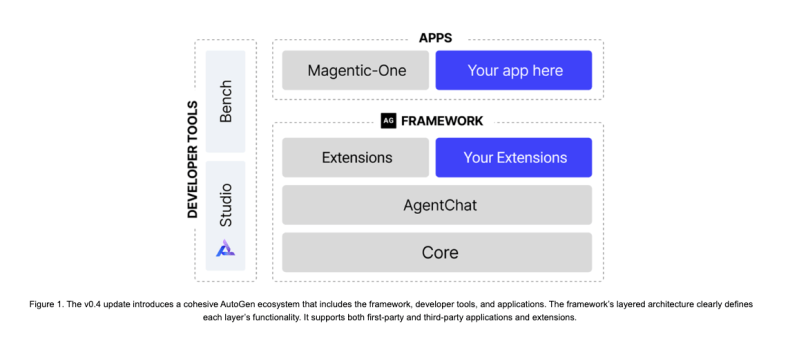
Join our daily and weekly newsletters for the latest updates and exclusive content on industry-leading AI coverage. Learn More Microsoft has updated its AutoGen orchestration framework so the agents it helps build can become more flexible and give organizations more control.  AutoGen v0.4 brings robustness to AI agents and solves issues customers identified around architectural constraints.  “The initial release of AutoGen generated widespread interest in agentic technologies,” Microsoft researchers said in a blog post. “At the same time, users struggled with architectural constraints, an inefficient API compounded by rapid growth and limited debugging and intervention functionality.” The researchers added that customers are asking for stronger observability and control, flexibility around multi-agent collaboration and reusable components.  AutoGen v0.4 is more modular and extensible, with scalability and distributed agent networks. It adds asynchronous messaging; cross-language support, observability and debugging; and built-in and community extensions.  Asynchronous messaging means agents built with AutoGen v0.4 support event-driven and request-interaction patterns. The framework is more modular, so developers can add plug-in components and build long-running agents. It also enables users to design more complex and distributed agent networks.  AutoGen’s extension module simplifies the process of working with multi-agent teams and advanced model clients. It also allows open-source developers to manage their extensions.  To address the issue of observability, AutoGen v0.4 has built-in metric tracking, messaging tracing and debugging tools so users can monitor agent interactions. The updates enable interoperability between agents speaking different coding languages; for now, AutoGen v0.4 supports Python and .NET, but support for additional languages is in the works.  New framework Microsoft updated AutoGen’s framework to better define responsibilities across the framework, tools and application.  It has three layers: core, which consists of the foundational building blocks for an event-driven system; AgentChat, a “task-driven, high-level API built on the core layer” that features group chat, code execution and pre-built agents and is most similar to AutoGen v0.2; and first-party extensions, which interface with integrations like the Azure code executor and OpenAI’s model client.   Along with updating its framework, some tools Microsoft built around AutoGen also got an upgrade.  AutoGen Studio, a low-code interface for rapidly prototyping agents, was rebuilt on the AutoGen v4.0 AgentChat API. Users can get real-time agent updates, pause conversations or redirect agents with mid-execution control, design agent teams with a drag-and-drop interface, import custom agents and get interactive feedback.  Microsoft and agents Microsoft released AutoGen in October 2023 with the hope of simplifying how agents communicate with each other. Along with LangChain and LlamaIndex, AutoGen was one of the first AI agent orchestration frameworks released before agents became the buzzword they are today.  Since then, Microsoft released other agentic systems including Magentic-One, a generalist agentic system that can power multiple agents to complete tasks.  The company has embraced AI agents, deploying perhaps the largest AI agent ecosystems through its Copilot Studio platform.  But other companies are hot on its heels. Salesforce launched AgentForce, and more recently its updated AgentForce 2.0, while ServiceNow released a library of customizable agents. AWS has also added more support for creating multi-agent systems to its Bedrock platform.  source

Microsoft’s AutoGen update boosts AI agents with cross-language interoperability and observability Read More »

9th Circ. Revisits Board Members' Blocks On Social Media

By Craig Clough ( January 17, 2025, 10:18 PM EST) — An attorney for two California school board members on Friday urged the Ninth Circuit to reverse a lower court’s ruling that his clients violated the First Amendment by blocking two constituents from their Facebook page, saying that new rules outlined by the U.S. Supreme Court when it remanded the case call for it…. Law360 is on it, so you are, too. A Law360 subscription puts you at the center of fast-moving legal issues, trends and developments so you can act with speed and confidence. Over 200 articles are published daily across more than 60 topics, industries, practice areas and jurisdictions. A Law360 subscription includes features such as Daily newsletters Expert analysis Mobile app Advanced search Judge information Real-time alerts 450K+ searchable archived articles And more! Experience Law360 today with a free 7-day trial. source

9th Circ. Revisits Board Members' Blocks On Social Media Read More »

Beyond RAG: How cache-augmented generation reduces latency, complexity for smaller workloads

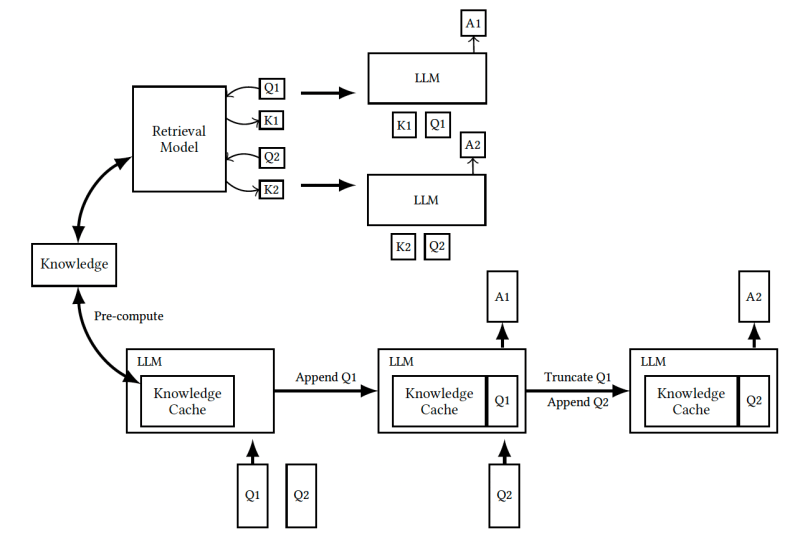
Join our daily and weekly newsletters for the latest updates and exclusive content on industry-leading AI coverage. Learn More Retrieval-augmented generation (RAG) has become the de-facto way of customizing large language models (LLMs) for bespoke information. However, RAG comes with upfront technical costs and can be slow. Now, thanks to advances in long-context LLMs, enterprises can bypass RAG by inserting all the proprietary information in the prompt. A new study by the National Chengchi University in Taiwan shows that by using long-context LLMs and caching techniques, you can create customized applications that outperform RAG pipelines. Called cache-augmented generation (CAG), this approach can be a simple and efficient replacement for RAG in enterprise settings where the knowledge corpus can fit in the model’s context window. Limitations of RAG RAG is an effective method for handling open-domain questions and specialized tasks. It uses retrieval algorithms to gather documents that are relevant to the request and adds context to enable the LLM to craft more accurate responses. However, RAG introduces several limitations to LLM applications. The added retrieval step introduces latency that can degrade the user experience. The result also depends on the quality of the document selection and ranking step. In many cases, the limitations of the models used for retrieval require documents to be broken down into smaller chunks, which can harm the retrieval process.  And in general, RAG adds complexity to the LLM application, requiring the development, integration and maintenance of additional components. The added overhead slows the development process. Cache-augmented retrieval RAG (top) vs CAG (bottom) (source: arXiv) The alternative to developing a RAG pipeline is to insert the entire document corpus into the prompt and have the model choose which bits are relevant to the request. This approach removes the complexity of the RAG pipeline and the problems caused by retrieval errors. However, there are three key challenges with front-loading all documents into the prompt. First, long prompts will slow down the model and increase the costs of inference. Second, the length of the LLM’s context window sets limits to the number of documents that fit in the prompt. And finally, adding irrelevant information to the prompt can confuse the model and reduce the quality of its answers. So, just stuffing all your documents into the prompt instead of choosing the most relevant ones can end up hurting the model’s performance. The CAG approach proposed leverages three key trends to overcome these challenges. First, advanced caching techniques are making it faster and cheaper to process prompt templates. The premise of CAG is that the knowledge documents will be included in every prompt sent to the model. Therefore, you can compute the attention values of their tokens in advance instead of doing so when receiving requests. This upfront computation reduces the time it takes to process user requests. Leading LLM providers such as OpenAI, Anthropic and Google provide prompt caching features for the repetitive parts of your prompt, which can include the knowledge documents and instructions that you insert at the beginning of your prompt. With Anthropic, you can reduce costs by up to 90% and latency by 85% on the cached parts of your prompt. Equivalent caching features have been developed for open-source LLM-hosting platforms. Second, long-context LLMs are making it easier to fit more documents and knowledge into prompts. Claude 3.5 Sonnet supports up to 200,000 tokens, while GPT-4o supports 128,000 tokens and Gemini up to 2 million tokens. This makes it possible to include multiple documents or entire books in the prompt. And finally, advanced training methods are enabling models to do better retrieval, reasoning and question-answering on very long sequences. In the past year, researchers have developed several LLM benchmarks for long-sequence tasks, including BABILong, LongICLBench, and RULER. These benchmarks test LLMs on hard problems such as multiple retrieval and multi-hop question-answering. There is still room for improvement in this area, but AI labs continue to make progress. As newer generations of models continue to expand their context windows, they will be able to process larger knowledge collections. Moreover, we can expect models to continue improving in their abilities to extract and use relevant information from long contexts. “These two trends will significantly extend the usability of our approach, enabling it to handle more complex and diverse applications,” the researchers write. “Consequently, our methodology is well-positioned to become a robust and versatile solution for knowledge-intensive tasks, leveraging the growing capabilities of next-generation LLMs.” RAG vs CAG To compare RAG and CAG, the researchers ran experiments on two widely recognized question-answering benchmarks: SQuAD, which focuses on context-aware Q&A from single documents, and HotPotQA, which requires multi-hop reasoning across multiple documents. They used a Llama-3.1-8B model with a 128,000-token context window. For RAG, they combined the LLM with two retrieval systems to obtain passages relevant to the question: the basic BM25 algorithm and OpenAI embeddings. For CAG, they inserted multiple documents from the benchmark into the prompt and let the model itself determine which passages to use to answer the question. Their experiments show that CAG outperformed both RAG systems in most situations.  CAG outperforms both sparse RAG (BM25 retrieval) and dense RAG (OpenAI embeddings) (source: arXiv) “By preloading the entire context from the test set, our system eliminates retrieval errors and ensures holistic reasoning over all relevant information,” the researchers write. “This advantage is particularly evident in scenarios where RAG systems might retrieve incomplete or irrelevant passages, leading to suboptimal answer generation.” CAG also significantly reduces the time to generate the answer, particularly as the reference text length increases.  Generation time for CAG is much smaller than RAG (source: arXiv) That said, CAG is not a silver bullet and should be used with caution. It is well suited for settings where the knowledge base does not change often and is small enough to fit within the context window of the model. Enterprises should also be careful of cases where their documents contain conflicting facts based on the context of the documents, which might confound the

Beyond RAG: How cache-augmented generation reduces latency, complexity for smaller workloads Read More »

Space-based wildlife tracker relaunches after split with Russia

In 2018, after decades of research and tens of millions in funding, Russian astronauts attached a wildlife-tracking receiver to the exterior of the International Space Station (ISS). The device received data from tagged animals across the planet and beamed it to a ground station in Moscow. From there, it went to an open-source database called Movebank.  The space tracker was the final piece of the puzzle for the ICARUS project, an international effort led by German biologist Martin Wikelski to track the migratory patterns of wildlife from space. It was a game-changer for conservationists, who could monitor the journeys of tiny birds, bats, cats and other animals on a global scale for the first time. The data could even warn us of volcanic eruptions or protect us from diseases.  That was until Russia invaded Ukraine in March 2022. After that, the West severed most of its bilateral research with Moscow. ICARUS was shot from the sky. But now, Wikelski — the director of the Max Planck Institute of Animal Behavior — looks to give the project new wings.  Russian astronauts Sergei Prokopyev and Oleg Artemyev install the ICARUS antenna assembly on the Zvezda module of the ISS. Credit: Roscosmos, DLR Today, the Max Planck Society announced that it has teamed up with German spacetech startup Talos to launch ICARUS 2.0. Founded in 2022, Talos builds tiny solar-powered IoT tags that attach to the fur or feathers of wildlife. The five-gram devices gather location data, alongside measurements of the surrounding temperature, humidity, pressure, and acceleration. The tags then beam this information to a receiver aboard an orbiting CubeSat, which then relays it to researchers back on Earth. The next big thing? It might be you… TNW Conference is here to support startups & scaleups to become the next big thing. Be part of the journey. Price increase on Friday. “ICARUS 2.0 represents a complete technological overhaul,” Gregor Langer, Talos’ CEO,  told TNW. “We’re replacing the Russian ISS-based technologies while also significantly improving the update frequency and accuracy of the animal-tracking data.”  For Wikelski and scientists across the globe, it’s the perfect solution. The system enables high-precision tracking of animals. It’s relatively inexpensive to deploy and operate. And perhaps most importantly, it means that ICARUS is finally freed from the clutches of geopolitics, putting scientists back in control.  “The shutting down of ICARUS illustrated the potential vulnerability of international research projects to geopolitical changes and, thus, the importance of sovereign infrastructures,” said Langer. “However, this relaunch also demonstrates the huge potential of ‘NewSpace’ technologies and companies that can provide services for which governmental institutions were still needed just a few years ago.”  Once up and running again, ICARUS will allow scientists to observe animal movements in near totality for the first time and help create what Wikelski calls the “internet of animals.”  A blackbird fitted with a GPS transmitter. Credit: Talos While ICARUS 2.0 will use 5-gram GPS tags for now, the project plans to deploy devices weighing less than 1 gram in the future. Meanwhile, other scientists in Germany are even working on miniature trackers for bees.   “ICARUS 2.0 will be a critical tool for addressing environmental challenges, including climate change, conservation, and zoonotic disease tracking such as SARS, bird flu, and the West Nile virus,” said Wikelski. The ICARUS 2.0 mission aims to launch the CubeSat constellation in phases. The first satellite is set to launch aboard a SpaceX Falcon 9 rocket this autumn, with all five CubeSats expected to be operational by the end of 2026. Funded by the Max Planck Society, the system will cost roughly $1.57mn to launch and have annual operating expenses of around $160,000.  “By leveraging space technologies and collaborating with innovative space startups, the ICARUS initiative benefits from faster development cycles and enhanced capabilities, further expanding its reach and impact in global scientific research and conservation efforts,” Wikelski concluded.   source

Space-based wildlife tracker relaunches after split with Russia Read More »

Early days for AI: Only 25% of enterprises have deployed, few reap rewards

Join our daily and weekly newsletters for the latest updates and exclusive content on industry-leading AI coverage. Learn More 2025 is anticipated to be the year AI gets real, bringing specific, tangible benefit to enterprises.  However, according to a new State of AI Development Report from AI development platform Vellum, we’re not quite there yet: Just 25% of enterprises have deployed AI into production, and only a quarter of those have yet to see measurable impact.  This seems to indicate that many enterprises have not yet identified viable use cases for AI, keeping them (at least for now) in a pre-build holding pattern.  “This reinforces that it’s still pretty early days, despite all the hype and discussion that’s been happening,” Akash Sharma, Vellum CEO, told VentureBeat. “There’s a lot of noise in the industry, new models and model providers coming out, new RAG techniques; we just wanted to get a lay of the land on how companies are actually deploying AI to production.” Enterprises must identify specific use cases to see success Vellum interviewed more than 1,250 AI developers and builders to get a true sense of what’s happening in the AI trenches.  Companies are in various stages of their AI journeys — building out and evaluating strategies and proofs of concept (PoC) (53%), beta testing (14%) and, at the lowest level, talking to users and gathering requirements (7.9%).  By far the most enterprises are focused on building document parsing and analysis tools and customer service chatbots, according to Vellum. But they are also interested in applications incorporating analytics with natural language, content generation, recommendation systems, code generation and automation and research automation. So far, developers report competitor advantage (31.6%), cost and time savings (27.1%) and higher user adoption rates (12.6%) as the biggest impacts they’ve seen so far. Interestingly, though, 24.2% have yet to see any meaningful impact from their investments.  Sharma emphasized the importance of prioritizing use cases from the very start. “We’ve anecdotally heard from people that they just want to use AI for the sake of using AI,” he said. “There’s an experimental budget associated with that.”  While this makes Wall Street and investors happy, it doesn’t mean AI is actually contributing anything, he pointed out. “Something generally everyone should be thinking about is, ‘How do we find the right use cases? Usually, once companies are able to identify those use cases, get them into production and see a clear ROI, they get more momentum, they get past the hype. That results in more internal expertise, more investment.”  OpenAI still at the top, but a mixture of models will be the future When it comes to models used, OpenAI maintains the lead (no surprise there), notably its GPT 4o and GPT 4o-mini. But Sharma pointed out that 2024 offered more options, either directly from model creators or through platform solutions like Azure or AWS Bedrock. And, providers hosting open-source models such as Llama 3.2 70B are gaining traction, too — such as Groq, Fireworks AI and Together AI. “Open-source models are getting better,” said Sharma. “Closed-source competitors to OpenAI are catching up in terms of quality.” Ultimately, though, enterprises aren’t going to just stick with just one model — they will increasingly lean on multi-model systems, he forecasted.  “People will choose the best model for each task at hand,” said Sharma. “While building an agent, you might have multiple prompts, and for each individual prompt the developer will want to get the best quality, lowest cost and lowest latency, and that may or may not come from OpenAI.” Similarly, the future of AI is undoubtedly multimodal, with Vellum seeing a surge in adoption of tools that can handle a variety of tasks. Text is the undisputed top use case, followed by file creation (PDF or Word), images, audio and video.  Also, retrieval-augmented generation (RAG) is a go-to when it comes to information retrieval, and more than half of developers are using vector databases to simplify search. Top open-source and proprietary models include Pinecone, MongoDB, Quadrant, Elastic Search, PG vector, Weaviate and Chroma.  Everyone’s getting involved (not just engineering) Interestingly, AI is moving beyond just IT and becoming democratized across enterprises (akin to the old “it takes a village”). Vellum found that while engineering was most involved in AI projects (82.3%), they are being joined by leadership and executives (60.8%), subject matter experts (57.5%), product teams (55.4%) and design departments (38.2%).  This is largely due to the ease of use of AI (as well as the general excitement around it), Sharma noted.  “This is the first time we’re seeing software being developed in a very, very cross-functional way, especially because prompts can be written in natural language,” he said. “Traditional software usually tends to be more deterministic. This is non-deterministic, which brings more people into the development fold.” Still, enterprises continue to face big challenges — notably around AI hallucinations and prompts; model speed and performance; data access and security; and getting buy-in from important stakeholders.  At the same time, while more non-technical users are getting involved, there is still a lack of pure technical expertise in-house, Sharma pointed out. “The way to connect all the different moving parts is still a skill that not that many developers have today,” he said. “So that’s a common challenge.” However, many existing challenges can be overcome by tooling, or platforms and services that help developers evaluate complex AI systems, Sharma pointed out. Developers can perform tooling internally or with third-party platforms or frameworks; however, Vellum found that nearly 18% of developers are defining prompts and orchestration logic without any tooling at all.  Sharma pointed out that “lack of technical expertise becomes [less of a problem] when you have proper tooling that can guide you through the development journey.” In addition to Vellum, frameworks and platforms used by survey participants include LangChain, Llama Index, Langfuse, CrewAI and Voiceflow. Evaluations and ongoing monitoring are critical Another way to overcome common problems (including hallucinations) is to perform evaluations, or use specific


Early days for AI: Only 25% of enterprises have deployed, few reap rewards Read More »

Saudi Arabia's deep tech startup ecosystem thrives with focus on AI and IoT, fueling Vision 2030

A recent report from the Ministry of Communications and Information Technology, King Abdullah University of Science and Technology, and consultancy firm Hello Tomorrow highlights the rapid growth of deep tech startups in Saudi Arabia, with 50% of these startups focusing on AI and IoT. These sectors are emerging as key drivers of innovation and investment in the Kingdom, with over 43 high-growth startups collectively raising more than 987 USD in funding. Saudi Arabia has become one of the leading ecosystems for tech startups in the Middle East and North Africa , ranking among the top three for funding and deal activity. This success is a testament to the growing availability of venture capital, a dynamic entrepreneurial ecosystem, and government support for innovation-driven ventures. The deep tech sector, while still in its early stages, is drawing significant attention from international companies and investors, eager to tap into the country’s potential for technological advancement. The surge in AI and IoT-focused startups is directly aligned with the objectives of Saudi Vision 2030, a strategic framework designed to diversify the Kingdom’s economy and reduce its reliance on oil revenues. Vision 2030 aims to foster a knowledge-based economy and establish Saudi Arabia as a global leader in technology and innovation. The deep tech sector plays a crucial role in achieving this vision, positioning AI and IoT at the forefront of the Kingdom’s digital transformation. source

Saudi Arabia's deep tech startup ecosystem thrives with focus on AI and IoT, fueling Vision 2030 Read More »

Hogan Lovells Lands Quinn Emanuel IP Litigator In SF

By Emily Johnson ( January 17, 2025, 1:50 PM EST) — Hogan Lovells has brought on a former longtime Quinn Emanuel Urquhart & Sullivan LLP partner in its San Francisco office, bolstering its intellectual property practice with an experienced trial and appellate lawyer who has guided technology companies such as Google in IP litigation…. Law360 is on it, so you are, too. A Law360 subscription puts you at the center of fast-moving legal issues, trends and developments so you can act with speed and confidence. Over 200 articles are published daily across more than 60 topics, industries, practice areas and jurisdictions. A Law360 subscription includes features such as Daily newsletters Expert analysis Mobile app Advanced search Judge information Real-time alerts 450K+ searchable archived articles And more! Experience Law360 today with a free 7-day trial. source

Hogan Lovells Lands Quinn Emanuel IP Litigator In SF Read More »

You can now fine-tune your own version of AI image maker Flux with just 5 images

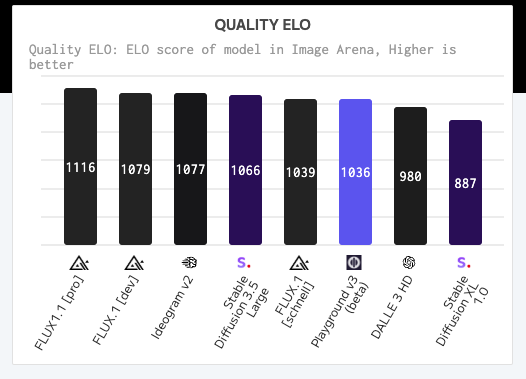
Join our daily and weekly newsletters for the latest updates and exclusive content on industry-leading AI coverage. Learn More Black Forest Labs has quickly made a name for itself as the premiere, high-quality open-source AI image generation startup — even surpassing the quality of models offered by Stability AI, where Black Forest Labs’ founders previously worked. It briefly served as the default image generator in xAI’s Grok language model, too. Credit: Artificial Analysis Today Black Forest Labs is taking this a step further, announcing the release of the FLUX Pro Finetuning API, a tool that empowers creators to customize generative AI models using their own images and concepts. Designed for professionals in marketing, branding, storytelling and other creative industries, the API enables the personalization of the company’s flagship FLUX Pro and FLUX Ultra models with a user-friendly approach. Customization at scale The FLUX Pro Finetuning API allows users to fine-tune generative text-to-image models with five to 20 training images, optionally accompanied by text descriptions. This process results in customized models that maintain the generative versatility of the base FLUX Pro models while aligning outputs with specific creative visions. The tool supports multiple modes, including “character,” “product,” “style” and “general,” making it adaptable for a wide variety of use cases. The trained models can seamlessly integrate with endpoints such as FLUX.1 Fill, Depth, Canny and Redux, as well as with high-resolution generation capabilities of up to four megapixels. Whether for creating brand-consistent marketing visuals or detailed character art, the API enhances precision and adaptability in AI-generated content. Practical applications and use cases for brands, marketers and more Using the FLUX Pro Finetuning API, professionals can create customized models that preserve essential design elements, character consistency or brand properties. A study conducted by Black Forest Labs showed that 68.9% of users preferred FLUX Pro’s fine-tuned results over competing services. Some highlighted applications include: • Inpainting: Using FLUX.1 Fill for iterative edits to refine images • Structural Control: Integrating with FLUX.1 Depth to enhance image generation with precise structural adjustments • Visual Branding: Ensuring consistency across marketing materials and campaigns Partnership with BurdaVerlag Black Forest Labs has partnered with BurdaVerlag, a leading German media and entertainment company, to demonstrate the potential of the FLUX Pro Finetuning API. BurdaVerlag’s creative teams are using the tool to develop customized FLUX models tailored to their brands, such as the children’s publication Lissy PONY. With this integration, BurdaVerlag’s design teams can create visuals that reflect each brand’s identity while exploring new creative directions. The API has accelerated their production workflows, enabling high-quality content generation at scale. Accessible pricing and availability The FLUX Pro Finetuning API is now available via API endpoints through the Flux.1 [dev] model. Pricing for all FLUX models on Black Forest Labs’ API is as follows: • FLUX 1.1 [pro] Ultra: $0.06 per image • FLUX 1.1 [pro]: $0.04 per image • FLUX.1 [pro]: $0.05 per image • FLUX.1 [dev]: $0.025 per image Getting started is a cinch The finetuning process requires minimal input from users. Training images in supported formats (JPG, JPEG, PNG or WebP) are uploaded, with resolutions capped at one megapixel for optimal results. Advanced configuration options allow for fine control over the training process, including iteration counts, learning rates, and trigger words for precise prompt integration. Black Forest Labs has also provided extensive resources, including a Finetuning Beta Guide and Python scripts for easy implementation. Users can monitor progress, adjust parameters, and test results directly via API endpoints, ensuring a smooth and efficient workflow. By combining versatility, ease of use and professional-grade outputs, the FLUX Pro Finetuning API sets a new benchmark for customized content creation in generative AI. With the tool now available, Black Forest Labs aims to transform how individuals and organizations approach personalized media generation, unlocking creative possibilities at an unprecedented scale. source

You can now fine-tune your own version of AI image maker Flux with just 5 images Read More »