How Kimberly-Clark’s Zack Hicks heeds the call for innovation

Zack Hicks: DTS is a strategic function for our company, and in recent years, we’ve concentrated on moving towards a product and platform strategy that allows us to achieve economies of scale. Kimberly-Clark operates in more than 50 countries, and DTS has IT leaders in our business offices and manufacturing plants, which are typically located near our consumers. We also have several global digital and technology centers in strategic locations, including multiple sites in the United States, as well as Brazil, Argentina, Costa Rica, Malaysia, Poland, the UK, and India. So we truly are a global company, with team members around the world. While we do have people that are regionally focused, the remainder of my roughly 1,400 direct team members are working on a global scope, for global programs. Part of our DTS strategy has involved realignment, with about 200 members of my central team re-focusing to be more aligned with the business functions. Most of those are Data and Insights professionals, to ensure our business can leverage analytics as fast as they need to, particularly around consumer, competitive, and internal data insights. We’re also hyper-focused on modernizing and leapfrogging our supply chain capabilities, with an eye toward potentially extending our supply chain into our commercial partners. That is a game changer in the CPG industry. source

How Kimberly-Clark’s Zack Hicks heeds the call for innovation Read More »

Colossal raises $200M to “de-extinct” the woolly mammoth, thylacine and dodo

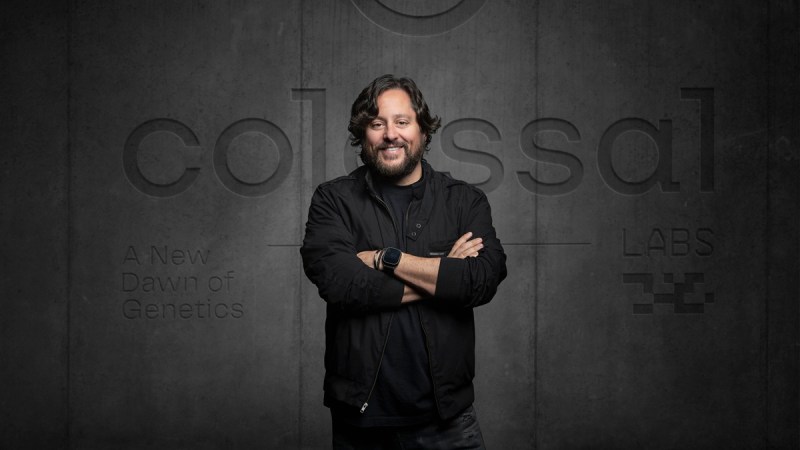
Join our daily and weekly newsletters for the latest updates and exclusive content on industry-leading AI coverage. Learn More Colossal BioSciences has raised $200 million in a new round of funding to bring back extinct species like the woolly mammoth. Dallas- and Boston-based Colossal is making strides in the scientific breakthroughs toward “de-extinction,” or bringing back extinct species like the woolly mammoth, thylacine and the dodo. I would be remiss if I did not mention this is the plot of Michael Crichton’s novel Jurassic Park, where scientists used the DNA found in mosquitoes preserved in amber to bring back the Tyrannosaurus Rex and other dinosaurs. I mean, what could go wrong when science fiction becomes reality? Kidding aside, this is pretty amazing work and I’m not surprised to see game dev Richard Garriott among the investors. The big investor this time was TWG Global, a diversified holding company with operating businesses and investments in technology/AI, financial services, private lending and sports and media. The investor is jointly led by Mark Walter and Thomas Tull. Since launching in September 2021, Colossal has raised $435 million in total funding. This latest round of capital places the company at a $10.2 billion valuation. Colossal will leverage this latest infusion of capital to continue to advance its genetic engineering technologies while pioneering new revolutionary software, wetware and hardware solutions, which have applications beyond de-extinction including species preservation and human healthcare. “Our recent successes in creating the technologies necessary for our end-to-end de-extinction toolkit have been met with enthusiasm by the investor community. TWG Global and our other partners have been bullish in their desire to help us scale as quickly and efficiently as possible,” said CEO Colossal Ben Lamm, in a statement. “This funding will grow our team, support new technology development, expand our de-extinction species list, while continuing to allow us to carry forth our mission to make extinction a thing of the past.” Colossal employs over 170 scientists and partners with labs in Boston, Dallas, and Melbourne, Australia. In addition, Colossal sponsors over 40 full time postdoctoral scholars and research programs in 16 partner labs at some of the most prestigious universities around the globe. Colossal’s scientific advisory board has grown to include over 95 of the top scientists working in genomics, ancient DNA, ecology, conservation, developmental biology, and paleontology. Together, these teams are tackling some of the hardest problems in biology, including mapping genotypes to traits and behaviors, understanding developmental pathways to phenotypes like craniofacial shape, tusk formation, and coat color patterning, and developing new tools for multiplex and large-insert genome engineering. “Colossal is the leading company working at the intersection of AI, computational biology and genetic engineering for both de-extinction and species preservation,” said Mark Walter, CEO of TWG Global, in a statement. “Colossal has assembled a world-class team that has already driven, in a short period of time, significant technology innovations and impact in advancing conservation, which is a core value of TWG Global. We are thrilled to support Colossal as it accelerates and scales its mission to combat the animal extinction crisis.” “Colossal is a revolutionary genetics company making science fiction into science fact. We are creating the technology to build de-extinction science and scale conservation biology particularly for endangered and at-risk species. I could not be more appreciative of the investor support for this important mission,” said George Church, Colossal cofounder and a professor of genetics at Harvard Medical School and professor of Health Sciences and Technology at Harvard and the Massachusetts Institute of Technology (MIT). In October 2024, the Colossal Foundation was launched, a sister 501(c)(3) focused on overseeing the deployment and application of Colossal-developed science and technology innovations. The organization currently supports 48 conservation partners and their global initiatives around the world. This includes partners like Re:wild, Save The Elephants, Biorescue, Birdlife International, Conservation Nation, Sezarc, Mauritian Wildlife Foundation, Aussie Ark, International Elephant Foundation, Saving Animals From Extinction. Currently the Colossal Foundation is focused on supporting conservation partners who are working on new innovative technologies that can be applied to conservation and those who benefit from the development and deployment of new genetic rescue and de-extinction technologies to help combat the biodiversity extinction crisis. Tracking Progress on Colossal’s De-Extinction Projects Ben Lamm is CEO of Colossal Biosciences The first step in every de-extinction project is to recover and analyze preserved genetic material and use that data to identify each species’ core genomic components. In addition to recruiting Beth Shapiro, a global leader in ancient DNA research, as Colossal’s chief science officer, Colossal has built a team of Ph.D experts in ancient DNA among its scientific advisors, including Love Dalen, Andrew Pask, Tom Gilbert, Michael Hofreiter, Hendrik Poinar, Erez Lieberman Aiden, and Matthew Wooler. With this team, Colossal continues to push advances in ancient DNA through support to academic labs and internal scientific research. All three core species – mammoth, thylacine, and dodo – have already benefited from this coalescence of expertise. As an example, Colossal now has the most contiguous and complete ancient genomes to date for each of these three species; these genomes are the blueprints from which these species’ core traits will be engineered. The path from ancient genome to living species requires a systems model approach to innovation across computational biology, cellular engineering, genetic engineering, embryology, and animal husbandry, with refinement and tuning in each step along the de-extinction pipeline occurring simultaneously. To date, Colossal’s scientists have achieved monumental breakthroughs at each step for each of the three flagship species. In the last three years, Colossal’s first major project to be announced, the woolly mammoth project, generated new genomic resources, made breakthroughs in cell biology and genome engineering, and explored the ecological impact of de-extinction, with implications for mammoths, elephants, and species across the vertebrate tree of life. Woolly Mammoth De-extinction Project Progress The mammoth team has generated chromosome-scale reference genomes for the African elephant, Asian elephant, and rock hyrax, all of which have been released on the National Center for


Colossal raises $200M to “de-extinct” the woolly mammoth, thylacine and dodo Read More »

Energize Your Journey Portfolio: Optimize Journey Value For Customers And The Business

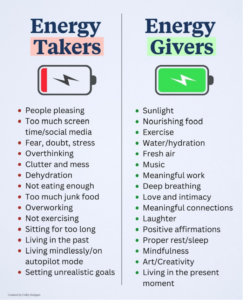
Do You Know What Your Energy Takers And Energy Givers Are? Knowing what your energy takers and energy givers are is an important step in managing your personal energy and productivity. Energy takers are too much screen time, overthinking, clutter and mess, dehydration, sitting for too long, and setting unrealistic goals. Energy givers are sunlight, nourishing food, exercise, fresh air, music, meaningful work, and laughter. Source: Colby Kultgen   What About The Energy Takers And Energy Givers In Your Journey Portfolio? Each time a customer embarks on a journey with you, it can create or destroy value, not only for that customer but for your firm. Just like in our personal lives, some customer journeys are value-positive. They leave customers feeling like they’ve gained more than they’ve given: These are the energy givers of the journey world. Then there are the value-negative journeys — the energy drainers that frustrate customers and diminish their overall perception of your brand.   Optimize Journey Value For Customers And Your Firm: Journey And Journey Portfolio If you see too many value-negative journeys dragging down your overall value equation, it’s time to roll up your sleeves and get to work: Identify the critical pain points, experiment with design changes, and find ways to turn those energy drainers into energy givers. Your customers — and your bottom line — will thank you. You must optimize value for the customer and the business on two levels: 1. An individual journey — what’s the value balance? As you work on journeys, always remember that a customer journey is a lifecycle, not a process: A customer journey is a customer’s paths and perceptions as they pursue a goal. Knowing the value of a journey for you and your customers is the first step in deciding how to manage the journey. Customer journeys are either value-positive, value-neutral, or value-negative. And that goes for your firm and your customers. If the journey is value-negative for a customer (e.g., a lot of extraneous friction), they might not complete it. As a result, you might consider process improvements to make it easier. You’ll most likely make that decision only if you think that the changed journey remains value-positive for you (e.g., higher completion). 2. A journey portfolio — what’s the journey’s role in the value of the portfolio? You must optimize value for the overall portfolio, not just for individual journeys. A journey portfolio comprises all the customer journeys in which your firm plays a meaningful role. Each individual journey can change a customer’s value perceptions of the overall journey portfolio and of your firm. That’s the “piggy bank” we show above. Value-positive journeys are deposits, and value-negative journeys are withdrawals. This also applies to the value for your firm: There are journeys that replenish the overall business value and those that deplete it. For example, a bank optimizing the account-opening journey in isolation might miss that it’s one of the first journeys that customers go on. As such, it sets the tone for the relationship and all following journeys. By considering the portfolio, the bank may invest more in the onboarding journey. Even more than what the bank gets out of it immediately, knowing the long-term benefits will make up for it. Want To Find Out More About How To Assess And Optimize Journey Value For Customers And The Business? If you are a Forrester client, we have two brand-new reports for you to energize your 2025 journey strategy! Reach out for a guidance session or inquiry with my coauthor and colleague, Maxie Schmidt, or with me. We have created checklists to help you assess journey value for customers and your firm. And we are “itching” to get practical and use this with you to energize your journey portfolio and strategy! source

Energize Your Journey Portfolio: Optimize Journey Value For Customers And The Business Read More »

CIO Leadership Live with Harvinder Singh Banga, CIO, CJ Darcl Logistics

Overview In this fascinating conversation, Harvinder Singh Banga, CIO of CJ Darcl Logistics talks how emerging technology like Generative AI and sound cybersecurity principles are being leveraged to bring their core philosophy of ‘Humanizing Efficiency’ to life. Catch the whole conversation, in this episode of CIO Leadership Live. Register Now source

CIO Leadership Live with Harvinder Singh Banga, CIO, CJ Darcl Logistics Read More »

Solar Power Biz Beats Shoals' Patent Case At ITC

By Andrew Karpan ( January 15, 2025, 9:58 PM EST) — The U.S. International Trade Commission has cleared a North Carolina solar manufacturer from a patent case, flipping an administrative law judge’s determination that a solar “trunk bus” transmission system infringes a rival’s patent…. Law360 is on it, so you are, too. A Law360 subscription puts you at the center of fast-moving legal issues, trends and developments so you can act with speed and confidence. Over 200 articles are published daily across more than 60 topics, industries, practice areas and jurisdictions. A Law360 subscription includes features such as Daily newsletters Expert analysis Mobile app Advanced search Judge information Real-time alerts 450K+ searchable archived articles And more! Experience Law360 today with a free 7-day trial. source

Solar Power Biz Beats Shoals' Patent Case At ITC Read More »

Borderless AI emerges from stealth with $32M in funding to disrupt HR tech

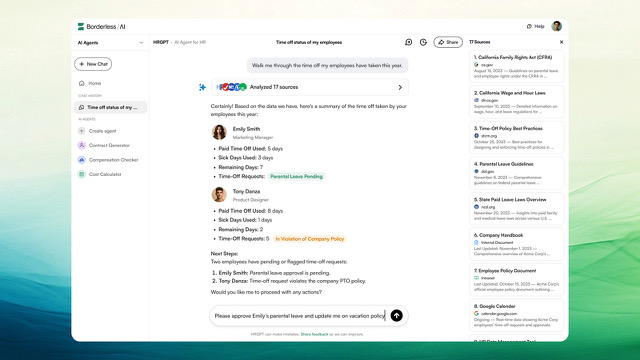
Join our daily and weekly newsletters for the latest updates and exclusive content on industry-leading AI coverage. Learn More A new artificial intelligence startup is betting that HR departments will become the next major battleground for enterprise AI adoption, launching a specialized search engine that aims to transform how companies manage their workforce. Borderless AI, which emerged from stealth last year, announced today the release of HRGPT, a free AI-powered search engine that allows companies to query their internal HR data alongside employment laws and regulations. The company also disclosed a $5 million strategic investment from AI company Cohere, bringing its total seed funding to $32 million. “Every HR department is going to have AI agents that manage various aspects across the HR stack,” said Willson Cross, cofounder and CEO of Borderless AI, in an exclusive interview with VentureBeat. “We’re proud to be at the forefront of that vertical.” How Borderless AI’s HRGPT is transforming workforce management The Toronto-based startup is positioning itself to compete with established HR software providers like Workday and ADP by focusing exclusively on AI-powered solutions. Its platform already counts several multinational companies as customers, including Dunlop Sporting Goods, which uses the technology to manage employee onboarding across 17 global offices. Unlike general-purpose AI chatbots, HRGPT combines real-time web search with access to internal company data and specialized HR knowledge. The system can perform tasks ranging from generating employment agreements to tracking time-off requests and managing international expense reimbursements. “Unlike ChatGPT, we have real-time web search. When a customer asks HRGPT a question, it scans the web for real-time sourcing and citations,” Cross told VentureBeat. The platform also integrates with PricewaterhouseCoopers for employment law expertise. Borderless AI’s platform displays employee time-off requests and compliance data in a conversational interface designed for HR professionals. (Credit: Borderless AI) The investment from Cohere signals growing interest in vertical-specific AI applications for the enterprise. While consumer AI tools like ChatGPT have captured public attention, Cross believes the next wave of AI adoption will come from businesses. “For the next two to three years, it’s going to be the businesses that are catching up and waking up to bringing AI to their organizations,” he said. “HR is one that has many applicable use cases.” Borderless AI’s approach reflects a broader trend of AI companies focusing on specific industries rather than trying to build general-purpose tools. Similar vertical-focused companies include Harvey AI in legal tech and Sierra in customer service. Building a billion-dollar HR tech company with AI at its core The company’s ambitious vision includes automating complex HR processes like payroll management and employee analytics. Cross indicated they aim to build a billion-dollar company with fewer than 50 employees by leveraging AI extensively in their own operations. However, Borderless AI faces significant challenges, including prioritizing which features to build next amid strong customer demand. The company must also maintain accuracy and compliance in its automated HR functions, particularly for sensitive tasks like employment agreements and international payments. The startup’s success could signal whether specialized AI tools will successfully compete against established enterprise software providers who are racing to add AI capabilities to their existing products. For now, early customers appear convinced: Borderless AI reports that its AI agents perform tasks hourly across its customer base. source

Borderless AI emerges from stealth with $32M in funding to disrupt HR tech Read More »

Microsoft promotes American-first AI

To this end, the Microsoft exec referred to the company’s announced plan to invest more than $35 billion in 14 countries within three years “to build trusted and secure AI and cloud datacenter infrastructure.” According to Smith, Microsoft’s global infrastructure now reaches 40 countries, including the global south, “including in the Global South, where China has frequently focused so many of its Belt and Road investments.” To build on this, Smith is calling for more political support, writing, “the most important U.S. public policy priority should be to ensure that the U.S. private sector can continue to advance with the wind at its back.” The United States can’t afford to “slow its own private sector with heavy-handed regulations,” Smith adds, calling for a “pragmatic export control policy.” After all, the aim is to “expand rapidly and provide a reliable source of supply to the many countries that are American allies and friends.”  Europe between IT dependence and the desire for sovereignty Whether these allies and friends will join in the AI ​​game outlined by Smith is questionable, however, despite Microsoft publicly announcing billions in investments in European infrastructure last year, including €3.2 billion in Germany. With the AI ​​Act, the EU has passed a set of rules that prescribes clear guidelines for the use of AI in Europe. AI lobbyists are currently haggling over the final wording to pull the teeth out of the regulation in the interests of their own business.  source

Microsoft promotes American-first AI Read More »

SEC's Last-Minute Musk Suit Could Be Scuttled Under Trump

By Jessica Corso ( January 15, 2025, 10:48 PM EST) — The U.S. Securities and Exchange Commission’s latest lawsuit against Elon Musk is unlikely to be viewed favorably by the incoming administration of President-elect Donald Trump, which may press for a lesser penalty or even move to dismiss the case outright, attorneys told Law360 on Wednesday…. Law360 is on it, so you are, too. A Law360 subscription puts you at the center of fast-moving legal issues, trends and developments so you can act with speed and confidence. Over 200 articles are published daily across more than 60 topics, industries, practice areas and jurisdictions. A Law360 subscription includes features such as Daily newsletters Expert analysis Mobile app Advanced search Judge information Real-time alerts 450K+ searchable archived articles And more! Experience Law360 today with a free 7-day trial. source

SEC's Last-Minute Musk Suit Could Be Scuttled Under Trump Read More »

MiniMax unveils its own open source LLM with industry-leading 4M token context

Join our daily and weekly newsletters for the latest updates and exclusive content on industry-leading AI coverage. Learn More MiniMax is perhaps today best known here in the U.S. as the Singaporean company behind Hailuo, a realistic, high-resolution generative AI video model that competes with Runway, OpenAI’s Sora and Luma AI’s Dream Machine. But the company has far more tricks up its sleeve: Today, for instance, it announced the release and open-sourcing of the MiniMax-01 series, a new family of models built to handle ultra-long contexts and enhance AI agent development. The series includes MiniMax-Text-01, a foundation large language model (LLM), and MiniMax-VL-01, a visual multimodal model. A massive context window MiniMax-Text-o1, is of particular note for enabling up to 4 million tokens in its context window — equivalent to a small library’s worth of books. The context window is how much information the LLM can handle in one input/output exchange, with words and concepts represented as numerical “tokens,” the LLM’s own internal mathematical abstraction of the data it was trained on. And, while Google previously led the pack with its Gemini 1.5 Pro model and 2-million-token context window, MiniMax remarkably doubled that. As MiniMax posted on its official X account today: “MiniMax-01 efficiently processes up to 4M tokens — 20 to 32 times the capacity of other leading models. We believe MiniMax-01 is poised to support the anticipated surge in agent-related applications in the coming year, as agents increasingly require extended context handling capabilities and sustained memory.” The models are available now for download on Hugging Face and Github under a custom MiniMax license, for users to try directly on Hailuo AI Chat (a ChatGPT/Gemini/Claude competitor), and through MiniMax’s application programming interface (API), where third-party developers can link their own unique apps to them. MiniMax is offering APIs for text and multi-modal processing at competitive rates: $0.2 per 1 million input tokens $1.1 per 1 million output tokens For comparison, OpenAI’s GPT-4o costs $2.50 per 1 million input tokens through its API, a staggering 12.5X more expensive. MiniMax has also integrated a mixture of experts (MoE) framework with 32 experts to optimize scalability. This design balances computational and memory efficiency while maintaining competitive performance on key benchmarks. Striking new ground with Lightning Attention Architecture At the heart of MiniMax-01 is a Lightning Attention mechanism, an innovative alternative to transformer architecture. This design significantly reduces computational complexity. The models consist of 456 billion parameters, with 45.9 billion activated per inference. Unlike earlier architectures, Lightning Attention employs a mix of linear and traditional SoftMax layers, achieving near-linear complexity for long inputs. SoftMax, for those like myself who are new to the concept, are the transformation of input numerals into probabilities adding up to 1, so that the LLM can approximate which meaning of the input is likeliest. MiniMax has rebuilt its training and inference frameworks to support the Lightning Attention architecture. Key improvements include: MoE all-to-all communication optimization: Reduces inter-GPU communication overhead. Varlen ring attention: Minimizes computational waste for long-sequence processing. Efficient kernel implementations: Tailored CUDA kernels improve Lightning Attention performance. These advancements make MiniMax-01 models accessible for real-world applications, while maintaining affordability. Performance and benchmarks On mainstream text and multimodal benchmarks, MiniMax-01 rivals top-tier models like GPT-4 and Claude-3.5, with especially strong results on long-context evaluations. Notably, MiniMax-Text-01 achieved 100% accuracy on the Needle-In-A-Haystack task with a 4-million-token context. The models also demonstrate minimal performance degradation as input length increases. MiniMax plans regular updates to expand the models’ capabilities, including code and multi-modal enhancements. The company views open-sourcing as a step toward building foundational AI capabilities for the evolving AI agent landscape. With 2025 predicted to be a transformative year for AI agents, the need for sustained memory and efficient inter-agent communication is increasing. MiniMax’s innovations are designed to meet these challenges. Open to collaboration MiniMax invites developers and researchers to explore the capabilities of MiniMax-01. Beyond open-sourcing, its team welcomes technical suggestions and collaboration inquiries at [email protected]. With its commitment to cost-effective and scalable AI, MiniMax positions itself as a key player in shaping the AI agent era. The MiniMax-01 series offers an exciting opportunity for developers to push the boundaries of what long-context AI can achieve. source

MiniMax unveils its own open source LLM with industry-leading 4M token context Read More »