CFA Institute

Three Levers That Drive VC Returns

Venture capitalists often emphasize their ability to pick winners. Yet the data tell a harsher story: roughly 90% of early-stage VCs fail to outperform a simple Nasdaq ETF after fees. True outperformance is confined to a narrow slice of the top decile. The reason is not mystery or macro conditions. It is misplaced focus. Once you strip away what investors do not control, such as exit multiples, market cycles, acquirer behavior, or timing, early-stage venture capital reduces to just three economic levers: entry valuation, loss avoidance, and right-tail frequency. These determine how much cash limited partners ultimately keep. The three levers operate differently, and not equally. Entry valuation determines ownership. It scales all outcomes. Conditional on exit, it is the only direct way investors affect realized multiples. Loss avoidance reduces the share of capital that goes to zero. It shifts probability mass from complete failures into modest positive outcomes, reshaping the left tail of the distribution. Right-tail frequency determines whether a portfolio includes extreme outliers — 20x, 50x, or 100x returns on invested capital. Stylized Portfolio Consider a stylized portfolio consistent with the empirical venture literature: 100 equal investments of $1 million each. Sixty return zero; twenty-five return 1.8x; ten return 5x; four return 18x; and one returns 50x. Gross proceeds equal $260 million, implying a gross multiple of 2.6x. With a 23.8% capital gains tax rate and no venture-favorable treatment, the after-tax multiple falls to approximately 2.22x. With loss deductibility and qualified small business stock treatment, which reduces taxes on large gains, the after-tax multiple rises to roughly 2.6x. The precise distribution is not central. What matters is how expected returns respond to proportional improvements in each lever. When modeled using a 10% proportional improvement, the results are revealing: a 10% improvement in loss avoidance or valuation discipline increases post-tax returns by roughly 10–12%. A 10% improvement in tail frequency increases returns by only a fraction of that. Now consider how each lever moves performance under that same 10% proportional improvement. Entry Valuation: Ownership Is the Multiplier A 10% improvement in entry valuation increases ownership across all deals and scales all outcomes proportionally. If you pay less for the same asset, you own more. If the company succeeds, you capture more upside. If it fails, you lose less — your downside is bounded by your smaller investment, while upside remains convex. Conditional on exit, entry valuation is the only direct way investors influence realized multiples. Exit size, market timing, and acquisition premiums are not controllable: ownership is. Importantly, valuation discipline is learnable. In bilateral transactions, which characterize much of early-stage venture, investors can improve pricing through structured negotiation, rules, and constraints. Evidence from illiquid markets suggests disciplined buyers can meaningfully improve entry pricing over time. In expected value terms, small improvements in valuation compound across every investment in the portfolio. Loss Avoidance: The Hidden Engine of Returns A 10% reduction in failures meaningfully lifts portfolio returns. In early-stage ventures, where failure rates are high, even modest reductions in wipeouts compound quickly across a portfolio. This lever works by reshaping the left tail of the distribution. Moving capital from complete losses into low-positive outcomes has an outsized impact on expected value, especially after tax. Losses are only partially deductible; avoided losses translate into retained capital. Unlike tail selection, loss avoidance does not inherently trade off against extreme winners. Disciplined screening, staged commitments, and explicit downside checks can eliminate obvious false positives without excluding the right tail. Because zeros are common in VC, avoiding them is economically powerful — and empirically improvable. Right-Tail Frequency: Necessary but Overemphasized Right-tail frequency is the weakest lever in proportional terms. A 10% increase in the probability of an extreme winner raises the expected contribution of the 50x outcome by 10%, increasing the gross multiple from about 2.6x to roughly 2.65x, a pre-tax improvement of approximately 2%. Post-tax, this effect is amplified because extreme winners are exactly where favorable tax treatment applies. Even so, the post-tax improvement remains materially smaller than for the other two levers. While exposure to extreme outliers is necessary for top-decile performance, the key question is not whether they matter; it is whether investors can reliably increase their probability of selecting them. The evidence is thin. Venture outcomes are slow and noisy, limiting feedback. Even optimistic assumptions suggest that proportional improvements in tail selection move expected returns far less than improvements in valuation discipline or loss avoidance. Tails dominate outcomes ex post because they are rare and discrete, not because small improvements in selecting them are especially powerful in expectation. Implications for Practitioners Post-tax expected returns are most sensitive to loss avoidance, next most sensitive to valuation discipline, and least sensitive, by a meaningful margin, to proportional improvements in tail access. For practitioners deciding where to invest scarce learning effort, the implication is straightforward: focus less on trying to identify rare unicorns and more on pricing discipline and avoiding obvious losses. In venture capital, discipline moves expected value more than heroics. source

Three Levers That Drive VC Returns Read More »

What Makes an Ideal Leveraged Buyout Candidate?

With more than $4.6 trillion of capital committed but yet to be invested across private markets (30 June 2025),[1] fund managers face growing pressure to deploy capital while maintaining discipline in due diligence. Buyouts and growth capital, in particular, are highly competitive, with approximately $2 trillion of dry powder chasing a limited pool of suitable targets. Although the largest proportion of private equity (PE) performance is delivered thanks to the mechanical benefits of leverage,[2] experienced fund managers know that it pays to be selective when making investment decisions. Slow and Steady Wins the Race Leveraged buyouts (LBOs) with the best odds of success share a common trait: recurring revenues and predictable cash flows. Indebted companies are exposed to years of compounding interest and, ultimately, the repayment of the loans they borrow. They therefore need to produce regular streams of cash flows. The business should face no substantial capex or working capital requirements, though the best way to secure such regularity in liquidity is by embracing a business model where profits and cash flows are not subject to much variability. As one example, software as a service (SaaS) is better than the delivery of software or hardware on its own. A SaaS provider offers solutions over time, not just a one-off product sale. Likewise, a smartphone maker like Apple is not just a hardware and software designer. The company provides application platforms that attract app developers that make its offer stickier with the end user. Once smartphone users have downloaded multiple apps on their phones, their apps sit in the cloud and are transferable from one phone to the next. The fact that app developers are independent, usually self-employed contractors, also reduces the risk profile of this revenue model from the app platform’s standpoint. Apps follow a blockbuster profile, meaning that very few of them are winners. If Apple had to develop all apps in-house, the fact that many of them generate limited demand would create an uncertain flow of revenue while the salaries of developers would be fixed. In summary, businesses with a sticky revenue profile and variable (or outsourced) costs are great LBO targets. The value is no longer in a one-off product sale but in recurring platform access. This shift toward solutions rather than products reflects the business model General Electric introduced in the 1980s under Jack Welch’s leadership. Moving beyond fridges and aircraft engines, GE became a supplier of options, accessories, maintenance, and even financing services. Proposing a complete, integrated solution makes cash flows more predictable because customer switching costs rise. Subscription- and fee-based revenue models, like the ones espoused by fund managers, are better than blockbuster projects like video games and movies because they provide strong visibility. Similarly, businesses with an installed base offer greater predictability. A commonly cited example is Gillette’s razor-and-blade model, which ensures customer stickiness. Social networks like Facebook and search engines like Google also benefit from economies of scale through network effects, a modern extension of the installed base principle. Another strong point of predictable, positive cash flows is that they attract lenders, as loan agreements typically offer limited upside participation yet sizeable downside exposure. Imperfect Market Structure The best LBO candidates should hold a dominant market position with high barriers to entry. Monopolization favors profit maximization.[3] They should not face the risk of disruption from new technologies nor from new entrants or substitutes. Let’s review a few practical implications: Fragmentation of customer and supplier base: One way to protect cash flows is to trade with many suppliers and clients. Inversely, being dependent on one or only a handful of key service providers or clients is risky. In the wake of the global financial crisis (GFC), for instance, TPG-sponsored broadcaster Univision was heavily dependent on one key content provider, namely Televisa, which negatively affected its performance during contract renegotiations. Companies with that sort of concentrated sourcing or sales profile represent too much of a risk to undergo an LBO. Cyclical vs. cycle agnostic: Cyclical companies are not reliable sources of leverageable assets, either. Sectors like retail, especially fashion retail, as well as transaction-based industries like investment banking, air travel, commodities trading, and advertising-dependent segments are best avoided. There is a dangerously complacent phrase in the investing world: “recession proof.” No company is truly safe from the negative effects of an economic downturn, especially if it is overleveraged. Nonetheless, subscription-based models, food & beverage manufacturing — a key staple of many PE firms — and businesses that operate on long-term contracts like airport and toll-road operators are more resilient. Popular culture vs. tech culture: For years, outside of downturn-driven corporate turnarounds, LBO fund managers focused almost exclusively on value plays, namely sectors and companies with long product cycles and steady, if unremarkable, growth in sales and cash flows. These businesses rarely experienced large shifts in performance. The tech revolution that started in the business-to-business sectors of the economy and gradually infiltrated the consumer world over the past 30 years has changed the structure of many industries. Companies that were expected to adapt to popular culture, with trends measured in multi-year or even decades-long product life cycles, today face a much more dynamic boom-and-bust, fad-oriented market. The digitalization of whole swathes of the economy, from information to retail and from entertainment to leisure, shortened product upgrades to one year, sometimes a few quarters for the most ephemeral video games. The consequences of technological disruption on companies trying to deliver predictability to service debt can be traumatic.[4] PE fund managers must refrain from investing in sectors exposed or likely to get exposed to technological changes. A reliable LBO target should require no major strategic changes or wide-scale rationalization. Optimal Business Fundamentals Beside market dominance and cash-flow predictability to cover debt commitments, the most sought-after LBO targets are mature, viable, stand-alone businesses. Two other criteria worth mentioning relate to assets and people. Asset efficiency: For asset-rich businesses, the key question a fund manager must answer is how to get more out of the assets. High

What Makes an Ideal Leveraged Buyout Candidate? Read More »

Book Review: Principles of Bitcoin

Principles of Bitcoin: Technology, Economics, Politics, and Philosophy. 2025. Vijay Selvam. Columbia University Press. Decentralized finance continues to evolve. The relative novelty of a digital asset and means of exchange — bitcoin is, after all, a mere sixteen years old — seems to be an unending source of fascination across all strata of society. The mystery and enamorment of the digital currency will likely increase given the heightened attention accorded it from the current American presidential administration, whose proclivity toward less regulation would warrant, demand even, a more nuanced understanding of its multifaceted nature. Bitcoin sits at the axis of technology, economics, politics, and philosophy. Governments, policymakers, economists, information technology professionals, and risk officers will all welcome the author’s rigorous analysis and lucid explication. CFA® charterholders and those aspiring to be will find the treatment of the subject matter a bit different from more conventional valuation processes accorded public and private markets. Then again, bitcoin is anything but conventional. A skeptic by nature, a trait the author attributes to his métier of law, Vijay Selvam was educated in more traditional concepts of asset valuation to which bitcoin does not lend itself. Yet he brought a deep understanding of complexity to his work with real estate structured products and derivatives, whose performance was the proximate cause of the Great Recession. His involvement in 2008 with the creation of a bailout arrangement for a Wall Street bank in the midst of the debacle left him cynical. Bitcoin made its first appearance shortly thereafter as an alternative to the wreckage of centralized finance recently visited upon economies across the world. The author’s self-awareness of a cognitive bias against bitcoin and toward conventional finance led him to the realization that a basic reference work on the subject was lacking. Principles of Bitcoin offers a multifaceted evaluation of bitcoin in an attempt to place its reputation and notoriety in a thoughtful context. To understand bitcoin is to understand the ascent of money through the interrelationships between economics, politics, technology, and philosophy. It is as much about unlearning traditional concepts of asset valuation as it is about modifying one’s approach to understanding this new thing. Bitcoin’s inventor, Satoshi Nakamoto, anguished over how best to describe bitcoin. Cracking its recondite nature requires the use of first-principles thinking, a disassembly of the subject matter into its fundamental components, and a development and progression of one’s understanding of concepts. Indeed, this holistic approach is central to the book and helps shed light on bitcoin’s true purpose and mechanics. The technical discussion spans five chapters and at times can appear complex, though the author endeavors to make it accessible through numerous references to philosophy, technology, and literature. One may view bitcoin as a scarce digital commodity in some ways akin to gold, whose path-dependent nature and inextricable link to the internet make it a robust asset. Bitcoin’s technology employs cryptography, distributed systems, and economic motivations to produce a digital asset that is robust to the risk of double-spending and transparent on a public ledger. Proof of Work (PoW) ensures a form of decentralized agreement. Bitcoin technology accords it distinct traits of scarcity, divisibility, portability, verifiability, durability, resistance to censorship, and unconfiscatability. Its first-mover status and recognizability, coming on the heels of the global financial crisis, afford it an advantage that would be tough to replicate, let alone beat. Against the backdrop of monetary history, which has seen (hyper)inflation and currency debasement, and given that some governments weaponize money against their citizenry, bitcoin would appear to be a safe harbor. It is pseudonymous and knows no borders. It is able in many instances to escape confiscatory risk. It has the potential to serve the unbanked millions in far-flung corners of the world where conventional financial services don’t reach. Bitcoin’s decentralized architecture makes any attempt by governments to proscribe it difficult, if not impossible. Its transnational and apolitical features would also appear to address the issue that erstwhile French president Valéry Giscard d’Estaing termed the US dollar’s exorbitant privilege, or transactional hegemony, over other currencies. The author argues for bitcoin as a global reserve asset. As a new arrival on the financial landscape, bitcoin has suffered, and will continue to suffer, from malign perception and skepticism, unquestionably a time-honored ritual in the history of finance. That cash and gold have been employed in criminal activity does not make them inherently flawed as instruments of value. Similarly, several well-publicized incidents where bitcoin has been used to nefarious ends need not sully its reputation. Indeed, financial institutions have been implicated in money laundering schemes by orders of magnitude greater than the digital currency. A separate and interesting topic is bitcoin’s interaction with the environment. Here, the author seeks to dispel misperceptions regarding bitcoin’s environmental unfriendliness, arguing that its production can work to facilitate a more efficient transition toward sustainable energy sources. He adduces numerous examples of countries using bitcoin to pursue energy-friendly solutions. Principles of Bitcoin is at once reportorial and editorial. The writing is clear, the references rich. While it does evidence a bias in favor of bitcoin, Selvam’s compendium informs and educates. Readers would do well to approach the subject matter with intellectual curiosity and patience. Though coverage of the topic from many perspectives has been extensive, these are nonetheless early days. You don’t know what you don’t know. Through this work, Vijay Selvam endeavors to close that gap. source

Book Review: Principles of Bitcoin Read More »

Three Risks of Relying on the S&P 500 in Retirement Planning

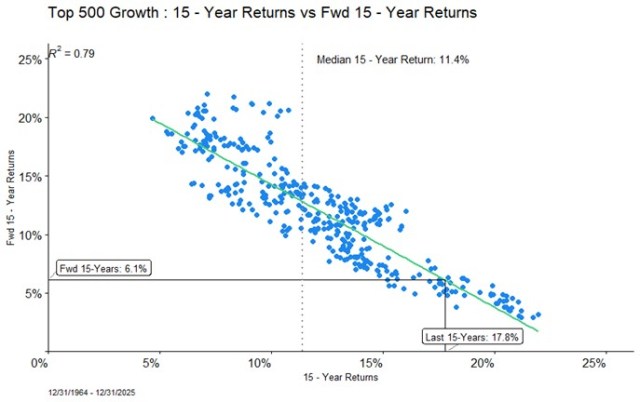
For the past 15 years, investors have been rewarded for doing one thing well: owning the S&P 500. Cap-weighted, growth-heavy portfolios dominated returns and reinforced expectations that strong recent performance would persist. The risk is not what those portfolios delivered, but what investors now assume they will deliver next, and how those assumptions hold up once the objective shifts from beating a benchmark to funding retirement income. When success is defined by generating consistent, absolute returns rather than relative outperformance, the trade-offs change. Drawdowns matter more, volatility becomes asymmetric, and the order of returns can overwhelm long-term averages, particularly once withdrawals begin. Using rolling 15-year data across major US equity styles, this analysis addresses three practical questions that matter for retirement outcomes: How do trailing returns influence future return expectations? How often do different portfolio designs meet an 8% long-term return target? How do withdrawals affect drawdown risk once investors shift from accumulation to spending? Using rolling 15-year data across major US equity styles, this analysis addresses three practical questions that matter for retirement outcomes: How do trailing returns influence future return expectations? How often do different portfolio designs meet an 8% long-term return target? And, How do withdrawals affect drawdown risk once investors shift from accumulation to spending? 1. Trailing Returns and Forward Expectations One of the hardest habits for investors to break is assuming that recent performance will continue, even when “recent” means a decade or more. That may sound discouraging for investors in broad market passive or growth-oriented portfolios, but history has also shown a better outcome for strategies that emphasized diversification or valuation discipline, such as equal-weight, value, or defensive approaches. For these portfolios, looking back on the last 15 years has historically had little bearing on what the next 15 would bring. Even after strong periods, diversified, value-focused, or defensive quality-oriented styles did not experience the same sharp drop-off in returns that cap-weighted or growth investors often faced. One potential cause of this divergence is portfolio construction. Cap-weighted and growth portfolios systematically increased exposure to recent winners, magnifying returns during strong periods while embedding risks that only surfaced during market stress. By contrast, diversified, value-focused, or defensive quality-oriented portfolios relied less on multiple expansion and more on fundamental drivers, while systematic rebalancing trimmed winners and added to laggards. These structural features enforced valuation discipline over time and helped mitigate the boom-bust pattern that historically plagued concentrated growth exposures. The data confirmed this intuition. As illustrated in Figures 1 to 7, rolling 15-year analysis showed a strong inverse relationship between trailing and forward returns for cap-weighted and growth portfolios. Diversified, value-focused, or defensive quality-oriented styles, on the other hand, exhibited muted cyclicality. In other words, the portfolios that looked safest based on strong trailing performance carried the greatest forward risk, and those that appeared “boring” often delivered more stable outcomes across full cycles. Figure 1: The Next 15 Years: Rethinking Equity Style Risk. Portfolio Trailing 15‑Year Return Estimated Next 15‑Year Return Median 15‑Year Return R² (Trailing vs. Forward) Top 500 Growth 17.8% 6.1% 11.4% .79 Top 500 Cap Weighted 14.2% 8.3% 10.5% .74 Top 500 Equal Weighted 12.3% 11.7% 11.7% .54 Top 500 Value 12.9% 14.5% 13.3% .47 Top 500 Low Vol VMQ 12.1% 13.9% 12.9% .28 Top 500 Low Vol 11.5% 11.1% 10.3% .51 Disclosures: Past performance is no guarantee of future results. All the returns in the chart above are in reference to unmanaged, hypothetical security groupings created exclusively for analytical purposes. These are hypothetical styles based on describing characteristics. Please see appendix for definitions and citations. Figure 2: Growth’s Next 15 Years May Not Look like the Last 15 Years. Figure 3: Market Cap-Weighting’s Next 15 Years May Not Look like the Last 15 Years. Figure 4: Equal Weight’s Last 15 Years Have Been Consistent With Long‑Term Norm. Figure 5: Value’s Last 15 Years: Right in Line With Its Long‑Term Return Profile. Figure 6: Low Vol VMQ’s Forward Prospects Look More Constructive. Figure 7: Low Vol’s Next 15 Years May Look Like the Last 15 Years. For cap-weighted and growth portfolios, the regression lines showed a pronounced negative slope: periods of exceptional trailing returns were typically followed by much lower forward returns. For example, over the last 15 years the Top 500 Growth delivered 17.8%, but the forward 15-year expectation is just 6.1%. This pattern is consistent with valuation mean reversion and the cyclicality of market leadership. 2. Benchmark Performance vs. Your Retirement Target This section analyzes rolling 15-year returns for major US equity styles with a focus on the practical implications for retirement savers. Their success does not depend on beating the S&P 500, but rather, achieving consistent, absolute returns required to hit retirement savings targets. Most retirement plans rely on a return from equities of about 8% per year, a number baked into many glide paths, actuarial models, and retirement calculators. That assumption is critical because it determines whether portfolios grow enough to fund future withdrawals. Overshooting that target, thanks to strong markets or product outperformance, is a welcomed bonus. But undershooting it may be catastrophic. It may mean delaying retirement, at the cost of precious time, or accepting a lower standard of living for decades. On the surface, the average cap-weighted or growth portfolio return looked very attractive, even across decades that included both bull and bear markets. But a closer look revealed something troubling, in nearly a third of the 15-year periods, these portfolios failed to reach the critical 8% annualized return. By contrast, diversified, value-focused, or defensive quality-oriented portfolios dramatically reduced that risk. In fact, the chance of missing the 8% target dropped to nearly zero for value-focused portfolios, and simple equal-weighted portfolios had only a 15% shortfall risk. While these approaches were less likely to fully capture the best periods (think fewer “home runs”), they have better odds of meeting the goal that mattered most: fully funding a secure retirement. Figure 8: Market Cap-Weighting Had the Most Sub 8% Returns. Disclosures: Past performance is no guarantee

Three Risks of Relying on the S&P 500 in Retirement Planning Read More »

Lincoln’s Blueprint for Ethical AI

“Let us have faith that right makes might.” — Abraham Lincoln, Cooper Union Address1 Abraham Lincoln, the 16th president of the United States, forged his leadership during a period of profound national upheaval and rapid technological change. Just as the telegraph, railroad, and printing press transformed the 19th century, artificial intelligence (AI), digital networks, machine learning, and automated decision-making systems are reshaping modern life. The values Lincoln emphasized in the 1860s, responsibility, transparency, and moral restraint, offer a timely framework for guiding AI development with ethical guardrails that ensure technology serves humanity, not the reverse. While we can only speculate about what Lincoln would have thought of AI, history suggests he would have embraced its potential while insisting that its advancement remain grounded in law, ethics, and human dignity. Business leaders and investors can draw from Lincoln’s conviction that free enterprise and technological innovation should elevate fundamental human worth rather than erode it. An Innovator with Moral Restraint To be sure, Lincoln was himself an innovator. He remains the only US president to hold a patent, awarded in 1849 for a device to lift stranded boats over shoals, an innovation designed to improve transportation efficiency and expand commercial access.2 As president, he championed federal investment in railroads and telegraph networks, signing the Pacific Railway Act in 1862 to connect the nation through infrastructure that expanded commerce and communication.3 Lincoln notably embraced the transformational power of the telegraph as a tool for instantaneous communications. During the Civil War, he put considerable effort into centralizing and ramping up the US Military Telegraph Corps. David Homer Bates, who managed the telegraph office, reported that “during the Civil War the President spent more of his waking hours in the War Department telegraph office than in any other place, except the White House.”4 Yet Lincoln never conflated technological speed with sound judgment. For example, he often waited for additional dispatches during the Overland Campaign before approving military movements, resisting the urge to allow the speed of information to supplant sober judgment.5 Historians describe the telegraph office as Lincoln’s “war room,” where he took in real-time intelligence but insisted that decisions remain a matter of human responsibility.6 Similarly, AI should be viewed as an enhancement to human decision-making, not a replacement. Recent advancements in medicine have allowed AI to make faster, more accurate diagnoses of breast cancer than human radiologists, but practitioners caution that algorithms should inform rather than override the judgment of clinical professionals.7  History suggests Lincoln would surely and embrace this idea and not swap out human judgment and intuition. Ethics Over Efficiency In his First Annual Message delivered to Congress on December 3, 1861, Lincoln declared, “labor is prior to and independent of capital,” adding that capital is only the “fruit of labor”.8 In this speech, where he uses the word “labor” thirty-one times, Lincoln argues for maintaining a moral foundation for business operations in which human labor, creativity, and dignity are the dominant factors over capital, profits, and efficiency. That perspective resonates amid modern debates over AI and automation. While some business leaders predict widespread job displacement, Lincoln viewed labor as central to human purpose and self-worth. Innovation, in his view, should expand opportunity rather than reduce people to expendable inputs. Rather than viewing labor as merely a means to an end whose sole purpose is the generation of financial profit, Lincoln considered labor an essential element in defining one’s purpose in life, a core foundation of one’s own human dignity. 9 In today’s AI paradigm, Lincoln’s message remains as relevant as ever. Some of the nation’s most prominent business leaders predict that AI will eventually eliminate all human work10 and the largest corporations plan to invest in automation at the expense of human labor and welfare.11   A recent report suggests algorithmic scheduling systems in retail and logistics tend to prioritize speed and profit at the expense of employee stability and well-being.12   By contrast, AI-powered education platforms that allow workers to retrain and advance into roles with higher skills echo Lincoln’s belief that labor should be elevated rather than replaced.13 Lincoln’s belief that innovation should elevate rather than replace human work suggests he would support that latter and reject the former— used solely to maximize profits by displacing labor. Law as the Moral Boundary of Innovation Before entering politics, Lincoln was a lawyer who believed deeply in the rule of law. He warned that respect for law must become the nation’s “political religion,” and provide a safeguard against injustice and abuse of power.14 While he respected the constitutional boundaries of his office, even while stretching them in times of crisis, he consistently viewed (and based) his legal decisions through a lens of ethical responsibility. AI presents similar challenges. Trained on imperfect human data, AI systems can perpetuate bias, undermine privacy, and concentrate power. Documented failures from discriminatory hiring algorithms to biased facial-recognition systems underscore the risks of unregulated deployment. From unregulated facial-recognition systems to loose oversight of large language models (LLMs), there has never been a more pressing time than now to take Lincoln’s advice fully under consideration. 15, 16 Lincoln’s legal sensibility suggests that regulation should not stifle innovation but guide it. Clear, enforceable guardrails can help ensure that AI strengthens democratic equality and civil rights rather than eroding them. For long-term investors, legal clarity and ethical governance are not obstacles to growth, but rather prerequisites for sustainable value creation. 17 Human Dignity at the Center of Progress Lincoln’s vision for America was not limited to preserving the Union. He wanted to preserve a Union “dedicated to the proposition that all men are created equal.”18 Human dignity stood at the center of his moral and political vision. Scholars of AI ethics note that LLMs and predictive tools, if left unchecked, could reinforce social biases or marginalize vulnerable groups. They can reduce people to data points, make decisions without human oversight, invade privacy through surveillance, or reinforce unfair stereotypes.19 Whether in his debates with Stephen Douglas or in his public

Lincoln’s Blueprint for Ethical AI Read More »

Auditor Specialization: A Signal for Financial Analysts

With government contracting surpassing $700 billion annually, the US federal procurement system represents one of the world’s largest and most complex marketplaces. For financial analysts evaluating companies with significant government exposure, financial statements are not merely compliance artifacts. They are core inputs into assessing earnings quality, margin sustainability, contract risk, and valuation. Because so much depends on the accuracy of contractors’ financial information, the external financial statement audit plays an essential role. Independent assurance over reported revenue, costs, and margins directly shapes how analysts interpret performance in businesses where pricing, reimbursement, and profitability are influenced by regulation as well as market forces. Companies with meaningful government contracts operate across sectors such as aerospace and defense, engineering and construction, information technology services, healthcare, and pharmaceuticals. In these industries, specialized accounting requirements, including cost allowability, indirect cost allocation, and contract-specific revenue recognition, materially affect reported earnings. This elevated risk increases the importance of auditor expertise. Auditors with deep experience in government contracting are better positioned to evaluate complex accounting judgments, identify potential misstatements, and support timely, credible reporting. For financial analysts, that expertise translates into more reliable earnings information and greater confidence in reported performance for companies with significant public-sector exposure. In a recent study, I examined how auditor specialization in government contracting affects audit quality and the market’s assessment of reported earnings. The findings point to a clear takeaway for financial analysts: as reporting complexity increases, the value of task-specific audit expertise becomes economically meaningful, not merely procedural. The Case for Specialized Auditor Expertise Government contractors operate in a regulatory environment that is far more complex than that faced by most corporate issuers. They must comply with detailed cost standards, contract-specific revenue recognition requirements, and oversight from multiple agencies, increasing the difficulty of assessing reported performance. Since revenue and expense recognition in this setting is subject to requirements that extend beyond US GAAP, such as specific procedures for indirect cost rate calculations and limitations on cost allowability, financial reporting risk is inherently higher for government contractors. As a result, specialized auditor expertise in government contracting becomes increasingly important. Such expertise helps address contract-specific reporting risks and gives financial analysts greater confidence in the earnings information they rely on when evaluating companies with significant government contract exposure. Audit firms build this expertise by employing personnel who are closely familiar with the rules and regulations that apply to government contractors and by developing experience through repeated engagements. Over time, this accumulation of specialized knowledge differentiates audit approaches in ways that matter for reporting quality. Why Auditor Specialized Expertise Matters for Market Integrity Strong external audits foster transparent capital markets. In government procurement, the stakes are even higher, as contracting adds another layer of complexity that directly affects the reliability of reported financial information. Government contractors must navigate a set of requirements that increase accounting judgment and reporting risk, including: Errors or misinterpretations in these areas can produce material analyst risks; notably, billing disputes that signal contract performance problems, financial restatements, delayed filings that impede timely forecasting, and greater uncertainty around reported contract economics and cash flows. To navigate this complexity effectively, specialist auditors who work extensively with government contractors build proficiency across three domains: technical accounting rules unique to government contracting (e.g., Cost Accounting Standards), contract-specific pricing, reimbursement, and cost allocation requirements, and compliance standards and legal frameworks such as the FAR and DCAA audit guidance. This combination of skills is specialized and valuable, and it can make the difference between a reporting process that runs smoothly and one that results in delays, disputes, or restatements. Identifying Government Contract Specialist Auditors While there is no explicit dataset on auditor specialization, it can be assessed through observable patterns. In my study, I measure specialization using audit fee data from Audit Analytics, focusing on audit firms that hold a substantial and sustained share of government contractor engagements within specific industries. These firms are classified as national specialists. In practice, investors and analysts can assess auditor specialization by: • reviewing whether audit firms maintain dedicated government contracting practices, and• examining peer companies within aerospace and defense, pharmaceuticals, and other sectors to identify audit firms that serve multiple major contractors in the same industry. Fewer Restatements, Faster Filings, Higher Credibility My research findings suggest that national government contract specialists deliver higher audit quality for government contractors. These specialists are associated with: fewer revenue- and expense-related restatements, more timely financial filings, and higher perceived credibility of earnings. These findings demonstrate that the effects of auditor expertise in government contracting extend beyond compliance and contribute to the overall quality of financial reporting. How Auditor Expertise Shapes Earnings Valuation For financial analysts, financial reporting quality is central to assessing performance, risk, and valuation. Companies with significant government contract exposure operate in environments where accounting issues can trigger material downside risk. Specialist auditors help reduce these risks by improving the accuracy, reliability, and timeliness of reported performance. The market recognizes these benefits: investors place greater trust in earnings audited by government contract specialists, as evidenced by higher value relevance compared with earnings audited by non-specialists. For those analyzing government contractors, audit firm specialization should be treated as a key informational signal that provides insight into the reliability of financial reporting. Implications for Regulators and Policymakers The findings are also relevant for public authorities. Complex regulatory environments require auditor expertise that matches clients’ reporting needs. This is crucial in sectors where the government is the primary customer and taxpayers bear part of the cost of accounting errors. When granting contracts, government agencies should consider whether the financial statements submitted were attested by an audit firm specializing in government contracts. Auditor expertise is a mechanism that builds trust and reduces information asymmetry, underscoring the need for specialized audit practices in areas with high compliance demands. What This Means for Audit Committees Audit committees of government contractors face a critical decision in selecting an auditor. The evidence reveals several key insights: specialized expertise should be a key consideration in auditor selection, fee premiums for specialists may represent value rather

Auditor Specialization: A Signal for Financial Analysts Read More »

Incentives Are Dangerously Aligned in Private Markets

“Nothing is easier than self-deceit. For what every man wishes — that he also believes to be true.” —DEMOSTHENES (349 BCE) As we begin 2026, the belief that private markets represent the next durable opportunity is deeply entrenched. This post argues that such confidence is misplaced. Private markets are not only exhibiting clear signs of late-cycle behavior; they now display the same structural conditions that have preceded past financial crises. Three defining attributes stand out: segmented risk creation, near-perfect incentive alignment across an expansive supply chain, and a deeply rooted but flawed assumption about the nature of private markets themselves. Drawing on more than 200 years of financial history, with the 2008–2009 global financial crisis (GFC) as a reference point, I examine the private markets supply chain end to end to show how institutional allocators, consultants, fund managers, wealth advisors, trade associations, trade media, and academics can each act rationally in isolation while collectively amplifying systemic risk. Tracing these dynamics upstream reveals that the rapid growth of evergreen and semi-liquid private-market vehicles reflects not financial innovation, but a late-cycle mechanism for warehousing illiquid assets, delaying price discovery, and sustaining the appearance of stability. The warning is not about bad actors, but about a system whose incentives have become so tightly aligned that even modest stress could produce severe damage. Retail investors, positioned at the end of this speculative supply chain, must be especially vigilant. The Speculative Supply Chain After studying multiple financial crises over the past 235 years, I developed a deep respect for an unsettling reality: the most damaging crises are rarely caused by a small group of bad actors. This insight exposes a common but flawed instinct to seek simple explanations after the fact, often by assigning blame to a handful of villains. While emotionally satisfying, such narratives are usually incomplete. Far more often, crises emerge from millions of actors taking billions of small, incentive-driven actions across an expansive and siloed system. Each participant responds rationally to local incentives that feel defensible within their immediate role, yet few can see how those actions compound when undertaken simultaneously and without meaningful accountability. The tragic irony is that this pattern of rational behavior has historically proven more dangerous than the actions of a small group of bad actors. It preceded the panics of the 1810s, the 1830s, 1907, 1929, 1999, and 2008–2009. Those same conditions are now visible in private markets. 3 Key Attributes of Speculative Supply Chains One way to understand speculative episodes is to view them as manufacturing supply chains. Across past financial crises, three core attributes consistently emerge. These are outlined below using the GFC as a reference point. 1. Risk Segmentation Segmentation of risk across an assembly line-like system is a defining feature of systemic financial crises. Each segment adds risk to the process, yet no single participant has sufficient visibility to understand how that risk compounds as it moves through the system. During the GFC, independent mortgage originators relaxed underwriting standards to increase loan volume. Those loans were sold to investment banks, repackaged into mortgage-backed securities, distributed to institutional investors, pooled into funds, and ultimately sold to both institutional and retail investors. At each station, participants may have recognized incremental risk locally, but few could see how those risks were being amplified elsewhere in the chain or how they compounded collectively. Figure 1: The GFC Speculative Supply Chain[i]. Source: Investing in U.S. Financial History  (2024). The relative isolation of each segment is what makes systemic crises so difficult to identify in real time. Almost no participant has sufficient visibility. In The Big Short, what distinguishes figures like Michael Burry and Steve Eisman is not intelligence alone, but vantage point. Many equally capable participants failed to recognize the danger simply because they lacked the same line of sight. 2. Incentive Alignment The second attribute required for a systemic financial crisis is the near-perfect alignment of incentives among all participants. In many cases, alignment extends well beyond direct participants. During the GFC, mortgage originators, investment banks, and fund managers all shared a common incentive to increase the volume of mortgage production and the issuance of mortgage-backed securities. But the alignment did not stop there. Additional risk amplifiers included ratings agencies, specialized insurers, and prominent voices in the financial media. Each benefited directly or indirectly from higher origination volumes, greater securitization activity, and expanding asset pools. Critically, no major participant had a strong economic incentive to slow the assembly line. Fee structures, compensation models, market share dynamics, and political pressures all leaned heavily against restraint. Had even one systemically important segment been incentivized to reduce production volume or tighten underwriting standards, the crisis may have been averted, or at least rendered less catastrophic. 3. Deeply Rooted But Flawed Assumption “There is no national price bubble [in real estate]. Never has been; never will be.”[ii] —DAVID LEREAH, chief economist, National Association of Realtors (2004) At the core of every speculative episode lies a nearly universal assumption that later proves to be fundamentally incorrect. In the 1810s, Americans purchased farmland aggressively thinking that wheat prices would remain elevated indefinitely. In the late 1920s, Americans believed it was safe to purchase stocks on margin because they assumed equity prices would never suffer sustained declines. During the GFC, people assumed that residential real estate prices would never decline on a national level. The presence of a widely held but fundamentally flawed assumption allows participants in a speculative supply chain to systematically underestimate the incremental risks that they add to the system. Because the flawed assumption is rarely questioned and instead reinforced by recent experience, it provides the psychological comfort necessary to allow risks to remain unchecked. The Private Markets Supply Chain Historically, these three attributes have been identifiable ahead of major financial crises. It is therefore concerning that all three are now present in private markets. Across the supply chain, participants operate under incentives that are closely aligned to expand production while overlooking the erosion of underwriting discipline. Indirect participants, including

Incentives Are Dangerously Aligned in Private Markets Read More »

A US GDP-Weighted Index?

Index fund investors have various choices when selecting the weighting style of the funds they hold. There are market cap-weighted indices like the S&P 500 and the Russell 2000/3000, stock price-weighted indices like the Dow Jones Industrial Average, as well as equally weighted indices. But to our knowledge, there is no index constructed at the US country level that weights holdings by each sector’s underlying GDP. So, how would we construct such an index and how would it compare to the S&P 500 in terms of performance and risk? To create our US GDP-weighted index, we broke the S&P 500 down into its 11 underlying sectors and pulled the data for each sector’s corresponding Vanguard exchange-traded fund (ETF) going back to 2005. Next, we took each sector’s contribution to GDP at the start of each quarter and calculated each sector’s GDP contribution over the subsequent quarter and multiplied that by the sector’s relative GDP weight at the start of the quarter. That gave us the sector’s contribution to the index’s overall return over that quarter. For instance, if Financials contributed 10.95% to US GDP in the first quarter of 2015 and the Vanguard Financials ETF (VHF) declined 0.81% that quarter, then by our calculation — 10.95% * –0.81% — the Financials industry contributed –0.089% to the overall GDP-weighted index during that particular quarter. Adding up all 11 sectors’ contributions yields the index’s overall return in the first quarter of 2015. Comparing this GDP-weighted index to the S&P 500 over time highlights some interesting differences in performance. The graph below charts the relative performance of the two indices during our 2005 to 2023 time period. Total Returns of US GDP-Weighted vs. SPX Based on their total returns, the two indices tracked with statistical similarity from 2005 to mid-2009. But after 2009, the GDP-weighted index outperformed the S&P 500 by over half a percentage point each year up until 2023. The summary statistics reflect these results as well. The US GDP-weighted index averaged an annualized return of 10.11% compared to 9.61% for the S&P 500 over the sample period. The US GDP-weighted index also had a lower average beta — 0.98 — over the sample period.   GDP Index SPX Mean Total Return 10.11% 9.61% Max. Total Return 35.23% 32.39% Min. Total Return –35.33% –36.99% Std. Dev. Total Teturn 18.45 18.00 Mean Skewness –0.27 –0.22 All in all, the results indicate that a US GDP-weighted index may offer the potential for excess returns with similar levels of risk compared to its benchmark. To be sure, our results occur over a limited time period of 18 years. So while it is too early to make a definitive statement about what such an index can deliver relative to a value-weighted index like the S&P 500, this is definitely an area worthy of further study and analysis. If you liked this post, don’t forget to subscribe to the Enterprising Investor. All posts are the opinion of the author. As such, they should not be construed as investment advice, nor do the opinions expressed necessarily reflect the views of CFA Institute or the author’s employer. Image credit: ©Getty Images / Peach_iStock Professional Learning for CFA Institute Members CFA Institute members are empowered to self-determine and self-report professional learning (PL) credits earned, including content on Enterprising Investor. Members can record credits easily using their online PL tracker. source

A US GDP-Weighted Index? Read More »

Shifting Tides in Global Markets: The Reemergence of International Investing

After more than a decade of US market dominance, 2025 may have marked a turning point for global investors. International equities have surged ahead of their US counterparts, evidenced by strong earnings growth and supported by policy reform momentum and a reassessment of “American exceptionalism.” This broad-based outperformance across Europe, Japan, and emerging markets has prompted investors to ask whether the tide is turning in favor of global diversification. Is this the start of a new structural cycle in market leadership, or simply a short-term correction after years of imbalance? Since the global financial crisis (GFC), US equities have been the centerpiece of global portfolios, benefiting from a powerful mix of dollar strength, technological innovation, and economic resilience. This “only game in town” narrative has been reinforced by a record bull market in both the dollar and the technology sector, drawing unprecedented capital inflows and leaving investors structurally overweight US assets. This post is the first in a series exploring whether this outperformance marks the start of a structural trend or merely a temporary shift, and how global investors can position for it. A Historical Perspective History reminds us that market leadership is cyclical, not permanent. Each decade brings its own defining theme—from the Nifty Fifty boom of the 1960s and early 1970s, when a handful of blue-chip growth stocks traded at extreme valuations before dramatically underperforming—to emerging markets and commodities in the 2000s. Dominant markets often give way to new sources of growth and value once the cycle turns. In 2025, that cyclical pattern appeared to reassert itself. International equities outperformed US stocks by roughly 17 points, with broad-based gains across Europe, Japan, and emerging markets, based on the MSCI indices and Bloomberg. While such dispersion may seem abrupt or transient after years of US dominance, it reflects a combination of narrowing growth differentials, improving corporate fundamentals internationally, and renewed policy momentum in key economies. The question now confronting global allocators is whether this shift marks the beginning of a sustained leadership transition or merely a temporary recalibration within a long-running US bull cycle. The US Has Faced Challengers Analysis going back 75 years shows that the dominant investing theme changes each decade, from the 1960s to 1970s boom to US technology in the 1990s and to emerging markets and commodities in the 2000s. In fact, a given investment theme (early technology, for example), often reverses sharply in the next (see Chart 1 below). Chart 1: Investment Themes (Cumulative, % Return) Source: Bloomberg, Breakout Capital Recent memory ends up playing a role in shaping narratives, and thus the United States’ 8% annualized out-performance since the GFC seems a given. However, history shows that US market outperformance is not the norm. Since the 1900s, US equities have lagged international peers about half the time per UBS research and DMS database (Chart 2). Looking at more high frequency Bloomberg data, US annualized returns were broadly similar to the international markets in the four decades, pre GFC. Chart 2: Average Annual Stock Market Returns by Decade, US vs Rest of World Source: UBS, DMS Database, 2024, Breakout Capital Calculations. Note: Expressed in real USD terms Pay Attention to Fundamentals Based on the latest Bloomberg data, US stocks are trading at more than 22 times forward 12-month earnings, slightly short of the extreme levels last observed during the dotcom bubble and post pandemic. This compares with 13 times for emerging markets, and 15 times for international markets outside US. Investor sentiment mirrors this valuation gap:  Per EPFR fund flow data, more than three-fourths of equity fund flows in this decade have gone into US assets, even though the United States represents 65% of the MSCI global equity index and less than 50% of global earnings based on data from MSCI and Bloomberg. Such an extreme valuation differential affords little margin for safety if fundamentals weaken, even if relatively. US fundamental outperformance now shows signs of normalization. A key driver of prior dollar strength and earnings growth was US economic momentum, which outpaced about half of emerging markets over the past five years. International Monetary Fund projections indicate this advantage is fading as more than 80% of major emerging markets are expected to grow faster than the US over the next five years. Consensus forecasts echo this trend: emerging markets are projected to deliver 17% earnings growth in US dollar terms over 2024-2026, compared with 12% for the US, and just 8% for the US equal weight index (Chart 3). Chart 3: Annualized Earnings Growth, USD Source: MSCI, Bloomberg, Breakout Capital Calculations Can the US Defend its Exceptionalism? There are many elements of US Exceptionalism including a free market-based economy, strength of institutions, and an innovation ecosystem that provides it a structural advantage. However, financial markets move in cycles as investor sentiment gets overstretched. US equities’ dominance over the last 15 years was helped by procyclical loop between attractive post crisis valuations for stocks and US dollar and balance sheet clean-up for private as well as public sector. We believe we are in a new regime where there will be an increased recognition that international markets are on the mend and offer strong earnings growth and policy improvement at much cheaper valuations. The strong cyclical advantages that the US offered 15 years ago are increasingly being chipped away creating the conditions for a multi-year tailwind in favor of international markets. Role of US Dollar: International market outperformance has historically aligned with periods of US dollar weakness. While much commentary focuses on the dollar’s reserve status, history shows it has endured several multi-year bear markets, typically lasting around seven years and averaging a 40% decline (see the DXY Index from Bloomberg in Chart 4). After a 13-year bull run and amid softer fundamentals and rising debt, the likelihood of another sustained dollar upswing appears low. Chart 4: US Dollar Index Source: Bloomberg US has become one big bet on AI now: Artificial intelligence has become the dominant driver of US equity performance, accounting for

Shifting Tides in Global Markets: The Reemergence of International Investing Read More »

Book Review: A Dollar for Fifty Cents

A Dollar for Fifty Cents: Proven Strategies to Outperform the Market with Closed-End Funds. 2025. Michael Joseph. IW$ Press   Closed-end funds (CEFs) are “chronically mispriced by the market,” writes Michael Joseph, CFA, but for investors hoping to capitalize on that inefficiency, “simply buying a closed-end fund trading at a discount isn’t enough.” Just picking the funds with the deepest discounts to net asset value (NAV) or the highest yields, adds Joseph, is a “recipe for disaster.”   He further cautions that investing in a CEF in hopes that an activist investor will swoop in and close the gap between NAV and market price is “risky” and “speculative.” Furthermore, says the Deputy Chief Investment Officer at Stansberry Asset Management, purchasing a CEF when it is initially offered is “irrational.” He also points out that when the Fed aggressively raised interest rates in 2022, several leveraged municipal bond CEFs’ valuations were slashed nearly in half.  By thus dispelling expectations of easy money, the author of this 89-page book corrects any misapprehensions that might be induced by his title, A Dollar for Fifty Cents. That phrase also appears in a subheading of a section recounting how Warren Buffett and Charlie Munger’s purchase of 20 percent of the shares of Source Capital after the 1969-1970 market downturn drove the CEF nearly 50 percent below the value of its underlying assets.   Buffett and Munger ultimately doubled their money, but as Joseph remarks in an understatement about discounts to NAV, they “aren’t always as steep as 50%.” In a fairer representation of the actual opportunity set, he cites research showing that the best CEF strategy is to buy at a 20 percent discount, with the objective of selling when the discount narrows to 15 percent.  A Dollar for Fifty Cents is written to be accessible to nonprofessional investors but provides information and insights that can benefit professionals who are not already intimately familiar with CEFs. Joseph summarizes the extensive literature on what academics view as the puzzle of why any CEF would ever trade at less than the value of its holdings. He discusses the comparatively recent emergence of CEFs with specified termination dates. That structure is designed to ensure that holders can cash in at the NAV at a time known in advance, but Joseph notes that the termination dates “can often be extended for a variety of reasons.” He also informs investors about free screening sites that can aid CEF selection. Helpful, too, are his warnings about funds with names that do not accurately describe their actual holdings, as well as the misleading distribution rates shown on some CEF factsheets.  As for the book’s subtitle, Proven Strategies to Outperform the Market with Closed-End Funds, Joseph references several studies that found superior returns for CEFs. Readers hoping to see a contemporary, attested, index-beating management record built exclusively on CEFs, however, will be disappointed. They must settle for the statement of foreword writer Rich Bello of Blue Ridge Capital that his firm “achieved great returns” and “invested in more than a few CEFs.”  Many money managers would agree, though, that closed-end funds can play a constructive role in investment portfolios. One important application is providing diversification within an income-focused portfolio that also contains assets such as bonds, preferred stocks, and REITs. CEFs that increase their distributions over time help income-focused investors to keep pace with inflation despite substantial allocations to fixed-income securities. Investors pursuing such a strategy will benefit greatly from Michael Joseph’s balanced account of CEFs’ virtues and pitfalls.  If you liked this post, don’t forget to subscribe to the Enterprising Investor. All posts are the opinion of the author. As such, they should not be construed as investment advice, nor do the opinions expressed necessarily reflect the views of CFA Institute or the author’s employer. Image credit: ©Getty Images / Ascent / PKS Media Inc. Professional Learning for CFA Institute Members CFA Institute members are empowered to self-determine and self-report professional learning (PL) credits earned, including content on Enterprising Investor. Members can record credits easily using their online PL tracker. source

Book Review: A Dollar for Fifty Cents Read More »