CFA Institute

How US State Capital Is Reshaping Strategic Supply Chains

When governments take equity stakes, investors should pay attention. The US sovereign wealth fund (SWF) announced in early 2025 is not a symbolic policy experiment or a passive reserve vehicle. It is emerging as an active investor in strategically critical supply chains, with direct implications for valuation, capital flows, and competitive dynamics across semiconductors, critical minerals, and AI infrastructure. Recent US investments in Intel, rare earth producer MP Materials, lithium developer Lithium Americas, and Canadian miner Trilogy Metals reveal a consistent strategy: deploy state capital to anchor domestic and allied supply chains, then use that signal to crowd in private investment. This approach blends industrial policy with market participation, reshaping how risk is shared between the public and private sectors in industries deemed vital to technological and economic sovereignty. The US sovereign wealth fund is not merely supporting national champions; it is redefining how strategic sectors are financed. For financial analysts and asset allocators, this marks a structural shift. Government balance sheets are becoming an explicit part of the capital stack, altering downside risk, return expectations, and the long-term investment case for companies embedded in the AI and advanced manufacturing supply chain. Anchoring Capital and Crowding In Private Investment The US government’s equity-for-grants investment in Intel illustrates how state capital is being used to reshape strategic markets in three important ways. First, it anchors expectations. By taking a direct equity stake, the government signaled long-term commitment to domestic chip manufacturing, reinforcing Intel’s role as the only advanced semiconductor manufacturer operating at scale on US soil. That signal matters for markets assessing execution risk and the durability of US onshoring efforts in a sector dominated by Taiwan Semiconductor Manufacturing Company and Korea’s Samsung. Second, it constrains strategic exit. In purely commercial terms, Intel faces pressure to retreat from capital-intensive manufacturing and focus on chip design, where returns are typically less volatile. From a supply-chain resilience perspective, however, a manufacturing exit would undermine US efforts to secure domestic capacity in advanced semiconductors. By embedding strategic objectives directly into the capital structure, government equity alters that calculus. Third, it crowds in private capital. Within days of the US investment, SoftBank committed $2 billion, followed by Nvidia’s $5 billion design and manufacturing partnership with Intel. Nvidia’s involvement, in particular, provided validation beyond public support. If the world’s dominant AI chip designer is willing to rely on Intel’s manufacturing capabilities, perceived execution risk falls, strengthening the investment case for additional private capital to follow. Government funding alone, however, is not sufficient to resolve Intel’s structural challenges. State capital does not eliminate execution risk or guarantee competitiveness against more established global foundries. Its role is catalytic rather than comprehensive: to reduce strategic uncertainty, stabilize long-term commitments, and create conditions under which private capital and commercial partnerships can scale. For investors, this distinction matters. The presence of government equity reshapes incentives and risk sharing, but it does not substitute for operational discipline or market validation. The same capital allocation logic is visible in the US government’s investment in MP Materials, the only fully integrated rare earth producer operating in the United States. As with Intel, the objective is not simply to support a domestic company, but to secure a strategically critical segment of the supply chain through direct equity participation. In July, the Department of Defense made a $400 million equity investment in MP Materials under the Defense Production Act. That stake signaled long-term government commitment to domestic rare earth processing and magnet manufacturing, an area where US supply remains heavily dependent on foreign production. As with Intel, the investment was designed to crowd in private capital and stabilize long-term demand. Following the government’s commitment, MP Materials secured $1 billion in private financing from JPMorgan Chase and Goldman Sachs to build its new “10X” magnet manufacturing facility in Texas. The Pentagon is positioned to become the company’s largest shareholder, supported by long-term offtake agreements that commit to purchasing the full output of the new facility. Rare earth magnets are critical inputs for advanced manufacturing, including defense systems, aerospace, and semiconductors, which helps explain why the Pentagon is positioned to become MP Materials’ largest shareholder, with a potential stake of up to 15% and long-term offtake agreements covering the facility’s full output. The same approach is evident in the US government’s investment in Lithium Americas, which is developing the Thacker Pass lithium project in Nevada. Through a combination of a restructured loan and a 5% equity stake in both the company and the project joint venture, the government is embedding itself directly in the capital structure of a resource critical to battery production and advanced manufacturing. As with semiconductors and rare earths, the objective is not short-term financial support but long-term supply assurance. By pairing equity participation with project-level financing, the investment reduces development risk, improves capital access, and increases the likelihood that domestic lithium production reaches commercial scale. The strategy is not confined to US borders. The US government’s 10% equity investment in Canadian mining company Trilogy Metals reflects a broader effort to secure access to critical minerals through allied supply chains, rather than relying exclusively on domestic production. Together, these investments suggest a repeatable model rather than a series of isolated interventions. Supply Chains Without Borders Trilogy Metals’ assets, which include copper deposits in Alaska, require substantial long-term capital to reach production. By taking an equity stake, the US government signals strategic interest while positioning itself to support future development alongside private investors. The investment underscores that supply-chain resilience, in practice, often depends on cross-border capital alignment with trusted partners. Overall, from semiconductors and rare earths to lithium and allied mining assets, the US SWF is operating less as a passive allocator and more as a strategic participant in the capital stack. Taken together, these investments point to a coherent effort to secure critical segments of the supply chain underpinning the US AI Action Plan, titled “Winning the Race,” through direct equity participation and capital coordination. By taking equity positions, pairing them with financing and

How US State Capital Is Reshaping Strategic Supply Chains Read More »

Public Blockchain Settlement: From Pilot to Modernized Market Structure

Public blockchains are moving toward practical use in regulated finance, supported by leading global institutions. Although early expectations assumed a longer development horizon, advancements in clearing and settlement integration suggest that blockchain-based systems are becoming increasingly relevant to the operational foundations of investment management. Just as SWIFT reshaped global transaction processing in the 1970s, blockchain-based settlement chain may play a similar role for tokenized financial instruments. For institutional allocators, chief investment officers, and risk professionals, these developments signal an inflection point in global banking infrastructure, even as important adoption challenges remain. From Pilot to Proof A key distinction in 2025 is the level of engagement from major financial institutions. Large organizations are collaborating on production-grade blockchain systems rather than conducting isolated pilots. This transition began in November 2023, when JPMorgan and the Monetary Authority of Singapore (MAS) executed the first binding interbank payment on a public blockchain, settling tokenized Singapore dollars on the Polygon network (a public, Ethereum-compatible blockchain optimized for low-cost, high-speed transactions). The transaction demonstrated that public blockchains can support transparent, final settlement for regulated payments which is an important milestone beyond early experimentation. MAS extended this work through Project BLOOM, an initiative to develop a scalable, multi-institution clearing framework for tokenized liabilities, including commercial bank deposits and regulated stablecoins. Designed to operate across both public and permissioned blockchains, BLOOM aims to improve interoperability and support coordinated issuance, clearing, and settlement. These developments suggest that core banking and investment systems will, over time, require the capability to interact with programmable, continuously available, and transparent ledgers as blockchain-based settlement gains traction. This blog explores three critical dimensions of this execution: emerging infrastructure, cross-border liquidity, and real-world adoption. Deterministic Settlement and Emerging Infrastructure The blockchain model introduces deterministic or “atomic” settlement, where payment and receipt occur simultaneously without intermediaries. This structure can reduce counterparty risk, streamline reconciliation processes, and shorten settlement cycles. To support these outcomes, infrastructure enhancements are taking shape, including: Unified token standards: improving interoperability and reducing operational complexity. Smart contract–based settlement: allowing regulatory requirements to be incorporated directly into transaction logic. Agentic payments: triggered automatically based on predefined conditions or real-world data inputs. Together, these features illustrate how tokenized settlement frameworks may modernize aspects of interbank payments while preserving the regulatory oversight and operational discipline required in traditional finance. Cross-Border Liquidity: Toward Continuous, Real-Time Capital Movement One of the most practical applications of blockchain-based settlement is the ability to move capital across jurisdictions in real time. Traditional cross-border transactions often involve multiple intermediaries, foreign exchange timing mismatches, and non-overlapping settlement windows, all of which contribute to liquidity fragmentation and increase operational costs. Potential benefits include: T+0 settlement: reducing settlement risk across time zones and improving cash availability. On-demand FX: enhancing execution certainty and automating aspects of currency management. Reduced capital requirements: including lower reliance on Nostro/Vostro accounts. However, challenges remain. These include data-input reliability (oracle risk), divergent regulatory frameworks across jurisdictions, and the need to embed compliance controls directly into automated workflows. Despite these considerations, the potential efficiency gains for fund managers and corporate treasuries, such as faster settlement, reduced liquidity buffers, and more automated operations, are meaningful. Real-World Adoption: Implications for Fiduciaries As blockchain-based settlement progresses from piloting to early adoption, fiduciaries and investment professionals will need to prepare for hybrid operating environments that incorporate both traditional and on-chain processes. Practical steps include: Assessing readiness: including custodians, fund administrators, and treasury partners. Building expertise: in smart contract risk, data governance, and operational controls. Equipping compliance/operations: manage workflows that interact with programmable settlement rails. While the transition will be gradual, these developments signal a modernizing shift in how financial institutions coordinate payments, data, and liquidity across markets. Looking Ahead: A Tokenized Settlement Environment For investment professionals, passive monitoring of blockchain developments is no longer sufficient. Firms will need to develop literacy around tokenized cash instruments, evaluate vendor readiness, and consider how blockchain-based settlement may affect operational efficiency, liquidity management, and risk oversight. As market infrastructure evolves, so must the fiduciary approach. Blockchain is no longer simply a ledger; it is emerging as part of the settlement process that may support the next generation of financial operations. source

Public Blockchain Settlement: From Pilot to Modernized Market Structure Read More »

Synthetic Risk Transfers Are the Talk of the Town. But Are They as Scary as They Look?

Synthetic risk transfers (SRTs) have recently started raising eyebrows. First introduced in Europe in the early 2000s as a niche form of regulatory capital optimization, they have since evolved into one of the most important tools in modern bank balance sheet management.[1] Since 2016, banks have executed SRTs referencing more than $1.1 trillion in underlying assets, with annual issuance worth tens of billions of dollars. As activity has climbed, and as private credit funds have eagerly absorbed the contracts, regulators and financial journalists have grown increasingly vocal about their concerns. The question is whether this scrutiny is warranted. What are SRTs? SRTs are a form of synthetic securitization, often called “on-balance-sheet securitization,” in which a bank offloads a portion of a loan portfolio’s credit risk through a contract, typically a credit derivative or guarantee, without fully selling or removing the loans from its balance sheet. In Europe, where the market was born, the investor typically acquires mezzanine loan risk by selling (writing) a credit default swap (CDS) and, in the United States, through a credit-linked note (CLN). The primary protection sellers are public and private credit funds, which are attracted by competitive yields, access to high-quality diversified credit exposures, and the ability to tailor risk via tranches. Banks pay for this protection because it allows them to transfer part of their loan risk to investors, which in turn reduces their regulatory capital requirements and frees up capital for new lending at a lower cost than raising equity. The originating bank retains the first loss (junior) tranche[2]. The investor, who does not have specific knowledge of the pool’s underlying loans (only generic details like maturity, ratings, and industry) earns a fixed premium or coupon. If defaults in the portfolio occur, the bank absorbs the first loss while the investor covers losses up to the mezzanine tranche limit. The bank retains the client relationship, loan administration, and interest income to maintain “skin in the game,” which is a regulatory requirement. But since it shed a portion of the portfolio risk, the bank is permitted to reduce capital against the loans. SRTs are typically engineered for capital relief and risk management. On the former, Basel capital rules are widely viewed as excessively penalizing certain assets. For example, auto loans require disproportionately high capital despite extremely low default rates. SRTs allow banks to reduce risk-weighted assets (RWAs) by 50% to 80% in many transactions. In addition, by transferring risk without shrinking their balance sheets, banks can reduce geographic, borrower, or sector concentration risk. Where SRTs Are Growing and Why European banks remain the most active issuers, accounting for roughly 60% to 70% of global issuance. The market has its roots in Europe because it is a heavy bank-centric loan market with a stringent interpretation of post global financial crisis (GFC) capital regulations. A clear supervisory framework and a deep investor base in Europe have also supported its growth. Each SRT transaction undergoes European Central Bank/European Banking Authority review, and recent regulatory rules have rewarded high-quality structures with more efficient capital treatment. In the United States, following the Federal Reserve’s 2023 guidance recognizing direct CLN structures as eligible for capital relief, banks quickly entered the market. The United States now represents nearly 30% of global deal flow. In Asia, institutions in markets such as Australia and Singapore have experimented with SRT-like structures, often under different labels or pilot programs, though volumes are considerably smaller. Born of Overregulation, Yet Heavily Scrutinized Despite their benefits, SRTs continue to draw significant regulatory scrutiny. Supervisors are most focused on rollover risk, investor concentration, and back-leverage, all of which can become more pronounced as issuance grows. First, rollover risk arises because SRTs usually mature in three to five years, while the underlying loans often remain on the balance sheet for much longer. If market conditions worsen when an SRT comes up for renewal, banks may struggle to replace the protection, leading to a sudden increase in RWAs and potential pressure to deleverage. Second, this risk is amplified by investor concentration: a relatively small group of private credit funds dominate the mezzanine market. Their outsized role means that the entire SRT ecosystem depends on the willingness of a handful of players to refinance. In a stressed market, these funds could demand sharply higher spreads or pull back altogether, leaving banks with limited alternatives. Third, regulators are attuned to back-leverage. Under Basel III/IV and regional rules (e.g., the European Union’s Capital Requirements Regulation), a bank must prove that a material share of the portfolio has been transferred, that the transfer is real, and investors can be protected even under stressed market conditions. By requiring evidence of material risk transfer and bank skin in the game, the rules aim to prevent regulatory arbitrage through circular transactions and ensure that SRTs strengthen, rather than weaken, the resilience of the financial system. Finally, concerns about opacity persist. While SRTs are far more standardized and transparent than pre-2008 collateralized debt obligations, their bespoke nature and limited public disclosure still makes some observers uneasy about assessing the true distribution of risk. Eye on the Ball For banks, SRTs have become a strategic lever to manage capital, mitigate credit exposure, and keep lending volumes intact as the regulatory environment tightened after the GFC. The public skepticism that surrounds SRTs is, in my opinion, a result of PTSD from the financial crisis. The main difference this time is that moral hazard is meaningfully lower than in pre-2008. Banks retain first-loss exposure, investors hold real risk, and the overall market remains relatively small. Rather, SRT issuance is a response to overly conservative risk weights that, in the years following the crisis, pushed banks to limit lending. It is a rational approach to redistributing risk and freeing capital for investment, especially in Europe, where banks are by far the dominant player. To institutional investors, SRTs offer potentially differentiated credit exposure and compelling yield. [1] SRTs are also referred to as “Significant Risk Transfers.” The significant part refers to meeting regulatory criteria (like Basel rules) to get capital relief (reducing

Synthetic Risk Transfers Are the Talk of the Town. But Are They as Scary as They Look? Read More »

Book Review: The Financial Restructuring Tool Set

The Financial Restructuring Tool Set: How to Fix Your Broken Balance Sheet. 2025. Mike Harmon. Columbia Business School Publishing. CFA charterholders might be startled by a statement that appears near the end of The Financial Restructuring Tool Set, by Mike Harmon: “Not once have any financial analysts in the history of time correctly forecasted the future cash flows of a business.” Reading on, charterholders will be relieved to find that the author is by no means criticizing their performance. His point is merely that it would be a mistake to regard financial modeling as a crystal ball. The outputs will never wind up being completely accurate, but the unquestionably valuable process enables analysts to “‘try on’ different capital structures under different scenarios,” says Harmon. Investors who specialize in distressed securities might cringe at Harmon’s mention of their characterization in some quarters as “bottom feeders.” He quickly notes, however, that “in nature, bottom fishers play a productive role in the ecosystem.” Lest these operators, also labeled “vultures,” feel totally absolved by that remark, Harmon proceeds to list certain ways in which they subtract rather than add value in restructuring situations. One example is premature default, which can occur when a distressed investor that seeks to obtain ownership of a company’s equity proves less willing than conventional investors to cooperate with a management that just needs a little more time to work out the company’s problems. Evenhanded to the end, Harmon also lists distressed investors’ positive impacts, such as infusing cash into viable companies that desperately need some but find conventional debt and equity investors less willing to provide it. Harmon maintains readers’ interest at a high level by sprinkling the book with facts and observations that are anything but mundane. He reports that recovery rates on leveraged loans have declined as a result of covenant-lite structures increasing from 4% of deals in 2008 to 96% in 2022. Over the 1984 to 2017 period, he adds, 20% of companies that emerged from Chapter 11 bankruptcy reorganization subsequently filed for bankruptcy at least one more time, with one company filing five times. Harmon also emphasizes that the company valuation determined by a financial restructuring plan does not necessarily equal the company’s true valuation. Rather, it is the product of high-stakes negotiations by the company’s various classes of creditors. He also points out that “big boy letters,” used by investors who receive material nonpublic information to get around securities laws prohibiting them from trading under such conditions, are not legally recognized as legitimate and remain largely untested in litigation. The Financial Restructuring Tool Set presents, in 352 pages, a comprehensive account of how distressed companies go about reducing the burden of their debts and other liabilities, both inside and outside bankruptcy. It covers such techniques as 363 asset sales, contract rejection, debt-for-equity swaps, and more. The book’s primary focus is practices in the United States, but one chapter is devoted to bankruptcy codes and practical experience in the United Kingdom, France, China, and Japan. An Oaktree Capital Management alumnus who now advises and invests in small- to medium-sized companies at Gaviota Advisors, Harmon is abundantly equipped to provide valuable insights even to experienced distressed debt practitioners. Readers who are less acquainted with the field may initially be daunted by a substantial volume of jargon, including such colorful terms as “zombie,” “freebie basket,” “blacklist” (not in its earlier labor practices sense), and “bondmail.” These are in addition to numerous acronyms unknown to neophytes, such as VERBO, NGRS, KERP, and ICERP. Harmon does an excellent job of explaining such unfamiliar phraseology, tacking on a 10-page Jargon Guide after the main text. The book’s Notes testify to his diligent study of scholarly research on his subject. Harmon makes a useful contribution to the field with suggestions for correcting the flaws in the existing U.S. insolvency regime. He maintains, for example, that too many small companies liquidate because many of the costs of reorganization in bankruptcy are fixed and too high for them. Potential solutions include creating greater awareness of Subchapter V’s pathway to lower-cost reorganization and using artificial intelligence to streamline bankruptcy-related documents as a means of further reducing costs. Just as analysts never hit companies’ financial projections on the nose, book authors rarely nail every single reference. The Financial Restructuring Tool Set illustrates that point by crediting baseball great Yogi Berra with this comically paradoxical statement: “Nobody goes [there] anymore. It’s too crowded.” Publishing house editors ought to know that attributions can easily be checked in the indispensable Quote Investigator website, which in this case reports that Berra appropriated the joke, but that its antecedents date back to 1882. Elsewhere, Harmon implies that BlackRock Chief Investment Officer Bob Doll is the originator of “No one rings the bell at the bottom.” It is actually an old Wall Street adage that I heard in the late 1970s. Such minor lapses do not alter the fact that The Financial Restructuring Tool Set is up to date and authoritative. It facilitates gaining an understanding of the many techniques for resolving financial distress with case studies involving such prominent companies as Chrysler, Frontier Communications, and J.C. Penney. Even practitioners interested in the topic who do not intend to read the book cover to cover should own it as a reference work that can be navigated through its highly detailed index. source

Book Review: The Financial Restructuring Tool Set Read More »

The Growth Story Behind Insurance-Linked Securities

After years of low yields and rising macro volatility, investors are taking renewed interest in insurance-linked securities (ILS) for their very low correlation with traditional financial markets. Despite event-driven volatility, the first half of 2025 reaffirmed the market’s strength and growing scale. According to mid-year industry data, ILS issuance reached $17.2 billion across nearly 60 transactions, making 2025 the second-largest year in the market’s history, with half the year still to go. The total market size has now surpassed $56 billion, having expanded by more than 75% since 2020. This year alone has seen 10 new issuers and three wildfire bonds, signaling growing investor confidence alongside supportive market dynamics. Drivers of Growth The surge in issuance is being fueled by both sides of the equation: strong demand from sponsors seeking risk transfer and an equally strong appetite from investors looking for diversification. Elevated collateral yields and a wave of maturing bonds have created liquidity to reinvest. At the same time, diversification within the market has deepened, with new sponsors, new perils, and more sophisticated deal structures emerging. Recent issuances illustrate this breadth. US hurricane exposures still dominate, but there has also been $182 million of coverage for U.K. flood, $105 million for Canada earthquake and severe convective storms, and $100 million for French terrorism. Such variety highlights the maturing nature of the market and its widening relevance across geographies and perils. Performance and Investor Experience Performance has been another bright spot. The Swiss Re Global Cat Bond Index delivered a 9.89% return for the first ten months of 2025, even as global markets contended with tariffs, currency volatility, and other macro shocks. Looking further back, the consistency of returns stands out: since 2002, catastrophe bonds have produced positive monthly results nearly 90% of the time. Interestingly, inflation — typically a challenge for insurers — can have an indirect positive effect on the ILS market. Higher insured values at risk increase the need for risk transfer, which widens spreads and can enhance investor returns. Additionally, most catastrophe bonds pay floating-rate coupons tied to Treasury money market funds, meaning higher interest rates can directly benefit returns. For multi-asset allocators, the consistent return pattern of catastrophe bonds has made them a compelling complement to traditional fixed income in high-rate environments. Risk and Resilience The start of 2025 underscored the ever-present risks inherent in catastrophe-linked investments. The devastating wildfires in Los Angeles caused approximately $40 billion in insured losses, the largest wildfire-related loss on record. Severe convective storms across the United States added billions more in claims. More recently, Hurricane Melissa triggered a 100% payout of a $150 million World Bank Catastrophe Bond for Jamaica. Events like these are reminders that cat bonds are not risk-free. However, they also demonstrate the market’s resilience. While some structures were affected, in both cases the broader system absorbed the shocks without widespread disruption. The key lies in understanding and modeling the underlying risks accurately. Investors must know the exposures they are assuming, but they should also expect fair compensation through higher spreads and premiums as those risks increase. Institutions tend to access the market through specialist funds, with managers leveraging deep catastrophe modeling expertise to construct diversified portfolios. Re/insurers are well positioned in this space due to their access to proprietary data and scientific teams capable of analyzing complex risk factors. Institutional Adoption What was once a niche investment is increasingly finding its way into mainstream institutional portfolios. An open question remains: how should investors categorize ILS exposure? Some treat it as part of alternative fixed income, others within hedge fund allocations, and some view it as a standalone diversifier. Most institutions we speak to would allocate around 1% to 3% of portfolios to ILS. While that may seem modest, even small exposures can meaningfully enhance diversification and income. Modeling suggests that allocations of up to 10% could further improve portfolio metrics, though investors remain cautious and deliberate given the asymmetric risk profile and event-driven nature of returns. Looking Ahead The outlook for ILS remains constructive. Risk exposures are growing due to inflation, urbanization, and climate-related pressures, all of which increase the need for capital to absorb catastrophic losses. At the same time, innovation is expanding the range of available structures, including index-based solutions and parametric products that offer faster payouts and more efficient risk transfer. Continued institutionalization is also likely. As data quality and model transparency improve, investor confidence in the asset class should deepen. However, success will depend on maintaining rigorous risk assessment and disciplined portfolio construction. Catastrophe bonds and other insurance-linked securities are evolving from a specialist niche into a recognized source of diversification. Their appeal lies in their independence from economic cycles and their potential to provide steady returns even when traditional markets are under stress. For investors searching for uncorrelated returns, ILS can play a valuable role in portfolio resilience. source

The Growth Story Behind Insurance-Linked Securities Read More »

AI in Venture Capital: Separating Signal from Noise

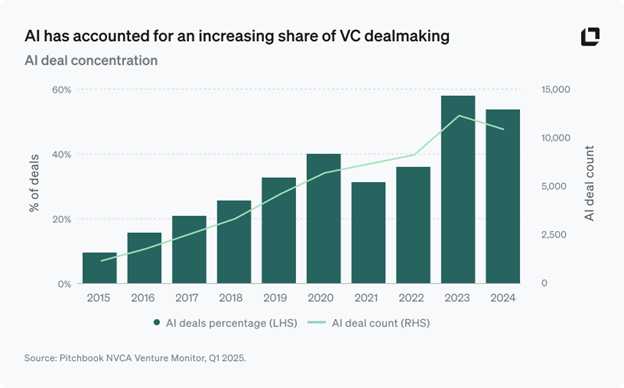
In both public and private markets, AI’s rise has been extraordinary: fewer than a dozen technology stocks now account for roughly 40% of the S&P 500, while AI-driven startups dominate venture inflows and valuations (see Figures 1 and 2). Assessing fund quality now means distinguishing not only among managers but also among emerging technologies at varying stages of maturity. The central challenge remains: How can investors separate a signal from noise, and identify real, lasting value in AI-focused venture portfolios? Figure 1 Figure 2 The following framework can help LPs and advisors cut through the noise and evaluate AI venture funds with greater precision. A Simple Framework LPs, advisors, and investors interested in AI-focused funds should start by asking themselves the following questions: Am I just investing in generative pre-trained transformer (GPT) wrappers that will not withstand a new feature release from OpenAI? How saturated are the verticals into which I would be deploying capital? Is there value in reinventing legacy software-as-a-service (SaaS) with AI, even as incumbent enterprise SaaS companies (like ServiceNow) move fast to secure market share? Once those initial questions are addressed, two additional factors can help investors assess the durability and scalability of AI-focused companies. First, do these companies operate in areas with high barriers to entry, and are they well-positioned to take advantage of concurrent innovation waves? If so, they are more likely to have defensible staying power and deliver outsized returns as the market matures. Startups with high barriers to entry have wider and longer lasting moats that provide some protection from the next OpenAI keynote or Google I/O event. The notetaking apps or coding assistants that emerge overnight will likely face challenges moving forward if they are not insulated from broader technological advancements. In addition, one of the highest barriers to entry is, oftentimes, trust in the company. Trust is vital in product adoption and is built over time through relationships, expertise, and empathy. The best companies can harness trust and deepen relationships with targeted, rather than blanket, AI use. In these cases, AI acts as a supercharger for shorter development cycles to deliver in response to client feedback. AI augments, rather than replaces, and that augmentation builds client trust and supports the overall growth of the business. This is in contrast to “vibe coding,” where AI writes all the code in the interest of shipping with speed rather than focusing on delivering quality outputs or solving for real needs.     Second, positioning around multiple innovative supercycles improves both the durability of a startup and its ability to scale its go-to-market strategy. Rather than investing exclusively in AI companies with AI-only use cases, expanding the aperture to include adjacent use cases raises the chances of building a competitive moat with multiple points of entry for customers. Examples include a logistics startup using physical sensors alongside AI agents to manage shipyards autonomously, or a healthcare company leveraging AI for practice management functions such as scheduling, billing, and document sharing, delivering those capabilities seamlessly to patients via an app. Wiz as a VC Case Study A clear example of how these two factors come together is Wiz, a cloud-security startup founded in 2021, which Google intends to purchase for $32 billion. Cloud security has significant barriers to entry. It is a segment built on a high degree of operational trust, given the sensitive nature of storing enterprise data and preventing leaks. Wiz grew its business with early proof-of-concepts, recruiting top engineering talent and embedding teams with clients to build trust. Customers who initially adopted Wiz for early cloud migration faced new security challenges associated with enterprise AI development, and Wiz capitalized on that business as well. By building trust around their products and simultaneously selling into both the cloud and AI waves, Wiz attracted Google’s attention and delivered strong returns for investors. Cutting Through the Noise The proliferation of AI-focused VC funds demands sharper due diligence from investors and advisors. Applying this simple framework can help distinguish managers backing companies with real barriers to entry and long-term strategic positioning from those chasing hype. The investors who can tell the difference will be the ones who thrive in the years ahead. For disclaimers, visit: https://www.optoinvest.com/disclaimers source

AI in Venture Capital: Separating Signal from Noise Read More »

AI in Investment Management: From Exuberance to Realism

Artificial intelligence has advanced rapidly in recent years, raising expectations across the investment industry for meaningful gains in research efficiency, reporting, and risk management. Yet emerging academic and industry research offers a more sober view of this fast-moving technology. Recent findings point to persistent reliability gaps, the continued need for human judgment and oversight, and limits on near-term value creation, suggesting that AI’s impact may be more measured than early enthusiasm implied. For investors, the message is clear: AI remains a powerful long-term opportunity, but one best realized through disciplined, evidence-driven adoption rather than early-stage exuberance. This post is the third installment of a quarterly reflection on the latest developments in AI for investment management professionals. Drawing on insights from investment specialists, academics, and regulators contributing to the bi-monthly newsletter Augmented Intelligence in Investment Management, it builds on earlier articles that explored AI’s promise and pitfalls and risk management techniques. This installment moves toward a more pragmatic understanding of its potential. A close review of recent papers reveals three common themes that may temper the industry’s optimism. 1. The Reliability Challenge Despite impressive advances, AI’s reliability remains a primary barrier to deployment in high-stakes financial environments. A recent analysis by NewsGuard (2025) documents a sharp rise in false or misleading statements from leading AI chatbots, with error rates climbing from roughly 10% to nearly 60%. This expansion of “hallucinations” is not merely a statistical anomaly: an internal OpenAI study (2025) finds that hallucinations are often a structural feature of model training, as current benchmarks reward confident answers over calibrated uncertainty, incentivizing plausible but incorrect statements. Concerns also extend to ethical alignment. In a financial decision-making simulation inspired by governance failures at cryptocurrency exchange and hedge fund FTX, Biancotti et al. (2025) show that several leading models carry a substantial probability of recommending ethically or legally questionable actions when facing trade-offs between personal gain and regulatory compliance. For investment professionals, whose work depends on precision, transparency, and accountability, these studies collectively underscore that AI is not yet reliable enough to operate autonomously in many regulated financial workflows. 2. Premium on Human Judgement A second theme in the research is that AI appears to augment rather than replace human expertise and may even increase the importance of high-quality human oversight. Neuroscience research from MIT (Kosmyna et al., 2025) finds that participants interacting with LLMs exhibit reduced brain activity in regions associated with memory retrieval, creativity, and executive reasoning. Although AI may accelerate initial analyses, heavy reliance on these systems may dull the cognitive capabilities that underpin robust investment judgment. AI adoption also does not diminish the need for human presence in client-facing contexts. Yang et al. (2025) show that clients perceive AI-generated investment advice as significantly more trustworthy when accompanied by a human advisor, even when the human adds no analytical value. Similarly, Le et al. (2025) find that customer satisfaction improves when human–AI collaboration is made explicit rather than concealed. Automation remains limited as well. In large-scale task benchmarking, Xu et al. (2025) observe that advanced AI agents autonomously complete only about 30% of complex, multi-step tasks. A separate study by Tomlinson (2025), analyzing more than 200,000 Copilot interactions, shows that in roughly 40% of cases model actions diverge meaningfully from user intent. Taken together, these findings suggest that investment firms should view AI as a tool for augmenting humans rather than replacing them, with a continual need to fact-check the quality of machine-generated output. This ongoing and structured oversight reduces the value added by the machine and increases complexity and costs, particularly because AI output often appears plausible even when incorrect. The literature also highlights the importance of organizational policies to prevent cognitive deskilling. 3. Structural and Economic Constraints Finally, macroeconomic constraints also temper expectations. Acemoglu (2024) suggests that even under optimistic assumptions, aggregate productivity gains from AI over the next decade are likely modest. Much of the initial evidence comes from tasks that are “easy to learn,” while harder, context-dependent tasks show a more limited scope for automation. Regulation adds further friction. Foucault et al. (2025) and Prenio (2025) note that AI adoption in financial intermediation introduces new concentration risks, infrastructure dependencies, and supervisory challenges, prompting regulators to move cautiously. This increases compliance costs and may slow industry-wide adoption. These structural factors indicate that AI’s impact may be more incremental and less disruptive than commonly assumed. Monitoring AI Advancements AI’s promise is real, but its impact will hinge on how thoughtfully and responsibly the industry integrates it. It will play a central role in the industry’s future, but its trajectory will likely be more complex and dependent on effective human stewardship than early expectations suggested. References Acemoglu, D. The Simple Macroeconomics of AI, National Bureau of Economic Research, Working Paper 32487, May 2024 Biancotti et al., Chat Bankman-Fried: an Exploration of LLM Alignment in Finance, arXiv, 2024 Foucault, T, L Gambacorta, W Jiang and X Vives (2025), Barcelona 7: Artificial Intelligence in Finance, CEPR Press, Paris & London. Kosmyna, et al. Your Brain on ChatGPT: Accumulation of Cognitive Debt when Using an AI Assistant for Essay Writing Task, MIT Media Lab, June 2025 Le et al., The Future of Work: Understanding the Effectiveness of Collaboration Between Human and Digital Employees in Service, Journal of Serivce Research, vol. 28(I) 186-205, 2025 NewsGuard, Chatbots Spread Falsehoods 35% of the Time, September 2025 Prenio, J., Starting with the basics: a stocktake of gen AI applications in supervision, BIS, June 2025 Tomlinson, et al., Working with AI: Measuring the Applicability of Generative AI to Occupations, Microsoft Research, 2025 Xu et al, TheAgentCompany: Benchmarking LLM Agents on Consequential Real World Tasks, ArXiv, December 2024 Yang, et al., My Advisor, Her AI and Me: Evidence from a Field Experiment on Human-AI Collaboration and Investment Decisions, ArXiv, June 2025 source

AI in Investment Management: From Exuberance to Realism Read More »

Winners and Losers in a World Without Quarterly Earnings

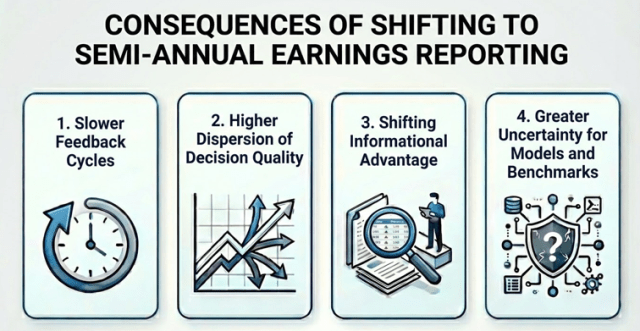
The question of whether quarterly earnings reporting helps or harms long-term value creation has returned to the US policy agenda. As a former fund manager, I can appreciate the appeal, but as someone who currently spends her days analyzing investor decision-making data, I see the implications of a shift to semi-annual reporting as far broader than the familiar short-termism argument suggests. Reducing the cadence of earnings releases would amount to a major behavioral intervention in how market practitioners learn, recalibrate, and compete. While proponents argue that quarterly disclosure causes both companies and investors to fixate on short-term results (McKinsey research links short-term focus to lower ROIC[1]), the market consequences for investment professionals are more complex and subtle than this suggests — with different implications for different parties. From a big picture perspective, moving to a semi-annual earnings cycle would likely slow feedback loops, widen the dispersion in investment decision quality, shift informational advantage, and increase uncertainty for quantitative models and benchmarks. Having been a portfolio manager in the United Kingdom when companies reported only twice a year, I recall how much more enjoyable fundamental investing was under that structure. We genuinely thought longer-term, and the administrative burden was lighter for everyone involved, so I can appreciate the argument for making the change. However, as someone who now spends her days distilling useful insights from data, my instinct is that removing quarterly earnings would reduce transparency in a way the industry can ill afford. For all its flaws, quarterly reporting remains one of the few structured feedback mechanisms available to public investors. It anchors accountability and gives practitioners a regular opportunity to recalibrate expectations, test hypotheses, and revisit assumptions. Eliminating that rhythm would lengthen the feedback cycle and weaken the industry’s collective learning mechanism. Essentia’s data show that decision-making quality improves most when feedback is timely, structured, and specific, precisely the qualities quarterly reporting delivers. Winners, Losers, and Unintended Consequences Moving from quarterly to semi-annual earnings reports would be a significant behavioral intervention, designed to reduce short-termism but certain to carry a range of intended and unintended consequences. For regulators such as the SEC, the Fed, and other monitors of systemic risk, eliminating quarterly earnings would mean a 50% reduction in a data source they rely on heavily. Less frequent corporate information would slow feedback loops and could delay the detection of emerging risks, a concerning dynamic in an era of index funds, algorithmic trading, and rapid capital movement. Perhaps the biggest winner from a lengthening of the cadence of earnings reports would be the fundamental active fund management industry. It is also hard to imagine company management being anything other than pleased by the prospect of less-frequent public reporting. It would feel like a windfall to decision-makers who want more room to focus on long-term strategy rather than on managing the share price each quarter. It might even help revive the ailing IPO market, where the reporting burden associated with quarterly earnings remains a meaningful deterrent to going public. Corporate governance advocates would argue (and I would agree) that reduced transparency increases the risk of poor management or even malfeasance going unnoticed. That said, with the infrastructure already in place for quarterly internal reporting, there is little reason to think that well-intentioned management teams would neglect governance; they simply would not face the burden of reporting it publicly every three months. Quant and systematic strategies that depend on a continuous flow of reported fundamentals to recalibrate factor exposures, forecast risk, and validate machine-learning inputs would face clear challenges. That said, many are likely already running scenarios and adjusting their factor construction and risk-monitoring practices in anticipation of such a shift. Perhaps the biggest winner from a lengthening of the cadence of earnings reports would be the fundamental active fund management industry. Less frequent public information means more room for alpha generation: more space for expertise to make a difference, whether that expertise comes in the form of a human, a computer or, increasingly, a mix of both. This is an environment where fundamental analysts and PMs must adjust their research cycles and model inputs to a more extended timeline, prioritizing proprietary research. Quant and systematic strategies that depend on a continuous flow of reported fundamentals to recalibrate factor exposures, forecast risk, and validate machine-learning inputs would face clear challenges. That said, many are likely already running scenarios and adjusting their factor construction and risk-monitoring practices in anticipation of such a shift. Anyone whose product relies on frequent disclosures to evaluate governance, compensation alignment, and ESG progress would likely suffer. Alternative data providers would likely see an acceleration in demand as firms redeploy the time and resources currently devoted to earnings processing into data that can illuminate the gaps left by less-frequent disclosure. By contrast, providers whose products rely on regular filings to evaluate governance, compensation alignment, and ESG progress would face clear challenges. It is less clear whether the sell-side would be a net winner or loser. Much of equity research, sales, and corporate broking activity is anchored around earnings season, and without that event, trading catalysts would diminish. Halving the frequency of formal results would mean fewer opportunities to publish notes, host calls, and capture client attention. The financial media would also lose a key driver of readership and engagement. A slower cadence would shift narrative power from reported data to speculation, potentially reducing accountability for both journalists and analysts. Could fewer public earnings calls help preserve the roles of equity research analysts? The threat of AI to junior analysts remains, but the expertise within the seasoned sell-side community could become more valuable. Knowing which questions to ask and which data to analyze between formal earnings announcements is an experienced analyst’s stock-in-trade, and a slower cadence could reinforce the importance of that skill set. In a similar vein, less frequent and standardized disclosures would create challenges for the passive investment ecosystem, which depends on regular, standardized reporting to maintain index accuracy and benchmark integrity. Allocators and institutional managers using

Winners and Losers in a World Without Quarterly Earnings Read More »

China Inc. Returns: What’s Driving HKEX’s Boom

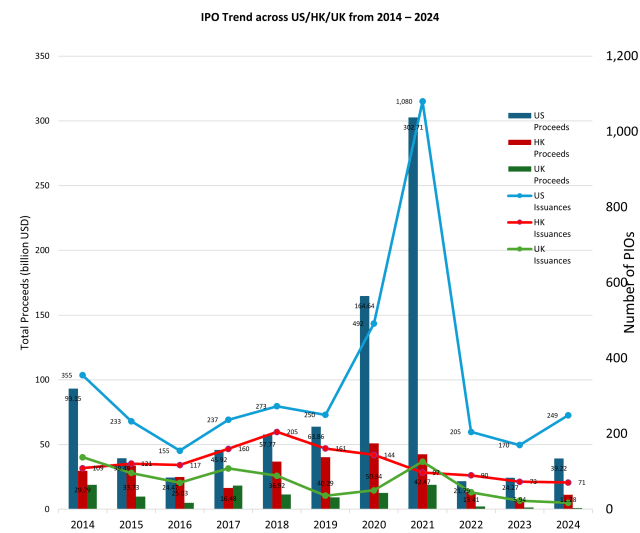
Ever since the economic reform and opening of Chinese Mainland markets in the 1980s, Chinese Mainland enterprises have long desired to raise funds via equity and bond issuance to foreign investors. Even amidst the peak of onshore domestic growth, Chinese Mainland firms have been actively engaged in offshore listings to access foreign capital pools backed by hard (fully-convertible) currencies, such as the US dollar. This post builds on my earlier analysis of Hong Kong SAR market’s IPO resurgence. In this piece, I examine the broader forces behind the phenomenon, including how shifting regulations, US–China tensions, and Hong Kong Exchanges and Clearing Limited (HKEX) reforms are reshaping global capital flows and channeling Chinese Mainland listings back to Hong Kong SAR. Up until 2025, more than 300 Mainland Chinese companies had listed overseas and raised hundreds of billions of US dollars in total. In 2020, during the COVID-19 pandemic, which marked the last peak of IPOs, companies listed on the HKEX raised around $50 billion from IPO proceeds, driven primarily by secondary listings in the Hong Kong market from already US-listed Chinese Mainland tech giants like JD and NetEase. From Wall Street to Central: How China’s Capital Flows Are Rebalancing For decades, global IPO activity has been dominated by the NYSE and NASDAQ, exchanges that together account for over $50 trillion in market capitalization. Ranked #1 and #2, these US exchanges surpass the total market cap of the rest of the top 10 stock exchanges in the world. Indeed, for decades, the NYSE and Nasdaq have dominated the global IPO market. The United States possesses a combination of structural, economic, and institutional advantages that attract global companies, including those from the Chinese Mainland, which have consistently demonstrated a strong appetite for US listings. The HKEX, despite being outranked by the US market in both issuance volume and proceeds, remains among the major stock exchanges globally, frequently ranking among the top three exchanges worldwide in terms of IPO proceeds, and is undoubtedly the regional gateway for the Greater China market. Chinese Mainland companies seeking offshore capital have typically faced a binary choice: The United States (NYSE/Nasdaq) or Hong Kong SAR (HKEX). The US market was often preferred, especially for tech and growth companies, due to its global visibility, valuation premiums, and deep liquidity. Chinese Mainland firms rarely consider major stock exchanges in other markets, such as the United Kingdom, Continental Europe, India, or Japan, because of a mix of factors, including a lack of investor familiarity, valuation disadvantages, cultural barriers, and political factors. Source: SEC, HKEX, LSEG. Notes: 1. The US consists of both the NYSE and the Nasdaq; 2. Proceeds include only IPO issuances, excluding transfer and introduction. For global investors, this rebalancing means new access points to Chinese Mainland growth — but through a market more tightly linked to domestic policy and liquidity cycles. Regulation, Risk, and Realignment Chinese Mainland’s path to overseas capital has fundamentally changed over the past decade, shaped by deepening US–China tensions and new layers of regulation. Chinese Mainland companies are now facing more stringent requirements to access US capital markets. Consequently, the number of new listings from Chinese  Mainland companies on US exchanges has almost halved from 19 in 1H23 to 11 in 1H25. The passage of the Holding Foreign Companies Accountable Act (HFCAA)[1] in the United States in 2020 was a landmark, which forces mandatory delisting from the US market if a foreign company fails to comply with the PCAOB’s inspection of its audit papers. Chinese  Mainland national security laws prohibit the sharing of certain financial and operational information with foreign entities, however. For instance, Chinese Mainland Data Security Law[2] imposes strict controls on cross-border data transfers, which directly collide with US requirements. The combined impact of regulatory barriers, delisting waves, and geopolitical uncertainty has led to a structural realignment in global capital markets. In addition, the increasing popularity of private market capital raising in the United States further diminished the appeal for public listings. Global PE funds raised $424.6 billion in 1H2025, already more than the total in 2024. To date, only a minor portion of delistings of Chinese Mainland firms have been driven by PE acquisition compared to the forced delistings. However, greater flexibility, confidentiality, fewer disclosure requirements, and strategic control render the private market an emerging attractive alternative. This shift is not temporary. It’s a structural recalibration of how companies list, how investors evaluate, and where capital flows. As US–China decoupling deepens, HKEX is positioning itself as the new gateway for Chinese Mainland’s global ambitions. Investors must adapt as the investable universe of Chinese Mainland equities shifts from ADRs to Hong Kong SAR listings, reshaping liquidity, governance, and valuation dynamics. Company Industry Delisting Date Main Reason Voluntary or forced Luckin Coffee Food and Beverage June 2020 Fraud Scandal; $864M lost by U.S. investors Forced China Telecom, China Mobile, China Unicom Telecom Jan 2021 Executive order citing their ties to the Chinese military Forced CNOOC Ltd. Oil and gas Oct 2021 National security concerns Forced Didi Ride-hailing June 2022 Data security concerns Forced ChinData Data Service Dec 2023 Strategic acquisition by a PE firm Voluntary Table: Notable delistings of Chinese Corps in the US exchanges. Source: SEC, NYSE, Nasdaq. The Gateway Reinvented: HKEX’s Structural Advantage HKEX’s recent reforms build on a long-held advantage: proximity and policy alignment that make it the natural destination for Chinese Mainland listings. The Stock Connect was developed and launched by HKEX, Chinese exchanges, and ChinaClear in 2014 to build a mutual market access system between Chinese Mainland and Hong Kong SAR, allowing Chinese Mainland investors to trade Hong Kong SAR stocks via local brokers, largely boosting liquidity and valuation potential and maintaining domestic coverage for Hong Kong SAR-listed Chinese Mainland firms. These changes make HKEX not only the listing venue of choice for issuers, but an increasingly important conduit for investors seeking diversified exposure to Chinese Mainland’s innovation economy. For a long time, Chinese Mainland firms preferred U.S. exchanges for dual-class share structures that allow them to

China Inc. Returns: What’s Driving HKEX’s Boom Read More »

AI in Finance: Changing Workflows, Growing Demand for Human Judgment

GenAI is reshaping investment workflows faster than most firms can adapt. The  release of Claude for Financial Services is the latest step in applying GenAI in the investment industry. Its focus on domain knowledge and specialized workflows distinguishes it from generalized frontier LLMs and raises important questions about how financial workflows will evolve, how tasks will be divided between humans and machines, and which skills will be needed to succeed in the future of finance. Financial firms are contending with the most significant overhaul of technology capabilities in a generation. AI-driven digital transformation is reshaping job roles and investment processes, prompting professionals to reconsider the boundaries between human and machine cognition, while firms work to upgrade their technology stacks and human capital to remain competitive. Amid this shift, firms and professionals must reevaluate the skills needed for success. Projecting how AI will change workflows and job roles is challenging given the pace of technological progress and uncertainty around transition pathways. Even so, this assessment is necessary for strategic planning, both for industry leaders and for individuals considering their career paths. CFA Institute  continually monitors and interprets AI developments and provides guidance and education to help financial professionals navigate the changing landscape and build the career skills they need to succeed. To advance this mission, we are embarking on an ambitious project to analyze the structural implications of AI for the investment profession. We will explore scenarios for how AI will affect professional practice, judgment, trust, accountability, and career paths, building on our research to date.[1] In this context, two questions often arise: Will AI replace human professionals? And what is the relevance of the CFA Program in a future environment where AI can perform most technical tasks?[2] As we’ve noted elsewhere, we  believe  the future will be defined by the complementary cognitive capabilities of humans and machines, characterized by the “AI + HI” paradigm and the continued importance of professional competence. To  understand what this combination looks like, it is first necessary to  assess the current extent of AI adoption in investment workflows, before identifying possible transition pathways to future  scenarios characterized by differing mixes of human and machine interaction. Current Landscape Early last year, CFA Institute published a survey-based study, “Creating Value from Big Data in the Investment Management Process: A Workflow Analysis.” In it, we analyzed the extent of technology adoption across different workflow tasks performed in categories of job roles including advisory, analytical, investment and decision-making, leadership, risk, and sales and client management. A key takeaway of this work is that investment professionals adopt a multihoming strategy, in which they use  multiple platforms and/or technologies to complete a task. In the Analytical job role category, three example workflows—valuation, industry, and company analysis, and preparing research reports—illustrate this pattern. The table shows the proportion of respondents that use different technologies for each of these tasks. Unsurprisingly, traditional tools like Excel and market databases continue to be the most heavily used, but respondents also report integrating tools such as Python and GenAI alongside traditional software. For example, while 90% of respondents expressed using Excel for valuation tasks, 20% also indicated using Python in this workflow. For analytical roles, GenAI was most used to assist in the preparation of research reports, cited by 27% of respondents.[3] Source: Wilson, C-A, 2025, Creating Value from Big Data in the Investment Management Process: A Workflow Analysis: https://rpc.cfainstitute.org/research/reports/2025/creating-value-from-big-data-in-the-investment-management-process. GenAI in Practice: A Workflow Example Let’s consider conducting industry and company analysis, where, at the time our survey was conducted in 2024, 16% of respondents acknowledged using GenAI in this workflow. Our Automation Ahead content series, in the installment RAG for Finance: Automating Document Analysis with LLMs, provides a concrete example of how GenAI can enhance this  workflow.. The case study is supplemented with Python notebooks in our RPC Labs GitHub repository. It shows how RAG can  extract executive compensation and governance details from corporate proxy statements across portfolio companies and  present the results in a structured table,  one of several tasks performed in this workflow. Such a task is traditionally manual and time-intensive, with the effort required largely driven by the number of  portfolio holdings. With GenAI, the process can be scaled efficiently with only marginal additional compute, freeing the analyst from manual data extraction and preparation of a tabular comparison. With the tasks of data extraction and information presentation outsourced to the GenAI model, the analyst can focus on  data interpretation rather than preparation. Instead of crunching the numbers, the analyst focuses on evaluating the output by interrogating the model, checking data validity, understanding the limitations of the analysis, correcting  errors, supplementing the output with additional information or insights from other sources, all toward the goal of identifying potential governance risks across portfolio holdings. Far from eliminating the need for a human analyst, this example shows how greater value can be unlocked from human input by providing more time and capacity for critical thinking and decision-making. It also illustrates the limitations of AI (such tasks have imperfect accuracy scores), and the enduring need for human oversight and judgment. Evolution Agentic AI has emerged as a powerful tool that can further enhance workflows and deepen the human-machine interaction. These tools build on some of the limitations of RAG and incorporate chain-of-thought reasoning and external function calling (see our article, “Agentic AI For Finance: Workflows, Tips, and Case Studies“). AI agents expand the scope of tasks machines can perform and may shape the future direction of human-machine interaction. Source: Pisaneschi, B., 2025, Agentic AI For Finance: Workflows, Tips, and Case Studies: https://rpc.cfainstitute.org/research/the-automation-ahead-content-series/agentic-ai-for-finance. In many ways, this evolution simply extends the multihoming strategy, combining multiple tools and platforms into a single user interface. Claude for Financial Services reflects this approach, connecting with market databases and traditional platforms like Excel to produce reports and analyses for the user. In this way, AI functions as an application layer  on top of other software tools, interfacing with the human analyst who retains oversight and accountability. Professional judgment remains

AI in Finance: Changing Workflows, Growing Demand for Human Judgment Read More »