CFA Institute

Can Generative AI Disrupt Post-Earnings Announcement Drift (PEAD)?

One of the most persistent market anomalies is the post-earnings announcement drift (PEAD) — the tendency of stock prices to keep moving in the direction of an earnings surprise well after the news is public. But could the rise of generative artificial intelligence (AI), with its ability to parse and summarize information instantly, change that? PEAD contradicts the semi-strong form of the efficient market hypothesis, which suggests prices immediately reflect all publicly available information. Investors have long debated whether PEAD signals genuine inefficiency or simply reflects delays in information processing. Traditionally, PEAD has been attributed to factors like limited investor attention, behavioral biases, and informational asymmetry. Academic research has documented its persistence across markets and timeframe. Bernard and Thomas (1989), for instance, found that stocks continued to drift in the direction of earnings surprises for up to 60 days. More recently, technological advances in data processing and distribution have raised the question of whether such anomalies may disappear—or at least narrow. One of the most disruptive developments is generative AI, such as ChatGPT. Could these tools reshape how investors interpret earnings and act on new information? Can Generative AI Eliminate — or Evolve — PEAD? As generative AI models — specifically large language models (LLMs) like ChatGPT — redefine how quickly and broadly financial data is processed, they significantly enhance investors’ ability to analyze and interpret textual information. These tools can rapidly summarize earnings reports, assess sentiment, interpret nuanced managerial commentary, and generate concise, actionable insights — potentially reducing the informational lag that underpins PEAD. By substantially reducing the time and cognitive load required to parse complex financial disclosures, generative AI theoretically diminishes the informational lag that has historically contributed to PEAD. Several academic studies provide indirect support for this potential. For instance, Tetlock et al. (2008) and Loughran and McDonald (2011) demonstrated that sentiment extracted from corporate disclosures could predict stock returns, suggesting that timely and accurate text analysis can enhance investor decision-making. As generative AI further automates and refines sentiment analysis and information summarization, both institutional and retail investors gain unprecedented access to sophisticated analytical tools previously limited to expert analysts. Moreover, retail investor participation in markets has surged in recent years, driven by digital platforms and social media. Generative AI’s ease of use and broad accessibility could further empower these less-sophisticated investors by reducing informational disadvantages relative to institutional players. As retail investors become better informed and react more swiftly to earnings announcements, market reactions might accelerate, potentially compressing the timeframe over which PEAD has historically unfolded. Why Information Asymmetry Matters PEAD is often linked closely to informational asymmetry — the uneven distribution of financial information among market participants. Prior research highlights that firms with lower analyst coverage or higher volatility tend to exhibit stronger drift due to higher uncertainty and slower dissemination of information (Foster, Olsen, and Shevlin, 1984; Collins and Hribar, 2000). By significantly enhancing the speed and quality of information processing, generative AI tools could systematically reduce such asymmetries. Consider how quickly AI-driven tools can disseminate nuanced information from earnings calls compared to traditional human-driven analyses. The widespread adoption of these tools could equalize the informational playing field, ensuring more rapid and accurate market responses to new earnings data. This scenario aligns closely with Grossman and Stiglitz’s (1980) proposition, where improved information efficiency reduces arbitrage opportunities inherent in anomalies like PEAD. Implications for Investment Professionals As generative AI accelerates the interpretation and dissemination of financial information, its impact on market behavior could be profound. For investment professionals, this means traditional strategies that rely on delayed price reactions — such as those exploiting PEAD —  may lose their edge. Analysts and portfolio managers will need to recalibrate models and approaches to account for the faster flow of information and potentially compressed reaction windows. However, the widespread use of AI may also introduce new inefficiencies. If many market participants act on similar AI-generated summaries or sentiment signals, this could lead to overreactions, volatility spikes, or herding behaviors, replacing one form of inefficiency with another. Paradoxically, as AI tools become mainstream, the value of human judgment may increase. In situations involving ambiguity, qualitative nuance, or incomplete data, experienced professionals may be better equipped to interpret what the algorithms miss. Those who blend AI capabilities with human insight may gain a distinct competitive advantage. Key Takeaways Old strategies may fade: PEAD-based trades may lose effectiveness as markets become more information-efficient. New inefficiencies may emerge: Uniform AI-driven responses could trigger short-term distortions. Human insight still matters: In nuanced or uncertain scenarios, expert judgment remains critical. Future Directions Looking ahead, researchers have a vital role to play. Longitudinal studies that compare market behavior before and after the adoption of AI-driven tools will be key to understanding the technology’s lasting impact. Additionally, exploring pre-announcement drift — where investors anticipate earnings news — may reveal whether generative AI improves forecasting or simply shifts inefficiencies earlier in the timeline. While the long-term implications of generative AI remain uncertain, its ability to process and distribute information at scale is already transforming how markets react. Investment professionals must remain agile, continuously evolving their strategies to keep pace with a rapidly changing informational landscape. source

Can Generative AI Disrupt Post-Earnings Announcement Drift (PEAD)? Read More »

Research and Policy Center Three Most Popular Articles of 2023: Data and Technology

Handbook of Artificial Intelligence and Big Data Applications in Investments, edited by Larry Cao, CFA, is the big winner in 2023. The CFA Institute Research and Policy Center (RPC) focuses on four forward-looking research themes to drive content engagement, action, and outcomes. These themes are Capital Markets (Strengthening the Structural Resiliency of Capital Markets); Technology (Understanding the Latest Developments in Data Analytics, Technology, and Automation); Industry Future (Providing New Insights into the Future of the Profession); and Sustainability (Advancing the Industry’s Thinking on Sustainability Challenges). The most popular top three articles of 2023 from Understanding the Latest Developments in Data Analytics, Technology, and Automation are presented below. The theme tracks the evolving opportunity set for investment firms and professionals stemming from artificial intelligence (AI), big data, and new analytical tools and technologies. Our research recognizes that the future of the investment industry is one where smart machines and systems, data analysis, and inference will play a more central role in how the world of finance evolves. 1. Handbook of Artificial Intelligence and Big Data Applications in Investments Artificial intelligence (AI) and big data have their thumbprints all over the modern asset management firm. Like detectives investigating a crime, the practitioner contributors to this book, edited by Larry Cao, CFA, put the latest data science techniques under the microscope. And like any good detective story, much of what is unveiled is at the same time surprising and hiding in plain sight. 2. “Thematic Investing with Big Data: The Case of Private Equity” Using natural language processing (NLP) to score companies by the news frequency of terms related to private equity, Ludovic Phalippou creates an index weighted by theme exposure and liquidity, whose returns are highly correlated with non-traded indexes, in this research for the Financial Analysts Journal. 3. “CFA Institute and CFA Society Spain Briefing Paper on Fintech in the EU” Roberto Silvestri and Zaira Melero, CFA, gauge the opinions of CFA Institute members in the EU on the evolution of financial technologies, including the benefits and challenges for the investment industry. Their data is based on an informal survey of local CFA societies in the EU. If you liked this post, don’t forget to subscribe to Enterprising Investor and the CFA Institute Research and Policy Center. All posts are the opinion of the author. As such, they should not be construed as investment advice, nor do the opinions expressed necessarily reflect the views of CFA Institute or the author’s employer. Image credit: ©Getty Images / Yuichiro Chino Professional Learning for CFA Institute Members CFA Institute members are empowered to self-determine and self-report professional learning (PL) credits earned, including content on Enterprising Investor. Members can record credits easily using their online PL tracker. source

Research and Policy Center Three Most Popular Articles of 2023: Data and Technology Read More »

Tricks of the Private Equity Trade, Part 2: Leverage

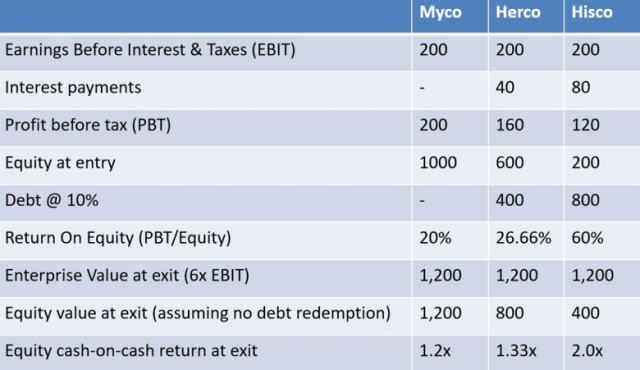
The essence of maximizing the internal rate of return (IRR) lies in the total amount of leverage contracted to finance a transaction. The less equity a buyout firm has to fork out, the better its potential gains. This mechanical process is shown in the following table using three hypothetical investments. The higher the leverage ratio, the higher the return on equity and the cash-on-cash multiple upon exit: Table 1: Leverage’s Effect on Private Equity Returns, in US $1,000s Understandably, private equity (PE) executives wouldn’t think of boosting their performance through other means without first negotiating the largest and cheapest debt package possible. Yet another factor, the time value of money (TVM), takes center stage. Leverage and TVM: A Powerful Combination So, why do PE investors operate the way they do? The following exercise will demonstrate the underlying rationale. The tables below delineate the range of returns that a leveraged buyout (LBO) might achieve. There are eight scenarios with three variables: Variable 1 is the amount of leverage — the net debt/equity or net debt/total capital — at inception. We use two different scenarios: 60% or 90% debt. Variable 2 is the timing of dividend recapitalizations during the life of the buyout. Again, we review two possibilities: achieving recaps in Year 2 and Year 3, or Year 3 and Year 4, while leaving all the other cash flows unchanged. Variable 3 is the timing of the exit. We assume a full disposal in Year 5 or Year 6. All of these scenarios assume that none of the debt is repaid during the life of the transaction. Assuming no repayment makes the scenarios easier to compare. The first scenarios in Table 2 include dividend recaps in Year 3 and Year 4 and an exit by the PE owner in Year 6. Both scenarios have the same entry and exit enterprise values (EVs). These two scenarios only differ in one way: Scenario A is structured with 90% debt, Scenario B with only 60%. Table 2: Year 6 Exit with Dividend Payouts in Years 3 and Year 4, in US $1,000s In the next two scenarios, in Table 3, the dividend payouts come in Year 2 and Year 3 and a realization by the buyout firm in Year 6. Again, the only difference in these two scenarios is the leverage: Scenario C uses 90% and Scenario D just 60%. Table 3: Year 6 Exit with Dividend Payouts in Year 2 and Year 3, in US $1,000s Table 4 shows dividend distributions in Years 3 and Year 4 and a sale by the financial sponsor in Year 5. Again, these two scenarios only differ on the debt: Scenario E is financed with 90% debt and Scenario F with only 60%. Table 4: Year 5 Exit with Dividend Payouts in Year 3 and Year 4, in US $1,000s The last set of scenarios in Table 5 looks at dividend recaps in Year 2 and Year 3 and an exit in Year 5. The only difference between them, again, is the amount of leverage. Table 5: Year 5 Exit with Dividend Payouts in Year 2 and Year 3, in US $1,000s We can draw several conclusions from these scenarios: It is better to leverage the balance sheet as much as possible since –assuming all other parameters remain constant — a capital structure with 90% debt yields significantly higher IRRs for the equity holders than a 60/40 debt-to-equity ratio: Scenario A beats B, C beats D, E beats F, and G beats H. Dividend distributions are best performed as early as possible in the life of the LBO. A payout in Year 2 generates higher average annual returns than one in Year 4: Scenario C beats A, D beats B, G beats E, and H beats F. The earlier the exit, the greater the profit — if we assume a constant EV between Year 5 and Year 6 and, therefore, no value creation during the extra year — which obviously does not reflect all real-life situations. Still, scenarios with earlier exits generate higher returns than those with later realizations, hence the popularity of “quick flips”: Scenario E beats A, F beats B, G beats C, and H beats D. Our first point underlines the mechanical effect of leverage shown in Table 1. But there are two other benefits related to debt financing: The second benefit relates to taxes. In most countries, debt interest repayments are tax-deductible, while dividend payouts are not. This preferential treatment was introduced in the United States in 1918 as a “temporary” measure to offset an excess profit tax instituted after World War I. The loophole was never closed and has since been adopted by many other jurisdictions. Borrowing helps a company reduce its tax liability. Instead of paying taxes to governments and seeing these taxes fund infrastructure, public schools, and hospitals, the borrower would rather repay creditors and improve its financial position. The PE fund manager’s sole duty is to their investors, not to other stakeholders, whether that’s society at large or the tax authorities. At least, that’s how financial sponsors see it. Earlier we referenced the concept of TVM. Despite their protestations to the contrary, PE fund managers prefer to get their money back as soon as possible. Conflicting interests abound between the financial sponsor — for whom an early exit means windfall gains thanks to a higher IRR — and the investee company’s ongoing management and employees who care about the business’s long-term viability. That said, financial sponsors can easily persuade senior corporate executives — and key employees — by incentivizing them with life-changing equity stakes in the leveraged business. Leverage’s Role in Value Creation To keep attracting capital, PE fund managers use many tools to highlight their performance. The value bridges developed by fund managers to demonstrate their capabilities as wealth producers are deeply flawed, as illustrated in Part 1, and only emphasize operational efficiency and strategic improvements in the fund manager’s profitable deals. That leverage is excluded entirely from

Tricks of the Private Equity Trade, Part 2: Leverage Read More »

Hospitals in Trouble: A Financial Playbook for Leaders and Investors

Hospitals are under pressure — from labor costs to ransomware, margin squeezes to misgovernance. This post explores the growing wave of financial distress among US healthcare providers in recent years. It unpacks what went wrong at several providers and draws from my own experience in the $7 billion restructuring of NMC Health. I share practical guidance for finance leaders and reveal how financial governance failures can quickly erode investor value. Labor inflation, payer pressure, digital disruption, and regulatory scrutiny have exposed structural vulnerabilities in the US healthcare system. In this environment, the role of finance professionals at healthcare companies becomes pivotal — not just in crisis containment but in institutional renewal. Financial missteps can ripple into service closures, job losses, and deteriorated patient outcomes. Done correctly, however, strategic financial leadership can stabilize operations, preserve access to care, and rebuild long-term value for stakeholders. These outcomes also carry direct implications for investors, as governance failures in healthcare can trigger portfolio losses, credit downgrades, and forced asset sales across institutional holdings. Restructuring healthcare systems requires a fundamentally different approach than traditional corporate turnarounds. Finance leaders must strike a unique balance: sustaining clinical service delivery, maintaining workforce and community trust, and complying with strict regulatory and funding requirements. A failure to do so not only erodes enterprise value but can directly compromise patient health outcomes. This dual mission, clinical and financial, demands a level of urgency, transparency, and coordination rarely seen in other industries. The reputational and societal stakes are simply higher. Lessons from the Field: Four Case Studies Steward Health Care (2023–2024) Steward Health Care grew rapidly to become the largest private for-profit hospital system in the United States, leveraging sale-leaseback transactions to unlock capital. Much of the freed-up cash, however, was redirected into expansion and operational shortfalls rather than infrastructure or care delivery. Without centralized treasury oversight, lease obligations ballooned, and financial control weakened. By 2024, burdened by more than $9 billion in liabilities and mounting vendor disputes, Steward filed for bankruptcy. [4] A more disciplined approach to capital investment like applying a minimum 12% ROI threshold might have filtered out underperforming expansion plans. Centralizing cash flow visibility could have flagged liquidity risks earlier, while stress testing for REIT exposure would have revealed unsustainable lease commitments. These tools are standard in many capital-intensive sectors but were underutilized here. Pipeline Health (2022–2023) Pipeline Health operated safety-net hospitals in underserved urban areas, heavily reliant on post-COVID funding. As elective volumes dropped and labor costs spiked, its financial model became unsustainable. A lack of rolling forecasts and flexible labor cost structures prevented the organization from adapting to the new reality. Eventually, delays in engaging turnaround advisors and the absence of an escalation protocol led to a Chapter 11 filing. [5] In Pipeline’s case, a centralized liquidity control tower with 13-week rolling forecasts could have identified cash shortfalls weeks in advance, buying time for vendor renegotiations. Had Pipeline implemented a dynamic labor model tied to volume shifts, it could have better aligned staffing with demand. Even a simple 10-day payment lag might have brought executive attention before the crisis deepened. Prospect Medical Holdings Prospect Medical was exposed by a US Senate report for prioritizing shareholder dividends while underinvesting in hospital infrastructure. Over several years, related-party transactions and opaque financial governance eroded internal trust and attracted regulatory scrutiny. In particular, behavioral health units saw declining care quality as capital projects were repeatedly deferred. [6] Strategic finance could have played a watchdog role. Requiring a capex-to-revenue ratio of 5% as a dividend precondition would have ensured reinvestment. A three-year rolling capital plan vetted by the board could have aligned strategic investments with operational needs. Transparent cash and reinvestment dashboards shared across departments might have empowered internal stakeholders to raise flags earlier. UnitedHealth Group (2024–2025) In a striking dual crisis, UnitedHealth Group first saw its Change Healthcare unit paralyzed by a ransomware attack, freezing pharmacy transactions and claims processing. Shortly after, the US Department of Justice opened a probe into Medicare Advantage fraud, alleging manipulation of patient risk scores for financial gain. These issues spotlighted the fragile operational core of even the most sophisticated payer-provider. [7] More proactive and risk-aware financial oversight could have helped identify vulnerabilities earlier and reduced the overall impact. Escrow reserves or redundant payment platforms could have protected provider payments during outages. Periodic audits of revenue risk scoring models might have flagged compliance gaps. Investment in cyber redundancy, while not a financial control per se, is increasingly a CFO mandate to mitigate operational risk. A Gameplan for Financial Leaders Here is how finance leaders can build muscle across liquidity, capital structure, and governance: Liquidity: Prioritize disbursement and daily dashboards and use 13-week rolling forecasts. Capital Structure: Incorporate sale-leaseback sensitivity analysis to determine the correct mix of fixed vs. floating debt. Governance: Implement real-time key performance indicators (KPIs) tied to decision rights, board-level crisis reporting, and whistleblower frameworks. These capabilities, when developed early and exercised often, become lifelines during distress. The Finance Toolkit in Action Here is how specific interventions could have changed the outcomes of healthcare companies in the case studies discussed earlier: In Steward’s case, real-time cash control could have exposed vendor bottlenecks before litigation risk materialized. At Pipeline, an early-warning signal tied to payroll risk might have launched executive action six weeks earlier. At Prospect, a quarterly dashboard could have exposed behavioral health underfunding trends, enabling board pushback. For UnitedHealth, regular audit of risk scoring logic could have ensured regulatory alignment before the DOJ’s intervention. When integrated into planning and operations, these tools empower finance teams to function as partners in care continuity. A Playbook for Financial Restructuring The following playbook summarizes seven financial levers that consistently surfaced across the case studies. These are not theoretical tools — they’re practical interventions that distinguish collapse from recovery when deployed with urgency and precision. Finance leaders can use this as a diagnostic checklist and guide for strategic action. The Cost of Inaction: Investor Impact These financial levers are not only operational lifelines; they’re also

Hospitals in Trouble: A Financial Playbook for Leaders and Investors Read More »

Come Together: M&A Trends in Canada

Hookups just aren’t what they used to be. The worldwide value of mergers and acquisitions dropped to around US$1.22 trillion at the end of June 2023, down from US$2 trillion at the end of the second quarter last year. Higher interest rates are the primary reason. While they may be cooling inflation, they are also raising financing costs — and pinching the potential for strong returns via acquisitions. Formerly avid acquirers are sitting it out for now. In private equity, for example, the value of deals has decreased by more than 50%, to US$251 billion, while nearly US$2 trillion sits in cash. A less friendly regulatory environment, particularly for larger deals, also helps explain the falloff. In May, one of the United Kingdom’s key regulators, the Competition and Markets Authority (CMA), blocked Microsoft Corporation’s proposed acquisition of Activision Blizzard Inc., although it has since indicated a willingness to negotiate. Then the Federal Trade Commission (FTC) sued to block Amgen Inc.’s proposed acquisition of Horizon Therapeutics Public Ltd. Co. If successful, this would be the first FTC lawsuit to block a pharmaceutical deal since 2009. Despite the global drought in M&A, bright spots remain — if you know where to look. Health care deal value is up 40% year-over-year, boosted by Pfizer’s agreement to acquire Seagen and Eli Lilly’s agreement to purchase Dice Therapeutics. Deal values are also up over 200% in metals and mining, with Newmont’s proposed acquisition of Newcrest the largest potential transaction. Canada is another M&A hot spot. While there was a solid uptick in North American deal activity overall in May and June, Canada is experiencing a veritable M&A boom. Compared with the second quarter of 2022, transactions have risen 30% to more than US$90 billion. Why all the M&A activity? The usual reasons apply. These include trying to capture synergies, improving growth in a high-inflation/high-interest-rate environment, buying power from the US dollar, diversifying, acquiring talent and expertise, and eliminating a competitor. While regulators have been focused on large and mega merger deals, small- and mid-cap merger deals in Canada are not exposed to the same regulatory risk. And despite tighter financing conditions, in our core target universe of small- and mid-cap companies, the strength in equity markets this year is giving acquirers confidence to do deals. Matt Levine once suggested that “some large percentage of M&A activity might be driven by executives who want to avoid spending time with their children.” Family dynamics aside, M&A activity is likely to increase for several reasons. For the management of small-to-mid-cap companies, especially those that went public during the period of low interest rates, current lower valuations have been hard to stomach. Servicing debt and attracting financing is also more challenging at the same time that revenues are strained because customers are cutting back or postponing purchases. In certain cases, this has led to distressed situations. While some company founders are holding on tight in anticipation of a re-rating, others accept that one way to grow their business is to move it into stronger hands through acquisition. In Canada, there are several well-known serial acquirers, including Constellation Hardware, CCL Industries, Open Text, Enghouse, and Premium Brands, among others. For example, since 2005, Premium Brands has invested over US$3 billion in 79 transactions. It had a CAGR of 22.4% from 2010 to 2022. Despite pockets of softness, M&A appetite is expected to return in due course. Why? Because good capital allocation — buying the right company at the right price — creates incremental value over the long term. If you liked this post, don’t forget to subscribe to the Enterprising Investor. All posts are the opinion of the author. As such, they should not be construed as investment advice, nor do the opinions expressed necessarily reflect the views of CFA Institute or the author’s employer. Image credit: ©Getty Images/ marrio31 Professional Learning for CFA Institute Members CFA Institute members are empowered to self-determine and self-report professional learning (PL) credits earned, including content on Enterprising Investor. Members can record credits easily using their online PL tracker. source

Come Together: M&A Trends in Canada Read More »

Closing the Gap: Gender Lens Investing and the Future of Finance

Public perception of gender equality issues runs in a repetitive cycle. We’ve all seen it. A scandal breaks out, or a study discovers yet another damaging disparity. Think pieces are written, hands are wrung, and companies promise to do better. Then the public’s attention moves on until another cycle starts. Actual change comes very slowly, if at all. This is especially true in the world of investing and investment funding. These are male-dominated fields where inequality grows more and more lopsided the higher up you go. These are well-known issues, and many firms have declared their intention to address various forms of inequality, both in their behavior as employers and in their influence as investors. But again, change comes slowly. So, what’s the best way to move forward? While hiring more women, especially in positions of real influence, is important, it isn’t enough. In finance and investment, the most powerful approach to achieving parity may be gender lens investing. There are many reasons different firms and businesses might adopt gender lens investing: For example, it can benefit people around the world, help develop new and neglected markets and sectors, and improve the overall quality of life. And then there’s the basic, foundational reason why any investor should support gender lens investing: It is a good investment. What Is Gender Lens Investing? Gender lens investing is a form of impact investing. Such investments are intended to create a beneficial social or environmental impact alongside the expected financial return. While green and other such funds and investments have been around for a while, what distinguishes gender lens investing is that it represents the difference between an investment that happens to benefit women and girls and an investment that, from inception, is intended to benefit women and girls. Gender lens investing is, therefore, a framework by which investors can create real impact and do so in a substantial way. Approaching equality and impact through gender lens investing means investing in: Enterprises that are owned or run by women Enterprises that encourage workplace equality Enterprises whose output improves the lives and economic prospects of women and girls Gender lens investing has a wide range of goals, and individual efforts can focus on specific aspects, regions, and opportunities. But closing the “gender gap” in both the investee firm and the investor’s firm is the primary mission. Gender lens investing approaches diversity from the ground up. It tries to avoid “genderwashing,” or bringing in women for appearances’ sake, and seeks to empower them on investment teams and place them in positions of real authority. The Benefits of Gender Lens Investing The business and investment world is discovering, however slowly, that diversity, gender parity, quality of life, and so on are not just buzzwords. They have a real impact on the bottom line. Studies have repeatedly shown that companies with diverse founders, especially when women are included from the beginning and have real influence as the business grows, perform better over the long term. In bare numbers, when these conditions are met, those businesses outpace the market, earn higher returns, and make things better for women in the future. Gender-balanced investment teams beat expectations by 10% to 20%. The International Finance Corporation found businesses with gender parity in their leadership teams had valuations up to 25% higher than teams with lower gender diversity. This is all quite logical. Business is all about innovation, the next great idea. And no company is going to be innovative, creative, and dynamic if company leaders have the same education, the same MBA, the same internships, and the same perspectives as their colleagues. It isn’t about abandoning that traditional route to success in business. It’s about having different ideas that can build on each other and lead to something new. This diversity of thought is central to innovation at the corporate and board levels as outlined in Blue Ocean Strategy and Governance Reimagined. Trends, Opportunities, and Challenges There are considerable efforts underway to “mainstream” gender lens investing, to move it from a niche investment opportunity to a strategy on par with any other. While it has a long way to go to achieve that, it is a growing field. Alternative investment strategies that emphasize the gender lens space account for almost $8 billion, up two-thirds from 2018. The G7 has committed to raising another $15 billion. Things are moving in the right direction, and opportunities abound. The gender lens investing mindset can find growth opportunities outside the scope of traditional investment firms. For example, women in Africa oversee just 6% of funds, often in the microfinance subsector. Women own 40% of African small and medium enterprises (SMEs), but only 20% have access to traditional funding paths. The gap here is more than $40 billion, and gender lens investing can help close it. India represents another opportunity where gender lens investing can mean the difference between lip service and actual change. Many business leaders in India have expressed interest in increasing gender equality. But the goal remains elusive, and in some ways ground is being lost. Between 2017 and 2019, the number of Indian start-ups with at least one female founder dropped from 17% to 12%. And of the start-up founders who receive early stage venture capital funding and beyond, fewer than 1% are women. Gender lens investing addresses such issues directly. This is especially important in the age of COVID-19. The pandemic has created something of a global rollback in the progress women have made in business and the workplace. Traditionalist gender roles have led to women once again shouldering a disproportionate share of domestic responsibilities. Systemic inequality has become more acute. GLI and GEM: A Case Study Gender lens investing isn’t superficial. It’s not a band-aid or public relations strategy. It can help businesses and investment firms have a beneficial impact. A brilliant example of this is Mennonite Economic Development Associates (MEDA), an international economic development organization that works to alleviate poverty. MEDA uses the Gender Equality Mainstreaming (GEM) Framework to

Closing the Gap: Gender Lens Investing and the Future of Finance Read More »

Digital Gold or Fool’s Gold: Is Crypto Really a Hedge against Equity Risk?

Crypto enthusiasts often claim that digital coins and tokens are uncorrelated with equities and can provide a safe haven amid stock market crashes. The assumption is that cryptoassets will act like “digital gold,” serving as a hedge against equity risk, and help investors ride out such downturns. Such bold claims beg for examination, especially amid what looks like a bear market for stocks. So, we explored how crypto has performed during previous crashes. In particular, we isolated the major panic events over crypto’s short history and studied the correlation between this new asset class and some of its more traditional peers. Five times over the last five years, the S&P 500 fell 7.5% or more. In each of these instances, we measured how correlations changed between gold and the S&P 500, bitcoin and the S&P 500, and bitcoin and gold. We examined the correlations between other cryptocurrencies and gold and the S&P 500 as well but found the results were qualitatively similar, so we used bitcoin as a proxy for crypto in general. The correlation between gold and the S&P 500 came in as expected. Outside of major downturns, gold and the S&P 500 have just a slight positive correlation of 0.060. Yet, when the S&P 500 plunges, so does its average correlation with gold, which drops to –0.134. The takeaway is clear: Gold does offer some protection in down markets and lives up to its status as a perennial hedge. Crash Correlations: Gold and the S&P 500 Correlation First Crash: 26 Jan. to 7 Feb. 2018 –0.073 Second Crash: 21 Sep. to 28 Dec. 2018 –0.077 Third Crash: 6 May to 6 June 2019 –0.407 Fourth Crash: 20 Feb. to 28 March 2020 0.241 Fifth Crash: 1 Jan. to 11 March 2022 –0.356 Average Correlation during Crashes –0.134 Average Correlation Outside of Crashes –0.060 The same cannot be said for bitcoin — or crypto in general. Outside of equity market downturns, bitcoin and the S&P 500 have had a slight positive correlation of 0.129. Amid the last five stock market contractions, however, the correlation between bitcoin and the S&P 500 jumped to 0.258. Indeed, in only two of the past five downturns did the correlation turn negative. On the other hand, true to its hedge-y reputation, gold exhibited a negative correlation with the benchmark index in four out of the last five crashes. Crash Correlations: Bitcoin and the S&P 500 Correlation First Crash: 26 Jan. to 7 Feb. 2018 0.814 Second Crash: 21 Sep. to 28 Dec. 2018 –0.025 Third Crash: 6 May to 6 June 2019 –0.583 Fourth Crash: 20 Feb. to 28 March 2020 0.588 Fifth Crash: 1 Jan. to 11 March 2022 0.493 Average Correlation during Crashes 0.258 Average Correlation Outside of Crashes 0.129 But what about bitcoin and gold? How has that relationship changed during recent panics and downturns? In rising equity markets, bitcoin and gold have a slight positive correlation of 0.057.  Amid stock market crashes, the correlation rises only slightly to 0.064. So, whatever the state of the equity markets, the correlation between gold and bitcoin is pretty close to zero. Crash Correlations: Bitcoin and Gold Correlation First Crash: 26 Jan. to 7 Feb. 2018 –0.194 Second Crash: 21 Sep. to 28 Dec. 2018 0.107 Third Crash: 6 May to 6 June 2019 0.277 Fourth Crash: 20 Feb. to 28 March 2020 0.275 Fifth Crash: 1 Jan. to 11 March 2022 –0.179 Average Correlation during Crashes 0.057 Average Correlation Outside of Crashes 0.064 Based on our data, crypto certainly does not act like digital gold. In times of panic, the correlation between crypto and the stock market actually increases. So, whatever its proponents may say about its utility as a hedge against market downturns, crypto has served as more of an anti-hedge, with its correlation with the S&P 500 rising as stocks plunge. That said, given the lack of correlation between gold and crypto, the latter may add some diversification benefits to a portfolio. Nevertheless, the overall verdict is undeniable: When it comes to hedging equity risk, bitcoin and cryptocurrencies are more fool’s gold than digital gold. If you liked this post, don’t forget to subscribe to the Enterprising Investor. All posts are the opinion of the author. As such, they should not be construed as investment advice, nor do the opinions expressed necessarily reflect the views of CFA Institute or the author’s employer. Image credit: ©Getty Images/Moonstone Images Professional Learning for CFA Institute Members CFA Institute members are empowered to self-determine and self-report professional learning (PL) credits earned, including content on Enterprising Investor. Members can record credits easily using their online PL tracker. source

Digital Gold or Fool’s Gold: Is Crypto Really a Hedge against Equity Risk? Read More »

Currency Coordination Looks Riskier Today

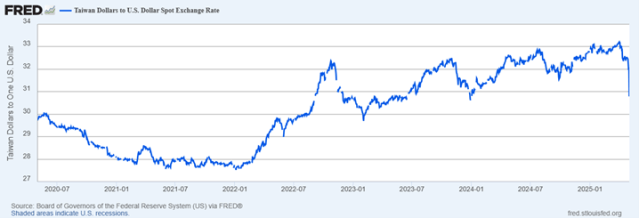
The Taiwan dollar’s rapid appreciation in the second quarter led to speculation of a “Plaza Accord 2.0” — a coordinated effort to weaken the US dollar — echoing the historic 1985 agreement among G5 nations. The original Plaza Accord was designed to address large US trade deficits by engineering a controlled depreciation of the dollar through joint currency intervention. It marked a rare and powerful example of global currency coordination. Any new Plaza-style agreement today would face far greater financial and geopolitical hurdles than it did 40 years ago. Indeed, if US policymakers seek to stimulate domestic manufacturing by depreciating the dollar, they must also account for the emerging costs and risks associated with global trade, capital flows, and market stability. This post examines the potential consequences of a coordinated dollar depreciation today — from FX volatility and insurance risk to broader macroeconomic impacts. A Weaker Dollar Could Heighten Global FX Volatility A weaker US dollar could have a dramatic effect on the FX market and, specifically, on Taiwanese life insurance companies. A January 2025 FT article pointed out that these companies hold assets equivalent to 140% of Taiwan’s GDP. A substantial portion of these holdings are in US-dollar-denominated bonds only partially hedged for FX volatility. Taiwan has enjoyed widening current account surpluses due in large part to strong demand for its semiconductors. To manage the resulting FX reserve growth and to maintain FX stability, the local monetary authority permitted life insurance companies to swap their Taiwan dollars for US dollars in the FX reserve. The insurers then swapped USD to buy US fixed-income assets to meet future (insurance policy) obligations. Despite shifting the bulk of their portfolio assets to US dollars, most of the insurance policies (firm liabilities) remain denominated in local currency. The result would be a significant currency mismatch where sharp declines in the US dollar would reduce the value of US-dollar-denominated bonds such as US Treasuries held by Taiwanese insurance companies, leaving the insurance companies with insufficient assets to match their liabilities. The original Plaza Accord signed by the G-5 countries in 1985 was agreed upon under the backdrop of a relatively benign macro environment. A hypothetical “Plaza Accord 2.0” to depreciate the US dollar would likely increase pressure on Taiwan’s insurers and their risk-management efforts. This vicious cycle would exacerbate pressure and magnify FX market volatility. Taiwanese insurance companies are also exposed to duration risks. The US dollar bonds held by Taiwanese insurance companies are longer-duration (with greater interest rate sensitivity than short-maturity debt). Sales of these assets would likely lift long-term US interest rates and transmit interest rate volatility across markets. Taiwanese insurers are not alone in their exposure to this type of risk. Similar carry-trade flows (sell local currency, buy US dollar and dollar-denominated assets) with the Japanese yen in the third quarter of 2024 triggered a brief-but-disruptive volatility surge across major asset markets. The US Trade Deficit’s Hidden Role  A “Plaza Accord 2.0” coming 40 years after the original accord would need to account for the US trade deficit as part of a circular currency flow to fund the US government. In 1985, the US deficit was at $211.9 billion. By 2024 it had risen to $1.8 trillion. Similarly, the US debt ballooned from $1.8 trillion in 1985 to $36.2 trillion in the second quarter this year. Non-US exporters reinvesting trade surplus dollars in US Treasuries (lending surplus dollars back to the US government) are a key source of liquidity in the US bond market: Under the present paradigm, a lower US trade deficit would likely disrupt the reinvestment of exporter dollar trade surpluses, which could reduce foreign demand at US Treasury auctions and negatively affect secondary market liquidity conditions. “Plaza Accord 2.0’s” Nuanced Impact On a Leaner US Manufacturing Sector The US manufacturing sector has evolved significantly over the past 40 years. According to BEA data, the US manufacturing sector’s share of nominal GDP fell to 9.9% in 4Q 2024 from 18.5% in 1985.The total number of workers in the manufacturing sector also declined. In April 1985, manufacturing employees as a share of total non-farm payrolls was 18.4%. By April 2025, that number had dropped to 8.0%. The reduction in manufacturing headcount (with improved productivity, until gains began to stagnate in the late 2000s) implies US manufacturing had become more efficient between 1987 and 2007: Thus, a changed manufacturing industry with relatively smaller payrolls now than in 1985 would likely benefit differently from impacts of Plaza style accords than four decades ago, when more households were directly participating in the industry. Assessing the Risk Reward of “Plaza Accord 2.0” Studies on the impact of the original Plaza Accord concluded that exchange rate shifts ultimately led to changes in trade balances with a lag of two years. A similar lag would likely apply today, raising questions about whether a new Plaza-style intervention could meaningfully support US manufacturing — now a leaner, smaller share of GDP — without triggering broader financial disruptions. Compared to 1985, today’s global system is more interconnected and more reliant on the dollar, particularly through foreign holdings of US debt. Any coordinated effort to weaken the dollar would need to balance potential industrial gains against risks to FX stability, institutional asset-liability mismatches, and the functioning of US debt markets. The cost-benefit equation for “Plaza Accord 2.0” is far more complex than it was four decades ago. Calls for a “Plaza Accord 2.0” reflect growing concern over US trade imbalances and industrial competitiveness. But unlike in 1985, the global economy today is more complex, with deeper interdependencies and more fragile financial linkages. A new Plaza-style agreement would carry unintended consequences — from FX volatility and insurance-sector risk in Asia to disruptions in US debt financing and monetary policy transmission. Under the original Plaza Accord, currency shifts took years to influence trade balances, underscoring the lag between intervention and impact. Policymakers must therefore assess whether the benefits to a leaner US manufacturing base would outweigh the risks to global markets, institutional stability,

Currency Coordination Looks Riskier Today Read More »

Bitcoin Mining and Local Stock Market Performance Correlations

Crypto is an uncorrelated asset class, according to its proponents, and as such ought to contribute to portfolio diversification. However, research has shown that this claim hasn’t held up particularly well. We examined the relationship between where bitcoin mining was conducted and how the performance of the local equity markets correlated with bitcoin prices and found that in the United States especially, the performance of the S&P 500 and bitcoin prices have exhibited a positive correlation over the last five years. Because the United States and China are where most bitcoin mining has been conducted over the last five years, we used the S&P 500, Hang Seng, and Shanghai Composite indices as our regional proxies. We calculated the rolling nine-month correlation between bitcoin returns and each of the three indices using weekly data. We then compared that with the bitcoin hash rate by country from September 2019—which is as far back as reliable records go—to January 2022.The bitcoin hash rate measures the computational power of the bitcoin blockchain and is a proxy for how much bitcoin mining is being done. Prior to November 2020, China accounted for more than 60% of bitcoin mining. But fast-forward to November 2021 and China’s share had plunged to about 15% in response to government steps to reduce bitcoin mining. Over the same time period, the United States climbed from representing about 10% of global bitcoin mining to more than 35%. Bitcoin Hash Rate Distribution by Country, Sept. 2019 to Jan. 2022 Bitcoin Mining Distribution by Country, 2019 to 2022 These trends make the November 2020 to November 2021 time frame an excellent window into how bitcoin-prices-to-index correlations adjust as bitcoin mining ebbs and flows. We found that as US crypto mining spiked between November 2020 and November 2021, bitcoin’s correlation with the S&P 500 rose to 0.39 from 0.28. But as crypto mining plummeted in China during the same period, bitcoin’s correlation with the two Chinese indices fell also. The Hang Seng’s and Shanghai Composite’s bitcoin correlation declined to -0.14 from 0.21 and to -0.44 from 0.09, respectively. Bitcoin Correlations with Equity Indices November 2020 November 2021 S&P 500 0.283 0.386 Hang Seng 0.213 –0.138 Shanghai Composite 0.085 –0.437 The results suggest the more bitcoin is mined in a particular country, the greater the correlation between the cryptocurrency and local equity markets. As bitcoin mining declines in a region, the correlation between bitcoin and local stock markets subsides as well. Regarding annual correlations between bitcoin prices and the indices in question, our hypothesis holds up there too. The more bitcoin mining in a locale, the greater the correlation between the price of bitcoin and local stock markets. This relationship was strongest with the S&P 500 and Shanghai Composite and less so with the Hang Seng over the full time period. Annual Correlations: Bitcoin and Equity Indices 2016 2017 2018 2019 2020 2021 2022 S&P 500 –0.174 –0.119 –0.045 0.064 0.155 0.186 0.747 Hang Seng –0.289 –0.378 0.010 0.011 0.148 –0.190 0.400 Shanghai Composite 0.014 0.253 0.096 0.122 0.169 –0.390 –0.040 In total, our results indicate that where bitcoin is mined may affect how it moves and which stock indices it moves with. And this affects what sort of diversification benefits bitcoin may or may not bring to a portfolio. If you liked this post, don’t forget to subscribe to the Enterprising Investor. All posts are the opinion of the author. As such, they should not be construed as investment advice, nor do the opinions expressed necessarily reflect the views of CFA Institute or the author’s employer. Image credit: ©Getty Images/ photonaj Professional Learning for CFA Institute Members CFA Institute members are empowered to self-determine and self-report professional learning (PL) credits earned, including content on Enterprising Investor. Members can record credits easily using their online PL tracker. source

Bitcoin Mining and Local Stock Market Performance Correlations Read More »

Book Review: Cheaper Faster Better: How We’ll Win the Climate War

Cheaper, Faster Better: How We’ll Win the Climate War. 2024. Tom Steyer. Spiegel & Grau. In Cheaper Faster Better, Tom Steyer, co-executive chair of Galvanize Climate Solutions and co-founder of Farallon Capital, shares his own story and highlights the innovative work of other climate leaders in the clean-energy transition. He shows us how capitalism can be used to scale climate progress and calls on all of us to help stabilize our planet. As green technology, such as solar panels, green concrete, green steel, and green hydrogen, is fast becoming cleaner and cheaper, reshaping our planet’s future has never been more important. Steyer reminds us that natural disasters are devastating to economies. The toll includes the cost of rebuilding (borne by taxpayers), the cost of small businesses closed, the skyrocketing cost of insurance for homeowners and employees in a disaster’s path (or the inability to purchase insurance at any price), the loss of income of people who work outdoors who have to reduce their hours due to rising temperatures, and the human suffering and deaths that accompany these catastrophes. During the 2000s, the United States experienced an average of seven disasters per year that cost $1 billion or more to recover from. During the 2010s, that number jumped to thirteen billion-dollar disasters per year, and it has risen even higher during the 2020s. Reducing carbon pollution to achieve net zero can start with Steyer’s “five plus one” approach. The five areas where we will need to cut our emissions are electricity generation, transportation, manufacturing, agriculture, and buildings. As a real estate practitioner, I found his details on buildings to be insightful. Since most buildings leak, we need to ensure that what we are building today is net-zero emission. Since 80% of buildings in developed economies will still be in use in 2050, focusing on new construction is not enough. We need to retrofit old buildings so that they waste less energy and cost their owners less money in the process. The plus one is sequestration, which removes greenhouse gas from the air by techniques such as direct air capture. Natural solutions, such as planting trees or kelp beds that absorb carbon, can be useful strategies as well. Steyer, a capitalist, fundamentally disagrees with the premise behind two versions of a “green premium,” which assumes people will pay extra for products that are good for the planet, either out of kindness or in recognition of externalities. I agree with his sentiment that in a competitive world, selling more expensive products for any reason does not work and will not scale. Achieving net zero will require transitioning the entire world away from fossil fuels, making clean energy and cleantech the least expensive option. These green industries will need to compete on sticker price. For example, the cost of solar panels has fallen by 99% since 1977. Rooftop solar is not only cleaner than traditional power but also now far cheaper. The price gap is almost certain to keep growing because prices for new technologies tend to go down much faster than prices for things that have been around forever. Environmental justice is another reason we should care about reducing carbon emissions, and I am encouraged that Steyer stresses this point at the end of the book. Poorer countries will bear a disproportionate burden of climate change’s impact. In addition, in the United States, marginalized communities, such as coal miners in Appalachia, suffer the most from oil and gas-related pollution, even as their members are often the least able to protect themselves from the impact of climate change. Addressing these inequities is the correct thing to do. In summary, Cheaper Faster Better provides practical insights, including steps to transition to a clean energy economy. New technology is critical for this transition but once it breaks through, it can be cheaper, faster, and better, providing a better deal for people. source

Book Review: Cheaper Faster Better: How We’ll Win the Climate War Read More »