marketing interactive

PUMA restructures brand marketing, names new chief brand officer

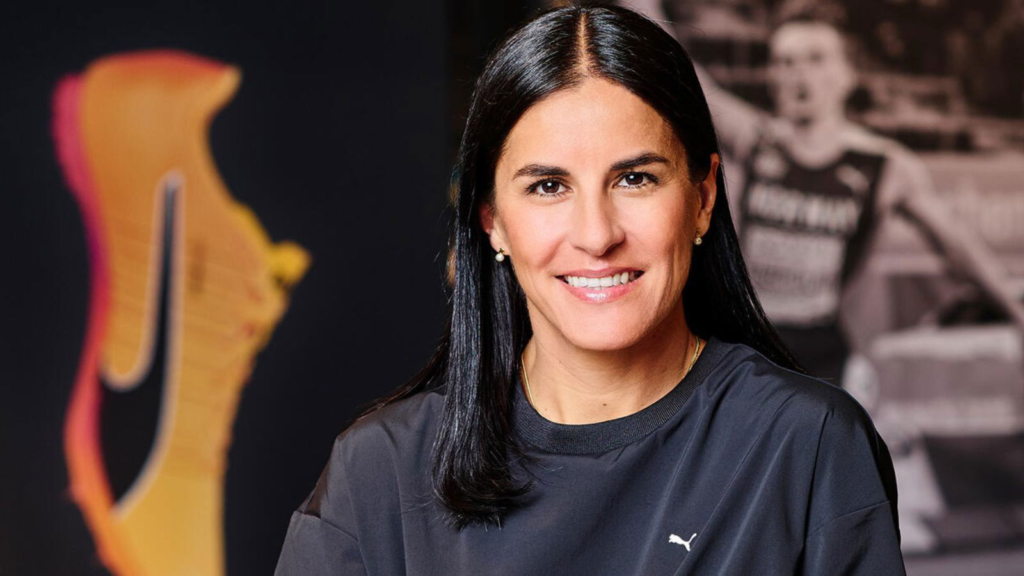
PUMA has unveiled a major shake-up of its brand marketing structure as it looks to strengthen storytelling across product and brand touchpoints. The sports company will merge its product creation, innovation, go-to-market, and brand marketing functions into a single structure aimed at delivering more consistent and impactful brand narratives.  Under the new structure, product creation and storytelling will run in parallel, a move designed to ensure authenticity and alignment from concept to consumer. Don’t miss: PUMA celebrates runner’s high in new ‘Go wild’ brand positioning As part of the reorganisation, Maria Valdes (pictured), previously chief product officer, has been appointed chief brand officer and will oversee the newly consolidated division at the management board level. Valdes, who joined PUMA’s management board in 2023, will now lead brand marketing, product, creative direction, innovation, and go-to-market. Brand marketing had previously reported to CEO Arthur Hoeld, while go-to-market fell under chief commercial officer Matthias Bäumer. Meanwhile, sports marketing will be separated from brand marketing and continue to report directly to Hoeld. The organisational changes take effect immediately. “With our amazing archive and our cutting-edge sports-performance products, including our NITRO-technology, we have the clear opportunity to tell stories that resonate, but PUMA’s previous approach to storytelling was too fragmented,” said Hoeld. He added, “By putting storytelling and product creation side by side, we will strengthen our product icons and sports performance products and create the clarity and structure that is needed to better position PUMA against its competition in the sporting goods industry.” The reorganisation comes as PUMA strengthens its regional marketing leadership. The brand recently appointed Gabriel Yap as senior director of marketing for Southeast Asia. Yap, who most recently served as regional senior marketing director at ASICS, unveiled his departure on LinkedIn, marking the end of a seven-year stint with the brand. In his new role, Yap is tasked with driving the strategic development, execution, and performance of PUMA’s marketing initiatives across SEA, focusing on consistent brand positioning and stronger brand equity across key markets. He will oversee brand marketing efforts in Singapore, Malaysia, Thailand, Indonesia, the Philippines and Vietnam, reporting to Sanjay Roy, managing director for SEA and Oceania (SEAO). Related articles: Typo or tactic: PUMA ad plastered across OOH with PVMA  PUMA launches first-ever global basketball brand campaign    PUMA launches largest flagship store in SEA source

PUMA restructures brand marketing, names new chief brand officer Read More »

Hansaplast’s Auntie Susan raps her way into wound care awareness

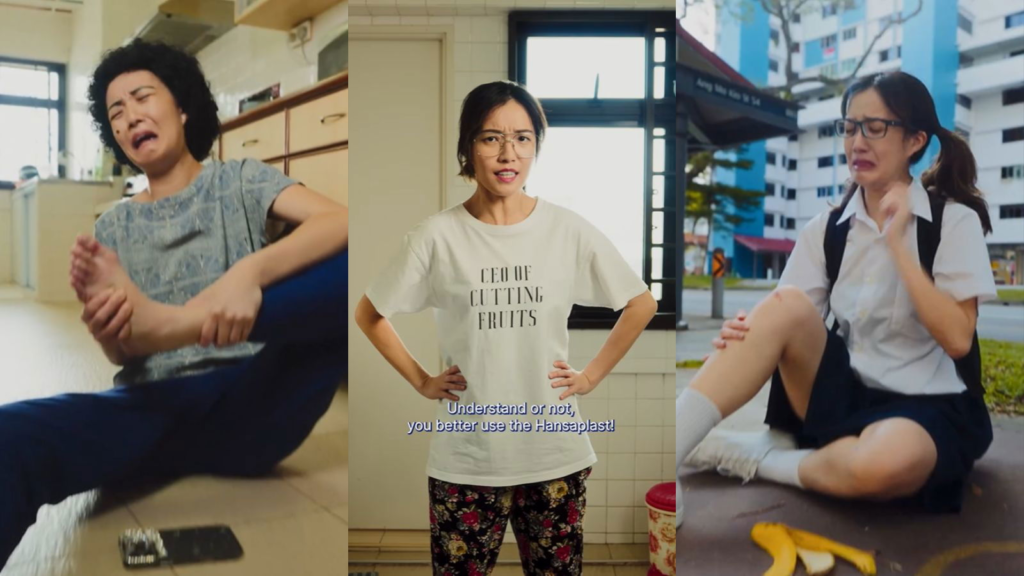
Hansaplast Singapore has brought back its beloved character Auntie Susan in a quirky new video campaign to promote proper wound care and its latest Hydrocolloid plaster. The Instagram video opens with a woman slicing fruits in her kitchen while chatting on the phone, surrounded by potential hazards such as sharp scissors and durians. As she reaches for a knife, her phone slips and injures her foot, kicking off a montage of everyday accidents. A businesswoman gets a papercut at work, a young girl scrapes her knee while skipping, and a woman falls off her bicycle, all played by the same actress. Don’t miss: McDonald’s SG serves up breakfast bars with new rap The video then cuts to Auntie Susan, who returns with a new rap performance to remind the injured characters to “heal it right”. She highlights two key steps: cleanse with Hansaplast Wound Spray to remove dirt and germs, and cover with the Hydrocolloid plaster to protect the wound and speed up healing. The campaign video ends on a cheerful note, with the characters following her advice and dancing along to the catchy tune. The caption on Hansaplast’s post reads, “Auntie Susan is BACK… and she’s got a fresh rap to keep your wounds in check.” The brand positions the Hydrocolloid Plaster as “thin, comfy, and advanced”, offering second-skin protection and faster, scar-free healing, a playful reminder, as Auntie Susan puts it, that there’s “no need to act smart and air your wound”. MARKETING-INTERACTIVE has reached out for more information.  Hansaplast joins a growing list of brands turning to music and pop culture to engage audiences. In July, McDonald’s Malaysia turned up the heat with a hip-hop collaboration featuring local artists MK K-Clique and TUJU to launch its new Spicy Chicken and Spicy Lemon Chicken burgers. According to Chin Mei Lee, chief marketing officer at McDonald’s Malaysia, the move was about “celebrating the bold, spicy flavour our fans love, while turning up the heat with a collaboration that feels truly local and fresh”. Meanwhile, Coca-Cola teamed up with SGAG and MGAG earlier this year for a humorous Chinese New Year jingle. The two-minute clip followed a young couple’s trip to Johor Bahru to visit family, using humour to highlight the social pressures of meeting extended relatives — and offering some lighthearted relief for festive stress. Related articles: Nike and Spotify turn music into motivation for girls worldwide   PropertyGuru Malaysia and iamNEETA turn neighbourhood memories into music    Maybelline reimagines iconic jingle with Miley Cyrus as global face source

Hansaplast’s Auntie Susan raps her way into wound care awareness Read More »

Maybank SG goes full wrap from heartlands to causeway in biggest bus campaign

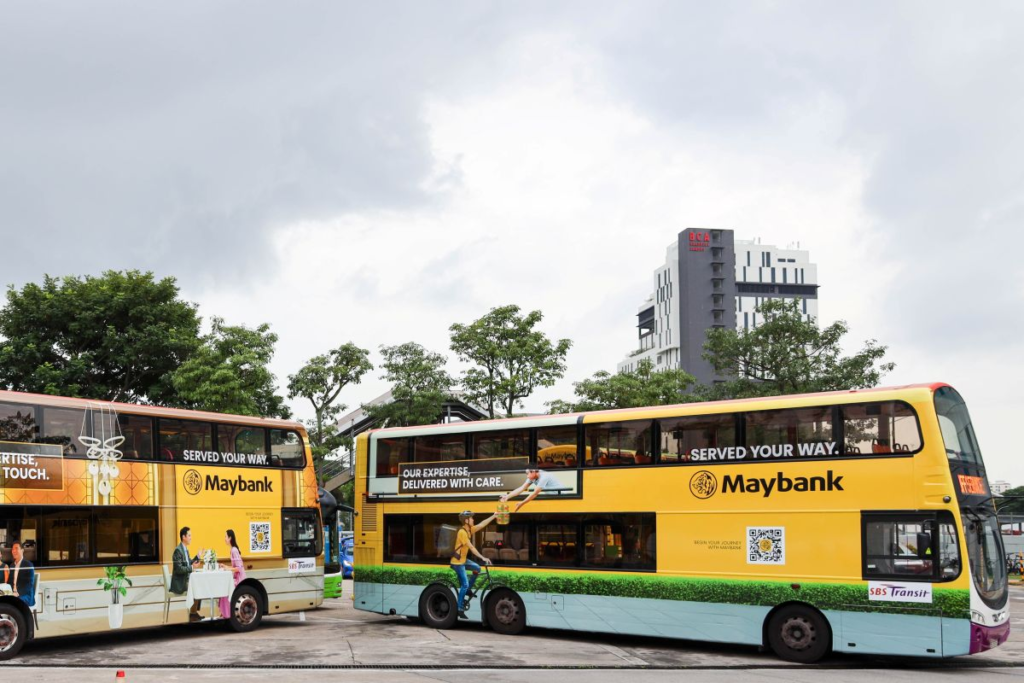
Maybank Singapore has launched 65 fully wrapped buses in partnership with Moove Media, marking the largest corporate bus fleet campaign in the nation. The activation coincides with the bank’s 65th anniversary and follows updated Land Transport Authority (LTA) guidelines allowing 100% full wraps for the first time in nearly a decade. The 12-week campaign is part of Maybank’s “Served your way” brand platform and will cover nearly 80% of Singapore’s road network, connecting communities across heartlands, business districts, and cross-border routes. In conversation with MARKETING-INTERACTIVE, Annie Lee, head of country corporate office at Maybank Singapore said the brand campaign focuses on the bank’s commitment to client-centricity and its promise to deliver reliable services and expertise for its clients. “This is where partnering with Singapore’s efficient and reliable bus network becomes a natural metaphor.” Don’t miss: Maybank Malaysia responds to public backlash: ‘Emblem on Merdeka 118 building a symbol of continuity’ The buses act as roving billboards tailored to different services. Business banking content will appear in industrial and commercial districts, wealth management in affluent precincts, and cross-border services on Causeway routes. The creative concept is based on the insight that Maybank is deeply embedded in the daily lives of its clients and reflects the bank’s commitment to journeying with them. Of the 65 buses, 15 single-deckers operate on the Causeway, highlighting Malaysia–Singapore connectivity, while the remaining 50 double-deckers feature wealth management, business banking, and community financial services messages. Lee added: “The activation is part of our ‘Served your way’ brand expression and ties closely to our purpose of humanising financial services — meeting customers where they are, both digitally and physically.”  The campaign was executed by Moove Media through Arena Media, with Blak Labs providing creative concepts. “Moove Media is not a new partner to us. However, we were excited to learn about the new guidelines allowing full bus wraps, and it was timely that we were (literally) looking for a vehicle to bring our brand messages across the island,” explained Lee. “It was natural to settle on 65 buses in celebration of our 65th anniversary, and this follows from 65 days of ice-cream giveaways at locations around Singapore shaped like 65,” she added. The buses are part of Maybank’s multi-year campaign, which uses relatable moments, including food as a cultural touchpoint, to build connection with audiences. The campaign also extends to digital and social platforms, with messages served at bus stops, shelters, commercial buildings, and across Facebook, Instagram, TikTok, LinkedIn, YouTube, and Google. Highlighting the significance under the updated LTA guidelines, Lee said “It’s the largest double decker corporate bus fleet campaign in the nation’s history, following updated LTA guidelines for full wraps. This marks a new era for 100% full bus wraps, signaling renewed opportunities for creative storytelling in Singapore’s OOH landscape”   The campaign extends beyond buses, with “Served your way, Maybank” initiatives that blend ASEAN food culture with modern banking. Key activations include “Kopi kakis” informal sessions over coffee and food, where customers co-create ideas and give feedback directly to senior management. The bank is also celebrating Singapore’s food heritage in partnership with Makansutra, contributing SG$65,000 to the Central Singapore CDC’s SG60 Silver Buddies initiative. The anniversary campaign also highlights Maybank’s ESG and cross-border banking initiatives, including the social campaign “The hungry neighbours”, which demonstrates cross-border transactions between Malaysia and Singapore through QR payments, instant fund transfers, and linked accounts. Hosted by Singaporean content creator Pamela Lee Nur Shuhadah and Malaysian comedian Ho Ming Yue, the series aims to make cross-border financial experiences “simpler, more intuitive and human-centred,” according to a Maybank spokesperson at the time.  Related articles:  Maybank Singapore and American Tourister turn everyday spending into a getaway  Humanising finance: How Maybank is putting people first  Maybank inks partnership with Microsoft to supercharge digital and AI transformation  source

Maybank SG goes full wrap from heartlands to causeway in biggest bus campaign Read More »

Back to the 90s? Can celebrity ads make denim relevant in 2025?

Denim never really goes out of style, it just finds new faces to wear it. In the 90s, those faces were unforgettable. Brooke Shields whispering, “Nothing comes between me and my Calvins”. Cindy Crawford sipping a Pepsi in her cut-off Levi’s. Those campaigns didn’t just sell jeans, they sold attitude, rebellion and a snapshot of an era when denim defined cool. Fast forward to 2025 and the formula feels familiar. From Beyoncé’s cinematic Denim Cowboy film with Levi’s to Gap’s Y2K revival featuring girl group KATSEYE, and American Eagle’s cheeky Sydney Sweeney campaign that sparked a cultural debate, denim brands are clearly dusting off a familiar playbook: the celebrity-fronted ad. Don’t miss: With influencer marketing taking over, what values do celebrities bring to marketers?  However, today’s audiences are not the MTV generation. Attention is fragmented, authenticity is currency and nostalgia can cut both ways. Hence, the question is, can celebrities still make denim a cultural moment, or are brands chasing a kind of mass cool that no longer exists? With celebrity-fronted denim ads plastered around the world again, the industry is split between those who see it as creative revival and those who see it as a strategic safety net. VJ Anand, founder and chief creative officer of Ballsy, who has worked for the likes of VaynerMedia, BBDO Worldwide and TBWAWorldwide, said this resurgence is simply part of an inevitable creative loop. “It just needed one person to open the floodgates and the rest followed up trying to one-up each other,” he said. “And then someone is sure to come in with a great piece of work with no celebrity or an unknown and set the trend again. It’s a cycle and a loop.” But not everyone sees it as creative momentum. Vinod Savio, chief creative officer at DDB Group Singapore, called it what it is — a defensive strategy. “Denim is a utility product. A brand without a strong idea can’t command attention. So, what do they do? They borrow it. They use a celebrity as a human billboard,” he added. Star power or shortcut?  In today’s attention economy, celebrities can give brands an instant jolt, but it only works if the partnership has substance. Anand stressed the importance of aligning the celebrity with the brand’s DNA, while Savio warned that using stars as shortcuts risks producing “noise” without meaning. Farrokh Madon, chief creative officer at Pirate, noted that the temptation to lean on fame is as old as advertising itself. “Celebrities and advertising have always gone together like apple and pie,” he said. “The smarter brands use them to build their own story. If you don’t, the eyeballs you got via the celebrity fly away the moment your contract ends.” Celebrity appeal is only part of the story. Nostalgia plays a key role, with denim brands leaning on 90s aesthetics to make their campaigns feel culturally relevant. Anand pointed to the resurgence of 90s trends, from sold-out Adidas collabs to Nirvana blasting in Gen Z bars, noting that the era’s advertising styles are back too. Savio explained that the nostalgia goes beyond aesthetics. “They’re borrowing from the past because it’s simpler than inventing a new future,” he said. “The 90s aesthetic works for two reasons: comfort and cultural solace. The relaxed, baggy fits neutralise the competition by being genuinely comfortable. That’s the product truth.” Madon agreed that the nostalgic link can work, but only if brands don’t rely on it to do the heavy lifting. “It’s the easiest way for a brand to get noticed,” he said. “But most brands don’t even feel they need to be creative if they have a celebrity. Like those cringe shampoo ads where the celebrity is used just for a hair toss.” When the Internet claps back Backlash has become the cost of entry in today’s cultural arena, but how a brand handles it can define a campaign’s impact.  Take American Eagle’s Sydney Sweeney ad, Sydney Sweeney has great jeans. A pun linking jeans and genes sparked controversy, with some critics reading it as insensitive or even eugenics-adjacent. The brand defended the campaign, emphasising the focus was on the product and sales of the featured jeans surged. Still, the ad drew mixed reactions online, showing just how quickly celebrity campaigns can generate both hype and heat in today’s hyper-visible cultural landscape. Anand said the strongest brands are open to criticism: if you fear negativity, you won’t do anything great. Haters and critics are inevitable, but controversy can fuel exposure and even sales. Madon and Savio added nuance: campaigns that appear divisive or stray from a brand’s core values risk turning backlash toxic. “It created massive noise and got noticed, but it provided nothing useful about the product. The focus was on controversy and the star, not the brand truth. When you prioritise noise over meaning, you deserve the backlash,” added Savio.  When done right, celebrity-led denim campaigns still pack a punch, but only if they remain true to the brand. Anand noted that the best ads stand for something clear and unapologetic, even if they playfully poke at competitors. Savio explained that the difference between a fleeting hit and a lasting cultural icon comes down to intent: the celebrity should amplify the brand’s best self. The Levi’s partnership with Beyoncé, he noted, illustrates this perfectly, blending music, style, and cultural resonance to create a campaign that would still work even without the superstar attached. Ultimately, for Savio, the best celebrity campaigns don’t just buy attention, they build cultural legacy, answering the unspoken question: Why should I wear your jeans over literally anything else? Related articles    Nostalgia is not enough: How brands can get the rising trend right Why IKEA is killing it despite being a decade late to the Harlem Shake     Nostalgia meets novelty: Netizens respond to MILO’s SG60 campaigns source

Back to the 90s? Can celebrity ads make denim relevant in 2025? Read More »

Twelve Cupcakes SG criticised for ‘irresponsible’ closure and lack of due process

The Food, Drinks and Allied Workers Union (FDAWU) has criticised Twelve Cupcakes for what it described as a lack of due process and consultation in the lead-up to its closure. According to Channel NewsAsia (CNA), the union said it was only informed of the company’s shutdown on Wednesday, the same day Twelve Cupcakes revealed its liquidation to employees. FDAWU said the company, despite being unionised, had failed to engage the union early or explore alternative options to support affected workers. The union reportedly added that while the business decision may have been commercial in nature, its execution was irresponsible and failed to account for the human impact. Workers were reportedly given insufficient notice and were left scrambling to secure alternative employment while facing uncertainty over owed payments. Don’t miss: Singapore private club 1880 abruptly shuts down as financial troubles mount   FDAWU general secretary Sankaradass also reportedly said that the sudden notice was “unacceptable and unfair” to both the workers and the union. He added that the union has called on the appointed liquidator to work closely with FDAWU to address employee claims. The comments follow Twelve Cupcakes’ announcement that it has been placed under provisional liquidation and has ceased operations as of 29 October 2025. In a statement on its website, the company said, “We sincerely apologise for any inconvenience caused and would like to express our heartfelt thanks for your kind support and partnership over the years.” The brand, founded in 2011, had been a popular player in Singapore’s dessert scene, known for its variety of cupcakes and baked goods. MARKETING-INTERACTIVE has reached out for more information. The shuttering of Twelve Cupcakes marks a turning point for a brand once seen as a local success story. Twelve Cupcakes is currently owned by Indian tea company Dhunseri Group, which bought the brand in 2016 for SG$2.5 million from its founders, local radio personalities Daniel Ong and Jamie Teo. Although the company’s 2021 conviction for underpaying employees occurred after the sale, Ong and Teo were also reported to have allowed the chain to underpay the wages of its foreign staff between 2013 and 2016. According to The Straits Times at the time, there were also instances where some workers, between 2012 and 2013, did not receive any income. In 2021, Twelve Cupcakes was fined S$119,500 for underpaying seven employees, according to multiple media reports. The company was convicted under the Employment of Foreign Manpower Act on 15 counts of underpaying its employees in 2017 and 2018. Citing court documents, reports stated that all seven employees were S-Pass holders at the time of the offence. While their monthly salaries ranged from SG$2,200 to SG$2,600 each, Twelve Cupcakes only paid them between SG$1,400 and SG$2,050. In May 2018, the company reportedly paid them their full salaries but instructed them to return a portion in cash. Twelve Cupcakes’ closure comes amid a challenging period for Singapore’s F&B landscape. Just two months earlier, Privé Group revealed the closure of all its outlets effective 1 September 2025, citing rising operational costs and difficult market conditions. In a statement released at the time, Privé called the decision “incredibly tough” and expressed gratitude to customers, staff, and partners. The company said it was seeking professional financial advice to guide its next steps. Related articles: Cathay Cineplexes enters voluntary liquidation amid creditor demands   Singapore’s indie cinema The Projector to close after a decade   Jetstar Asia’s shutdown: Does marketing even matter with price conscious customers?  source

Twelve Cupcakes SG criticised for ‘irresponsible’ closure and lack of due process Read More »

Brewlander lets fans direct their own beer ads with AI prompts

Independent brewer Brewlander has teamed up with BLKJ Havas to launch a new campaign that invites drinkers to create their own beer ads using AI. The activation takes aim at the big-budget world of traditional beer advertising — the kind filled with million-dollar shoots, glossy beaches and celebrity cameos — by letting anyone generate their own cinematic Brewlander commercial through text-to-video AI tools such as Sora and Qwen 2.5. Instead of filming commercials, Brewlander printed them. The campaign rolled out across posters, billboards and magazines featuring detailed AI prompts that users could type in to instantly create their own high-production beer spot. Don’t miss: Heineken takes a swing at AI friendships with cheeky OOH ad  Examples included “Surfers ride black sea horses rough an underwater world of neon coral reefs, past glowing jellyfish, raising their ice-cold Brewlanders” and “A colossal Brewlander bottle floats in a galaxy of bubble-planets and star-balls.” Fans who generated their own Brewlander ads also received exclusive discounts on the beer. Through the campaign, Brewlander positions itself as a brand that invests not in commercials, but in the beer itself.  MARKETING-INTERACTIVE has reached out for more. Brewlander is not the only brewer taking cheeky swings recently. While it taps AI to jab at competitors who spend on ads rather than products, Heineken in the US took a playful approach with a campaign that reminds consumers that real connections happen over a beer. Leaning into the hype around AI friendship devices, Heineken launched a functional bottle opener necklace, a tongue-in-cheek take on “wearable tech.” The tagline, “The best way to make a friend is over a beer”, appeared across high-impact OOH placements in New York City and Heineken US’ social media channels, blending humour with a long-standing brand message: the best relationships are built offline. Related articles:  Carlsberg creates retro streets and vibes with Jalan Carlsberg  Kronenbourg 1664 brings fashion fizz to the streets in bold OOH takeover  Tiger Beer roars with Singaporean pride in eclectic campaign  source

Brewlander lets fans direct their own beer ads with AI prompts Read More »

DDB’s future uncertain as Omnicom finalises US$13.5b IPG merger

Bill Bernbach once said creativity was the most powerful force in business. As Omnicom and Interpublic Group move closer to finalising their US$13.5 billion merger, market forces may yet prove him wrong. Rumours have intensified this week that Omnicom will retire the DDB network as part of its global integration plan with IPG, effectively dissolving one of the most influential agency brands in modern advertising. Founded in 1949 by Bernbach, James Doyle and Maxwell Dane, DDB helped define the creative revolution through campaigns like Volkswagen’s iconic Think Small. DDB is one of Omnicom’s three main creative agency networks alongside BBDO and TBWA. Following the merger, Omnicom will also inherit several overlapping IPG networks, including McCann Worldgroup, FCB and MullenLowe, making consolidation almost inevitable.  SEE MORE: Omnicom to close IPG deal by November The US Federal Trade Commission approved the merger in late September under an integration framework that consolidates the combined group’s creative operations around three core global networks – BBDO Worldwide, McCann (dropping “Worldgroup”) and TBWAWorldwide.  MARKETING-INTERACTIVE has reached out to Omnicom for comment but had not received a response at press time. In a statement to Adweek, an Omnicom spokesperson said the company is “undertaking a rigorous and considered process to ensure we have the very best solutions for the future for us and for our clients,” adding that Omnicom and IPG remain independent entities until the acquisition is finalised.  If confirmed, the retirement of DDB would mark the end of a 75-year legacy synonymous with creative excellence and brand storytelling. The move follows a series of structural shifts within the network. In Canada, DDB was merged under the Omnicom Advertising Group banner last year, while in New York, Adam&Eve merged with DDB Worldwide to form Adam&EveDDB – a decision that signalled the beginning of deeper brand integration.  In markets across Asia, DDB remains a significant creative force with clients including Coles, Volkswagen and DoorDash in Australia, McDonald’s Hong Kong, Google in key APAC markets such as Indonesia, plus Audi in Singapore. This year, though, it has lost several major accounts including McDonald’s and Westpac in Australia. In 2023, long-time DDB leader David Tang stepped down as CEO of DDB Asia, marking the end of a 25-year career with the network. Tang, who previously led DDB Singapore for two decades before handing the reins to Jeff Cheong, was instrumental in building the agency’s creative reputation across the region. His departure underscored a period of wider leadership transition across DDB’s Asia operations. Omnicom Group chairman and CEO John Wren previously hinted that brand consolidation would be part of the integration process, telling analysts the company would make “appropriate decisions based upon what’s going to lead to greater growth and greater career opportunities for our best and most talented people.”  Wren said the merger will create “the industry’s most talented team and a powerful platform designed to accelerate growth through strategic advantages in data, media, creativity, production and technology.”  The combined group will become the world’s largest advertising holding company, with estimated annual revenue exceeding US$25 billion and more than 100,000 staff globally – overtaking both Publicis Groupe and WPP.  However, the washout across regional markets, including Australia, remains unclear. Staff from Omnicom and IPG’s local agencies have reportedly been instructed not to discuss the merger until its completion, expected in the fourth quarter of 2025. Globally, Omnicom’s severance costs more than doubled this year to US$127 million, a possible sign of network rationalisation already underway. As Bernbach himself might have said, great advertising builds brands; but great business decisions build empires. source

DDB’s future uncertain as Omnicom finalises US$13.5b IPG merger Read More »

The Ordinary exposes skincare myths in ‘The Periodic Fable’

Skincare labels, shelves and ads have long promised the impossible: poreless skin, cellulite elimination, wrinkle-free faces. The Ordinary says it’s time for a reality check. The brand has launched a new campaign, “The periodic fable”, which exposes what it calls the myths behind common beauty claims. At its core is a “scientific table with zero science” featuring 49 terms engineered to overhype products. According to the brand, it’s designed to help consumers separate fact from fiction—and science from story. The campaign is anchored by a 60-second film that opens in a stark, classroom-like setting. Students dressed in white recite terms such as “poreless” and “wrinkle erasing,” gently patting their faces or performing literal interpretations of exaggerated claims, such as rubbing ice on the skin for “fat freezing”. Don’t miss: Dove celebrates courage by empowering Filipino women to #FreeThePits   As the pace quickens, the students rise and the lights cut out, leaving a screen with the message: “We’ve been taught beauty wrong. It’s time we all learnt the truth”. The film closes with the campaign name, “The periodic fable”. The Ordinary said the initiative is part of its wider effort to promote transparency in the skincare industry, challenging exaggerated claims and the perception of “miracle” ingredients. “The truth should be Ordinary,” the brand stated. The campaign follows a growing trend of skincare brands challenging conventional beauty narratives. Earlier this year, Kiehl’s drew attention with its January campaign, “Pubic display type”, which created a font from actual human pubic hair in a statement against censorship and in celebration of self-care for all skin, including intimate areas. The launch coincided with the debut of Kiehl’s intimate care category, featuring products such as ingrown hair and tone corrective drops, and cream-to-powder deodorants designed for all skin types and tones. The campaign also included authentic imagery of models with visible pubic hair, some of which were censored in select store windows and on social media. That same month, Dove launched #NewYearsUnresolution, encouraging women to ditch unrealistic beauty standards when setting New Year’s resolutions. Participants were invited to write resolutions on sticky notes, and tear them up, or share digital versions on TikTok. British influencer Imogen Horton took part, writing “no more wrinkles” on a note before tearing it up, symbolising her commitment to rejecting societal pressures and embracing Dove’s message. Related articles: Sephora rolls out ‘Perfect Shade’ to redefine beauty across Asia   Dove, Atleta Filipina join forces to tackle body insecurity in sports    Closeup gets a beauty glow up with Gen Z rebrand source

The Ordinary exposes skincare myths in ‘The Periodic Fable’ Read More »

Publicis Groupe to acquire SEA influencer agency HEPMIL

Publicis Groupe has signed a definitive agreement to acquire parent company of SGAG HEPMIL Media Group, a leading influencer, content, and social agency in Southeast Asia. The move will combine HEPMIL’s expertise in building digital communities and managing local creators with Publicis Groupe’s data capabilities, including Lotame and Epsilon’s ID graph covering more than 800 million consumer profiles in the region. The integration aims to strengthen Publicis’ position in identity-driven influencer marketing, offering clients the region’s only creator practice capable of unifying social and audience strategy, influencer management, and data-led content creation. Don’t miss: Publicis Groupe to acquire identity and data solutions firm Lotame The partnership also enables measurement of cross-channel outcomes and delivery of brand-safe, data-driven campaigns that target high-value consumers. Publicis declined to disclose the financial terms of the acquisition. Founders Adrian Ang and Karl Mak took to Instagram to share the news, reflecting on HEPMIL’s journey and their decision to sell the company to Publicis. Mak explained that the move was about unlocking greater opportunities: “We sat down as a core team and realised this step could create so much more value, not just for the two of us, but for our creators, our brand, our client partners, and our employees. From a Southeast Asia stage, we’re now stepping onto a much bigger, global stage.” Founded in Singapore in 2015, HEPMIL manages over 450 brands and works with more than 3,000 creators through its HEPMIL Creators Network (HCN). Its network reaches over 1 billion people across six Southeast Asian markets. The agency traces its roots to next-generation media platforms SGAG, MGAG, and PGAG, which together attract more than 70 million fans in the region. HEPMIL has grown rapidly, leveraging creator-led storytelling, culturally relevant formats, and long-term relationships with talent. According to Publicis, influencer marketing in Southeast Asia is projected to grow 12%-15% over the next five years, with spend expected to exceed USD 1.4 billion by 2030. HEPMIL will continue to operate under its own brand while collaborating with Publicis Groupe teams across Southeast Asia. “After the acquisition of Influential 18 months ago and Captiv8 earlier this year, to build the world’s most powerful connected influencer platform, we’re doubling down on data-driven creator marketing in what is a highly strategic region for Publicis and our clients,” said Arthur Sadoun, chairman and CEO, Publicis Groupe. He added that through the combination of HEPMIL’s reach, content expertise and social platforms combined with the power of Publicis’ identity graph and its unique media ecosystem, “we’re building Southeast Asia’s first end-to-end influencer solution, enabling clients to unite social strategy, influencer management and cross-platform content to deliver creator solutions that drive to real, measurable business outcomes”.   In tandem, Amrita Randhawa, CEO of Publicis Groupe Singapore and Southeast Asia said, “Parts of the solution that is right for clients exist in all parts of industry. But no one has brought everything together meaningfully in Southeast Asia. We will change that.” “HEPMIL’s origins as the creators of some of Southeast Asia’s most loved consumer content has helped redefine how brands can show up natively, authentically, and with real-time cultural relevance. Now powered by the AI, data and platform prowess of Publicis Groupe we will ensure every dollar of clients’ social and influence spend is genuine, accountable and in service of growth in Southeast Asia,” she added.  Mak said the agency began as a dream he and Ang nurtured at Singapore Management University. Over the past decade, HEPMIL has grown into a team of more than 300, turning that vision into reality. He described the acquisition as the start of the agency’s next phase of growth. “This opportunity to work with the entire team in Publicis Groupe Southeast Asia and globally is going to unlock so much more value for our business, client partners, creator network and our employees,” he added.  The HEPMIL acquisition builds on Publicis Groupe’s recent moves to expand its influencer capabilities globally. In May, the group acquired influencer platform Captiv8 and paired it with its existing agency Influential, creating what it calls the world’s largest creator network. Together, Captiv8 and Influential give access to over 15 million creators globally, most with more than one million followers, and leverage AI-driven technology and Epsilon’s identity data to deliver unified creator strategies across social platforms and markets. Related articles: Publicis Groupe launches Influential in Australia after global buys    Hepmil SG and Mediacorp announce collab to enhance brand exposure   Hepmil Media Group names new CEO and commercial chief for SG ops source

Publicis Groupe to acquire SEA influencer agency HEPMIL Read More »

Twelve Cupcakes ceases SG ops as company enters provisional liquidation

Singapore-based bakery chain Twelve Cupcakes has officially ceased operations after being placed under provisional liquidation on 29 October 2025. In a statement on its website, the company said its last day of operations was on the same date. “We sincerely apologise for any inconvenience caused and would like to express our heartfelt thanks for your kind support and partnership over the years,” it said. The brand, founded in 2011, had been a popular player in Singapore’s dessert scene, known for its variety of cupcakes and baked goods. Don’t miss: Singapore private club 1880 abruptly shuts down as financial troubles mount   MARKETING-INTERACTIVE has reached out for more information. The shuttering of Twelve Cupcakes marks a turning point for a brand once seen as a local success story. Twelve Cupcakes is currently owned by Indian tea company Dhunseri Group, which bought the brand in 2016 for SG$2.5 million from its founders, local radio personalities Daniel Ong and Jamie Teo. Although the company’s 2021 conviction for underpaying employees occurred after the sale, Ong and Teo were also reported to have allowed the chain to underpay the wages of its foreign staff between 2013 and 2016. According to The Straits Times at the time, there were also instances where some workers, between 2012 and 2013, did not receive any income. In 2021, Twelve Cupcakes was fined S$119,500 for underpaying seven employees, according to multiple media reports. The company was convicted under the Employment of Foreign Manpower Act on 15 counts of underpaying its employees in 2017 and 2018. Citing court documents, reports stated that all seven employees were S-Pass holders at the time of the offence. While their monthly salaries ranged from S$2,200 to S$2,600 each, Twelve Cupcakes only paid them between S$1,400 and S$2,050. In May 2018, the company reportedly paid them their full salaries but instructed them to return a portion in cash. Twelve Cupcakes’ closure comes amid a challenging period for Singapore’s F&B landscape. Just two months earlier, Privé Group revealed the closure of all its outlets effective 1 September 2025, citing rising operational costs and difficult market conditions. In a statement released at the time, Privé called the decision “incredibly tough” and expressed gratitude to customers, staff, and partners. The company said it was seeking professional financial advice to guide its next steps. Related articles: Cathay Cineplexes enters voluntary liquidation amid creditor demands   Singapore’s indie cinema The Projector to close after a decade   Jetstar Asia’s shutdown: Does marketing even matter with price conscious customers?  source

Twelve Cupcakes ceases SG ops as company enters provisional liquidation Read More »