marketing interactive

MoMA, Mattel debuts first art-inspired capsule collection

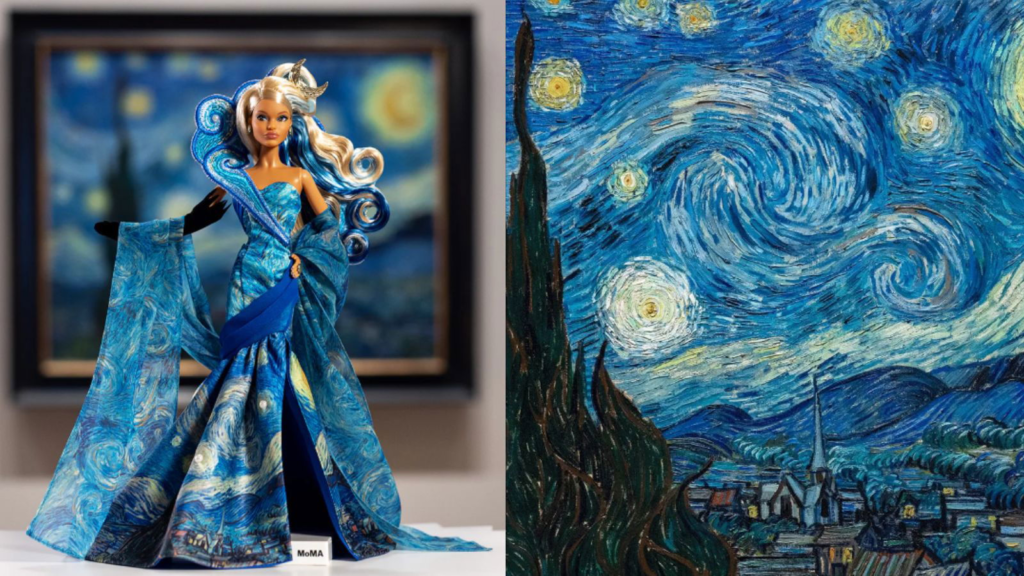
The Museum of Modern Art (MoMA) and Mattel, Inc. have announced a multi-year global partnership aimed at connecting audiences with art through design and play. As part of the collaboration, MoMA and Mattel Creations, the company’s direct-to-consumer, design-led platform, are launching a capsule collection of seven products inspired by works from MoMA’s collection. The collection will debut on 11 November on MoMA’s website, MoMA Design Stores in New York and Japan, and through Mattel Creations. Mattel will also sponsor MoMA’s Samuel and Ronnie Heyman Family Art Lab, an interactive space where visitors of all ages can experiment, create, and explore modern and contemporary art techniques. Don’t miss: Mattel taps OpenAI to bring AI to playtime The capsule aims to engage a new generation with MoMA’s collection through play and design, while highlighting both institutions’ commitment to creative, design-focused experiences. The MoMA and Mattel Creations capsule collection features a Barbie doll that celebrates Vincent van Gogh’s The Starry Night, with a gown patterned after the painting’s swirling skies, crescent moon details in her hair, and sculpted heels reflecting the landscape while Hot Wheels contributes two die-cast models, one of the aerodynamic 1960s Jaguar E-Type Roadster and another inspired by the iconic French Citroën DS 23 Sedan. Meanwhile, the UNO Canvas x MoMA set marks the first-ever MoMA edition of the classic card game, featuring six masterpieces by Sonia Delaunay, Henri Matisse, Piet Mondrian, Claude Monet, Liubov Popova, and Vincent van Gogh. A redesigned Magic 8 Ball draws inspiration from Alma Woodsey Thomas’s Untitled and includes nine custom inspirational phrases. In addition, collectors can also enjoy two Little People Collector sets: one surrealist-inspired set honoring Salvador Dalí, including a playful self-portrait and a piece inspired by The Persistence of Memory, and another featuring Claude Monet, with figures that place the artist within his own Water Lilies masterpiece. “MoMA has long championed the transformative power of art and design as a catalyst for education and creativity,” said Jesse Goldstine, chief retail officer at MoMA. “By joining forces with Mattel Creations, we are inviting a generation of new audiences to experience the Museum’s collection in ways that merge contemporary art with creative play and design innovation,” Goldstine added. Nick Karamanos, SVP of entertainment partnerships at Mattel, described the collaboration as “more than a product launch” and called it a “global design partnership” that translates iconic artworks into collectible, design-led experiences. Mattel’s focus on cultural storytelling extends beyond art collaborations, as seen in its recent Monster High release. Earlier in March, the brand release Corazon Marikit, a doll inspired by the Filipino folklore creature the “manananggal.” With a detachable upper body, embroidered bat wings, and a “terno”-inspired outfit, the figure blends mythology, fashion, and play, showcasing Mattel’s strategy of creating culturally resonant, collectible experiences. Related articles:  Mattel unveils Monster High doll inspired by Filipino ‘manananggal’  Mattel launches shoppable TV ad on Tubi in Australian-first campaign with Vudoo  Mattel apologises for misprinting porn site on ‘Wicked’ doll packaging  source

MoMA, Mattel debuts first art-inspired capsule collection Read More »
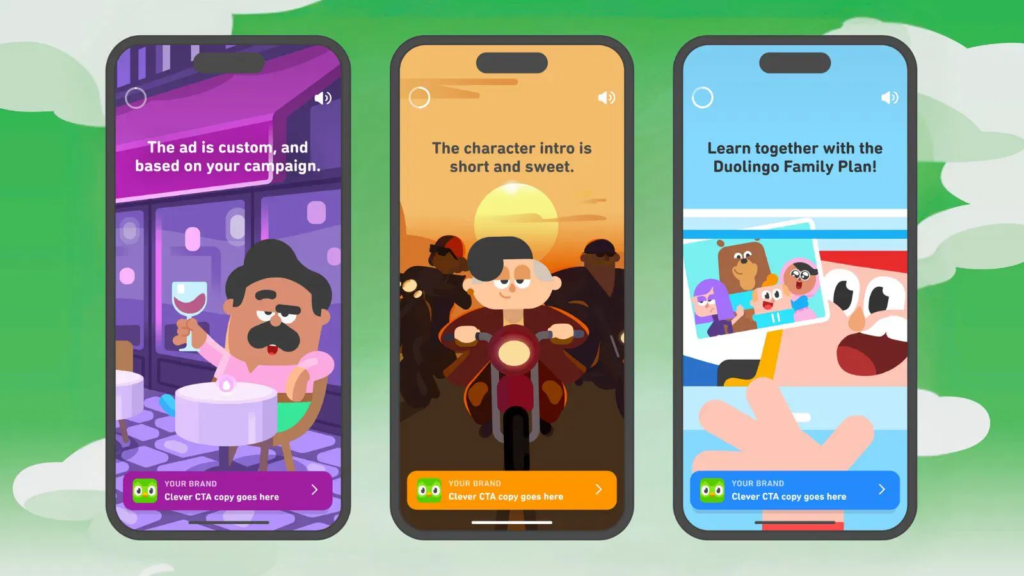
Gen Z perspectives: Duolingo's ad platform and Gong Cha's 2026 reboot

Happy Friday, MARKETING-INTERACTIVE readers and welcome back to Gen Z Perspectives, your go-to feature where we unpack the week’s top stories and trending topics through the eyes of Gen Z. From the biggest industry moves to viral moments and marketing controversies worth dissecting, we’re bringing the heat with authenticity, awareness and probably a few unfiltered takes. This week: Duolingo launched a playful, character-led ad platform aimed at winning over Gen Z, Love, Bonito and LinkedIn tackled the career questions women hesitate to ask, and we explored what Gong Cha’s 2026 relaunch will need to truly stand out. Here’s the tea you can’t afford to miss. Don’t miss: Gen Z perspectives: Shopping on ChatGPT, F1 fever and Instagram’s thinnest videos 1. Duolingo rolls out character-led ads platform to charm Gen Z Duolingo has rolled out a new mobile-first advertising platform, Duolingo Ads, aimed at helping brands connect with Gen Z through playful, character-led formats. The mobile learning app, which has more than 128 million monthly active users globally, said the platform was built to “delight, not disrupt”. Ads will feature Duolingo’s popular cast of characters and are designed to blend branded storytelling with the app’s signature humour and charm. Read more here.  2. Love, Bonito and LinkedIn tackle career questions women hesitate to ask LinkedIn has teamed up with fashion brand Love, Bonito to launch a campaign addressing the persistent confidence gap faced by women in the workplace. Titled “What we don’t ask: Career questions women should start asking”, the initiative surfaces the questions women often hesitate to raise — from mentorship and communication to navigating career growth — and pairs them with insights from voices such as LinkedIn’s APAC HR director Sumita Tandon, Love, Bonito’s CEO Dione Song and Malaysia’s top 20 LinkedIn creator Crystal Lim.  Read more here.  3. Gong Cha eyes 2026 relaunch: Can it win hearts and cups again? Once a dominant player in Singapore’s bubble tea boom, Gong Cha officially ceased operations on 2 October, taking down its social media accounts and website and shuttering all its shops. The brand is set to return in 2026 under new franchisees with a relaunch branded “Gong Cha 2.0”, aiming to reclaim a leading position in a market that has grown far more competitive since it first captured Singaporeans’ taste buds. For early bubble tea adopters, Gong Cha evokes nostalgia for its rapid expansion and early buzz. But the market has evolved: boutique stores such as Koi and Chagee emphasise freshness and aesthetics, Mixue competes on value and ubiquity, and Hey Tea continues to carve a premium niche. Consumers too have evolved with elevated experiences, functional benefits, and social-media-worthy presentation now becoming a norm. This means legacy brand love alone may not be enough for the tea brand when it launches. Read more here.  Related articles: Sincere or diluted? PR practitioners react to Petronas CEO’s public apology    Monetary Authority of Singapore seeks social media partner for MoneySense   H&M appoints APAC media AOR across six markets source

Gen Z perspectives: Duolingo's ad platform and Gong Cha's 2026 reboot Read More »

PCF brings compassion-driven careers to Singapore heartlands

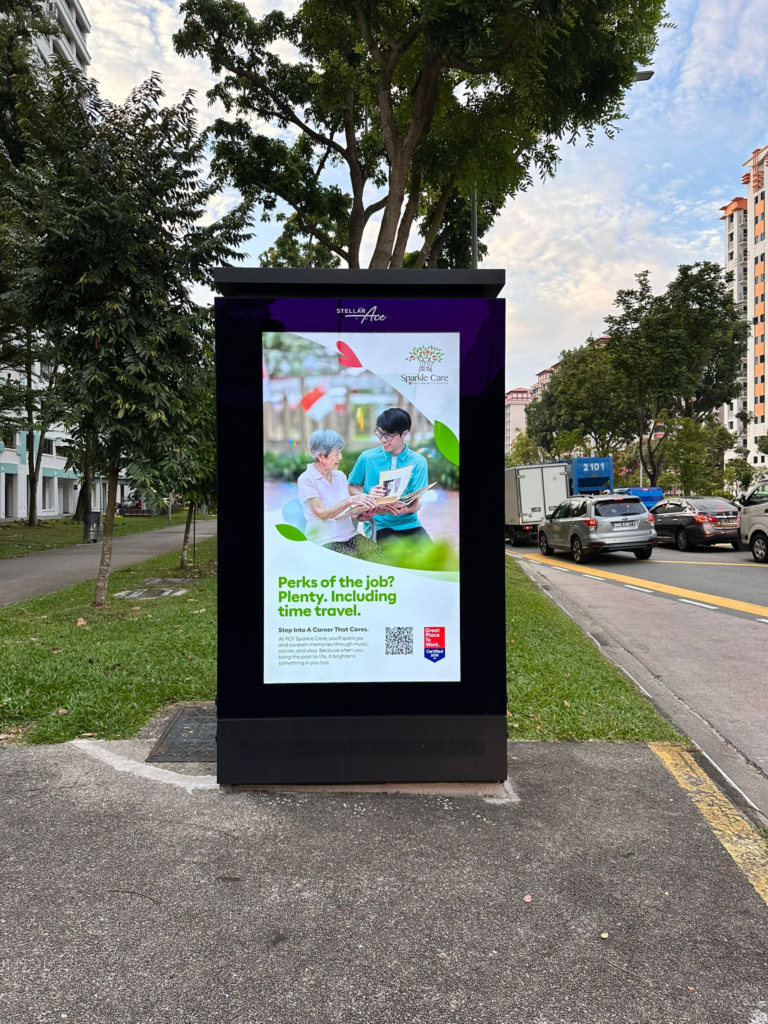
The PAP Community Foundation (PCF) has rolled out a new recruitment campaign, “A career that cares”, aiming to connect with Singaporeans across neighbourhoods and digital platforms. The campaign, created with agency Tilt, is now live on DOOH screens and social media in areas including Tampines East, Tanglin, Boon Lay, and Jurong East. It invites locals to explore careers where compassion meets professional growth. As Singapore’s largest preschool operator, PCF runs around 350 Sparkletots preschools and a growing Sparkle Care eldercare network. The organisation says the campaign highlights pathways for individuals seeking careers that enrich both their lives and the lives of others. Don’t miss: PCF Sparkletots takes learning outside the classroom in new campaign Through a multi-channel approach, Tilt aims to make the campaign visible across physical and digital spaces, from neighbourhoods to social media feeds. Running from July to December 2025, “A career that cares” reflects PCF’s people-first culture and mission to champion meaningful work. “Tilt’s copywriting and visual approach beautifully capture the heart of what a career at PCF represents—a calling to nurture, uplift and make a lasting difference. We believe this campaign will inspire individuals who wish for their work to touch lives meaningfully each day, especially those seeking purposeful careers in early childhood education and eldercare,” said June Tan, director of brand and communications at PCF. Karn Singh, group creative director at Tilt added, “‘A career that cares’ is for those who believe ambition and compassion don’t stand apart, but belong together.”  PCF’s people-first message echoes a wider trend in workplace initiatives. Most recently, LinkedIn has teamed up with fashion brand Love, Bonito to launch a campaign addressing the persistent confidence gap faced by women. Titled “What we don’t ask: Career questions women should start asking”, the initiative surfaces questions women often hesitate to raise — from mentorship and communication to navigating career growth — and pairs them with insights from LinkedIn’s APAC HR director Sumita Tandon, Love, Bonito CEO Dione Song, and Malaysia’s top 20 LinkedIn creator Crystal Lim. It also features Nas.io’s Jacq Lim, LinkedIn Top Voice Sylvia Yu Friedman, and Indonesian entrepreneur Sabrina Anggraini. The collaboration, LinkedIn’s first in Asia, aims to show how women can combine practical tools with human guidance to grow with confidence. Related articles: WOG concludes creative pitch with 66 agencies making the cut  SKM, HDB celebrates SG60 with time-travelling kindness film trilogy   MCCY unites cultures from the canvas to the kitchen in SG60 campaign source

PCF brings compassion-driven careers to Singapore heartlands Read More »

Social club The Nanson nabs ex-Häagen-Dazs Asia marketing head as CEO

Former Häagen-Dazs Asia marketing head Kaajal Shivdasani (pictured) has been appointed chief executive officer of The Nanson, a modern members’ club located along Robertson Quay. Shivdasani steps into the role after more than two decades leading marketing, strategy and innovation across global brands, most recently at General Mills where she helmed regional marketing for Häagen-Dazs Asia. Speaking to MARKETING-INTERACTIVE, she said the move marks a deliberate shift from global corporate leadership to something more local and community-driven. “After more than two decades in marketing, strategy and innovation on large global brands, this felt like the right time to channel that experience into something more local and community-driven, in a country that I’ve called home for the past 15 years,” said Shivdasani. Don’t miss: General Mills reportedly mulls selling Häagen-Dazs stores in China She added, “The Nanson offers that perfect intersection, where intuition meets insight, and imagination meets intent. It’s a space that demands both art and strategy, and that is exactly where I thrive.” Before moving to Singapore, Shivdasani lived and worked across eight countries spanning Asia, the Middle East, Europe and Latin America, experience she said continues to shape her leadership approach. “My years at General Mills were a masterclass — not just in building and growing brands, but also in working with and leading teams globally,” she shared. “That global perspective is something I carry with me to The Nanson, where the richness of our team and our community lies in its diversity.” As she takes the helm, Shivdasani said her goal is to reimagine what a modern members’ club can be, one that blends exclusivity with accessibility and purpose. “It starts with exceptional service and a space that feels personal — a home away from home where there are many you know, and many more you’ll get to know,” she said. “It grows through shared, memorable experiences that expand your horizons. And it thrives as a creative playground, where ideas collide, evolve and turn into something extraordinary.” The Nanson has already begun hosting events that reflect its mission of “breadth, curiosity and conversation”. Its first salon session this week featured Kishore Mahbubani and Steve Okun in a discussion on silent geopolitical shifts. Next week, the club will take a completely different turn — hosting a monk from the Dalai Lama’s order, said to be the inspiration behind Star Wars character Yoda. Shivdasani said the contrasting line-up captures what The Nanson aims to embody, a space driven by breadth, curiosity, and conversation, and hinted that this is only the start of what’s to come. Looking ahead, she said what excites her most is the opportunity to shape Singapore’s evolving social scene through experiences that surprise and inspire. “Our 22,000-square-foot space is a world of possibility — ever-changing, ever-inspiring. One week it’s the glamour of a White Party, the next it’s the sun-soaked spirit of the French Riviera, or the thrill of F1 season,” she added. “What excites me most is the ability to surprise — to create experiences that feel fresh, immersive and unlike anything else in Singapore.” Shivdasani said her experience building love brands such as Häagen-Dazs and Ferrero Rocher, brands that inspire belief rather than mere purchase, has shaped how she views The Nanson. To her, the club operates on similar principles of emotional connection and shared belonging, built around community, care and memorable experiences. “I’m excited to partner with a deeply passionate team to craft experiences that will be remembered, long after the moment passes,” she added.  Her move comes as her former employer, General Mills, is reportedly mulling the sale of its Häagen-Dazs ice-cream stores in China. According to Bloomberg, the Minnesota-based firm might launch a sale process for the assets in the coming months, with expectations of raising hundreds of millions. According to Häagen-Dazs’ WeChat platform, there are currently over 250 Häagen-Dazs stores in China. However, the report noted that discussions are still preliminary, and General Mills may ultimately opt against a sale. The company is expected to continue distributing Häagen-Dazs products in Chinese supermarkets and convenience stores. Related articles: Ex-Taylor’s CMO Ben Foo joins multi-brand F&B retail group as CEO  F&N names new CEO  PlayDOOH names new CEO source

Social club The Nanson nabs ex-Häagen-Dazs Asia marketing head as CEO Read More »

When good data goes bad: Fighting fraud and silos in Southeast Asia's largest economy

In today’s fast-paced digital economy, the customer journey is paramount. However, businesses are quickly learning this journey is only as smooth as the data that underpins it. Customers no longer judge brands on their promises or marketing messages, but on the seamlessness of their digital experiences. “That trust is only as good as the data that you have,” explained Soren Beaulieu, regional content and strategy director at MARKETING-INTERACTIVE, who moderated a recent roundtable luncheon. Hosted in Jakarta by MARKETING-INTERACTIVE, and supported by GBG Loqate, the leading provider of address verification solutions, the event brought together leaders from across Indonesia’s finance, logistics, and retail sectors. The discussion unearthed a critical, and often, underestimated challenge: the staggering operational and financial costs of inaccurate customer data. As Gunaseelan K, head of product at GBG Loqate, pointed out, the impact goes beyond the balance sheet, becoming “a real distraction from your actual business”. The foundational fissures: Data silos and duplication For many organisations, the data problem begins at the most fundamental level: data entry. Iyan Waer, head of IT, architecture and development at Adira Finance, shared a common, but costly scenario where sales agents, faced with repeat customers, find it easier to create new profiles rather than search for existing ones. “What they would usually do is just input everyone as new customers because that’s the easiest method for them,” he explained. This simple shortcut creates a ripple effect of chaos. “In our system, we have a lot of duplicate data, and that is very challenging for us. When we need to do some kind of algorithms, we don’t know which one is the real ‘Pak Budi’ for example.” This internal confusion often spills into high-level meetings. With different departments working from their own version of the truth, productivity grinds to a halt. “You bring your own data, and they bring their own data. So sometimes the meeting is not efficient because we are just arguing over which data is the best,” Waer lamented. The challenge is compounded when businesses operate across regulatory boundaries. Mandiri Sekuritas’ vice president of digital marketing, Fadilla Zain, described the complexities of integrating banking and capital market platforms, which are governed by separate regulators. “The data that they already have and that’s required by our regulators is actually different,” she noted. This forces the company into a constant balancing act, “juggling those two things to comply to the regulators while also delivering a good experience for our users”. The pressure is similarly immense for a digital-first entity such as Bank Neo Commerce, the leading digital-based bank in Indonesia. Daniel Armanto, the bank’s chief technology director, confirmed its biggest challenge is ensuring the data is of the “highest quality” to conduct the rigorous, digitally native, know your customer (KYC) processes, required by regulators. When data fails: Fraud, forfeited revenue, and logistical nightmares Inaccurate data is not just an internal headache; it opens the door to significant financial losses from fraud and operational failure. Waer shared a chilling story of a sophisticated fraud syndicate that exploited the system by using the legitimate, verified documents, of real people. “The data we received when they were applying for a loan was valid, but this was actually a syndicate borrowing data from real people,” he recounted. After making a few initial payments, the loans would default. When the collections team visited the address, the real individual had no knowledge of the loan, having been paid a small fee to lend their identity documents for a few days. The collateral was gone, and the loan was a total loss. The experience forced Adira Finance to rethink its digital strategies and adopt a hybrid model. “We needed to go to ground, do a physical survey, and physically meet with customers because we couldn’t trust our digital methods entirely at that moment,” Waer stated, highlighting the limitations of relying on digital data alone. This high-stakes reality is also felt in the logistics sector. Liberty Fauquex, director of technology for ASLI Satu Indonesia, explained how the company faces risks with international orders, where a bogus address can be disastrous. If a shipment arrives at a port and is not collected, “it becomes the property of the state”, a costly and irreversible outcome. This necessitates a “manual” and time-consuming due diligence process for every suspicious order. A solution that could validate international customers “a lot easier and a lot faster, like the Loqate’s solution” he said, “would be a game changer”. Even the F&B industry is not immune. Christian Wibowo, vice-president of product at Fore Coffee, described how syndicates of resellers, known locally as jastip, exploit new user promotions. “From the data, that’s a new user. That’s a real customer,” he said. The company only uncovered the scheme through reports from their baristas, who noticed the same individuals picking up hundreds of drinks ordered under different new accounts. While the data appeared valid on the surface, it was being used in a way that undermined its business model, forcing it to explore solutions such as CCTV analysis to identify and block these actors. The address conundrum: A landmark is not a location Among the myriad data challenges discussed, the issue of address verification emerged as a uniquely pervasive and frustrating obstacle. It’s a problem every consumer has faced: the delivery driver who calls asking for a nearby landmark. “They shouldn’t have had to call me,” Fauquex asserted. “I put that in when I ordered the goods.” Gunaseelan pointed out that even official, government-issued documents, may not always be completely accurate. Holding up his own Malaysian ID card, he noted: “There’s ambiguity in my address as it lacks a complete street name.” If a business relies solely on this information for KYC processes, it is basing its entire relationship on inaccurate data. The problem is amplified in Indonesia, where, as Zain said, ID card images can be so poor that agents resort to editing them in social media apps just to make the text legible for optical character recognition

When good data goes bad: Fighting fraud and silos in Southeast Asia's largest economy Read More »

Temasek bets on human-AI collaboration to transform investment decisions

At Temasek, one of the world’s most influential investment firms, artificial intelligence isn’t just a buzzword—it’s reshaping how decisions are made across a SG$434 billion portfolio. Rather than replacing human judgment, AI is being harnessed to challenge assumptions, reduce bias, and uncover insights hidden in vast amounts of data. For Mark Lim, chief digital officer, the goal is clear: empower employees to work smarter, not harder, and allow technology to amplify human decision-making. Over the years, the firm has adopted AI to add another layer of checks to human biases, and Lim argues that while AI is often thought to have biases, in reality, people too have their own bias. Don’t miss: ‘No longer a choice’: Neil Patel makes the case for AI personalisation at scale “Basically, what we’re trying to do is use AI to reduce human biases,” added Lim. The scale of information Temasek manages makes AI indispensable given the sheer volume of documents that needs to be carefully checked – from financial statements to performance reports. “The good thing about AI is it can process a lot of information in a very short time,” said Lim who explained AI’s ability to process these vast datasets quickly gives the firm an analytical edge – but of course, this always needs to be coupled with human oversight. A central tool in this process is Temasek’s Knowledge Graph, which maps relationships between entities across its portfolio. By uncovering connections between companies, sectors, and market trends, the firm can make more informed decisions and anticipate shifts that might impact long-term returns. However, Lim stressed that this is not about automating decisions entirely but rather spotting pitfalls. He said: “AI may not always be right, but it encourages you to think ‘Can we take a second look at it? Can we think about it again?’” So what can be automated? Repetitive tasks such as data extraction or document processing, can be automated, freeing staff to focus on higher-value work should be a starting point, explains Lim. Temasek’s AI strategy extends beyond investment teams and involves other teams working together to drive AI adoption such as the organisation and people (O&P) department, risk, internal audit, legal and cybersecurity. Lim described an internal program called “AI and digital fluency,” designed to empower employees at every level to leverage approved AI tools and automation in their daily work. Candidly he added, “I always tell my colleagues, the future will be human and AI working together. It’s already happening now.” The firm’s approach to technology is grounded in governance and control. While Temasek subscribes to AI models from providers such as OpenAI and Google, it has developed a “thin layer” on top of these services to ensure compliance with regulatory requirements and data privacy frameworks. This layer allows the firm to control what information is fed into AI systems while maintaining the flexibility and security to switch between models as needed. These examples underscore Temasek’s philosophy: digital transformation is not just about efficiency, but about creating tangible impact for people and communities. Impact on communities Lim highlighted Temasek’s broader digital transformation journey, which predates his tenure at the firm. He drew parallels to his work in Singapore’s public sector, where he helped implement SingPass and Myinfo. Both are initiatives that simplified citizen authentication and government service access. Another project close to Lim’s heart is the MyResponder app, which connects trained volunteers to cardiac arrest incidents, dramatically improving response times and saving lives. “There are many people who have saved lives. People have won national day awards for using our app to save quite a number of lives,” said Lim. “I personally am very proud of this app that we built. Of all the apps that I’ve done, this is the one that really touched my heart,” he said. A key principle underpinning Temasek’s AI adoption is balancing empowerment with responsibility. Data is a strategic asset, but sharing it comes with inherent risks. Lim described this as two different worlds – one of which, he calls the ‘Caveman’ where there is no use of technology or data. The other, he names it the ‘Wild, wild, west’ where everything goes. “We cannot afford both. We need a balance and we need to manage the paradox of empowering the business to use the technology and build the right culture, but at the same time manage data governance,” said Lim. Looking ahead, Lim envisions a world in which AI enhances human insight, rather than replacing it. Investment decisions will continue to rely on human judgment, but AI will act as a trusted collaborator, processing information, challenging assumptions, and uncovering insights. Related articles:  ‘Everything can be reimagined’: Piyush Gupta on building intelligent, resilient brands  Temasek Foundation, TikTok launch Trusted Creators Lab to counter misinformation  Singpass drops catchy rap video  source

Temasek bets on human-AI collaboration to transform investment decisions Read More »

Domino's turns up the crave factor with first brand refresh in 13 years

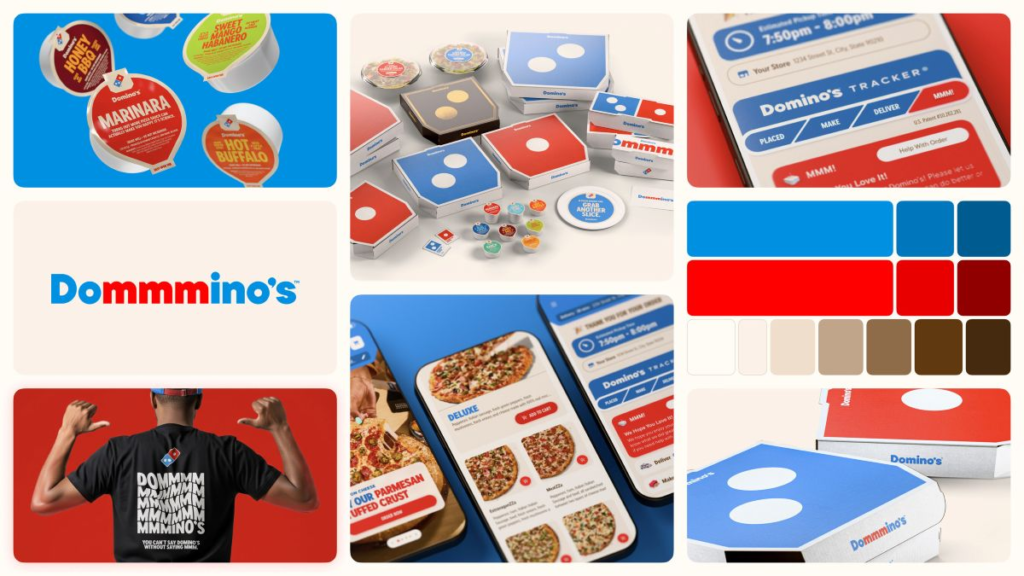
Domino’s is putting the spotlight back on what it does best: making pizza irresistible. The global pizza giant has unveiled its first brand refresh in 13 years, designed to make every aspect of the brand – from packaging to jingle – just as craveable as its products. Domino’s said the refresh is more than a cosmetic update. It represents a strategic pivot to reinforce brand love and relevance in a crowded, experience-driven food market. Domino’s is blending its heritage with a more playful, modern personality through more vibrant colors, a new “Domino’s Sans” typeface, and packaging designed to be instantly recognisable.  It is also introducing its first-ever audio branding element: the name-bending jingle “Dommmino’s”, voiced by five-time Grammy-nominated singer-songwriter Shaboozey. Don’t miss: Pizza Hut quietly rolls out new logo “Over the past decade, we became known as a technology company that happens to sell pizza,” Kate Trumbull, executive vice president and global chief marketing officer, said. “But with our ‘Hungry for MORE’ strategy, we’re bringing the focus back to making and delivering the most delicious products and experiences, which is what Domino’s customers really want. Rather than launching a traditional tagline, we’re baking craveability right into our name and every aspect of our brand. You literally can’t say ‘Domino’s’ without saying ‘mmm.’” The refresh underscores how Domino’s views brand experience as holistic, spanning not only products but also digital touchpoints, in-store design, and team member interactions. Brighter, bolder packaging, new team gear, and updated app and website experiences are all part of a plan to create a memorable, cohesive brand impression at every customer touchpoint. “Pizza is that one food that brings everyone together,” Shaboozey, the voice behind the new jingle, said. “Different people, generations, and cultures – and no one does it better than Domino’s. It was a fun challenge to be the voice for the most craveable food.” Trumbull added that most companies rebrand themselves when they’re struggling, but not Domino’s. “After years of category-defying growth, this refresh is about continuing to push to be the best version of ourselves. It’s vibrant, it’s bold, and it’s fun. It’s pizza.” The refresh will roll out globally, with localised efforts for Singapore and Malaysia slated for March 2026. Domino’s isn’t alone in refreshing its look and feel across the pizza category. Pizza Hut, for example, has quietly begun rolling out a refreshed logo across select markets including the UK, Canada and South Africa. The new design keeps the iconic red roof while introducing a sleeker, italicised typeface with a forward lean, creating a sense of motion and energy. Unlike its predecessor, which paired a red roof with black lettering, the refreshed version goes all-in on red, with sharper “Zs” in “Pizza” sloping down into “Hut,” giving the logo a tighter, more dynamic appearance. Related articles:  Domino’s Pizza International names ex-McDonald’s SG MD as regional VP for AMEA From spicy to strategy: Domino’s Linda Hassan on championing brand love in the digital chaos  Have you heard Domino’s Pizza’s AI-curated playlist yet?  source

Domino's turns up the crave factor with first brand refresh in 13 years Read More »

Travel creators cash in as Agoda launches new ambassador programme

Online travel platform Agoda has launched the Agoda ambassador programme, a new initiative aimed at working with travel creators to encourage bookings through its platform. The programme gives creators unique promo codes to share with their followers, earning a commission for every booking made. Participants can also access sponsored stays and activities valued at up to USD 225 per month, enabling them to showcase Agoda’s partner hotels and destinations. Some creators may also be featured in the company’s campaigns, increasing their visibility. Don’t miss: Contrite or calculated: Agoda’s PR ticks boxes but does it fly? Agoda said the programme is designed to tap into the influence of social media travel creators, who increasingly shape how travellers discover and plan trips. The platform offers over six million properties, 130,000 flight routes, and 300,000 activities that can be booked together. Matteo Frigerio, Agoda’s chief marketing officer, said the initiative benefits both creators and the platform’s hotel partners. “By giving them the tools to share authentic experiences and rewarding them for the bookings they generate, we’re building a partnership model that benefits travel creators, travelers and our hotel partners alike,” he said. The initiative underscores the broader trend: digital platforms are central to travellers in APAC, especially those travelling solo.  According to a study conducted by Scoot and YouGov, travellers turn to online travel agency websites, followed by hotel sites and reviews when booking for an accommodation.  Social media plays a key role in food and activity discovery. Travellers often consult TikTok and Instagram to plan where to eat and what to do while offerings such as rebooking flexibility, and integrated travel bundles help reduce planning friction. Related articles:  Study: Millennials power APAC solo travel surge, digital channels lead the way  MOM and labour groups raise concerns over Agoda’s retrenchment exercise  Agoda partners Tourism Malaysia for Visit Malaysia 2026 digital push source

Travel creators cash in as Agoda launches new ambassador programme Read More »

SKM 'glitches out' to reboot Singapore's kindness culture

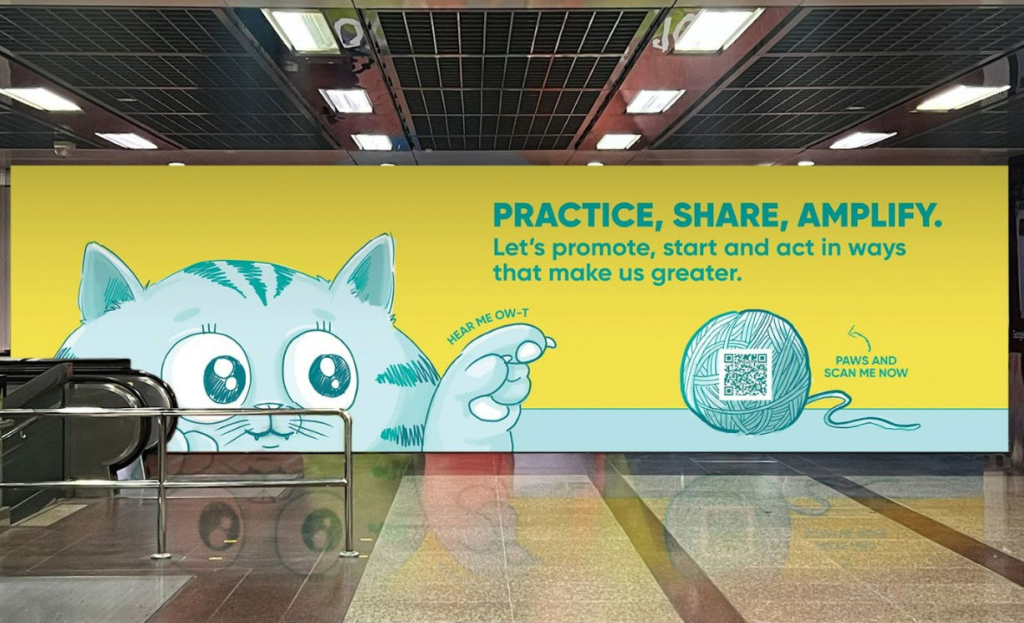
Singapore Kindness Movement (SKM) wiped its social media clean this week in a curious “glitch” that had followers wondering if the nation’s ambassador of niceness had gone rogue. In a series of cryptic Instagram and TikTok posts, SKM uploaded glitchy videos featuring blurred-out local talents and mysterious captions that seemed riddled with typos, until users noticed a pattern. The letters “P”, “S” and “A” appeared in uppercase across multiple captions, hinting at something bigger on the way. The social stunt, dubbed “Operation glitch out”, ended with a tongue-in-cheek Notes app “apology” post for the “technical difficulties” SKM had been experiencing. Each upload faded into a glitch-effect heartland landscape, where faceless figures, the campaign’s zentai actors, could be spotted moving in and out of frame. Don’t miss: Are social media blackout stunts still impactful in an ‘always-on’ digital world? The creative chaos, it turns out, was a teaser for SKM’s latest “Be greater campaign 2025” and a new series of Public Service Announcements (PSAs) on gracious living and mutual support. The five-part PSA series draws inspiration from Kasuo Taishou, also known internationally as Japanese Masquerade, and reimagines it with a Singaporean twist. Produced by local agency Bless7Up, the short films feature local talents including Benjamin Kheng, Chow Jia Hui, Tommy Wong, Farah Lola, Ben Byrne (The Smiling Afro) and Eswari Gunasagar. Using zentai actors, performers clad in full-body suits who manipulate props and sets from behind the scenes, the films create surreal yet heartwarming scenes depicting everyday acts of kindness. The PSAs translate big social ideals into bite-sized stories about neighbourliness, appreciation and empathy. By using an arts-based, short-form format, SKM aims to show that kindness is neither lofty nor theoretical, it is something woven into daily routines, from sharing seats on the MRT to helping an elderly neighbour carry groceries. SKM’s approach builds on data-backed insights that audiences respond more strongly to artistic storytelling than traditional awareness messaging. The PSAs act as a bridge between entertainment and behavioural change, using emotion and metaphor to inspire viewers to act. Through the campaign, SKM hopes to normalise kindness as a default social response, provide practical models of gracious behaviour, and drive a cultural shift toward everyday empathy. The organisation describes the artistic choice as a “sophisticated behavioural intervention”, with zentai actors serving as metaphors for the unseen kindness that keeps communities connected. Complementing the films, SKM will stage a PSA-themed takeover of City Hall MRT from 16 October to 10 December 2025. The out-of-home (OOH) campaign will feature bold visuals and taglines reminding commuters that graciousness doesn’t always come in grand gestures, sometimes, it’s as simple as turning down your music or offering help to someone in need. “Drawing inspiration from Kasuo Taishou, this year’s ‘Be greater’ campaign uses creativity and local storytelling to reimagine how we talk about kindness. With over 80% of Singaporeans saying they face barriers in connecting with neighbours, we hope these films remind everyone that neighbourliness is not just about living side by side, but choosing to care for one another,” said Michelle Tay, executive director at SKM.  The campaign’s playful digital approach echoes a growing trend of brands embracing “glitch” or “hack” style activations to stir intrigue online. In April this year, Wingstop Singapore pulled a similar move when its Instagram account appeared “hacked”. Speaking to MARKETING-INTERACTIVE, Wingstop Singapore later confirmed the “hack” was a marketing stunt to relaunch its cult-favourite Hot Honey Rub flavour. The brand described the stunt as its own spin on “brat marketing”, an unapologetically bold, tongue-in-cheek approach designed to resonate with Gen Z by embodying their humour and irreverence rather than merely speaking to them. Related articles: This heartbreaking cheating scandal is actually a Lazada 9.9 ad    Duolingo goes rogue amid ‘AI-first’ backlash     Indian influencer cops flak for faking death in cervical cancer publicity stunt  source

SKM 'glitches out' to reboot Singapore's kindness culture Read More »

Veeam picks PR agency partner to amplify data resilience across APJ

Software company Veeam has appointed Milk & Honey PR as its hub agency partner for Asia Pacific and Japan (APJ), the PR firm announced today. The move follows a competitive pitch. Under the partnership, Milk & Honey will lead hub-level PR strategy across APJ, covering market-relevant storytelling, executive profiling, earned media, and content development. The agency will collaborate with Veeam’s global, regional, and in-market teams to strengthen the company’s reputation among CXOs, technology leaders, partners, and the broader APJ business community. Don’t miss: Emirates takes flight with new PR agency for SEA Veeam provides data resilience solutions designed to protect businesses from cyber-attacks, natural disasters, and system outages, ensuring continuity across operations. The new PR programme is intended to support Veeam’s growth ambitions in the region. “APAC and Japan are a vital region for Veeam’s continued growth and innovation. There is incredible digital innovation taking place across the region and it’s all powered by data, so securing that data and making sure it’s available wherever and whenever it’s need is becoming a critical business priority,” said Tom Murphy, vice president of global corporate communications at Veeam Software.  He added, “Through our PR agency RFP process, Milk & Honey PR stood out for their creativity, strategic insight and deep understanding of what sets Veeam apart in today’s data resilience landscape.”  Murphy highlighted that Milk & Honey PR’s blend of senior expertise and regional insight will be critical as the company expands its enterprise operations, advances its SaaS-first strategy, and introduces AI-powered solutions. The partnership is expected to help Veeam deliver consistent, compelling stories that resonate with business and technology leaders across the APJ region. In tandem, Meilin Wong, partner and CEO of Milk & Honey PR APAC said, ““We’re beyond thrilled to be chosen as Veeam’s APJ hub agency partner and to play a role in its next stage of growth. Our focus will be to bring Veeam’s story to life — not just as the leader in enterprise backup and recovery, but as a company driving resilience in an era defined by AI, security and SaaS.” “Together, we aim to deliver communications that resonate across borders, building trust and influence with both business and technology audiences,” she added.  The move comes amid a broader trend of tech platforms strengthening their regional PR capabilities in APJ. Recently, Pinterest appointed The Hoffman Agency as its public relations partner in Asia, covering markets including Singapore, Japan, Korea, and India. According to a Pinterest spokesperson, the agency was selected to support the platform’s growth outside North America and help communicate its focus on “inspiration and positivity” as it expands internationally. Related articles: Australia’s Elite Supplements picks new PR agency to lead Singapore launch   Hong Kong Tourism Board appoints PR agency for Malaysia market   Ethiopian Airlines picks PR agency for Singapore and ANZ source

Veeam picks PR agency partner to amplify data resilience across APJ Read More »