marketing interactive

LANEIGE gives Neo Cushion a glow-up with BTS’ Jin

Premium beauty brand LANEIGE has partnered with Jung von Matt HANGANG to lead the global launch of the third-generation Neo Cushion, the latest evolution of its hero cushion foundation line. The launch introduces upgraded Neo Cushion “The matte” and “The glow” lines, marking the next chapter of the franchise following last year’s Neo Cushion MEWY campaign. The campaign will roll out across Asia, the US and Europe, reinforcing Jung von Matt HANGANG’s role as a long-term strategic partner for the brand. Additionally, the brand rolled out a hero film featuring Jin, who fronts the campaign as he showcases the Neo Cushion range. In the film, Jin highlights the product’s skin-finish effects and wearability, aligning with LANEIGE’s positioning of the cushion as both performance-driven and visually expressive. Don’t miss: What happens when Somersby Light enters the world of K-pop fandom? According to a statement, the refreshed campaign aims to position the new Neo Cushion as a “next-generation benchmark” for skin texture expression in an increasingly crowded beauty market. The work is led by the idea: “Cushion is, ultimately, NEO. or NEO.” The campaign seeks to shift the focus beyond feature-led messaging, instead emphasising the product’s long-standing reputation for reliability and performance while encouraging consumers to rediscover the product through updated storytelling. Jung von Matt HANGANG is overseeing campaign strategy, creative development and the global rollout framework. This includes the hero film, key visuals and digital content ecosystem spanning digital platforms, eCommerce and retail environments. The move comes as beauty brands continue to double down on product-led storytelling and franchise-building strategies amid rising competition in the premium cosmetics category. Cushion foundations in particular remain a highly competitive segment across Asian beauty markets, where brands are increasingly balancing innovation with long-term brand equity. “The new Neo Cushion is not simply a product update, but a next-generation cushion newly defined by the skin texture expression consumers are looking for,” said Bill Yom, founder and managing director of Jung von Matt HANGANG. “Our role was to ensure this innovation is immediately understood and compelling across markets.” The move also reflects the growing influence of K-pop celebrities in global beauty and fashion marketing campaigns. Last month, Ray-Ban named Jennie as its newest global brand ambassador, tapping into the BLACKPINK star’s global popularity and cultural influence. According to the brand, Jennie embodies Ray-Ban’s DNA of expression and innovation, with the partnership aimed at encouraging consumers to express their “true selves”. Another example of this ongoing strategy came last year, when Colgate partnered with South Korean singer and actress IU to promote its “Optic White Purple” toothpaste. The campaign, which ran across Singapore, Malaysia, the Philippines, Indonesia and Hong Kong, leaned on social-first content featuring IU endorsing the product as her personal “beauty hack” and “the secret” to a whiter smile, further underscoring how global K-pop influence continues to be a go-to lever for brands targeting cross-market reach. Related articles:  Did McDonald’s Malaysia just launch its own K-pop boy group?  Nongshim taps K-pop group aespa to spice up Shin Ramyun’s global push M&M’S taps K-pop group ILLIT as regional ambassadors in Asia-wide campaign    source

LANEIGE gives Neo Cushion a glow-up with BTS’ Jin Read More »
H&M Singapore reportedly hit by layoffs as SEA HQ moves to Malaysia

Fashion retailer H&M is reportedly restructuring its Asia Pacific operations, with its Southeast Asia regional headquarters set to move from Singapore to Kuala Lumpur. According to reports, 78 roles will be removed from a regional headcount of 256 under the former East Asia region, with most of the redundancies expected to affect employees based in Singapore. The restructuring will also see about 30% of its regional support workforce cut, according to a report by Malay Mail. Staff were reportedly informed of the changes on 11 May. Don’t miss: H&M appoints APAC media AOR across six markets In response to queries from The Straits Times, H&M Singapore said it is providing support to employees affected by organisational changes, though it did not share further details. The company also declined to disclose the number of workers impacted or the roles involved. H&M reportedly said it regularly reviews its ways of working as part of efforts to meet changing customer expectations and keep the organisation flexible, efficient and agile. It added that Singapore remains an important market, and that it will continue to maintain an office in the city-state. In addition, the move is reportedly part of a wider change to H&M’s commercial operating model, which will replace existing regional layers with four new “continents”. Under the new structure, the newly formed continent Asia Pacific will be headquartered in Shanghai and oversee five sales markets. As part of the reorganisation, the SEA sales market head office will be based in Kuala Lumpur, while the Northeast Asia sales market will move to Tokyo. Other markets under the APAC structure include India, with a hub in Bangalore; Australia and New Zealand, with a hub in Sydney; and Greater China, which will share the Shanghai hub with the APAC continent headquarters. Support functions in Singapore and Ho Chi Minh City are reportedly being offshored, while offices in Seoul and Manila are being downsized. Store-level operations and retail teams are not expected to be affected. Employees affected by the restructuring will reportedly go through a calibration process by 21 May 2026. Staff have been asked to complete an assessment survey and nominate two preferred roles, with placements to be determined based on their 2025 contribution ratings and recent disciplinary records, rather than through standard CV submissions. Interviews and evaluations are expected to take place between 25 May and 19 June, with staff to be informed of their final outcomes by mid-June. The new structure and staff relocations are reportedly expected to take effect by 1 July. For employees whose roles are removed or reduced, H&M will reportedly offer mutual separation agreements if no alternative role can be found within the new organisation. Details of the separation packages will be shared at a later date. MARKETING-INTERACTIVE has reached out to H&M for more information. H&M’s restructuring comes amid other recent operational shifts involving Singapore-based workforces. In March, Singapore’s homegrown beer icon Tiger Beer said it would end large-scale brewing at its Tuas brewery by the end of 2027, marking the close of 95 years of local production. Following the closure, approximately 130 roles may be affected, with severance, reskilling and career support to be coordinated with the Food and Drink Allied Workers Union and NTUC’s e2i. Moving forward, HEINEKEN’s Asia Pacific Breweries Singapore will shift to an import-based supply model, with production moving to regional hubs in Malaysia and Vietnam. Related articles: Amazon confirms 16,000 job cuts following internal email misfire    Yeo’s cuts 25 jobs in Singapore as can manufacturing moves to Malaysia   NTUC, SISEU to support We. Communications workers hit by layoffs    source

H&M Singapore reportedly hit by layoffs as SEA HQ moves to Malaysia Read More »

ABrandADay’s AI-led work with Senoko Energy earns double silver at MARKies 2026

This post is sponsored by ABrandADay. Artificial intelligence took centre stage for ABrandADay at the MARKies Awards Singapore 2026, where the branding consultancy picked up two silver trophies for its work with AiChat for Senoko Energy. The agency was recognised for “Most Effective Use – Artificial Intelligence” and “Most Effective Use – Marketing Automation”, spotlighting a body of work that went beyond a single campaign, and instead, reflected a broader and evolving approach to how AI can be embedded into marketing communications. Rather than treating AI as a one-off activation, the collaboration between ABrandADay, AiChat, and Senoko Energy was built as an ongoing capability. From tactical executions to more thematic brand campaigns, AI was applied as a layer across the marketing ecosystem to improve how the brand communicates, responds, and converts. At the core of this was a closer working model. ABrandADay operated as part of Senoko Energy’s fractional marketing team, allowing both sides to test, adopt, and respond to emerging technologies in real time. This proximity enabled faster iteration cycles, tighter feedback loops, and a clearer line of sight between experimentation and business outcomes. According to the teams, this approach was especially critical given the initiative marked one of Senoko Energy’s first meaningful steps into AI within its commercial function. Without a fixed road map, the work required constant calibration – balancing ambition with a practical application. The result was a system that was less about isolated innovation and more about sustained integration. AI was not treated as a headline feature, but as an integrated tool that enhanced everyday decision-making across the campaigns. From experimentation to embedded capability The MARKies recognition suggested this approach was beginning to resonate. In a landscape where AI is often positioned as a buzzword, the work demonstrated a more grounded application. Automation and intelligence were used to streamline processes, personalise engagement, and optimise performance, rather than simply add novelty. This reflects ABrandADay’s broader philosophy. The agency has increasingly focused on building capabilities within client organisations, rather than delivering standalone outputs. The role of the fractional model This shift is closely tied to its move towards a fractional CMO and CBO model. By embedding senior marketing leadership within the client teams, ABrandADay is able to work alongside internal stakeholders on a continuous basis. This creates the conditions needed for AI adoption to take root, as strategy, execution, and optimisation are handled within a single loop. The fractional model also allows for a more responsive approach to change. As new tools and technologies emerge, teams can assess and implement them without the delays that often come with more traditional agency structures. “Today, organisations want more than a set of recommendations. They want someone who can roll up their sleeves, take ownership, and build something that lasts. That is how we partner clients such as Senoko Energy, the Institute of Singapore Chartered Accountants, and TheSeafoodCompany,” said ABrandADay’s chief creative officer, Nafe Tong. Two patterns converging The wins at MARKies 2026 highlighted the convergence of two key developments shaping the marketing landscape. The first is the growing role of AI in driving marketing effectiveness. As tools become more accessible and sophisticated, the focus is shifting from experimentation to application. Brands are under increasing pressure to demonstrate how AI can deliver measurable impact, whether through improved targeting, efficiency or the customer experience. The second is the rise of fractional leadership models. As organisations look for more flexible and accountable ways to access senior expertise, the traditional agency-client dynamic is evolving. Fractional arrangements offer a middle ground, combining a strategic oversight with a hands-on execution. “Our work with Senoko Energy sat at the intersection of these shifts. By embedding ourselves within the client team while leveraging AI across the marketing funnel, we positioned ourselves as both a strategic partner and an operational driver,” said ABrandADay’s chief executive officer, Jas Seow. Beyond the awards While the double silver victories marked a significant milestone, it also pointed to a broader direction of AI. AI is no longer a future-facing concept. It is becoming a core part of how marketing functions operate day to day. At the same time, the structures through which marketing is delivered are changing, with more fluid, integrated models gaining traction. If anything, the MARKies recognition signals the industry is beginning to reward not just bold ideas, but the systems and ways of working that allow those ideas to scale. And increasingly, that may depend on how well brands can combine the right tools with the right structures to make them work. source

ABrandADay’s AI-led work with Senoko Energy earns double silver at MARKies 2026 Read More »

Suntory concludes media pitch for Asia

Suntory Beverage & Food Asia has appointed Publicis Media to oversee integrated strategic media buying and planning duties for its regional subsidiary brands in Asia, as confirmed to MARKETING-INTERACTIVE. The appointment follows a competitive pitch process, concluded recently, facilitated by global consultancy Ebiquity, according to a Suntory Beverage & Food Asia spokesperson. Publicis was selected for their proven track record in delivering strategic value, integrated ways of working, strong regional and local reporting capabilities. Under the terms of a new multi-year agreement, Publicis Media will assume responsibility for media operations across Thailand, Taiwan, Hong Kong, Malaysia and Singapore. The move comes during a period of significant financial momentum for the company, as regional revenue rose 11.2% to JPY 406.867 billion, up from JPY 365.782 billion the previous year. While proactive marketing investments helped sales volumes exceed expectations, the brand has navigated a nuanced economic environment. Overall segment profit surpassed internal forecasts despite a decline in the health supplement business and the financial impact of Thailand’s April 2025 sugar tax increase. This growth reflects a resilient performance even as market conditions remain challenging in regions such as Vietnam and Thailand. On the consumer side, Suntory is capitalising on high-impact brand experiences by expanding its popular branding crossover with Pokémon. This latest iteration features a sophisticated rollout of 18 unique bottle designs across its portfolio, including Pepsi. The creative concept focuses on the evolutionary nature of the franchise, with artwork depicting Pokémon progressing from their initial forms to their fully-evolved states. Mark your calendars for 24 June! #Content360 Hong Kong returns with a dynamic, one-day event dedicated to pivotal trends—from the silver economies to breakthrough IP collaborations, sports, and beyond. Let’s dive into the art of curating content with creativity, critical thinking and confidence! Related articles: Suntory picks Dentsu for creative duties across 3 APAC marketsSuntory’s lemon mascot is back for summer drinks marketing push source

Suntory concludes media pitch for Asia Read More »

RIMOWA's new campaign traces legacy through a single case

Premium luggage brand RIMOWA has launched “For a lifetime of lives”, a campaign exploring the bond between movement, craft, and the trusted objects that stay with people through time. Conceived as a cinematic story unfolding across generations, the campaign follows a single RIMOWA case as it moves through life’s different chapters. This extends RIMOWA’s long-standing creative commitment, as seen in its craftsmanship and engineering. The campaign reflects a philosophy integral to RIMOWA and embedded in its lifetime commitment to all suitcases: that the most meaningful journeys unfold over time, driven by curiosity and the instinct to keep moving forward. Directed by Argentinian filmmaking trio Pantera, with a score by American trumpeter Theo Croker, the campaign unfolds through films centred on a trumpet and the RIMOWA aluminium case that protects it. The narrative follows the instrument and its case as they pass from father to son, tracing time and legacy. Through shifting moments, spaces, and sounds, the case remains a quiet companion across lives shaped by music, creativity, and change. The first episode, “Window seat”, begins with a quiet gesture of legacy: a trumpeter father hands his cased instrument to his son as he prepares to leave home. The film interweaves fragments of the father’s past with the son’s first steps forward. In the second episode “Run it back”, the son is now a musician. His life unfolds between rehearsal rooms and the road as he works to find his voice. Moving between discipline and freedom, the episode captures the formative years of an artist’s journey, with the RIMOWA case gathering the dents and marks that come with each stage of life. The final episode, “Another take”, follows a day leading to a performance. It captures the quiet hours before stepping on stage, the fragments of music that shape a life devoted to sound, and the moments after the performance ends. Together, the films explore two narratives inside every RIMOWA case: engineering and durability, alongside the emotional journey across a lifetime. Dents, stickers, and travel marks become part of its character. The campaign also includes still imagery, photographed by artist Tyler Mitchell. Through scenes of travelling, the images introduce a wider cast of characters, each moment reflecting the quiet bond between a person and the trusted objects that accompany them. At the centre of the campaign is the RIMOWA classic cabin silver. MARKETING-INTERACTIVE has reached out to RIMOWA for more information.  Don’t miss: Jay Chou next to discover London with Rimowa Part of the LVMH Group, RIMOWA is a German luxury luggage brand founded in Cologne in 1898. Its global ambassadors come from sports, music, and pop culture. These include Rosé from BLACKPINK and Formula One driver Lewis Hamilton, who recently appeared at the opening of RIMOWA’s new flagship store in Cologne. Mark your calendars for 24 June! #Content360 Hong Kong returns with a dynamic, one-day event dedicated to pivotal trends—from the silver economies to breakthrough IP collaborations, sports, and beyond. Let’s dive into the art of curating content with creativity, critical thinking and confidence! Related articles: Jay Chou next to discover London with RimowaTokopedia’s suitcase messages turn Jakarta airport into a marketing playgroundThis pet fish just hitched a ride on a Samsonite suitcase for a campaign source

RIMOWA's new campaign traces legacy through a single case Read More »

Bing reaches one billion users – signalling a new phase for search and decision-making

Bing has crossed one billion monthly active users, a milestone that underscores its growing role in how people navigate the web today. But what makes this moment significant isn’t the scale alone – it’s what that growth tells us about how search is evolving in an AI-driven world. AI is fundamentally reshaping how people discover, evaluate, and decide. More of the early journey – filtering options, comparing products, narrowing choices – is now happening before a user ever types a query. As a result, the intent that reaches search is more defined from the outset – sharper, more contextual, and closer to action. For advertisers, that shift has real implications. Microsoft Advertising data shows that three and four-word queries leading to clicks on AI-generated answers have grown significantly year over year (Source: Microsoft Internal Data. Global Search Network Only O&O. Q4 2024 – Q4 2025), while single-word queries have declined by 6% (Source: Microsoft Internal Data. Global Search Network Only O&O. Jan 2025 – Jan 2026). That pattern reflects a consumer who has already done some of the thinking and is now arriving in search ready to narrow down, compare, and decide. This is supported by broader research. An IAB and Talk Shoppe study found that 80% of shoppers are now using AI to research and compare products, with usage highest in the early and middle stages of the shopping journey. As AI absorbs more of the early discovery process, search is becoming the place where decisions happen. To support this shift, Microsoft Advertising is introducing AI Max, now in open pilot. AI Max uses AI to expand query matching, personalise creative, and optimise landing experiences – helping brands show up more effectively as consumer intent becomes more nuanced across surfaces such as Bing and Copilot. Importantly, advertisers remain in control – opting into AI Max and setting guardrails such as brand parameters, exclusions, and messaging constraints, with full transparency into how queries and assets are performing. At the same time, new formats such as Offer Highlights bring relevance directly into the AI-powered experience. These formats surface key product differentiators such as free shipping or in-store pick-up, within the context of a Copilot conversation, aligning brand messaging with what matters most in the moment. This approach connects relevance with immediacy, helping brands show up with clarity and impact when users are ready to act. Search anchors high-intent behaviour As the journey evolves, search continues to concentrate on high-value intent. ComScore data shows that search usage continues to grow globally, with total minutes spent far exceeding time on generative AI platforms alone. For marketers, this reframes the role of search as a central layer in both research and decision-making. GWI data cited by Microsoft Advertising shows that search engines reach 13% more users than social networks and 116% more than video platforms for product research globally. In Southeast Asia, the dynamic between search and social is more nuanced. In Singapore, Malaysia, and Thailand, search reaches 2.4% to 18% more users than social networks for online product research and ranks as the second most-used channel in Indonesia, the Philippines, and Vietnam. It also outperforms video platforms across all markets, reinforcing its role in high-intent validation. (Source: GWI, Q2 2024 – Q1 2025, Southeast Asia). This illustrates that search is not solely one touchpoint among many, but a persistent decision infrastructure, a place where people validate what they’ve encountered elsewhere and determine what to do next. From ranking to influence: How AI is changing visibility To truly understand this shift, marketers need to look under the hood of how search itself now works. Behind every AI-generated answer is a layer Microsoft refers to as grounding – the mechanism that connects AI to real-time, authoritative web content, ensuring responses are based on current and verifiable sources rather than model memory alone. As AI increasingly mediates how consumers interact with information, grounding determines which content is retrieved, which sources are prioritised, and, ultimately, what shapes the answer a user sees. In an AI-first environment, visibility is no longer defined only by rankings or clicks, but by how content contributes to answers, citations, and outcomes. The AI visibility evolution is now becoming measurable. Earlier this year, Microsoft introduced AI Performance in Bing Webmaster Tools, a view into how content appears across AI-generated experiences, including Copilot and AI summaries in Bing. It shows how often content is cited, which pages are referenced, and the “grounding queries” that triggered those citations, the internal phrases AI systems use to match user intent to content. For advertisers, this opens a new lens on performance: not just whether users clicked, but whether your content was selected, trusted, and used to shape the response. This is a meaningful shift: from being found to being trusted. As AI continues to reshape the path to purchase, search is playing an expanding role in how decisions are made. AI shapes how intent is formed. Search captures that intent and converts it into action. For marketers, this creates an opportunity to engage across two critical dimensions: optimising for human decision-making and the AI systems that increasingly guide it. To learn more about the evolution of search in advertising, and what it requires from marketers, download Microsoft Advertising’s practical guide to navigating the AI search landscape. Five things you didn’t know about Bing 1. It has just joined the billion club: Bing has crossed one billion monthly active users and has grown more in the past five years than the previous 10 combined. 2. It’s woven into everyday workflows: Through Windows, Edge, and Copilot, Bing surfaces across task-driven moments throughout the day often in contexts where intent is immediate and action-oriented. 3. Microsoft Rewards drives repeat search behaviour: Users earn points for searching, completing quizzes, and engaging across

Bing reaches one billion users – signalling a new phase for search and decision-making Read More »

Online retailers under scrutiny for deceptive website features

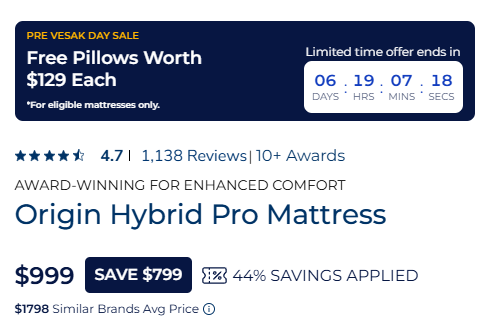
Seager Inc. (which operates Boarding Gate), Origin Sleep and Light In The Box have been found using misleading website tactics known as “dark patterns” to pressure consumers into making quicker purchase decisions, according to the Competition and Consumer Commission of Singapore (CCS). The regulator said the three online retailers deployed fabricated urgency cues, including fake visitor counts, artificial countdown timers and false discount claims, to simulate demand and limited availability. At Boarding Gate’s website, messages such as “XX people are looking at this product right now” and “XX people added this item to cart” were displayed to suggest real-time demand. However, CCS found these figures were randomly generated and not based on actual user activity.  Similarly, Origin Sleep used tactics such as prompts stating “Other people want this. XX people have this in their carts now”, alongside countdown timers which said “Hurry! Your order is reserved for xxxx minutes”. CCS said these timers had no impact on product availability or the ability to complete purchases. Don’t miss: Why the wakeup call should have come long before the 25M devices ad fraud exposé  In addition, the mattress retailer also ran promotions marketed as time-limited offers such as “Up to 40% off”, which investigators found had continued for nearly two years under rotating campaign names, shifting from a “Flash sale” to themed promotions including Valentine’s Day, Chinese New Year and “3.3 Mega Sale” campaigns. Light In The Box came under scrutiny following a referral from a European regulator, with CCS finding the retailer used “Almost sold out” labels despite operating largely on a made-to-order model with minimal inventory constraints. It was also found to have displayed discounted prices against higher “original” prices that were never actually offered, creating a misleading impression of savings. Investigations revealed that one retailer reportedly claimed its website was built using a third-party template, but CCS stressed that businesses remain responsible for compliance regardless of whether design systems are sourced externally or developed in-house. At the point of writing, checks by MARKETING-INTERACTIVE revealed that such tactics are no longer available on Boarding Gate and Light In The Box’s websites. In a statement on 18 May, CCS chief executive Alvin Koh said dark patterns are “insidious” as they are difficult to detect and erode consumer trust in digital markets. He added that the regulator will continue to take firm action against unfair practices. All three companies have provided undertakings to CCS, ceased the practices and committed to avoiding similar conduct in future, with Light In The Box also removing the misleading claims from its Singapore and European-facing platforms. The enforcement action signals tighter scrutiny of eCommerce practices that rely on manufactured urgency, scarcity and popularity signals, highlighting how such tactics are increasingly embedded in global online retail design. Consumers who encounter unfair trade practices can report them to the Consumers Association of Singapore (CASE). MARKETING-INTERACTIVE has reached out to Boarding Gate, Origin Sleep and Light In The Box for more.  The enforcement action comes against a backdrop of similar cases last year, when CCS took action against Courts and PRISM+ for comparable website practices that misled consumers. Courts was found to have automatically added unsolicited items into shoppers’ carts during promotional periods, while PRISM+ was flagged for using fake countdown timers, misleading stock indicators and inflated discount claims to create false urgency and influence purchasing decisions. Both companies have since provided undertakings to CCS, ceased the practices and rectified their websites. CCS said these earlier cases underscore that under Singapore’s fair-trading laws, businesses must ensure consumers clearly consent to all purchases and that claims relating to pricing, stock availability and urgency are truthful and not misleading. It added that enforcement actions against such “dark patterns” form part of its broader push to curb online practices that distort consumer decision-making. Related articles:    Misleading AI ad complaints on the rise, says ASASSG consumer watchdog CCCS to regulate product safety in expanded roleConsumer watchdog calls out Agoda over ‘misleading’ website and app features  source

Online retailers under scrutiny for deceptive website features Read More »

Have Swatch and AP turned hype into the real product?

The launch of the Swatch x Audemars Piguet (AP) “Royal pop” collection has sparked massive queues, store closures and heated scenes across several cities worldwide. From Singapore and Kuala Lumpur to London, Milan and New York, crowds gathered overnight outside Swatch stores as collectors, resellers and watch enthusiasts rushed to get their hands on the colourful timepieces. In some cities, the situation reportedly turned chaotic, with fights breaking out, security checkpoints breached and police deployed to manage crowds. The episode has once again placed the spotlight on the power of hype-driven collaborations, particularly those that blur the lines between exclusivity and accessibility. Much like the viral Omega x Swatch MoonSwatch launch in 2022, the latest partnership has caught the attention of industry observers, with many saying the collaboration feels bigger than a typical product drop. Don’t miss: What led to the PR debacle around Swatch’s ‘slant eye’ ad? Nafe Tong, chief creative and brand strategist at ABrandADay, said the partnership was especially surprising given that AP operates independently and is not part of the Swatch Group. “Unlike collaborations such as Swatch x Omega or Blancpain, this feels far more unexpected and strategic,” he said, adding that the partnership reflects how luxury watch brands are becoming more open to collaborations to stay culturally relevant. He added that the deal allows both brands to tap into each other’s audiences, with Swatch bringing cultural engagement and accessibility, while AP contributes prestige and exclusivity. “With all these collaborations, Swatch actually feels cool again,” Tong added. “These days, it doesn’t feel out of place at all to be spotted wearing a Swatch.” Pointing to the Omega playbook, Ambrish Chaudhry, head of strategy, Asia at MSQ and Elmwood, called it a masterstroke, saying AP has unlocked a goldmine of relevance through the partnership. “There is a lot of talk on getting on younger wrists, but that isn’t the point. The point is the queues, the frenzy, the chaos accompanying the launch. A visceral reminder of the desirability of AP. Imagine people queueing up days in advance for something that is not even a limited edition,” he added.  The chaos behind the queues To experts, part of the frenzy comes down to accessibility and being a fashion statement. Gracia Yap, founder and CEO of Next Bold Move and former regional head of marketing at TAG Heuer, said the collaboration offers consumers a rare opportunity to participate in the world of AP at a far more accessible price point. She explained:  For aspirational AP watch lovers who know they’ll own one someday, the Swatch collaboration grants instant access to that dream. Yap added that the collaboration almost acts as a “vision board” on the wrist, allowing consumers to own a “Royal Oak-coded” piece while aspiring toward the real thing in future. Apart from the flippers trying to make a quick buck, there’s another crowd: people who just want to own the talk-of-the-town item to show off, said Desmond So, CEO, Uth Creative. “More importantly, they want to feel like they are part of the moment. In this city, that social currency matters.” From a brand angle, Swatch gets a clear win – no risk, just upside. For AP? It’s a careful dance. Yes, it brings in younger eyes, but do it too often and the premiumness might take a hit. Still, in today’s world, buzz is buzz. Scarcity and resale dynamics have only intensified demand, with listings appearing online within hours at several multiples of retail. Dennis Kam, head of strategy at branding consultancy JUNO Malaysia, said this reflects how far the collaboration playbook has evolved since the Omega x Swatch MoonSwatch release. He added that consumers are no longer just buying a watch, but buying into the moment around it, noting:  The chaos has become the cultural object in its own right — people are queuing to be there when it happens, and the watch is the proof of presence. That intensity was also visible on the ground, prompting Swatch to issue a statement urging fans not to rush to stores in large numbers to acquire the collection, amid concerns over crowd safety and store operations. Similarly, Jeffrey Lim, managing director at 8traordinary, said the collaboration goes beyond simply extending an existing watch line and positions the product as a fashion statement or collectible, creating “something new for both brands.” Meanwhile, Sunny Yeung, managing partner and co-founder, Butter Creative, described this as a truly unexpected partnership that rewrites the luxury playbook. “This collaboration proves that even the most ‘untouchable’ brands must evolve to stay culturally relevant. Swatch provides the canvas, and AP provides the aspiration—together, they’ve turned a retail drop into a global cultural phenomenon that transcends traditional watchmaking.” Why AP feels different  While comparisons to the Omega MoonSwatch launch are inevitable, industry folks said the AP collaboration carries a different kind of cultural weight. Unlike Omega, which sits under the Swatch Group umbrella, AP remains an independent ultra-luxury watchmaker. That distinction makes the partnership feel more unexpected, and potentially riskier. For Yap, the collaboration is a breath of fresh air, with AP putting its design code out into the world through a playful partnership with Swatch, marking a rare crossover between an ultra-exclusive luxury maison and a mass-market brand. “Where MoonSwatch told a story about making space history accessible, Royal Pop tells a story about breaking the rules of watchmaking,” she said. “It’s letting a fiercely guarded luxury symbol circulate in everyday spaces.”  Still, that level of accessibility comes with its own tensions. For Andy Reynolds, founder and executive creative director of Imagination Riot, the partnership walks a fine line between cultural relevance and brand dilution. “Luxury works because of distance,” he said, adding:  Bring it too close to the masses in the wrong manner, and you can start chipping away at the magic. For others, the collaboration taps into something more emotionally charged than previous drops, which explains why reactions feel amplified. “The Swatch x AP drop is a classic category collision — the most democratic watch brand

Have Swatch and AP turned hype into the real product? Read More »

IKEA is hiding something… and one million points are up for grabs

IKEA Singapore is turning a childhood favourite into a full-scale retail experience, inviting shoppers to compete in its first-ever hide and seek event at IKEA Alexandra. Dubbed “IKEA Play date: Hide & seek”, the event will see teams of two race through the store to locate eight hidden characters within 45 minutes. The winning duo will walk away with one million IKEA Family points. Registrations are open from 14 to 31 May, with the competition taking place on 6 and 7 June from 10am to 10.45am. Don’t miss: What made IKEA and Punch the monkey the perfect viral moment? The activation transforms IKEA Alexandra into a real-life game board, challenging participants to rely on memory, speed and observation as they navigate the retailer’s showroom and market hall. Teams will score points based on how quickly they identify each hidden character, with the first team to spot a character earning 140 points, the second team 139 points, and so on. Submission timing will also be factored into the final tally. To take part, participants must register in pairs, with at least one member enrolled in IKEA Family. The second participant must be at least eight years old. Children under 16 must be accompanied by a parent or legal guardian. The event will run during regular store hours, with shoppers and competitors sharing the same space. MARKETING-INTERACTIVE has reached out for more information.  The hide and seek activation builds on IKEA’s longstanding approach to marketing, which often leans into humour, cultural moments and everyday relevance to connect with consumers. In Singapore, the retailer has become known for its timely and playful social content, regularly tapping trending conversations and current affairs to keep the brand top of mind. Last month, IKEA Singapore teamed up with TSLA to launch the “ALLËNKI”, transforming its iconic Allen key into a wearable piece of jewellery that doubled as a fully functional furniture tool for April Fools.  Meanwhile, earlier in February, the retailer joined the viral “caricature trend” by reimagining its popular plush toys, Kramig the panda, Djungelskog the bear and Blåhaj the shark. as AI-generated caricatures. According to IKEA Singapore at the time, each trend it hops on is evaluated to ensure it aligns with the brand’s values and personality, with the goal of bringing a moment of levity to consumers. The hide and seek event extend that strategy into the physical world, transforming the store into an interactive experience designed to spark engagement and reward loyal customers.  Related articles:  How Punch the baby macaque turned an IKEA stuffed toy into a global sensation  IKEA Malaysia appoints new media agency IKEA Hong Kong playfully riffs on anti-drug poster gaffe   source

IKEA is hiding something… and one million points are up for grabs Read More »

Colgate wants to know: What’s the story behind your smile?

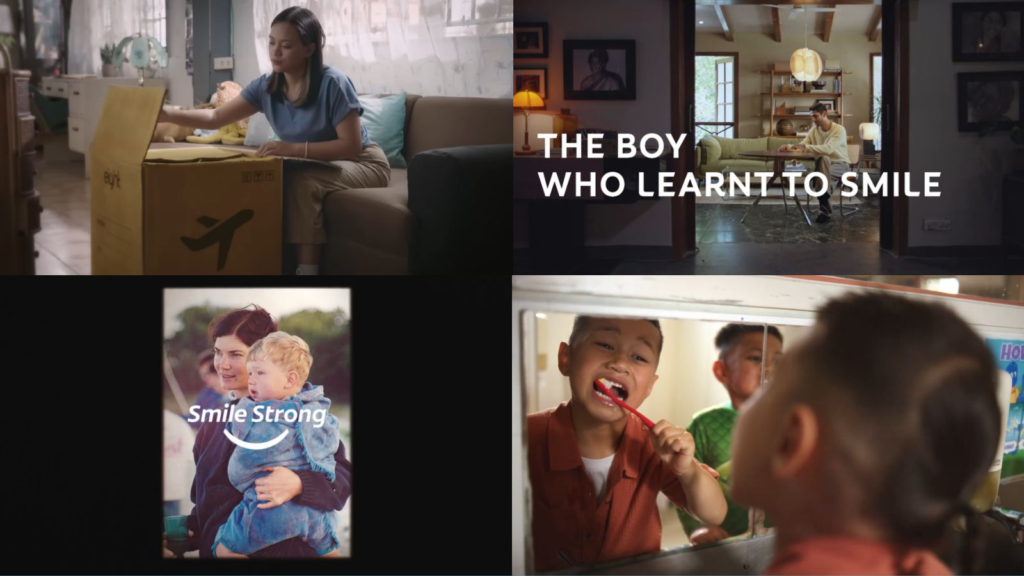
Colgate-Palmolive is leaning heavily into emotional storytelling across Asia Pacific, launching a new campaign built around family memory, care and the small everyday rituals passed between generations. Titled “Every smile has a story”, the campaign spans Australia, New Zealand, the Philippines, India and Malaysia, using deeply personal family narratives to position Colgate less as an oral care product and more as a trusted part of life’s defining moments. Rather than focusing on product claims or clinical messaging, the campaign centres on themes of distance, childhood, parenting and intergenerational connection. Don’t miss: Colgate taps K-pop icon IU for star power and sparkle In the Philippines, the campaign follows a grandmother working overseas who sends Balikbayan boxes home to her family, with Colgate becoming a quiet symbol of love, care and protection despite the physical distance between generations. The Australian chapter features AFL star Patty Cripps, who grew up in a remote community hundreds of kilometres from a dentist. The campaign focuses on how habits passed down from his mother are now being carried forward to his own child. In New Zealand, the campaign highlights Colgate’s long-running “Bright Smiles, Bright Futures” programme through the story of a kindergarten teacher helping children build confidence through oral health education. Meanwhile in India, Colgate spotlights a multi-generational sweet shop family whose legacy is built not only on confectionery, but also on its continued trust in Colgate to help keep the family’s smiles cavity-free. Another India story features Prateik Smita Patil, son of the late Indian actress Smita Patil, focusing on how he carries forward one of his mother’s most cherished gifts, her smile. Through the campaign, Colgate-Palmolive is positioning oral care as more than a daily routine, linking it instead to family traditions, intergenerational trust and emotional connections across the region. Samir Singh, EVP marketing at Colgate-Palmolive Asia Pacific, said the campaign is rooted in a universal desire to protect one’s family and support their health and well-being through every stage of life. “These are stories about growing up, about being away from home and coming back, about joy, disappointments, celebrations, ups and downs, about life, and most of all, about love,” he said. “Colgate’s role in these stories is small but intimate, and completely authentic. We hope this will become a new way of communicating to people who are tired of hyperbole and exaggerated claims. Of telling human stories, simply and honestly.”  The campaign also builds on Colgate-Palmolive’s wider “Make more smiles” positioning, which was introduced last year alongside a refreshed corporate identity and brand film. The film opened with the line, “What’s in a smile? To us, everything that matters in this world,” framing the company’s new tagline as a call to action for its employees to advance its purpose of reimagining a healthier future for people, pets and the planet. As part of the refresh, Colgate-Palmolive updated its logo in a more vibrant shade of blue, with a curved white space between the “c” and “p” designed to resemble a smile. The rebrand also included a modernised colour palette, standardised graphic elements and an updated approach to photography, iconography and digital use Related articles:  Colgate-Palmolive promotes Krisha Dy to global director of equity content and experience    Garlic, durian and sotong? Darlie gives bad breath a surreal twist   Unilever’s Pepsodent launches ‘dentfluencer’ academy to reshape oral care narratives   source

Colgate wants to know: What’s the story behind your smile? Read More »