marketing interactive

Colgate wants to know: What’s the story behind your smile?

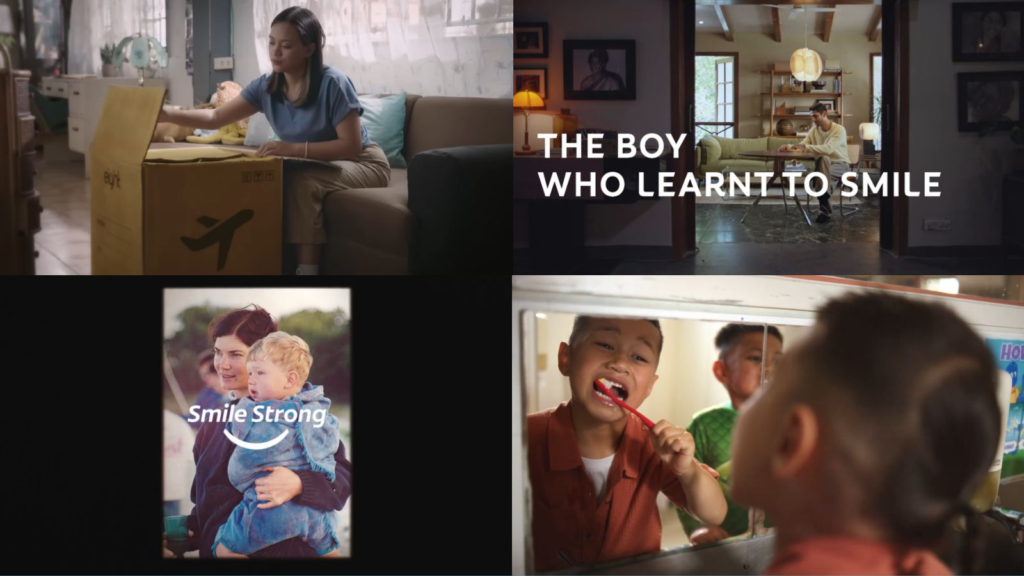
Colgate-Palmolive is leaning heavily into emotional storytelling across Asia Pacific, launching a new campaign built around family memory, care and the small everyday rituals passed between generations. Titled “Every smile has a story”, the campaign spans Australia, New Zealand, the Philippines, India and Malaysia, using deeply personal family narratives to position Colgate less as an oral care product and more as a trusted part of life’s defining moments. Rather than focusing on product claims or clinical messaging, the campaign centres on themes of distance, childhood, parenting and intergenerational connection. Don’t miss: Colgate taps K-pop icon IU for star power and sparkle In the Philippines, the campaign follows a grandmother working overseas who sends Balikbayan boxes home to her family, with Colgate becoming a quiet symbol of love, care and protection despite the physical distance between generations. The Australian chapter features AFL star Patty Cripps, who grew up in a remote community hundreds of kilometres from a dentist. The campaign focuses on how habits passed down from his mother are now being carried forward to his own child. In New Zealand, the campaign highlights Colgate’s long-running “Bright Smiles, Bright Futures” programme through the story of a kindergarten teacher helping children build confidence through oral health education. Meanwhile in India, Colgate spotlights a multi-generational sweet shop family whose legacy is built not only on confectionery, but also on its continued trust in Colgate to help keep the family’s smiles cavity-free. Another India story features Prateik Smita Patil, son of the late Indian actress Smita Patil, focusing on how he carries forward one of his mother’s most cherished gifts, her smile. Through the campaign, Colgate-Palmolive is positioning oral care as more than a daily routine, linking it instead to family traditions, intergenerational trust and emotional connections across the region. Samir Singh, EVP marketing at Colgate-Palmolive Asia Pacific, said the campaign is rooted in a universal desire to protect one’s family and support their health and well-being through every stage of life. “These are stories about growing up, about being away from home and coming back, about joy, disappointments, celebrations, ups and downs, about life, and most of all, about love,” he said. “Colgate’s role in these stories is small but intimate, and completely authentic. We hope this will become a new way of communicating to people who are tired of hyperbole and exaggerated claims. Of telling human stories, simply and honestly.”  The campaign also builds on Colgate-Palmolive’s wider “Make more smiles” positioning, which was introduced last year alongside a refreshed corporate identity and brand film. The film opened with the line, “What’s in a smile? To us, everything that matters in this world,” framing the company’s new tagline as a call to action for its employees to advance its purpose of reimagining a healthier future for people, pets and the planet. As part of the refresh, Colgate-Palmolive updated its logo in a more vibrant shade of blue, with a curved white space between the “c” and “p” designed to resemble a smile. The rebrand also included a modernised colour palette, standardised graphic elements and an updated approach to photography, iconography and digital use Related articles:  Colgate-Palmolive promotes Krisha Dy to global director of equity content and experience    Garlic, durian and sotong? Darlie gives bad breath a surreal twist   Unilever’s Pepsodent launches ‘dentfluencer’ academy to reshape oral care narratives   source

Colgate wants to know: What’s the story behind your smile? Read More »
Wingstop turns its Jurong flagship into a neon-lit rave

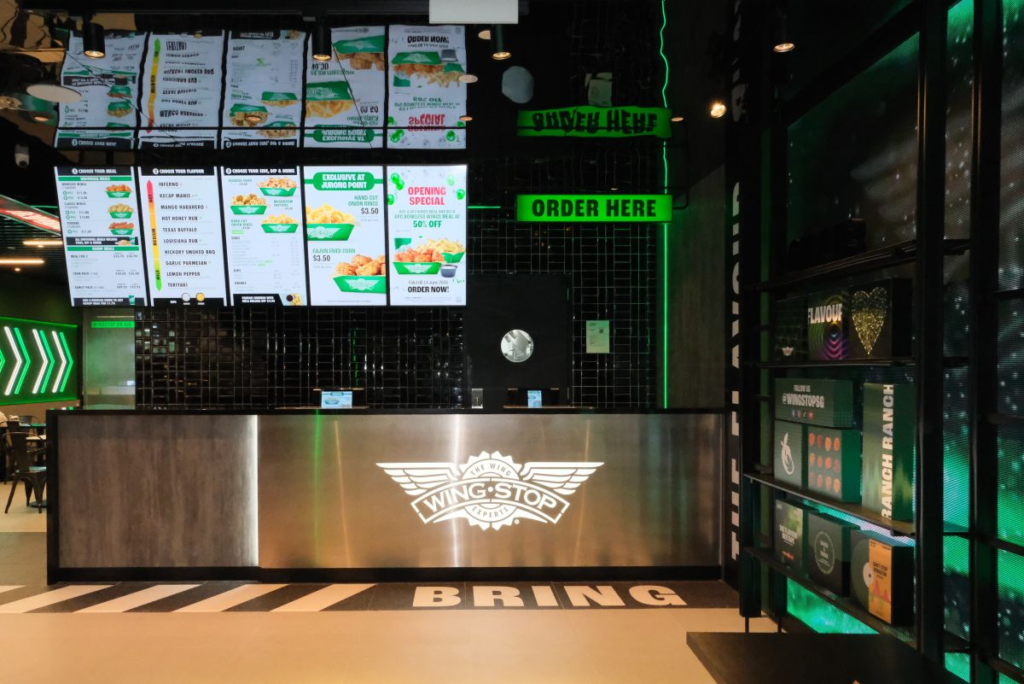
Wingstop is turning up the flavour in Singapore with the launch of its first flagship restaurant at Jurong Point, as the fast-food chain looks to deepen its connection with customers through a more immersive brand experience. Opened on 13 May, the outlet is Wingstop’s biggest store in Singapore to date and its 27th in the market. Replacing the brand’s previous Jurong Point location, the flagship features a more open layout, music-inspired interiors and a dedicated merchandise corner. The move is aimed at elevating the customer experience rather than simply expanding Wingstop’s footprint. When MARKETING-INTERACTIVE reached out, the company said Jurong Point was chosen because it has consistently performed well for the brand, making it the right location to introduce a larger-format store and test new ideas. Don’t miss: Are food courts the new lifestyle experience hubs?  The flagship also reflects Wingstop’s efforts to position itself beyond a traditional quick service restaurant, using physical space to reinforce the brand’s personality and cultural relevance. “Product will always be the hero, but the space is what brings the Wingstop brand to life,” a Wingstop spokesperson said. “For us, the store is a big part of the Wingstop experience, and it should feel energetic, fun, and like a place customers actually want to hang out in, including design, music and hospitality.” Central to the concept is a music-inspired design theme, which Wingstop said draws from one of its core identity pillars. Music has long been part of the brand’s DNA, and the new store is designed to bring that energy to life in a way that feels fresh and relevant to Singapore consumers. The flagship also introduces two exclusive menu items available only at the Jurong Point outlet: hand-cut onion rings and Cajun fried corn. The sides are designed to complement Wingstop’s cooked-to-order wings and signature sauces. Alongside the food offerings, the restaurant includes limited-edition merchandise and streetwear-inspired uniforms as part of a broader push to extend the brand into lifestyle and culture. “Customers come to Wingstop for the flavour, but the brand can show up way beyond the food,” the spokesperson said. “Exclusive menu items, street-style uniforms, and upcoming merch drops let us tap into culture and lifestyle in a way that feels fresh, fun, and true to who we are.” To mark the launch, Wingstop is offering 50% off a six-piece boneless combo with the purchase of any six-piece classic or boneless combo from 13 May to 14 June. On 16 May, the first 300 students who present a valid student ID or matriculation card will receive five free boneless wings. Wingstop said the flagship will also serve as a testing ground for future innovations in Singapore. While the brand will track metrics such as footfall, repeat visits and social buzz, its broader objective is to understand what resonates most with local consumers and use those insights to shape the brand’s next phase of growth in the market. Wingstop’s new flagship comes as more quick service restaurant brands in Singapore rethink their physical spaces as extensions of the brand rather than purely functional dining outlets. In late 2025, KFC Kallang reopened after a major renovation, introducing neon-lit interiors, interactive features and the brand’s first physical merchandise corner in the market. The revamped outlet also launched a limited-edition capsule collection with local streetwear label AMOS X ANANDA, underscoring how QSR brands are increasingly blending food, fashion and culture to engage younger consumers. Related articles:   Wingstop SG Instagram account “hacked” by unhinged hardcore fan in marketing stunt  Wingstop appoints Hello as full-service agency ahead of Sydney launch   Nando’s just turned ‘cincai lah’ into a menu item  source

Wingstop turns its Jurong flagship into a neon-lit rave Read More »

David Beckham bends Lenovo’s AI capabilities to the max

Lenovo has tapped football icon David Beckham for a new global campaign aimed at showcasing how its artificial intelligence portfolio supports creativity, productivity and performance. Called “Maximum David”, the campaign highlights Lenovo’s AI-powered devices, solutions and services, and how they are used across Beckham’s ventures in sport, business, travel and content creation. The campaign launches one month ahead of the FIFA World Cup 2026 and builds on Lenovo’s role as the official technology partner for both the tournament and the FIFA Women’s World Cup 2027. Don’t miss: Can Brand Beckham survive its very public family feud?  The campaign will roll out across film, digital, social media, retail, experiential and event activations in markets worldwide. In the hero film, Beckham is asked during a podcast interview whether he has “a lot going on”. What follows is a montage of Beckham juggling the many facets of his life. He is seen riding his motorbike, stopping to let his chicken Gary cross the road, and using Lenovo’s AI-powered tools to design a chicken coop, tune his motorcycle and unwind with a gaming session between shoots. The film closes with Beckham returning to the interviewer’s question and replying, “I wouldn’t say a lot,” underscoring how Lenovo positions its AI portfolio as helping users manage busy lives with greater ease and efficiency. According to Lenovo, the campaign is designed to demonstrate how AI can support smarter operations, improve fan experiences, generate performance insights for teams and players, and create new ways for audiences to engage with the sport. “Beckham’s world looks a lot like ours: sport, business, technology, creativity, and a passion for redefining what’s possible,” said Santi Pochat, vice president, AI innovation and brand strategy at Lenovo.  “From the beginning, Beckham and his team shared our creative ambition and a genuine curiosity about what Lenovo is building. This campaign brings together Lenovo’s growing role in global football with a partner who understands what it takes to perform at the absolute highest level,” he added.  Beckham, whose career has expanded well beyond football, is currently co-owner of Inter Miami CF and is involved in a range of business and investment ventures. Fans attending World Cup 2026 events in the US and Mexico will also be able to experience Lenovo-powered activations, including AI-enabled experiences featuring Beckham. “As AI radically changes our lives, Beckham helps us show the technology supporting real ambition, real work, and real moments of connection,” added Pochat. The launch of “Maximum David” marks the first major campaign to emerge from Lenovo’s global partnership with the icon, which was announced in April last month.  As part of the partnership, Beckham is working with Lenovo to spotlight the company’s AI-driven technologies across the football ecosystem, from tools that help teams analyse performance and make faster decisions to innovations designed to enhance fan experiences and streamline operations. In a previous conversationwith MARKETING-INTERACTIVE, Lenovo said Beckham was chosen for his influence across sport, business and culture, and for his ability to demonstrate how AI-powered technology can help individuals and organisations perform at their best. Commenting on the partnership, Beckham said, “Lenovo is a global leader with a proven track record on the world’s biggest stages. I am proud to partner with Lenovo for the FIFA World Cup and beyond. Football will always be defined by talent, instinct, hard work and the unforgettable moments that make the game special.” Related articles:     Why David Beckham’s response to CNBC post-family feud was a total win From fame to fit: What brands need for the perfect ambassador Why are so many football athletes becoming the face of eCommerce lately?  source

David Beckham bends Lenovo’s AI capabilities to the max Read More »

CNB spotlights the stories drugs leave unfinished

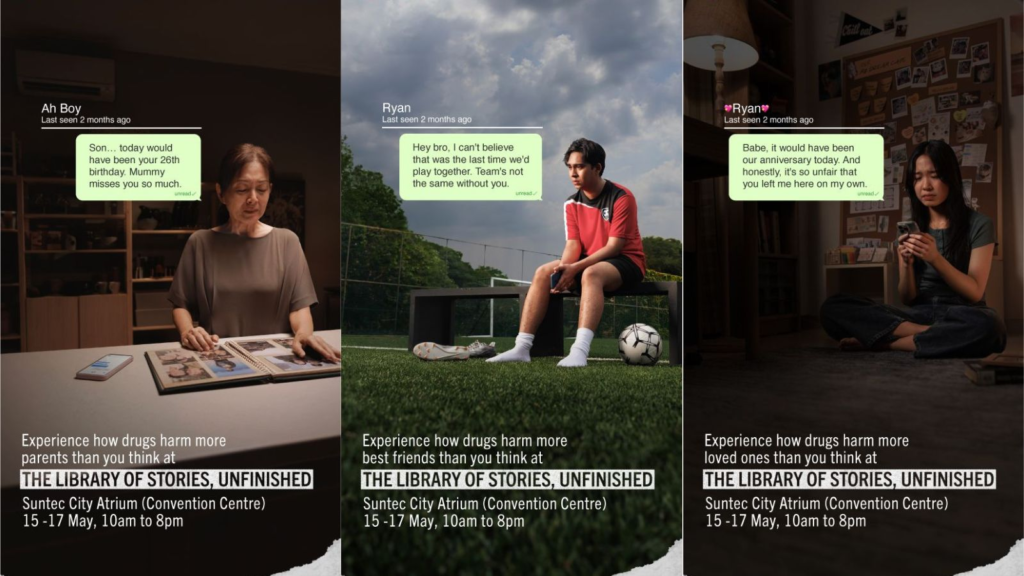
Ahead of Singapore’s third Drug Victims Remembrance Day on 15 May, Central Narcotics Bureau (CNB) and Ogilvy Singapore have launched “Stories, unfinished”, an integrated public education campaign spotlighting the often-overlooked victims of drug abuse. The campaign aims to shift the conversation around drug abuse from the individual to the wider circle of families, friends and loved ones affected by it. At the heart of the campaign is a short film titled “Stories, unfinished”, which follows the fictional story of Ryan before and after drug abuse. The film traces how his choices fracture relationships, alter futures and leave meaningful moments unresolved. Don’t miss: CNB’s immersive activation challenges youth to resist drug influence The story is further expanded through three teaser films told from the perspectives of Ryan’s best friend, girlfriend and mother, offering a closer look at the emotional ripple effects of drug abuse. Extending the campaign beyond the screen is “The library of stories, unfinished”, an immersive public exhibition held at Suntec City from 15 to 17 May. The exhibition features three immersive room sets, a stadium, café and dining room, inspired by scenes from the campaign film. Actors will portray the characters within each space, allowing visitors to interact with them, ask questions and hear their experiences firsthand. According to CNB, the campaign combines narrative storytelling, spatial design and public participation to create a more empathetic and memorable anti-drug education experience. Beyond the immersive installations, the exhibition will also feature “Real people, real stories”, which showcases real-life accounts, alongside “The reference collection”, which presents research-based information on drug harm. A children’s section will also be included to offer family-friendly learning experiences around the impact of drugs on both individuals and society. Other sections of the exhibition explore the broader societal consequences of drug abuse. “The periodicals collection: The collateral damage of drugs” examines the violence and devastation linked to addiction, while “Weighing the deals” explores the motivations of former drug dealers. Meanwhile, “Addicted: A dark world of illicit drugs” highlights the hidden harms faced by communities affected by youth drug addiction. Visitors can also explore the “ASEAN collection: United against drugs”, which showcases prevention, enforcement and rehabilitation efforts across ASEAN member states. The exhibition is free to the public and will run at Suntec City Atrium from 15 to 17 May. Pop-up installations will later travel across various heartland locations from 23 May to 27 June. “It is our endeavour to present the gravity of the drug issue truthfully, from the effects of abuse on an individual to how loved ones and the wider community are affected. Our selection of content for the pop-up library, from biographies to news articles, is curated to help visitors understand this,” said Audrey Ang, director of communications at CNB.  She added, “The campaign narrative itself explores the complex emotions victims of drug abuse may experience, and presents these through participatory interaction with live performers on set. Through ‘Stories, unfinished’, we hope to help Singaporeans reflect on the profound impact that drug abuse has and on our role as conscious members of society too.” For Ogilvy, the creative opportunity was to move the conversation from passive awareness to emotional participation. Troy Lim, group creative director, Ogilvy Singapore, said, “Public education messages are often communicated through facts, warnings or enforcement. They can sometimes be heard but not deeply felt. “With ‘Stories, unfinished’, we wanted to create an experience that shifts audiences from passive awareness to emotional understanding by showing not just what drug abuse does to a person, but what it leaves unresolved for everyone around them, By unfolding the story across film, social perspectives and physical space, we hope to make that ripple effect more immediate, human and lasting,” he added.  The latest campaign builds on CNB’s continued use of immersive storytelling to drive anti-drug education efforts. Last year, the organisation partnered with Edelman Singapore on an integrated campaign centred around “Museum of us”, a story-driven exhibition. The campaign aimed to encourage empathy and reflection on the wider impact of drug abuse through real-life stories of pain, love and recovery. Supporting the exhibition was a suite of short films developed in collaboration with The Hummingbird Co. The films featured a character named Jon and followed his friends, parents and sibling as they face the consequences of his drug use.  Related articles: Health Promotion Board uses toxic toys to warn against vaping  IMDA pulls plug on Wild Rice performance over drug depictions  Have you checked out this multi-sensory and interactive drug exhibit and campaign?   source

CNB spotlights the stories drugs leave unfinished Read More »

Tantan unveils new identity in push for better dating

China-born dating app tantan has established Singapore as its new global headquarters as it looks to expand across APAC and international markets. The move comes as the dating platform rolls out a refreshed brand identity and new positioning, “Date better”, which aims to reflect a more intentional, inclusive and locally nuanced approach to modern dating. The brand refresh marks a new chapter for tantan as it seeks to broaden its appeal beyond its Asian roots and connect with a more diverse global audience. As part of the reintroduction, tantan will be focusing on product upgrades, community-led experiences and market-specific activations across key markets including Malaysia, Thailand, Hong Kong, Taiwan and the US. Don’t miss: AI reshapes dating platforms, but singles set clear limits on emotional automation  According to tantan, the decision to anchor its international business in Singapore was driven by the city’s digitally mature population, progressive social outlook and role as a regional gateway for culture and talent. Meanwhile, the new “Date better” positioning is intended to serve as both a brand promise and call to action. It focuses on creating better matches, better conversations, safer environments and more affirming spaces for users. Unlike some dating platforms that have shifted towards serious, commitment-led matchmaking, tantan said it will continue to champion casual dating, but with greater intention, honesty and respect for individuals. As part of the refresh, tantan is also investing in product enhancements, including a revamped UI/UX, improved trust and safety features and AI-enabled tools. These features will be rolled out gradually to support more relevant connections and help identify and deter bad actors on the platform. The app will also introduce community-driven discovery features and culturally rooted product elements, including daily horoscope prompts inspired by Asian traditions. A fuller product roadmap is expected to be shared in the next phase of the brand’s global reintroduction. In addition, tantan said it is strengthening its commitment to creating a safe and inclusive space for users, including the LGBTQ+ community across APAC and globally. Its safety features include verification badges, privacy controls such as “Who can see me”, and reporting tools. The platform said its community guidelines take a zero-tolerance approach to hate speech, homophobia and transphobia. The rebrand also aims to reset perceptions of the platform as it reintroduces itself to users in Singapore, Southeast Asia and beyond through a refreshed identity and on-ground community activations. “Our global reintroduction is about more than a new look. It is about redefining tantan’s narrative as a safe and innovative platform for a new generation,” said Willynn Ng, regional head, international markets at tantan. “By anchoring our APAC hub in Singapore and prioritising interest-based discovery, we are setting a new standard for authentic, secure and meaningful connections on a global scale,” she added. tantan’s renewed focus on Singapore and APAC comes as dating apps continue to evolve their positioning amid shifting consumer expectations around safety, authenticity, inclusivity and the role of AI in matchmaking. tantan’s refreshed positioning also comes as dating platforms in Singapore lean further into intentional, experience-led connections beyond the app. Earlier this year, Coffee Meets Bagel partnered SG Culture Pass in a year-long collaboration aimed at encouraging singles to pursue more meaningful dates through arts and culture. The tie-up, themed “Date with intention: Culture brings us closer”, positioned workshops, performances, museums and heritage spaces as alternatives to traditional dinner or café meet-ups. Related articles:  Let Thy Swipe: Tinder taps Bridgerton fever with ‘year of yearning’ campaign  Is your GRC killing your dating game? Coffee Meets Bagel thinks so  Dating apps see Olympic level engagement in Paris during games  source

Tantan unveils new identity in push for better dating Read More »

Hyundai leaves cars behind to ride the K-wave

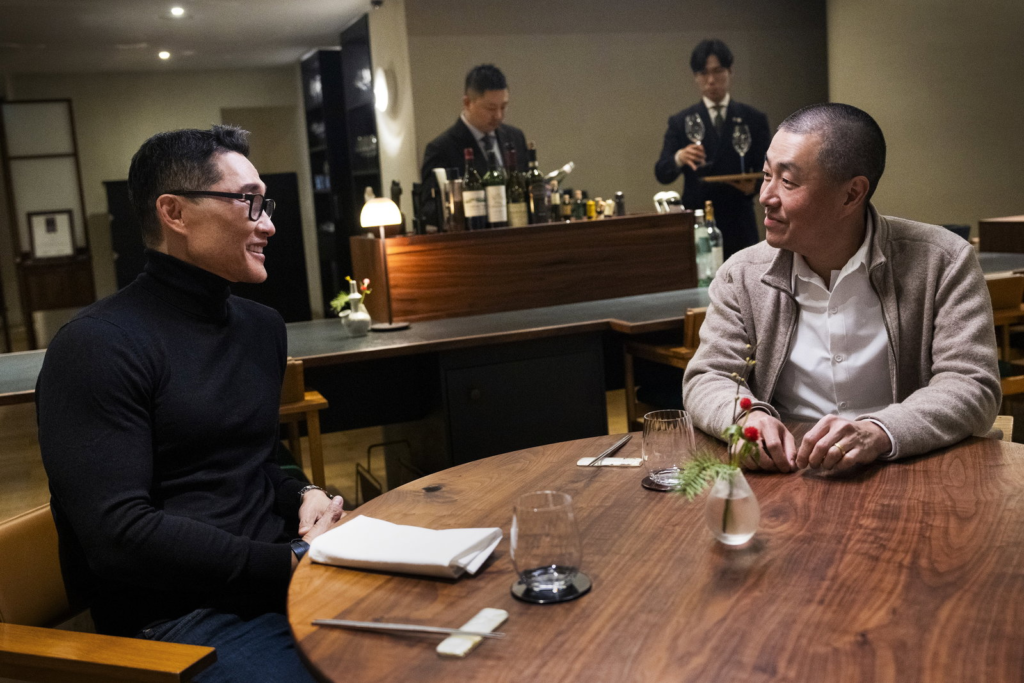
Hyundai is tapping into the global rise of Korean culture with its support of K-Everything, a new four-part CNN original series hosted and executive produced by Korean American actor Daniel Dae Kim, best know for his roles in Lost and Hawaii Five-0. Premiering on CNN International and streaming on HBO Max, the series explores the forces behind Korea’s growing influence across music, film, food and beauty. For Hyundai, the move marks a shift away from product-focused messaging towards culture-led storytelling, as the automaker looks to strengthen its connection with global audiences through its Korean roots. Don’t miss: Hyundai appoints new PR agency in Malaysia  Additionally, the partnership aligns with Hyundai’s “Progress for humanity” platform and positions the company alongside a broader narrative about Korea’s rise as a global cultural powerhouse. According to Hyundai, the collaboration reflects the company’s own journey from a domestic automaker to a global mobility brand, mirroring Korea’s transformation into a major exporter of culture and innovation. Across four episodes, K-Everything features voices from some of Korea’s biggest cultural industries. The music episode includes artists such as Psy, Taeyang and Jeon Somi, while the film episode features Lee Byung-hun and screenwriter Kim Eun-sook. The food episode spotlights chefs including Corey Lee and Mingoo Kang, while the beauty episode features model Irene Kim and beauty creator Leo J. “K-Everything marks a significant milestone as we develop a CNN Original Series with our long-standing brand partner HMC for our global audience,” Cathy Ibal, senior vice president, CNN International Commercial, said. “We are proud to reach this inaugural moment where K-Everything will showcase the forces behind Korea’s cultural rise, tracing how distinct traditions evolved into global phenomena.” The series forms part of Hyundai’s broader global campaign with CNN International Commercial and builds on a 22-year partnership between the two companies. As brands increasingly look beyond traditional advertising, Hyundai’s latest move underscores how cultural storytelling is becoming a powerful way to build relevance and emotional resonance with audiences worldwide. Hyundai’s latest content push also reflects its broader efforts to align brand storytelling with social and environmental themes beyond mobility. Earlier this year, the company launched “Forests without names“, a global Earth Month campaign spanning South Korea, Argentina and Australia to spotlight underwater “sea forests” and their role in supporting biodiversity and absorbing carbon. The initiative invited the public to help name a marine ecosystem in Australia and built on Hyundai’s wider sustainability efforts, including seaweed restoration projects in Korea and marine waste clean-up programmes across 10 countries. Related articles:   Hyundai hands Malaysia creative duties to The SHOUT GROUP  Cheil Indonesia wins HD Hyundai account, leads creative and digital revamp Shah Rukh Khan and Deepika Padukone embroiled in Hyundai vehicle complaint   source

Hyundai leaves cars behind to ride the K-wave Read More »

Calbee goes monochrome amid Middle East supply crisis

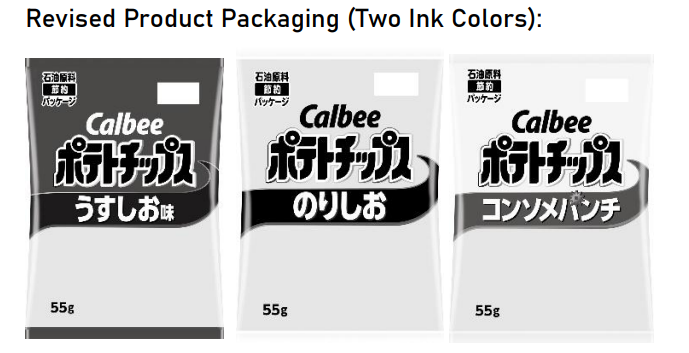
Japanese snack brand Calbee will switch its flagship potato chip packaging to black-and-white due to Middle East tensions disrupting supplies of printing ink and other raw materials. Expected to arrive in stores from 25 May, a total of 14 product variants, including potato chips, Kappa Ebisen prawn crackers, and Frugra breakfast cereal, will be subject to the change, with packaging limited to just two ink colours. According to its notice, Calbee said the measure is intended to help maintain a stable product supply, emphasising that the change applies only to a limited number of products and will not affect product quality. “Calbee will continue to respond flexibly and promptly to changes in its operating environment, including geopolitical risks, and remains committed to maintaining a stable supply of safe, high‑quality products,” the notice reads. The announcement has sparked shock and discussion among netizens on social media platforms such as X, MARKETING-INTERACTIVE  confirmed. A number of netizens said the new measure of switching Calbee’s packaging to black and white may make the oil shortage tangible and visible to the public, which seems like a good idea.  Meanwhile, some have even used AI to imagine products on Japanese store shelves gradually “turning black and white”. MARKETING-INTERACTIVE has reached out to Calbee for more information.  Don’t miss: Oil, outrage and opportunity: The US‑Iran war’s shockwaves through the Philippines Since the US and Israel launched a joint military strike against Iran, shipping through the Strait of Hormuz has remained disrupted, leading to a spot shortage of naphtha in Asia, with prices nearly doubling from pre-war levels. Asian countries rely heavily on the Middle East for oil, and the shipping crisis in the Gulf has hit them hard. Japan, for example, got over 90% of its crude oil and 70% of its naphtha from the region before the conflict. In March, Japan’s crude oil imports dropped 30% from the previous month to about 52 million barrels-their lowest level since 2013. The impact is also spilling into other industries. In early May, Japanese foodmaker Mizkan suspended some products and raised prices for others after running short of polystyrene containers for its fermented soybean snacks. Furthermore, The Philippines, declared a national energy emergency in March. President Ferdinand Marcos Jr. made the Philippines the first country in the world to issue such a declaration, citing the “imminent danger” the conflict poses to the nation’s energy supply. Disruptions in the Middle East, including the near-closure of the Strait of Hormuz, a vital global oil route, have roiled world oil markets and strained supply chains. Mark your calendars for 24 June! #Content360 Hong Kong returns with a dynamic, one-day event dedicated to pivotal trends—from the silver economies to breakthrough IP collaborations, sports, and beyond. Let’s dive into the art of curating content with creativity, critical thinking and confidence! Related articles: Godiva turns 100 with reimagined signature chocolates and packagingMcDonald’s CNY packaging sparks debate over cultural symbolismYeo’s bets on fortune horse packaging and gamified social play this CNY source

Calbee goes monochrome amid Middle East supply crisis Read More »

Netflix ramps up global ad push with AI tools and 250M monthly viewers

Netflix is accelerating its transformation into a global advertising platform, unveiling a major expansion of its ad-supported business alongside new AI-powered buying tools, audience planning systems and broader international rollout plans. At its annual Upfront presentation, Netflix revealed its advertising tier now reaches more than 250 million monthly active viewers globally, as the streaming giant intensifies its push for a larger share of global media budgets. The company also confirmed its ad-supported tier will expand into 15 additional countries from 2027, including New Zealand, Indonesia, the Philippines and Thailand – markets increasingly viewed as critical battlegrounds for streaming and digital advertising growth across APAC. The updates mark a major evolution in Netflix’s advertising ambitions. What began as a cautious move into ad-supported streaming is rapidly evolving into a much broader ecosystem play spanning AI-driven ad buying, clean room integrations, audience forecasting, contextual targeting and expanded programmatic infrastructure. SEE MORE: Streaming take aim at TV’s old measurement system Netflix president of advertising Amy Reinhard said the company was now moving beyond simply proving advertising could work on the platform. “If the last couple of years were about proving we’re a durable player, this year is about establishing ourselves as a formidable one,” Reinhard said. AI is becoming central to that strategy. Netflix said it is testing AI agents capable of managing and purchasing ads, while also using AI to dynamically adapt creative assets across different ad formats including vertical video and pause ads. The company is additionally expanding contextual advertising capabilities that match brand creative with specific Netflix shows and viewing environments, technology already tested with advertisers including DoorDash, Target and TurboTax. Netflix said the capability will roll out across all ad-supported markets by the end of the year. The streaming giant is also continuing to deepen its advertising infrastructure, expanding partnerships around clean room technology, measurement and audience planning as competition across streaming intensifies. The announcements come at a pivotal moment for the broader video market. Streaming platforms globally are increasingly pushing for a larger share of advertising budgets, while simultaneously challenging legacy television measurement systems and planning models that many believe no longer reflect modern viewing behaviour. For Netflix, the message from this year’s Upfront was increasingly clear: the company no longer sees advertising as a side business attached to streaming. It is building a full-scale advertising platform designed to compete for a much larger share of global media investment. source

Netflix ramps up global ad push with AI tools and 250M monthly viewers Read More »

Retail is out, experiences are in: Orchard Road’s next phase targets brand engagement

Singapore’s Orchard Road is accelerating its shift into an experience-led destination, with a fresh wave of initiatives from 2026 that will turn the precinct into a testbed for pop-ups, immersive brand activations and large-scale placemaking. Led by the Singapore Tourism Board (STB) alongside the Urban Redevelopment Authority (URA) and National Parks Board (NParks), the latest phase of the Orchard Road Rejuvenation Plan is designed to move the precinct beyond retail, positioning it as a platform for experiential marketing, cultural programming and mixed-use destination building. At the centre of the push is a new short-term retail model that opens Orchard Road to faster brand experimentation. STB will launch a tender in May 2026 for up to three pop-up spaces along the pedestrian mall between Wisma Atria and Ngee Ann City. The spaces, available until end-2028, will host rotating local and international brands on leases of one to six months, with the first wave expected by end-2026. Don’t miss: All aboard Marina Bay’s Disney adventure as precinct bets on experiences  The move signals a growing emphasis on flexible retail formats, giving brands access to high-footfall space to trial concepts, launch limited-time experiences and test audience response in a physical, high-visibility environment. Beyond retail, STB is also expanding Orchard Road’s role as a live experiential canvas. A precinct-wide activation initiative launching mid-2026 will invite landlords, brands and event organisers to pitch façade transformations, immersive installations and night-time programming including projections, night markets and extended operating hours. Selected proposals may receive funding support under a two-year programme. For marketers, the initiative effectively widens the inventory of “brand surfaces” across Orchard Road, from digital façades and interactive building exteriors to shared public spaces designed for installations and experiential storytelling. Placemaking will also be strengthened through a new “Creative exploration system” launching in the second half of 2026, featuring artistic precinct markers designed by local studio PLUS Collaboratives alongside poetry by Singaporean writers. The system will span Orchard Road’s four sub-precincts — Tanglin, Orchard, Somerset and Dhoby Ghaut — guiding visitor movement through a more curated physical experience. In parallel, eight bench designs selected from a Singapore Furniture Industries Council (SFIC) competition will be installed along the pedestrian mall by end-2026, reinforcing the shift towards interactive public infrastructure and design-led dwell spaces. Several major developments are also reshaping the precinct’s longer-term brand and entertainment ecosystem. In Somerset, a new 3,000-capacity Grange Road Events Venue is being developed through a partnership between Live Nation, Lendlease Global Commercial REIT and STB. The venue will host concerts, touring acts and MICE events, while also integrating a public terrace, activation walkway and year-round F&B offerings. Hospitality is also being repositioned with the former Faber House redeveloped into a 19-storey hotel that will open as Asia Pacific’s first NoMad Singapore under Hilton by end-2026, adding a new lifestyle-led stay and dining offering to the precinct. Further along the pipeline, STB will launch a tender in 2026 for the redevelopment of 37 Emerald Hill into a mixed-use heritage-led lifestyle development, while the Somerset Belt is set to become a youth-focused district by 2027 with zones dedicated to creative incubation, skate culture and community gathering. At the same time, Tanglin Shopping Centre is slated for redevelopment into a mixed-use hub spanning retail, office, wellness and cultural uses, while Dhoby Ghaut’s Istana Park expansion will introduce a significantly larger green civic space, including a 500-metre pedestrianised stretch of Orchard Road. Taken together, the changes point to a broader repositioning of Orchard Road as a multi-surface marketing environment, where retail, culture, public space and entertainment increasingly overlap, creating new entry points for brands seeking physical-world engagement in an experience-first economy. The push to reimagine Orchard Road sits within a wider trend of precinct transformation across Singapore. In one such move, the Singapore Sports Hub has been renamed “The Kallang” as it evolves into a multi-use destination spanning sport, entertainment, lifestyle and community experiences. Under the new identity, the area is being positioned as a year-round destination for shared public experiences, with planned upgrades from 2026 including new alfresco dining concepts, refreshed family-friendly zones, a sheltered padel ecosystem, and enhancements to existing sports facilities such as climbing and bouldering walls. The repositioning is part of a broader effort to make the precinct more accessible and emotionally resonant, supported by initiatives such as community partnerships and the Kallang Pass, as it looks to establish itself as Singapore’s next major “excitement epicentre”. Related articles:    StarHub scoops up Orchard Road with unlimited ice cream  Orchard Road descends into nightmare in Warner Bros.’ IT activation  Lazada turns Orchard Road into a giant bingo playground in new campaign  source

Retail is out, experiences are in: Orchard Road’s next phase targets brand engagement Read More »

Muslim travellers projected to hit 245m by 2030 as women reshape tourism demand

The global Muslim travel market is entering a new phase of growth, with Muslim women emerging as one of its most influential traveller segments and destinations facing increasing pressure to deliver more trusted, inclusive and digitally enabled experiences. New reports released by Mastercard and CrescentRating project international Muslim visitor arrivals to reach 245 million by 2030, up from an estimated 186 million in 2025, highlighting the scale of opportunity for tourism brands, destinations and hospitality players seeking to capture the expanding market. The findings, published in “Halal Travel Trends 2026” and “Muslim Women in Travel 2026”, also show Muslim women accounting for 90 million international arrivals in 2025, representing 48% of all Muslim visitor arrivals globally. That compares with 63 million arrivals and a 45% share in 2019. Don’t miss: Muslim travel index shifts: Malaysia reclaims crown as Indonesia slips The reports suggest the Muslim travel sector is evolving beyond basic halal-friendly offerings such as prayer spaces and halal food availability, with travellers now placing growing importance on safety, digital assurance, seamless payments and culturally aligned experiences. At the centre of the research is CrescentRating’s RIDA framework – responsible, immersive, digital and assured – designed as a guide for destinations and travel businesses looking to strengthen their appeal among Muslim travellers. Asia continues to dominate the Muslim travel landscape, according to the reports, attracting nearly 120 million Muslim visitors in 2024, equivalent to 65% of the world’s 176 million Muslim travellers. The study attributes the region’s strength to established halal ecosystems, strong regional connectivity and cultural familiarity between source and destination markets. Southeast Asia is expected to remain a key beneficiary of the trend. Malaysia, Indonesia, Singapore and Brunei were identified among the preferred destinations for Muslim women travellers, while Southeast Asia itself generated 5.8 million Muslim women travellers as a source market. The reports also indicate that non-Muslim-majority destinations could gain a competitive advantage if they improve the visibility and reliability of Muslim-friendly services, particularly as travellers increasingly seek reassurance before booking. Muslim women, meanwhile, are becoming increasingly influential in shaping travel decisions across family holidays, solo travel, religious journeys and women-led group trips. Safety emerged as the leading consideration, with 60% of Muslim women travellers citing general safety and comfort as the most important destination factor, followed by Muslim-friendliness at 30%. Digital platforms are also playing a growing role in travel discovery and planning. The reports found that 68% of respondents said social media influenced their travel decisions, with Instagram ranked as the most-used platform, followed by YouTube and TikTok. AI tools are also increasingly being used to evaluate destinations, identify halal dining options, locate prayer spaces and assess safety considerations. “Muslim travel is entering a more sophisticated phase, where confidence, inclusion and purpose are becoming as important as access and convenience,” said Aisha Islam, senior vice president, customer solutions centre, Southeast Asia at Mastercard. “Through the RIDA framework, destinations and businesses have a practical way to think about the full traveller journey from trusted digital information and secure payments to meaningful experiences that respect faith, culture, safety and personal values.” The reports argue that destinations must now shift focus from simply offering Muslim-friendly services to ensuring those services are consistently visible, verifiable and trusted. “For destinations, the opportunity is to move from availability to assurance,” said Raudha Zaini, director of operations, CrescentRating. “Muslim travellers are looking for experiences that are meaningful, inclusive and easy to trust. The destinations that clearly communicate their readiness and deliver consistently across the journey will be best positioned to earn long-term loyalty.” Be part of PR Asia Indonesia 2026 on 15 July 2026 – the first time this regional communications flagship lands in Jakarta – bringing together communications leaders ready to redefine influence, reputation, and impact! Related articles:How Muslim-led brands prove faith and commerce can coexistThe trust economy of Ramadan: How brands are winning Indonesia’s most reflective seasonWhat’s shaping consumer demand this Ramadan? source

Muslim travellers projected to hit 245m by 2030 as women reshape tourism demand Read More »