marketing interactive

Gen Z perspectives: The great millennial vs Gen Z marketing debate

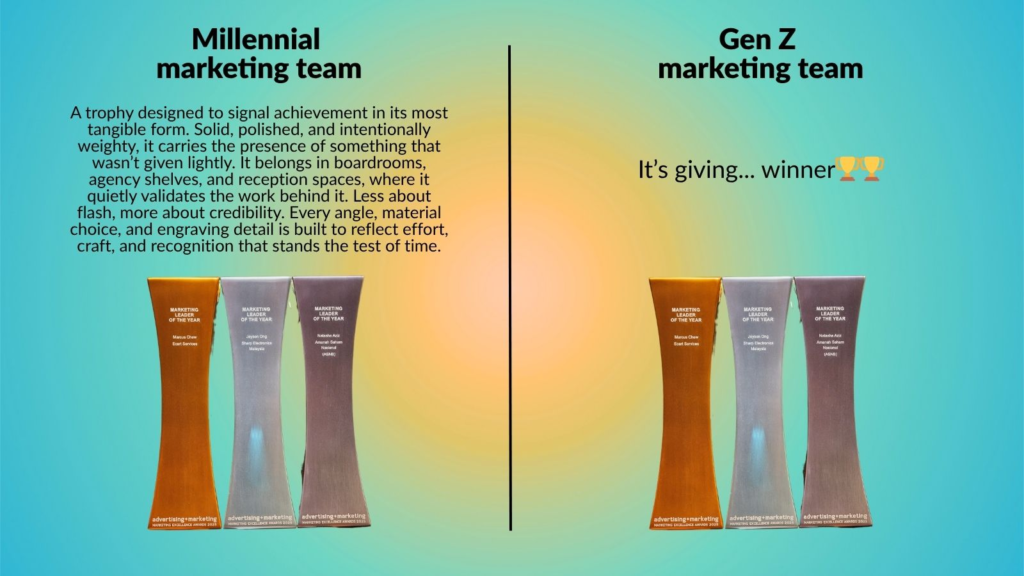
Happy Friday, MARKETING-INTERACTIVE readers and welcome back to Gen Z Perspectives, your go-to feature where we unpack the week’s top stories and trending topics through the eyes of Gen Z. From the biggest industry moves to viral moments and marketing controversies worth dissecting, we’re bringing the heat with authenticity, awareness and probably a few unfiltered takes. This week, Great Eastern saw its head of group corp comms exit, KFC made a fresh digital hire, and we unpacked the millennial versus Gen Z debate taking over the internet. Safe to say, this week ate. Don’t miss: Gen Z Perspectives: Lazada CMO exits and The Devil Wears Prada 2 1. Great Eastern head of group corp comms and CSR exits Great Eastern Holdings’ head of group corporate communications and corporate social responsibility Pamela Pung (pictured above) has stepped down from her role after about a year in the position. Speaking to MARKETING-INTERACTIVE, Pung said the decision came after a period of reflection and marked the start of a new chapter following a 30-year career spanning corporate communications, public affairs and strategic leadership roles across multinational organisations. Read more here.  2. KFC South Asia picks McDonald’s regional marketing and digital lead for newly created role KFC has appointed Tuck Wai Yue (pictured) as its head of eCommerce, loyalty and digital for South Asia. In this newly created role, Tuck will support KFC’s fast-growing markets in Southeast Asia and build on the progress made by the brand’s teams in the region. He will focus on digital, CRM and loyalty, which he described as key business accelerators for KFC, while continuing to drive fan excitement for the brand. Read more here.  3. If Gen Z isn’t reading all that copy, how are brands persuading them? For years, brands have been told to meet consumers where they are. Now, that increasingly means meeting them in lowercase, with fewer words, more emojis and just enough context to say, “If you know, you know” The recent “Millennial vs Gen Z” copy trend has pushed that tension into the spotlight, with brands rewriting their marketing messages for two generations with very different online instincts. But beneath the humour lies a serious challenge for marketers: how do brands sound culturally relevant without losing the message they are trying to sell? Read more here.  Related articles: Sorry millennials, Gen Z isn’t reading all that copy   DBS Foundation’s Karen Ngui says ageing isn’t the problem, outdated perceptions are  In conversation: Singapore’s arts scene wants your attention  source

Gen Z perspectives: The great millennial vs Gen Z marketing debate Read More »

Samsung denies using Dua Lipa’s image on TV packaging amid US$15m lawsuit

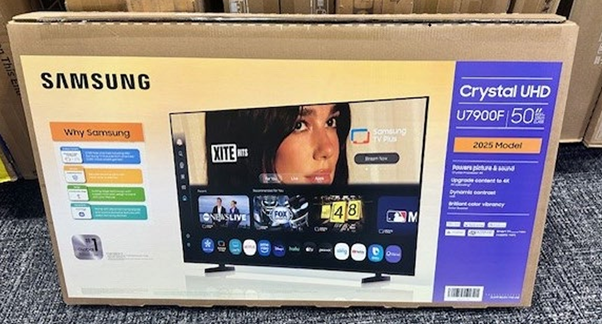
Samsung has denied allegations of unauthorised use of Dua Lipa’s image on its television packaging, following a lawsuit filed by the singer in the United States. In a statement reported by The Straits Times, Samsung said that the claim that the artiste’s image was used without authorisation is not true. The company added that it had confirmed the right to use the image through a content-providing partner before use. Additionally, the company rejected the claim that it refused to stop using the image after being asked to do so. It added that it had halted box production and replaced packaging after concerns were raised. While Samsung has not provided a public response, it reportedly had continued talks with Lipa and her team to resolve the matter amicably. MARKETING-INTERACTIVE has reached out to Samsung for a statement. Don’t miss: Dua Lipa brews Nespresso’s next era as global brand ambassador Last week, the British pop star filed a US$15 million lawsuit against Samsung Electronics, alleging the company used her image without authorisation, consent or compensation in a way that implied endorsement of its products. The complaint, filed on 8 May in the US District Court for the Central District of California, centres on a backstage photograph of Lipa taken at the 2024 Austin City Limits Festival. According to the filing seen by MARKETING-INTERACTIVE, the image was used on the front of Samsung television packaging as part of a mass-market retail campaign, which Lipa’s team argues created a false impression that she was affiliated with or endorsing the product. The filing further alleges that Samsung “exploited Ms. Lipa’s carefully curated and extremely valuable brand identity to sell televisions without authorisation,” despite there being no partnership or endorsement agreement between both parties. It states that Lipa “has developed substantial commercial value in her name, image, and likeness,” which she has monetised through brand sponsorships and endorsements, and argues that Samsung improperly capitalised on that value for commercial gain. The filing also claims Samsung’s actions amounted to “willful copyright and trademark infringement, and a violation of Ms. Lipa’s right of publicity,” intended to benefit from what the filing describes as an implied association with the artist. It further alleges that Samsung ignored repeated “demand[s] that it cease and desist from infringing on her rights,” and continued distributing the packaging despite being notified of the issue. The complaint also cites social media posts referenced in the filing, where users suggested the image influenced purchasing decisions, including comments such as “I wasn’t even planning on buying a TV but I saw the box so I decided to get it,” and “I’d get that TV just because Dua is on it.” The lawsuit comes amid a growing wave of legal action over the use of celebrity likenesses in commercial campaigns. In December last year, the estate of late country singer Johnny Cash sued Coca-Cola, alleging the beverage giant used a Cash impersonator and replicated his voice in a campaign without permission or compensation. The campaign itself is the third iteration of Coca‑Cola’s fall sports push, which celebrates college football’s “Best fans ever” and features several of Coca‑Cola’s partner schools. The estate described it as an unauthorised exploitation of his identity and artistic legacy. “Stealing the voice of an artist is theft. It is theft of his integrity, identity and humanity,” said the estate. “Coca-Cola selected the sound-alike singer to sing the vocal track for the specific purpose of ensuring that the infringing ad sounded as close as possible to the voice.” Related articles: Nike sues HK star Edison Chen over alleged breach of contract Actors’ union sues Fortnite over AI use of Darth Vader Dua Lipa writes, co-directs and stars in wildly imaginative new Porsche ad source

Samsung denies using Dua Lipa’s image on TV packaging amid US$15m lawsuit Read More »

Billie Eilish just turned Roblox into her concert stage

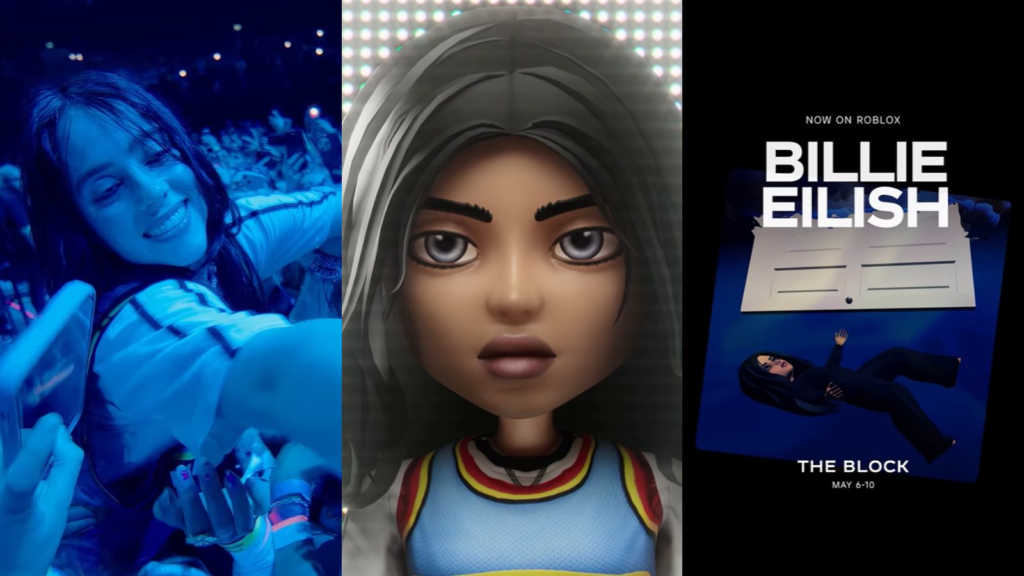
Billie Eilish has brought her 3D documentary film HIT ME HARD AND SOFT: THE TOUR, co-directed by James Cameron, into Roblox through an immersive activation that blends cinema, gaming and live music in a single virtual environment. Live on Roblox’s “The Block”, the platform’s always-on music and entertainment space, the experience had been reimagined into a Billie Eilish-inspired world modelled after her concert stage. Fans could enter the space, interact within the environment and roleplay as the artist in a virtual recreation of her performance setting. According to Roblox, the activation reflects the platform’s growing ambition to position itself as a destination “where music, identity, and digital self-expression converge”. Don’t miss: Ready player Alpha: Why gaming is the new brand playground By recreating Eilish’s tour environment within the platform, Roblox said fans are able to celebrate their fandom not just through virtual wearables, but through participation and creation within the experience itself. From 6 to 10 May, the activation featured an exclusive broadcast of Billie’s BIRDS OF A FEATHER performance from the film, alongside its trailer. It incorporated 3D visuals, dynamic lighting effects and appearances from Billie’s avatar to mirror the scale of the cinematic production within a gaming environment. Roblox added that interactivity remains central to how it adapts entertainment IP onto the platform, as Gen Z and Gen Alpha audiences increasingly seek participatory experiences rather than passive viewing formats. “We view these activations as nurturing ongoing fan ecosystems rather than moment-in-time release cycles,” the company said, adding that immersive fan engagement can help turn “a casual listener into a lifelong super fan”. Beyond the performance, Roblox users can access limited-edition Billie-inspired items via the platform’s marketplace, including a tour-themed animation pack and a Billie avatar, available now. The activation also integrates karaoke functionality, with tracks such as Ocean Eyes and when the party’s over, positioning “The Block” as an interactive fan destination that extends engagement with the artist’s catalogue beyond the film itself. Roblox added that “The Block” is intended to function as an ongoing entertainment venue, with its Innovation Studio team developing new music performance tools to help artists activate on the platform more quickly and cost-effectively. The move comes as more brands and organisations experiment with immersive retail and entertainment formats on Roblox to reach younger digital-native audiences. Earlier this year, The Salvation Army stepped into the metaverse with the launch of “Thrift score”, the world’s first digital thrift store on Roblox. Developed in collaboration with immersive game studio The Gang and led by independent agency BarkleyOKRP, the experience reimagines a traditional thrift shop as a fully explorable digital environment. Players can browse virtual racks of items for their avatars, including creator collaborations, player donations and replicas of real Salvation Army products, blending rarity, accessibility and community-driven participation within Roblox’s ecosystem. Related articles:  Roblox makes gameplay social with new ‘Moments’ sharing tool   essence levels up its glam game with new Roblox experience       How Monde Nissin is levelling up snacks for Roblox fans source

Billie Eilish just turned Roblox into her concert stage Read More »

DBS Foundation's Karen Ngui says ageing isn’t the problem, outdated perceptions are

In the race to stay young, relevant and culturally plugged in, brands have long prioritised younger audiences, often overlooking the growing influence, needs and spending power of older consumers. That disconnect is becoming harder to ignore. As Singapore enters “super aged” status, with more than one in five people aged 65 and above, rising to one in four by 2030, Karen Ngui, head of DBS Foundation, believes the bigger – and more fundamental – issue is not about societies ageing, but how ageing is framed. Ngui was a keynote speaker at Content360 Singapore. Spending over 20 years leading the marketing and communications function at DBS, most recently Ngui took on the role of head of DBS Foundation. Don’t miss: ‘It’s not about the biggest title in the room’: Love, Bonito co-founder Rachel Lim on CLOSER conversations Too often, she said, ageing and retirement are viewed through a deficit lens. That gap, she noted, presents both a societal and marketing challenge. “Businesses that are forward thinking would realise that there is a whole longevity economy,” she explained during a fireside chat. As a bank, DBS has always believed in doing well by doing good and, with its history as the Development Bank of Singapore, this comes with the idea of building forward. She added that often brands take the stance of “giving back” when going about their impact efforts – but that suggests maintaining the status quo. Instead, it should be around building forward, which means making things better. That thinking underpins DBS Foundation’s focus on helping vulnerable segments to build better and break out of cycles of disadvantage. With many of its key markets ageing rapidly – including Singapore, which faces a roughly 10-year gap between lifespan and health span – the Foundation is also ramping up on helping people “age with dignity and purpose”.  “The assumption is that retirement is linear. You’re born, you go to school, you get an education, you work, you have kids and then you stop work, right? But that’s not the case anymore,” said Ngui. Instead, she pointed to a more fluid model, where younger people take breaks or “mini-retirements”, while older individuals continue contributing in different ways. “I don’t think life should be that binary, and seniors still have much to contribute,” said Ngui, adding:  To not tap into what seniors can offer, it’s a huge loss to society. In an AI-driven world, that balance becomes even more critical. Seniors bring “the wisdom of experience, critical thinking skills, problem solving skills, decision making skills,” while younger generations bring digital fluency. Across her work, Ngui is deliberate about impact, even if it takes time. DBS Foundation does not support programmes unless they are scalable, sustainable and have the potential to help drive systemic change. That same philosophy extends into marketing. From storytelling to story-doing At a time when every brand is trying to tell a story, Ngui’s view is stark. “Brands must walk the talk, you know, not just talk the talk,” she said. “The best way to be authentic is not just tell stories, but actually do it first before we tell the stories.” That insistence on “story-doing” has quietly underpinned one of Asia’s biggest brand transformations. When Ngui first joined DBS in 2005 as managing director and head of group strategic marketing and communications, she did not see a clear brand. What she found instead was a long-standing purpose that had not been fully articulated. DBS began life as a spin-off from Singapore’s Economic Development Board, set up to support national development. Its early history includes decisions that prioritised quality of life, from pioneering AutoSave accounts to anchor-tenant concepts that reshaped mall culture. Rather than invent a new purpose, Ngui returned to that DNA and made it explicitly customer-centric. “Live more, bank less” became the clearest expression of that shift, despite internal resistance at first. “The customer wants to spend less time, less hassle banking. Of course, we want the customer to bank more with DBS, but that’s about us. But if you put it from a customer perspective, that’s when it resonates,” said Ngui. The line was tested through research, with customers interpreting “bank less” as a signal of strong digital capabilities. Putting “Sparks” back into the bank The same thinking carried into content. Long before branded entertainment became standard, DBS launched “Sparks”, a mini-series built around human stories of bankers and clients. It was designed to answer a simple question Ngui set herself: “Why DBS?” At the time, she noticed there were plenty of shows about doctors or lawyers, with Suits among the inspirations, but none about banking, creating an opportunity. Those stories didn’t come from a boardroom brainstorm. They came from business colleagues and front liners who shared real stories and moments that felt particularly special. “Banking is not just about a transaction, it’s about a relationship that you build with your client, so we wanted to hear stories of those relationships,” said Ngui. The results show that, done right, this kind of content does more than entertain. Sparks currently has four seasons, 32 episodes, 1.5 billion views and over 86 million engagements, said Ngui, adding that Sparks also helped shape brand perceptions along the way. Perhaps most interestingly, Sparks became a recruiting tool. Ngui recalls meeting colleagues who told her that Sparks was “life changing”. “When they were interviewing in different banks they went to Google to search to see and learn more about the banks, and that’s when Sparks popped up,” said Ngui. “Some of our colleagues shared that they would not have joined DBS if not for the fact that they saw Sparks and thought that banking isn’t so boring after all.” Across both brand and foundation work, the throughline remains consistent: Impact must be lived, not just told. Her final advice reflects that belief. “Feel free to swim outside your swim lanes. Don’t be afraid to be a rebel with a cause. Just learn and if it doesn’t work, fine, at least you’ve learned something,”

DBS Foundation's Karen Ngui says ageing isn’t the problem, outdated perceptions are Read More »

LUX wants women to hold their heads high, literally

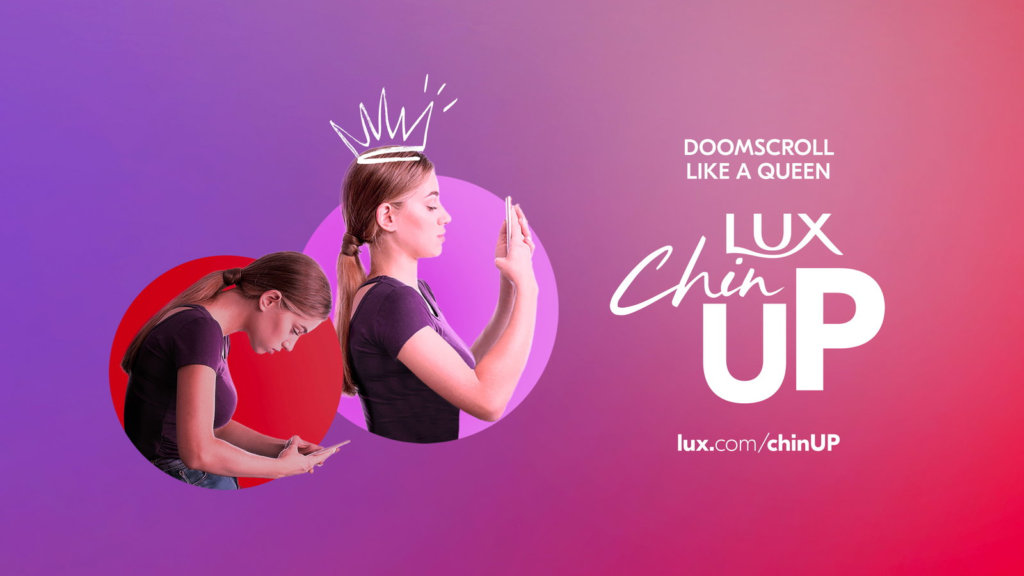
LUX has launched a digital tool aimed at tackling “text neck”, a posture issue caused by prolonged smartphone use that the beauty brand says can affect how women carry themselves. Called “LUX Chin up”, the free web-based tool uses a phone’s built-in motion sensors to detect when users tilt their devices below an optimal viewing angle. When that happens, the screen blinks as a prompt for users to raise their phones and straighten their posture. The initiative is based on the insight that extended periods of scrolling often lead to slouching, which can reduce posture, poise and physical presence over time. Don’t miss: LUX turns social ads into ‘algorithm cleansers’ in global campaign with VML  Developed by VML and WPP@Unilever, the tool is designed to work without requiring an app download or wearable device. Users can run the web page in split-screen mode, allowing it to remain visible as a small tab while they browse social media or other content. The tool encourages users to maintain their phone at a 90-degree angle. If the device dips below that threshold, the sensor detects the change and triggers a visual reminder. Once the user corrects their posture, they can continue using their phone as usual. “LUX always inspires women to boost their presence and own their beauty power,” said Gaurav Datta, global brand vice president at LUX. “Our phones are amazing for self-expression, but there’s a catch. While they elevate our digital selves, they often shrink our real-world presence. That constant downward scroll quietly chips away at posture, poise, and bold beauty. With ‘Chin up’, we’re offering a simple way for women to realign, lift up, and step back into their power,” he added. In tandem, Marco Versolato, chief creative officer at VML and WPP@Unilever said, “Poor posture quietly dims the bold beauty every woman carries. LUX will never let your beauty down, so we went after the habit, not the symptom.” “LUX Chin Up is a free, simple tool that runs alongside your life. It uses your phone’s own tech to correct the patterns that hold you back, ensuring you carry your main character energy on and off the screen,” he added. LUX said the initiative extends its positioning around confidence and self-expression, framing posture as part of a modern beauty routine. By encouraging women to adopt better posture habits, the brand aims to help restore what it describes as a more confident, “room-commanding” presence both online and offline. The launch follows another digitally led initiative from LUX aimed at helping women take greater control of their online experiences. Earlier this year, the brand teamed up with VML on “LUX my algorithm”, a global campaign that repositioned paid media as a tool to influence, rather than interrupt, social media feeds. Rolling out across China, India, Thailand, Brazil, Egypt, Indonesia and Vietnam, the campaign introduced what LUX called “algorithm cleansers” – ads designed to generate behavioural signals that could gradually diversify the content users see. According to the brand, the initiative was rooted in the idea that what people engage with shapes both what appears in their feeds and how they feel, extending LUX’s broader positioning around confidence, self-expression and intentional digital habits. Related articles:   LUX empowers women in China to take control of their identities  LUX reflects feminine strength with new social campaign  LUX taps on the nostalgic power of scent in new campaign  source

LUX wants women to hold their heads high, literally Read More »

Singapore Navy reminds women they were never afraid to make waves

The Republic of Singapore Navy (RSN) has launched a new campaign aimed at positioning the Navy as an attainable and rewarding career choice for women. Titled “There was a time (When nothing was too crazy for her)”, the campaign was developed in partnership with McCann Singapore and targets female students across junior colleges, ITEs, polytechnics and universities. The campaign was created in response to research showing that 82% of young women rule out a Navy career because they feel it does not align with their perceived passions. Meanwhile, 58% believe a career in the Navy would be too physically demanding. Don’t miss: LUX wants women to hold their heads high, literally Rather than addressing these barriers directly, the campaign takes women back to a time before such self-imposed limits existed. It builds on the insight that young girls often begin life fearless, curious and unconstrained, willing to try anything before societal expectations begin shaping what they believe is or is not meant for them. Through this lens, the campaign seeks to remind women in Singapore that qualities such as strength, leadership and bravery are not traits they lack, but ones they may have stopped recognising in themselves. The campaign features out-of-home, social and direct mailer activations showing young girls in moments of uninhibited play, commanding the room, taking charge and deciding for themselves what is fun. These moments are intended to reflect the qualities that can support a successful career in the Navy. “There was a time (When nothing was too crazy for her)” is the latest chapter in McCann Singapore’s six-year partnership with RSN. It builds on the Navy’s recruitment platform “It’s not crazy, it’s the Navy“, which sought to challenge perceptions of Navy careers and defence marketing. This new campaign extends the platform to a female audience by shifting the focus from external perceptions of the Navy to the internal perceptions young women may hold about themselves. “We believe that the most effective recruitment work does not just showcase what’s on offer but shifts how people see themselves in relation to it. Guided by McCann’s “Truth well told” philosophy, this idea is powerful because it is rooted in a simple truth – that there is a version of every woman that existed before society placed limits on her ambitions,” said Daniel Kee, chief creative officer at McCann Singapore.  He added, “We wanted to reframe not only how women perceived the Navy, but the beliefs they hold about themselves. To do that, the work had to feel personal, rather than fact-driven.”  Kee said the campaign was shaped around the visual language of childhood memories, with a grainy and intimate feel reminiscent of old family photographs. The intention, he explained, was to connect with women at a point before societal limits and expectations were learned, and to encourage them to recognise the qualities they have always had. He also noted, “It is also worth noting that this campaign idea was developed by an all-female creative team, which could explain why it feels less like an advertisement and more like recognition.” The campaign follows other recent defence recruitment efforts in Singapore that have used more audience-specific storytelling to challenge perceptions of military careers. Last year, the Republic of Singapore Air Force (RSAF) launched “Find your squad. Find your #AboveAll”, a Gen Z-focused campaign built around an immersive, mission-based mobile film experience. The campaign moved away from conventional recruitment ads to spotlight teamwork and belonging, while reframing perceptions of the RSAF beyond pilots to highlight the wider range of roles that support the force. Related articles: Why CARiNG Pharmacy is making women’s health an everyday priority  How SAFI is helping young women paint their own futures this Raya    IWD podcast roundup: 5 women leaders to hear from source

Singapore Navy reminds women they were never afraid to make waves Read More »

Blind boxes are a Gen Z hit, but what about older consumers?

Blind boxes have moved firmly into mainstream consumer behaviour across Malaysia and Singapore, with 55% of Singaporeans and 59% of Malaysians reporting they have purchased one before, according to new research from GrowthOps Asia. Adoption is strongest among younger consumers, with 85% of Gen Z in Singapore and 73% in Malaysia having bought a blind box, while participation drops sharply among older cohorts who are far more likely to reject the mechanic outright. The findings come from a nationally representative survey of 1,352 consumers across Malaysia and Singapore, conducted in Q1 2026 with research platform Ideally and published in GrowthOps Asia’s whitepaper “Blind boxes: A polarising growth strategy”. The data shows the format has clearly moved beyond novelty into mainstream retail behaviour, but its commercial impact is far from evenly distributed. Among consumers who have previously purchased blind boxes, the commercial upside is significant. These buyers are approximately 2.2 times more likely in Singapore and 2.5 times more likely in Malaysia to shop with a brand that offers one, while also demonstrating materially higher spend on collectibles compared to non-buyers. Don’t miss: SG looks to regulate blind boxes sales, but maybe brands should learn to self-regulate instead At the highest engagement level, regular buyers show around 1.8 times higher price elasticity in Singapore and 2.3 times higher in Malaysia, suggesting the format can meaningfully shift willingness to spend when deployed to the right audience. That effect, however, is highly conditional. The report finds blind boxes function less as a broad-based retail tactic and more as a targeted behavioural trigger, with value concentrated among younger consumers already attuned to collectability, fandom, surprise and socially shareable consumption. For this group, the format also aligns with the “lipstick effect”, where smaller emotionally rewarding purchases persist even as larger discretionary spending tightens, making blind boxes an accessible form of affordable indulgence. However, the same mechanism that drives engagement also fuels rejection elsewhere. Among non-buyers – particularly Gen X and Baby Boomers – responses frame blind boxes as luck-based, wasteful, poor value and in some cases exploitative. Several respondents explicitly likened them to gambling, a framing that is increasingly sensitive in both markets and especially relevant in Singapore’s regulatory context. The implication for marketers is not that blind boxes are ineffective, but that they are highly segmented in impact. Performance depends on precise audience targeting, category fit and a clear commercial purpose beyond trend adoption. When aligned correctly, they can deepen engagement and increase spend. When applied broadly, they risk creating distrust among sceptical audiences while running ahead of emerging regulatory expectations. “Blind boxes are not a shortcut to relevance. They work when the audience, product, and brand experience all make sense together. For the right segment, they can create excitement, repeat purchase, and stronger brand pull. Used without discipline, they risk becoming another overextended retail trope,” said Chris Greenough, general manager of GrowthOps Asia. “In a market such as Singapore, that risk has a regulatory dimension that brands cannot ignore,” he added.  That tension is already moving into policy territory. In February 2026, Home Affairs Minister K. Shanmugam confirmed in Parliament that blind boxes would be regulated, with the Ministry of Home Affairs and the Gambling Regulatory Authority actively drafting a framework governing how such products are sold, including collectible trading card formats. The development introduces a compliance layer for brands already operating in or considering the space. Industry professionals previously told MARKETING-INTERACTIVE that while blind boxes are driving strong engagement through “mystery marketing”, the same mechanics that make them effective – chance, scarcity and surprise – also require careful calibration. “Unboxing is content, and content is currency. What used to be a retail transaction is now a social performance,” said Lesley John, CEO of Virtue Asia, who added that consumers are “buying into a moment of anticipation, a community ritual, and a story that can be shared”. Others pointed to a sharper strategic line between engagement and overreach. One industry view noted that “scarcity without story feels manipulative. Scarcity with meaning feels magical”, while cautioning that brands “can chase the buzz, but they can’t gamble with trust”. Related articles:  Loyalty marketing gets cute with plushie strategy   MY LITTLE PONY trots into blind box plushie trend CHAGEE’s new Bes-tea plushies are here to spill the cute in MY, SG, TH   source

Blind boxes are a Gen Z hit, but what about older consumers? Read More »

If Gen Z isn’t reading all that copy, how are brands persuading them?

For years, brands have been told to meet consumers where they are. Now, that increasingly means meeting them in lowercase, with fewer words, more emojis and just enough context to say, “If you know, you know” The recent “Millennial vs Gen Z” copy trend has pushed that tension into the spotlight, with brands rewriting their marketing messages for two generations with very different online instincts. Millennials are often framed as preferring context, clarity and a little storytelling. Gen Z, on the other hand, is cast as fluent in brevity, vibes and cultural cues. But beneath the humour lies a serious challenge for marketers: how do brands sound culturally relevant without losing the message they are trying to sell? Don’t miss: Is messy content the new route to authenticity? For industry players, the shift starts with how meaning itself is now built. Visuals, audio and platform-native formats are increasingly doing much of the work that copy once carried. Video, carousels, music and voice-overs allow text to be stripped back, with audiences expected to complete meaning through cultural recognition. As Peilin Lee, former head of marketing at Nespresso Singapore and now communications and leadership coach, put it, Gen Z communication relies heavily on this shared shorthand because earlier generations already laid the groundwork for understanding products in the first place. “Millennial marketing was built on aspiration and validation. Gen Z communication is built on recognition and cultural shorthand,” she said. “Brands used to say, ‘Here’s why you should join us.’ Now they’re saying, ‘If you get this, you’re one of us.’” That also changes how audiences process messaging. Rather than waiting for full explanations, Gen Z consumers are often filling in the gaps themselves based on what they see, hear and recognise in culture. Joanne Lim, head of marketing at Virgin Active, SEA, said this shift is less about age and more about how people consume information today. “Millennials grew up in an explanation-led digital world of blogs, long-form Facebook captions, email newsletters and brand storytelling,” she said. “Gen Z has grown up in a faster, more visual and context-driven environment, where meaning is carried not just by copy, but by format, timing, memes, creators, sounds and comments.” That means the same product can be explained in a full paragraph to one audience, and in “three words, a visual cue and a wink” to another. But Lim is clear on one thing: What has changed is not intelligence or attention span, but tolerance for unnecessary explanation. Context is doing the heavy lifting For industry players, if the caption is getting shorter, the rest of the content has to work harder. Lee pointed to visuals as a key driver of this shift, with video, carousels, music and voice-overs now carrying much of the storytelling load. In this environment, text becomes increasingly condensed, with meaning left to be filled in by what audiences recognise from culture. “Based on what they see, hear and recognise, Gen Zs fill in the blanks themselves to open-ended captions such as ‘it’s giving…’,” Lee said, adding:  Legend has it that Boomers are still waiting for the end of this sentence. For some, persuasion is now driven less by copy itself and more by the signals surrounding it, particularly in campaigns designed for Gen Z audiences. These include format, creators, timing, cultural references, comments and whether a brand feels like it “gets it”. “A short caption works when the audience instantly understands the moment, sees themselves in it, and connects the product to a need, mood or behaviour,” Lim said. “The copy is no longer doing the heavy lifting. Context is.” Linda Hassan, former group chief marketing officer of Domino’s Pizza Malaysia and Singapore, agreed that persuasion today is no longer dependent on detailed explanation alone. Instead, it is shaped by a combination of cultural relevance, creator or community influence, visual storytelling, relatability and social proof. However, she cautioned that this does not mean clarity can be compromised, noting:  Brands still need to ensure that the product value is clear enough for consumers to understand why it matters. The pressure to understand the room The shift is also being shaped by the speed and scrutiny of social platforms. Pat Law, founder of social marketing agency GOODSTUPH, said attention spans may have shortened, but intelligence has not. “The biggest shift is that audiences today can smell inauthenticity immediately,” Law said, adding: Millennials tolerated brands trying to be cool. Gen Z expects brands to already understand the room before speaking. That expectation has pushed brands to compress their communication into more culturally recognisable shortcuts, she added. “Jokes aside, brands are compressing communication into culturally recognisable shortcuts because the internet rewards immediacy over depth,” Law said. Virgin Active’s Lim added on that Gen Z consumers are often misread as being “too lazy to read”. Instead, she said, they are filtering. “Gen Z consumers are constantly deciding what deserves their attention, what feels useful, and what feels like a brand trying too hard,” Lim said. Having grown up surrounded by polished ads and constant content, Gen Z tends to value authenticity, peer voices, creators and reviews over overly perfected brand claims, she explained. The cringe risk is real  Still, cultural fluency can backfire when brands use internet language without the right context. Lee said the irony is that while Gen Z language feels more casual, the strategic precision required is higher. “All aspects of the communication have to come together to represent the brand,” Lee said. “If one element feels slightly off, brands risk being immediately labelled ‘cringe’ and having a generation write you off as being dated.” Law also pointed to the risk of brands jumping on a trend without considering whether it fits their audience or product. Referring to American Express joining the trend, she said she found it “hilarious”. “How many Gen Zs are realistically qualifying for a Gold card?” Law said. Beyond tone, the risk also extends to clarity. Hassan warned that over-indexing on cultural fluency can dilute product understanding,

If Gen Z isn’t reading all that copy, how are brands persuading them? Read More »

Tim Hortons nabs Deliveroo's Minjoo Lee as APAC director of marketing

Tim Hortons has named Minjoo Lee-Zeitler (pictured) as its new director of marketing for Asia Pacific (APAC), as the Canadian coffee chain looks to deepen its presence and grow brand relevance across the region. In the new role, Lee-Zeitler will lead brand strategy, consumer marketing and product innovation across APAC, while overseeing overall marketing performance. She will also serve as a strategic advisor to Tim Hortons’ franchise partners, helping identify growth opportunities and collaborative solutions as the business scales. Her remit spans all of Tim Hortons’ existing markets in APAC, including China, South Korea, Singapore, Malaysia, Thailand and Pakistan, as well as any new markets the brand enters in the future. Don’t miss: Pizza Hut Singapore director of marketing and food innovation to exit In conversation with MARKETING-INTERACTIVE, Lee-Zeitler said that her key objective is to drive brand growth across APAC by strengthening Tim Hortons’ relevance with consumers, while maintaining consistency across markets. The broader goal, she said, is to make Tim Hortons the preferred choice for consumers in the region and deliver greater value to local franchise partners. Lee-Zeitler joins Tim Hortons from Deliveroo where she most recently served as head of marketing for Singapore. In that role, she led growth strategy, product marketing, and partner and promotional campaigns across Deliveroo’s core business, new verticals and subscription offerings, according to her LinkedIn. Prior to Deliveroo, she held regional marketing roles at Shangri-La Group, Wingstop and Yum! Brands, where she managed teams and led brand initiatives across multiple markets. Speaking to her appointment, Lee-Zeitler said that “Tim Hortons is a brand that is relatively new in the region, and I’m excited to help shape Tim Hortons’ story in APAC at this pivotal moment.”  “The brand and product portfolio have a lot of potential and I’m committed to working with talented teams and franchise partners to bring the growth vision to life and deliver our unique success story,” she added.  Lee-Zeitler’s appointment comes amid a series of leadership moves across the food and beverage sector. Most recently, Peilin Lee stepped down as head of marketing at Nespresso Singapore after seven years to launch her own venture focused on leadership development and strategic communication. At Nespresso, Lee oversaw the full marketing function across both B2C and B2B, with responsibilities spanning brand strategy, product innovation, customer experience and partnerships. A key part of her remit involved translating global direction into locally relevant strategies designed to drive growth while building long-term brand relevance. In Malaysia, PepsiCo Malaysia named Debra Deyvitah as its new head of marketing for foods. In her expanded role, Deyvitah will oversee the brand and marketing strategy across the snacks and nutrition portfolios in Malaysia, including flagship names such as Lay’s, Doritos, and Quaker. Reporting directly to PepsiCo’s Asia foods chief marketing officer based in the Philippines, Deyvitah’s remit includes driving growth, enhancing brand relevance, and delivering sustainable results through market execution and innovation. Related articles:   lululemon names new SEA regional head of marketing  Canva names new SEA head of marketing  Bata elevates Malaysia’s head of marketing to dual Malaysia–Singapore role  source

Tim Hortons nabs Deliveroo's Minjoo Lee as APAC director of marketing Read More »

EDB and Enterprise SG open China agency pitch

The Singapore Economic Development Board (EDB) and Enterprise Singapore (EnterpriseSG) are seeking a content marketing and communications agency to strengthen their digital engagement with Chinese business audiences. According to tender documents seen by MARKETING-INTERACTIVE, the appointed agency will provide strategic counsel and manage content operations for the agencies’ joint WeChat official service account and channels account. Furthermore, the tender seeks to position Singapore as an attractive destination for investment and innovation, while promoting Singapore companies as trusted partners for Chinese enterprises looking to expand internationally. Don’t miss: GovTech picks agency to manage digital and social media channels  Under the scope of work, the winning agency will be tasked with developing an annual content marketing and communications strategy, producing and publishing at least 12 articles and two videos a month, and managing regular media monitoring, community engagement and performance reporting. The agency will also be expected to provide strategic recommendations to deepen engagement on WeChat and explore expansion onto other Chinese digital platforms such as Zhihu, Bilibili, Xiaohongshu and Douyin. As part of the mandatory retainer, the agency must deliver a minimum of 36 original articles, 108 translated or adapted articles, four newly produced videos and 20 videos created from existing assets each year. Additional responsibilities include media relations support, crisis and reputation management, localisation of English-language content into Mandarin, and optimisation of WeChat content through SEO, tagging and customer relationship management integration using JING Digital. Optional project work may include campaign ideation and execution, ad-hoc creative development, media partnerships, expansion into new platforms and proactive media pitching. The tender requires agencies to demonstrate fluency in English and Mandarin, strong experience working with multinational B2B companies and government organisations, and a deep understanding of China’s marketing and communications landscape. The tender comes as EDB continues to step up its global brand storytelling efforts to engage overseas business audiences. EDB’s marketing efforts are global in scope, reflecting Singapore’s need to attract investments from a diverse range of markets including the US, Europe, Japan and China. Its recent March 2025 campaign, “Your business needs Singapore“, developed in collaboration with The Secret Little Agency (TSLA), sees the agency position Singapore as a stable and trusted base for companies navigating global uncertainty. The one-minute film highlighted how Singapore’s predictability and safety provide a foundation for bold innovation, contrasting global volatility with the country’s business environment. It also featured examples of local innovation and reinforces the message that trust and stability remain central to Singapore’s value proposition. Related articles:   Heineken wraps global agency review in bid for scale and consistency  Lazada Singapore picks new PR agency  Intellectual Property Office of Singapore picks new PR agency source

EDB and Enterprise SG open China agency pitch Read More »