marketing interactive

Kobe marks 10 years with refreshed identity as it sharpens global ambitions

This post is sponsored by Kobe. Singapore-founded creator marketing specialist Kobe has updated its identity to reflect a decade of growth, deeper expertise, and a clearer vision for its next chapter on the global stage. As Kobe marks 10 years in the market, the company is unveiling a refreshed identity to signal its next phase of growth. More than a visual update, the move reflects how the business has evolved over the past decade and where it intends to go next, with a stronger international outlook, a clearer articulation of its expertise, and a renewed commitment to shaping the future of creator-led marketing. The refreshed identity comes at a meaningful moment for the business. In recent years, rebrands and brand refreshes have increasingly become a way for companies to mark turning points in their journey, whether that is a milestone anniversary, a new business direction or a broader market ambition. For Kobe, its 10-year milestone offered the right opportunity to pause, reflect and define how it wants to show up in the next chapter. Founded on the idea of “word-of-mouth”, Kobe has long positioned itself around the belief that influence is not just about visibility, but credibility. Since day one, the company has built its approach around relevance, authenticity, and the power of matching the right voices with the right audiences. That founding idea remains unchanged, but the company now wants its brand to more clearly reflect the scale, maturity, and perspective it has built over the past decade. “For me, this is a very emotional milestone,” said Evangeline Leong, founder and CEO of Kobe. “When I started Kobe, it began with a very simple belief that word-of-mouth is one of the most powerful forces in marketing. I did not start out thinking about building a company for the next 10 years. I was thinking about solving a real problem in a way that felt honest, human, and effective. “Looking back now, this refreshed identity feels like a reflection of everything we have learned, everything we have built, and everything we still believe in.” Over the past 10 years, Kobe has grown alongside the creator economy itself. What began in a different era of influencer marketing has matured into a business that sits at the intersection of strategy, culture, data, and commerce. As brands become more sophisticated in how they work with creators, the expectations placed on agencies and partners have also changed. It is no longer enough to simply source talent or deliver reach. Brands are now looking for stronger audience understanding, sharper creative fits, and clearer business outcomes. That shift has helped shape Kobe’s own evolution. The company has spent the past decade building capabilities, deepening its understanding of creator behaviour, and learning how to help brands cut through in an increasingly crowded and fragmented landscape. Its refreshed identity is designed to reflect that broader role, not only as a campaign partner, but as a specialist with a stronger point of view on how creator marketing should work in today’s environment. “There were many moments over the years when the market was moving faster than anyone expected,” Leong said. “Platforms changed, audiences changed, creators changed, and client expectations changed. We had to keep learning in real time. That journey shaped us. It taught us that the most valuable thing we can offer is not just access or scale, but judgment – knowing what matters, knowing what will resonate, and knowing how to build trust in a way that feels real.” At the same time, the refreshed identity also points to Kobe’s future ambitions. While the company has built a strong foundation in Singapore and across the region, it is now looking to express a bigger and more global vision for what comes next. The next phase of the brand is expected to reflect not only its accumulated expertise, but also its intention to bring that experience to a wider international stage. For Leong, that global direction is not about moving away from the company’s roots, but about building on them with greater confidence. “I still remember the early days very clearly – the small team, the hustle, the uncertainty, and the excitement of trying to build something meaningful from Singapore,” she said. “What matters to me is that even as we grow and think more globally, we do not lose what made Kobe special in the first place. We have always cared deeply about people – the audiences, the creators, the brands, and the communities around them. That should never change.” The company’s refreshed identity is therefore less about reinvention and more about articulation. It is about giving clearer shape to the business Kobe has already become. Over the years, the company has built not just experience, but conviction: conviction that the future of marketing will be shaped by trusted voices, that creators need to be understood beyond their follower counts, and that effective brand building in social spaces depends on resonance, not just reach. That view feels especially relevant in today’s market. As audiences become more selective and social platforms continue to evolve, brands are under growing pressure to create work that feels culturally aware, credible, and useful. In that environment, creator marketing has become more important, but also more demanding. Authenticity is scrutinised more closely, audiences are quicker to disengage, and creators are expected to bring both relevance and results. Kobe’s refreshed identity arrives against that backdrop, positioning the business as one that understands both the emotional and commercial sides of influence. “We are entering a chapter where we can be more intentional about the kind of company we want to be,” Leong said. “This refreshed identity is not about looking different for the sake of it. It is about being more honest about who we are today.

Kobe marks 10 years with refreshed identity as it sharpens global ambitions Read More »
FairPrice to expand AI-powered shopping experience across more outlets

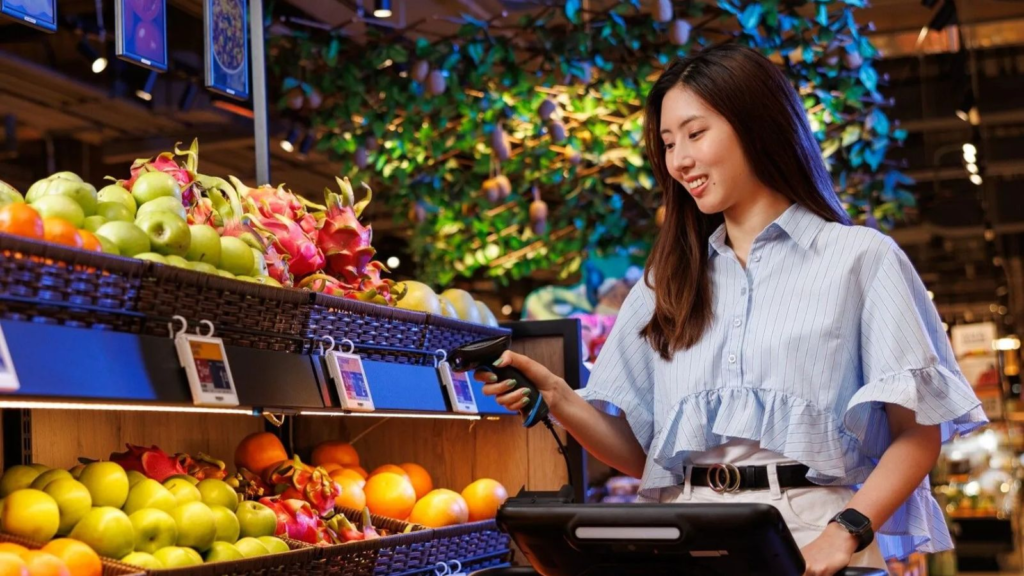
FairPrice Group is expanding its retail tech programme, with plans to roll out a suite of AI-powered solutions across its supermarket network by end-2026. Developed in partnership with Google Cloud, the rollout includes smart shopping carts, digital price cards, a hybrid physical-digital “ShopBeyond” format, and “Grocer genie”, an AI-powered app for store staff. The move builds on FairPrice’s “Store of tomorrow” programme, launched in 2025, which pilots up to 20 digital solutions annually. Its first gen-AI-powered supermarket at Punggol Digital District serves as a testbed for the initiative. Don’t miss: How FairPrice is driving Singapore’s first retailer-supplier AV route  Smart carts, powered by Google Cloud’s Gemini Enterprise agent platform, offer in-store navigation, personalised promotions and scan-and-pay functionality. At FairPrice’s Punggol Coast Mall outlet, they have reduced checkout times to an average of 36 seconds. The carts will be rolled out to 48 FairPrice Xtra and Finest outlets by end-2026. Digital price cards, which display real-time pricing and promotions, are expected to save 15,000 man hours and SG$138,000 annually by eliminating the need for printed price cards. They will also be deployed across 48 outlets. The “ShopBeyond” format connects in-store displays with FairPrice’s online catalogue, allowing customers to browse and purchase additional items for delivery while shopping in-store. The format is currently available at selected outlets and will be rolled out progressively. “Grocer genie”, an AI-enabled staff app, supports store operations including task management and analysis of sales, inventory and customer satisfaction data. It will be deployed across all supermarket teams by end-2026. Vipul Chawla, group CEO, FairPrice Group, said the programme is focused on improving everyday shopping experiences. “Technology is most powerful when it makes peoples’ lives easier, and the SOT programme is all about using digital innovation to do just that for FPG’s customers and staff,” he said. “By bringing proven AI solutions from our ‘Store of tomorrow’ programme to more supermarkets across the island, we want to reimagine the shopping experience for our customers and remove the friction from their weekly grocery runs. Whether it’s with smart carts that provide personalised offers and in-store navigation, or hybrid retail formats that bring together the best of physical and online shopping, our aim with the programme is to make every day a little better for all in Singapore.” In tandem, Sarah Jane Vasquez, branch manager at Punggol Digital District, said the tools have changed how store operations are managed. “New digital tools such as ‘Grocer genie’ help me automate manual work such as eyeballing when shelves need to be restocked and even staff rostering. This frees up time for me to lead and coach my team. Ultimately, this initiative has empowered us to serve our customers faster, smarter, and better,” she said. Meanwhile, Mark Micallef, managing director, Southeast Asia, Google Cloud, said the programme demonstrates how retailers can scale AI beyond pilots. “FairPrice Group’s ‘Store of tomorrow’ programme is a masterclass in how retailers can thoughtfully and strategically transcend enterprise AI pilots to achieve tangible value at scale. By deploying tried-and-tested innovations in its supermarkets island-wide, FairPrice Group is realising significant operational ROI — from measurable productivity gains to a clear reduction in checkout friction,” he said. “By moving beyond simple chatbot assistance to an interoperable ecosystem of AI agents that reason and act across a complex grocery value chain, we’re helping FairPrice Group create elevated shopping experiences for customers, smarter tools for frontline workers, and a more efficient retail ecosystem for all of Singapore,” added Micallef.  The rollout follows initial pilots at the Punggol Digital District store, where FairPrice tested the solutions before scaling them across its network. Related articles:    FairPrice Group names new head of retail media network  FairPrice celebrates small everyday moments that make CNY shine  NTUC Fairprice Group calls for pitch  source

FairPrice to expand AI-powered shopping experience across more outlets Read More »

City Serviced Offices picks new branding and design partner

Singapore-based City Serviced Offices (CSO) has appointed 8traordinary as its branding and design partner, as part of a wider transformation aimed at repositioning the business for the future of work. Under the remit, 8traordinary will develop a new visual identity, lead the marketing rollout, and revamp CSO’s website. The agency is also tasked with building a refreshed messaging framework aligned with the company’s updated brand proposition. Founded in 2003, CSO is a wholly owned subsidiary of City Developments Limited and is among Singapore’s early entrants in the serviced office space. The rebrand follows a broader workspace revitalisation completed in 2024, which introduced more configurable, productivity-driven environments. Don’t miss: URA names new social media agency With its flagship location at Republic Plaza, CSO has supported a range of clients, from startups to multinational corporations, over the past two decades. The latest brand refresh reflects a shift towards more customisable offerings, while leveraging CDL’s global network. According to the company, the rebrand is intended to move CSO beyond its positioning as a traditional serviced office provider, towards a more flexible, customer-centric workspace model. As part of the transformation, 8traordinary adopted a human-centric approach to highlight CSO’s emphasis on hospitality, aiming to reshape perceptions of serviced offices in an increasingly hybrid work environment. The updated identity positions CSO as a modern workspace provider focused on scalability and flexibility, as businesses continue to adapt to evolving workplace demands. “Our hospitality-first approach has always set us apart. This rebrand captures that spirit ethos while giving CSO a contemporary modern identity that reflects who we are today,” said said Annie Abraham, vice president and head of CSO. She added, “We’re delighted to mark this milestone as we enter our next phase of growth and transformation as a premier workspace solutions provider, and we’re excited to work with 8traordinary to bring this vision to life.” In tandem, Jeffrey Lim, managing director of 8traordinary said, “We believe that rebranding is often about building on a legacy, instead of creating a new one.” “Successful rebranding deploys the company’s core values as an authentic starting point, acknowledging its evolution and leveraging its reputation. We’re extremely glad and proud for the opportunity to work with CDL and CSO on this rebranding project to showcase their unique hospitality offerings in this space,” he added.  This latest appointment adds to 8traordinary’s growing portfolio in the real estate space. In June last year, real estate investment and asset management firm Arcc Assets named the agency its social media agency of record following a competitive pitch. The 12-month remit saw 8traordinary lead content planning, production, social media management and digital marketing, with a focus on refreshing Arcc Assets’ content strategy and strengthening digital engagement. Related articles: PUB taps new social media agency  National Space Agency of Singapore unveils brand identity  GovTech picks social media agency  source

City Serviced Offices picks new branding and design partner Read More »

Why Agentic AI is redefining the next stage of customer experience

For years, customer experience has been the ultimate battleground for brand differentiation. Leading organisations have leveraged tailored content, targeted campaigns, and cohesive omnichannel experiences that flow seamlessly between digital and physical channels. These brands have proven that customer experience can be a powerful differentiator, shaping loyalty and advocacy in ways that go far beyond product features or price. But today, consumer expectations have risen sharply. They no longer settle for reactive service or generic interactions, they want brands to anticipate their needs, respond in real time, and deliver seamless, personalised journeys across every touchpoint. This represents more than an incremental shift for marketers, it’s reimagining what customer experience means – demanding new tools and approaches that go beyond the capabilities of traditional AI-powered chatbots or recommendation engines. Traditional AI tools such as chatbots serve us well, but they are reaching their limits. They react rather than anticipate, operate in silos rather than orchestrating holistic experiences, and follow programmed scripts rather than truly understanding customer intent. Agentic AI, intelligent systems that don’t just respond to customer needs but proactively shape experiences, on the other hand, are learning and adapting in real time to create the kind of anticipatory, personalised interactions that modern consumers demand. The question for marketing leaders isn’t whether this transformation will happen, it’s whether they’re ready to harness agentic AI to build the durable customer relationships that will define competitive advantage in the next era. From traditional AI to Agentic AI: What’s changed Traditional AI in marketing has largely been designed to react, such as a chatbot answering customer queries, recommendation engines suggesting products based on past behaviour, or rule-based automation triggering messages when certain conditions are met. While effective, these tools rely on customer input before taking action, which limits their ability to truly provide value and shape experiences. Agentic AI flips this paradigm. These systems analyse entire customer journeys, predict emerging needs, and orchestrate personalised campaigns autonomously. The shift from reactive to proactive intelligence is already reshaping consumer expectations. In fact, research showed 18% of Singaporeans already actively use AI agents, primarily replacing traditional search for shopping and lifestyle decisions, with another 31% planning adoption within the next year. As consumers grow accustomed to this level of proactive, seamless, and personalised assistance in their personal lives, their expectations for brands are naturally rising. They will no longer be satisfied with a passive chatbot or a generic email blast. They now demand for brands to deliver more intelligent and intuitive experiences that can meet their immediate needs and unlock opportunities for building trust, loyalty, and a deeper sense of brand connection. Why Agentic AI matters for marketers today Personalised, real-time experiences have shifted from competitive advantage to baseline expectation, yet marketers are facing growing complexities managing dozens of touchpoints that each have unique data requirements. Traditional campaign execution, audience segmentation, and cross-platform optimisation have become unsustainable without intelligent automation. Agentic AI transforms this challenge into opportunity. Instead of manually targeting campaigns based on intuition and experience, marketers can deploy AI agents that monitor engagement across channels and automatically optimise messaging, timing, and targeting in real time. The practical benefits are immediate in every marketing function. Creatives gain more bandwidth to craft compelling campaigns and experiment with new ideas, while AI handles optimisation by streamling workflows and recommending context-aware improvements. At the same time, non-creative roles such as campaign managers, analysts, can focus on strategy, as AI agents segment audiences, adjust campaign parameters, and monitor performance in real time to enable smarter, faster decision-making. Does this mean AI will replace marketers? The short answer is no. Agentic AI elevates customer experiences to boost operational efficiency and drive measurable improvements in engagements and loyalty. What AI cannot replicate is the empathy, intuition, and relationship-building that human marketers bring, ensuring that creativity and human connection remain at the heart of every campaign. Looking ahead Success in the agentic AI era demands two foundational elements: robust customer data infrastructure and ethical trust frameworks. Brands must unify customer insights across touchpoints to enable AI-driven personalisation while establishing boundaries for autonomous decision-making based on actionable insights. As consumers become increasingly aware of how their data powers AI experiences, transparency in algorithmic decision-making becomes critical for maintaining growth, and driving trust and engagement. Equally vital is balancing automation with human creativity. AI agents can orchestrate customer journeys with unprecedented precision, but what’s key is marketers remain essential for setting vision, upholding brand values, and delivering the emotional resonance that builds lasting connections. Adobe’s Agent Orchestrator within the Experience Platform for instance, enables AI agents to make autonomous decisions while maintaining human oversight. The brands that pair intelligent systems with creative ingenuity, unlocking seamless experiences that drive both loyalty and sustainable growth, will thrive. This article was written by Preeti Rao, marketing director, Asia, Adobe. source

Why Agentic AI is redefining the next stage of customer experience Read More »

AI shifts CMOs from marketing performance to growth accountability: Forrester

A new report from Forrester argues that artificial intelligence is not changing what CMOs are accountable for – but it is fundamentally transforming how that accountability is delivered, measured, and judged at the highest levels of the business. In “The AI CMO”, the research firm positions marketing leaders at the centre of a structural shift: from driving campaigns and performance metrics to owning the conditions under which growth is produced. The shift, it said, will require CMOs to balance a “clear, growth-anchored vision” with the uncertainty introduced by AI, while taking on a more explicit role as organisational change leaders. The report stresses that AI does not alter the core mandate of marketing – growth – but it is redefining the execution layer. From how brands show up in customer moments to how marketing teams are structured, AI is reconfiguring workflows, talent mix, and decision-making speed. Don’t miss: ‘Revolution, not evolution’: The agentic AI wake-up call for CMOs AI agents emerge as a new marketing audience One of the most immediate disruptions comes from the rise of conversational “answer engines” such as ChatGPT, Claude, and Perplexity, as well as Google Gemini. These platforms are reshaping discovery and purchase journeys into zero-click experiences, reducing visibility for marketers while compressing the path to conversion. Adoption is already significant. The report noted that roughly half of US online adults have used AI agents to ask questions and receive synthesised answers, while younger cohorts are increasingly turning to tools such as ChatGPT for product discovery. In B2B contexts, usage is near ubiquitous, with 94% of buyers reporting reliance on generative AI tools across the purchase journey. This creates a new challenge: CMOs must win share of voice in interactions they cannot directly see or control. Beyond reshaping customer behaviour, AI is also introducing a new stakeholder: the machine itself. As AI agents begin to intermediate both B2C and B2B journeys, marketing strategies must expand from influencing human decision-making to shaping how algorithms evaluate, rank, and recommend brands. The report highlights that 88% of B2B decision-makers are already adopting or planning to adopt AI agents, while 43% of US consumers expect brands to market directly to their AI assistants. This signals a shift towards “agentic marketing”, where optimisation extends beyond human perception to machine interpretation – changing how brand equity is built and measured. Marketing capacity shifts from people to systems The operational backbone of marketing is also undergoing change. AI is enabling execution at scale without proportional increases in headcount, moving marketing from labour-constrained to system-driven. “Over time, I expect setting up and running our campaigns will be more and more agent based, with fewer humans turning all the knobs,” said Casey Cary, CMO at TCP Software. Forrester’s earlier forecasts suggested that 7.5% of advertising agency jobs – around 33,000 roles – will be automated by 2030, signalling broader structural shifts across marketing organisations. Investment patterns are already reflecting this: more marketing leaders are increasing technology spend than headcount, while many are slowing hiring to assess AI’s long-term impact. Forrester argues that the real challenge is not technological but organisational. To unlock AI’s value, CMOs must act as change leaders – reengineering how marketing functions while guiding teams through uncertainty.  This shift brings with it a redefinition of the CMO’s core responsibilities. Growth accountability is expanding, with marketing becoming more tightly linked to enterprise outcomes as AI amplifies its ability to demonstrate impact at the C-suite level. At the same time, execution oversight is receding, as automation takes over workflows and reduces the need for hands-on management. In parallel, brand stewardship is evolving: CMOs are now required to govern how AI systems represent their brand, introducing new risks around bias, hallucination, and consistency. “AI is turning the CMO into a growth leader that brings together data, technology, and talent to deliver maximum impact on the business,” said Bradley Breuer, SVP of marketing at PetSmart. At the same time, Darren Cassidy, CMO at Xerox, highlighted the operational shift: “The way that I do business tomorrow, from campaign creation to orchestration to deployment, AI is already changing the speed and the velocity of how I do that.” A new layer of brand risk As AI takes a more active role in content creation and decision-making, brand governance becomes more complex. The report notes that 70% of marketers have already encountered AI-related brand incidents, while 80% of brand owners are concerned about how agencies are using generative AI. “I now have to understand what our third-party partners are doing with AI – not just from a capability standpoint, but from a brand reputation perspective. That’s an entirely new layer of responsibility,” said Mike Daum, CMO at Golden 1 Credit Union. Ultimately, AI is tightening the link between marketing activity and business outcomes – removing layers of operational opacity and placing CMOs more directly on the hook for growth. The report describes this as a shift towards “purer accountability”, where fewer process signals and execution details mean fewer buffers between marketing leaders and results.  To adapt, Forrester outlines several priorities that collectively reshape how CMOs operate. Leaders are expected to engage with AI tools firsthand, using them in their day-to-day work to fully understand both their capabilities and limitations. At the same time, they must continuously reallocate their time, shifting away from supervising execution and towards making the strategic decisions that AI cannot replicate. This transition also demands that AI fluency becomes an ongoing leadership discipline rather than a one-off capability, requiring constant learning and experimentation. Finally, leadership itself must evolve, as authority and delegation move away from traditional human oversight towards managing systems and machines. “AI helps me grok a lot of information much faster, but I still have to check its output,” said Lynn Tornabene, CMO and chief product officer at Anteriad. Michelle Boockoff-Bajdek, CMO at Sitecore, added: “One of my best employees is a guy named ‘Claude,’ because he does a ton of work for me. Having an AI thought partner has been the biggest step change in my

AI shifts CMOs from marketing performance to growth accountability: Forrester Read More »

Vero acquires Mad Hat Asia in regional expansion move

Vero has taken a majority stake in creative communications agency Mad Hat Asia, broadening its regional footprint and integrated communications capabilities across Southeast Asia. The move brings together Vero’s established strengths in strategic communications, public affairs and government relations with Mad Hat Asia’s culture-led creative approach, consumer lifestyle expertise and social-first capabilities. The partnership is expected to deepen Vero’s presence in Malaysia while expanding Mad Hat Asia’s access to regional capabilities spanning corporate communications, policy advisory, data analytics and research. Mad Hat Asia also adds experience in consumer storytelling and emerging audience engagement, which Vero said complements its existing integrated offer. Don’t miss: Shopee and Ampersand Advisory clinch overall titles at PR Awards 2026  As part of the integration, Vero CEO Brian Griffin will continue to oversee long-term strategy and business direction, while Mad Hat Asia founder Rengeeta Rendava will take on a regional strategic role focused on communications capability-building and service excellence across the network. No staff redundancies are planned as part of the acquisition. “Vero has built an exceptional reputation across Southeast Asia for its strength in corporate, public affairs, government relations and strategic communications,” said Rendava. “Joining Vero gives us the opportunity to learn from that strength while contributing our own perspective on culture, digital-first audiences and strength in consumer storytelling into the mix. Together, we’re in a much stronger position to deliver integrated, insight-led communications that truly reflect how companies and brands need to operate today,” she added. According to Vero, the integration will also strengthen alignment with its Malaysia-based government relations arm, Vero Advocacy, enabling closer integration between policy insight and culturally resonant communications for clients operating in complex regulatory environments. Vero CFO Thanpitcha Suksawad said the acquisition was a natural extension of an existing working relationship rather than a scale-led expansion. “Mad Hat Asia was already familiar to Vero. We have worked closely enough to understand how they operate, how they think and how their clients respond,” Suksawad said. “When the conversation evolved into something more permanent, it was a natural progression. This isn’t expansion for scale; it’s a focused investment to strengthen our positioning in the region. This deal reflects our broader growth plan: scaling the business with discipline and a focus on long-term value creation.” The partnership comes as Vero reported 11.5% fee income growth in 2025, supported by cross-market collaboration and client expansion. With Mad Hat Asia on board, the group is targeting US$13.5 million in revenue in 2026, backed by a 300-strong team across seven markets, including Myanmar via a special partnership. Technology and intelligence capabilities will also be integrated into the combined offer, with Mad Hat Asia set to leverage Vero’s proprietary tech stack, analytics infrastructure and regional intelligence teams to strengthen insight-led strategy development. Both agencies also said they are investing in AI capabilities to enhance creativity and efficiency, while maintaining a focus on human-led storytelling. “The Mad Hat team has built a business with a real creative identity and genuine heart over the past decade, and that’s exactly the kind of energy that will help to power our progress,” said Vero CEO Griffin. “Bringing Mad Hat Asia into Vero deepens our ability to combine PR and government relations in Malaysia. We believe it’s this combination that helps clients grow and protect what they’ve built across this region.” The news follows a series of recent client wins for Mad Hat Asia. In January, PUMA Group appointed Mad Hat Asia as its PR retainer agency in Malaysia following a competitive two-round pitch concluded in January 2026. In 2025, the agency also worked with brands such as Ayam Brand and Hyundai. Be part of #Content360 Malaysia, 13 May 2026, where creativity and community collide. Explore how AI-powered imagination, culturally resonant storytelling, and platform-savvy strategies are shaping the future of content. Gain practical insights, discover new tactics, and learn how the region’s top creators and brands are crafting campaigns that truly resonate. Related articles:  Coway, Hyundai, Pavilion and Trip.com appoint new PR agency in Malaysia  Ellerton & Co. elevates leadership trio amid rapid expansion across Asia Funding Societies and LAC Malaysia pick new PR agency  source

Vero acquires Mad Hat Asia in regional expansion move Read More »

Lacoste unveils heritage‑inspired rebrand

Lacoste has refreshed its visual identity, reintroducing more pronounced serif letterforms in its logo and paying homage to the original artwork of Robert George, the illustrator behind the first crocodile emblem. Typography is one of the defining elements of the new identity, said the brand. Custom-designed, it is distinguished by meticulous attention to proportion, rhythm, and spacing, establishing a signature that is both precise and distinctive. The refreshed logos will be rolled out across signage, from boutiques to carrier bags. Celebrating its heritage through a contemporary lens, the new branding is a fully bespoke creation, “distinguished by the precision of its proportions, rhythms, and spacing.” The new branding draws on the richness of Lacoste’s archives, from the earliest creations of René Lacoste, who founded his eponymous label—originally named La Chemise Lacoste—in 1933 with entrepreneur André Gillier, then owner and president of France’s largest knitwear manufacturer, as well as the now-iconic piqué polo shirt. Lacoste’s signature Crocodile has been given greater prominence depending on context, especially when used as a standalone mark. The red tongue, already present in the original design, is now more clearly emphasised across selected applications in the new identity. This detail builds on the brand’s history and reflects Lacoste’s spirit of freedom and playfulness. The house’s signature green has been carefully recalibrated to closely match its original shade, restoring an intensity that remains true to the brand’s heritage. René Lacoste was first dubbed “the Crocodile” by the American press after he reportedly bet his team captain a crocodile-skin suitcase that he would win a match. The nickname soon caught on with French fans, who felt it captured his tenacity on the tennis court. The colour palette also revisits the brand’s historic hues. Lacoste’s emblematic green has been refined to more closely match its original shade, “restoring an intensity true to the brand’s history,” and is joined by clay—evoking the courts René Lacoste played on—and farine (French for flour), a nod to the off-white tone of his first blazer. René Lacoste’s handwritten script further enriches the visual language. Used in selected applications, notably within the Café Lacoste logotype, it introduces a more personal dimension directly tied to the brand’s origins. This language is reinforced by motifs drawn from Lacoste’s graphic archives, echoing the work of Robert George and reflecting the brand’s core territories and codes: tennis, golf, and the Crocodile. In this way, “illustrations inform new expressions,” particularly in packaging. Developed in collaboration with Commission Studio, Lacoste’s new visual identity will be “progressively deployed across all brand expressions” over the coming months. Earlier this month, Lacoste also introduced French Formula 1 driver Pierre Gasly as its latest brand ambassador. He will serve as the primary face of the Lacoste polo shirt, alongside other forthcoming projects. MARKETING-INTERACTIVE has reached out to Lacoste for more information.  Mark your calendars for 24 June! #Content360 Hong Kong returns with a dynamic, one-day event dedicated to pivotal trends—from the silver economies to breakthrough IP collaborations, sports, and beyond. Let’s dive into the art of curating content with creativity, critical thinking and confidence! Related articles: Lacoste names new marketing director for HK and South APACLacoste reimagines iconic crocodile logo for ‘goat’ source

Lacoste unveils heritage‑inspired rebrand Read More »

Monks' Munas van Boonstra moves on from SEA MD role

Munas van Boonstra is moving on from her role as managing director, Southeast Asia at Monks to start a new chapter.  In a statement to MARKETING-INTERACTIVE, the agency said: “We are grateful for all the contributions van Boonstra has made over the years. It is never easy to say goodbye, but we are happy for her and wish her all the very best for her next adventure.”  “We are in a smooth transition and confident that all client projects will continue at the same high standard. A clear succession and handover plan is already underway with her successor to ensure continuity across all accounts,” it added.  In tandem, van Boonstra told MARKETING-INTERACTIVE that she leaves Monks with immense gratitude for the past four years and for the opportunity to work with “such talented teams and exceptional clients across the region.” “It has been an honour and one of the greatest joys of my career to build meaningful partnerships, create impactful work, and share in so many important milestones together. While I’m excited for this new opportunity, I remain fully committed to ensuring a smooth and thoughtful transition with my successor and the team, so that our clients continue to receive the same care, continuity and excellence,” said van Boonstra, adding that she will always look back on this chapter with deep pride and appreciation. Don’t miss: Havas Play Singapore names new general manager, CEO Kenny Yap exits  van Boonstra spent nearly four years with the company, joining in 2022 as managing director of MediaMonks Malaysia. In that role, she led the transformation and growth of its Malaysia operations, bringing together creativity, data, social, platforms and production into a single integrated offering. She focused on building a high-performing, future-ready business that balanced creative excellence with operational strength, according to her LinkedIn. In 2024, she was elevated to managing director, Southeast Asia, where she drove operational transformation, client growth and financial performance across the region. Her remit included scaling the business and strengthening its capabilities across creative, data, media, technology and production, while building a more profitable and future-ready agency ecosystem. Prior to Monks, van Boonstra held leadership roles at Publicis One, GroupM and BBDO Worldwide. She was also chief marketing officer at MYTV Broadcasting. Earlier this year, Monks appointed Mihir Dhairyawan as executive creative director for Southeast Asia, based in Singapore. In his new role, Dhairyawan is tasked with leading the agency’s regional creative vision and working closely with local teams to deliver work spanning data, technology and storytelling, as the company continues to expand its AI-powered creative capabilities. Related articles:  Monks Film takes World Cup storytelling global with Disney+ documentary  Monks names new group creative director for Japan  Monks names new general manager for Shanghai  source

Monks' Munas van Boonstra moves on from SEA MD role Read More »

When Claude makes anyone a 'designer', what happens to creative craft?

Anthropic has launched Claude Design, a new AI-powered tool that turns visual creation into a conversational workflow, allowing users to generate and refine designs simply by describing what they need. Built on its latest vision model Claude Opus 4.7, the tool produces prototypes, presentations, marketing assets and landing pages, with outputs that can be edited through prompts, inline adjustments and controls within a single interface. The effect is to compress what was once a multi-step design process into a single, iterative system where ideation and execution happen almost simultaneously. The launch undoubtedly reflects a broader shift in how creative work is being structured, as AI tools move from assisting production to actively shaping it from the start. Don’t miss: Inside Claude Design, Anthropic’s bid to reinvent creative work But as design becomes more accessible, a sharper question emerges for the industry: If everyone can design, what happens to craft?  To explore that tension, MARKETING-INTERACTIVE spoke to industry players on whether AI is expanding creative possibility or flattening creative quality.  Rethinking craft in the age of AI According to Farrokh Madon, chief creative officer at PIRATE, AI already represents a leap in efficiency, capable of producing “decent design” at unprecedented speed. However, he drew a firm distinction between speed and quality, arguing that while AI will standardise average output, it will not replace the pursuit of excellence. “AI allows mind-boggling efficiency. It delivers decent design faster than Artemis II’s flight speed to the moon. But there will always be brands that are focused on excellence, not average output,” he said. He added that Super Brands will continue to prioritise human imagination over machine-generated outputs. Ben Crawford, co-founder and chief commercial officer at Brainwaves, however, said the bigger shift is not creative dilution, but strategic fragmentation. While AI can accelerate execution, he said its real value lies in unlocking the less visible upstream work. “If used correctly, it shouldn’t flatten creative quality. We should be using technology to speed up the high-touch, low-value tasks that go into craft, such as research, collating and synthesis, that will leave time for insights, creative thinking and new opportunities,” Crawford explained.  He warned that many organisations are currently over-indexing on speed of execution rather than fixing the strategic layer, adding that AI should sit earlier in the process to ensure strategy and execution evolve together. Taking a more craft-led view, Abby Tai, managing partner and creative director at HYP Global, argues that AI lowers the barrier to execution but not to taste: Anyone can now generate visuals, but not everyone knows what they’re trying to say. “The fundamentals, composition, hierarchy, storytelling still hasn’t changed. So yes, more people can design, but that doesn’t mean more people can design well,” she said. Tai added that while execution is becoming automated, craft itself is shifting rather than disappearing. She explained that “the mechanical parts” of making are faster, but the thinking becomes more important, noting that AI reduces friction but increases the importance of judgment and refinement. Nonetheless, the reality is that “AI-fication” of design has already been underway across tools such as Adobe Firefly, Figma AI and Canva AI, said Jian Yi Lay, group creative director at VaynerMedia APAC. While he agrees that Claude further lowers the barrier to entry, it still sits far from the capabilities of trained professionals: “It’s good enough for non-trained users who just want to get something up quickly or for developers who just want to prototype and test their ideas quickly.” If everyone can design, what stands out? The question of differentiation sits at the centre of this shift. For Madon, the answer still lies firmly in human imagination over algorithmic output. “Design and creativity stemming from the synaptic crackle of a great mind leads to clear brand differentiation and exponential returns on investment. So brands that want to create great brand value will not rely 100% on AI. They will smartly tap human imagination first before using AI to adapt and scale output,” said Madon.  Teddy Sandu, creative director and AI council lead at McCann Singapore said that while tools may be equalisers, strategy remains the real differentiator. “Claude Design, similar to any AI tool, is a capability equaliser. But brand identity is still built on understanding your audience better than your competitor does. That’s not something you can prompt your way into,” he said. Tai adds on that differentiation ultimately comes down to taste. “Tools can be shared, but perspective can’t. That’s the real moat,” she said. “It’s about years of training your eye, knowing what to keep, what to remove, and what feels right. The tools don’t replace that, they amplify it.” Moreover, differentiation, said Lay, still sits in the hands of trained creatives who understand how to translate brand identity into emotional impact: It’s the storytelling, brand identity, visual cues and nuances that trigger emotional reactions. That’s something automation can’t achieve. Be part of #Content360 Singapore, 22–23 April 2026, where creativity and culture collide. Explore how AI-driven storytelling is shaping the future of content, gain practical insights, discover new tactics, and learn how the best in Asia are creating campaigns that truly resonate.  Related articles:    Brands struggle with AI disclosure as usage surges across marketing   Hashtags aren’t dead, they’re just ‘on life support’ as AI reshapes discovery  Using AI in your content? You could be dampening brand trust  source

When Claude makes anyone a 'designer', what happens to creative craft? Read More »

Sprite leans into street culture with regional ‘It’s that fresh’ push

Sprite is bringing its global “It’s that fresh” platform closer to home, rolling out a region-specific push across ASEAN and the South Pacific built around spicy food, basketball and music. The latest phase sees the brand shift from a unified global identity to more localised execution, tapping into everyday street culture across markets including the Philippines, Indonesia, Malaysia, Australia and New Zealand. While the global rollout introduced a unified visual identity and sonic branding system, the regional activation leans more heavily into local habits and consumption moments, from hawker centres and night markets to neighbourhood stores and late-night dining spots. Don’t miss: How Absolut and Sprite are shaking up Singapore’s RTD scene Spicy food takes centre stage in the ASEAN and South Pacific strategy, building on the brand’s “Hurts real good with Sprite” positioning. The brand is pairing its offering with popular regional dishes such as laksa (curry noodle soup), satay (grilled skewers) and tom yum (spiced soup), supported by creator-led content, on-ground activations and bundled promotions designed to tap into Gen Z’s appetite for bold flavours. Basketball also remained a key pillar, with Sprite continuing to invest in local communities through partnerships and experiences that spotlight self-expression and creativity on the court. The focus, the brand said, is on showing up authentically where culture is already thriving. Music plays a supporting role in the regional rollout, amplifying moments of refreshment and expression across platforms. This includes the introduction of the “Sprite sound”, a sonic identity designed to act as an instantly recognisable audio cue across content and experiences. The campaign is backed by a refreshed visual system, including the return of its custom ‘Lymon’ symbol and updated packaging across Sprite and Sprite Zero Sugar variants. The new look is set to roll out across retail touchpoints in the region starting this month. Sprite is also introducing a slate of product innovations tailored to regional tastes. These include Sprite chill lemon mint, which delivers a cooling sensation; Sprite + Tea, inspired by a viral consumer trend; and Sprite lime mint, designed for Southeast Asia’s hot and humid climate. Availability of the new flavours will vary by market. Mark Dee, category marketing senior director of sparkling flavors, Coca- Cola ASEAN and South Pacific, said Sprite was leaning into experiences, through food, sport and shared moments. “It’s that fresh celebrates authenticity, originality and the bold spirit of the region’s youth,” he said. “Bringing global brand strength together with local culture in a way that feels real and relevant.” The latest rollout builds on Sprite’s efforts to localise its global platform across the region. In July last year, the brand launched a summer campaign across spanning Singapore, the Philippines, Indonesia and Vietnam, blending Gen Z culture, real-time data and hyperlocal activations. The campaign tapped into spicy food pairings, celebrity-led beach takeovers and data-triggered digital content, positioning Sprite as a “reset” for high-energy, heat-driven moments. Related articles: Sprite returns to NBA in global marketing partnership reboot  Sprite taps Yan Ting to highlight ‘refreshing lifestyle’ in new campaign   How Coca-Cola turned the FIFA trophy tour into a Malaysian fan experience source

Sprite leans into street culture with regional ‘It’s that fresh’ push Read More »