marketing interactive

Tim Cook to step aside as Apple CEO, handing reins to John Ternus

Apple is entering a new chapter, with Tim Cook set to step aside as chief executive and transition to executive chairman, handing the CEO role to longtime hardware leader John Ternus. The move, effective 1 September 2026, marks the first major leadership transition since Cook took over from Steve Jobs in 2011, closing one of the most stable and commercially successful eras in the company’s history. Cook will remain closely involved in the business as executive chairman, focusing in part on global policy and strategic engagement, while working alongside Ternus during the transition. Ternus, Apple’s senior vice president of hardware engineering, has spent more than two decades inside the company and has been central to the development of key product lines across iPhone, Mac and wearables. His appointment signals a continued emphasis on product and engineering leadership at a time when Apple faces a new wave of competition and technological change. Under Cook, Apple transformed from a product-led company into one of the world’s most valuable businesses, expanding into services, wearables and its own silicon, while growing its market capitalisation more than tenfold to around US$4 trillion. But the timing of the transition is notable. Apple enters its next phase as artificial intelligence begins to reshape how consumers interact with technology – from search and content discovery to devices themselves – placing new pressure on incumbents to evolve beyond existing ecosystems. While Apple has historically taken a measured approach to emerging technologies, the pace of AI innovation is accelerating expectations across the market. Ternus inherits a company with unmatched scale and brand strength, but also one that must define its role in an AI-driven landscape increasingly shaped by new entrants and shifting user behaviour. In a statement, Cook described Ternus as “a visionary” and “without question the right person to lead Apple into the future,” while Ternus said he was “filled with optimism” about the company’s next chapter. The transition follows what Apple described as a long-term succession plan, with board approval unanimous. Arthur Levinson, who has served as non-executive chairman for the past 15 years, will move into the role of lead independent director, while Ternus will join Apple’s board. For Apple, the shift represents continuity, but also a quiet reset. Cook stabilised and scaled the company in the post-Jobs era. Ternus now steps in at a moment when the next phase may require something different. source

Tim Cook to step aside as Apple CEO, handing reins to John Ternus Read More »

Singtel’s ‘Singapore Dreamin’’ clinches overall title at the inaugural Content360 Awards

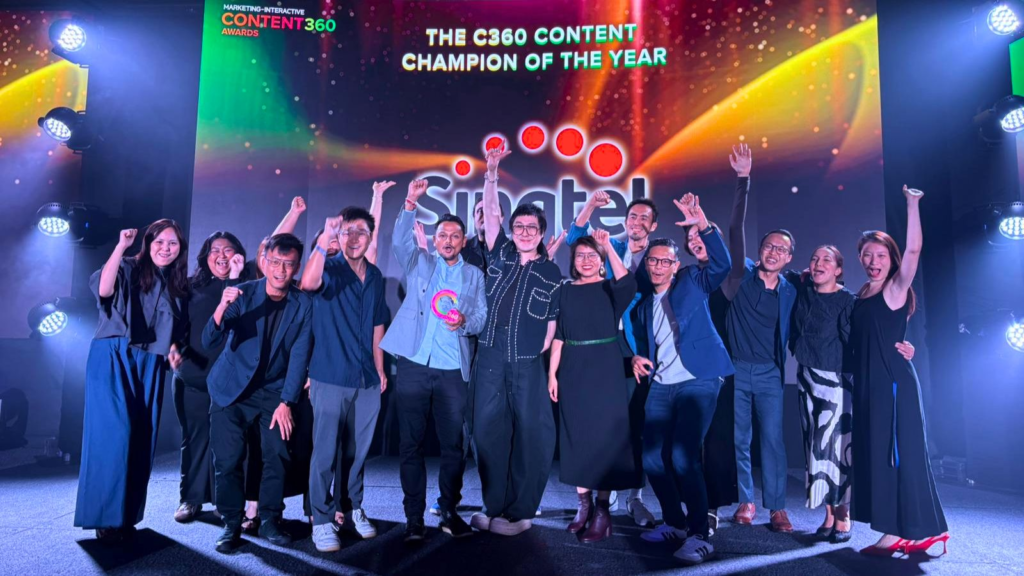
“Singapore dreamin’” by Singtel emerged as the standout campaign at MARKETING-INTERACTIVE’s inaugural Content360 Awards, clinching the coveted C360 Content of the Year title. Delivered in partnership with SPH Content Lab, the campaign also secured an impressive haul of two Golds and one Silver across ‘Excellence in B2B Content Strategy’, ‘Mastery in Long-Form Video Storytelling’ and ‘Best Integrated Campaign’. Hot on its heels in second place was “For the love of taste: Breaking Singapore’s salt obsession” by the Health Promotion Board. Created in collaboration with Starcom Singapore, the campaign earned two Gold trophies in ‘Content for Change: Driving Social Good’ and ‘Best Integrated Campaign’. Rounding out the top three, Citibank’s “Citi Cards privileges campaign”, developed with PMCI and Spark Foundry, and the Infocomm Media Development Authority’s (IMDA) “Digital for life”, in partnership with Type A, tied for third place. Both campaigns secured one Gold and one Silver trophy each. Other standout entries included Singtel’s “Don’t leave it up to luck”, “The gallery institutional campaign”, “Where chefs eat”, “HPB – Don’t toy with your life” and “Be greater – PSA”. Together, they underscored Content360’s role in championing content that not only captures attention but also drives meaningful engagement and real-world impact across platforms. To see the full list of winners, click here. Evaluated by a distinguished jury of 15 senior marketing leaders from leading brands and agencies, this year’s awards spotlighted content that is redefining the craft. Judges praised not only the creativity on display, but also the tangible results achieved, alongside campaigns that struck an emotional chord and resonated deeply with audiences. Winners were announced at an awards reception held on 22 April at Shangri-La Singapore, where top honours were presented across 10 categories celebrating the very best in Singapore’s content marketing landscape. MARKETING-INTERACTIVE congratulates all this year’s winners for raising the bar in content excellence, and looks forward to an even more dynamic showcase of creativity and impact at the second edition next year. source

Singtel’s ‘Singapore Dreamin’’ clinches overall title at the inaugural Content360 Awards Read More »

Inside Claude Design, Anthropic’s bid to reinvent creative work

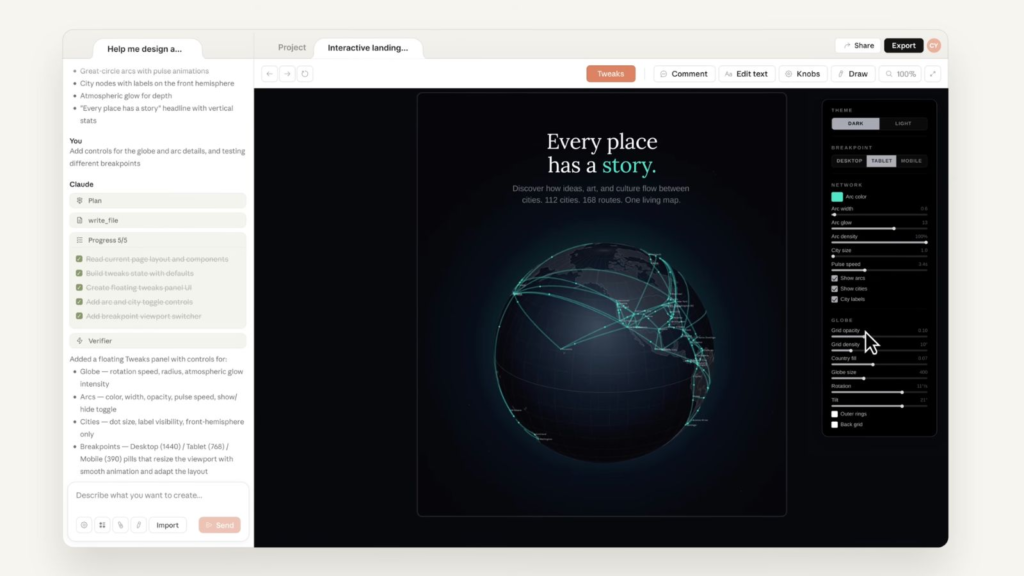
Anthropic has unveiled Claude Design, its new AI-powered product that aims to reshape how teams create visual content, from early concepts to production-ready assets, by turning design into a conversational process. Built on its latest vision model, Claude Opus 4.7, the tool allows users to generate designs such as prototypes, presentations, marketing assets and landing pages simply by describing what they need. From there, outputs can be refined through prompts, inline edits and adjustable controls, effectively compressing what would typically be a multi-step design workflow into a single interface. Don’t miss: Canva bets on agentic AI with Canva AI 2.0 to anchor workplace workflows  The launch reflects a broader shift in the creative process, where ideation and execution are becoming increasingly intertwined. Claude Design is positioned not just for designers, but also for marketers, product managers and founders who may lack formal design training but need to produce high-quality visual work quickly. A key feature is its ability to build and apply a brand’s design system automatically. By analysing existing assets such as codebases and design files, the platform ensures consistency across outputs, allowing teams to generate on-brand materials without repeated manual input. This extends to collaborative workflows, where teams can share, edit and iterate on designs in real time within the same environment. The platform also supports a wide range of inputs, from simple text prompts to uploaded documents and web captures, enabling users to start from almost any source material. Once complete, designs can be exported into multiple formats, including presentations, PDFs and HTML files, or handed off directly for development through Anthropic’s broader tool ecosystem. Claude Design is currently available in research preview for paid Claude users, with a gradual rollout underway. Crucially, the rollout is being bolstered by a deeper integration with Canva, signalling a move towards a more connected creative stack. Through the partnership, designs generated in Claude can be seamlessly transferred into Canva’s Visual Suite, where they become fully editable assets. This integration addresses a key limitation of many AI-generated outputs, their lack of flexibility post-creation. Within Canva, users can adapt layouts, adjust visual elements and collaborate with teams using its drag-and-drop interface, without needing to regenerate content from scratch. Canva is also introducing support for importing AI-generated HTML and interactive elements, allowing users to edit code-based outputs visually. This effectively bridges the gap between static design and interactive content, enabling everything from landing pages to embedded widgets to be created and modified within a single platform. The collaboration builds on an ongoing relationship between the two companies, as Canva positions itself as the “design layer” for AI-generated content. With more users starting their creative process in AI tools, the integration ensures Canva remains embedded at the point where ideas are refined, adapted and finalised. Earlier last week, Canva unveiled Canva AI 2.0, a major platform overhaul that positions the company beyond design and into the centre of workplace productivity. Announced at the Canva Create event in Los Angeles, the update marks the company’s “most significant evolution” since its 2013 launch, as it pivots towards becoming a unified system for ideation, production, and execution. Related articles: OpenClaw for dummies: 101 on how marketers can leverage the ‘lobster fever’ WordPress lets AI agents write, design, and manage your site Meta to acquire AI social network Moltbook  source

Inside Claude Design, Anthropic’s bid to reinvent creative work Read More »

Lazada partners Nestlé Nutrition to pilot AI-powered LazzieChat experience

Nestlé Nutrition, featuring Nestlé and Wyeth Nutrition, continues to lead children’s nutrition with its award-winning Nestlé Nutrition x Lazada regional super brand day, now in its sixth year across Malaysia, Singapore, Indonesia, Thailand, and Vietnam. Taking place on 23 April, this year’s campaign builds on a legacy of strong eCommerce performance and brand growth, while setting a new benchmark through a pilot collaboration between Nestlé Nutrition and Lazada to leverage the AI-powered LazzieChat, developed and managed by Lazada, and made available through Lazada’s platform tools in Malaysia, Singapore, Thailand, and Indonesia. More than just a campaign, this initiative signals a broader shift in how brands can leverage AI, not only to drive efficiency, but to create more intuitive, human-like, and emotionally engaging consumer experiences within the digital commerce journey. Seeing a better version of ourselves in the next generation At the heart of this year’s campaign is the concept “A Better Me, In You”, a reflection of how parents shape not just their children’s present, but their future. As parents, we pass on more than just names, features, and genes. In our children, we do not simply see ourselves. We see a better version of who we are. They carry forward our aspirations, our lessons, and our intentions for a brighter future. This year’s Nestlé Nutrition x Lazada regional super brand day is a tribute to that journey, celebrating how far we’ve come, and how much further our children will go. It is not just about seeing ourselves in our children, but recognising the potential for them to go even further than we ever could. Reimagining product discovery for modern parents Beyond emotional storytelling, the campaign also demonstrates how AI can enhance and simplify product discovery in the complex children’s nutrition category. For many mothers, navigating the wide range of growing-up milk formulas across different life stages, nutritional needs, and formulations can often feel overwhelming. Through Lazada’s AI LazzieChat, parents can now interact with an AI-powered assistant that is designed to help provide general product information and discovery, and respond to common queries in a conversational format. LazzieChat serves as a helpful companion for parents, making product discovery simpler and more confident. “Future, Imagined by Nestlé”: Turning AI into an emotional experience To extend beyond functionality, Nestlé Nutrition has partnered with Lazada to introduce “Future, Imagined”, an interactive AI-powered experience built within Lazada’s in-app chat function, AI LazzieChat. Developed and managed by Lazada and made available through Lazada’s platform tools, the feature invites users to engage with AI in a more seamless and immersive way within their shopping journey. Parents can upload a photo of their child aged three, and above, to generate an AI-created, imaginative visual of what their child may look like in the future, creating a playful and personal moment that goes beyond traditional product discovery. The experience is designed as a creative and artistic exploration, and not a prediction or representation of a child’s actual future appearance. Parents can share their AI-generated images on platforms such as Instagram and TikTok if they wish, extending the experience beyond the platform and driving organic engagement across social touchpoints. By blending interactive AI with emotional storytelling, the experience transforms a functional shopping journey into one that is more engaging, memorable, and deeply human. Advancing the future of digital commerce Delivered through Lazada’s platform capabilities, and blended with AI-powered assistance, emotional storytelling, social participation, and seamless commerce integration, the partnership between Nestlé Nutrition and Lazada demonstrates how technology can transform traditional eCommerce campaigns into immersive and meaningful brand experiences. As the Nestlé Nutrition x Lazada regional super brand day on 23 April approaches, the industry will be watching closely as the “A Better Me, In You” campaign unfolds, offering a compelling look at how AI can bring imagination, emotion, and commerce together in entirely new ways. This article is brought to you by Nestlé and Lazada. source

Lazada partners Nestlé Nutrition to pilot AI-powered LazzieChat experience Read More »

Vaseline leans into generational love and childhood rituals in new film

Vaseline has launched “Love hurts”, a new campaign film that spotlights a familiar yet rarely celebrated act of care: a parent, grandparent or loved one firmly applying Vaseline Petroleum Jelly onto a child’s face, despite the child’s protests. Directed by BAFTA-winning filmmaker and former Olympian Savanah Leaf of Park Pictures, the film first debuted in Kenya on 8 April before rolling out across social platforms. It invites audiences to share their own stories of care using #AllYouNeedIsVaseline. Set to an intentionally ironic soundtrack, the film traces the emotional arc from childhood resistance to adult understanding, reframing a moment often marked by complaint and drama as an enduring expression of love. What once felt uncomfortable is revealed as protection in disguise. Don’t miss: Why Vaseline is teaming up with a real Nigerian prince  Rooted in shared household experiences, “Love hurts” explores how care is passed through generations. The campaign taps into a collective cultural memory in which Vaseline is more than a skincare staple, but a symbol of affection, protection and familiarity. Spearheaded by Ogilvy Singapore and produced by Park Pictures London and Whitecoat Productions, the film reached more than one million people on launch day alone in a single market, before going on to generate over 11 million views across Vaseline East Africa’s channels, becoming its most viewed film to date, according to Ogilvy. Nathalia Amadeu, global brand director at Vaseline, said the campaign reflects how everyday rituals carry emotional weight. “For anyone who grew up with a grandmother, mother or dad rubbing Vaseline onto their skin, it was never just about moisture; it was an act of care, protection and love,” she said. In tandem, Nicolas Courant, chief creative officer at Ogilvy Singapore, said the idea centres on recognising overlooked but universal experiences. “‘Love hurts’ is a ritual shared by millions across the world, yet it has rarely been told. By focusing on this one specific real-life experience, we turn an everyday moment into a story that people everywhere can resonate with,” he explained.  “Love hurts” follows recent work from Vaseline and Ogilvy Singapore that has leaned into cultural storytelling and creator-led ideas across its global campaigns.  Titled “Vaseline originals (OGs)“, the campaign turned viral social media hacks into real beauty products. In 2008, creator Jen Chae (@frmheadtotoe) shared a Vaseline brow tamer hack on her blog, while YouTube pioneer Lauren Luke (@laurenluke_panacea81) popularised a Vaseline primer hack that made pro techniques more accessible. Nearly two decades later, those ideas have inspired two new products: Vaseline brow tamer, inspired by Chae’s hack, and Vaseline all-in-one primer and highlighter jelly, inspired by Luke.  Be part of #Content360 Singapore, 22–23 April 2026, where creativity and culture collide. Explore how AI-driven storytelling is shaping the future of content, gain practical insights, discover new tactics, and learn how the best in Asia are creating campaigns that truly resonate.  Related articles:  Vaseline puts viral beauty hacks to the test in playful new campaign  Vaseline merges sun-soaked drama with skincare in ‘The White Lotus’ campaign  Players delete in-game skins with Vaseline to highlight skin donor shortages  source

Vaseline leans into generational love and childhood rituals in new film Read More »

Adobe pushes into agentic AI era with new CX orchestration system

Adobe is betting big on agentic AI to redefine how brands manage customer journeys, unveiling Adobe CX Enterprise at Adobe Summit as it pushes deeper into the customer experience orchestration (CXO) space. Positioned as an end-to-end agentic AI system, CX Enterprise is designed to streamline the entire customer lifecycle, from acquisition and engagement to conversion and long-term loyalty. Adobe said the system is grounded in its decades-long expertise in data, content and customer journeys, anchoring its agents in what it calls reliable, auditable and context-aware intelligence. The launch signals a shift in how Adobe sees CXO evolving in the era of agentic AI, where autonomous agents increasingly take on complex workflows such as on-brand content creation and one-to-one personalisation. Rather than isolated AI use cases, Adobe is pitching a move towards what it calls “agentic enterprises” capable of scaling personalised experiences and improving business outcomes. Don’t miss: Agentic AI and the CX reset: The tech changing how brands serve and retain customers Central to CX Enterprise are two new intelligence layers: Adobe Brand Intelligence, a reasoning engine that continuously learns evolving brand signals, and Adobe Engagement Intelligence, a decisioning engine optimised for customer lifetime value. Together, they are designed to ensure agents operate within brand guardrails while delivering personalised interactions at scale. Adobe also flagged a growing shift in how brands are discovered and evaluated in an AI-first environment, where chat-based interfaces and AI-powered browsers are increasingly shaping consumer journeys. The company said this is pushing AI visibility into a C-suite priority, as brands work to ensure content is not only accurate and on-brand across owned properties, but also correctly represented across AI-driven discovery surfaces. This is accelerating a broader move from traditional content management towards “context management”, where understanding how AI systems interpret brand information is becoming as critical as managing the content itself, alongside tighter governance over how that content is created, surfaced and used across both human and AI interfaces. Additionally, Adobe is leaning into interoperability, positioning CX Enterprise as a composable system that integrates across enterprise tech stacks. The platform extends workflows across partners including Amazon Web Services, Anthropic, Google Cloud, IBM, Microsoft, NVIDIA and OpenAI, with Adobe saying the goal is flexibility without losing governance or control. A key backbone of the system is Adobe Experience Platform (AEP), which brings together customer data sources to deliver real-time insights and cross-channel orchestration. Adobe said AEP already powers over one trillion experiences annually and now acts as the contextual layer for CX Enterprise, enabling agents to make more informed decisions. Among the new components introduced are agents embedded across Adobe applications to automate time-intensive tasks such as customer engagement, content supply chain and brand visibility. These are powered by Adobe Experience Platform Agent Orchestrator, which allows businesses to build and coordinate agents across Adobe and third-party ecosystems. Adobe is also introducing an agent skills catalog, which lets organisations package reusable instructions for workflows such as performance analysis and journey orchestration. These skills are built on Adobe’s intelligence and decisioning engine, allowing agents to act against governed data while remaining aligned to business objectives and audit requirements. For developers, CX Enterprise opens access to agentic skills, MCP servers and infrastructure to build custom use cases, including integration into tools from Anthropic, Google Cloud, Microsoft and OpenAI. Adobe is positioning this as a way to embed CX capabilities directly into existing daily workflows for marketing and creative teams. Another key addition is Adobe CX Enterprise Coworker, a system designed to translate business goals into multi-step execution across agents. For example, a target to increase cross-sell performance could trigger coordinated actions across audience segmentation, creative development and performance optimisation. Adobe said the coworker will create plans, execute campaigns after approval, and track performance against defined goals, with general availability expected in the coming months. The move underscores Adobe’s ambition to extend its leadership in digital experience into the agentic AI era, while also signalling how enterprise marketing stacks are shifting from tool-based systems to orchestration-led ecosystems. “Adobe CX Enterprise enables businesses to scale agentic AI with a fully customisable solution that is tailored to the needs of their organisation, moving teams beyond AI experiments to tangible business outcomes. This end-to-end solution fits naturally into any environment, built to work alongside tools across leading AI platforms with seamless interoperability.”” said Anil Chakravarthy, president, customer experience orchestration business, Adobe. Earlier this month, Canva made a similar push to reposition itself beyond its core design roots, highlighting how platform players are racing to embed AI deeper into everyday workflows. The company unveiled Canva AI 2.0, marking a major platform overhaul that shifts it towards a unified system for ideation, production and execution. With more than a quarter of a billion monthly users globally, Canva is aiming to become more embedded in day-to-day team workflows, bringing creation, automation and collaboration into a single environment. At the centre of Canva AI 2.0 is a move towards a “conversational, agentic platform”, where users can shift from idea to execution within one interface. Its new Conversational Design capability allows users to generate fully structured, editable designs from natural language prompts, while maintaining context across iterations for continuous refinement rather than one-off outputs. Be part of #Content360 Singapore, 22–23 April 2026, where creativity and culture collide. Explore how AI-driven storytelling is shaping the future of content, gain practical insights, discover new tactics, and learn how the best in Asia are creating campaigns that truly resonate.  Related articles:  Real Madrid taps Adobe to supercharge global fan experiences with AI  MAG takes digital leap with Adobe, Google, Skyscanner and Visa  Marketing’s next era is here and Adobe wants CMOs to claim it source

Adobe pushes into agentic AI era with new CX orchestration system Read More »

IMDA partners SBS on global content co-productions and AI solutions

The Infocomm Media Development Authority (IMDA) has signed a memorandum of understanding (MOU) with South Korean broadcaster SBS to co-produce content aimed at global audiences, as both markets look to scale their media industries through collaboration and emerging technologies. The agreement, witnessed by Tan Kiat How, senior minister of state for digital development and information, was formalised during an industry trip to Seoul. The partnership will see both parties collaborate across the media value chain, spanning development, production, post-production and distribution. This includes long-form dramas, variety shows, micro-dramas and non-fiction content, from concept through to international release. Don’t miss: Mediacorp takes local drama regional with Netflix deal SBS, known for titles such as Running Man, My Love from the Star and Business Proposal, brings a global footprint of more than 300 million viewers across over 190 countries via platforms including Netflix, Disney+ and Viu. IMDA said the collaboration aligns with Singapore’s push to develop “Made-with-Singapore” content with international appeal, positioning the country as a co-production hub connecting Asian stories to global audiences. Beyond content creation, the partnership will explore AI-driven media solutions, including content localisation, automated post-production and AI-enabled creation tools. These initiatives may be piloted through joint projects and training programmes aimed at helping media companies and professionals adopt new technologies and improve efficiency. Both parties will also look into new business opportunities across emerging formats, online platforms and monetisation models, alongside co-investment and market entry initiatives to drive commercial growth. Plans for joint productions and next-generation AI media solutions are expected to be further developed at the Asia TV Forum & Market, held as part of the Singapore Media Festival in December 2026. “South Korea has established itself as a dominant creative force in global media, driving the cultural phenomenon we know as hallyu or the Korean wave. We’re excited to embark on this partnership with SBS as it complements Singapore’s role as a hub for international collaboration, co-production, and innovation. This is the start of many collaborations between our creators and institutions, and we look forward to what we will achieve together,” said Yvonne Tang, assistant chief executive at IMDA’s Media Industry Group. In tandem, Bang Moon-shin, CEO of SBS said, “By combining SBS’s globally proven content production capabilities with IMDA’s strategic objectives, we will ensure a continuous flow of high-quality content optimised for the global market. Furthermore, by leveraging AI technology to implement multi-language services, we believe our content will expand its reach and competitiveness not only across ASEAN but also on the global stage.” The move comes as Singapore’s broader media ecosystem ramps up regional co-productions. Last week, Mediacorp unveiled a new Chinese-language series, 对你心动的预言 (loosely translated to Prophecy to love you), in partnership with TVBS. The 10-episode scripted series will bring together talent from Singapore, Taiwan and Thailand, with filming set to take place in Taiwan ahead of a planned 2027 release. First unveiled during a partnership announcement at the Asia TV Forum & Market in December 2025, the project is backed by several public sector bodies, including IMDA, Taiwan’s Ministry of Culture, the Taiwan Creative Content Agency and the Kaohsiung Film Fund. Be part of #Content360 Singapore, 22–23 April 2026, where creativity and culture collide. Explore how AI-driven storytelling is shaping the future of content, gain practical insights, discover new tactics, and learn how the best in Asia are creating campaigns that truly resonate.  Related articles: IMDA commits SG$200m to turn Singapore content into global brand IP   IMDA powers SG’s SMEs with fresh GenAI partnerships   StarHub and Mediacorp join forces to create stronger content and ad opportunities     source

IMDA partners SBS on global content co-productions and AI solutions Read More »

Sea sets up AI centre of excellence in Singapore

Sea Limited has established an artificial intelligence centre of excellence (AI CoE) in Singapore, as it looks to deepen its AI capabilities and accelerate its push towards becoming an AI-native company. The initiative is supported by Digital Industry Singapore (DISG), a joint office by the Singapore Economic Development Board, Enterprise Singapore, and the Infocomm Media Development Authority. Organised around Sea’s technology-first approach, the AI CoE will focus on advancing foundational AI capabilities, scaling deployment of AI solutions, and developing AI-native talent and operating models. The company said the centre will support both research and real-world business applications, with an emphasis on improving user experience and driving measurable outcomes. Don’t miss: Grab launches AI Centre of Excellence to drive SEA innovation Over the next three years, the AI CoE is expected to create demand for at least 100 roles in research, engineering, and product development. The move signals continued investment in Singapore’s AI ecosystem, while strengthening Sea’s in-house capabilities. The centre will also build on Sea’s existing portfolio of proprietary AI models, including Compass Max v3.5, a 245-billion parameter large language model tailored for Southeast Asian languages and eCommerce use cases. The model is already being deployed across Shopee to power various AI-driven features, with the company claiming improved responsiveness at lower cost compared to commercially available alternatives. The initiative aligns with Singapore’s broader push to scale AI adoption and talent development under National AI Strategy 2.0 and recent Singapore Budget 2026 priorities. “As AI continues to evolve, we see it as a foundational capability that strengthens how we build innovative products, operate at a global scale, and create value for the countless communities we serve,” said Forrest Li, chairman and chief executive officer, Sea. He added, “This AI CoE reflects Sea’s long-term commitment to investing in talent and innovation in Singapore. Such homegrown AI capabilities also contribute to the wider AI ecosystem in Singapore, which we are excited to partner with the government on growing and developing.” In tandem, Philbert Gomez, senior vice president, executive director and head, Digital Industry Singapore, said, “This investment by Sea strengthens our position as a global AI hub with cutting-edge capabilities in Singapore. The new AI CoE will create new innovation roles in areas such as AI engineering and product development, providing Singaporeans an opportunity to create AI products with a global reach. We look forward to the cutting-edge work that will emerge from Sea’s CoE in Singapore.” The move also builds on Sea’s broader efforts to strengthen its ecosystem beyond eCommerce and gaming, particularly in financial services. In May last year, the company rebranded its digital financial services arm SeaMoney to Monee, as part of a push to scale across Southeast Asia and beyond. The rebrand was accompanied by the launch of Monee’s global headquarters in Singapore and aimed to simplify its brand identity across markets. Originally launched in 2014, Monee offers services including mobile wallets, payments, credit, banking and insurtech, with a presence across Indonesia, Malaysia, the Philippines, Singapore, Thailand, Taiwan, Vietnam and Brazil. Be part of #Content360 Singapore, 22–23 April 2026, where creativity and culture collide. Explore how AI-driven storytelling is shaping the future of content, gain practical insights, discover new tactics, and learn how the best in Asia are creating campaigns that truly resonate.  Related articles: Canva bets on agentic AI with Canva AI 2.0 to anchor workplace workflows  More companies miss revenue targets as AI and volatility reshape B2B growth    SG reinforces public service media as trusted platform amid AI misinformation source

Sea sets up AI centre of excellence in Singapore Read More »

Run up a spiral car park? On turns cities into playgrounds

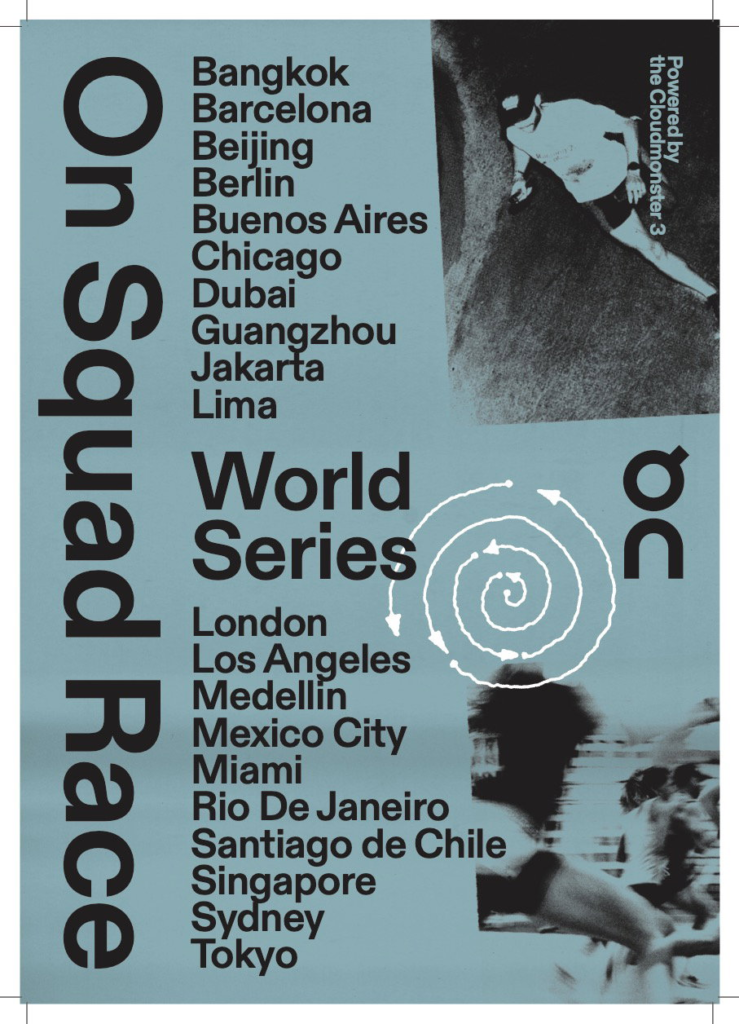
Swiss sportswear brand On is doubling down on community-led marketing with the launch of a global race series designed to turn urban running culture into a platformed brand experience, rather than a one-off campaign. Called the “On squad race”, the initiative will travel across major cities including Beijing, Rio de Janeiro, Buenos Aires, Berlin, Barcelona, Tokyo, London, Mexico City, Sydney and Singapore, before culminating in a world final in Los Angeles in September. The move signals a continued shift in sports marketing towards experience-led and community-first strategies, where participation and cultural belonging are prioritised over traditional product-centric messaging. Don’t miss: How Hyatt is making ‘racecations’ a thing  The series kicked off in Beijing on 11 April with a relay-style competition held in a multi-storey car park, a format that will be replicated across global stops. Each event will bring together 40 to 60 local squads of four runners, competing in a four-lap relay built around a spiralling course concept known as “The spiral”, where athletes run down and back up ramped structures before passing the baton. Beyond the competitive element, the format is designed to embed teams into a shared identity, with squads competing against both time and each other. The fastest team from each city will secure a place at the global final in Los Angeles. To extend participation beyond race day, squads will receive a limited-edition “On squad race” performance T-shirt, styled after concert tour merchandise, positioning the item as a symbol of belonging rather than just apparel. The brand will also integrate product trial into the experience, with participants testing its Cloudmonster 3 running shoe on-site, effectively blending community activation with product sampling at scale. The Singapore edition of the “On squad race” will take place on 13 June at Perennial Business City, with registrations opening in April 2026. Karl-Johan Bogefors, senior director of brand experience at On, said the series is designed to elevate the role of community within run culture. “With On Squad Race, we’re creating more than just a competition; we’re building a global platform to celebrate the crews and individuals who are at the heartbeat of run culture,” he said. He added that the format is intended to connect local communities while reinforcing a shared global identity around running. The activation reflects how brands are increasingly moving away from isolated campaigns towards recurring cultural platforms that generate sustained engagement across multiple touchpoints. Adidas for example, is also leaning into micro-communities as a core growth strategy, focusing on smaller, high-intent groups such as run clubs and emerging racket sports communities in Singapore, it told MARKETING-INTERACTIVE in a separate interview. Rather than relying on broad, mass-market activations, the brand is increasingly shifting towards more grounded, everyday spaces where participation already exists organically, from neighbourhood courts to weekend running routes and informal community groups. The focus is less on creating new audiences and more on activating existing ones, turning passion-led communities into long-term brand ecosystems. Food and lifestyle players are also moving into the space, using shared activities as a way to build emotional relevance beyond their core product. Shake Shack Singapore for example has launched a run club called “Shack track club”. In a bid to extend its brand into fitness-led social experiences, Shake Shack is positioning itself not just as a dining destination but as part of a wider urban lifestyle ecosystem where movement, community and consumption intersect. Be part of #Content360 Singapore, 22–23 April 2026, where creativity and culture collide. Explore how AI-driven storytelling is shaping the future of content, gain practical insights, discover new tactics, and learn how the best in Asia are creating campaigns that truly resonate.  Related articles:   Strava taps Malay to run deeper into local fitness communities  New Balance doubles down on running culture with first SEA Run Hub in KLCC How Great Eastern turned a running track into its always-on brand playground   source

Run up a spiral car park? On turns cities into playgrounds Read More »

When AI writes the answer, can your brand still earn trust?

For years, I trusted the same equation like most marketers did. Rank high to win clicks, more clicks meant more traffic and ultimately, traffic brought growth.   Today, artificial-intelligence (AI) driven discovery platforms such as Google’s AI Overviews, ChatGPT and Perplexity are rewriting the rules of digital visibility right under our very noses. Gone are the days of scrolling as users increasingly accept the first, synthesised answer provided by AI. Rankings are old news as a brand’s authority now leans on whether you are cited, mentioned or referenced inside that answer.  For chief marketing officers (CMOs) operating in Asia’s multilingual and fast-moving markets, this isn’t a marginal adjustment. This demands a strategic reset of how we build authority online. The key question from hereon should be: “Are we positioned to be referenced when decisions are being formed and if not, how do we get there?”  From messy metadata to AI-ready brands If citation is your goal, then entity clarity and structured data form the infrastructure that makes it possible. AI understands the web through entities such as brands, products, people and categories. AI models may misinterpret, fragment or ignore brands that are not clearly defined at the entity level.   Practically speaking for brands this means maintaining consistent naming across all platforms, establishing a clear topical focus, and aligning messaging across regions and language variants, making it easier for AI to trust and reference you.   Additionally, linking content to credible subject matter experts and ensuring that brand descriptions are aligned across all platforms and markets. Fragmented websites, poor translations and outdated content management systems (CMS) systems will erode AI trust. Addressing these inefficiencies used to be technical housekeeping or nice to haves but now represent a different reality – proving to be a competitive strategy.  Rankings are optional, trust is not Traditional SEO rewards optimisation for algorithms where AI search rewards brands that project clarity of positioning, consistency in voice and authority. The thing about generative AI platforms is they were designed to provide users with certainty, not to send traffic elsewhere.  Ultimately this creates a new performance metric. Visibility alone no longer guarantees relevance but invisibility guarantees irrelevance.   So, what does an AI citation actually represent? An AI citation is similar to a journalist quoting an industry expert to validate a claim. Behind the scenes, AI systems use a process known as a query fan-out, where a single user question expands into multiple sub-queries. If your brand is absent across these related knowledge groups, it effectively disappears from AI’s view.   This is quite different in comparison to traditional search where typically users would continue to search on their own, exploring multiple options. AI often concludes the journey in one response. If your brand isn’t present at the moment of the synthesis, it may not even enter consideration.  Therefore, citation is not just about being seen, it’s about getting the chance to be chosen.  If you’re not cited, you’re not in the game Personally, as I look back at the evolution of discovery, it is clear that citation is emerging as the primary mechanism through which AI systems assign trust. And trust is what ultimately drives growth.  For CMOs, engineering trust in AI search requires moving beyond surface-level optimisation toward a deliberate authority construction. Entity, clarity, structured data, expert-linked content and operational consistency are no longer optional enhancements. These are the building blocks that determine whether a brand is recognized, referenced, and recommended in AI-driven conversations.  In a world where a single synthesised answer can shape perception and purchasing decisions, citation is equivalent to credibility. And in this AI era, credibility is what compounds into competitive advantage.  This article was written by Alvin Koay, co-founder of Growth.Pro.  source

When AI writes the answer, can your brand still earn trust? Read More »