marketing interactive

DBS group chief analytics officer steps down after 12 years

Sameer Gupta is stepping down from his role as group chief analytics officer at DBS Bank, bringing to a close a 12-year tenure that saw him help shape the bank’s data and AI transformation at scale.  Following his exit, Gupta will join Lloyds Banking Group as its chief data and AI officer, starting in June this year. In his new role, he will report to Ron van Kemenade, group chief operating officer. A key part of his remit will be ensuring AI is used responsibly, transparently and securely, with governance and oversight to meet regulatory and ethical standards.  Speaking on his new role, Gupta said that Lloyds Banking group has a “clear purpose and a strong focus on supporting customers.”  “I am excited to join at a time when AI can make such a positive difference. Used well, AI can help customers get the right support more quickly, protect them from fraud and make managing money simpler and more intuitive. I am looking forward to working with colleagues across the group to apply AI in a responsible way that delivers better outcomes for customers and communities,” he said.  Gupta first joined DBS bank in 2014 as managing director and group head of business analytics for the consumer bank group, according to his LinkedIn. He was later appointed chief analytics officer in 2017, where he led the development and industrialisation of DBS’ data and AI capabilities across the organisation. Don’t miss: DBS marketing chief seeks creative agency to cement brand as “beacon of trust”  In a LinkedIn post announcing his departure, Gupta reflected on what he described as one of the most defining journeys of his career, adding that his time at DBS had been both professionally and personally transformative. “What began as an ambitious vision to industrialise Data & AI has been one of the most defining journeys of my career. I’ve learned not just how to scale technology, but how to build with purpose, navigate ambiguity, and drive business transformation through data-driven operating models,” he said.  He added that the journey had been shaped as much by people as by technology, noting the role of colleagues who “constantly raised the bar” and helped turn ambition into execution. According to Gupta, DBS scaled more than 1,500 AI models across 370 use cases, delivering approximately SG$1 billion in economic impact from its data analytics and AI/ML initiatives in 2025 He also played a key role in establishing the bank’s data and AI ecosystem, including platforms such as ADA and ALAN, as well as its P-U-R-E framework for responsible AI development. Beyond the metrics, Gupta said the most meaningful part of his journey was the culture built within the organisation, grounded in continuous learning, responsible innovation and human oversight. He described DBS as “far more than a workplace”, calling it a “crucible for growth” shaped by shared resilience and relationships built over more than a decade. Gupta also thanked senior leaders for their support throughout his tenure, including former DBS chief executive Piyush Gupta and CEO Tan Su Shan, for fostering an environment where “bold ideas could be pursued with disciplined execution”. He also acknowledged several other senior leaders and colleagues across the bank, as well as teams he worked with for their contribution to the bank’s transformation journey. Despite Gupta’s departure, DBS Bank is expected to continue doubling down on its data and AI ambitions, with technology remaining a core pillar of its long-term business strategy. The bank has spent the past decade embedding AI across its operations, positioning itself as one of the most advanced adopters of data-led transformation in the global banking sector, a direction that is set to continue under its broader organisational roadmap. That push is now also extending into its marketing function. Earlier this month, DBS Bank kicked off a search for a creative agency partner to support its next phase of brand and marketing transformation across the region, as it looks to strengthen brand consistency while further integrating AI into its marketing and customer engagement efforts. The move signals an intent to pair its technology leadership with more future-facing, AI-enabled brand building across its key markets in Asia. Be part of #Content360 Singapore, 22–23 April 2026, where creativity and culture collide. Explore how AI-driven storytelling is shaping the future of content, gain practical insights, discover new tactics, and learn how the best in Asia are creating campaigns that truly resonate.  Related articles:  HSBC names first chief AI officer Former VML CEO Audrey Kuah joins DBS as group marketing and communications head Maybank Singapore calls for social media pitch   source

DBS group chief analytics officer steps down after 12 years Read More »

AI momentum builds across Southeast Asia, but gaps persist

Southeast Asia is accelerating into the AI era, but many organisations are still struggling to translate adoption into measurable business value, according to a new report by McKinsey & Company. The report, “AI in Southeast Asia: An era of opportunity”, finds that 88% of companies globally now use AI in at least one business function, up from 78% a year earlier. In Southeast Asia, nearly half of organisations have moved beyond pilot stages, placing the region slightly ahead of the global average, though still trailing more mature markets such as the US. Within the region, Singapore leads with 56% of companies at or beyond scaling, followed by Indonesia at 51%. Don’t miss: Brands struggle with AI disclosure as usage surges across marketing  The opportunity is underpinned by strong fundamentals. Southeast Asia’s young population, high mobile penetration, and openness to technology position it as fertile ground for AI adoption. Around 70% of the population views AI as a societal benefit, significantly higher than in markets such as Japan and the US. At the same time, global players including Amazon Web Services, Google, Microsoft, Alibaba Cloud and Tencent Cloud have committed more than US$50 billion to infrastructure across the region. As McKinsey partner Vivek Lath said, “The narrative in Southeast Asia is rapidly moving from experimentation to enterprise-wide scaling,” with organisations now focused on embedding AI into core processes to drive competitive advantage. Yet a gap remains between investment and returns. More than six in ten organisations are allocating between 11% and 40% of their technology budgets to AI, but around 60% report less than a 5% impact on EBIT, while nearly one in five see no financial impact at all. For marketers, this reflects a familiar challenge: rising investment in AI-driven campaigns, personalisation and martech stacks, but ongoing difficulty in clearly attributing ROI and linking AI initiatives to revenue outcomes. While executives cite improvements in innovation, customer satisfaction and efficiency, turning these into measurable financial gains remains a key hurdle. Talent shortages, unclear ROI and integration complexity continue to be the biggest barriers, with one in five executives identifying talent as the primary constraint. Scale is also a defining factor. Among companies with revenues above US$250 million, 56% have reached scaling or fully scaled AI adoption, compared to 47% of mid-sized firms and 42% of smaller businesses. Industries such as technology, media and telecommunications are leading adoption, while sectors including healthcare and public services remain largely in experimentation phases. The implications are particularly significant for MSMEs, which make up 97% to 99% of businesses in the region. Without accessible and affordable AI tools, the report warns that smaller players risk falling further behind larger enterprises that can invest at scale. Looking ahead, the emergence of agentic AI signals the next phase of development. While adoption is currently concentrated in technical functions such as IT and software engineering, externally facing areas— including sales and marketing, product development, and customer engagement— are moving cautiously. Notably, only around one in five companies are scaling agentic AI in sales, marketing and customer engagement, reflecting the higher reputational and commercial risks associated with customer-facing automation. However, momentum is building, with nearly nine in ten organisations planning to experiment with AI agents in the coming year. Ultimately, McKinsey identifies a small group of high performers, about 6% globally, that are capturing significant value from AI, contributing 11% or more to EBIT (earnings before interest and taxes). These organisations share a common approach: treating AI as a core driver of business transformation rather than a series of isolated pilots. As associate partner Saurish Basu put it, “The winners will be those who are able to reimagine their business and workflows, rather than purely using AI to digitize existing processes.” In another recent report by Bain & Company, more B2B companies are falling short of revenue expectations despite rising confidence and aggressive growth targets. The consultancy’s latest “B2B Growth Agenda” report, based on a survey of more than 1,100 global senior executives across 18 industries, points to a widening disconnect between ambition and execution as firms grapple with AI disruption and geopolitical uncertainty. While 86% of executives expected to meet their growth targets in 2025, 42% ultimately missed them – up from 32% the year before. Yet confidence remains high, with 91% of leaders expecting to hit their 2026 goals and projecting revenue growth rates 20% higher than last year. Related articles: Agentic AI and the CX reset: The tech changing how brands serve and retain customers Are AI chatbots building the next walled garden? Hashtags aren’t dead, they’re just ‘on life support’ as AI reshapes discovery source

AI momentum builds across Southeast Asia, but gaps persist Read More »

Omnicom Advertising Asia unveils regional leadership team

Omnicom Advertising Asia has assembled a new regional leadership team as it looks to accelerate growth and simplify how brands navigate an increasingly fragmented market. The team brings together senior leaders across creativity, innovation, strategy, intelligence, business development and marketing, with a remit to translate cultural and technological shifts into business opportunities for clients. Reporting to president Sean Donovan, the regional team includes Peter Khoury (pictured third right) as chief creative officer, Melissa Daniels (pictured second right) as chief innovation officer and Emmanuel Sabbagh (pictured third left) as chief strategy officer. All three will take on expanded regional responsibilities alongside their existing leadership roles at TBWA Singapore. Don’t miss: Agency agenda: Tony Harradine outlines Omnicom Media APAC’s post-deal plan They are joined by Andreas Krasser (pictured far left), who expands his remit to chief client partner while continuing as CEO of OA Hong Kong and Ellie Brocklehurst (pictured second left), who steps into the role of chief growth and marketing officer for OA Asia after serving as chief marketing officer, Asia at TBWA. The regional team also includes S. Subramanyeswar (pictured far right), who was recently appointed chief knowledge officer alongside his role as chief strategy officer of OA India, following the close of Omnicom’s acquisition of Interpublic Group. Working closely with leadership teams across TBWA, McCann and BBDO, the group aims to help brands cut through complexity and deliver creative solutions that balance short-term performance with long-term brand building. The structure is supported by OMNI, Omnicom’s AI-driven marketing intelligence platform, which combines data with cultural insights drawn from across its agency network to better understand consumer behaviour. Omnicom said the new regional line-up is designed to offer a more integrated view of the market, strengthening collaboration across media, production and PR capabilities within the broader Omnicom network. “Asia is one of the most complex regions for marketers, but the opportunity here is immense. We’ve built a team that simplifies the landscape, combining top talent with an Asia first, future focused mindset, and unprecedented access to resources,” Donovan said.  “It’s a plug and play model that responds to client needs, working in close collaboration with agencies and markets across the region. More than expertise, it’s about giving clients the perspective, ambition and access to think beyond the next campaign,” added Donovan. This comes as Omnicom continues to reshape its regional operations following its acquisition of Interpublic Group earlier this year. In Hong Kong, the network refreshed its agency portfolio and leadership lineup, including plans to relaunch BBDO as its second creative agency brand alongside TBWA, following the global retirement of the DDB brand. Against this backdrop of network-wide transformation, TBWA Singapore recently launched its Innovation Lab, the first Centre of Excellence within the network’s Asia Pacific operations, with support from the Singapore Economic Development Board. The lab is positioned as a regional proving ground for AI-led brand innovation, aimed at helping companies build scalable experiences and new growth models. Be part of #Content360 Singapore, 22–23 April 2026, where creativity and culture collide. Explore how AI-driven storytelling is shaping the future of content, gain practical insights, discover new tactics, and learn how the best in Asia are creating campaigns that truly resonate.  Related articles: TBWAGroup Singapore elevates Mandy Wong to CEO  Omnicom’s first results post-IPG show merger costs bite, underlying performance holds  Omnicom PR reportedly restructures agency portfolio source

Omnicom Advertising Asia unveils regional leadership team Read More »

Shopee and Ampersand Advisory clinch overall titles at PR Awards 2026

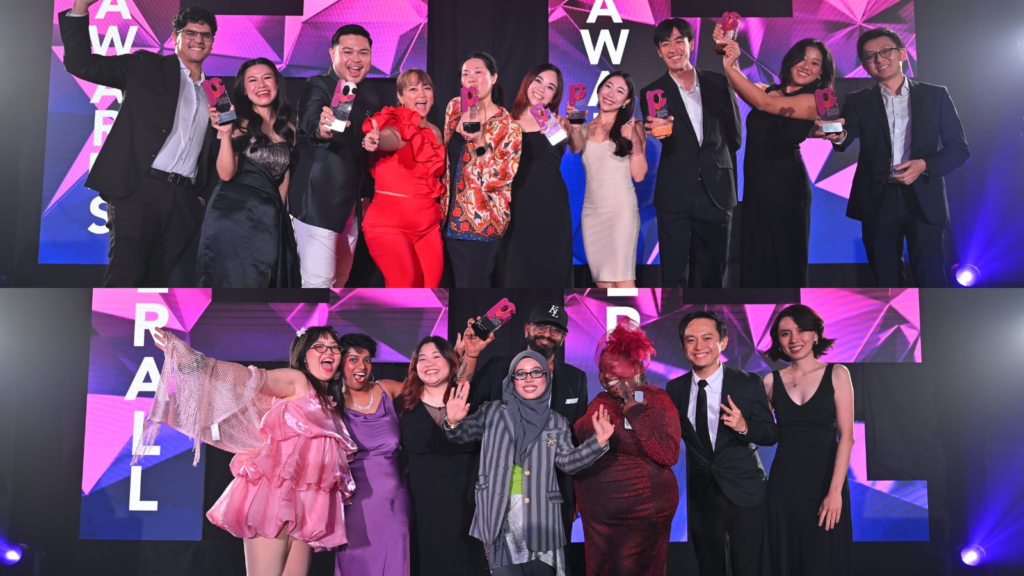
Shopee emerged as the standout brand at MARKETING-INTERACTIVE’s 13th PR Awards, clinching the coveted Overall Brand Champion title with two Gold, five Silver and one Bronze trophy. The eCommerce giant delivered a strong performance across key categories, including “Best Anniversary Campaign”, “Best Corporate Affairs Strategy”, “Best PR Campaign – Thought Leadership & Reputation Management”, and “Most Creative PR Stunt”. Its winning body of work spanned campaigns such as “Shopee 10th Anniversary: Keeping Cultures Alive”, “Festival Penulis Lokal (Local Authors Festival)”, “Shopee XTRA AMAN (Anti-Scam Education)” and “Shopee Jagoan UMKM Naik Kelas”, among others. Geneco secured second place overall with two Gold, two Silver and five Bronze trophies for campaigns including “Till the End of Time”, “Lost To Be Found” and “#ForestOfProsperity”. Garnier rounded out the top three, earning four Gold trophies for campaigns such as “Calpis Soda One In A Million” and “Atlas Ecopod: World’s Slimmest Reverse Vending Machine with Compaction System”. Other brands including Singlife, DBS Bank, Grab Philippines, Hong Kong Tourism Board, Johnson & Johnson, AIA Singapore and McDonald’s Singapore were also recognised, reflecting the depth and diversity of this year’s entries. On the agency front, Ampersand Advisory led the pack, securing the Overall Agency Champion title with seven Gold, one Silver and one Bronze trophy. Its winning campaigns included “ILMU AI Launch” for YTL Corporation, “Calpis Soda One In A Million” for Etika Group of Companies, “American Tourister x AirAsia: A Cross-Border Travel Collab That Took Off” for American Tourister, “Maybank XL Cards Launch” for Maybank, and “Stop That Dot Together” for Ace Canning. Golin placed second with one Gold, three Silver and one Bronze for campaigns including “The Great Retirement” and “McDonaldland Crew Singapore Tour” for McDonald’s Singapore, as well as “First in Singapore – HBM Advanced Packaging Facility Groundbreaking Event” for Micron. Grayling followed in third place, taking home one Gold and one Silver for its “ReadyToRedMart” campaign for RedMart. To see the full list of winners, click here. The winners were announced at a gala ceremony held on 17 April at Shangri-La Singapore, where 42 categories honoured the best in the PR and communications industry. This year’s awards were judged by a panel of 30 senior industry leaders from across the region, who praised the high calibre of entries and the innovative ways brands are building meaningful connections with their audiences. MARKETING-INTERACTIVE extends its appreciation to the esteemed judges and official beer partners Heineken Silver, Tiger Crystal and ODD Company for keeping the celebration flowing. MARKETING-INTERACTIVE congratulates this year’s winners for setting a new benchmark in PR excellence and looks forward to an even stronger showcase of innovation and impact at the 14th edition next year. source

Shopee and Ampersand Advisory clinch overall titles at PR Awards 2026 Read More »

Publicis denies Trade Desk rivalry, touts Microsoft pact as tech proof

Publicis Groupe has broken its silence on its fallout with demand-side platform (DSP) The Trade Desk, stressing that it has no intention of building a competing self‑serve DSP offering, even as it advises clients to reassess their use of the platform. On an analyst call, Arthur Sadoun, chairman and CEO of Publicis Groupe, framed the situation as part of a wider vendor audit process rather than a competitive land grab. “On the Trade Desk, as you know, we didn’t make any comment. But what I can tell you is that we audit the relationships we have with every client and vendor,” he said. “In this case, when BQT ran the audit, they found that the Trade Desk did not pass it. And what we’ve done and what we’ll always do, is to inform our clients of the filing as we believe it is our responsibility. That’s it,” he added.  Don’t miss: The Trade Desk denies audit failure as Publicis warns clients against platform Sadoun added that Publicis continues to work with “a range of leading DSPs” and is not trying to steer spend towards an in‑house alternative. “We don’t have any competing offer when it comes to self‑serve DSP products that could be a direct competitor to the Trade Desk, and we are not planning to build any,” he said. “It’s too early to say how investment will flow for the future. But what I can tell you is that we will do it very transparently, and we have absolutely no intention to build a competitive offer to the Trade Desk. We want to keep in our position.” Sadoun also positioned Publicis’ expanded strategic partnership with Microsoft as proof that agency groups can complement big tech rather than be displaced by it. As part of the partnership, Publicis is putting Microsoft 365 Copilot and the Microsoft Azure cloud service in the hands of all its employees worldwide. By working with Microsoft, Publicis hopes to strengthn its ability to deliver personalisation at scale and expanding Marcel’s role from pioneering AI in marketing to powering the next generation of enterprise-wide AI. Publicis has also been selected as Microsoft’s global media agency. “We have been hearing so much over the last two or three years that the tech companies might eat our industry for breakfast and that they won’t need us in the future,” he said. “Hopefully, this is a great demonstration that when you have the right capabilities, when you have made real investments in data, technology and AI, then you can offer something that is a complement to those big companies.” Sadoun said the partnership grew out of joint work on an “agentic solution” for mutual clients, where both sides saw their capabilities align.  While he declined to share specific commercial projections, Sadoun said the solution is already being implemented with Microsoft and is “ready for our clients to be developed”. “Now we’re entering into the phase where we have to commercialise our offer. It’s too early to know the kind of revenue we can expect. But expect this to be a driver for Sapient in the future for sure. And in two ways: through the revenue, and through the credibility,” he said, positioning the tie‑up as a signal of where system integrators’ offerings are heading. Commenting on the shutdown of OpenAI’s Sora video model and what it means for agencies and brands, Sadoun pointed back to the market reaction when Sora first launched at the end of 2024. “You might remember that when Sora launched at the end of 2024, the market got very concerned. And actually, our share price got heavily impacted. It’s bad memories but this is what happened,” he said. “I think this termination is actually quite symbolic, because it fully confirms what we have been saying all along and that we are continuing to say, that consumer adoption is moving faster than enterprise adoption. It doesn’t mean that we don’t have to move. It means that it’s more complex.” Publicis Groupe had just delivered its 20th consecutive quarter of growth for the first quarter of 2026, despite the ongoing Middle East conflict, as it reported a 4.5% organic net revenue increase YoY in Q1. The company also reaffirmed its full year guidance of 4 to 5% growth.  Loris Nold, chief financial officer, said “Despite the lower macro visibility, clients are prioritising solutions that drive measurable outcomes and efficiency. That explains the sequential acceleration we expect in Q2.” This acceleration in Q2, Nold explained, is due to a positive year-end adjustment in Q4 2025, creating a favourable sequential base in Q1 ahead of Q2. He added that its 2025 new businesses, and sustained demand for Publicis’ AI products and services will improve earnings into the second quarter. Related articles: Publicis Groupe to acquire sports agency 160over90 Only a fraction of TikTok trends last beyond two weeks, Publicis Groupe finds Microsoft reportedly shifts global media mandate to new agency source

Publicis denies Trade Desk rivalry, touts Microsoft pact as tech proof Read More »

KFC and Pizza Hut conclude media pitch for SG

KFC and Pizza Hut Singapore have appointed WPP Media as their integrated media agency in the market, following a competitive pitch. The remit covers end-to-end media strategy, planning, and buying for both brands. The partnership represents a key strategic move for KFC Singapore and Pizza Hut Singapore as they sharpen their competitive edge and drive sustained sales growth in a crowded quick-service restaurant (QSR) landscape. In a category that increasingly leads in data-driven marketing and direct-to-consumer strategies, WPP Media said it is excited to work with two of the sector’s leading innovators. A core factor in the appointment was WPP Media’s ability to convert consumer insights into business outcomes. This is underpinned by WPP Open, the group’s agentic marketing platform, which taps AI-powered tools and integrated data solutions to deepen market understanding and maximise media investments across channels. Don’t miss: KFC Singapore picks new integrated creative and social agency  Through this partnership, WPP Media will use WPP Open to help KFC Singapore and Pizza Hut Singapore achieve their strategic objectives. This means developing smarter, more personal campaigns that deepen customer understanding, identify new growth avenues, and ultimately drive higher sales and stronger brand loyalty. The focus will be on ensuring media budgets are optimised and campaigns deliver clear, measurable results that directly support their ambition to advance their market ranking.  This mandate further strengthens WPP Media’s existing global partnerships with KFC and Pizza Hut, extending a proven track record of driving growth and innovation across the UK, Europe, MENA, APAC and South Africa.  Jaslyn Lam, director of marketing and food innovation, KFC Singapore, said: “WPP Media stood out with its AI-powered tool, WPP Open platform which was brought to life in their Media Strategy. Just as vital was the calibre of their team and the WPP Media leadership’s clear commitment to active involvement and a collaborative partnership. We’re excited about the future possibilities this partnership holds.”  Jayss Rajoo, director of marketing and food innovation, Pizza Hut Singapore, added: “For Pizza Hut Singapore, the ability to turn consumer insights through WPP Open AI platform, into real business growth was paramount in our search for a media partner. WPP Media also stood out with their media rigor and their passionate team.”  Helen McRae, CEO, SEAPAT (SE Asia, Pakistan, S Africa and Taiwan), WPP Media, commented: ”We are absolutely thrilled to announce the win of KFC and Pizza Hut Singapore. It is testament to the transformative capabilities of our WPP Open platform, showcasing how our pioneering technology delivers unparalleled insights and innovative solutions. We believe it’s this blend of cutting-edge innovation and genuine human partnership that sets WPP Media apart, and we’re excited to drive impactful growth for both of these iconic brands.”  Earlier in January this year, KFC appointed Maker Lab as its integrated creative and social agency. As the appointed agency, Maker Lab will be responsible for the end-to-end management of the brand’s marketing campaigns. This includes content creation, creative and social strategy, design, and performance marketing. In addition, the agency will establish an embedded social and creative team working alongside KFC’s marketing leadership to deliver brand events, marketing collateral, and always-on digital and social activity, with a focus on maintaining brand consistency and enabling faster, more agile execution across channels. Be part of #Content360 Singapore, 22–23 April 2026, where creativity and culture collide. Explore how AI-driven storytelling is shaping the future of content, gain practical insights, discover new tactics, and learn how the best in Asia are creating campaigns that truly resonate.  Related articles: KFC Singapore turns up the heat with return of Samyang collab  Why KFC Singapore is suiting up its sauces as superheroes  Pizza Hut quietly rolls out new logo source

KFC and Pizza Hut conclude media pitch for SG Read More »

Netflix chairman to step down as streamer posts strong Q1 results

Reed Hastings (pictured) will step down as chairman of Netflix, marking the end of an era for the streaming giant he co-founded nearly three decades ago. In a letter to shareholders, the company said Hastings will not stand for re-election to its board when his term expires at its annual meeting in June, as he looks to focus on philanthropy and other pursuits. Hastings described his time at Netflix as “life-changing,” pointing to the company’s global expansion in 2016 as a defining moment. He added that his contribution was less about any single decision and more about building a culture centred on member satisfaction and long-term success. Don’t miss: Netflix nabs former Google comms director for APAC role His departure closes a chapter for Netflix, where he helped pioneer the shift from DVD rentals to streaming, fundamentally reshaping how audiences consume entertainment worldwide. Co-CEO Ted Sarandos said Hastings had been a “singular source of inspiration,” while co-CEO Greg Peters credited his leadership with shaping the company’s culture and long-term direction. The leadership update comes as Netflix reported stronger-than-expected financial performance for the first quarter of 2026. Revenue rose 16% year-on-year to exceed forecasts, driven by membership growth, pricing adjustments and increasing advertising income. Operating income climbed 18% to US$4 billion, while operating margin reached 32.3%. The company maintained its full-year outlook, projecting revenue between US$50.7 billion and US$51.7 billion, alongside a 31.5% operating margin. Advertising continues to be a key growth lever, with Netflix expecting its ad business to reach approximately US$3 billion in 2026, roughly double the previous year. The company said its ad-supported tier remains popular, accounting for more than 60% of sign-ups in markets where it is available. Netflix is also doubling down on product and content innovation as competition intensifies. The company said it is expanding its use of generative AI tools following the acquisition of InterPositive, aimed at supporting creators and enhancing the member experience. It is also redesigning its mobile interface, including the rollout of vertical video. Beyond traditional film and TV, Netflix is broadening its offering with video podcasts, gaming and live programming. Its first regional live event, the World Baseball Classic, drew record viewership in Japan, while other live broadcasts, including a BTS event, attracted millions globally. The company said it continues to position itself as a “must-have” entertainment service, noting it still accounts for only around 5% of global TV view share, signalling significant room for growth. Even so, Netflix acknowledged an increasingly competitive landscape, with rivals spanning tech giants, traditional media companies and digital platforms such as Amazon, Apple and TikTok. As Hastings prepares to step back, the company’s next phase will be shaped by its ability to scale advertising, deepen engagement and stay ahead in a rapidly evolving entertainment ecosystem. The company’s disciplined approach to growth has also been evident in its dealmaking strategy. In February, Netflix confirmed it would not proceed with an acquisition of Warner Bros., declining to match a higher bid from Paramount Skydance. Sarandos and Peters said the deal was no longer financially attractive at the revised price, despite earlier expectations of shareholder value and a clear regulatory path. Netflix added at the time that it would continue investing heavily in content, with around US$20 billion earmarked for films and series this year, while resuming its share repurchase programme. Be part of #Content360 Singapore, 22–23 April 2026, where creativity and culture collide. Explore how AI-driven storytelling is shaping the future of content, gain practical insights, discover new tactics, and learn how the best in Asia are creating campaigns that truly resonate.  Related articles:  Mediacorp takes local drama regional with Netflix deal  Netflix taps Singapore’s Nativex to bring brands to streaming audiences  How Netflix plugged ONE PIECE into Malaysia’s Ramadan culture    source

Netflix chairman to step down as streamer posts strong Q1 results Read More »

Mustafa turns Melaka streets into a live runway for silver jewellery post expansion

Mustafa Jewellery has put content creators at the heart of its latest brand activation, “Kilauan Raya dari bumi Melaka”, turning the streets of Melaka into a live runway for its silver collection.  Set in central Melaka, the parade brought together 20 local creators – many with follower counts in the 500–3,000 range – alongside a traditional kompang  (‘drum’) troupe, walking from Dataran Pahlawan Melaka to the iconic Jonker Street. Rather than chasing celebrity reach, the brand tapped a tight community of relatable creators to share short-form videos of the jewellery and of themselves walking in the procession, amplifying the experience through everyday feeds instead of glossy, one-way advertising. Dressed in modern interpretations of traditional Malay attire, all participants were styled in silver-toned ensembles and adorned with Mustafa Jewellery’s silver pieces. The choice to spotlight silver was intentional, positioning it as a symbol of modest elegance, kesederhanaan (‘moderation’) and kesyukuran (‘gratitude’) beyond just the festive window. Don’t miss: 11 Raya campaigns that hit the right notes in 2026  By leaning on small content creators, the campaign aimed to drive authenticity and engagement over sheer reach, inviting creators to document the parade as they would any other moment in their lives, from outfit transitions to close-up jewellery shots and street-level views of the procession. When A+M reached out, Mustafa Jewellery said that small content creators were chosen to align with Mustafa’s brand of being “a brand of the people” in Singapore. It added that it wanted to give small creators a chance to grow with the brand as well. In terms of execution, the experience was designed to feel genuinely creator-led, with the creators styling themselves and picking jewellery from the store to be part of their Raya fit.  Beyond its social content, the activation reinforces Mustafa Jewellery’s positioning around affordable luxury and wealth preservation. Silver, long appreciated within Malay and Islamic traditions for its permissibility and subtlety, is presented as a conscious choice that aligns with a more grounded expression of status and style. “Silver’s shine is the humble cousin to gold and diamond, which are typically seen as bold or showy,” said Tyler Chin, head of content and social for Mustafa Jewellery’s social agency, 2Stallions. “With ‘Kilauan Raya dari bumi Melaka’, we collaborated with local Malay influencers to choose the silver jewellery from our store in Dataran Pahlawan that they feel best reflects their spirit. We wanted to show that fashion can be deeply personal, rooted in traditional values, yet maintain a modern minimalistic feel – which is the balance our silver jewellery strives for,” explained Chin.  The choice of a street parade was also deliberate as the brand wanted interaction from the public. According to Mustafa Jewellery, locals joined the creators at the back of the kompang troupe and that it garnered interests from tourists who came up to ask what the parade was about. Additionally, it wanted to be inclusive and have an opportunity to connect with people in the area.  In tandem, Mustaq Ahmad, founder and managing director of Mustafa Centre, said that his Malays friends taught him that after Ramadan, Hari Raya is a time to be thankful and to remember what is important.  “Silver felt right to us. It is elegant in its restraint, which reflects the humbleness and warmth of the season,” explained Mustaq. “We are grateful for the support in Melaka, and this spectacle is just our way of saying thank you for welcoming us to be a part of your lives.” The Melaka activation comes as Mustafa Centre Penang opened its doors in February 2026, bringing Singapore’s famous multi-storey department store, known for its variety and value, to Malaysia’s northern region. Beyond the Malaysia launch, Mustafa in Singapore has been evolving its model beyond its iconic 24-hour store. After more than five decades of operating exclusively offline, Mustafa Centre launched its eCommerce website in October 2025, offering over 3,000 products in response to growing demand for online shopping. In a previous report, Mustaq said that while the company was entering the online space later than competitors, the focus is on financial sustainability, with prices set to reflect actual operating costs. Related articles:    Singapore-based iconic mall Mustafa to expand into Malaysia  Can fashion sell hydration? 100PLUS steps into fashion territory  How Sanrio is bringing ‘kawaii’ to street style, one Chuck at a time  source

Mustafa turns Melaka streets into a live runway for silver jewellery post expansion Read More »

Canva bets on agentic AI with Canva AI 2.0 to anchor workplace workflows

Canva has unveiled Canva AI 2.0, a major platform overhaul that positions the company beyond design and into the centre of workplace productivity. Announced at the Canva Create event in Los Angeles, the update marks the company’s “most significant evolution” since its 2013 launch, as it pivots towards becoming a unified system for ideation, production, and execution. With more than a quarter of a billion monthly users globally, Canva is now aiming to embed itself deeper into day-to-day workflows across teams, bringing creation, automation, and collaboration into a single platform. Don’t miss: Canva moves deeper into marketing stack with Simtheory and Ortto acquisitions From design tool to ‘agentic’ creative partner At the core of Canva AI 2.0 is a shift towards what the company describes as a “conversational, agentic platform,” allowing users to move from idea to execution within a single interface. The new Conversational Design capability enables users to generate fully structured, editable designs from natural language prompts, removing reliance on templates or manual layout building. Unlike traditional generative tools, Canva AI maintains context across iterations, supporting ongoing refinement rather than one-off outputs. Meanwhile, Agentic Orchestration introduces a system that interprets user intent and automatically coordinates Canva’s suite of tools to deliver complete outputs. For marketers, this includes generating full campaign plans across formats from a single brief. This reflects a broader industry shift towards AI agents that don’t just assist with tasks, but actively execute them across workflows. Precision, personalisation, and brand consistency at scale Canva AI 2.0 also introduces Object-Based Intelligence, enabling granular edits without disrupting entire designs – an efficiency gain for teams working across multiple assets and formats. Complementing this is Living Memory, which builds persistent knowledge of user preferences, brand guidelines, and past work. Over time, the system adapts outputs to align with team styles and goals, effectively automating brand consistency across campaigns. For marketers, this could significantly reduce time spent on repetitive adjustments and brand compliance checks, particularly in high-volume content environments. A unified workflow across teams Beyond creation, Canva is expanding into workflow orchestration with a suite of integrated tools designed to consolidate fragmented workflows. Through Connectors, Canva AI integrates with platforms such as Slack, Notion, Zoom, HubSpot, Gmail, and Google Drive, enabling it to pull from conversations, documents, and schedules to generate outputs such as newsletters, sales pitches, or meeting summaries. The addition of Scheduling introduces automation into routine tasks, allowing users to set recurring actions – such as generating content batches or daily briefing documents – executed automatically in the background. Meanwhile, Web Research embeds real-time insights directly into design workflows, allowing teams to generate research-backed proposals or campaign strategies without leaving the platform. Strengthening brand systems and interactive experiences For brand-led organisations, Brand Intelligence ensures that all outputs automatically adhere to predefined visual guidelines, addressing one of the most persistent challenges in distributed marketing teams. Canva is also expanding into interactive and web-based content through Canva Code 2.0, which now supports HTML importing. This allows teams to bring externally generated or AI-built experiences into Canva’s editor without rebuilding them, streamlining the creation of interactive assets. Canva AI 2.0 will launch as a research preview from 16 April, initially rolling out to the first one million users who access it via the homepage, before expanding more broadly in the coming weeks. Related articles:Canva names new SEA head of marketingCanva’s Affinity goes pro for free, offering creatives a new alternativeCanva unleashes fantasy shorts to put imagination to work source

Canva bets on agentic AI with Canva AI 2.0 to anchor workplace workflows Read More »

MrBeast reportedly on the hunt for a CMO

Beast Industries, the media and consumer products company founded by Jimmy Donaldson, is reportedly looking to hire a chief marketing officer (CMO) as it ramps up ambitions beyond its core YouTube business. According to Business Insider, the role has not been publicly announced, but a person familiar with the matter said the company is actively searching for a senior marketing leader with a strong commercial track record. The incoming CMO is reportedly expected to take on a broad remit, overseeing marketing efforts across multiple business lines, from driving audiences to theatrical releases, to selling consumer products such as snacks and toys, and promoting services including banking and telecom offerings. Don’t miss: Oatside draws flak as Vietnam ‘CMO’ job posting is revealed to be campaign trick  The role will also play a part in reducing reliance on Donaldson’s personal brand, as the company looks to scale into a standalone business. Per reports, the position will report directly to CEO Jeff Housenbold, who joined the company in September 2024 and is leading efforts to strengthen its financial footing ahead of a potential IPO. He is said to be overseeing the search alongside chief people officer Tia Silas, with plans to fill the role within six months. A spokesperson reportedly described the role as a “dream job” for marketers, offering the chance to work alongside an established creator and experienced executive team. However, they reportedly noted that the position may come with challenges, including navigating a fast-growing, creator-led environment that may differ from traditional corporate structures. The reported hire comes amid a broader expansion push by Beast Industries, which has been building out teams across brand partnerships, consumer products and studio operations. Recent hires include former NBCUniversal executive Corie Henson to lead its studio division, and ex-TikTok executive Beau Avril to head brand partnerships. These moves reportedly signal Donaldson’s intent to grow Beast Industries into a diversified entertainment and consumer brand, with ambitions likened to a “Disney-style” business model. Beyond content, the company has been expanding into new verticals. This includes its snack brand Feastables, as well as a move into financial services following its acquisition of the app Step. Plans for a mobile phone service have also been reported. In recent months, Beast Industries has also struck partnerships with major brands, underscoring its growing marketing ambitions. These include a collaboration with Starbucks tied to “Beast Games” season two, and a campaign with Salesforce that saw Donaldson feature in a Super Bowl advertisement. MARKETING-INTERACTIVE has reached out for more information. As brands continue to rethink the role of marketing leadership, recent missteps in the region have also underscored the importance of judgment and accountability at the top. Earlier this month, Singapore-based plant-based drink brand OATSIDE faced backlash over a campaign in Vietnam that was disguised as a LinkedIn job listing for a chief marketing officer. The role was later revealed to be a marketing stunt for a “Chief milk officer” campaign, drawing criticism from professionals who had submitted real applications. The brand later apologised, with marketing director Cindy Lin acknowledging the campaign had caused frustration and confirming that all applicant data collected had been deleted. OATSIDE has since paused the campaign and said it will implement stricter guidelines, including clearer disclaimers and internal review processes for future marketing efforts. Be part of #Content360 Singapore, 22–23 April 2026, where creativity and culture collide. Explore how AI-driven storytelling is shaping the future of content, gain practical insights, discover new tactics, and learn how the best in Asia are creating campaigns that truly resonate.  Related articles: HSBC names first chief AI officer  Klook seeks for chief spring officer to navigate cherry blossom season  The Coca-Cola Company creates chief digital officer role amid leadership restructure source

MrBeast reportedly on the hunt for a CMO Read More »