marketing interactive

Real Madrid taps Adobe to supercharge global fan experiences with AI

Adobe has expanded its global partnership with Real Madrid as the club looks to scale content creation and deepen personalisation for more than 650 million fans worldwide. The collaboration will see Real Madrid use Adobe Experience Platform and Adobe GenStudio, including GenStudio for performance marketing and Firefly services, to ramp up production of on-brand content across its social channels, Real Madrid TV and its official app. The tools will support the club’s push to deliver content that feels local, relevant and tailored for individual fans. Adobe said the AI-powered workflow will automate complex creative processes, maintain brand consistency and optimise assets based on performance. Firefly services will also streamline the production of asset variants, automating repetitive tasks to enable large-scale personalisation. Don’t miss: Interview: Liverpool legend Robbie Fowler on brand loyalty in the world of football In addition, Real Madrid’s marketing team will tap new agentic capabilities in Adobe Experience Platform Agent Orchestrator to analyse and optimise customer journeys through conversational interfaces. Using tools such as Journey Agent, the team will be able to surface points of abandonment, resolve conflicts and recommend the right content for fans on the right channel. Fans will also gain access to exclusive Real Madrid-branded templates in Adobe Express, enabling them to design posters, banners and social content tied to the club and its players. The announcement builds on both organisations’ shared ambition to strengthen engagement between fans and the team through creativity, AI and personalisation. “For the billions of fans around the world, football is about much more than just what happens on the pitch. The passion and stories from clubs, players and fans are what transform sport from competition to community, and from a ninety-minute match to a way of life,” said Rachel Thornton, CMO, Enterprise at Adobe. She added, “With the power of Adobe’s AI and agentic technology, Real Madrid will be able to create and share more of those stories with its global fanbase, deepening the connection with every fan, in every country.” In tandem, Emilio Butragueño, director of institutional relations at Real Madrid said, “We are constantly looking for new ways to connect with our devoted fans and make them feel part of our legendary club, wherever they are in the world. Our partnership with Adobe allows us to deliver more creative and personalised content to every madridista while empowering them to create and share their own stories.” As clubs sharpen their focus on global fan engagement, other major teams are also strengthening their commercial ties. Earlier this month, Liverpool FC and The Coca-Cola Company renewed their multi-year partnership to boost fan engagement and expand support for LFC Women. Since 2020, the pair has rolled out fan-first activations such as “Christmas carpool”, one of the club’s most-engaged branded content initiatives. The extended deal includes deeper integration at Anfield, continued pouring rights across Coca-Cola’s beverage portfolio and new experiences designed to bring fans closer to the club. Related articles: Manchester United’s Marc Armstrong on soaring fan engagement with MAB      Airwallex signs multi-year Arsenal deal to fuel brand push    adidas kicks off FIFA World Cup 2026 festivities with star-studded short film source

Real Madrid taps Adobe to supercharge global fan experiences with AI Read More »

Generative engine optimisation: The next battleground for brands in Asia

This post is sponsored by RED2 Digital. Across Asia, the way people search is changing at a rapid pace. Whereas previously, consumers would Google and receive a simple list of links, now they ask complex questions of AI tools and receive answers tailored to them in return. Whether it’s through ChatGPT and Gemini or through new AI-driven features inside Shopee and Grab, the rules of search are being rewritten. And Asia is leading the charge. For brands, this presents both a challenge and an opportunity. Sure, the principles of best-in-class SEO can guide us to some extent, but new fundamentals are taking shape. In this rapidly evolving new world, the biggest risk of all is doing nothing. So let’s dig into that further. From SEO to GEO: The big discovery shift Historically, SEO meant playing Google’s algorithms. Brands filled their websites with long-form content, built backlinks, and chased engagement to reach the top of the search results. While the landscape has changed over the years, particularly with the rise of social search, the formula stayed roughly the same due to cookies – even if the landscape fragmented over time. But fast-forward to today, and AI has changed the rules. With GEO, or generative engine optimisation, the game becomes about influencing how AI presents and explains information, rather than how high you appear on a results page. Simply put, this is because you are now optimising for machines that have a conversation, rather than machines that list. For example, consider searching for “fine wine shops in Singapore”. Previously, a pure-play SEO strategy would prioritise owning keywords and appearing near the top of the first page of Google. Not anymore. With GEO, ChatGPT, or Perplexity, a particular wine shop might simply be recommended because its information appears consistent, clear, and credible across multiple sources. In addition, it’s not just how we search that is changing, but also where. A new frontier in this evolution is the rise of AI-powered web browsers, which could revolutionise the way users interact with the internet. Consider OpenAI’s recent launch of ChatGPT Atlas. Here, AI assistance is built into every interaction and fully integrated across the search experience. While Google still dominates by user share, ChatGPT’s growth shows no signs of slowing, and Atlas is the next step: a browser that puts GEO at its heart. For marketers, this signals where we’re headed. And while many of the principles of traditional SEO still remain, one profound change is undeniable: discovery has shifted from keywords and clicks to AI-optimised citations. Why GEO matters even more in Asia For us marketers in Asia, there’s an additional layer to the GEO game. Well, three layers to be precise. First, our existing digital ecosystem makes the transition both more urgent and complex. Here, consumers already exist in a fragmented, multi-platform world. Beyond Google, they search through platforms such as Shopee, Lazada, Grab, WeChat, LINE, and Zalo. And each of these platforms is developing its own AI-powered assistant or search layer. Secondly, we can add language diversity. Just as platforms are localised, how consumers use them is too – whether that’s moving between Vietnamese, Thai, Bahasa Indonesia, and English, or mixing scripts and dialects within a single query. In this new world, brands that optimise only for English will quickly fall out of sync with real user behaviour. Then there is the mobile-first factor. Consumers in Asia are impulsive and discovery driven. They ask for recommendations mid-scroll, then act instantly within a chat, marketplace or short video environment. This mix of platforms, languages, and habits makes Asia both the perfect testing ground for GEO and the hardest market to master. How to get GEO-ready With all that said, this isn’t doom-mongering. GEO isn’t an existential threat to search; it’s more a signal of where it’s heading. SEO has always undergone rapid changes and evolutions over the years, and it has been a valuable tool for ambitious marketers to gain a digital edge over their competition. GEO is just the next opportunity. And there are some easy wins to get started with. First, appraise your content based on clarity and structure. Remember the point about conversations over lists? Start by making your content easy for AI to understand. Structure it in clear question-and-answer formats. Make sure the product descriptions, service details, and location information are factual, concise, and up to date. Include metadata and schema where you can so that AI agents know what they are reading. Localisation is also critical. Do not just translate copy: adapt it for how people actually speak and search in each market. For example, a user in Singapore looking for coffee would possibly write (“Kopi Bedok”) or in Saigon (“cafe Phu Nhuan”). When you use both the local language and English, your content should reflect how people really search. In turn, this makes it far more discoverable. Finally, build credibility. AI models favour trusted sources, so strengthen your brand’s authority through consistent and reliable mentions. Encourage reviews, secure coverage in respected publications, and maintain an active presence across local marketplaces and directories. The more trustworthy you appear online, the more likely AI will include you in its answers. From clicks to credibility: How GEO redefines measurement One of the paradoxes of GEO today is that, while its long-term impact is undeniable, the ways to measure it are only just beginning to take shape. GEO’s return on investment already looks very different from traditional SEO, but that is not necessarily a bad thing. A rapidly evolving space often presents more opportunities. Early adopters are already starting to track referral traffic from Gemini and ChatGPT, while new platforms are emerging to help marketers monitor and analyse performance across multiple channels. The new search landscape may be more fragmented than ever before, but it better reflects how consumers in our region are navigating the digital

Generative engine optimisation: The next battleground for brands in Asia Read More »

Nando’s Singapore rewards PSLE students with free bowls, no matter the results

Nando’s Singapore is showing love to Primary School Leaving Examination (PSLE) students with a cheeky social post. On results day (25 November), the brand posted a mock certificate from the self-declared “Ministry of Peri-Peri”, mirroring the format of the official slip students received that morning. Printed across the certificate was the line “No matter the results, it’s still on us”, alongside grades A to F paired with the same reward, “1x FREE PERi-Tomato bowl”. “This is a PSA to all primary 6s. You’ve earned a break. Whatever the results, there’s comfort waiting in a PERi-Tomato bowl,” the caption read. Don’t miss: Having a midday breakdown? Nando’s gets deep with PERi bowl campaign Students can drop by any Nando’s outlet with their physical 2025 PSLE results slip to redeem a free PERi-Tomato bowl paired with either garlic bread or Mediterranean rice. The post was well-received, based on comments seen by MARKETING-INTERACTIVE. Users praised the brand for its gesture of support, with one even asking if they could still claim the bowl despite already having entered secondary school. This mirrors a similar move by Nando’s Malaysia earlier in April when it offered free quarter chicken to Sijil Pelajaran Malaysia (SPM) students on the day results were released. As long as students showed their physical 2024 SPM slip, regardless of grades, the meal was on the house. The post follows a series of trendjacks by Nando’s Singapore. Most recently, the brand posted photos of a Nando’s employee and a customer enjoying their meal together with the text “good day to everyone except that one guy who jumped Ariana [Grande]”. The post went up a day after the Wicked: For Good premiere took place at Universal Studios Singapore, where an incident involving the singer circulated online. Earlier this year, the brand also tapped into the release of season three of The Summer I Turned Pretty with a “Which TSITP character are you?” quiz. Users were matched to a character from the series based on their usual Nando’s order. Related articles: Nando’s Malaysia finds truth and comedy in everyday stories through animation  Nando’s MY turns ‘Belaian Jiwa’ into spicy love song for chicken  Nando’s courts customers with pick-up lines this Ramadan  source

Nando’s Singapore rewards PSLE students with free bowls, no matter the results Read More »

Kantar Media names former WPP CEO Mark Read as chairman

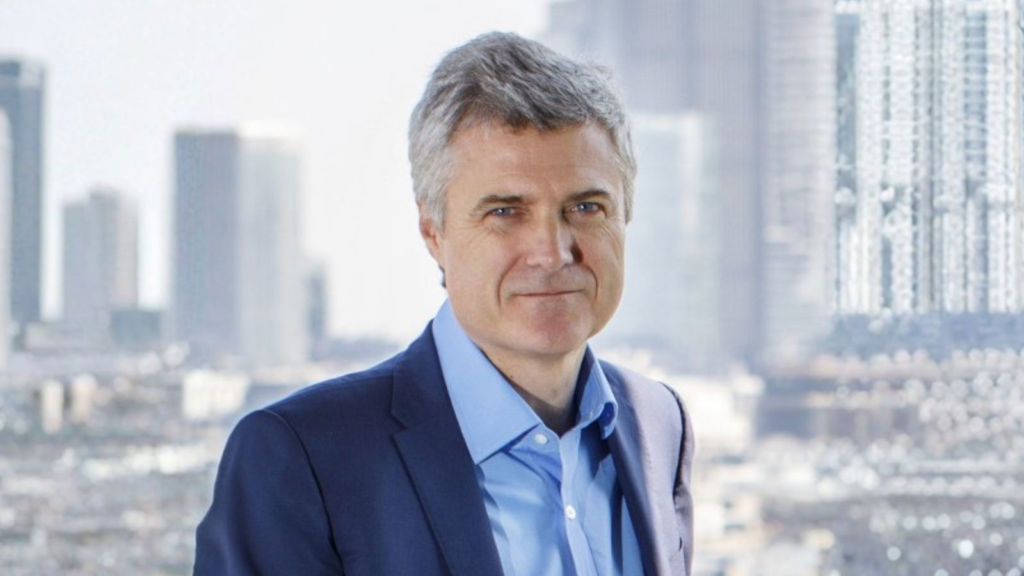
Kantar Media, a global media measurement and analytics firm operating in over 80 countries, has appointed Mark Read, former CEO of WPP, as chairman of its newly formed board of directors. Read, who led WPP from 2018 to 2025, has a long career in advertising and media, including stints as head of strategy at WPP, CEO of Wunderman, and spearheading WPP’s early digital expansion. He championed investments in AI, including WPP Open and the acquisition of UK-based AI firm Satalia. Don’t miss: Cindy Rose to succeed Mark Read as WPP CEO  “Kantar Media serves a unique and essential role in the media ecosystem – helping advertisers, agencies, media owners and platforms understand how people are consuming media and how best to direct their media investments,” said Read in a statement seen by MARKETING-INTERACTIVE. “I am delighted to join Kantar Media’s board as chairman, and to support Béhar and his leadership team in bringing greater clarity to the media ecosystem at a time when audience behaviour is changing more rapidly than ever,” added Read. In tandem, Patrick Béhar, CEO of Kantar Media, said: “We are honoured that Read has chosen to join Kantar Media’s Board at a pivotal moment in our company’s journey. Read combines deep strategic thinking with practical experience in transformation, data and AI, and most importantly he shares our ambition to transform the industry by bringing clarity to a complex landscape. I have every confidence that with his support Kantar Media will continue to deliver best in class results for our clients globally.” Nishant Nayyar, managing director at H.I.G. Capital, added: “Read’s appointment underscores our commitment to backing Kantar Media with exceptional leadership. His deep industry knowledge and proven track record in driving transformation and innovation will be invaluable as Béhar and his team take the company into its next phase of growth.” This new board is the company’s first fully independent board following Kantar Media’s sale by Kantar Group and Bain Capital to H.I.G Capital in August. The strategic divestment allows Kantar to further focus on the growth of its core offerings in brand building and marketing effectiveness.  Following which, Kantar appointed Paul Zwillenberg as chief executive officer in September. He joined Kantar on 29 September and assumes day-to-day leadership of the business on 1 January 2026.  Meanwhile, closer to home, the global platform appointed Andy Gallagher as its new head of creative and media business in Singapore. In his role, Gallagher will strengthen Kantar’s media capabilities in the region, having previously worked across the firm’s EU and US markets.  Related articles: Kantar SG names new head of creative and media business  Kantar names new Indonesia MD to spearhead growth and transformation  WPP CEO Mark Read to step down after 7 years  source

Kantar Media names former WPP CEO Mark Read as chairman Read More »

The Omnicom–IPG mega merger changes everything, especially for CMOs

Over the next 24 hours Omnicom is expected to seal its US$13.3 billion merger with Interpublic Group, creating the world’s largest advertising holding company with more than US$20 billion in revenue and some 100,000 staff globally. The ripple effects for CMOs will be immediate. In Europe, regulators have waved the deal through, finding “moderate” market shares and continued pressure from WPP, Publicis, Dentsu and Havas. In Australia, the ACCC has already signed off. There are no material regulatory brakes left.  On the surface, the European Commission’s ruling is pretty dry: the combined group still faces enough competition, customers can switch agencies easily, publishers and broadcasters retain bargaining power. Nothing to see here. SEE MORE: EU greenlights Omnicom-IPG US$13.5bn merger In practice, CMOs are about to deal with a mega-network that controls a vast swathe of media, data, CRM and creative assets under one roof – at exactly the moment AI is rewiring how those disciplines connect.  Omnicom chief executive John Wren is clear about the ambition. He has described the deal as a way to create the world’s leading marketing and sales business, promising a platform that accelerates growth through “strategic advantages in data, media, creativity, production and technology.” The integration framework already points to heavy rationalisation. Creative is rumoured to be consolidated around BBDO, McCann and TBWA. Overlapping networks and regional brands will be folded in or retired. Severance costs at Omnicom have more than doubled this year, a probable sign that the reshaping is well under way. For brand marketers, this cuts both ways. On one hand, there is the promise of cleaner access to data, media and production at scale. On the other, there is a real risk that cherished agency relationships are destabilised as local teams are absorbed, merged or rebranded. DDB’s rumoured retirement is a warning shot. If an icon built on “Think Small” can be sacrificed to the spreadsheet, nothing is sacred. Why WPP’s move matters just as much If Omnicom–IPG is the scale play, WPP is the transformation play. Cindy Rose stepped into the chief executive role with a CV built almost entirely in technology and enterprise change – Microsoft, Vodafone, Disney – and six years on WPP’s board advising on digital strategy. She inherited a group squeezed by falling revenue, restless investors and intensifying competition from both networks and consultancies. Shares have been languishing at 16-year lows. Sir Martin Sorrell told MARKETING-INTERACTIVE “the jury is out,” warning WPP needs a “laser-like, 24/7 focus” on US clients and talent. SEE MORE: How Cindy Rose will transform WPP Rose’s early moves suggest she is not interested in incrementalism. Devika Bulchandani shifts from running Ogilvy to WPP chief operating officer. Laurent Ezekiel takes over Ogilvy Group, bringing his Open X experience from the Coca-Cola account. Floriane Tripolino steps up to lead WPP Open X, with a mandate to scale data and AI-led models across Coca-Cola and Nestlé. This is not just musical chairs. It is a clear attempt to pivot WPP from a loose federation of agencies into a more integrated, product-like platform where AI, data and global delivery sit at the centre. As one senior observer put it, transformation in a business “delivered by charging human hours” will require courage and charisma. Rose’s bet is that tech discipline and platform thinking can be imposed on a model built for analogue media. In a world where Omnicom–IPG is chasing maximum scale and WPP is trying to reframe itself as a tech platform, what we saw from Havas group across Australia and New Zealand this week follows a smaller, but strategically similar shift. The group is leaning hard into a narrative that it can move faster, integrate media, creative and data more tightly, and avoid the bureaucracy that dogs larger rivals. The AI undertow Across all of this the common undertow is AI. Scale now matters less for buying a marginally cheaper TV spot and more for training models, building proprietary tools, owning data clean rooms and stitching together always-on content machines. Omnicom wants to fuse IPG’s data and media capabilities into its own AI stack. WPP is banking on Open and WPP Media. Havas is signalling that being “deliberately different” means building a model where AI is embedded rather than bolted on.  Taken together, these moves mark the most significant reshaping of the holding group landscape since WPP’s post-Sorrell era began. The names on your agency roster may not change overnight, but the incentives, reporting lines and product roadmaps behind them are changing fast. source

The Omnicom–IPG mega merger changes everything, especially for CMOs Read More »

SG develops new tool to verify digital content and tackle deepfakes

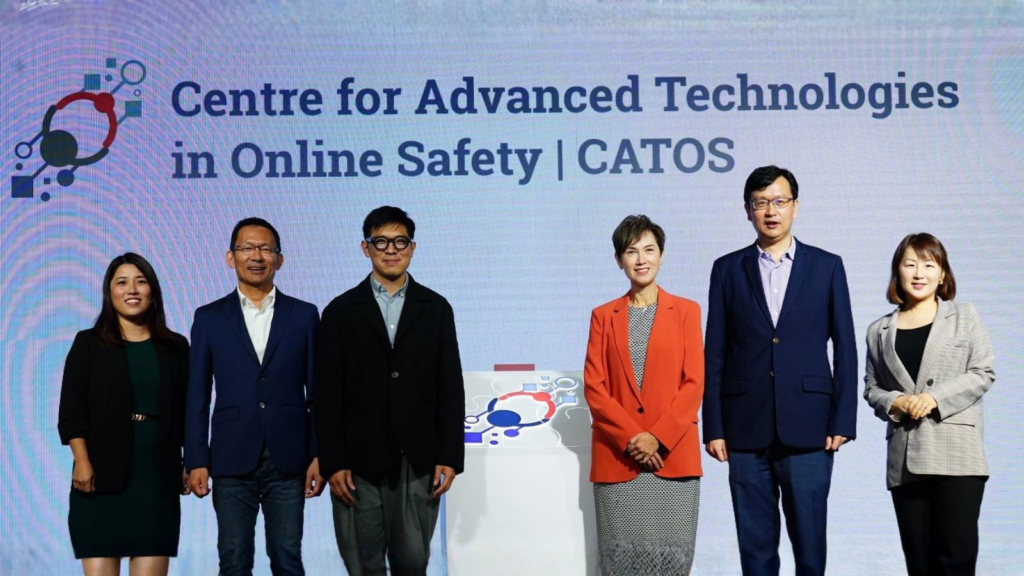
Singapore’s Centre for Advanced Technologies in Online Safety (CATOS) will introduce a free online tool in 2026 to help users verify whether images and videos have been altered, according to a report by The Straits Times (ST). The tool, Provo, reportedly allows publishers, brands, and creators to embed provenance labels into visual content. Users can view these labels through a free browser extension. According to ST, the labels function as “nutrition tags”, carrying information such as the original publisher, posting date, and edits made before the content went live. The provenance markers are reportedly removed automatically if a visual asset is manipulated by an unauthorised party. The traceability also remains intact even when content is reposted or shared across platforms. Don’t miss: Can an ‘AI generated’ label really build trust, or will it slow the industry down? Speaking to ST, CATOS director Yang Yinping said users should no longer rely on telltale signs such as unnatural blinking or mouth blurring to spot deepfakes. Improvements in AI-generation techniques have made surface-level cues unreliable, she explained. Yang said provenance tools offer a necessary complement to deepfake detection, which she described as a “cat-and-mouse game”. The report added that Adobe and CATOS began collaborating in 2024 to develop provenance technologies in Singapore. More details on Provo’s public release are expected in May 2026, CATOS’ head of systems engineering Therese Quieta told ST. Quieta added that the team is working on a secure identity verification process to prevent impersonation attempts, with Singpass integration under consideration. CATOS is also in discussions with publishers and creators to build a wider trust ecosystem around the tool. Alongside Provo, CATOS has developed a deepfake recognition platform called Sleuth, according to ST. The tool is currently used by employees in some public agencies and media companies. Sleuth reportedly analyses pixel-level anomalies to determine whether faces, audio, or environments have been manipulated. CATOS principal scientist Soumik Mondal told ST the team is still assessing whether Sleuth can be made available to the wider public, citing accuracy thresholds and infrastructure demands. MARKETING-INTERACTIVE has reached out to CATOS for more information. The launch of Provo builds on CATOS’ earlier initiatives. The centre was officially launched in May 2024 by Minister for Communications and Information Josephine Teo at the inaugural Online Trust & Safety Forum, with a total of SG$50 million in funding under the Research, Innovation and Enterprise 2025 Plan. Hosted by A*STAR, CATOS was set up to strengthen Singapore’s ability to address online harms such as misinformation, hate speech, and AI-generated content. The funding supports new detection capabilities, continued research through open calls and innovation challenges, and a sandbox environment to test emerging tools. CATOS also signed an MoU with Adobe in 2024 to explore content provenance technologies in Singapore, and works with community partners such as CheckMate to enhance fact-checking efficiency. The inaugural forum gathered more than 250 experts to discuss trends in online trust and safety. Related articles:Survey: Over half of APAC PR pros embrace AI, but lack strategic adoption     SEA’s digital economy set to surpass US$300B, Singapore leads AI growth     Halimah Yacob files police report over deepfake criticising government source

SG develops new tool to verify digital content and tackle deepfakes Read More »

Havas Media Singapore appoints new MD and GM, digital SEA

Havas Media Network Singapore has appointed Jean Lee (pictured center) as managing director and Zoheb Gafoor (pictured left) as general manager, digital, Southeast Asia, in moves aimed at strengthening market leadership, deepening client partnerships, and accelerating digital transformation across the region. At Havas Media Singapore, Lee will oversee the strategic and operational direction of the agency. With more than two decades of experience at dentsu X, Carat and OMD, she has led integrated teams and built trusted client relationships with brands including IKEA, StarHub, Standard Chartered, Resorts World Sentosa, Uniqlo and Asia Pacific Breweries. She will work closely with Havas Play, CSA and Havas Market to deliver connected solutions under the Converged.AI vision. Meanwhile, Gafoor, with over 14 years of experience across performance, data, and operations in APAC, will lead the network’s digital transformation mandate in Southeast Asia. Drawing on his regional experience at Hearts & Science APAC, he will enhance automation, performance excellence and technology partnerships to deliver intelligent, outcome-driven digital solutions for clients. Don’t miss: Havas CEO Yannick Bolloré shuts down WPP deal rumours  Both will report to Pankaj Nayak (pictured right), CEO of Havas Media Network Singapore and president, Southeast Asia. “Lee’s leadership, strategic acumen, and relationship-first approach make her an outstanding addition to our leadership team. Her experience in guiding clients through transformation and building high-performing teams will be critical as we strengthen and scale our Singapore operations to unlock new growth for the agency,” said Nayak.  Commenting on her appointment, Lee said she looks forward to leading the Singapore team “into its next phase of growth and delivering work that is both meaningful and measurable.” In addition, the CEO said that Gafoor’s Singapore and expanded regional remit is central to the agency’s ambition of driving digital innovation across Southeast Asia. “His expertise in performance, data, and operations will elevate how we create meaningful media experiences and measurable business outcomes for clients, while advancing our Converged.AI strategy at speed and scale,” said Nayak. Gafoor added: “With Converged.AI, we have a powerful platform to rethink how brands connect with people. I am excited to partner with teams across the region to build solutions that drive real business impact today and remain future proof for tomorrow.” Their appointments come as Havas strengthens leadership across the network with a series of moves across the region. Last month, Havas Ortega named Raymond “Rai” Dizon as general manager– head of business growth and experience, reinforcing its leadership team as the agency sharpens its integrated “village” model rooted in creativity, data, and experience. In his new role, Dizon will lead business growth and client experience initiatives, focusing on harnessing digital capabilities, technology platforms, and integrated solutions across the Havas Village. In Australia, Havas Media appointed Kate O’Ryan-Roeder as chief executive officer following an extensive search to succeed outgoing CEO Virginia Hyland, who departed in July after five years with the agency. O’Ryan-Roeder joins from Mindshare, where she spent a decade in senior leadership roles, most recently as managing director of its Sydney operations and previously as chief client officer. Related articles:   Havas bets on being ‘deliberately different’ as mega-mergers squeeze the middle Agency agenda: Rana Barua charts Havas’ growth across Asia  Havas Ortega expands Gian Dela Cruz’s role to lead creativity and experience integration  source

Havas Media Singapore appoints new MD and GM, digital SEA Read More »

Ogury names former GroupM Nexus chief as CEO

Global adtech company Ogury has appointed Nicolas Bidon (pictured) as its new chief executive officer, effective 1 December. He succeeds Geoffroy Martin, who held the role since January 2023. In his new role, Bidon will lead Ogury’s global strategy, commercial growth, business development, and operations across the Americas, EMEA, and APAC. He is based in London. Bidon was most recently global CEO of GroupM Nexus, where he oversaw a network of more than 11,000 digital specialists. He joined WPP in 2012 as managing director of Xaxis UK before becoming global CEO of plista, and later global CEO of Xaxis in 2017. During his tenure, he steered Xaxis’ shift into an outcome-driven media company powered by proprietary AI technology, driving growth across 47 markets. Don’t miss: 5 emerging adtech and martech trends: A blueprint for PR and marketing professionals in 2025 He previously held senior roles at Yahoo and enterprise software firms including Microstrategy and Watchfire, the latter acquired by IBM. “Ogury’s differentiation stems from multiple strengths, from our proprietary, persona-based data model to our fully integrated, cross-channel platform. Together, they enable advertisers to transform complex consumer behaviours into actionable intelligence at scale,” said Jean Canzoneri, co-founder and chairman of Ogury. He added, “Bidon’s extensive global experience and proven ability to expand fast-growing adtech companies make him the ideal leader to further elevate Ogury’s impact across the industry.” Speaking on his new role, Bidon said, “With major disruptions everywhere you look, the advertising ecosystem stands at a crossroads and is poised for reinvention. Ogury’s unique blend of data, powerful technology, and innovative culture position it perfectly to turn this complexity into a competitive advantage for its clients. I’m honoured to lead such a talented global team and to partner with Canzoneri and the board to accelerate Ogury’s next phase of growth.” As the adtech talent market heats up, the region has also seen leadership reshuffles among other major players. In May, Quantcast appointed Jordan Khoo as vice president for APAC, expanding its regional leadership bench as it accelerates growth across the region. Based in Singapore, Khoo now oversees Quantcast’s strategy and commercial operations in APAC. He was previously managing director for APAC at DoubleVerify, where he led the company’s regional expansion. Before that, he held senior roles at Sizmek, including vice president for APAC, where he focused on commercial growth and strengthening customer relationships. Related articles:   Google hit with lawsuit by adtech firm over alleged anticompetitive practices    Netflix to launch in-house adtech platform by end 2025    Adtech firm Quantcast names new managing director for North Asia  source

Ogury names former GroupM Nexus chief as CEO Read More »

Sanrio's Hangyodon makes a splash at the Singapore Oceanarium

Resorts World Sentosa (RWS) is turning Sanrio’s half-fishman character Hangyodon into Southeast Asia’s largest immersive brand experience with “Hangyodon marine discovery” at Singapore Oceanarium. Running from 28 November 2025 to 4 January 2026, the activation marks Hangyodon’s 40th anniversary and blends playful engagement with environmental education. As part of the campaign, visitors follow Hangyodon and his friend Sayuri the octopus on their first ocean adventure, exploring interactive installations that highlight marine conservation and the impact of pollution on aquatic life. The experience combines storytelling, photo opportunities, and hands-on activities to create a multi-sensory journey for fans of all ages. Highlights include life-size photo moments, themed collectibles and F&B, a giant inflatable installation at the entrance, and guided programmes such as ‘Animal spotlight: Corals’, offering behind-the-scenes access to Singapore Oceanarium’s animal care operations.  Don’t miss: Glade enters the IP game with a Hello Kitty twist on home fragrance  Meet-and-greets with Hangyodon mascots further drive engagement, turning the event into both a marketing and educational platform. “Through his cheerful and quirky world, we hope to make learning about the ocean a joyful adventure,” said Lam Xue Ying, acting senior vice president of Singapore Oceanarium & destination experience. “This collaboration channels Hangyodon’s boundless joy into a shared love for the ocean – inspiring fans and guests alike to care for the blue planet we all depend on,” she added.  In tandem, Kohei Imai, COO of Sanrio SEA, added: “Hangyodon has always combined humour with heart. This collaboration allows fans and visitors of all ages to experience his world in a way that is both enjoyable and purposeful.” The event positions Hangyodon as both an entertainment and purpose-driven IP, reflecting a growing trend of brands using beloved characters to drive engagement, footfall, and social conversation, while integrating education and sustainability messaging. The “Hangyodon marine discovery” activation builds on Resorts World Sentosa’s major rebrand of S.E.A. Aquarium into the Singapore Oceanarium, which reopened on 23 July 2025. The transformation marked a strategic shift from a traditional marine tourism attraction to a purpose-led edutainment institute, tripling the facility’s footprint and centering its mission on marine conservation, research, and education. With 22 thematic zones, flagship exhibits such as ‘Ocean wonders’ and ‘Ancient waters’, and immersive storytelling at scale, the Oceanarium has positioned itself as a regional leader in science communication and ocean stewardship. Related articles:    Sentosa evolves brand to inspire wellness and balance with new campaign RWS and Sentosa go ‘Wicked’ with islandwide cinematic takeover  S.E.A. Aquarium makes a splash with major rebrand   source

Sanrio's Hangyodon makes a splash at the Singapore Oceanarium Read More »

Glade enters the IP game with a Hello Kitty twist on home fragrance

Glade, the home fragrance brand under SC Johnson, has stepped into the world of pop culture with a regional collaboration that’s winning hearts, and noses. Its latest “Glade® X Hello Kitty” campaign, marks the brand’s foray into IP tie-ups, blending nostalgia, design appeal, and emotional storytelling to reach new audiences across Southeast Asia. Glade shared with MARKETING-INTERACTIVE that the collaboration was born out of a desire to connect with consumers in more culturally resonant ways. The partnership with Sanrio’s Hello Kitty reflects Glade’s evolution from a traditional home fragrance label into a lifestyle brand that celebrates personal expression and everyday joy. By aligning with an icon that spans generations, the brand has managed to engage loyal fans while attracting younger consumers drawn to aesthetic and emotionally uplifting experiences. Don’t miss: Grab SG serves up Sanrio cuteness in latest Signatures push Running across multiple ASEAN markets, the campaign was anchored by a unified creative theme and hero visuals rolled out through social media and on-ground activations. Localisation, however, played a key role. Influencer and key opinion leader (KOL) partnerships were central to ensuring cultural relevance, with each market tailoring its approach. In Thailand, for instance, Glade took the collaboration on the road with a series of experiential events including an exclusive appearance by Thai celebrities Sky and Nani; while in Malaysia, the campaign leaned heavily into CGI-enhanced storytelling to appeal to Hello Kitty and anime fan communities online. Over in Philippines, the collaborative scents were also rolled out via TikTok Shop and partnerships with local KOLs. On the eCommerce front, the Glade® X Hello Kitty range was made available on Shopee and Lazada across most ASEAN markets, with a TikTok Shop-exclusive activation in Malaysia. While specific figures remain confidential, the company reported healthy product uptake and growing consumer interest since launch, a sign that the tie-up successfully bridged lifestyle appeal with commerce. A forward-looking shift The collaboration also signals a broader strategic shift for Glade towards culturally-revelevant and content-driven marketing. By weaving sensory appeal with emotional storytelling, Glade is exploring how partnerships with beloved cultural icons can deepen consumer connection and reflect the brand’s growing relevance in contemporary lifestyles. Glade noted that IP collaborations such as this one are helping to extend the brand’s reach while positioning it as attuned to the evolving interests of its consumers. Although the brand did not disclose specific performance metrics, Glade shared that each market’s campaign is subject to post-mortem analysis tied to strategic objectives, covering engagement, awareness, and conversion. So far, consumer response has been overwhelmingly positive. In Thailand, experiential activations around the campaign generated notable earned buzz and media coverage. Malaysia’s social-first approach also saw strong engagement and content performance, while Singapore and Vietnam, both still in their rollout stages, have shown early signs of promising anticipation. Among the key takeaways for the brand was the importance of market-specific storytelling and influencer-led content in driving relevance and conversions. Glade told MARKETING-INTERACTIVE that these localised and customised experiences have significantly amplified talkability and conversion, while influencer-led storytelling also emerged as a powerful driver, consistently driving higher engagement across platforms.  More IP collabs to come? Looking ahead, the household supplies brand remains open to exploring more IP collaborations across its brand portfolio. It also shared that it viewed partnerships as a powerful way to expand its reach and build meaningful connections with customers, adding that it is always looking to work with like-minded partners who share its goal of creating “feel-good moments” that leave a positive impact on communities. Looking back on other Sanrio collabs, Grab Singapore teamed up with Sanrio earlier this year for an exclusive Grab Signatures giveaway featuring Hello Kitty, Kuromi and Cinnamoroll. The campaign is part of Grab’s broader marketing and customer engagement strategy for 2025, combining exclusive co-branded merchandise with food discovery on the platform. The campaign aims to boost visibility for its Signatures merchants including crowd-favourites such as Wingstop, CHAGEE, Playmade and Don Don Donki while creating meaningful connections with users. In July, Baskin-Robbins Malaysia and Singapore turned up the charm with a new collaboration featuring Sanrio’s fan-favourite character Kuromi, blending sweet treats with playful aesthetics in a campaign designed to captivate younger consumers. The brands, operated by Golden Scoop, have transformed select outlets into Kuromi-themed diners, launched exclusive merchandise, and rolled out limited-edition cakes and ice cream flavours to celebrate the partnership, part of an ongoing strategy to remain culturally relevant and spark deeper emotional engagement with fans. Earlier in March, Sanrio itself unveiled a campaign across Southeast Asia targeting counterfeit products and aiming to enhance intellectual property protection. The campaign, titled “Sanrio values authenticity” is centered on key markets such as Singapore, Thailand, and Indonesia, where it seeks to educate consumers on the dangers associated with counterfeit goods, including inferior quality and safety issues. Related articles: Starbucks and Hello Kitty team up to reimagine customer experience Hello Kitty, Kuromi take over trains and airports in regional Sanrio OOH campaign Baskin-Robbins banks on IP power with Kuromi takeover across Malaysia and Singapore source

Glade enters the IP game with a Hello Kitty twist on home fragrance Read More »