marketing interactive

SIXiDES taps former Home & Decor chief editor to lead editorial overhaul

Renovation platform SIXiDES has appointed former Home & Decor editor-in-chief Jamyang Tashi Lim (pictured) as its new editor-in-chief as the renovation platform begins an editorial and product overhaul aimed at addressing growing homeowner demand for clearer, more structured renovation guidance. In conversation with MARKETING-INTERACTIVE, Lim said he made the move after more than two decades in print and design media, citing a desire to work within a platform model where content, product and decision-making tools operate in tandem. He added that the shift allows him to rethink how homeowners consume renovation and design information in a “practical, behaviour-driven context”. Don’t miss: Singapore backs Mediacorp with SG$380m amid shifting media habits His immediate priority is to establish a stronger editorial identity for SIXiDES with clearer content pillars, higher standards of clarity and a more direct focus on homeowner concerns. Lim said the platform will pivot towards a homeowner-first approach that offers structured guidance, explanations, material literacy, budgeting and maintenance tips, alongside more lifestyle-driven content that extends beyond the renovation phase. The new role expands beyond editorial oversight. Lim now leads content architecture, platform communication and product experience, blending editorial judgment with UX and behavioural insights to shape what he described as a “full ecosystem rather than a magazine”. SIXiDES’ timing was driven by shifts in homeowner behaviour. According to Lim, users are now more research-driven yet overwhelmed by scattered information.  “They are not just looking for inspiration, they want structured, trustworthy information that reduces confusion. With more first-time homeowners entering the market and renovation costs rising, the timing was right for SIXiDES to tighten its editorial identity, strengthen its tools, and provide a more coherent, user-centred experience,” he added.  The refresh will integrate editorial directly with tools such as eQuote, checklists and guided services, creating a more coherent decision-making journey. Users can expect a cleaner interface, clearer categories, stronger navigation and new long-form guides built around intent. New formats, topic clusters and expert-led series will also roll out as part of the platform revamp. Lim said SIXiDES aims to differentiate itself by focusing on guidance over inspiration and remaining a long-term companion for homeowners even after renovation ends, covering styling, maintenance and practical living. He added:  While others focus on inspiration or lead generation, we’re focused on guidance, clarity and education. As the industry continues to rethink the role of editorial across platforms, other publishers have also begun expanding into new content models. In June, Vogue Singapore’s publisher Media Publishares partnered with luxury communications and experiential agency RSVP to launch Beyond the Boardroom, a content and events platform focused on modern leadership through the lens of culture and commerce. Related articles:    KC Global Media Asia names new director and head of digital marketing  BurdaLuxury picks new editor-in-chief of Lifestyle Asia KL and SGThe Peak tweaks logo in subtle aesthetic refresh  source

SIXiDES taps former Home & Decor chief editor to lead editorial overhaul Read More »

Future of PR: How SG agencies are rewriting the press playbook for 2026

As PR teams gear up for 2026, the Asia Pacific region is emerging not just as a hotbed of creative storytelling, but as the fastest‑growing frontier for strategic communications. That growth is underpinned by a clear shift in client priorities: according to the ICCO World PR Report 2024–2025, 40% of PR professionals in Asia Pacific expect to increase investment in ESG (environmental, social, and governance) communications, while 31% are prioritising strategic consulting, and 29% are focused on influencer communication. Talent remains a challenge, senior skills scored around 60%, signaling room for investment, yet ethics shine, with practitioners rating industry integrity at 69%. Looking ahead to 2026, the game is no longer just about campaigns or coverage. It’s about blending human insight with AI, navigating geopolitics and culture, and building trust that lasts. Below, MARKETING-INTERACTIVE spoke with PR professionals across the region to hear how they plan to tackle these shifts and what they see as the industry’s top priorities next year. Don’t miss: Next in digital: How agencies in SG are staying ahead in 2026 Delicia Tan, CEO for Edelman Singapore, Hong Kong and Taiwan The next chapter in integrated communications isn’t about chasing every new technology development, it’s about making innovation serve authenticity. As AI becomes a daily partner in how people search, consume, and engage, our task as communicators is to make sure it strengthens trust, not replaces it. At Edelman, we see this future as a blend of intelligence, integrity, and experience. AI gives us new ways to predict sentiment, personalise stories, and measure impact in real time. But tools alone don’t build connection. It’s the human judgment, that turns data into meaning. That’s why we will continue investing in our people. We’re developing advisors who can connect culture, technology, and creativity; who can use AI to move faster without losing empathy. At the end of the day, progress isn’t about automation, it’s about amplification: using technology to scale human insight and action. Our focus is on authenticity at scale. We’re helping brands prove who they are through consistent, transparent communication—aligning what they say, what they do, and what others say about them. In a fragmented world, that alignment builds the trust every organisation needs to grow. The future of integrated communications belongs to teams that bring strategy, storytelling, and systems together. People who can bridge human and machine intelligence to create connection that lasts. Because even in an AI-driven world, authenticity is still the most advanced form of intelligence we have. Mei Lee, managing director, FleishmanHillard Singapore A major transformation in PR is the integration of advanced AI and data-driven insights, which evolves our role from just reputation management to delivering intelligence-led counsel that can help organisations anticipate risks, foster innovation, and validate real business impact. Led by global CEO JJ Carter, FleishmanHillard has been accelerating this shift by building consulting-led teams, advancing AI adoption and evolving capabilities to become trusted advisors to clients at the highest levels. In 2026, we will continue to leverage OmniAI, Omnicom’s in-house AI platform to boost efficiency and effectiveness, while delivering innovative client solutions – such as FH Fusion, a first-of-its-kind communications that combines a full range of AI models, institutional knowledge and a proprietary data toolset. Already in use by over 1,500 strategists globally – it directly enhances client deliveries such as crisis response, stakeholder messaging and media intelligence. TRUE Global Intelligence, our data and insights team, is leading strong growth through these tech-enabled offerings. For FleishmanHillard in Singapore, our 2026 focus is to continuously support our global transformation into a strategic business and communications consultancy, linking communications directly to shareholder value creation, and embedding innovation and measurable impact into every client engagement. Joseph Barratt, CEO, Mutant In 2026, I think the next major shift won’t be AI itself, but the way brands approach regional work. We are seeing growing frustration with managing multiple agencies across different markets or paying global-network prices for work that doesn’t translate. More clients want Southeast Asia to operate as one region – a single strategic direction supported by strong local execution. Agencies that can deliver shared insight, integrated planning, and coordinated delivery across borders will have a real advantage. AI will support this, but it won’t replace what we do. It’s a tool that raises the bar by improving audience insight, performance measurement, and collaboration across markets. Its value is in helping us work smarter and deepen regional understanding, not in acting as a substitute for strategic thinking. We’re budgeting cautiously but deliberately for 2026, channelling spend into people, training, and regional structures rather than experiments that don’t tie back to client outcomes. We’re still forecasting growth, but modest and realistic given longer decision cycles. My priority for 2026 is to keep moving Mutant up the value chain by owning more regional mandates and tying our work clearly to business outcomes. If we get that right, the technology will simply help us move faster. Jacob Puthenparambil, founder and CEO, Redhill 2026 will be the year PR evolves from managing perception to decoding reality. The next wave is strategic intelligence — where communications merges with data, behaviour, and foresight. At Redhill, we’re moving beyond content creation to reputation prediction: using AI, sentiment analytics, and behavioural mapping to see around corners and prepare leaders before issues surface. Our focus is on building an integrated Reputation OS — a system that fuses human judgment with machine insight to guide decisions in real time. Budgets are shifting toward technology, security, and leadership capability, not media spend. The single priority for us is resilience — helping organisations earn, protect, and sustain trust in an age of volatility and misinformation. The PR firm of the future won’t just tell stories; it will provide clarity, direction, and courage in a world of noise. Carolyn Devanayagam, EVP, head of corporate, APAC, Weber Shandwick The PR industry’s next major shift will be driven by the collision of geopolitics and culture, a reality already affecting organisations with a regional presence in APAC. Nearly half

Future of PR: How SG agencies are rewriting the press playbook for 2026 Read More »

Froot Loops turns hip-hop name-drops into wearable art

Froot Loops is bringing its cereal to the world of hip-hop in a colourful new way. The brand has teamed up with Chicago-based jeweler Kristopher Kites to create limited-edition, one-of-a-kind jewelry inspired by the more than 1,000 times Froot Loops has been mentioned in hip-hop tracks. The campaign invites fans to “follow their ears” as much as their noses, turning iconic lyric shoutouts into wearable art. Pieces include a pendant and necklace or a watch, featuring Toucan Sam-inspired gemstones and playful, bold designs that blend craftsmanship with hip-hop’s creative edge. Fans can enter via Froot Loops’ Instagram and TikTok for a chance to win, with 100 additional accessories designed by Kites also up for grabs. Don’t miss: PropertyGuru Malaysia and iamNEETA turn neighbourhood memories into music Froot Loops is also celebrating local hip-hop culture with poster drops in five US cities, New York, Los Angeles, Chicago, Houston, and Atlanta, commissioned from local artists. Each poster hides a clue connected to a classic Froot Loops name-drop, turning the campaign into an interactive hunt that bridges music, art, and collectibles. “We’ve been proud to watch Froot Loops grow from breakfast table to cultural staple. With our ‘Follow your ears’ campaign we’re spotlighting the brand’s connection to music and community while giving fans a chance to win one-of-a-kind jewelry inspired by Froot Loops’ part in hip-hop history,” said Ryan Versfeld, brand marketing director at WK Kellogg Co.  In tandem, Kites said, “Designing for this campaign, I was inspired by Froot Loops’ playful world, my own childhood nostalgia and the rich legacy of hip-hop. For me it was important to pull them all together to create colorful, cultural, bold moments.” Brittney Price, the artist commissioned for Los Angeles, added, “The brush and pen are my mic. Hip-Hop raised me, and Froot Loops fed me. Life doesn’t move in a straight line. It moves in loops that circle back and push me forward. I’m grateful to share this art journey with Froot Loops and celebrate the loops that shaped me.” The campaign follows a growing trend of brands tapping music-led activations to drive cultural relevance. In May, McDonald’s Singapore dropped a rap to celebrate the launch of its Mac’ n Cheesy breakfast wrap. Created with Leo Singapore, the track highlights ingredients such as hash browns, eggs, ham and cheese, with a cheeky video showing the wrap being made alongside on-screen lyrics. Digital creator Scott Van Der Ven also starred in a comedic skit tied to the rap. Related articles: Heineken creates immersive pop-up music series at unconventional venues   AirAsia banks on local DJs to connect music with travel in new campaign   Amazon Music harnesses the power of music in bold fight against cancer source

Froot Loops turns hip-hop name-drops into wearable art Read More »

SG acting minister apologises for calling HK football players and fans ‘idiots’

Singapore’s acting minister for culture, community and youth David Neo has apologised after calling Hong Kong football players and fans “idiots”.  This follows the 2027 AFC Asian Cup qualifiers held in Hong Kong on Tuesday (18 November), where the Hong Kong team lost 1-2 to Singapore at home, missing their opportunity to advance to the final round. In a livestream video, Neo praised Singapore’s winning football players following the match, saying that “all the [Hong Kong] fans were bloody idiots, and the players – they also played like idiots. But you all played like lions.” Don’t miss: Record attendance at Kai Tak as HK loses to SG in Asian Cup qualifier  The clip has drawn mixed reactions from netizens on Instagram, with some criticising him for his remarks, MARKETING-INTERACTIVE confirmed. In response to a comment under the livestream video reposted by @tmsgoal, Neo said: “Indeed I probably should have been more respectful. I take back what I said. The Hong Kong team were really tough and their fans were fully behind them. That’s something we should respect, and let’s also get behind our Lions.” Comments seen by MARKETING-INTERACTIVE are divided, with some congratulating the Singapore team on their victory, while others argue that he showed a lack of respect for the opponent and their fans, demonstrating poor sportsmanship. Some also questioned whether he, as a government official, was speaking on behalf of the entire Singapore government. MARKETING-INTERACTIVE has reached out to Singapore’s Ministry of Culture, Community and Youth for a statement. Spontaneity versus responsibility Lars Voedisch, group CEO of PRecious Communications, said Neo’s apology felt “half-baked” and more corporate than personal. “He didn’t go back and own it personally. It would have been much easier to say something like, ‘Hey, I’m sorry. It was the heat of the moment. That’s what passion for football sometimes does. Take it with a pinch of salt. I know I overstepped somewhere around there.’ Fans would then likely respond, ‘Yeah, okay, we get it. Sorry accepted.’ After all, we’ve all called referees or other teams names at some point.” Voedisch added that context matters and standards vary by market. “In Singapore, we take a more measured approach and expect different behaviour from our representatives. Being spontaneous is fine, but you have to be smart about it. If you’re in the public eye, or politics. you’re always in the limelight and must manage your reactions.” Jose Raymond, managing director of SW Strategies and founder of TMSGoal, echoed that perspective. He described the remarks as a “Freudian slip, a momentary lapse of judgment in the heat of football pleasure, given the gravity of the result in Singapore footballing terms.” Raymond noted that such off-the-cuff comments from a political officeholder can sometimes lead to diplomatic tensions. He added that the incident raised questions about whether Neo had prepared his talking points for the livestream or spoke spontaneously. “If the latter, then the causation is explained. The practical advice is that he should never attempt such dressing-room pep talks without preparation, especially if it is not something he does often.” Raymond also noted that Neo’s swift apology, posted in response to a comment on TMSGoal, was likely coordinated with his communications team to ensure the media were aware and the message was widely communicated. Ashvin Anamalai, CEO of DNA Creative Communications, said the apology was timely but reactionary. He noted, “As a minister, especially one overseeing culture and community, he should not have made such comments in the first place. Calling another territory’s players and fans “idiots” is not just a slip of the tongue. It reflects poor judgment in a public setting where he knows he represents his country.” He added that the casual delivery of the apology under a reposted video did not match the gravity of the misstep, particularly given cross-border sensitivities, and stressed that: Public figures need to train their instinct to stay respectful, especially in high-emotion situations. This is where leadership is tested, and unfortunately, he fell short. Edwin Yeo, general manager of SPRG, added perspective from someone familiar with the dressing room environment. He said, “To be honest, from the perspective of someone who has been in the dressing room with the team several times, I can understand the emotions that pour out during the occasion, and you often get caught up in the heat of the moment.” He emphasised that ministers are not ordinary participants and that communications teams should have prepared him for the livestream. Yeo also highlighted a broader lesson: We live in an era where private places aren’t private anymore and public figures should be well prepared when appearing on any public platforms, which is no longer restricted to press conferences, tv interviews or even recorded social media content which gives them the cooling down period to relook at what they said. David Ko, CEO of Humantyze and former MD of RFI Asia, focused on the PR implications. He described the apology as reactive and minimal rather than proactive or constructive. He said, “The minister’s wording — ‘I take back what I said’ — does not fully acknowledge the gravity or implications of his comments, nor does it address the hurt caused to Hong Kong players and supporters.” Ko added that immediately pivoting back to supporting Singapore’s team, rather than addressing reconciliation, reflected a lack of humility. Ko advised that public figures must recognize they represent more than themselves and that there is “never an off-the-record moment.” He recommended regular crisis communication and media training, developing speaking principles or guardrails for spontaneous moments, structured messaging even in informal settings, and rehearsing emotional live scenarios to anticipate stress points. Ko also stressed that cross-border sensitivities must be carefully managed, with all communications emphasising mutual respect, sportsmanship, and recognition of participants’ dedication. In the event of mistakes, apologies must be clear, swift, and explicitly reference the broader bilateral context. Comments such as “idiots,” he said, reflect poor sportsmanship and can damage both personal reputations and diplomatic relations. Together, the

SG acting minister apologises for calling HK football players and fans ‘idiots’ Read More »

Agency agenda: Rana Barua charts Havas' growth across Asia

Rana Barua, group CEO of Havas overseeing India, Southeast Asia, and North Asia (Japan and South Korea), told Marketing Connected’s Agency Agenda that he is steering the network with a clear focus on regional expansion and operational agility. Since taking on the role, he has embarked on a tour of the Havas offices, deep-diving into local markets to understand cultural nuances, client expectations, and operational dynamics, a step he sees as crucial before implementing broader strategic initiatives. Barua credits a combination of research, hands-on experience, and an advanced management program at Wharton for shaping his approach to leading a diverse, multi-country operation. “For leaders taking on roles across nationalities, it’s critical to slow down and understand each market before stepping in,” he said. Don’t miss: Agency agenda: Sir Martin Sorrell says ‘Data is not the enemy of creativity’ One of Havas’ key moves under his leadership has been the strategic alliance with Indonesia’s Moonfolks, a partnership aimed at creating a “village model” that integrates creative and media capabilities. Indonesia, a high-priority market for the group, benefits from this model by offering clients comprehensive solutions while strengthening Havas’ local presence. Barua noted that the alliance is part of a broader philosophy of growth, where the network remains open to partnerships, acquisitions, or collaborations that bring in new expertise or unlock regional opportunities. Differentiation, according to Barua, comes from Havas’ size and entrepreneurial culture. “We are smaller than many networks, which allows us to stay focused on clients and execute ideas faster,” he said. “Being entrepreneur-led enables us to take calculated risks and move quickly on alliances and partnerships.” The agency is also investing in converged AI as an operational tool to enhance capabilities across creative, media, and CX solutions, marking another step toward innovation-led growth. In Malaysia, Havas is seeing the results of leadership stability and diversified offerings. The local office is now engaging more clients, experimenting with new solutions, and strengthening its pitch conversion, particularly in sectors like banking, petroleum, and other large local brands. Looking ahead, Barua emphasises regional integration as a growth lever. Havas is implementing a “one Asia” model, enabling teams across countries to collaborate seamlessly on regional pitches. This approach, combined with flexible talent deployment and investment in next-generation agency professionals, positions Havas to win larger, more complex mandates across Southeast and North Asia. For Barua, the guiding principles remain simple: be flexible, open to change, and innovate. “If you can think out of the box and challenge the status quo, you can move faster and create more value for clients,” he said. A philosophy that underpins Havas’ regional ambitions for the year ahead.  Also tune in to the full conversation on Spotify: Tune into the rest of this conversation on your favourite podcast platforms, by searching up Marketing Connected. For all the visual people out there, we’ve got your back as well, with our vodcasts on YouTube. Just this week, media reports emerged about deal talks between Havas and WPP over a potential strategic arrangement. However, Havas CEO Yannick Bolloré has dismissed speculation that the French holding group is in talks with WPP, telling staff that the company is “not in discussions” with its British rival. His comments, first reported by Bloomberg, were made in an internal note addressing mounting questions from employees and clients. That shake-up has been led by Omnicom’s US$13.5 billion acquisition of Interpublic Group, which is expected to close this month and will mark the largest holding-company merger in history. In recent years, Havas has continued to expand through selective acquisitions, including Australian media agency and creative production company Hotglue, as well as Singapore’s Klareco Communication, a corporate, financial and strategic communications consultancy. MARKETING-INTERACTIVE has reached out to Havas for more information.  Related articles: Havas Media names Pankaj Nayak president of SEA HAVAS goes public, lists on Euronext AmsterdamHavas, Moonfolks join forces to drive integrated marketing in Indonesia source

Agency agenda: Rana Barua charts Havas' growth across Asia Read More »

UNIQLO Singapore cooks up first global UTme! collection with Nissin

UNIQLO Singapore has rolled out its first UTme! collaboration with a global brand, tapping Nissin and local artist JONTBOY for a playful series of T-shirts inspired by cup noodles. The collaboration marks a shift from recent UTme! partnerships with local names such as Ya Kun Kaya Toast and Old Chang Kee. In conversation with MARKETING-INTERACTIVE, Paulene Ong, marketing director at UNIQLO Singapore, the team wanted to “do things differently” by bringing in a globally recognised brand while continuing to spotlight local talent through JONTBOY. Ong pointed to Nissin’s dedication to research and development as a strong fit with UNIQLO’s LifeWear philosophy. She said both brands share a focus on evolving with the needs of their communities, making the partnership a natural extension of UTme!’s ethos of creativity and self-expression. Don’t miss: UNIQLO Malaysia responds to claims that Oriental Kopi collab artwork was AI-generated  “From pioneering the world’s first cup noodles, to continuous innovation of new flavours, this also mirrors our LifeWear philosophy – how our clothing is always evolving to suit the needs of our community,” she added.  The UNIQLO x Nissin UTme! collection features eight T-shirts and six embroidery designs inspired by the brand’s bold packaging and popular flavours, including chilli crab, tom yam seafood, chicken and seafood. Each design includes easter eggs for local fans, such as a Merlion that sprays noodles in the seafood motif. The range also features a guide to making the “perfect” cup noodles in three minutes, after the team learned that many Singaporeans “don’t know how to make it properly”. Two UTme! store exclusives are available at Orchard Central, Jewel Changi Airport and VivoCity. The designs spotlight Demae Iccho Boy and his family dressed in Japanese samue featuring a kebaya print, alongside local cultural elements such as the tingkat. To build momentum around the launch, UNIQLO is running a series of teasers on Instagram featuring employees enjoying cup noodles in winter settings. Ong said the brand continues to highlight its staff across roles and nationalities as they “represent the true heart of our brand”. The drop anchors the retailer’s bi-annual “Thank You Festival”, which runs from 21 to 27 November. According to Ong, the festival remains one of the brand’s key moments to express appreciation to customers. This year’s edition includes expanded LifeWear offerings, limited deals on seasonal essentials and an exclusive UTme! line created to delight UNIQLO Singapore’s customers and community. Throughout the duration of the festival, customers who purchase one UNIQLO x Nissin UTme! T-shirt will receive a complimentary Nissin cup noodles in one of four local favourite flavours, while stocks last. A life-sized cup noodles installation will also be available for photo opportunities at the Orchard Central global flagship store. Ong added that the collaboration stands out in UNIQLO’s creative calendar as it blends Japanese and local culture during the winter season, supported by visuals that lean into a playful mix of warmth, travel and cup noodles nostalgia. The partnership follows a series of hyperlocal food-centric drops. In July, UNIQLO unveiled a collaboration with heritage breakfast brand Ya Kun Kaya Toast to celebrate Singapore’s 60th birthday. Launched on 1 August, the collection featured six designs paying tribute to the brand’s 80-year legacy, from scenes inspired by its original Far East Square outlet to playful riffs on kopitiam drink lingo. In October, the retailer teamed up with Old Chang Kee for a collection celebrating Singapore’s culinary icons. Running from 17 October, the collaboration introduced seven UTme! designs and six embroideries featuring familiar visuals such as the Curry’O and the brand’s REX outlet, created with local studio Wheniwasfour. The launch was supported by store activations, including snack redemptions and collectible stickers, with select designs exclusive to UTme! stores. Related articles: UNIQLO names contemporary designer KAWS as first artist in residence   Uniqlo MY taps into Pokémon fandom with latest UT tie-up   UNIQLO ‘Cai fan’ keychain kerfuffle: Where does inspiration end and imitation begin? source

UNIQLO Singapore cooks up first global UTme! collection with Nissin Read More »

Yellow Ribbon Singapore seeks new PR agency

Yellow Ribbon Singapore (YRSG), the outreach arm of the Singapore Corporation of Rehabilitative Enterprises (SCORE), is on the lookout for a public relations agency to manage its communications over the next two years, with an option to extend for an additional two years. The contract is set to commence in April 2026. According to tender documents on GeBiz seen by MARKETING-INTERACTIVE, YRSG is inviting tenders to boost public awareness of the Yellow Ribbon cause and highlight the reintegration journey of ex-offenders. The scope of work covers strategic media engagement, issue management, crisis simulations, and spokesperson training. The agency will be expected to provide a team of at least four consultants to deliver comprehensive PR services, including media monitoring, event support, proactive story pitching, and the development of key messages for Yellow Ribbon Singapore and its associated projects. Don’t miss: Singapore Tourism Board on the search for PR agency The contract will also involve integrated communications planning, liaison with social media agencies, and post-event reporting with media coverage analysis. Beyond media relations, the tender specifies that the agency must support YRSG in public engagement efforts, fostering social acceptance of ex-offenders, and encouraging community action to aid reintegration. The PR partner will also develop and run crisis communications simulations and tailor spokesperson training programmes for staff, covering communication scenarios with media, ex-offenders, partners, and the public. MARKETING-INTERACTIVE has reached out for more information.  The tender comes amid ongoing efforts to raise awareness and support for ex-offenders. The move comes as Yellow Ribbon continues to build public awareness and support for ex-offenders through community initiatives. Earlier this month, Yellow Ribbon Project partnered with Geneco for its festive campaign, “Star light, star bright”, alongside The Salvation Army’s Children & Youth Group – Kids In Play, Science Centre Singapore, and Families for Life. The initiative showcased artworks co-created by incarcerated mothers and their children during a rare open visit in September, highlighting stories of love, resilience, and second chances. The pieces will be displayed in Geneco’s first-ever roving art gallery across Singapore from 1 to 21 December, with public votes contributing to a SG$10,000 donation to the Yellow Ribbon Fund. The campaign also includes limited-edition festive cookies from the Yellow Ribbon Bakery, with proceeds supporting rehabilitation and reintegration programmes. Related articles:    Pinterest picks new PR agency for Asia      Audi Singapore names new PR agency of record  Sport Singapore picks new PR agency source

Yellow Ribbon Singapore seeks new PR agency Read More »

Survey: Over half of APAC PR pros embrace AI, but lack strategic adoption

While over half of PR professionals across Asia view artificial intelligence (AI) in a positive light, 60% identify the adoption of AI and emerging technologies as their primary concern, a recent survey from One Asia Communications (OAC) finds.  The survey titled “AI Adoption Among PR Professionals in Asia 2025” — a white paper by OAC, surveyed nearly 300 communications professionals online in September 2025, covering 12 markets in Asia including Cambodia, China/Hong Kong, India, Indonesia, Japan, Malaysia, Philippines, Singapore, South Korea, Taiwan, Thailand, and Vietnam. The survey found that 58% of respondents view AI positively, enhancing efficiency, creativity, and analytical capability, challenging job displacement fears. Optimism is particularly strong in markets such as Indonesia and Vietnam, where respondents are highly likely to see AI as a driver of productivity and innovation. Conversely, professionals in Japan and South Korea exhibit more caution. While still positive overall, these mature markets show higher neutral sentiment, indicating a focus on governance, risk, and long-term stability over rapid experimentation. Over half actively use AI daily, while others have limited experience, often experimenting with free tools. This shows AI is in workflows but inconsistently. Some teams integrate it into research, content, and analysis; others test basic functions. India and Malaysia show broader integration in media analysis and content, while Hong Kong is more cautious due to time, budget, or lack of clear frameworks. Marketing Communications teams lead in active experimentation, using AI for campaign ideation, content personalisation, and audience insights. Corporate Communications departments take a more strategic approach — applying AI for sentiment tracking, message consistency, and stakeholder engagement. Across markets, this shift is evident in different ways. In Thailand, marketing teams use AI to refine social media content and measure engagement, helping them adjust messaging to changing audience behaviors. In Taiwan, corporate communicators integrate AI into reputation monitoring and stakeholder mapping to support faster and more informed decisions. Meanwhile, in the Philippines, PR teams are beginning to leverage AI-driven analytics to guide outreach strategies and detect emerging media trends, though many still call for clearer frameworks to evaluate its impact. Uneven integration Despite familiarity, strategic adoption is limited. Many understand AI’s potential but haven’t fully integrated it into planning or decision-making. AI use is often individual, not institutionally guided, lacking formal guidance or training. When asked about the biggest challenges they anticipate in the next two years, a clear majority of respondents (60%) cited adopting AI and new technology as their top concern. This reinforces the reality that while communicators across Asia are optimistic about AI’s potential, many still grapple with the speed, structure, and cost of implementation The second and third most common concerns are deeply interconnected. As more audiences consume information filtered through AI-powered platforms, from search engines to generative assistants, PR professionals must ensure that the data feeding those systems is reliable, structured, and current. Across the region, the lack of structured training remains one of the most persistent barriers to confident AI adoption. Many communication professionals reported that while learning resources and tools are increasingly accessible, formal programs that teach how to use AI strategically are still limited. Most existing training focuses on the mechanics of tools — how to generate, analyse, or automate — rather than how to embed AI into the broader communications process. “AI is transforming communicators into better insight generators and trust builders,” said Siwon Hahm, chairperson of One Asia Communications and CEO of Hahm Partners. “We are moving from doing the work to directing how technology supports human understanding and truth.” The survey also identifies generative engine optimisation (GEO) as the next frontier of communications — a discipline where AI, data, and storytelling converge to deliver adaptive, personalised audience experiences. Communicators across all 12 markets are united on a core requirement for building trust in the AI era: adherence to GEO principles. This framework encompasses governance (clear internal policies and accountability), ethics (a commitment to fairness, transparency, and truth), and oversight (human supervision to ensure technology augments human judgment). “The GEO framework ensures that as we innovate, we also protect the integrity of communications,” said Jin Ooi, managing director at Distilleri Singapore and OAC founding member. “AI must serve truth, transparency, and human connection, not replace them.” Related articles: What’s next for PR? HK industry players on the new trust equationFuture of PR: How SG agencies are rewriting the press playbook for 2026 source

Survey: Over half of APAC PR pros embrace AI, but lack strategic adoption Read More »

Thought leadership works, but where’s the real power in B2B influence?

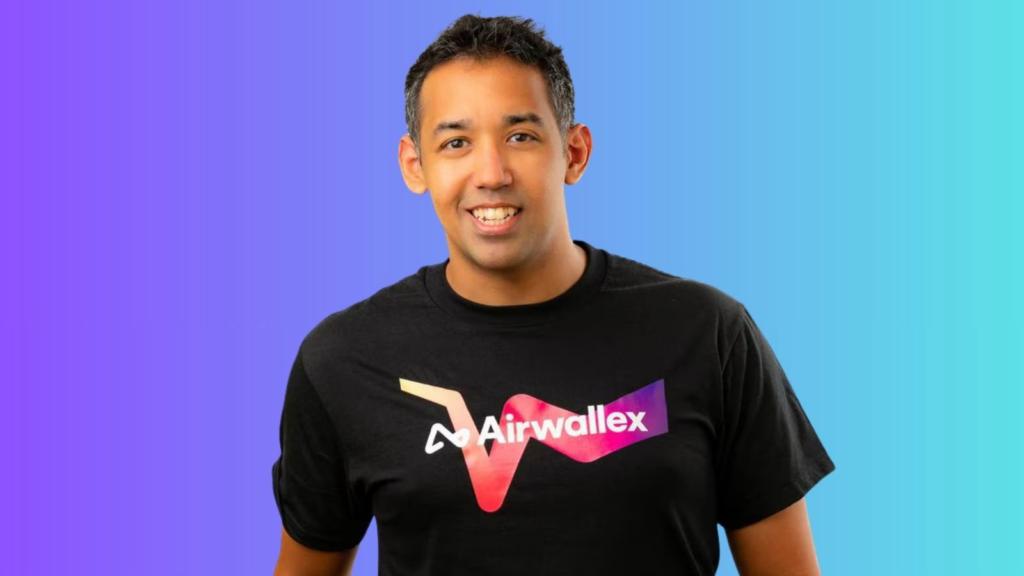
According to a recent report by Dentsu, titled “The Superpowers Index Asia Pacific”, the region has moved from participant to pace-setter in global B2B marketing, setting the benchmark for how brand reputation, clarity of purpose and seamless digital experiences convert buyer confidence into commercial outcomes. Now in its fifth year, the report highlights that trust remains the single most important factor in winning business. But the way brands build trust is evolving: word of mouth, influencer engagement, and brand reputation today, are critical and carry more weight than product features shaping APAC buyer confidence and commercial outcomes. Dissecting the report further is Mansi Trivedi, B2B strategy lead, APAC at Dentsu. Trivedi shares that as AI becomes more embedded in the buyer journey, this is a huge opportunity for APAC brands is to combine technology with deep cultural insight. Don’t miss: What CMOs need to know about the APAC B2B buyer journey in 2025 “This is where the region’s diversity becomes its superpower. Buyers still want to feel confident and understood, even as decision-making gets faster and more data-driven,” she said. The research also identified influencer marketing as the fastest-growing driver of B2B decision making, with nearly two-thirds of buyers referencing influencers in recent purchase decisions yet only 42% of marketers believe they are using the channel effectively. This gap represents one of the largest growth opportunities for APAC B2B brands in 2026. Trivedi explained that influencer marketing in the B2B space began gaining traction in 2023 through thought leadership partnerships and word-of-mouth channels. By 2024, it was a secondary lever, and 2025 marks its breakout year. She added:  Buyers now seek credible voices and advocacy to validate decisions in an increasingly automated environment. On the flip side however, AI-slop in B2B content is also rising and so content fatigue among decision-makers is prevalent. This means authentic voices and the real experiences will outperform carefully curated brand-owned messaging. “Hard-coding creator, influencer or thought-leadership voices into marketing whether you are investing in awareness strategies or ABM is going to offer up insurance against being ignored for brands,” she said. In a conversation with MARKETING-INTERACTIVE, Jon Stona, VP of global marketing at Airwallex, doubled down on authentic advocacy. “At Airwallex, we’ve seen the impact of authentic advocacy, whether it’s a CFO sharing their experience using our platform or a founder talking about how we help them scale globally,” he said. “Consumers can see right through fake endorsements. As a brand, you don’t want to risk eroding hard-earned trust by engaging in superficial influencer relationships, and as an influencer, you similarly don’t want to undermine the trust that your audience puts in you and your opinions,” he added. He noted that influencer marketing or otherwise, all good marketing starts with being customer obsessed and agile, adding:  We’ll keep reminding ourselves that we’re marketing to humans not ‘business decision makers’ – it’s important that we keep creating authentic and trusted connections. He added, “We’re in the midst of a technological paradigm shift (arguably the fifth Industrial Revolution in human history), and we need to be open-minded, experimental, and willing to be bold, especially as a challenger brand. Now isn’t the time to sit back and be passive…now is the time to be proactive and an early-adopter.” What kind of influencer marketing should B2B folks focus on? Influencer marketing in B2B isn’t just about celebrity endorsements or mega-influencers, explained Stona. It’s about authentic expert voices, thought leaders, and real customers shaping perception through their networks – people who look to add real value to their followers. Most importantly, it needs to be grounded in trust, expertise and a shared belief. “We’ve found a fair amount of success working with a pool of micro-influencers – while each individually may not have a massive audience, oftentimes their engagement is high, and in aggregate they can move the needle,” Stona added. Thought leadership, though a concept which might be seen as “dated” to a few, still goes a long way in the B2B space, said Jamshed Wadia, advisor at Mavic.ai . He added that beyond content creation, reach is also important with podcasts, independent newsletters and videos on social media gaining traction with savvy B2B players. “The most effective B2B brands are and will build a content strategy of credible voices, empower internal experts, and co-create with niche creators who shape category opinion,” he said, adding that: The future of B2B influence will look more like a community of peers than a campaign. Lynette Poh, head, marketing communications, Singtel Singapore, explained that with B2B decision-making today being more human than ever, influencer and creator-driven storytelling is undoubtedly gaining ground. However, as a brand, Singtel went a step further to not just influence but empower its B2B community. To help SMEs become storytellers of their own brand journeys, the brand launched its own TikTok Masterclass in partnership with SIM Academy where participants learnt to create engaging content, build online communities, and navigate the fast-evolving world of social commerce. Levers to decision making and selling cycles in 2026 According to the Dentsu report, in 2026, “ease” will be the new edge given the way people are now making decisions increasingly via AI-assisted journeys. This means that brands that find efficient and smart ways to truly demonstrate their understanding of the customers’ challenges while making the discoverability and decisioning easy will lead, explained Trivedi. She added that while buying cycles remain long, the trend is shifting. Historically, cycles lengthened from 352 days in 2022 to 384 days in 2024, reflecting increased complexity and multi-stakeholder decision-making. In 2025, the average cycle shortened slightly to 370 days, thanks to brands prioritising speed and simplicity. Commenting on 2026, Trivedi believes deal cycles will get even shorter, but the pace will be set by the brands who make buying effortless. “Those who remove friction early can compress cycles by up to 31%. So, the real question isn’t if cycles will shrink, but which brands will have the strategy to make that acceleration work in their favour,” she

Thought leadership works, but where’s the real power in B2B influence? Read More »

POP MART's Skullpanda Cage-Uncage showcase makes international debut in SG

POP MART is bringing its “SKULLPANDA CAGE-UNCAGE” showcase to Singapore, in collaboration with the National Museum of Singapore and the Singapore Tourism Board (STB). The immersive exhibition, which explores the artistry and narrative behind the collectible character SKULLPANDA, will run from 12 December 2025 to 22 February 2026, marking its international debut after a successful first run in Shanghai. The Singapore edition is the first SKULLPANDA showcase in the city-state and the result of a first-of-its-kind tripartite partnership between POP MART, STB, and the National Museum. Don’t miss: How STB is grabbing attention in the age of endless scrolling  The collaboration highlights the storytelling potential of collectibles while positioning Singapore as a destination for culturally distinctive experiences. A Singapore-exclusive installation draws inspiration from the local bird singing pastime, offering a unique, locally rooted dimension to the showcase. Created in collaboration with Chinese artist Xiong Miao, founder of North Studio and creator of SKULLPANDA in 2018, the showcase transforms collectibles into a medium for artistic reflection. Drawing on Xiong Miao’s background in game concept design, the exhibition invites visitors to consider themes of choice and uncertainty through six central motifs: emotion, fortune, rules, exploration, life, and direction. The Singapore-exclusive section of the exhibition draws on the bird singing hobby, a traditional pastime, introducing international visitors to a lesser-known facet of local heritage while echoing the communal appeal of collectibles. Visitors can expect larger-than-life sculptures, interactive installations, and immersive environments where everyday objects such as door frames, locks, and keys are transformed into symbols prompting reflection on confinement, freedom, and self-discovery. A POP MART pop-up store will also be open at the museum’s Longer Concourse for the general public. “The SKULLPANDA CAGE-UNCAGE Showcase represents our commitment to supporting artists such as Xiong Miao in exploring deeper themes through collectible design. We’re delighted to bring the showcase to Singapore, allowing us to share with a wider audience the vision of SKULLPANDA not just as a beloved character, but as a vehicle for meaningful reflection on the human experience,” said Justin Moon, senior vice president and chief operating officer at POP MART. The showcase builds on the National Museum’s previous collaboration with POP MART in 2024’s “Play:Date – Unlocking cabinets of play”, deepening its engagement with Singapore’s contemporary culture through collectible phenomena. “As the people’s museum, we are excited to host the ‘SKULLPANDA CAGE-UNCAGE’ showcase. Our commitment to examining contemporary Singapore means engaging with cultural movements such as collectible culture, allowing us to connect with diverse audiences and provide new pathways to deeper museum experiences,” Chung May Khuen, director of the National Museum of Singapore said.  Kenneth Lim, assistant chief executive, marketing, STB added: “International collaborations such as the ‘SKULLPANDA CAGE-UNCAGE’ showcase demonstrate Singapore’s dynamism as a location to showcase world-class creativity rooted in our own distinctive identity. This partnership exemplifies our Tourism 2040 vision of building a destination where history and contemporary culture intersect, creating the memorable and transformative experiences that Gen Z and Millennial travellers seek.”  This follows POP MART’s POP LAND first overseas pop-up in Singapore in October which showcased pastel-themed collectibles, photo-ready installations, and popular characters such as MOKOKO, targeting social media engagement and local fans. Meanwhile, STB has also ramped up efforts to attract Gen Z and millennial travellers through branded entertainment. Its latest collaboration with Chinese artist Xin Liu for her single Passion was filmed across four of Singapore’s iconic locations – the Asian Civilisations Museum, Jurong Lake Gardens, Clarke Quay, and Haji Lane – highlighting reflective, urban, and natural settings. The project underscores STB’s strategy of offering unique, immersive experiences that appeal to younger travellers. Related articles:   POP MART brand sentiments dip amid pricing controversy over new productPOP MART expands to Bandung with new immersive store experience  POP MART cracks open SEA’s collectibles craze with Lazada partnership   source

POP MART's Skullpanda Cage-Uncage showcase makes international debut in SG Read More »