marketing interactive

Nike reboots ACG to reclaim outdoor performance ground

Nike is reigniting its outdoor spirit with the reintroduction of All Conditions Gear – a performance brand for athletes who thrive on challenge, adventure and connection in the wild. Built on a four-decade legacy of serving the world’s most adventurous athletes, ACG returns with its founding mission: to deliver inspiration, motivation and high-performance gear for those who push their limits in all conditions. Nike said the relaunch marks a renewed commitment to enabling outdoor exploration., driven by a bold vision for the future of trail and mountain performance. “This is a defining moment in ACG’s history – a recommitment to all conditions and an invitation to athletes: unplug, get outside and explore,” ACG VP and GM Scott LeClair said. “ACG has the foundation to shape the future of outdoor performance while pushing into spaces that feel fresh and unexpected. It is going to be a fun ride.” ACG will lead with innovation centered on the trail athlete. The lineup includes purpose-built footwear like the flagship ACG Ultrafly and rugged ACG Zegama, alongside technical apparel such as the Radical AirFlow racing top and Lava Loft down jacket. Nike Trail is now integrated into ACG, allowing the brand to leverage Nike’s unparalleled running heritage to fuel performance for outdoor athletes of all levels. ACG is deepening its roots in the trail community through its All Conditions Racing Department, a growing roster of elite athletes dedicated to speed and exploration. New members for the season include Hiroki Kai (Japan), Hyunji Kang and Minchul Ko (Korea), and Jennifer Lichter, Takako Takamura, and Adam Merry (US). They join an established team of 22 athletes who help prototype, test, and refine future ACG innovations. The brand is also expanding its support of the global trail ecosystem. Beyond title sponsorship of the Chongli 168 Ultra Trail, ACG has added partnerships with iconic independent events such as the Broken Arrow Skyrace and Gorge Waterfalls. Marking a major retail milestone, ACG will open its first dedicated standalone store this month in Beijing’s Taikoo Li Sanlitun. Dubbed the “ACG Base Camp,” the space is more than a store—it’s a physical manifestation of the brand’s exploratory spirit, designed to reimagine gear for a new generation. Complementary activations at Nike stores worldwide will further bring the outdoors in, serving athletes wherever they explore. A new brand voice and campaign will further bring ACG’s identity, vision and passion to life, inspiring outdoor exploration and thrill while priming athletes everywhere for the adventure ahead. Related articles: Nike’s higher marketing expenses contribute to US$151m drop in net incomeNike and Edgar Cheung remind HKers not to ‘lose their ways’ with new product source

Nike reboots ACG to reclaim outdoor performance ground Read More »

Coffee Meets Bagel is making intentional dating a cultural affair

Coffee Meets Bagel (CMB) is partnering SG Culture Pass (SGCP) in a year-long collaboration aimed at encouraging singles to pursue more intentional dates through arts and culture. Anchored by the theme “Date with intention: Culture brings us closer”, the partnership positions cultural experiences, from workshops and performances to museums and heritage spaces, as alternatives to traditional dinner or café meet-ups. Through the tie-up, singles can tap into activities supported by SG Culture Pass, which are redeemable using the government-backed SG$100 SG Culture Pass credits. The collaboration aims to make cultural, activity-based dates more accessible while spotlighting distinctly Singaporean experiences. Don’t miss: Is Valentine’s Day in desperate need of a rebrand? According to Coffee Meets Bagel, dating expectations are shifting, particularly among women who increasingly favour thoughtful planning over grand gestures. Data from the dating platform found that women are significantly more inclined towards cultural and social-emotional date experiences compared to men. Approximately 19% of women indicated a preference for concerts and live performances as a date activity, compared to 9% of men. Meanwhile, 18% of women preferred dates at museums and galleries, versus 12% of men. Such settings offer lower-pressure environments with built-in conversation starters, which CMB said make them suited for early dates and deeper connection. As part of the collaboration, CMB users will see curated cultural date ideas featured across SG Culture Pass platforms, as well as within the Coffee Meets Bagel app and newsletters. Users will also receive priority access to CMB x SG Culture Pass promotions. Kicking off this Valentine’s Day, 11 couple-friendly SG Culture Pass events are available on the official SG Culture Pass website. These include a mix of arts, culture and heritage events, immersive experiences, workshops and self-guided quests. Among the activities are ‘FRAMED Murder Mystery’, ‘Ransack Puzzle Hunt’, ‘Monopoly Hidden Singapore: Love, Lost, and Found’, an acrylic painting workshop, ‘Pixar in Concert’ and ‘Hell’s Museum’ admission tickets. More SG Culture Pass-eligible events are expected to be added to the collaboration in the coming months. “Cultural dates naturally slow things down. They create shared experiences, ease first-date anxiousness, and open the door to richer, more thoughtful conversations. This partnership invites daters to step offline and build deeper connections through shared cultural experiences, discovery, and values,” said Shn Juay, CEO, Coffee Meets Bagel Worldwide. The collaboration also builds on CMB’s use of local data to drive brand storytelling. In May last year, ahead of Singapore’s General Election, the platform analysed anonymised user behaviour across GRCs and SMCs, suggesting dating habits may be influenced by where users live. Yio Chu Kang users were the most proactive, while Queenstown and Jalan Kayu users were more likely to ghost. Jurong Central users tended to chat late. Queenstown and Pioneer led in long-term relationship seekers, while Yio Chu Kang had a higher share of casual daters. The study also mapped hobbies by area, from dog-loving gym regulars in Queenstown to bookworms in Bukit Gombak and travel-loving foodies in Pioneer. Photo courtesy of SG Culture Pass.  Showcase your most innovative content and gain recognition from a panel of industry leaders by entering the inaugural Content360 Awards. Submit your work today and be part of the celebration that honours the campaigns defining the future of content marketing. Related articles: Coffee Meets Bagel names new global brand and communications lead   Coffee Meets Bagel and Paula’s Choice celebrate self-love this V-day   Klook partners SG Culture Pass to connect Singaporeans with cultural experiences source

Coffee Meets Bagel is making intentional dating a cultural affair Read More »

What’s shaping consumer demand this Ramadan?

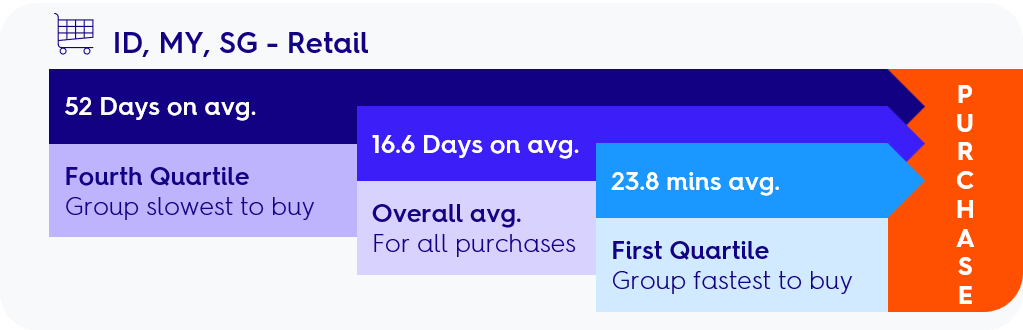
Shoppers across Southeast Asia are taking longer than ever to complete purchases during Ramadan, with some journeys stretching beyond 50 days, according to new insights from Criteo. The global commerce platform found that for purchases made in the final two weeks of Ramadan 2025, the average time between a shopper’s first product visit and completed purchase was 19 days. The shift signals that brands need to influence consumers earlier in the decision-making process, particularly as Chinese New Year and Ramadan are set to fall in the same week in 2026. Retail sales across the region also rose 13% year-on-year during Ramadan 2025, highlighting the growing commercial importance of the holy month. Shopping is no longer confined to the final days before Eid. While consumers begin researching products weeks in advance, conversion remains concentrated closer to the peak festive period. Sourcing: Criteo Commerce Data – Time between a first visit to a product description page and sales completed during the last two weeks of Ramadan 2025. ID, MY, SG. Don’t miss: Why marketers might be missing out banking only on big festive moments In Indonesia, retail sales in the final two weeks of Ramadan surged 35%, peaking at 57% on 16 March 2025. Malaysia saw sales rise 26%, reaching a high of 52% on 23 March 2025. Singapore recorded steadier patterns, reflecting a more diversified retail calendar and consumer base. What’s shaping the demand? According to the report, daily and cultural rhythms influence shopping behaviour. While afternoons still generate the highest overall sales, the biggest Ramadan-driven uplift versus pre-Ramadan occurred during ‘Suhoor‘ (‘pre-dawn meal’). In Indonesia, activity peaked between 3am and 5am, while in Malaysia it occurred between 4am and 7am. For marketers, this means timing campaigns around culturally relevant moments can significantly improve engagement and relevance. In addition, spending patterns during Ramadan 2025 mirrored cultural priorities. Religious and ceremonial products saw the strongest growth at 54%, followed by apparel and accessories at 18%. Increases were also seen across home and garden, furniture, and food and beverage categories, suggesting that consumers were making broader festive purchases rather than single-item transactions. Source: Criteo Commerce Data – Indexed sales compared to average in Feb 1-14, 2025. All site types. SEA Looking ahead, marketers need to treat Ramadan as a multi-stage season, building awareness and consideration early before shifting toward conversion and urgency as peak moments approach. With Chinese New Year and Ramadan coinciding this year, marketers will need to prepare for a more compressed festive calendar, requiring agile budgets, inventory and activation strategies. Aligning campaigns with daily cultural rhythms will be key to boost relevance, while staying present across touchpoints is essential to address non-linear purchase journeys. Dynamic, data-led optimisation and automation can also help brands anticipate peaks and emerging intent signals, keeping campaigns relevant in a more crowded and competitive festive landscape. The study’s findings echoed trends from Ramadan 2024. Criteo’s 2025 report showed that during Ramadan 2024, Muslim consumers spent heavily on religious and ceremonial items, apparel, and accessories, while food, beverages, and home products also saw strong demand. Consumers were also planning Eid travel, driving a 29% increase in bookings across the region. Similarly, shopping activity typically began nearly 20 days before purchase, with pre-dawn hours seeing peak engagement, particularly in Indonesia and Malaysia. While Malaysia and Singapore experienced notable retail growth, Indonesia recorded an 11% decline in online sales, highlighting shifting consumer preferences in the market. Showcase your most innovative content and gain recognition from a panel of industry leaders by entering the inaugural Content360 Awards. Submit your work today and be part of the celebration that honours the campaigns defining the future of content marketing. Related articles: The Ramadan playbook: Crafting campaigns that resonate in Indonesia What are Muslims in SEA spending on for Ramadan? How marketers can balance faith and consumerism during Ramadan source

What’s shaping consumer demand this Ramadan? Read More »

Why marketing leaders are ditching polished headshots for AI caricatures

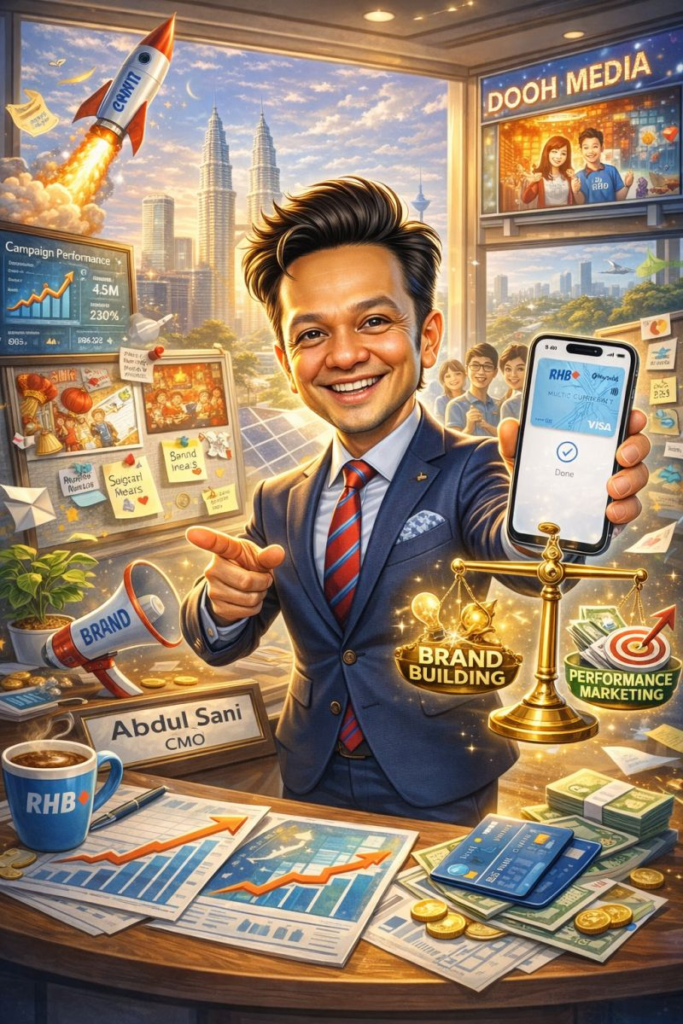
Artificial intelligence (AI) has rapidly become a staple in marketers’ toolkits, making it easier to generate images, copy, and content at the click of a button. According to CleverTap AI, 81% of marketers say their organisations use GPT models such as OpenAI’s ChatGPT or Google’s AI Gemini, and 71.4% report extensive use by content teams. But AI isn’t just about efficiency. It’s also fueling playful, creative trends. From the “Ghibli trend“, which transformed cherished memories into the animation studio’s iconic style, to AI doll portraits with tiny laptops and coffees, the technology is bringing joy and personality into everyday work life. Now, the Caricature trend is in the spotlight. Marketing leaders tell MARKETING-INTERACTIVE that caricatures are a playful, exaggerated lens that shows personality, career journeys, and inner motivations in ways traditional headshots cannot. Beyond competence, caricatures capture energy, chaos, humour, and the balancing acts of marketing. In addition, audiences tired of corporate polish are responding to this mix of individuality, authenticity, and visual fun. In all, marketers see it as part of a broader shift: generative AI is making creative self-expression more accessible, interactive, and culturally relevant, helping professionals stand out in a crowded digital world. Don’t miss: How IKEA is making trendjacking part of its personality Abdul Sani Abdul Murad, group chief marketing officer, RHB banking group  A professional headshot says, “I am competent. I own a suit. I understand lighting.” A caricature says, “My head is disproportionately large because I overthink things for a living.” The caricature captures something a headshot never can: the absurdity of the job. The balancing act between brand and performance, and the faintly delusional belief that creativity can move markets. Marketing has always been a tension. Long term brand versus short term sales. Creativity versus commerciality. Courage versus caution. If you are too far to one side, you wobble. Too far to the other, you stall. My career has largely been about defending the irrational in rooms that prefer spreadsheets, and defending spreadsheets in rooms that prefer applause. Caricatures are resonating because we are exhausted by polish. They reintroduce personality and signal individuality. If professionals are choosing exaggeration over perfection, perhaps it is because exaggeration feels more honest. Exaggeration is simply truth with the volume turned up. Alex Chan, head of brand, communications and marketing, Geneco  While a headshot helps people associate a face with a name, the caricature trend goes further by visually capturing the essence of a person’s career journey. For my generation, I was pleasantly surprised by how ChatGPT summarised my profession so accurately, especially when it highlighted the core of my career with the quote, “Let’s drive brand equity!” This put my experience into clear perspective. LinkedIn rarely sees social media trends, and it is even more unusual to see one that stands out from the platform’s typically polished profiles. Beyond being a fun way to use AI, the trend allows professionals to showcase individuality and authenticity in a more relatable, memorable, and even amusing way. Adora Sarah Chou, chief marketing officer, Guzman y Gomez Singapore  A professional headshot captures position and credibility and shows what I look like. This caricature captures character and energy and shows how I operate. It conveys movement between strategy and storytelling, boardroom decisions and brand moments. As marketers, we don’t just sit behind campaigns; we build them, obsess over them, and in my case, even voice the commercials on national radio. What this AI caricature captures that photography doesn’t is joy. I genuinely love what I do, and when you enjoy the craft, the line between work and play beautifully blurs. Modern leadership isn’t one-dimensional. We’re strategists, creators, operators, and communicators often all in the same hour. The caricature reveals that layered reality. The headphones and “ON AIR” sign show my love for storytelling. The strategy deck shows discipline. The burrito signals proximity to product. It blends professionalism with personality. Illustrated identities reflect dimensional leadership, experimentation, and the chance to express how you think and operate, standing out in a digital world. Koo Sok Hoon, director of marketing, Shangri-La Singapore  The caricature captures the narrative of my career, its milestones, evolution, and personality; in a way a professional headshot simply can’t. While a headshot presents how you look, the caricature conveys where you’ve been, what you’ve built, and the story behind the role. The focus on advertising effectiveness and ROI felt especially true to my career, as those principles have shaped much of my work. The inclusion of brands such as BMW, GUCCI, Breitling, and Shangri-La Singapore also accurately reflects the diversity and scale of my professional journey. Caricatures and illustrated identities tap into several compelling dynamics right now. First, there’s the powerful FOMO effect, people naturally want to participate in trends that feel timely and culturally relevant. Second, there’s a sense of delight and curiosity in seeing how accurate platforms such as ChatGPT can synthesise and reflect one’s persona using publicly available information. Finally, the animated, illustrated format adds an element of charm and approachability, making self-expression feel both playful and visually engaging. Eugene Lee, vice president, chief marketing officer, APAC, CHAGEE I think caricatures are so fun because they capture the essence of a person — not just how you look, but also your inner world — and bring both to life in a playful way. What I loved most about mine was the sparkle in my eyes and the width of my smile. It really reflects how the past year at CHAGEE has been for me. I’ve genuinely enjoyed the journey, felt energised by the work, and can clearly see where I’ve added value and pushed things forward. Compared to a formal headshot, it feels more human, more honest, and more “me”, showing both the joy and purpose behind what I do. Peilin Lee, head of marketing, Nespresso Singapore A headshot is safe. A caricature is honest. This trend went viral quickly as people can share (and boast) about their diverse interests from the safety of an adorable

Why marketing leaders are ditching polished headshots for AI caricatures Read More »

Why MILO is taking brand love all the way to the wedding aisle

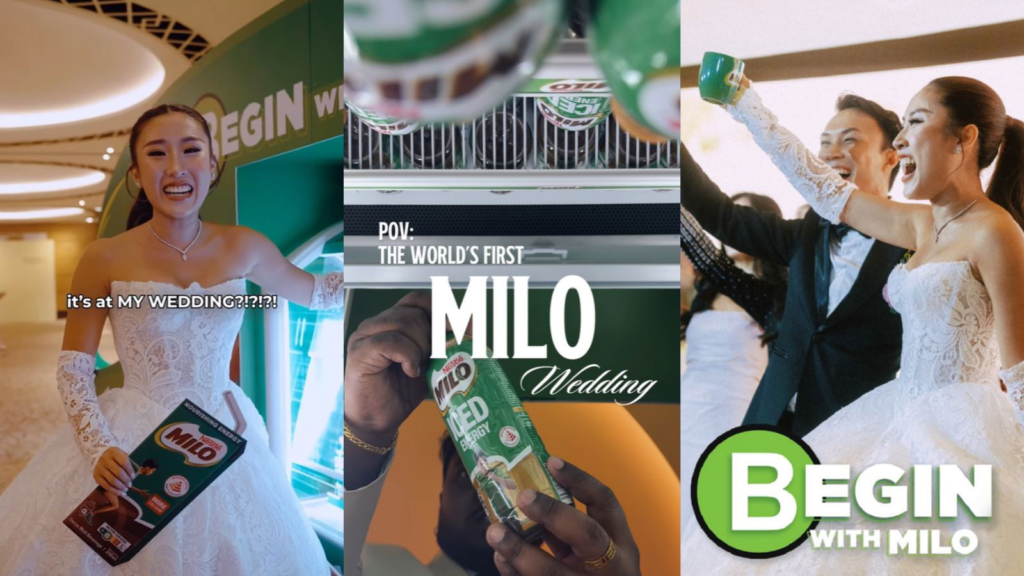
MILO Singapore is taking its long-running brand love into new territory, weddings, with the launch of its “MILO van wedding experience”, an activation that turns one of the brand’s most recognisable assets into a centrepiece for couples tying the knot. The idea first surfaced organically in January after creator Genevieve Henrietta Tan shared Instagram posts showing a MILO-themed wedding celebration, complete with MILO yam sengs, relay games and free-flow drinks from a customised MILO van. The posts quickly gained traction, prompting MILO to tease the activation before formally opening it up to the public in early February. The experience is anchored to MILO’s recently launched brand platform, “Begin with energy, begin with MILO”, which positions the beverage as a catalyst for both everyday routines and major life milestones. Don’t miss: Nostalgia meets novelty: Netizens respond to MILO’s SG60 campaigns “This started off as an organic fan request from Tan who reached out to us with a request for the MILO van for her wedding,” said Joy Lee, senior brand manager at MILO Singapore. “Her request happened to coincide with our newly launched brand campaign, and in the spirit of that campaign we thought, ‘Why not begin something new for MILO too?’” According to Lee, weddings were a natural cultural moment to tap into. “Weddings are a key milestone that represent new beginnings, and supporting weddings would definitely be in the vein of the campaign’s message,” she said. The first signs of the activation appeared on MILO Singapore’s Instagram on 6 January, with a launch video telling a love story that places MILO at its emotional centre under the line “Begin with MILO”. This was followed by Tan’s wedding posts on 27 January, which documented what she described as the “first MILO Van in history that came to a wedding.” A day later, MILO teased more behind-the-scenes clips from the celebration before officially inviting consumers to participate. On 2 February, the brand announced it would be giving three couples a MILO van wedding experience, open to weddings held in Singapore between March and December 2026. To enter, couples are required to comment on MILO’s Instagram post and share a MILO activity they would host at their wedding, with entries closing on 14 February. Lee said the key objective of the campaign is engagement rather than reach alone. “It’s to engage MILO lovers with the energy required to step into new beginnings, and to overcome the inertia to begin with MILO,” she said. Ensuring the brand’s presence felt meaningful, rather than intrusive, was a key consideration given the personal nature of weddings. Lee said the team focused on personalised touches co-created with each couple. One example includes marathon bibs as photo props, created with numerals representing the couple’s wedding date.  Beyond the visual spectacle of the van, Lee pointed to moments such as the ‘MILO yum-seng’ as helping the experience feel one-of-a-kind. “It was a cheeky ask, and we were glad the couple thought it was a great and novel idea too,” she said. “There would have been no better embodiment of ‘Begin with energy’ than that.” Social participation was deliberately chosen as the campaign mechanic, with entries managed through comments and direct messages. “We’re always looking for new and better ways to engage and bring the brand closer to everyone,” Lee said, adding that community conversations and peer sharing are central to how MILO builds relevance today. Looking ahead, Lee said experiential brand moments such as this could play a larger role in MILO’s marketing mix, adding that the activation reflects how the brand is continuing to evolve alongside adult consumers who grew up with MILO. “MILO continues to evolve with its consumers, young and old, and we hope to continue engaging Singaporeans with fresh ideas,” she said. The wedding activation also builds on MILO’s recent push into nostalgia-driven, locally rooted experiences. In April last year, the brand marked its 75th anniversary in Singapore with a series of exclusive plushies inspired by local breakfast and breaktime staples, including ‘MILO peng’, ‘kaya toast’, soft-boiled eggs and gem biscuits. The limited-edition drops sparked supermarket rushes and bulk buying, underscoring how deeply the brand continues to embed itself in everyday Singaporean moments beyond the cup. Showcase your most innovative content and gain recognition from a panel of industry leaders by entering the inaugural Content360 Awards. Submit your work today and be part of the celebration that honours the campaigns defining the future of content marketing. Related articles: Burger King SG revives MILO’s breakfast plushies with new limited-edition design        adidas brews up hyperlocal nostalgia with MILO for SG60    MILO Malaysia inspires Gen Z to ‘turn dreams into reality’ with TikTok series source

Why MILO is taking brand love all the way to the wedding aisle Read More »

Google doubles down on Singapore with sweeping AI expansion and national push

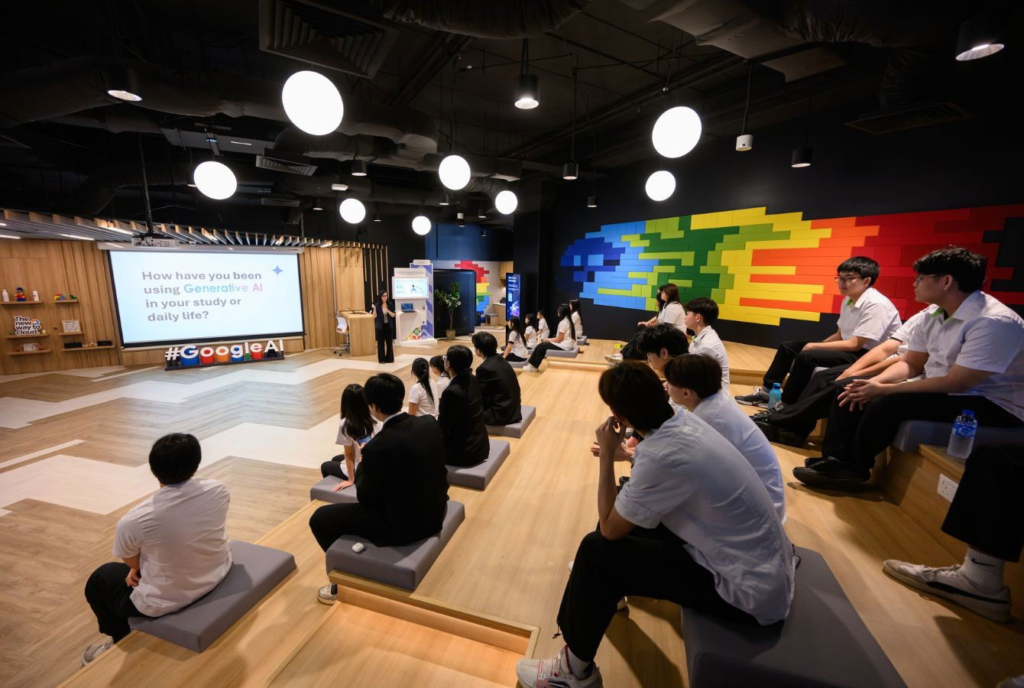
Google is doubling down on Singapore, unveiling an expanded AI research and development footprint alongside a slate of national initiatives spanning healthcare, enterprise innovation, talent development and online safety. The initiatives were revealed at the second ‘Google for Singapore’ event on 10 February, in the presence of Josephine Teo, minister for digital development and information. They are positioned as part of Google’s support for Singapore’s national AI strategy. Singapore has served as Google’s Asia Pacific headquarters since 2007, with nearly 3,000 employees today. The company has invested US$5 billion in technical infrastructure across four data centres and cloud regions, and established a Google DeepMind research lab in Singapore to advance AI in APAC. Don’t miss: Singapore nets SG$23B in 2025 investments as AI and startups steal the spotlight Google said it will scale specialised teams across software engineering, UX design and research science in Singapore, with a strategic focus on expanding its cloud engineering footprint. The move is aimed at strengthening Singapore’s position as a global R&D hub, building local research capabilities while partnering global Google teams to develop and export new technologies across its platforms and products. The investment complements Singapore’s Research, Innovation and Enterprise Plan 2030, which seeks to deepen research capabilities and drive impactful innovation. In healthcare, Google is expanding its partnership with AI Singapore (AISG) to support the development of Singapore’s national AI infrastructure for health. Through access to MedGemma, Google’s open model for medical understanding, the initiative will focus on fine-tuning a foundational health AI model to reflect Singapore’s healthcare context. The goal is to enable the development of AI-assisted applications tailored to local needs. Google is also collaborating with local health-tech startup AMILI on a precision nutrition programme. The initiative combines AMILI’s gut microbiome data with Google’s cloud and AI technologies, including Gemini, to deliver personalised nutrition and lifestyle recommendations. Separately, Google’s philanthropic arm has provided US$1 million to AISG’s Project Aquarium, an open data platform for Southeast Asian languages. The funding will support the development of higher-quality, open-source datasets to help developers build more culturally relevant AI solutions for the region. On the enterprise front, Google unveiled the Google Cloud Singapore Engineering Center. The hub will house software engineers and frontline support teams who will partner companies to address global challenges, including in robotics and clean energy. For startups, Google will launch “Startup school: Prompt to prototype” in Southeast Asia. The online training programme is designed to help founders use tools such as Gemini and AI Studio to turn ideas into AI prototypes, even without deep coding expertise. To build local talent, Google is launching “Majulah AI”, which brings together initiatives targeting jobseekers, entrepreneurs, developers and the broader population. This includes Skills Ignition SG with the Infocomm Media Development Authority (IMDA), Google for Startups Accelerator: AI First, AI Cloud Takeoff and Gemini Academy. Under a new partnership with the Ministry of Education (MOE), Google will roll out “Google AI living labs”, starting with ITE College East and expanding to Nanyang Polytechnic and other institutions. The programme aims to reach 50,000 Singaporeans by 2027 through hands-on workshops and industry collaborations. Google is also working with IMDA on the “Skills ignition SG AI challenge”, a three-month accelerator targeting 500 graduates and mid-career professionals. The programme will focus on integrating AI into non-technical roles such as accountancy, human resources, legal and sales and marketing. To enhance digital safety, Google is launching an AI Center of Excellence for security in Singapore. The hub will conduct research into emerging threats, including risks in areas such as agentic AI, while advancing security, privacy and content safety. The company has also begun rolling out age assurance solutions in Singapore. The feature is designed to provide users estimated to be under 18 with safer, age-appropriate experiences, including SafeSearch by default and enhanced content restrictions on YouTube and Google Play. These initiatives build on existing partnerships with government agencies, including enhanced fraud protection on Google Play Protect in collaboration with the Cyber Security Agency of Singapore (CSA). Since implementation, the protection has blocked over 2.9 million high-risk app installation attempts across more than 670,000 devices in Singapore over the past two years. Google has also partnered IMDA and the Media Literacy Council on the “Be Internet awesome” programme, which has trained 210,000 parents and children on online safety and media literacy since 2022. “Our mission in Singapore has always been about empowering Singaporeans today for tomorrow. The AI era makes that mission more critical than ever. That’s why we are growing our engineering and R&D teams in the country – not just to bring Google’s technology here, but to build solutions alongside Singapore that solve its unique challenges and drive new growth,” said Ben King, managing director, Google Singapore.  He added, “More importantly, we also continue to invest in the skills and training programs every person and business needs to thrive, ensuring this nation continues to lead on the global stage.” Jermaine Loy, managing director of the Singapore Economic Development Board (EDB), said Google’s expanded AI and R&D activities will help anchor advanced capabilities in Singapore and reinforce its standing as a global innovation hub. He added that the investment is expected to create quality jobs for Singaporeans in frontier technology fields, while supporting efforts to build a competitive and inclusive AI economy through continued collaboration between Singapore and Google. The move adds to Google’s broader AI build-out in Singapore. In November, Google DeepMind unveiled a new AI research lab in the country as part of its expanding Asia Pacific footprint, aligned with the government’s National AI Strategy 2.0 and Smart Nation 2.0 plans. Launched after the company more than doubled its APAC team over the past year, the lab brings together research scientists, software engineers and AI specialists to advance core Gemini capabilities and deploy models across Google’s products and Cloud offerings, with a focus on linguistic and cultural inclusivity, while serving as a regional collaboration hub for government, industry and academia. Showcase your most innovative content and gain recognition

Google doubles down on Singapore with sweeping AI expansion and national push Read More »

Australian Pork reframes CNY prosperity beyond the size of the feast

Australian Pork has launched a Chinese New Year campaign in Singapore challenging traditional ideas of prosperity at the reunion table, shifting the focus from abundance to trust, quality and peace of mind. The campaign features MasterChef Singapore judge and author Audra Morrice, who positions ingredient integrity as central to modern celebrations. As part of the campaign, Morrice made surprise visits to three local food creators, Eric Youn (@esyfilms), Daren Teo (@thepantryboy) and Shuang Yu (@aflouryspace), capturing unscripted moments as they prepared festive dishes using Australian Pork. In the first video, Morrice bumps into Teo just after a grocery run and challenges him to cook something on the spot. Teo, who is testing a Chinese New Year recipe, invites her into his home, where they prepare pork trotter vinegar. During the cook-along, Teo shares why he consistently chooses Australian Pork for its freshness, before the pair sit down to discuss why the dish is a CNY staple.   Don’t miss: SKM serves up friendly rivalry and sweet treats in cheeky CNY film In the second instalment, Morrice meets Youn and asks him to cook a reunion meal for her. Back at his home, Youn prepares two Korean dishes, ‘yukjeon’ (‘pan-fried battered meat’) and ‘tteokguk’ (‘rice cake soup’), using Australian Pork. As they cook, the duo discuss how these dishes come together during the festive period and the role food plays in family celebrations. The final video sees Morrice visiting Yu’s home, where she is tasked with preparing a Chinese New Year-inspired dish. The pair cook taro pork ribs, with Yu highlighting the freshness of Australian Pork, before bonding over the completed meal and its significance during the festive season. The content aims to showcase how quality ingredients translate into everyday cooking, from simple stir-fries to reunion centrepieces. Australian Pork said the campaign reinforces its positioning around cleanliness, safety and quality, supported by its APIQ production standards and biosecurity measures. These attributes are also embodied in its long-running “Flying Pig” mascot, which has appeared in the Singapore market for over two decades. The Chinese New Year content series is currently live across Morrice’s and participating creators’ Instagram channels, with the Flying Pig also returning across outdoor and digital placements during the festive period. “Prosperity at the reunion table is about more than just wealth; it’s about the richness of the connections we make over a meal,” said Morrice. “When cooking for loved ones, your confidence starts with trust. When you know your produce is of the highest quality, and as fresh and clean as Australian Pork, you can totally focus on the love you’re putting into the dish. That confidence is the ultimate luxury in any kitchen.” The campaign comes amid a broader shift among brands towards more intimate, everyday interpretations of Chinese New Year. Last month, FairPrice Group rolled out its 2026 festive campaign, “Every celebration made a little better”, which focused on small, familiar moments rather than grand gestures. Built on its “Every day, made a little better” brand platform, the Mandarin-first campaign features three 30-second films directed by Tariq Mansor and produced by Cutscene. The films spotlight everyday scenarios, with FairPrice playing a supporting role through products, services and offers that quietly enable families to spend more time together. Showcase your most innovative content and gain recognition from a panel of industry leaders by entering the inaugural Content360 Awards. Submit your work today and be part of the celebration that honours the campaigns defining the future of content marketing. Related articles: Tiger Beer unleashes first-ever lion dance troupe to spread CNY cheer across SG    TBB twists tradition with bak kwa kouign amann this CNY   Geneco marks CNY with playful music video and next-gen sustainability drive source

Australian Pork reframes CNY prosperity beyond the size of the feast Read More »

5 key takeaways for SG marketers from Budget 2026

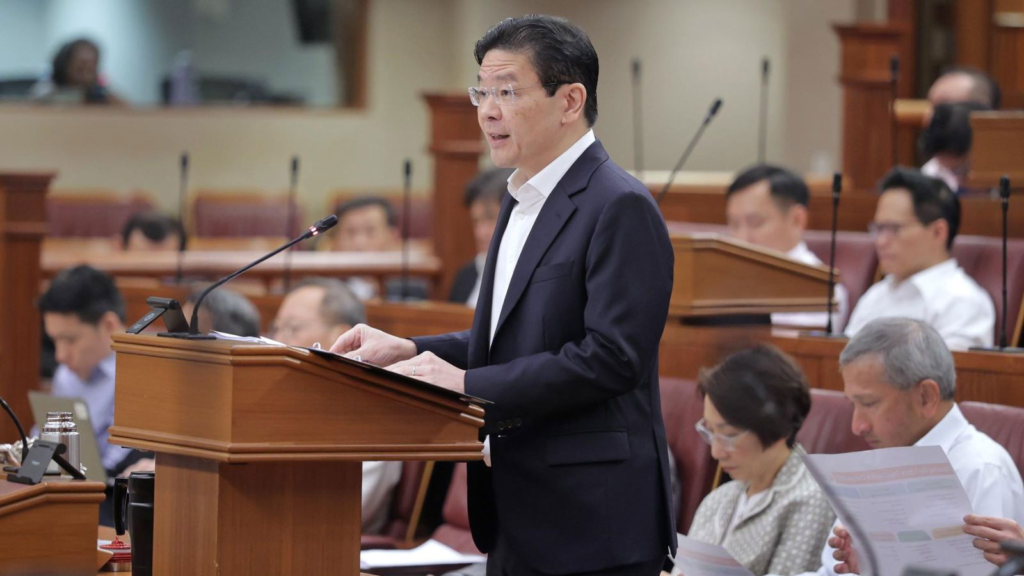
Singapore prime minister and finance minister Lawrence Wong presented the 2026 budget at parliament today (12 February). As the first Budget of the government’s new term, it comes amid profound global change. Wong reflected in his 2026 New Year message that 2025 was a milestone at home with SG60 and a strong growth of 4.8%. It also saw turbulence abroad, from geopolitical tensions to the erosion of long-standing trade rules.  While Singapore’s economy proved resilient last year, the road ahead is expected to be more moderate, with growth projected at 2% to 4% and inflation at 1% to 2%. Wong framed the Budget as an opportunity to rethink, reset, and refresh strategies: strengthening enterprises at home, expanding global reach, harnessing AI at scale, and equipping workers for the future. Don’t miss: Marketers, here are 4 takeaways from Budget 2025 Below, MARKETING-INTERACTIVE highlights some of the key takeaways from the Budget 2026 for marketers:  1. Increased support for companies to go global Support for companies venturing overseas is being stepped up. SMEs can now receive up to 70% grant support, while non-SMEs get up to 50%. The Market Readiness Assistance grant will cover deeper expansion in existing markets, and the Double Tax Deduction for Internationalisation cap rises from SG$150,000 to SG$400,000, with more qualifying activities included. The Enterprise Financing Scheme will also offer higher loan amounts for trade and fixed asset financing, giving firms more flexibility as they scale abroad. 2. Strengthening the enterprise ecosystem The Startup SG Equity scheme will receive a SG$1 billion top-up to support growth-stage companies, which often struggle to secure long-term funding. The scheme focuses on early-stage funding, providing initial capital for startups in Singapore.  A new workgroup led by Minister Chee Hong Tat will collaborate with industry to position Singapore as a leading hub for growth capital. The move aims to close persistent funding gaps and strengthen the broader startup ecosystem. 3. Introduction of national AI missions Artificial intelligence is a strategic focus, framed as a national advantage in a resource-constrained, ageing economy. Wong stressed that AI must serve societal and economic interests safely, with clarity and resolve. New national AI missions will target advanced manufacturing, connectivity, finance and healthcare, with clear objectives and measurable outcomes. A national AI council will coordinate government efforts, while sandboxes and regulatory reviews will allow companies to test AI responsibly. In addition, the government will launch a “Champions of AI” programme to support firms undertake comprehsensive AI transformation, including systems redesign and workforce retraining. Existing schemes such as the Enterprise Innovation Scheme and Productivity Solutions Grant will be expanded to cover AI-related expenditure and tools in 2027 and 2028, with each year receiving a SG$50,000 cap. Singapore will also develop a larger AI park in One-North, building on the Lorong AI pilot initiative to cluster innovators, researchers and practitioners. 4. AI support for workers and individuals   Acknowledging concerns over job displacement, Wong said Singaporeans will receive practical AI training. Initial efforts will focus on sectors such as accountancy and legal, before expanding more broadly. He added that AI will automate routine tasks, allowing professionals to move up the value chain. The SkillsFuture website will also be redesigned to make AI learning pathways clearer and easier to navigate. Singaporeans who enroll in selected courses will receive six months of free access to premium AI tools to apply their skills in real-world settings. This will include tools such as Anthropic’s Claude, OpenAI’s ChatGPT and Google’s Gemini.  5. Job and skills support for Singaporeans Workforce Singapore (WSG) and SkillsFuture Singapore (SSG) will merge into a single statutory board, jointly overseen by the Ministry of Manpower and Ministry of Education. The consolidation aims to better align skills development with evolving job needs and provide more seamless, end-to-end career and employment services. Moreover, the Level-Up Programme will be enhanced, with Mid-career training allowance extended to those who take up part-time training. Coverage will also be expanded to include industry-relevant courses.  Showcase your most innovative content and gain recognition from a panel of industry leaders by entering the inaugural Content360 Awards. Submit your work today and be part of the celebration that honours the campaigns defining the future of content marketing. Related articles: Singapore nets SG$23B in 2025 investments as AI and startups steal the spotlight    CMOs must adapt, as global ad spend becomes overwhelmingly digital APAC creator economy tipped to hit US$1.2 trillion by 2030    source

5 key takeaways for SG marketers from Budget 2026 Read More »

The APAC playbook: Connecting insights, experimentation, and personalisation in 2026

This article is sponsored by Mastercard. The commerce landscape across Asia Pacific is evolving fast. Intensifying competition, shifting consumer behaviours, and the rapid adoption of AI, are raising the bar for what marketing teams are expected to deliver across the full customer journey. The fundamentals of marketing have not changed, but the pace has. Simply put, what worked even a few years ago is no longer enough. Fragmented data, isolated tactics, limited experimentation, and basic personalisation are struggling to keep pace with consumers who expect relevance, consistency, and value at every single touchpoint. Increasingly, teams are being asked to do more than optimise individual campaigns. They are expected to connect acquisition, engagement, loyalty, and measurement in ways that drive measurable business outcomes. These pressures are clearly reflected in Mastercard’s latest “State of Personalisation Maturity in E-commerce” report, which surveyed senior eCommerce, marketing and digital leaders globally. The good news? While disruption is accelerating across the digital ecosystem and redefining what maturity looks like, the findings also point to opportunity. Across Asia Pacific, many brands have the foundations in place to lead the next phase of growth. Ultimately, despite execution gaps, APAC organisations show a strong cultural commitment to data-led marketing, an increasing use of insights to guide decisions, and continued investment in technical capability. The challenge? Turning that intent into repeatable and scalable impact. APAC is building the foundations Across APAC, personalisation is increasingly prioritised, but not as a standalone tactic. Marketing teams recognise that relevance, growth, and loyalty depend on a broader set of connected capabilities across data, experimentation, activation, and measurement. The research shows clear momentum: 71% of APAC brands say personalisation is a top priority. 71% report having in-house technical expertise to support advanced marketing initiatives. 43% have a dedicated business owner accountable for outcomes. These signals point to a region that understands the need to operate across the full customer life-cycle, not just optimise individual touchpoints. Teams are investing in skills, tools, and platforms, and increasingly using insights to guide decisions rather than instinct alone. However, the data also shows that personalisation only delivers value when these capabilities are connected and applied consistently. Where are the gaps? Unfortunately, despite strong intent and investment, several execution gaps continue to hold brands back across the region. 1) Audience alignment is the most consistent friction point Many organisations still lack a shared view of their most valuable audiences. Audience definitions vary by team; segmentation is applied unevenly across the web, app, and the media; and loyalty and execution remains siloed across channels and markets. At the same time, while around 43% of APAC brands ingest multiple data sources, an equal proportion have identified relevant data but have yet to actually integrate or activate it. This limits how consistently audiences are understood and reached. The impact is commercial, not theoretical. When audiences are poorly defined and inconsistently activated: Customer acquisition costs rise, eroding ROI. Conversion rates soften as relevance drops. Funnel progression weakens across acquisition and retention. Re-marketing underperforms due to fragmented signals and messaging. Instead of compounding performance over time, teams end up re-learning the same lessons in parallel, limiting scale and slowing growth. 2) Measurement limits the ability to show value Most APAC brands are measuring activity, but far fewer are measuring impact. 57% rely primarily on campaign-level KPIs. Only 14% consistently link activity to business outcomes such as retention or lifetime value. When performance is measured in isolation, it becomes difficult to show how marketing contributes to growth. Indeed, even a strong execution struggles to demonstrate impact beyond short-term metrics. Without clear links to outcomes such as customer acquisition cost, conversion or lifetime value, marketing risks being viewed as executional rather than strategic. Ultimately, outcome-based measurement is what allows teams to prove value, secure investment and scale what actually works. 3) Experimentation is constrained Compared with other regions, APAC teams report less freedom to test and learn. In fact, 57% report testing is restricted. Common constraints include: Key areas of websites or digital experiences being off-limits. Seasonal or event-driven restrictions. Executive mandates overriding planned road maps. These constraints slow learning and increase reliance on assumptions rather than actual evidence. As a result, campaigns go live with greater risks and deliver weaker commercial impact once scaled. Experimentation is what makes personalisation effective, allowing teams to validate relevance before investment is fully committed. The impact on loyalty and lifetime value These gaps also show up clearly in loyalty outcomes. When audience strategy, data activation and testing discipline are weak, experiences struggle to feel truly differentiated. Returning customers are less likely to feel recognised, and brands find it harder to anticipate needs or personalise interactions in ways that feel timely and relevant. Over time, this erodes loyalty, leading to lower retention, fewer repeat purchases, and ultimately, reduced customer lifetime value. Turning gaps into growth opportunities Fortunately, for APAC brands, closing the personalisation gap does not require a full-blown transformation. But it does require a series of deliberate, connected moves, that turn existing assets into impact across the entire customer life cycle. 1) From data collection to data activation Many organisations already sit on valuable customer data. The opportunity lies in activating those inputs together. When data is connected and accessible, teams can move beyond static segmentation and make timely decisions across marketing, experience, and loyalty initiatives. 2) Aligning around the audience Standardising audience definitions helps teams focus effort where it matters most. Shared segments across markets and channels. Clearly mapped next-best actions. A common language for planning, activation, and measurement. This alignment improves relevance while reducing fragmentation. 3) Learning through experimentation The brands making the most progress are learning by doing

The APAC playbook: Connecting insights, experimentation, and personalisation in 2026 Read More »

AI reshapes dating platforms, but singles set clear limits on emotional automation

Findings from “The singles dating survey”, released by Lunch Actually Group, reveal a nuanced attitude towards AI in dating. Singles broadly accept automation as a tool for efficiency, safety and scale, but are resistant to its role in emotional judgement or relationship decision-making. According to the survey, 61% of respondents believe an AI companion could never replace the emotional depth of a human relationship, despite the growing presence of AI-generated profiles, chatbots and virtual companionship features on dating platforms. “Efficiency matters, but authenticity matters more,” said Violet Lim, co-founder and CEO of Lunch Actually Group. “Singles are willing to use technology to reduce friction – not to replace emotional judgment. Platforms that over-automate risk eroding trust rather than improving outcomes.” Don’t miss: Is your GRC killing your dating game? Coffee Meets Bagel thinks so Awareness outpaces adoption The findings underscore a critical tension: AI is increasingly central to operational performance, yet its role must be carefully defined to avoid undermining user trust. While awareness of AI-enabled dating tools is widespread, actual usage remains limited. The survey found that 68% of singles have never used AI tools such as chatbots or profile optimisers as part of their dating journey. That gap, however, does not signal outright rejection. About 42% of respondents said they would be open to dating someone who used AI assistance, while another 36% remained undecided. The divide between awareness and adoption points to an opportunity for hybrid models – where technology supports better decision-making without replacing human agency. “The data suggests users are not rejecting AI outright,” Lim said. “They are selective. They want technology that supports better choices, not shortcuts emotional processes.” For brands operating in the dating economy, this suggests that product adoption may hinge less on novelty and more on how clearly AI’s role is communicated – and constrained. Trust lives in safety, not feelings Where singles do trust AI is in operational and risk-related functions. Survey responses indicate that confidence in AI is strongest when it comes to improving efficiency and reducing harm, rather than shaping emotional outcomes. While 46% of singles said they were unsure whether AI could meaningfully improve dating safety, respondents were clear about what would encourage continued use of dating platforms: better match quality (58%), verified profiles (58%), and safer dating experiences (48%). “These are no longer differentiators – they are baseline expectations,” Lim said. “Singles are signaling that technology should reduce risk and improve efficiency, but not substitute for human connection.” App fatigue sets in The survey also points to mounting fatigue with app-led dating models. Among respondents who had previously used dating apps, 43% said they had reduced their usage or stopped altogether, citing persistent issues such as fake profiles (66%), ghosting (49%), and a lack of genuine emotional connection (47%). The findings suggest that adding more features alone may do little to address declining engagement or user churn. At the same time, offline formats are regaining traction. More than 51% of respondents said in-person dating events feel more genuine than app-based or AI-assisted interactions, highlighting renewed commercial potential for platforms that blend technology with human-led matchmaking, curation and accountability. Founded in 2004, Lunch Actually Group is an Asian matchmaking company that combines human expertise with technology to support long-term relationships across Singapore, Malaysia, Thailand, Hong Kong and Indonesia. Against this broader industry backdrop, the company has taken a selective approach to AI adoption, using it internally to improve efficiency and matching outcomes while keeping human judgement central to relationship success. The company applies AI to assist with initial match filtering and facilitation logistics, as well as to analyse historical matching data to identify factors linked to successful outcomes. According to Lunch Actually Group, these efforts have increased both the number of dates facilitated and successful matches, while freeing matchmakers to focus on higher-value work such as client conversations, coaching and post-date feedback. “AI helps us surface patterns and operate at scale,” Lim said. “But the final matching decisions remain human-led. Technology supports insight – it doesn’t replace judgment.” The company has deliberately chosen not to automate emotional assessment, coaching or decision-making. “The goal isn’t to replace matchmakers,” Lim added. “It’s to free them up. We deliberately draw the line where automation would dilute insight, empathy, or accountability.” Showcase your most innovative content and gain recognition from a panel of industry leaders by entering the inaugural Content360 Awards. Submit your work today and be part of the celebration that honours the campaigns defining the future of content marketing. Related articles:Tinder turns the chaos of crushes into a Gen Z love festHKTB and tvN Asia blend travel and romance in Pinoy dating reality showDuolingo’s owl crashes dating show Love Island source

AI reshapes dating platforms, but singles set clear limits on emotional automation Read More »