marketing interactive

Visa APAC nabs Alvina Seah as head of Visa design and creative studio

Visa Asia Pacific has named Alvina Seah as head of Visa Design and Creative Studio.  In this newly created role, Seah will build and lead an in-house creative team aimed at strengthening Visa’s brand, driving marketing innovation, and supporting business growth across the region. She will also play a strategic role in enhancing Visa’s creative capabilities, setting new standards of excellence, and delivering high-quality work at scale to support the company’s evolving business needs. She will report to Danielle Jin, senior vice president and chief marketing officer of Visa Asia Pacific.  Don’t miss: How Visa’s M7 play signals a broader rethink of eSports as a serious brand channel  Seah brings over 20 years of marketing and creative leadership experience. Before joining Visa, she spent six years at GOVT VCCP as partner and executive director. Her previous roles include managing director at BBDO Worldwide and general manager at Energy BBDO. She began her career at agencies Proximity Singapore and TBWAGroup Singapore, according to her LinkedIn. Commenting on her role, Seah said that she is “thrilled to be joining Visa at an exciting time for the brand and the business.” “Asia Pacific is moving fast – culture is evolving before our eyes and a new generation of consumers and businesses is emerging with different expectations about how to pay and be paid. Visa is deeply embedded in the region’s commerce and culture, from delivering secure and seamless payments to enabling everyone to pursue their passions with our partners,” Seah told MARKETING-INTERACTIVE.  “I look forward to contributing to Visa’s growth, especially in this role that provides proximity to the business. As creatives, the closer we are to the business, the faster we learn and the more impact we can make.”   Earlier in January, Visa jumped early on the road to the Milano Cortina 2026 Winter Olympics and Paralympics, extending its long-running “Everywhere you want to be” platform with a new athlete-led storytelling campaign featuring Mikaela Shiffrin and Oksana Masters. Rather than focusing on medals or podium moments, the campaign highlights the journey behind elite performance. Closer to home, Visa turned heads in APAC with a campaign starring BLACKPINK’s Jennie Kim, sending fans and Blinks into a frenzy. The video, set to Jennie’s own track Like JENNIE, opens with her silhouette and the words “Visa presents JENNIE Road to Ruby,” following the star through scenes of travel and reflection on the highs and lows of life on tour. Showcase your most innovative content and gain recognition from a panel of industry leaders by entering the inaugural Content360 Awards. Submit your work today and be part of the celebration that honours the campaigns defining the future of content marketing. Related articles:  VCCP acquires GOVT, forms new regional hub in SG Former Tune Talk CMO joins Visa as client consulting director  Visa names new group general manager for Greater China  source

Visa APAC nabs Alvina Seah as head of Visa design and creative studio Read More »

Is Bella Astillah Hock Kee Kopitiam’s boldest play yet?

Hock Kee Kopitiam is having a moment, and it’s not just because there’s a new outlet to makan (eat) at. The homegrown kopitiam brand has made two headline grabbing moves, welcoming new strategic investors while appointing Malaysian singer and actress Bella Astillah as its first ever brand ambassador. Together, the moves signal a new chapter for the brand, one that blends growth ambitions with a distinctly Malaysian sense of warmth. On the investment front, Hock Kee announced the entry of the Creador Foundation, alongside private equity firm Censuria Capital, as strategic investors. The backing arrives as Hock Kee opens its 17th outlet, Hock Kee Heritage, at Medan Pasar, a location steeped in Kuala Lumpur’s history and kopitiam culture. Founded in 2018, Hock Kee has grown from a single Johor outlet into a nationwide network spanning Johor Bahru, Kuala Lumpur and Ipoh, with Kelantan next on the map. Its halal certification in 2024 further cemented its national appeal, helping the brand bridge communities while staying rooted in tradition. Don’t miss: Ricola names K-pop icon IU as Asia ambassador While the institutional backing adds muscle behind the scenes, it’s Bella Astillah who takes centre stage in front of the brand. The appointment, according to Hock Kee, is less about celebrity gloss and more about shared values. “Our main intention is the muhibbah spirit. Hock Kee is a Malaysian brand, and we believe in supporting Malaysian homegrown artists,” a brand spokesperson shared exclusively to A+M. “Bella represents qualities we truly respect. She is hardworking, multitalented, brave, and always kind. To us, that reflects the Malaysian spirit that Hock Kee embraces too.” Her appointment was marked with a new brand film titled “The best halal kopitiam in Malaysia according to Bella Astillah.” The film opens with Bella entering the kopitiam slightly flustered, sitting at the wrong table, drawing curious stares, and even holding the menu upside down. Once her food arrives, however, her nerves melt away as she breaks into a smile at the first bite. In a warm, neighbourly moment, the lady seated behind her offers Bella some egg tarts, prompting Bella to invite everyone around to share the food she has clearly over ordered. The film closes with Bella’s line, “makan sama-sama, lagi sedap”, a reminder that food, like good company, is always better when shared. The timing of Bella’s appointment also coincided with the opening of Hock Kee Heritage in Medan Pasar, though the brand was quick to clarify that it wasn’t a carefully choreographed strategy. “We have been engaging Bella since January, and the timing happened to align with this outlet opening. It was a good occasion to make the announcement together as part of a meaningful brand milestone,” they said. Moving forward, Bella will be the face of the brand across campaigns, helping introduce Hock Kee’s Malaysian food to both local diners and international visitors. The focus, the brand added, is on sharing “the warmth of our food, our culture, and the everyday kopitiam experience in a relatable way”. The brand film featuring Bella will roll out across multiple touchpoints including OOH, DOOH, YouTube, social media, outlets and cinemas. Even Hock Kee’s bus wraps, spotted crossing borders between Malaysia and Singapore, are part of the plan. “It’s marketing ads, not a shuttle bus,” the spokesperson said, noting that the aim is to build awareness among Singaporean travellers and cross-border commuters. As for what’s next, Hock Kee’s marketing playbook will be wide ranging, spanning social media, key opinion leader (KOL) tie ups and on ground activations. Still, the brand insists its heart remains firmly in the kitchen. “At the end of the day, our main focus is still food quality and customer experience. That remains our top priority,” the spokesperson shared.  Bella Astillah has risen to immense fame after her tie-up with local politician Syed Saddiq to front PrimaValet as brand ambassadors constantly made headlines throughout the last year. Every video and photo posted of the pair on social media garnered a large number of views, comments and shares— proving that PrimaValet’s decision to place the two together as a modelling couple reaped traction. According to media intelligence CARMA, a majority of the conversations surrounding the PrimaValet are in relation to the perceived relationship between Syed Saddiq and fellow model, Bella Astillah. Some social media users are happy to see Syed and Bella as a couple, while others suggest that the relationship is a publicity stunt. Some netizens are also concerned about the public’s obsession with the couple.  Meanwhile, Bella has continued to make appearances at various brand events and launches, and was most recently appointed as an ambassador for Nestlé La Cremeria in October 2025, coinciding with the launch of two new ice cream flavours, Neapolitan Royale Stick and ChocoBerry Royale Pint. Related articles: From ballots to brands: Are politicians the next big marketing play in Malaysia? Bella Astillah serves up sweetness as Nestlé Ice Cream hits the road with new flavours Bella Astillah makes ERA FM debut after Syed Saddiq’s cancelled radio stint source

Is Bella Astillah Hock Kee Kopitiam’s boldest play yet? Read More »

Singapore Tourism Board picks PR agency

The Singapore Tourism Board (STB) has appointed Edelman as its PR agency following a competitive pitch, tasking the firm with supporting its communications and marketing efforts across ongoing initiatives and high-profile campaigns. In a statement to MARKETING-INTERACTIVE, Edelman said the mandate is effective immediately for an initial two years and two months, with an option to extend for a further three years. According to tender documents on GeBIZ seen by MARKETING-INTERACTIVE, the scope spans two tiers of PR support. Core PR support will see the agency work with STB’s communications division in Singapore on always-on activity, including strategic planning, media engagement, issues and crisis counsel, digital amplification, monitoring and measurement. Project-specific support will focus on earned-led communications for priority marketing initiatives spanning leisure travel, business travel and meetings, incentives, conferences and exhibitions (MICE). Key campaigns include Culinary Capital, Singapore Food Festival and Grand Prix Season Singapore. Don’t miss: STB wraps up social media pitch, retains agency partner Edelman said the appointment aligns with STB’s Tourism 2040 roadmap, with an emphasis on strengthening storytelling capabilities, enhancing media relations, developing compelling narratives and improving online visibility to elevate Singapore’s profile as a global destination. On the execution front, Edelman will develop communications strategies across tourism sectors including attractions, F&B, retail, arts, entertainment, hotels and MICE. Deliverables include content planning, third-party media partner management, press materials, presentations and story banks. The agency will also support media relations, events, pitching, influencer and key opinion leader (KOL) engagement, as well as campaign reporting and performance tracking. In addition, Edelman will manage third-party contracts, collaborate with other appointed agencies and handle account management and reporting functions. “Singapore is one of the world’s most dynamic and forward‑looking destinations. We are proud to partner with STB and look forward to applying our integrated communications expertise to help tell Singapore’s story in a way that is relevant, compelling and culturally resonant,” said Delicia Tan, CEO for Edelman Singapore, Hong Kong and Taiwan.  While the PR pitch has concluded, STB’s broader creative pitch is still ongoing. As of November 2025, four agencies have been shortlisted: TBWASingapore, BLKJ Havas, Publicis Singapore, and Ogilvy Singapore. The initial lineup had also included Forsman & Bodenfors, McCann Worldgroup Singapore, Toaster, and TSLA, according to GeBIZ. The process is being overseen by marketing consultancy Ebiquity. Showcase your most innovative content and gain recognition from a panel of industry leaders by entering the inaugural Content360 Awards. Submit your work today and be part of the celebration that honours the campaigns defining the future of content marketing. Related articles:    STB cranks Singapore adrenaline and thrills up to full tilt   Four agencies shortlisted for STB creative pitchSingapore Tourism Board hunts for creative agency, Ebiquity to handle pitch   source

Singapore Tourism Board picks PR agency Read More »

Gen Z perspectives: NDP 2026, AI caricatures and do mascots still matter?

Happy Friday, MARKETING-INTERACTIVE readers and welcome back to Gen Z Perspectives, your go-to feature where we unpack the week’s top stories and trending topics through the eyes of Gen Z. From the biggest industry moves to viral moments and marketing controversies worth dissecting, we’re bringing the heat with authenticity, awareness and probably a few unfiltered takes. This week: NDP 2026 is on the hunt for a creative agency to drive its nationwide campaign, IKEA Singapore jumped on the AI caricature trend, and we asked, do brand mascots still matter in 2026? No AI here, just the real stories you’d want to see.  Don’t miss: Gen Z perspectives: Mandai global media pitch, Apple’s CNY film & Moltbook 1. National Day Parade 2026 calls creative pitch Singapore’s National Day Parade (NDP) 2026 organising committee is looking to appoint a creative agency to lead its nationwide branding and publicity campaign. According to tender documents released on GeBIZ, the selected agency will oversee the strategic development, creative execution and publicity management for NDP 2026, with the contract running until 31 August 2026.  The appointment aims to ensure coherent messaging across multiple platforms while translating NDP 2026’s theme into a unified brand identity and integrated communications campaign. Read more here.  2. How IKEA is making trendjacking part of its personality Over the weekend, the “Caricature trend” took over social media feeds, with individuals sharing AI-generated caricatures of themselves. To join in, users are encouraged to use ChatGPT with the prompt “Create a caricature of me and my job based on everything you know about me”.  Amidst the playful and exaggerated cartoon-like self-portraits, IKEA Singapore has put its own twist on the trend by turning its beloved panda (Kramig), bear (Djungelskig) and shark (blahaj) soft toys into caricatures. Read more here.  3. Keeta unleashes Kiki: Do brand mascots still matter in 2026? By now, most of us have seen Keeta’s new face—KiKi, a lively cheetah inspired by the “cheetah” roots of the Keeta name. Whether you love her or question the choice, one thing’s for sure: she’s got people talking. The buzz across social platforms signals a bold shift in the brand’s identity. Despite their emotional power, brand mascots may feel like a relic of marketing past. Icons such as Koko the Koala or Tony the Tiger have mostly faded. Even the still-visible M&M’s characters and Geico Gecko first appeared in 1954 and 1999, respectively. Read more here.  Showcase your most innovative content and gain recognition from a panel of industry leaders by entering the inaugural Content360 Awards. Submit your work today and be part of the celebration that honours the campaigns defining the future of content marketing. Related articles: WPP reportedly revamps creative agency structure in major overhaul     Lee Kum Kee reinvents iconic premium oyster sauce for everyday cooking    How Standard Chartered is navigating the future of global banking source

Gen Z perspectives: NDP 2026, AI caricatures and do mascots still matter? Read More »

Forrester: How Gen AI is reshaping consumer behaviour in 2026

As consumers grow increasingly comfortable confiding in generative AI (Gen AI) for sensitive, personalized, and emotionally supportive interactions, a deeper “intimacy” with the technology is emerging. According to Forrester’s latest report, The State of Gen AI and Consumers for 2026, 62% of global users now engage with Gen AI at least weekly — a sign that it is evolving from a productivity enhancer into an indispensable cognitive partner. The report highlights the rapid acceleration in Gen AI adoption, which is reshaping how consumers seek information, make decisions, and form digital habits. Among those who have used Gen AI, one in five online adults now use it daily — with many viewing it as their go-to “answer engine.” Despite persistent concerns around misinformation and data privacy, Gen AI has become embedded in everyday life — powering everything from search and content creation to personal advice and companionship. Usage has increased by 2 to 12 percentage points year-over-year across global markets. ChatGPT remains the most widely used GenAI tool, with adoption rising across all demographics — including a significant uptick in female user profiles. This growing familiarity has led to expanded use cases, echoing the trajectory of smartphones. For many, Gen AI is becoming a “second brain.” Globally, consumers are leaning into Gen AI primarily for personal tasks such as writing assistance, planning, recommendations, and daily problem-solving. In the US, adults with advanced degrees are twice as likely to use Gen AI at work compared to those with only high school education (49% vs. 24%). However, the line between personal and professional use is increasingly blurred. In both the US (27%) and the UK (31%), consumers report using Gen AI tools both as digital assistants and as companions. Users often describe the technology as non-judgmental, emotionally supportive, and always accessible — qualities that foster deeper engagement and routine use. Still, Forrester highlights four consumer archetypes — Power Users, Casual Users, Reluctant Adopters, and Skeptical Observers — illustrating that trust in Gen AI varies significantly based on user mindset and tech confidence. More than 40% of users turn to Gen AI for drafting content, and a similar proportion relies on it for advice and recommendations. In emerging signs of AI-driven commerce, around 28% of US and 27% of UK online adults have already made purchases using AI. While fully autonomous agentic AI remains in its infancy, consumers are growing more comfortable entrusting AI with assistive tasks such as travel planning, content generation, and product discovery. Despite rapid adoption, consumers remain wary. Misinformation, data privacy risks, and potential job displacement continue to be top anxieties. As AI tools become more deeply embedded in daily habits, consumers expect more transparency, safety, and ethical governance from the brands that deploy them. For brands, the decrease in organic traffic due to large language models (LLMs) and the zero-click phenomenon varies drastically. Forrester suggests brands optimise for AI discovery and holistic search, and think about AI a new user interface that adapts to their client’s intent and real-time context. On the other hand, brands must realise their ethical responsibility to their consumers and align AI systems to build stakeholder trust, create internal business alignment, and ensure that technical model alignment gets off to a good start. Mark your calendars for 24 June! #Content360 Hong Kong returns with a dynamic, one-day event dedicated to pivotal trends—from the silver economies to breakthrough IP collaborations, sports, and beyond. Let’s dive into the art of curating content with creativity, critical thinking and confidence! Related articles: Survey: 68% of APAC buyers use Gen AI to evaluate vendorsStudy: 83% of APAC CEOs says Gen AI is a top business priority source

Forrester: How Gen AI is reshaping consumer behaviour in 2026 Read More »

5 tips to acing your Content360 submissions

Awards have long been part of the marketing industry’s ecosystem, offering brands and agencies a way to benchmark their work against peers while recognising effectiveness and innovation. In an increasingly competitive landscape, they also serve as a reflection of how marketing practices continue to evolve — particularly in areas such as content, where audience expectations and platforms are constantly shifting. For brands, entering awards goes beyond recognition. The submission process itself encourages teams to revisit campaign objectives, clarify strategy, and evaluate results in a structured way. This often provides valuable insight into what worked, what resonated with audiences, and how future campaigns can be strengthened. As content marketing continues to play a central role in how brands engage audiences, Awards programmes such as the inaugural Content360 Awards aims to spotlight work that demonstrates strong storytelling, strategic thinking, and measurable outcomes. For marketers preparing submissions, clarity and focus remain key. Don’t miss: 5 new esteemed judges added to the Inaugural Content360 Awards Here are five tips to consider when crafting your entries: 1. Lead with audience insight & challenge Clearly outline the business problem and the specific audience need your campaign addressed. Explain why a content-led approach was the right solution, and highlight the research, social listening, or data that informed your core insight. This sets a strong foundation for your submission. 2. Showcase a compelling content strategy Present your core idea and narrative in detail. Explain your choice of content formats — whether video, podcast, article, or experiential — and how they delivered value beyond a marketing message. Highlight originality and what made the campaign distinctive in a crowded landscape. 3. Map out distribution & engagement Judges want to see strategy in action. Detail how your content reached the right audience through chosen platforms, channels, or creator partnerships. Demonstrate how it fostered interaction, participation, or community engagement, not just passive consumption. 4. Demonstrate measurable impact Show the “so what” behind your campaign. Include audience metrics like engagement, time spent, or subscriber growth, alongside business outcomes such as brand lift, leads, conversions, or sales. Linking results to your initial challenge demonstrates real-world effectiveness. 5. Keep submissions clear and structured Clarity is essential. Follow word limits for each criterion and organise your entry so each section is easy to follow. A concise, well-structured submission allows judges to quickly assess your insight, strategy, execution, and results. As content marketing continues to shape modern marketing strategies, recognising excellence in this space has become increasingly important. The Content360 Awards seeks to celebrate brands and agencies that are pushing boundaries in content creation and delivering meaningful impact through storytelling. To find out more about the Content360 Awards and submission details, click here. Related articles:  Is content helping your marketing strategy, or are you just spamming?  Meet your first 10 jury members for the inaugural Content360 Awards  MARKETING-INTERACTIVE launches inaugural Content360 Awards in SG  source

5 tips to acing your Content360 submissions Read More »

The LEGO Group builds big with expanded Singapore hub

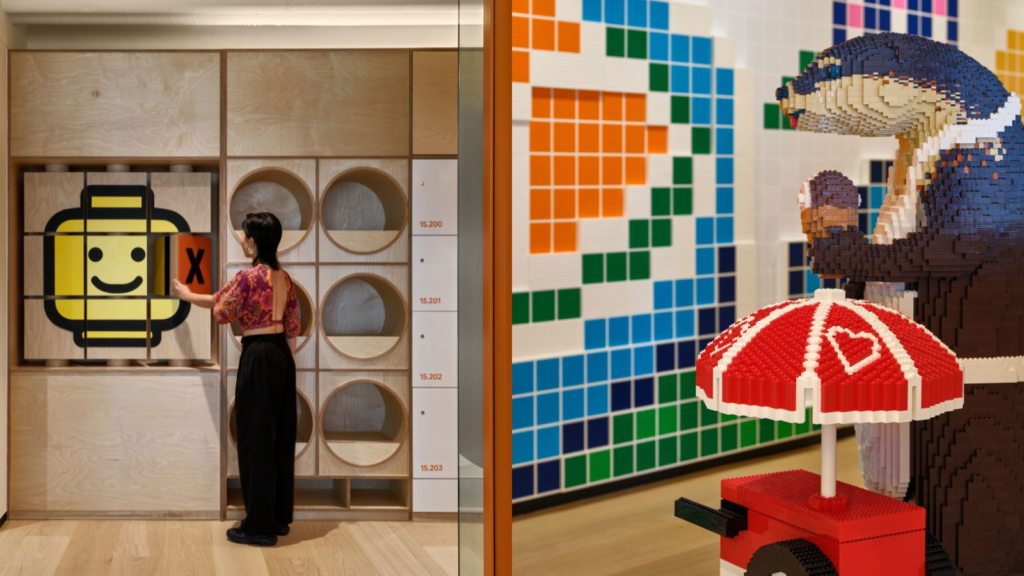
The LEGO Group has unveiled the expansion of its Singapore regional headquarters, signalling a deeper commitment to APAC and to delivering a best-in-class workplace experience. The new space spans over 7,000 square meters across four floors, including a 1.5-floor expansion. It embodies the company’s global workplace principles of playfulness and inclusivity, with features ranging from life-size LEGO displays to Peranakan-inspired lunch boxes filled with LEGO bricks. The office is designed to inspire creativity, collaboration, and connection, giving employees flexibility to choose spaces that suit their working styles, including focus areas, hybrid collaboration zones, social spaces, and even hands-on LEGO building sessions. Don’t miss: LEGO Group nabs dentsu Creative SG MD as agency business partner director The expansion also prioritises well-being and inclusivity, featuring dedicated parents’ rooms, quiet zones, and activity-based workspaces designed to support neurodiversity, creating an environment that “empowers colleagues to grow and succeed on a global scale”. Singapore has been a strategic hub for the LEGO Group for over a decade, selected for its infrastructure, stable operating environment, and talent pool. The hub now employs over 500 people across critical functions such as business service operations, the creative play lab, engineering and quality, and global supply chain. The office also strengthens the company’s efforts to reach children through play, via partnerships with Playeum, the Children’s Museum of Singapore, and the Singapore Science Centre. Claus Kristensen, SVP APAC at the LEGO Group, said, “Our people are at the heart of everything we do. This expansion is about creating a workplace that inspires creativity, collaboration, and a sense of belonging. Singapore provides the perfect environment for us to grow and innovate as we continue to deliver meaningful play experiences to consumers across Asia‑Pacific.” Singapore continues to be a key playground for The LEGO Group, not just in its offices but also in its consumer campaigns. Earlier this month, the company put a playful spin on Valentine’s Day with LEGO Botanicals, inviting Singaporeans to build their own bouquets instead of buying flowers. The campaign featured a limited-time Bloom Bar pop-up at Raffles City from 2 to 15 February, styled like an outdoor craft fair. Visitors could explore curated LEGO Botanicals sets, including roses and tulips, and build creations to take home. Smaller activations included a vintage-style photo truck near City Hall and the ‘Bloom squad’ handing out fresh roses and vouchers, redeemable for LEGO rose stalks with qualifying purchases. Showcase your most innovative content and gain recognition from a panel of industry leaders by entering the inaugural Content360 Awards. Submit your work today and be part of the celebration that honours the campaigns defining the future of content marketing. Related articles: The LEGO Group and Crocs unite to celebrate creativity and self-expression   LEGO taps Tom Holland to bring imagination back into play   How LEGO and IKEA Malaysia are redesigning homes through play source

The LEGO Group builds big with expanded Singapore hub Read More »

Mutant doubles down on business events with Mutant MICE

Mutant has launched Mutant MICE, a dedicated regional offering aimed at strengthening how meetings, incentives, conferences and exhibitions (MICE) are positioned, communicated and amplified across Asia. The move formalises the work the independent Southeast Asia communications agency has delivered across the business events sector over the past year. According to Mutant, demand has grown for partners who understand not only event promotion, but the broader ecosystem around destinations, industries and economic impact. Mutant MICE brings together the agency’s capabilities across public relations, content, social media and stakeholder engagement. The offering is designed to help organisers, brands and destinations translate events into longer-term visibility, reputation and measurable outcomes, moving beyond attendance figures and ticket sales. Don’t miss: Mutant debuts in Manila with Dev Atinaja and Luckie Masbad leading push The launch comes as competition in Southeast Asia’s MICE landscape intensifies, with clients under increasing pressure to demonstrate return on investment, from tourism and trade impact to delegate conversion and industry influence. Over the past year, Mutant has delivered communications programmes for platforms including Business China, Tech Week Singapore, the Singapore International Film Festival, Cirque du Soleil’s KOOZA Singapore and the Abu Dhabi Infrastructure Summit. It has also supported government-linked tourism and cultural initiatives. Most recently, the agency was appointed to work on the Malaysian International Food & Beverage Fair. As markets such as Singapore and Malaysia continue positioning business events as pillars of tourism, trade and investment growth, Mutant said the new offering aims to help clients maximise strategic value before, during and after each event. “The MICE sector sits at the intersection of business, culture, travel and economic opportunity, and brands and destinations need a communications partner that understands not just the event, but the ecosystem around it,” said Lina Marican, regional managing director of Mutant. “Mutant MICE brings strategic clarity, earned creativity and on-ground discipline to help our clients stand out and scale their impact.” The launch builds on Mutant’s broader regional growth and leadership expansion. In August last year, the Singapore-born agency promoted Archana Menon to oversee both its Singapore and Malaysia operations, while appointing Allen Looi as regional head of social across its markets. Menon, who joined Mutant in 2021 as country manager for Malaysia, took on an expanded remit across the agency’s two most established markets. Under her leadership, the Malaysia business recorded 26% revenue growth in 2024, driven by new wins and regional mandates including Marriott, LEGOLAND Malaysia and PepsiCo. In her expanded role, she focuses on team culture, business growth and strengthening the agency’s integrated communications offering. At the same time, Mutant appointed Looi to lead social across Singapore, Malaysia, Indonesia, Thailand and the Philippines, with Vietnam expected to join the fold. His mandate spans content creation, social strategy, integrated campaigns across PR, brand and digital, as well as new business and team mentorship. Related articles: LEGOLAND Malaysia Resort names new PR agency for Malaysia and Singapore  Mutant picks up Smartcom account as telco tech firm enters Indonesia    Mutant picks new head of client success source

Mutant doubles down on business events with Mutant MICE Read More »

TikTok and Fabulate team up to scale creator content across APAC with AI at the core

TikTok has inked a landmark deal to embed its Symphony gen AI suite into influencer marketing platform Fabulate, a move positioned to accelerate how brands create culturally relevant content faster and at scale. The deal marks the first time TikTok has integrated its generative AI tools into a global influencer marketing platform, with Sydney-based Fabulate working closely with TikTok’s APAC team on a broader regional rollout. At the heart of the partnership is Symphony, TikTok’s generative AI toolkit built specifically for content creation on the platform. Now embedded directly into Fabulate’s end-to-end workflow, the tools allow brands and creators to develop, adapt and optimise campaigns without switching systems. SEE MORE: APAC creator economy tipped to hit US$1.2 trillion by 2030 Nathan Powell, chief strategy officer at Fabulate, described the integration as a “structural shift” and not just another feature update. “TIkTok Symphony is a leap forward for creator marketing,” Powell said. “By bringing this capability into Fabulate, we’re giving brands and creators the ability to co-create with AI inside the same workflow they already use every day. It’s about making creativity smarter, faster and more impactful.” Unlike standalone AI tools, Symphony sits natively inside Fabulate’s SparQ 2.0 stack, connecting directly to briefing, creator selection, compliance, brand safety and performance analytics. The integration introduces three core capabilities: AI dubbing and translation, AI-powered video generation and licensed digital avatars. Powell told Marketing-Interactive that for brands operating across Asia Pacific, localisation is expected to be one of the most immediate use cases. Fabulate said Symphony’s AI dubbing tools can translate and re-voice creator content into more than 15 languages, including lip-synced video adaptation, in roughly 60 seconds. “In the past, scaling a high-performing asset into another market meant re-briefing creators, re-filming content and restarting approvals,” Powell said. “Now teams can localise that same creative almost instantly. You keep momentum, cultural relevance and speed without rebuilding the production cycle.” Speed, he said, has become a competitive advantage as social commerce cycles tighten and trends move faster across borders. “We’ve completed projects where two to three thousand assets were created in a single week,” he said. “That’s the Olympics of AI-generated or AI-assisted creative content. But when you get the right processes, the right assets in place and more importantly the right approvals process, you can really scale this way.” Despite the scale implications, Powell stressed the technology is designed to augment creators rather than replace them. “Authenticity is still the most important thing for creator marketing,” he said. “This is definitely not a solution to replace creators.” Instead, Fabulate positions AI as a production multiplier, reducing friction in editing, adaptation and localisation while keeping creator voice and identity intact. The partnership builds on Fabulate’s long-standing status as a TikTok Marketing Partner and follows the company’s broader investment in AI, data and automation through SparQ 2.0. Andy Yang, global head of creative and brand products at TikTok, framed the deal as part of TikTok’s push to scale creative output without diluting platform-native storytelling. “Creative is the lifeblood of our platform,” Yang said. “We’re constantly thinking of new ways to make it easier for brands to scale their creative quality and quantity. TikTok’s creative partners are a powerful resource, bringing expert strategy, from managing creators to producing high-quality content to help brands further connect their communities on TikTok.” So what’s on offer? In short, a lot. Digital avatars, one of Symphony’s more closely watched features, will allow brands to deploy licensed, AI-generated talent across multiple languages, gestures and formats. Powell acknowledged avatars may generate mixed reactions depending on market and category. “In some Asian markets there’s already strong acceptance of digital avatars,” he said. “But again, the principle holds – don’t kill the golden goose of authenticity. The technology works best when it supports creators, not substitutes them.” The rollout arrives as creator-led marketing continues to outpace broader advertising growth across Asia Pacific. Recent TikTok research indicates audiences favour authentic content over polished, brand advertising – with creator formats playing a larger role in consideration and purchase behaviour. Powell said the Symphony integration is positioned as infrastructure for that shift. “Brands don’t think about platforms in isolation. They think about creator marketing as a broader challenge or opportunity,” Powell said. “Our vision is to be the nexus point where brands and creators can understand what works across each platform, from creators to formats to performance.” “When we get the opportunity to integrate something like TikTok Symphony, it’s incredibly exciting. It’s infrastructure for how creator marketing is evolving – faster, more scalable and more connected to performance.” source

TikTok and Fabulate team up to scale creator content across APAC with AI at the core Read More »

Brands play cupid, as Singaporeans seek experiences this Valentine's Day

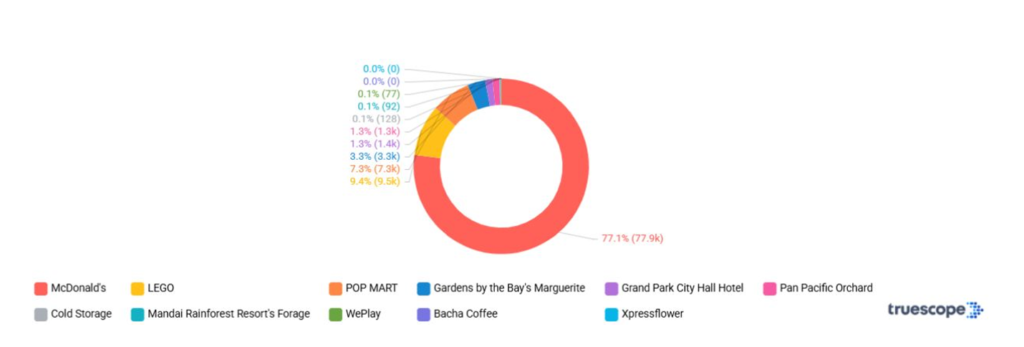
Valentine’s Day in Singapore is no longer just about chocolates and roses, it’s become a stage for creativity, culture, and connection.  From 9 January to 9 February 2026, 11 brands captured the city’s attention, generating over 92,100 social engagements, according to media intelligence firm Truescope. The brands include McDonald’s, LEGO, POP MART, Gardens by the Bay’s Marguerite, Grand Park City Hall Hotel, Pan Pacific Orchard, Cold Storage, Mandai Rainforest Resort’s Forage, WePlay, Bacha Coffee, Xpressflower and Pan Pacific Orchard.  What stood out wasn’t just the number of likes or shares, but how the brands transformed fleeting moments of affection into experiences that linger. Don’t miss: Is Valentine’s Day in desperate need of a rebrand?  According to Truescope, the campaigns that stood out spanned food, retail, leisure, and lifestyle, each offering a fresh take on love. McDonald’s turned accessible luxury into a conversation starter with its McNugget Caviar, pairing comfort food with fine dining flair to spark urgency and social buzz. Meanwhile, LEGO Botanicals’ Bloom Bar encouraged co-creation and sustainability, inviting couples and friends to build together while creating an Instagram-worthy keepsake. POP MART’s blind box and photo contest gamified gifting, turning collectors into co-creators and leveraging surprise to drive engagement, and Gardens by the Bay’s Marguerite experience transformed the Flower Dome into a living storybook, blending Michelin credibility with visual theatre. Leisure and hospitality leaned into cinematic storytelling and sensory escapes. Grand Park City Hall reimagined Valentine’s for families with visually compelling staycation packages, while Pan Pacific Orchard transported guests into a narrative experience with its “In the mood for love” offering. In addition, Cold Storage reminded consumers that love could be simple and sweet, pairing strawberries with complimentary roses for accessible, multi-location gifting. Mandai Rainforest Resort’s Forage Dining created a rarefied, nature-immersive retreat, limited to five tables per evening, creating a quiet antidote to crowded city celebrations. Other campaigns played on literature and surprise. WePlay teamed up with The Little Prince, using gamified literary experiences to connect with culturally savvy audiences. Bacha Coffee offered luxury blind boxes that felt like a present and an adventure all in one, while Xpressflower stayed loyal to the classic Valentine’s bouquet, providing a familiar touchstone against which the more adventurous campaigns could shine. Furthermore, MARKETING-INTERACTIVE also observed that brands have tapped into entertainment and culture during the season of love. Pizza Hut Singapore for example, re-released its heart-shaped Hawaiian Pizza, in collaboration with the 2000s heartthrob boyband Backstreet Boys. The campaign sees Nick Carter and Howie Dorough staging a playful generational showdown, deliberating Milennial vs Gen Z hand-heart gestures. Both icons later agree to follow their hearts and share a slice of pizza.  “At Pizza Hut, we are committed to leading the way in creating memorable experiences for our customers. Our decision to launch an iconic partnership with Nick Carter and Howie Dorough this Valentine’s Day is a strategic move to feel good times with our equally iconic pizzas,” said Jayss Rajoo, director of marketing and food innovation, Pizza Hut Singapore. “Across APAC, we are seeing a clear trend where brands embrace innovative partnerships and cultural icons to drive stronger engagement and brand loyalty. This fun and memorable approach not only lets us celebrate good times with our customers but also reinforces our position at the forefront of industry trends – delivering joy, connection, and great taste,” she added.  IKEA Singapore on the other hand, tapped on the anticipated release of Wuthering Heights, slated to premiere on 14 February. In its Valentine’s Day post, IKEA Singapore released photos reminiscent of the movie’s poster and aesthetics. The photos feature the retailer’s products alongside cheeky captions including a woman bent against a duvet cover and pillowcases with the text “Losing my sheet”, two hands reaching out to each other against its Stoense rug with the text “Rugged romance” and a decorative wooden hand holding on to the bustier of a woman with the caption “All hands on deck.”  The Ministry of Health (MOH) has also jumped on the trend with a cheeky PSA on shingles, inspired by the popular Netflix dating series Singles Inferno. The educational post titled “Shingles Inferno” teach viewers how to identify shingled and hot to prevent it.  “Catch your favourite reality TV series, not shingles. Shingles causes burning pain and possibly long-term nerve pain, and the risk increases with age. Vaccination protects you from having to visit ‘inferno’,” said MOH in the post’s caption. What 2026 taught us about love Three themes emerged across Singapore’s Valentine’s landscape. First, gifts have shifted from fleeting tokens to enduring experiences. LEGO’s Botanicals, POP MART collectibles, and even McDonald’s caviar tin underline that sustainability and lasting value resonate more than ephemeral gestures. Second, co-creation has overtaken consumption as the language of intimacy. Whether building a kit, entering a contest, or engaging in gamified storytelling, shared participation is now more meaningful than simply handing over a gift. Experiences that allow people to make memories together, be it with friends, families, or romantic partners, score higher on both emotional impact and social engagement, explained Truescope.  Third, the campaigns redefined luxury, inclusivity, and performance. Premium experiences became approachable, playful, and socially shareable. Campaigns explicitly welcomed all kinds of relationships, reframing Valentine’s as a celebration of human connection rather than a holiday confined to couples. The Instagrammable factor was non-negotiable; visual storytelling turned moments of love into public performances, while sustainability and reusability ensured these moments could last beyond the scroll. Singapore’s Valentine’s 2026 shows that attention alone isn’t enough. Brands need emotional resonance, social currency, and meaningful participation to cut through the noise. Accessibility and inclusivity broaden appeal, while sustainability and longevity make experiences memorable. Above all, aesthetics and storytelling are now strategic levers suggesting that how a moment looks and feels online is inseparable from how it lands offline. In all, Valentine’s in Singapore has grown from a seasonal commercial spike into a cultural mirror of creativity, inclusivity, and human connection. The brands that succeed are those that don’t just sell love. They stage it, shape it,

Brands play cupid, as Singaporeans seek experiences this Valentine's Day Read More »