marketing interactive

Silverpush launches AI platform to turn real-time trends into contextual signals for ads

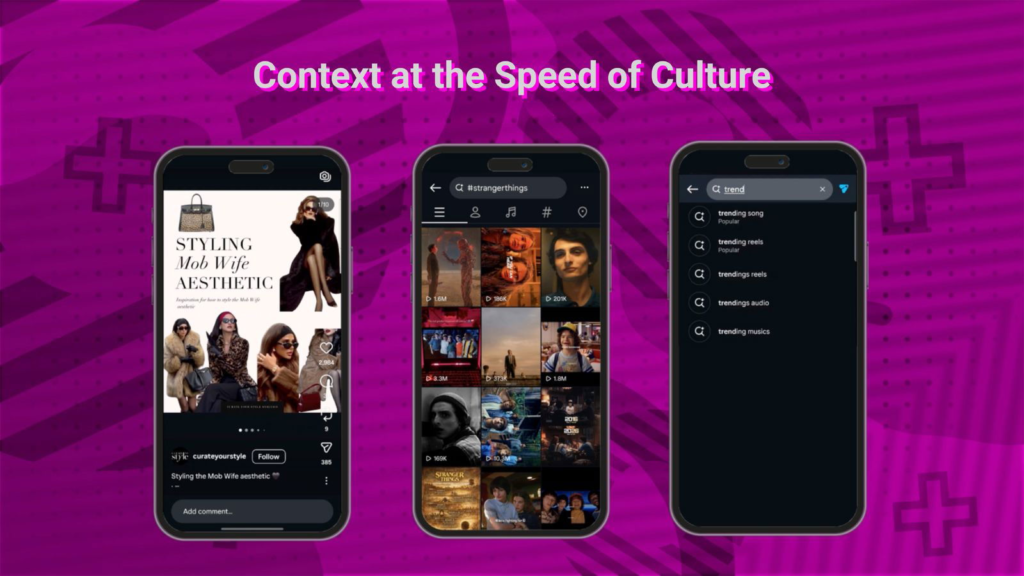
This post is sponsored by Silverpush. Contextually intelligent company Silverpush is launching its ‘Trend Intelligence Platform’, a new contextual intelligence solution designed to help brands and agencies analyse, plan, and act on real-time cultural trends. According to the firm, in recent years it has seen advertisers facing increasing pressure to respond faster while maintaining relevance and brand safety – especially as trends across social and digital platforms emerge and peak within hours. As such, by continuously analysing signals from open web and social sources, the Trend Intelligence Platform allows advertisers to filter by category, market, audience, platform, and more to understand the fastest-growing channels and hashtags relevant to campaign objectives. While traditional social listening tools can show what’s trending, the Trend Intelligence Platform translates those trends into activation-ready contextual tactics that can be applied immediately to media plans. “By ingesting trending signals from open web and social sources, the Trend Intelligence Platform allows advertisers to find the latest trends among their audience and platforms, then immediately generate the right contextual targeting tactics to reach that audience,” explained Mansi Matela, chief product officer. “With live testing now happening with clients around the world, we’re excited to bring this first-to-market solution to market that truly helps agencies and brands market to the moment,” Matela added. Powered by the Silverpush Contextual Intelligence Engine, the Trend Intelligence Platform also continuously analyses signals from social and web channels, so ad campaigns are always relevant to what matters most to the audience. Rather than surfacing trends at a high level, the platform allows teams to filter trend signals by geography and audience attributes such as age and gender across YouTube, TikTok, and Meta. This helps marketers identify: Which trends are emerging within a given market or audience filter across different social and video platforms. Which channels and platforms are most relevant for activation for a given trend The solution evaluates each trend based on real-time performance metrics, audience relevance, and brand safety guidelines and then automatically generates the best targeting tactics to activate within the same cultural moment. For example, if a celebrity moment resonates with a specific audience or a new toy begins trending within a particular age group, the Trend Intelligence platform detects these signals and converts them into ready-to-activate contextual signals. This allows brands to align media placements with how trends are unfolding in real time. Once identified, these insights become brand-safe contextual signals, including specific topics, platform-native interest signals, and audience-relevant content environments. These signals map directly into media buying workflows across platforms such as YouTube, TikTok, and Meta, removing the need for market research or campaign planning for the opportunities that come and go with a viral moment. At the core of the platform is Silverpush’s Multi-Agentic AI Framework, which continuously refreshes trend signals and optimises targeting based on real-time performance — allowing media plans to evolve alongside cultural momentum rather than remaining locked into static assumptions. The Trend Intelligence Platform is currently available in select markets, with general availability planned for March 2026.  During testing, the solution has already seen strong adoption and retention among global and regional advertisers as a new solution to stay current in the trending economy and to cut the time required for campaign launches for breaking news and viral topics. As advertising moves toward context-driven and signal-based planning and buying becomes based on trends across multiple channels, Silverpush’s Trend Intelligence Platform provides the necessary infrastructure to help brands stay culturally relevant at scale. About Silverpush Founded in 2012, Silverpush is a contextual intelligence company that delivers more relevant, brand suitable ad experiences to drive higher performance across YouTube, CTV, programmatic, and social. With an award-winning, proprietary AI platform purpose-built for video advertising, Silverpush is able to identify video-level contextual signals to help agencies and brands connect with the best possible audiences at the right moment. source

Silverpush launches AI platform to turn real-time trends into contextual signals for ads Read More »
Audi Revolut F1 Team appoints Aleph as official partner ahead of F1 debut

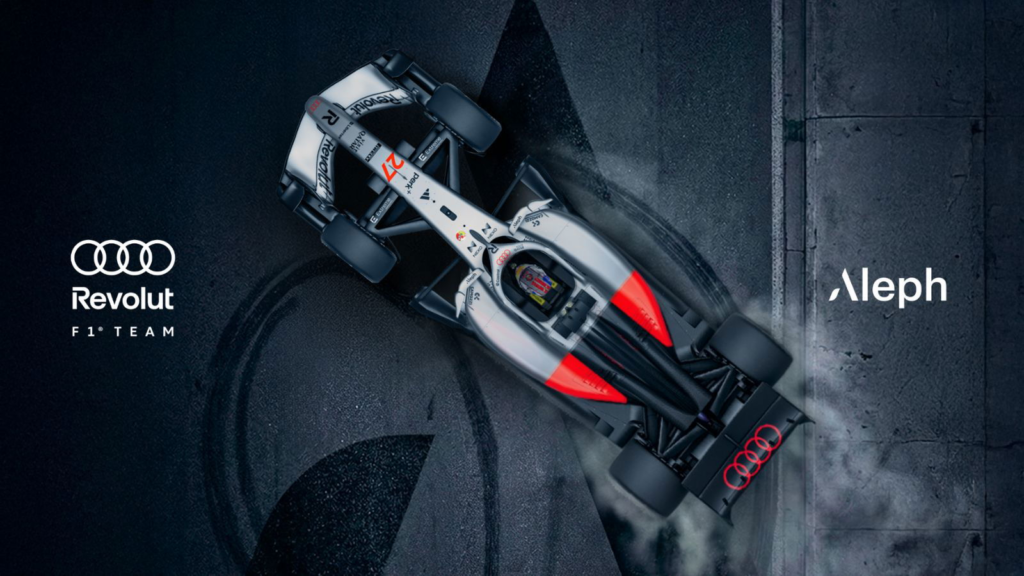
As it prepares for its highly anticipated Formula 1 debut, Audi Revolut F1 Team has announced Aleph as its official partner, signalling an intent to turn one of the world’s most global sporting platforms into locally meaningful brand engagement. The partnership brings together Audi Revolut F1 Team and Aleph, a global digital advertising enablement firm, with a shared focus on translating worldwide visibility into relevance across key markets. With Formula 1 spanning a 24-race calendar and reaching fans across continents, the collaboration is positioned as a strategic play to ensure the team’s presence resonates beyond the racetrack. For Audi Revolut F1 Team, local relevance has become a core pillar of its commercial and fan engagement strategy. Rather than relying on one-size-fits-all global activations, the team aims to show up in each market with cultural sensitivity – identifying local communities, entry points and narratives that feel authentic to fans on the ground. Don’t miss: Audi Revolut F1 Team signs Gillette as official partner ahead of 2026 debut “Audi Revolut F1 Team is built on a global platform, but relevance is always local. We race in different cities, cultures and communities around the world, and our ambition is to activate and deliver value in each of them in a way that feels authentic and brings the sport closer to the fans. Our partnership with Aleph supports our ability to translate a global team platform by connecting with fans on their terms, in their markets and within their cultural context,” said Stefano Battiston, chief commercial officer of Audi Revolut F1 Team. Aleph’s role will centre on amplifying activations so they are not only seen globally, but also felt locally – bridging global exposure with local execution. This approach aligns closely with Aleph’s long-standing “glo-cal” philosophy, which combines global scale with deep market-level expertise across more than 130 high-growth markets. “Audi Revolut F1 Team provides a global platform with strong local engagement. Aleph’s focus on innovation, agility, and a ‘glo-cal’ approach aligns closely with Audi Revolut F1 Team, that’s why our partnership feels so powerful and natural. We share in the excitement of the team’s debut and look forward to engaging our ecosystem – partners, clients, and employees alike,” said Gastón Taratuta, founder and CEO of Aleph. The partnership highlights how Formula 1 continues to evolve as a cultural and commercial ecosystem, where success is increasingly measured not just by reach, but by relevance. Audi’s entry into Formula 1 in 2026 is strategically timed with new regulations emphasising electrification and 100% sustainable fuels – reinforcing the brand’s ‘Vorsprung durch Technik’ philosophy. Previously, Audi Revolut F1 Team secured Gillette as an official partner in a multi-year deal, adding another high-profile consumer brand to its growing commercial lineup ahead of its Formula 1 debut. The partnership brings together Gillette, Braun and Venus under P&G’s grooming portfolio, with branding and activations spanning Formula 1’s global calendar, including on-car placement and the team’s Berlin launch in January. Related articles:Audi unveils new F1 identity as part of 2026 global brand strategyPepsiCo deepens F1 push with multi-brand Mercedes partnershipThe F1 comes and goes in a flash, but your sponsorship impact shouldn’t source

Audi Revolut F1 Team appoints Aleph as official partner ahead of F1 debut Read More »

Coca‑Cola gets fans bubbling ahead of FIFA World Cup 2026

Coca‑Cola has unveiled the first phase of its global campaign for the FIFA World Cup 2026, inviting fans to ride football’s emotional rollercoaster. The effort builds on nearly five decades of partnership with FIFA, with Coca‑Cola returning as the tournament’s official soft drink. The campaign launches with “Bubbling up”, the first of three films crafted for the World Cup. It offers a sneak peek of Coca‑Cola’s new anthem featuring J Balvin, Amber Mark, Steve Vai, and Travis Barker. The track reimagines Van Halen’s 1980s hit Jump, aiming to capture the highs and lows of football fandom. The 60-second film opens with a woman in a lift, holding a Coca‑Cola bottle, as a TV host announces that the World Cup is just around the corner. She glances at another passenger, who is playing a football game on his phone. Don’t miss: TikTok named FIFA’s ‘preferred platform’ for World Cup The scene shifts to a corporate office, where a man’s attention is caught by a colleague watching highlights from past FIFA World Cups on a computer. Bubbles rise in a Coca‑Cola bottle, then the film moves to a hospital, where a couple hears a commentator on a screen hyping the tournament and spotlighting Barcelona youngster Lamine Yamal. The final sequence unfolds on a train. A man begins clapping, drawing attention from fellow passengers. Soon, everyone chants in unison: “It’s coming,” capturing the mounting excitement for one of the world’s biggest sporting events. Over the coming months, Coca‑Cola will roll out two additional films. “Uncanned emotions”, arriving in April, will spotlight fan reactions during key tournament moments, while “No better feeling” will debut as the competition begins, showing how the beverage accompanies every emotional peak and trough. Beyond film, the brand is leaning on activations to engage fans. The FIFA World Cup 2026 trophy tour by Coca‑Cola offers a rare close-up of the trophy, while a renewed partnership with Panini will deliver a custom sticker collection spanning clubs and federations. Fans can collect both physical and digital stickers of some of the world’s top athletes. Coca‑Cola said these activations aim to reinforce its position as an essential companion to fans, refreshing them through every goal, loss, and celebration. Additional immersive campaigns are set to roll out in the lead-up to the tournament. “Football is more than a game; it’s a shared passion with a tapestry of emotions that unites billions. At Coca‑Cola, we believe in the power of shared experiences,” said Arnab Roy, president, Coca‑Cola global category. He added, “Our creative vision for this campaign is to harness the incredible energy of the FIFA World Cup and the rollercoaster of emotions that only this tournament can deliver, transforming them into real, tangible connections. Through innovative experiences and compelling content, we’re bringing fans closer than ever before, whether they’re cheering in digital spaces, local bars, or at-home watch parties.” ​​ Coca‑Cola’s campaign follows other brands leaning into the World Cup buildup. Last November, adidas released “LA PREPARACÍON AMERICANA” (“The American Preparation”), a short film showing global football stars taking unconventional approaches to prep for FIFA World Cup 2026. The film follows World Cup stars, Trinity Rodman, Florian Wirtz, Lamine Yamal, Lionel Messi, and Edson Álvarez, showcasing unconventional training and playful challenges across Manhattan, Spain, and Mexico City. It underscores adidas’s 50-year FIFA partnership and its role supplying the tournament’s match ball TRIONDA and jerseys for more than 22 federations, while spotlighting the players poised to define the next World Cup. Related articles: Coca-Cola fuels World Cup 2026 buzz with FIFA Trophy Tour in Indonesia   The Coca-Cola Company creates chief digital officer role amid leadership restructure   Coca-Cola celebrates connection with stunning new Kings Cross image source

Coca‑Cola gets fans bubbling ahead of FIFA World Cup 2026 Read More »

KFC SG fires up CNY with Lady Huat, new merch and mala heat

KFC Singapore has kicked off Chinese New Year 2026 with a character-led social campaign, anchoring its festive push on Lady Huat, a fiery on-screen mystic designed to turn eating into a playful, ritualised experience. Jaslyn Lam, director of marketing and food innovation at KFC Singapore, explained that the campaign aims to reframe the idea of “luck” during the festive period. “Chinese New Year campaigns often lean on familiar tropes such as fortune-telling or family reunions. This year, we wanted to empower consumers to create their own luck rather than wait for it,” she said. Lady Huat serves as a modern cultural translator of traditional practices, igniting action and encouraging fans to “Huat your mouth” with KFC’s La Zi Ji (Sichuan mala chicken). Rolled out across Instagram from mid-January, the campaign unfolds through a series of short-form videos, each pairing a specific aspiration, from career prosperity to romance, with a performative greeting and a bite of La Zi Ji crunch and bites. Lam said the themes were chosen based on research into what Singaporeans care most about, ensuring the content resonates. Rather than a single hero film, KFC opted for episodic storytelling, extending Lady Huat’s presence across multiple touchpoints throughout the festive period. “With a character like Lady Huat, it would be a miss to confine her to a single moment,” Lam said. “This narrative platform allows us to engage customers through stories that can unfold progressively, keeping the conversation going.” Don’t miss: KFC Singapore picks new integrated creative and social agency Beyond social content, the campaign extends into collectibles with the introduction of Huat Paws, a series of Fortune Cat blind boxes available with purchase. The five designs, including a secret Gold Fortune Cat, tap into blind box culture while reinforcing traditional CNY symbols of luck and prosperity. Lam shared that the format was chosen to create “lucky chances,” offering customers a playful and personal experience with every unboxing. Fans who discover the secret design can post on Instagram or Facebook for a chance to win SG$888, with winners announced in March. Other festive touchpoints include limited-edition Huat socks and red packets. The socks are available as an add-on with breakfast purchases or delivery orders, while red packets are given out with selected La Zi Ji boxes, reinforcing the campaign’s presence in both physical and at-home celebrations. Product-wise, the campaign marks the debut of KFC Singapore’s first-ever La Zi Ji, offered in both bone-in crunch and bite-sized formats. The festive menu is supported by mala lotus root chips, a mango pomelo sago pie, and a range of CNY sharing buckets and feasts, all wrapped in prosperity-led naming and packaging. According to Lam, the campaign also aligns with KFC Singapore’s broader strategy of blending pop culture, collectibles, and food. “La Zi Ji served as a key trigger for the campaign’s strategic direction. Paired with Lady Huat and custom Fortune Cats designs, we are tapping into themes of luck and prosperity that resonate during Chinese New Year. Strategically, the campaign creates multiple points of connection across food, collectibles, and social conversations, keeping both the LTO product and the brand top of mind,” she said.  She also added that Lady Huat could evolve beyond this campaign: “Creating beloved, long-lasting characters is something many brands aspire to. We’re excited to see how Singaporeans connect with Lady Huat this festive season and explore opportunities to evolve her character over time.” Taken together, the execution shows KFC leaning into ritual, collectability, and serialised social storytelling, with the product complementing the campaign rather than leading it. The Chinese New Year campaign follows KFC Singapore’s recent push into immersive, experience-led marketing. In November last year, the brand launched its “Chikin land” Christmas campaign, transforming five outlets into anime-inspired, Japan-themed destinations designed to tap into festive travel sentiment while offering a local, crowd-free alternative. Supported by an anime-style short film and social media activations, the campaign blended in-store décor, interactive stamp stations and limited-edition merchandise with a Japanese-themed menu. It marked KFC Singapore’s first Christmas campaign built around a country-led narrative, signalling a broader shift towards pop culture-driven storytelling and multi-sensory brand experiences. Showcase your most innovative content and gain recognition from a panel of industry leaders by entering the inaugural Content360 Awards. Submit your work today and be part of the celebration that honours the campaigns defining the future of content marketing. Related articles: Mickey and Minnie Mouse join King Mu’s eight steeds in Sentosa’s CNY spectacle   F&N charges into CNY with limited-edition packaging and festive plushies   Tiger Beer unleashes first-ever lion dance troupe to spread CNY cheer across SG source

KFC SG fires up CNY with Lady Huat, new merch and mala heat Read More »

How Coca-Cola turned the FIFA trophy tour into a Malaysian fan experience

When the FIFA World Cup Trophy Tour by Coca-Cola arrived in Malaysia this January, it was never going to be a quiet stopover. As the sixth edition of the tour kicks off ahead of the FIFA World Cup 2026, the activation marks two major milestones for the brand, 20 years of the Trophy Tour globally, and 90 years of Coca-Cola’s presence in Malaysia. For Coca-Cola Malaysia, the convergence of these moments created the opportunity to go beyond a standard brand appearance and build a full-scale celebration of football, culture and community. Held on 21 January at Sunway Pyramid, the Malaysian stop was positioned as an “ultimate football experience”, supported by weeks of build-up across social, music and live activations. From a drone show lighting up the skyline to the dramatic arrival of the trophy on a Coca-Cola-red aircraft, the brand set out to make the event feel as iconic as the prize itself. According to Chrystian Lim, marketing director for Coca-Cola Singapore and Malaysia, Malaysia’s selection as a Southeast Asian stop was both strategic and emotional. “This was such an incredible opportunity for us, and while the decision was absolutely strategic, it was also driven by genuine excitement about the happiness we could create,” he said. Don’t miss: Coca-Cola fuels World Cup 2026 buzz with FIFA Trophy Tour in Indonesia  Lim added that the timing made the moment especially meaningful. “We’re celebrating our 90th anniversary here, nine decades of shared memories with Malaysians. When you combine that historic milestone with the opportunity to bring the FIFA World Cup Trophy back after 12 years, you have a once-in-a-lifetime experience.” Beyond anniversaries, Lim pointed to football’s deep-rooted cultural significance in Malaysia as a driving factor. “Football in Malaysia is more than just a sport. It is the unity, passion and joy that brings people together,” he said. “After 90 years of bringing happiness to the nation, we were now bringing the world’s most coveted prize home to the fans.” The response on the ground reinforced that belief, with hundreds of fans packing Sunway Pyramid throughout the activation. For Lim, the turnout underscored Coca-Cola’s longstanding relationship with Malaysians across generations. “This was about celebrating the bond between Coca-Cola and Malaysians, a story that transcends generations, from festive gatherings to football matches,” he said. It was our way of saying thank you to a nation that’s welcomed us for nearly a century. From global partnership to local passionCoca-Cola’s partnership with FIFA spans decades, with the brand sponsoring the FIFA World Cup since 1978 and holding exclusive rights to the Trophy Tour. Globally, the tour has reached more than four million fans across 182 markets, offering rare access to football’s most iconic symbol. Yet Lim emphasised that relevance today comes from bridging global prestige with local presence. “It’s one of the most powerful partnerships in sports, built on the shared value of using the universal language of football to inspire and unite people,” he said. “But here in Malaysia, our commitment extends far beyond just those big global moments.” Through its partnership with the Malaysian Football League, Coca-Cola maintains a presence at over 200 local matches annually, embedding the brand within grassroots football culture. Lim noted that football has long been part of Coca-Cola’s local DNA, referencing campaigns from the 1990s that became part of everyday vernacular. “Whether it’s a global tournament or a neighbourhood match, football has consistently been our platform to champion optimism and community pride,” he said. Designing an experience At the heart of the Malaysian activation was an immersive, multi-zone experience designed to keep fans engaged at every turn. Activities spanned the main entrance, concourse and ice rink areas of Sunway Pyramid, featuring elements such as a Coca-Cola truck, cheer screamer, football games, AI avatar creator, photo booths and a giant bottle centrepiece. The ice rink served as the focal point, housing the FIFA World Cup Trophy moment, interactive football tunnels, robokeeper challenges and a live concert area. The experience culminated in performances by local stars including Tomok, Siti Nordiana, MK K-Clique, Firdhaus and SonaOne. For Lim, the goal was to ensure every touchpoint reflected Coca-Cola’s brand values. “We see ourselves as an emotional brand. We’re about bringing happiness, experiences and moments of joy wherever we operate,” he said. We designed every single touchpoint of this Trophy Tour intentionally, creating a journey where each moment built on the last. That journey began even before the mall activation. A large-scale drone show at Sunway Pyramid depicted the FIFA World Cup Trophy, Coca-Cola’s iconic bottle and football-inspired visuals, setting the tone for what was to come. The arrival of the trophy itself on a Coca-Cola themed plane was treated as a spectacle, complete with a red-carpet rollout, cultural dancers and fanfare. “What made this special was that fans got close to one of the most recognised sports symbols in the world,” Lim said, highlighting the rarity of the moment. “This priceless icon made of 18-carat solid gold can only be touched by former World Cup winners and Heads of State. So bringing it here was truly a once-in-a-lifetime experience.” Building brand love through lived moments Extending the campaign beyond physical spaces, Coca-Cola also tapped into music as a unifying force. Partnering with singer Tomok, the brand released an original anthem, Rasa-Rasa Bola, which served as both a rallying cry for the Trophy Tour and a continuation of its collaboration with the Malaysian Football League. “Working with Tomok was a dream,” Lim said. “The creative idea was to capture the raw energy and passion of Malaysian football fans and channel it into an anthem that everyone could share.” The track, infused with a distinctly Malaysian sound and visuals from local football scenes, quickly gained traction online, with fans creating and sharing their own content around it. Lim noted that this organic adoption was a key marker of success. “When people were singing it, posting videos with it and turning it into part of their own celebrations, that’s when you know you’ve hit the right

How Coca-Cola turned the FIFA trophy tour into a Malaysian fan experience Read More »

Why leaders can no longer keep personal affairs private

From Singapore to the States, leaders are facing growing consequences for personal misconduct, and social media is amplifying every misstep. PropertyLimBrothers, a prominent real estate agency in Singapore, recently saw CEO Melvin Lim and vice-president of strategy Grayce Tan resign over allegations of an affair. The scandal has prompted conversations about workplace culture and accountability in Singapore’s highly competitive property sector, where reputation is often as valuable as performance. The PropertyLim case is not isolated. Across the globe, Andy Byron, for CEO of tech firm Astronomer, resigned after being spotted on a kiss cam embracing his chief people officer Kristin Cabot at a Coldplay concert. The incident, widely shared on social media, drew commentary not only from industry insiders but also from global media outlets, highlighting how even personal moments can become professional crises in the digital age. Last September, Nestle also dismissed aurent Freixe as chief executive over an “undisclosed romantic relationship with a direct subordinate”. Similarly in 2019, McDonald’s CEO Steve Easterbrook was ousted after a consensual relationship with an employee violated the company’s strict non-fraternisation policy, serving as a reminder that corporate governance standards have real teeth, regardless of personal intent. In Malaysia, while political scandals are a familiar fixture, controversies involving the personal conduct of C-suite executives remain relatively rare. That said, the lines between private behaviour and public accountability are becoming increasingly blurred. Last year, BurgerLab Malaysia fired its chief operating officer after a post he shared on X drew widespread backlash and accusations of being disrespectful and discriminatory towards Muslims. More recently, streetwear brand Stoned & Co suspended its co-founder and managing director Tan Jia Hui after a viral video showing him driving his Ferrari aggressively sparked public criticism. Don’t miss: Why silence isn’t key to managing PropertyLimBrothers’ alleged scandal  The role of social media Industry professionals MARKETING-INTERACTIVE spoke to say these cases reflect a larger shift in how CEO misconduct is perceived and managed, oftentimes with social media amplifying the visbility and impact of these cases.  “Social media collapses the line between private conduct and public accountability, and incidents which are in the public interest will end up amplifying very rapidly,” said Jose Raymond, managing director, SW Strategies. He added that public sensitivity is heightened toward organisations that are well-known or influential, “where audiences feel a sense of ownership, expectation, or grievance which raises the stakes far beyond the incident itself.”  In addition, Manisha Seewal, group president of Redhill, explained that the speed and scale of online platforms means that everything can move at the pace of a tweet or a TikTok clip:  In the past, workplace issues or personal missteps often stayed within closed circles. Now, every single moment can be amplified, reshared, and commented on by millions within minutes. Meanwhile, Oliver Budgen, founder and CEO of Bud is of the opinion that social media has lowered the barrier to public scrutiny. He noted that online platforms, often under anonymity, remove accountability and proportion. “What might once have been handled internally can now become public spectacle or pseudo‑entertainment, amplified by algorithms that reward outrage,” explained Budgen.  He added that this doesn’t necessarily mean audiences are more morally sensitive, stating that audiences are “more fragmented and distracted than ever”.  What’s changed is speed and amplification, not moral standards. The impact often depends less on the behaviour itself and more on how quickly and clumsily organisations respond.”  Shifting expectations on leadership Pei Lin Cho, managing director, APRW noted that human curiosity, or being “kaypoh,” as Singaporeans say, has always driven interest in scandals. “We love stories like these because they are scandals and gossip. They are good for the coffee table, and they make life feel a little less mundane,” she said. She also highlighted that corporate purpose has evolved over years. Many companies now define themselves by morality or principles, she said. As such, when leaders act in ways that contradict this declared purpose, it can have a direct impact on the brand. The effect depends on the type of relationship the public has with the leader and the prominence of the organisation, with highly visible leaders facing greater scrutiny. The nature of the relationship between leaders and their audiences also matters. Cho points out that the impact depends on whether the leader is admired or influential. “If the leader is someone the public looks up to, for instance, a politicians, expectations are higher, and misconduct may feel more consequential. Leaders with strong personal brands or high visibility can see even minor scandals amplified,” she said. Moreover, many C-suite leaders today cultivate a strong online presence, seeing it as part of their personal brand and career path. Some give talks, write and actively promote themselves. Cho added:  When this personal brand becomes public, any scandal can naturally gain more attention — and people care because it touches both the leader and the organisation. Seewal noted that public standards of accountability have also shifted. People today expect a different standard of accountability, be it at work and in life. There’s also less tolerance for ‘that’s just how things are.’ “The public has become more vocal about values and consistency, and they are increasingly willing to call out behaviours that feel misaligned with what a brand, public figure, or leader claims to stand for,” said Seewal. The combination of viral visibility and heightened expectations means that reputational risks are no longer limited to boardrooms and are in fact, actively managed in real time, often under the watchful eye of millions. The cumulative effect is clear: in today’s hyper-connected world, leadership missteps are no longer private matters. They ripple through social media, mainstream press, and industry circles, influencing public trust, employee morale, and even company valuation. While some incidents are fleeting, others prompt long-term scrutiny of governance practices, brand values, and corporate culture. As Raymond concludes, “The combination of visibility, public sensitivity, and real-time amplification makes it more important than ever for organisations to manage both behaviour and perception, or risk turning a private misstep into a public crisis.” Related

Why leaders can no longer keep personal affairs private Read More »

Maybank’s CNY film shifts the meaning of prosperity beyond wealth

Maybank has unveiled its Chinese New Year film, “Blessings all around”, a human-led festive narrative that challenges conventional ideas of prosperity by placing relationships, traditions and shared moments at the centre of its storytelling. Created in collaboration with creative agency Alchemy79 under Invictus Blue Group, and Directors Think Tank, the film moves away from the familiar tropes of wealth and abundance that often dominate Chinese New Year messaging. Instead, it reframes prosperity through everyday human connections, unfolding around a family lou sang (prosperity toss) gathering and interwoven vignettes that span different stages of life. Each year, festive greetings tend to equate progress with visible gains and abundance. However, the agency’s creative team saw an opportunity to reimagine prosperity as something more enduring. The narrative leans into the idea that true blessings are found in traditions upheld, values shared, and the people who return to the table year after year. Don’t miss: Magnum 4D reflects on the meaning of giving this Chinese New Year  That perspective closely mirrors Maybank’s long-standing brand purpose of humanising financial services. According to the bank, the film serves as a reminder that progress is not solely measured by financial outcomes, but by the positive impact created in people’s lives and relationships. “Our Chinese New Year webfilm reflects our purpose of ‘Humanising financial services’ by placing people, relationships and shared moments at the centre of the story,” said Shazlina Suffian, EVP and head of group brand and marketing at Maybank. “It underscores our belief that true prosperity goes beyond financial success, and is measured by the positive impact we create in the lives of our customers and communities.” She added that the film was designed to convey that meaningful progress begins with empathy, understanding and connection, values the brand continues to champion across generations. Drawing from the symbolism of traditional Chinese four-character wishes, the film reframes phrases commonly associated with material success through quieter, more intimate moments of fulfilment. In doing so, it encourages audiences to reflect on what they already have, rather than what they are striving to accumulate. When the family matriarch utters 金玉满堂 (gold and jade fill the hall), the blessing is reinterpreted not as material abundance, but as a home filled with the laughter of her children and grandchildren. Elsewhere, a young woman wishing for 生意兴隆 (bountiful business) is revealed to be hoping for a successful charity fundraiser for a children’s home. A young couple’s cheerful cry of 招财进宝 (ushering in wealth and treasures) finds its true meaning in the baby they hold in their arms. Meanwhile, a middle-aged couple running a small business invokes 财源广进 (wealth flowing in), only to show that what sustains them is not money, but companionship built over time. From a creative standpoint, Alchemy79 sought to create a piece that resonates beyond the festive period and across cultures. Grounded in Chinese New Year traditions, the film leans on universal human moments to extend its relevance beyond the Chinese community. “Grounded in Chinese New Year traditions, the film is built around universal human moments, enabling the story to resonate beyond the Chinese community,” said Heng Thang Wei, executive creative director of Alchemy79. “It’s our hope that this message connects with audiences across cultures and travels beyond borders,” he added.  “The film centres on recognising the blessings already around us, and the idea that wealth can exist beyond material fortune. To do that, one must first slow down and truly look. Visually, we expressed this by literally slowing the moment,” explained Heng. Meanwhile, Jo Yau, Group CEO of Invictus Blue Group shared that through Alchemy79, “We’re proud to partner Maybank on a piece of work that demonstrates how local insight, creative discipline and strategic clarity can come together to build long-term brand meaning.” The visual execution further reinforces the film’s reflective tone. Director Sling Ng of Directors Think Tank explained that the team intentionally slowed key moments to allow viewers to pause and observe the emotions unfolding on screen. “The film centres on recognising the blessings already around us, and the idea that wealth can exist beyond material fortune,” Ng said. “Visually, we expressed this by literally slowing the moment.” The high-energy lou sang sequence was captured in ultra slow motion using a Phantom camera, contrasting the usual festive chaos with a sense of stillness and reflection. Each scene was also designed with distinct colour groupings to support the emotional flow without distracting from the core message. Beyond the film, Maybank’s Chinese New Year efforts extend across a series of festive initiatives rolled out throughout the season, offering multiple touchpoints for engagement. The campaign film itself is being amplified across digital and social platforms, including Xiaohongshu, to drive reach and conversation. This festive period, FairPrice Group Singapore has turned its attention to the small, familiar moments that make Chinese New Year meaningful in its 2026 festive campaign. Titled “Every celebration made a little better”, the campaign builds on the retailer’s brand platform, “Every day, made a little better”, and draws on the Mandarin phrase “小心意大欢喜” (a little kindness brings great delight) which reflects how small acts can lead to great joy. The Mandarin-first campaign features three 30-second films directed by Tariq Mansor and produced by Cutscene. Each film portrays everyday moments rather than grand gestures. In “The Battle”, a mother and son turn their living room into a playful battlefield, enabled by having their Chinese New Year shopping delivered ahead of time. Meanwhile, Prudential Assurance Malaysia has taken a quieter, more introspective route with its latest festive film, “心结 The Promise”. Departing from the familiar exuberance and spectacle that often define seasonal advertising, the campaign instead leans into stillness, symbolism and emotional reflection to explore a more enduring idea of wealth. The film opens on an unassuming moment. A young man shooting hoops at a basketball court pauses when he notices an elderly man, dressed in traditional Chinese attire, sitting alone on a park bench. Sensing something amiss, he approaches the stranger, who reveals himself to be Fatt Choy Yeh, the god of prosperity.

Maybank’s CNY film shifts the meaning of prosperity beyond wealth Read More »

PRecious Communications bolsters corporate and financial capabilities with SVP hire

Singapore-based integrated communications agency PRecious Communications has appointed industry veteran Ng Chip Keng (pictured) as senior vice president to lead its corporate and financial practice. Ng brings more than 30 years of experience spanning in-house and agency roles, and will focus on financial communications for banks, private equity firms, venture capitalists, and family offices. His remit includes advising on financial transactions, investor relations, issues and crisis management, litigation, PR strategy, and financial services marketing. Reporting to regional COO Joanna Ong, Ng is based in Singapore and joins PRecious’ senior leadership team, advising global and regional C-suite clients. The appointment is part of the agency’s wider strategy to expand its advisory capabilities across corporate, financial, and professional sectors. Don’t miss: PRecious Communications’ Paolo Alba and Joey Gan take on expanded roles Ng’s career includes senior leadership roles at Ruder Finn, Weber Shandwick, Hill+Knowlton Strategies, and Rothman & Roman Group. On the client side, he led branding and communications initiatives for RHTLaw Taylor Wessing and Sembcorp Industries, giving him a dual perspective on corporate reputation and stakeholder engagement. “Our clients are facing a constant stream of noise, from geopolitics and regulation to trade and tariff shifts, all of which can obscure what truly matters,” said Lars Voedisch, founder and group CEO of PRecious Communications. He added, “They need experienced advisors who can cut through that noise, identify the real signals, and help them act with clarity. Ng’s experience in complex, cross-border environments significantly strengthens how we support clients navigating risk and opportunity.” This appointment builds on PRecious’ regional leadership expansion unveiled last November, when Ong was named the agency’s first regional COO and Sunita Kanapathy took on additional responsibility leading the Malaysia market. Ong oversees key markets across Southeast Asia and works closely with group CEO Lars Voedisch to drive operational excellence and sustainable growth, while Kanapathy continues shaping the agency’s regional vision and client strategy in Malaysia. Related articles: PRecious boosts digital integration with new hire as it marks three years in PH   PRecious Communications’ Paolo Alba takes on expanded role as regional VP of PHPRecious Communications names new country lead for Indonesia source

PRecious Communications bolsters corporate and financial capabilities with SVP hire Read More »

AI ads outperform humans – but only when they don’t look like AI

Generative AI is already matching – and in some cases beating – human-made advertising creative. But a new study suggests success hinges on one critical factor: ads must not look like they were made by AI. New research from Taboola, conducted with academics from Columbia University, Harvard University, Technical University of Munich and Carnegie Mellon University, found that AI-generated ads perceived as “human-made” delivered the highest engagement of all creative types. The study, titled AI Ads That Work: How AI Creative Stacks Up Against Humans, analysed matched pairs of AI-generated and human-made ads created by the same advertiser, for the same campaign, on the same day, using a quasi-experimental “sibling ads” methodology. Across more than 500 million impressions, nearly half of AI-generated ads were perceived by users as human-made. Those ads significantly outperformed both human-created ads and AI ads that were clearly identified as artificial. By contrast, ads perceived to be AI-generated – regardless of whether they actually were – were consistently penalised by users, highlighting that perceived artificiality, rather than authorship, is the key driver of engagement. One of the strongest signals influencing whether an ad felt human was the presence of a large, clear human face. Based on Taboola’s best practices and policy restrictions, AI-generated ads were more likely than human-made ads to include these trust-building cues. From a performance perspective, AI-generated ads matched or exceeded human creative. On average, AI ads delivered a click-through rate (CTR) of 0.76%, compared with 0.65% for human-created ads. Even after applying statistical controls, AI ads performed on par with human work. Importantly for advertisers, higher engagement did not come at the expense of quality. AI-generated visuals increased or maintained CTR without reducing downstream conversion performance, suggesting brands do not need to trade effectiveness for production scale. Early adoption has been strongest in categories including food and drink and personal finance, according to the report. “Taboola’s platform provided us with a literal gold mine of real-world data that is simply unavailable in a lab setting,” said Oded Netzer, vice dean for research at Columbia Business School. “By analysing over 500 million impressions, we were able to move past the hype of GenAI and uncover its real impact in large-scale settings. “Our findings prove that when AI is used to enhance human cues – like the trust found in a human face – it doesn’t just match human performance; it often sets a new ceiling for engagement.” Related articles: Google looks to generative AI ads as it amps capabilitiesSurvey: 78.3% of youngsters in HK see generative AI as an irreversible trend source

AI ads outperform humans – but only when they don’t look like AI Read More »

Amazon confirms 16,000 job cuts following internal email misfire

Amazon is making additional organisational changes that will affect around 16,000 roles globally, according to a statement from Beth Galetti, senior vice president of people experience and technology. The update comes a day after the company appeared to prematurely alert some employees about planned layoffs through an internal email. In her statement, Galetti said the latest reductions were part of efforts first outlined in October to reduce layers, increase ownership and remove bureaucracy. While many teams completed restructuring last year, she noted that other teams only finalised changes more recently, prompting the latest round of cuts. Most US-based employees whose roles are impacted will be given 90 days to seek internal opportunities, with timelines varying internationally based on local requirements. Those unable to secure a new role, or who choose not to pursue one, will receive transition support including severance pay, outplacement services and health insurance benefits, where applicable. Don’t miss: Cathay Pacific reportedly cuts marketing staff in latest AI push Despite the reductions, Galetti said Amazon would continue hiring and investing in strategic areas critical to its long-term growth, stressing that the changes were not intended to signal a recurring cycle of broad layoffs. “Every team will continue to evaluate ownership, speed and capacity to invent for customers, and make adjustments as appropriate,” she said. The announcement follows a report by Reuters that Amazon Web Services employees were mistakenly sent an email on Tuesday referencing layoffs planned for Wednesday. The email, reportedly signed by Colleen Aubrey, senior vice president of applied AI solutions at AWS, incorrectly stated that affected employees in the US, Canada and Costa Rica had already been informed. The email was said to include a team-wide meeting invitation that was later cancelled, with the layoffs internally referred to as “Project dawn”. It was previously reported that Amazon planned to lay off thousands of corporate employees across units including AWS, retail, Prime Video and human resources, although the full scope of the cuts remains unclear. MARKETING-INTERACTIVE has reached out for more information.  The latest changes build on Amazon’s broader cost-cutting efforts unveiled in October last year. At the time, the company was reported to be planning to cut as many as 30,000 corporate roles, marking one of its largest rounds of layoffs since late 2022. The cuts were expected to affect nearly 10% of Amazon’s roughly 350,000 corporate employees, and a small fraction of its total global workforce of around 1.55 million. The move was aimed at streamlining operations and offsetting overhiring during the pandemic, people familiar with the matter told Reuters. Related articles: NTUC, SISEU to support We. Communications workers hit by layoffs   IPG cuts 800 employees, APAC revenue dips   Meta begins job cuts related to AI focus source

Amazon confirms 16,000 job cuts following internal email misfire Read More »