Tech Republic

Maximize Your Workday Productivity with Microsoft 365 or Google Workplace

Image: StackCommerce TL;DR: Save 25% on this Microsoft and Google Workplace bundle, which comes with courses on your most-used productivity apps to help you maximize your workday. How productive are you throughout the workday? According to one study, most office workers are only productive for 31% of their workday, and the reason for the low number isn’t just because of phone usage throughout the day. It’s probably because most workers don’t really use Microsoft or Google Workplace apps to their fullest potential. Want to learn how to use both suites to your advantage? You’ll need to learn from this bundle, which comes with 650 lectures and 40 hours of content on optimizing your daily productivity apps, all available for life, for only $19.99 (down from $27) for a limited time. Sure, you might know how to use Microsoft Word templates to draft reports for your manager or take meeting notes, but are you using this word processor the right way? The same applies to Google Workplace apps like Google Slides. Do you actually know what you’re doing when it comes to design and animation for your presentations? The answer is likely no to both, so that’s where this bundle comes in handy. All these bundle’s courses are taught by industry experts with real-world insights. Mastering these apps can help make your workday a lot sleeker, and it could even help you discover how to automate your tasks and collaborate more effectively. Check out what else you can learn: Email management: Utilize Outlook with greater skills in calendaring, auto-replies, and mailbox organization. Virtual meeting enhancement: Improve meeting flows and inbox efficiency. Data analysis: Effective tracking could help you manage projects, generate reports, and make data-driven decisions more effortlessly. Stunning slideshows: Whether you use PowerPoint or Google Slides, learning advanced formatting and design tips could help your presentations look more polished. Want to be your most productive self at work? Grab this Microsoft and Google Workplace Essentials Bundle, now just $19.99 for a limited time. Supplies are limited. StackSocial prices subject to change. source

Maximize Your Workday Productivity with Microsoft 365 or Google Workplace Read More »

Have Some Spare Cash? You’ll Need it for OpenAI’s New API

OpenAI researcher Hyung Won Chung. Image: OpenAI/YouTube Reasoning models, which dedicate time to thoroughly thinking through prompts, are at the front of the generative AI pack. OpenAI announced on March 20 o1-pro, a heavy-duty version of one of its reasoning models. Developers on any of OpenAI’s paid tiers can find o1-pro in the OpenAI API starting today. Those with higher usage tiers will have higher request and batch queue limits. The price reflects greater compute power: o1-pro costs $150 for 1 million input tokens and $600 for 1 million output tokens. Compare that to $15.00 for 1 million tokens and $60 per 1 million output tokens when using the base model of OpenAI o1. See: OpenAI Recap: o3 Model Wraps 12 Days of Announcements More must-read AI coverage What capabilities does $600 per one million tokens unlock? The price point makes OpenAI o1-pro one of the priciest AI models. It takes the crown from API access to the Silicon Valley darling’s own GPT-4.5. (GPT-4.5 costs $75 per million input tokens and $150 per million output tokens.) What do you get for that cash? OpenAI is probably hoping for o1-pro to bring in a deep-pocketed handful of researchers, engineers and other professionals using generative AI for science, medicine, or technology. While o1-pro is optimized for reasoning tasks, OpenAI offers separate models for transcription or moderation. A smaller, cheaper model can probably meet users’ needs for those. For the price of o1-pro you get a 200,000 context window and 100,000 max output tokens. OpenAI said o1-pro can interpret data from machine vision, with text and image input. However, it only produces text output. In the API it also supports: Function calling. Structured Outputs, which ensure the model’s response will conform to the developer’s JSON Schema. Integration with the Responses API, which can be used to create AI agents that can interact with the web in various ways, including running searches. Integration with the Batch API, which allows for asynchronous requests, providing lower costs and higher rate limits for jobs with a 24-hour turnaround time. OpenAI has not publicly specified the exact knowledge cutoff date for o1-pro, but previous models had real-world knowledge of up to late 2023. AI companies compete to dominate the “reasoning model” landscape OpenAI introduced o1 as “Strawberry” in September 2024. It competes with DeepSeek’s R1, Anthropic’s Claude Sonnet 3.7, Grok 3, Google’s Gemini 2.0, and other reasoning models. Meta is working on “theory of mind reasoning,” but that’s a slightly different matter: Meta says it is an adversarial project for evaluating advanced AI models. source

Have Some Spare Cash? You’ll Need it for OpenAI’s New API Read More »

Remote Work Dreams Fade as Economic Reality Bites

Image: simonapilolla/Envato Elements The days of everyone working from their kitchen tables or Amazon-purchased standing desks are fading fast. LinkedIn’s latest Workforce Confidence survey shows that remote work has been steadily declining in since 2020. While nearly half of workers were remote in October 2020, that number has dropped to just 26%, with most people (55%) back in the office full-time. Meanwhile, hybrid and on-site arrangements are on the rise. A separate LinkedIn research shows most workers favor hybrid schedules. But among companies pushing for a return-to-office, one in three executives say they would like their employees back onsite full time. “Before the pandemic, I never imagined working from home — I thrived on gathering people in person to collaborate and solve problems creatively,” says Andy Ramirez, head of marketing for Docker, in the comment section. “Now, after nearly five years of remote work, I make an intentional effort to create them whenever possible, whether in person or by finding meaningful ways to replicate them digitally,” he continued. “Hybrid work isn’t a binary choice; it’s a spectrum. The best companies recognize this and continuously iterate, experiment and refine their approach to get it right.” What’s hot at TechRepublic The remote work lottery Those who prefer working at their kitchen table, finding remote work has become something like winning the lottery. These positions make up only 8% of all job listings — down from 20% in 2022 — yet they attract nearly 40% of all applications. It’s no surprise that 70% of Americans feel stuck, believing it’s nearly impossible to find something better than what they have now. Additionally, government job cuts and waves of corporate layoffs have lots of white-collar workers feeling trapped in their current roles. Recruiter Craig Murphy’s has some advice: Stay nimble and watch industry trends closely. “Now’s the time to level up your skills,” he warns, especially with AI. “The people who can work with automation tools and think critically are going to thrive — everyone else risks being left behind.” Economic pressures mount “It’s a tough market right now for job seekers in the US.,” says Claire Ballentine, personal finance reporter at Bloomberg News. “Tariffs are sending shockwaves through the economy and stock market, and businesses are cutting back on hiring. That’s leaving white-collar workers with a sense of pessimism. Those with stable jobs are just hanging on, fearing there is nothing better out there. In related news, a record number of Americans are working multiple jobs — 8.9 million people according to recent data, the highest number recorded since 1994. The reason isn’t hard to guess: Inflation is still squeezing household budgets despite showing signs of easing. The job market looks solid on paper, with more openings in January and fewer layoffs, but there’s growing anxiety about what trade policies impact this stability. Whether you’ve swapped your slippers for slingbacks and are back at the office full-time, are juggling multiple jobs to make ends meet, or one of the lucky few still working remotely, one thing is clear: Adaptability is key. As economic weirdness continues and what defines the workplace keeps evolving, those who can embrace and leverage new technologies will have the edge. The year was 2022. Companies were luring workers back to the office, but employees increasingly wanted to be remote full-time, and searches for remote jobs had increased significantly. Read on to compare the sentiment towards remote work to now. source

Remote Work Dreams Fade as Economic Reality Bites Read More »

Get Lifetime Access to Microsoft Office 2021 for Just $50

Growing up, most millennials got a little experience using Microsoft Office. Older generations got the same training from their employers. While we’ve all come to recognize Microsoft Office as essential in the modern workplace, you don’t really think about how expensive it is until it comes time to get it for your personal computer. Whether you’re starting a new business venture and need Microsoft Office’s help or you just want to get better organized in your personal life, it’s a good time to take advantage of this limited-time deal to get Microsoft Office Professional 2021 for Windows: Lifetime License for just $49.97 through March 30 and Microsoft Office Home & Business for Mac 2021: Lifetime Access for just $79.97. With this deal, you’ll get Word, Excel, PowerPoint, Outlook, Teams, and OneNote for one computer for use at home or at work. That’s a complete bundle to basically handle all of your business and personal needs from word processing and data management to email, note-taking, and more. You’ll get a lifetime license to each product and be able to download and install them instantly as soon as you purchase. As soon as you’ve submitted payment, you’ll get a personal activation code via email and download instructions so you can start using Microsoft Office immediately. Right now, you can get a lifetime license to Microsoft Office Professional 2021 for Windows for just $49.97 each, which is 77% off the regular price of $219.99, or Microsoft Office Home & Business for Mac 2021 for just $79.97 each, which is 63% off the regular price of $219.99. Prices and availability are subject to change. source

Get Lifetime Access to Microsoft Office 2021 for Just $50 Read More »

OpenAI Gives Its Agents a Voice

Image: serhiibobyk/Envato Elements OpenAI is expanding its controversial stable of AI voices to include agentic models. Agentic models are the hot trend in generative AI, enabling two-step processes such as asking an AI to buy plane tickets or change a customer’s order. Specifically, the new models include: Gpt-4o-transcribe and gpt-4o-mini-transcribe, both of which are speech-to-text models. Gpt-4o-mini-tts, a text-to-speech model. Developers can access them on the OpenAI API and integrate them with the Agents SDK. Adding text-to-speech and speech-to-text to the API allows them to be used in a variety of AI applications, including agentic tools. More must-read AI coverage Advanced synthetic voices can make scams more convincing The company wants to enable “deeper, more intuitive interactions with agents beyond just text,” but adding flexibility and greater autonomy in voice models raises the possibility of more convincing scam bots. “We’re continuing⁠ to engage in conversations with policymakers, researchers, developers, and creatives around the challenges and opportunities synthetic voices can present,” according to a news release. SEE: Have Some Spare Cash? You’ll Need it for OpenAI’s New API Models have been tuned for accuracy, reliability, and realism On March 21, OpenAI released new speech-to-text and text-to-speech audio tools in the API. The models have been tuned for accuracy and reliability, particularly in conversations including “accents, noisy environments, and varying speech speeds.” The models are intended for customer call centers or transcribing meetings. They can also be instructed to speak in specific ways, from intentionally specific to dramatic or cheerful. OpenAI envisions some of these AI models being used for “expressive narration for creative storytelling experiences.” I can imagine this being used at theme parks or theatrical events – use cases that raise the specter of AI replacing creative professions. Example voices OpenAI suggests include “bedtime story,” “surfer,” “true crime buff,” and “medieval knight.” Gpt-4o-transcribe and gpt-4o-mini-transcribe are designed to transcribe speech more accurately, particularly in conversations with accents, background noise, or varying speech speeds. Gpt-4o-mini-tts can follow instructions to match tone or take on personas. OpenAI is careful to point out that all of the text-to-speech voices on the API are “artificial, preset voices” – definitely not Scarlett Johansson, who has accused the company of mimicking her voice without consent. Agentic video AI may be on its way Next, OpenAI said developers will be able to bring “custom voices” for “personalized experiences in ways that align with our safety standards.” The company is also pursuing ways to use video in agentic AI experiences. source

OpenAI Gives Its Agents a Voice Read More »

Siri’s ‘Non-Existent’ AI Features Spark Apple Legal Battle

Image: TheClimateGroup/Creative Commons (2014) A federal lawsuit filed on behalf of disgruntled consumers claims that Apple misled buyers with promises of advanced artificial intelligence features for Siri that never materialized. The complaint alleges that during a high-profile marketing campaign for the iPhone 16 series, Apple touted a suite of capabilities — collectively branded as Apple Intelligence — that were never delivered, deceiving millions into overpaying for devices that lacked the promised functionality. Must-read Apple coverage False promises and misleading marketing According to the complaint filed by plaintiff Peter Landsheft, Apple’s aggressive advertising campaign built significant consumer expectations. The company claimed that Siri would soon offer personalized assistance by drawing on a user’s context, allowing commands like “Play that podcast that Jamie recommended,” or “When is Mom’s flight landing?” and perform hundreds of new actions across apps. However, the lawsuit contends that these claims were nothing more than marketing hype. Apple has since admitted that such advanced features do not currently exist and, if they ever do, they won’t be available until 2026. SEE: Apple Passwords App Vulnerability Exposed Users for Months The suit argues that by advertising non-existent features, Apple violated several state consumer protection laws, including the California Unfair Competition Law, False Advertising Law, and Consumers Legal Remedies Act. Furthermore, the complaint accuses the tech giant of fraud, negligent misrepresentation, breach of contract, and breach of the implied warranty of merchantability. Consumer impact and industry implications The class action complaint alleges that the deceptive campaign not only induced consumers to purchase the new iPhone models at premium prices but also unfairly boosted Apple’s market position. SEE: EU Cracks Down on Apple for Anti-Competitive Behavior – Here’s What Apple Told Us in Response The false promises were widely disseminated through television, social media, and the company’s own retail channels, reaching millions during peak viewing periods such as the NFL season. This widespread misrepresentation, the lawsuit asserts, not only harmed consumers financially but also distorted competition in the smartphone market at a time when rivals like Samsung, Google, and others are aggressively advancing their own AI capabilities. While Apple has yet to comment on the lawsuit, industry analysts note that the company’s struggles in the AI race are becoming increasingly apparent. The litigation could compel Apple to revise its marketing practices and potentially offer compensation to affected consumers, underscoring the risks companies face when they promise cutting-edge innovation without the tech to back it up. This legal challenge serves as a stark reminder of the importance of accurate advertising in today’s tech-driven market — a lesson for both consumers and corporations navigating the rapidly evolving AI landscape. source

Siri’s ‘Non-Existent’ AI Features Spark Apple Legal Battle Read More »

Amazon, Google & Meta Push for Nuclear Power Growth by 2050

Image: World Nuclear Association In a significant move to address global energy challenges, Amazon, Google, and Meta recently joined forces with other large energy-intensive users to advocate for a substantial increase in nuclear power capacity. The coalition is calling for a tripling of global nuclear energy production by the year 2050, aiming to bolster energy security, meet escalating demand, and mitigate the impacts of climate change. Signers of the Large Energy Users Pledge are: Allseas, Amazon, Bureau Veritas, Carbon3Energy, Clean Energy Buyers Association, Core Power, Dow, Fly Green Alliance, Google, Lloyd’s Register, Meta, Occidental, OSGE, Siemens Energy (statement of support). The World Nuclear Association reported that this group joins 14 major global banks and financial institutions, 140 nuclear industry companies, and 31 countries in supporting the goal. More about data centers Strategic coordination across sectors Recognizing the complexities inherent in such an ambitious expansion, these companies emphasize the necessity for coordinated efforts among developers, utilities, governments, and consumers. The initiative, reported by the Financial Times, underscores that achieving the desired growth in nuclear capacity will require unprecedented collaboration across various sectors to ensure the alignment of goals and resources. This corporate call to action mirrors a similar pledge made by leading financial institutions during the COP28 UN climate conference. The financial sector’s backing highlights a growing consensus on the pivotal role of nuclear energy in achieving global sustainability targets and underscores the importance of diverse support for such efforts. Progress and policy revisions post-COP28 Since the COP28 conference, notable advancements in nuclear energy have been observed. Eight new reactors have been integrated into the global energy grid, and construction has commenced on 12 additional reactors, according to the World Nuclear Association. Countries such as Japan and Italy are reevaluating and revising their nuclear policies in response to rising electricity demands and the pressing need for sustainable energy solutions. Despite the momentum, the path to expanding nuclear energy is fraught with challenges; high costs and stringent regulatory requirements pose significant hurdles. Additionally, next-generation nuclear technologies, including small modular reactors (SMRs), present uncertainties and potential risks that must be carefully managed. Industry perspectives on nuclear development Key figures from major energy companies have shared diverse viewpoints on the future of nuclear energy; while some express a strong commitment to advancing nuclear technologies, others remain cautious, citing concerns about economic feasibility and the readiness of emerging technologies to meet current energy demands. These perspectives reflect the broader debate within the industry about the role of nuclear power in the global energy transition. The success of this initiative will depend on overcoming financial, regulatory, and technological challenges through collaborative efforts and innovative solutions. source

Amazon, Google & Meta Push for Nuclear Power Growth by 2050 Read More »

Meta, Google, Amazon, Microsoft Staff Reveal How Tech’s Dream Jobs Turned Cutthroat

Image: SXSW/Screenshot Once upon a time, landing a job at the likes of Amazon, Google, or Microsoft was seen as the golden ticket — offering generous salaries, four-day work weeks, and nap pods. Over the last few years, though, that image has been transformed into one that is far less idyllic, marked with mass layoffs and employees sleeping on the office floor. The change was kicked off by the post-pandemic reset, where companies that had ramped up hiring to meet the surge in demand for digital products and services while the world stayed at home suddenly found themselves overstaffed. Over 100,000 jobs were cut in 2022 at Google, Meta, Amazon, and others. Now, additional forces are reshaping the landscape. What’s hot at TechRepublic AI expectations are reshaping the modern tech workplace Since OpenAI’s ChatGPT entered the public consciousness at the end of 2022, companies have been scrambling to boost efficiency by encouraging their staff to use AI, not wanting to be left behind. As a result, performance benchmarks have intensified, and expectations for individual output have skyrocketed. SEE: Will Musk’s Ties to Trump & DOGE Lead to Long-Term Problems for Tesla? One Microsoft employee told Business Insider that they felt that “culture shifts toward firmer performance expectations” occurring at the likes of Google and Meta are now becoming normalised across other companies —  including their own. Indeed, an Amazon employee told the publication that there is “lots of pressure to perform the jobs of multiple people at the mercy of ruthless middle management.” In January, Mark Zuckerberg said he would be firing 5% of Meta’s “low-performers” and replacing them, in a memo first reported on by Bloomberg. Microsoft made performance-based layoffs that same month, according to Business Insider. Sergey Brin, Google’s co-founder, recently urged employees working on Gemini AI tools to be in the office “at least every weekday” and said they should be clocking 60-hour weeks, according to The New York Times. “There is more pressure for individuals to be better in their roles, and there is much more aggressive performance management happening these days,” a longtime Google manager told Business Insider. Political shifts are also fueling a different work environment Simultaneously, corporate culture is being reshaped by broader political forces. Since September, Amazon has mandated that all employees must work in the office every weekday and has been actively working to increase the ratio of contributors to managers by 15% so the latter can move more quickly. Google also cut manager and vice president roles by 10% for the same reason, according to Business Insider. Arguably even more significant than AI is the change in political climate. Elon Musk, who famously gutted Twitter of over 6,000 staff when he bought the site and rebranded it as X, has become the poster child for ruling with fear over incentives. X is still ticking away, and Musk has been handed a position of huge influence within the Trump administration as a senior adviser assisting in the operations of the Department of Government Efficiency. Insiders at Amazon, Google, and Microsoft reveal that Musk’s success with the cutthroat management style is influencing workplace culture. One anonymous Google employee told Business Insider that it “gives them the green light to do it openly” and that they’re now “being asked to do more for less.” SEE: 60% More Tech Professionals Lost Jobs in 2024 The elimination of DEI initiatives at Google, Salesforce, Amazon, Meta, and more is another example of how the political landscape is impacting life at the tech giants. President Donald Trump has issued directives barring federal contractors — including many tech firms — from implementing DEI initiatives and has also directed federal agencies to investigate private-sector companies for potential violations. source

Meta, Google, Amazon, Microsoft Staff Reveal How Tech’s Dream Jobs Turned Cutthroat Read More »

The Case of the Vanishing Copilot: Is Microsoft’s Update a Feature or a Bug?

Microsoft’s March security update became the latest and perhaps most shocking mistake in a string of installation bugs plaguing users of the company’s Windows 10 and Windows 11 operating systems. Despite promoting 2025 as “the year of the PC refresh” and heavily marketing its Copilot+ PCs as “the fastest, most intelligent and most secure Windows PCs ever built,” Microsoft’s latest update accidentally removes the Copilot app from some devices. Whoops. “We’re aware of an issue with the Microsoft Copilot app affecting some devices,” Microsoft noted on its support page. “The app is unintentionally uninstalled and unpinned from the taskbar.” The company clarified that this problem doesn’t affect the Microsoft 365 Copilot app. The March update affects Windows 11 users as well as some Windows 10 installations — even those with an earlier Copilot update. According to Windows Latest, the move is something of a headscratcher given the high publicity push to add Copilot to every PC. While Microsoft works on a resolution, it’s suggesting that affected users simply reinstall the app from the Microsoft Store and manually pin it back to the taskbar. More must-read AI coverage A “welcome” bug? In an ironic twist, the bug may actually be a feature for some. “Nobody asked for Copilot on their PCs,” according to Windows Latest, “and a bug now ‘unintentionally’ takes it down.” The mistake comes on the heels of widespread reports of installation problems with other new fixes, including some users experiencing the dreaded blue screen of death after updating. Though the March security update is mandatory, some users have been forced to roll back and temporarily pause the installation to keep their computers running normally until Microsoft resolves these issues. Critical security vs. stable performance: A user’s dilemma The March security update contains quite a few critical fixes following multiple zero-day vulnerability alerts, with hackers already exploiting these holes and putting PCs at risk. It’s a make-or-break year for Windows and Microsoft’s security team, particularly with about 800 million people still using Windows 10 who have yet to switch to the newer operating system. The latest update is causing a dilemma for users being pushed to migrate in the middle of this concerning pattern of unstable Windows 11 updates. Our comprehensive guide offers details about Microsoft Windows 11, including new features, system requirements, and more — get your Windows 11 cheat sheet. source

The Case of the Vanishing Copilot: Is Microsoft’s Update a Feature or a Bug? Read More »

What Is Lead Scoring? A Guide to Score & Grade Leads Easily

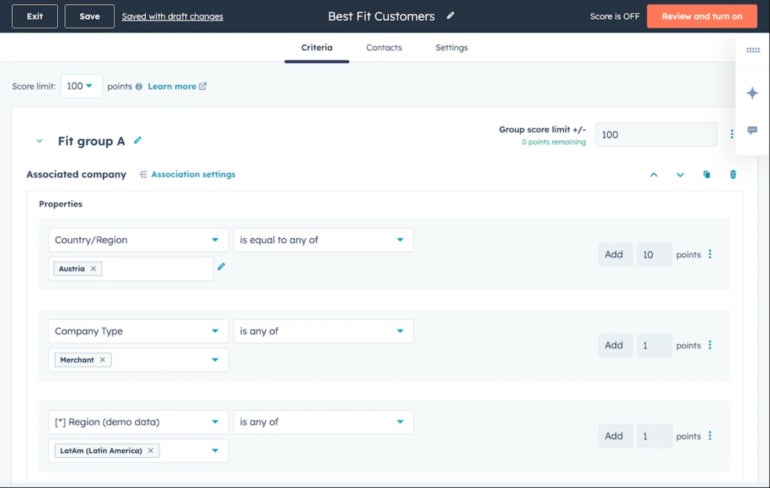
What is lead scoring? Lead scoring is a methodology that assigns numerical scores to individual leads to enable sales and marketing teams to prioritize them based on their likelihood of conversion. Some of its key components include a lead’s demographic data, online behavior, frequency of engagement, and buying stage indicators. The goal is to identify high-value leads and dedicate more effort to conducting personalized follow-ups to drive more conversions. What is a lead score? A lead score is a numerical value representing the likelihood of a potential customer converting into a paying customer. I typically see lead scores ranging from 0 to 100 and classified as cold, warm, or hot. The score is calculated by assigning points to key components, such as demographic data and engagement, and adding the total points. The higher the score, the more likely the lead is to make a purchase. Benefits of lead scoring Lead scoring helps businesses focus their efforts on leads with the highest potential. As a result of doing that, your business can enjoy more efficient sales processes, higher ROI, and other benefits. Efficient sales process By scoring your leads, you can easily identify and hone in on the high-quality ones who are most likely to buy from your business. That means your sales reps won’t have to waste their time and energy on prospects who are not ready to make a purchase. Higher marketing ROI Marketing teams can use lead scores to measure the effectiveness of their campaigns. It can also help them focus on leads requiring nurturing and the most effective outreach channels. Plus, you can figure out where you can invest your future marketing budget and implement improvements based on these scores. Better sales and marketing alignment Lead scoring provides sales and marketing teams with a common framework that they can use to understand their leads and identify prospects that they need to focus on. That said, both teams can work towards the same goal and collaborate on improving their strategies for customer communication. Improved conversion rates Sales and marketing teams can focus on high-priority prospects with the highest lead scores. This prevents them from missing opportunities by encouraging high-value leads to convert. For example, say you have a lead who’s ready to speak to a sales rep to inquire about your products. At the same time, your marketing automation tools can send them relevant content to help convince them to buy the product they’re interested in. Accurate revenue forecasts By tracking lead scores, businesses can easily see how likely a lead is to make a purchase. You can use this information to predict future revenue. Accurate forecasts help businesses plan their sales resources well and be better equipped to meet projected demand. Different lead scoring models Here are some examples of lead scoring models that you can develop and use to rank your potential customers. Demographic or firmographic model You can create a lead scoring model for your ideal customers based on specific demographic or company data, such as age, location, industry, and company size. To do that, ensure your landing page forms include questions that gather demographic and firmographic data to exclude outliers. You can also deduct points from leads that don’t have the characteristics you are looking for. Image: HubSpot Engagement model This model measures your lead’s level of interest in your product or service based on their email or social media engagement with your brand. This requires tracking email open rates, click-through rates, social media interactions, and engagement frequency. You can also track granular details and assign higher scores for those who open a demo or promo email. Image: LeadSquared Online behavior model Another good way to determine purchase readiness is to score leads based on their behavior on your business website. This requires a lead tracking system, like Salesforce, to automatically calculate lead ranks and update the scores based on values assigned to different actions. I suggest including filling in a contact form, visiting your pricing page, watching a demo video, and downloading materials in your list of actions. Image: Salesforce Negative scoring attributes Some leads express little interest in your brand, browse your website simply for academic reasons, or are not interested in purchasing. I suggest excluding these leads or adjusting their rank to move them down your priority list. Leads that you can assign negative scores to include those who unsubscribe from your email list, submit spam, work for a competitor, and type in “student” in the job title field. Source: Zoho CRM What metrics to look at for lead scoring Tracking key performance indicators (KPIs) helps you measure the effectiveness of your lead scoring system. The top metrics may vary from one company to another, but they generally include Lead engagement: Includes email opens, email clicks, and social media interactions. Conversion rate: The percentage of leads that convert into customers. Cost per lead: The cost of acquiring each lead. Customer acquisition cost (CAC): The total cost of identifying and converting leads. ROI per lead: The revenue generated from scored leads. Sales cycle time: How much time it takes to convert a lead. MQL to SQL ratio: Monitors the ratio of marketing-qualified leads (MQL) versus sales-qualified leads (SQL) to gauge alignment between the two teams. How to instill a lead scoring system for your business Follow these steps to build a data-backed lead scoring system for your business. 1. Establish your minimum lead qualifications. Consider the minimum criteria a lead must meet to turn into a customer and the factors that can exclude leads from your scoring system. For example, you will only accept leads above 18 years old who live in a specific region. This way, your sales team won’t waste time pursuing leads that have no chance of converting. 2. Identify the core qualities of your typical customers. List the core attributes that your typical customer base possesses but are not necessarily required to be qualified as customers. These attributes could include company size, industry, and annual revenue. If your leads also possess these core qualities,

What Is Lead Scoring? A Guide to Score & Grade Leads Easily Read More »