Review: 2025 Toyota Grand Highlander hits the family-SUV sweet spot

Cars and houses have something in common: no matter how large they are, they eventually start to feel small. Toyota saw a hole in the market and is filling it with the Grand Highlander. At a Glance Grand Highlander is larger than the Highlander, but not as large as some competitors It’s all about interior roominess and cargo capability Get the hybrid version New and improved Toyota infotainment is a big step up Kids grow, their hobbies grow with them, and the amount of gear you have to carry around seems to expand endlessly. In our house, our son has gone from playing clarinet to playing guitars and now a double bass. His sisters have seen similar upgrades in gear. Others watch their kids go from needing a pair of shin guards to hauling around an entire bag of equipment just to play soccer. So automakers respond. The Highlander has become a bit too small for many growing families, while the truck-based Sequoia can feel like overkill. Hence the Grand Highlander. This isn’t a new idea. Other companies have done the same. Jeep has the Grand Cherokee. Both Ford and Chevrolet have grown the Explorer and Traverse to similar sizes. The goal is to add more third-row space and more cargo capacity to go with it, all while holding the line on fuel economy by avoiding that box frame. All of these vehicles are over 200 inches (508 cm) long. The Grand Highlander is actually the smallest of the group at 201.4 inches (511.6 cm), and it’s proportionally narrower than many rivals. It seats seven or eight people, depending on configuration, with room for seven carry-on bags behind the third row, according to Toyota. However you measure it, there’s a lot of space here. That’s behind a third row that even I, at over six feet tall, can climb into and sit in comfortably. The cargo space behind the third row in the Grand Highlander is substantial. My kids described it as “a bunch of Sam’s Club toilet paper packs’ worth”Aaron Turpen / New Atlas That interior room is the focal point for the Grand Highlander and most of its competition, but looks matter too. Toyota specializes in making vehicles that are attractive without being attention-seeking. The Grand Highlander looks good without trying too hard to stand out. Powering the 2026 Grand Highlander are three powertrain choices. The base option is a turbocharged 2.4-liter four-cylinder producing 285 horsepower (210 kW). This results in respectable, though not exceptional, fuel economy and just enough power to keep the Grand Highlander from feeling sluggish. I would not recommend this as a first choice, however. Spend the extra thousand dollars or so and move up to the hybrid. The hybrid model lowers horsepower to 245, but adds low-end torque via the electric motors. Fuel economy improves dramatically to 34-36 mpg combined (8.3-6.5 L/100 km), depending on whether it’s all-wheel drive or front-wheel drive. Toyota’s well-proven hybrid system delivers the torque needed to make the Grand Highlander feel responsive off the line, then seamlessly hands things over to the gasoline engine as speed builds. It’s much smoother and more confident than the standard gas-only option. And if you can afford it, the Hybrid Max raises output to 362 hp (266 kW). All-wheel drive becomes standard, but fuel economy drops significantly as the powertrain shifts to a performance-oriented 2.4-liter hybrid setup. Expect to lose roughly 7 mpg with this upgrade. Unless you absolutely need to venture into sporty SUV territory, I would not recommend the Max. All 2026 Toyota Grand Highlander models share the same excellent day-to-day driving characteristics. Especially the comfort. Toyota has clearly learned a lot from the Sienna minivan and incorporates as much of that experience as possible here. Ergonomics are excellent, storage for small items is abundant, and charging ports are plentiful throughout the cabin. And if this SUV’s infotainment system is any indication of where Toyota is headed, it’s a huge upgrade over the dated and often sluggish systems that have become the company’s norm. In the end, regardless of powertrain choice, the Grand Highlander is not a sporty or fast-paced utility vehicle. It’s decent on dirt roads, comfort-oriented on pavement, and easy to settle into whether the trip is short or long. Nothing about it is dynamic, expressive, or any of the other adjectives used to describe enthusiast-focused vehicles. Its mission is simple: move a lot of people and cargo comfortably, efficiently, and without tiring anyone out. Toyota’s new infotainment interface is much better than its predecessorAaron Turpen / New Atlas In a market crowded with three-row SUVs making increasingly extravagant promises, the Grand Highlander quietly delivers on the fundamentals. Pricing for the 2026 Grand Highlander starts at US$41,360. The hybrid starts at US$44,710, while the Hybrid Max starts at US$55,190. Prices do not include Toyota’s US$1,495 destination charge. Product Page: 2026 Toyota Grand Highlander source

Review: 2025 Toyota Grand Highlander hits the family-SUV sweet spot Read More »

Yes, birds masturbate, and it's important we all know about this

Chloe Heys, University of Lancashire; Kevin Arbuckle, Swansea University, and Matilda Brindle, University of Oxford/ The Conversation For captive animals, engaging in natural behavior is a pillar of the animal welfare framework. But when it comes to sex, one important behavior has been largely ignored, and sometimes even punished: masturbation. Solo sex is surprisingly common across the animal kingdom. It is well documented in primates. Tortoises are surprisingly vocal during their solo lovemaking endeavors, if not very graceful. Camels masturbate by rubbing their penises in the sand, and porcupines make inventive use of all sorts of objects. Our new study could change how other scientists view masturbation in birds and improve their welfare. Masturbation also seems to be common in birds. A quick internet search brings up an abundance of video clips on social media and dedicated posts on bird-keeping forums, largely from worried or bemused hobbyist bird keepers. It has often been treated as an abnormal problem behavior in captive birds (particularly parrots). Folklore husbandry has assumed it is the undesirable outcome of stress, bad health or poor environment. Bird keepers often therefore discourage masturbation via punishment or veterinary interventions such as diet or care changes and, sometimes, even drugs and surgery. Despite the welfare implications, masturbation in birds had been largely unexplored by the scientific community. We set out to change that by investigating the distribution and evolutionary history of masturbation in birds for the first time. We studied 120 species of bird across 22 major groups, gathering data from the scattered scientific literature, online reports and community forums, and surveys of bird experts. Our study found that masturbation is widespread across birds with a strong evolutionary history, meaning that it’s an ancient trait probably similar in closely related species. Although we found more records of masturbation in male birds, it occurs in both sexes and across all age groups. Solo sex also seems to be linked to species that mate with multiple partners, supporting the idea that it might help to increase reproductive success when there is a high degree of competition over fertilization. For instance, in males it may flush out old sperm to leave newer (better-condition) sperm for mating. In females, it may increase sexual arousal to help with sneak mating with males other than their partner. Wild behaviour Crucially, we discovered that masturbation is actually less common in captivity than in the wild, and more common in birds reared by their own parents than by humans. What this tells us is that masturbation in birds is neither an unnatural behaviour, nor a consequence of captivity. Given this finding, it is important that birds are not prevented from masturbation. Of course, as with any behavior, there may be extreme cases where chronic masturbation could indicate underlying health or husbandry issues. Avian self-pleasure is usually a rather inelegant affair, in which a bird rubs their cloaca (a shared orifice for both excretion and reproduction) against an object, like a branch, twig or toy. This is often accompanied by a lot of flapping and self-satisfied vocalisation. One potential reason for the lack of scientific studies exploring avian masturbation may be because the cloaca is thought to have fewer nerve clusters, and therefore lower sensitivity, than our own genitals. Clearly, however, birds are getting some satisfaction from masturbation, so perhaps there is more to a bird’s sensations during sex than has previously been recognised. Further exploration of this could have important implications for both welfare and captive breeding programs. While sexual pleasure may not be exactly the same experience as for mammals, it is wildly premature to dismiss the idea that birds also feel pleasure. Chloe Heys, Senior Lecturer in Biology, University of Lancashire; Kevin Arbuckle, Senior Lecturer in Biosciences, Swansea University, and Matilda Brindle, Postdoctoral Researcher in Evolutionary Biology, University of Oxford This article is republished from The Conversation under a Creative Commons license. Read the original article. source

Yes, birds masturbate, and it's important we all know about this Read More »

Accenture to acquire social and creator agency Whalar

Accenture Song has agreed to acquire creator and social agency Whalar from Whalar Group, marking a major expansion of its creator economy capability. The deal will see Whalar become part of Accenture Song, adding scaled creator and influencer engagement to its customer growth offering. Whalar has delivered more than US$600 million in creator campaigns, spanning tens of thousands of collaborations across more than 40 countries and 15 languages. The acquisition comes amid shifting media consumption habits. A recent TikTok whitepaper showed creator-led marketing across Asia Pacific is projected to generate US$1.2 trillion in commercial contribution by 2030, up 1.4 times from 2025, as authentic content becomes a measurable driver of brand and business performance.  Whalar’s co-CEOs, Emma Harman and Jo Cronk, will join Accenture Song alongside their team of more than 170 employees across the United States, United Kingdom, Ireland, Germany and Spain. “Accenture Song exists to help the world’s most ambitious companies grow – and today, growth is inseparable from relevance,” Ndidi Oteh, CEO of Accenture Song, said. “Social is where brands are discovered, where modern commerce is happening and where consumer habits tell us what products and services are going to win next. Whalar brings a creator capability that strengthens how we drive meaningful impact and growth for clients.” “The creator economy demands a new kind of expertise, one that blends authentic creator relationships, deep platform knowledge, and the technology to activate both at enterprise scale,” Dimitri Maex, global marketing practice lead at Accenture Song, said. “Bringing Whalar into Accenture Song lets us pair creator authenticity with the intelligence and scale to deliver work that’s not just produced but felt. Because as the agentic economy grows, what wins won’t be the most content – it will be what is most original and the most human.” Whalar Group will retain ownership of its remaining portfolio companies, including Sixteenth, Foam, Moby Ventures, The Lighthouse, and The Business of Creativity. These entities will continue to operate independently under co-founders Neil Waller and James Street. Concurrently, Whalar Group and Accenture Song will enter a three-year strategic partnership focused on industry innovation and cross-network collaboration. “We’re incredibly proud of what the team has built over the past decade,” said Neil Waller and James Street, co-founders & co-CEOs of Whalar Group. “Accenture Song operates at a level of scale and ambition that is truly unique, and we believe there is no better partner to take Whalar agency to its next phase of growth.” This transaction follows several recent acquisitions by Accenture Song designed to scale its social and creator capabilities, including Superdigital in 2025 and Unlimited in 2024. Related articles: Accenture snaps up marketing and sales firm Brand LearningAccenture strengthens leadership team in Southeast Asia source

Accenture to acquire social and creator agency Whalar Read More »

20-eyed, 20-legged robot moves in any direction with equal ease

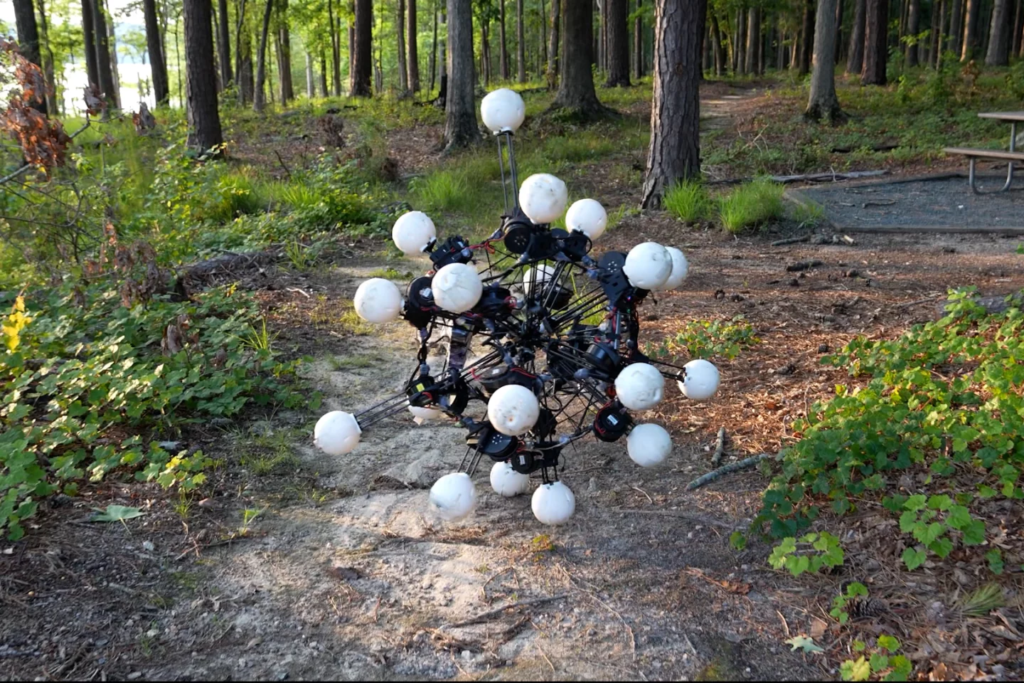
Most of nature – including humans – is symmetrical, and as creations reflect their creators, many robots we create today feature this symmetry, with the general assumption that symmetry is best. Researchers at Duke University have challenged that assumption with Argus, a sea-urchin-like robot that ditches conventional symmetry altogether. The robot has no front or back and is covered in 20 legs and 20 eyes, each pointing in nearly every direction, giving it the appearance of something that escaped from a mathematics laboratory. However, thanks to this unconventional build, Argus can traverse a wide range of terrains, move with equal ease in almost any direction, and shrug off damage that would cripple many robots. Argus can continue rolling even when as many as three of its legs are disabledDuke University For decades, we have treated symmetry in robotics as a matter of shape. After all, most animals, which are the inspiration for many robots, are symmetrical. But what if shape isn’t the most important type of symmetry? What if symmetry were better defined by how uniformly a robot can move, not how it looks? This question led Duke researchers to develop a new design principle they call dynamic symmetry, or dynamic isotropy. Instead of measuring how balanced a robot’s body appears, the concept measures how well a robot can accelerate itself in every direction. In simple terms, can it move north, south, east, west, up, or down with roughly the same ease? Think of a robot that can walk back and forth and sideways with equal ease, without having to reorient. Loose sand is no problem for ArgusDuke University “Most robotics research has framed symmetry as a question about the body, but we argue that the more powerful symmetry is at the level of what the robot can do,” says Asst. Prof. Boyuan Chen, leader of the research. “When a robot can accelerate equally well in every direction, it stops needing to face the world in any particular way. Forward and backward become the same. Left and right become the same. The whole problem of robot control changes character.” To achieve this omnidirectional movement, the researchers simulated more than 1,500 robot morphologies, seeking a body plan that maximized dynamic symmetry. The winning design was the, frankly, weird-looking Argus. Argus consists of 20 modular telescoping legs radiating from a central body. Each leg is mounted at a vertex of a regular dodecahedron, a twelve-faced geometric shape. This arrangement produces an unusually even distribution of forces around the robot, allowing it to generate movement from almost any direction without needing to reorient itself first. “Watching Argus move is unlike watching any other robot we’ve worked with,” says Jiaxun Liu, co-first author and PhD student in Duke’s General Robotics Lab. “The first time we saw it navigate among trees and rough terrain, even under heavy collisions, we knew this was something different.” Each telescoping leg is equipped with a depth cameraDuke University The legs do more than provide locomotion. Each one carries a depth camera, giving the robot what the researchers describe as “whole-body perception.” While traditional robots typically perceive the world through a head-mounted camera or a limited set of sensors, Argus effectively sees through its entire body. Wherever an obstacle appears, chances are one of its 20 cameras is already looking at it. Thanks to these features, the robot can roll across concrete, grass, sand, wet surfaces, tree bark, dense vegetation, and forest trails, regardless of which side happens to be facing forward. In fact, the concept of “forward” barely applies to Argus at all. It simply moves in whichever direction is most convenient. The robot also proved surprisingly resilient during testing. Researchers deliberately pushed it, knocked it off balance, and damaged parts of the system. Argus rapidly stabilized itself after collisions and continued moving even when three of its legs were disabled. It also carried a 10-lb (4.5-kg) payload at nearly full speed, tracked and pushed a 3-ft (91.4-cm) cube while rolling, and even climbed vertically between closely spaced walls by alternately bracing and extending different groups of legs. Meet Argus: An Omnidirectional, Sea-Urchin-Like Robot That Defies Traditional Designs Argus is the latest in an emerging line of robotics that moves away from traditional shapes toward shapes that mathematical analysis proves are optimal, regardless of their appearance. For instance, we recently covered an AI-evolved adaptable robot that you could literally cut in half, and it would still function. Now, these robots still have a long way to go before they reach real-word use, and are not automatically the robots of the future. They simply aim to prove that mathematics, not necessarily biology, should be at the wheel in the evolution of robot designs. Argus, for example, is what they call an “existence proof,” evidence that designing around dynamic symmetry could produce real-world benefits. The team hopes the principle can eventually be applied to everything from search-and-rescue systems and planetary exploration robots to autonomous machines operating in low-gravity environments. Details of the team’s work are published in the journal Science Robotics. Source: Duke University source

20-eyed, 20-legged robot moves in any direction with equal ease Read More »

Can Singapore hold its edge as ASEAN’s HQ hub as costs climb?

For years, Singapore has been the natural Southeast Asia headquarters for global companies. That perception still largely holds, but the way companies use Singapore is changing. Recent examples such as Tiger Beer, H&M, Gardenia Foods and Yeo’s moving or placing more headquarters or operational functions elsewhere in the region point to a broader shift: companies are no longer assuming every regional function needs to sit in Singapore. More are distributing operations across Malaysia, Vietnam, Thailand and other ASEAN markets, particularly for manufacturing, shared services, technology support and scalable execution-heavy roles. This is not a story of companies abandoning Singapore, but of becoming more deliberate about how they use it. As Raymond Ng, CEO, SG and SEA at Revolut Singapore, put it:  What has evolved is not Singapore’s relevance, but how businesses organise themselves across the region. While Singapore remains a hub for leadership and regional decision-making, neighbouring markets are increasingly taking on operational and cost-sensitive functions. Don’t miss: Beyond the rivalry: Why the HK–SG brand story is stronger together  A more distributed ASEAN model The traditional regional headquarters model concentrated most functions in Singapore. That is becoming less common. Companies are increasingly building regional structures where Singapore remains the leadership and coordination hub, while operational teams are spread across lower-cost or faster-scaling markets. Ng said many businesses are adopting “more distributed operating models across ASEAN to access specialised talent, serve local markets more effectively and optimise costs.” Yet he added that strategic leadership, innovation, governance and regional decision-making often remain concentrated in Singapore because of its connectivity, regulatory stability and depth of expertise. Greg Cazalis, principal consultant for commerce contract at Robert Walters Singapore, made a similar point. Companies are still placing regional leadership and strategic roles in Singapore, while moving operational, shared services, technology support and manufacturing functions to markets where costs are lower and talent pools can scale more quickly. The drivers are largely practical. Rising labour costs, rental costs and broader operating expenses have pushed companies to reassess whether every role needs to be based in Singapore, with businesses seeking greater cost efficiency, talent scalability and operational flexibility elsewhere in the region. Malaysia has become especially attractive because of its proximity to Singapore, bilingual talent pool, lower costs and growing capabilities in shared services, finance operations and technology support. Meanwhile, Vietnam continues to attract manufacturing and technology investment, supported by a young workforce. Thailand remains strong in manufacturing and supply chain ecosystems, particularly in sectors such as healthcare and FMCG, explained Cazalis. The shift has also been made easier by improved digital connectivity and communication tools following the pandemic, said Brian Lee, economist at Maybank Securities. Companies can now split functions across markets more easily while keeping teams integrated. Lee noted that this offshoring dynamic is not new. Labour- and land-intensive production activities have long moved out of Singapore, while knowledge- and capital-intensive operations remained. Back-office functions such as payroll, IT helpdesk and basic accounting processing have also been offshored to more cost-competitive hubs. What is different now is the sophistication of the model. Companies are not only moving basic support work, but are designing more regionalised structures, with different ASEAN markets playing different roles. This is why the shift should not be read simply as Singapore losing ground. Rather, the headquarters function itself is being redefined. As Cazalis described it, companies are increasingly adopting “role segmentation”, keeping higher-value, business-critical and leadership functions in Singapore while distributing execution-heavy and scalable operational work across the region. Singapore’s premium still rests on trust Singapore’s challenge is not simply that it is expensive. It is whether companies continue to see enough value to justify that expense. For some functions, the answer is increasingly no. Shared services, operational support, marketing execution and some technology support roles can often be located in lower-cost markets without major loss of effectiveness. However, for functions that require senior stakeholder management, regulatory engagement, regional strategy, specialised expertise or proximity to leadership, Singapore still offers strong value. That value rests first on trust. “For global businesses, particularly those operating in highly regulated industries such as financial services and technology, a stable and predictable environment is critical. Singapore’s regulatory framework, strong institutions and reputation for transparency continue to be significant differentiators,” said Ng.  Lee made a similar point, citing Singapore’s predictability, rule of law, intellectual property protections and technocratic macroeconomic management as qualities that remain highly prized by companies making long-term investment decisions. Singapore’s advantages also extend beyond regulation. Its supply chain connectivity, efficient seaport and airport infrastructure, and relative immunity from major natural disasters continue to reduce business risk. Just as importantly, its dense concentration of multinational corporations, investors, financial institutions, technology companies and global talent creates a self-reinforcing ecosystem: companies attract talent and partners, which in turn attract more companies. Lee added:  This strong set of strengths have yet (and are not easy) to be replicated elsewhere in neighbouring countries. This is why Singapore remains difficult to replace for complex, high-value regional functions. As Cazalis noted, its edge is not being the cheapest location but being the most trusted and efficient one, particularly for sectors such as financial services, healthcare, pharmaceuticals, commodities and regional corporate leadership. “Brand Singapore” must move up the value chain The question, then, is how Singapore applies those strengths in a more decentralised ASEAN model. One answer may be closer integration with neighbouring markets rather than direct competition with them. Lee pointed to the Johor-Singapore Special Economic Zone as one way Singapore can continue to capture value from offshored activities, by supporting “twinning” investments where economic activities are split between Singapore and Johor. Such models could become increasingly common: regional leadership, legal, finance, product strategy or investor-facing functions remain in Singapore, while manufacturing, shared services, support or logistics functions sit in Malaysia. In that sense, Malaysia’s rise is not only a competitive threat, but also a potential extension of Singapore’s regional value proposition. The broader lesson is that “Brand Singapore” can no longer rely solely on infrastructure, tax incentives, connectivity and ease

Can Singapore hold its edge as ASEAN’s HQ hub as costs climb? Read More »

Common sleep apnea and insomnia drug presents new health risks

A medication commonly given as an off-label treatment for sleep problems may be more risky than we thought – and when prescribed for obstructive sleep apnea (OSA) or insomnia, as it often is, it isn’t backed with the science data needed for safe and informed use. A world-first clinical trial led by Flinders University researchers in Australia has uncovered how quetiapine – or what might be best known as Seroquel – can impede reaction speed and performance, as well as breathing ability, the following day, And individuals may not even realize they’re still affected by the drug. Quetiapine, an anti-psychotic, is regulated for the treatment of mental health conditions including schizophrenia and bipolar disorder, but in low dose it’s often prescribed for sleep disorders. “There’s a growing belief that low‑dose quetiapine is a relatively harmless way to help people sleep,” says lead author, Cricket Fauska, a PhD candidate for FHMRI Sleep Health at Flinders University. “Our results show it’s not that simple. “Although participants slept longer and woke less overnight, their reaction times were slower, and their simulated driving performance was noticeably worse the next morning,” the researcher adds. One reason its off-label use is becoming more common is an increasing shift away from benzodiazepines and barbiturates, which are more addictive and can be challenging to discontinue. I didn’t know what quetapine was when I read this study, but I have certainly been prescribed Seroquel before, for use on long-haul flights. Although not recently, at the time it was a doctor I didn’t regularly see, so the drug was considered less “problematic” than benzodiazepine. But a less addictive alternative doesn’t necessarily make it safer – and, right now, how quetiapine works when primarily prescribed for sleep apnea and insomnia, isn’t well understood. While it’s worth noting the Flinders University trial was small, the findings pave the way for broader, larger studies to assess the safety of quetapine use for sleep problems. In the randomised, double‑blind, placebo‑controlled trial, 15 adults spent two nights in a sleep lab. Each person took 50 mg of quetiapine one night, and a placebo the other evening. Scientists gathered detailed sleep data and then monitored participants the following morning, when they completed tests including using a driving simulator, to measure mental alertness. Quetiapine did indeed improve sleep quality – it reduced breathing interruptions and waking during the night. But the real concern was the data gathered the morning after. It appeared to impact reaction times, and reduce attention span and steering control – which is a significant risk for people driving cars to work the following morning, despite the more restful night’s sleep. “What was particularly concerning is that some people didn’t feel especially sleepy the next day, despite performing worse on objective tests,” says Fauska. “That mismatch between how people feel and how they actually function poses a serious safety risk, especially when it comes to driving.” While an estimated 20% of the US adult population suffer from OSA, somewhere between 80% and 90% don’t know they have the condition. “And to add to this, a key symptom is finding it difficult to stay asleep,” says senior author Professor Danny Eckert. “Sleep complaints like this are common in general practice, and in Australia around 90 per cent of people who present with insomnia symptoms will leave with a sleeping pill rather than a sleep assessment. “Our study shows that while quetiapine can make sleep look better on the surface, it may actually make people less safe the next day,” he adds. More than 75% of the participants in the trial displayed meaningful side effects the morning after a single dose of quetiapine, including noticeable impacts like grogginess, dizzy spells and blood-pressure dips. One person even needed a medical assessment after they experienced a fall. “Our findings suggest quetiapine should not be used as a routine sleep medication in people with known or possible sleep apnea, particularly when next‑day alertness is critical,” says Eckert. It also highlights the need for better OSA diagnosis and treatment, as sedatives may indeed reduce sleep disturbances, only to present other health risks in morning. “Sleep apnea is a complex condition with different underlying drivers in different people,” says Eckert. “What we’re learning is that treatment needs to be tailored – using the right approach, or combination of approaches, for the individual rather than defaulting to sedating medications.” The research was published in the journal Annals of the American Thoracic Society. Source: Flinders University source

Common sleep apnea and insomnia drug presents new health risks Read More »

AI legal agent designed to guide police during domestic violence calls

Imagine being a police officer entering the chaos of a home where a husband is in the middle of beating his wife. That alone would be enough to scare anyone, but maybe you’re also nervous because you’re new to the job, or overworked and exhausted, or rattled and struggling to focus because of the last call you took, or you yourself survived an abusive upbringing. Regardless of your personal conditions, once you’re inside the home of the alleged assaulter, you need to de-escalate any conflict, check for weapons, protect children, and collect conflicting testimony from the alleged perpetrator, victim, and witnesses while ensuring you don’t miss a single detail – or even a whole bunch of them – that could let the abuser escape justice and result in the survivor … not surviving. How are you supposed to do all that while fighting your own possible anger, fear, exhaustion, and more? “There’s a huge cognitive load,” said Christina Shellabarger, PhD student at Washington State University, and a manager at WSU’s Complex Social Interactions (CSI) Lab in the College of Arts and Sciences. “You’re managing a fast-moving situation while trying to remember procedures, resources, and everything that needs to be documented.” If you were in a Hollywood show featuring cops, forensics analysts, or even superheroes, you could rely on the so-called “man in the chair” (sometimes a woman in the chair), the off-site advisor who guides the investigator through stressful, frenetic, and rapidly changing conditions, either for the quickest escape or to ensure mission success in finding lost objects, information, or people. But what if instead of a human in the chair, you could always depend on AI through your mobile device? That’s what Shellabarger and other WSU CSI researchers have created: an open-source AI interaction platform that dynamically guides investigators not simply to ask all the right primary questions, but to probe further based on the specific information the officers are encountering and that the witnesses are reporting. It’s also an AI legal agent providing rapid interpretation of case law and statutes so that police can make more accurate decisions during first contact. To make the CSI app even more effective, WSU is recruiting partners such as police departments and survivor advocacy groups for field testing of the open-source system, allowing participants to customize it for their own needs. As CSI Lab principal investigator and WSU professor of Criminal Justice and Criminology David Makin says, “We need people to use it and tell us what works and what doesn’t. This is about giving officers the right information at the right time so they can make better decisions when it matters most.” By analyzing information as soon as officers record it in the app, the AI dynamically prompts further probing questions and recommends actions including contacting child protective services and other nearby services. It also translates languages, allowing people with limited or stress-impaired skill in the local language to communicate far more effectively. One of the app’s key features is its standardized approach for collecting information, allowing individual officers and various departments and agencies to compare data and detect trends – especially from repeat offenders who may be escalating – more efficiently. “You can start to see patterns you wouldn’t otherwise catch,” says CSI Lab computer scientist Shlok Tomar. “It’s not about collecting more data. It’s about collecting the right data and making it usable in the moment.” As CSI Lab staff scientist Sayani Ghosh says, “When the information is captured the same way each time, you can actually compare cases and understand what’s changing.” Later this year WSU CSI will release the app’s beta version, and a stable one in early 2027. Plans for developing the app include automated keyword detection to prompt trauma-informed probing questions and even modified wording of those questions. While countless observers including New Atlas have noted the dangers of embedding AI into policing, the WSU CSI app offers an opportunity to serve vulnerable people much better than police have typically done. As Makin notes, one of the key responsibilities of a state-funding institution is serving humanity. “This is exactly what a land-grant university is supposed to do. Take research out of the lab, build something useful, and put it in the hands of the people who need it,” he says. Source: Washington State University source

AI legal agent designed to guide police during domestic violence calls Read More »

Why is GOMO cutting hair to sell broadband plans?

GOMO by Singtel (GOMO) has launched its broadband offering with an experiential campaign that uses premium haircuts as a metaphor for value, positioning affordability as something that does not require compromise. The “Budget done better” campaign was developed in collaboration with Publicis Chemistry and 35A Studio, led by creative director and co-founder Junz Loke. It centred on the idea of “Cut costs, not your standards”. At the heart of the campaign is a category tension familiar to broadband consumers: the trade-off between price and perceived quality. While lower prices and faster speeds dominate telco messaging, GOMO identified a more human concern beneath the specifications: what “cheap” actually costs in terms of reliability and experience. Don’t miss: Singtel turns tourist SIM into pocket-sized AR tour guide  According to Lynette Poh, head of brand, engagement and loyalty at Singtel Singapore, that tension is what shaped the creative direction. Haircuts, she said, offered a universally understood reference point for that trade-off. “Everyone knows a bad budget haircut story. You tried to save money, and you paid for it, just not in the way you expected. That gap between the price paid and the experience received is exactly what we wanted consumers to think about. The insight is simple: people don’t fear cheap. They fear what cheap costs them,” said Poh.  As part of the activation, GOMO offered members of the public a signature haircut experience by Junz and the Studio 35A team, typically valued at over SG$200, for SG$29.99. The experience was designed to translate the broadband proposition into something physical and immediate, despite broadband itself being an intangible service. Rather than relying on conventional messaging around affordability, the activation placed consumers directly inside the proposition, allowing them to literally choose between a budget haircut or a premium experience at an accessible price point. The format, Poh said, was intentional in shifting the conversation from explanation to experience, particularly in a category where trust is difficult to earn and competitors often default to technical specifications. “‘Trust us, it’s good’ is probably the oldest and least convincing message a brand can deliver. Especially in a category where skepticism is baked in, and others default to talking about prices and technical specifications because they’re the easiest things to communicate,” explained Poh.  “We wanted to do the opposite. Rather than tell people that paying less doesn’t mean compromising, we wanted them to experience it for themselves through the haircut. In our case, you’re either in the chair or you’re not.” The campaign also leaned on creative partnership to reinforce its message. Junz Loke and Studio 35A were selected not for celebrity appeal, but for their reputation in craftsmanship and quality, a deliberate reflection of the “Budget done better” positioning. Their involvement extended beyond endorsement, with the salon experience itself acting as proof of concept. Customers were not just told about quality at a lower price; they experienced it firsthand through the service delivered. To extend the idea beyond the salon, GOMO rolled out a flashmob across Everton Park, Chinatown and Little India featuring walkers in intentionally mismatched purple wigs. The street activation was designed to inject visibility, curiosity and contrast into everyday environments. The wigs represented the opposite of the campaign promise and served as a visual shorthand for “budget done badly”, where cost-cutting comes at the expense of standards. By placing these moments in public spaces, GOMO aimed to turn the campaign into an interactive street-level conversation rather than a static brand message.  According to Poh, awareness and consideration shifts for GOMO Broadband will be key measures of success, with the brand aiming to strengthen consumer understanding of its broadband offering and position itself as a credible and reliable option when selecting a home broadband provider. Beyond traditional performance metrics, GOMO is also looking at softer brand signals, particularly whether the “GOMO” brand resonates beyond the campaign itself. Ultimately, success would be reflected in whether consumers, media and creators begin associating GOMO by Singtel with the idea of “Budget done better”, and organically use the phrase in conversations around broadband value and pricing. GOMO has consistently positioned itself as a digital-first, value-driven challenger brand in Singapore’s highly competitive telco market, targeting consumers who prioritise flexibility, transparency and affordability over traditional bundled telco plans. In 2023, the brand rolled out a 360-degree campaign for its “Data bank” feature, aimed at tackling unused mobile data. Developed with Publicis Groupe Singapore, the campaign took a social-first approach, encouraging users to share real-life examples of data wastage via Instagram stickers and user-generated content. It was supported by out-of-home executions and influencer collaborations with creators such as Austin and Ashley Soon (@soonbros) and Nicole Liew. The initiative sought to reposition leftover data as recoverable value, reinforcing GOMO’s broader focus on utility, transparency and everyday savings. The latest broadband campaign builds on this value-led positioning, extending the brand’s approach of translating abstract telecom propositions into tangible, lifestyle-led experiences. The launch comes amid a broader shift in Singapore’s telco landscape, where operators are increasingly moving beyond price-led messaging to build lifestyle-driven brand ecosystems. Most recently, players such as Circles.Life have also expanded in this direction, with its “Live unhinged” platform and Circo mascot reflecting efforts to embed the brand into everyday consumer culture beyond connectivity. Related articles:   Singtel taps ex-Telkomsel and Indosat marketing chiefs for senior leadership roles  Singtel extends decade-long support for National Gallery Singapore Singtel’s Gomo drops original beat with Benjamin Kheng  source

Why is GOMO cutting hair to sell broadband plans? Read More »

Former Milk & Honey PR Singapore CEO launches Ember42 advisory in Malaysia

Former Milk & Honey PR Singapore partner and CEO Meilin Wong has launched Ember42, a Malaysia-based reputation and growth advisory aimed at helping businesses make stronger PR and marketing decisions. The consultancy is designed to support businesses expanding within Malaysia, entering the market, or scaling across Southeast Asia, where growth ambitions can often expose gaps in positioning, reputation management, team structures, partner performance and commercial alignment. At launch, Ember42 has secured two retained mandates. The first involves supporting a Malaysia-based plant nutrition company as it recalibrates its marketing function to better align with business objectives. The second will see Ember42 establish and manage the PR function for a Malaysian real estate company as it looks to engage new audiences across the region. Don’t miss: Boutique reputation firm The Brand Imprint opens shop in Singapore According to Ember42, the launch comes as businesses across Southeast Asia face growing pressure to build visibility, credibility and demand in increasingly complex markets. The advisory cited the Milken Institute’s Global Opportunity Index 2026, which ranked Malaysia 23rd globally and the strongest investment environment among six Southeast Asian growth markets analysed. Singapore ranked seventh globally. In a statement to MARKETING-INTERACTIVE, Wong said Malaysia’s growing regional influence made it an attractive base for businesses looking to expand. “Malaysia is a serious market with real regional ambition. Local businesses are looking beyond home, while international businesses are increasingly looking at Malaysia as a launchpad into Southeast Asia,” she said. “However, expansion in either direction can expose challenges such as inconsistent positioning and messaging, stretched teams, fragmented partners, or PR, marketing and sales pulling in slightly different directions.” She added that Ember42 was created to help businesses address those challenges before committing significant budgets or resources. Unlike traditional agencies that typically work from campaign briefs, Ember42 positions itself as an advisory partner engaged earlier in the decision-making process. The firm works with businesses to identify areas that need strengthening, simplifying or restructuring before major investments are made in marketing, communications or external partnerships. Wong brings more than three decades of experience across public relations, strategic communications, marketing, go-to-market and commercial strategy across Southeast Asia and the wider Asia Pacific region. She most recently served as partner and CEO of Milk & Honey PR Singapore and Southeast Asia for nearly three years, where she led the agency’s regional operations and growth. Prior to that, she held senior leadership roles at agencies including Team Lewis and WE Communications.  “Most people would not buy or renovate a house without checking what needs to be fixed, upgraded, changed or removed,” Wong said. “Yet many businesses invest in PR and marketing without applying the same discipline, even though these functions can have significant impact on reputation, trust and growth. That is the gap Ember42 is set up to address.” The launch comes amid a growing number of communications and marketing consultancies establishing a presence in Malaysia as the country strengthens its position as a regional business hub. Most recently, former TikTok Southeast Asia insights and operations lead Hooi Yin Yin and former Google senior account manager Kek Zhi Chen launched SPARKers, a consultancy in Malaysia aimed at helping brands move beyond fragmented and vanity metric-driven marketing approaches. According to Hooi, the consultancy was created in response to what she described as a widening disconnect between marketing activity and business outcomes. Earlier this year, independent agency W Communications also expanded into Malaysia, appointing Kiersten Chaik as country manager to lead the market and drive growth. Chaik oversees a local team providing consumer, corporate and integrated communications support, working closely with W Communications’ Singapore headquarters to deliver regional campaigns and counsel. Related articles: Audi, Volkswagen, Agoda, Uni of Reading, and GoRental pick PR agency in Malaysia  Former AirAsia brand co. CEO Rudy Khaw launches Lobby Hours   HYP Global strengthens founding bench with ex-Leo Malaysia creative group head source

Former Milk & Honey PR Singapore CEO launches Ember42 advisory in Malaysia Read More »

Can a podcast with President Tharman change how Singapore talks about kindness?

The Singapore Kindness Movement (SKM) is turning to long-form content and one of Singapore’s most recognisable mascots to spark conversations around kindness, respect and belonging. As part of its broader “Be greater, together” platform, SKM has released a special episode of the Singa Podcast featuring President Tharman Shanmugaratnam in conversation with Singa the Kindness Lion. Created in collaboration with creative agency PROTOCOL, the episode explores themes such as mutual respect, kindness in the workplace and Singapore’s future. According to Karun S’Baram, deputy director of strategic marketing and communications and Michelle Tay, executive director at SKM, the idea stemmed from an internal discussion about how kindness is woven into Singapore’s identity and its ability to bridge differences across communities. Don’t miss: GE2025: Are podcasts the new political battleground? “The idea for this episode actually started with a chat among our team about how kindness is woven into Singapore’s DNA, and how it can bridge gaps across different communities,” they said. “Half in jest, we thought it would be wonderful if our mascot, Singa the Kindness Lion, could sit down with the President to talk about this. So Singa wrote him a letter, and to our absolute delight, President Tharman said yes.” The timing, they added, felt particularly relevant given the President’s longstanding advocacy for multiculturalism, mutual respect and creating a stronger sense of belonging across society. The episode sits at the heart of SKM’s “Be greater, together” campaign, which encourages Singaporeans to move from a mindset of “yours and mine” to one focused on collective responsibility and community. Rather than producing a traditional short-form campaign asset, SKM opted for a podcast format to create space for deeper conversations around empathy and kindness. “We intentionally chose a podcast format over a traditional 30-second campaign video because kindness and empathy aren’t things you can rush. They need real, unhurried conversation,” said S’Baram and Tay.  “A podcast gives us the space for nuance, warmth and authenticity to come through naturally. It also happens to be a format that resonates really well with younger audiences who value authentic, long-form content over polished advertisements,” they added. The initiative also marks an effort by SKM to evolve Singa’s role for a new generation of Singaporeans. According to the organisation’s latest Graciousness survey, nearly four in five Singaporeans recognise Singa, while more than half can correctly recall the mascot’s name. In addition, 89% associate Singa with being a reminder to be kind or courteous. “These findings show that Singa isn’t just a nostalgic childhood icon; he is still a friendly, spontaneous prompt for positive behaviour,” they said. “By putting him in a podcast setting, we are bringing him into the modern conversations Singaporeans are having today.” The episode also places a spotlight on workplace kindness, an area SKM believes remains highly relevant given the amount of time Singaporeans spend at work. According to research by the organisation, 65% of employees who experience kindness from colleagues say it makes them happier to go to work. The findings also point to respectful communication and appreciation from colleagues and managers as key drivers of positive workplace culture and mental wellbeing. When it comes to measuring success, SKM said it is looking beyond traditional campaign metrics. While views and engagement will be tracked, the organisation said its primary objective is whether the conversation resonates with Singaporeans and reinforces the idea that kindness and mutual respect are everyday choices rather than abstract ideals. “The truest measure of impact is whether Singaporeans walk away feeling that kindness and mutual respect aren’t lofty, out-of-reach ideals, but simple, everyday choices we can all make. A kinder, more gracious Singapore is something we build together,” said S’Baram and Tay. The latest podcast episode continues SKM’s recent efforts to experiment with new formats and storytelling approaches to engage Singaporeans on issues of kindness, empathy and social cohesion. Last year, the organisation generated buzz through “Operation glitch out“, a social media stunt that saw it wipe its social channels and post a series of cryptic, glitch-themed teasers ahead of a new PSA series. Produced with local agency Bless7Up, the campaign featured local personalities including Benjamin Kheng and used surreal, arts-based storytelling to spotlight everyday acts of neighbourliness, appreciation and mutual support. Related articles: SKM serves up friendly rivalry and sweet treats in cheeky CNY film  SKM, HDB celebrates SG60 with time-travelling kindness film trilogy  Why you don’t necessarily need to create a podcast source

Can a podcast with President Tharman change how Singapore talks about kindness? Read More »