New evidence shows menopause rewires the brain

Every day in the US, an average of 6,000 women enter menopause. Now, scientists from the University of Vermont’s College of Medicine have uncovered significant evidence of the neurological changes in the brain during this significant life stage, paving the way to finally understanding and ideally treating midlife cognitive decline. “With decades of life remaining after menopause, it is important to understand the neurological effects of hormone changes at midlife,” says Abigail Testo, a postdoctoral research associate in the lab of study lead Julie Dumas. “Our research contributes to the growing body of work examining the relationship between menopause and the brain.” Looking at scans of women’s brains in a “resting state” – when the brain isn’t actively engaged in specific tasks – the researchers uncovered a marked difference in women who had entered menopause, most likely due to the rapid shift in hormones. “Differences in resting-state functional connectivity between the supramarginal gyrus, right anterior division, and right planum temporale at the connection level were identified between participants in the pre-, peri-, and postmenopausal groups when all groups were compared,” the researchers write. “Further analysis comparing the pre- and postmenopausal groups revealed one cluster of altered resting-state connectivity that was lower in the postmenopausal group compared to the premenopausal group. Regions with altered connectivity included the left and right supramarginal gyrus, the anterior division, and the right and left planum temporale.” Estrogen, perhaps not surprisingly, appears to play a large role here, with postmenopausal women losing 90-95% of the hormone’s supply. While studies in the last decade have tied it to cognitive function issues and emotional dysregulation, this research offers compelling evidence that the change has a profound impact on neuronal connectivity and critical brain communication pathways. Despite somewhat of a shift, menopause has become slightly less of a taboo health topic, but stigma remains, as this 2022 study laid out. Earlier this year, researchers from Monash University in Australia highlighted the debilitating effect of “brain fog” that many women (or people assigned female at birth) experience in midlife. Again, the team tied this to the rapid change in hormones. “We don’t have any neuropsychological tests right now that are sensitive enough to detect brain fog per se, that could be rolled out easily in GP clinics,” Associate Professor Caroline Gurvich, clinical neuropsychologist and researcher at Monash University’s HER Centre Australia, said at the time. “What we want GPs to do is consider factors that might be contributing to cognitive symptoms, such as sleep and mood, as well as conditions that may not be related to the hormonal changes of menopause, such as low iron and autoimmune conditions, that can be picked up through blood tests,” she added following the publication of their March 2026 paper in the journal Menopause. Those researchers also highlighted how this lack of menopause-related cognitive impairment testing means women are left wondering: Is it dementia? Attention-deficit/hyperactivity disorder (ADHD), which is commonly diagnosed during perimenopause? Or a specific hormonal balance interrupting the brain’s normal programming, which could need an entirely different treatment approach? This latest work from Dumas – associate director of the Clinical Neuroscience Research Unit and professor of psychiatry and Testo paves the way for clinical evidence of menopause’s impact on cognition. It’s worth also remembering that women are disproportionately represented in age-related cognitive decline, especially Alzheimer’s disease (AD). According to the Alzheimer’s Association, nearly two-thirds of US adults living with AD are women. And the majority of this cohort are also post-menopausal women. A 2026 study used established data that women face a one in five chance of developing AD by age 45. For Men, the chance is one in 10. As that paper noted, AD is often thought of as predominantly an “age-related” disease, which has seen less focus on how sex is a key risk factor. While preliminary, these new findings build on a steadily growing body of evidence that the endocrine system is more influential in our brains than we might think. And it also provides mechanistic proof of structural brain changes that occur before, during, and after menopause. It’s a small but meaningful step forward in our understanding of how menopause may advance brain aging – and one that could ultimately help researchers develop ways to fight cognitive decline. After all, by 2050, more than 1.2 billion women around the world will be in or approaching menopause. The study was published in the journal Menopause. Source: University of Vermont College of Medicine via MedicalXpress Fact-checked by Mike McRae source

New evidence shows menopause rewires the brain Read More »
Singapore's getting a front-row seat to Formula 1's biggest stories

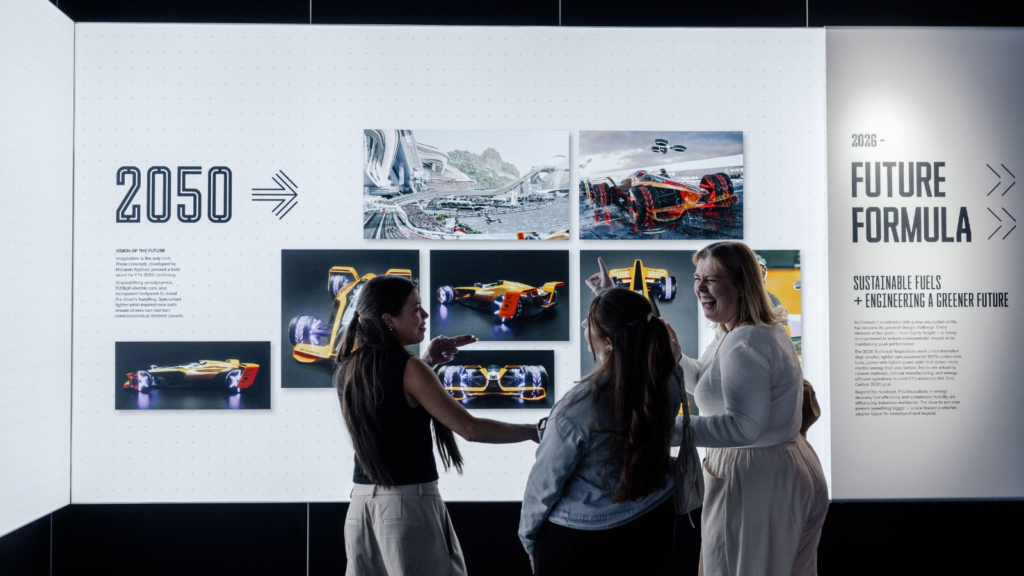
The award-winning “Formula 1 exhibition” is set to make its Asian debut in Singapore next month, bringing fans closer to the sport’s history, technology and biggest moments through an immersive experience at Gardens by the Bay. Opening to the public on 23 July for a limited run, the exhibition marks the first time the global attraction has been staged in Asia. Singapore will become the 11th city to host the exhibition following runs in Madrid, Vienna, Toronto, Buenos Aires, London, Amsterdam and Melbourne. Located at Gardens by the Bay near Satay by the Bay, the exhibition will showcase Formula 1’s 76-year history through a series of interactive galleries, racing simulators, rare artefacts and behind-the-scenes content. According to the organisers, almost two million tickets have been sold globally since the exhibition launched. Don’t miss: Beyond the track: How brands took pole position online at 2025 Formula 1 Singapore GP The exhibition features seven immersive rooms that explore the sport’s past, present and future. Visitors will begin in “Once upon a time in Formula 1”, which highlights defining moments from the championship’s history, before moving through experiences focused on engineering, innovation, legendary rivalries and technological advancements. Among the key attractions are several iconic Formula 1 cars, including the championship-winning Red Bull RB7 driven by Sebastian Vettel and Mark Webber during the 2011 season. The car secured 12 race victories that year, including a win at the Singapore Grand Prix. Additionally, the BAR Honda 005 will also be on display, driven by Jenson Button and Jacques Villeneuve during the 2003 season, with additional vehicles expected to be announced closer to the opening. The exhibition will also feature racing simulators that allow visitors to tackle the Marina Bay Street Circuit, alongside rare race suits, helmets and interactive displays examining the technology behind modern Formula 1. One of the centrepieces is “Survival”, which tells the story of Romain Grosjean’s dramatic crash at the 2020 Bahrain Grand Prix through parts of his HAAS car, as well as personal items including his gloves and boots. The experience concludes with “Singapore drive”, a dedicated space celebrating Singapore’s contribution to Formula 1 and its place on the global racing calendar. Tickets will be available through Ticketek, alongside a premium Pole Position package that includes simulator access. A waitlist is currently open, with presale tickets available from 17 June before general sales begin on 19 June. “After welcoming more than 1.3 million fans across major cities around the world, we’re delighted to bring ‘The Formula 1 exhibition’ to Asia for the first time in Singapore,” said Emily Prazer, chief commercial officer at Formula 1.  She added, “As one of Formula 1’s most iconic destinations, Singapore is the perfect backdrop to host the critically acclaimed immersive experience, offering fans, both old and new, a compelling way to explore the sport’s history, innovation and excitement beyond the track.” In tandem, Jonathan Linden, co-CEO of Round Room Live and Producer of The Formula 1 Exhibition said, “Since its debut in Madrid in 2023, ‘The Formula 1 exhibition’ has continued to go from strength to strength, and we’re thrilled to be bringing the experience to Asia for the first time.” “Singapore, renowned for one of the most exciting Grand Prix events on the circuit, is the perfect destination, and we anticipate strong interest from both devoted fans and newcomers alike. We’re excited to open our doors and invite visitors to discover the world of F1 through this immersive and cutting-edge experience,” he added.  According to Gordon Pitt, senior vice president of Sony Music Australia, Singapore’s strong connection to Formula 1 and its status as the home of the sport’s first night race made it a fitting location for the exhibition’s Asian debut. He added that the showcase gives fans a new way to experience Formula 1 beyond the track. Meanwhile, Shane Harmon, managing director of TEG Experiences, highlighted Singapore’s place as one of the sport’s most iconic race destinations. He added that visitors will be able to revisit key moments from the Singapore Grand Prix, including viewing Sebastian Vettel’s Red Bull RB7 from his 2011 championship-winning season. MARKETING-INTERACTIVE has reached out for more information.  The exhibition arrives as Singapore continues to lean into Formula 1-themed experiences beyond the race weekend itself. Last year, ION Orchard launched its “Live the race at ION Orchard” campaign, blending the excitement of Formula 1 with luxury retail through race-themed activations, car displays, immersive pop-ups and seasonal promotions. The initiative formed part of the mall’s wider “A new season, a new silhouette” campaign during Grand Prix Season Singapore. Related articles: Formula 1 revs up 2026 season with star-studded campaign film  Standard Chartered shifts gears with Formula 1 partnership   Is Formula 1 the right track for Disney’s Gen Z ambitions? source

Singapore's getting a front-row seat to Formula 1's biggest stories Read More »

Future robots could avoid damage by rolling up like armadillos

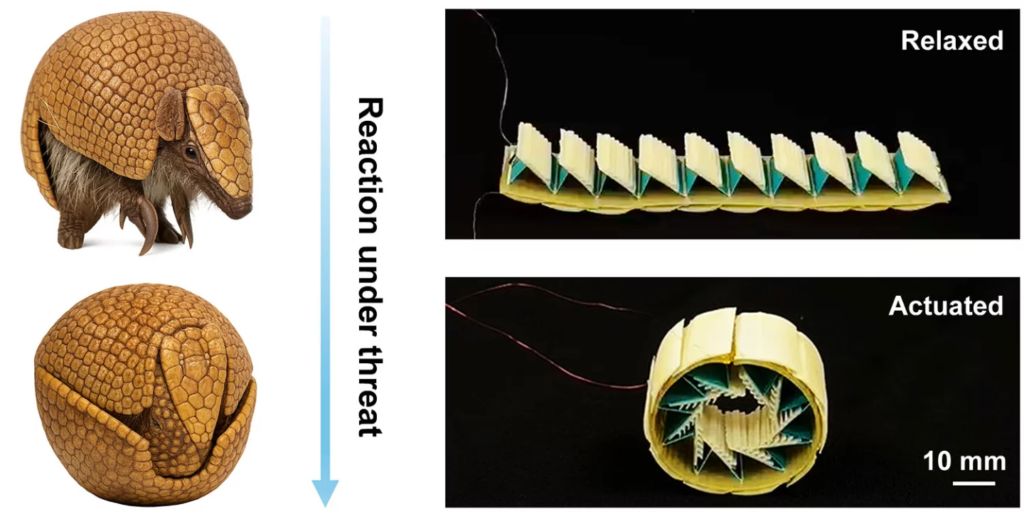
Nature has long served as a source of inspiration for scientific innovations. Many animals have evolved defensive features such as skins, shells, and scales to protect themselves from predators. Because protective mechanisms are essential in both biological organisms and engineered systems, a lot of these features have already been adopted in modern technologies. Recently, researchers from the Department of Mechanical and Aerospace Engineering at North Carolina State University drew inspiration from the armadillo and its unique self-defense mechanism. When an armadillo senses danger, it quickly activates its muscles and reconfigures its whole body into a rigid, enclosed sphere. Its armor-like outer plates act as a shield, while its spine supports the body from inside, keeping it in a spherical shape. Using this concept, the team developed a protective shell for fragile electronic devices that can automatically activate when a threat is detected. The technology is called the morpho-interlocking protective module (MIPM). This approach is relevant to space exploration, search-and-rescue missions, and personal protective wearable technologies, where electronic devices – such as robots – have to be lightweight, flexible, and at the same time resistant to damage. The MIPM alongside its inspirationJianyu Zhou, NC State University Most previously developed bioinspired protective systems have lacked one crucial component: integrated sensing-actuation loops, which means they could not automatically and independently respond to external threats. Addressing this limitation became a key challenge for the researchers. At the core of the technology is a three-layered structure, where each layer serves an important function. The outer layer consists of multiple segments made from 3D-printed resin. Ten of those segments are capable of withstanding approximately 10 newtons of force. The middle layer is the most complex, as it contains the sensing and actuation system that detects a threat and triggers protective mode. It consists of four elements: a liquid-crystal elastomer (LCE); a strain sensor made from an elastic polymer embedded with silver nanowires; a layer of Kapton tape that expands when heated; and finally, a thin conductive fabric layer that serves as a heater. The inner layer, or endoskeleton, is made of heavy-duty paper folded into a series of ridges. When the strain sensor detects a force, it sends a signal to a control unit, which activates a power source and sends it to the heater layer. As the heater warms, the LCE layer contracts while the Kapton tape expands, forcing the entire MIPM structure to bend and curl into a protective sphere – just like an armadillo’s defensive shell. Unlike real armadillos, the endoskeletal components of the robotic system cannot be fully bonded along the origami-inspired interface, because curling requires some space between the segments to ensure their movement. This became another challenge for the research team, which was ultimately met. After testing, the system was shown to perform effectively, but it’s important to note that those results were obtained under controlled conditions. To prepare the technology for real-world conditions, there is still some work that needs to be done. This includes ensuring that sensors remain stable in extreme temperatures, high humidity, and dusty environments. Besides that, the team is also planning to improve wireless connectivity, such as Bluetooth, to enable reliable communication between sensors and control systems. A paper on the research has been published in the journal Science Advances. Source: North Carolina State University source

Future robots could avoid damage by rolling up like armadillos Read More »

Stock Market Today: Nasdaq Ends Off Steeper Loss, Dow Rises After Downturn; Credo Technology Advances

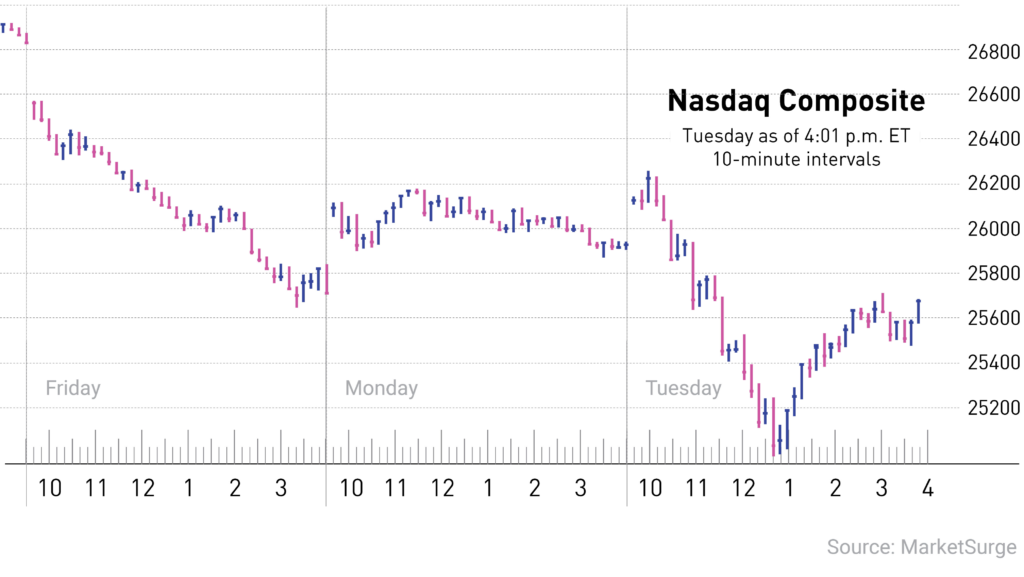
Selling intensity tapered off by Tuesday’s closing bell, with indexes paring steep losses that followed President Donald Trump’s pledge to “respond” to what he said was Iran’s downing of an Apache helicopter. Volatility ahead of inflation data was seen in intraday reversals that knocked stocks lower. Credo Technology (CRDO) climbed despite weakness in tech stocks. The Nasdaq composite fell 1%… Copyright ©2026 Investor’s Business Daily, LLC. All rights reserved. 87990cbe856818d5eddac44c7b1cdeb8 source

Stock Market Today: Nasdaq Ends Off Steeper Loss, Dow Rises After Downturn; Credo Technology Advances Read More »

Weaker bonds make for more impact-resistant polymers

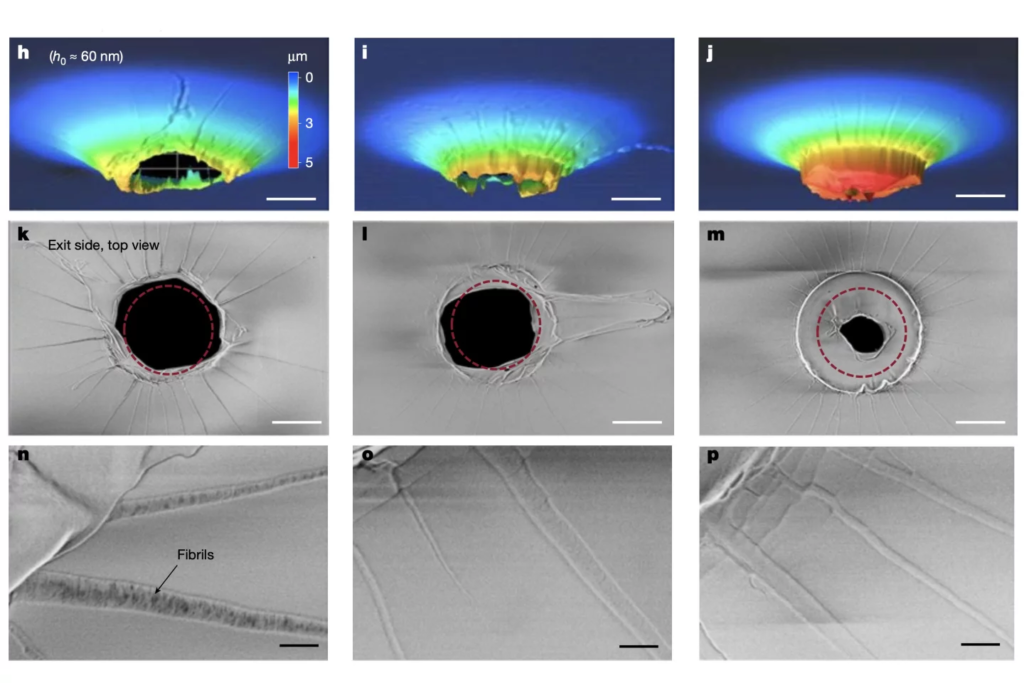
In a new MIT study – in partnership with Purdue, Northwestern, and Duke universities – chemists have discovered that inserting weaker bonds into polystyrene actually makes the material more resistant to damage. The weaker bonds are dispersed throughout the material as cross-links known as mechanophores, and upon a sudden strike, those mechanophores selectively snap at the impact site, absorbing the impact energy more effectively. In their experiments, the researchers demonstrated how when the cross-linked polystyrene was struck with a high-speed particle, the temperature at the impact site increased high enough to form an adaptable zone that broke, leaving the surrounding area unaffected. As a result, the cross-linked polystyrene absorbed way more energy compared to regular polystyrene. “These cross-linkers can substantially increase the amount of energy that the material absorbs under ballistic impact. You can imagine many applications of that, especially if this could be generalized to other polymers,” says MIT’s Prof. Jeremiah Johnson. “It turned out that the mechanophore leads to substantial increases in energy dissipation compared to both uncross-linked and conventionally cross-linked polystyrene.” This study builds upon a 2023 study from Johnson and colleagues at MIT and Duke University, which demonstrated that polymers could be toughened by distributing weak cross-links throughout polymer materials that break under slow tearing conditions in a way that perseveres the stronger bonds that bear the load to dissipate more energy. “As a crack starts to propagate through the material, these mechanophores split in two, which helps to dissipate energy and redirect where the crack goes. That means you have to put in more energy to tear the material,” Johnson says. In this case, the team devised a way to directly merge the mechanophores as cross-links into common polymers. They used an invention created by MIT’s Prof. Keith Nelson, to study how the polymers responded to impacts via laser-induced micro-plastic impact testing (LIPIT). The MIT team tested the impact resistance of their new polymers by firing tiny projectiles at them – at far left is a traditional polystyrene film, at center and right are two versions of polystyrene made with weak crosslinkersMIT Tiny silica beads about 10 microns in diameter are projected at the polymer at about 750 meters per second (over 1,600 miles per hour) with the amount of energy absorbed measured by calculating the change in particle velocity before and after the beads pass through. “We first developed this method to study microparticle impact and penetration into bulk polymer samples, where we would monitor particle propagation through about 100 microns of material and analyze after impact how polymer morphology had changed,” Nelson says. “Our new measurements show how much additional information can be extracted from particle velocities before and after penetration through a thin layer. They also show deeply informative deformation patterns both during particle impact and afterward.” With this cross-linking approach, the researchers can also strengthen styrene-butadiene-styrene rubber which is used in shoe soles, as well as asphalt and roofing materials with the same results. They are additionally studying whether the technology could be applied to other kinds of polymers, like the rubber used in tire production. “Materials with energy-absorbing mechanophores could one day help keep your vehicle’s tires from blowing out on the highway or provide more protective cases for personal electronics,” says Katharine Covert, program director of the US National Science Foundation Centers for Chemical Innovation, which invested in the team’s research. “This work really demonstrates how valuable new insights can be rapidly generated by bringing together researchers with different areas of expertise.” A paper on the study was recently published in the journal Nature. Source: MIT source

Weaker bonds make for more impact-resistant polymers Read More »

AS Watson and L’Oréal Paris debut exclusive product co-creation

AS Watson Group has joined forces with L’Oréal Paris to unveil an exclusive, co-created beauty product: the L’Oréal Paris Infallible Setting Mist Cherry Edition. Developed, produced, and launched exclusively for AS Watson Group, this limited-edition release reimagines L’Oréal Paris’ best-selling, viral hero formula to capture the fast-growing setting spray segment. Featuring a bold cherry-inspired twist and distinctive pink packaging, the product was purpose-built to resonate deeply with Gen Z beauty consumers, aligning with L’Oréal Paris’ ongoing commitment to making innovative beauty accessible to an even wider audience. The highly anticipated product is already live in the UK, with a further rollout planned across 14 additional global markets spanning Europe, Asia, and the GCC. Following strong early momentum in Europe, the new product is set to expand into the GCC and Asia later this year, with highly anticipated launches in Malaysia, Thailand, the Philippines, and Singapore. To support the global expansion, the brand will deploy localised social media activation, high-impact in-store maximisation, and immersive brand experiences anchored under the vibrant theme, “Cherry Fix Summer Soirée.” Driving the launch is a comprehensive, end-to-end O+O (Offline plus Online) strategy designed to optimise every touchpoint of the consumer journey. This ecosystem begins with social-first teaser campaigns and creator-led content to fuel desirability, followed by high-impact in-store theater and dominant online placement to maximise conversion. The O+O activation model ensures that consumers experience a frictionless transition from initial digital discovery to final purchase. Given that 75% of consumers are more likely to buy limited-edition packaging, this strategy effectively positions the setting mist as a collectible must-have, elevating a daily beauty essential into a bona fide social and cultural statement. This exclusive co-creation underscores the shared commitment of both L’Oréal Paris and AS Watson to build next-generation beauty ecosystems where data, creativity, and operational excellence converge to deliver greater value for consumers and stakeholders alike. Malina Ngai, Group CEO of AS Watson Group, said, “This co-creation with L’Oréal Paris reflects how we are redefining the role of the retailer—from distributor to true innovation partner. By combining our deep consumer insights, omnichannel execution strength and L’Oréal Paris’ world-class R&D and brand power, we are creating products that are culturally relevant, commercially powerful and truly differentiated.” MARKETING-INTERACTIVE has reached out to AS Watson for more information.  Related articles: AS Watson empowers customers to feel great with new brand refreshAS Watson and Hang Seng University ink deal to nurture young talents source

AS Watson and L’Oréal Paris debut exclusive product co-creation Read More »

Swiss Army knife-like surgical robot fits on your fingertip

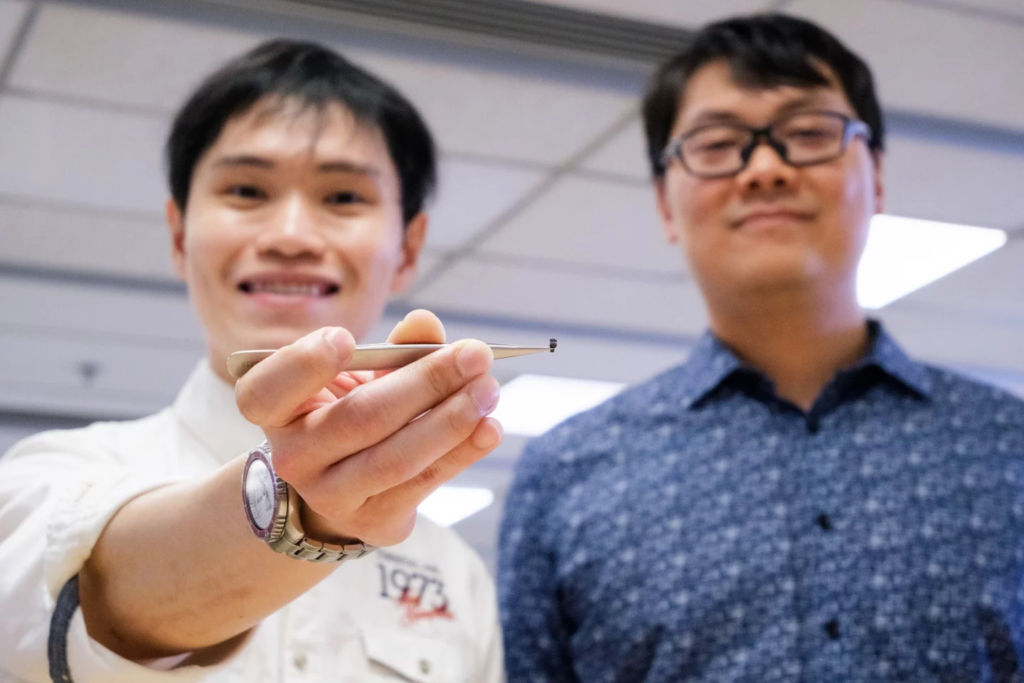
Picture a surgical robot that can move, cut tissue, release drugs, grip and store samples, and wirelessly generate heat. You most likely didn’t imagine a robot that can fit in your hands. Yet, scientists have created a 5-in-1 robot that fits right on your fingertip! Measuring just 4.4 mm (0.17 in) long, the ultra-tiny robot developed at Nanyang Technological University (NTU) in Singapore can crawl across soft tissues, cut biological material, release drugs, collect tissue samples, and even generate therapeutic heat on demand. Most remarkably, it can switch between these five functions in less than a second, all without wires, onboard electronics, or batteries. The robot is a recent development in the rapidly growing field of magnetic medical robotics, where researchers use external magnetic fields to guide miniature devices through the body. These systems are widely considered a potential future alternative to some forms of minimally invasive surgery, possibly enabling procedures in hard-to-reach locations without large incisions or bulky surgical instruments. One limitation of this field is that most magnetic microrobots are specialists. One robot may be designed to transport drugs, while another is a tissue collection expert. Combining multiple capabilities into a single device has proven quite difficult because magnetic fields tend to affect an entire robot all at once. When one section moves, the rest often moves with it. This is the problem that the NTU team says it has solved after seven years of work. Assoc. Prof. Lum Guo Zhan (right) and PhD student Nicholas Yong Wei Foo (left), who is holding the surgical robot with a pair of tweezersNanyang Technological University “Most magnetic robots like this can perform only one or two functions. Our latest invention can now do five, and our long-term goal is for doctors to use these mini robots in the body, navigate them to a targeted location, and use them to perform treatments,” says Lum Guo Zhan, team leader and soft miniature robotics pioneer. At the heart of their robot is a reprogrammable magnetic module that can be magnetized, demagnetized, and remagnetized in different directions. Each magnetic orientation effectively unlocks a different operating mode, such as moving or cutting. The researchers also engineered different regions of the robot to respond differently to the same magnetic field. Rather than behaving as a single magnet, individual sections can be selectively activated while the rest remain unchanged. This level of independent control is one of the key technical advances behind the project. The robot itself is constructed from soft silicone-based materials commonly used in soft robotics, including PDMS and Ecoflex. Embedded throughout these materials are microscopic magnetic particles roughly 5 micrometers in size. By carefully controlling how those particles are arranged and magnetized, the researchers can remotely manipulate the robot using relatively weak magnetic fields generated by external coils. The result is a tiny, potentially powerful Swiss Army Knife of a robot. Meet the new “5-in-1” surgical microrobot Now, its abilities. In cutting mode, the device can deploy a tiny blade that cuts through biological tissue. For biopsy mode, a gripper captures and stores tissue samples for later analysis, potentially allowing doctors to perform biopsies in difficult-to-access locations. The drug-delivery mode sees the robot release preloaded drugs at very precise locations in the body. In the fourth heating mode, the robot generates localized heat when exposed to a high-frequency alternating magnetic field. This heating capability could eventually support magnetic hyperthermia treatments, an experimental cancer therapy that uses heat to damage or destroy tumors while minimizing harm to surrounding tissue. The robot’s fifth and final function is arguably its most important: movement. Movement is another area in which the technology differs from that of many existing miniature robots. Most magnetic microrobots operate with five degrees of freedom, allowing movement along three axes and rotation in two directions. The NTU robot introduces a sixth degree of freedom through rolling motion, allowing it to rotate around its own longitudinal axis. That additional maneuverability could prove useful when navigating the narrow, irregular, and often slippery environments found inside the human body. Unlike some recent soft robotic concepts that resemble blobs of slime or liquid droplets, the NTU design maintains a solid but flexible structure. The researchers say this makes it more robust and potentially easier to retrieve after a procedure, an important consideration for any future clinical use. To evaluate its capabilities, the team tested the robot on gelatin-based tissue models and chicken liver. During laboratory experiments, it successfully cut tissue, dispensed drug-representing particles, collected tissue samples, and generated localized heating. The researchers also examined the biocompatibility of the robot’s materials using cultured human skin cells. More than 99% of cells remained viable after exposure, suggesting the materials were largely non-toxic under laboratory conditions. Now for the reality check. The technology is currently far from clinical deployment. Today’s prototype operates inside a laboratory using external magnetic coil systems rather than inside living patients. It is also not autonomous. Doctors would ultimately have to guide and control the robot rather than allowing it to roam through the body independently. However, that sounds more like a pro than a con. Regardless, the project could prove fantastic for minimally invasive medicine. Instead of inserting multiple instruments through surgical openings or catheters, future physicians may be able to deploy a single miniature robotic platform capable of diagnosis, treatment, sampling, and therapy in one procedure. As if the 5-in-1 tag weren’t impressive enough, the team is currently exploring how future versions could be integrated with imaging technologies, sensing systems, and clinically realistic artificial organ models that more closely mimic the physical behavior of human tissues. They are also collaborating with surgeons to understand how mini robotic systems could eventually fit into real clinical workflows. Source: Nanyang Technological University source

Swiss Army knife-like surgical robot fits on your fingertip Read More »

Are KFC fans truly loyal to their favourite chicken?

KFC Singapore is launching its first-ever KFC Karnival Showdown for International Fried Chicken Day 2026, turning the long-running fan divide between its Original Recipe and Hot & Crispy chicken into a ticketed team battle featuring games, food rewards and brand activations. Taking place on 4 July at KFC SCAPE, the one-night event will see fans choose between ‘Team Original’ and ‘Team Crispy’, compete in carnival-style challenges and earn points for their chosen side. The campaign is backed by BYD, Coca-Cola and Red Bull, with each brand playing a role in the wider Karnival experience. The reveal follows a teaser posted by KFC Singapore on Instagram a week earlier, where the brand told followers: “You can’t be both. Time to pick a side. Choose wisely. Your side could unlock something big soon.” Don’t miss: Can the KFC x Butterbear collectibles turn fast food into a destination experience? At the heart of the campaign is the rivalry between Original Recipe and Hot & Crispy. Rather than treating International Fried Chicken Day as a conventional promotion, KFC is using the occasion to turn product preference into participation, asking consumers not only what they want to eat, but which side they are willing to represent. Every ticket holder will receive a KFC x Coca-Cola goodie bag containing either a ‘Team Original’ or ‘Team Crispy’ jersey, a tote bag, a Dollop photobooth voucher and other merchandise. Guests will also receive a KFC bucket meal before taking part in a series of carnival stations and team challenges under the campaign line, “The more you play, the more you feast”. Participants can earn additional food rewards, vouchers and team points through activities such as the Red Bull F1 agility challenge and the Finger lickin’ match game. Coca-Cola and Red Bull will also host dedicated activity zones, while KFC x Red Bull beverage infusions will be available for sampling. The event will feature live entertainment hosted by Mediacorp 987 DJs Sonia and Avery Aloysius, alongside fringe activities including free ice cream and photobooth sessions linked to a spin-and-win mechanic. KFC is also extending the celebration beyond the main event. From 1 to 3 July, the brand will bring back its two-for-SG$10 deal, featuring two sets of two-piece chicken, regular whipped potatoes and Coke Zero. The offer will be available for dine-in and takeaway at participating outlets. MARKETING-INTERACTIVE has reached out for more information.  Following the Karnival, the winning team will unlock exclusive islandwide SG$6.70 meal deals on 6 and 7 July, featuring either Original Recipe or Hot & Crispy favourites depending on which side emerges victorious. The campaign follows KFC Singapore’s “Picnic under the stars” activation at Dhoby Ghaut Green Lawn for International Fried Chicken Day 2025, reflecting the brand’s efforts to grow the occasion into a larger experiential platform. The Karnival also reflects a broader push by KFC markets to turn signature menu items into fan-led cultural moments. Last month, KFC Australia launched a campaign positioning its Zinger burger as the benchmark for spicy chicken burgers, staging tongue-in-cheek reviews of rival products through influencer trials, outdoor activations and social content. While the execution differed, both campaigns tap into existing consumer loyalties and product rivalries to drive participation beyond traditional food promotions.  Related articles:    KFC South Asia picks McDonald’s regional marketing and digital lead for newly created role   KFC and Pizza Hut conclude media pitch for SG  KFC Singapore turns up the heat with return of Samyang collab   source

Are KFC fans truly loyal to their favourite chicken? Read More »

Lego recreates world's tallest church with largest-ever set

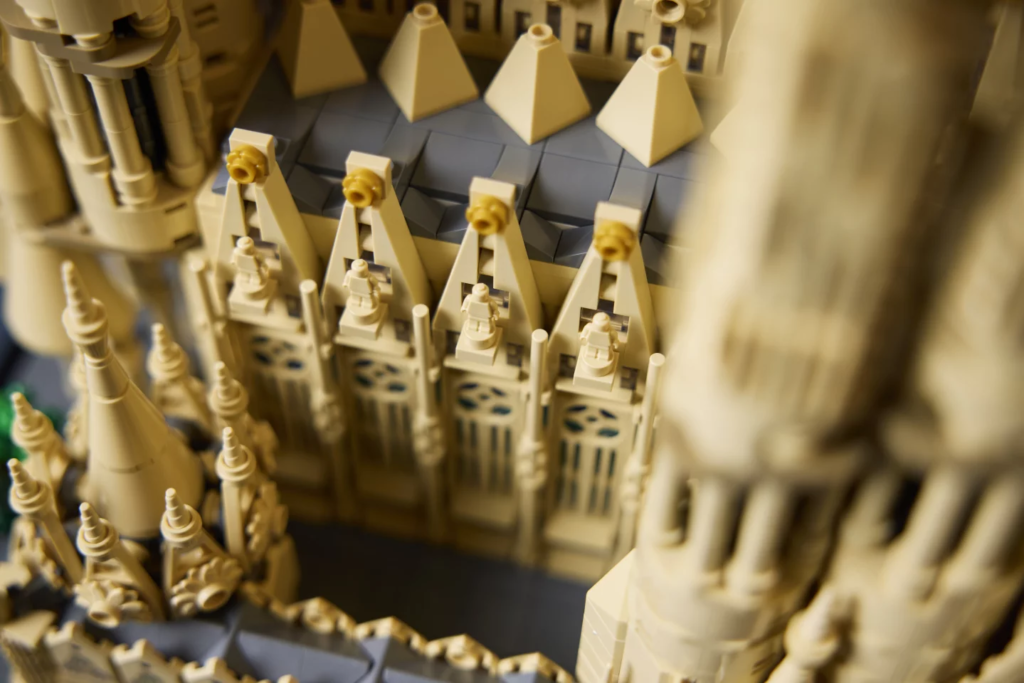
The Sagrada Familia has been under construction for more than 140 years, but Lego’s new replica should hopefully prove a little quicker to assemble. Featuring just over 12,000 pieces, it’s Lego’s largest set to date by piece count. Located in Barcelona, Spain, the Sagrada Familia is a genuine architectural icon. Rising to 172.5 m (566 ft), the basilica is rated as the world’s tallest church. It was originally designed by Francisco de Paula del Villar in 1882, but Antoni Gaudí took over the following year and completely transformed the design into what we know today. The Lego set is being released to mark the 100th anniversary of Gaudí’s death. Lego’s Sagrada Familia is impressively detailed, replicating the real basilica’s facade with thousands of the small plastic bricksLego Group Lego’s replica is about as close to the real thing as you could reasonably ask for, recreating the basilica’s soaring towers, facades, and lots of small but important details, including a stained-glass window effect, intended to replicate the pleasing way that light moves through the basilica’s interior. The finished model measures 24 in (62 cm) tall, 18.5 in (47 cm) wide, and 15 in (39 cm) deep. “The new set captures the evolving story of Barcelona’s most iconic landmark, with the building steps mirroring the basilica’s actual construction sequence,” says Lego. “The build begins with the foundational Apse and Crypt, moves through Gaudí’s original Nativity facade and the dramatic Passion facade, before rising into the grand naves, Western Sacristy and six iconic towers. The final stage brings the model together with the Eastern Sacristy and the Glory facade.” Lego’s Sagrada Familia includes a stained-glass window effect, designed to replicate how light moves through the real basilicaLego Group The Sagrada Familia set joins other Lego Architecture sets, including the Taj Mahal and Capitol Building. If you’d like to build one yourself, it costs a cool US$799.99, which may well be more than a budget weekend trip to Barcelona to see the real thing in person, depending on where you live. Source: Lego source

Lego recreates world's tallest church with largest-ever set Read More »

Hungry for football fever? ION Orchard has a seat waiting for you

ION Orchard is rolling out a new culinary and retail campaign as brands look to tap into heightened consumer interest surrounding the FIFA World Cup 2026. Dubbed “Your table awaits”, the campaign runs until 31 July and will see the mall transform into a dining and lifestyle destination through a mix of experiential activations, limited-time pop-ups, exclusive dining offers and member rewards. Leading the line-up is the Singapore debut of Japanese dessert brand Cheese Wonder, which is setting up a limited-time pop-up at ION Station until 3 July. Known for its frozen cheese desserts and limited releases in Japan, the brand will offer its signature Cheese Wonder and Wonder Sand products to local shoppers. Don’t miss: Beyond the hype: How APAC brands are rewriting the pop-up playbook Meanwhile, Armani Beauty is hosting a pop-up at the mall’s Level 1 Atrium until 21 June, showcasing its new “Power of you” fragrance collection and updated Luminous silk foundation range alongside exclusive gifts and promotions. The campaign also features a line-up of World Cup-themed retail experiences across the mall. Among the highlights, Bacha Coffee is offering complimentary disposable drip coffee filters with purchases of its World Cup Coffee at its ION Orchard outlet, while Levi’s has launched a FIFA World Cup 2026 retro ringer tee collection inspired by national teams including Argentina, Brazil, England and Japan. Meanwhile, POP MART has introduced a limited-edition The Monsters x FIFA World Cup 2026 collection featuring plush pendants, dolls and football-themed accessories. Putting the spotlight on its dining offerings, ION Orchard has also partnered with participating tenants to introduce exclusive menus and promotions during the campaign period. At 1-Atico, guests can enjoy discounts on selected dining experiences, while visitors to Atico Lounge can take part in a dice-roll challenge for a chance to receive up to 50% off their total bill. Elsewhere, The Marmalade Pantry is offering a weekday cupcake-and-beverage pairing promotion, while TWG Tea has introduced a special price for its Gentleman’s Symphony Tea Set. The campaign will also feature wellness promotions from Spa Elements, including discounted massage and facial packages. In tandem with the campaign, ION Orchard is rewarding sports enthusiasts through its loyalty programme. Between 10 and 20 July, the first 100 ION+ Rewards members monthly who spend at least SG$150 in a single receipt at participating sports retailers will receive 75 ION+ points, equivalent to SG$30 in e-Vouchers. The campaign also forms part of ION Orchard’s broader loyalty strategy, with ION+ Rewards members able to access additional shopping perks and personalised rewards through the mall’s mobile app. “ION Orchard has always been committed to redefining the luxury shopping and lifestyle experience on Orchard Road, and our culinary campaign during the World Cup season is a testament to that promise,” said Yeo Mui Hong, CEO of Orchard Turn Developments. She added, “This campaign brings together the energy of ’The beautiful game’ with the finest in dining, retail and member privileges. Whether you are a football enthusiast, a gastronome, or a discerning shopper, there truly is a table awaiting you at ION Orchard.” The latest campaign continues ION Orchard’s strategy of tying retail experiences to major global events. Last year, the mall launched “Live the race at ION Orchard“, a Formula 1-themed campaign that ran alongside the Grand Prix Season Singapore and autumn fashion season. Running from 22 September to 12 October 2025, the initiative transformed the mall into a race-inspired destination through brand activations, car displays, immersive pop-ups and seasonal promotions, blending the excitement of motorsports with luxury retail experiences. Related articles: Why the World Cup’s biggest screen may no longer be the only one that matters   The FIFA World Cup is coming to McDonald’s, and Grimace made the squad   adidas brings World Cup fever to pets in Singapore  source

Hungry for football fever? ION Orchard has a seat waiting for you Read More »