Salesforce CEO Marc Beinoff slams Microsoft Copilot as ‘Clippy 2.0’

Join our daily and weekly newsletters for the latest updates and exclusive content on industry-leading AI coverage. Learn More Fighting words? Salesforce co-founder and CEO Marc Benioff took to his personal X account last night to criticize Microsoft’s AI assistant Copilot as “disappointing,” saying “It just doesn’t work, and it doesn’t deliver any level of accuracy,” before ultimately concluding “Copilot is more like Clippy 2.0,” with a shrug emoji. “Clippy” of course is the popular nickname for Microsoft’s Clippit virtual on-screen Word and Office conversational assistant that debuted in 1996. While now looked upon with some ironic fondness for its cute expressions and large eyes, in the mid 1990s when it premiered, it was quickly found by many users to be more annoying than helpful, popping up while they tried to do tasks on their Microsoft software and offering unhelpful suggestions. Copilot — a text-based chatbot assistant powered by Microsoft partner and investment OpenAI’s GPT models — was initially designed for Microsoft’s Office 365 and debuted in March 2023. It later expanded to include a web and mobile app version as well (and was the new name given to Microsoft’s GPT-powered Bing Chat). It was recently redesigned and upgraded to include many new features such as vision (watching and reacting to a user’s screen activity) and humanlike conversational voice input and output. A loaded critique Benioff’s critique is of course loaded and inherently biased, coming as he does from a rival software company — Salesforce’s signature customer relationship management (CRM) software competes directly with Microsoft Dynamics 365, as does the Salesforce-owned Slack with Microsoft Teams — and both companies have spent the two years since OpenAI’s debut of ChatGPT launching various new AI features, assistants, applications, and tools. Yet curiously, Benioff, an early executive to embrace to the power and potential of AI — at least publicly — has lately been criticizing the gen AI era more broadly. On Sunday, Benioff posted on X that he thought “much of AI’s current potential is simply oversold,” and that “AI isn’t yet curing cancer or solving climate change as pundits claim,” yet provided no evidence of these claims. It’s a curious and contradictory tone for him to strike given he also recently told Fast Company he has “never been more excited about anything at Salesforce, maybe in my career,” as Agentforce, his company’s new enterprise AI agent builder tool. Clearly, the founder is trying to thread a nuanced line of argument here — saying AI has potential for businesses but that Microsoft’s implementation of it doesn’t work well or provide enough value — but that presumably, Salesforce’s implementation is superior. We’ll see if customers buy it. For now, some of the “pundits” he may be railing against such as public relations expert Ed Zitron have already seized on some of Benioff’s AI critical remarks as evidence the pro gen AI narrative more generally is starting to turn. source

Salesforce CEO Marc Beinoff slams Microsoft Copilot as ‘Clippy 2.0’ Read More »

Small but mighty: H2O.ai’s new AI models challenge tech giants in document analysis

Join our daily and weekly newsletters for the latest updates and exclusive content on industry-leading AI coverage. Learn More H2O.ai, a provider of open-source AI platforms, announced today two new vision-language models designed to improve document analysis and optical character recognition (OCR) tasks. The models, named H2OVL Mississippi-2B and H2OVL-Mississippi-0.8B, show competitive performance against much larger models from major tech companies, potentially offering a more efficient solution for businesses dealing with document-heavy workflows. David vs. Goliath: How H2O.ai’s tiny models are outsmarting tech giants The H2OVL Mississippi-0.8B model, with only 800 million parameters, surpassed all other models, including those with billions more parameters, on the OCRBench Text Recognition task. Meanwhile, the 2-billion parameter H2OVL Mississippi-2B model demonstrated strong general performance across a range of vision-language benchmarks. “We’ve designed H2OVL Mississippi models to be a high-performance yet cost-effective solution, bringing AI-powered OCR, visual understanding, and Document AI to businesses,” Sri Ambati, CEO and Founder of H2O.ai said in an exclusive interview with VentureBeat. “By combining advanced multimodal AI with efficiency, H2OVL Mississippi delivers precise, scalable Document AI solutions across a range of industries.” The release of these models marks a significant step in H2O.ai’s strategy to make AI technology more accessible. By making the models freely available on Hugging Face, a popular platform for sharing machine learning models, H2O.ai is allowing developers and businesses to modify and adapt the models for specific document AI needs. H2O.ai’s new H2OVL Mississippi-0.8B model (far right, in yellow) outperforms larger models from tech giants in text recognition tasks on the OCRBench dataset, demonstrating the potential of smaller, more efficient AI models for document analysis. (Credit: H2O.ai) Efficiency meets effectiveness: A new approach to document processing Ambati highlighted the economic advantages of smaller, specialized models. “Our approach to generative pre-trained transformers stems from our deep investment in Document AI, where we collaborate with customers to extract meaning from enterprise documents,” he said. “These models can run anywhere, on a small footprint, efficiently and sustainably, allowing fine-tuning on domain-specific images and documents at a fraction of the cost.” The announcement comes as businesses seek more efficient ways to process and extract information from large volumes of documents. Traditional OCR and document analysis methods often struggle with poor-quality scans, challenging handwriting, or heavily modified documents. H2O.ai’s new models aim to address these issues while offering a more resource-efficient alternative to larger language models that may be excessive for specific document-related tasks. Industry analysts note that H2O.ai’s approach could disrupt the current landscape dominated by tech giants. By focusing on smaller, more specialized models, H2O.ai may be able to capture a significant portion of the enterprise market that values efficiency and cost-effectiveness. A comparison of average scores on eight single image benchmarks shows H2O.ai’s new H2OVL Mississippi-2B model (in yellow) outperforming several competitors, including offerings from Microsoft and Google. The model trails only Qwen2 VL-2B in overall performance among similarly sized vision-language models. (Credit: H2O.ai) Open source and enterprise-ready: H2O.ai’s strategy for AI adoption “At H2O.ai, making AI accessible isn’t just an idea. It’s a movement,” Ambati told VentureBeat. “By releasing a series of small foundational models that can be easily fine-tuned to specific tasks, we are expanding the possibilities for creating and using AI.” H2O.ai has raised $256 million from investors including Commonwealth Bank, Nvidia, Goldman Sachs, and Wells Fargo. The company’s open-source approach and focus on practical, enterprise-ready AI solutions have helped it build a community of over 20,000 organizations and more than half of the Fortune 500 companies as customers. As businesses continue to grapple with digital transformation and the need to extract value from unstructured data, H2O.ai’s new vision-language models could provide a compelling option for those looking to implement document AI solutions without the computational overhead of larger models. The true test will be in real-world applications, but H2O.ai’s demonstration of competitive performance with much smaller models suggests a promising direction for the future of enterprise AI. source

Small but mighty: H2O.ai’s new AI models challenge tech giants in document analysis Read More »

3. Views on the progress men and women have made in different areas

Women in recent decades have made significant progress in higher education and in the workplace. But they continue to lag behind men when it comes to wages and to representation in top leadership roles. At the same time, certain groups of men have struggled in the labor force and seen little or no growth in their wages. We asked Americans how they think men and women are doing today compared with 20 years ago across a range of areas – from education and work to their relationships and physical health. Overall, the public is more likely to see progress for women than for men over the last two decades in most areas we asked about. Workplace and education Majorities of adults say women are doing a lot or somewhat better than they were 20 years ago when it comes to: Getting leadership positions in the workplace (76%) Getting a well-paying job (74%) Getting into a college or university (66%) By contrast, the public is more divided on whether men are doing better or worse in these areas. Substantial shares say men are doing neither better nor worse than they were two decades ago. For example, while 76% of Americans say women are doing better today when it comes to getting leadership positions in the workplace, a far smaller share (27%) says men are doing better in this area. The patterns are similar for progress in getting a well-paying job and getting into a college or university. In each case, much larger shares of the public say women are doing better today than say the same about men. Differences by gender Men are more likely than women to say women are doing better than they were 20 years ago in all three areas. Even so, majorities of both men and women say women have made progress in recent decades. For instance, 78% of men and 70% of women say women are doing better today in getting well-paying jobs. When it comes to how men are doing these days, women are more likely than men to see progress in each area. And men are substantially more likely than women to say men are doing worse. Roughly four-in-ten men (39%) say that, compared with 20 years ago, men are doing worse in getting well-paying jobs. Among women, only 21% say the same. Similarly, there are gender gaps in the shares saying men are doing worse in getting leadership positions at work (13 points) and in getting into a college or university (12 points). Differences by party Republicans and Democrats are largely in agreement about the progress women have made in the past two decades, with majorities saying women are doing better today in these aspects of work and education. There are notable partisan differences in views about how men are doing, especially in the share saying men are losing ground. Republicans and Republican-leaning independents are more likely than Democrats and Democratic leaners to say men are doing worse, compared with 20 years ago, in all three areas. Republican men in particular stand out: 43% say men are doing worse today when it comes to getting a well-paying job. This compares with 33% of Democratic men, 25% of Republican women and 18% of Democratic women. The pattern is similar when it comes to men getting leadership positions at work and getting into college. About three-in-ten Republican men or more of say men are doing worse in these areas, compared with smaller shares among Democratic men and among both Republican and Democratic women. Relationships and personal well-being The survey also asked how men and women are doing these days, compared with 20 years ago, on several dimensions of life that relate to relationships and personal well-being: Having someone to turn to for emotional support Being in good physical health Balancing work and family responsibilities Finding a romantic partner Views on the progress men and women have made in these areas are more closely aligned than on the economic and educational issues we asked about. Overall, the public thinks both men and women are doing better rather than worse today when it comes to having emotional support and work-family balance. The public is more likely to say women are doing better when it comes to their physical health than to say the same about men (49% vs. 39%). About a third of all adults (32%) say men are doing worse in this area. The one area where a higher share of Americans say things have gotten worse rather than better for both men and women is in finding a romantic partner. Four-in-ten say women are doing worse in this area than in the past, and 44% say the same about men. Differences by gender Men and women have similar views about where women are making progress and where they’re losing ground on issues related to relationships and personal well-being. There are some modest differences, however. Women (46%) are slightly more likely than men (42%) to say women are doing better today than they were 20 years ago when it comes to balancing work and family responsibilities. Views differ more on the progress men have made in these areas. Women are more likely than men to say men are doing better these days when it comes to emotional support, work-family balance, physical health and finding a romantic partner. And men are more likely than women to say men are doing worse in each of these areas. The gender gap in views about how men are doing in the dating realm is particularly wide. About half of men (51%), compared with 37% of women, say men are doing worse today in finding a romantic partner. Differences by party In general, Democrats are more upbeat about the progress men and women have made over the past two decades in these areas of their relationships and personal well-being. Democrats are more likely than Republicans to say women are doing better on each measure. For example, 52% of Democrats versus

3. Views on the progress men and women have made in different areas Read More »

Perplexity lets you search your internal enterprise files and the web

Join our daily and weekly newsletters for the latest updates and exclusive content on industry-leading AI coverage. Learn More Enterprises can use their Perplexity dashboards to search for internal information and combine it with knowledge from the internet, but this will only be limited to specific files they deem important.  Peplexity’s new Internal Knowledge Search lets Perplexity Pro and Enterprise Pro users search for information across the web or their internal databases. Customers can access both knowledge bases in one consolidated platform.  However, internal knowledge bases will be limited to the files Perplexity users upload to the platform. Frank te Pas, head of Enterprise product at Perplexity, told VentureBeat in an interview that Internal Knowledge Search will only look for information on files users have uploaded, not entire internal databases.  “We believe this lets people bring only their most important and valuable data to the table and not the 90% of low-value files they normally sift through,” he said. “Customers told us they want to use information that’s important to them, which makes their own data even more valuable.” Users have a file upload limit (500 for Enterprise Pro users), but te Pas said this may be expanded. Customers can also upload files directly from folders in all the popular document formats like Excel sheets, word documents or PDFs.  Still, the company believes Internal Knowledge Search will improve many enterprise functions.  Perplexity CEO Aravind Srinivas said research using both internal and external information used to be two separate products. One platform searches the internet and another accesses internal documents and data.  “Being able to carry out all your research — across both internal and external sources of data — in one consolidated knowledge platform will unlock tremendous productivity gains for every enterprise,” Srinivas said in a blog post.  Today, we’re launching Perplexity for Internal Search: one tool to search over both the web and your team’s files with multi-step reasoning and code execution. pic.twitter.com/ftZGNgziBW — Aravind Srinivas (@AravSrinivas) October 17, 2024 Perplexity gave customers like Nividia, Databricks, Dell, Bridgewater, Latham & Watkins, Fortune and Lambda early access to the feature. During the early access testing, the company said customers used the Internal Search feature to do due diligence by combining internal research notes and news from the web, combine older sales materials with more current insights for proposal requests, help employees find benefit information and get product roadmap feedback based on best practices from the internet.  Perplexity will also label data sources if the information was from a website or uploaded files so that the user can dive deeper later.  In April, Perplexity launched Enterprise Pro, a paid tier of the Perplexity AI chat and search platform. The subscription offers SOC2 certification, single sign-on, user management, file upload alerts and query deletion after a week.  Make space for Spaces Perplexity also announced Spaces, a way for teams to share and organize research.  Spaces will allow users to share files across a team and customize Perplexity’s AI assistant with specific instructions and responses based on their data. The company said customers will also get full control over who gets to access their information. Specific to Perplexity Enterprise Pro, all files and searches on Spaces “are excluded from AI quality training by default.” Pro customers have to voluntarily opt out of AI training. Perplexity also promises to provide the “highest levels of safety and privacy.” Perplexity plans to add third-party data integration with Crunchbase and FactSet so Enterprise Pro users with subscriptions to those services can add data to their Spaces.  “This will allow you to expand your knowledge base even further with the ability to search across the public web, internal files, and proprietary data sets,” the company said.  Te Pas said that bringing in third-party databases like Crunchbase and FactSet means customers with subscriptions can also bring their personalized search queries on those platforms to Perplexity. For example, if a customer created a list of sectors to watch on either database, they can access that through a Perplexity search. Enterprise RAG is not going away soon Te Pas said Internal Knowledge Search and Spaces is a form of retrieval augmented generation or RAG, where users can leverage their internal ground truth to a search.  RAG systems normally sift through databases to find the most relevant answers to queries contained within those files. Most RAG systems use large knowledge repositories, as most enterprises who want to query their own data have an extensive library of information. Occasionally, a company may deploy different RAG use cases, like a real-time information retrieval system or search-only information for a specific unit. Perplexity’s version of RAG still searches a database, except that database is one built on Perplexity’s platform by users who uploaded their documents to it.  Perplexity has to compete with companies like Glean and Elastic, who have been offering RAG platforms for enterprises for a while. Glean launched its AI search chat platform, Glean Chat, which lets enterprises query their own data, last year. Perplexity has increasingly taken traffic share from more traditional search engines like Google. Perplexity also has a revenue-sharing program with some partners, mostly media companies, whose links appear on Perplexity searches.  source

Perplexity lets you search your internal enterprise files and the web Read More »

1. Public views on men and masculinity

Our survey asked a few questions to understand how Americans think society views men who are “manly or masculine.” We also asked people whether they think certain traits are valued in men too much or too little. Perceptions of how manly or masculine men are viewed in the U.S. More Americans say people in the U.S. have mostly positive views of men who are manly or masculine (43%) than say people have mostly negative views (25%). About three-in-ten (31%) say most people have neither positive nor negative views of these men. Of those who say people in the U.S. have mostly positive views of masculine men, more see this as a good thing (47%) than a bad thing (7%). Some 46% say it’s neither good nor bad that people have mostly positive views of masculine men. Among those who say people in the country have mostly negative views of masculine men, about three-quarters (73%) say this is a bad thing. Just 9% say it’s good that people in the U.S. have mostly negative views of this type of man, while 18% say this is neither good nor bad. Differences by gender Women are more likely than men to say people in the U.S. have mostly positive views of masculine men (49% vs. 36%). In turn, 33% of men say people have mostlynegative views, compared with 18% of women. Men who say people have mostly positive views of masculine men are somewhat more likely than women who say the same to see this as a good thing (51% vs. 45%). And while majorities of men and women who say people have mostly negative views of masculine men see this as a bad thing, a larger share of men (77%) than women (66%) holding this view say this is the case. Differences by party About half of Democrats and Democratic-leaning independents (49%) say views of masculine men are mostly positive; 37% of Republicans and Republican leaners say the same. Republicans are about twice as likely as Democrats to say people in the U.S. have mostly negative views of masculine men (35% vs. 17%). Among those who think Americans have mostly positive views of masculine men, 67% of Republicans say this is a good thing, compared with 33% of Democrats. Similarly, 86% of Republicans who say people in the U.S. have mostly negative views of masculine men see this is a bad thing, much larger than the share of their Democratic counterparts who say the same (45%).  Overall, Republican men are more likely than Republican women and both Democratic men and women to say people in the U.S. have negative views of men who are manly or masculine. In fact, Republican men are the only group in which more say views are negative than positive. Republican men: 45% say people have mostly negative views; 28% say views are positive. Republican women: 24% negative versus 48% positive. Democratic men: 20% negative versus 46% positive. Democratic women: 13% negative versus 52% positive. Traits society values too much or too little in men When thinking about how men are viewed in the U.S. these days, 60% of Americans say most people don’t place enough value on men who are caring or open about their emotions. Majorities also say most people don’t value soft-spoken or affectionate men enough (55% each). Views are more split when it comes to traits that tend to be associated with traditional masculinity. For example, similar shares say society values men who are confident too much (26%) as say they’re valued too little (27%). And the public leans toward saying most people place too much value,rather than too little value, on men who are: Assertive (34% vs. 25%) Risk-takers (33% vs. 22%) Physically strong (38% vs. 19%) Still, roughly four-in-ten Americans or more say people value these traits in men about the right amount. Differences by gender About half or more among both women and men say society doesn’t place enough value on men who are caring, open about their emotions, affectionate or soft-spoken. But larger shares of women than men say this is the case when it comes to men who are open about their emotions, affectionate or soft-spoken.  By margins ranging from 4 to 10 percentage points, women are more likely than men to say most people place too much value on men who are physically strong, assertive, risk-takers or confident. Meanwhile, men are more likely than women to say these traits aren’t valued enough in men. Differences by age Americans under 50 are more likely than those ages 50 and older to say men who are caring, open about their emotions, affectionate or soft-spoken aren’t valued enough.  Those in the younger group are also more likely than those in the older group to say most people place too much value on men who are physically strong, assertive, risk-takers or confident. These age differences are evident among both men and women. Differences by party By margins of 10 points or more, Democrats are more likely than Republicans to say most people in the U.S. don’t place enough value on men who are: Open about their emotions (71% vs. 49%) Soft-spoken (65% vs. 46%) Affectionate (62% vs. 50%) Caring (66% vs. 56%) In turn, Republicans are more likely than Democrats to say most people don’t place enough value on men who are: Confident (38% vs. 16%) Physically strong (30% vs. 10%) Assertive (34% vs. 15%) Risk-takers (32% vs. 15%) Differences by masculinity and femininity rating The survey asked respondents to rate themselves on masculinity and femininity scales. (Read Chapter 6 for more details on these measures.) Among men, views of whether certain traits are valued too much or not enough vary by how they rate themselves. Men who see themselves as highly masculine are more likely than those who rate themselves as less masculine to say most people don’t place enough value on men who are: Confident (40% vs. 24%) Assertive (39% vs. 23%) Risk-takers (35% vs. 23%) Physically strong (29%

1. Public views on men and masculinity Read More »

Embracing the Future: How GenAI is Revolutionizing Cloud Infrastructure for Growing Tech Vendors

This year, the convergence of cloud computing and generative AI (GenAI) is creating unprecedented opportunities for innovation. For growing tech vendors and startups, leveraging these technologies is not just a competitive edge—it’s a necessity. This blog explores how GenAI is transforming cloud infrastructure, offering practical insights and strategies to help your business thrive.  The Convergence of Cloud and GenAI  Cloud computing provides scalable, on-demand resources that allow businesses to be agile and responsive. Generative AI, on the other hand, brings advanced machine learning capabilities that can turn vast amounts of data into actionable insights and automate complex tasks. The intersection of these technologies marks a paradigm shift, enabling smarter, more efficient, and highly adaptive cloud environments.  Key Benefits of Integrating GenAI with Cloud Infrastructure  Predictive Scaling and Resource Allocation  AI models can forecast workloads based on historical data, enabling dynamic resource provisioning. This means your cloud infrastructure can automatically scale up or down based on demand, ensuring optimal performance and cost-efficiency. Predictive scaling helps avoid over-provisioning and under-utilization, common pitfalls in traditional cloud management.  Predictive scaling involves using AI to analyze patterns in data usage and forecast future needs. This proactive approach ensures that resources are available when needed, without wasting money on unused capacity. For example, an e-commerce platform might see spikes in traffic during holidays. AI models can predict these spikes and adjust resources accordingly, ensuring smooth operation during peak times.  Automated Cloud Cost Optimization  Managing cloud costs is a critical challenge for startups and growing tech vendors. GenAI can analyze spending patterns and recommend cost-saving measures. AI-driven tools can help you select the most cost-effective instances, rightsizing your infrastructure, and even automate budget alerts and recommendations. This ensures that you get the most out of your cloud investment without unnecessary expenses.  Cost optimization is not just about reducing expenses but about making smart investments in cloud resources. AI can provide detailed insights into where money is being spent and identify areas where savings can be achieved. For instance, AI might suggest moving non-critical workloads to less expensive storage options or shutting down underutilized instances automatically.  Intelligent Load Balancing and Traffic Management  Efficient load balancing and traffic management are crucial for maintaining high performance and user satisfaction. AI-powered traffic prediction models can anticipate traffic spikes and direct load accordingly, optimizing resource use and minimizing latency. Additionally, smart CDN optimization and adaptive application performance management ensure that your applications run smoothly, even under varying load conditions.  AI can predict traffic patterns and dynamically adjust load balancing to ensure optimal performance. This is particularly important for applications with fluctuating traffic, such as social media platforms or online gaming services. By distributing traffic efficiently, AI helps prevent bottlenecks and ensures a seamless user experience.  Enhancing Cloud Security with GenAI  Security is a paramount concern for any tech business. GenAI enhances cloud security by providing advanced anomaly detection, adaptive security policies, and automated threat response.  Anomaly detection involves using AI to identify unusual patterns in data that could indicate a security breach. By continuously monitoring network traffic and user behavior, AI can detect and respond to threats in real time. Adaptive security policies use AI to adjust security measures based on current threats, ensuring robust protection.  Automated threat response leverages AI to triage incidents, contain threats, and even predict future vulnerabilities. This proactive approach to security helps businesses stay ahead of potential threats and maintain a strong security posture.  AI-Driven Cloud Management  GenAI streamlines cloud management through intelligent monitoring, automated incident response, and performance optimization.  Intelligent monitoring involves using AI to analyze logs and performance metrics, identifying issues before they become critical. This proactive approach minimizes downtime and ensures smooth operation. Automated incident response uses AI to classify and route incidents efficiently, often resolving common issues without human intervention.  Performance optimization is another key area where AI can make a significant impact. By continuously analyzing performance data, AI can identify bottlenecks and recommend optimizations to improve efficiency. This ensures that your cloud infrastructure runs at peak performance, delivering the best possible user experience.  Cloud-Native AI Development  Developing AI models in a cloud-native environment offers significant advantages in terms of scalability and flexibility.  Containerized environments package AI models with all their dependencies, ensuring consistency and portability. This simplifies deployment and scaling, allowing businesses to respond quickly to changing demands. Kubernetes, a popular orchestration tool, automates the deployment, scaling, and management of containerized AI services, providing robust and reliable infrastructure for AI workloads.  Serverless architectures offer another layer of efficiency. Event-driven AI processing allows code to be executed in response to specific events, optimizing resource usage and reducing costs. This pay-per-use model means businesses only pay for the computational power they consume, making it a cost-effective solution for many applications.  MLOps, the practice of combining machine learning with DevOps, is essential for managing the lifecycle of AI models. Automating the deployment, monitoring, and retraining of models ensures they remain accurate and relevant over time. Version control for data, models, and code is crucial in maintaining consistency and reproducibility. Continuous integration and deployment (CI/CD) pipelines enable frequent updates and improvements, keeping AI systems at the cutting edge of performance and reliability.  Future of Cloud AI  Looking ahead, the integration of AI with emerging technologies like quantum computing and autonomous systems will further revolutionize cloud infrastructure. Companies that stay ahead of these trends will be better positioned to leverage new opportunities and maintain a competitive edge.  Quantum computing will enable the development of more sophisticated models and algorithms, accelerating research and innovation. Hybrid quantum-classical cloud architectures will become more prevalent, allowing organizations to harness quantum computing’s power for specific tasks while leveraging classical computing for others.  The next generation of cloud infrastructure will be characterized by autonomous systems powered by AI. These self-organizing and self-optimizing environments will manage resources, detect anomalies, and resolve issues without human intervention, reducing operational complexity and enhancing system reliability.  Conclusion  The convergence of GenAI and cloud computing is revolutionizing how tech vendors and startups manage their infrastructure. By embracing predictive

Embracing the Future: How GenAI is Revolutionizing Cloud Infrastructure for Growing Tech Vendors Read More »

UK Tech Founders Showcase Event

UK Tech Founders Showcase Event

In partnership with The Hong Kong British Chamber of Commerce and hosted by the Eaton Club, we invite you to our StartmeupHK Festival community event, where leading tech founders from the UK will showcase their latest innovations and solutions. The evening includes fireside chats with UK tech founders as they share their insights, along with the opportunity to connect with industry peers over drinks and nibbles. VIP guests, trade mission partners, investors and local tech founders are welcome. For more details, please click here.

UK Tech Founders Showcase Event Read More »

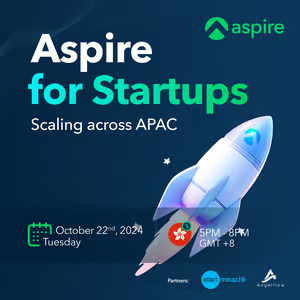
Aspire for Startups Hong Kong Launch

Aspire for Startups Hong Kong Launch: Scaling across Asia Pacific

Join Aspire as we bring together passionate entrepreneurs, investors, and key ecosystem players for the launch of the Aspire for Startups Program in Hong Kong—designed to help set startups up for success. Learn from trailblazers who’ve been through it all: A superstar panel of founders who scaled from 0 to 20,000 customers across APAC will share their invaluable insights, hard-earned lessons, and what they wish they’d known through the highs and lows of their entrepreneurial journeys. ​For more details, please click here.

Aspire for Startups Hong Kong Launch: Scaling across Asia Pacific Read More »