20,000呎全齡向一站式室內競技天堂「Urban Ops 動域空間」Wargame 場地登場

香港夏天時晴時雨,想尋找一個冷氣強勁、交通極度方便的室內玩樂好去處? 全新旗艦級室內競技場「Urban Ops 動域空間」已正式進駐沙田港鐵站上蓋(連城廣場)!佔地逾兩萬呎,由 17 年資深團隊傾力打造,徹底打破傳統 Wargame 場偏遠悶熱的缺點,集硬核競技、打卡娛樂與親子放電於一身。 三大矚目亮點,適合各類型讀者群: 打卡潮人必玩:神還原「九龍城寨」戰場 & $20 激抵試玩 場內特設極具電影感的城寨佈景,配合閃燈及仿真煙霧,打卡一流!新張期內更推出震撼價 HK$20,即可體驗真槍感 GBB 氣動槍射擊。 新手/女生零門檻:全港首創「電視屏幕電子靶場」 怕痛或怕體力勞動?場內首創將氣動槍結合互動電子屏幕,提供逾 20 款射擊模式。不用近身肉搏,新手也能輕鬆體驗神槍手快感。 家庭/企業專屬:無痛兒童競技 & NLP 團隊培訓 提供適合 5 歲以上兒童的低痛楚 Jelly Gun 及主題生日派對,大廳特大 LED Wall 讓家長輕鬆直擊戰況。此外,更首創將 NLP 心理學融入企業 Team Building,顛覆傳統 HR 培訓。 LinkedIn Email Facebook Twitter WhatsApp The post 20,000呎全齡向一站式室內競技天堂「Urban Ops 動域空間」Wargame 場地登場 appeared first on VeriMedia. source

20,000呎全齡向一站式室內競技天堂「Urban Ops 動域空間」Wargame 場地登場 Read More »

OpenAI files confidential IPO as it outlines next phase of AI growth

OpenAI has filed confidentially for an initial public offering (IPO), marking a significant milestone for the artificial intelligence company as it enters what its leaders describe as the “third phase” of its evolution. In a brief announcement, OpenAI said it had recently submitted a confidential draft registration statement on Form S-1 to the US Securities and Exchange Commission (SEC). “We expect it to leak so we’re just announcing it,” the company said, adding that it has not yet decided on the timing of a potential public offering. Don’t miss: OpenAI reportedly plans ChatGPT ‘superapp’ overhaul “It may be a while because there are things we want to do that are likely easier as a private company. But it’s a complicated set of tradeoffs and this gives us the option to go public sooner if that ends up being best,” it added. The filing does not guarantee an IPO and OpenAI said any future securities offering would be conducted in accordance with US securities regulations. The announcement came alongside a blog post by CEO Sam Altman and chief scientist Jakub Pachocki outlining OpenAI’s long-term ambitions for artificial intelligence and the company’s next stage of growth. In the post, Altman and Pachocki compared AI’s potential impact to the widespread adoption of electricity, arguing that AI should become broadly accessible rather than concentrated among a small number of institutions. “A good AI future cannot be one where a small number of institutions control most of the capability and most of the upside,” wrote Altman and Pachocki.  According to the pair, OpenAI is now entering its “third phase” after first operating as a research organisation and later becoming a product company through the commercialisation of technologies such as ChatGPT. “The economy is beginning to reshape around AI. The central question now is how to make advanced AI abundant, affordable, safe, useful, and easy enough for every person and organisation to benefit from it,” they said. The company outlined three primary goals for the coming years: building an automated AI researcher capable of accelerating scientific discovery, driving economic growth through AI-powered productivity gains, and providing every person on Earth with access to what it described as a “personal AGI”. OpenAI also revealed an internal expectation that AI systems could perform a significant share of the company’s research work alongside human researchers by March 2028. At the same time, Altman and Pachocki stressed that human oversight would remain essential as AI capabilities advance. “Entirely automating everything is not the future we want. It would be unfulfilling, and it would be dangerous,” they wrote. The pair also renewed calls for international coordination on frontier AI development, arguing that global safety standards and cooperation would become increasingly important as more powerful systems emerge. The move comes shortly after Anthropic confidentially submitted a draft registration statement for a proposed IPO to the SEC. In a brief announcement last week, the AI company said the filing would give it the option to go public once the regulator completes its review process. Anthropic said the proposed offering remains subject to market conditions and other factors. The company added that the number of shares to be offered and the pricing of the IPO have yet to be determined. Related articles: OpenAI eyes deeper APAC growth with new marketing head Anthropic moves on Australia as AI race with OpenAI heats upOpenAI deepens Singapore bet with SG$300m investment  source

OpenAI files confidential IPO as it outlines next phase of AI growth Read More »

Dual-screen monitor can show two sides of the same story

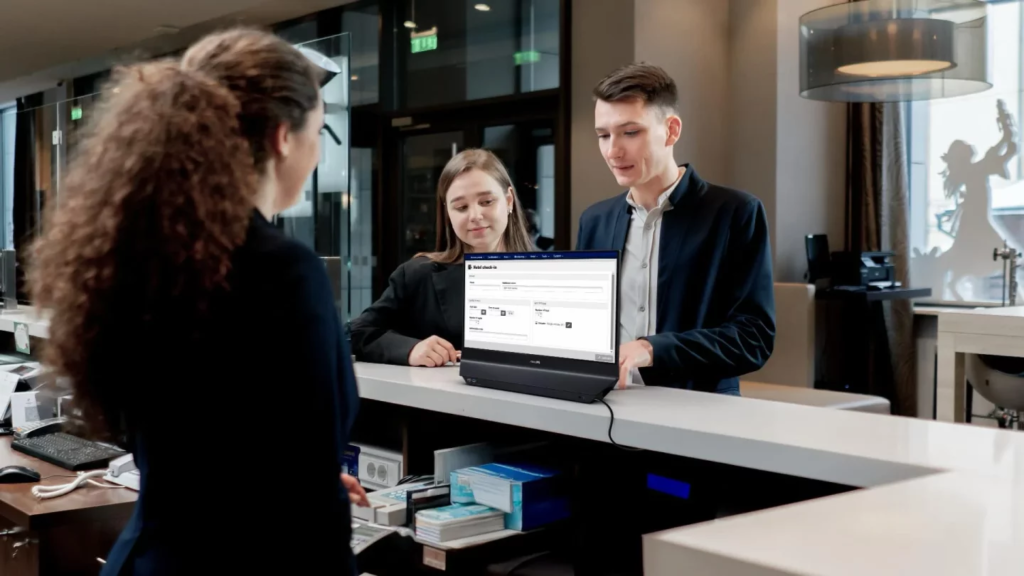
Rather than has folks on customer-facing or collaborative setups having to constantly swivel a monitor around for people on the other side of the desk, Philips has launched a dual-sided business monitor with a Full HD screen front and back. Most monitors are built around a simple assumption: one screen, one direction, one user. Philips’ new business monitor challenges that by putting a display on both sides of the unit. It’s a standalone device with dual outward-facing IPS panels anchored to a 180-degree swivel base, allowing either screen to be easily turned toward the person who needs it. Philips’ two-sided monitor is designed to save space in offices, reception areas, libraries, and other collaborative environmentsPhilips Rather than focusing on resolution, size, or refresh rate as its main hook, Philips is rethinking the way a monitor sits between two people on opposite sides of a screen, particularly in environments where visibility, privacy, and collaboration all matter. The 24B2D5300’s most obvious use case is customer-facing work. Philips’ DualView mode can either mirror or extend the main view to the rear screen, while SmartView splits content into virtual sections from a single source. In practice, staff can keep administrative windows or sensitive data securely on their side while pushing relevant content – like check-in forms, digital signatures, or purchase breakdowns – directly to the client. This layout makes the monitor a natural fit for high-traffic environments like banking counters, medical reception desks, and service queues where traditional screen-sharing is often clumsy or compromises privacy. The dual-sided design adds a layer of interactivity that conventional displays have never really had before. Each side can connect independently, allowing two users to work from opposite sides of the same monitorPhilips The monitor also has a space-saving angle. Two people can use the opposite sides simultaneously, with each screen being able to connect to its own device via USB-C or HDMI. Each USB-C port supports up to 65-W power delivery, alongside hub and audio functionality. Of course, the 24B2D5300 isn’t going to replace a normal dual-monitor setup, but it does enable two-sided interaction in cases where separate screens would be a bit awkward. The actual display specs are fairly standard. Each side uses a 23.8-inch IPS panel with Full HD resolution, 178-degree viewing angles, and a 120-Hz refresh rate. This should be more than sufficient for general business use, though the pixel density may feel a little underwhelming compared to high-resolution displays – one reviewer on Philips’ site noted that the text wasn’t nearly as crisp as on a MacBook. Philips has also added a few comfort-focused features, including Flicker-Free technology, SoftBlue low-blue-light panels, Eyesafe Certified 2.0 protection, and built-in stereo speakers. There’s also a D-mode setting designed to improve grayscale perception – this comes in handy for detailed monochrome content like scans or technical illustrations. The 24B2D5300 will be available from this month in select European countries, with a MSRP of £359.99 (roughly US$460). It’s not really about pushing panel performance forward; instead, Philips is addressing a specific layout niche. If businesses find the right scenario for it, this dual-sided monitor could make front-desk and shared-space interactions more seamless, private, and efficient. Philips 24B2D5300 | Two screens, one smarter interaction Product page: Philips 24B2D5300 source

Dual-screen monitor can show two sides of the same story Read More »

Why 100PLUS and POP MART are making hydration a lifestyle drop

100PLUS is stepping beyond the sports arena and into pop culture territory with its first-ever collaboration with POP MART, in a move the brand says marks its “most culturally significant partnership to date.” Launched at the end of May this year across Singapore and Malaysia, the partnership brings together 100PLUS’ “LIVE100” brand philosophy and POP MART’s KUBO character from the “Walks of life” series, which celebrates individuality, everyday passion and personal journeys. In conversation with MARKETING-INTERACTIVE, Siew Peng Yim, managing director of F&N Foods Singapore and YFI Malaysia, said the collaboration reflects a deliberate evolution of the hydration brand from performance-led messaging to everyday relevance. Don’t miss: Can fashion sell hydration? 100PLUS steps into fashion territory “While 100PLUS is traditionally recognised for fueling sports performance, optimal hydration is ultimately about empowering people to show up at their best across all facets of life,” he said. “With LIVE100, the brand is going beyond sports and championing hydration as an everyday essential. Partnering with POP MART allows us to cross over into modern lifestyle culture and connect with today’s youths.” At the heart of the campaign is KUBO’s “Walks of life” universe, reimagined through LIVE100 to position hydration as part of daily routines, consistency, and self-expression rather than just peak athletic moments. The brand is targeting more than 10 million Gen Z consumers across Singapore and Malaysia, tapping into what it describes as a shift in how younger audiences view wellness and movement. Siew noted that Gen Z’s relationship with activity and identity played a central role in shaping the collaboration. “Gen Z views wellness, fitness and life goals differently,” he said. “They are more passionate about self-expressive, casual physical activities such as skateboarding, dance or social run clubs than competitive sports.” He added that the generation’s preference for identity-led consumption also influenced the type of merchandise developed for the campaign. Every item they carry, wear or consume serves as an extension of their personal aesthetic, influencing why the brand leaned into streetwear-style accessories such as skateboard keychains, socks and tote bags.  The collaboration also introduces 100PLUS “Go grape zero sugar”, the latest addition to its portfolio. The Muscat grape-flavoured variant contains zero sugar and zero calories, positioned as a hydration option for Gen Z consumers navigating fast-paced, multi-activity lifestyles. In addition, 100PLUS and POP MART have co-created a limited-edition 3D KUBO Power Kick figurine designed by artist BAO, drawing inspiration from football as a universal cultural touchpoint. The design shows KUBO mid-kick, symbolising movement, momentum and shared cultural energy around the sport. Siew said authenticity was central to the partnership selection. “POP MART’s KUBO character was selected because the ‘Walks of life’ series celebrates individuality and personal journeys,” he said. “The collaboration reflects 100PLUS’ continued evolution into everyday living, supporting people wherever life takes them.” He added that success will not be measured purely through redemption numbers. “We continue to build brand affinity by forging deep emotional connections by ensuring our core values and experiences align with consumers’ beliefs,” he said. From end May to July 2026, the campaign will roll out across Singapore through a series of retail, on-premise and digital activations. Shoppers can redeem exclusive KUBO-themed merchandise through tiered spend mechanics across supermarkets, convenience stores, petrol marts, minimarkets and eCommerce platforms such as F&N Life and RedMart. Items include tote bags, coin pouches, socks, shoe bags, skateboard keychains and cushions, while selected vending machines will also feature blind bag collectibles. Siew said social platforms will play a key role in extending the campaign experience beyond retail touchpoints. “Both brands are targeting digitally native Gen Z audiences,” he said. “For the collector community, social media acts as a crowd-sourced space to track restocks and availability.” In tandem, Kevin Zhang, head of brand partnerships and activations, POP MART, APAC, said, “KUBO’s ‘Walks of life’ series is about celebrating individuality and the passion behind each personal journey. Through this collaboration with 100PLUS, we are extending that idea into everyday experiences, showing how staying well-hydrated empowers individuals to keep moving forward in their own way, with confidence and purpose.” Artist BAO described the design intent behind the KUBO Power Kick figurine as capturing a natural, in-the-moment sense of movement that feels both familiar and spontaneous. BAO noted that football’s universal appeal and timing within a year of global focus on the sport helped shape the concept, with the figurine’s kicking motion reflecting resilience, forward momentum, and the idea that progress comes through steady, everyday movement rather than sudden leaps. F&B brands have been increasingly leaning into POP MART collaborations as a way to tap into the growing appetite for collectible-led marketing among younger consumers. Pizza Hut Singapore previously partnered POP MART for a limited-edition Molly merchandise drop exclusive to the local market. The collection, which included designs such as Tropical Molly, Skater Molly and DJ Molly, was sold via Pizza Hut’s website and app, with items ranging from tumblers and tote bags to keychains and PopSockets. Prior to that, CHAGEE also explored similar territory through a collaboration with POP MART’s Hacipupu, tying the character into its “Green grape milk tea” launch across Singapore, Malaysia, Indonesia and Thailand. The campaign combined product innovation with experiential marketing, including a tennis-inspired pop-up designed to drive engagement and social sharing. Related articles: 100PLUS powers up ‘Physical Asia’ fever with regional campaign  Is Malaysia becoming POP MART’s next big playground for character IP?    Feeling kan cheong? KitKat and POP MART pack breaks into blind boxes    source

Why 100PLUS and POP MART are making hydration a lifestyle drop Read More »

RS Jet review: I haven't put gas in my car in three months

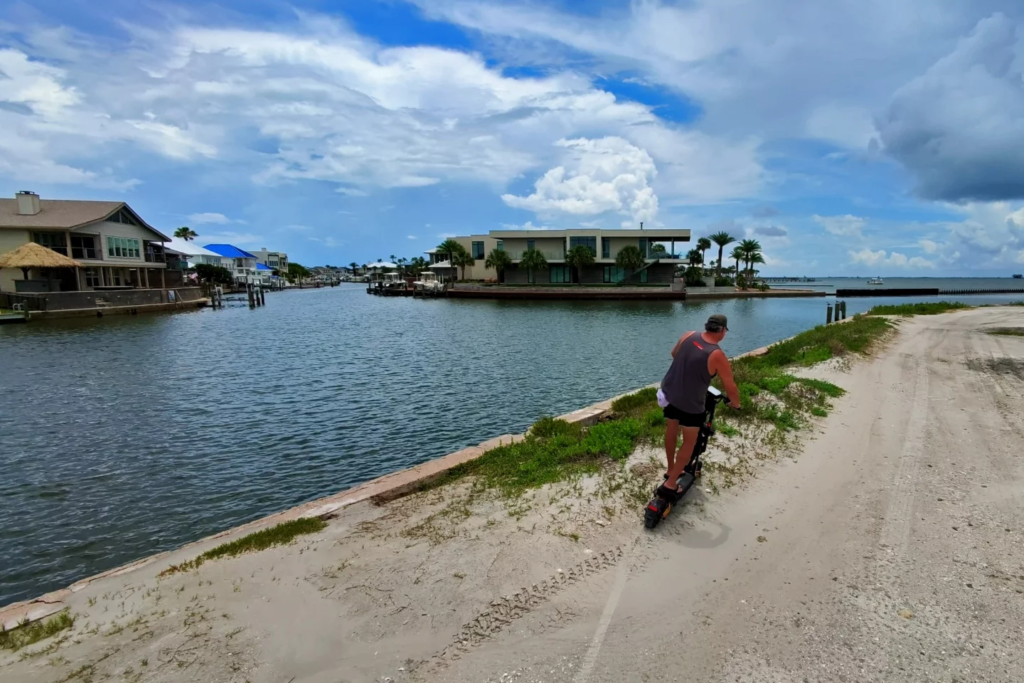
This RS Jet is the second Inmotion scooter I’ve reviewed, and it’s night-and-day different from the S1F Inmotion had sent me before. Even though that was only 11 months ago, I feel like the technology is light-years apart. It absolutely rips. The first stat you’ll see on Inmotion’s website is “Fastest acceleration: 0-48km/h in 3.5s.” That’s 29.8 miles per hour. That means you’ll be giving a Mustang V6 automatic a run for its money up to 30 mph on this US$2,200 machine. I guess racing a V6 Mustang isn’t a whole lot to brag about, really … but on a scooter?! That’s quick. The RS Jet is one of Inmotion’s flagship scooters. In fact, it’s a slightly detuned version of the big-dog RS, a scooter capable of 68 mph (109.5 km/h) and 100 miles (160 km) of range. The Jet is onnnllly capable of 55.2 mph (88.8 km/h) according to my GPS. And range-wise, I’ve not done any eco-specific runs in the last ~320 miles (515 km) of blasting around, but I regularly and reliably get 33-35 miles (53–56 km) of real-world usage per charge without worrying about it. Hittin’ a little sand berm on the RS Jet down by the jetty.JS @ New Atlas I wouldn’t call it a “pleasure cruiser.” While yes, you can cruise along casually on it, the RS Jet is more a high-performance, go-fast-and-take-chances kind of machine. It’s absolutely not the kind of scooter I would recommend to a newbie in the same way I wouldn’t recommend a Hayabusa as someone’s first motorcycle. Can it be done without grievous injury? Sure! But is there a better way? Yes, definitely. It has no traction control nor anti-lock brake capability. There are no safety nets. It’s just raw power at the touch of the throttle … and I love it. The RS Jet has a couple of bells and whistles that I’ve not experienced on other scooters so far, like a touchscreen. And not just any old touchscreen, but one that lets you actually control parameters of the scooter without needing the app, like locking the scooter with a pin number. Should anyone mess with the scooter while it’s locked, it starts honking and flashing the lights – which is embarrassing when you’re at the grocery store and you did it to yourself – letting everyone know that a baddie is doing baddie stuff. I like this. It doesn’t feature all parameters on the screen – you still need the app for some – but it does take care of pretty much all the things you’re going to mess with anyways. You can even change how much power-bias you want front/rear, or set the maximum electronic regen/brake force of each wheel through the touchscreen. That’s rad. After much tinkering, I settled on 0% regen on the front wheel and 50% on the rear. That allows me to have finite control at super low speeds with just the hydraulic front brake. I tried 100%/100% … do not recommend. 😉 In real life, the dash looks way more vibrant and easy to see than in this photo. Not to mention that it’s touch screen! I have more than 100x as many miles on it now.JS @ New Atlas And the brakes are good. They will absolutely get you slowed and stopped when you need them. The front brake is on the right, which, as a motorcyclist my entire life, I very much appreciate. Overall, I’d give the hydraulic brakes a solid 8/10, but when you pair them with regen, it’s more like 9/10. I sometimes wonder how long those little pads will last on a scooter that hauls the mail like this one does. After 320-plus miles, they seem like there’s still a lot of life left. Specs at a glance: Top speed: 50 mph (80 km/h) – Mine does 55.2 mph (88.8 km/h) Range: up to 62 miles (100 km) – I reliably get ~33-35 miles (~53–56 km) Battery: 72 V, 25 Ah, 1,800 Wh Motors: dual 1,200 W (dual 2300 W peak = 4,600 W combined) Tires: 11 x 3.5-inch tubeless, self-sealing tires Brakes: hydraulic 160-mm disk front and rear + adjustable regen Weight: 102.5 lb (46.5 kg) Max payload: 330 lb (150 kg) Climbing ability: 26°, 50% grade Display: 4.3-inch touchscreen IP Rating: IPX6 – Hit all the puddles you want! Dimensions: 55.3 x 27.6 x 50.8 in (1405 x 680 x 1290 mm) UL Certified A better side view of the rear wheel. Because the rotors are so large, you do have to be thoughtful of them when pushing the scooter around tight corners and leaning it over too much … you might deck out a rotor. The front is the same.JS @ New Atlas The suspension is a little quirky. Well, first, let me say that the suspension is a solid 8/10. If it had progressive springs, it could easily be 9.5/10. But it has that “swoop” factor that I appreciate – where it’s soft enough to have some bounce in it so I can launch off curbs and such, but not so soft that it bottoms out very often. It has adjustable rebound damping, though I’m not entirely sure how much is actual valving versus placebo, as I feel no difference when going from one extreme to the other on the clickers, and I know clickers. Though, on my usual chip-seal, vision-blurring, fillings-rattling pavement test that I customarily do, the RS Jet lands right at the top step of all scooters I’ve tested, right next to the Navee ST3 Pro. No vibrating eyeballs whatsoever. And the faster I go, the better it gets. The actual quirky bit is the ride height adjuster. It literally has a little Allen key adjuster (easy on the rear, punch-a-puppy difficult on the front) so you can raise and lower the deck height quite a bit. I leave mine in “off-road” mode – at its highest setting – but if you really wanted to, you could put

RS Jet review: I haven't put gas in my car in three months Read More »

Magnetoelectric antennas could transform how underwater robots talk

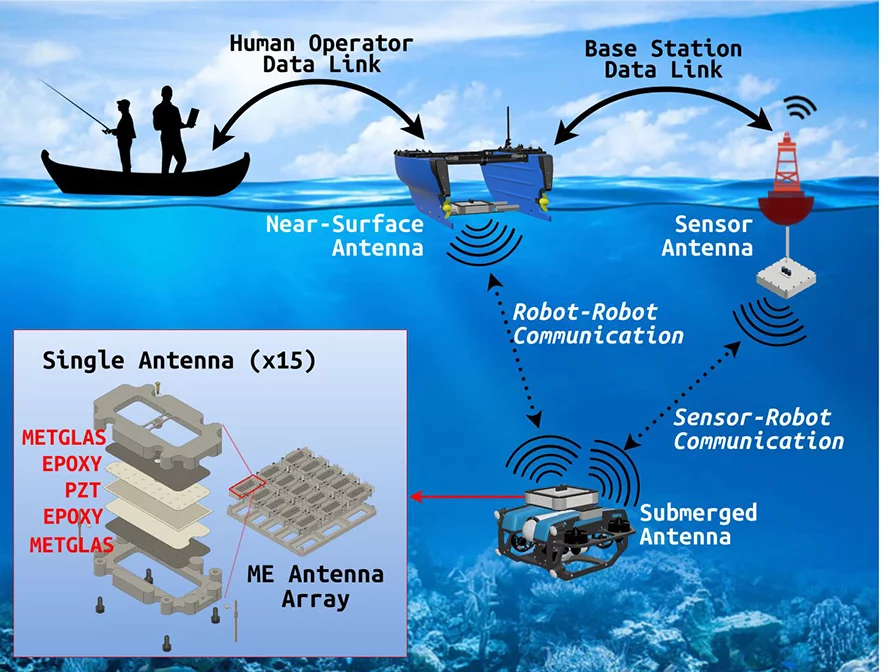
Most underwater robots lose contact with the surface the moment they descend. But a new antenna technology, borrowed from the physics of medical implants, is rethinking how submarine machines talk to each other – and to us. Radio waves are nearly useless beneath the surface. In saltwater, conventional signals attenuate between 1 and 10 dB per meter, limiting range to just a few feet. Acoustic communication works at longer ranges but introduces Doppler distortion (frequency shift from movement), multipath interference (echoes bouncing off the seafloor and surface), and noise that can harm marine life. Optical systems are blazing fast but require a direct line of sight and fail in murky water or when the buildup of microorganisms degrades the lenses. The net result is that most underwater robots today either exchange short status pings or must surface to transmit mission data, severely limiting real-time autonomy. A new antenna called BlueME has been designed to change this. This new communication system was developed by a team at the University of Florida, and lets autonomous underwater vehicles (AUVs) exchange data reliably at distances of up to 730 m (2,395 ft) while drawing around 10 watts of power, less than a household LED light bulb. The work, accepted in the IEEE Journal of Oceanic Engineering, grew out of an unlikely research background. Project co-lead Adam Khalifa spent years designing miniature wireless implants before he noticed something obvious in hindsight. “At one point it clicked that many of the same physical challenges inside the human body also exist underwater,” he explains. “Our body is effectively made of lightly salted water. That realization opened the door to thinking about ocean communication in a completely different way.” BlueME’s key innovation is a magnetoelectric (ME) antenna, a device that couples two physical effects in sequence. A magnetic field deforms a magnetostrictive layer made from a material called Metglas, and that mechanical deformation then induces a voltage in an adjacent piezoelectric layer (PZT, a common ceramic used in sensors and actuators). Run the process in reverse, and you have a transmitter. The result is an antenna that operates at very low frequencies, around 35–36 kHz, while remaining far more compact than the conventional electrical antennas that work at those same frequencies. The full system packs 15 such antennas into a 3×5 array, housed in oil-compensated waterproof enclosures that equalize the crushing hydrostatic pressure at depth. What makes the design counterintuitive is that ME antennas actually improve when submerged. At 36 kHz, the wavelength shrinks from roughly 8,327 m (27,320 ft) in air to just 170 m (558 ft) in freshwater – a compression that dramatically boosts radiation efficiency for small antennas. Running 15 antennas together multiplies radiated power by a factor of 225 compared to a single element; combine that with a matched receiver array, and the theoretical total link improvement reaches approximately 119 dB. A diagram of the BlueME system, showing how magnetoelectric antennas relay data between a surface operator and a submerged robotMd Jahidul Islam, Ph.D., and Adam Khalifa, Ph.D./UF The team ran open-water trials at two sites: Lake Wauburg in Gainesville, Florida (freshwater), and the Florida Gulf Coast (saltwater). In freshwater, BlueME maintained reliable communication at 200 m (656 ft) on just 1 watt. In saltwater, the system detected signals at 730 m (2,395 ft) on under 10 watts – and performance held steady regardless of turbidity, obstacles, or multipath interference. Data rates sit between 1 Kb/s and 100 Kb/s, far below the gigabit speeds optical systems can achieve in ideal conditions. But speed was never the point. “Imagine the robot pings you back every 10 minutes on how the mission is going, and the operator can make real-time decisions and maybe adapt the mission,” says co-lead Md Jahidul Islam. The paper represents, according to its authors, both the first practical outdoor deployment of ME antennas and the largest Very Low Frequency/Low Frequency array of this type ever built. The team has filed a provisional patent and is seeking funding to refine the hardware and conduct trials aboard full-scale AUVs, with potential applications in cooperative fleet navigation, seafloor mapping, and real-time localization. “We demonstrated these results with very limited initial resources,” Khalifa notes. “With dedicated development and larger-scale deployment, the possibilities become much broader.” “We are talking about the very early days of a very powerful product,” adds Islam. Source: University of Florida source

Magnetoelectric antennas could transform how underwater robots talk Read More »

Is your juice this dramatic? Tropicana just built a whole tropical universe for it

Tropicana is rolling out a new global masterbrand platform, “Give life some juice”, marking a creative shift for the 75-year-old juice brand as it looks to modernise its identity and move beyond its orange juice roots. The campaign reframes “juice” as a cultural signal for everyday uplift, positioning Tropicana’s full portfolio as a unified range of fruit-based beverages designed for a more contemporary consumer mindset, rather than a single-category staple. Developed in partnership with creative agency FIG, the platform steps away from traditional juice category tropes in favour of a lush, immersive tropical world designed to evoke sensory escapism. Don’t miss: Tropicana brings back freshness in vibrant rebrand The idea centres on the feeling of being transported into a vibrant natural environment with every sip, with visuals built to reflect freshness and the natural fruit cues across the brand’s portfolio. The campaign was created with award-winning directors Dorian & Daniel of Reset, alongside animation studio Untold, which developed a hyper realistic CGI world blending cutting-edge technology with detailed human craftsmanship. The result is a stylised tropical universe populated by fruit, wildlife and heightened landscapes, designed to showcase the “natural deliciousness” of the juice range in a way live action could not achieve. Set to UP! by Forrest Frank and Connor Price, the 60-second hero film opens with a sloth hanging from an orange tree in a rainforest, reaching for a bottle of Tropicana 100% orange juice before being instantly energised into a lively tropical world. He moves through the landscape with renewed confidence and swagger, interacting with animals in a heightened, almost surreal environment. A suite of supporting executions, including “Soar”, “Dibs”, “Swarm”, “Duel” and “Hanging”, extends the narrative across digital, social and out-of-home formats. The campaign rolls out in various cuts across connected TV, digital video and social platforms including Spotify, Meta and TikTok, alongside high-impact placements such as NBCUniversal integrations. It is also supported by experiential activations and influencer partnerships, designed to extend the tropical world beyond screens and into real-world touchpoints. “For decades, Tropicana has been dedicated to the craft of perfecting high-quality, fresh-tasting juice,” said Chris Tussing, chief marketing officer at Tropicana Brands Group. He added, “With ‘Give life some juice,’ we’re building on that legacy to show how Tropicana brings uplift to everyday moments through a vibrant tropical world that reflects our brand and the natural vitality behind our portfolio of juices.” In tandem, Mark Figliulo, founder and creative chair at FIG said, “There’s a reason electricity is nicknamed ‘juice.’ It makes things happen. We took that cultural truth and reimagined it through a more emotional lens, focusing on the feeling of uplift that only Tropicana can bring.” “Instead of leaning into category conventions, we built an entirely new world that’s expressive, character-driven and rooted in the tropics to show how even a small moment can transform your day,” he added.  “Give life some juice” follows the brand’s earlier efforts this year in the region. Tropicana Twister also revived its “Multiply the goodness” campaign for Ramadan and Hari Raya in collaboration with THE SHOUT GROUP. Originally launched during Ramadan last year, the platform returned with a focus on building long-term impact rather than seasonal execution. Positioned as an evolving long-term platform, “Multiply the goodness” is designed to grow in scale and participation year on year. While last year established the idea of collective goodwill, this year’s activation turns intent into tangible outcomes, delivering not only housing and shelter but also clean water through basic piping systems, alongside safe spaces for children to learn, grow and play. Related articles: Domino’s Singapore has a new identity, and your cravings are the main character   45 years on, Pizza Hut SG refreshes brand for a slice of everyday life    A new fold, and a new creative chapter for Subway Malaysia source

Is your juice this dramatic? Tropicana just built a whole tropical universe for it Read More »

Two-bedroom tiny house sleeps four and makes space for guests

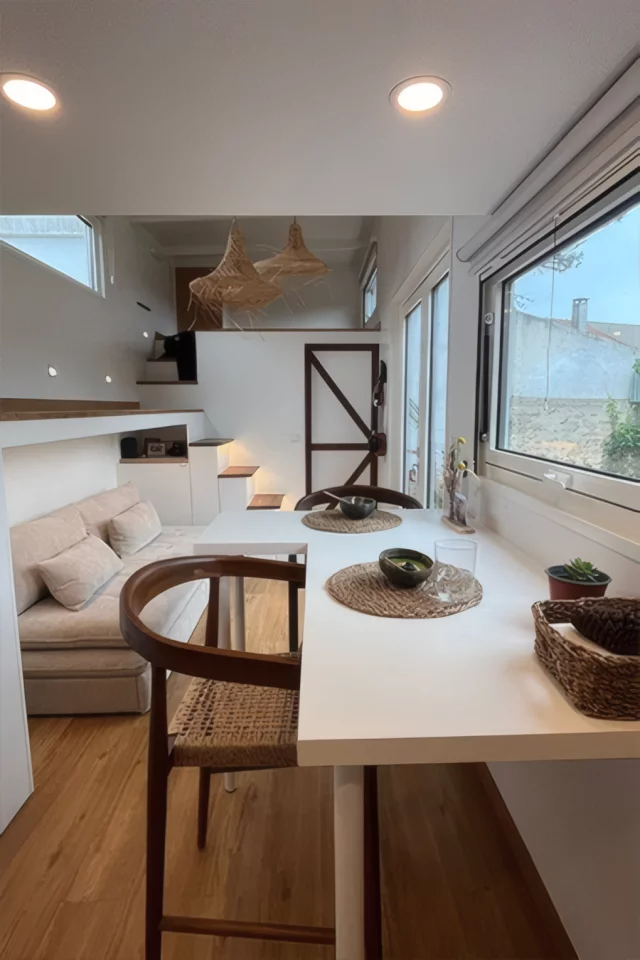
Intended for full-time living, the Porto squeezes a lot into its modest footprint. The tiny house features a practical interior with two bedrooms – plus a sofa bed for guests – and has multiple options available, including off-grid functionality. The Porto is designed by Casagaea and based on a double-axle trailer. It has a standard length of 7.8 m (25.7 ft) and its exterior is clad in engineered wood. It also includes an outdoor table that provides a useful spot for serving food and drinks. The Porto’s interior is arranged around a central living room, which includes a sofa bedCasagaea The interior of the home measures 34.2 sq m (368 sq ft). Accessed by double-glass doors, it’s arranged around a central living room with the sofa bed mentioned. The kitchen is nearby and is equipped with a sink, an induction cooktop, an oven, a fridge/freezer, and, optionally, a dishwasher. The kitchen has lots of cabinetry and shelving, plus there’s also a dining table/desk installed. The Porto’s bathroom is accessed from the living area with a wooden sliding door and is relatively spacious for a tiny house, with a glass-enclosed shower, a flushing toilet, a vanity sink, a washer/dryer, and some cabinetry. The two bedrooms are reached by a single storage-integrated staircase that connects to a lowered standing platform. This allows the owner to easily walk between each of the lofts. One of the bedrooms includes a pull-out desk area. It’s positioned over some steps, so ergonomics aren’t exactly perfect, but it could be handy for occasional work. The room also has a storage unit and space for a double bed. The other loft, meanwhile, is similarly laid out, but without the desk, and can function as either a second bedroom or additional storage space, depending on the owner’s needs. The Porto’s main bedroom includes a pull-out desk integrated into a storage unitCasagaea The Porto has multiple optional extras available. Alongside the off-grid operation, its length can be increased up to 8.4 m (27 ft), and its materials and layout customized to suit. We’ve no word on the price or delivery options, so those interested are advised to get in touch with the firm directly. Source: Casagaea source

Two-bedroom tiny house sleeps four and makes space for guests Read More »

BYD's first purpose-built global plug-in hybrid breaks cover

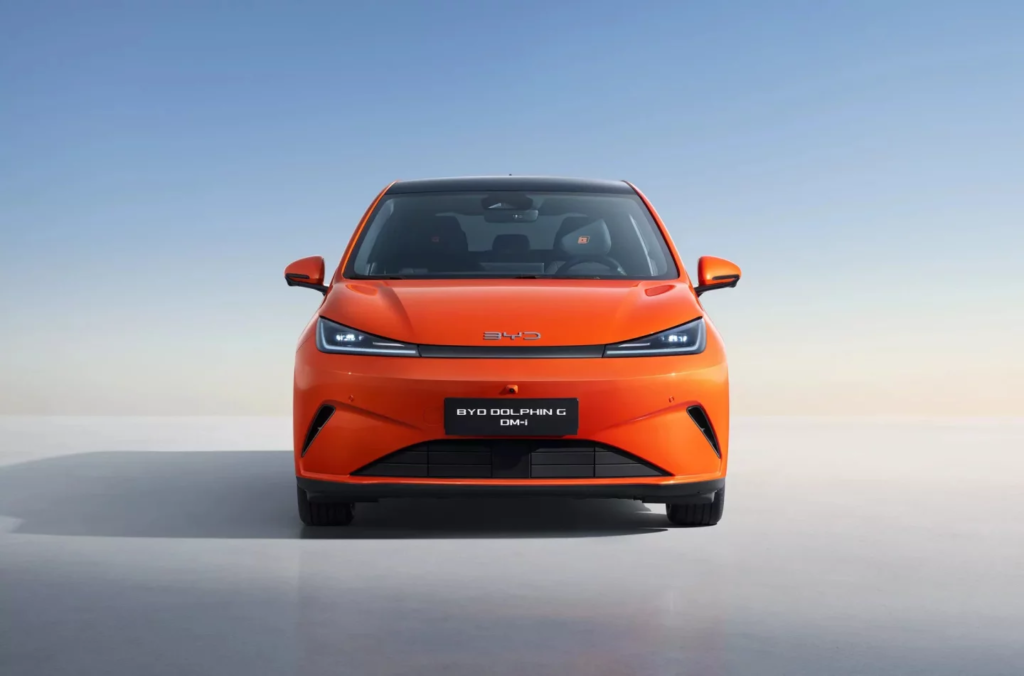
BYD has lifted the covers off of the new Dolphin G DM-i, a car that essentially becomes its first proper global offering. With it, the auto brand looks to take on the regional players across markets; whether that be Chery and Tata in Asia, Tesla in the States, VW and Toyota in Europe, among others. It is a VW Polo-sized plug-in hybrid hatchback, which means there’s an electric motor working the front wheels as well as a petrol engine in there. Pricing? Tipped to start under £20,000 (US$27,000 per direct conversion). Sure, take a long, hard look at it and you’ll immediately realize the Dolphin G DM-i looks a lot like the Atto 2. And it looks like BYD has purposely used the Atto platform and fitted it with the Super Hybrid with DM technology for two key reasons: it meets key regulations for global use, and second, BYD could simply save some cash by using a platform that’s so well known by now. The Dolphin G DM-i is a VW Polo-sized PHEV hatchbackBYD The biggest selling point? A range of over 621 miles (1,000 km) on a full charge and a full tank of petrol. While we don’t yet know the specifics behind the DM-i system, it’s widely rumored that it will be largely based on the one found on the Atto 2 DM-i, which uses a 1.5-liter normally aspirated gas engine for the ICE motor. So far, all that we do know is that it will sport a front-mounted single-motor setup. Interestingly enough, BYD’s Seal 5 DM-i and the Sealion 5 DM-i make use of those same powertrain setups, so expect a fairly similar performance. As for the battery, it is expected to come with two LFP battery pack options – 7.8 kWh and 18 kWh, exactly like the Atto 2 DM-i. It will arrive as a sibling to the Dolphin Surf, BYD’s smallest and most affordable all-electric car sold in global markets. The Dolphin G DM-i boasts a range of over 621 miles (1,000 km)BYD The PHEV measures 164 in (4,160 mm) in length by 72 in (1,825 mm) in width, which effectively places it perfectly in the European B-segment category. Up front, it gets thin, sharp headlights with a hood that seems to be stretched out, akin to the Sealion 6. The wheels are blacked out, which gives it a nice sporty feel, especially with that orange paint scheme in the promo shots. The same color-matching accents are carried over inside the cabin as well. As for the features and other performance metrics, BYD seems to be holding those close to its chest for the moment. The Dolphin G DM-i is BYD’s first purpose-built global plug-in hybridBYD The Dolphin G DM-i is set to go on sale in Europe in the coming weeks, with deliveries slated for later this summer. Keep in mind, it comes from a carmaker that overtook the likes of Tesla, Kia, and others to become the best-selling EV brand in the UK, Australia, and a few other global markets in the first quarter of this year. Source: BYD source

BYD's first purpose-built global plug-in hybrid breaks cover Read More »

Dow Jones Futures Rise As Trump Says This After Iran, Israel Attacks; Apple AI, SpaceX IPO Ahea

Dow Jones futures turned slightly higher Monday morning, while S&P 500 futures and especially Nasdaq futures rose. President Donald Trump demanded that Iran and Israel “stop shooting” after they exchanged missile attacks, later saying that the countries are “looking to do” a new ceasefire. Oracle (ORCL) earnings, Apple (AAPL) AI announcements and the long-awaited mammoth SpaceX (SPCX) IPO are on… Copyright ©2026 Investor’s Business Daily, LLC. All rights reserved. 87990cbe856818d5eddac44c7b1cdeb8 source

Dow Jones Futures Rise As Trump Says This After Iran, Israel Attacks; Apple AI, SpaceX IPO Ahea Read More »