The biggest football rivalry this season might be in your neighbourhood

Senoko Energy is tapping into football fever with a nationwide campaign designed to bring Singaporeans together through neighbourhood rivalries, watch parties and customer rewards. Called Homeground, the campaign aims to transform living rooms into gathering spaces where families, friends and neighbours can connect over the football season. The initiative centres on a nationwide competition pitting Singapore’s five zones — North, North-east, Central, East and West — against one another. Participants can join through an AI-powered WhatsApp chatbot and will be automatically assigned to a zone based on their postal code. Don’t miss: World Cup sponsors see lift in brand perception Residents are encouraged to rally votes for their zone and track standings via a live leaderboard on the campaign microsite. Voting closes on 5 July. The winning zone will see all participating voters entered into a lucky draw, with 100 winners receiving SG$200 in GrabFood e-vouchers each. The giveaway forms part of a SG$20,000 prize pool sponsored by Senoko Energy. To sustain engagement throughout the campaign, Senoko Energy will also roll out a series of lifestyle polls. The first 100 respondents for each poll will receive SG$5 GrabFood e-vouchers, with a total of SG$1,500 worth of prizes available. Existing Senoko Energy customers can take part in a private email quiz, with the fastest correct respondents standing to win a share of a SG$38,040 prize pool. Prizes include FIFA World Cup 2026 season passes from Mediacorp and Philips NA210/09 air fryers. The energy retailer is also offering promotional gifts to customers who sign up for or renew eligible electricity plans between 1 June and 31 July. Rewards, while stocks last, include a PRISM+ 50L mini bar fridge, a Shark FlexBreeze fan and a DOOBSTA’ versatile fabric bean bag. In a statement, Senoko Energy said the campaign reflects its belief that energy goes beyond electricity and plays a role in powering everyday moments shared among families, friends and communities. The Homeground campaign is open to Singapore residents aged 18 and above, with no purchase required to participate in the neighbourhood voting challenge. The winning zone will be announced on 6 July, while lucky draw winners will receive their prizes on 10 July. “Some of the best moments in football are not just what happens on the pitch, but what happens at home, gathering around the big screen with family and friends, sharing food, cheering together and creating memories,” James Chong, head of commercial and corporate communications at Senoko Energy, said. He added, “As a brand that powers homes across Singapore, we want to create an experience that celebrates these meaningful events. ‘Homeground’ is about bringing people together and turning homes into places of excitement and connection throughout the football season.” Senoko Energy is not the only brand tapping into football fever ahead of the FIFA World Cup. Recently, adidas brought football fandom to pets in Singapore with the launch of FIFA World Cup federation jerseys for Argentina and Japan as part of its first-ever pet collection in the market. Designed around the idea of matching outfits for pets and owners, the collection extends adidas’ football-inspired designs to four-legged fans, reflecting the growing number of brands finding creative ways to engage consumers ahead of the tournament. Related articles: Hyundai’s World Cup play stars Son Heung-min and an unexpected teammate   Get paid to watch the World Cup? Yes, it’s a real job   Coca-Cola pops the lid on fan emotions in high-drama World Cup film   source

The biggest football rivalry this season might be in your neighbourhood Read More »
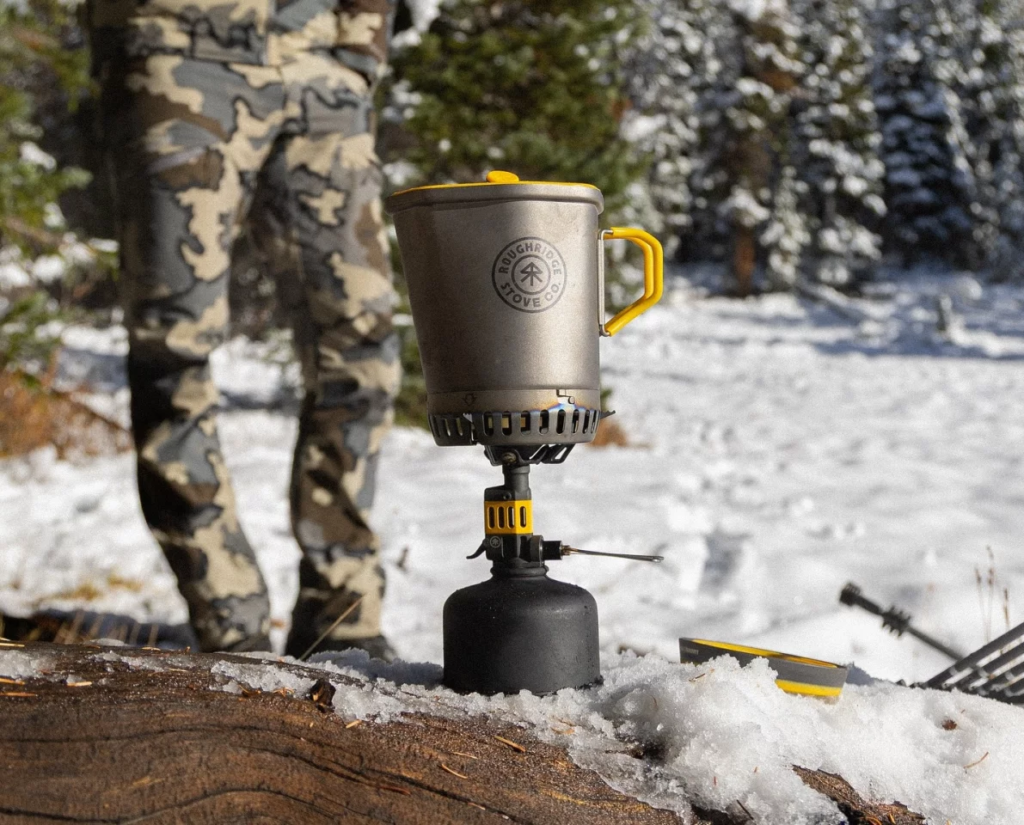
Light, smart ti stove system goes octagonal for backcountry survival

Finding the modern backpacking stove market unfit for its hard-charging, bushwhacking, peak-scrambling hunts, Colorado’s Roughridge Stove Co. determined to make a tougher, more inextinguishable breed of all-in-one backcountry cook system. It reached for the lightest, toughest materials available and reconfigured a few critical specs to create a system that travels lightly, holds up to use after abuse, and works in all weather. It’s the Highcountry stove, and it’s built to work when and where you need it, every time. Diehard hunters since childhood, brothers Chris and Josh Neville grew up hunting in Iowa and eventually migrated westward for bigger wilderness and bigger prey. When they began pursuing more ambitious hunts into deeper wilds, they ran into reoccurring problems with stoves. Having left powerful, robust car camping stoves behind in favor of lighter, more packable backpacking units, they struggled to find any single kit that could perform reliably in the extreme conditions they faced while traveling light and fast. “Every cook system we owned was either heavy, bulky, broken, or failed when it mattered most.,” the Nevilles frame in introducing the Highcountry. “And if we wanted to go ultralight, we had to piece together a setup from five different brands and hope it survived a backcountry hunt.” Those piecemeal setups often didn’t survive, and after years of charred food, blown-out burners, broken plastic and other critical failures, the brothers reached their breaking point. They set out in 2022 to build a cook system from the ground up for demanding backcountry hunters like themselves – not car campers, not weekend backpackers, not overlanders and definitely not glampers, but determined hunters who are out in rain, snow, wind, frigid cold, near-impassable terrain, and, sometimes, all of the above. With its four-season pressure regulator, internal igniter and wind-protected design, the Highcountry system is designed to work in cold, windy, wet weatherRoughridge As it turns out, that’s very good news for other hunters and hardcore backcountry adventurers. Because the Neville brothers had a pretty damn long list of gripes, and they addressed all of them, one by one. After their experience piecing together the best components from different brands, Roughridge wanted a single set of rock-solid components built to work and function as a cohesive unit. They eschewed the usual cylindrical pot in favor of a unique octagonal design that better fits all the components inside. All the components, including a gas canister, fit neatly inside the Highcountry potRoughridge The 9,500-BTU folding stove, round windscreen, spork for meal prep and eating, and a single isobutane fuel canister all fit neatly inside the pot, keeping everything together for fast, convenient access when it’s dinnertime – no rummaging through every corner of your pack or realizing your utensils dropped out miles ago. Even the included microfiber towel stuffs inside the pot and then works to prevent any annoying rattling. At camp, the components quickly build into a secure stove system. The pot bottom locks into the wind guard, and the stove secures to the gas canister. The stove’s pot supports fit securely in corresponding notches on the windscreen, made easier to find with arrows. The pot’s octagonal shape also adds a little extra structure so it doesn’t bend or dent as easily while being used on rocky terrain or carried through dense forest in a backpack. It also helps to form a natural spout at the front for easier pouring through the integrated lid slots. Roughridge includes open slots on the lid so you can see the steam when it’s boiling and pour without removing the lidRoughridge Speaking of dents and dings, another big (understandable) pet peeve of Roughridge’s fraternal founders was broken cooking gear and accessories – cracked plastic, bent aluminum, ripped neoprene, etc. So while they had a tightrope to walk between rugged, backcountry-grade construction and minimal weight, they started off by getting rid of plastic parts. Roughridge leans heavily into titanium construction for its high strength-to-weight ratio. The 30-fl oz (900-ml) pot, windscreen and spork body are all crafted from titanium, while the stove includes titanium components, an aluminum alloy body, and a stainless-steel burn head and pot supports. The spork’s wiry handle is steel, as well. If you’re wondering how those bright-yellow bits play into the no-plastic strategy, they’re high-temperature silicone, serving as non-structural burn protection on touch points like the pot handles. The silicone surround on the lid, meanwhile, is there to secure inside the pot so the lid doesn’t constantly fall off during use or travel. The lid features a silicone outer layer to nest securely in the pot and a silicone pull Roughridge Roughridge’s titanium-focused construction creates a robust system that weighs in at just 10.2 oz (289 g) for the pot, windscreen, stove and spork. If you’re really looking to slash weight, you can save another ounce by taking your chances without the detachable windscreen. The spork also comes in just under an ounce, so if you leave that at home next to the windscreen, you’re down to just 8.3 oz (235 g). Packed size is similarly convenient at an easily manageable 4.3 x 5-in (11 x 12.7-cm). Jetboil is the all-in-one backcountry cook system specialist, so it’s the brand that immediately comes to mind for a weight comparison. Jetboil’s 7.1-oz Stash system is the lightest it makes and is commonly cited as one of the lightest all-in-one gas stove systems on the market, period. It undercuts the Highcountry’s weight by 30%, but it doesn’t include a windscreen or a spork, and it’s built around a slightly smaller 27-fl oz (800-ml) pot. It does package in gas canister stabilizer legs, but Jetboil does not calculate those into the 7.1-oz (201-g) weight figure. Leave out the 2 ounces (57 g) of spork and wind guard, and the Highcountry is 1.2 oz (28 g) heavier than the Stash. Factor in the larger pot, and the Highcountry comes in about as comparable to the lightest all-in-one stove system out there as Roughridge could have ever hoped for. Other Jetboils have integrated

Light, smart ti stove system goes octagonal for backcountry survival Read More »

JDE Peet's Singapore picks PR agency

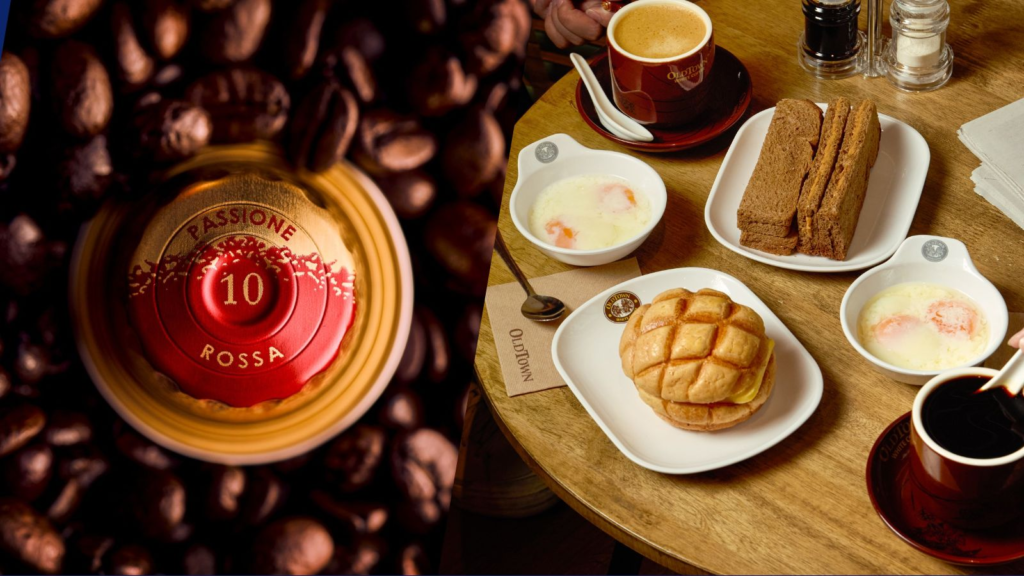
JDE Peet’s Singapore has appointed APRW as its agency of record, tasking the independent communications agency with leading integrated communications strategies across its portfolio of brands including L’OR Espresso, Moccona and OldTown White Coffee. The appointment marks a significant milestone in the relationship between the two companies and follows a year of collaboration across strategic media relations, influencer engagement, experiential activations, product launches and consumer storytelling initiatives. JDE Peet’s is one of the world’s largest pure-play coffee companies, with a portfolio of more than 50 brands sold across over 100 markets globally. In Singapore, its stable of brands spans premium coffee experiences through L’OR Espresso, household favourites such as OldTown White Coffee, and convenient coffee solutions under Moccona. Don’t miss: Lazada Singapore picks new PR agency  Among the campaigns delivered by APRW was the launch of the L’OR Passione Rossa collection in collaboration with Ferrari Hypercar. The multi-phased campaign introduced two limited-edition coffee blends, ‘Maranello’ and ‘Imola’, inspired by the spirit of performance and craftsmanship. APRW developed and executed the communications strategy for the launch, with efforts focused on reinforcing L’OR Espresso’s premium positioning within the luxury lifestyle space. The agency also supported a series of campaigns for OldTown White Coffee, including the launch of the brand’s coconut-flavoured and pandan variants in Singapore. The initiatives sought to balance the brand’s nostalgic appeal with efforts to engage younger consumers, leveraging targeted outreach and consumer-facing storytelling to drive awareness and trial. More recently, APRW worked on the launch of Moccona Liquid, a ready-to-pour coffee format designed to meet the needs of increasingly busy consumers. As the format remains relatively new to the Singapore market, the campaign focused not only on building awareness but also on educating consumers about different consumption occasions and ways to incorporate the product into everyday routines. To support the launch, the agency oversaw media engagement, product seeding and experiential office takeovers at organisations including VOGUE Singapore, Mothership, GRVTY Media and Overkill Singapore, introducing the product through lifestyle-led coffee experiences. “Over the course of working together, we have built a strong partnership grounded in trust, collaboration and a shared understanding of how to create meaningful brand storytelling that resonates with consumers,” said Julie Chiang, director at APRW. “From premium lifestyle positioning to everyday coffee moments, it has been incredibly rewarding to support JDE Peet’s diverse portfolio of brands and bring their campaigns to life. We are excited to continue growing this partnership and supporting the brand’s next chapter in Singapore,” she added. The appointment further strengthens APRW’s growing FMCG and lifestyle portfolio, adding to the agency’s roster of consumer brands and reinforcing its capabilities across integrated communications, influencer engagement and experiential marketing.  In 2025 alone, the agency bagged a string of new clients, including Our Tampines Hub, Singapore Chamber of Commerce Indonesia and more.  Related articles:  Intellectual Property Office of Singapore picks new PR agency  Yellow Ribbon Singapore names new PR agency  Science Centre Board picks new PR agency  source

JDE Peet's Singapore picks PR agency Read More »

'Rosetta stone' discovery may help decode mysterious signals from space

Kovi Rose, University of Sydney/ The Conversation A pair of stars spiralling around each other. That’s the origin of a new source of repeating radio bursts we’ve detected, called ASKAP J1745. In recent years, astronomers have been puzzling over mysterious bursts of radio signals, known as long-period transients because of how slowly they repeat. They were first discovered by chance with telescopes scanning large chunks of the sky. To date, astronomers have only found a dozen of these weird sources, and we’re still trying to understand exactly what they are. In a new study published today in Nature Astronomy, we describe a first-of-its-kind detection – both radio and X-ray bursts repeating with each orbit. ASKAP J1745 is exciting because we’ve figured out what it is, unlike 10 of the 12 known long-period transients. Even better, we were able to detect it with a bunch of different telescopes that observe all different kinds of light. Bearing the same message in three forms of writing, the famous Rosetta stone once helped scholars decipher ancient Egyptian hieroglyphs. Similarly, this extra information we found about ASKAP J1745 will help astronomers better understand the mystery of all long-period transients. What do long-period radio transients look like? Long-period transients are things in space that produce bright, repeating bursts of light at radio wavelengths. Little is known about the origins of most long-period transients. In addition, many have been discovered close to the dusty region in the middle of our galaxy, so it can be hard to see them with visible-light telescopes. Even with just a dozen of these strange sources discovered so far, they seem to come in a few different shapes and sizes. Their radio bursts repeat on timescales of minutes to hours. Some have been making regular pulses for more than 30 years, while others turn off for days at a time or go permanently radio-silent. Galactic map of long-period transients (LPTs), including those with evidence of binary systems, and galactic centre radio transients (GCRTs). Author-provided composite.ESA/Gaia/DPAC, A. Moitnho Where do they come from? Astronomers initially thought long-period transients were just very slowly spinning neutron stars, called pulsars. These are the fast-rotating dense cores left after the supernova explosions of massive stars. The first few of these radio transients discovered were repeating roughly every 20 minutes. That’s much slower than the average pulsar, which repeats every few seconds. Furthermore, when pulsars slow down their spin, they should stop producing radio light. This means we shouldn’t see radio bursts from neutron stars rotating so slowly. So astronomers investigated other theories involving white dwarfs – the slowly cooling dead centres of less massive stars. And recently we discovered some long-period transients in binary systems (two stars in a close orbit) with evidence of both a white dwarf and a lower-mass red dwarf star. The discovery of ASKAP J1745 ASKAP J1745 is a new long-period radio transient we found with the ASKAP radio telescope, owned and operated by CSIRO, Australia’s national science agency. It’s the first one of these strange sources that we’ve identified as a “cataclysmic variable”. Cataclysmic variables are systems with two stars – one of them a white dwarf – that orbit each other closely enough to interact. If the stars are close enough, the white dwarf’s gravity can pull (or “accrete”) material from the other star. That’s why these systems are also known as accreting white dwarf binaries. Another long-period radio transient was recently discovered with X-ray bursts, repeating with the same regularity as the radio. However, the origin of the bursts and their shared timing remained unclear. Now, for the first time, we have combined observations from radio, X-ray, and optical telescopes to find that ASKAP J1745 produces both X-ray and radio bursts with each orbit of its two stars. In these rapidly orbiting systems, the X-ray light is thought to come from the material heating up as it streams onto the white dwarf. The bright radio bursts were a bit more of a mystery. But knowing that this is an accreting binary system helped us figure things out. The type of pulsed radio light we detected is typically caused by energetic particles interacting with strong magnetic fields. Here, we have the perfect combination: two stars with strong magnetic fields (typically thousands of times stronger than an MRI machine), with charged particles flowing towards the white dwarf from the other star. What this means for the future of astronomy This discovery is unique because we have more information and at more different wavelengths than any other previous long-period transient. Just like the Rosetta stone was key to decoding ancient Egyptian symbols, ASKAP J1745 will be key to deciphering the origins of other long-period radio transients that lack information at other wavelengths. ASKAP J1745 is the first long-period transient showing signs of accretion across the spectrum of light – from radio waves to visible to X-rays. And this stream of charged material is a crucial ingredient for making the radio light we detect from these systems. Exploring the mechanism that produces long-period radio bursts gives us a new laboratory to learn about extreme physics such as plasma flows and magnetic fields in conditions we can’t recreate on Earth. We acknowledge the Wajarri Yamaji as the Traditional Owners and Native Title Holders of Inyarrimanha Ilgari Bundara, the CSIRO Murchison Radio-astronomy Observatory where ASKAP is located. Kovi Rose, Astrophysics PhD Candidate, University of Sydney This article is republished from The Conversation under a Creative Commons license. Read the original article. source

'Rosetta stone' discovery may help decode mysterious signals from space Read More »

Dow Jones Futures Rise, But Broadcom, CrowdStrike, Ciena Hit Techs; SpaceX IPO Price Target Set

Dow Jones futures rose solidly early Thursday, while S&P 500 futures and especially Nasdaq futures fell as Broadcom (AVGO), Ciena (CIEN) and CrowdStrike (CRWD) plunged following earnings. SpaceX (SPCX) announced its IPO price target and size late Wednesday, with the actual offering coming late next week.  The Quantinuum (QNT) spinoff from Honeywell (HON) priced its IPO overnight. The stock market… Copyright ©2026 Investor’s Business Daily, LLC. All rights reserved. 87990cbe856818d5eddac44c7b1cdeb8 source

Dow Jones Futures Rise, But Broadcom, CrowdStrike, Ciena Hit Techs; SpaceX IPO Price Target Set Read More »

Chris Chiu exits Mandai Wildlife Group and Mandai X after five years

After more than five years at Mandai Wildlife Group and Mandai X, creative industry veteran Chris Chiu is stepping away from the wildlife and nature group to focus on what he calls “me time”. In a statement to MARKETING-INTERACTIVE, a Mandai X spokesperson said ” Chiu has been a valued pioneering member of Mandai X. His expertise and dedication have made a significant impact on the work we do. We thank him for contributions over the years and wish him a well-deserved retirement.”  Chiu served as vice president (creative and content) at Mandai Wildlife Group from March 2021, before taking on an additional role as head of brand in June 2025. He also led brand creative and intellectual property development at Mandai X from August 2023. Don’t miss: Howie Lau bids farewell to NCS Group after five years  Speaking to MARKETING-INTERACTIVE, Chiu said the decision was driven by personal considerations following a period of reflection over the past few years. “Been asked this many times, understandably. Essentially certain events over the last few years on the personal side led to this decision. Completely enjoyed being a part of both organisations. Just time is all,” he said. Chiu joined Mandai in 2021 after a career spent largely in advertising, bringing decades of agency experience to one of Singapore’s most recognisable destination and wildlife brands. During his time with the organisation, he oversaw creative and content efforts while spearheading intellectual property development initiatives. While he is keeping details under wraps for now, Chiu said some of the projects he helped build are nearing completion. “My main remit was IP development and the key projects that entailed. All are in final production stage right now and best to leave the surprise for when it happens,” he said. Prior to joining Mandai, Chiu spent decades in the advertising industry, holding senior creative leadership roles across agencies including DDB Group Singapore, J. Walter Thompson and Leo Burnett. Reflecting on the transition from agency life to the brand side, Chiu said he deliberately chose not to change his approach to creativity and brand-building. “Interestingly, and whether right or not, I tried not to change anything in my mindset. I figured my thinking got me to this opportunity and it would be strange to do it all another way,” he said, adding:  Focus on the creative strategy and execution. Keep things on brand on all aspects and touch points as much as I could control. Before joining Mandai, Chiu was group chief creative officer at DDB Group Singapore, where he also headed the DDB Asia Creative Council and served on the DDB Global Creative Council. He previously held leadership positions at J. Walter Thompson and Leo Burnett, including chief executive officer and chief creative officer of Leo Burnett Singapore. As for what’s next, Chiu is in no rush to make a decision. After decades spent leading creative departments, agencies and brand teams, Chiu plans to focus on personal interests while continuing his involvement with charities and organisations he supports. “Right now, it’s just me time. Which means my dogs, golf and some effort on the fitness bits. I’m still on some committees with charities and organisations, so all in all, there’s enough to keep me busy for now,” he said.  Chiu’s departure comes amid broader leadership changes at Mandai. Earlier this year, the group appointed Agatha Yap as chief marketing officer. Jean Choi continues to lead commercial strategy and global partnerships as chief sales officer. Yap joined Mandai from Scoot and takes on the role as Mandai Wildlife Reserve approaches completion and enters its next phase of growth. Recent months have also seen the group deepen its focus on partnerships and destination marketing, including a global media agency appointment and collaborations spanning tourism, entertainment and aviation. Related articles:  Mandai becomes Asia’s first real-life Minecraft adventure  Mandai goes wild with Disney’s ‘Zootopia 2’ immersive takeover  JISOO chooses her wild in new music video with STB and Mandai  source

Chris Chiu exits Mandai Wildlife Group and Mandai X after five years Read More »

One company's quest to grow foreskins may reverse circumcision

Circumcision may soon be fully reversible. That’s the goal of Foregen, a nonprofit organization dedicated to making the first viable bio-engineered foreskin using advanced tissue engineering. Started as a passion project in 2010 by renowned Italian mosaic artist Vincenzo Aiello and entirely crowdfunded, Foregen is truly an outlier in science – and expects to begin human clinical trials soon. That is, if they can get to regulatory approval. It all starts with an eviction According to a Substack post by Rena Malik, MD, foreskin restoration has ancient roots, having been practiced by the Romans, for whom bared glans were distasteful. The Roman physician Celsus described some foreskin restoration techniques in his medical treatise De medicina, published around 25 CE. Modern options for circumcision reversal are currently limited, involving surgery or lengthy “stretching” processes. Even then, the results aren’t quite the same as an anatomically authentic foreskin. What Foregen proposes is a two-fold process. First, a section of foreskin called the prepuce is taken from a medically donated cadaver. This tiny piece of tissue is then decellularized using chemicals or enzymes, leaving behind an organic scaffold. “Cellular eviction” is what Chief Science Officer William Musa offered when I prompted him for an ELI5 explanation. “We’re not sending in the police to evict,” Musa told me. “We’re putting the post-its on the wall, and they’re leaving pretty peacefully. And they’re not destroying the property when they leave.” The decellularized prepuce, which is also known as ghost tissue, is then seeded with the patient’s stem cells, custom-fitted, and surgically attached. The trick is to strip enough cells so that the ghost tissue lacks any unique identifiers, but not so many that the structure itself is compromised. Hope or “hopium”? From its inception, Foregen, a registered 501(3)(C) in the state of California, has relied entirely on donations. Not that they haven’t tried to apply for grants. “We partnered up with this chemist in Europe and put together an application for grant funding from Novo Nordisk to support a bioprinting project,” Chief Operations Officer Ryan Jones told me. It was ultimately unsuccessful, but there are more grant opportunities on the horizon. Cellular bioprinting, which uses a 3D printer-like model to fabricate functional tissue, would solve a problem that Foregen doesn’t have yet: namely, how to provide enough tissue if even a small fraction of the world’s 1.5 billion circumcised people were to decide to undergo surgery to reverse their circumcision. A small but dedicated number of these people are monthly donors to Foregen, which is operated by a skeleton crew of global independent contractors, volunteers, and a clinical team at Comenius University in Bratislava, Slovakia. But not all of them are happy. “For the ones thinking this will be available sometimes soon, it won’t be,” a commenter posted on a recent video uploaded to Foregen’s YouTube page. This is the common refrain of detractors in niche online communities like Reddit’s r/foreskinrestoration: that Foregen is selling “hopium,” a popular internet portmanteau of the words “hope” and “opium.” Their critique is that Foregen promises the prompt rollout of cutting-edge medical technology that may take at least another decade to figure out – and a lot more money. Foregen has been recruiting for human clinical trials since 2010, according to a search on the Wayback Machine. None have materialized yet. In 2023, Eric Cunningham, Matthew Serody, and Tyler Drozd, Foregen’s Chief Science Officer, Senior Director, and Chief Operations Officer, amicably stepped down to start a company called Akroprint, a scalable, 3D bioprinted solution for foreskin regeneration. William Musa and Ryan Jones were internally promoted to Chief Science Officer and Chief Operating Officer. “There was a little bit of a different vision at that point and not necessarily anything negative,” William Musa told me of the early days. In late 2024, Foregen raised US$100,000 to support preclinical work that would lead to human clinical trials, which they expected to conduct in 2025. But the new leadership decided to shift operations from Italy to Slovakia, where they began a research partnership with Dr. Stanislav Žiaran. “There were some regulatory hurdles in Italy that were holding us up, and there were some surgical hurdles, and we didn’t feel that we had the right surgeon,” William Musa said to me. “The right talent. To accomplish the quality that we needed.” The new Foregen is more nimble. But its clinical focus is also different. In Italy, Foregen had experimented with more standardized recellularization techniques, such as burying skin tissue samples beneath the skin to encourage new cell growth – a process known as suturing. According to William, Žiaran’s lab can provide everything they need, including a bioreactor, which Foregen anticipates will be the most effective method to boost the patient’s cells to reseed, and ultimately repopulate, the decellularized foreskin with new native tissue, according to a promotional video by Foregen. Some of Foregen’s struggles have been outside of their control. When war broke out in Ukraine – one of the world’s largest tissue suppliers – it effectively suspended its operations, including histology, decellularization, and animal trials, until it could find another supplier. The COVID-19 pandemic was another deterrent – particularly for Foregen, whose clinical operations at the time were based in Italy. As part of their preclinical work, Foregen is experimenting with other recellularization protocols, including traditional biological methods such as cell culturing. The push and pull of community Right now, circumcised people who would like their foreskin back don’t have a lot of options. There is a successful, if rarely used surgical technique, which involves creating a skin graft from another part of the body, but that only solves one problem: full glans coverage. Manual restoration methods, on the other hand, can achieve full glans coverage and restore sensitivity. These methods, however, involve a significant personal commitment: often 2 to 4 years, according to a recent scientific paper, if one sticks to a regimen. Popular regimens often include a mixture of “tugging,” or manual stretching techniques, and wearing either T-tape or

One company's quest to grow foreskins may reverse circumcision Read More »

Science Centre Singapore picks agency to strengthen social media engagement

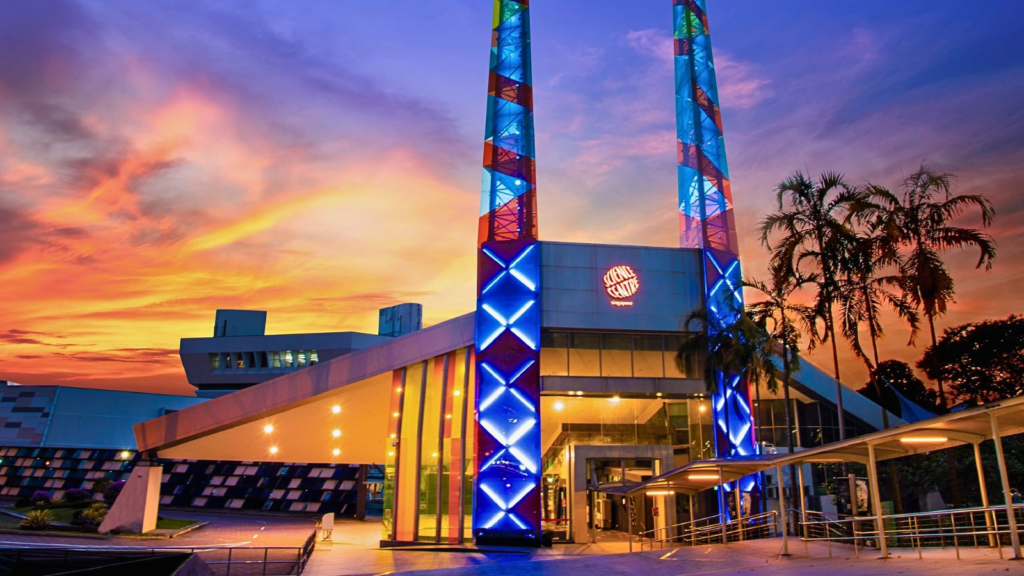
Science Centre Singapore has appointed dentsu solutions to lead its social media strategy for the Science Centre Board, under an engagement running from 1 April 2026 to 31 March 2027, with an option to extend for one additional year. The appointment supports Science Centre Singapore’s broader ambition to position itself as one of Singapore’s leading edutainment destinations, while deepening its role as a trusted institution that connects the community with science, technology, engineering and mathematics through accessible, inspiring and hands-on experiences. Under the mandate, dentsu will be tasked with developing a social media strategy that grows the centre’s digital footprint, raises visibility for its permanent exhibitions, special exhibitions, core offerings and public programmes, and drives sustained engagement with local and international audiences, according to tender documents seen by MARKETING-INTERACTIVE.  Don’t miss: Ministry of Transport concludes social media pitch A secondary objective will be to support patronage and visitation to the Centre and its attractions. Science Centre Singapore is targeting 700,000 walk-in public guests in 2026.   The strategy will also cover the centre’s group of attractions, including the Omni-Theatre, Snow City and KidsSTOP.  In addition, the wider Science Centre ecosystem includes Singapore Science Centre Global, a wholly owned subsidiary of the Science Centre Board, which focuses on STEM and Singapore science-related educational products for overseas educators, students, international school principals and science centre curators. MARKETING-INTERACTIVE has reached out for a statement. The social media appointment follows Science Centre Board’s recent appointment of Alsoknownas (AKA) as its new public relations agency earlier this month. Similarly, AKA’s appointment also runs from 1 April 2026 to 31 March 2027, with an option to extend for an additional year. The PR remit is structured as a retainer, with AKA leading communications across the centre’s full portfolio of attractions. The agency is tasked with developing an integrated, data-driven communications strategy to strengthen brand equity, increase awareness and drive both first-time and repeat visits, as Science Centre Board sharpens its positioning in a competitive attractions landscape and builds momentum towards the new Science Centre in 2027. Both dentsu and AKA join Science Centre Board’s agency roster, which also includes brand practice Anak as its branding and design agency. Related articles:  GovTech picks agency to manage digital and social media channels  Maybank Singapore calls for social media pitch  URA names new social media agency source

Science Centre Singapore picks agency to strengthen social media engagement Read More »

World's longest-range airliner takes to the skies

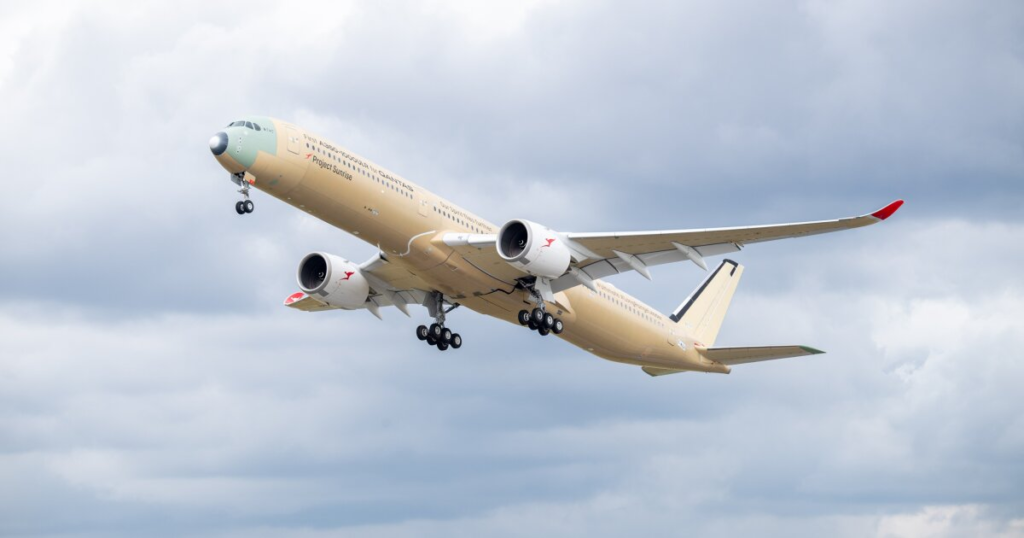
If it’s ever been your dream to spend 22 hours on a non-stop flight from Sydney to London, then good news: Airbus has announced the maiden flight of the world’s longest-range airliner, the Airbus A350-1000ULR, with a range of almost 10,000 nautical miles. Getting from Australia’s major eastern cities of Sydney and Melbourne to New York or London has always been an adventure. After the Second World War, it could take up to four weeks by steamship. If you were in a hurry, seaplanes could make the journey in a mere 12 days, albeit with nine stops along the way. When jet airliner service arrived in 1959, the voyage was cut to 33 hours with only three refueling stops. Today, even after seven decades of technological improvements, these antipodal routes still require at least one stopover in hubs such as Singapore, Dubai, Los Angeles, or Dallas. That can add up to four hours to the journey, along with the risks of missed connections, lost baggage, delays, and the general aggravation of customs procedures. To address this, Qantas launched its Project Sunrise initiative, aimed at introducing nonstop flights to the other side of the world. The purpose extends beyond passenger convenience. The airline sees such routes as a way to capture more premium-fare traffic while insulating its flagship services from foreign regulatory changes, airport curfews, landing-slot constraints, and regional geopolitical instability. It also provides an opportunity to modernize the airline’s long-haul fleet. Key to the project is the Airbus A350-1000ULR (Ultra Long Range), a specialized widebody twin-engine airliner derived from the baseline A350-1000. The prototype took to the air from Airbus’s facility in Toulouse, France, on June 2, 2026, for a test flight lasting three hours and 43 minutes and reaching an altitude of 41,000 ft (12,500 m). The main difference between the A350-1000ULR and the standard version is a new 20,000-liter (5,283 US-gal) rear center fuel tank, increasing operational range by approximately 1,000 nautical miles (1,151 miles, 1,852 km) to a total of 9,700 nautical miles (11,163 miles, 17,964 km). The aircraft will typically carry 238 passengers in a four-class configuration. Added to this is a lighter galley cooling system featuring high-efficiency refrigeration units designed for ultra-long-haul operations, where minimizing both odors and power consumption is a priority. According to Airbus, once flight testing is completed, the aircraft will be given its Qantas livery and then delivered to the airline, with a second aircraft scheduled for delivery in April 2027. The current plan is for a fleet of 12 of the ultra-long-range variant. Unfortunately, it still means spending 22 hours in an airline seat next to someone with very strong views on air fryers. Source: Airbus source

World's longest-range airliner takes to the skies Read More »

Charles & Keith taps former Meta executive as global marketing director

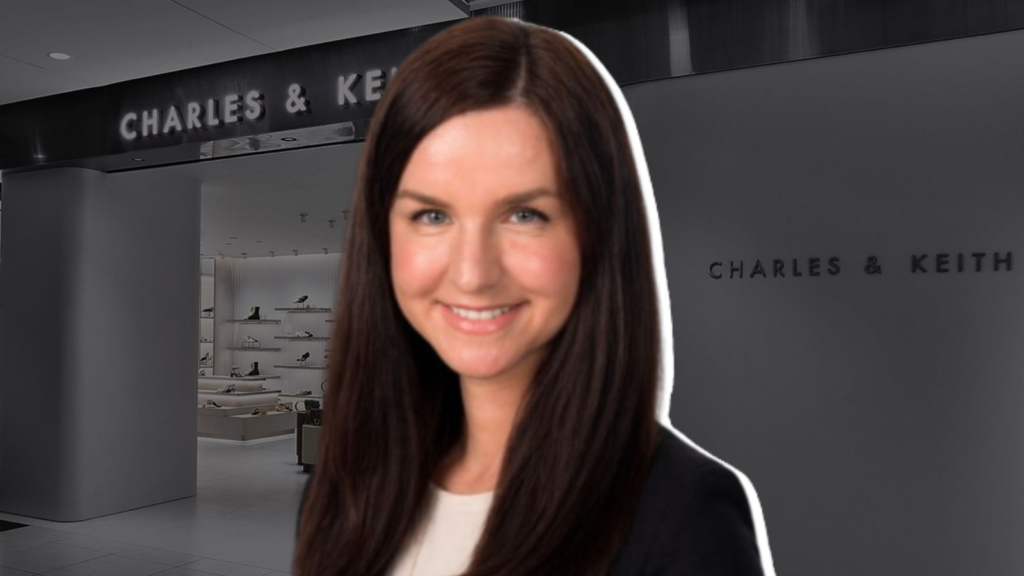
Singapore-based fashion group Charles & Keith has unveiled a series of leadership appointments as it looks to accelerate growth, strengthen its digital capabilities and sharpen its brand positioning following its 30th anniversary. Leading the appointments is Aniko Andras (pictured), who joins the company as global marketing director. In the role, she will oversee the group’s global marketing strategy, working across teams to deepen brand affinity and enhance the customer experience as Charles & Keith expands its presence across international markets. Andras brings more than 20 years of international marketing experience to the role. She joins from Meta, where she led strategic partnerships with luxury and technology brands across the Asia Pacific region. Prior to that, she held marketing leadership roles at Apple, L’Oréal and Reckitt, building expertise in brand development, digital marketing and customer engagement. Don’t miss: How Coach is winning over Gen Z one experience at a time The company has also appointed Claudia Brechenmacher as head of transformation. She will lead the group’s transformation and strategy efforts, focusing on organisational agility, operational excellence and long-term business growth. Brechenmacher brings 15 years of global strategy consulting experience, including a decade at Bain & Company, where she led strategy development and large-scale transformation projects across Europe and Asia. Meanwhile, Cayetano Morales Rosell has been named global director of eCommerce. He joins the company with more than 15 years of experience at Inditex and Massimo Dutti, having held senior positions spanning merchandising and global eCommerce. In his new role, Morales Rosell will be responsible for driving Charles & Keith’s global eCommerce strategy, with a focus on accelerating growth, advancing the group’s digital ambitions and strengthening its technology, logistics and team capabilities. Charles & Keith said the leadership changes are aimed at driving its “transformative growth”, redefining its digital and creative identities, and scaling operational efficiencies as the company enters its next phase of growth. The appointments come as fashion brands continue to invest in marketing and digital transformation to drive growth in an increasingly competitive retail landscape. Earlier this year, luxury fashion house Tapestry, parent company of Coach and Kate Spade New York, appointed Dentsu as its global agency of record outside the US. Under the expanded partnership, Dentsu will oversee media planning and buying for the group’s flagship brands across APAC, Europe, the Middle East, Africa and India, building on an existing collaboration in China. Related articles: Is community the new currency for Love, Bonito?   Christy Ng brings Mamee Monster to life in playful bag collaboration      Coach just turned storytelling into a fashion statement source

Charles & Keith taps former Meta executive as global marketing director Read More »